Yangshuo, China
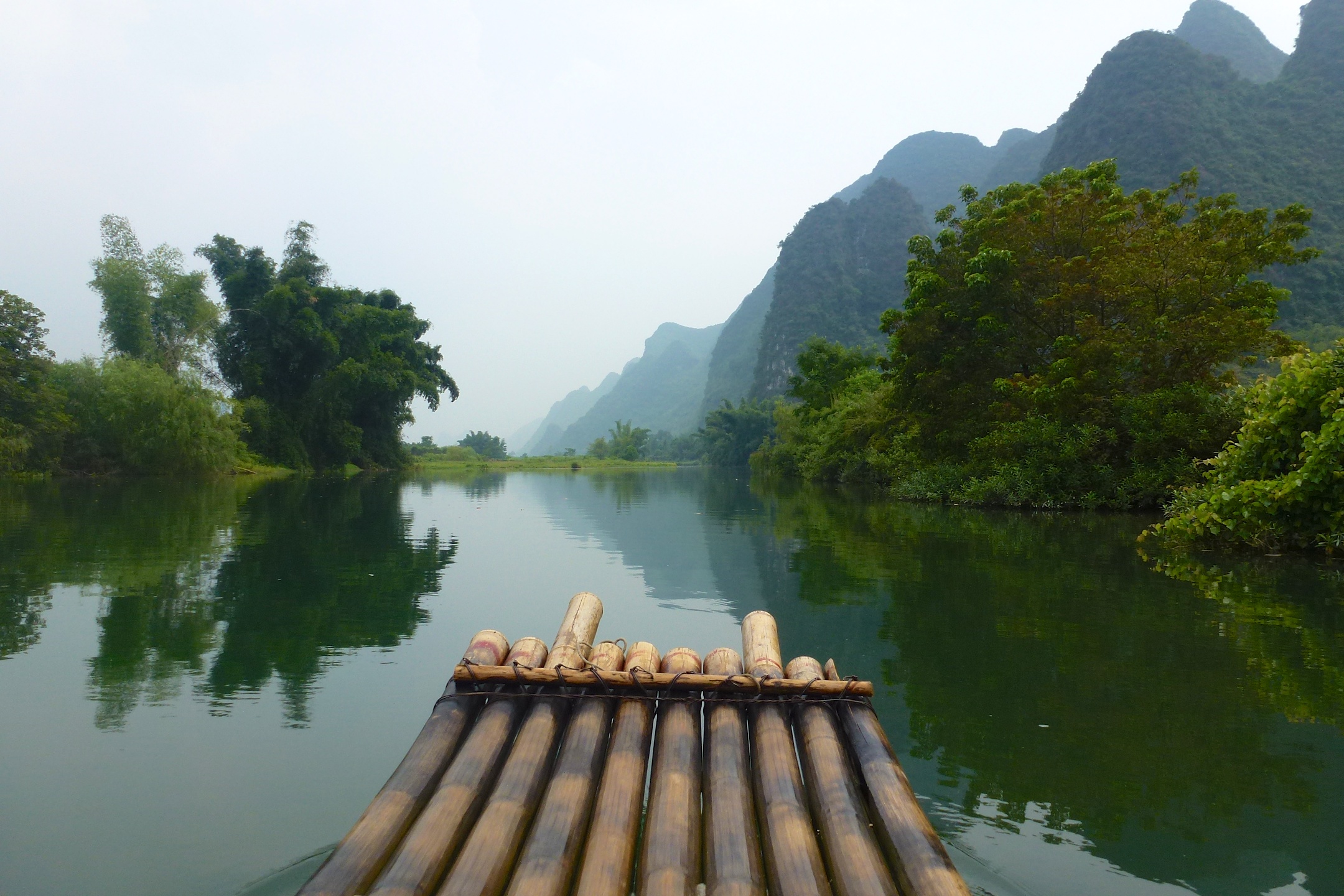
We flew into the city of Guilin, and immediately drove south
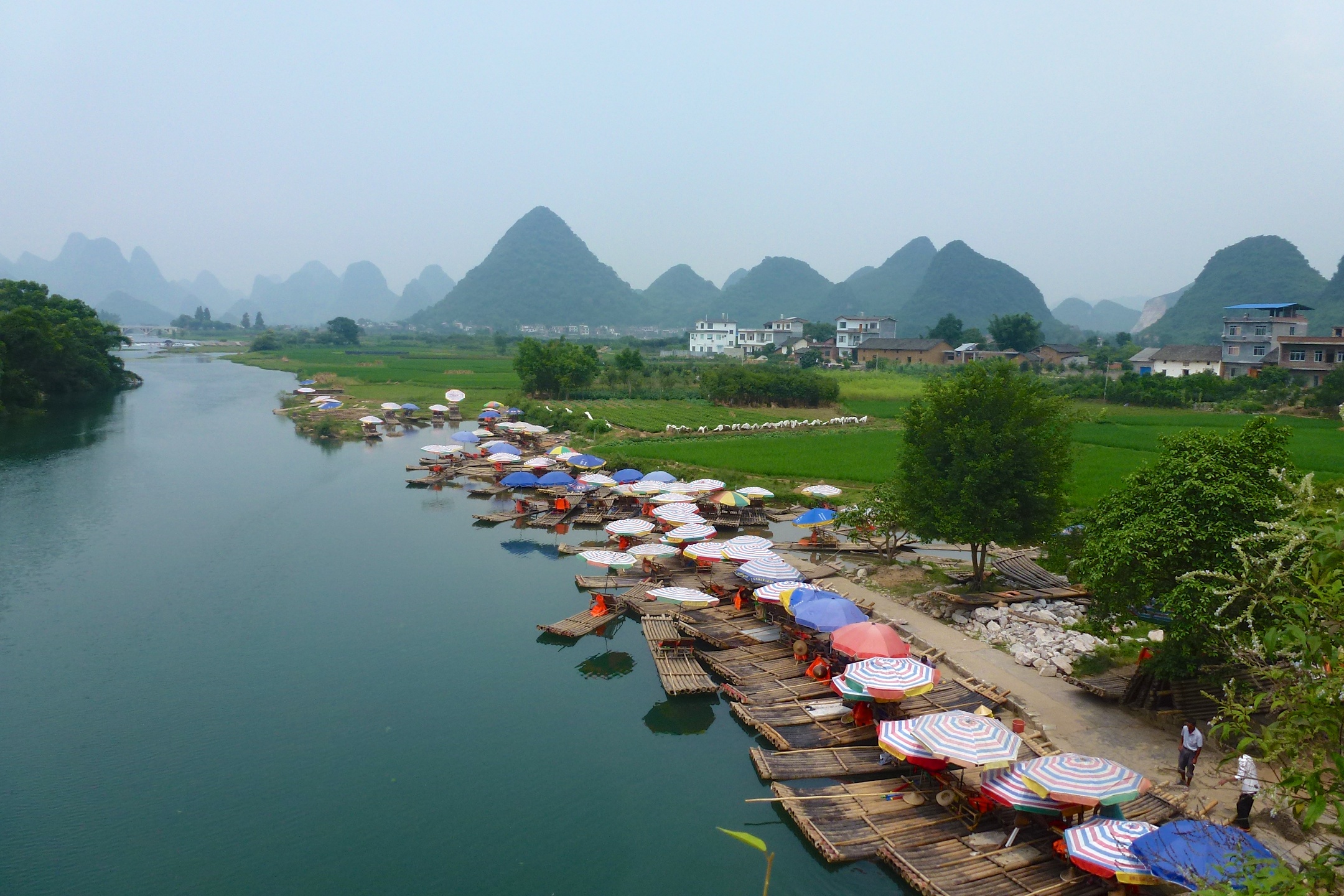
for an hour and a half to the small village of Jiuxian (shown below). Talk about being off the beaten path! It is in the Guangxi Province of southern China, about 15 minutes outside of Yangshuo, the largest town in the area.

We picked this region to visit because it is known for its beautiful scenery created by the amazing Karst mountains. The Karst Mountains, a UNESCO World Heritage Site,
are made of limestone. South China is one of the most well known Karst areas in
the world and Yangshuo is a rare example of this specific topography in terms
of its scale and uniqueness.
Our
hotel, Yangshuo Secret Garden, was charming. Fengzi and Faye restored
five 200-year-old Qing
Dynasty houses and created a hotel just over a year ago. Currently it has six rooms, two of which are suites. Despite its remoteness, it was a very nice boutique hotel.

The buildings are linked
by
small gardens, courtyards, and shared sitting rooms. They have a
restaurant on-site with a really good chef. We enjoyed many of his dishes, especially the twice-cooked pork. A quick note about the lack of English spoken in China. It was on par with Russia, except that they had signs and menus in English which made a huge difference in helping us to nagivigate throughout the country.

Bamboo rafting down the Yangshuo River
We spent a peaceful afternoon on the water. At first we were concerned this might be too touristy, but it turned out to be our favorite event in this region. Once we proceded past the launching point, there were no other tourist boats in sight and we enjoyed 90 minutes of jaw-dropping scenery.
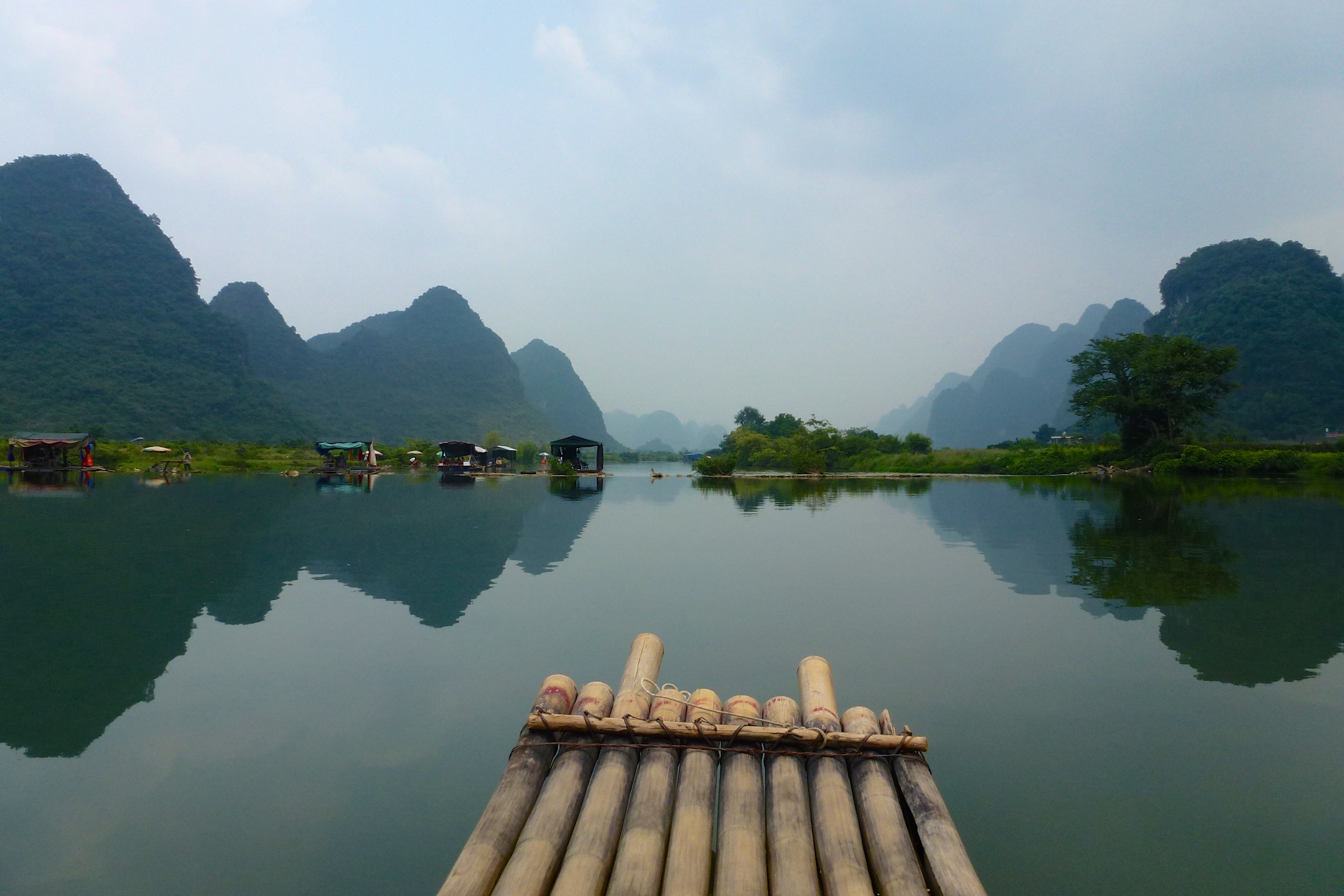
We climbed aboard the two-seater bamboo raft guided by a
man with a long bamboo pole. The current is very gentle so we basically just floated down the river. He
pointed out interesting scenes along the way, most of which we could not
understand because he only spoke in Chinese; but, he was friendly and enthuiastic so we politely nodded our heads and took photos of what he pointed to.

A group of boys having fun swimming under the famous 400-year-old Yulong Bridge.

It was a
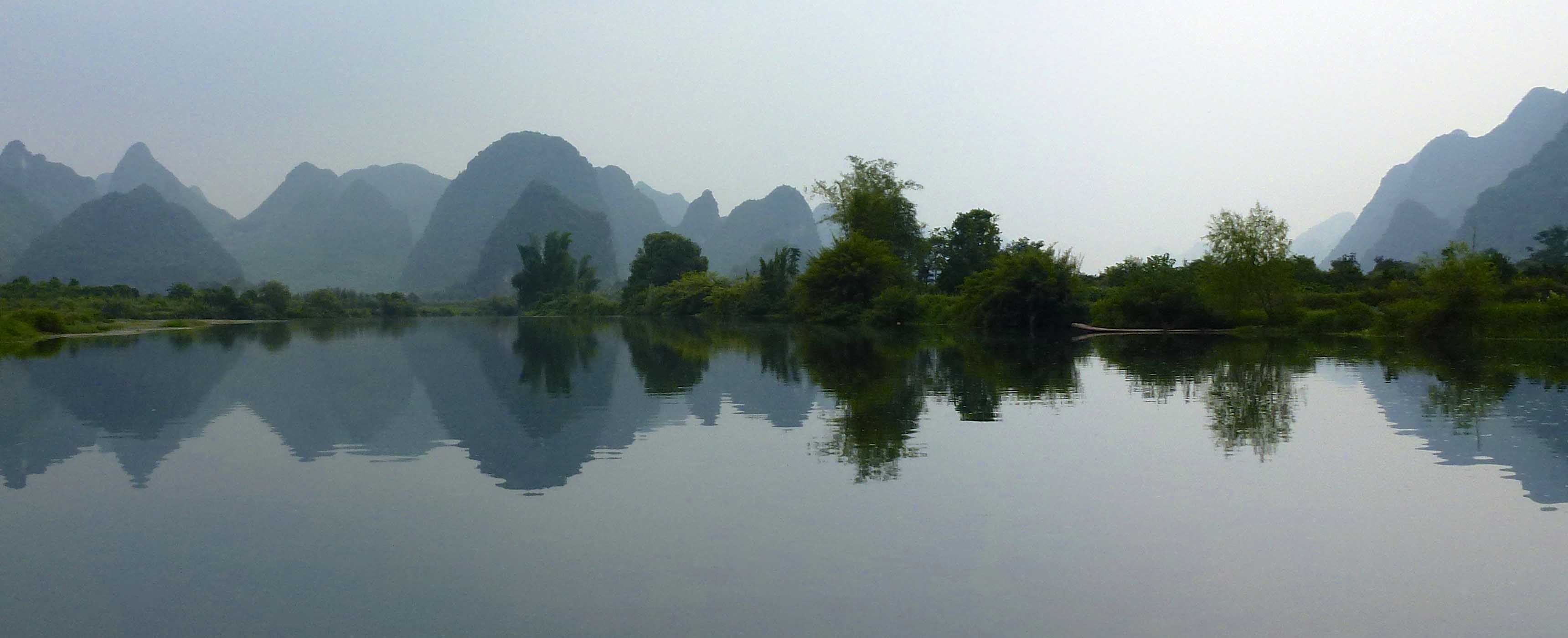
slightly hazy day, but we were told that is was perfect for photographing reflections on the water. They were right; we had gorgeous mirror images of
the mountains.
Local people use bamboo rafts as daily transportation up and down the
river between their houses, markets, and rice paddies.

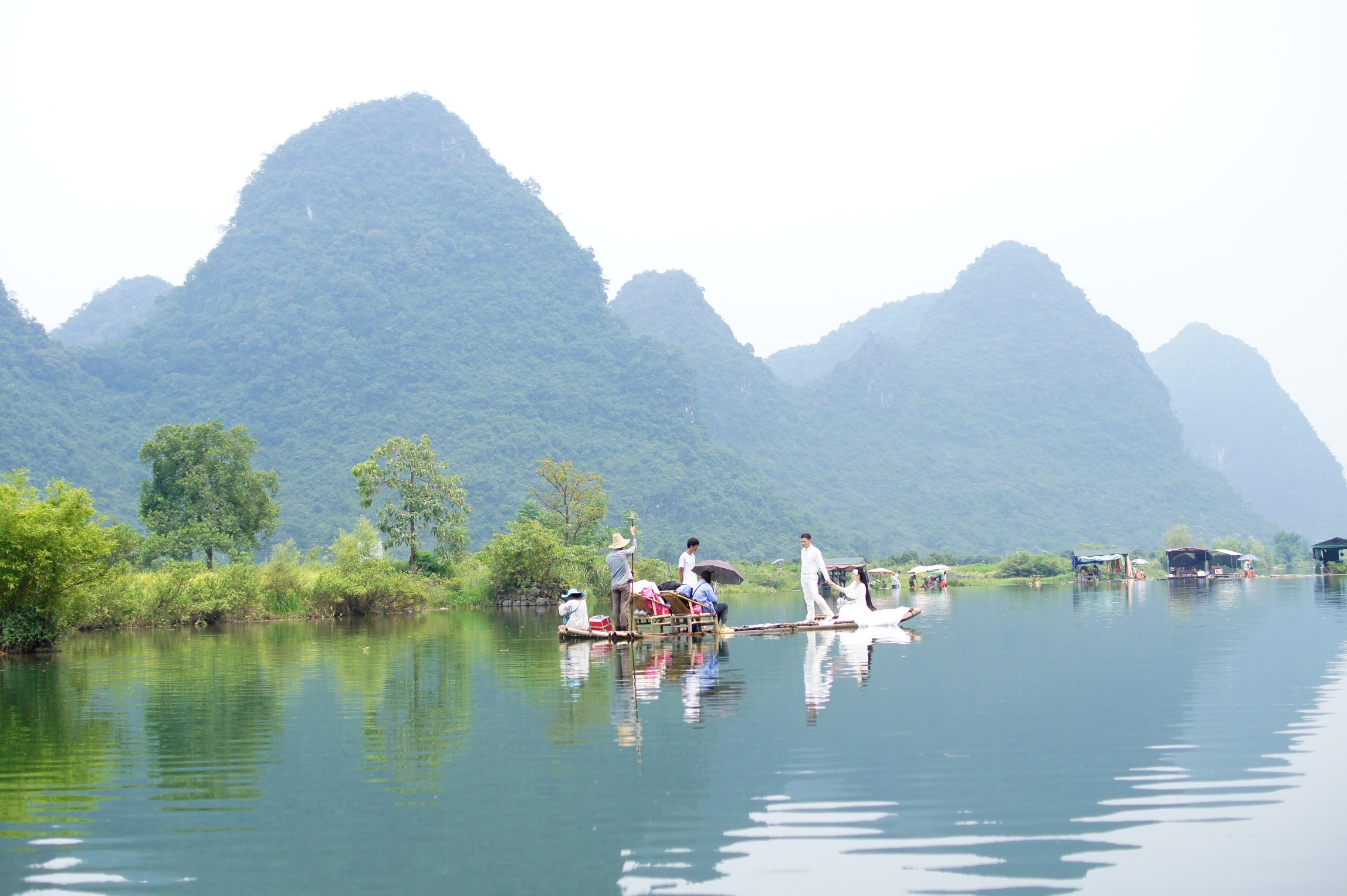
We
saw two wedding photo shoots while we were rafting. Talk about drop
dead gorgeous…. the bride, the scenery, and the photos. It was like a
fairytale!

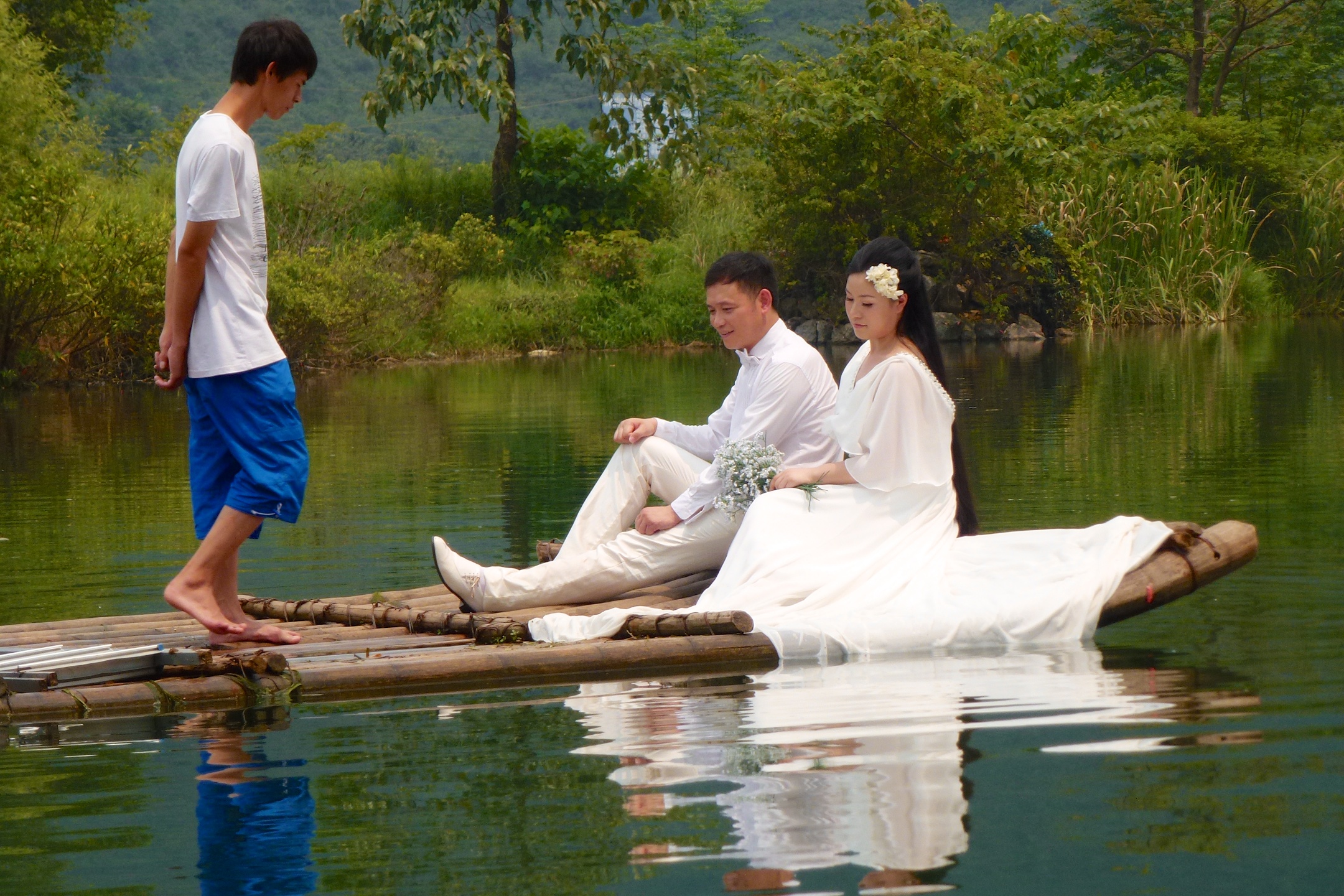
The second couple:


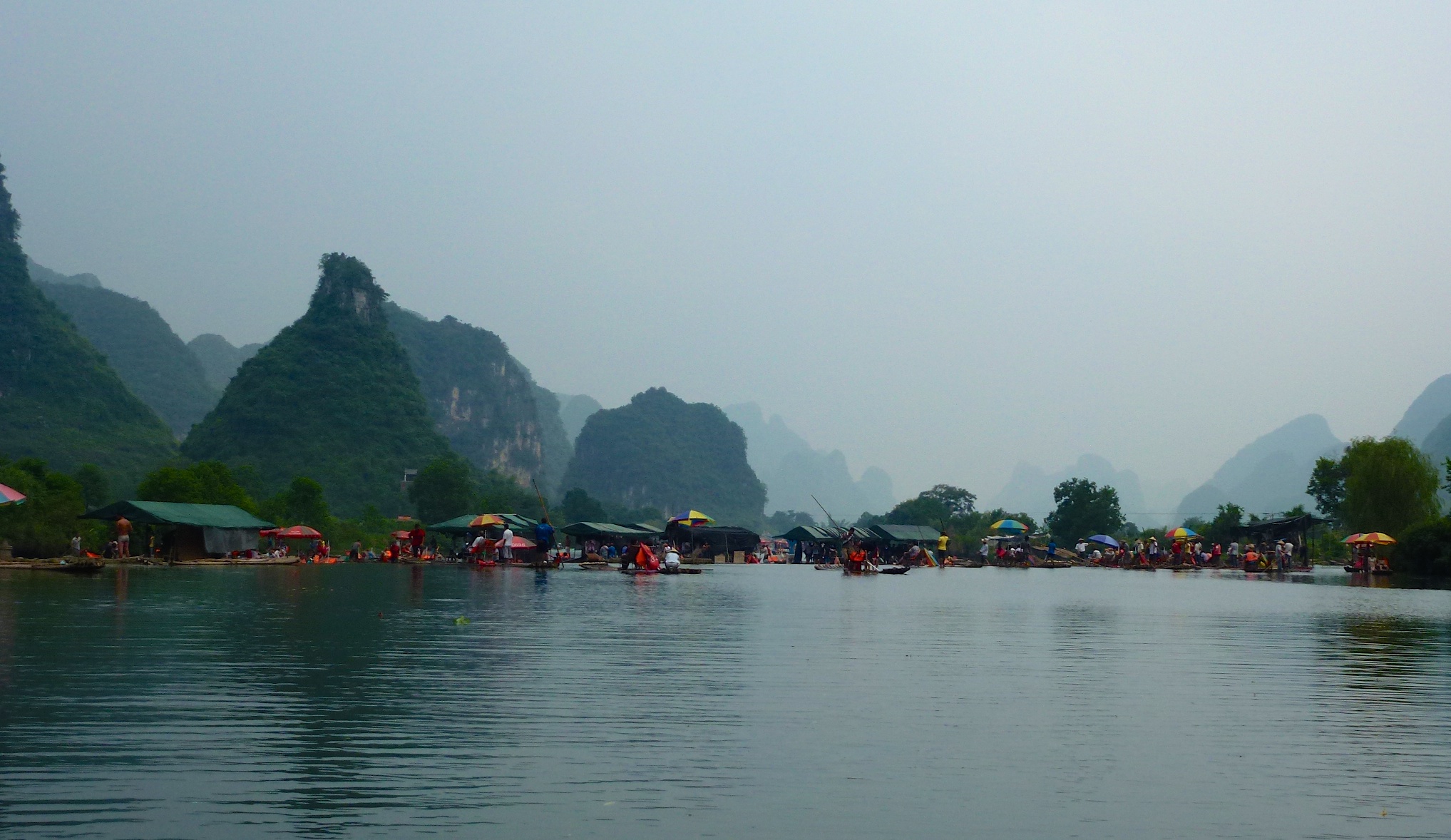
The last section of the river was an area where people were playing with
squirt guns and swimming. It surprised us after having such a peaceful ride. Most were Chinese tourists and they did not hesitate to squirt us with water! I was squealing "please don't squirt me" – D was just laughing!
Our little village, Jiuxian
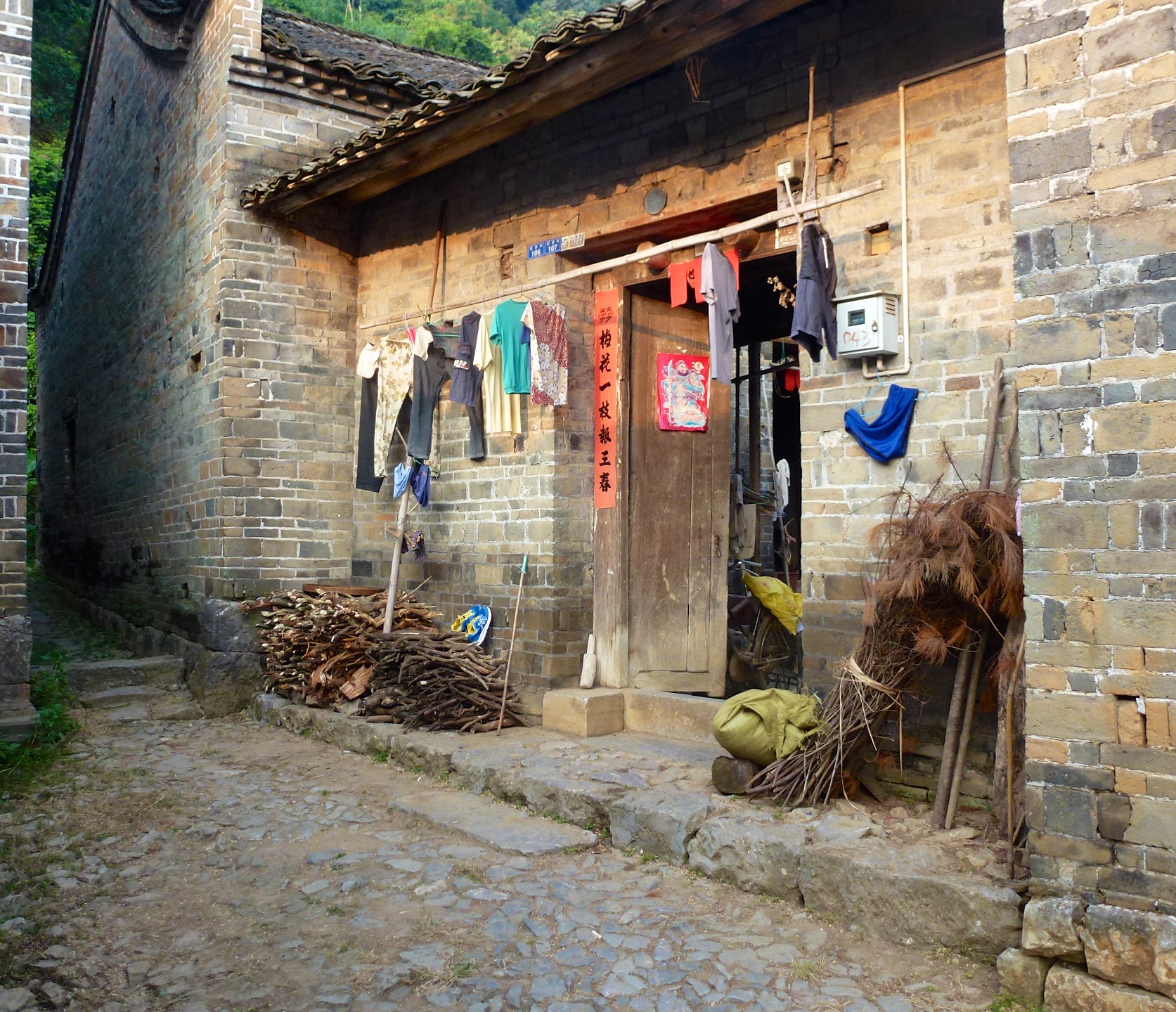
We enjoyed wandering around our small village and seeing how the local people live. It was as if we stepped back in time 100 years. Most of the old stone homes do not have electricity – so no televisions, no refrigerators, and no Internet! In some homes, they still use charcoal or kerosene stoves. All of them kept their front doors open so it was easy to look inside their very modest homes.
This sweet woman let me take her photo…. for a small fee. Unfortunately, everyone, young and old, put out their hand when we asked if we could take their photo. Most we just skipped, but this woman interested me with so much character to her face.

The women above and below are wearing the tradional blue/purple dress of the region; with fabric which has a very small circular pattern.
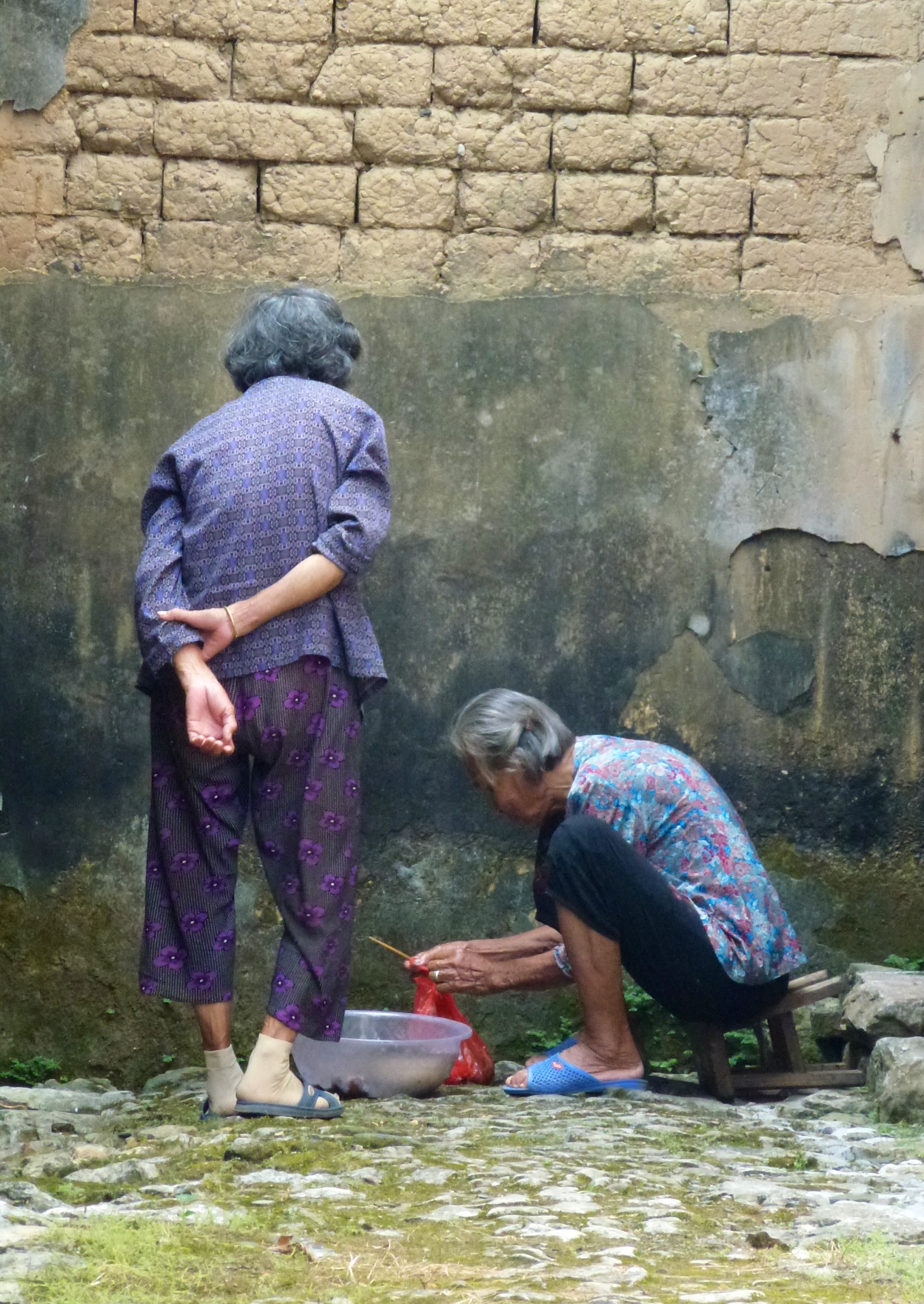
This woman did let me take her photo without asking for money, one of the few. Her expression looks like she has a good secret to tell.
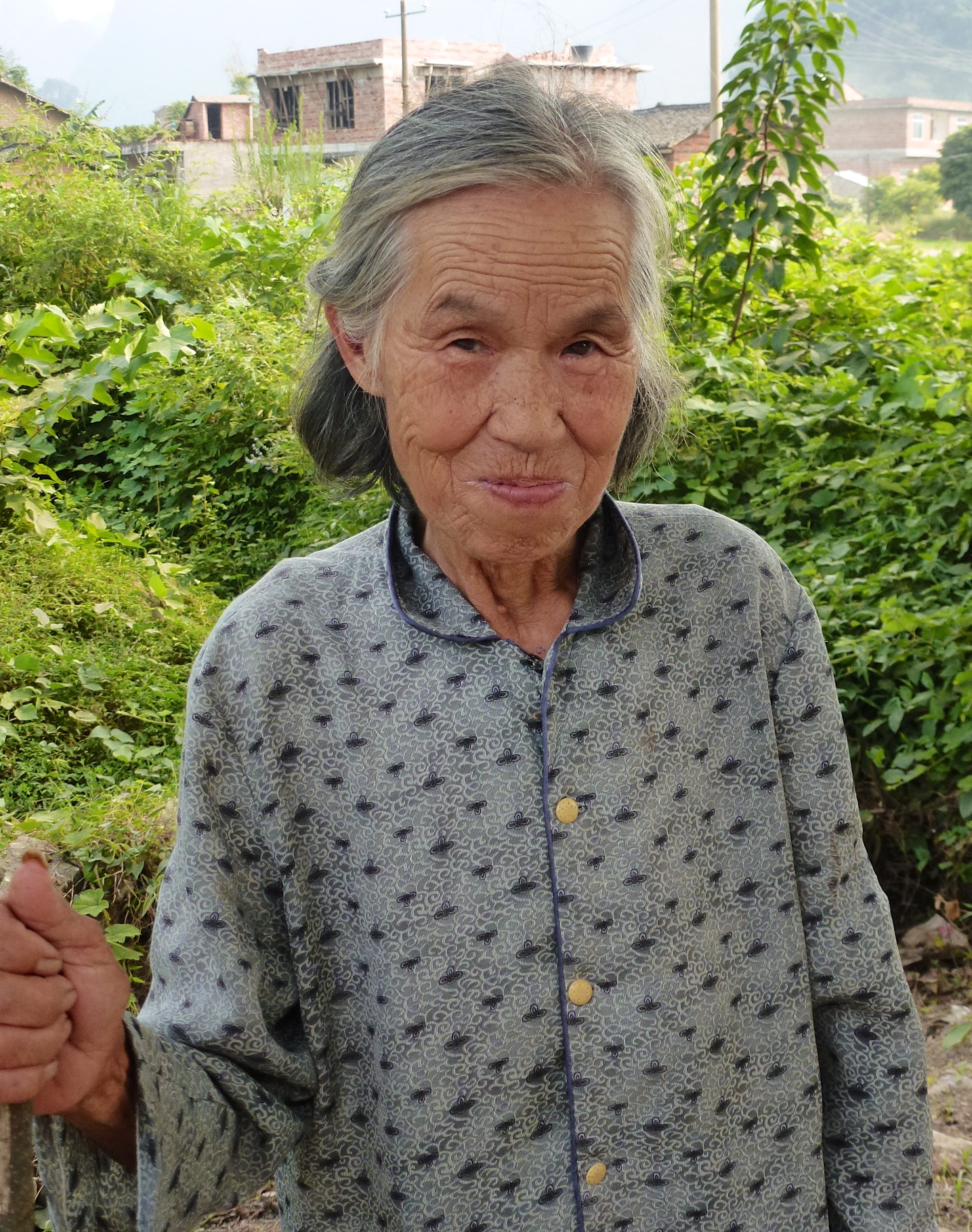
It is fascinating how different countries stack hay. Something that you would think would be done universally. I need to write a book on this – hay stacking around the globe : )

Many of the houses had cotton, peanuts, and rice drying in the front yards.

Two watchdogs keeping a close eye on their family rice…or maybe just a soft spot for a nap on top of the rice kernals.

These two were a little more alert – keeping watch from on top of the roof. How DID they get up there?

An advertisement on the side of a building.
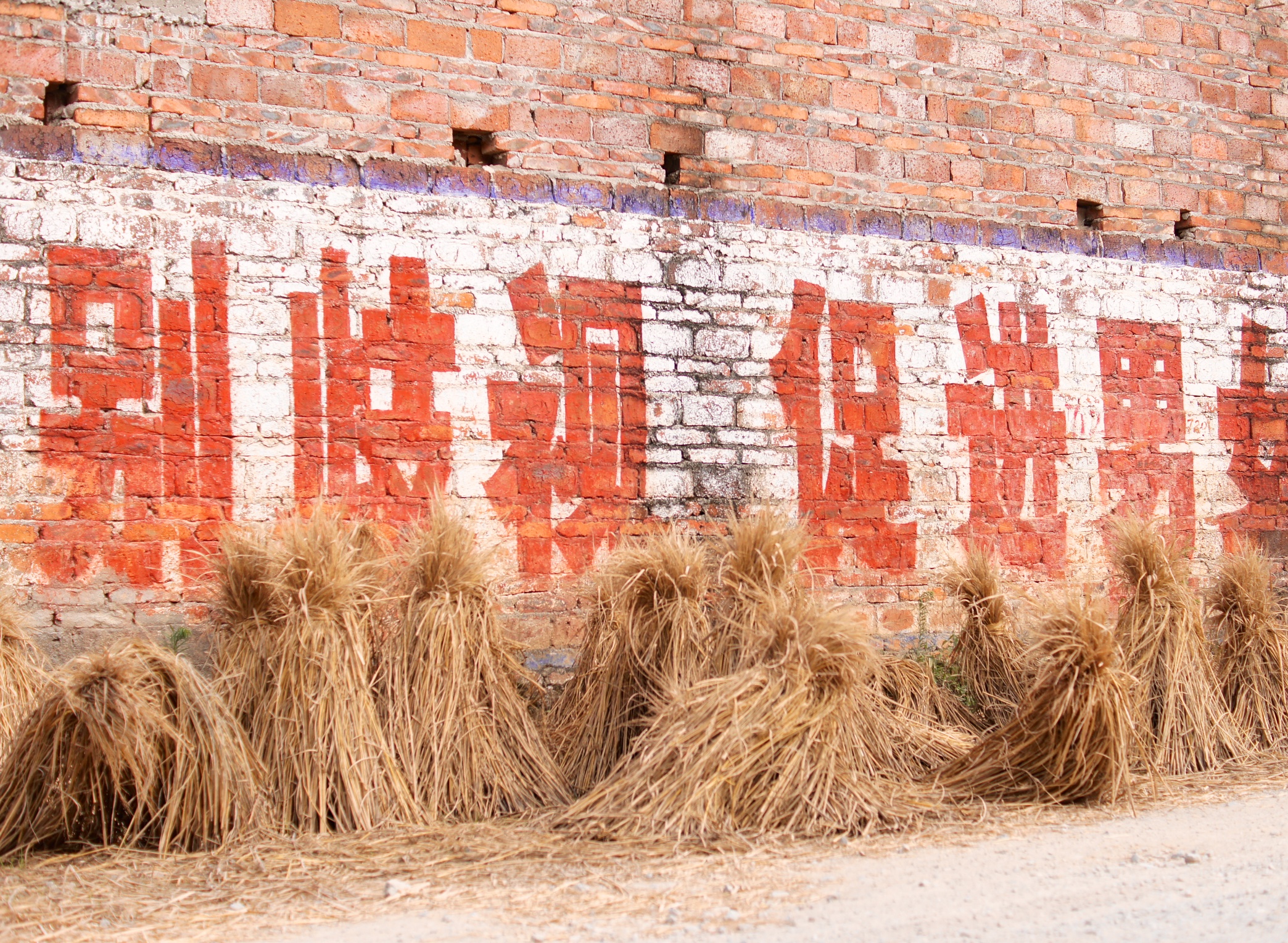
The photo was taken in the early morning hours, with a little fog rolling in.

The next was taken at sunset in our village. The sun setting cast a beautiful pink glow on the mountains.
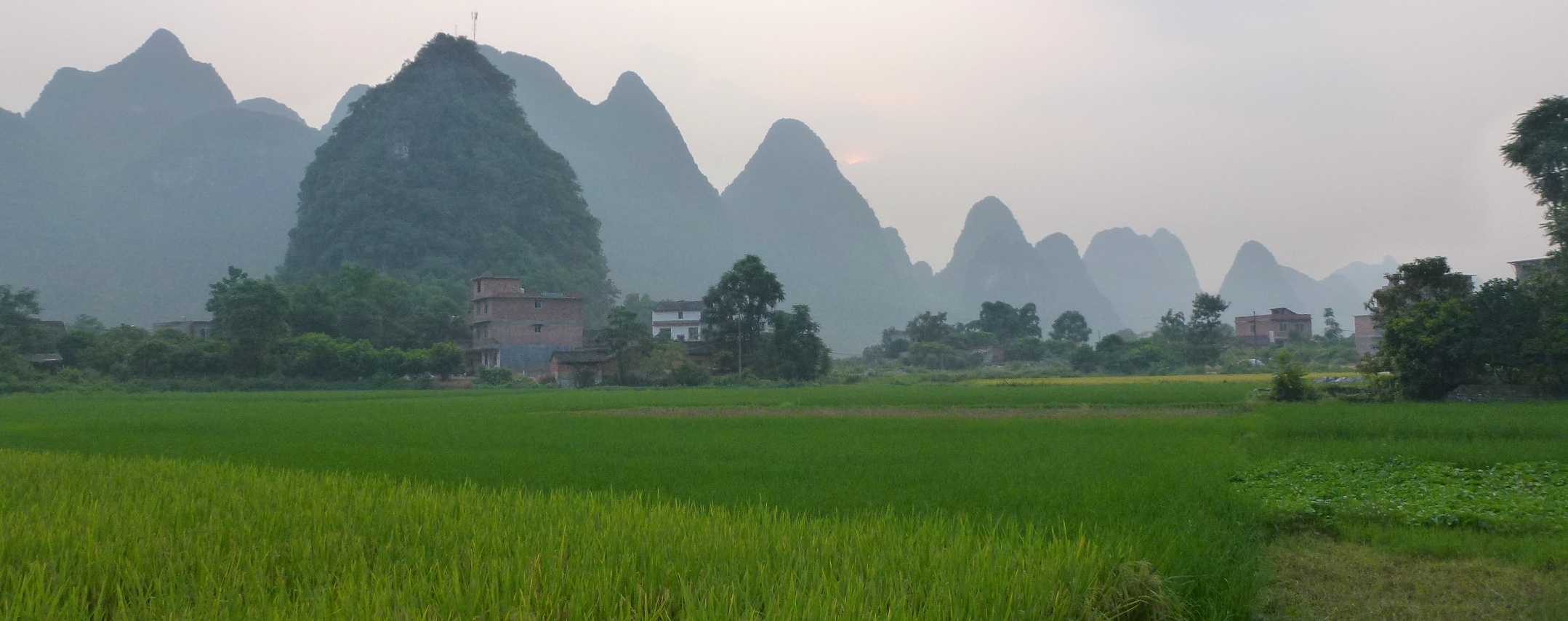
A rice field that was recently harvested. All the scenes were so beautiful with the Karst Mountains peeking through the background.

It was humbling to see how simple they live in today's modern world.

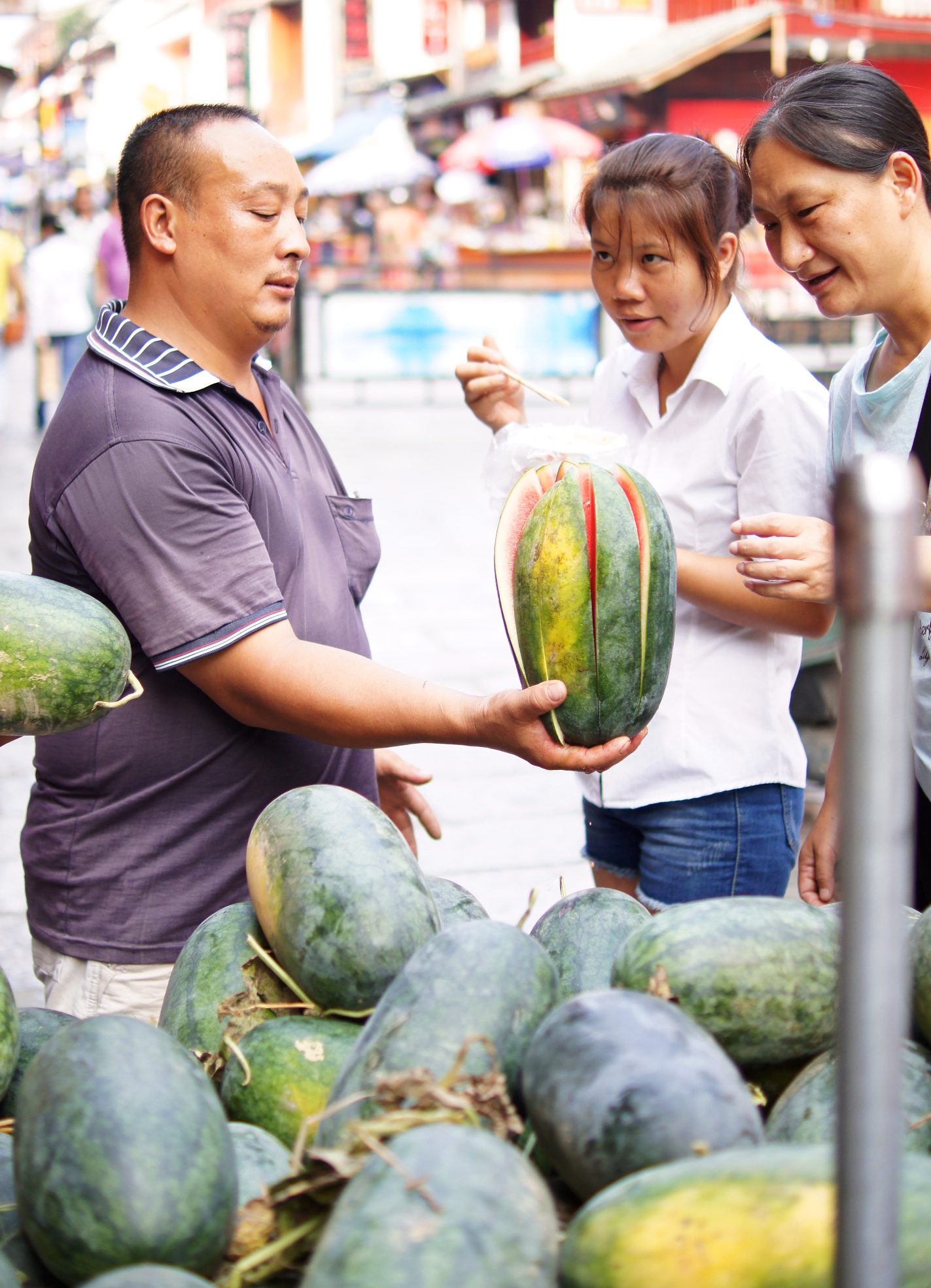
The food market in Fuli town.
This was NOT a tourist sight. It was the local market and we were the only westerners there. It was chaotic, like no other market we have ever experienced…and we have seen quite a few!

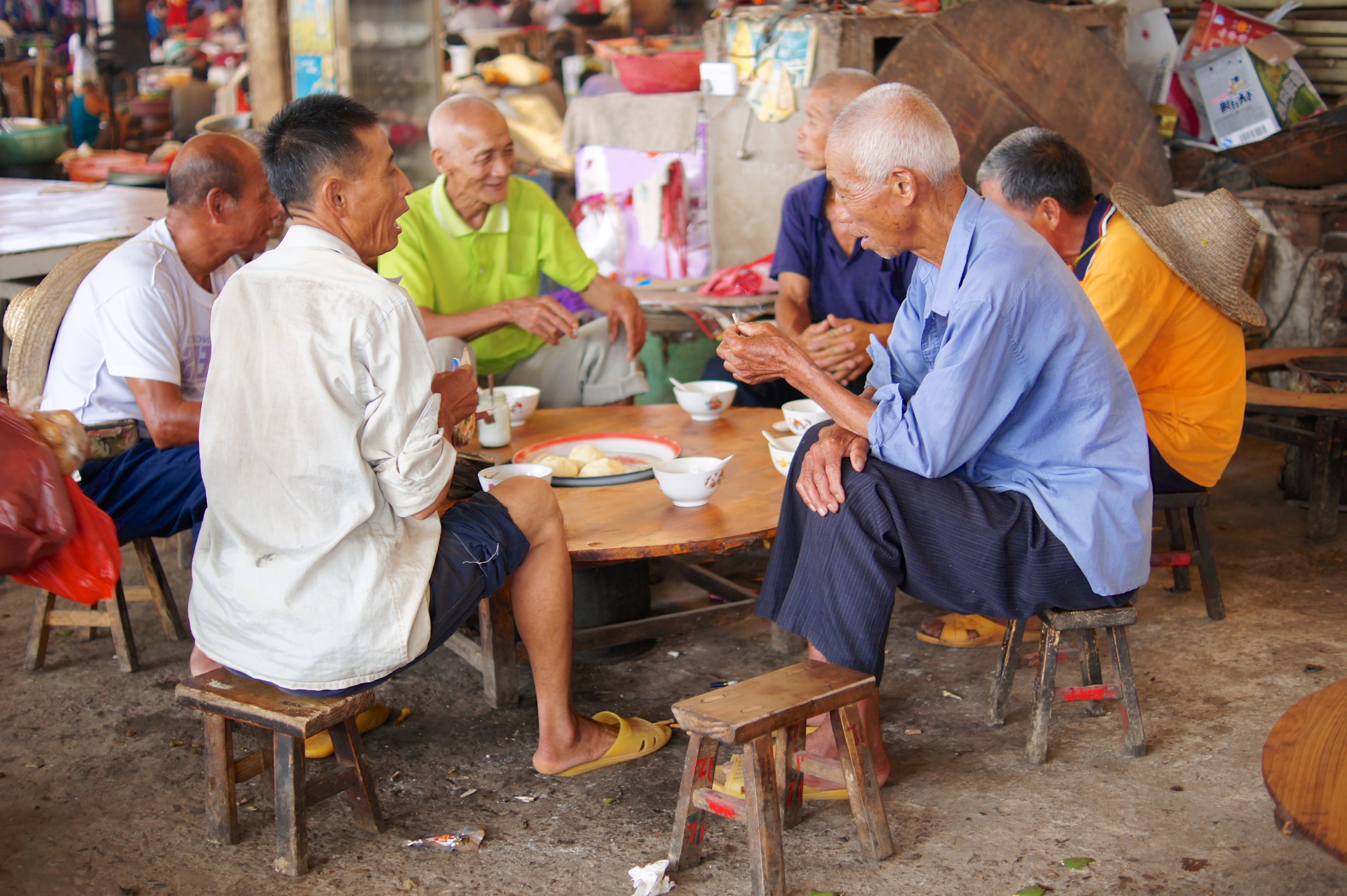
It was a very large market and had a very active food court, with our favorite tiny chairs.

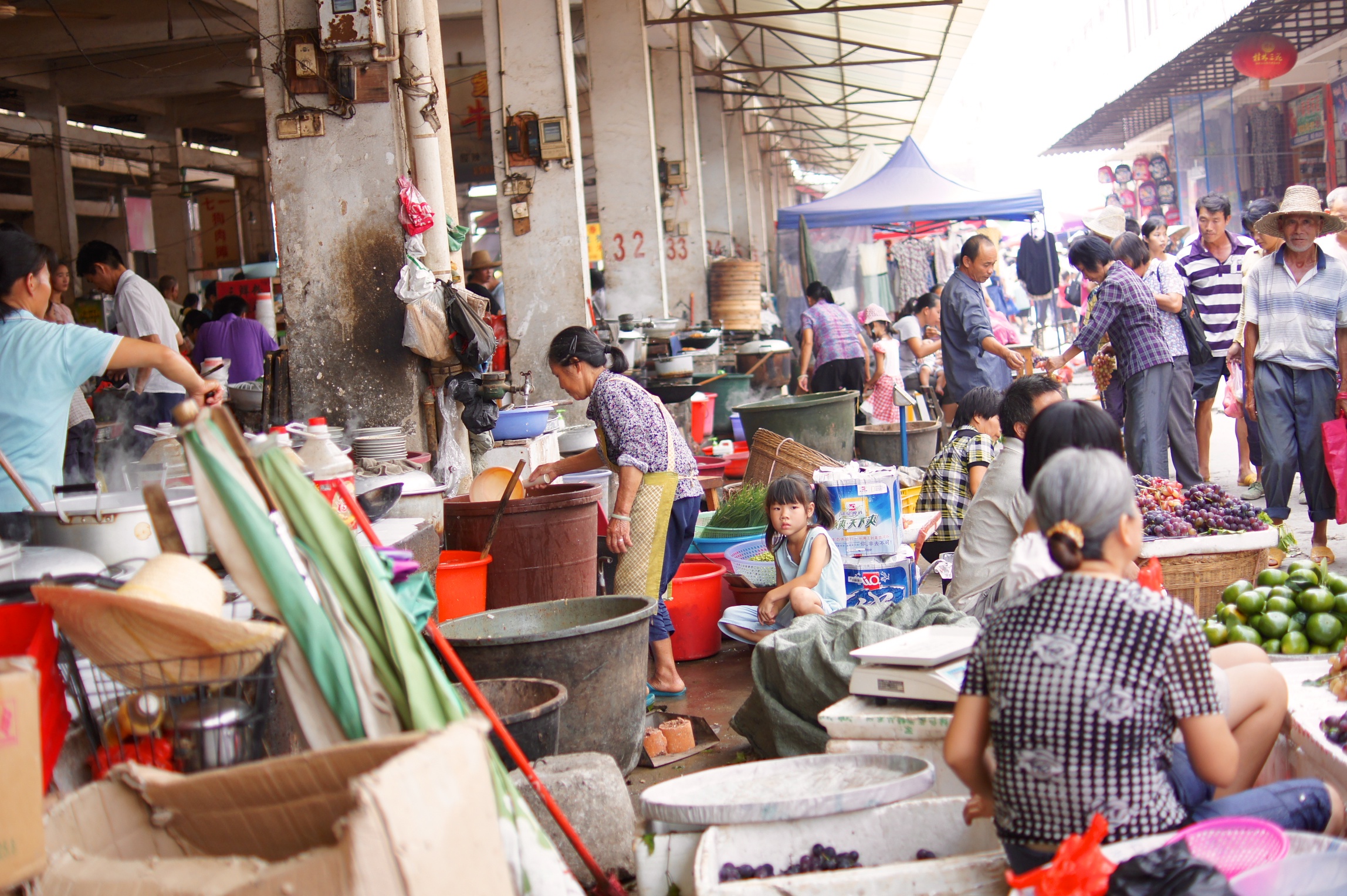
We saw everything at the market – men enjoying tea on the tiny chairs…
A half-naked butcher…

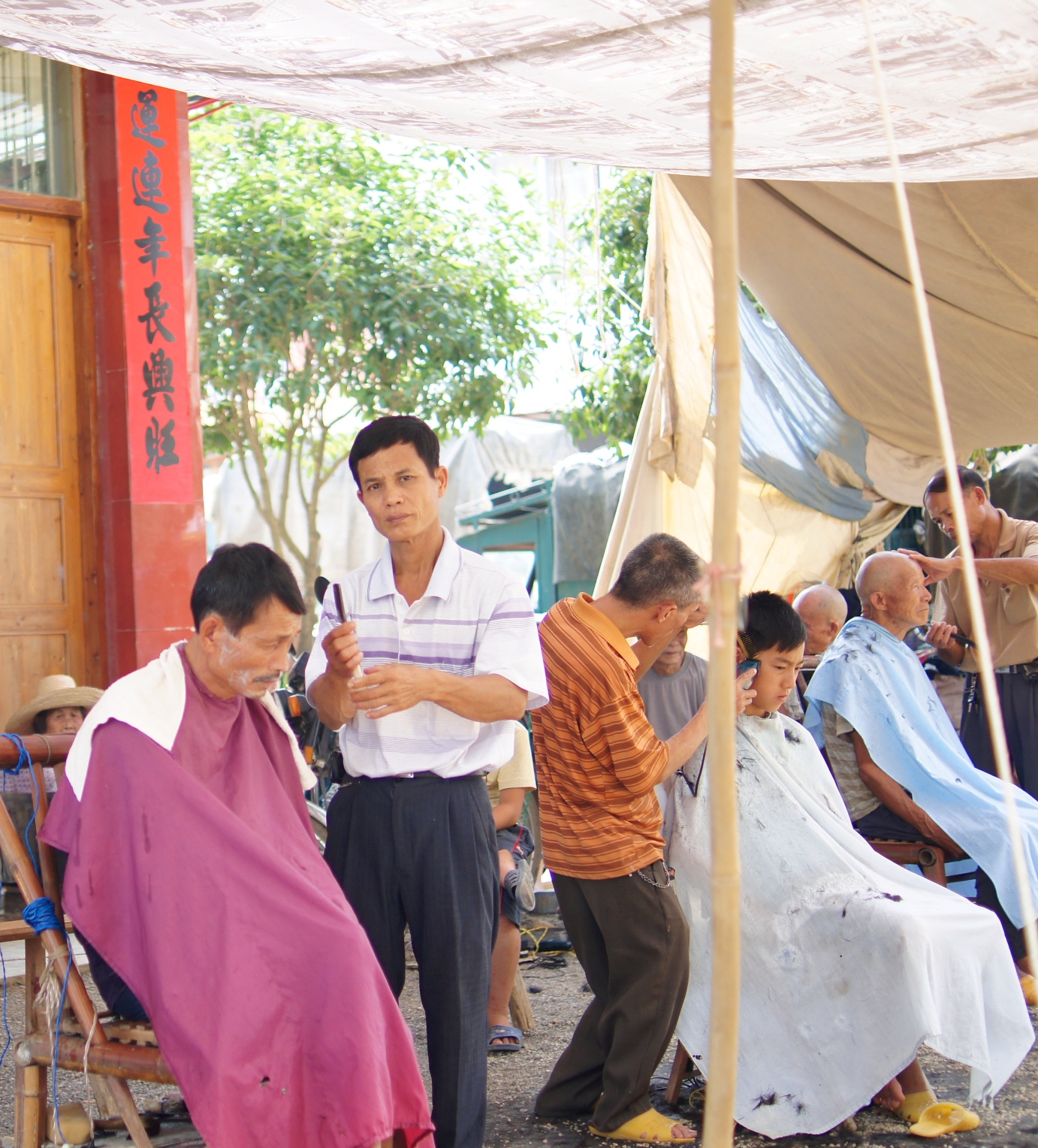
A barber…
Where D wanted to get a shave with a straight blade - "it would be a great photo for the blog". My response…No! Are you crazy? What if they accidently cut you… no telling what you might get. He left pouting……told me I was a "joy squasher".
A witch doctor…
He was not for show, as I mentioned, we were the only westerns there. This was the real deal. He was treating a woman's shoulder with a magical blend. This is when I wished I could understand the language.

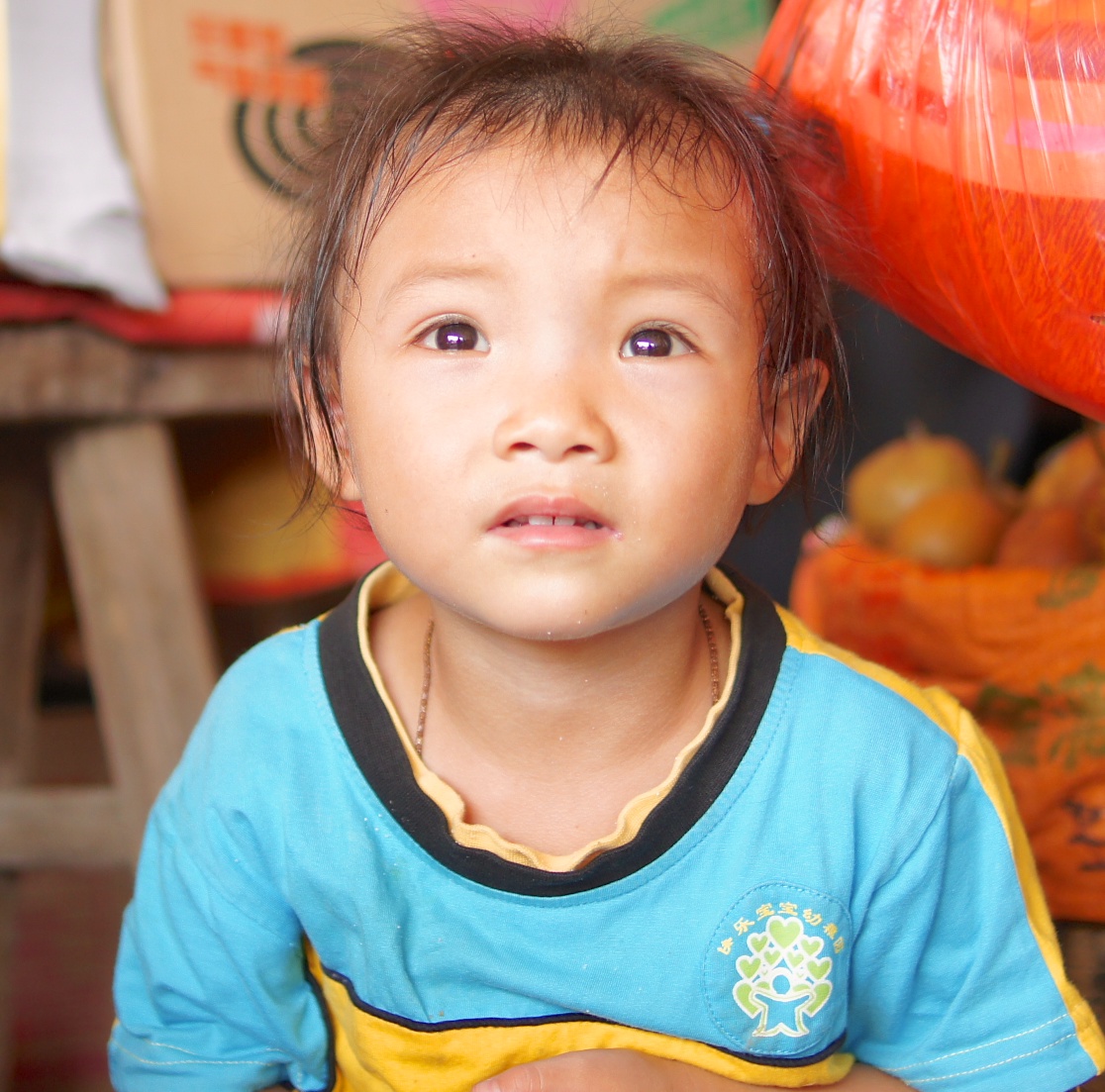
We saw bored children…..


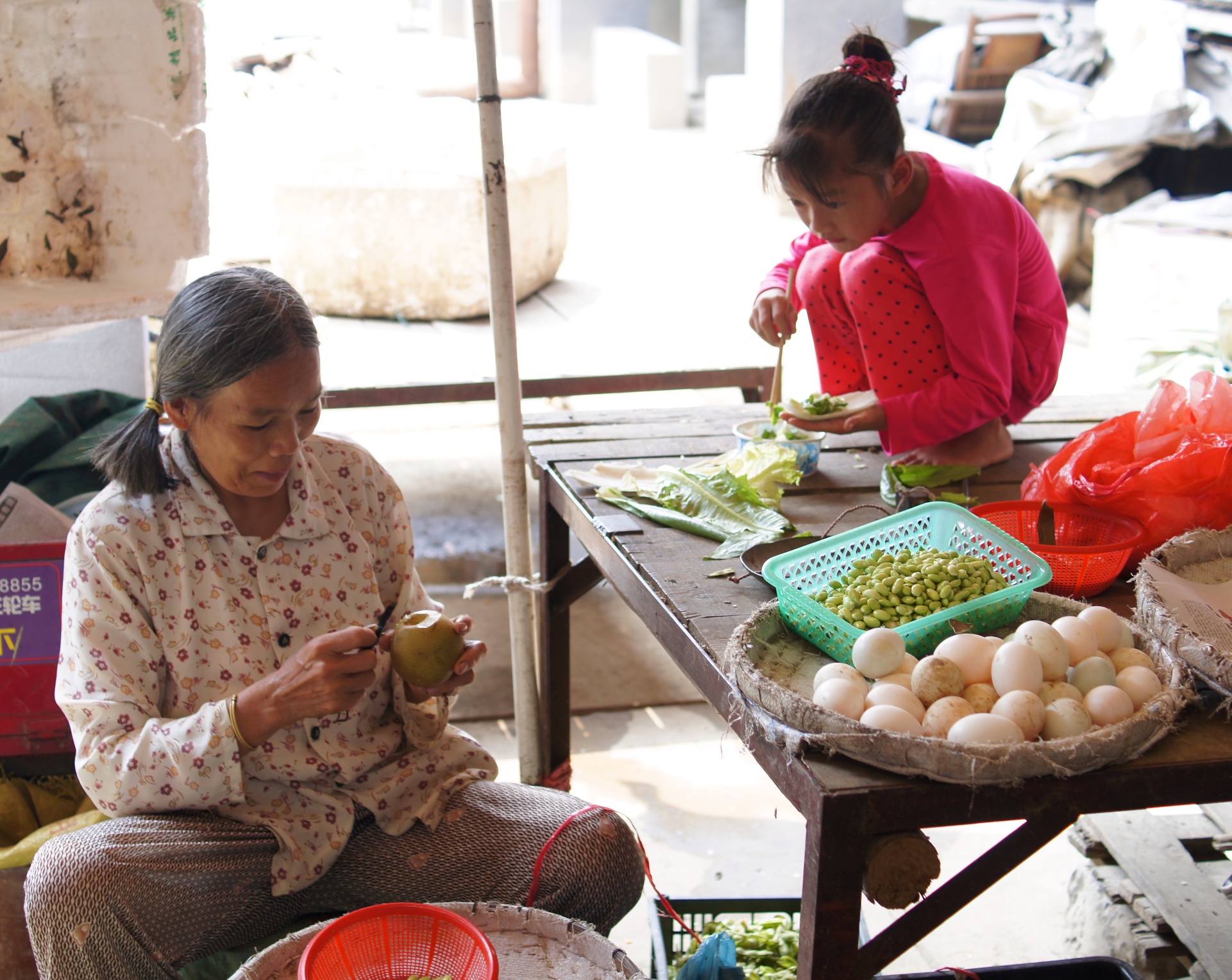
Fruit and veggie sellers…
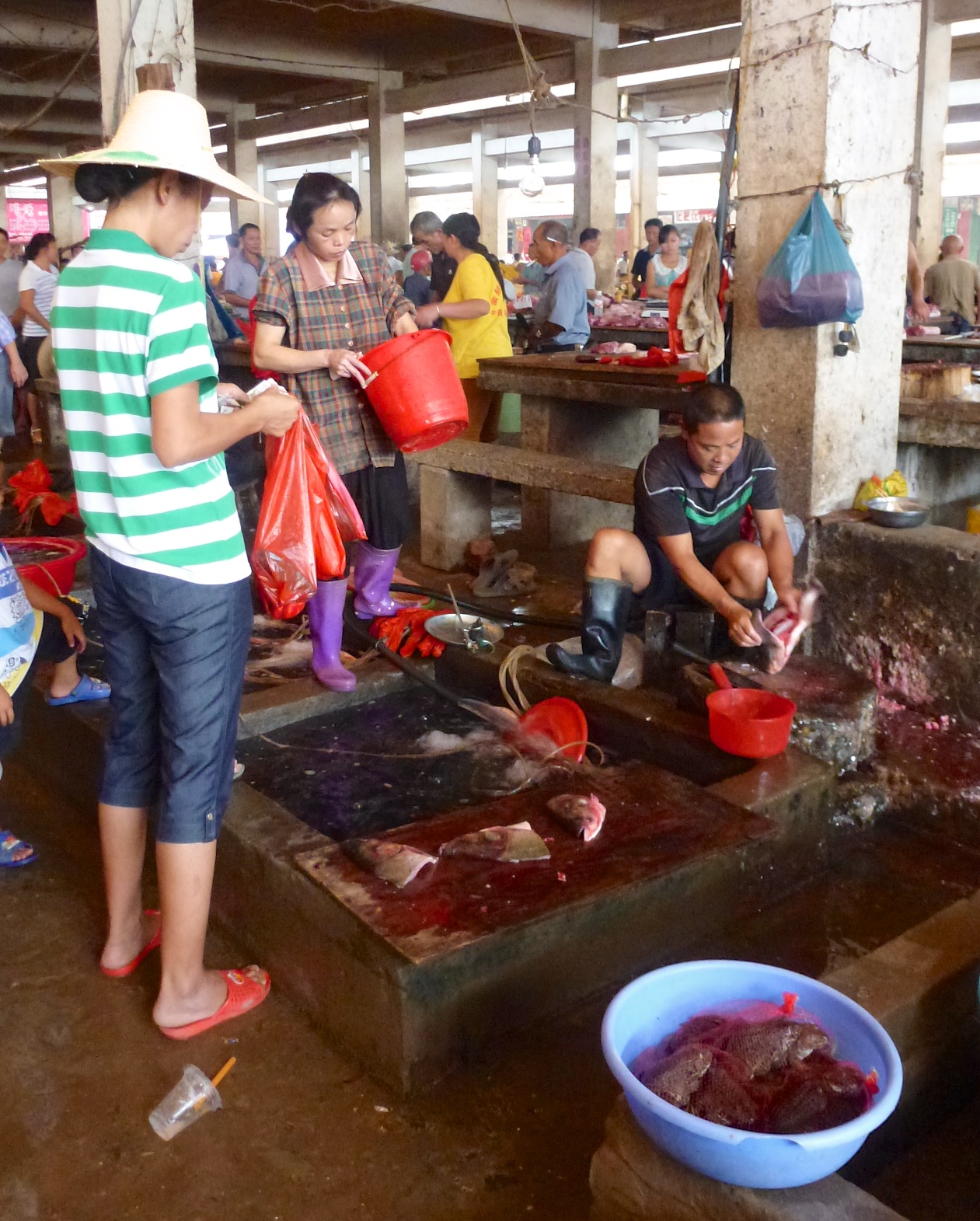
Butchers and fish mongers…

And noodle vendors…

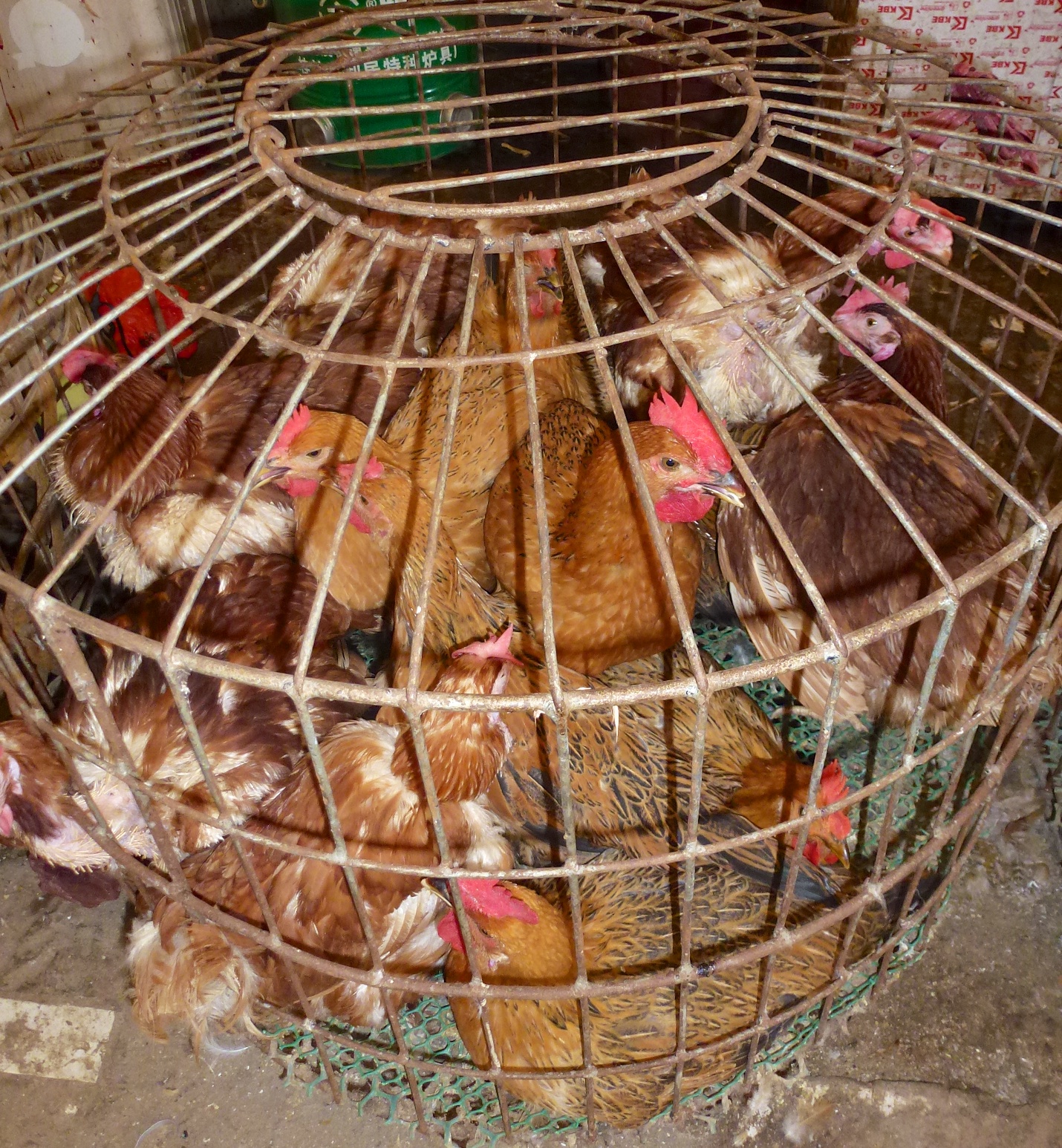
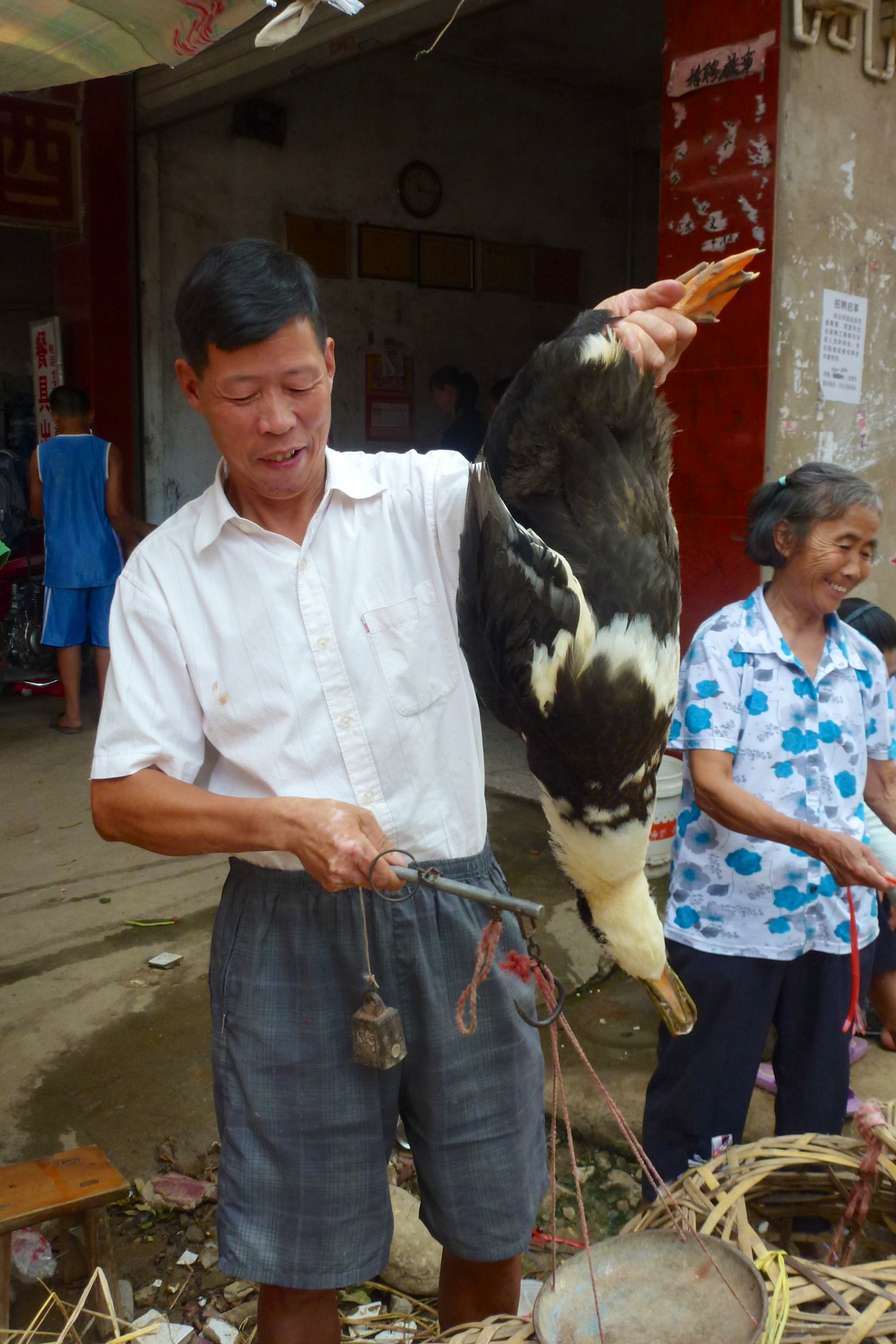
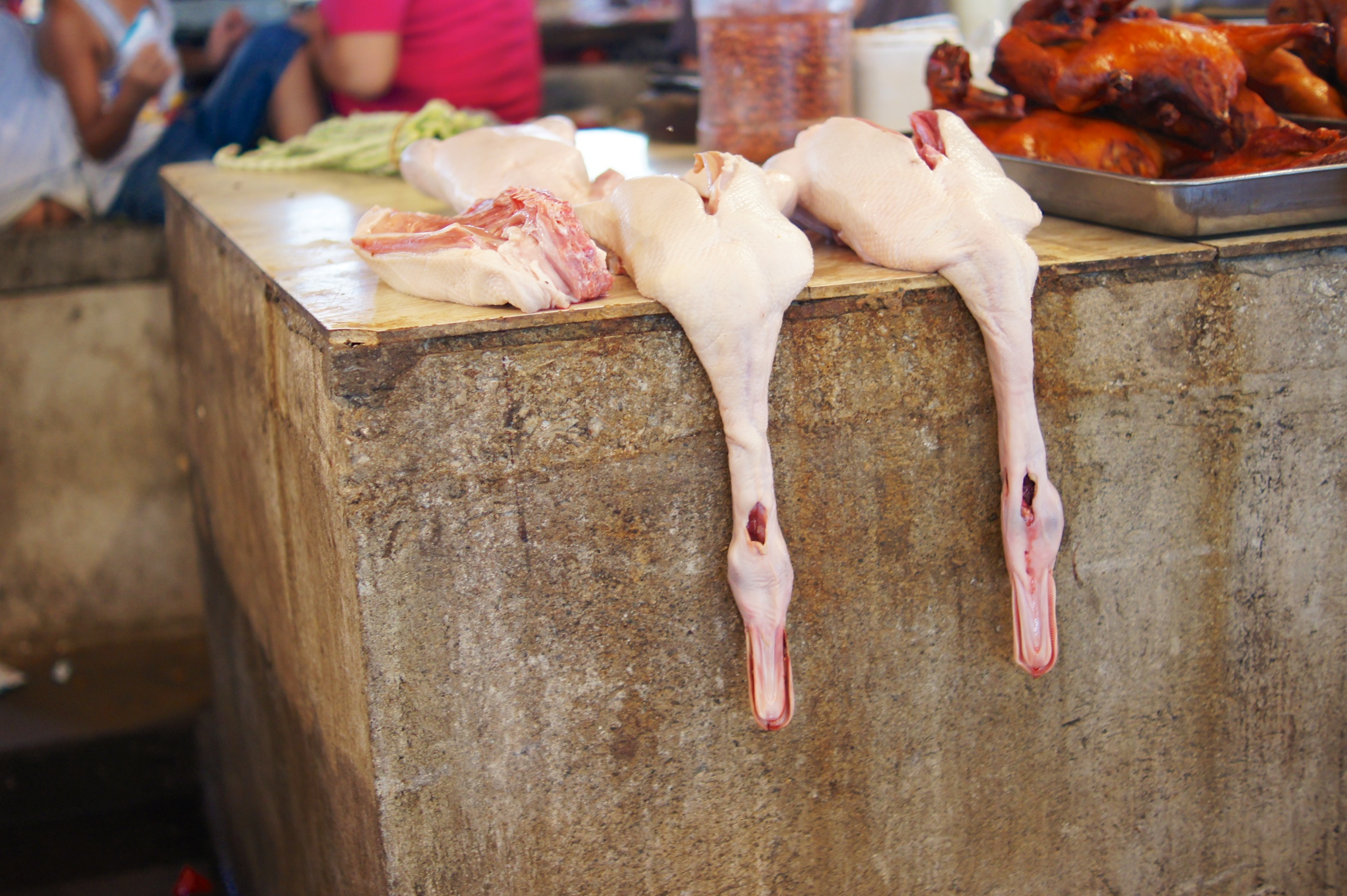
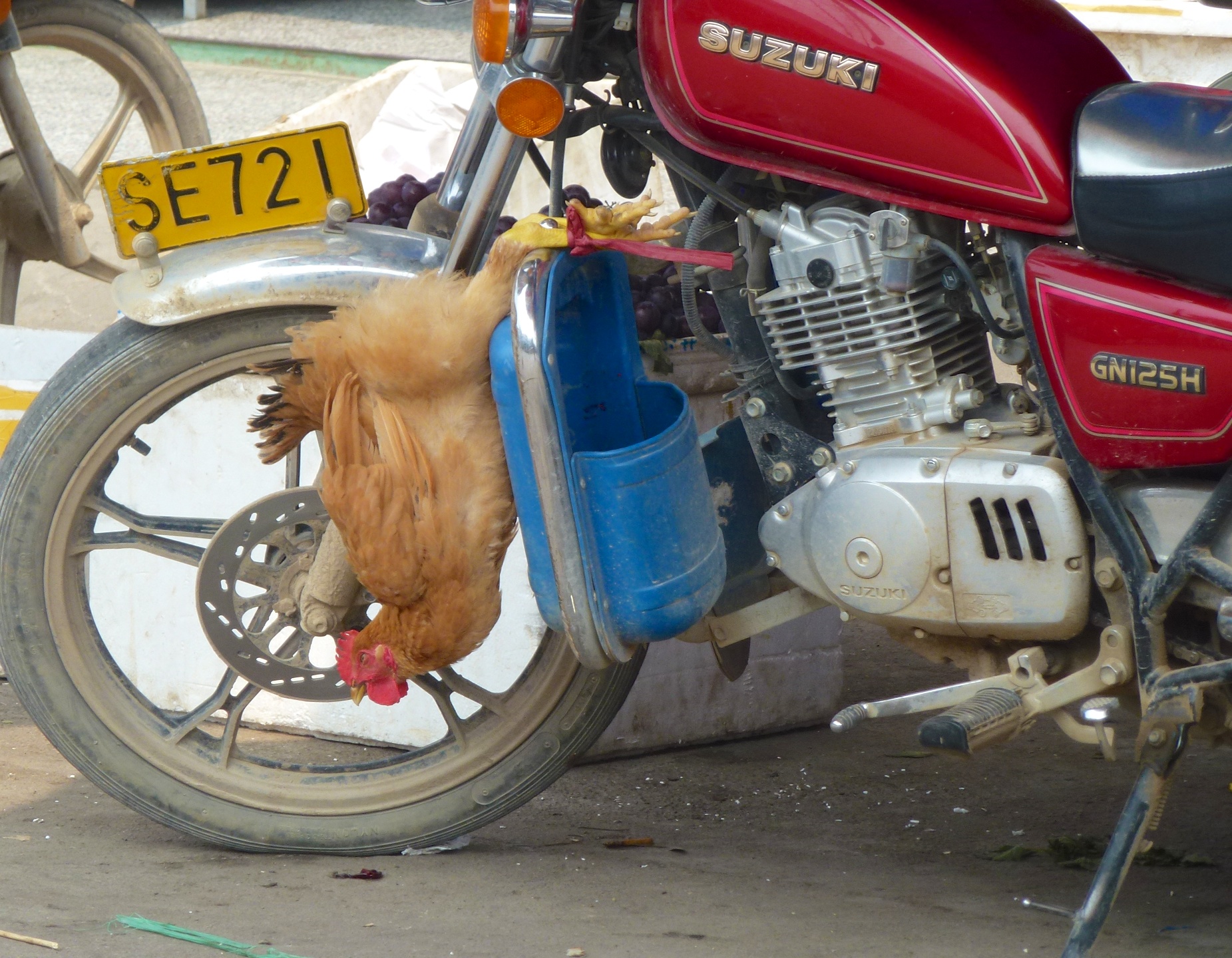
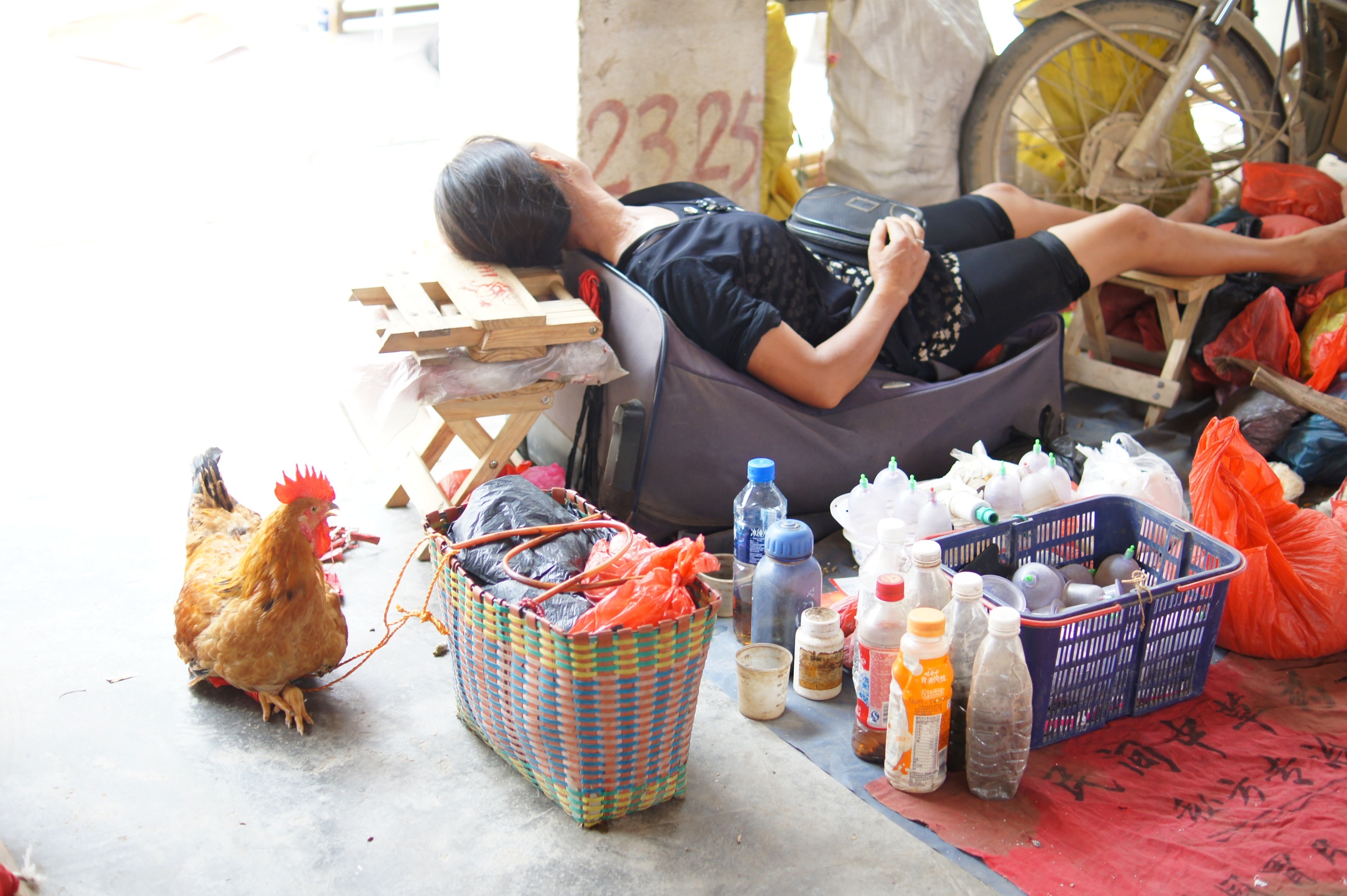
But what fascinated us the most, were the chicken and duck vendors.

How they housed them…


How they weighed them…

How they displayed the cleaned ones…
How they carry them (look near the front wheel). The chicken is still alive for the ride home.


Even how they took naps with them : )
Rafting down the Li River
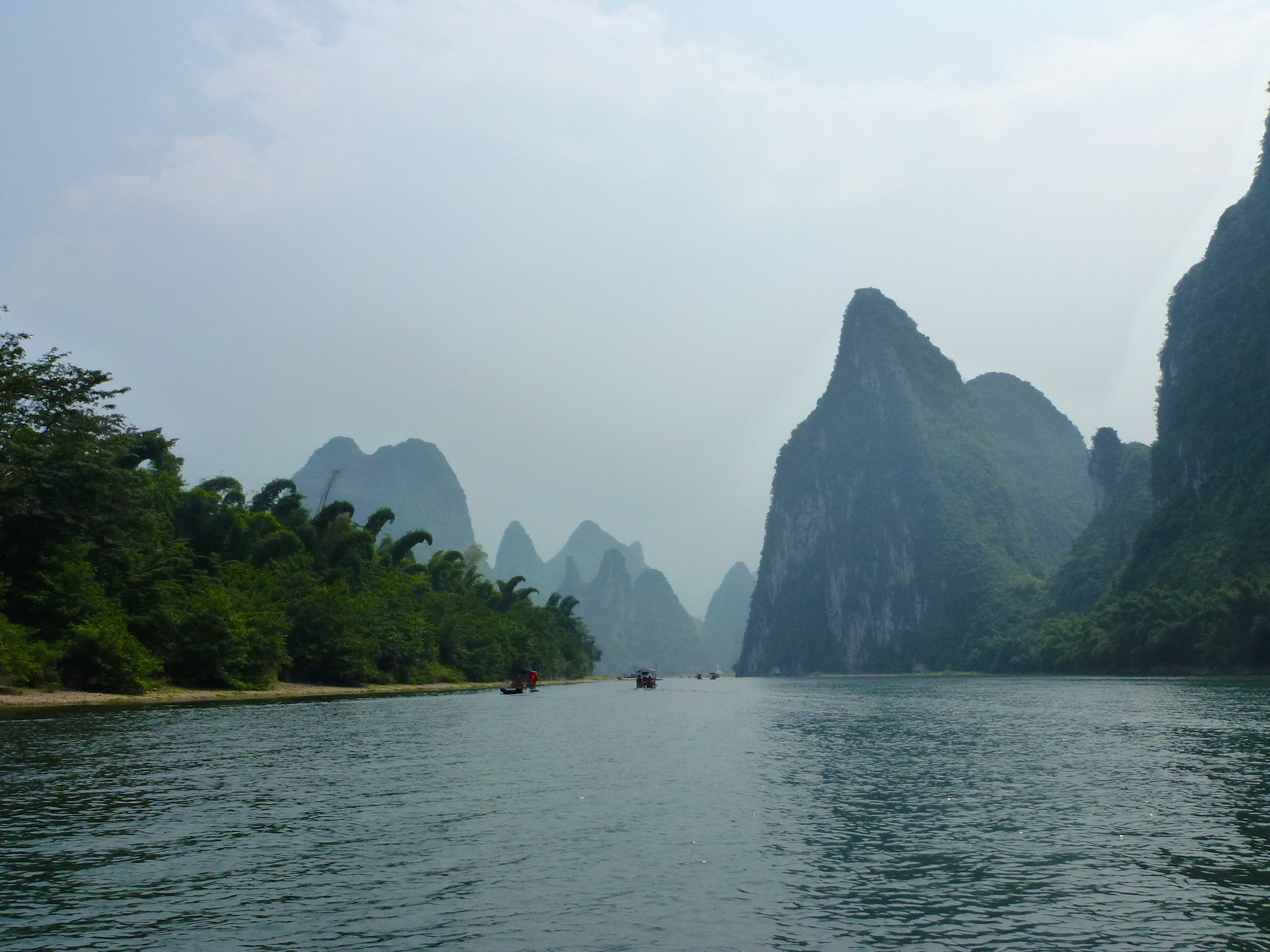
The Li River was as scenic as the Yangshuo River. The mountains seemed to be denser on this river.

This trip was on a motorized raft, but still just the two of us with a gondolier. Most of this region of China is covered in fog year round, but that added
to the mystique of the river. Every corner we went around was more spectacular than the last.

The Li River
originates in the Mao'er Mountains in Xing'an County and flows in a southern direction through Guilin.
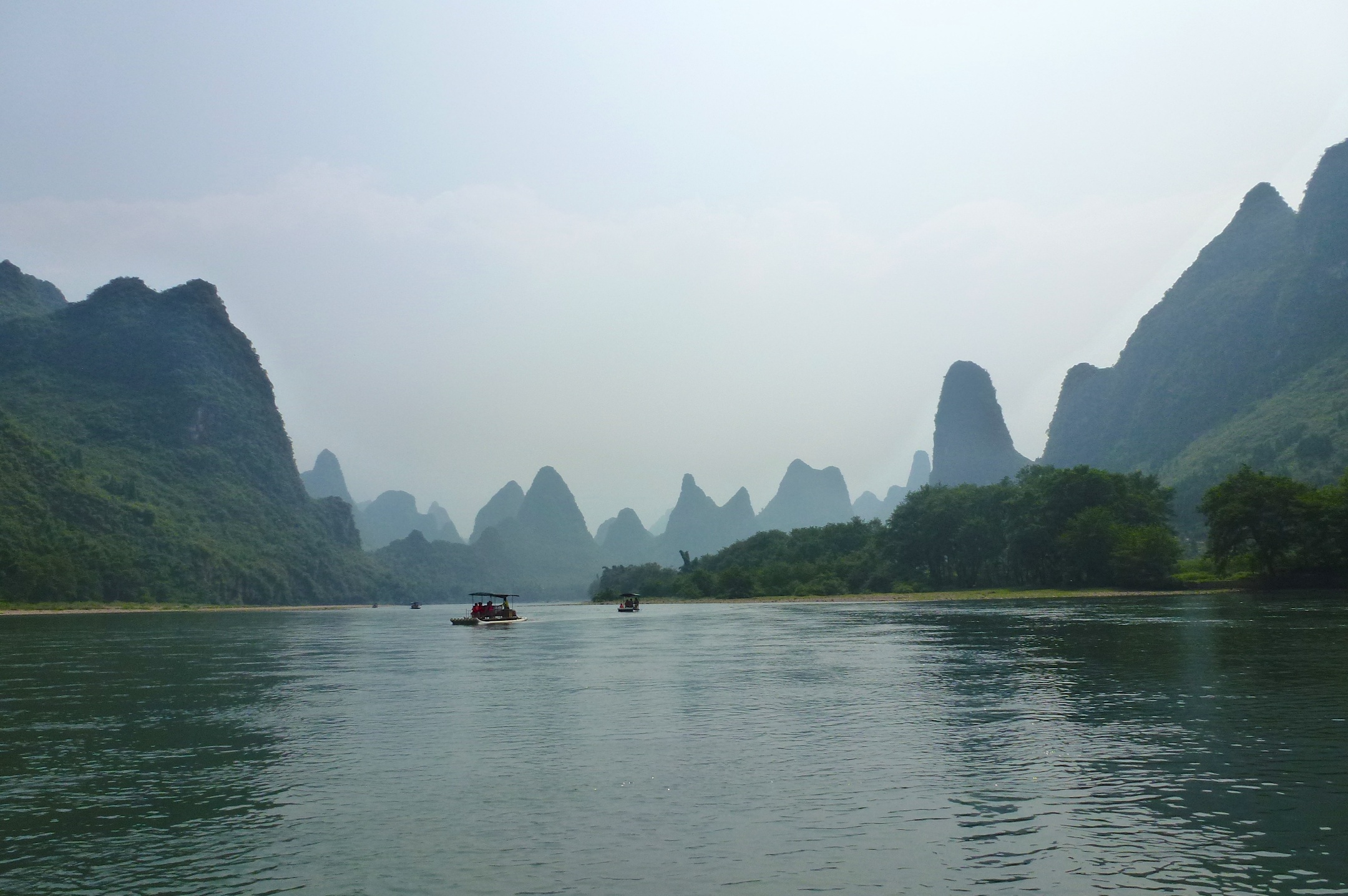
The unusual Karst topography hillsides have been
compared to those at Ha Long Bay, Vietnam, which we visited in May of this year. Both are beautiful sights to see and very different.

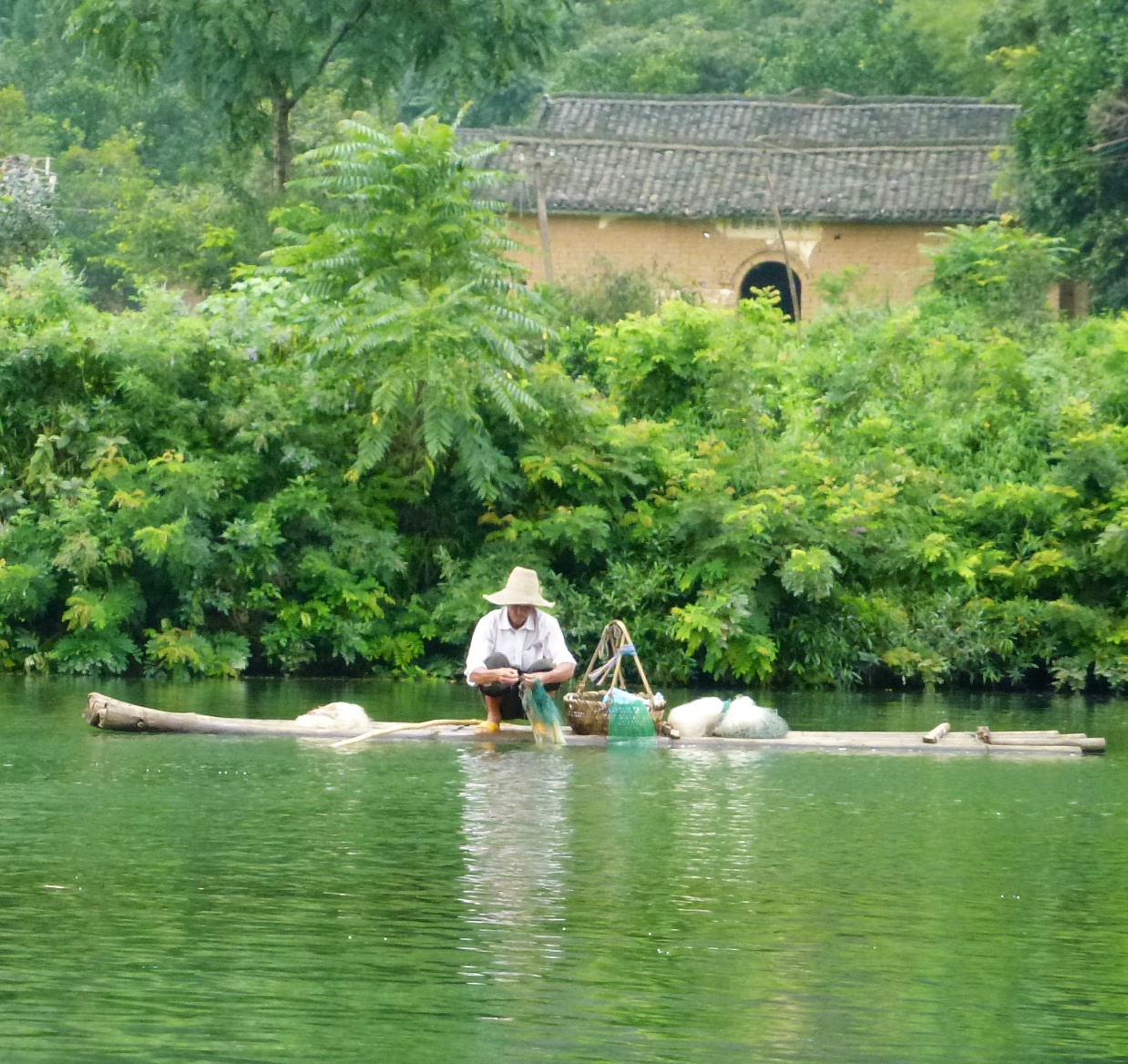
People still live on the water the way they have for centuries.
The town of Xingping
The raft ride ended in the town of Xingping, an ancient town with a history of more than 1300 years.
You can see beautiful examples of the Ming Dynasty architecture, and fine wood carving dating back to more than five hundred years.

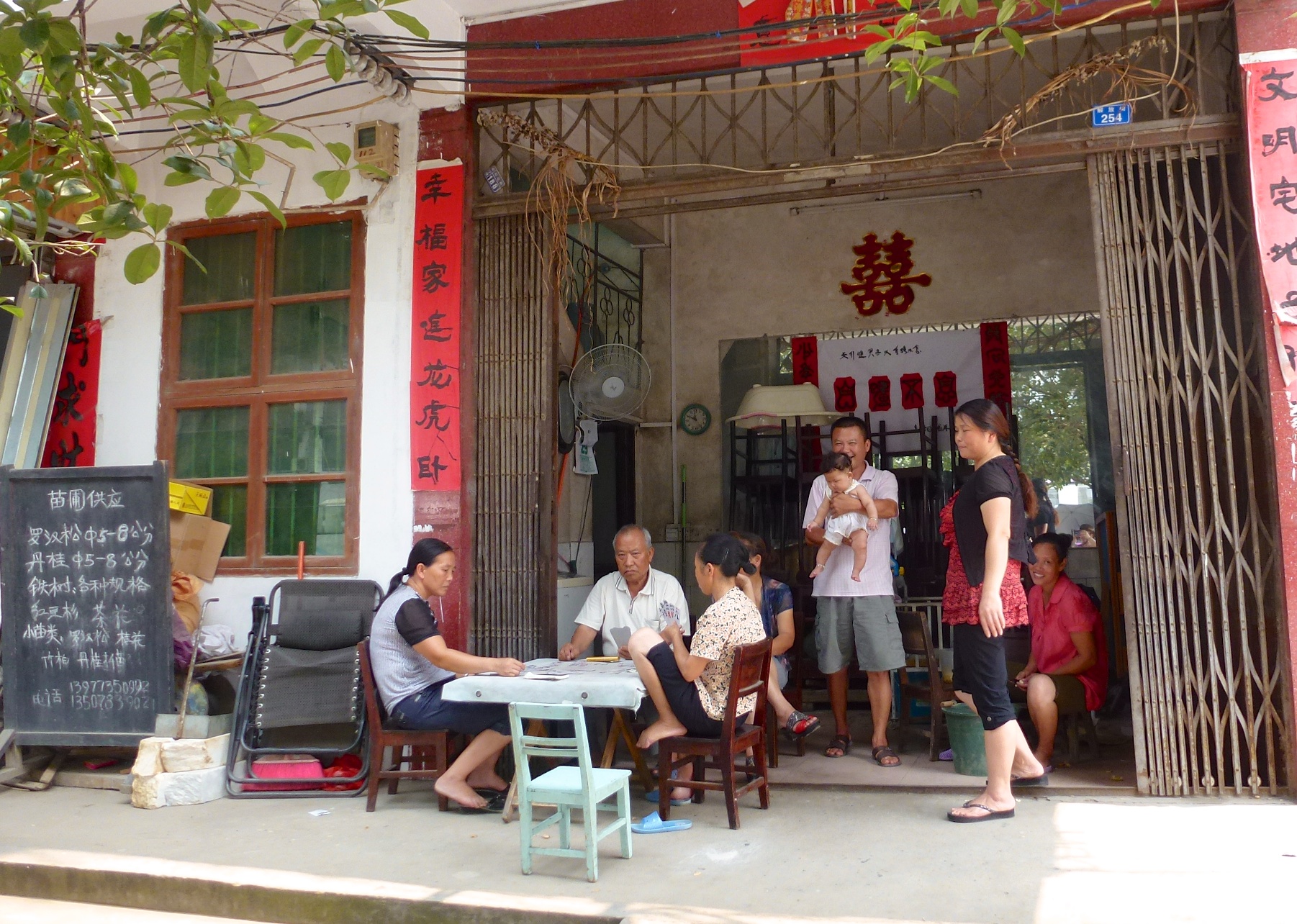
Since the raft trips end here, you would think it would be very touristy. But it was not. We were there around lunch time and the streets were empty. The scene below demonstrates what every single shop keeper seems to do during lunch in rural China: They either take a nap or play cards. Most play cards, and we must have seen hundreds of Chinese workers playing cards every afternoon during this trip.


We
went back to the town of Fuli as we read there was a very quaint part
of town we missed and it was one of the oldest towns in the area, over
800 years old. I like this photo of the young girls, the new generation in a town so rich with history. They look like they are having fun.

I call this photo "the storyteller". Doesn't it look like the wee one is deep in a story and the others are hanging on to every word he says?
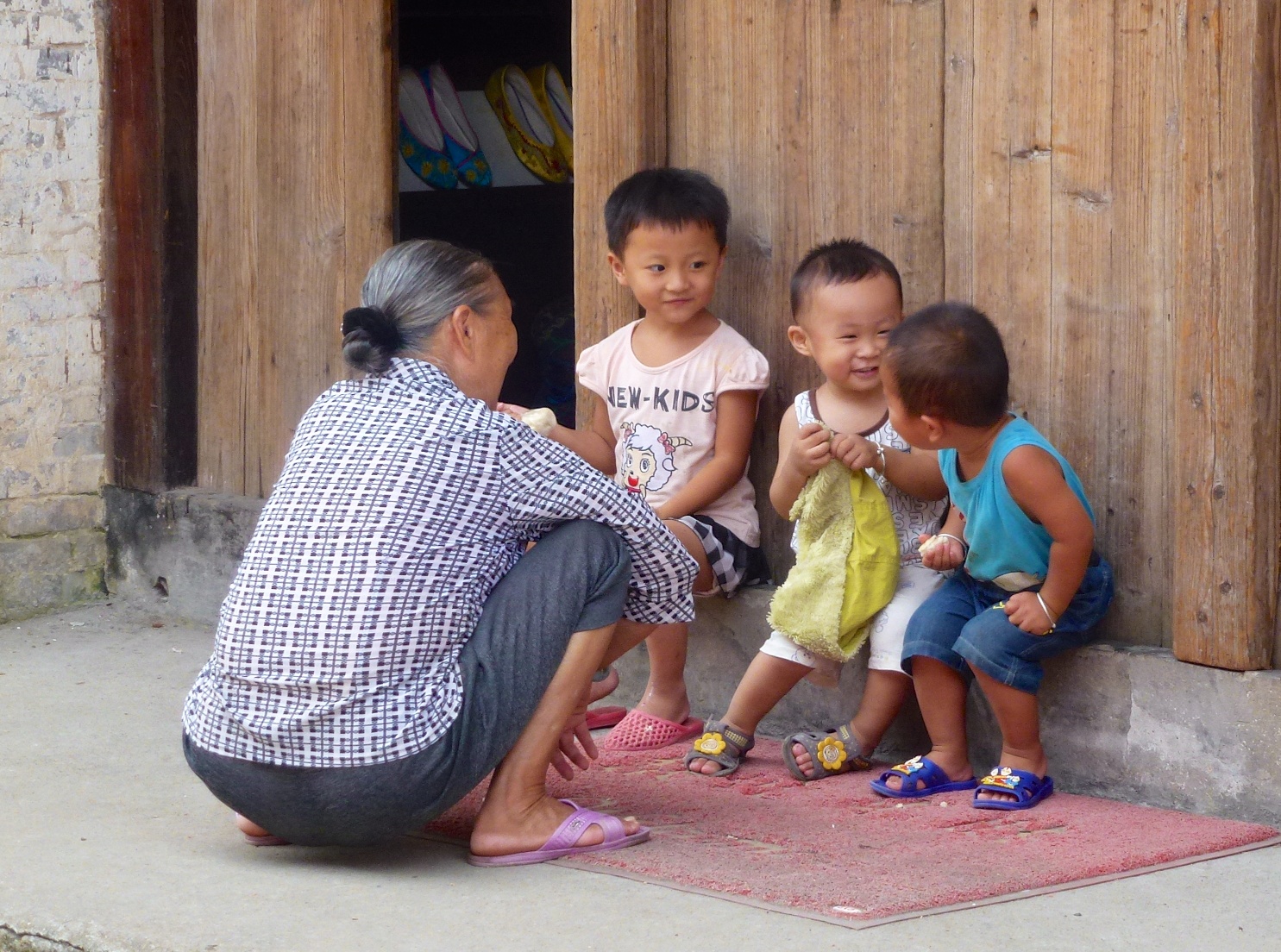
I have to share the second photo of the group – precious!
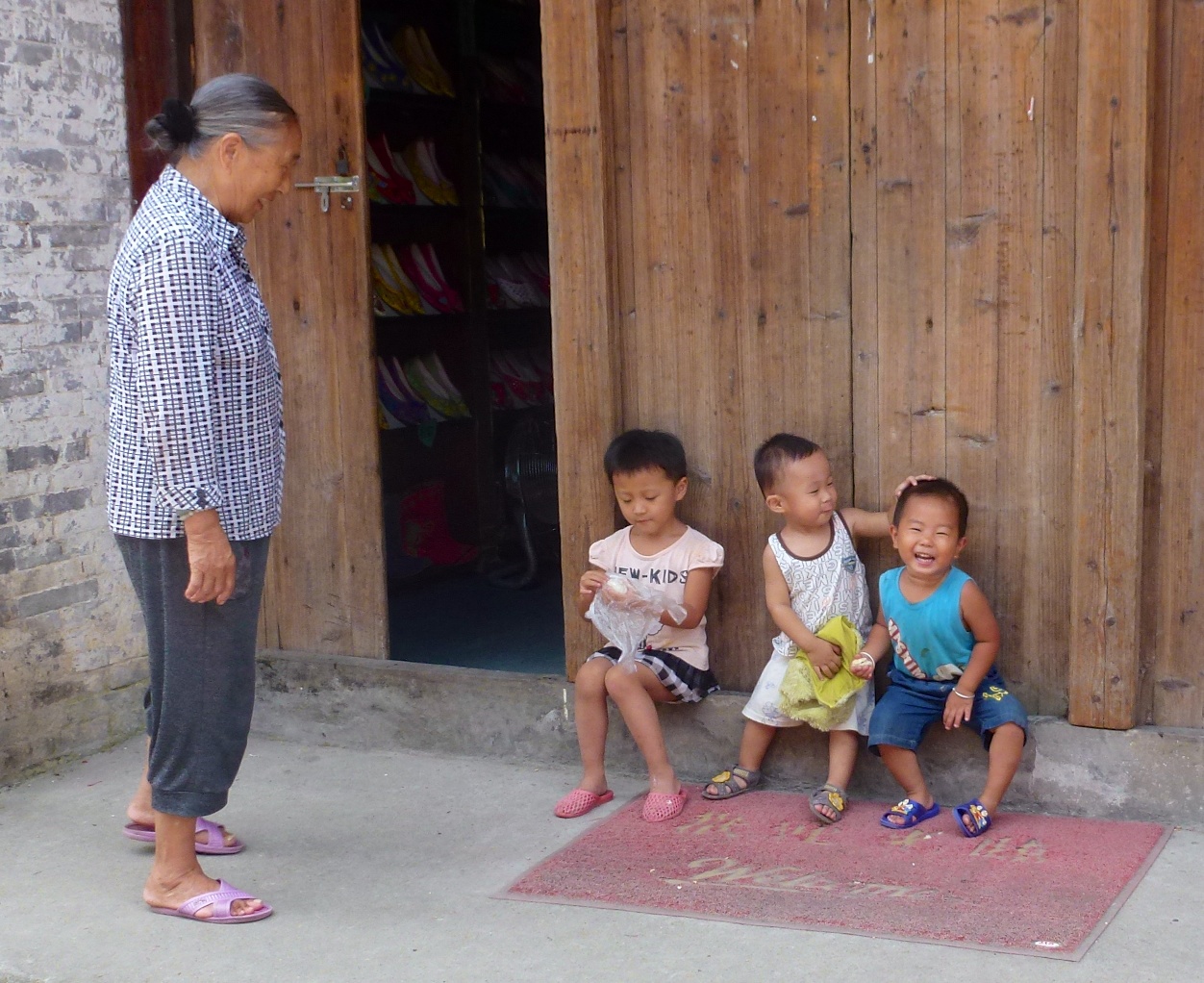
Ohhhhh and one more!

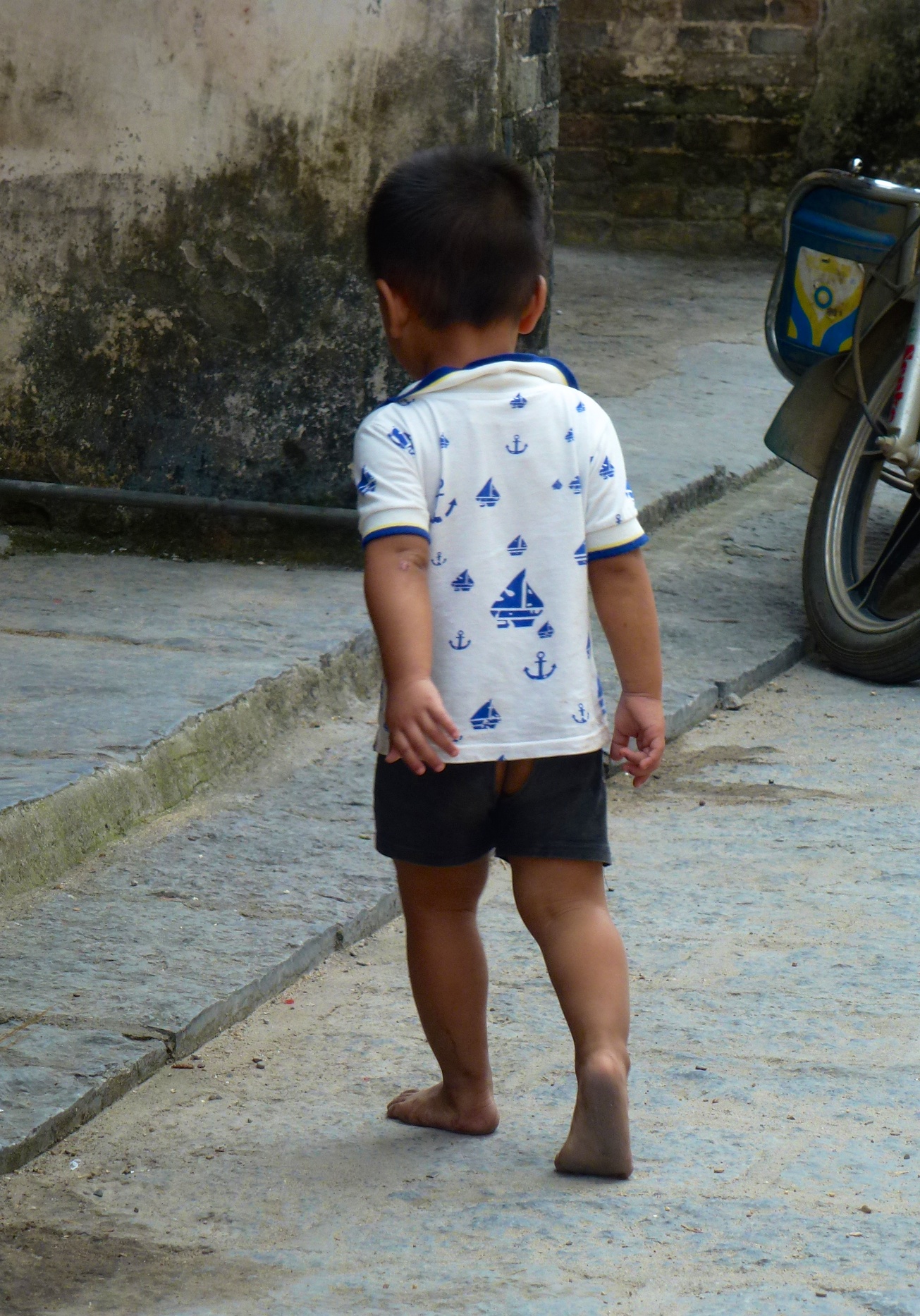
And this little guy…if you look closely you will see the whole back of his pants are slit open. I have never seen this in any other country, but here, it was quite common. All the little children under 3 or so had split pants – no diapers…so they could just pee freely. Where did they pee you ask – everywhere! In the streets, in the stores…. not the cleanliest method!
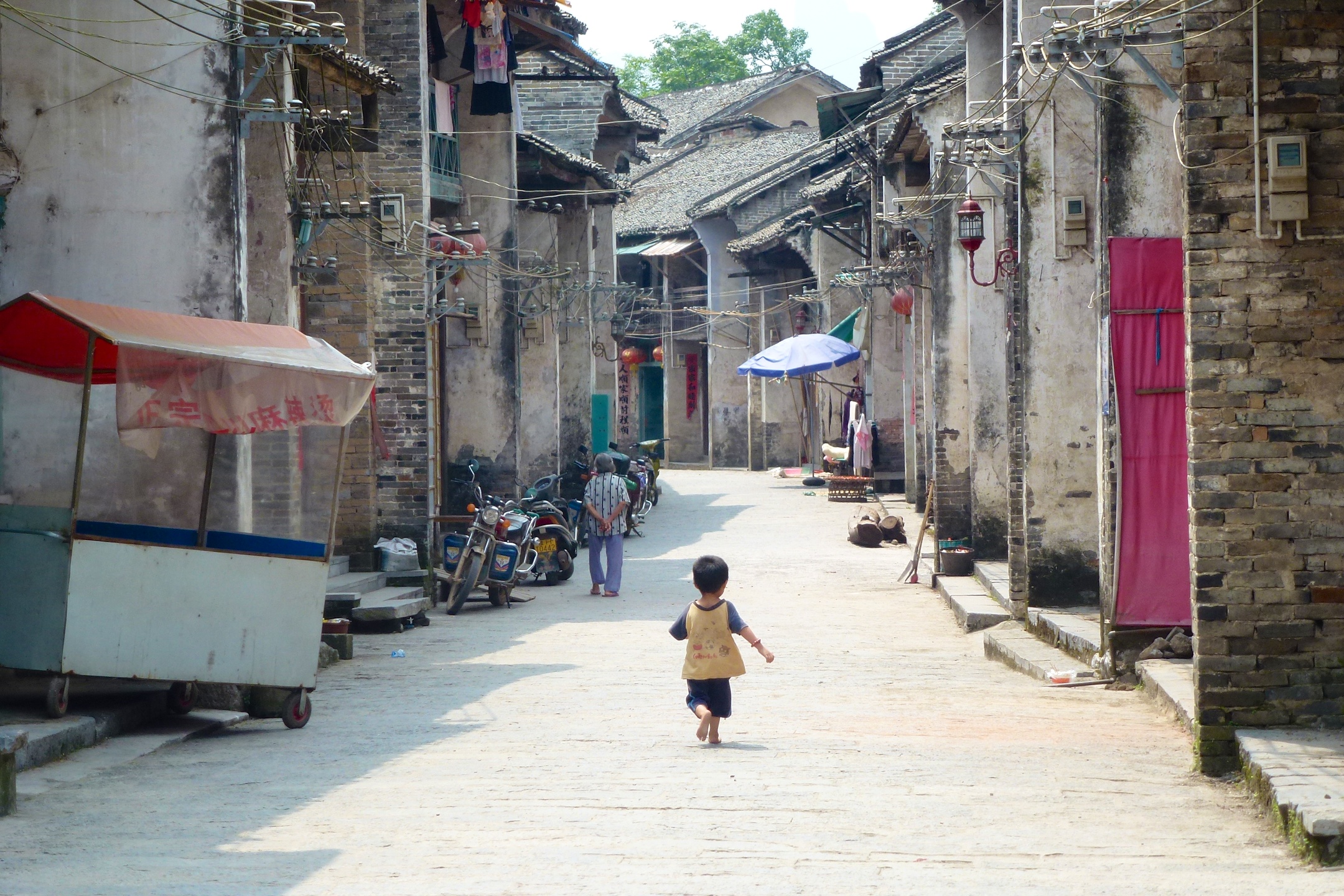
Hey grandma – wait for me!
They were celebrating the festival of the ghost when were
visiting. We went around for two
days saying it was the goat festival.
We were confused when we were at the market because we didn't see any
goats. We even told a few people
(other tourists) that it was the festival the goat. We eventually learned it
was "ghost" not "goat". Not the only
miscommunication we had during the trip
: )
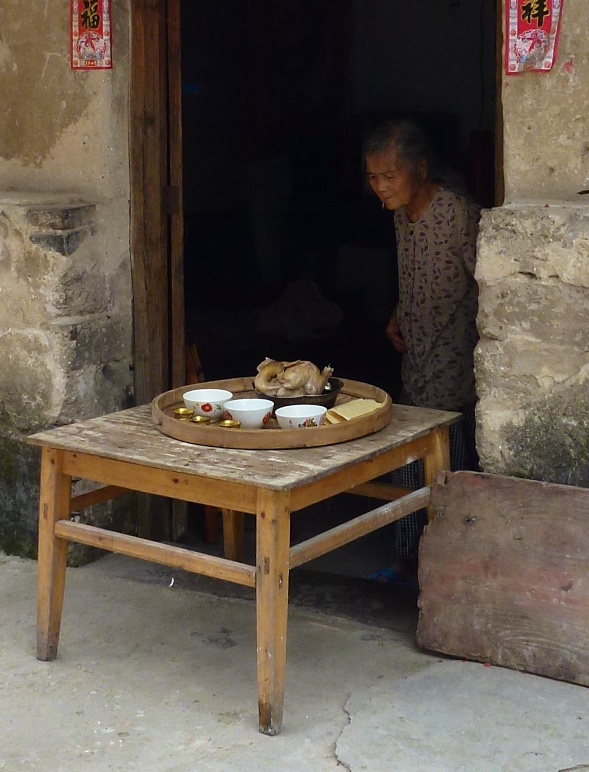
In the photo below, the woman is preparing a chicken. We learned that the family would eat the chicken that was offered to the ghost for dinner that evening.
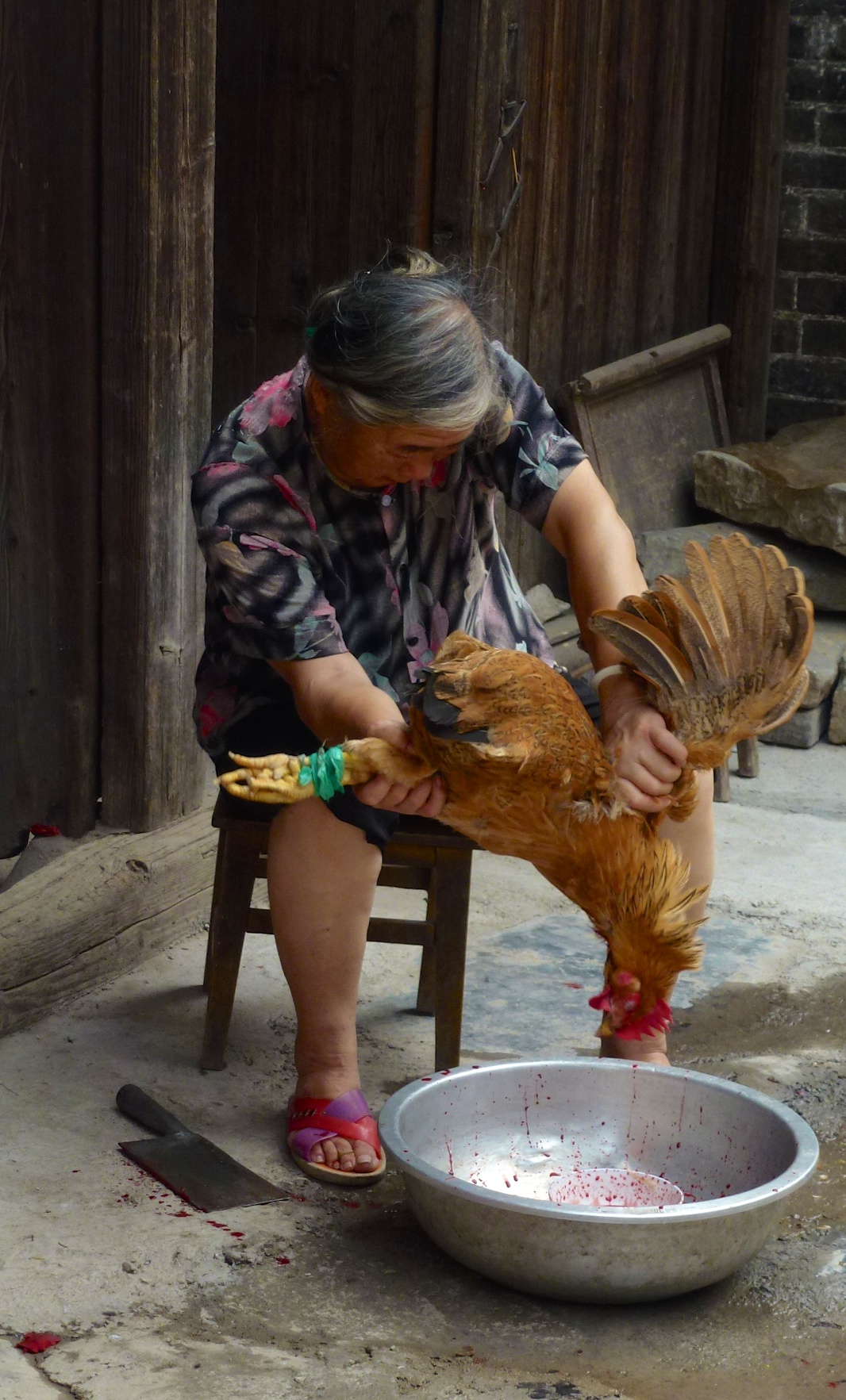
The ghost festival is a traditional Chinese holiday
celebrated on the fifteenth day of the seventh lunar month. The entire month is
actually called ghost month. But
the big celebration is during the full moon. It represents the connections between the living and the
dead, earth and heaven, body and soul.

Activities of
the festival include preparing ritual offerings of food, and burning ghost
money (or paper money) to please the ghosts and spirits as well as
deities and ancestors.
Starting in the early evening – we heard random firecrackers
going off all over our little village and in the distance. We were told that this was done to scare
away the ghosts. I felt pretty
sure I was not going to see any ghosts that night.

Most homes have a photo of Mao Tse-Tung taped to the wall. Commonly
referred to as Chairman Mao, he was a Chinese communist revolutionary, political
theorist and politician and the founding father of the People's Republic of
China (PRC).

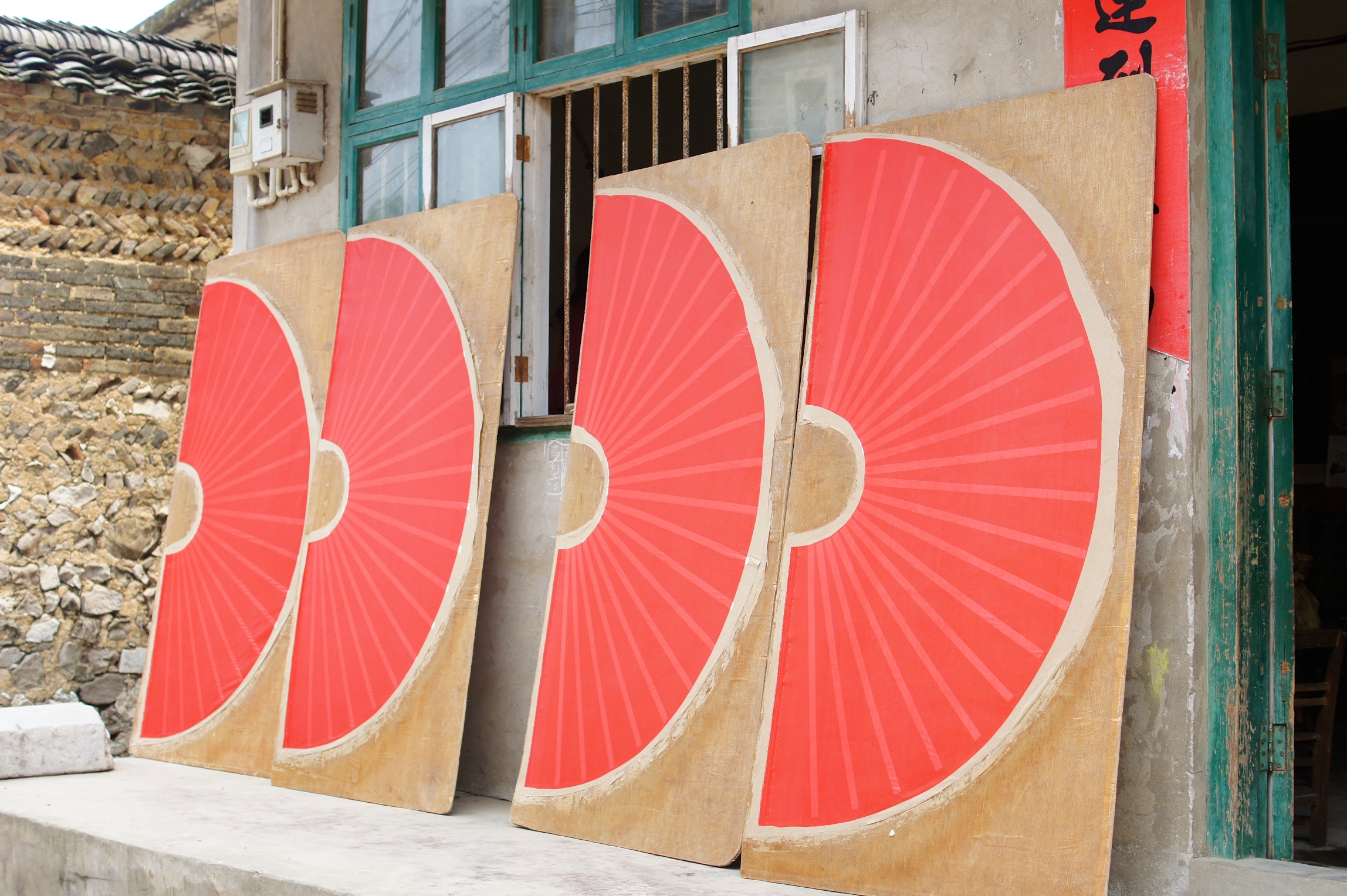
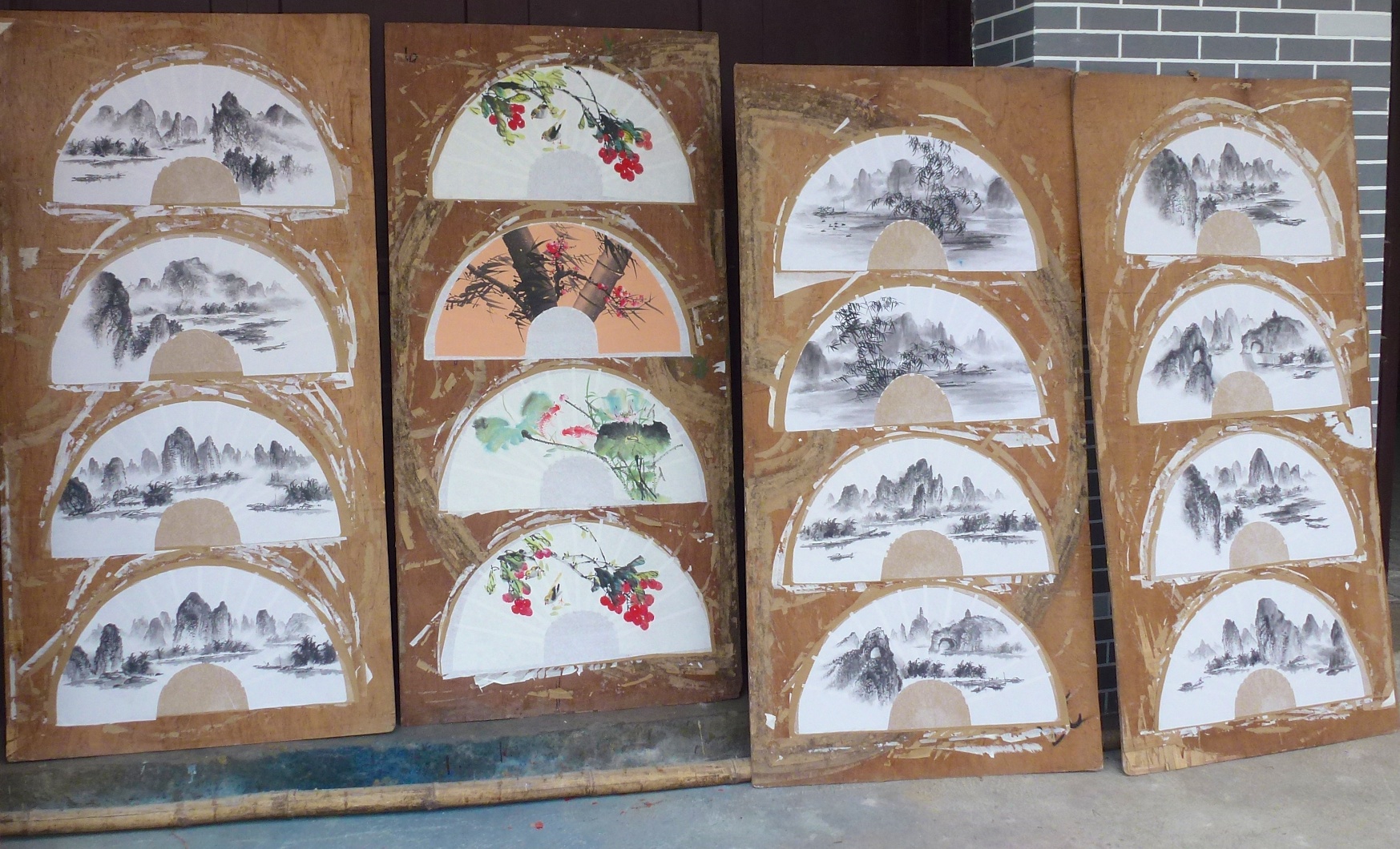
Fuli town is famous for their handmade folding fans. Each fan is one of a kind.


Artists use bamboo to make the fan ribs, and tissue paper for its covering. Below, the spines of the fans are drying in the sun.
Each one is hand painted, mainly with scenes of area landscape, as well as local culture. We did not buy one. Not really our style of decor.
That afternoon we visited Yangshuo, the largest town in the area. It is nestled in the Karst mountains.
Yangshuo is
ancient, over 1,000 years old. It was populated during the Jin Dynasty
(265-420AD).

Isn't this a great photo?

This town had the most beautiful McDonald's setting in the world.

It had a more modern feel then the smaller towns we had visited.

My FAVORITE dish of the entire trip – eggplant hotpot with pork. Perfectly spiced – a little hot. I had it many times during the trip, but this version was the best!

We really did ride in this little truck-like cart, on the highway! We are not sure he was an official taxi. We think he just saw two westerns and figured he could get a little money. We were desperate for a ride, so all parties were happy.

The local dentist office…

and the barber shop.

The ubiquitous lunch scene… with the afternoon card game.
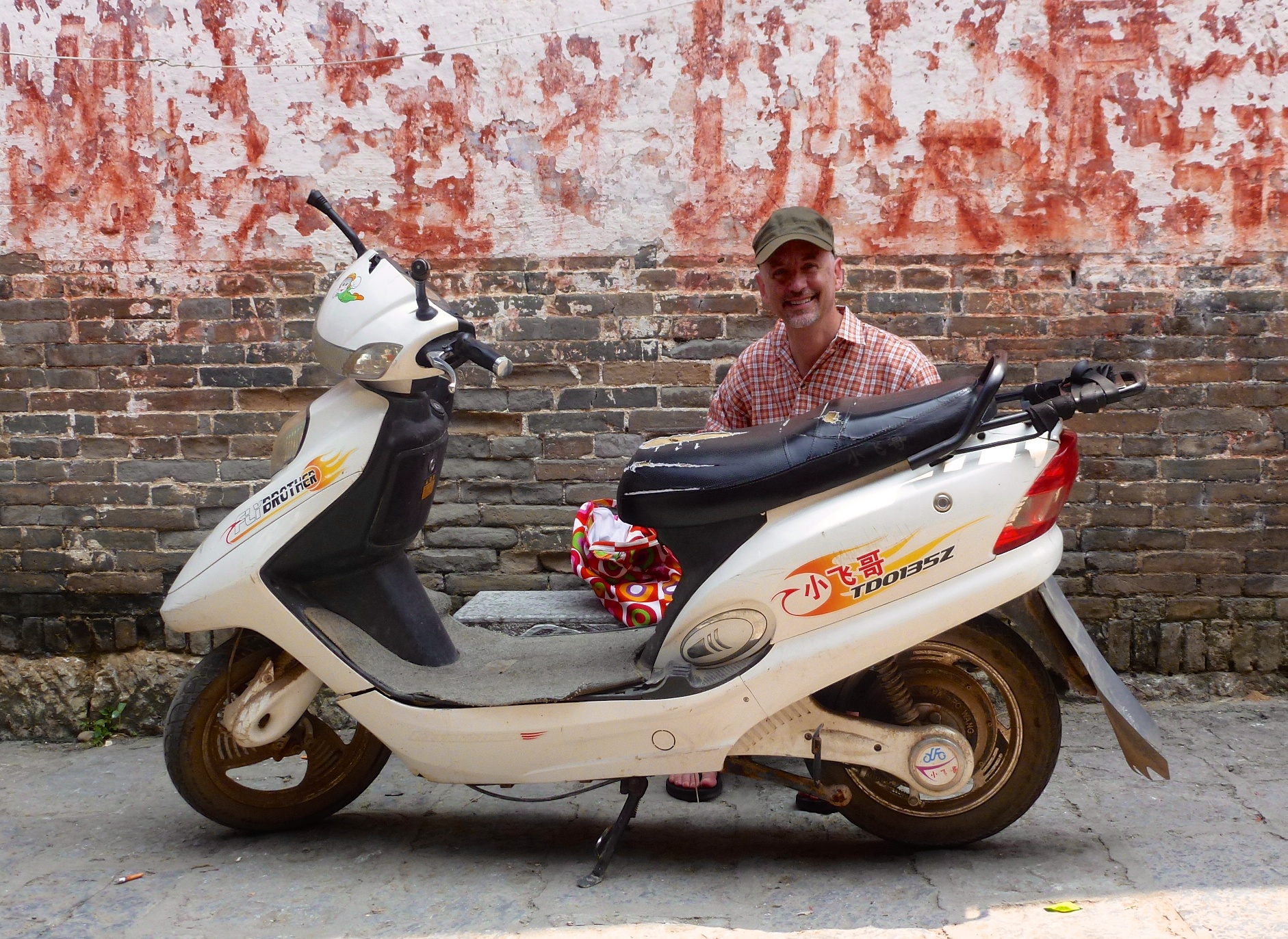
A random photo of D that I really like.
We had so many facintating photos we wanted to share – but the blog just got too long. So I put them in a slide show – with music. We hope you enjoy it!
Click here for part two of the China adventure – The striking Dragon Rice Terraces of Ping An.


 The XtraSuitcase
Leave a comment