Yangon, Myanmar
January 2013
Yangon, formerly known as Rangoon, is the largest city in Myanmar, with a population of over 4 million people. It was founded in the early 11th century (circa
1028–1043) by the Mon.
The highlight of this city is the Shwedagon Pagoda. Also called the Golden Pagoda, it is a stunning structure. You can see the dome (or stupa) from almost anywhere in the city.

The base is built
from brick that has been covered in gold plate. The crown of the Pagoda is
tipped with 5,448 diamonds and 2,317 rubies, and at the very top a diamond
bud tipped with a 76-carat diamond.
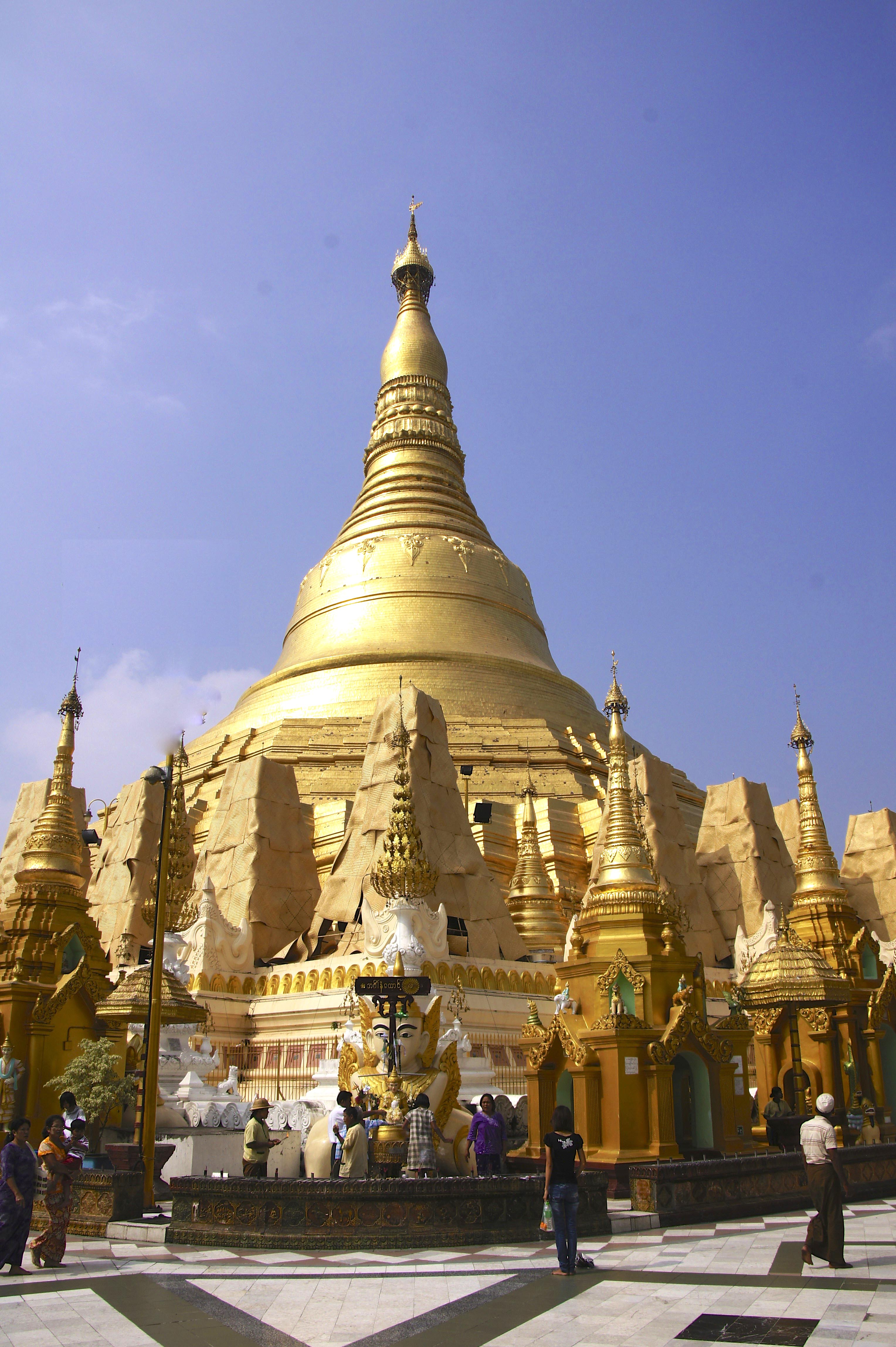
As you can see from the photo above, construction was being done on several of the small, surrounding stupas and they were covered in cloth.
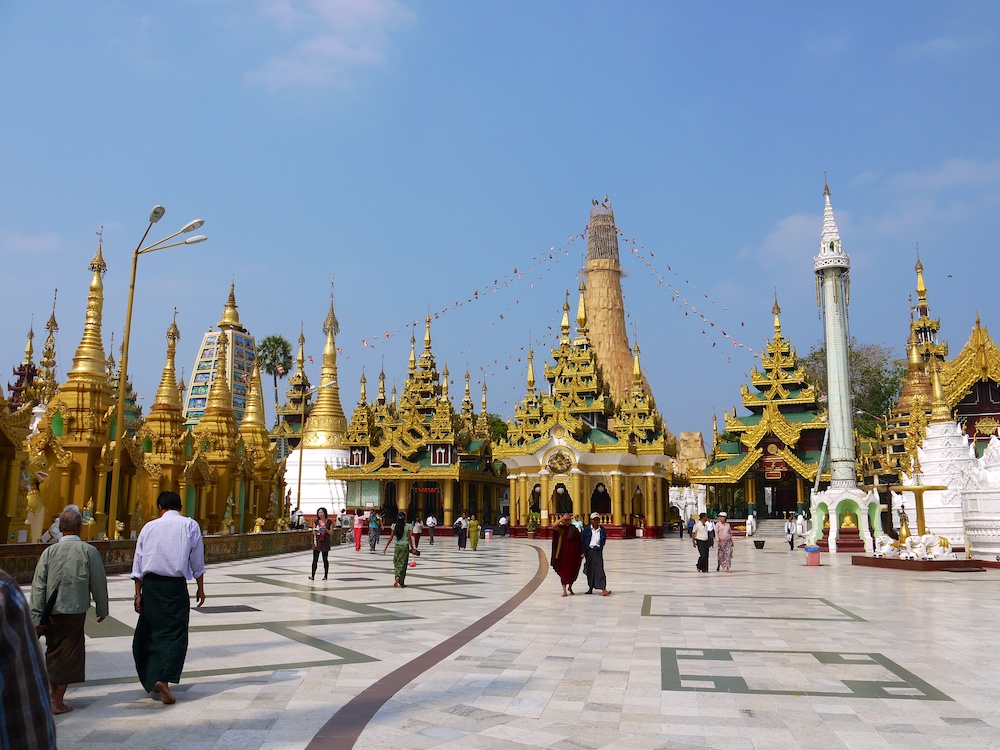
According to legend, the Shwedagon
Pagoda has existed for more than 2,600 years, making it the oldest historical
pagoda in Burma and the world.
Some historians and archaeologists believe it is only 1.400 years old, built by
the Mon people between the 6th and 10th centuries CE.
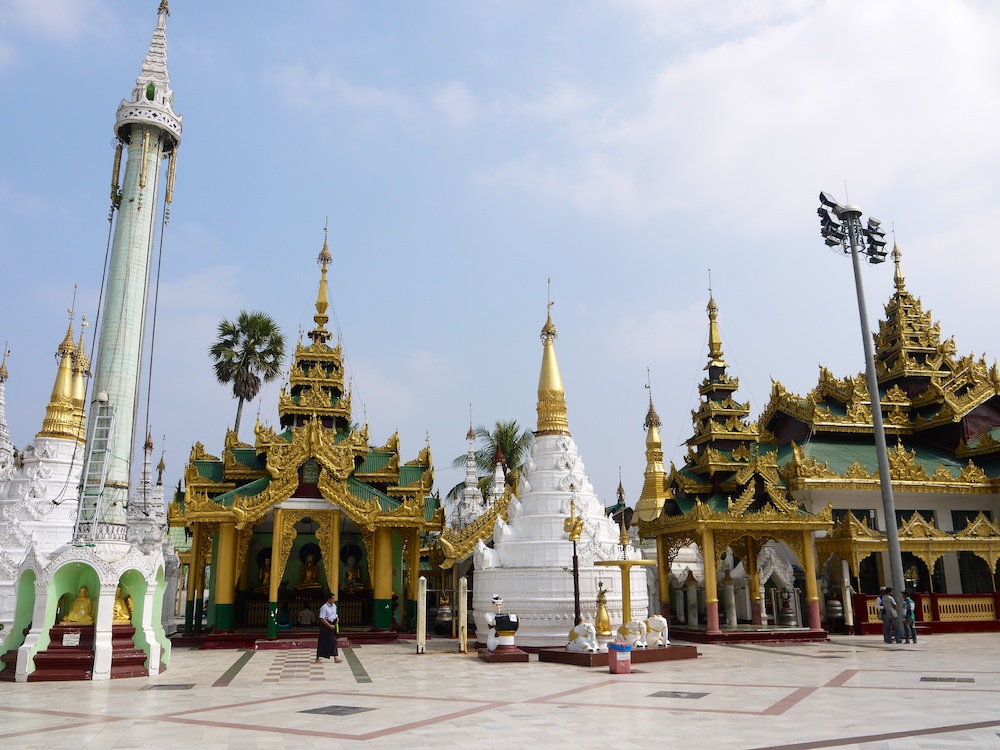
The Shwedagon Pagoda is Buddhist, as are most people in Myanmar (89%). They practice Theravada Buddhism, the oldest surviving Buddhist branch, where they study "the Teaching
of the Elders".

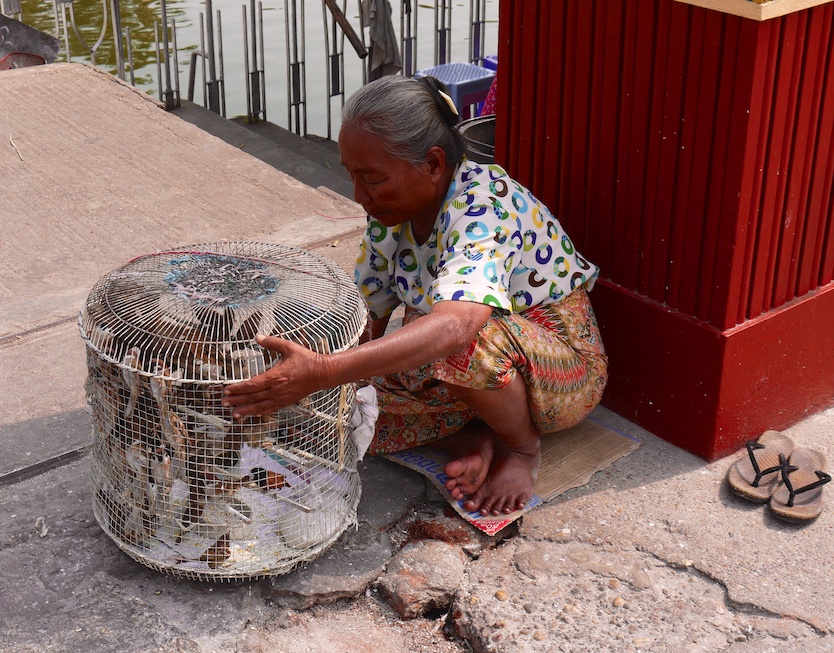
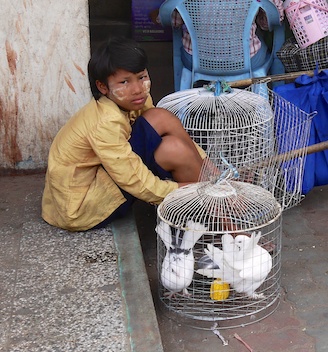
Outside the temple people sell birds to release for merit. Buddhists believe that
releasing animals back into the wild can help an individual to accrue merit.
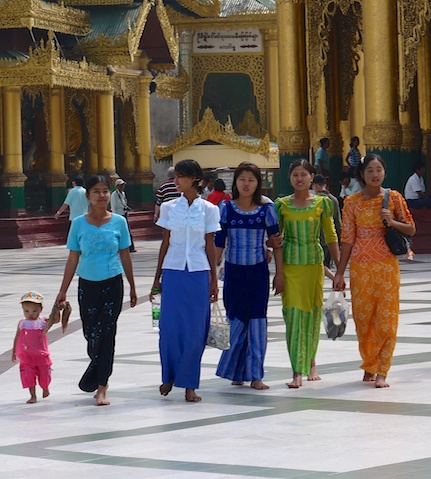
All visitors must remove their shoes to visit the pagoda. The skirts you see on the ladies below are called longyi and are an integral part
of the Myanmar wardrobe. Both men and women wear them. It is fabric sewn into a tube-like shape. It is slipped over the head and tied in a knot at the waist.
We visited the pagoda three times because the light can vary significantly from morning until night, giving it a very different feel. Our first time was around noon when the monks make their daily walk.

And said their prayers.

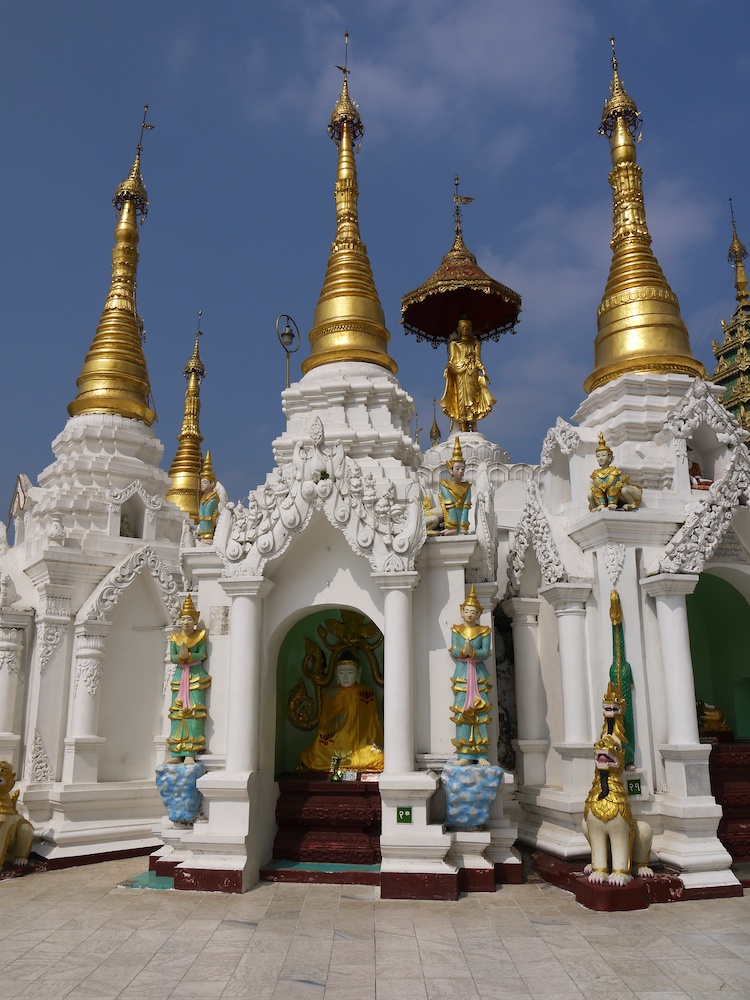
There are hundreds of small stupas that surround the large one, each housing a Buddha.
Notice how the large Buddha dwarfs the monk praying. The position of the Buddha's hands means protection, reassurance, and blessing.

The roof had intricate carvings all in gold.

Many Buddhist believe in astrology and it is very important for them to
recognize the day of their birth by pouring cups of water over their "posts" to avoid bad luck and misfortune. They say to pour one cup for every year you have lived.

There are eight posts; Wednesday is split in two,
a.m. and p.m. They are marked by animals that represent the day: Bird for Sunday,
tiger for Monday, lion for Tuesday,
tusked elephant for Wednesday a.m., tusk-less
elephant for Wednesday p.m.,
mouse for Thursday,
guinea pig for Friday and dragon for Saturday.

I randomly picked one to pour water on… Tuesday the Lion. Later I learned that I was born on a Tuesday so that was my post! I am also a Leo….so a double lion. D was born on a Saturday and is a dragon. If you Google "what day of the week was I born" you can find your post.
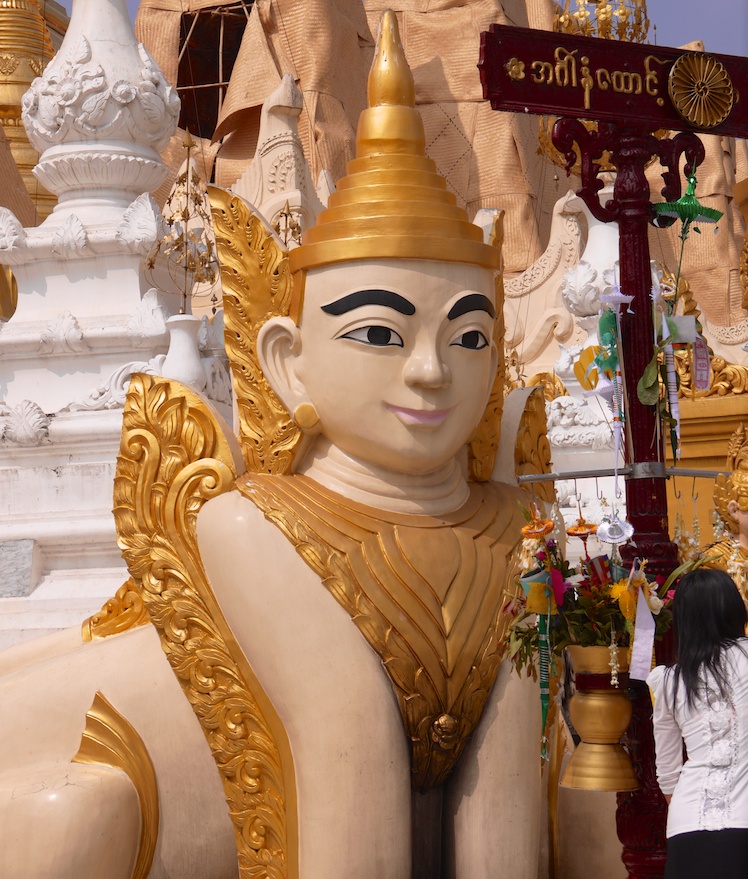
Shwedagon
Pagoda is regarded as the most sacred Buddhist pagodas in all of Myanmar. It
contains relics of the past four Buddhas. To see more Buddha images from Myanmar, vist my art blog, Ma Vie Trouvee.

We also went to the Pagoda at sunset.

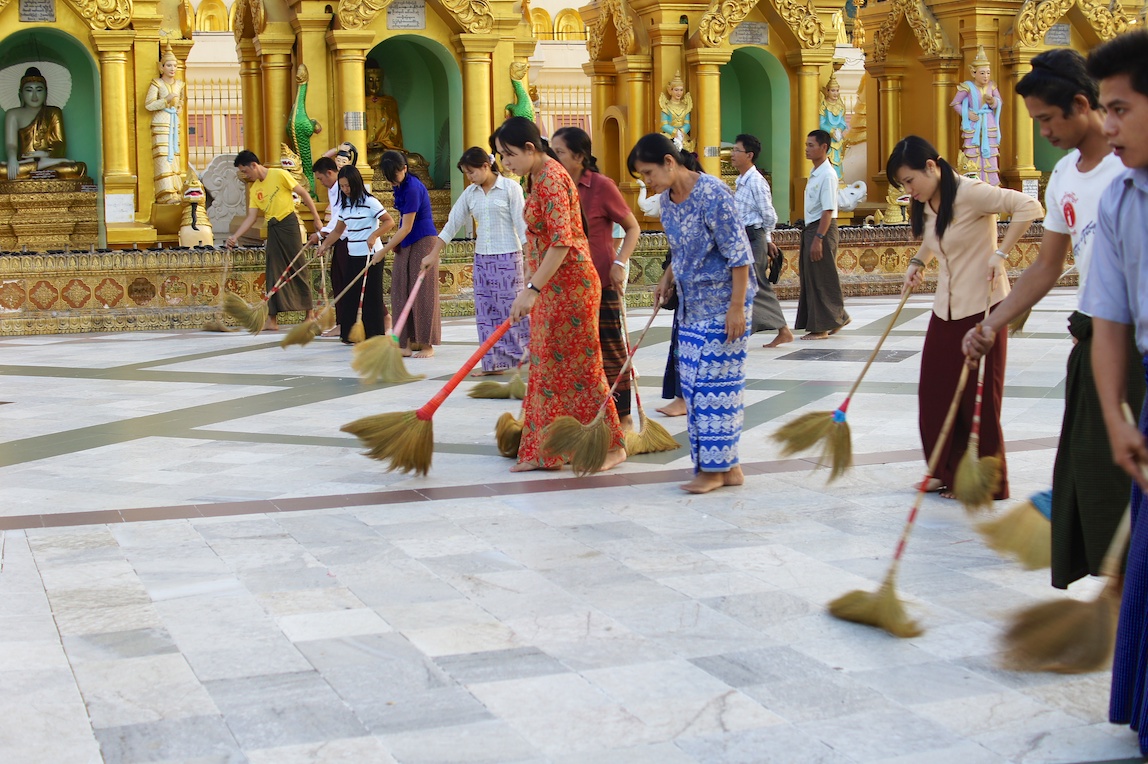
Volunteers help to sweep the floors in the early evening. It is said to bring good luck to those who participate.
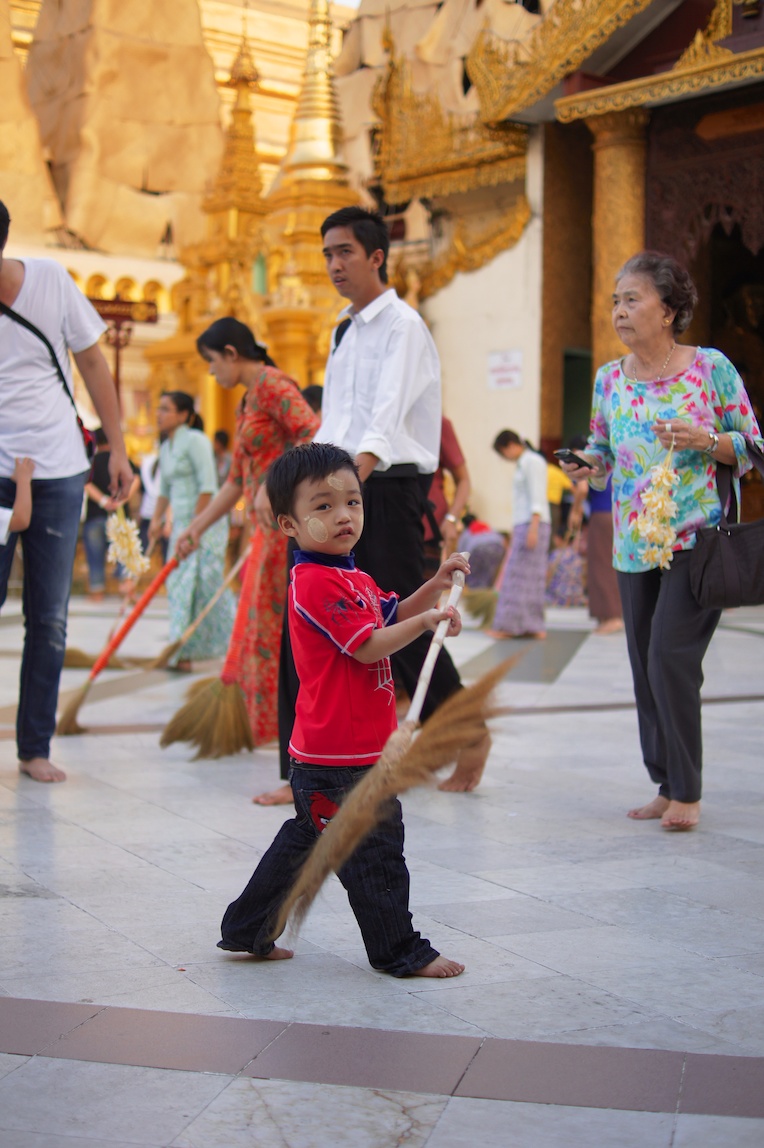
Even the little ones helped out.
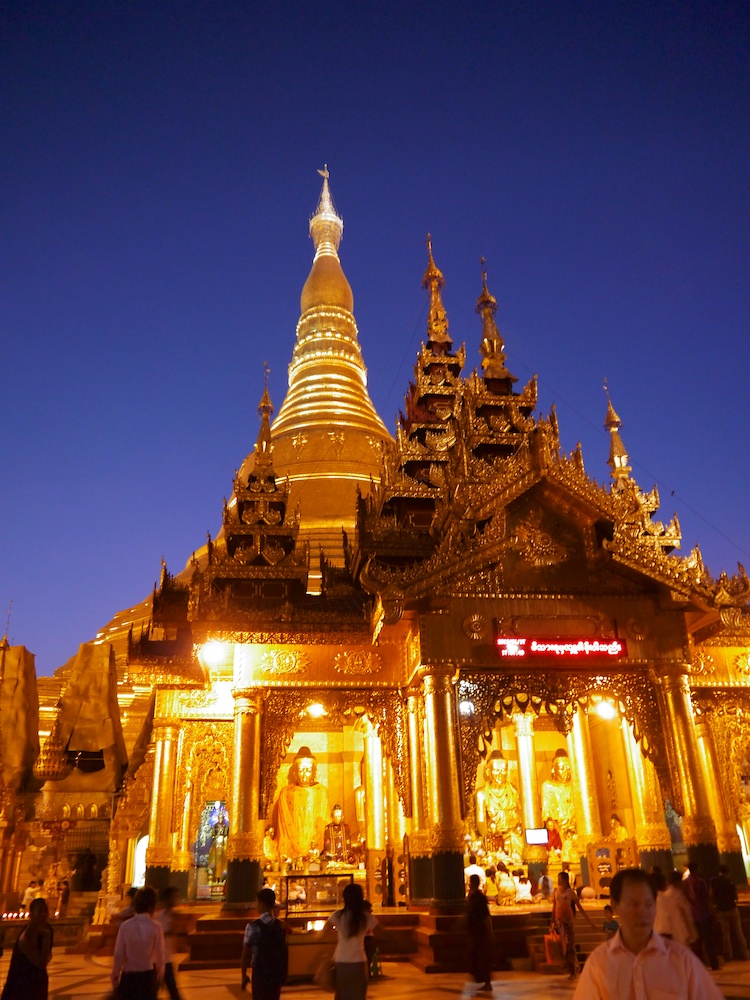
The Pagoda was equally as pretty at night.
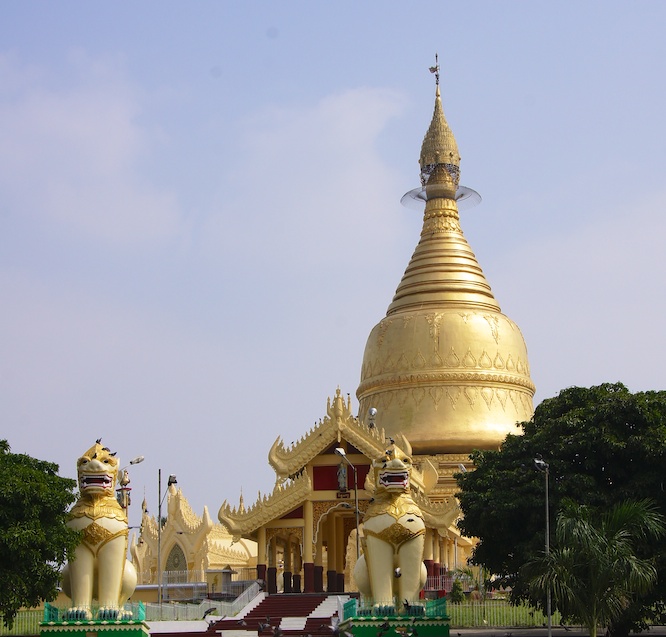
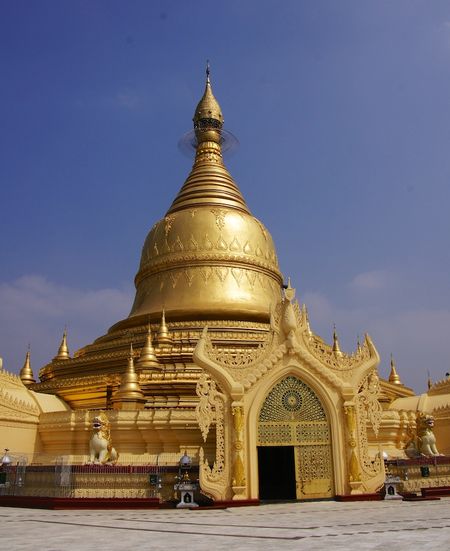
Another beautiful structure, the Maha Wizaya Pagoda. A new Pagoda, built in 1980 has a mix of modern and traditional architecture.
A bit about money…
They
were implementing the very first ATM machines while we were there.
Really, the only way to get money is to take US dollars and exchange
them at the airport or a bank. When D was in the states he went to the bank and looked at every 100 bill before accepting them. They must be brand new (big head),
with no marks or creases. They refused to accept one below because
of the small red mark at the very top, caused by the counting machine
at our bank in the US. And NO credit cards!

A co-worker had traveled there a few years before and out of
400 $100-notes he carried; he was only able to use one! We think they have become
less strict with more tourists visiting, but if you plan to travel there, don't
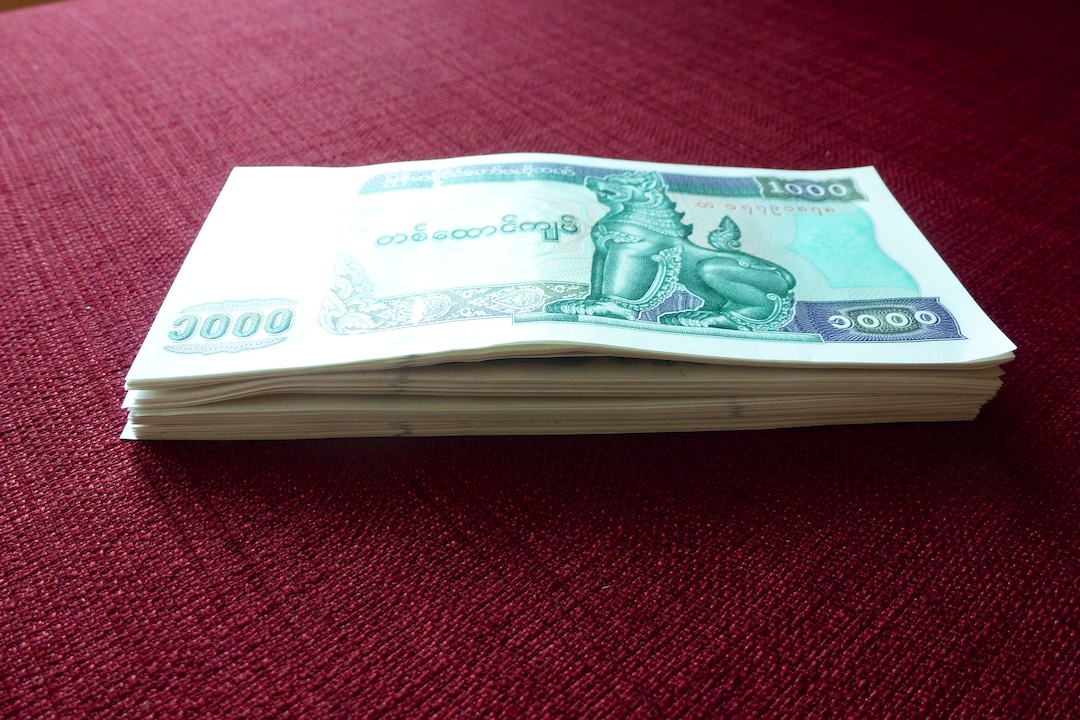
take any chances. Interestingly, they gave us all 1000 kyat-bills in exchange; equal to $1 USD each. It was quite the stack to carry around – but easy to calculate when paying.
The Streets

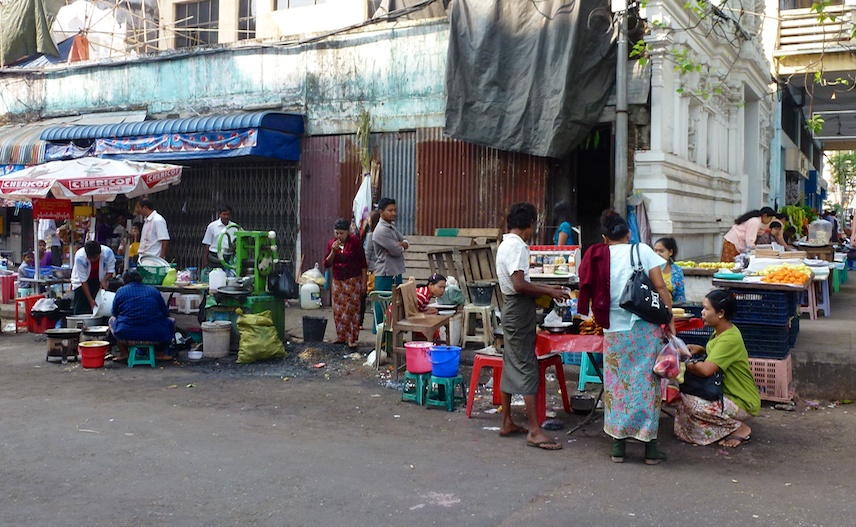
Yangon is a very crowded, dirty city –
both the streets and the air. We loved that is felt "untouched" and
"raw". There are no fast food restaurants or American chains of any kind.
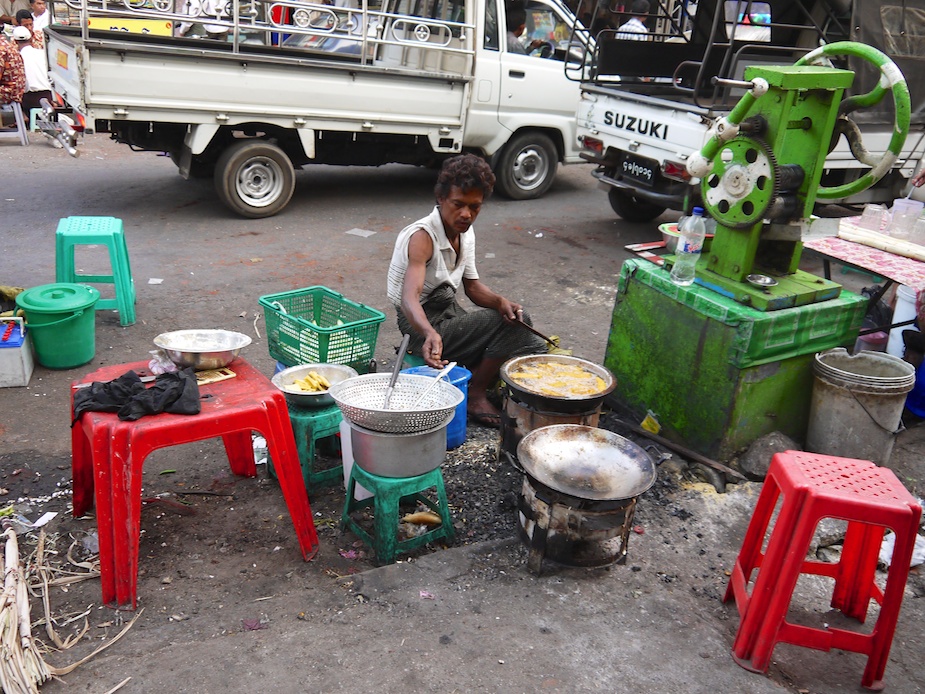
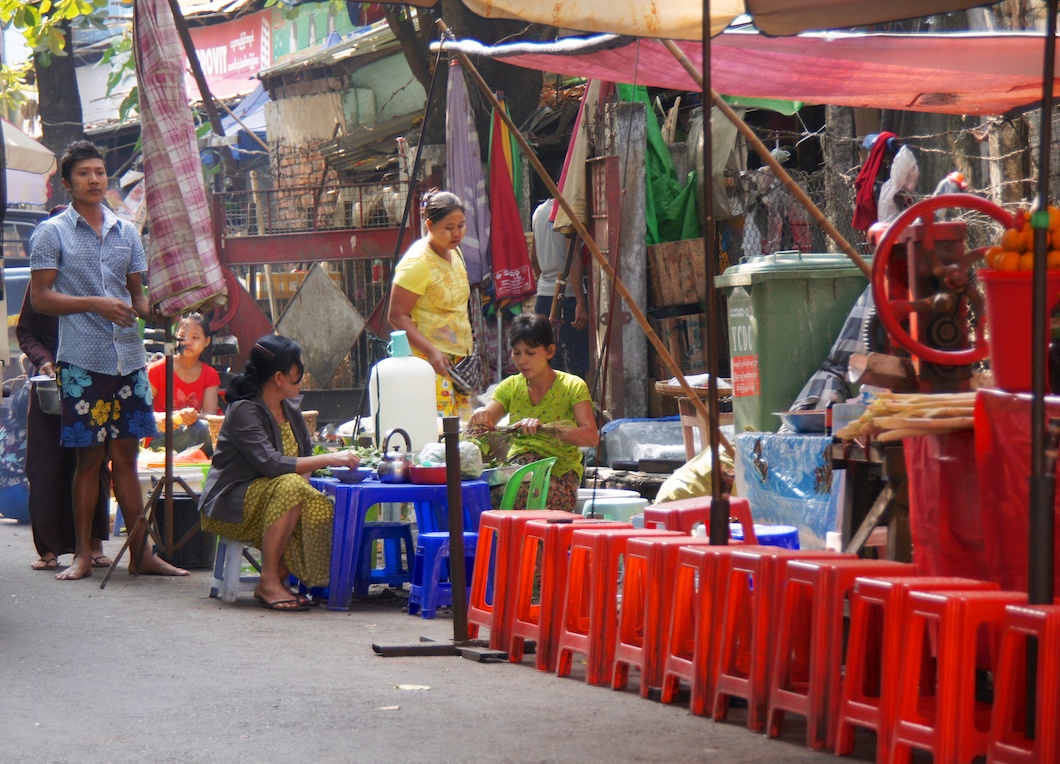
Like many countries in Asia, the people use the streets as living space, particularly for eating.
We
spoke to a woman who has been traveling here for the last 10 years and
she said that just last year, there were 75% fewer cars then there are
today. It is changing fast.
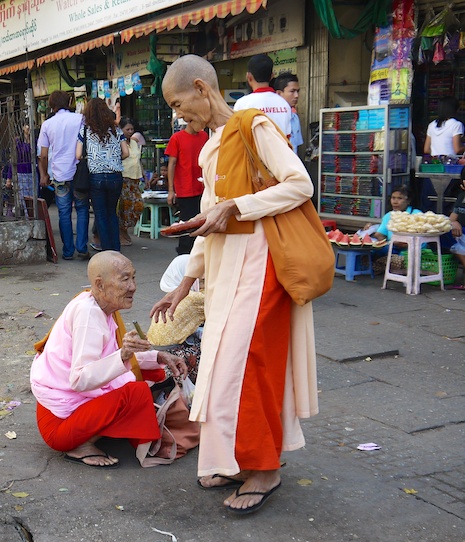
These two women are nuns. Yes, sharing a cigar!
Most people carry one of the silver stacked tins below to work with food, mainly rice. Rice is a staple eaten at every meal.

Cooked
tomatoes were a popular street food. I ate them in a restaurant and
they were delicious. We did not eat street food in Myanmar.
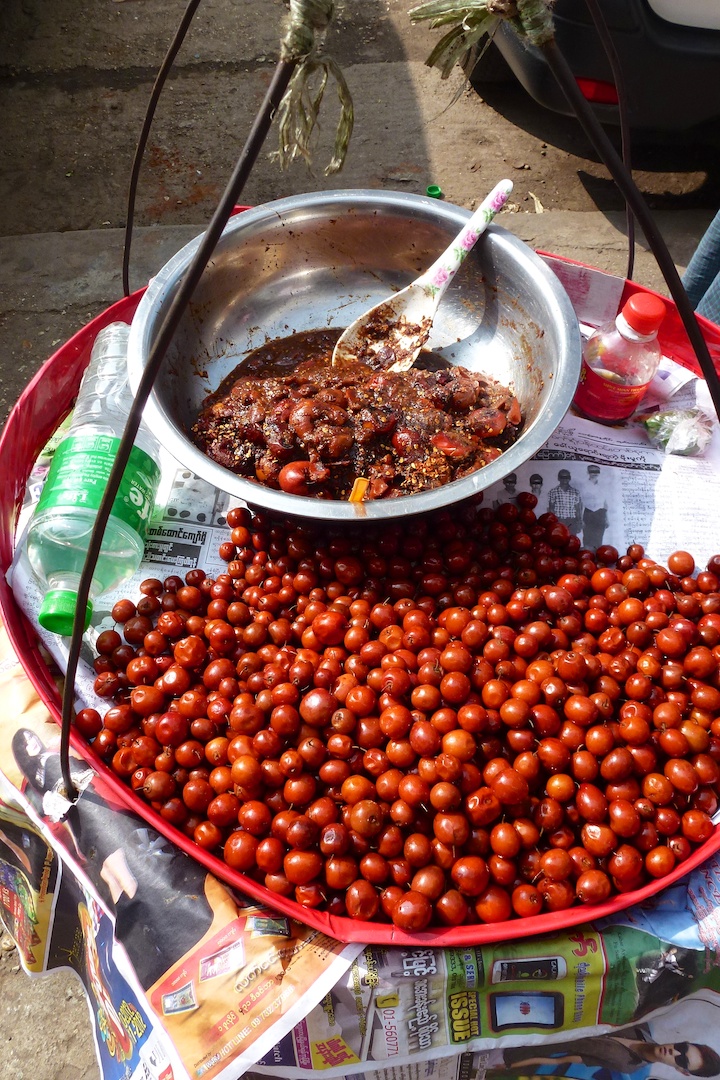
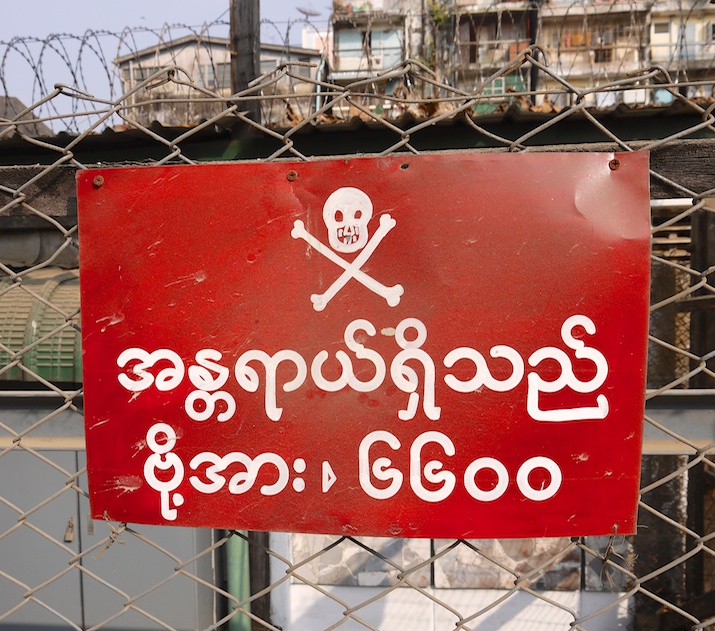
Not quite sure what these were, a rodent of some sort?

I think this was a sign saying not to eat them….
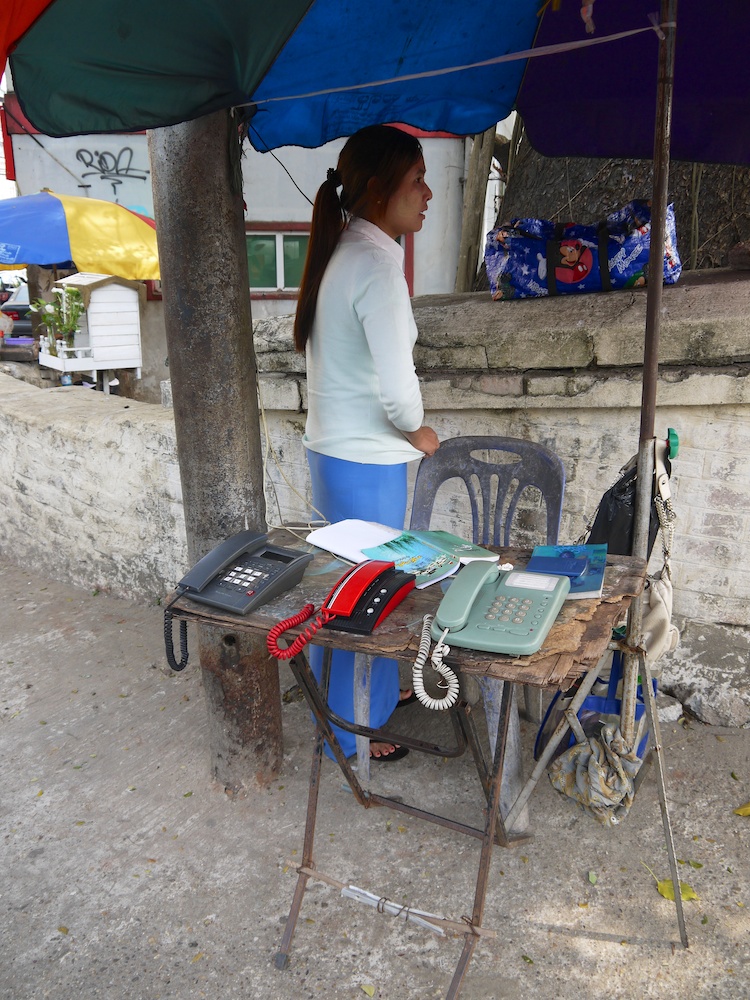
Telephone booths
Sometimes I think we have seen it all, and then we are surprised. Like the public telephones. This is the very first country we have visited where D's blackberry did not work…..at all! Myanmar does not have a cell phone network. Little tables with mismatched phones like the one below are all over the city… in case you need to make a "mobile" phone call.

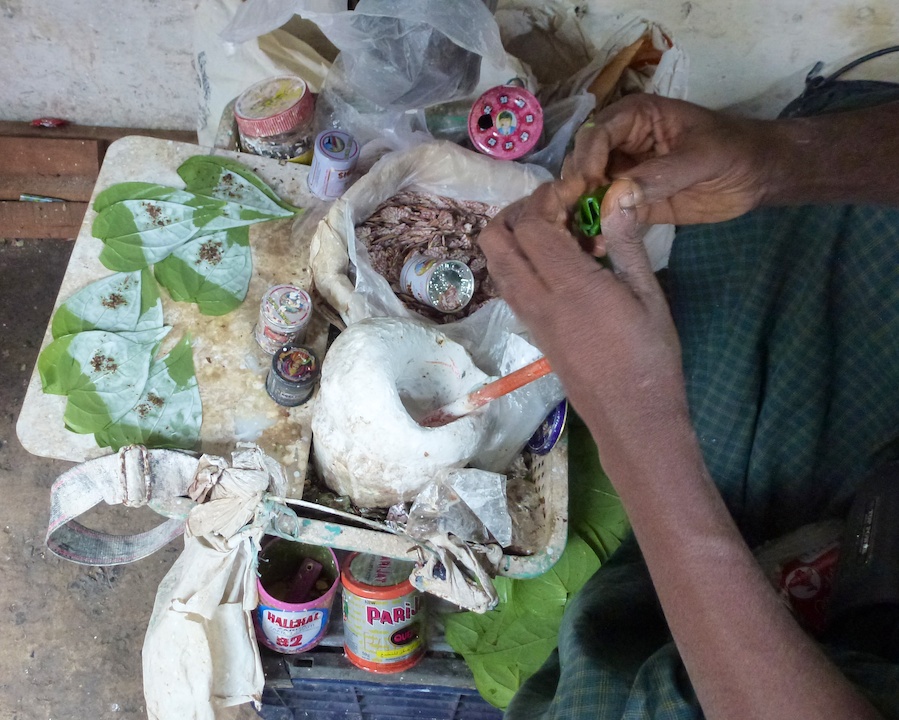
Betel nut is very popular among the men. Vendors brush white liquid (limestone paste) over betel leaves…

… then place a mix of areca nuts and/or coconut, cloves, or cardamom on the leaf and roll it up. They then chew it. Then spit it on the streets. It leaves gross red marks all over the sidewalks and roads.
A local market

Those of you who follow us know we love food markets. You can tell so much about a culture from the markets. I hate to say this, but this was the dirtiest market we have ever visited.
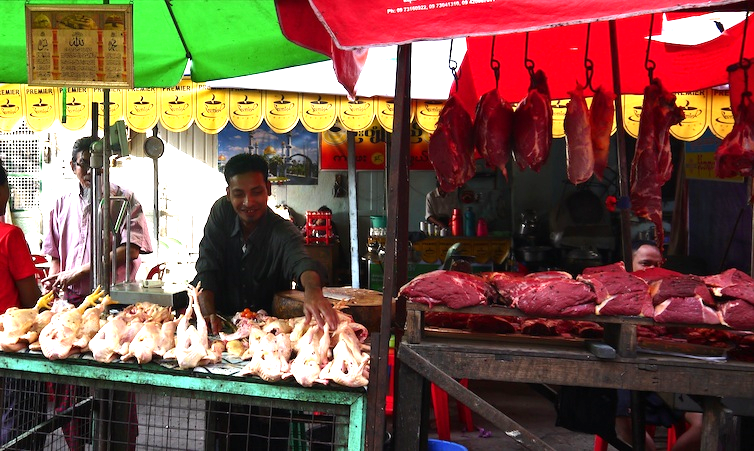
There were hordes of flies on all the meat. This young man was waving a feather duster contraption to try and keep them away.

This man was so friendly and wanted us to take his photo. Throughout the market they were happy to see us, with lots of smiles and giggles. I am sure they have rarely seen tourists at this market.


As for the main food, there was predominately fish for sale.

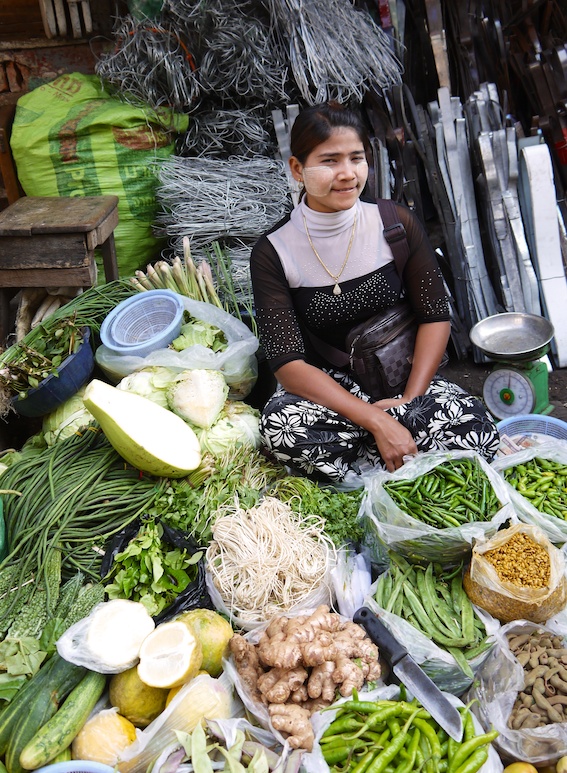
Adorable!

And how do you play sports when wearing a longyi (skirt) – you roll it up to make shorts!
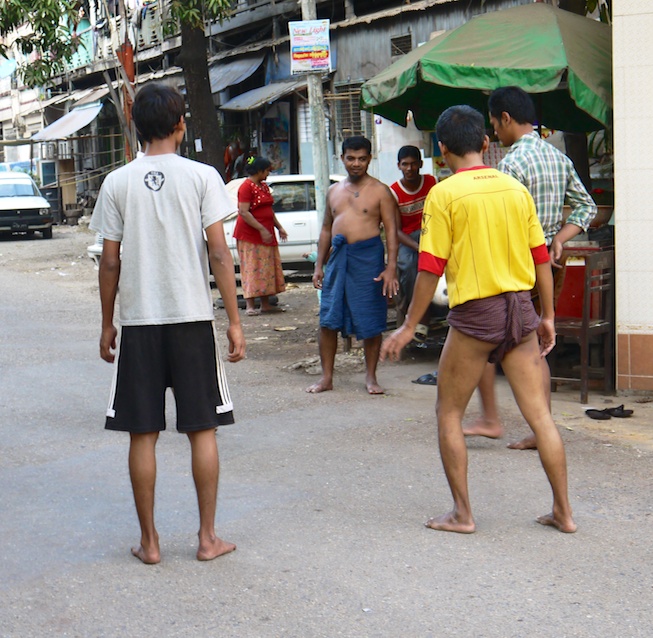
Shopping – how is this for a crazy mall?

Our bus ride to Bagan
Our next destination was Bagan. We
could not book a flight, even trying two months in advance. So we took a 10-hour bus ride, an adventure in itself! Thank goodness it was a modern bus.
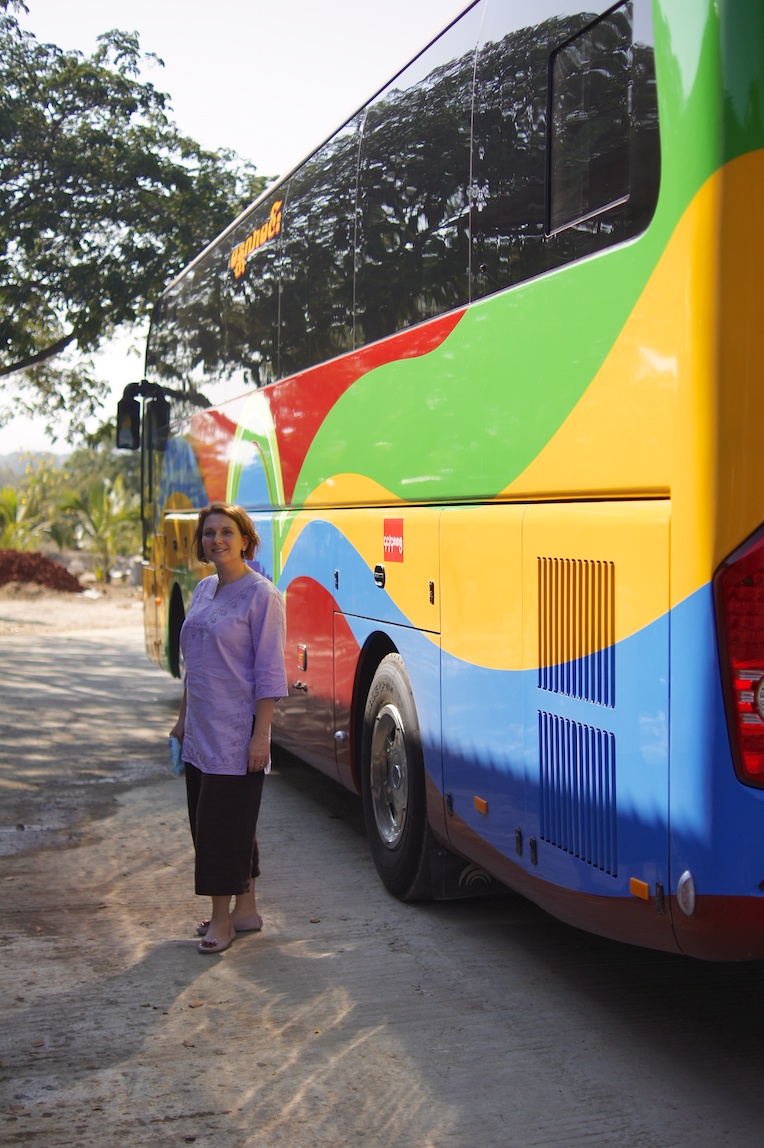
We
slept and watched TV. Well… there was a slight problem in that it was
all in Burmese! There was one other tourists on the bus, the rest were
all locals. We stopped a few times for breaks. Isn't it fascinating
how all the Burmese squat at the break?
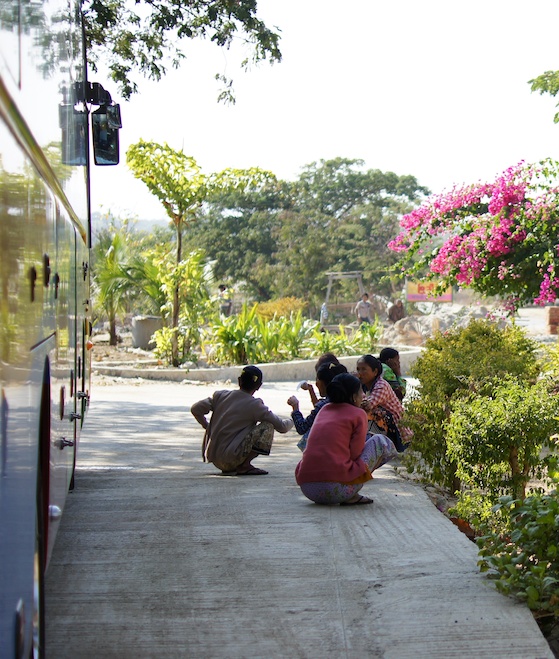
We could also purchase unique snacks…

So you are wondering about bathroom stops… two in a real facility, one just on the side of the road. No trees, just wide open space… men, woman and children. Now we know why they wear the longyis. Thank goodness we did not have to go : )
Want to see more on Myanmar…
Click here – to continue to Bagan – a must see!!
Click here for the people of Myanmar
An for the slide-show – click here.

 The XtraSuitcase
Leave a comment