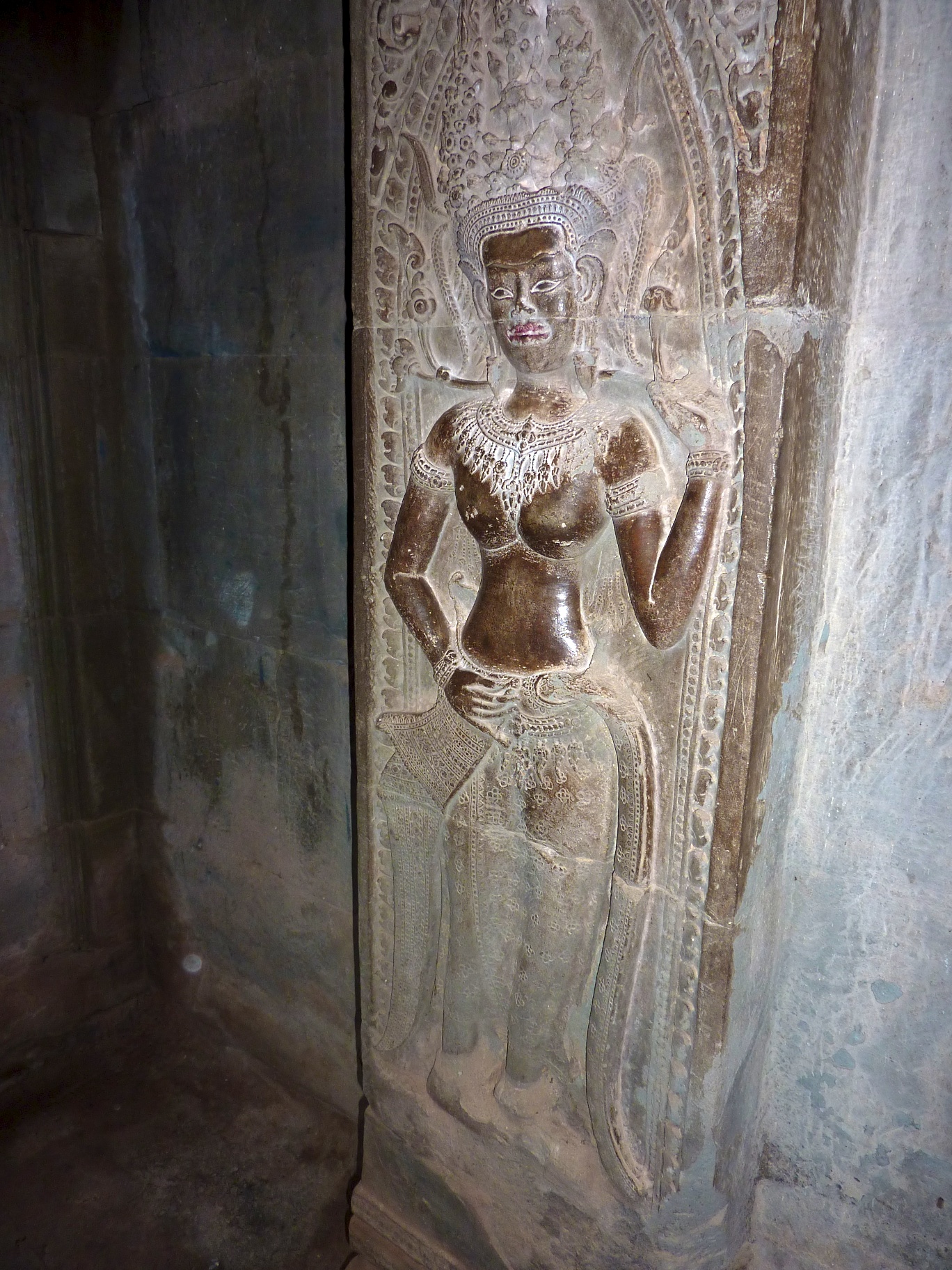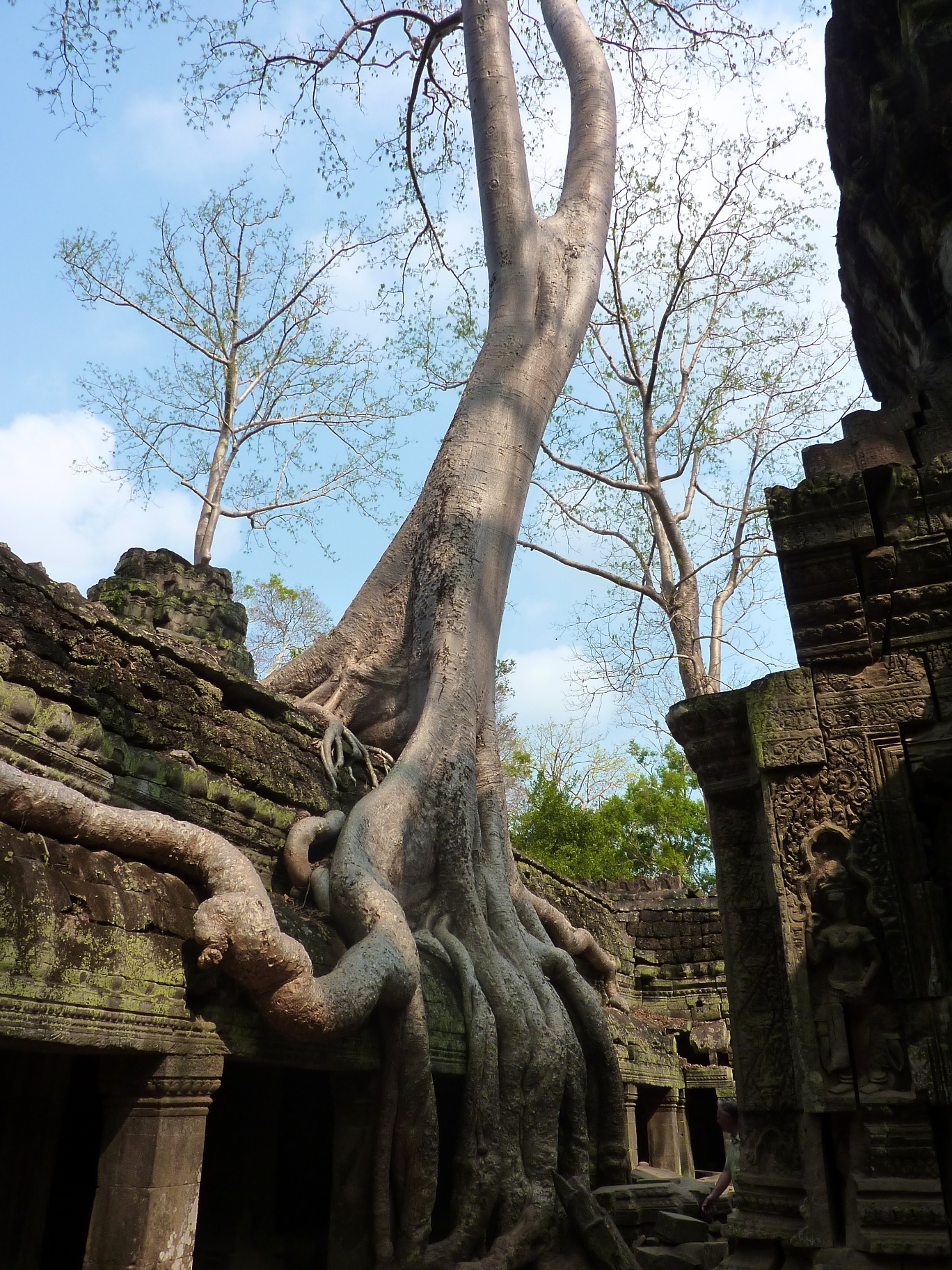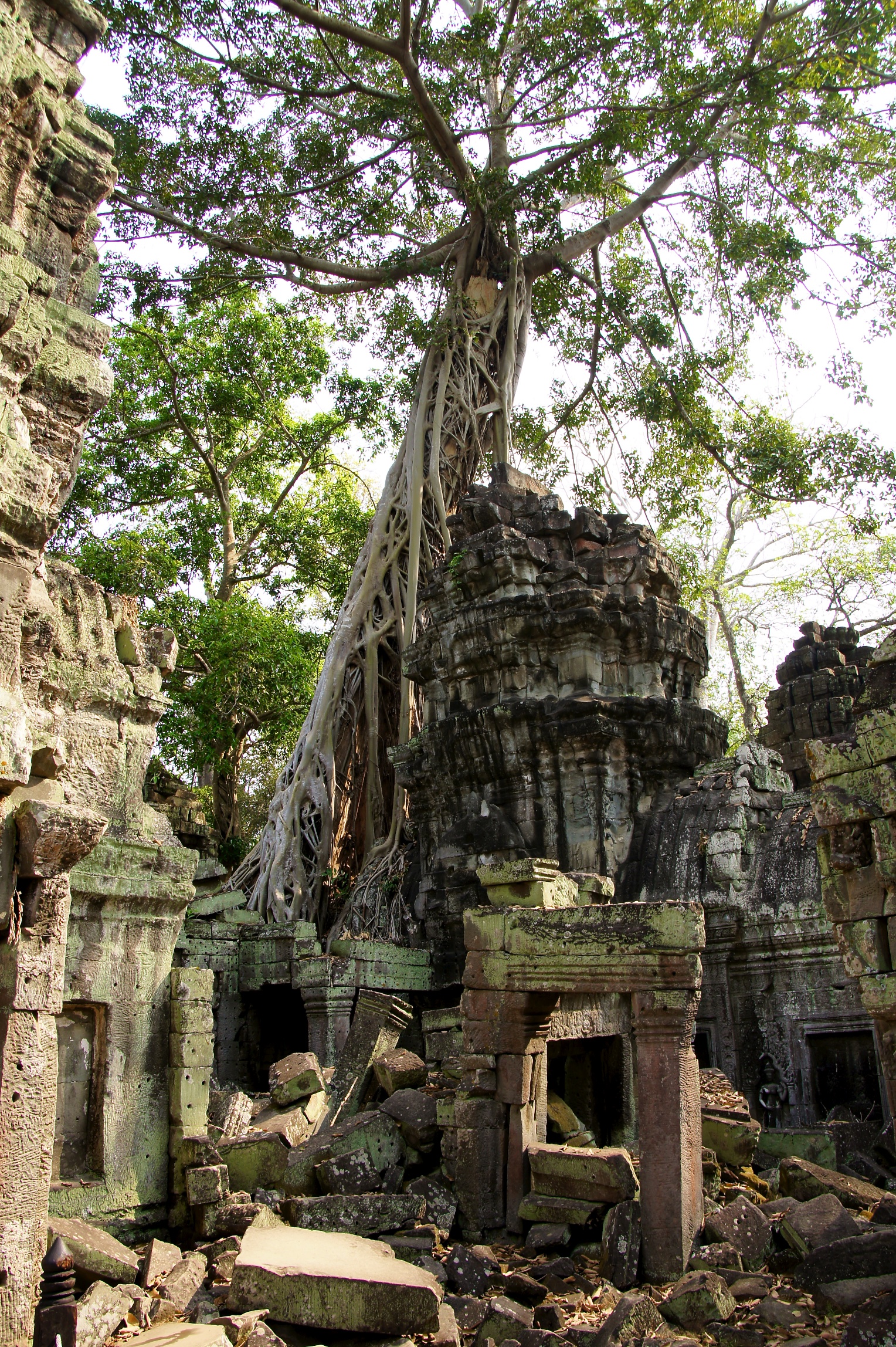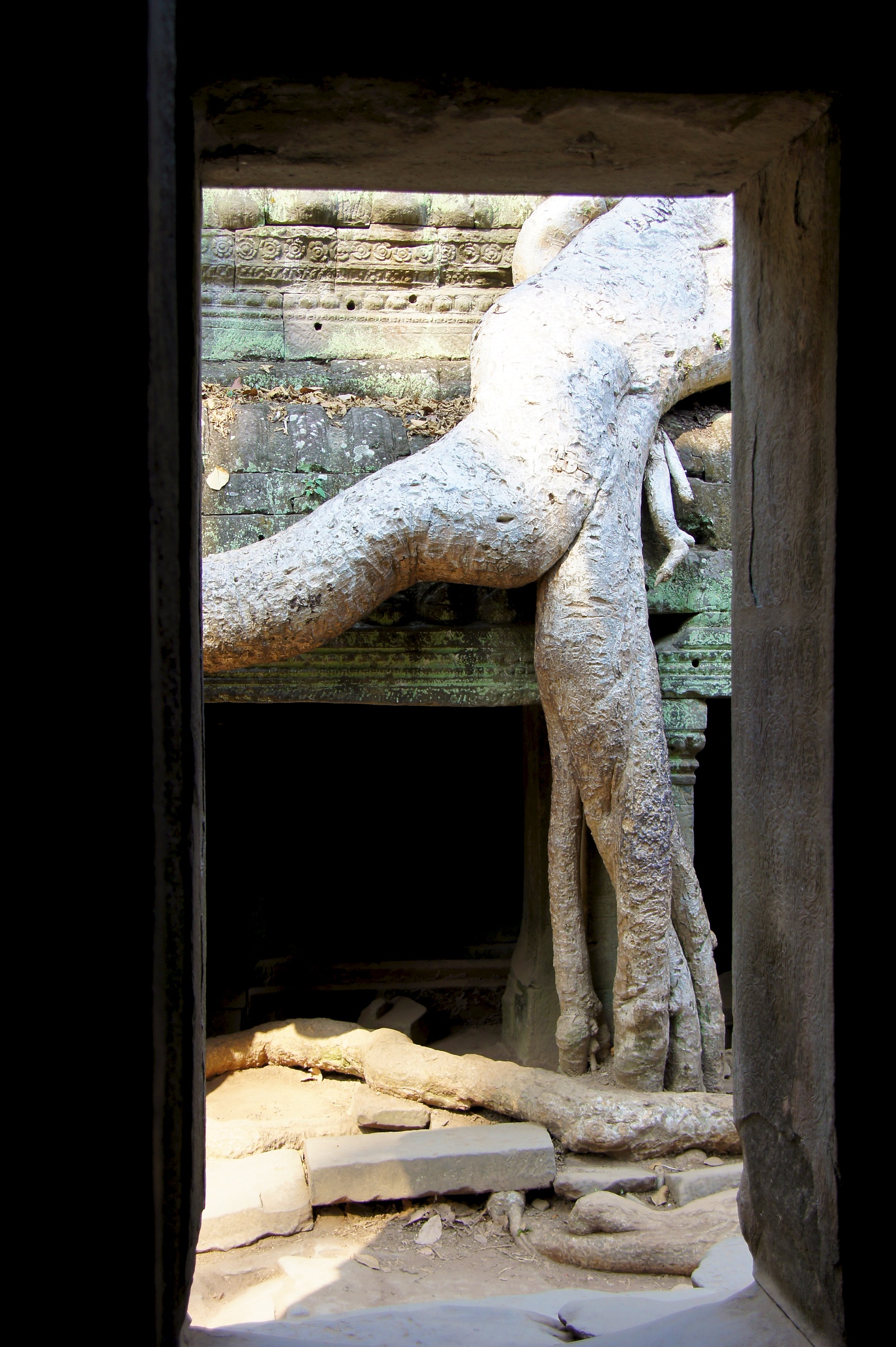
•  

    Singapore 147

    Oh……the excitement begins!  D was offered a job in Singapore and we accepted!  We move mid-December.   Yes – in two months!!!   Yipes….I am so excited about our new adventure but also very sad to be leaving Brussels earlier than originally planned.  And no, I never imagined we would live in Asia – let alone Singapore!

    Donald's new region will include:  Singapore, Vietnam, Laos, Cambodia, Thailand, Burma, Malaysia, Indonesia, Brunei, Australia, and New Zealand.  Some very interesting travel!

    Singapore 82


    A few facts about Singapore:


    1)  Singapore  is a city and a country.  It is made up of one main island and 63 small islands (most are uninhabited). 

    2)  The  country  is  240  sq miles.  Slightly smaller than New York city. Five  million people live there.  Apart from Monaco, it is the most densely populated country in the world.

    3)  It  is  a very prosperous country with only 2% unemployment and a GDP grown rate of 12.5% last year.

    4)  It is 85 miles north of the Equator – this means it is hot hot hot.

    5)  It  has  a  tropical  rain forest climate with no distinct season.  It rains almost everyday.  The temperatures ranges from 83 to 90 degrees with the average humidity around 84% – which means hot hot hot.

    6)  English  is  one  of  the  four official languages along with Chinese, Malay, and Tamil.  English is also considered the first language.

    7)  There  is a 12 hour time difference between Singapore and US.  They do not practice daylight savings so it is 13 hours in the winter.

    8)  They drive on the right hand side (opposite of the US!).  All cars must be  less  than 10 years old and are removed or destroyed when they reach 10 years.

    9)  It  is one of the cleanest cities in the world and you can be arrested for spitting, littering, or chewing gum! 

    10)  The crime rate is super low – making it one of the safest cities in the world.

    11)  Singapore  is  a  foodies dream.  It has been referred to as the food capital of the world with a mix of so many cultures and cuisines {yeah}.

    12)  It  has one of the best health care systems in the world and the best water.

    13)  It is one of the most expensive cities in the world to live in.  Their currency is the Singapore dollar and is about 78 cents to our dollar.

    14)  They  say  Christmas is spectacular – guess I will be able to confirm this!

    15)  Did I mention Singapore is hot hot hot   :  )


    I could list many more facts…..but will save them for future posts.  I thought it would be fun to re-run the post of our visit to Singapore last November:

    Singapore – November 2010
     

    Singapore 71


    Asia is not part of D's region (IT IS NOW!) so we were extra excited when he found out he had meetings in Singapore in november.  It was a long flight (12 and a half hours) for such a short visit (six days) – but oh so worth it.

    Singapore 182


    The population of Singapore extremely diverse.  We (Caucasian) were definitely in the minority.  The government recognizes four languages; English, Chinese (Mandarin), Malay, and Tamil.  All four are represented in the sign below.
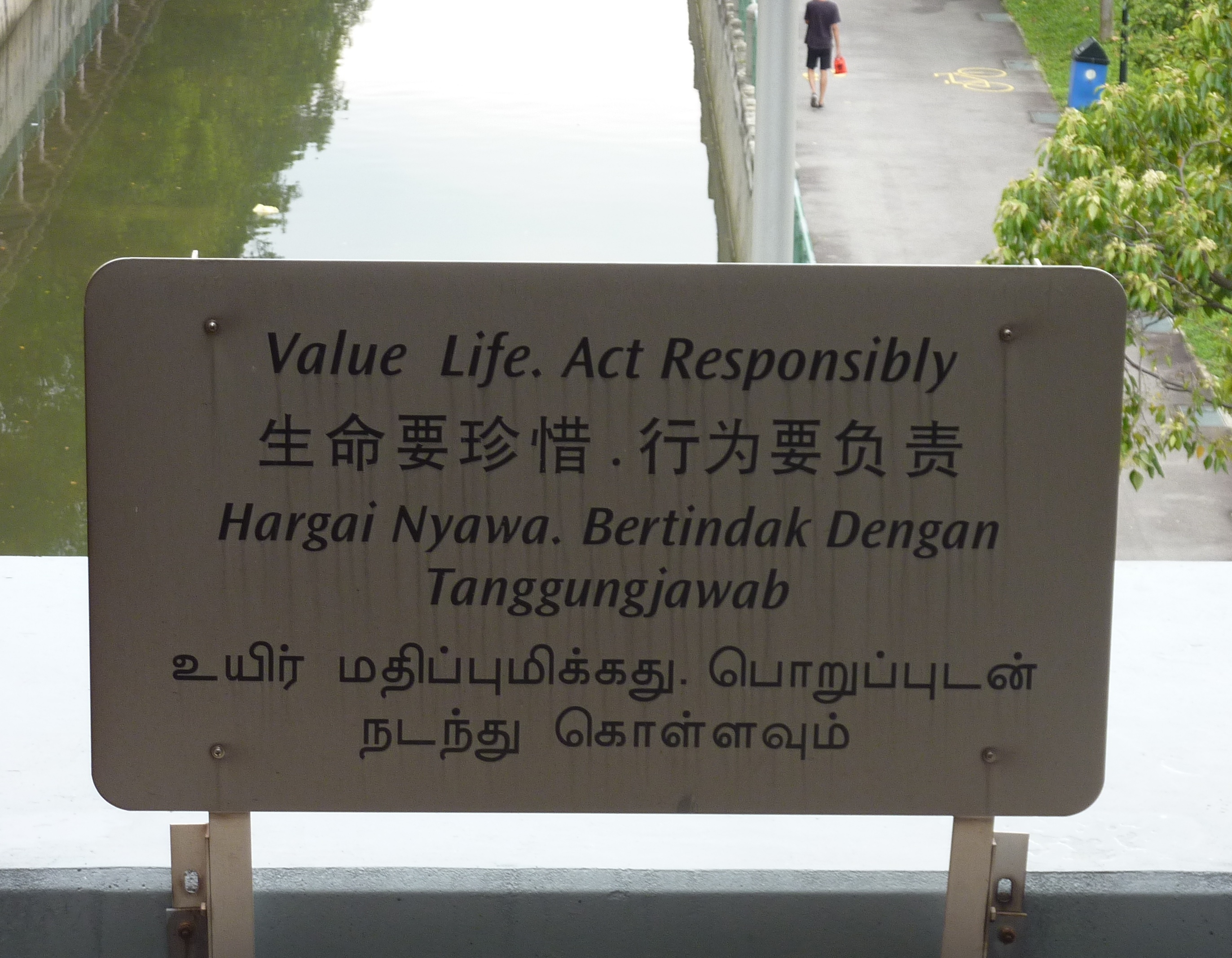
     

    Singapore 102


    It has a tropical rain forest climate – whoa mama was it HOT!  On an average day, relative humidity is around 90%.  November and December are know as its monsoon weather and we had rain every day, at times very heavy.
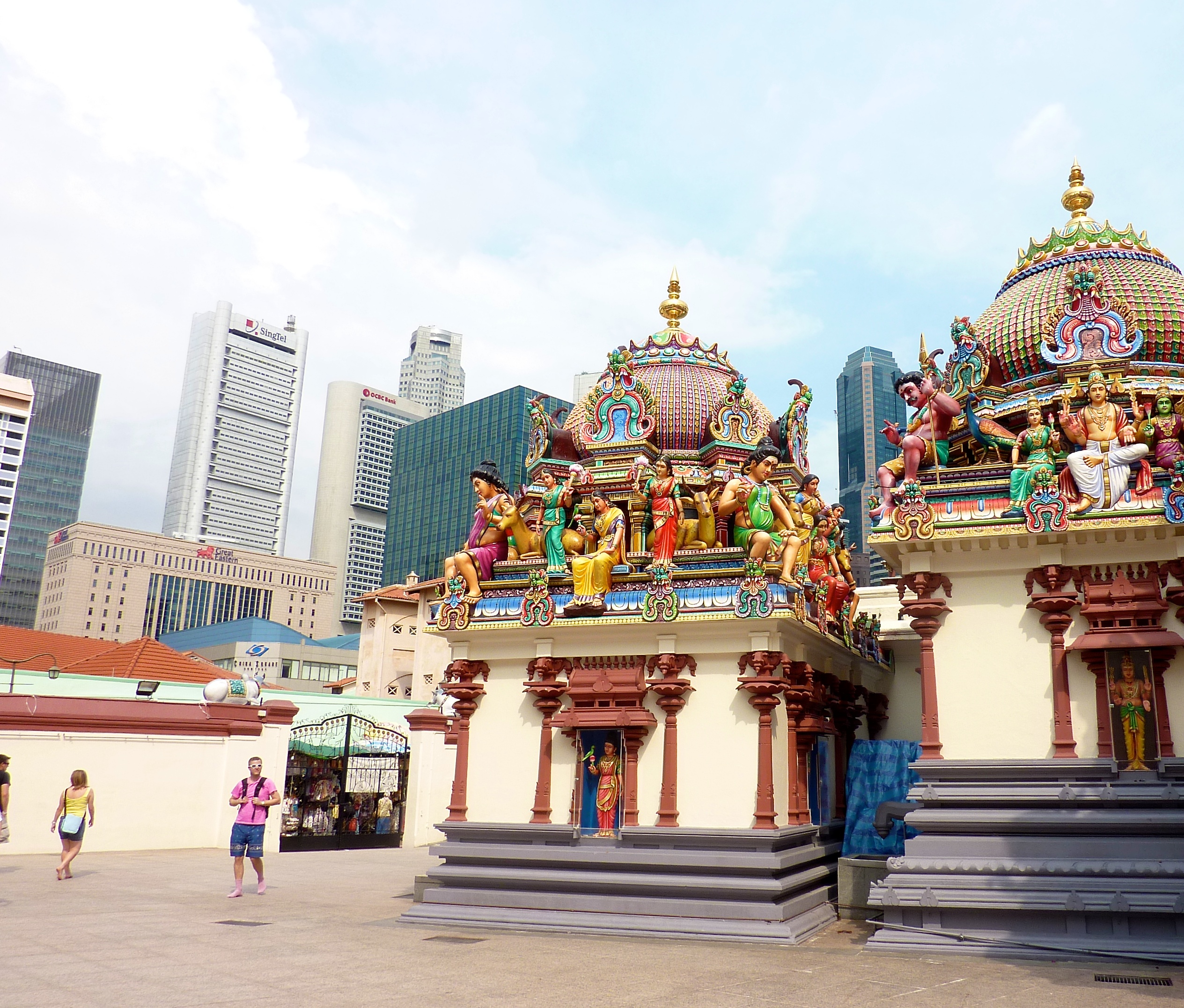
      Singapore 114


     EATS


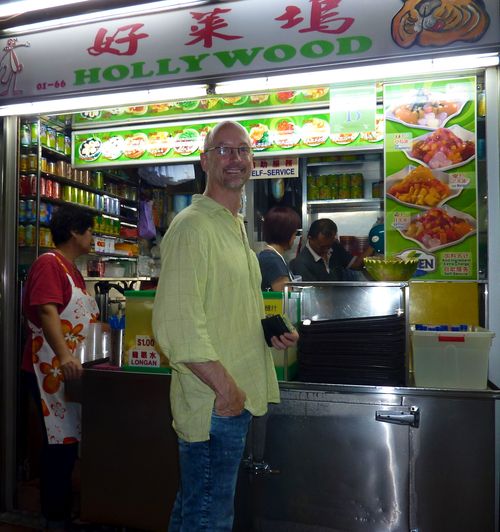
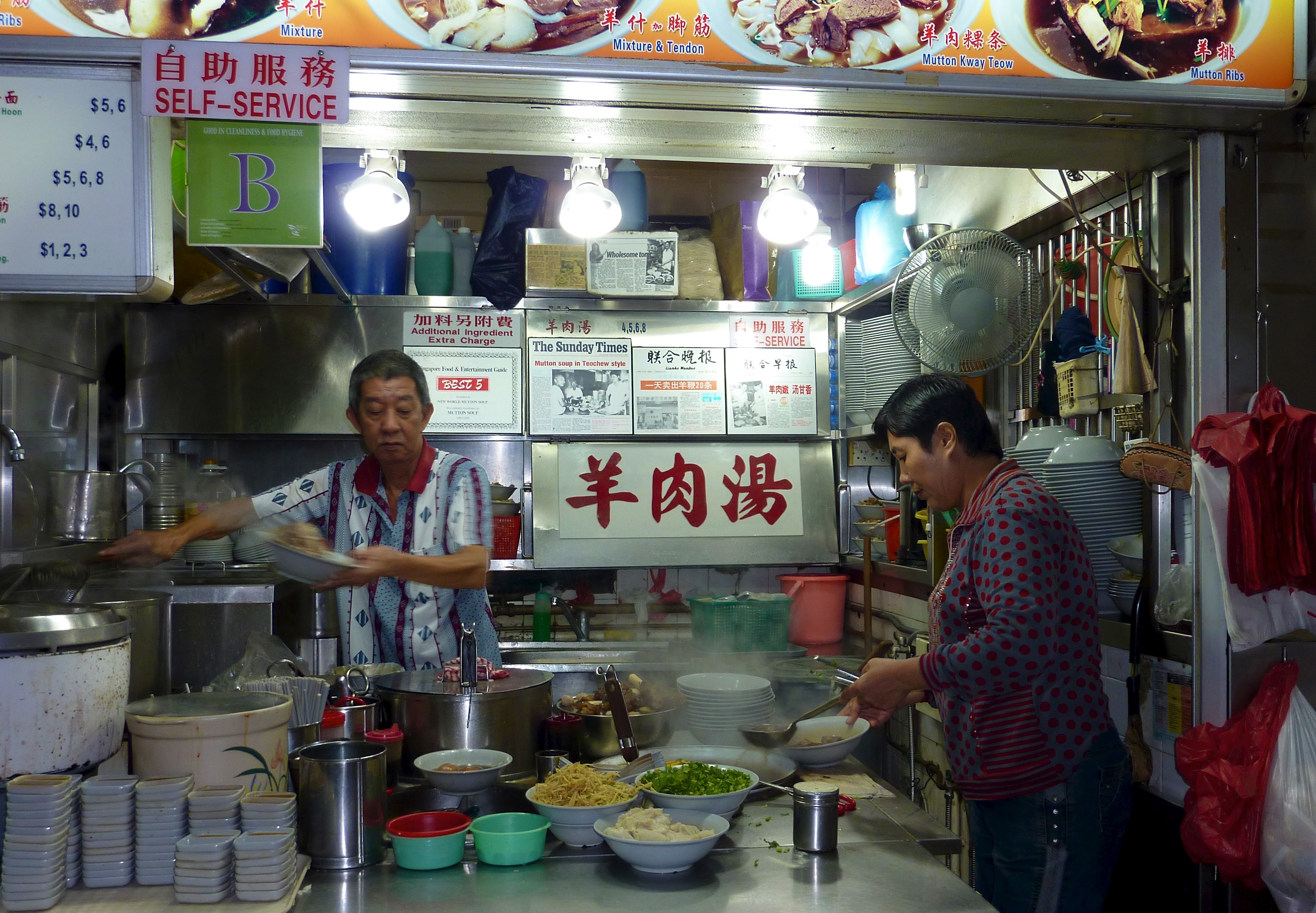
    We ate every meal in Hawker stalls.  These are individual stalls selling inexpensive food.  They are everywhere, in every mall, large office buildings and many open air stalls just outside of the main part of the city.
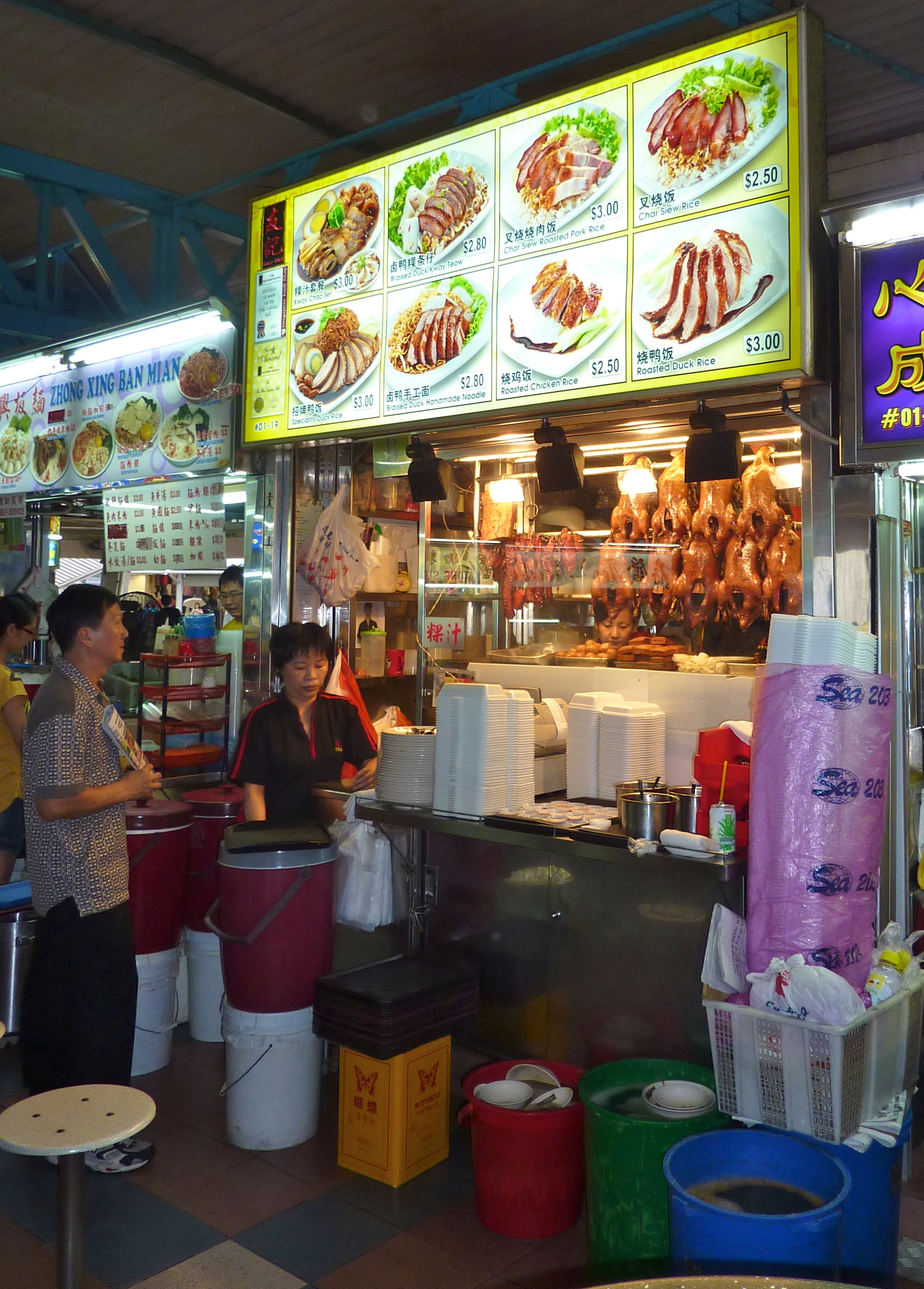
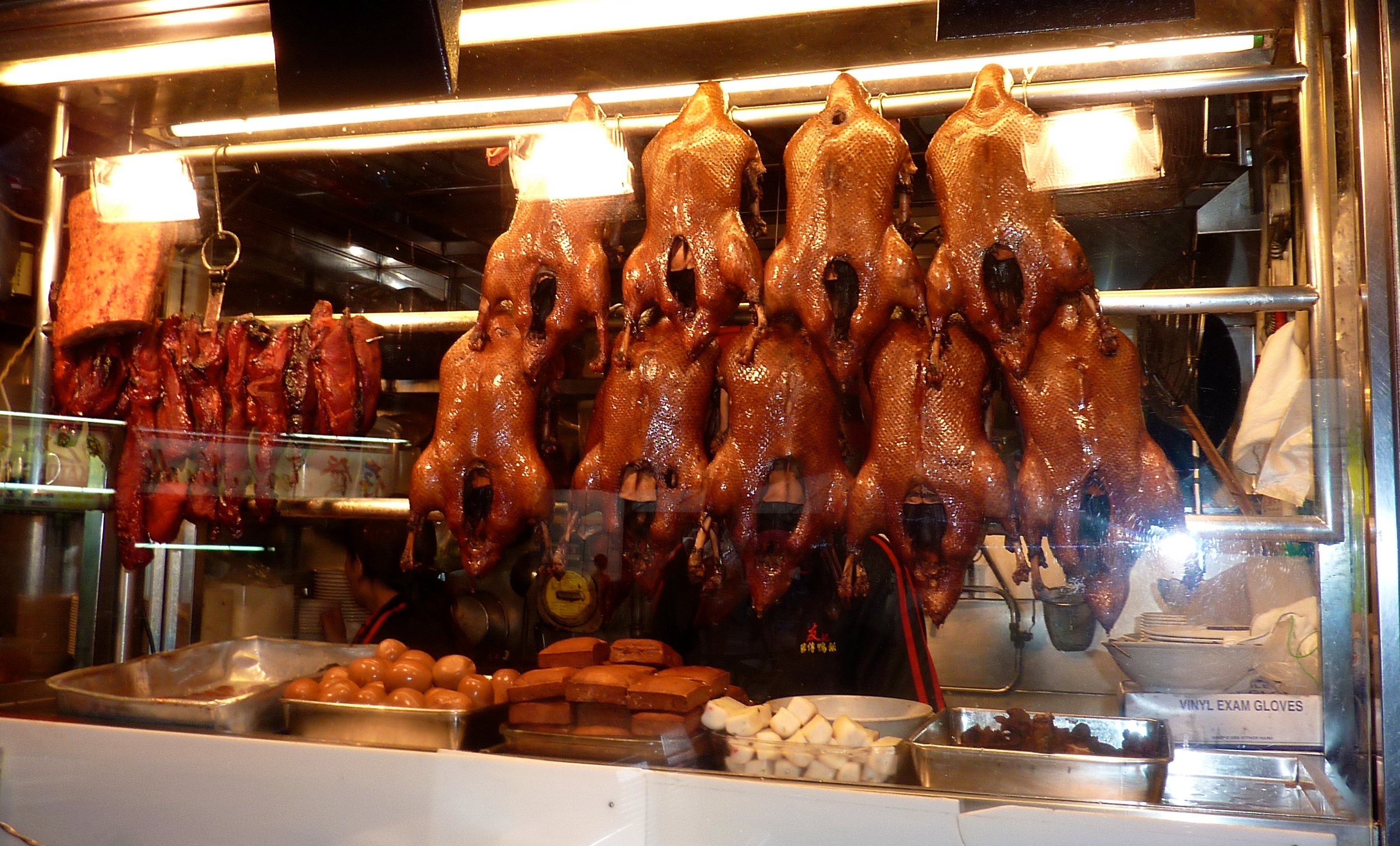
     

    Singapore 152

      Singapore 153


      Singapore 162


    Singapore 150


    We wanted to hit an authentic one so we took the metro out 45 minutes to check out this Hawker Stall.  It was the best and no tourist but us!
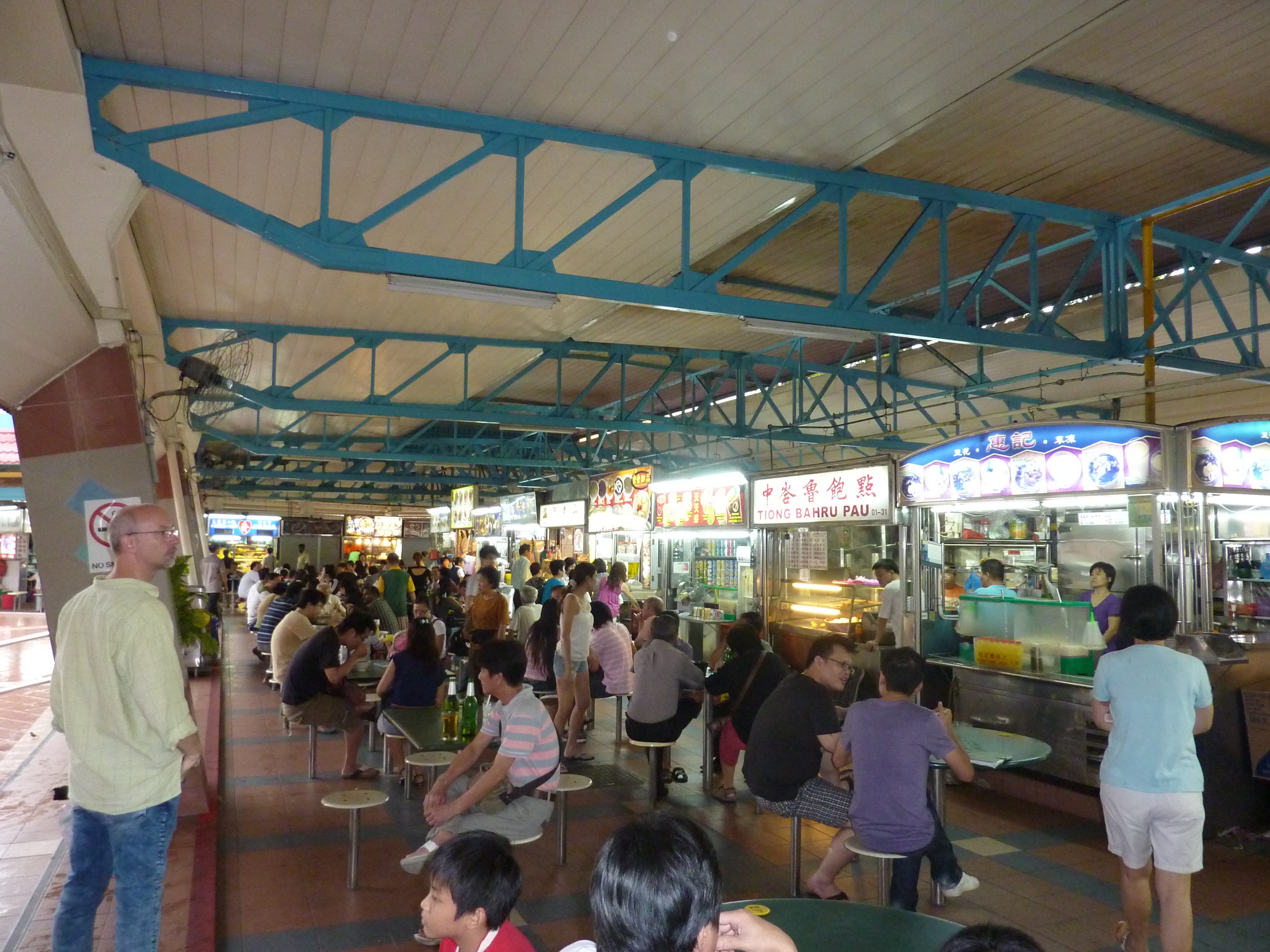
     

      Singapore 151

    There was one old guy at this table (blue striped shirt) who was intrigued with us.  I asked to take his photo then he wanted to take one of us.
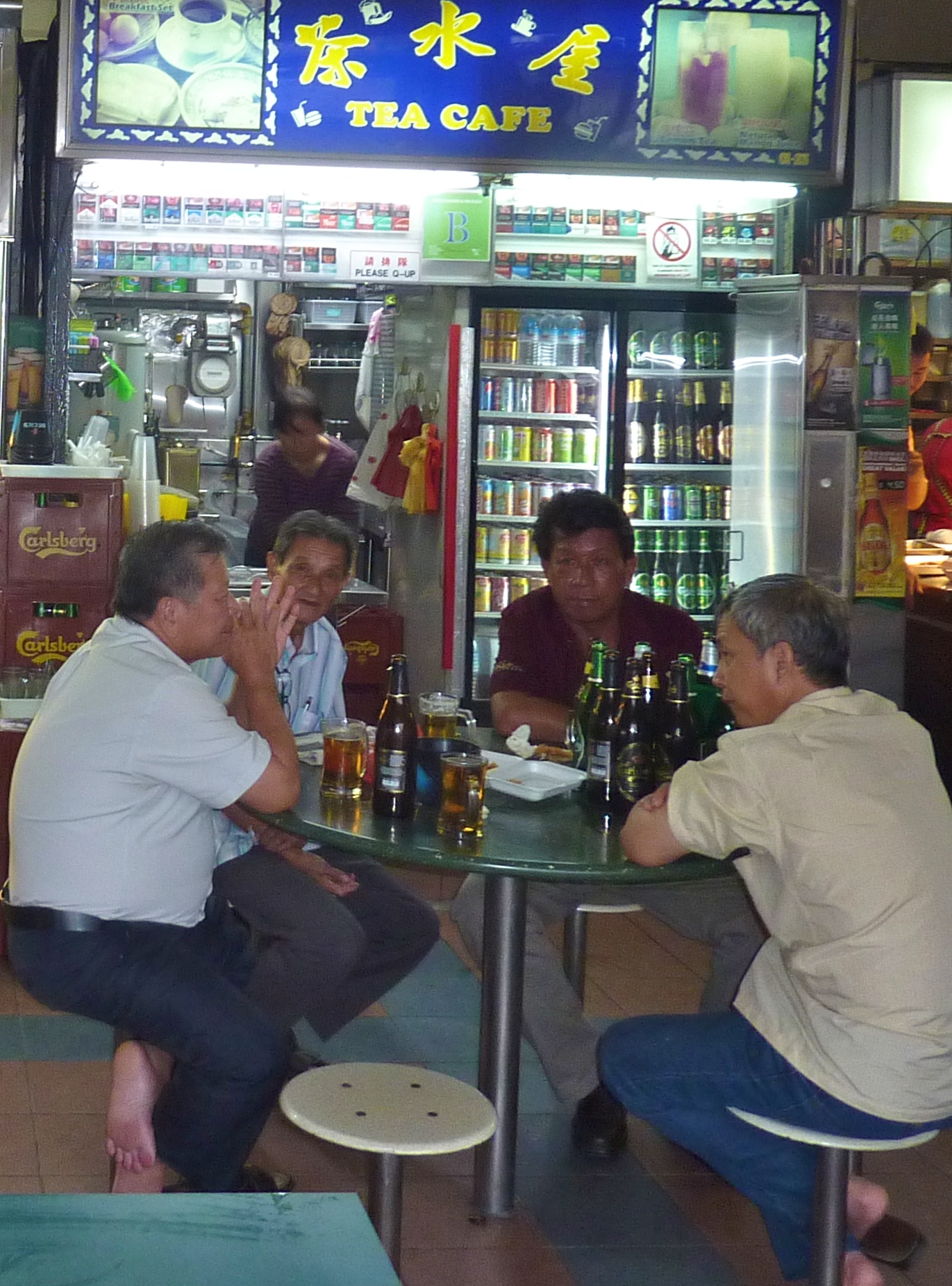
       Singapore 154


    As we were eating, one of the women who owned a stall came over with a glass of sugar cane water (popular drink) and said, "your friend bought this for you."  He then came over and talked to us.  Very sweet.

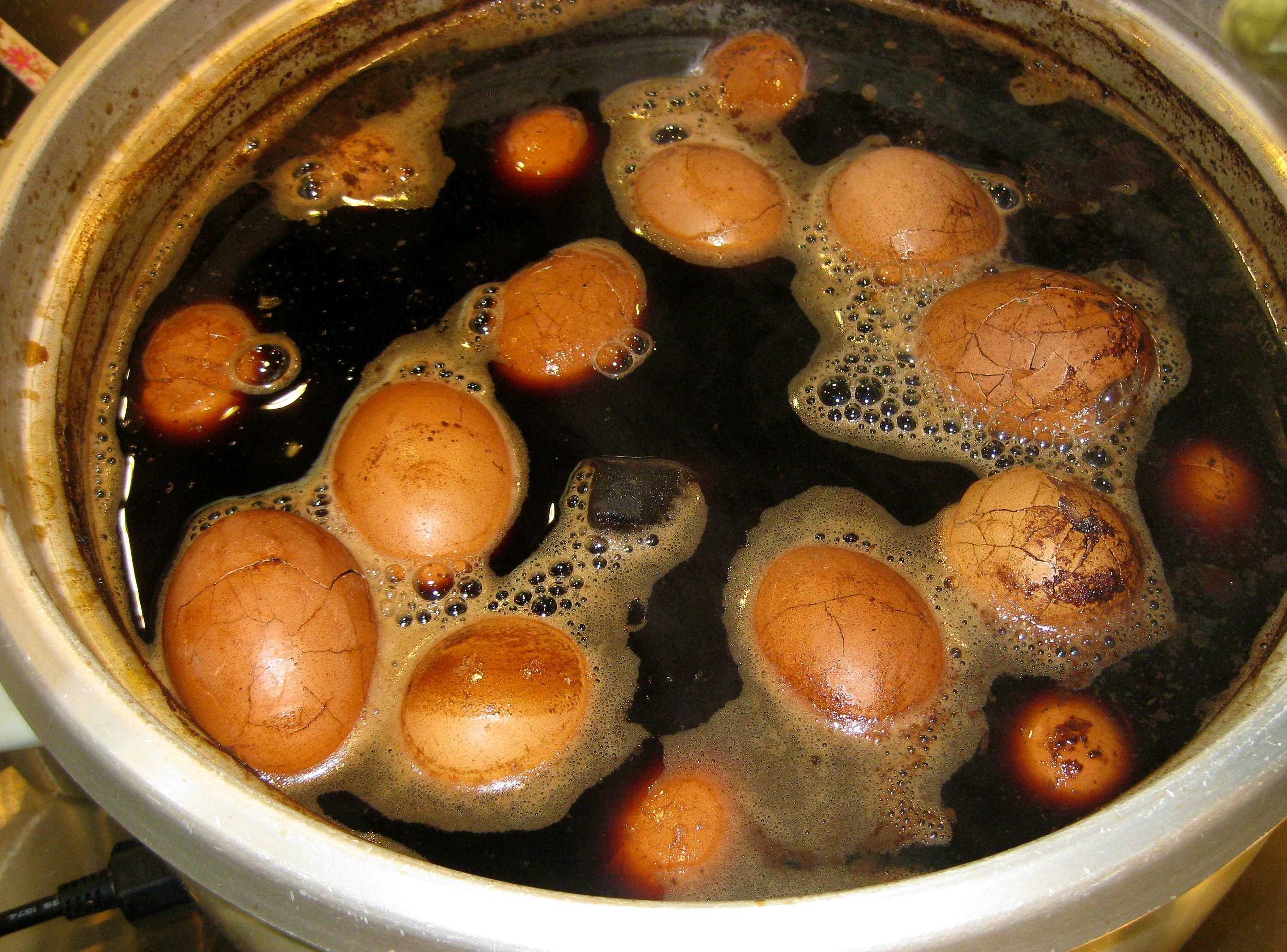
    A sampling of what we ate in Singapore:

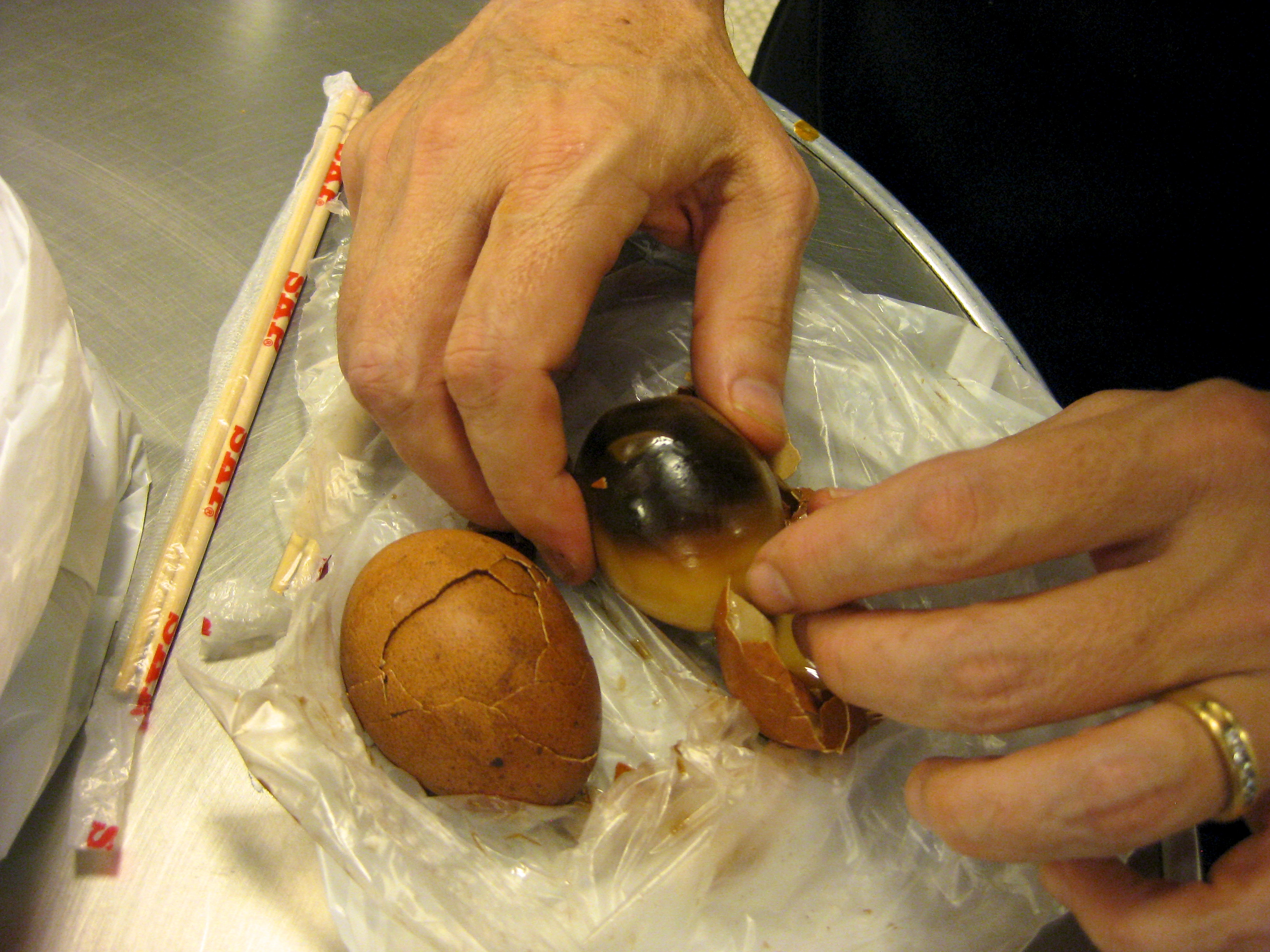
     Tea-eggs or marbled eggs
     

    Singapore 10


    Singapore 12


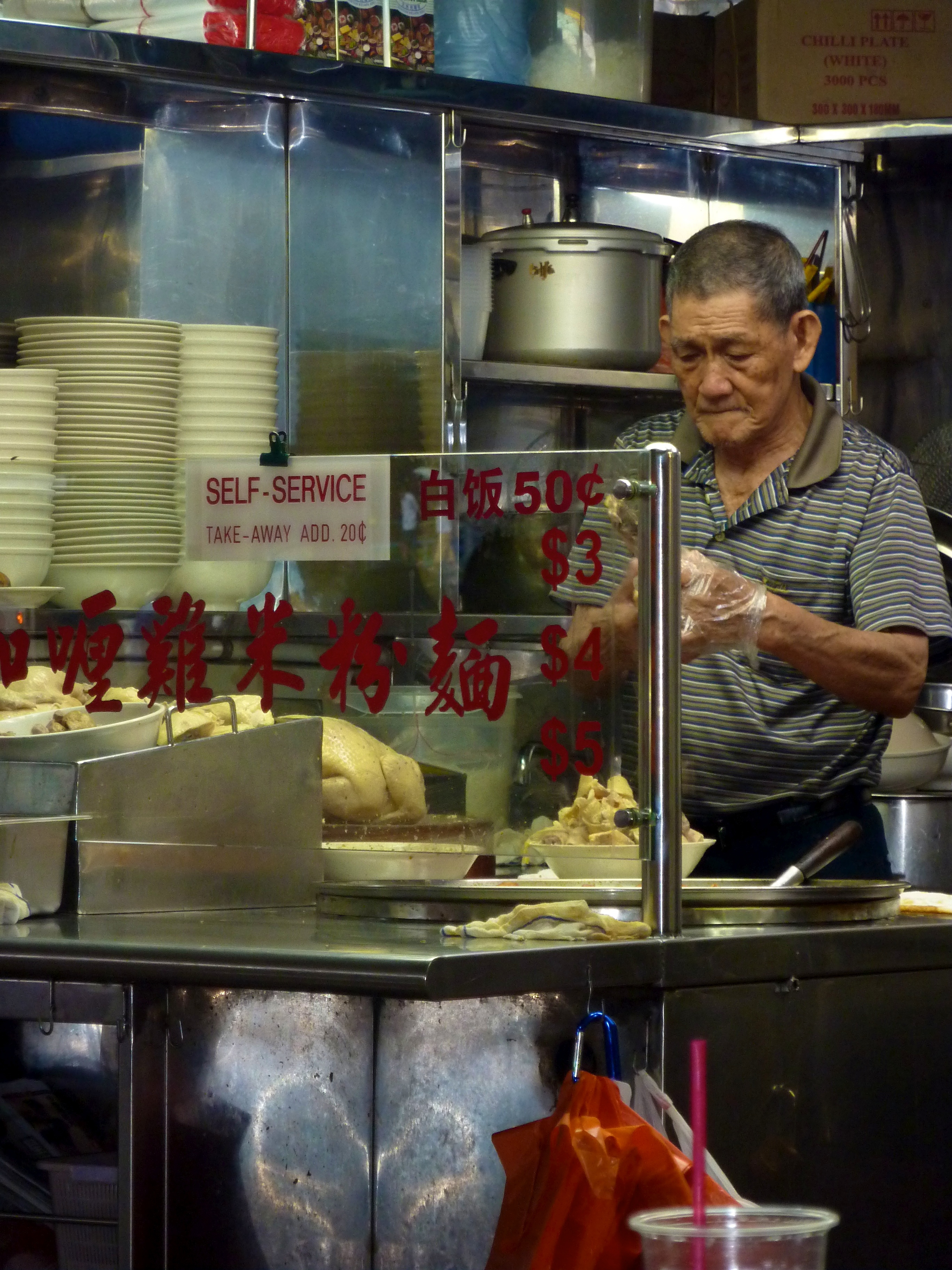
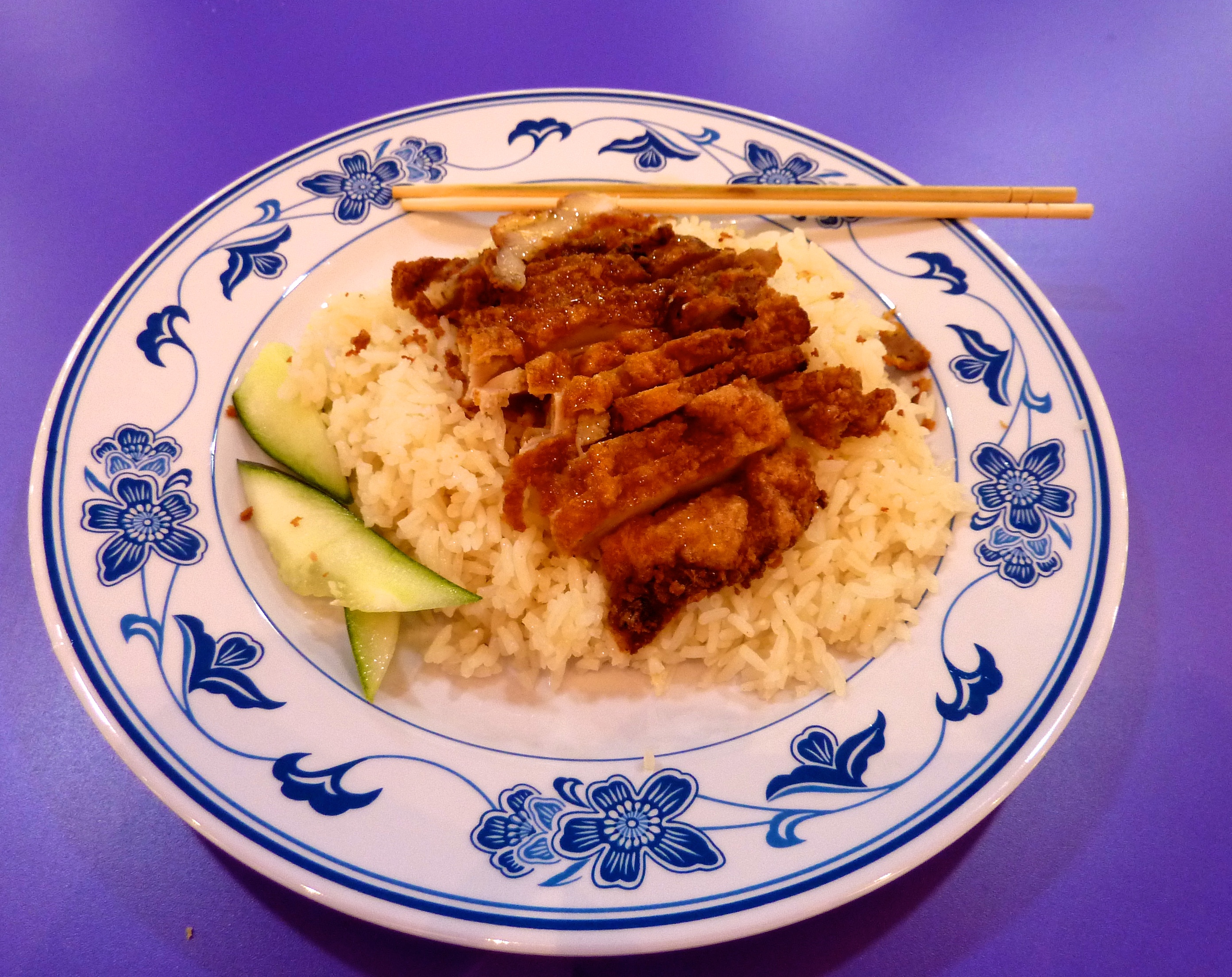
    A dish of the region, chicken-rice.


    Singapore 69


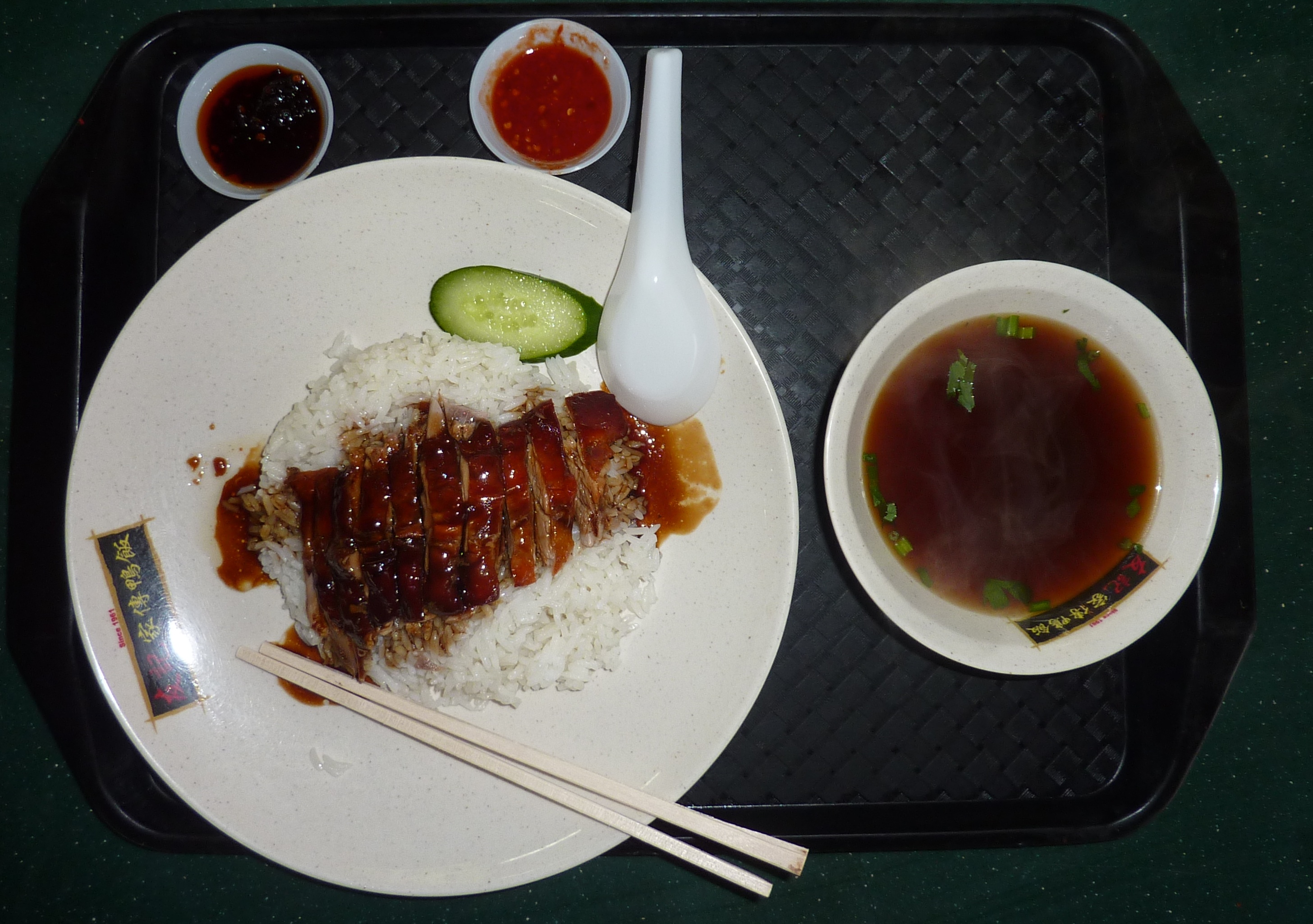
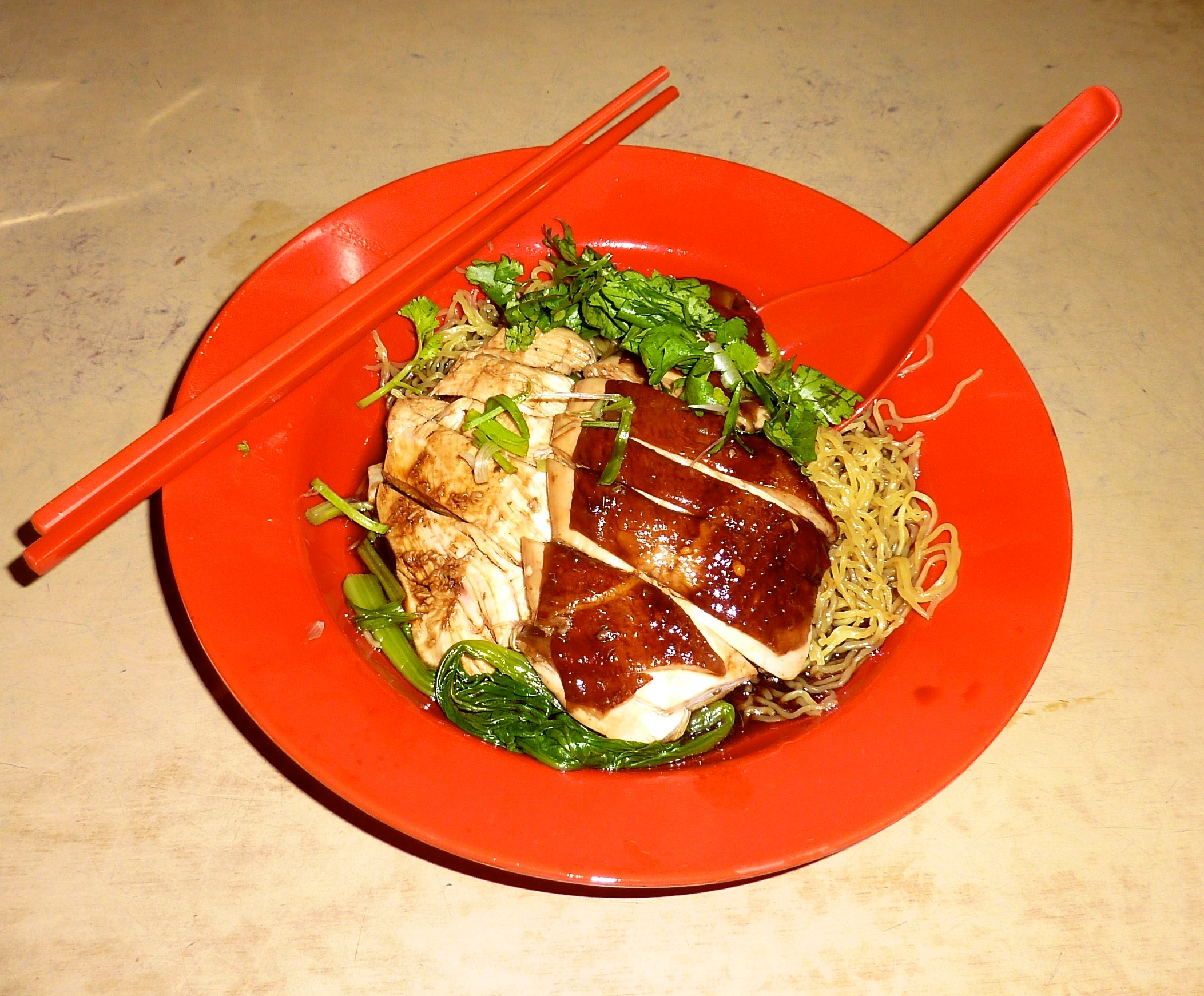
    Two different versions of duck with noodles.
     

    Singapore 195


    Singapore 156


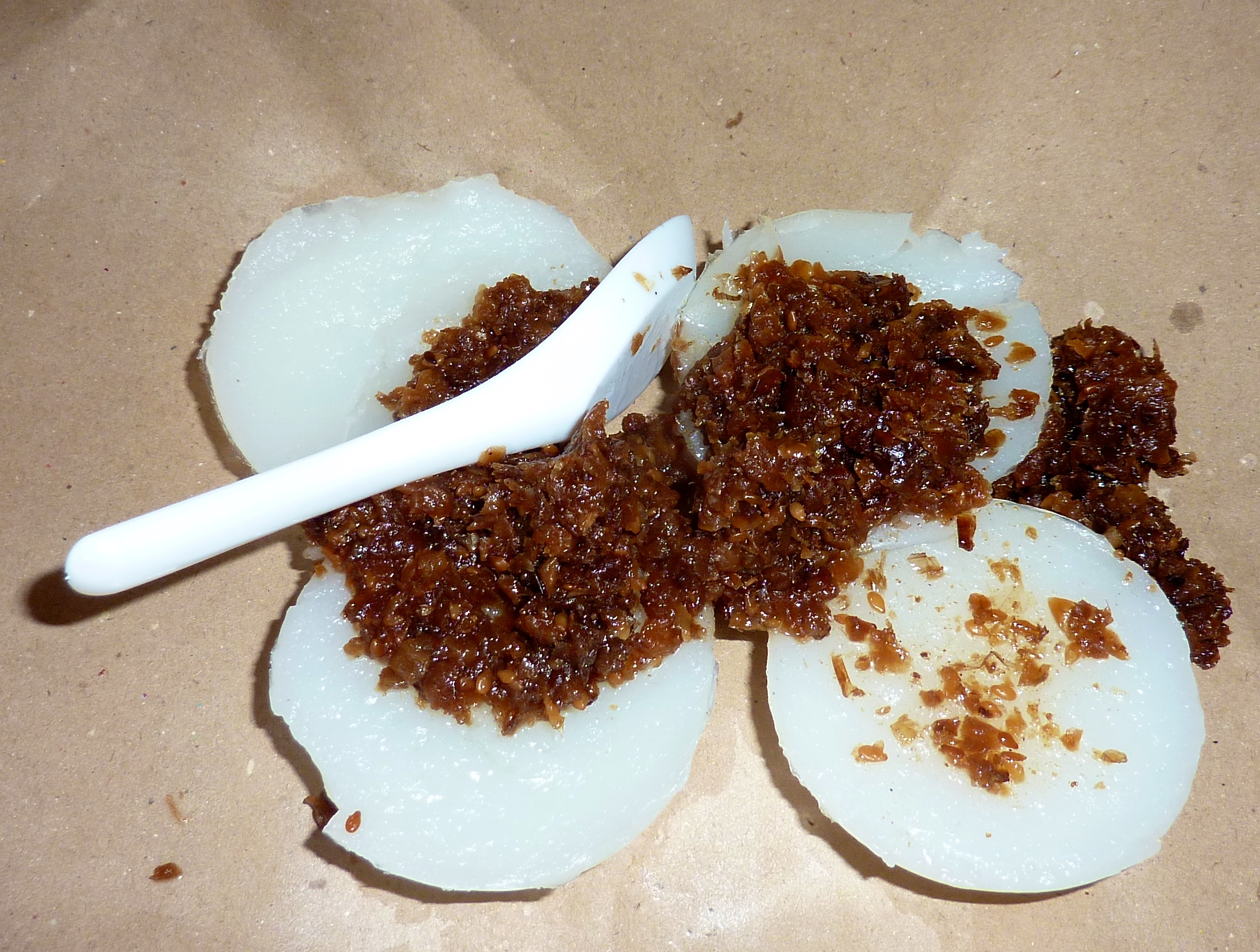
    Radish dumplings and although they do not look that good, they were delicious.
     

    Singapore 158

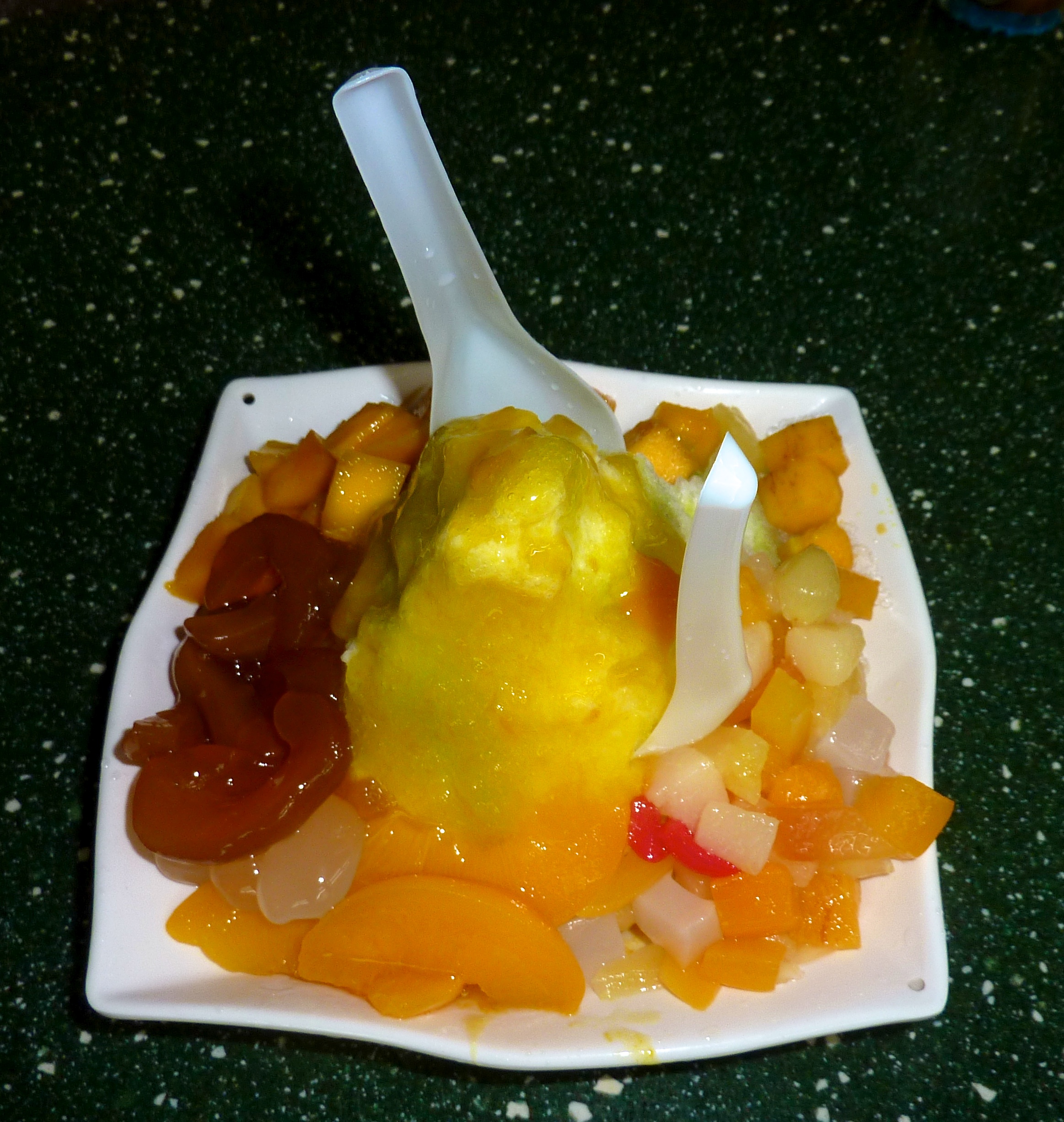
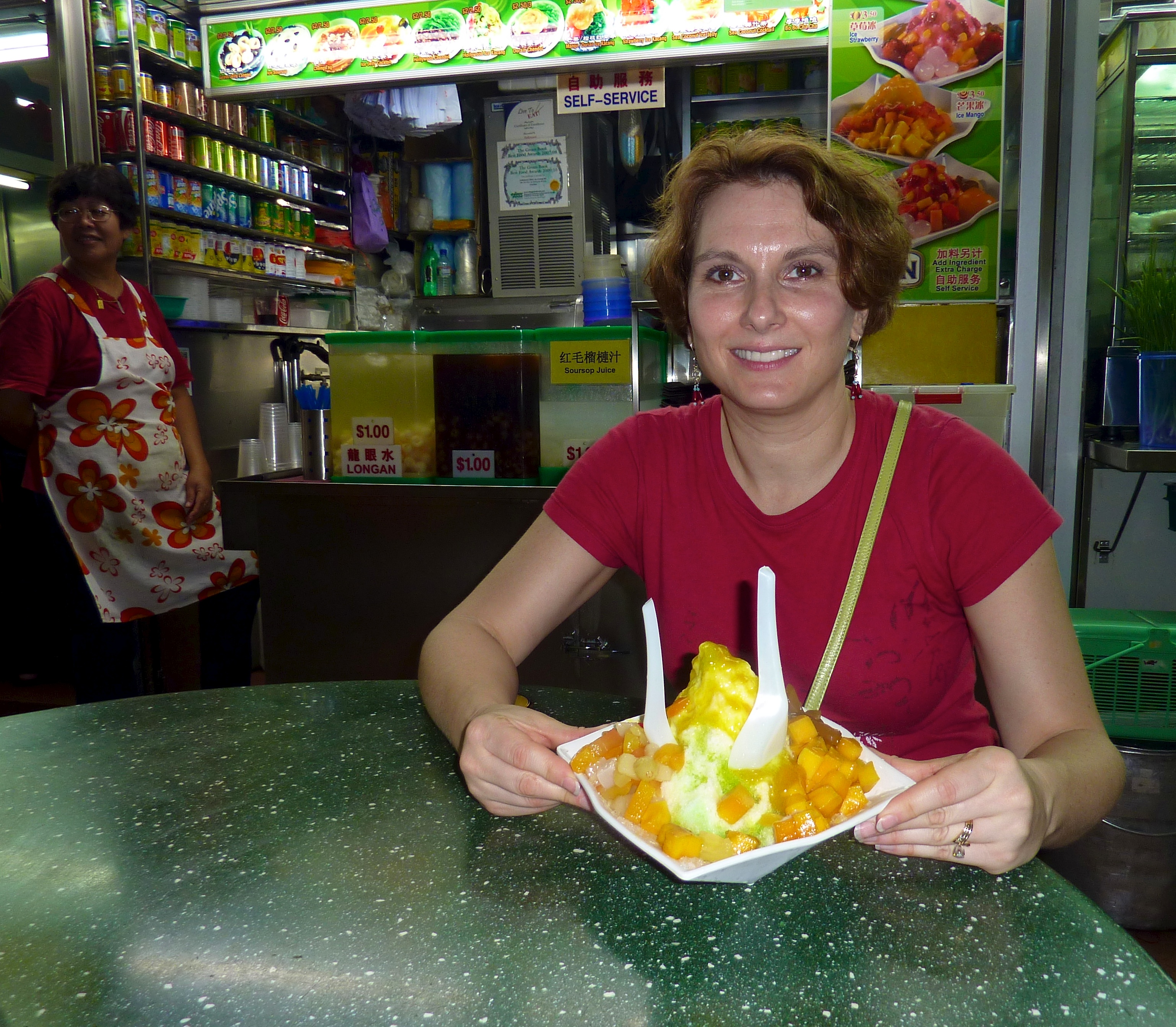
    And the unusual desserts, shaved ice with fruit – fresh and canned mixed.
     

    Singapore 163


    Yes, it was yummy!


    Singapore 164

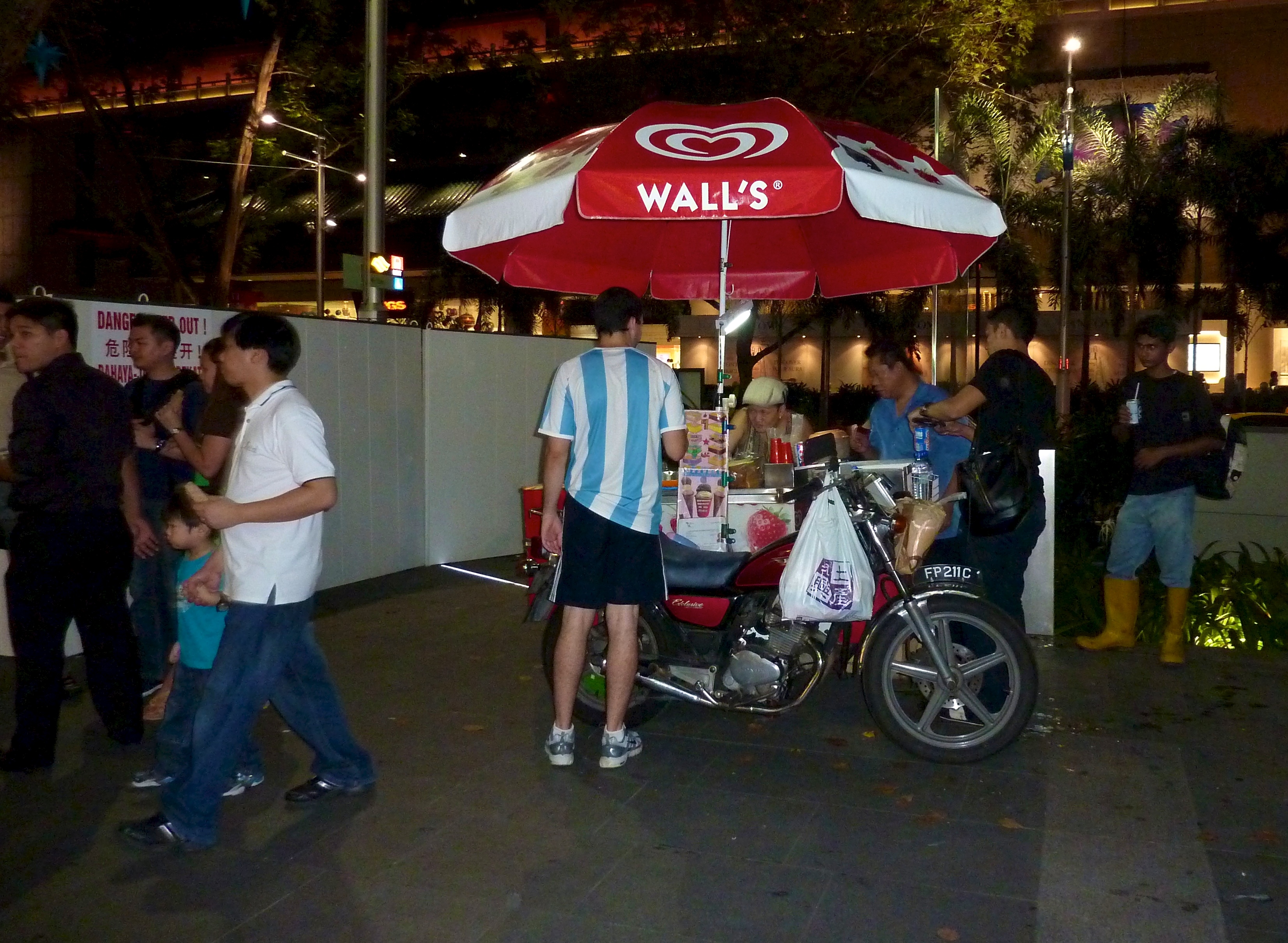
    Another dessert we bought on the street from the motorcycle vendors, scattered all around the city were ice cream sandwiches.
     

    Singapore 14

     
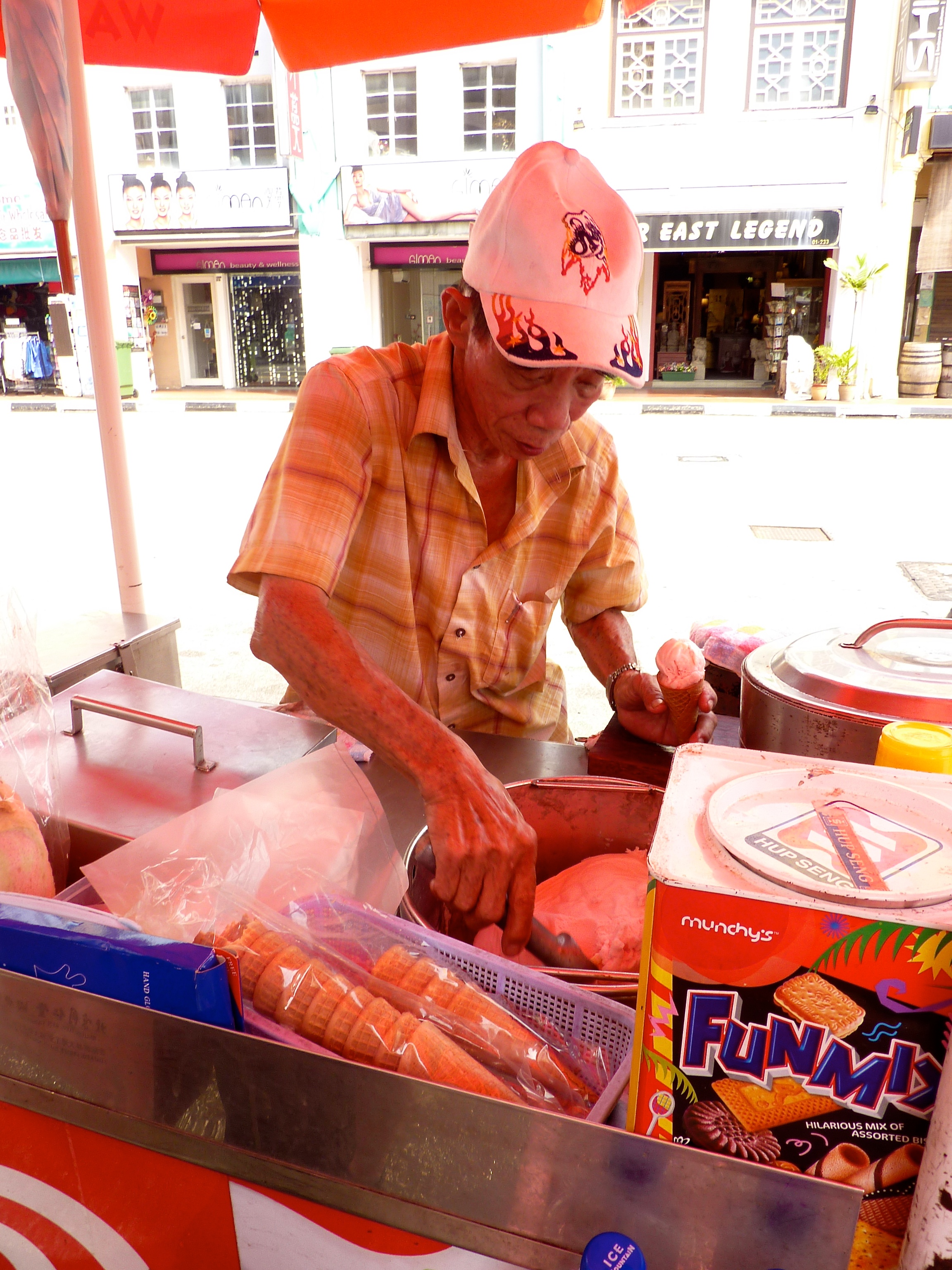
    Most of the ice cream vendors were seniors and husband and wife.  Cost – one Singaporean dollar, about 75 cents.  We wanted to help the seniors…so we ate several the week we were there.
     

    Singapore 116

    The ice cream comes in a big cardboard box and they slice it with a big knife and place it in rainbow colored sweet bread.
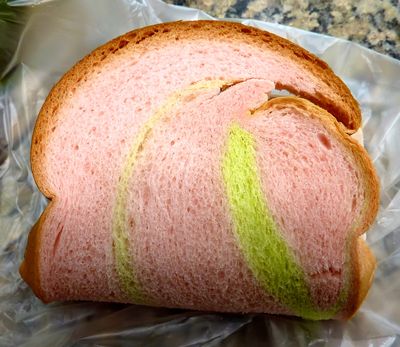
     

    Singapore 68


    They had several flavors, the basics – chocolate, chocolate chip, strawberry and lots of other more exotic fruits – mango, honeydew, durian, and sweet corn.  It was best when the ice cream softened and melted into the bread.
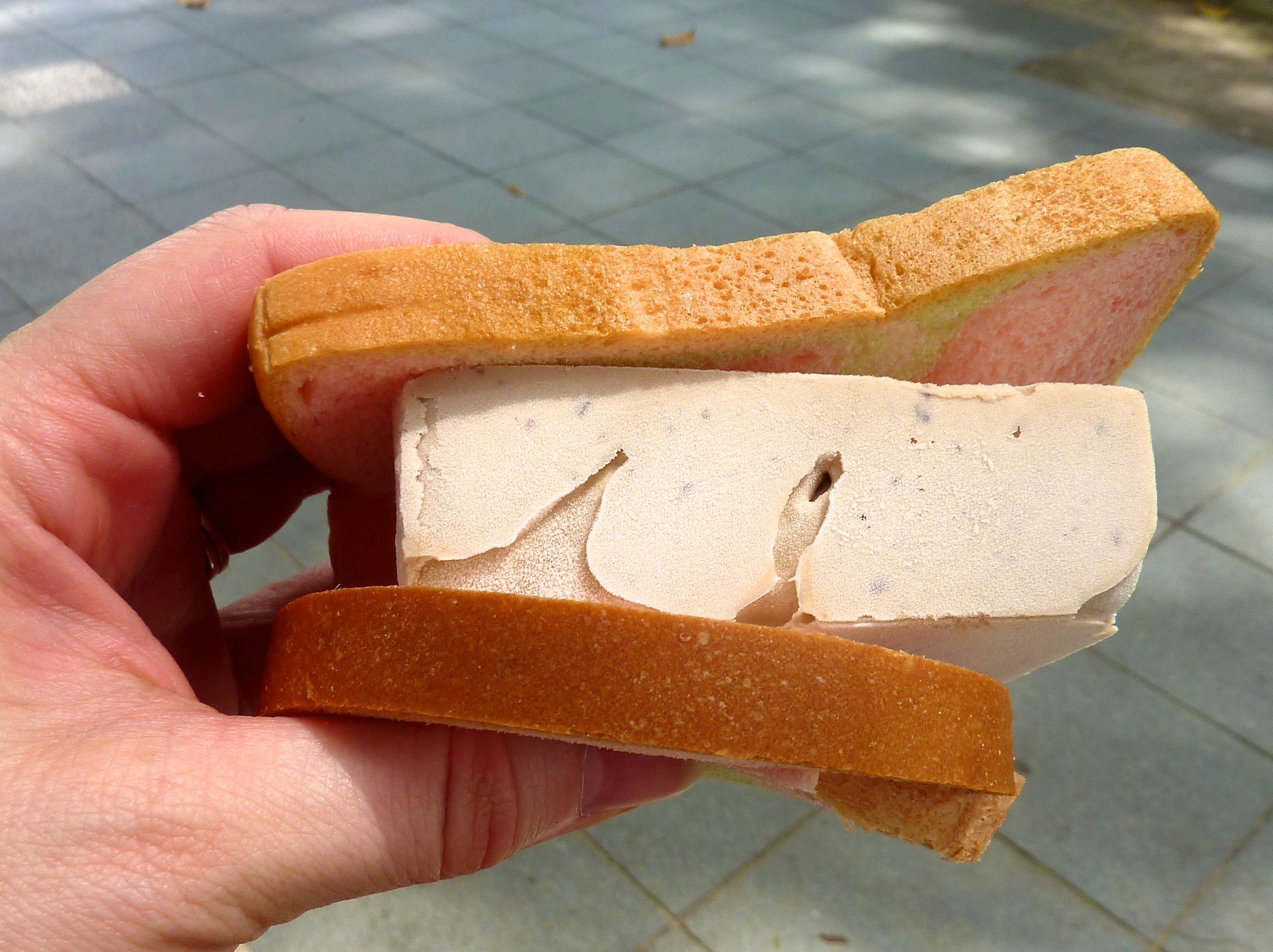
     

    Singapore 67


    One evening we met up with Dave and Fatima (they live in Germany) and went to the popular Glutton's Bay Hawker Market. 
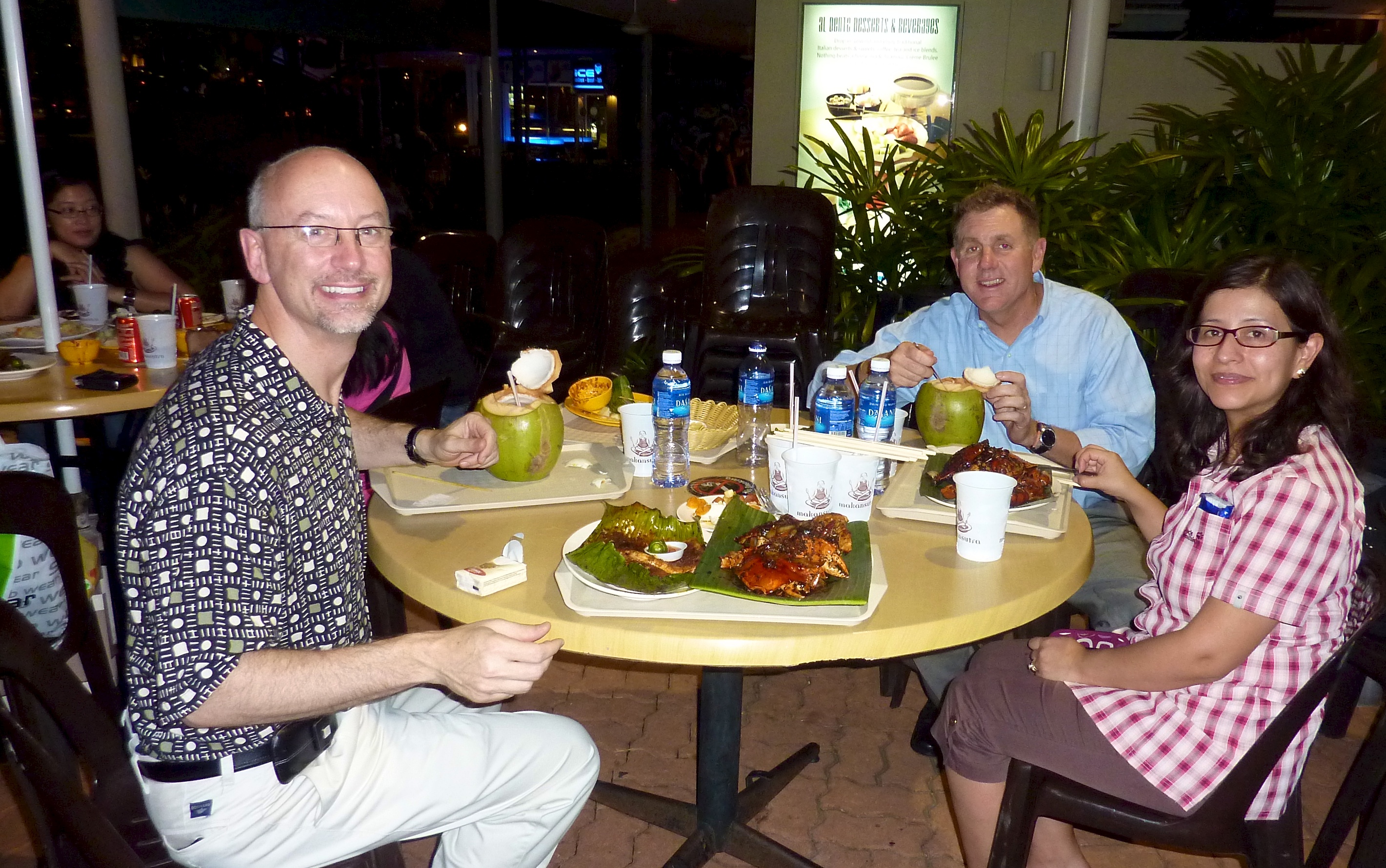
     

    Singapore 85


    We ate the black pepper crabs and grilled stingray – both are specialties of Singapore.
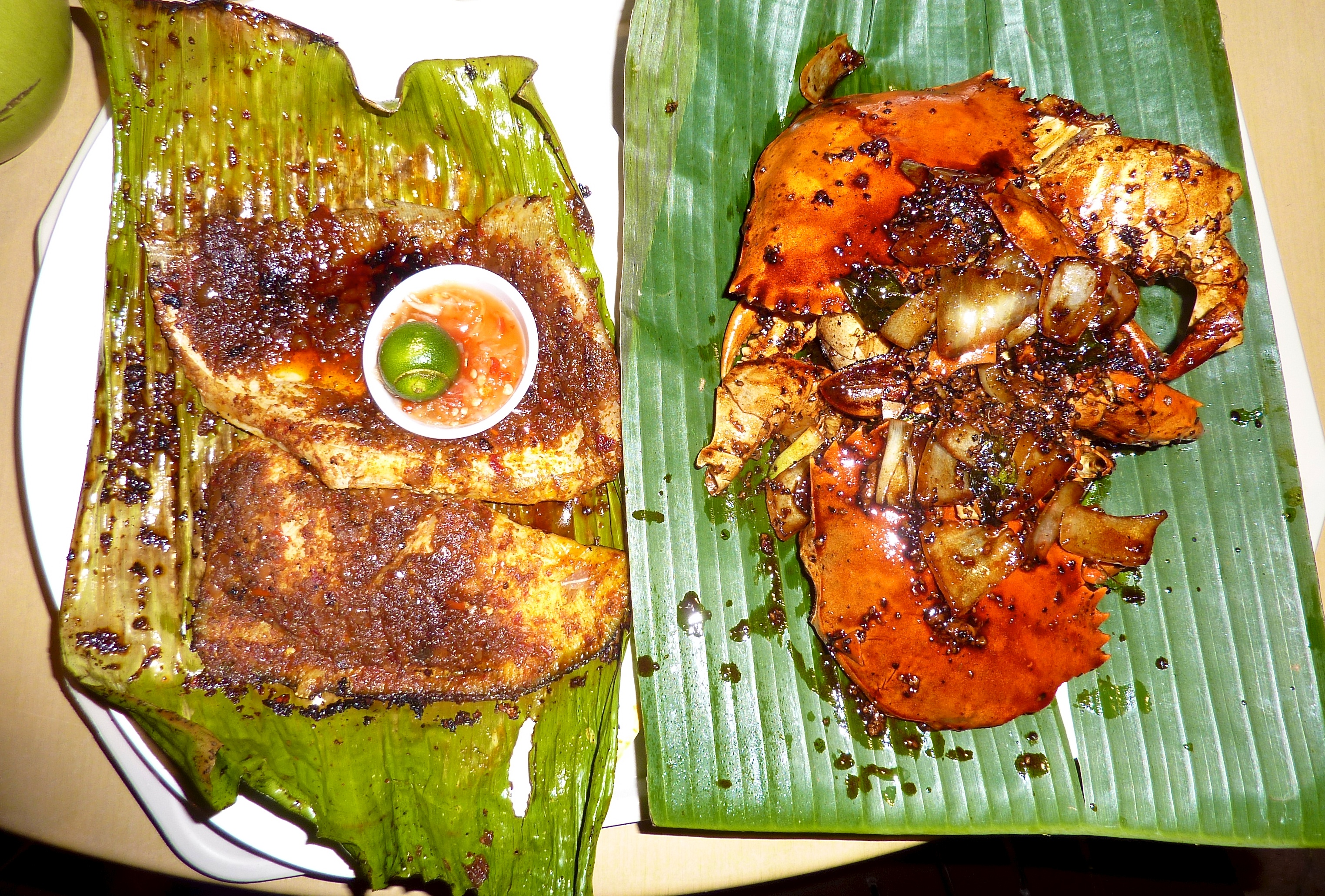
     

    Singapore 84


    D stood in line for 30 minutes for the black pepper crabs. 


    Singapore 83

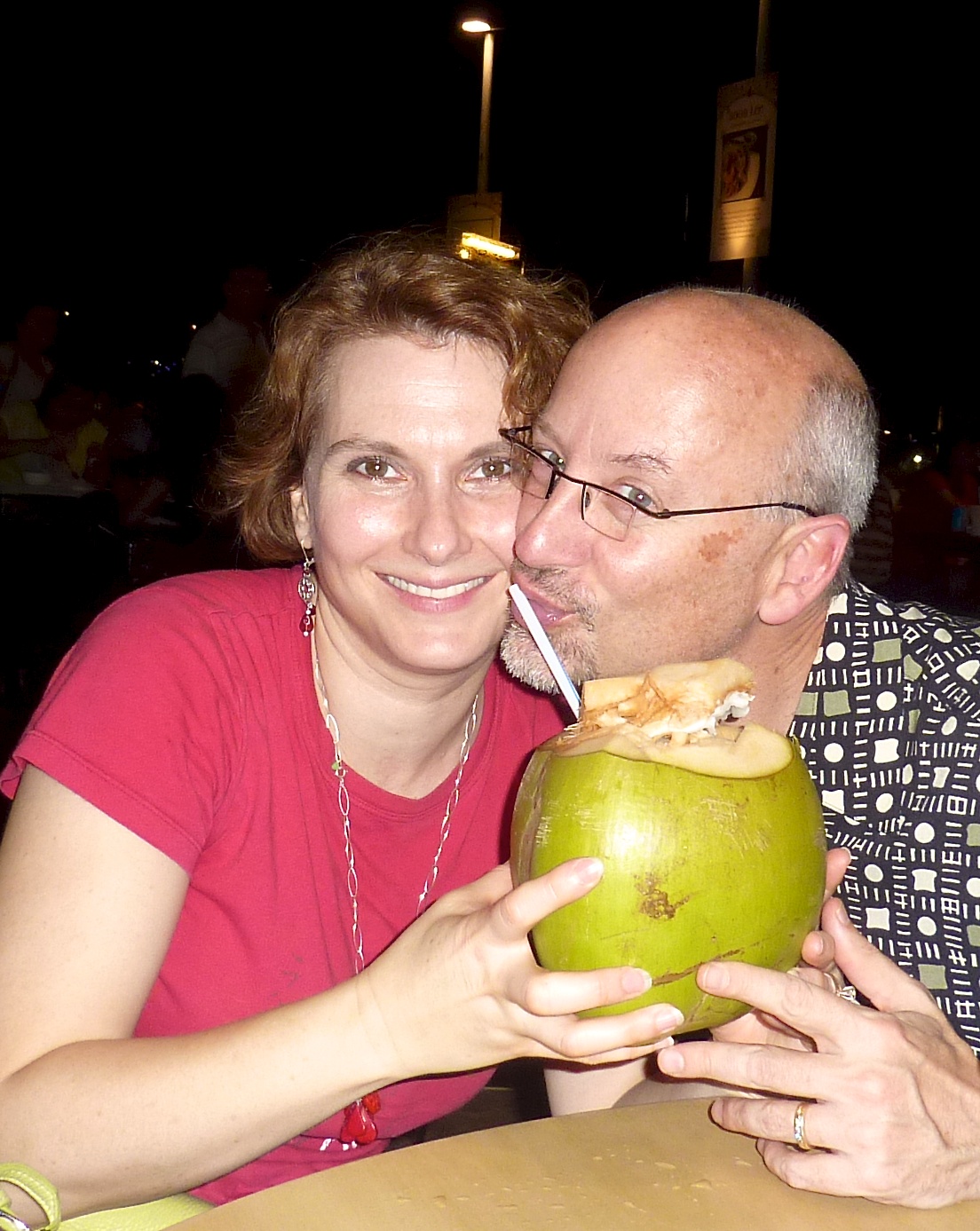
    Worth it?  Not really.  Good but expensive and a long wait.  We actually enjoyed the grilled stingray more, and the coconut juice fresh from the shell.


    Seaweed Pringles anyone?
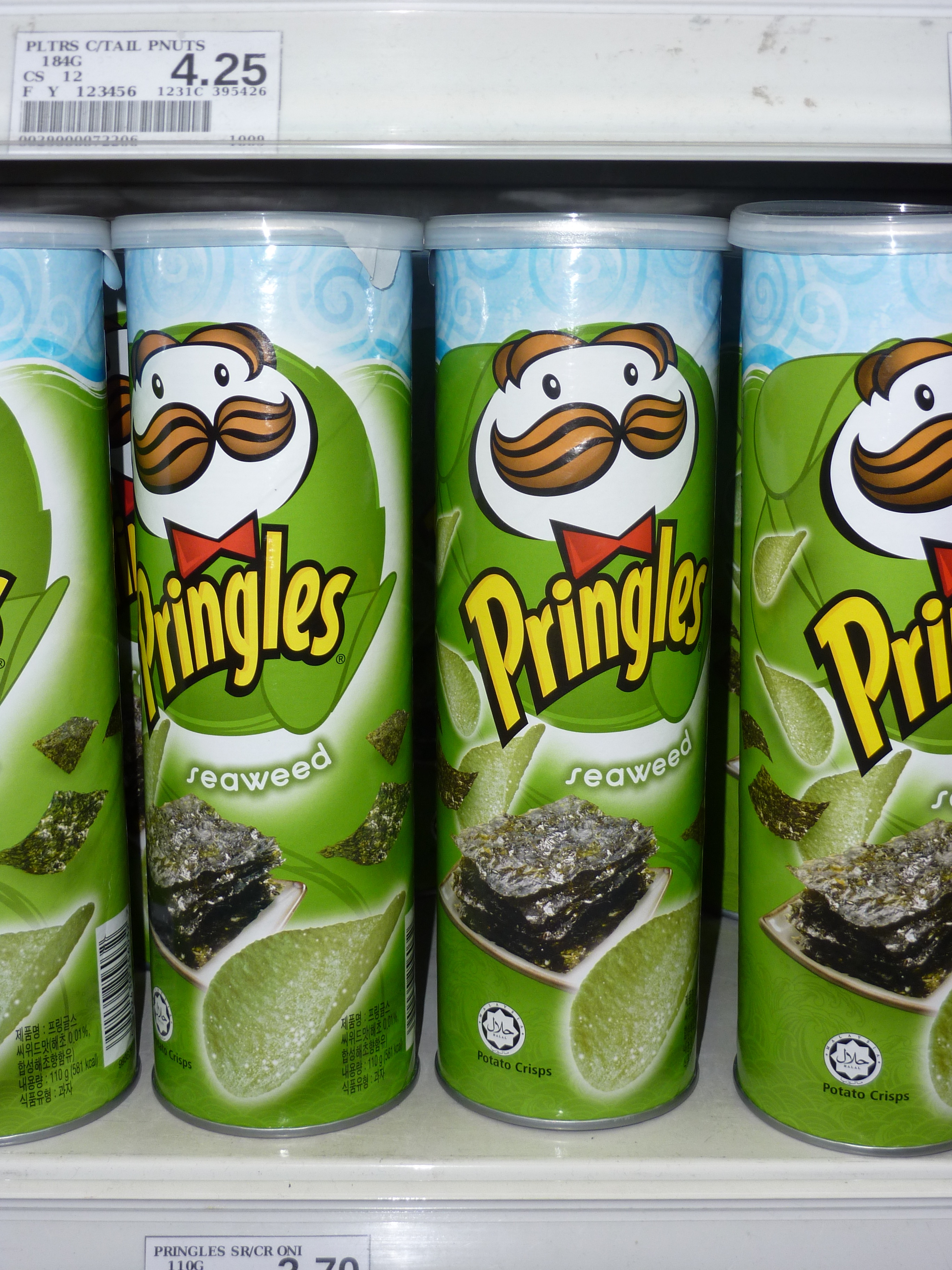
     

    Singapore 15

    We took a 4-hour cooking class with Ruqxana, the one on the right.   The class was in her home. 
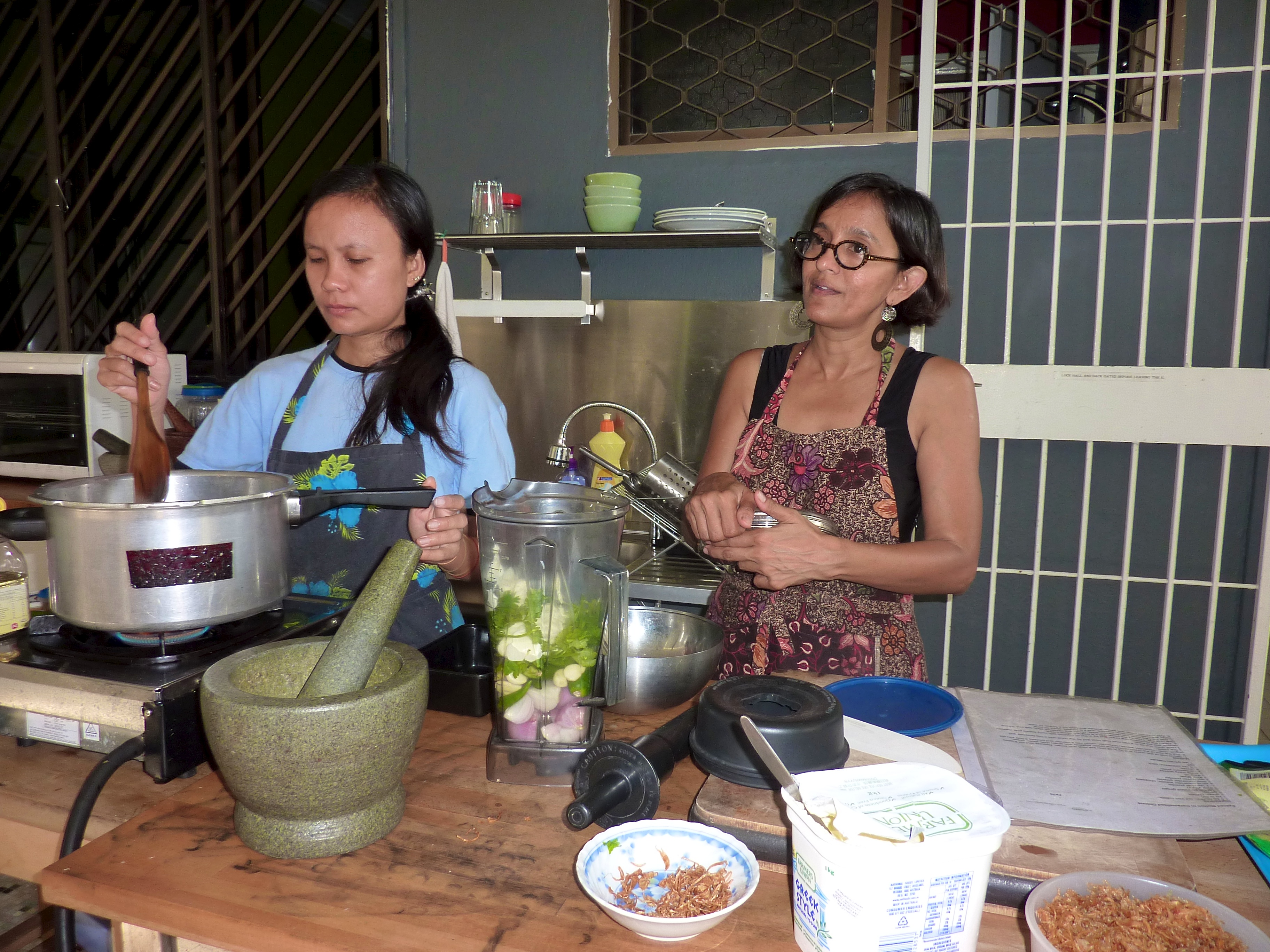
     

    Singapore 87


    She used all fresh ingredients.  We made a Cambodian dish – chicken curry with young jack fruit, one Indian – spice mutton with caramelized onions and one Indonesian – fish curry in coconut and tamarind gravy with basil.
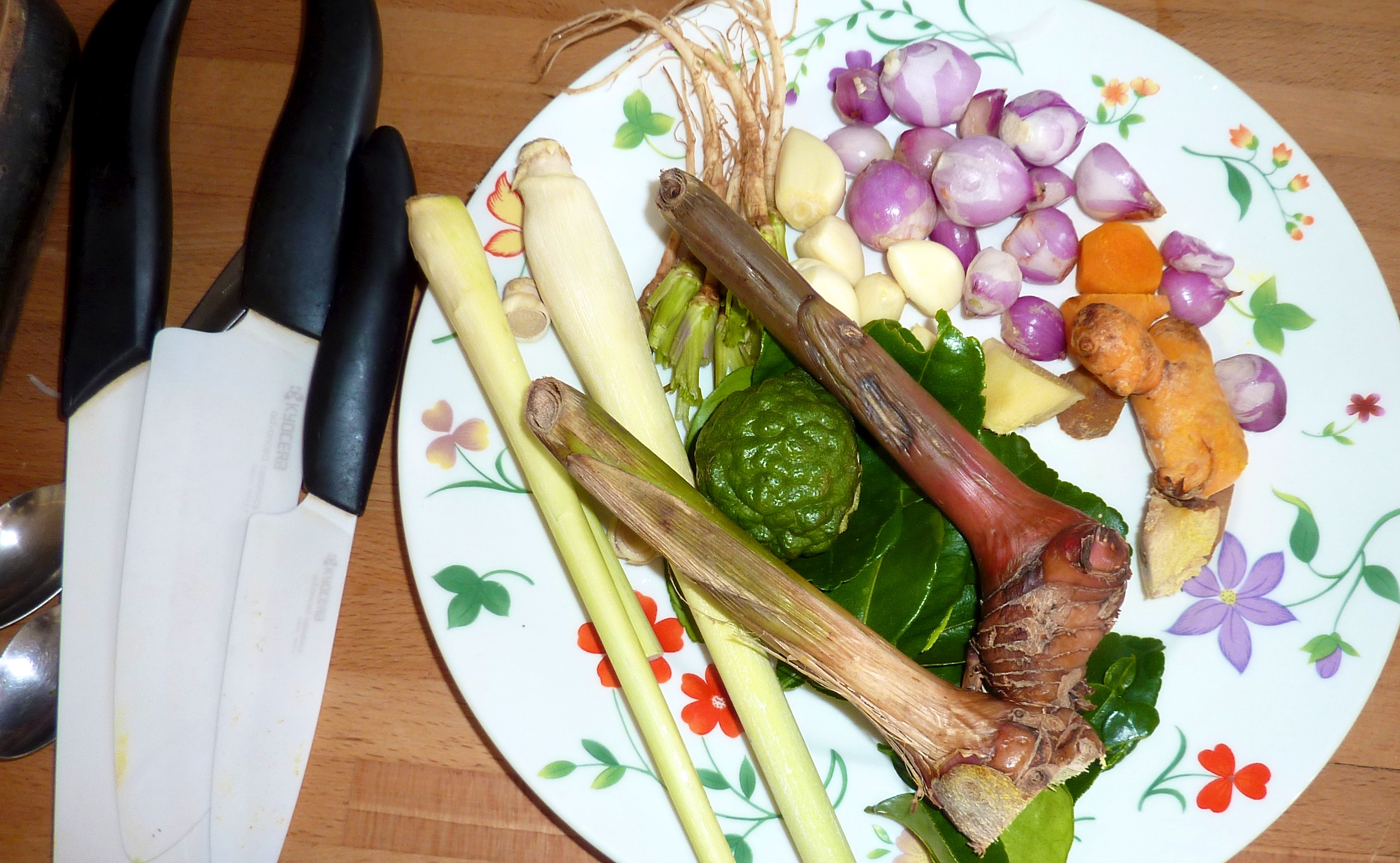
     

    Singapore 89


    The caramelized onions were cooked to perfection!
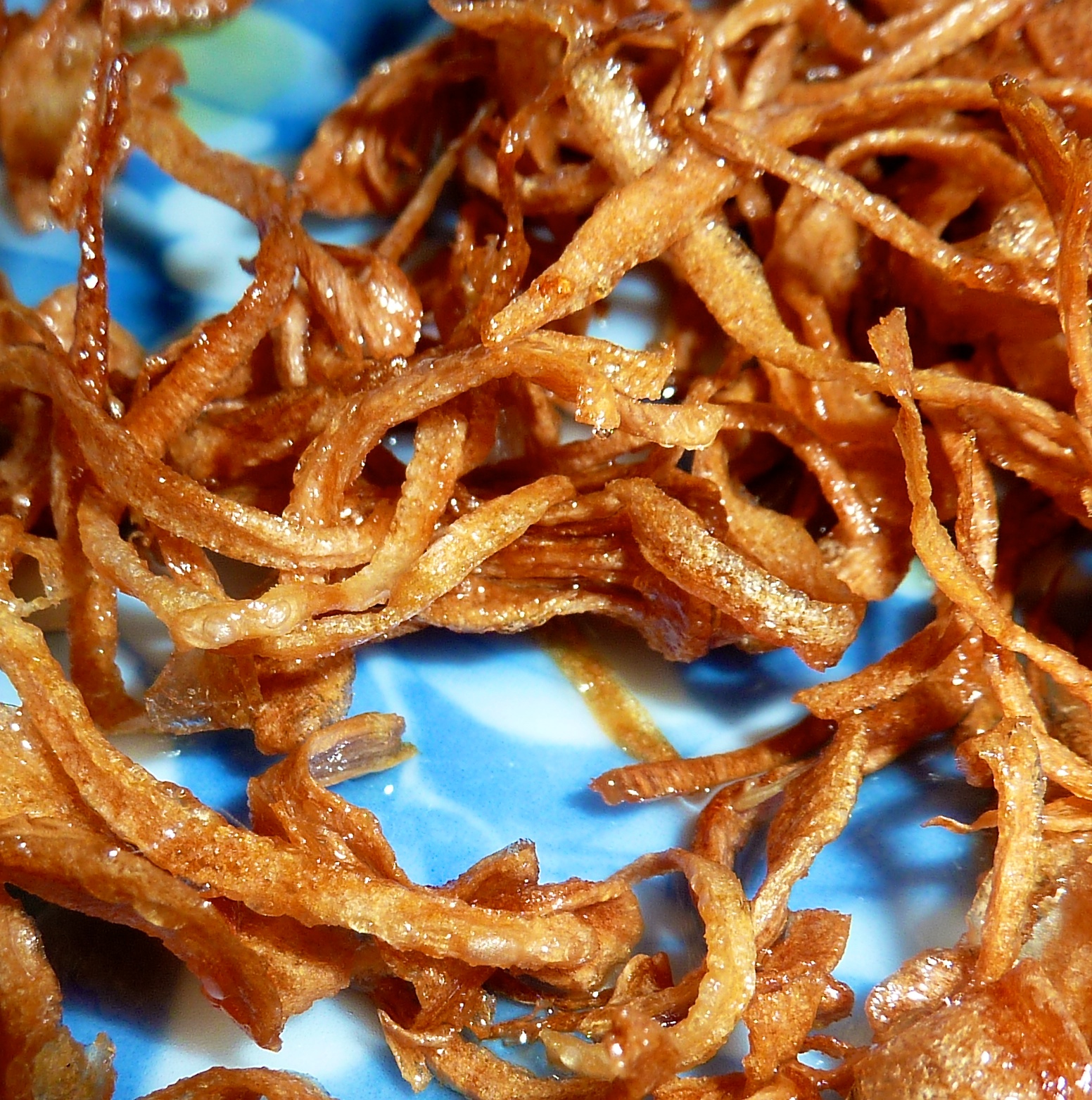
     

    Singapore 88


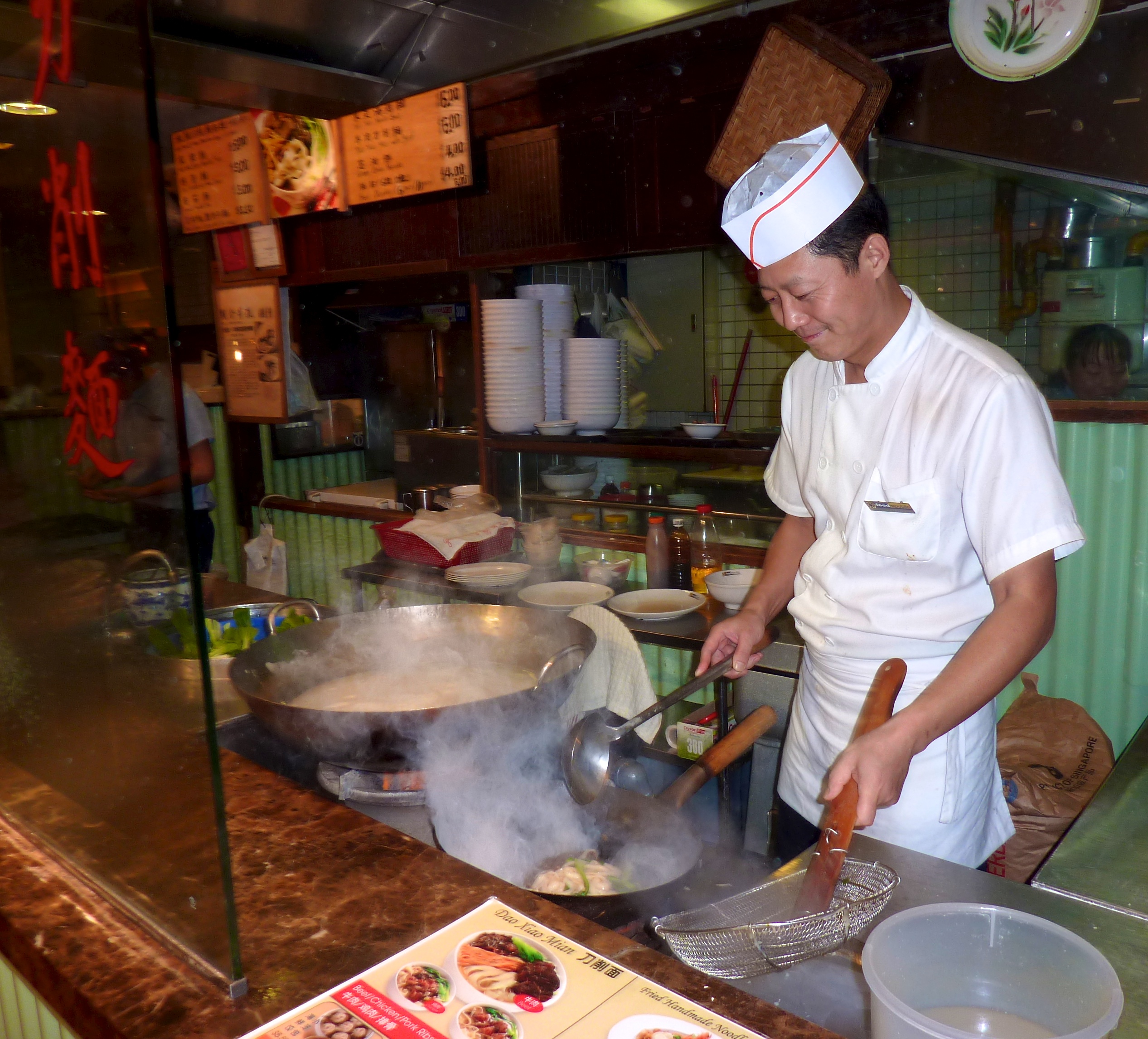
    Okay Okay – I know I have pretty much shown you every meal we ate…but I have just one more to show you.  Handmade noodles.  The best, and very fun to watch the chef make them.
     

    Singapore 208    


    PLAY

      Singapore 183

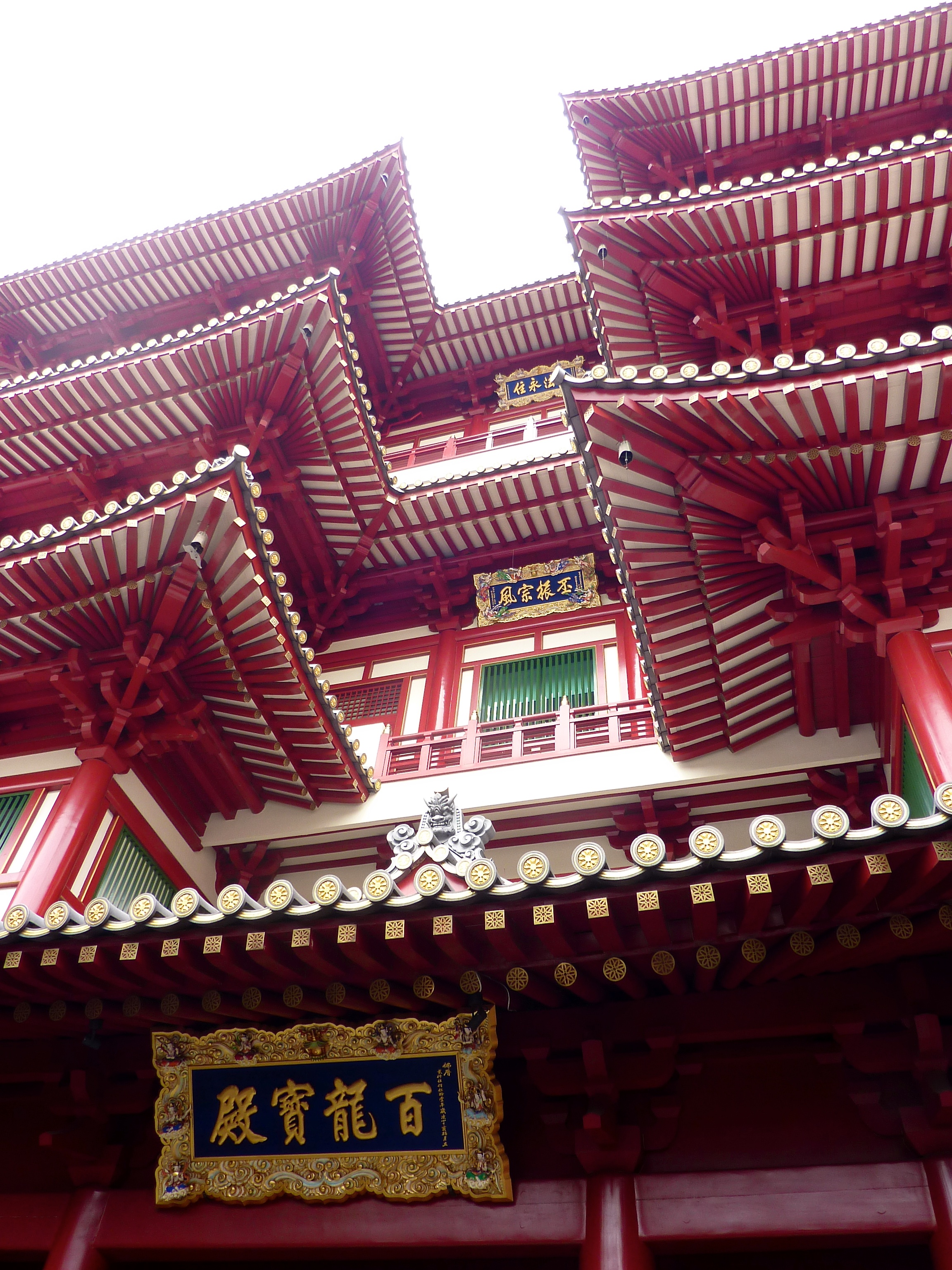
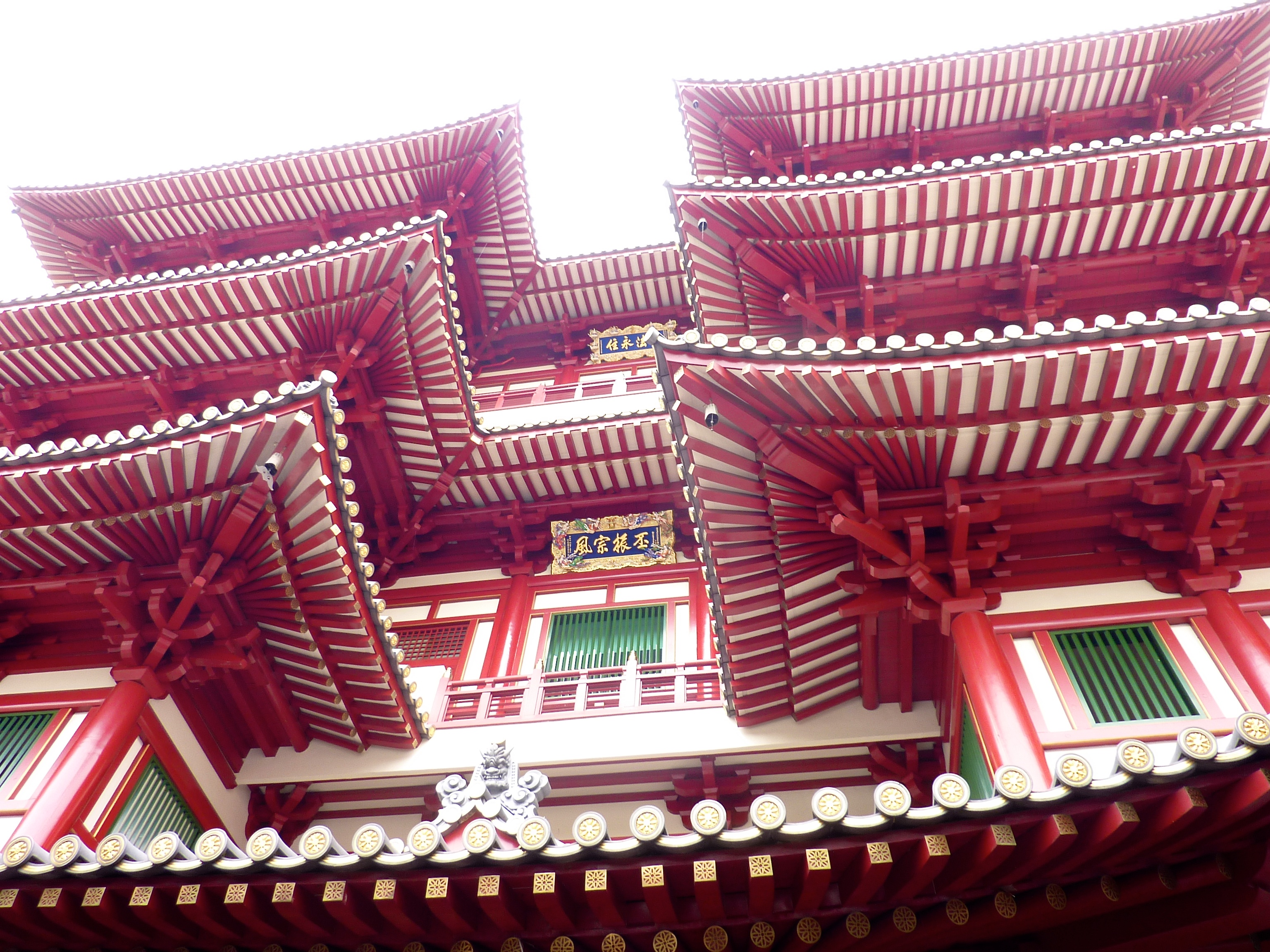
    Visit to the Buddha Tooth Relic Temple and Museum


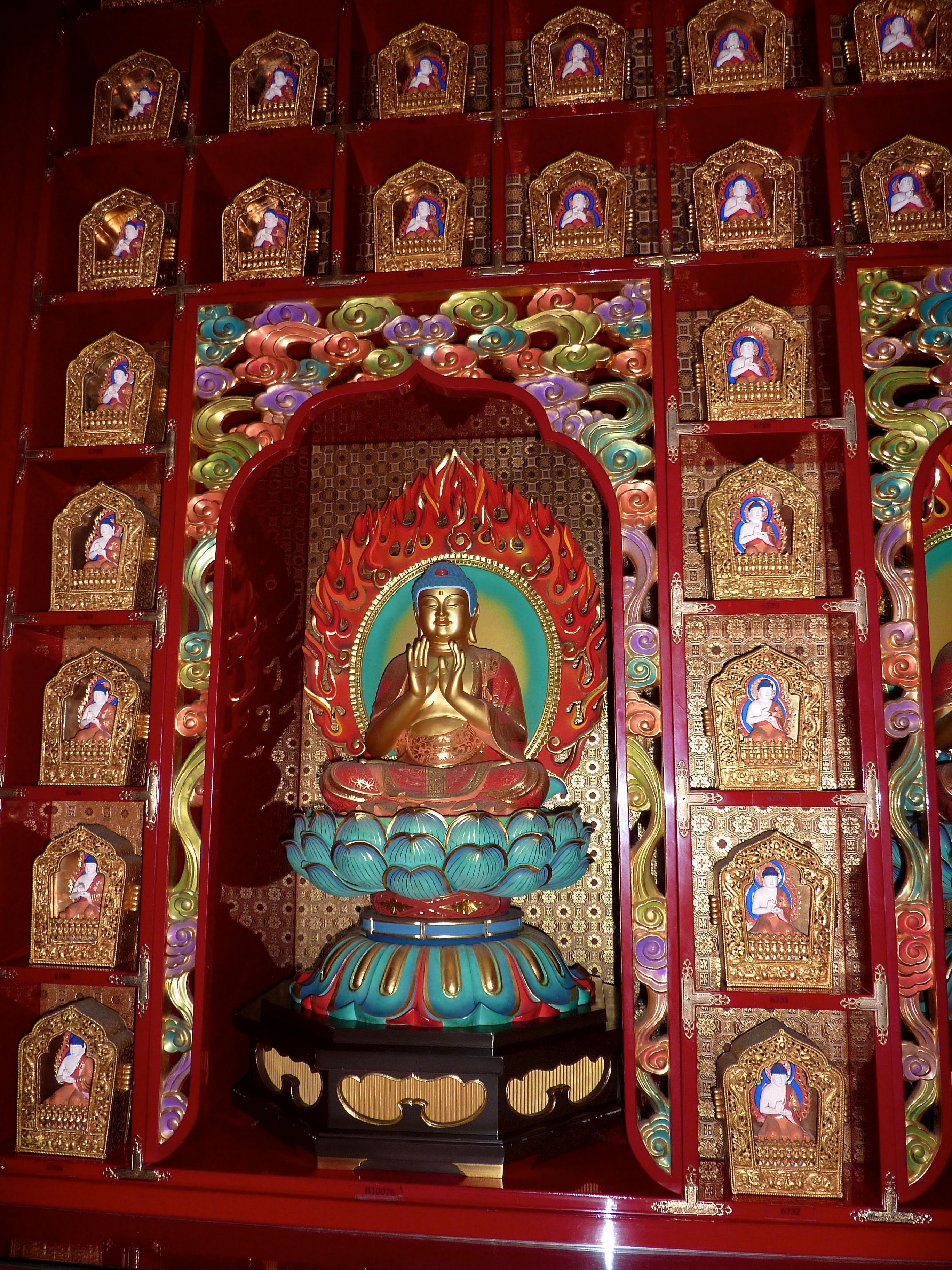
    Except for the weekend, D worked every day we were there.  So a lot of the Play is me playing!  The Buddha Tooth Relic Temple and Museum houses the sacred tooth relic composed of 420 kg of gold.  No photos allowed in this room but I can share that it was a special room and had a very spiritual feeling.

    There is a lot of controversy surrounding the authenticity of the tooth – was it really from the Buddha?  Many say it is too long and looks more like the tooth from a cow or buffalo.
     

    Singapore 172
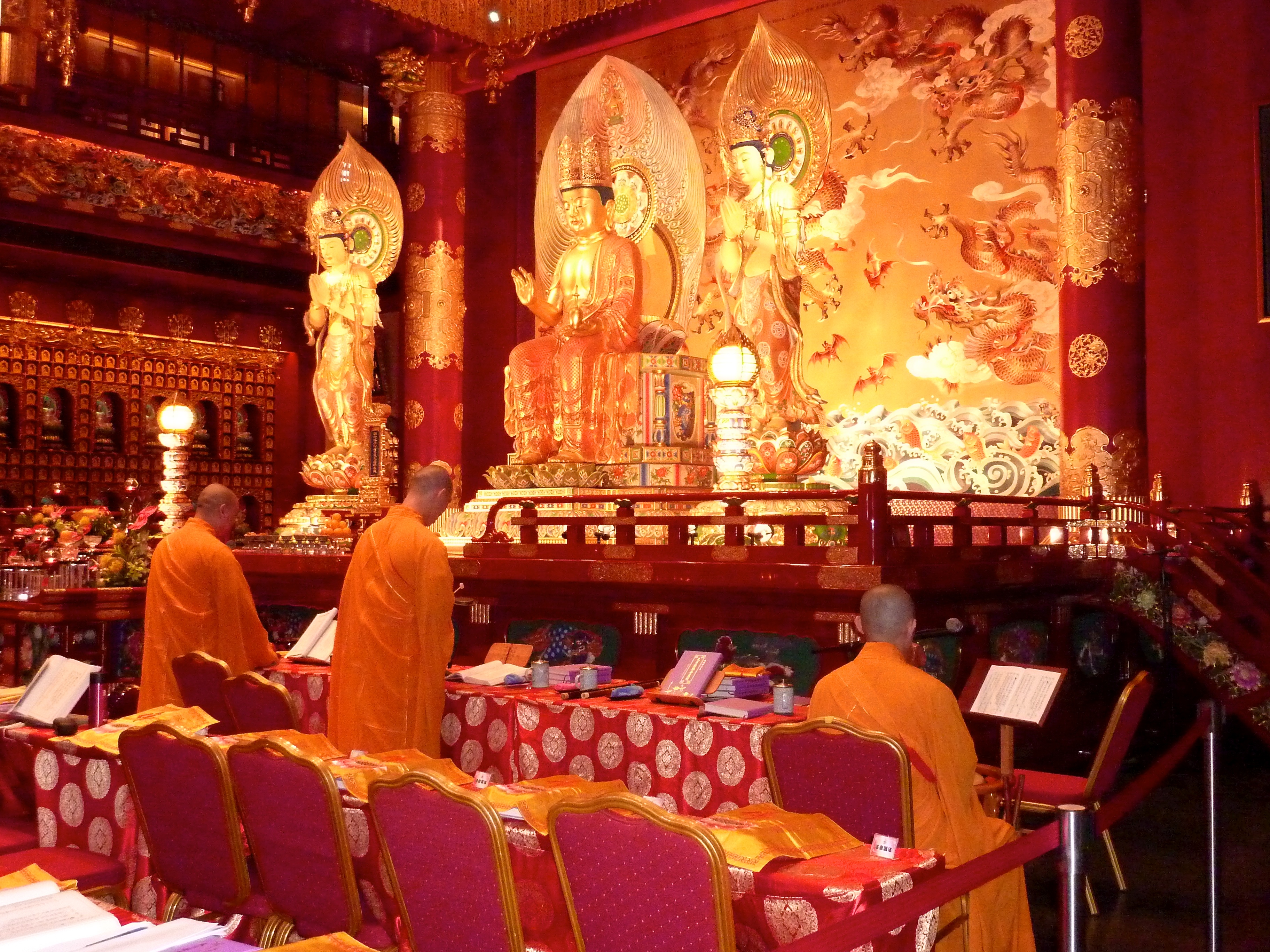
    Below is the hundred dragons hall where they hold their meditation ceremonies.  I was lucky to be in attendance while meditating/chants were taking place.  I asked the guard if I could photograph the inside and she said yes.  I felt like I was imposing on such a sacred time, but also thought how cool it would be to share this with my blog readers. 
     

    Singapore 175

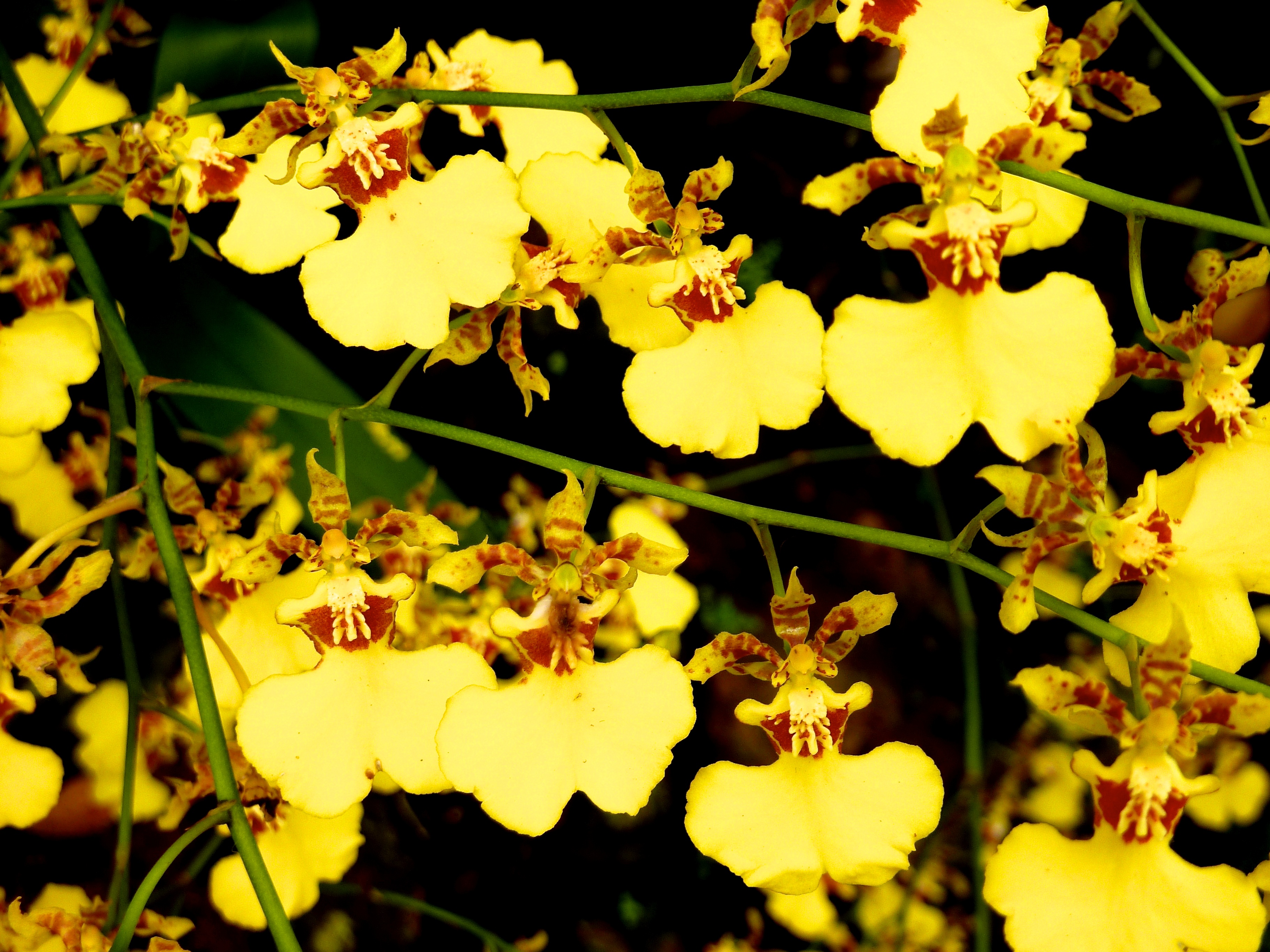
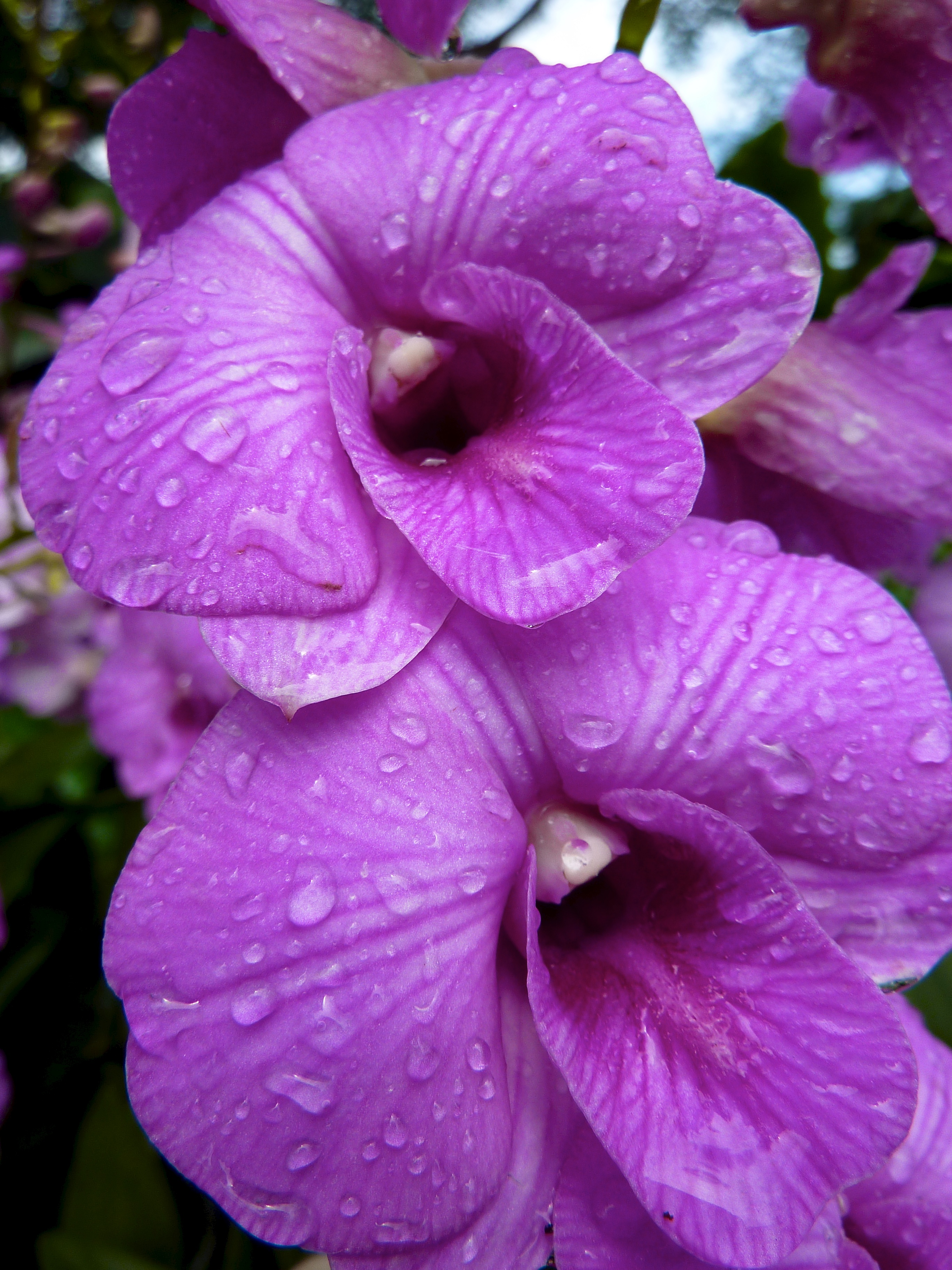
    One day I visited the National Orchid Garden, that is part of the Botanical Gardens. 

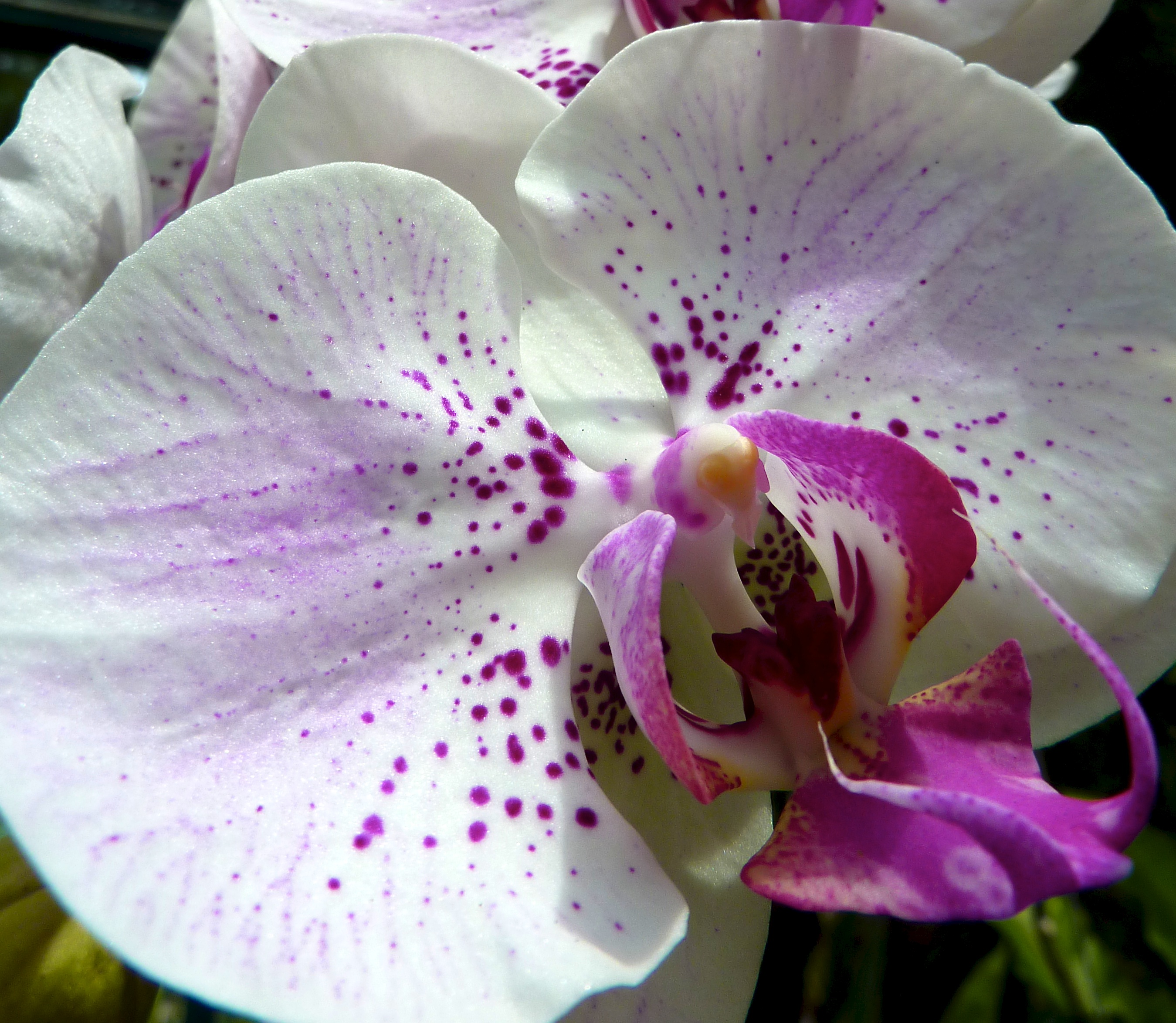
    It was extremely impressive.  I thought it would be indoors, but Singapore is so hot and humid, they grow beautifully outdoors.  They have over 60,000 species of orchids, many of them rare.
     

    Singapore 62


    Singapore 23


    Singapore 49


    To see more photos of the beautiful orchids, CLICK HERE TO VISIT MY ART BLOG MA VIE TROUVEE.


    Neighborhoods

    As I mentioned there are many ethnicity's that make up the population of Singapore, which creates very diverse and interesting neighborhoods.

    Chinatown

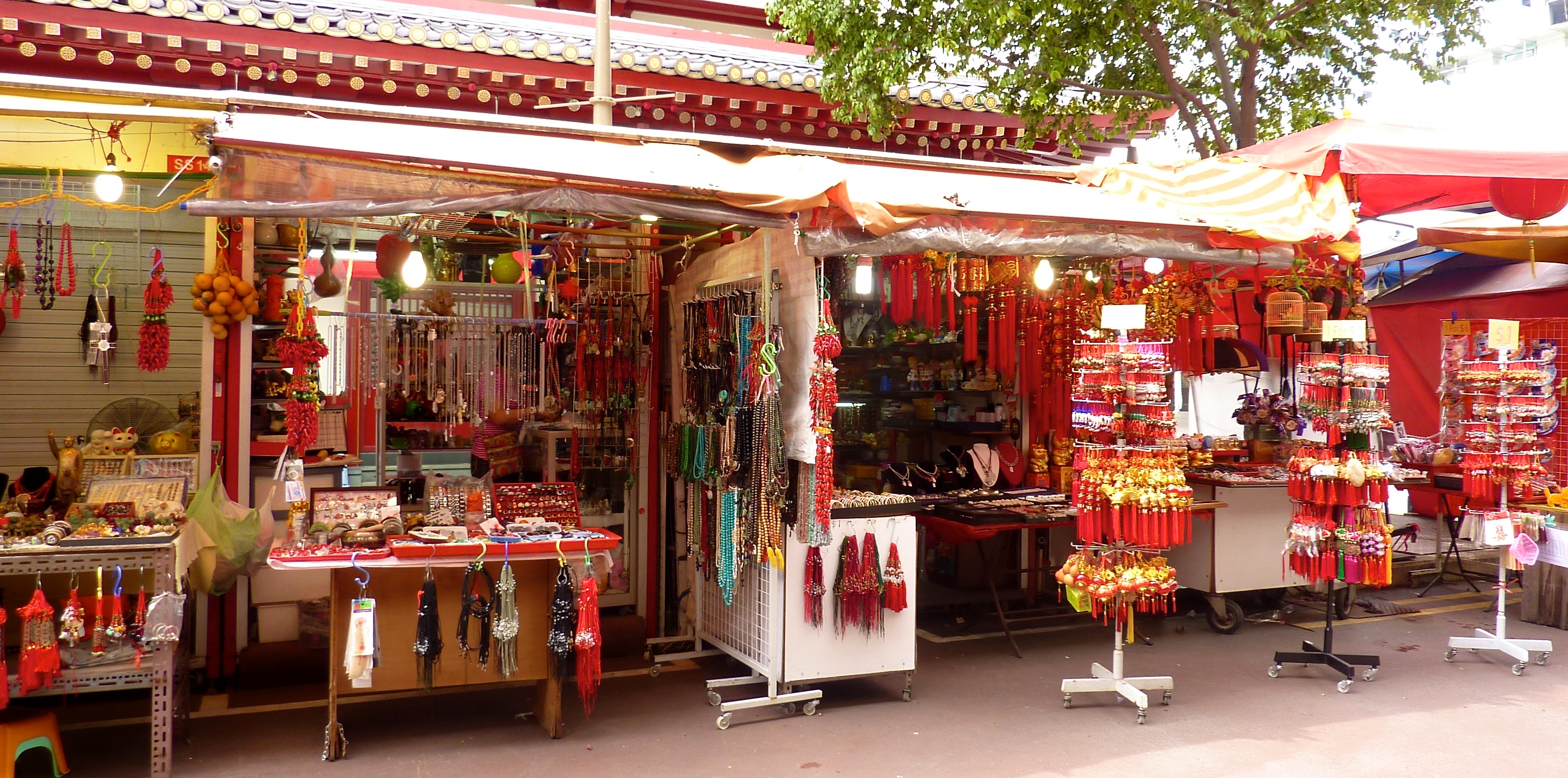
    The Chinese community is the oldest and goes back to 1330.  Up until 1961 Sago Lane had death houses, where people went to die.  Today they house tourist shops like the stores below.
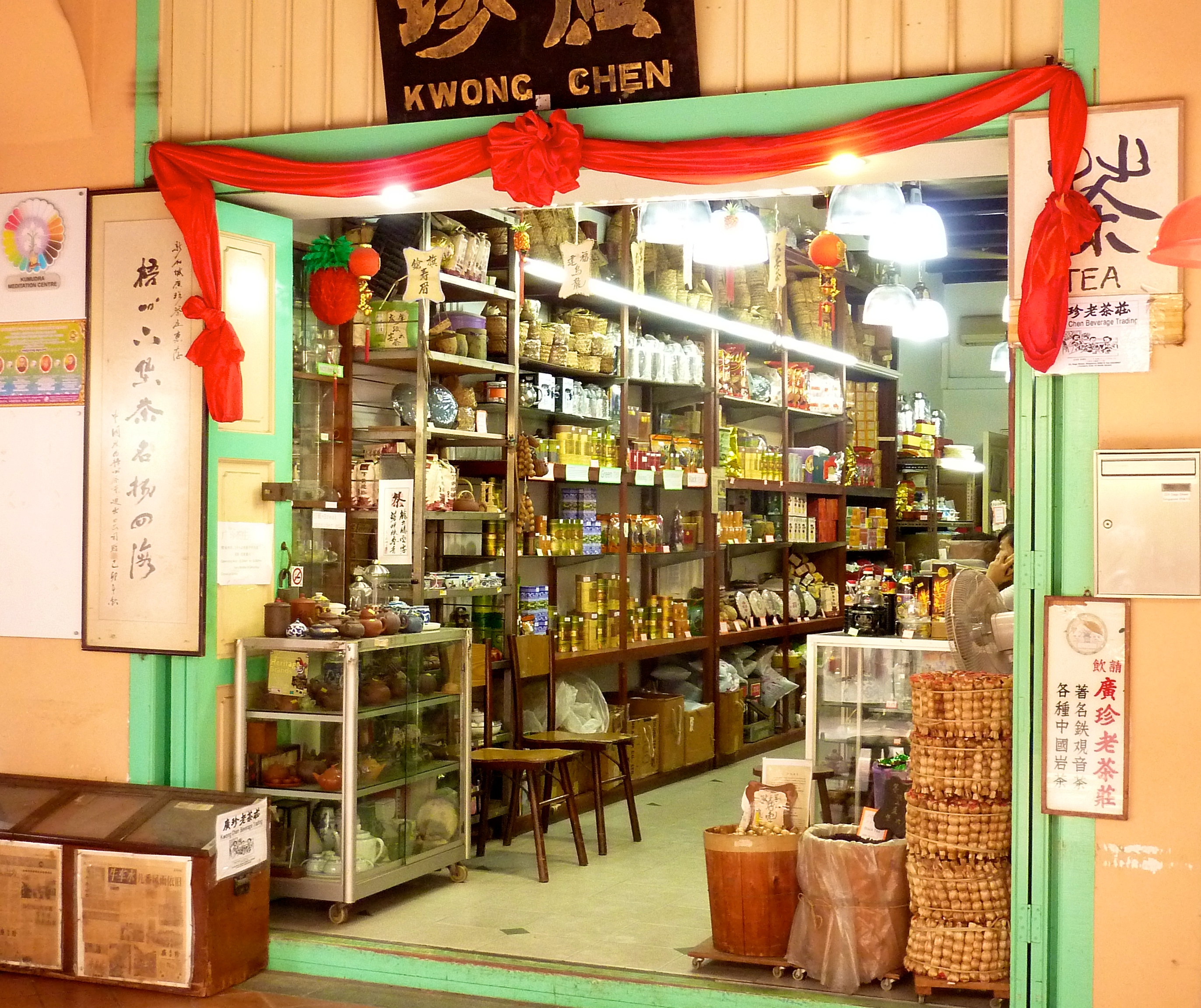
     

    Singapore 186


    Singapore 188


    Chinatown is a colorful mix of old and new.
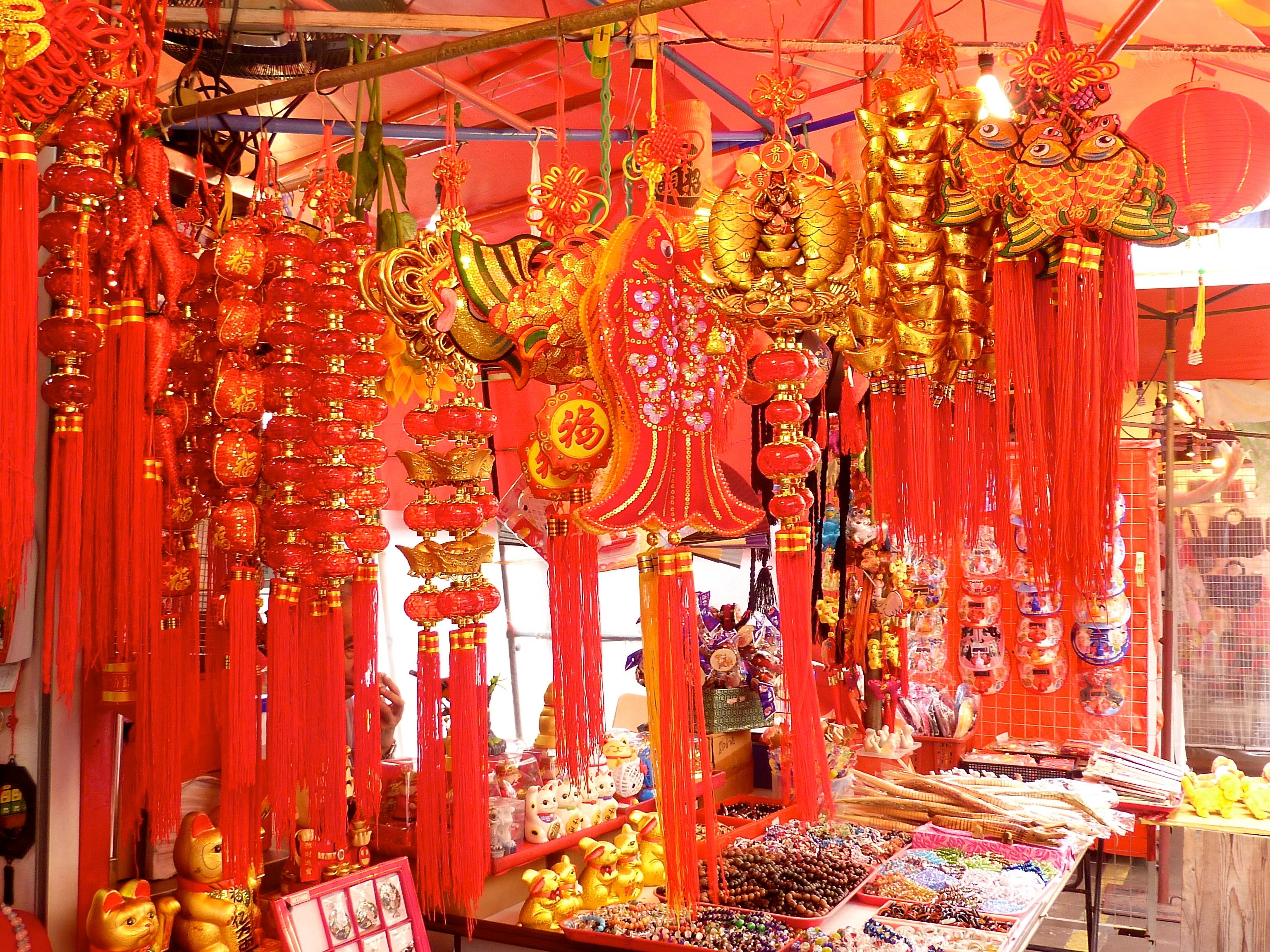
     

    Singapore 189


    From family run stalls and medicine stores to textiles and jewelry supplies to dim sum shops.
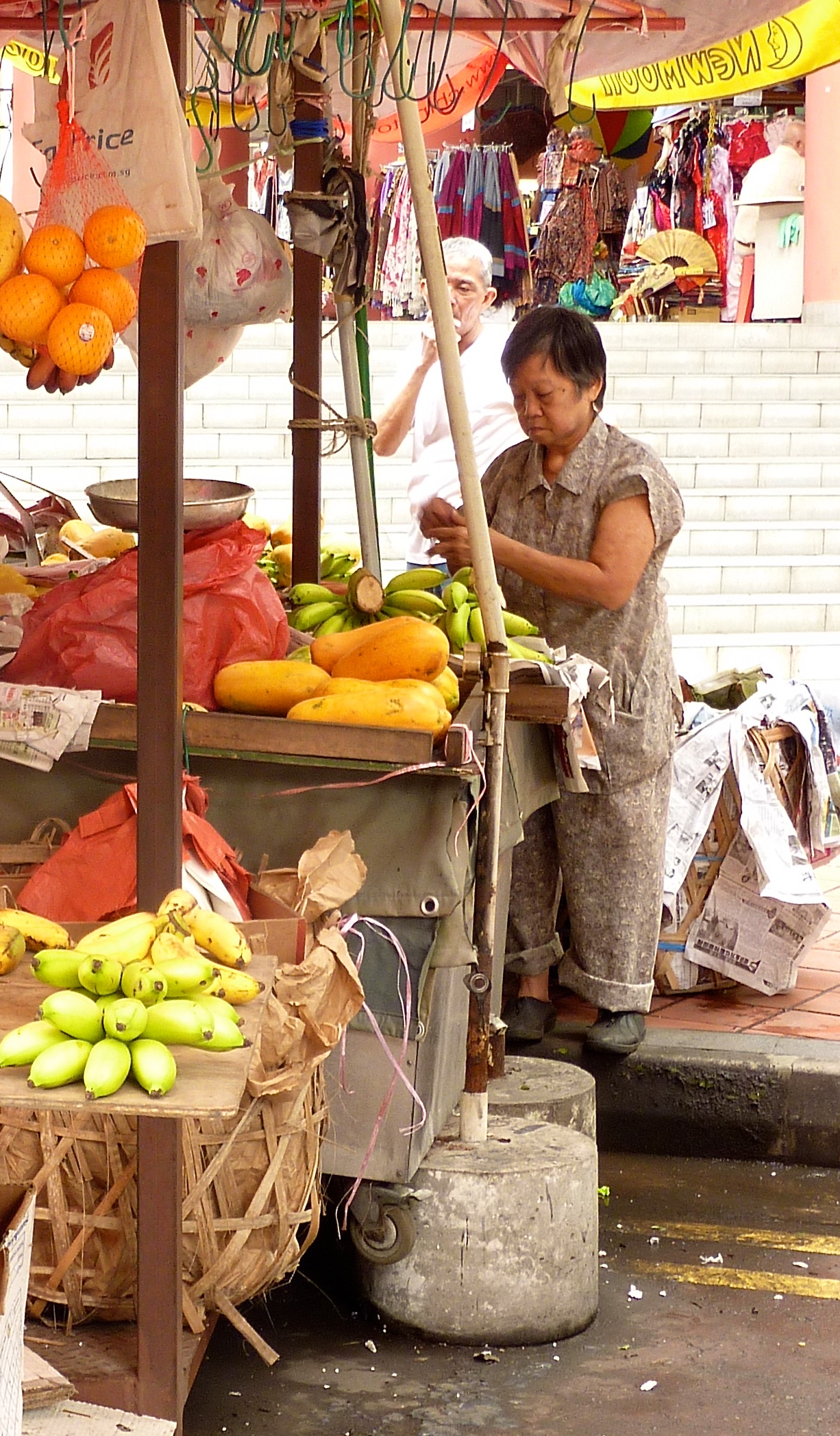
      Singapore 190


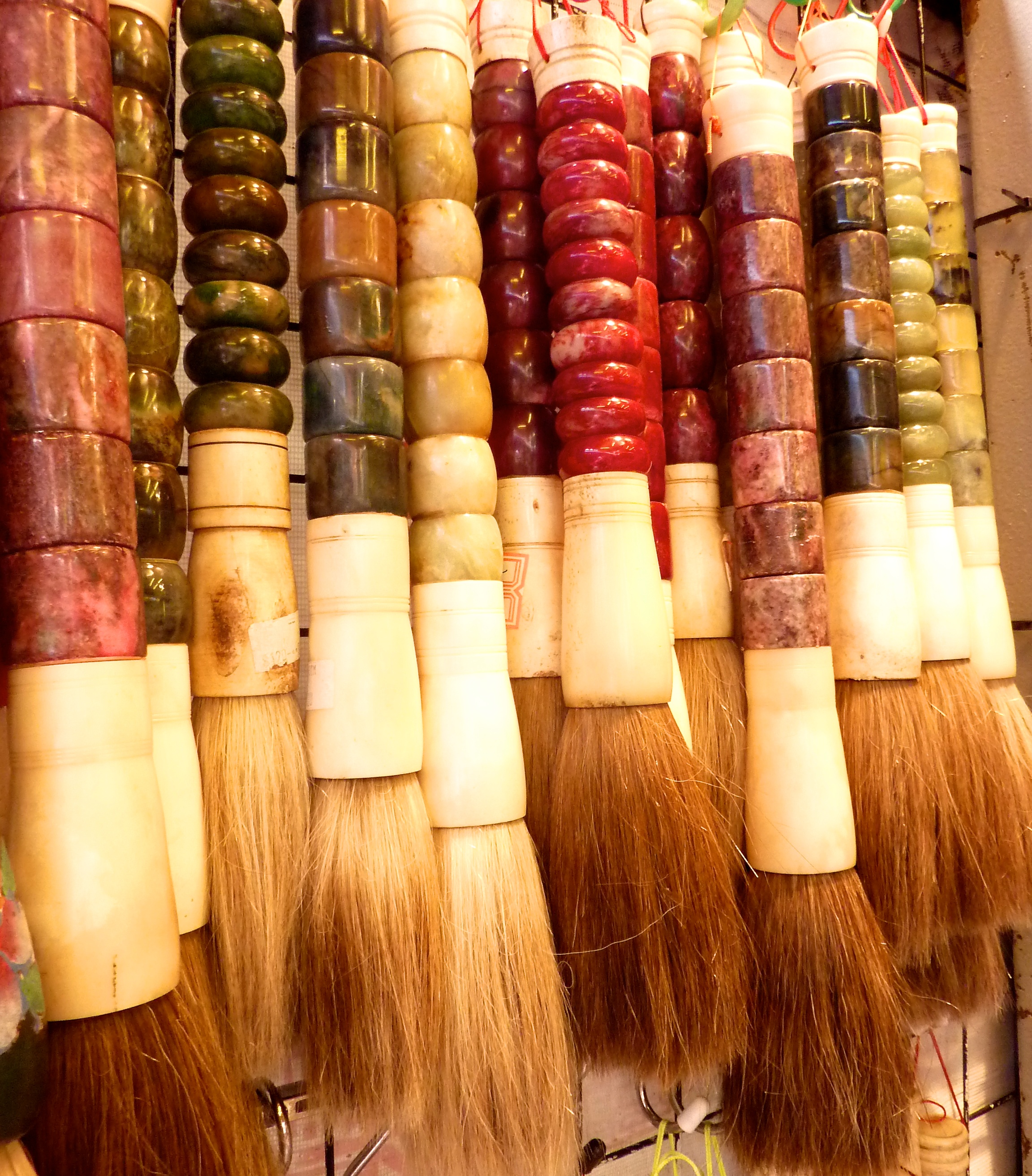
    Beautiful handmade brushes.


    Singapore 193


    While I was checking out the EXTENSIVE jewelry supply stores, D decided to relax and get a foot massage.  Was it relaxing?  When I came back to meet him, the lady was pounding and I mean POUNDING on his legs.  But he looks pretty relaxed here.
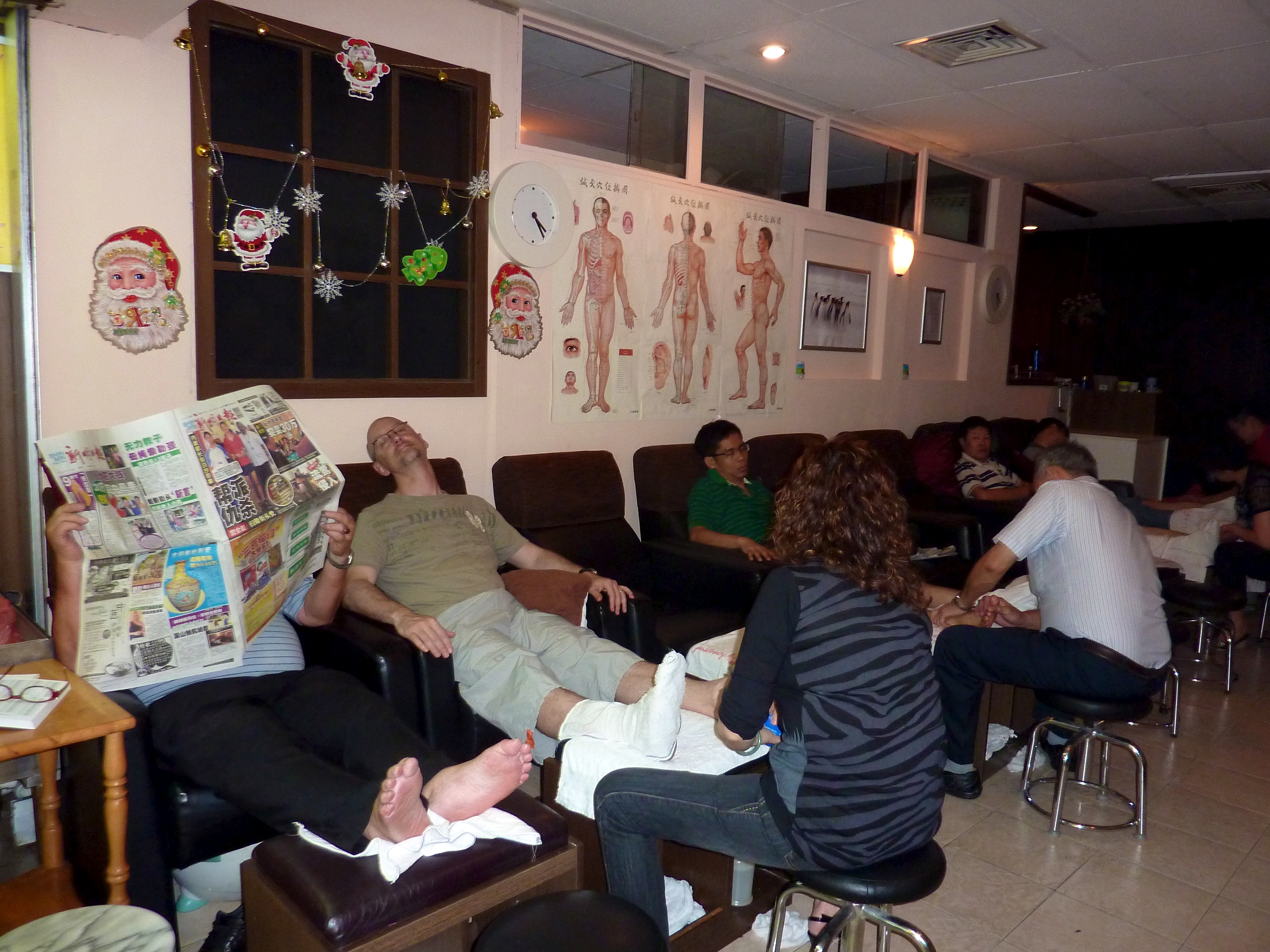
     

    Singapore 122 

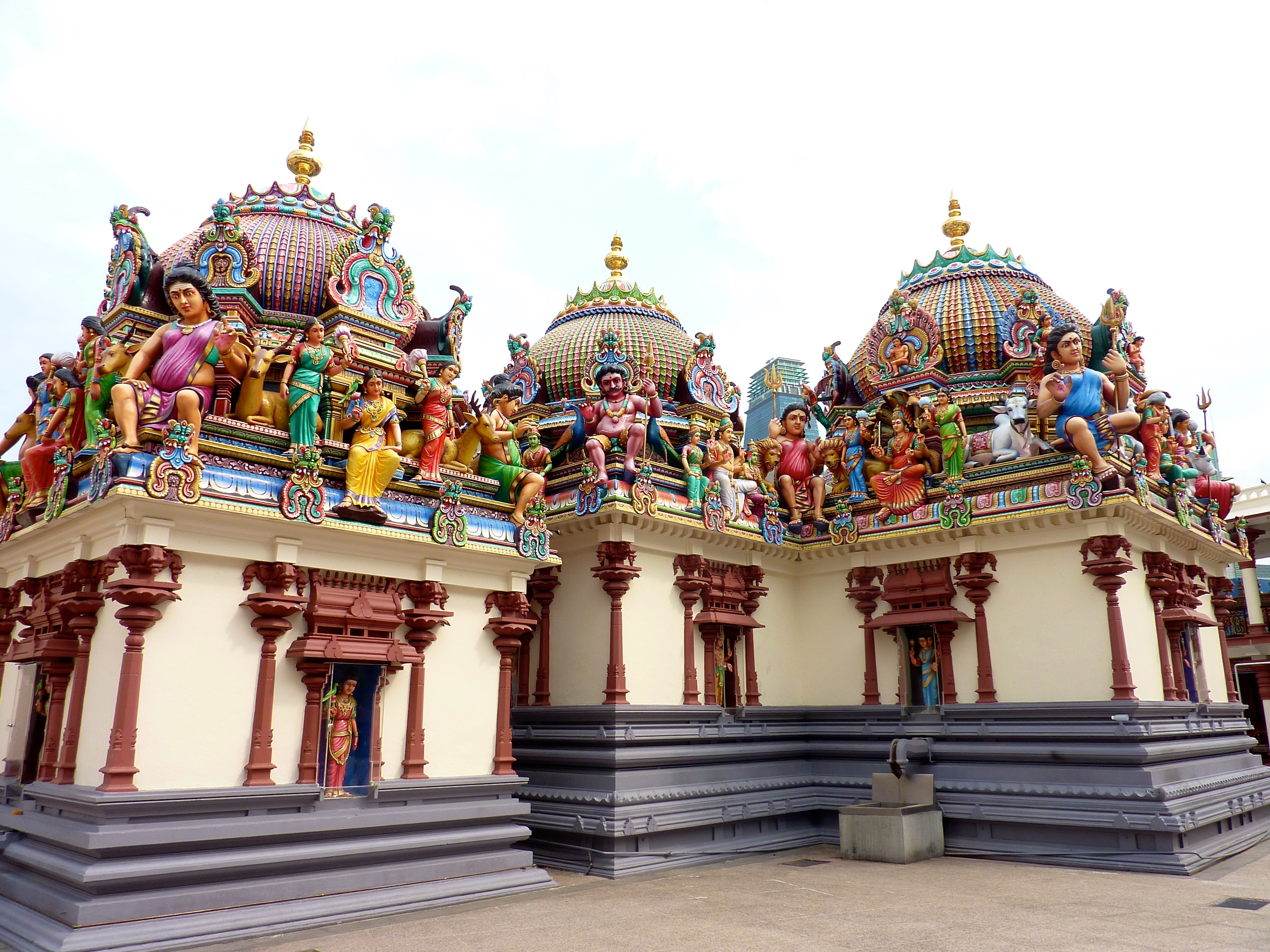
    Oddly enough, the largest Hindu temple is in Chinatown, the Sri Mariamman Temple.  It is also the oldest temple, founded in 1827.  Sri Mariamman is the goddess known to help people.
      Singapore 111


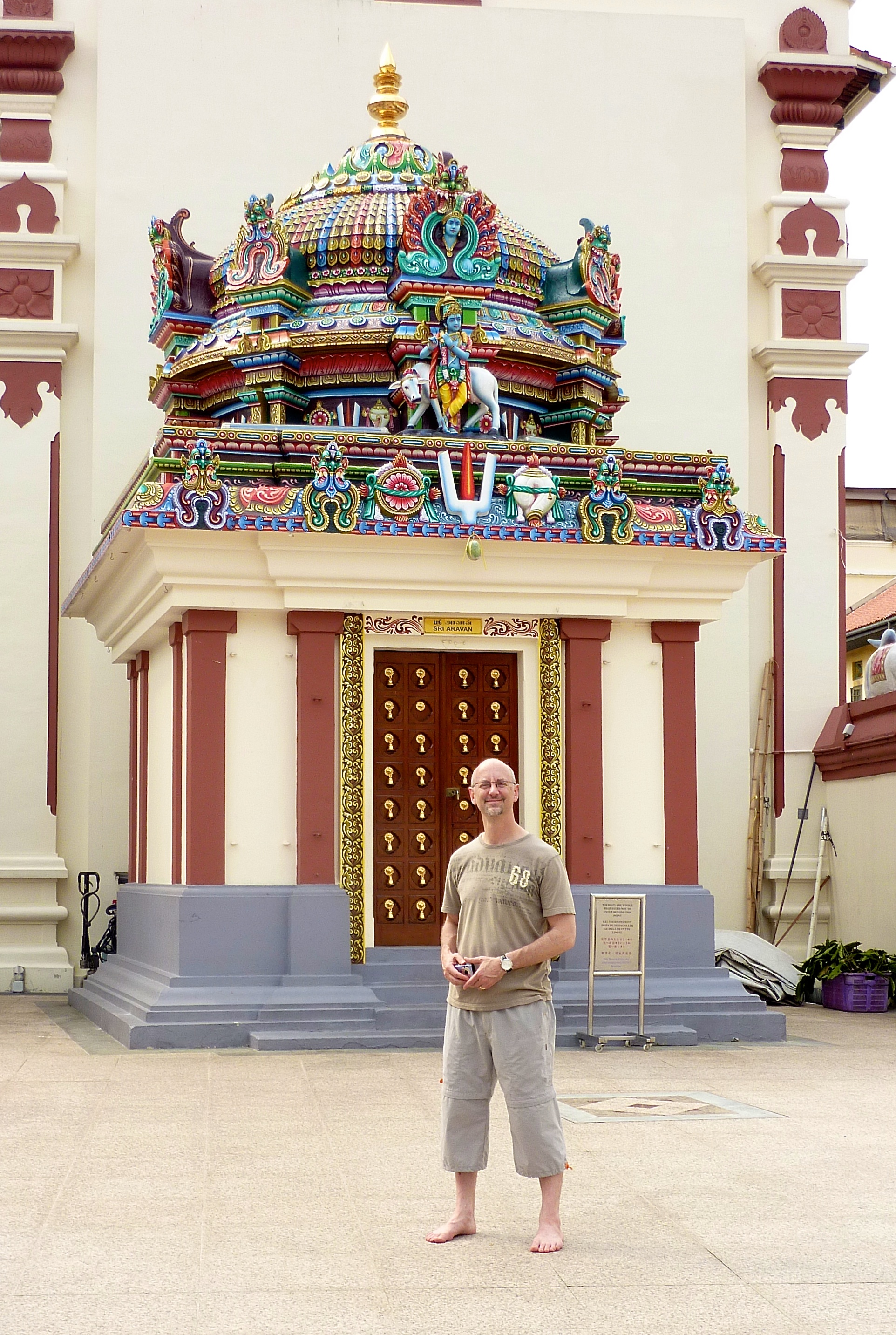
    It is free to enter the temple, but you must remove your shoes.  I think this is such a cute photo of D.
     

    Singapore 109


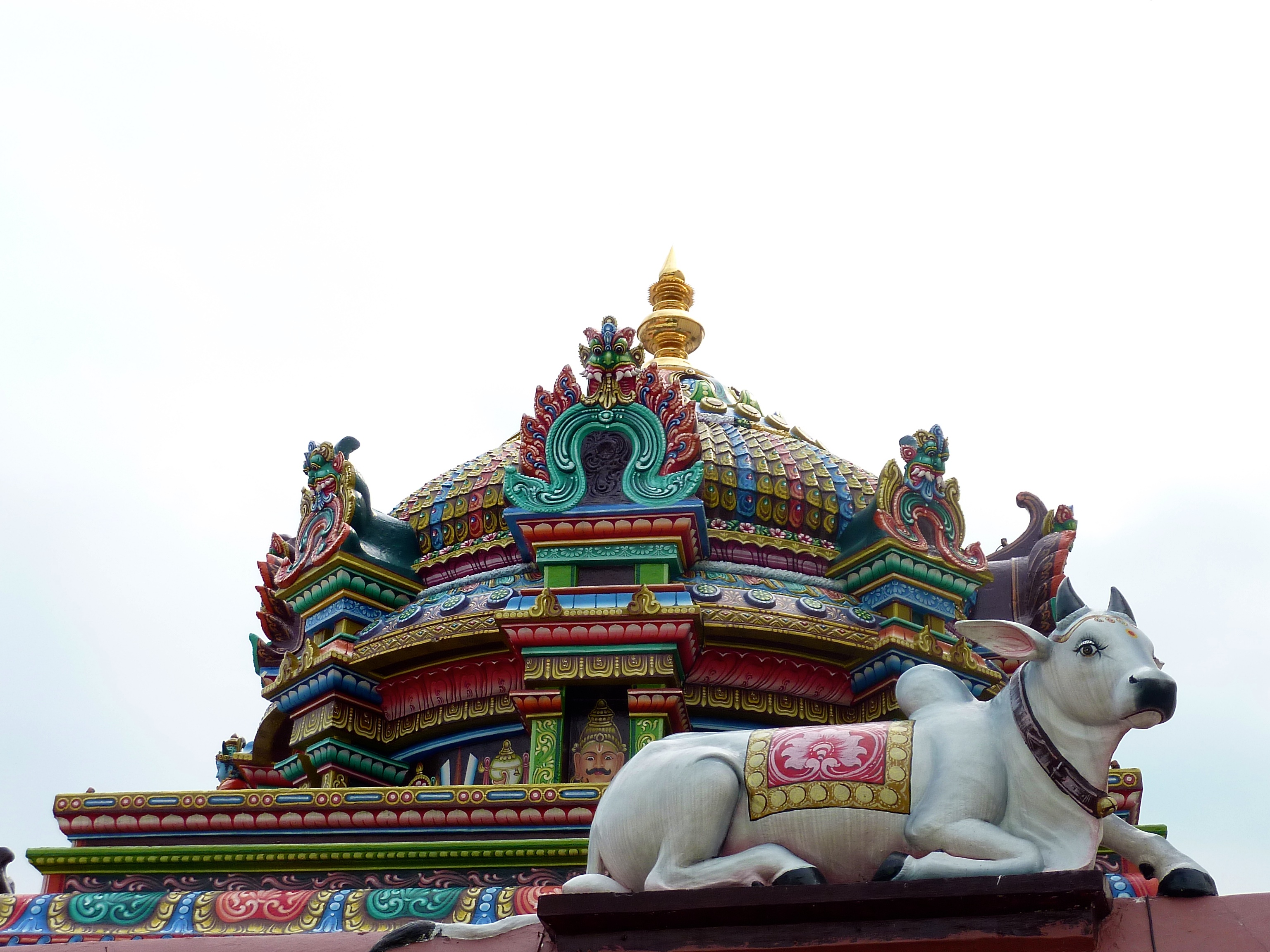
    Since the temples inception, it has served as a refuge for new immigrants.  Today it is also used for worship and community events.
    Singapore 106


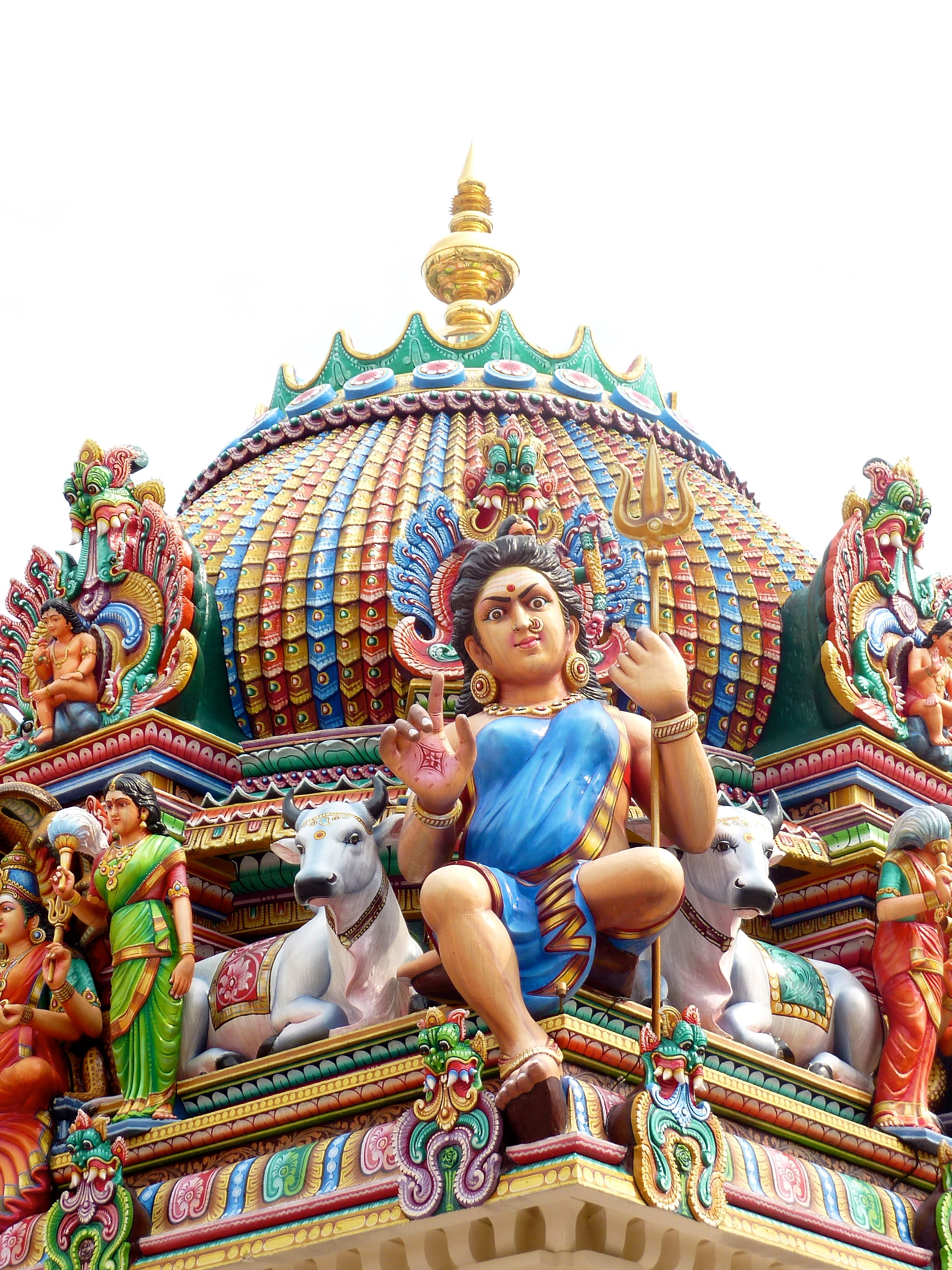
    The decorated roof is known as Vimana and is dedicated to the various Hindu deities.Singapore 112
     

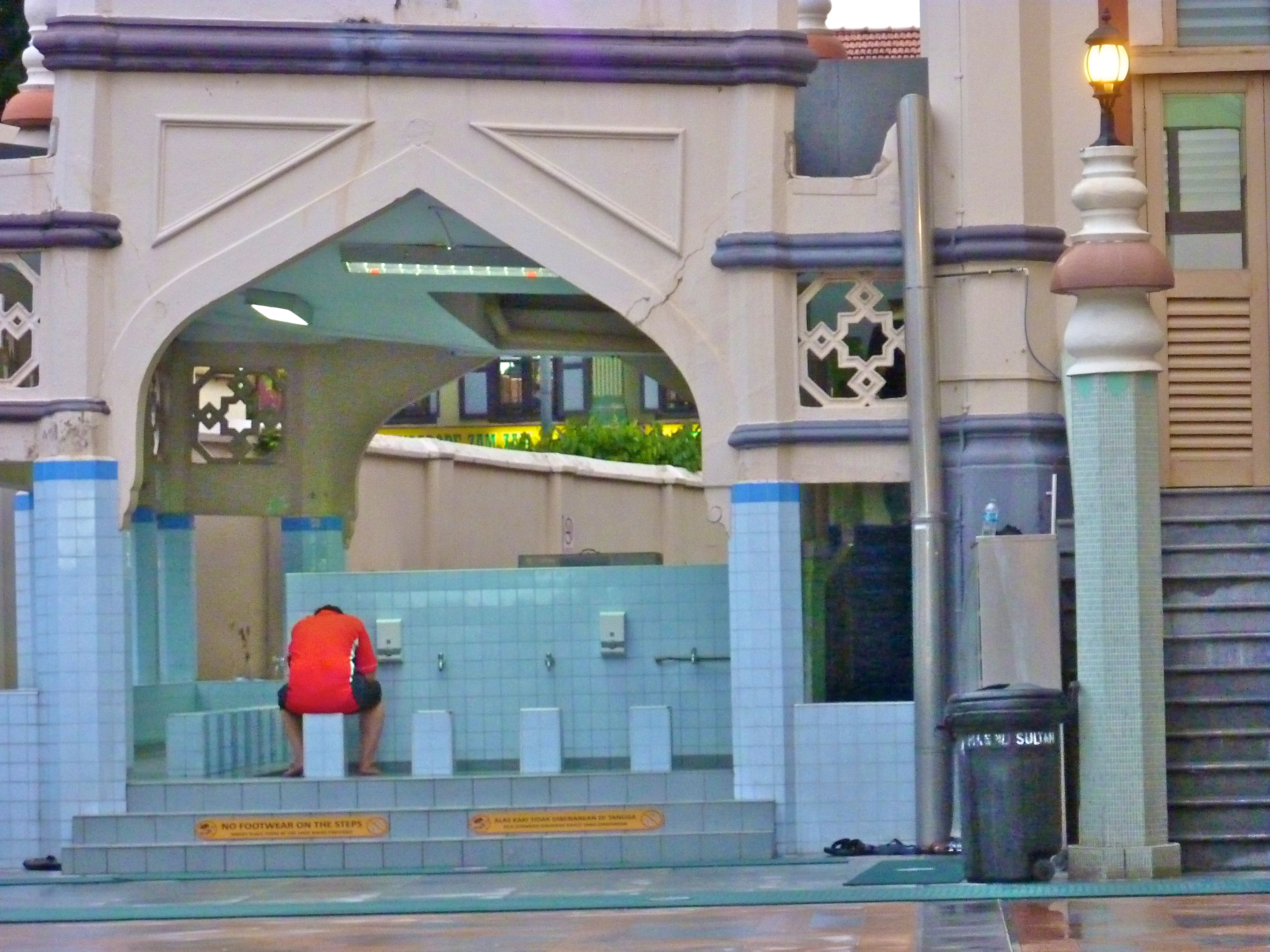
    In the Muslim neighborhood, a man preparing himself (washing his feet) to enter the temple.
     

    Singapore 165


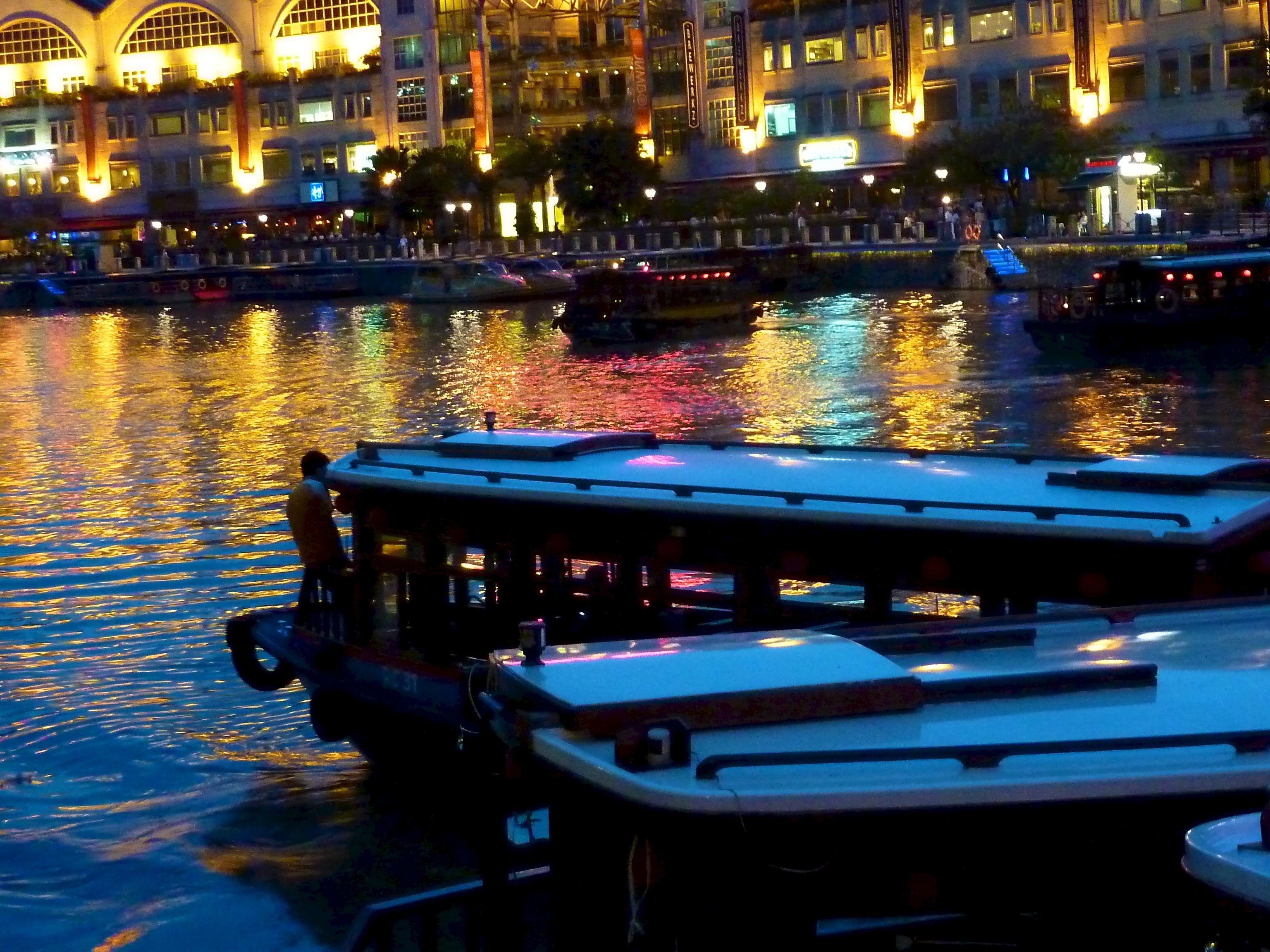
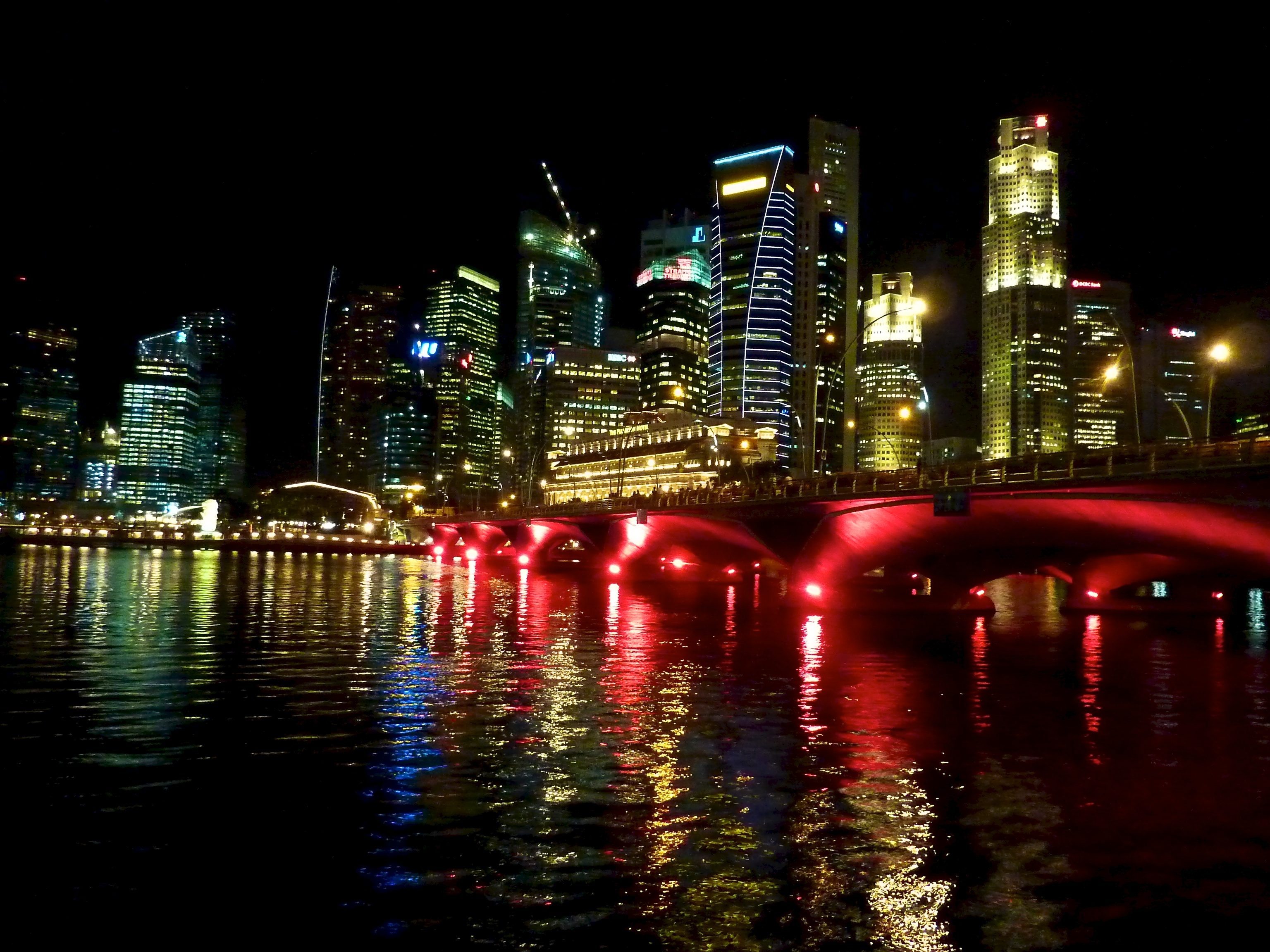
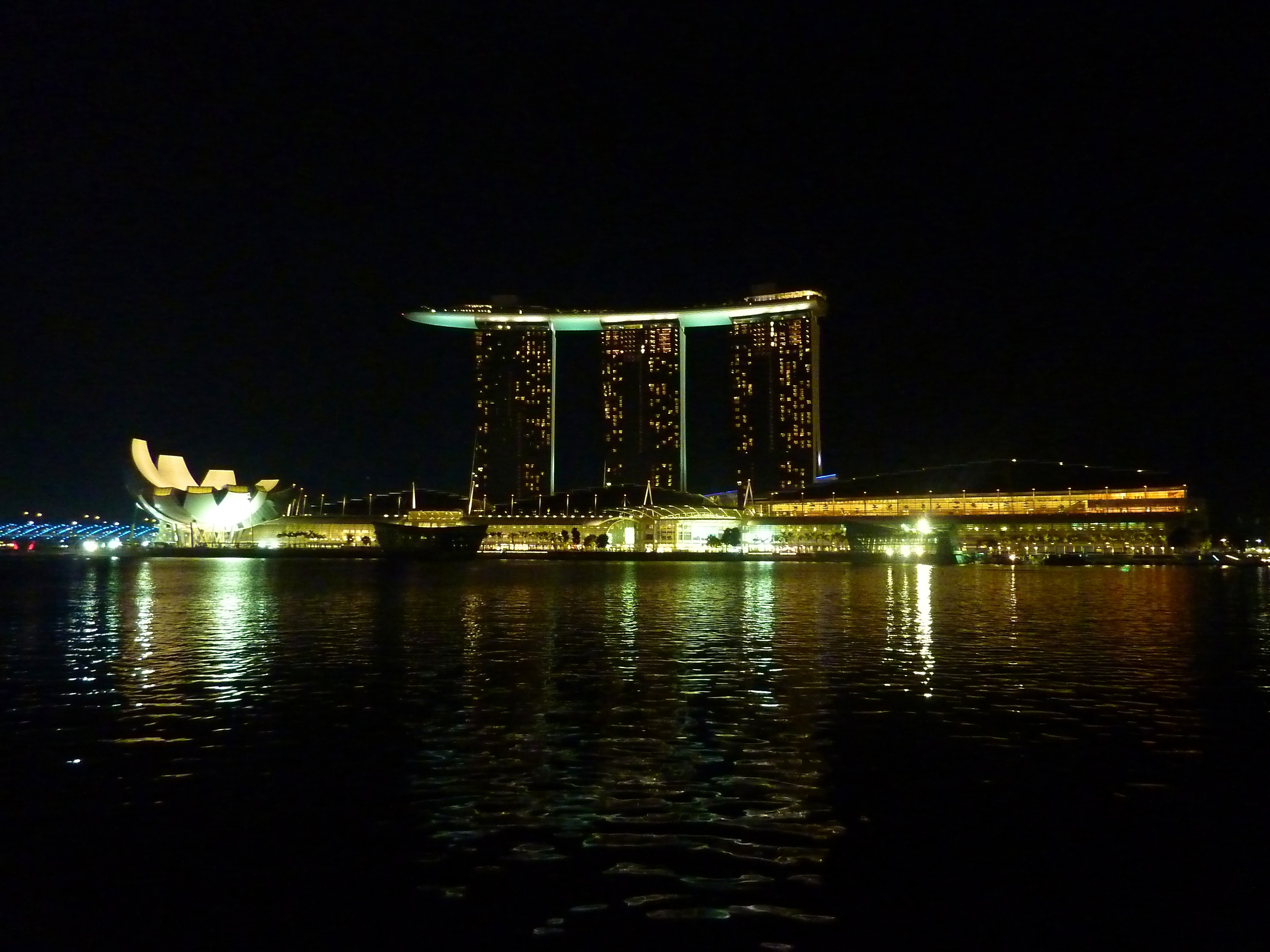
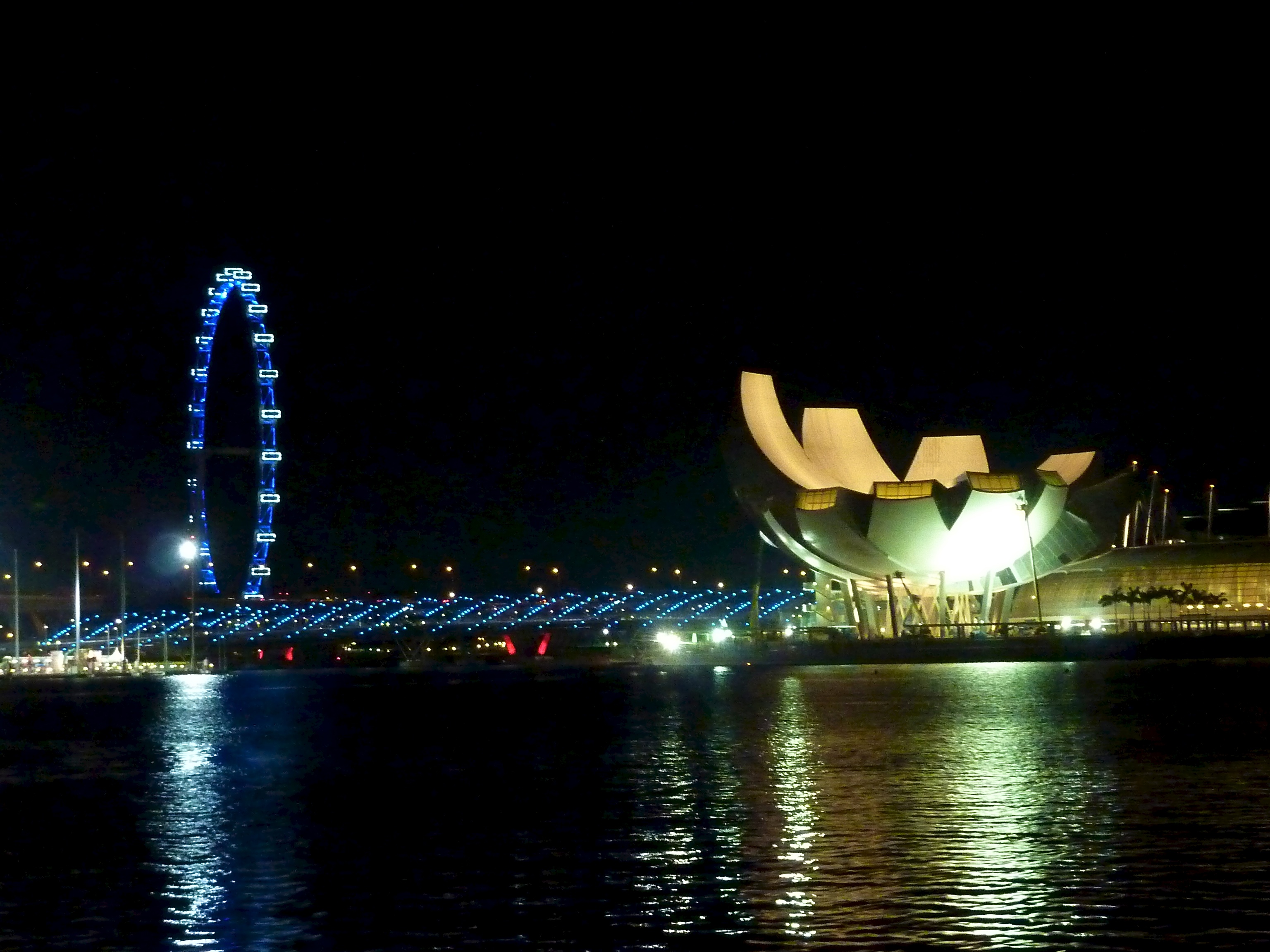
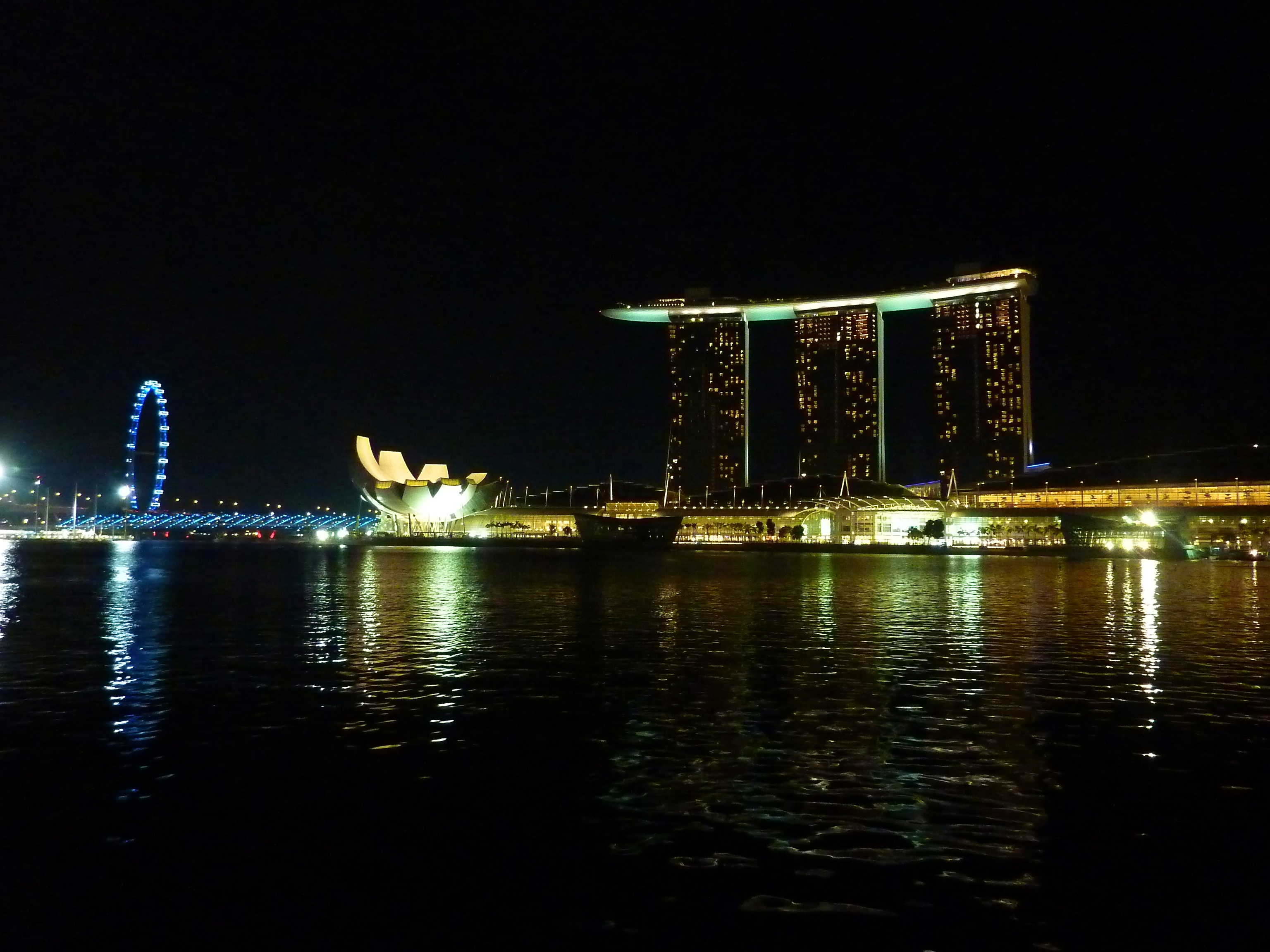
    Singapore at Dark


    Singapore 197


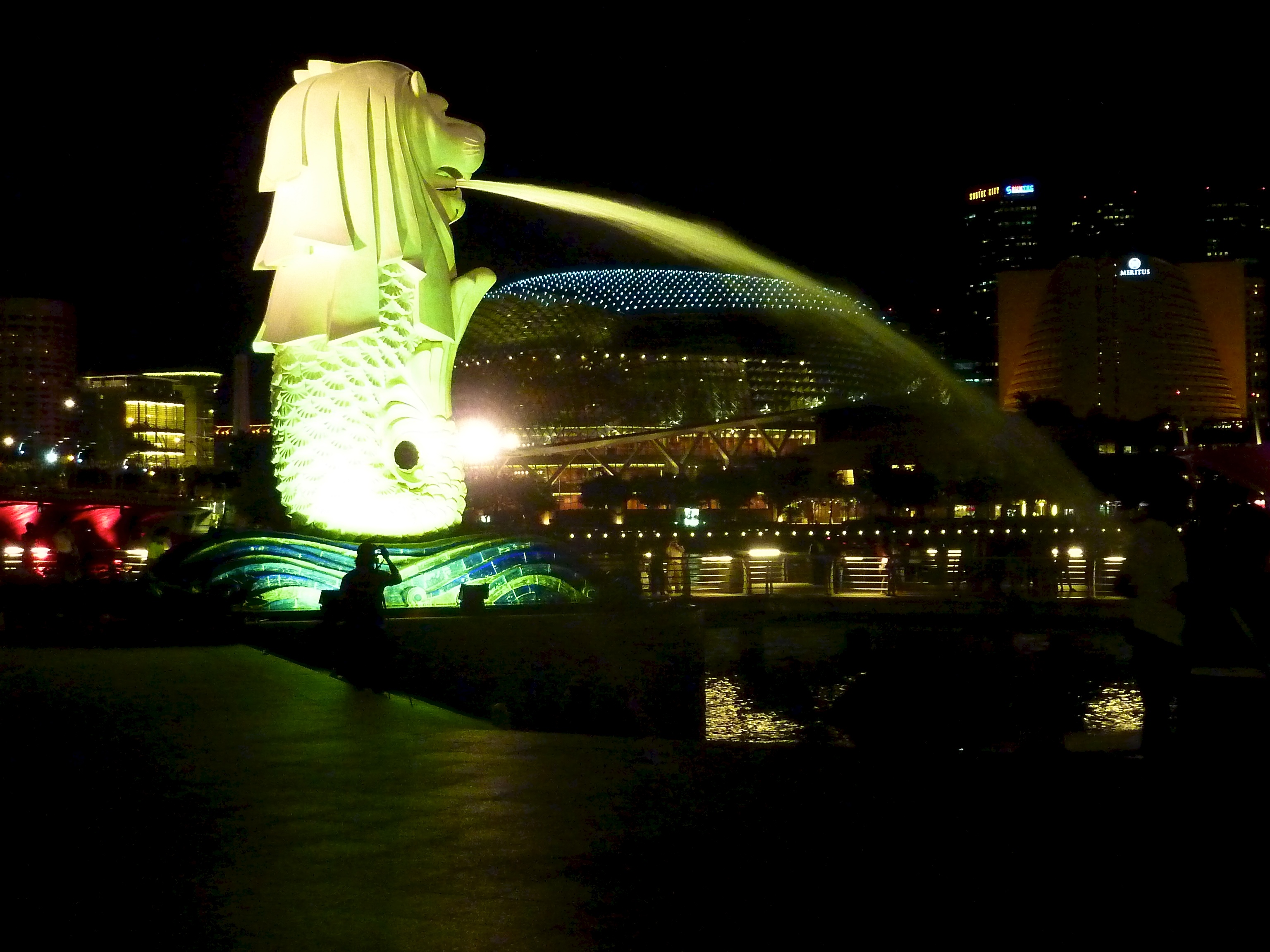
    The Merlion is the city's most famous icon.  It is part lion and part fish.  The lion head represents Singapore's original name Singapura meaning "lion city".
     

      Singapore 73


    Singapore 81


    Singapore 70


      Singapore 72


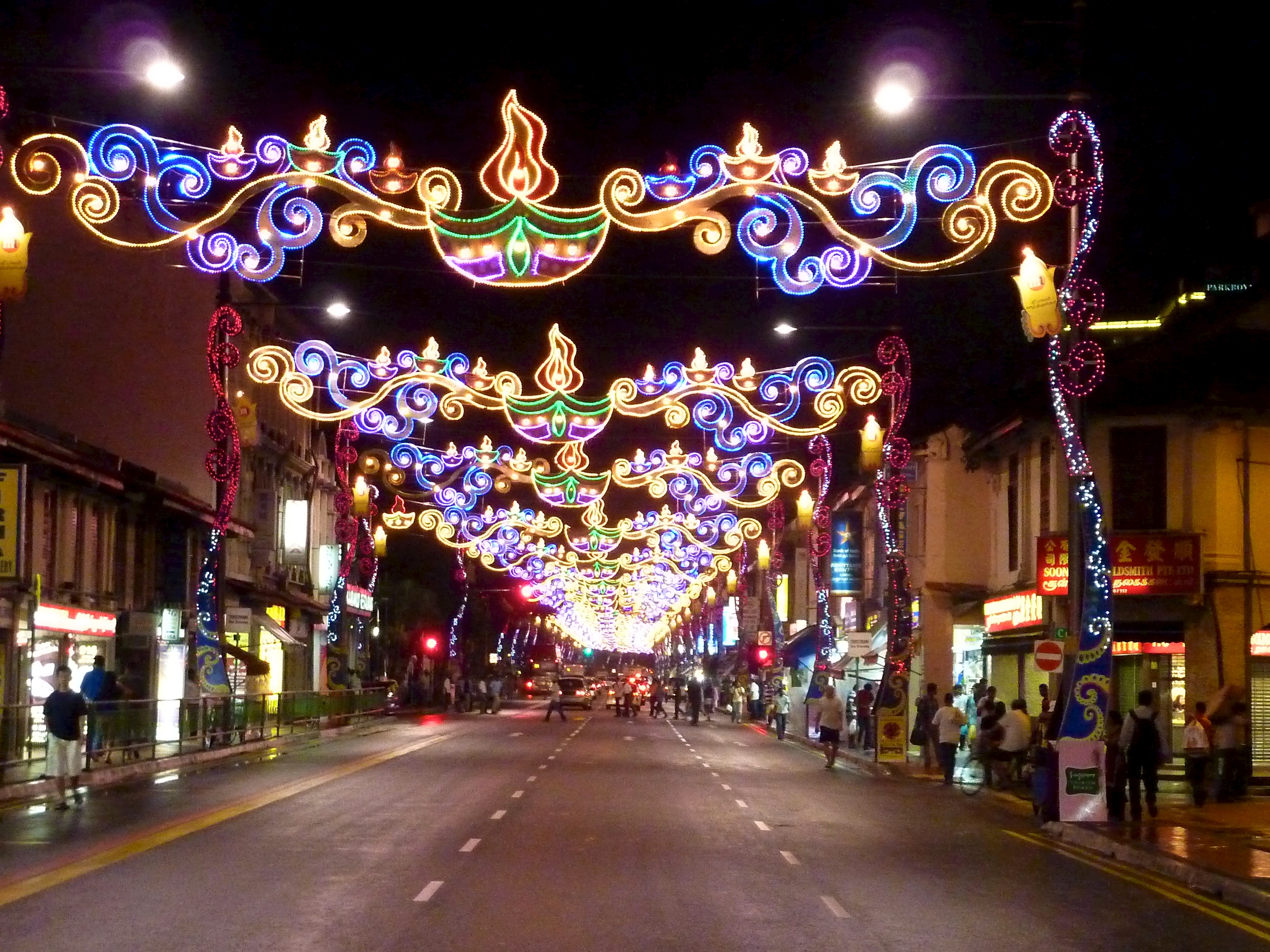
    Hindus celebrate the annual festival of lights called Diwali.  It is one of the most important festivals of the year and lasts for five nights.  We were lucky as the night we visited Little India, the lights were still up, it was the last night for them.
     

    Singapore 126


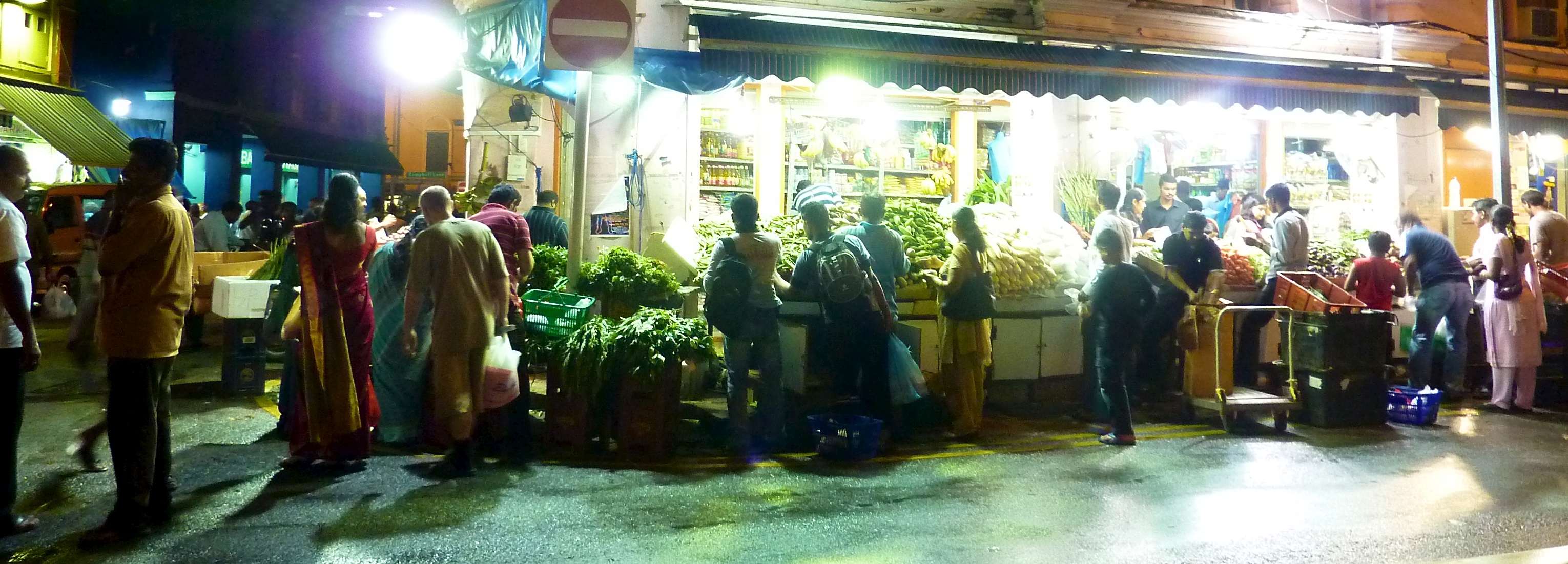
    Little India has a very robust night market.
     

    Singapore 128


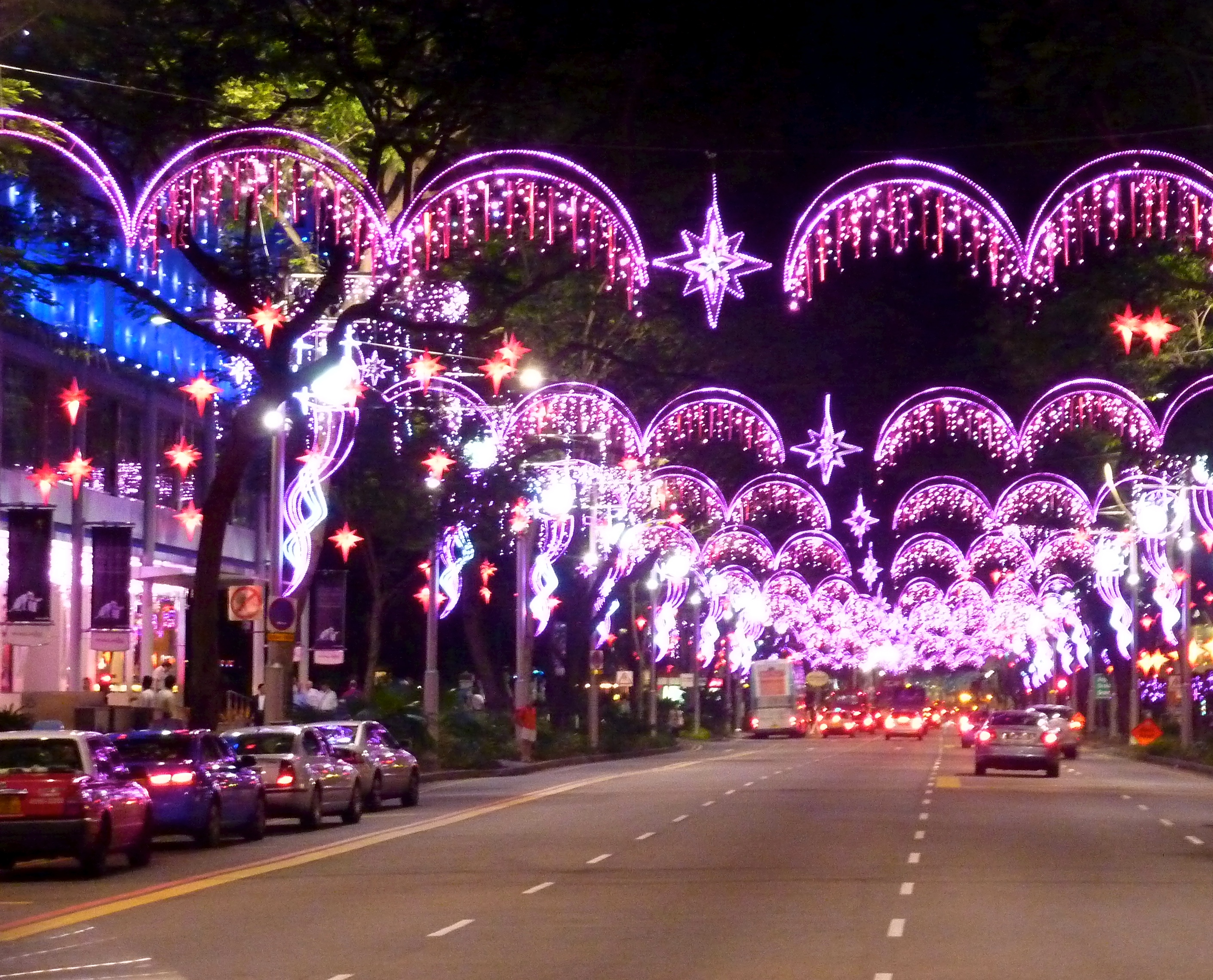
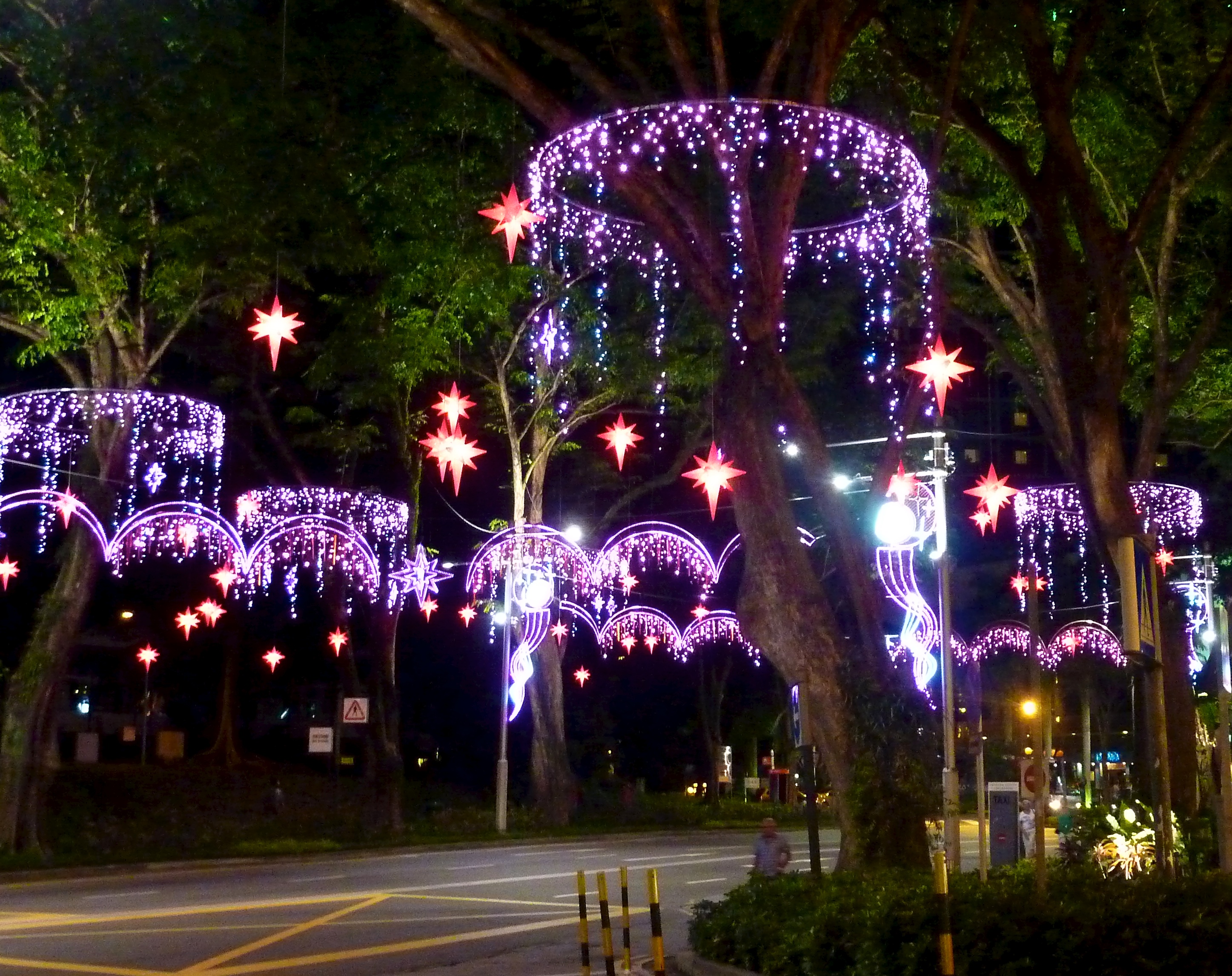
    And the colorful purple Christmas Street lights on Orchard Road, the main shopping street in Singapore.  They were not going to be turned on until the weekend after we left, but for 15 minutes, they were testing them so I got to enjoy them.  Beautiful but odd…….Christmas lights in 90 degree weather?
     

    Singapore 205


    Singapore 206


    Stay tuned for more info on our big move to Singapore!  Most of the weekly updates will be on my art blog ma vie trouvee  – so stop by each week and catch up with our move on my "Move Monday" post!


  •  


    Loire valley 65
     

    The Loire Valley is a picturesque region of France renown for its fairy-tale chateaux, historic villages, stone houses, wine, and wonderful cuisine.  It is south west of Paris and a seven-hour drive from Brussels. 


    Loire valley 64

    In 2000, UNESCO added the central part of the Loire River valley to its list of World Heritage Sites.  We had toured this area fifteen years ago and visited many of the larger chateaux so this time we selected smaller ones to visit.


    Loire valley (1)


    A Castle?? A Chateau?? What is the difference? 


    A chateau (plural chateaux) is a very large French country house, often giving its name to wine made in its neighborhood.  It is usually the residence of the lord of the manor or a country house for nobility.  They are usually found in France, with the largest grouping in the Loire Valley.

    A Castle is a fortified residence (designed for defense), usually for prince or nobleman, a fortress.

    "Chateau" is not interchangeable with  "castle".  Most châteaux are described in English as "palaces" or "country houses".


    Chateau de Villandry 


    Loire valley 45

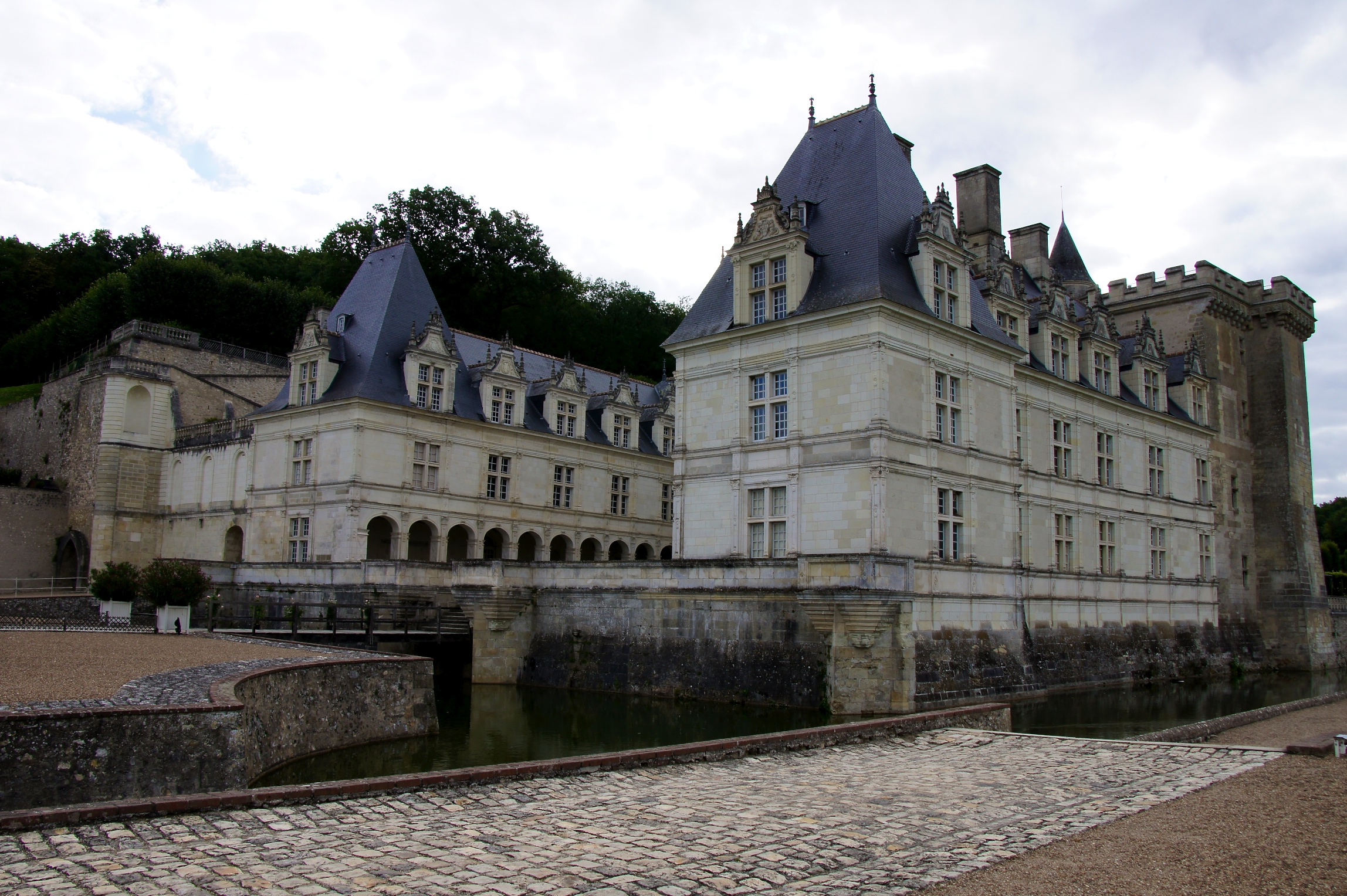
    Chateau de Villandry was our favorite.  It was completed around 1536 and was the last of the large chateaux built in the Loire Valley during the Renaissance period.


    Loire valley 46


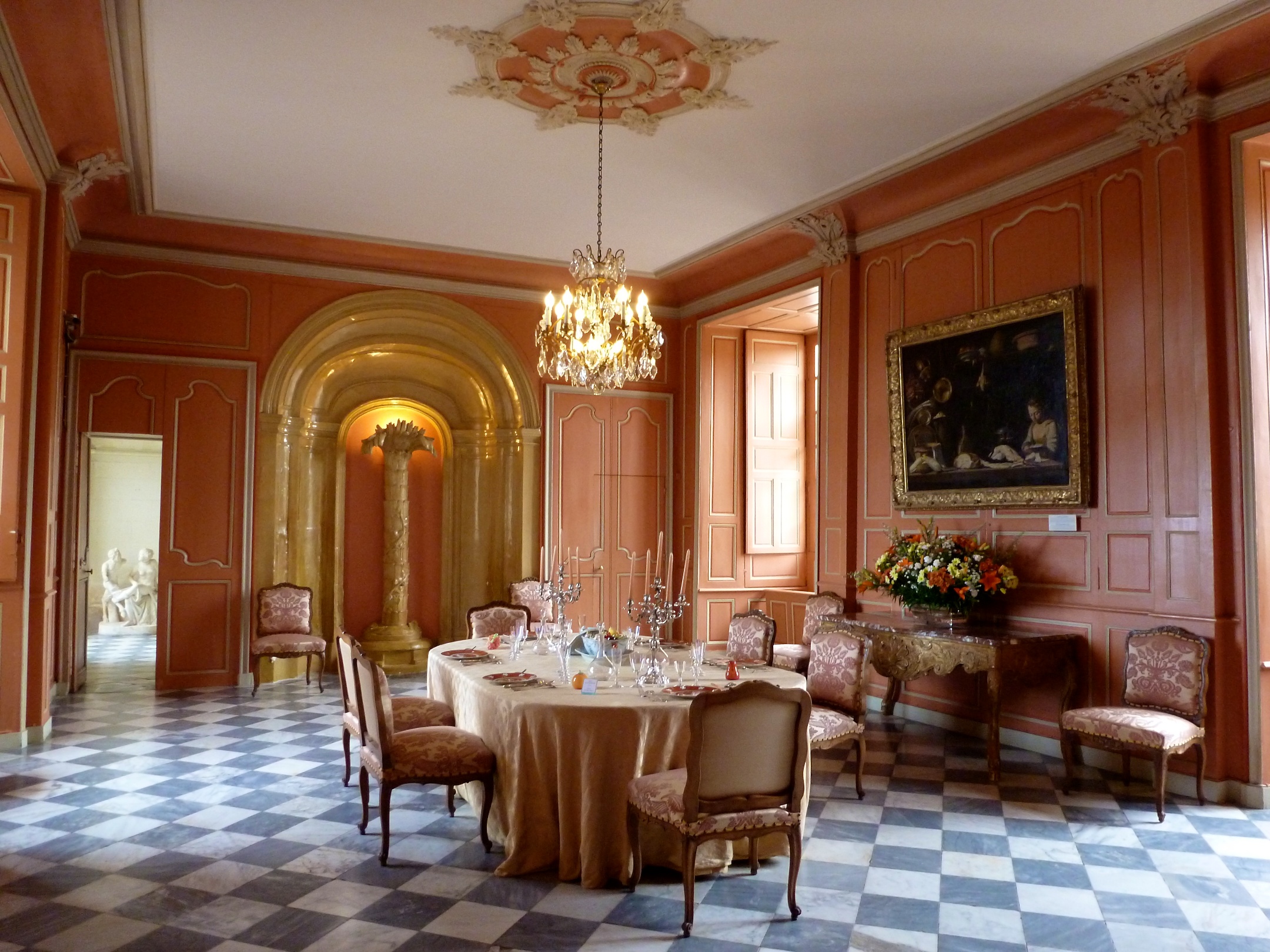
    They allowed us to take photos inside, which is very unusual.  I was intrigued with the beds.  Oh would I love a bed in nook like this.


    Loire valley 47


    Loire valley 61


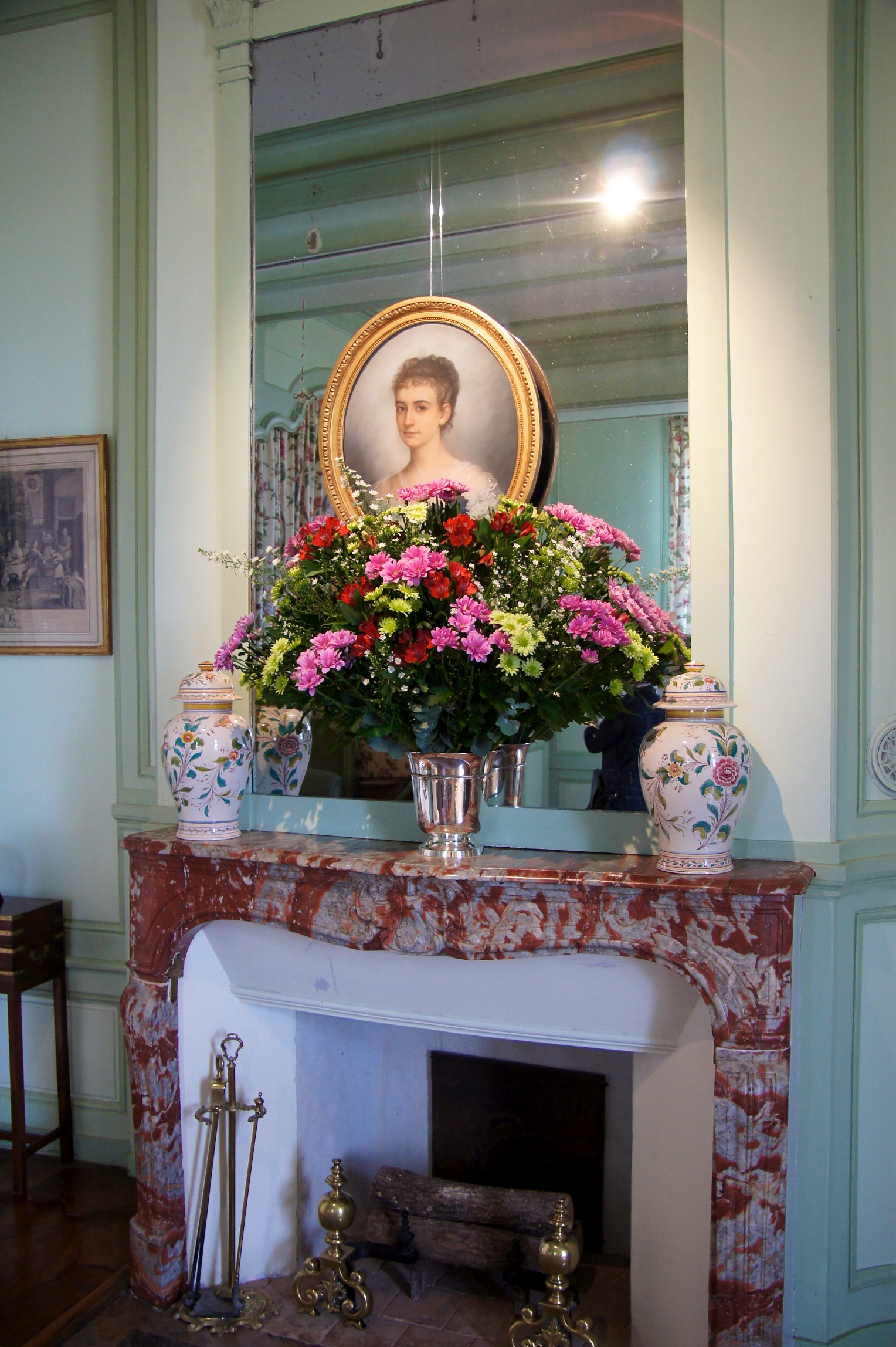
    Throughout the Chateau they had fresh flowers.  No other Chateau did this – it was a nice touch.


    Loire valley 48

    In 1906, Joachim Carvallo purchased the property and he put an enormous amount of time, money and devotion into repairing it and creating what many consider to be the most beautiful gardens in France.


    Loire valley 57

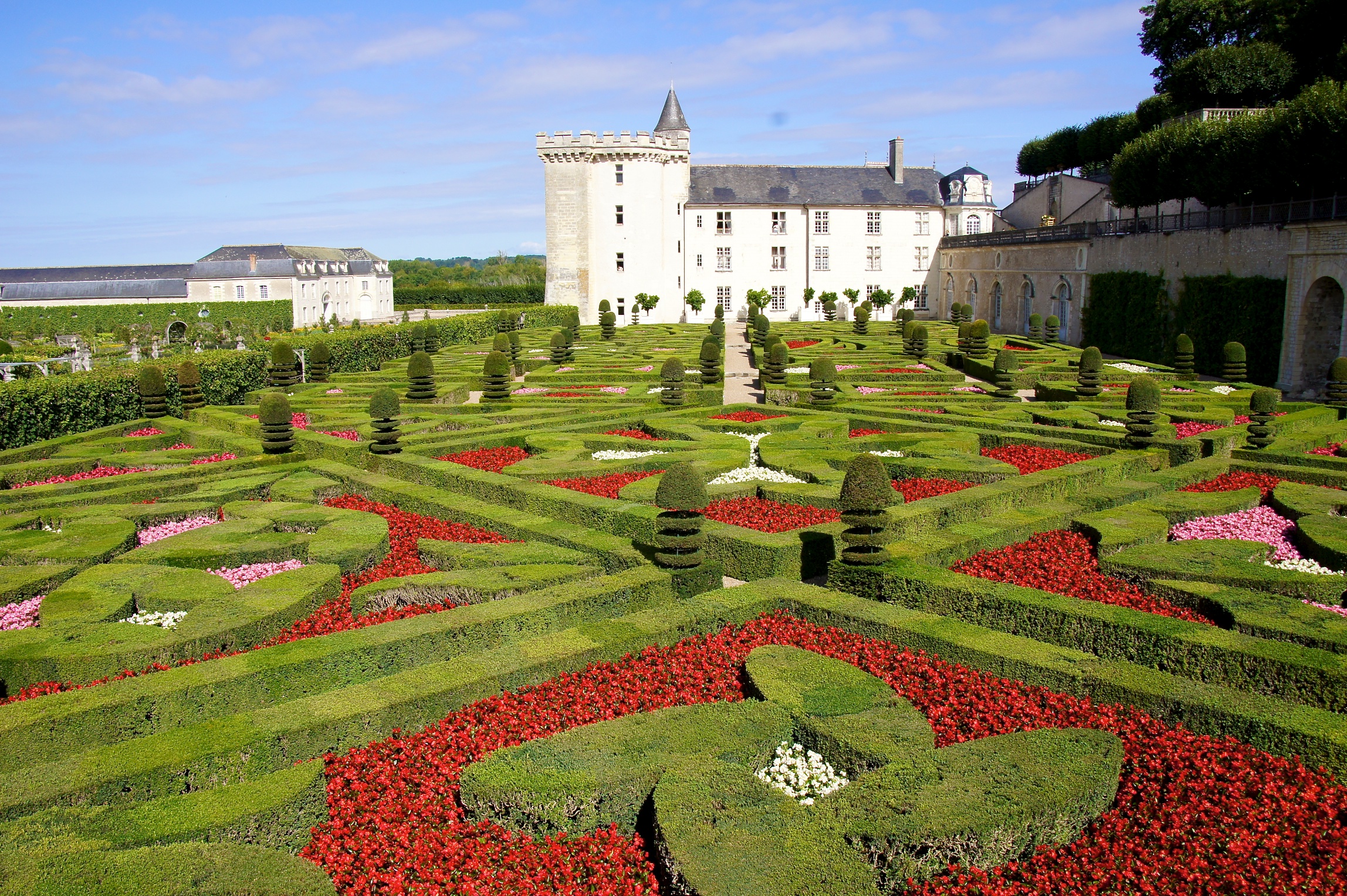
    It is famous for its Renaissance gardens, which are laid out in formal patterns created with low box hedges.  In 1934, Château de Villandry was designated a "Monument historique" and is a World Heritage Site.  It is still owned by the Carvallo family.


      Loire valley 52


    One of the most beautiful sections is the ornamental gardens made up of several "gardens of love".  Here, boxwood hedges are trimmed into heart shapes, connected by white, red and pink begonias. 


    Loire valley 49


    It certainly was the garden of love….while we were there, eight couples were getting married.  All at the same time!  We watched the entire service – sweet.

    The vows:


    Loire valley 53


    The Kiss:


    Loire valley 54

    The Toast:


    Loire valley 55


    Behind the ornamental gardens there is an artificial lake – complete with swans (his mate was off to the side).


    Loire valley 56


    There are vegetables and herbs growing in the tradition patterns of the gardens that used to be planted by the abbey monks.


    Loire valley 50


    On the walk out, there are long terraces lined with grape vines with the most beautifully colored grapes I have ever seen.  


    Loire valley


    Loire valley 58


    Chateau Blois


      Loire valley 2


    The Royal Château de Blois was the residence for many kings and queens (including the famous Queen Catherine de Medici)  and where the Archbishop of Reims blessed Joan of Arc in 1429 before departing with her army to drive the English from Orléans.  The statue below at the entrance is of King Henry XII.


    Loire valley 1


    Built in stages between the 13th and the 17th, it has undergone several renovations over the centuries.  The dominant styles are Gothic and Renaissance.  It has 564 rooms; 100 are bedrooms and every room has a fireplace.  It is most famous for its spiral staircase shown below.


      Loire valley 5


    Chateau de Beaureguard


      Loire valley 12


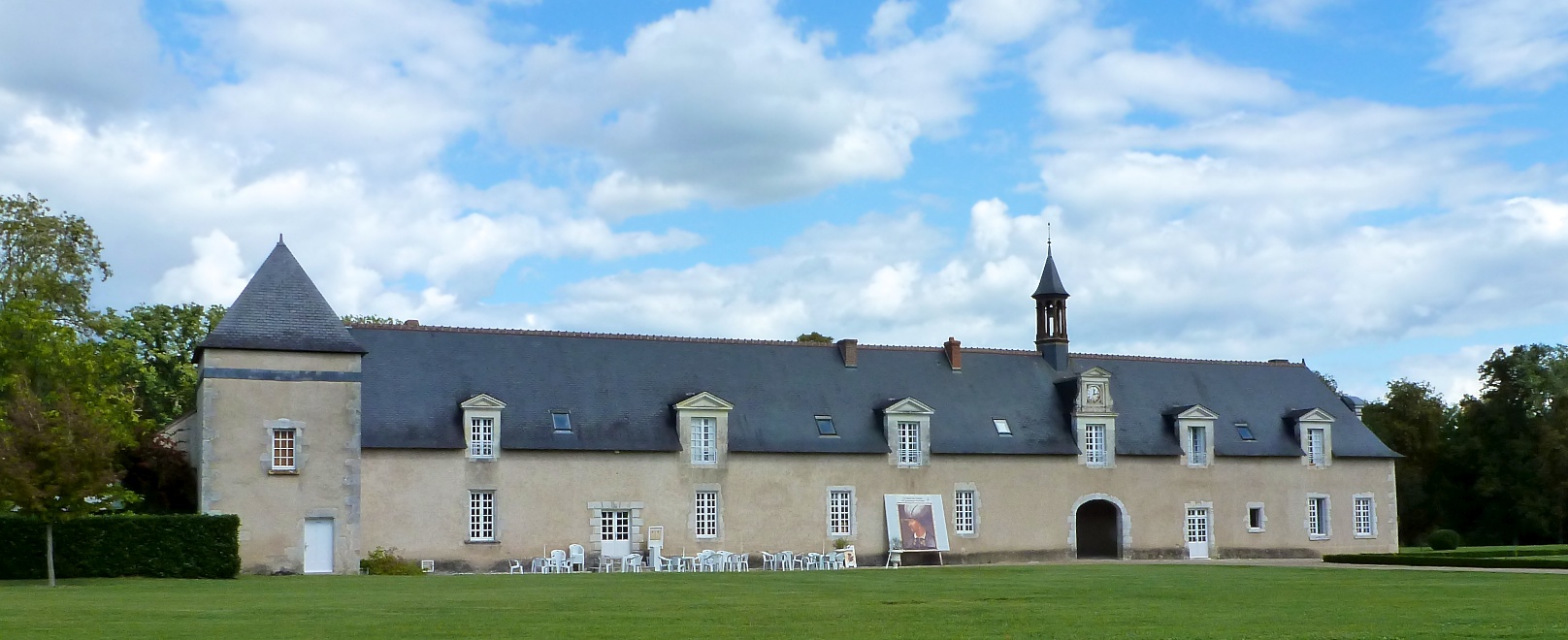
    Château de Beauregard was built around 1545 and has been inhabited without interruption since the late 15th century.  The castle of Beauregard is hidden behind the foliage of the forest of Russy. 


    Loire valley 10

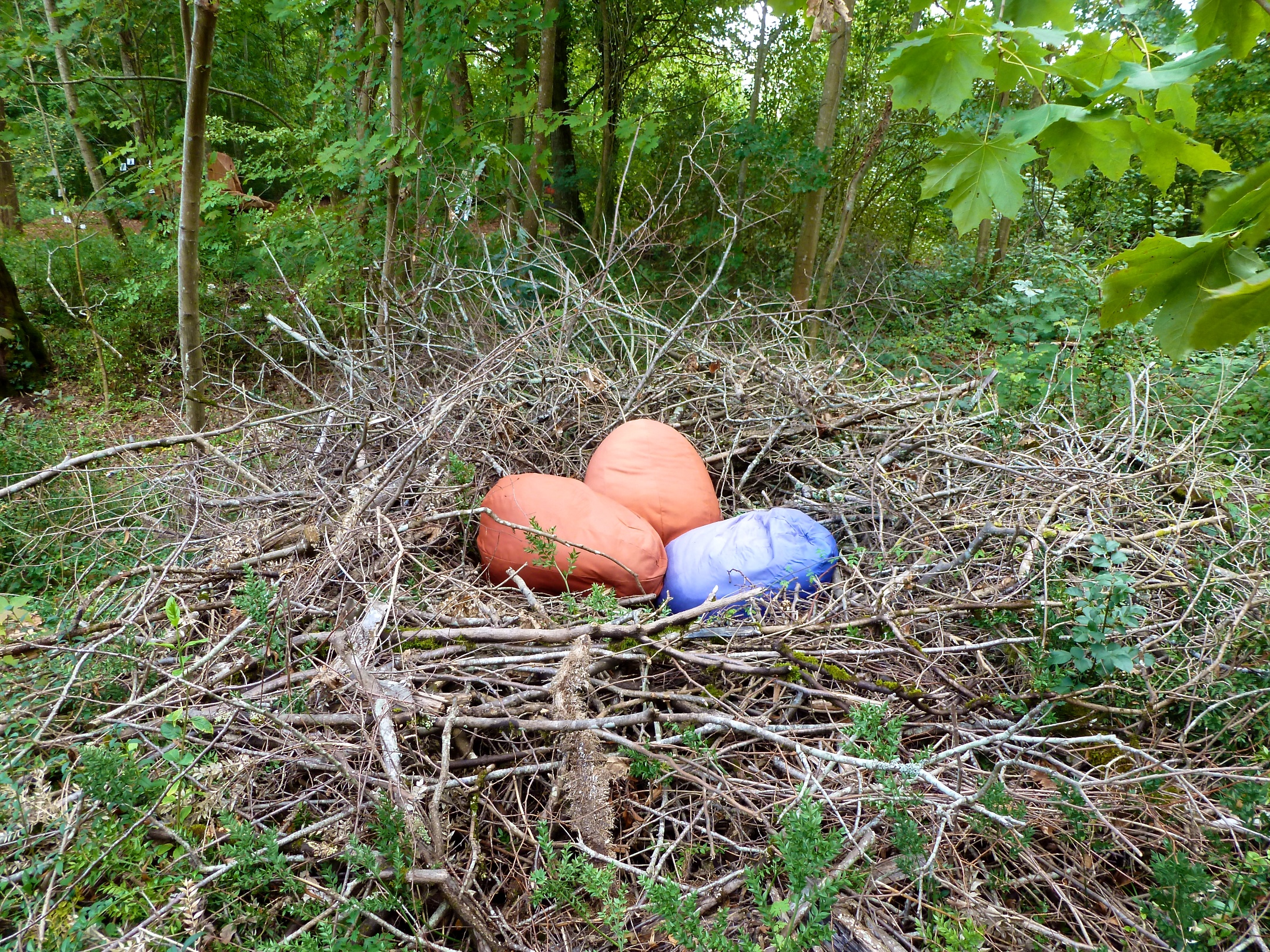
    As we walked through the lovely forest we discovered interactive art displays, like these over-sized bird nests with giant eggs.


    Loire valley 7


    We had fun climbing inside of the bird nests to take a few photos.


    Loire valley 8


    Loire valley 9

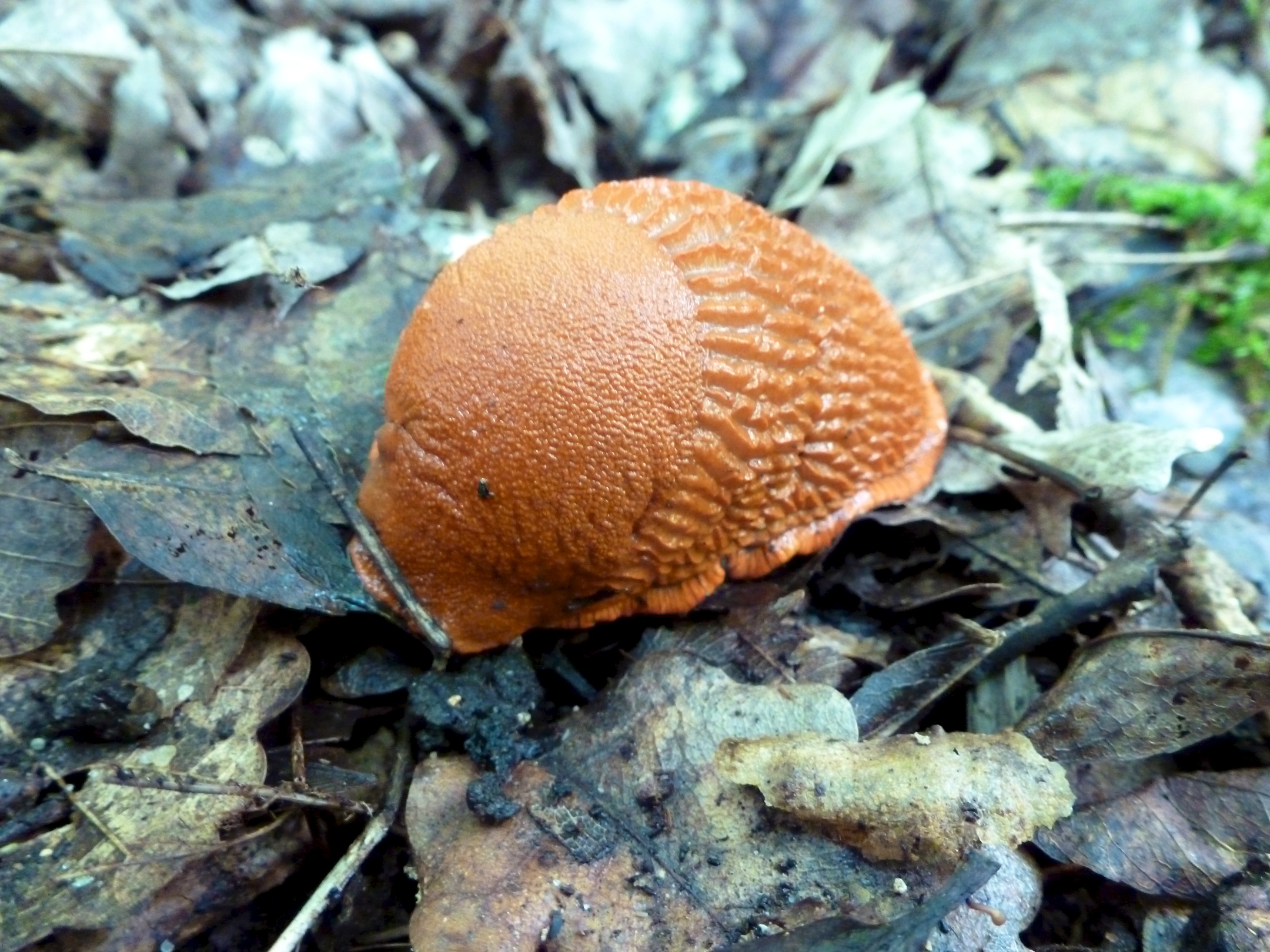
    We also stumbled upon this interesting guy.  It is called arion rufus or the red slug.  Most people report their color as orange (like this one), not red as the name implies.  They live in the woods around the vineyards, preferring the dark and moist ground to the bright sun.  It was approximately three inches long.  D almost picked it up as he thought it was a rubber toy.


    Loire valley 13

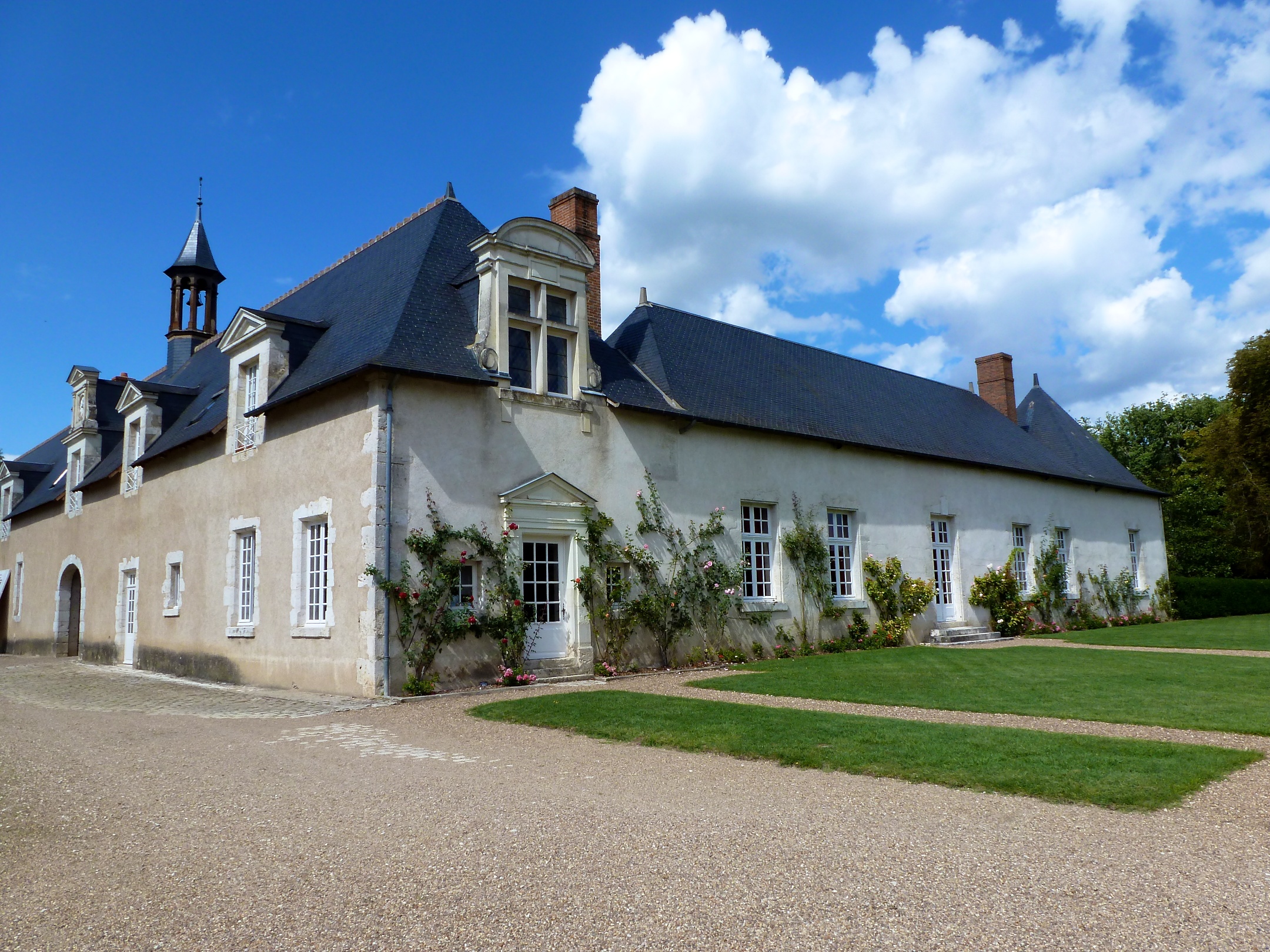
    The Cheyron du Pavillon family now owns the Chateau and reside here.  Must be odd to have so many people visiting your home while you are living there.


    Loire valley 11


    Chateau Azay-le Rideau


    Loire valley 59

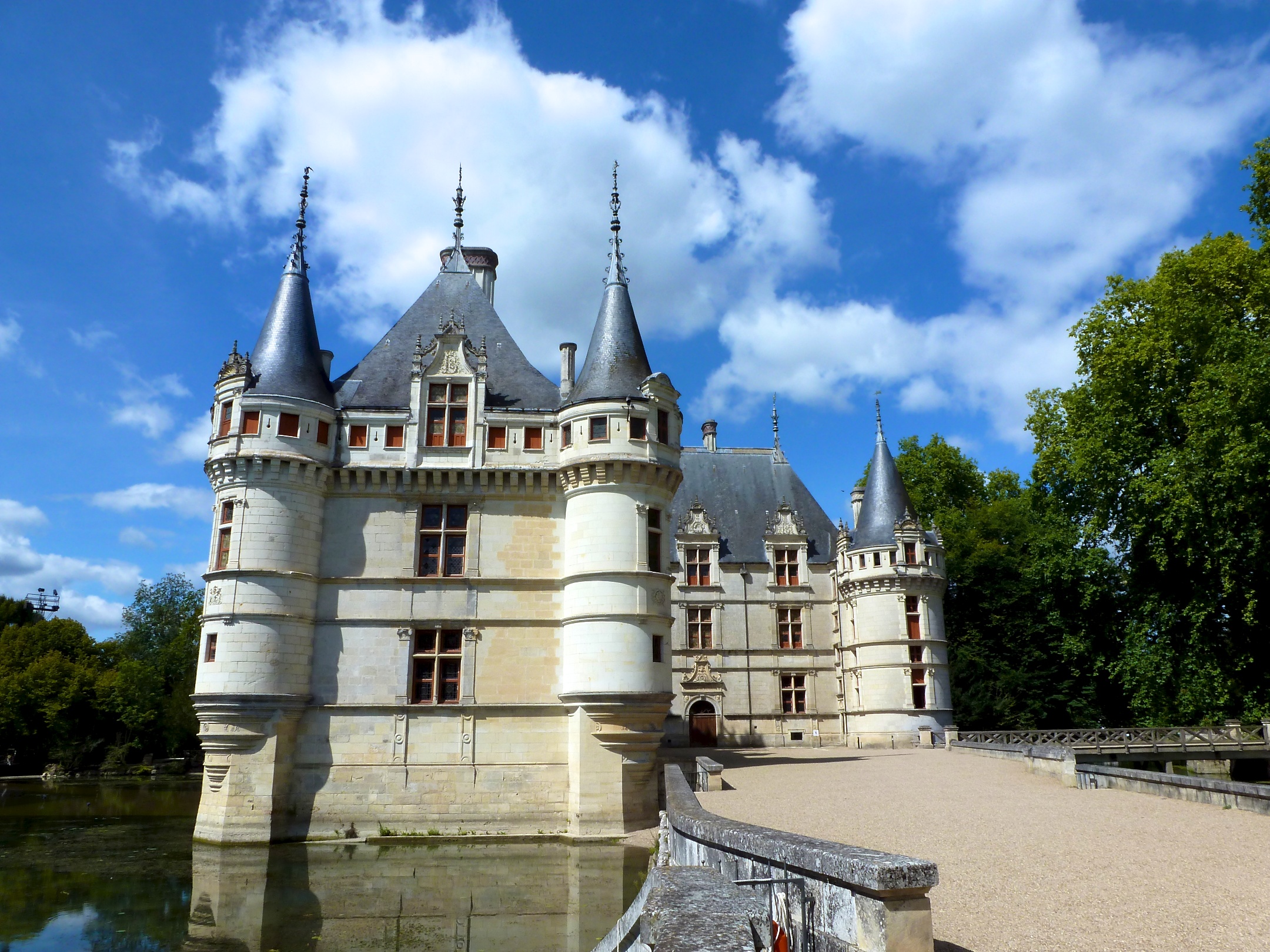
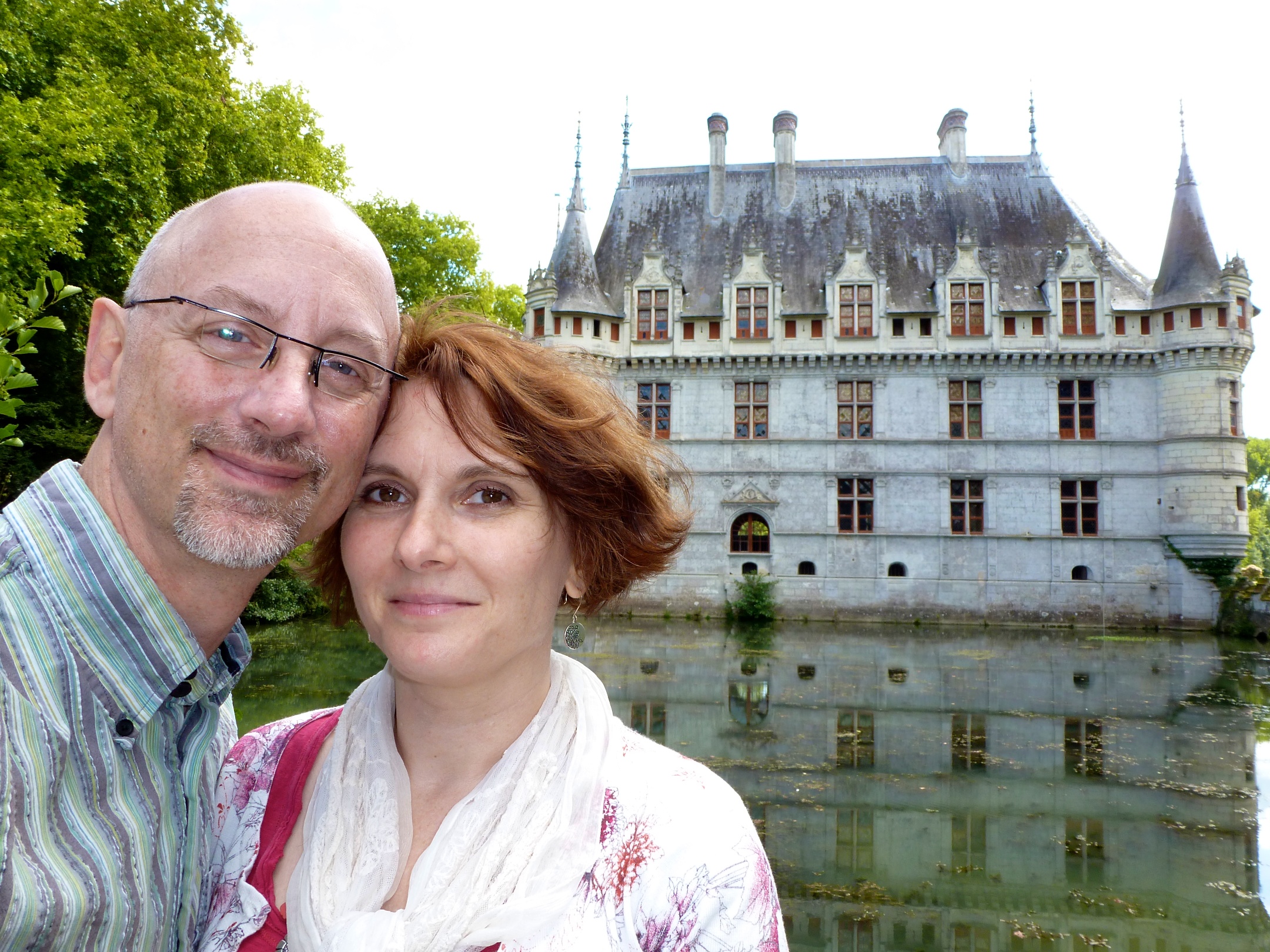
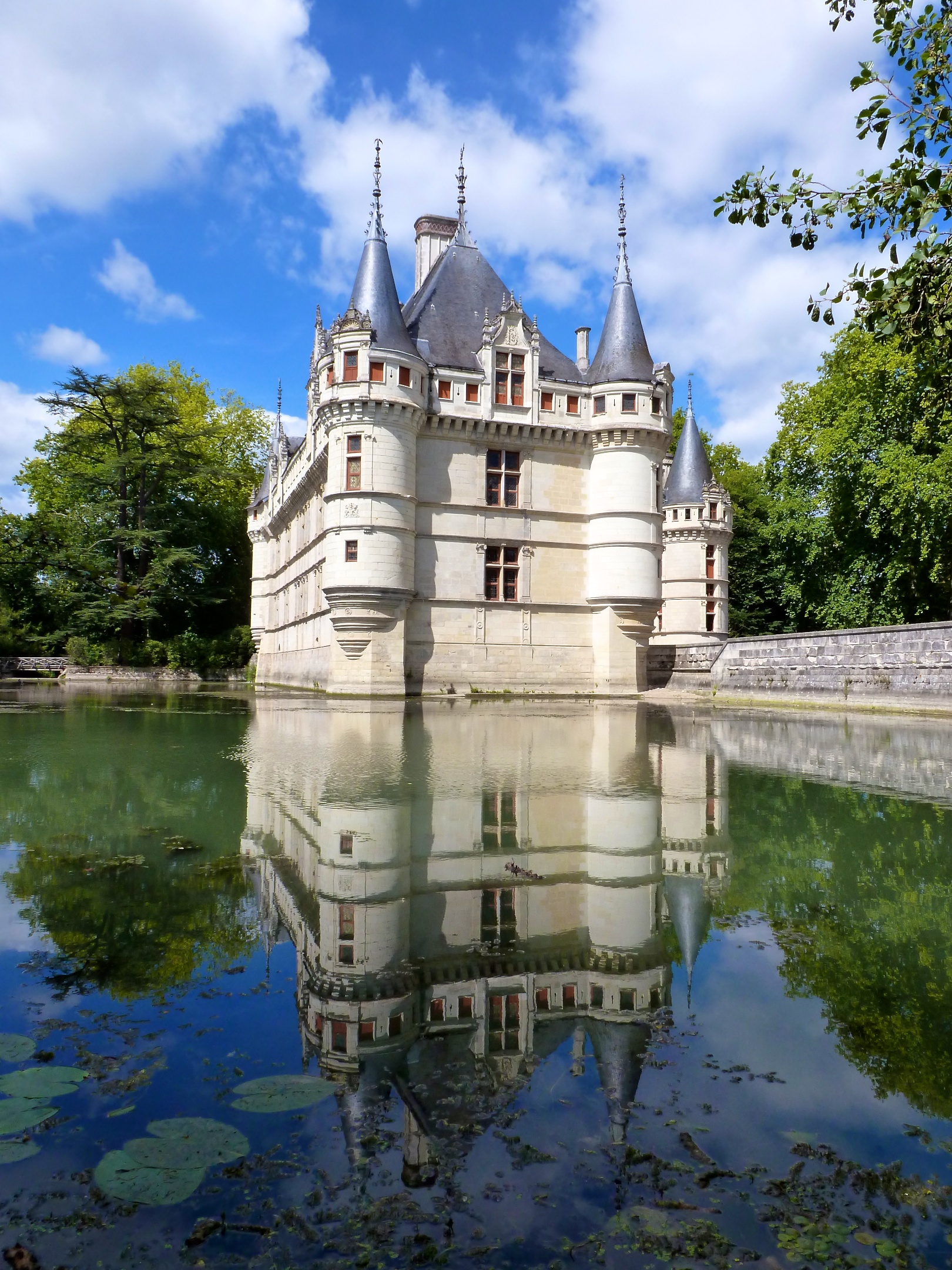
    The Château of Azay-le-Rideau was built between 1515 to 1527 and is one of the earliest French Renaissance châteaux.


    Loire valley 62

    Built on an island, its foundation rises straight out of the water.


    Loire valley 66


    Over the centuries, it changed hands several times until the early part of the twentieth century, when it was purchased by the French government in 1905 and restored for visitors. The interior was completely refurbished with a collection of Renaissance pieces.  


      Loire valley 63


    The Chateau at Saumur


    Loire valley 68
     

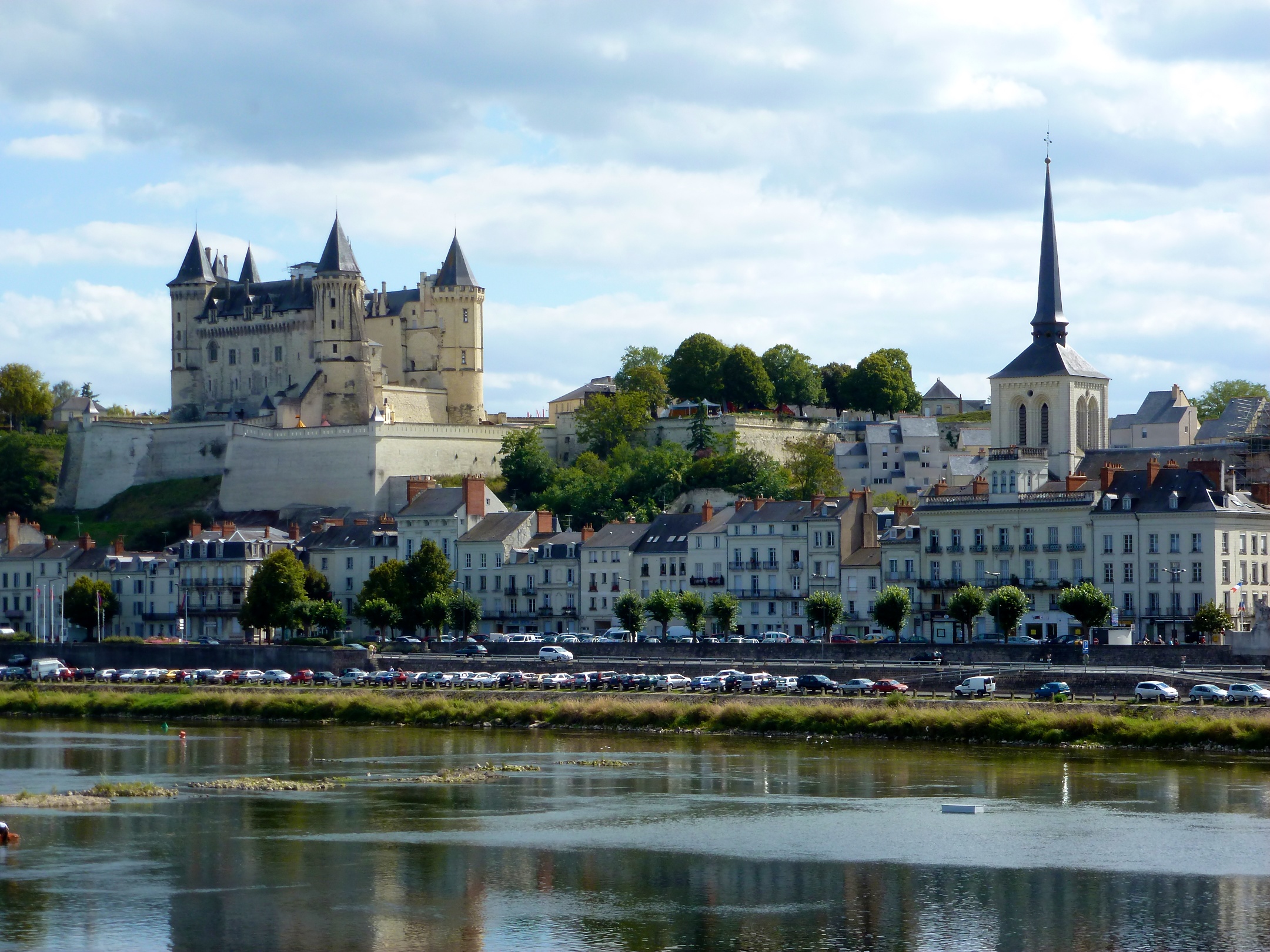
    Chateau de Saumur was originally constructed in the 10th century.  In 1621 the castle was converted into an army barracks.  Two centuries later it was converted into a state prison under Napoleon Bonaparte.  We did not tour the inside of this one.

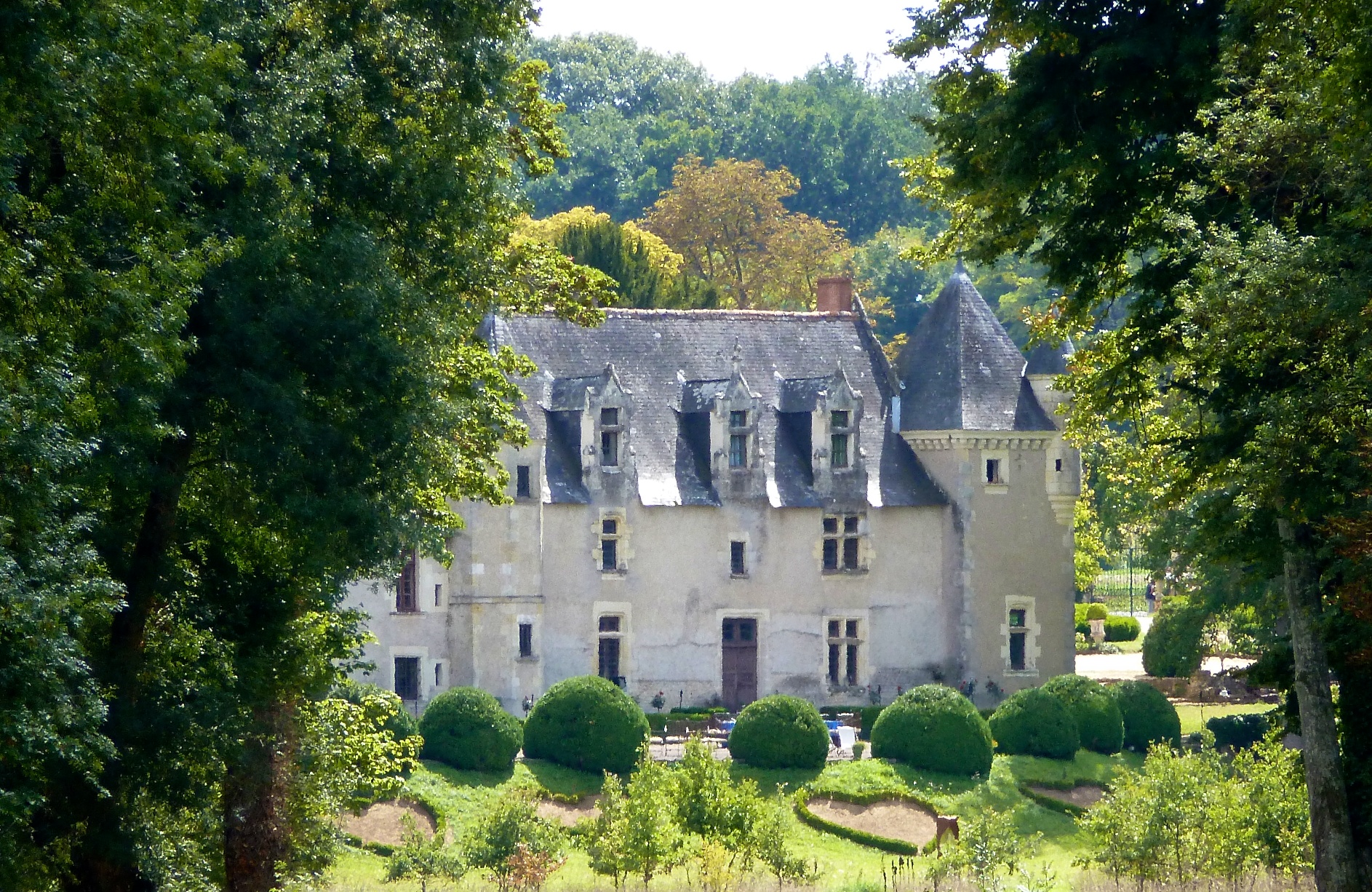
    A few more chateaux….


    Loire valley 67


    Loire valley 37


    Loire valley 43

    Loire valley 42


    Loire valley 40


    Priory of Saint-Cosme – Ronsard's Residence


    Loire valley 71

    The Collegiate Church of Saint-Martin-de-Tours founded the priory in 1092.  In 1565 Pierre de Ronsard, a very famous poet in France, was gifted the priory from the King.  In 1565, Catherine de'Medici (Queen of France married to KingHenry II) visited him along with her sons.  Ronsard died in 1585 and his remains are buried there today.


    Loire valley 70  

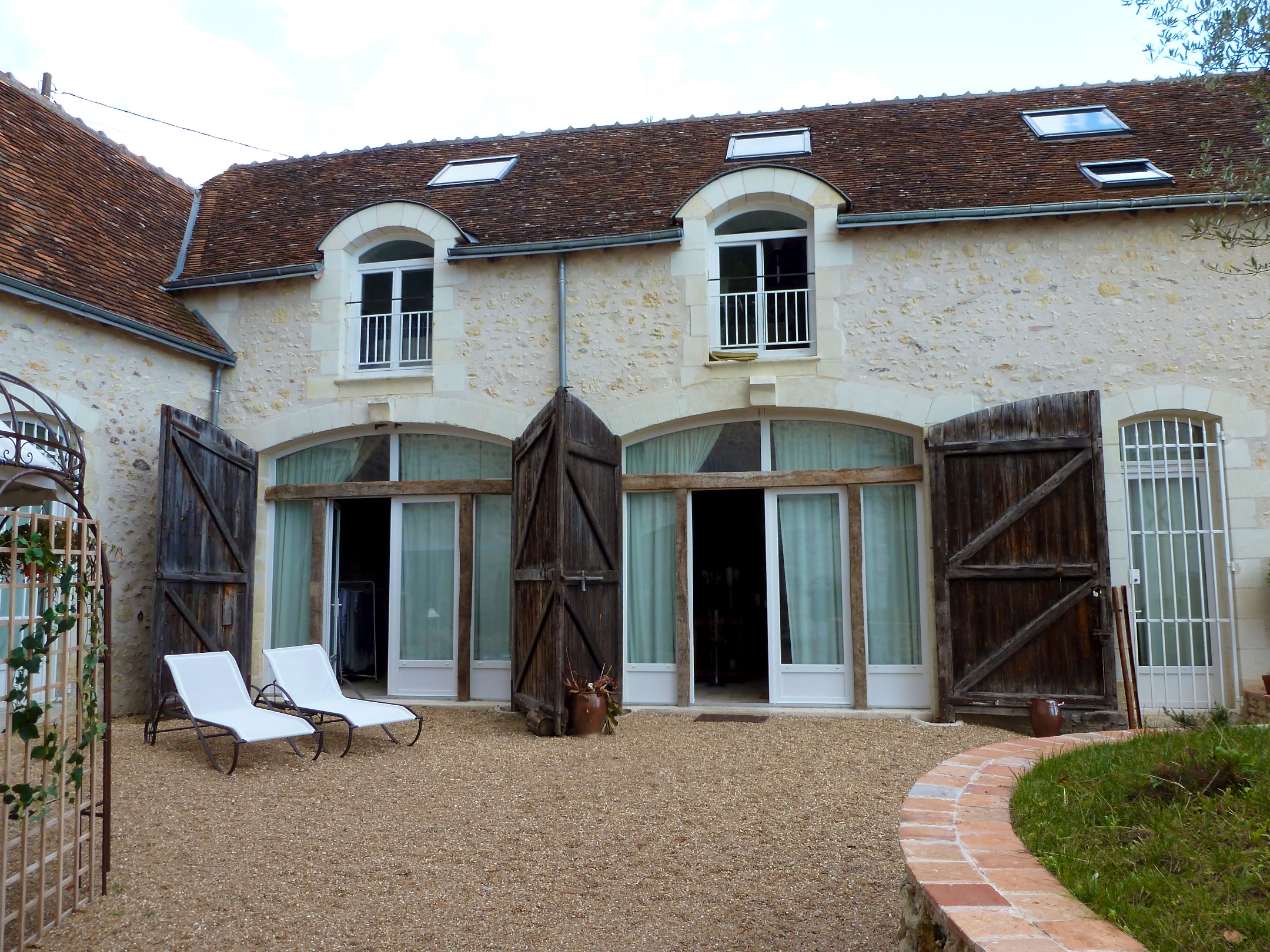
    We stayed at Le Lavoirdu Coteau a lovely gîte.   It looks quite simple from the outside…but inside was beautiful.


    Loire valley 26

    A gîte is a French holiday home that is available for rent.   Gîtes are usually fully furnished and equipped for self-catering.   To be called a gîte, the owner must live close by in order to provide help if needed. 


    Loire valley 25


    Gîtes are generally old farm worker's cottages or converted outbuildings and barns.  The building below is the owner's house and had the most gorgeous interior I have ever seen – magazine quality.  Don't you love those big old doors?


    Loire valley 23


    The house was an old vineyard/barn that they refurbished.  Our room is the one on the far wall; the windows were where our loft bedroom was.  One evening the owners, Anna and Richard, invited us to join them for a glass of wine.  She spoke very good English; his English was about as good as D's French so they both got to practice.  It was a fun evening.


      Loire valley 30


    Here is our cozy living room.  It had a lot of character with the beams and the stone floor.  I wish it had been cold so we could have had a fire.


    Loire valley 24


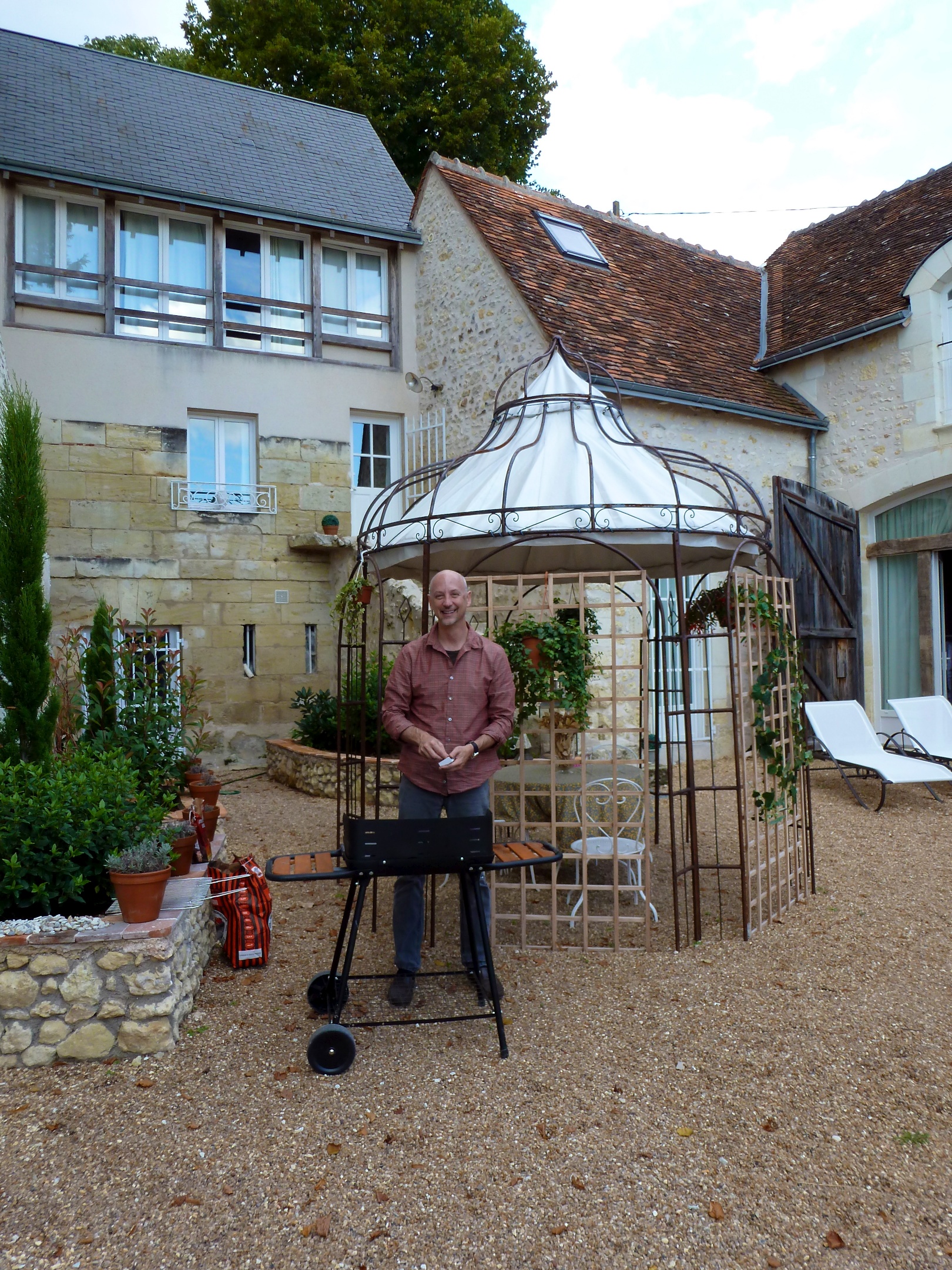
    But the trade off for a fire was a grill!  A real treat for us.  We ate our lunches out and grilled dinner every night we were there.  A very happy D grilling.


    Loire valley 22


    And a happy D relaxing with a glass of local wine.


    Loire valley 21


    We went to a very nice restaurant for lunch one day.  The menu had multiple courses; fresh pea soup, foie gras with figs, lacquered tomatoes with fresh goat cheese and balsamic vinaigrette (one of our favorites), ravioli with lobster and a foam sauce, samosa of duck confit, ten desserts – YES I SAID TEN….


    Loire valley 33

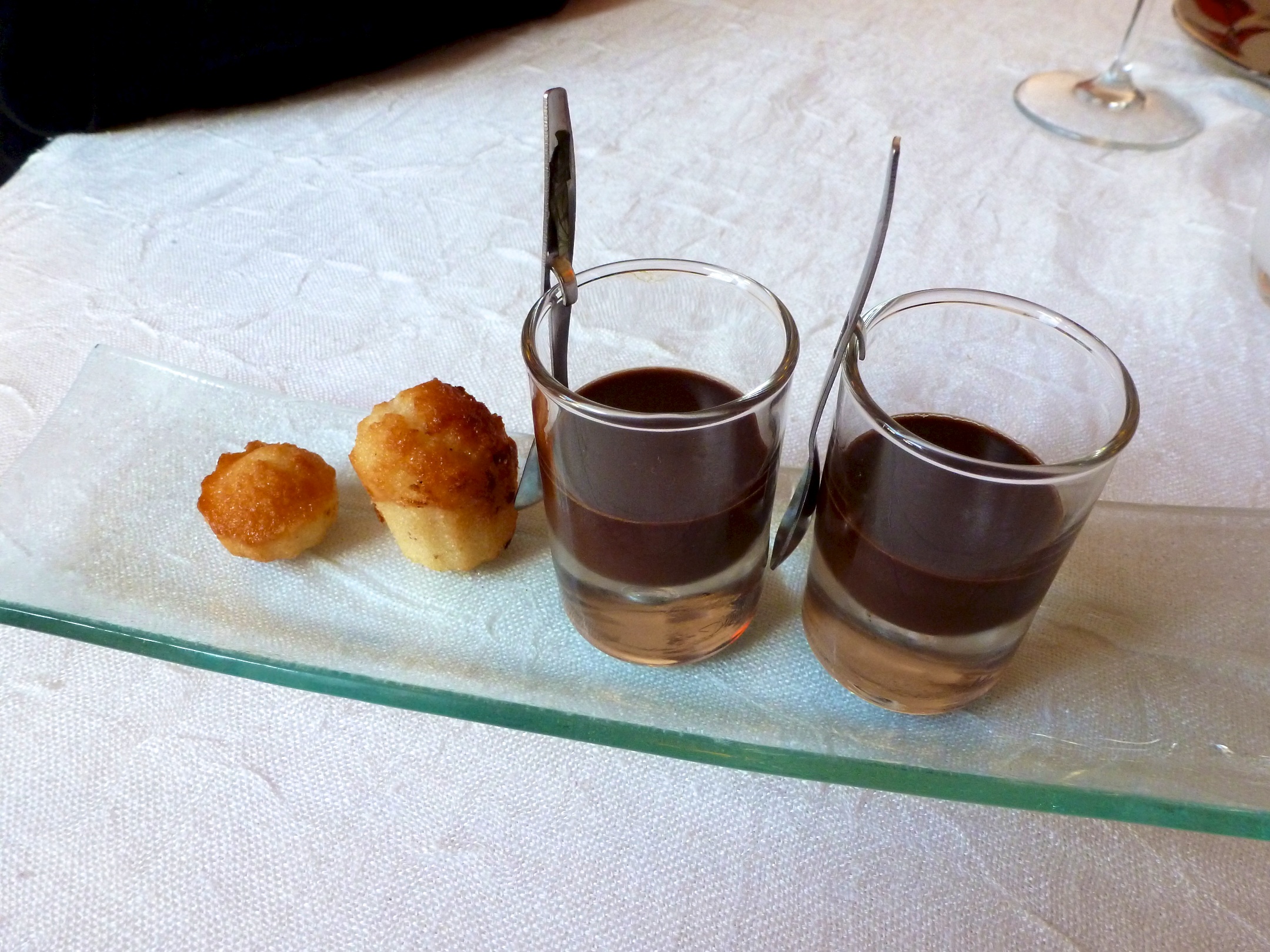
    And if that wasn't enough, we finished with a mignardises (a bite sized dessert at the end of meal)…..super rich chocolate.  Talk about ending the meal on a happy note!


    Loire valley 34


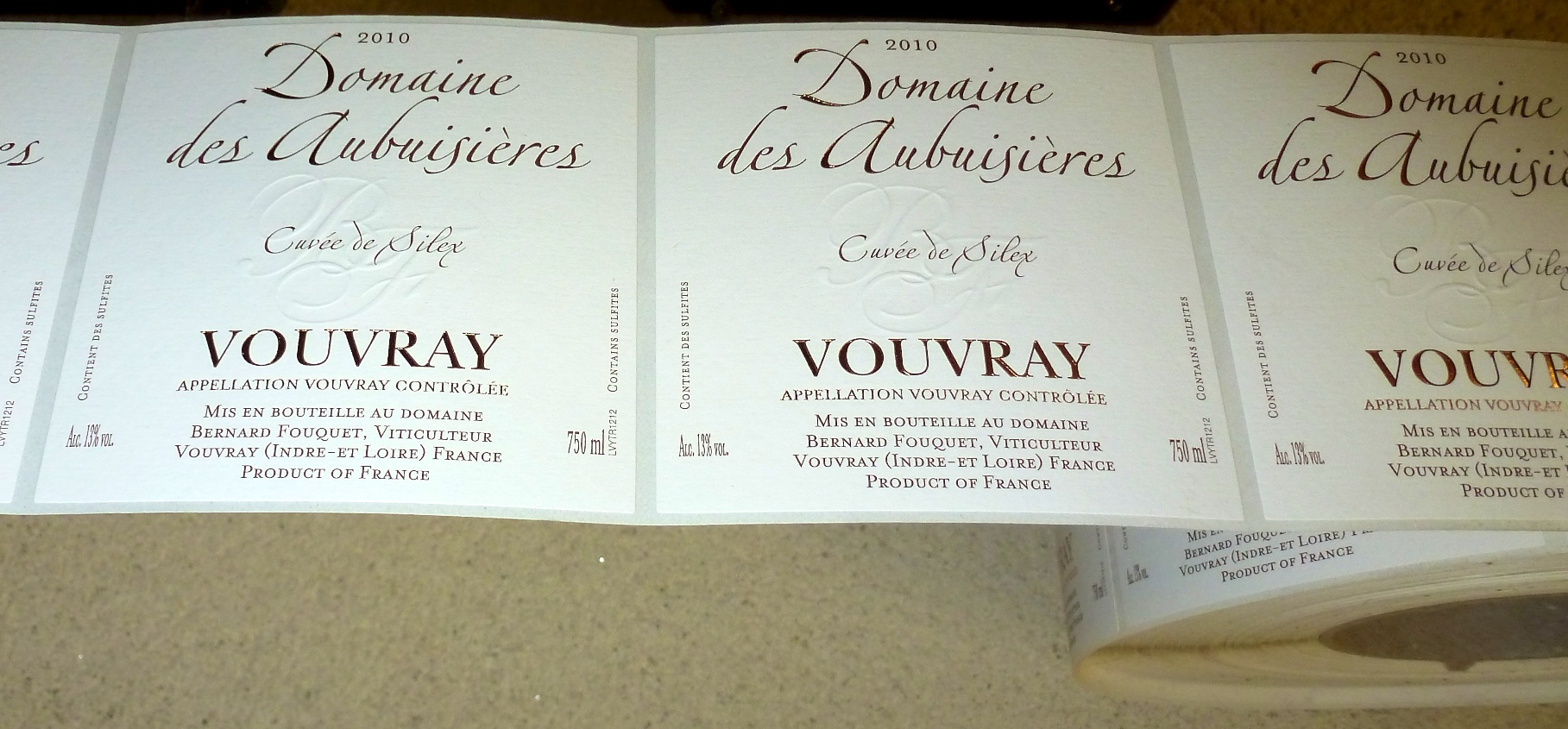
    We really enjoyed the bottle of wine we had with lunch.  This area is said to have some of the best white wines in France.  D looked up the wine, Domaine des Aubuisières, and it was produced in the village we were staying in, Vouvray.


    Loire valley 75

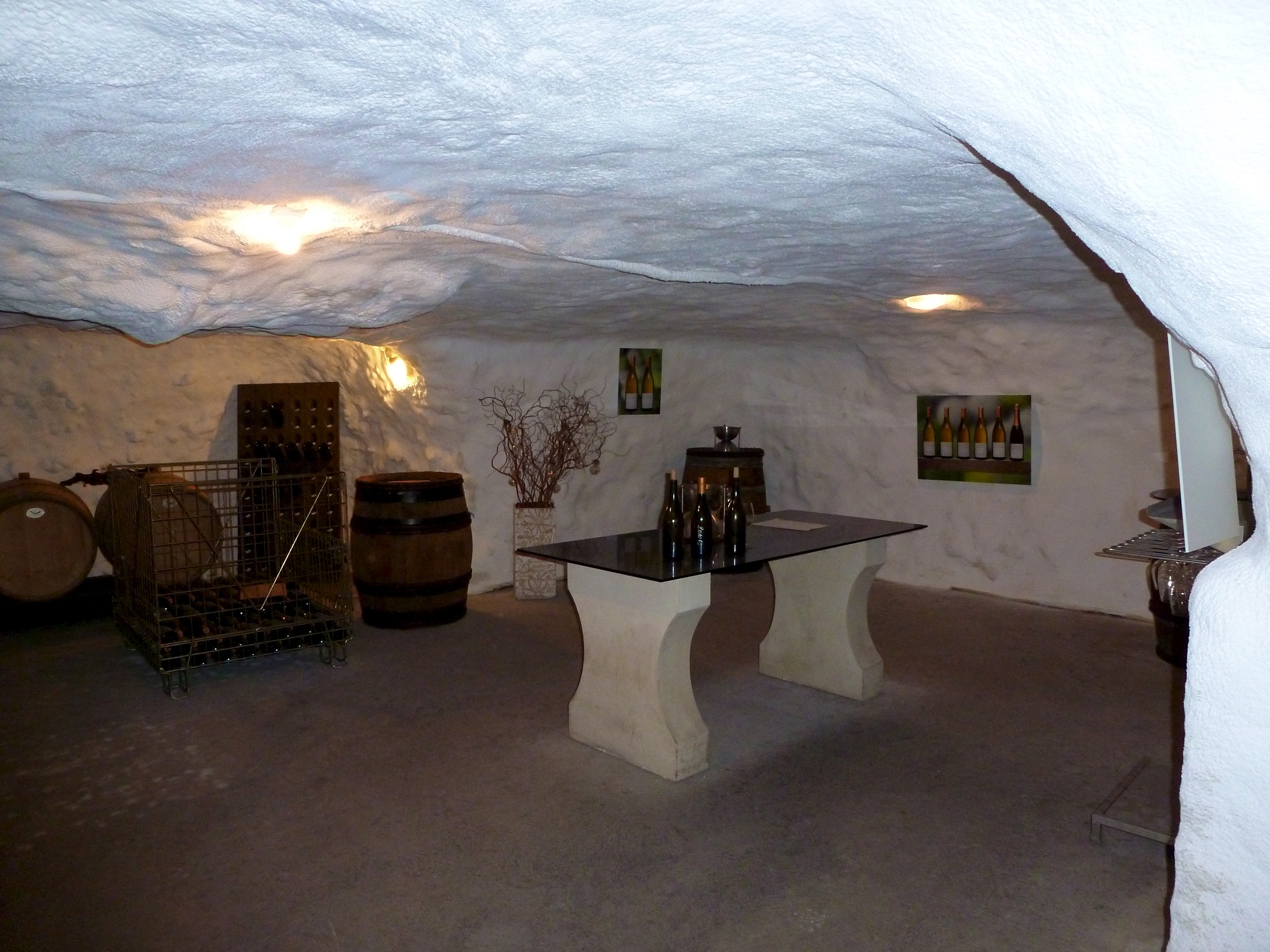
    So we went for a visit to the vineyard where they make the wine.  D saw the owner (recognized him from an article he read on-line) and said bonjour Mr.  Fouquet, may we purchase some wine from you?  D explained we had a bottle in the restaurant and really enjoyed it (D did this all in French).  Mr. Fouquet invited us into his tasting room.


    Loire valley 72


    He was so nice.  We purchased a case; he rang up the sale himself, boxed the wines and insisted on carrying it to our car.  And this vineyard is rated as one of the top two in the area.  We were very impressed and very happy we found the wine!


    Loire valley 73


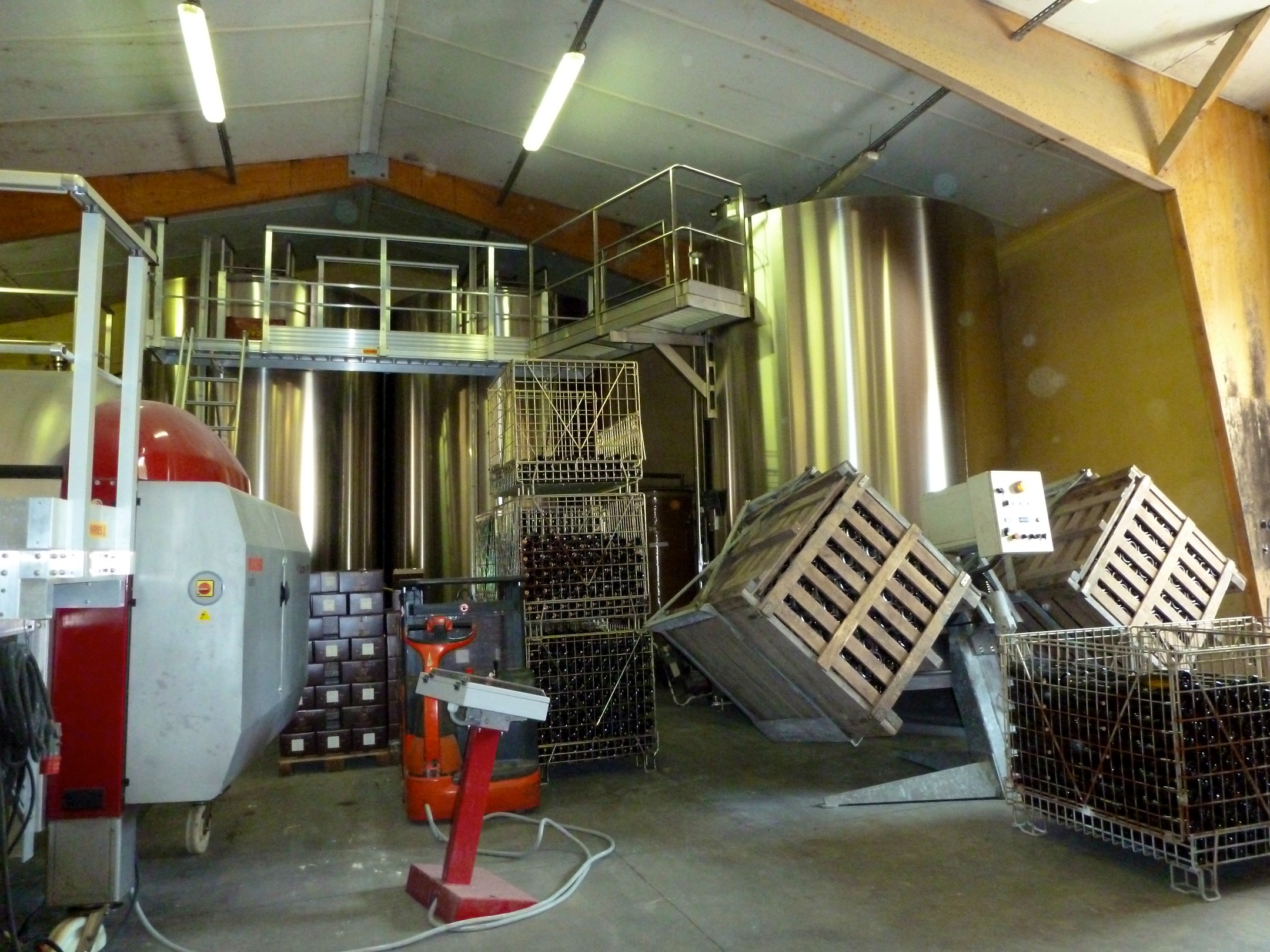
    This is where the wine is made.  Domaine des Aubuisières is a fairly small producer. 


    Loire valley 74


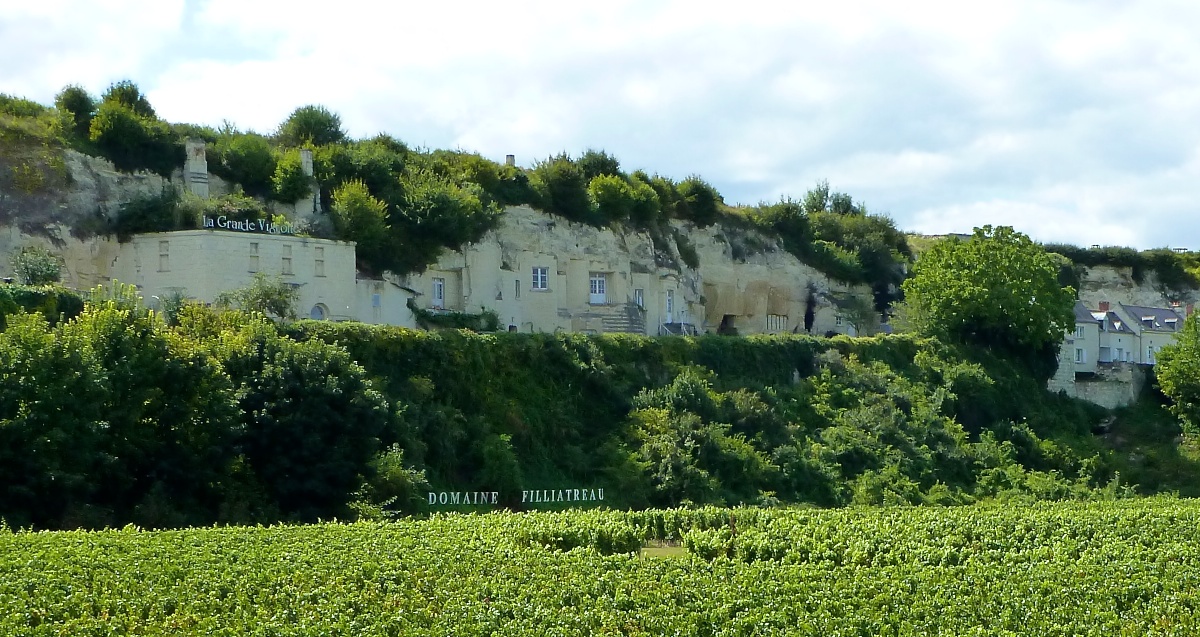
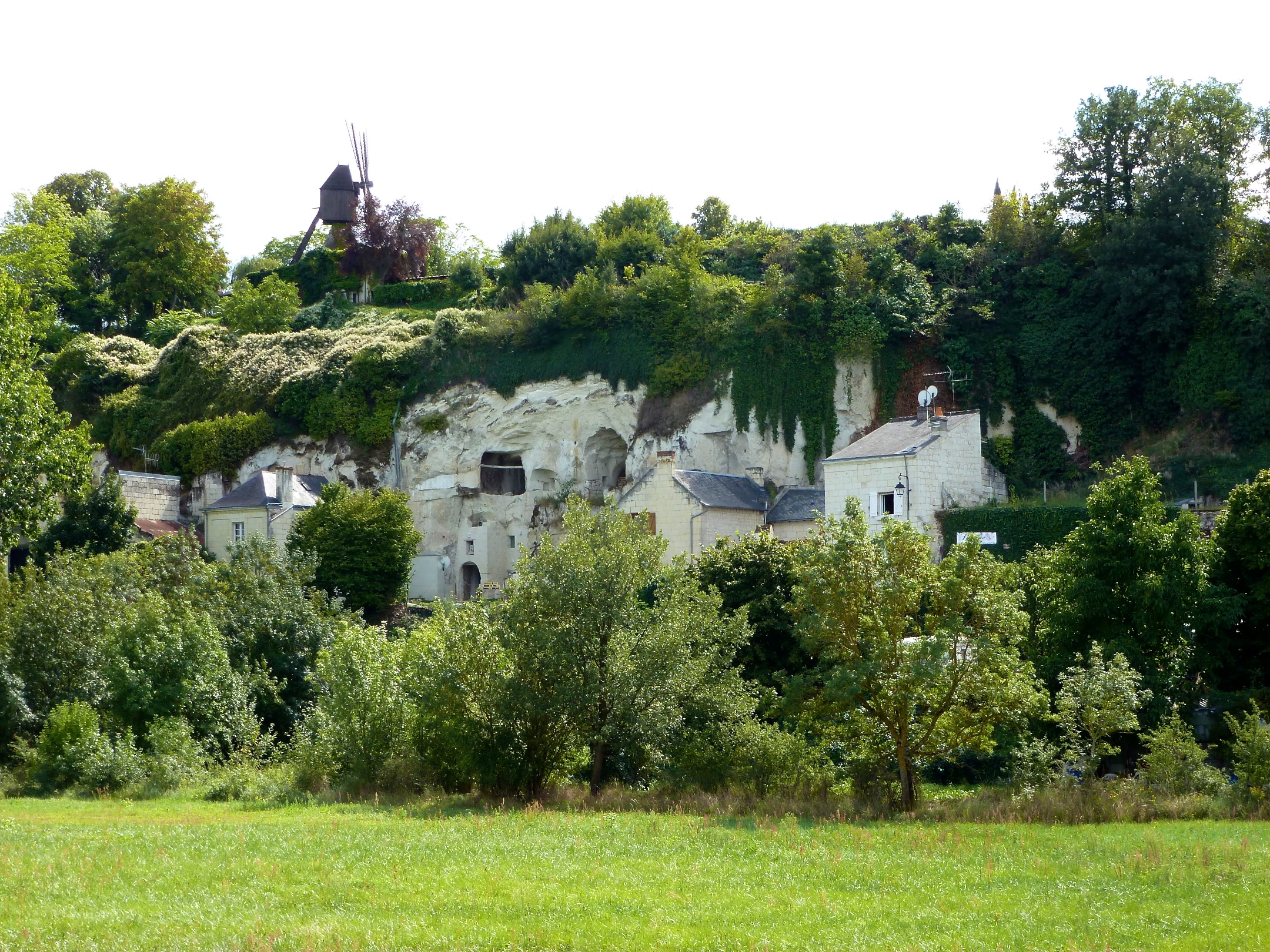
    Another unique and very interesting feature of this area are the stone cliffs with houses built into them. 


    Loire valley 38

    The stone is called Tuffeau stone and the caves were created when they mined the cliffs in the 15th century.  


    Loire valley 76


    Many of the caves were converted into houses as well as the larger ones are used for growing a wide variety of mushrooms, which are transported daily to the markets in Paris. The Loire is the largest supplier of mushrooms to Paris.

    Loire valley 77


    As we drove around we were in awe of these stunning houses.  There are hundreds of them.  The photos do not show the real beauty of these structures.


    Loire valley 78


    The little house below is just down the street for our gite.  Can you see the chimney coming out of the grass?


    Loire valley 79


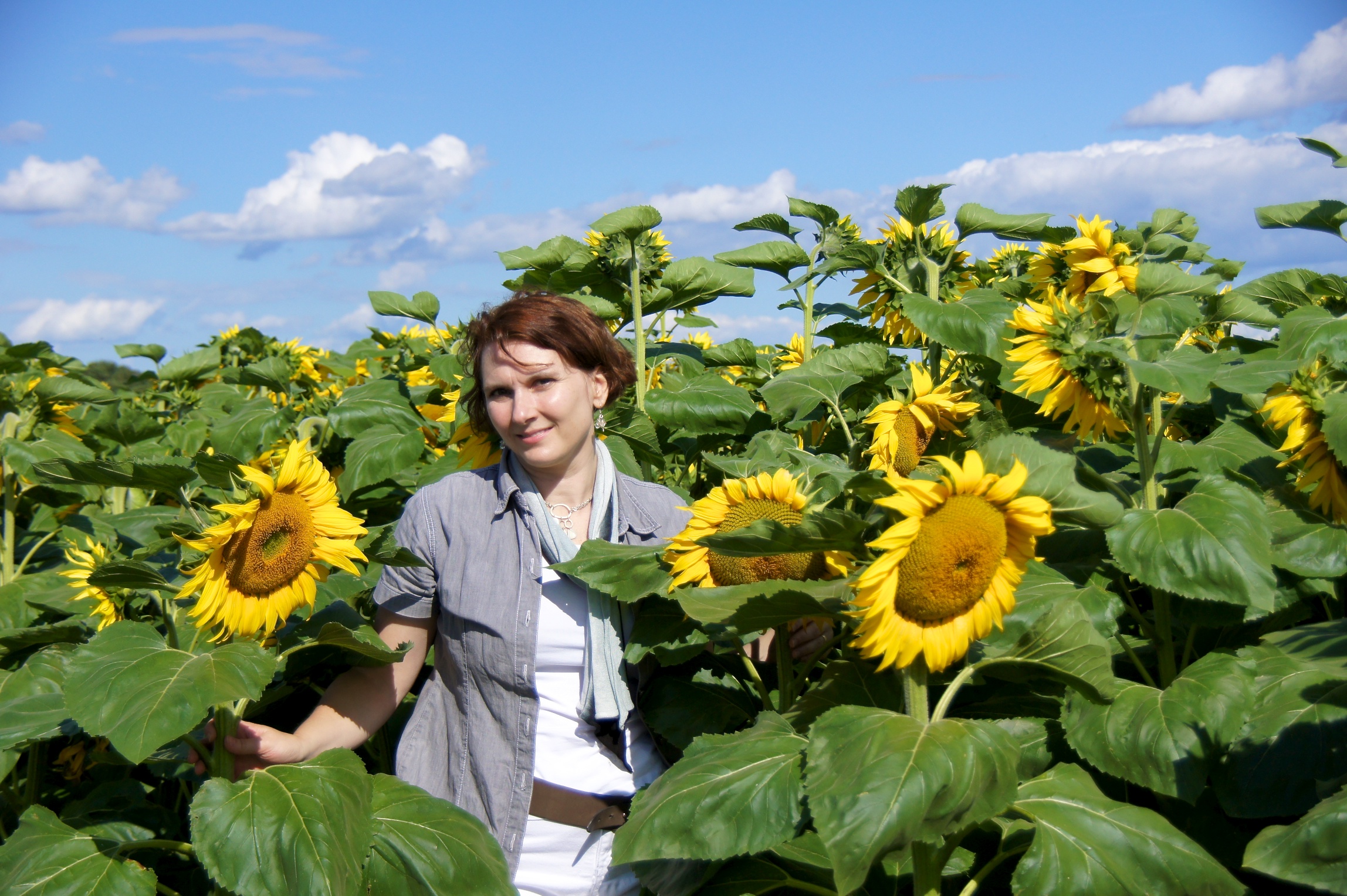
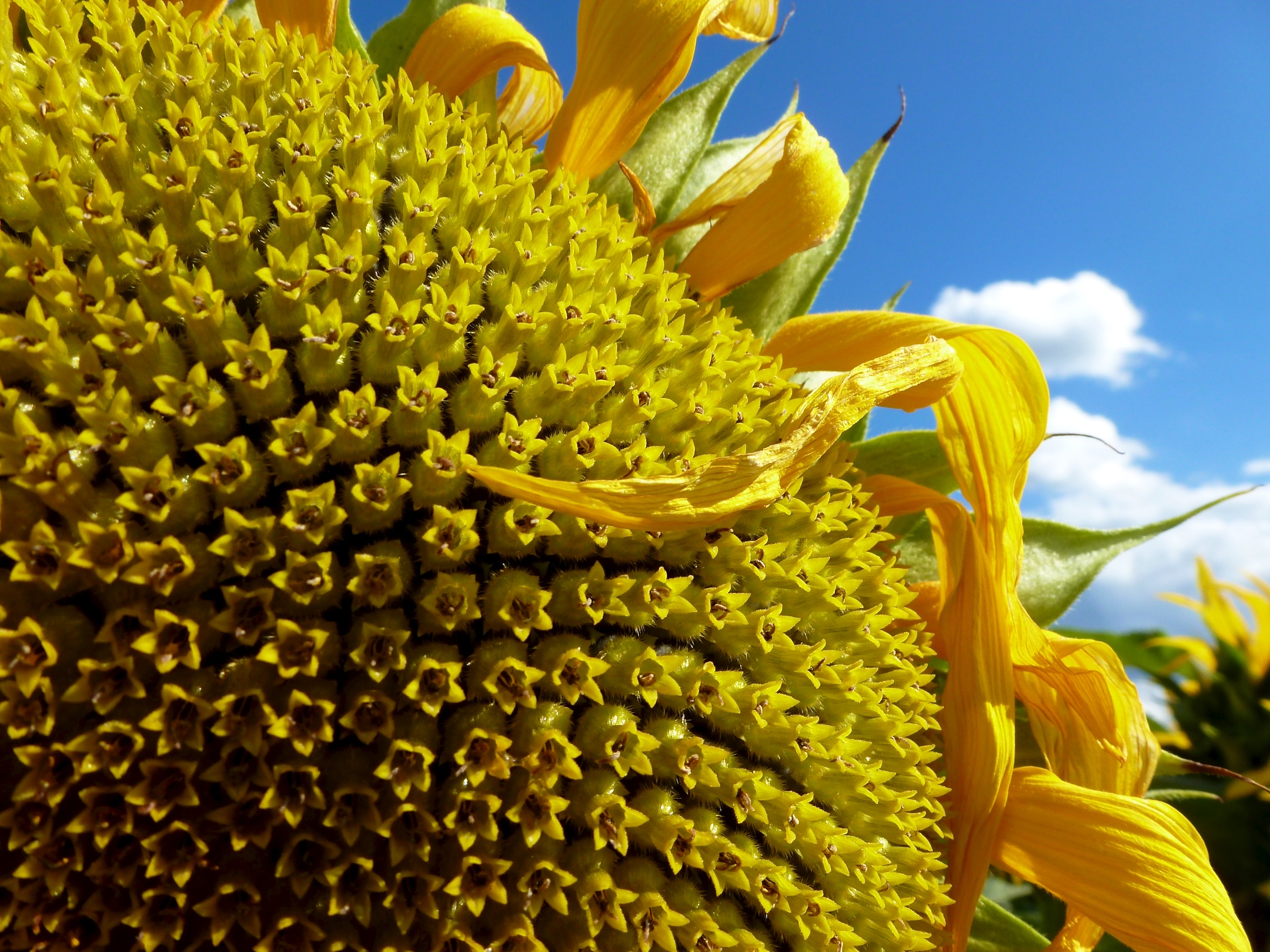
    The sunflowers were in full bloom.  I love a good sunflower field for a photo shoot.  They are such a happy flower  :   )


    Loire valley 16


    Loire valley 15


      Loire valley 14


    Loire valley 17


     I hope you enjoyed the Loire Valley. We sure did!


  •  

    Alsace blog 27


    We have not been to France in such a long time so I picked one of our favorite areas, Alsace, for my birthday weekend.  Great food, great wine, and most importantly FLEA MARKETS! 


    Alsace blog 15


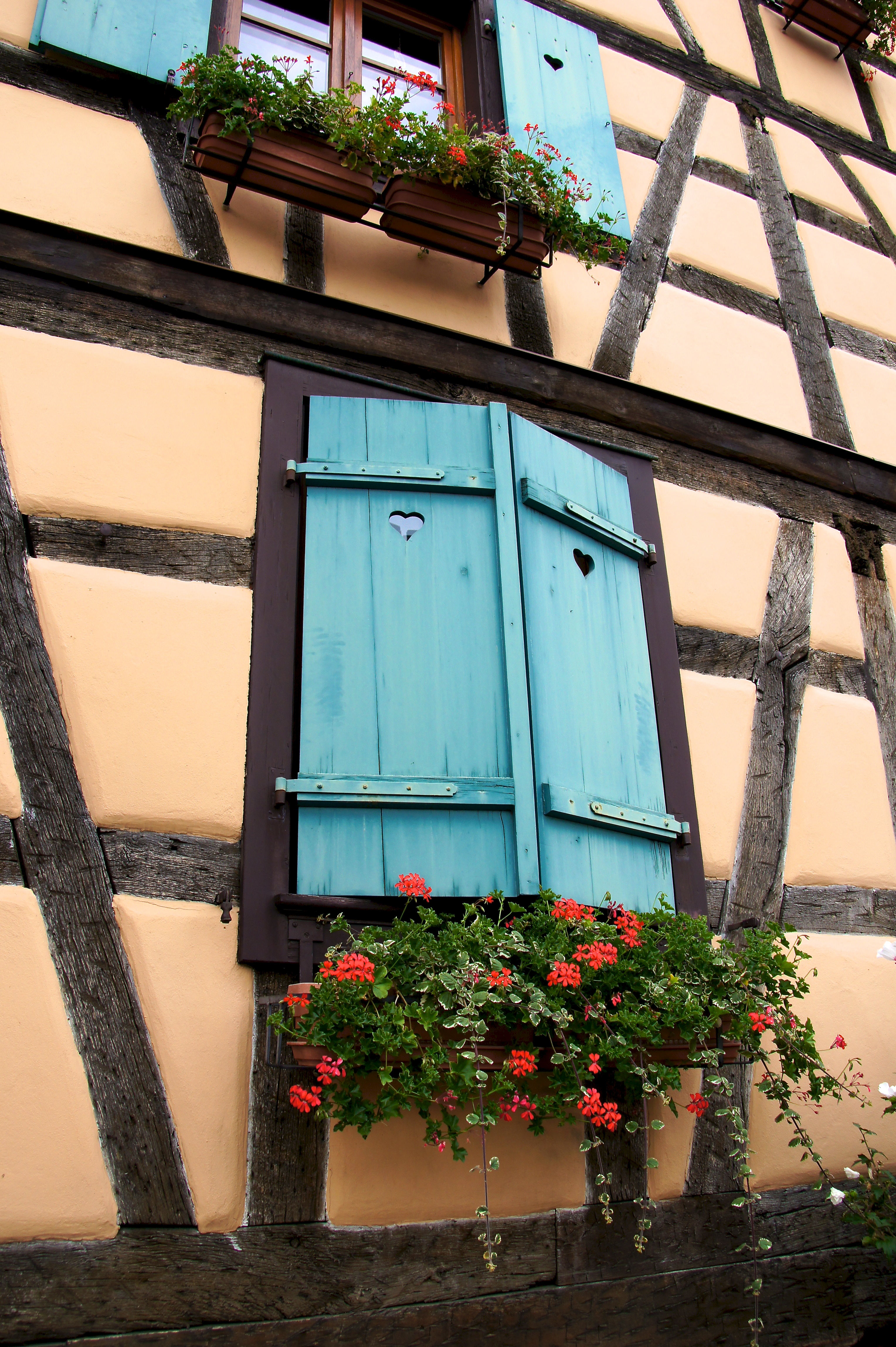
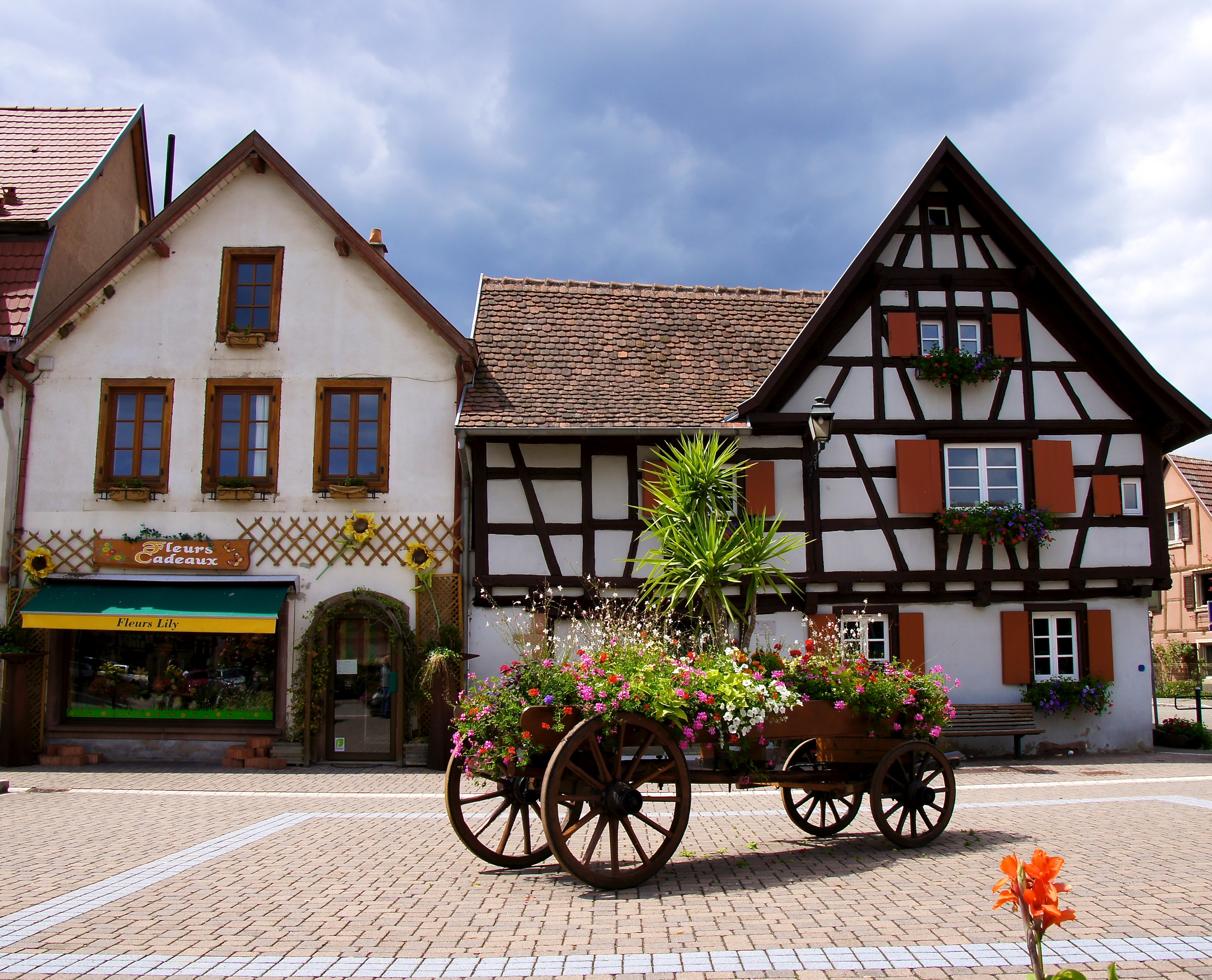
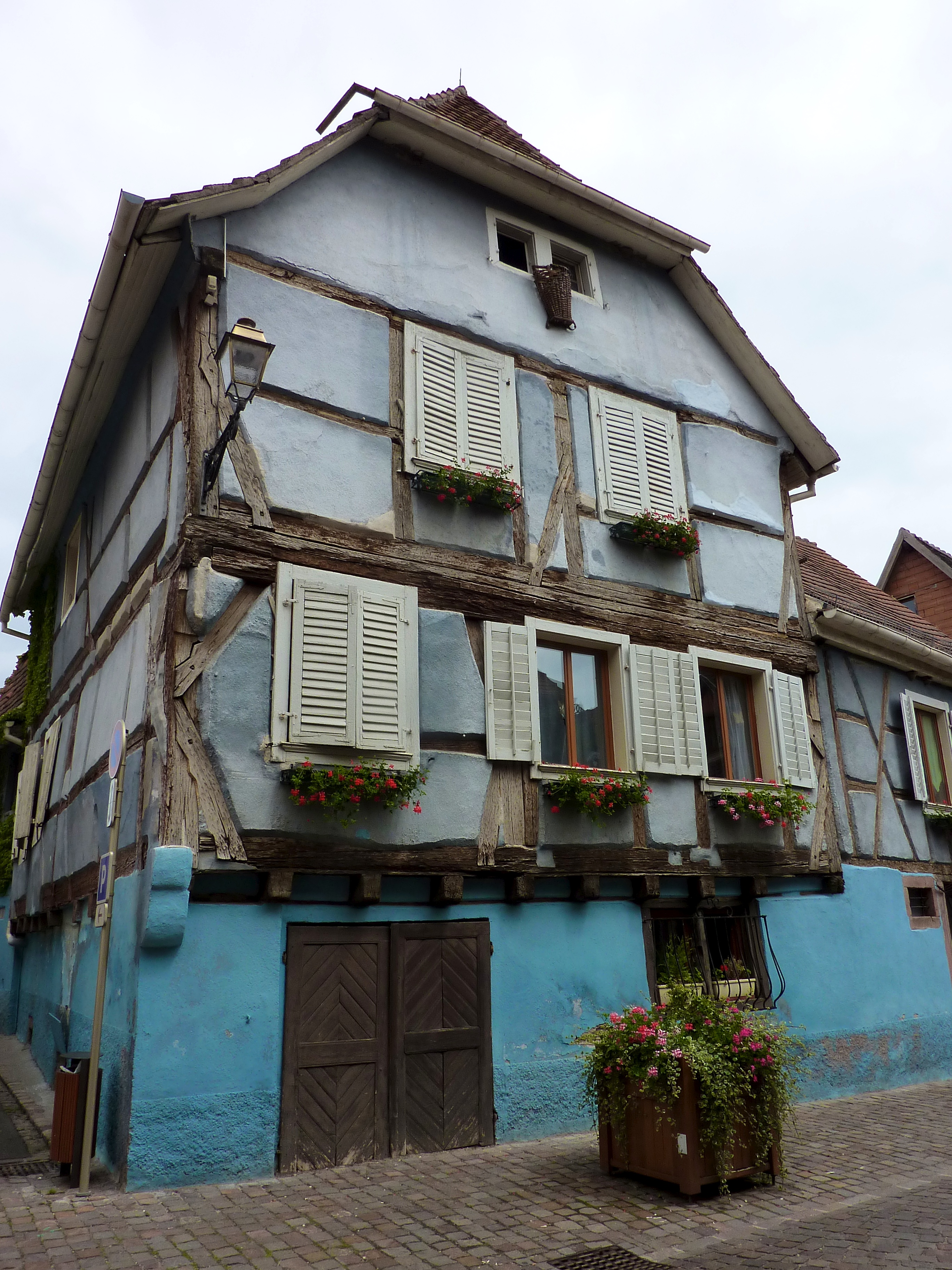
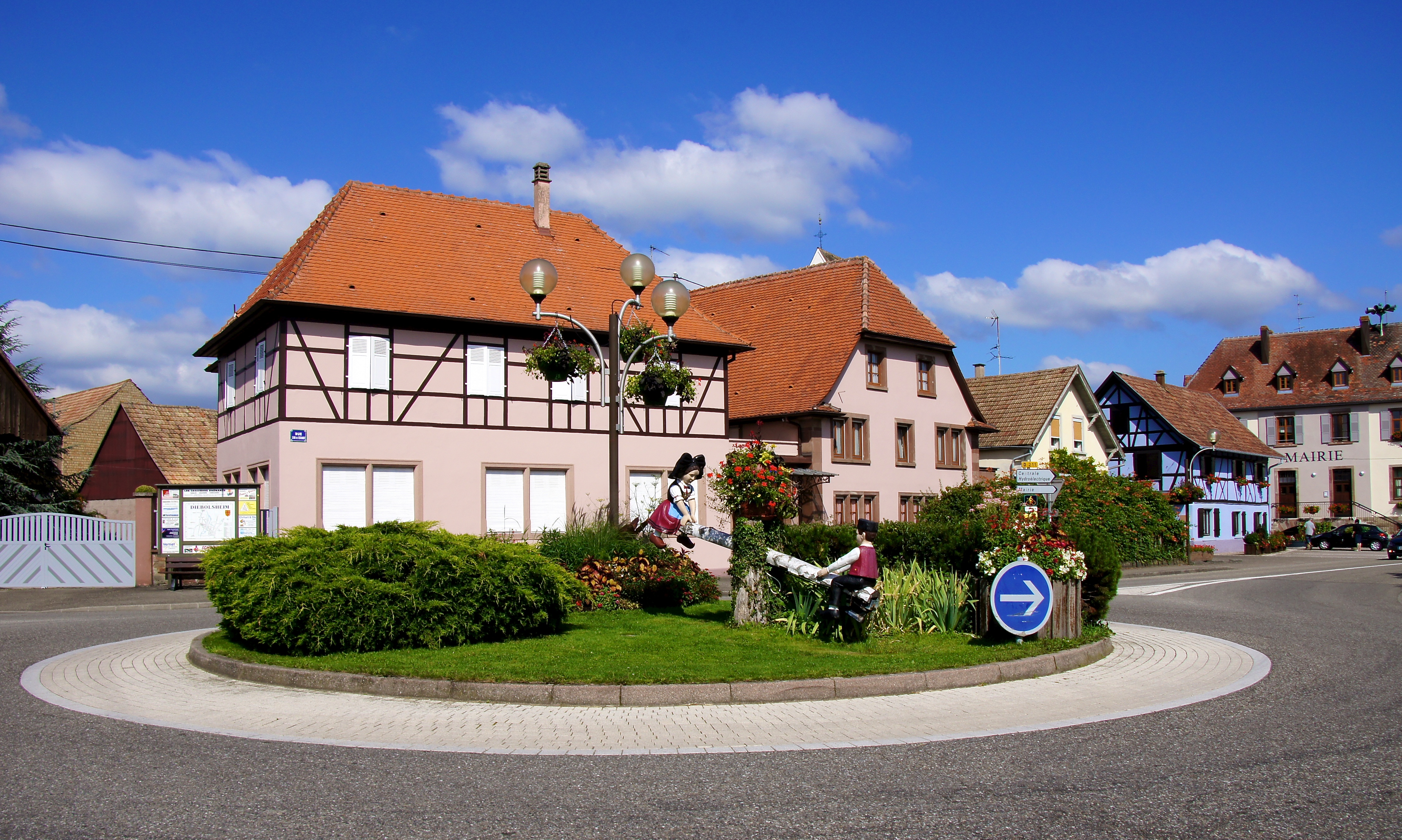
    Alsace France is right on the border of Germany so you see a real mix of the two cultures.  The houses look more Germany with traditional half-timbered style.  They are very colorful.


    Alsace blog 17


    Alsace blog 23


    Alsace blog 22


    Alsace blog 19


    Alsace blog 18


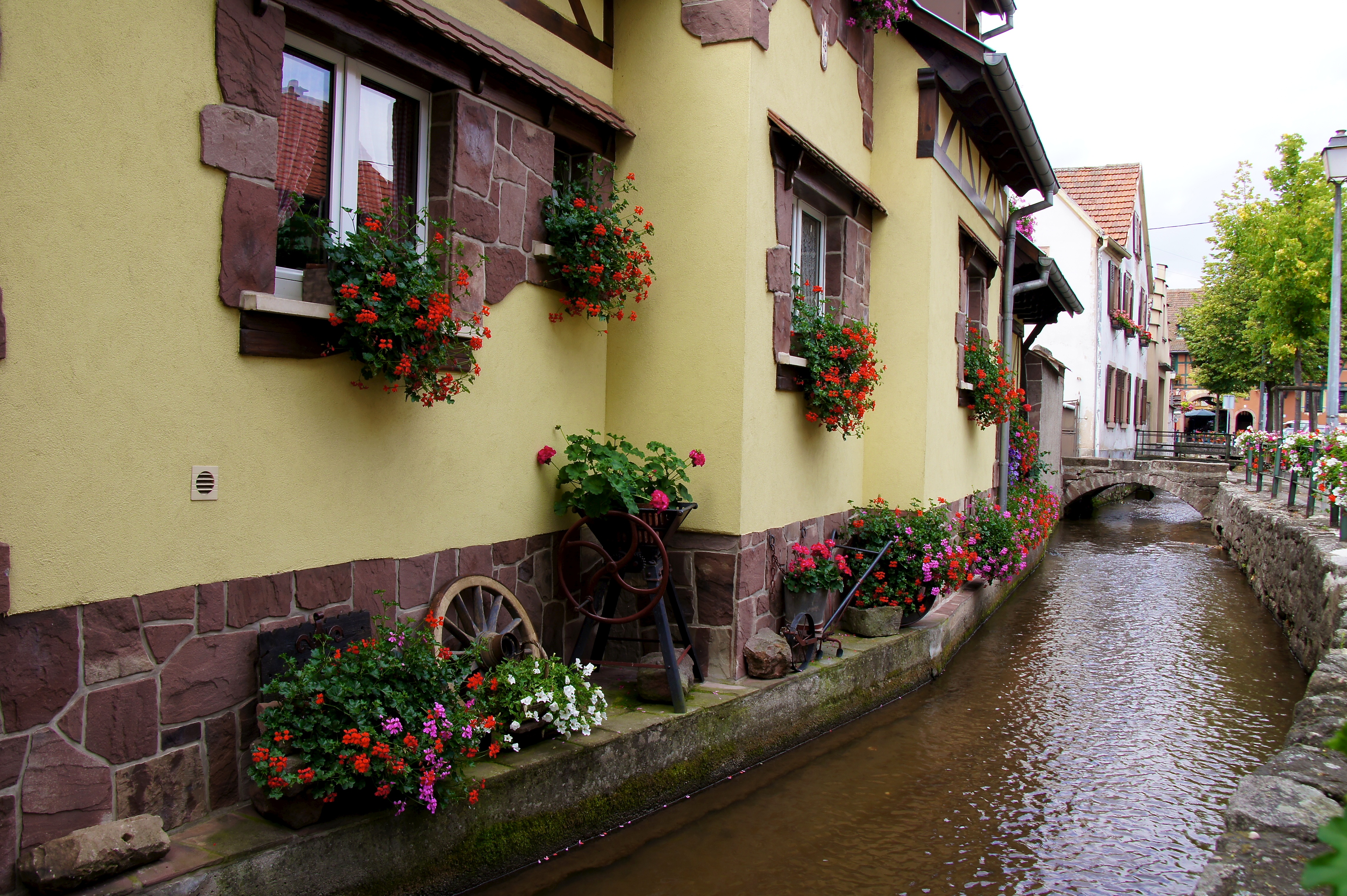
     There are so many sweet little villages to visit all within a short distance from each other.  This area is very clean and they take pride in their neighborhoods – notice all the flowers.  This one had canals running all through it.


    Alsace blog 28


    Alsace blog 29


    Alsace blog 24


    Alsace blog 25

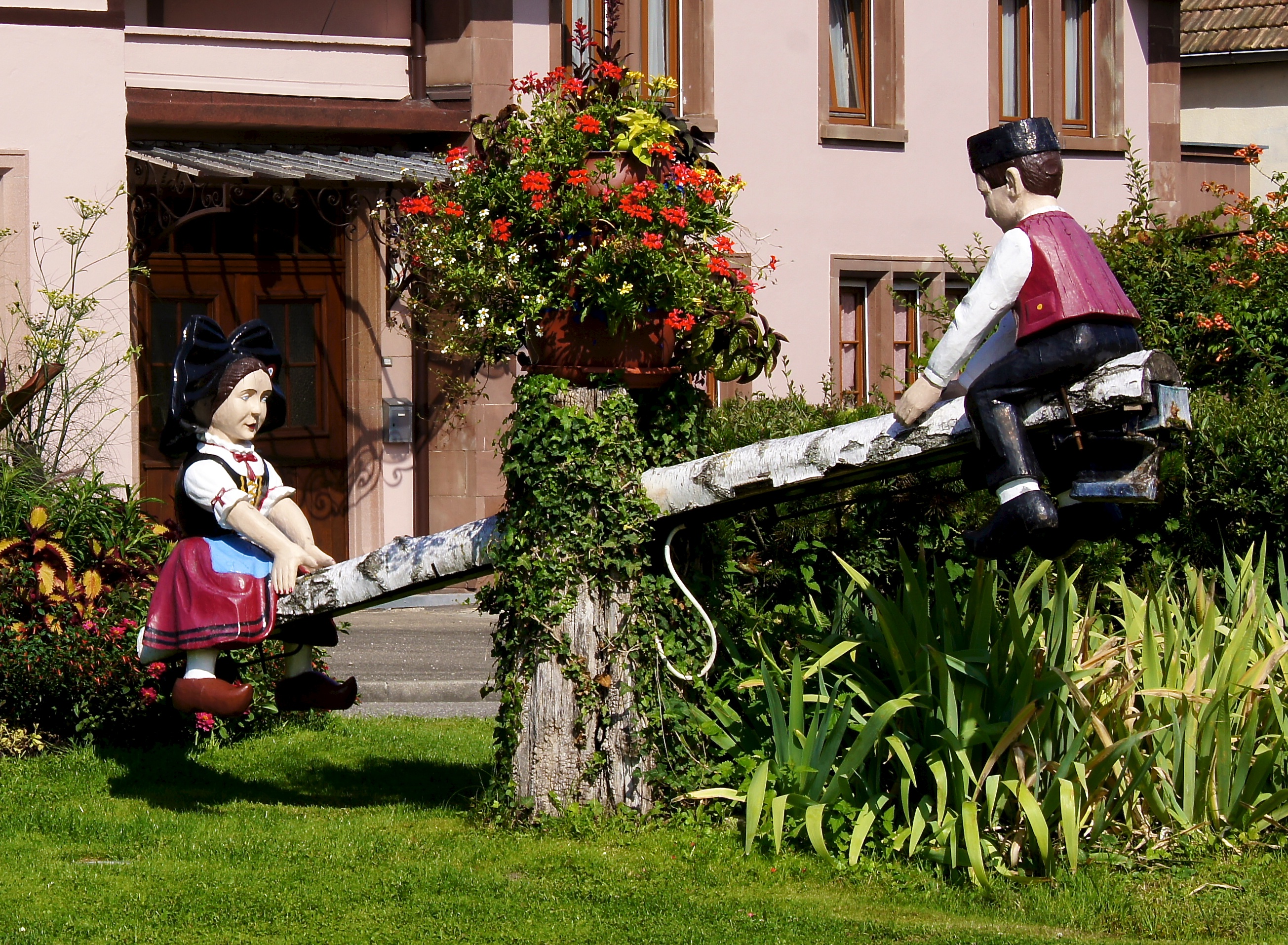
    If the village meets certain requirements, they are awarded a flower icon.  They can be awarded one to four flowers.  The ones rated four are exceptionally quaint.   At the entrance of each little village, they have sculptures and statues in the circles. 


    Alsace blog 2

    This is one of my favorites, two children playing seesaw, and it is actually the one for the village where our B&B is located.  They move up and down – how precious!


    Alsace blog 3


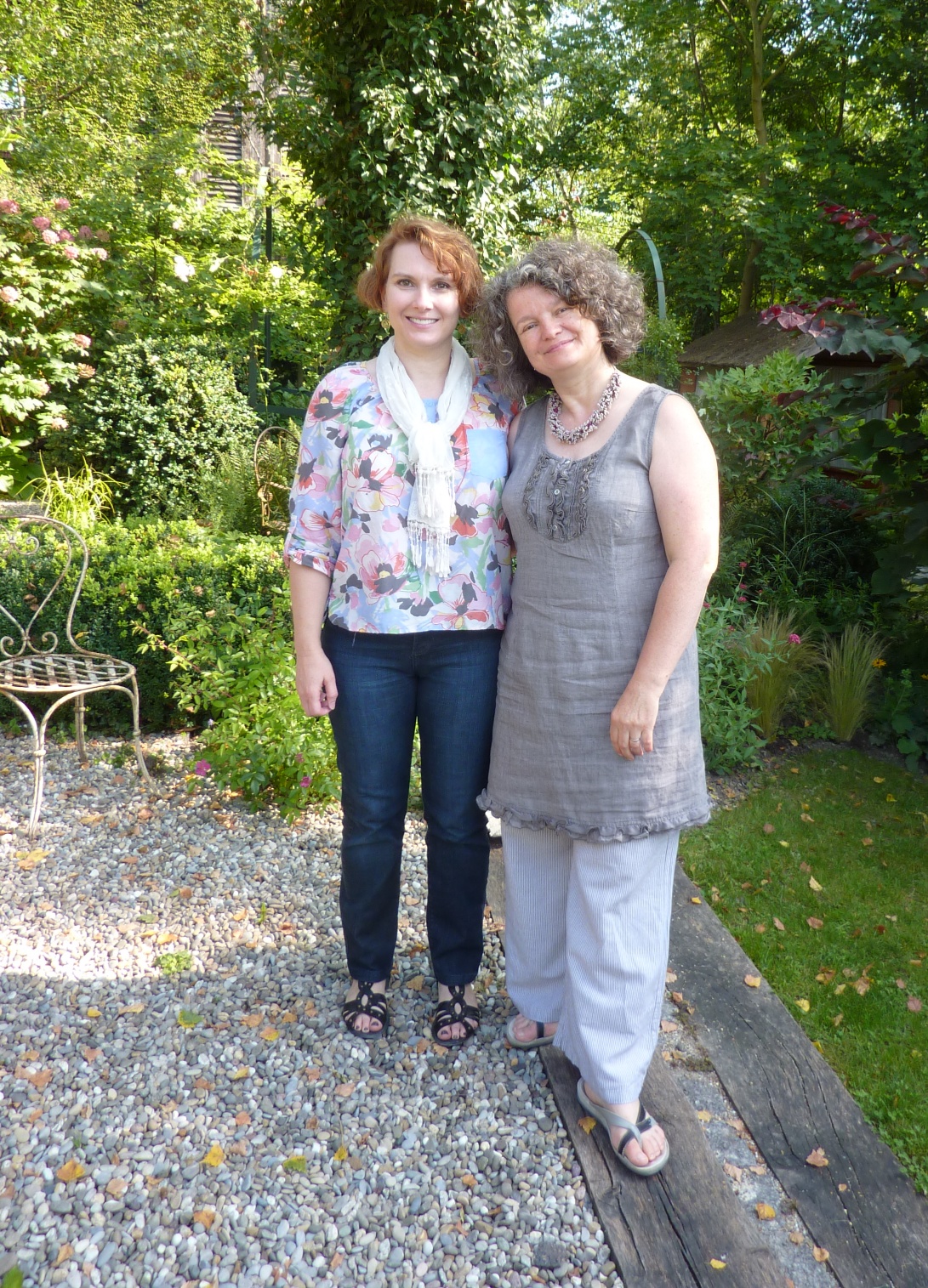
    We stayed at our very favorite B&B, Ambiance Jardin located in Diebolsheim, between Strasbourg and Colmar.  This is our fourth stay and I have already booked a long weekend for the Christmas markets in December.  Here I am with Pierrette, the owner.


    Wild parrot (1)

    A few photos at the lovely B&B:


    Alsace blog 57


    Alsace blog 58

    D relaxing and reading in the garden…..


    Alsace blog 56


    It is hard to capture how lovely the garden is.  There are little pathways that twist and turn, along with sweet little sitting areas.  If you want to see more images of Ambiance Jardin, visit my art blog, ma vie trouvee.


    Alsace blog 49

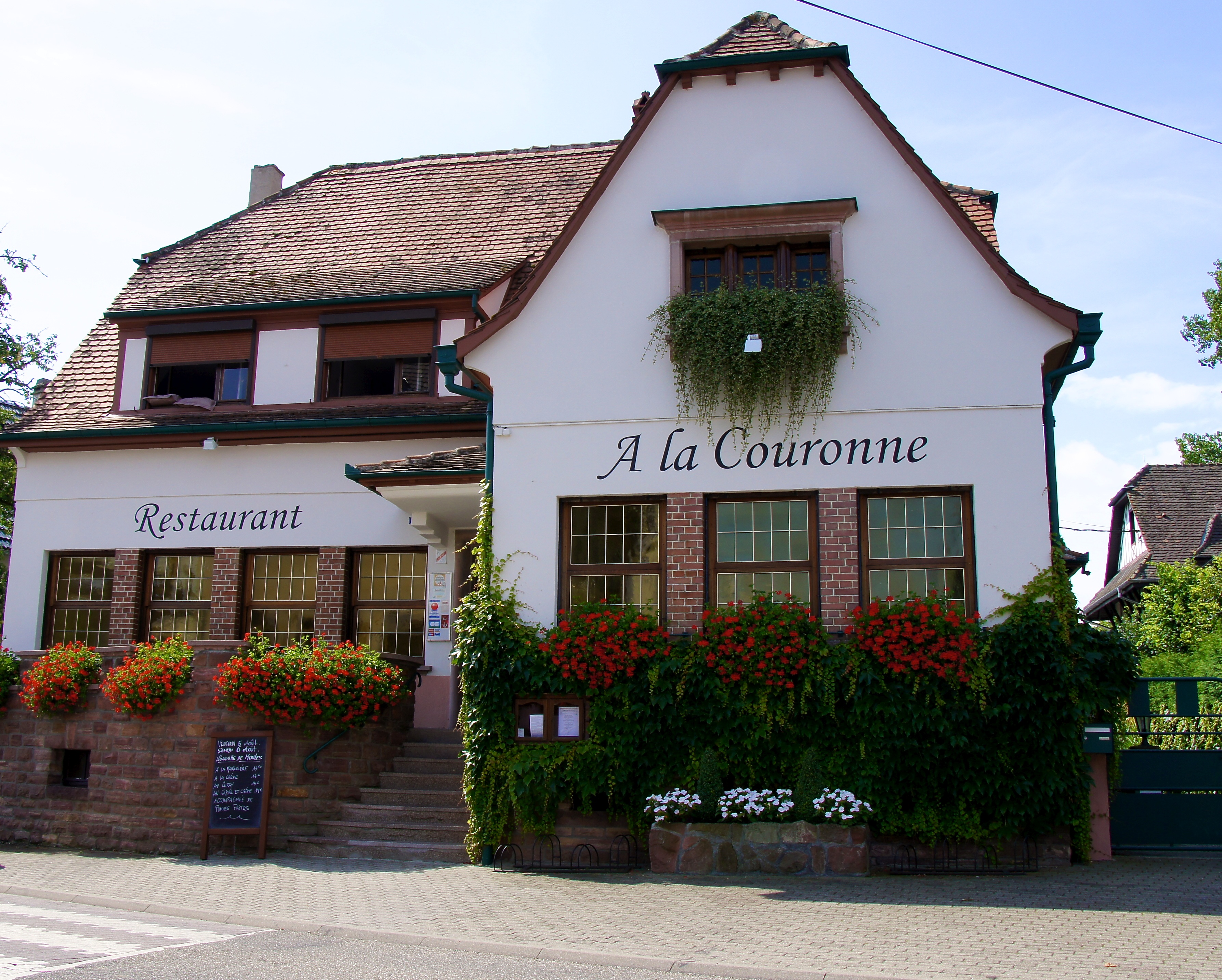
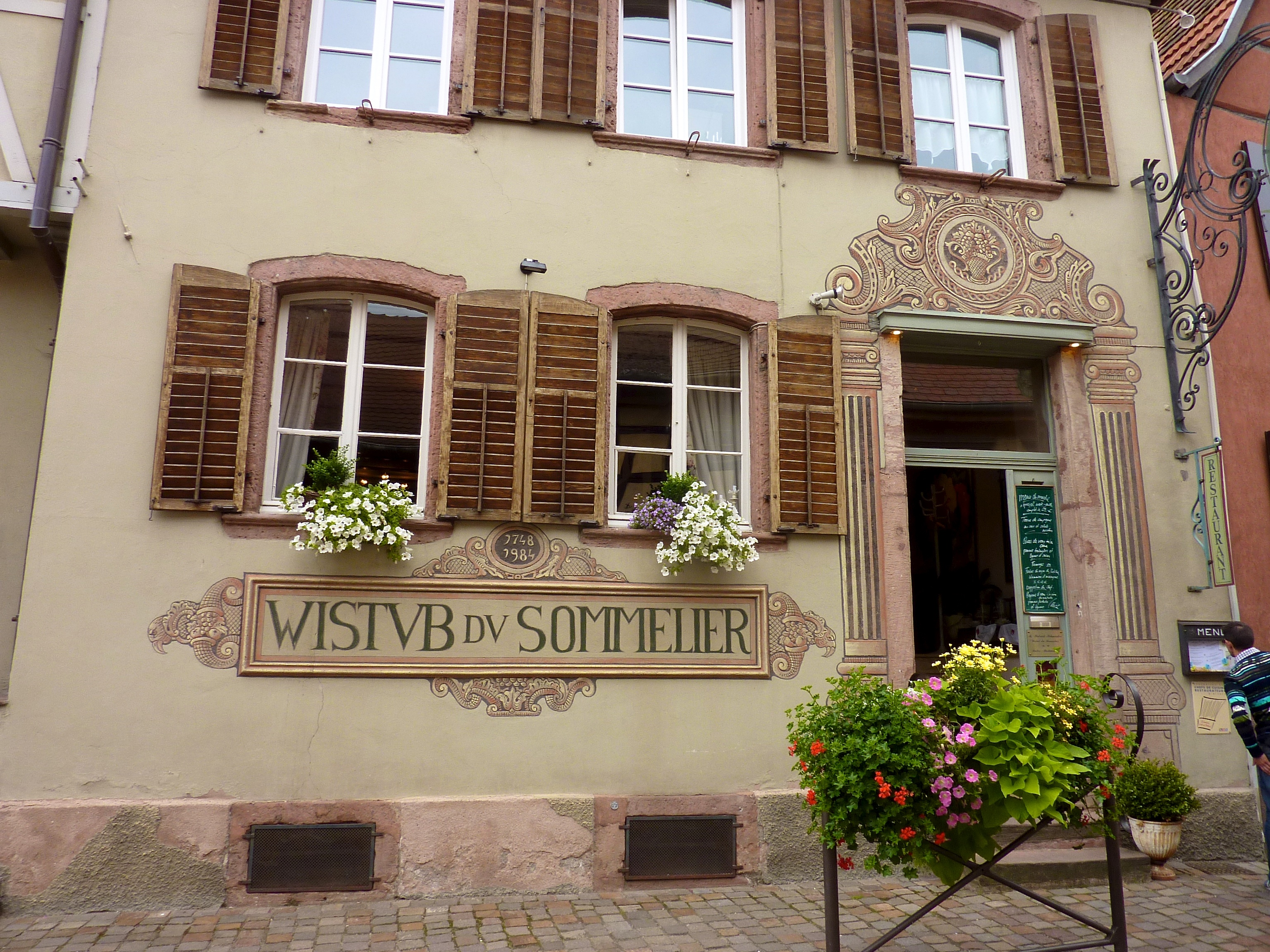
    Diebolsheim was awarded the highest rating of four flowers.   There are only six villages out of 137, which have this rating.  This restaurant is just down the street from the B&B.  A young couple owns it and he is the chef.  The food is always delicious.  


    Alsace blog 39


    This was an interesting house in the neighborhood.


    Alsace blog 53


    Alsace blog 52


    Alsace blog 50


    Alsace blog 51


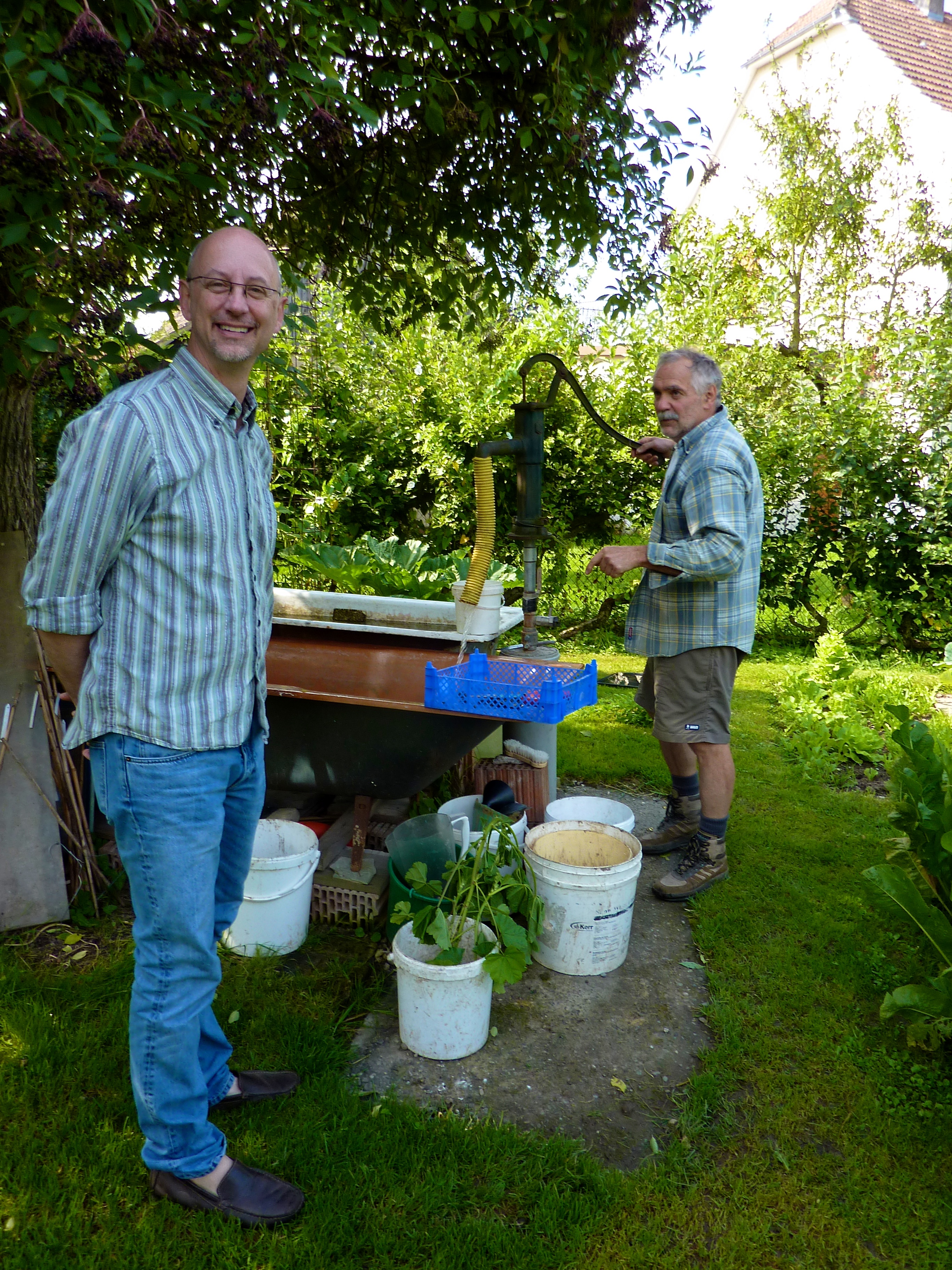
    One evening Pierrette's neighbor, Jean -Luc, stopped by.  We chatted and he told us all about his garden.  He invited us to stop by for a visit the next morning, so we did. 


    Alsace blog 4

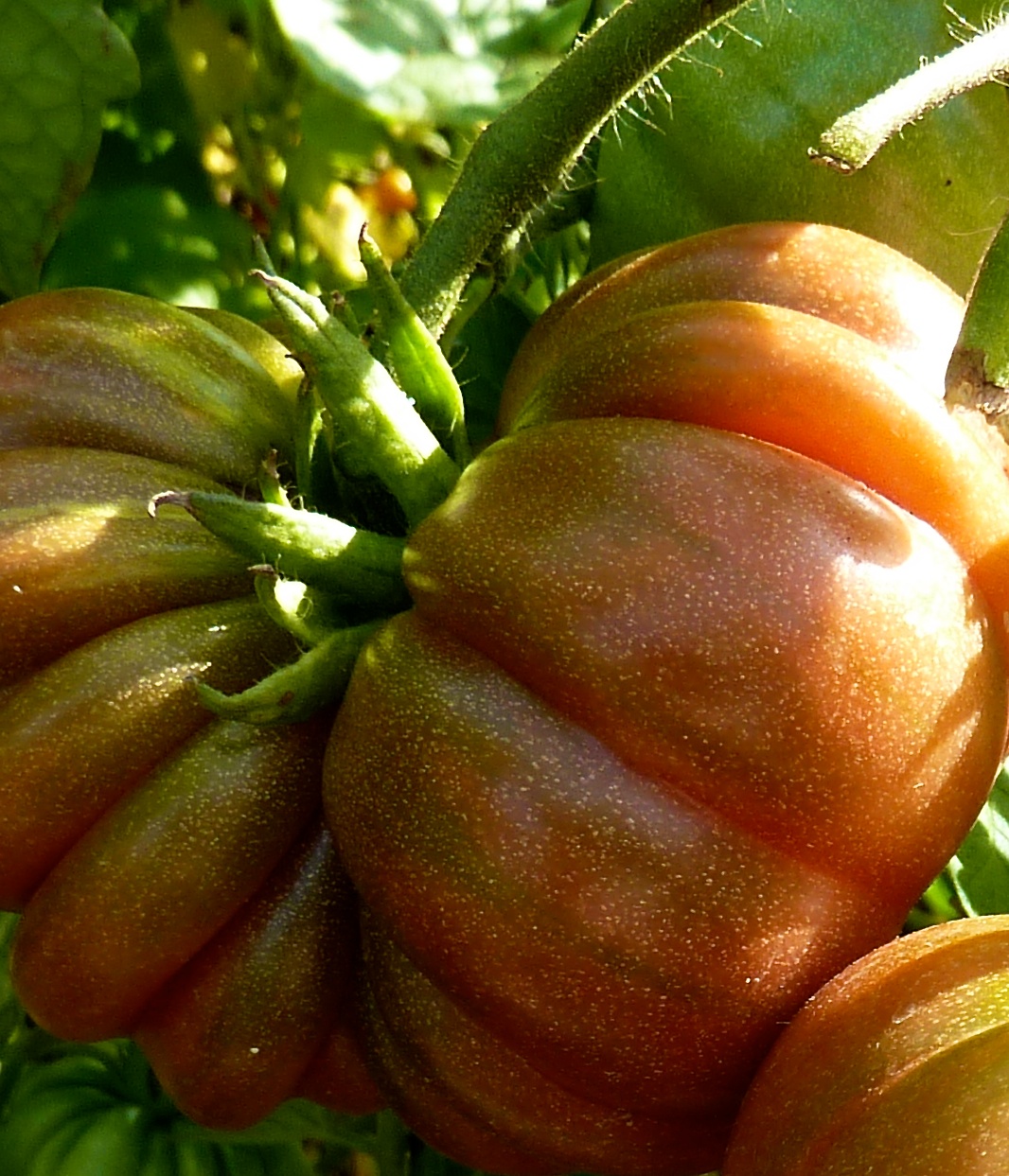
    It was very interesting as he has over 40 different varietals of tomatoes and many other fruits and vegetables.  Here is Jean-Luc with his insect house.


    Alsace blog 6


    It was quite the structure – below is a close-up.  Each insect has a special spot (log, brick, etc).  All good insects, to help keep his garden healthy.


    Alsace blog 5


    His English was about as good as D's French….but we had fun figuring out what each was saying.  And Jean Luc had a very ornery sense of humor.  His wife kept him in close earshot to make sure he was behaving!  Obviously she was not around in this photo as he had D laughing!


    Alsace blog 7


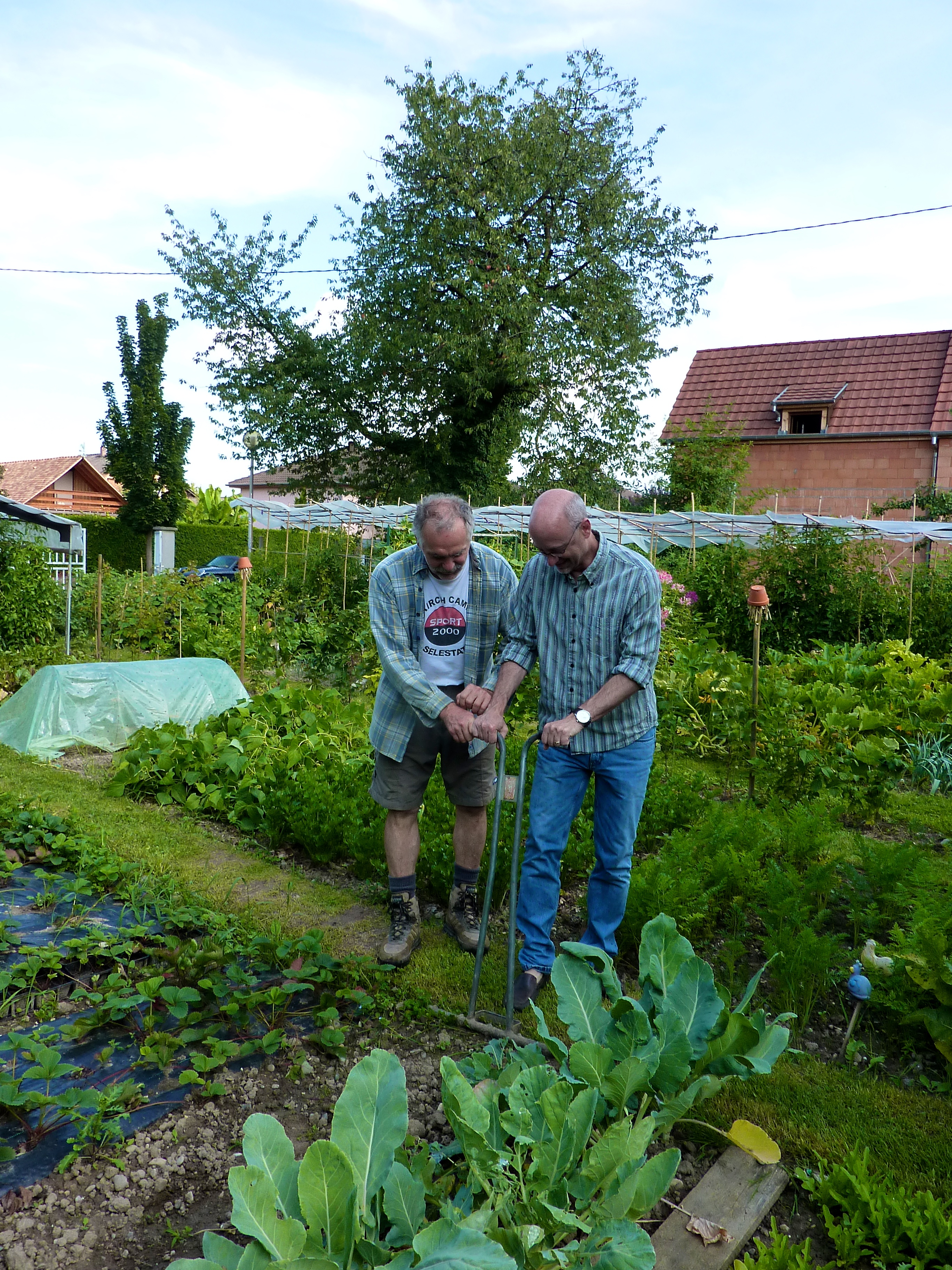
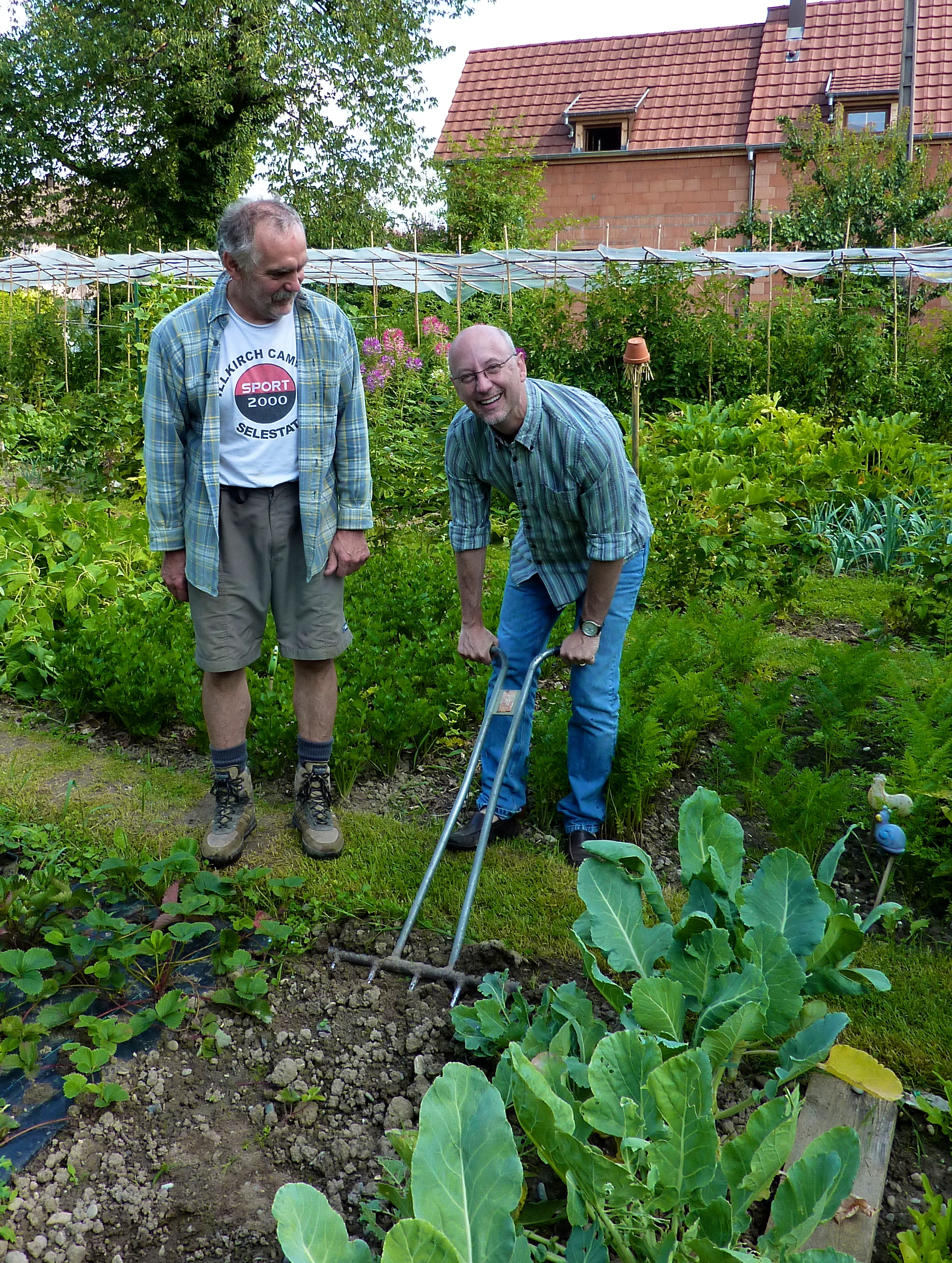
    Below, he is showing D how to create the best soil for plants.


    Alsace blog 8

    D was very excited about the tool and plans to order one to take back to Virginia.  You can see part of it below.  It had metal prongs about 12 inches long.


    Alsace blog 9

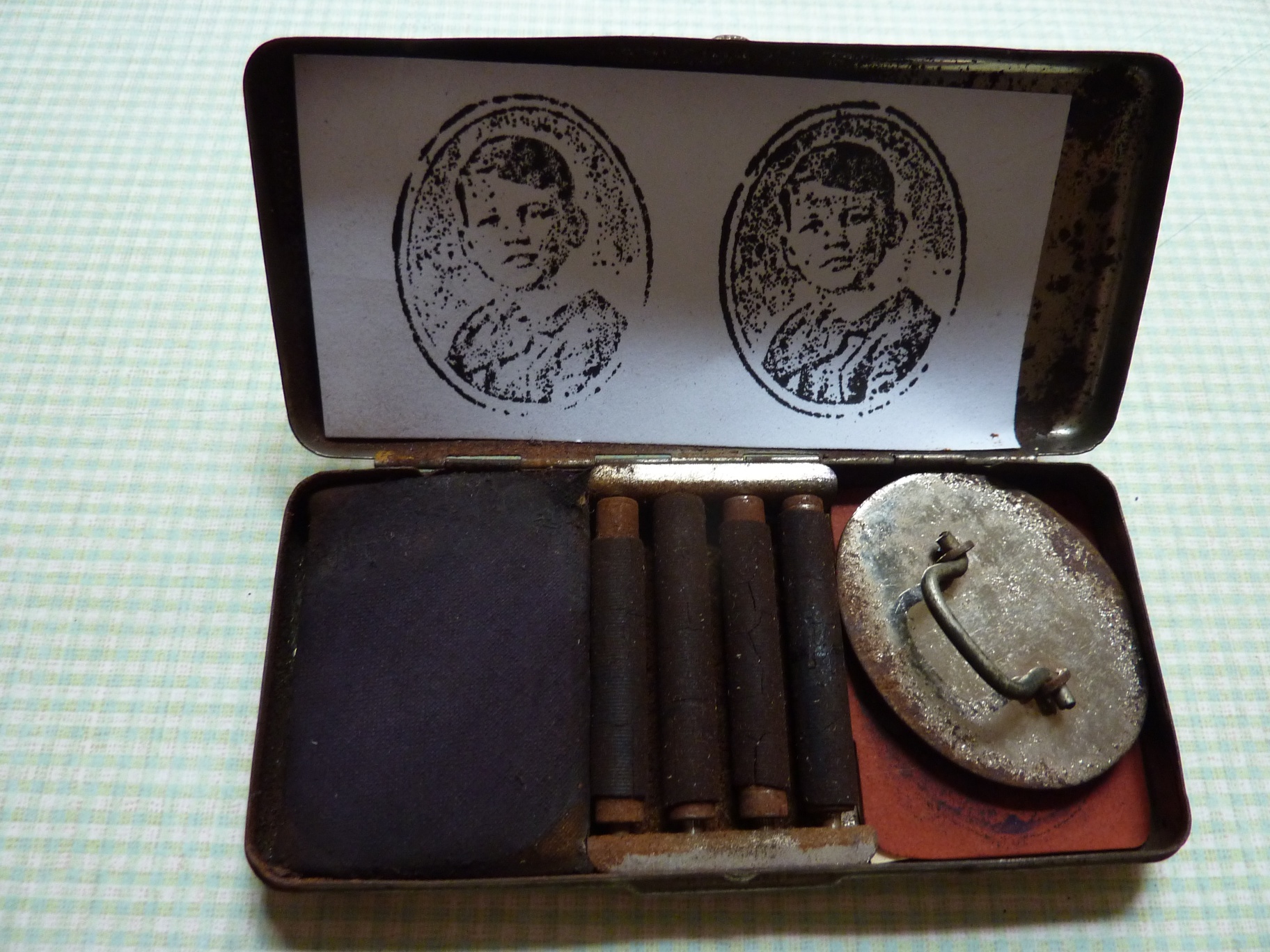
    We went to several flea markets where I found some real treasures.  To see what I bought, visit my art blog by clicking here: ma vie trouvee.   I found a real treasure, a very old stamp (see below).  To read more about it,  click here.


       Precious stamp 5
     

    Even D found a treasure for one euro!  What is it you ask?  An old mallet.  What is he going to use it for – to flatten meat.  Remind me NOT to eat the meat he uses this on.


    Alsace blog 11

    Alsatian cuisine is influenced from both the German and the French. 


    Alsace blog 31

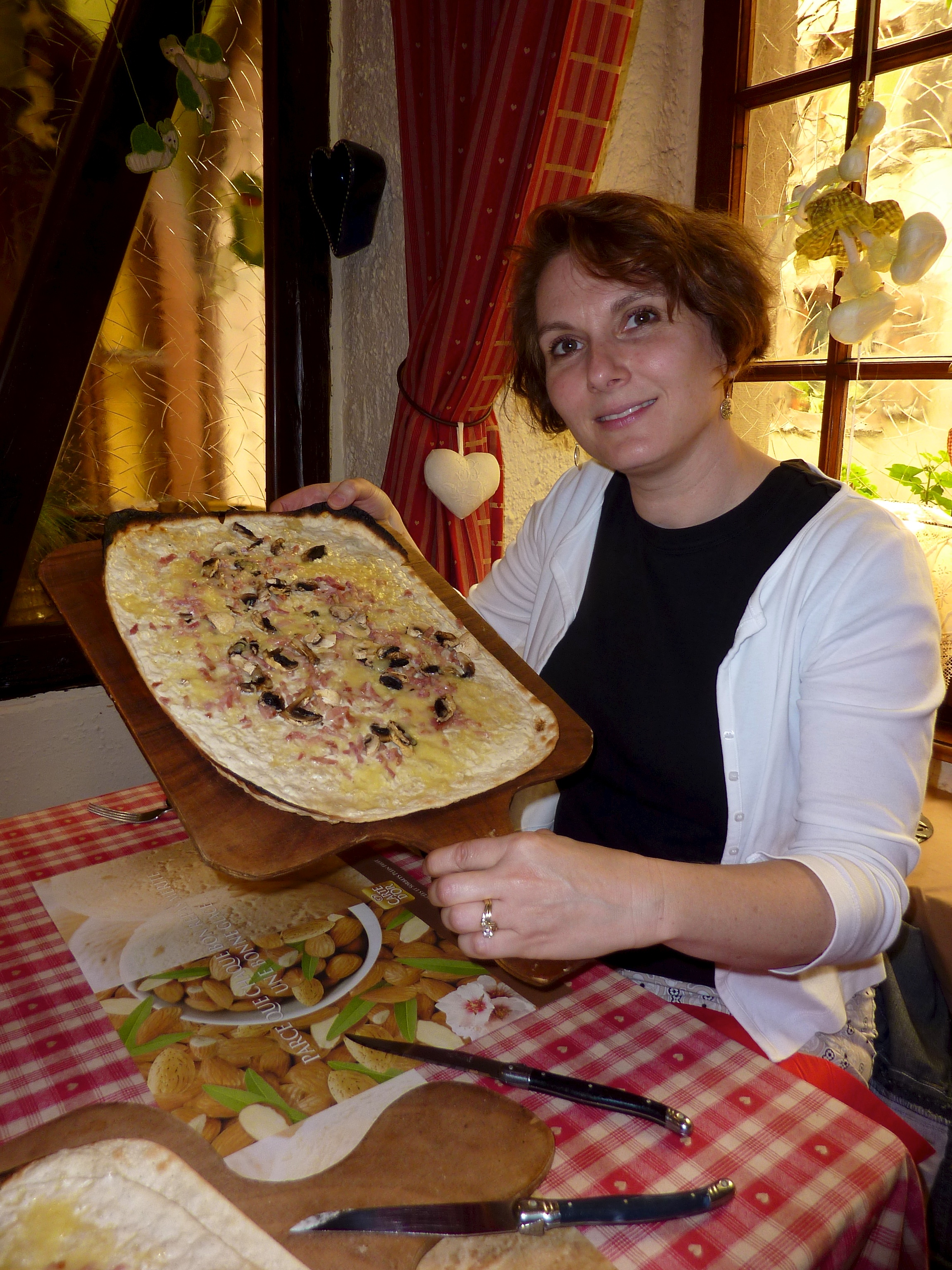
    On of the traditional dishes of the region is flammekueche, also called flambees; our favorite.  Basically like a pizza, but with bacon and cream – oh so yummy!  They are also well known for foie gras made in the region since the 17th century.  We had this too!


    Alsace blog 30


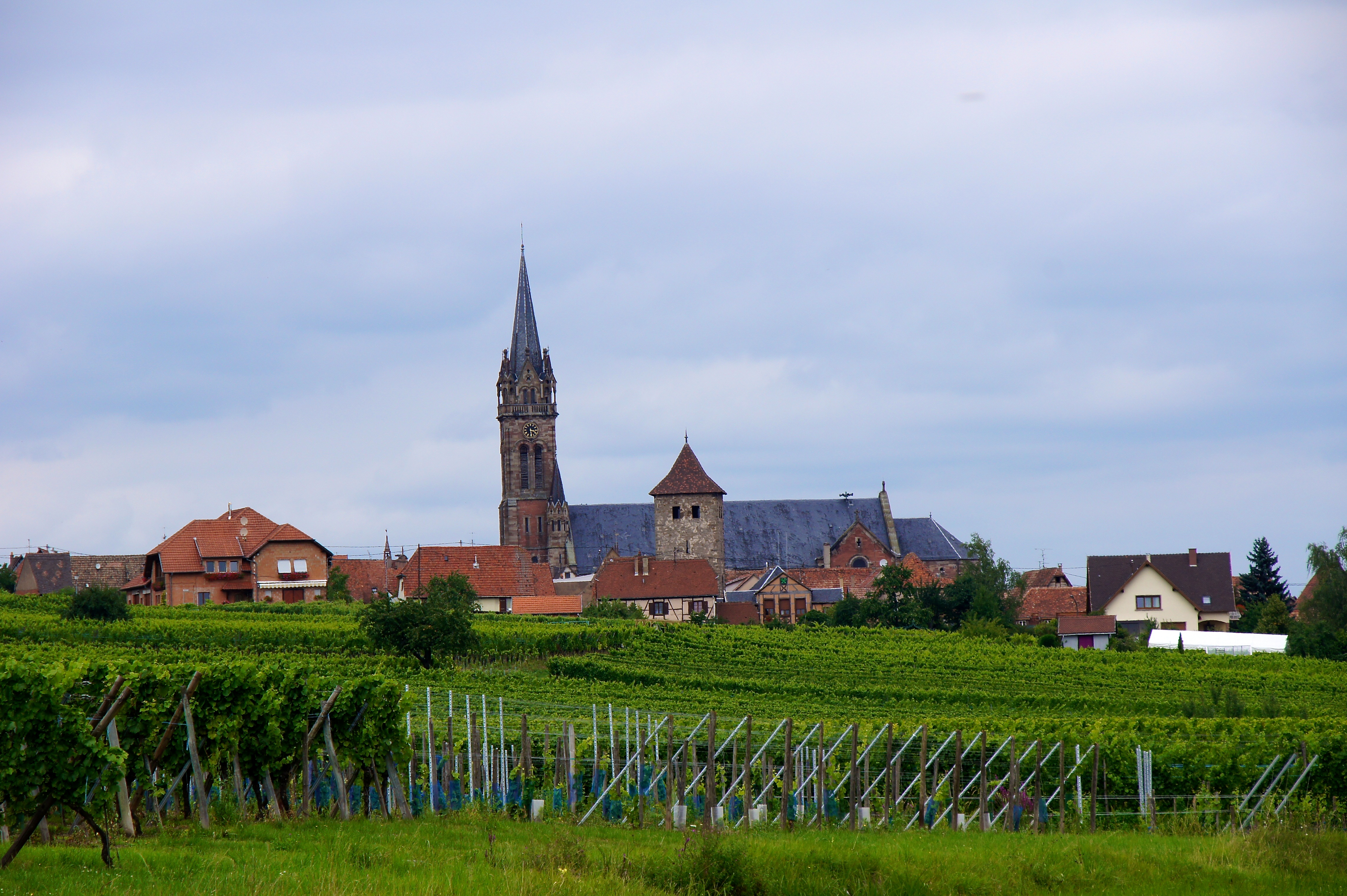
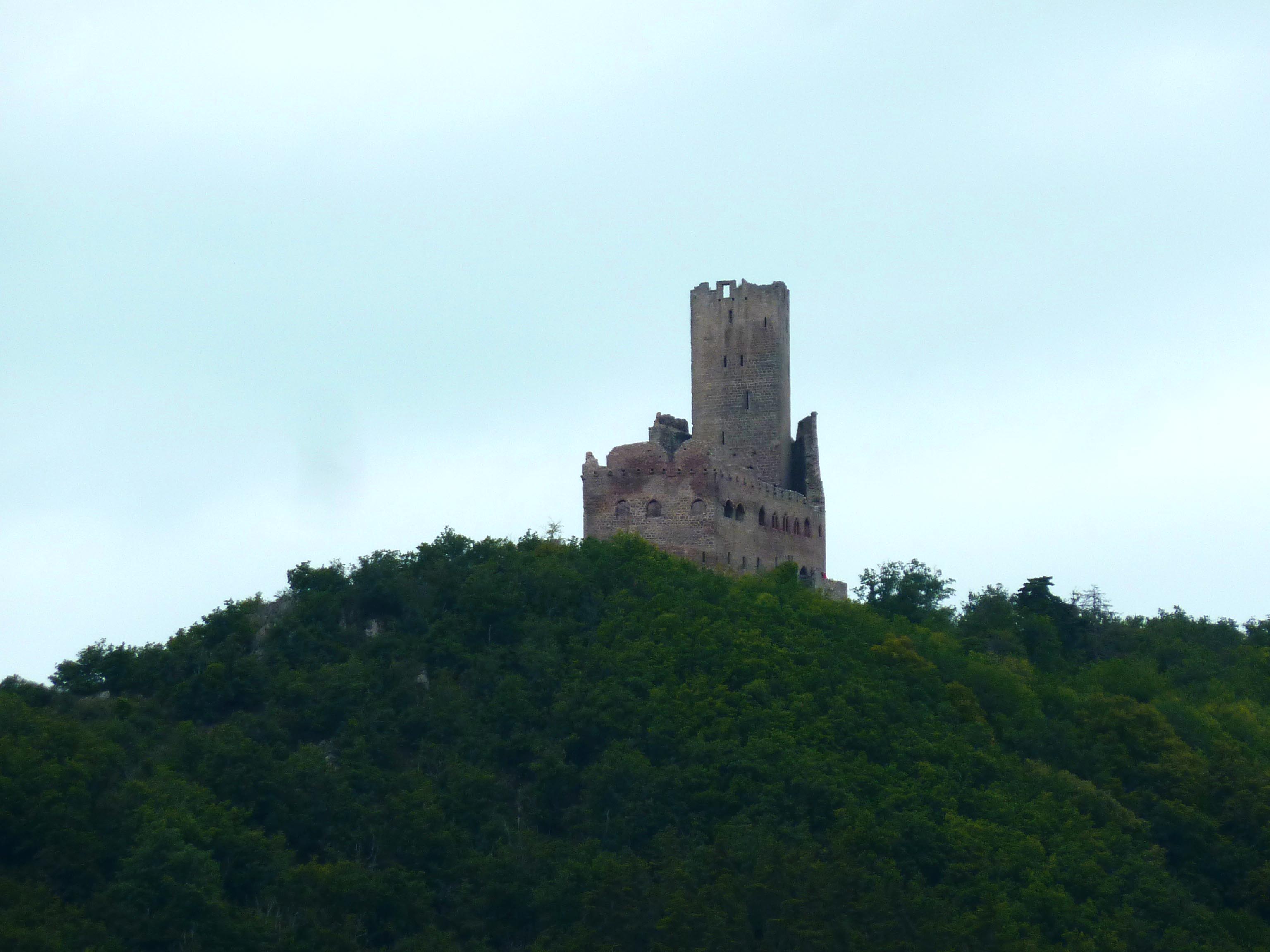
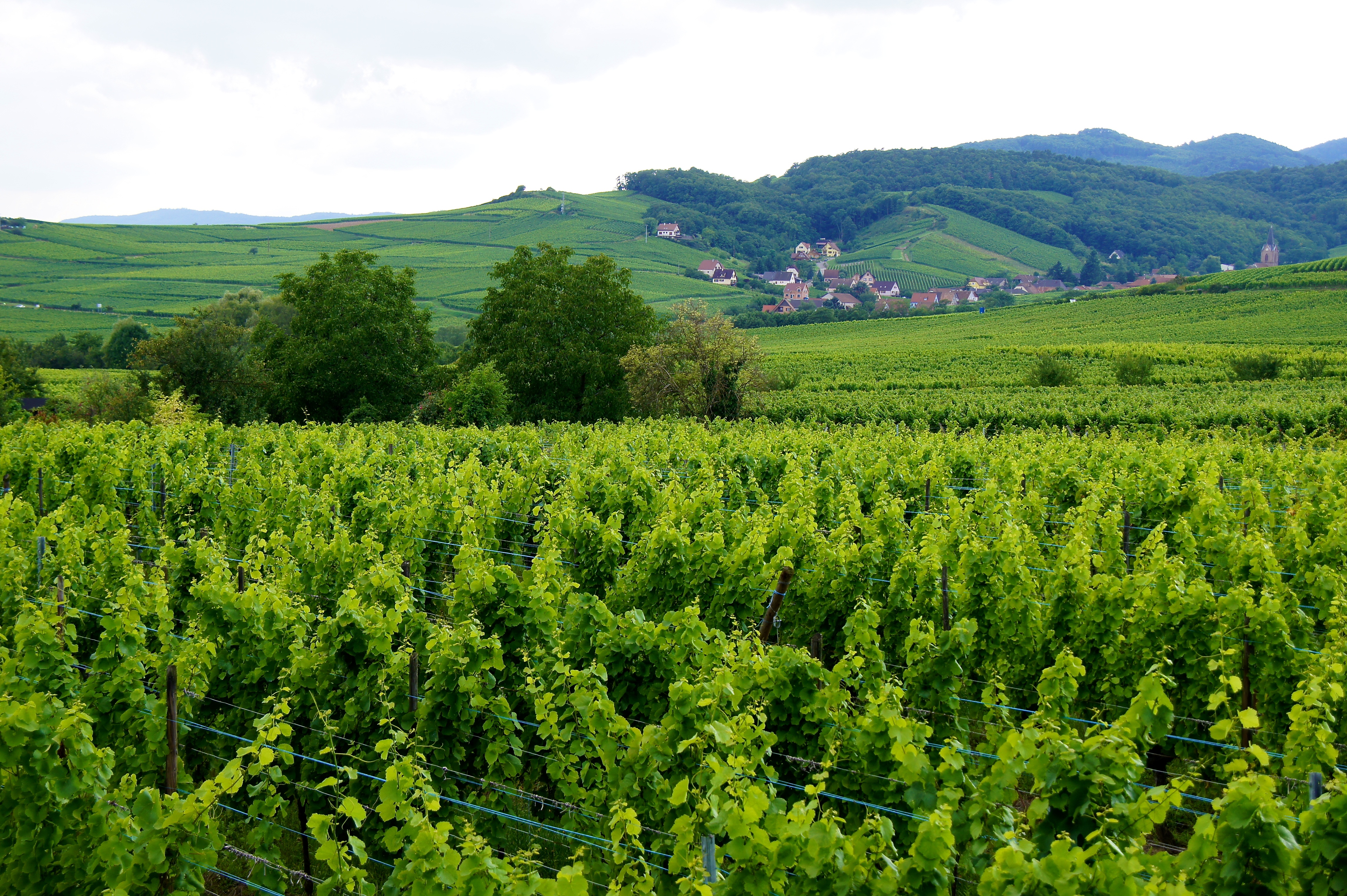
    The scenery in this area is stunning with so many different landscapes to see -  including an old castle.


    Alsace blog 47

    Look at the colorful tile on the church steeple.


    Alsace blog 43

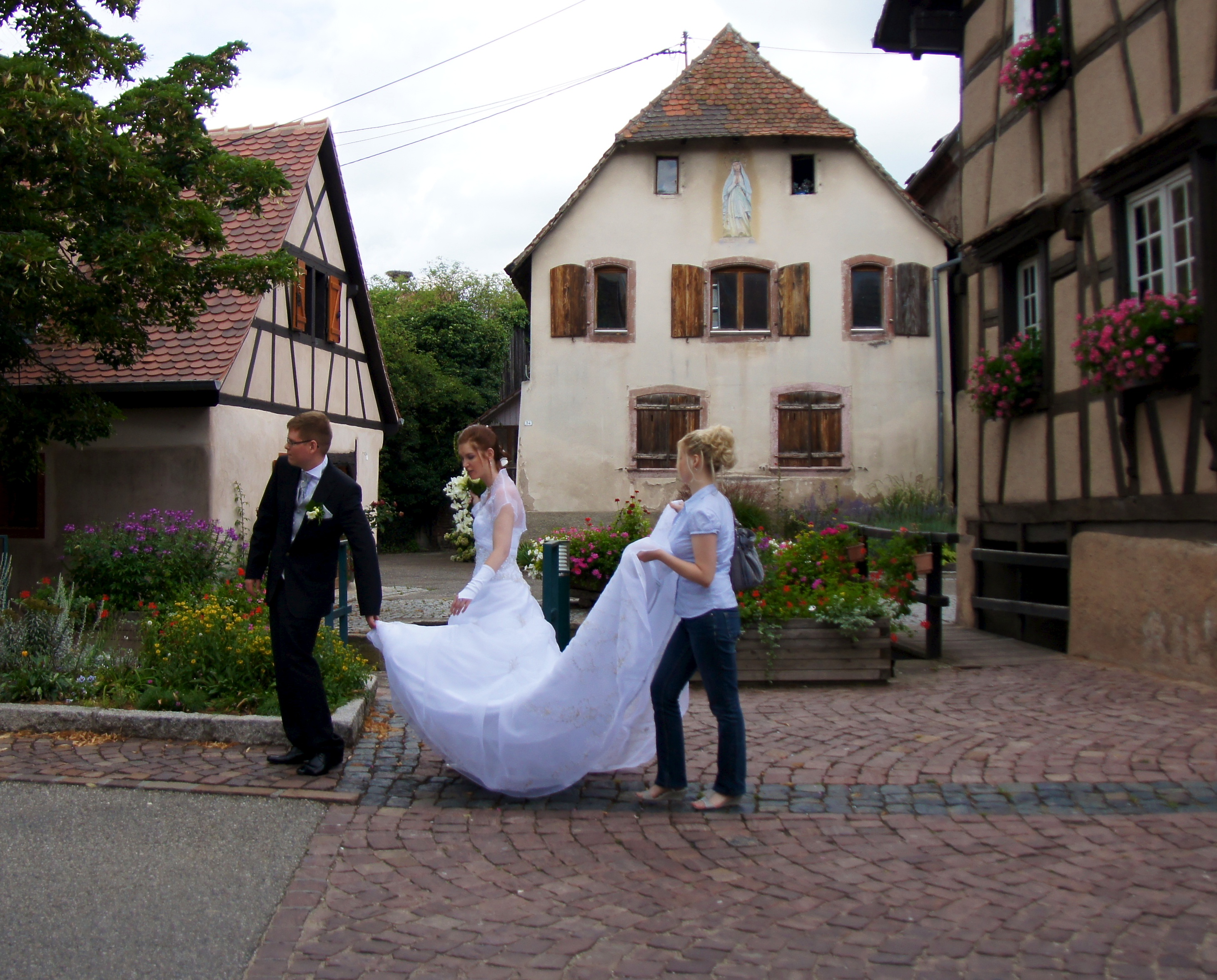
    A sweet little wedding.


    Alsace blog 42


    This was her car….not sure why the photographer had her walking all over the cobblestones!


    Alsace blog 10


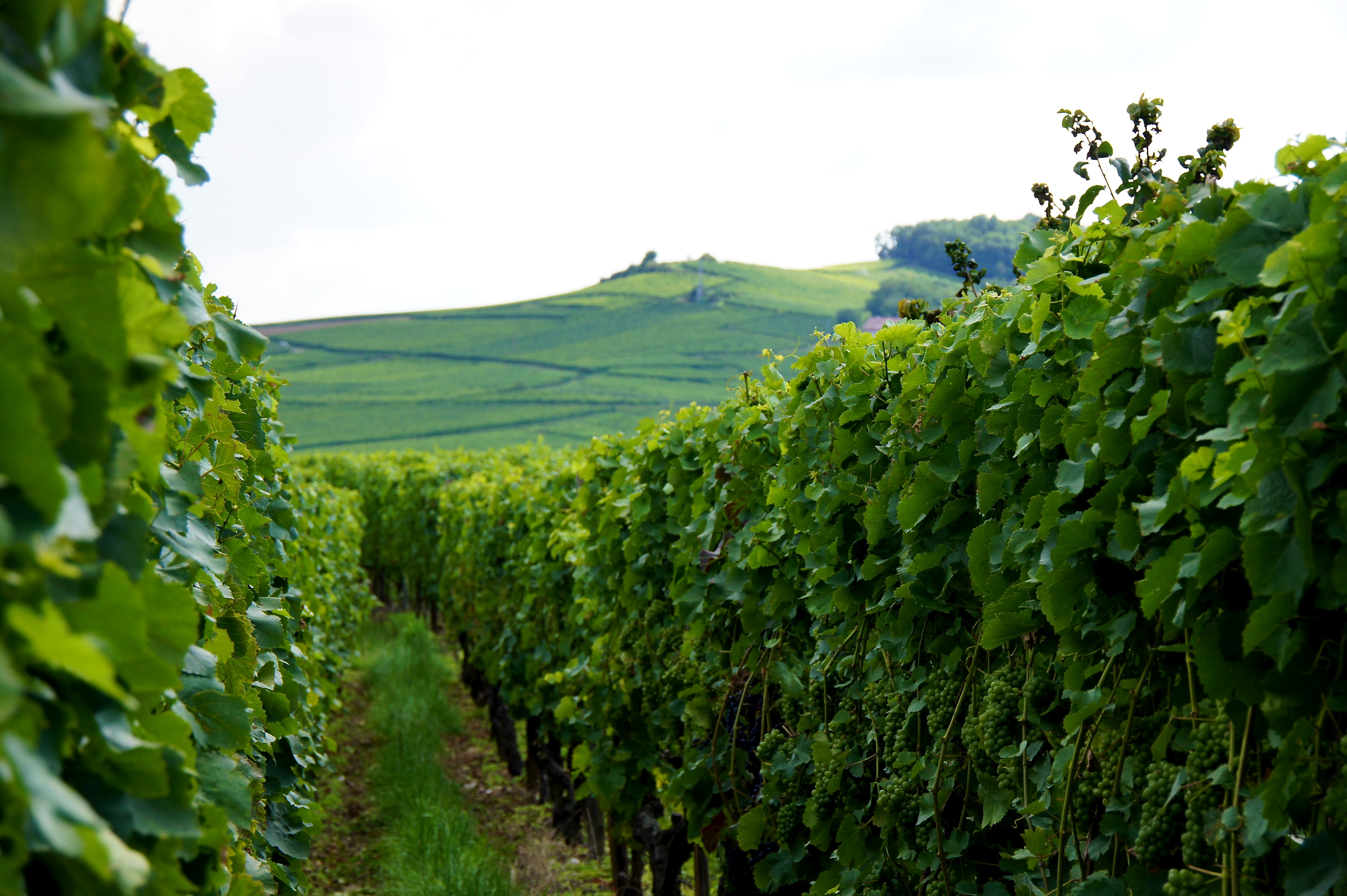
    Alsace is well known for their wines.  Alsatian wines are dry and white, most being rieslings and gewürztraminer.  Before we traveled to this region, we thought the wines were very sweet, but they are not.  We have come to really like them.


    Alsace blog 1

    Alsace blog 45


      Alsace blog 44


    In this region the vineyards are not set up for visiting or tasting, instead each "house" has a store front set up in the village.


    Alsace blog 13

    They are quite beautiful.  Many use restored farmhouses and have restaurants or B&B's attached.


    Alsace blog 40

    Our favorite of this trip was the Beck Hartweg vineyard.  They also had our favorite wine of the trip, Frankstein Grand Cru Gewürztraminer.  There was a lovely sitting area outside.


    Alsace blog 33


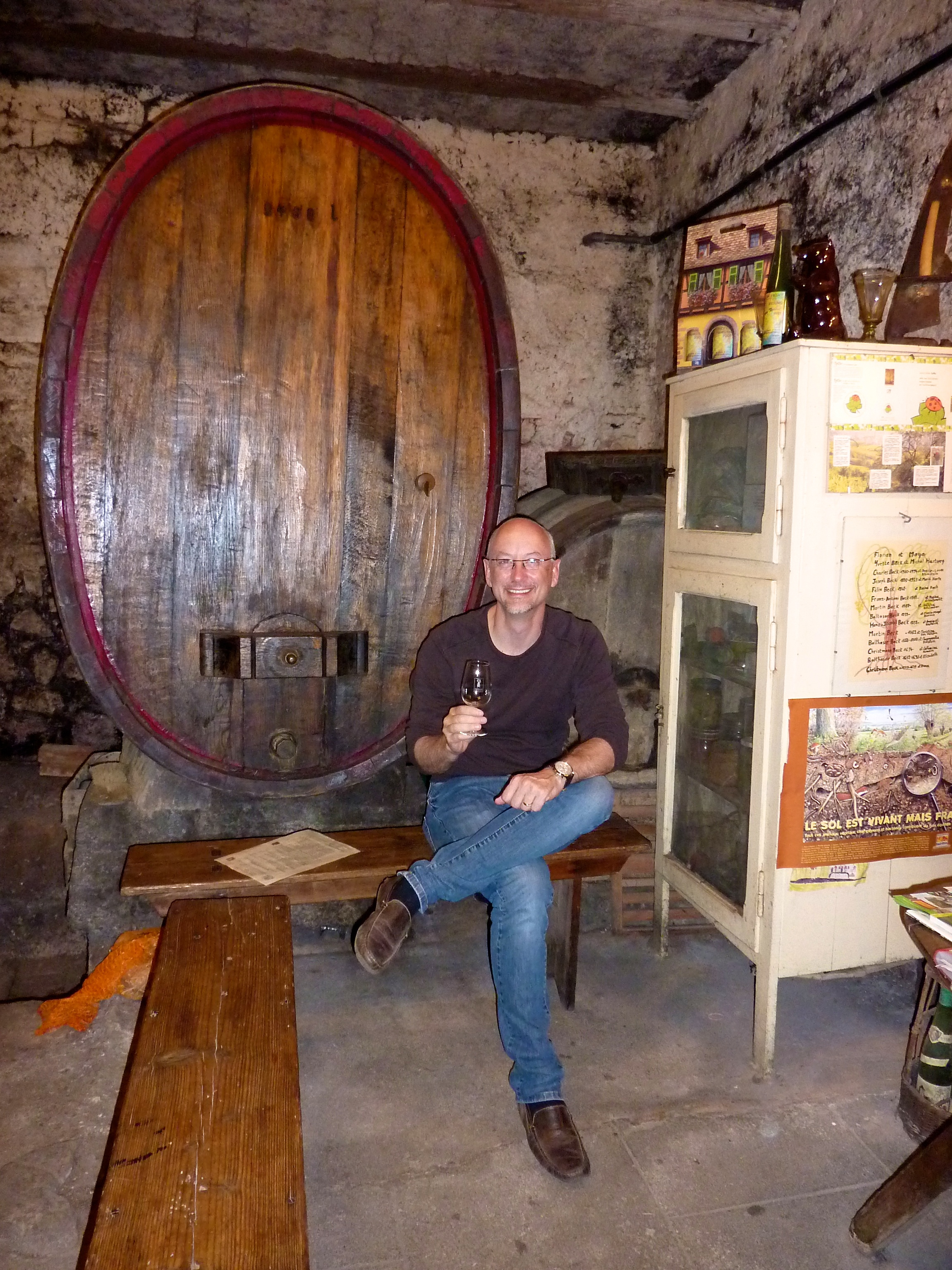
    And a really cool tasting cellar inside.


    Alsace blog 35


    And a very cute guide, Florian, the son of the owner, who told us about the wines we tasted.  He spoke very good English, which was not the case at all the tastings we did.


    Alsace blog 36


    He invited us into the cellar – so small, with only eight tanks.   But his family has been making wines from their vines since 1590!


    Alsace blog 37


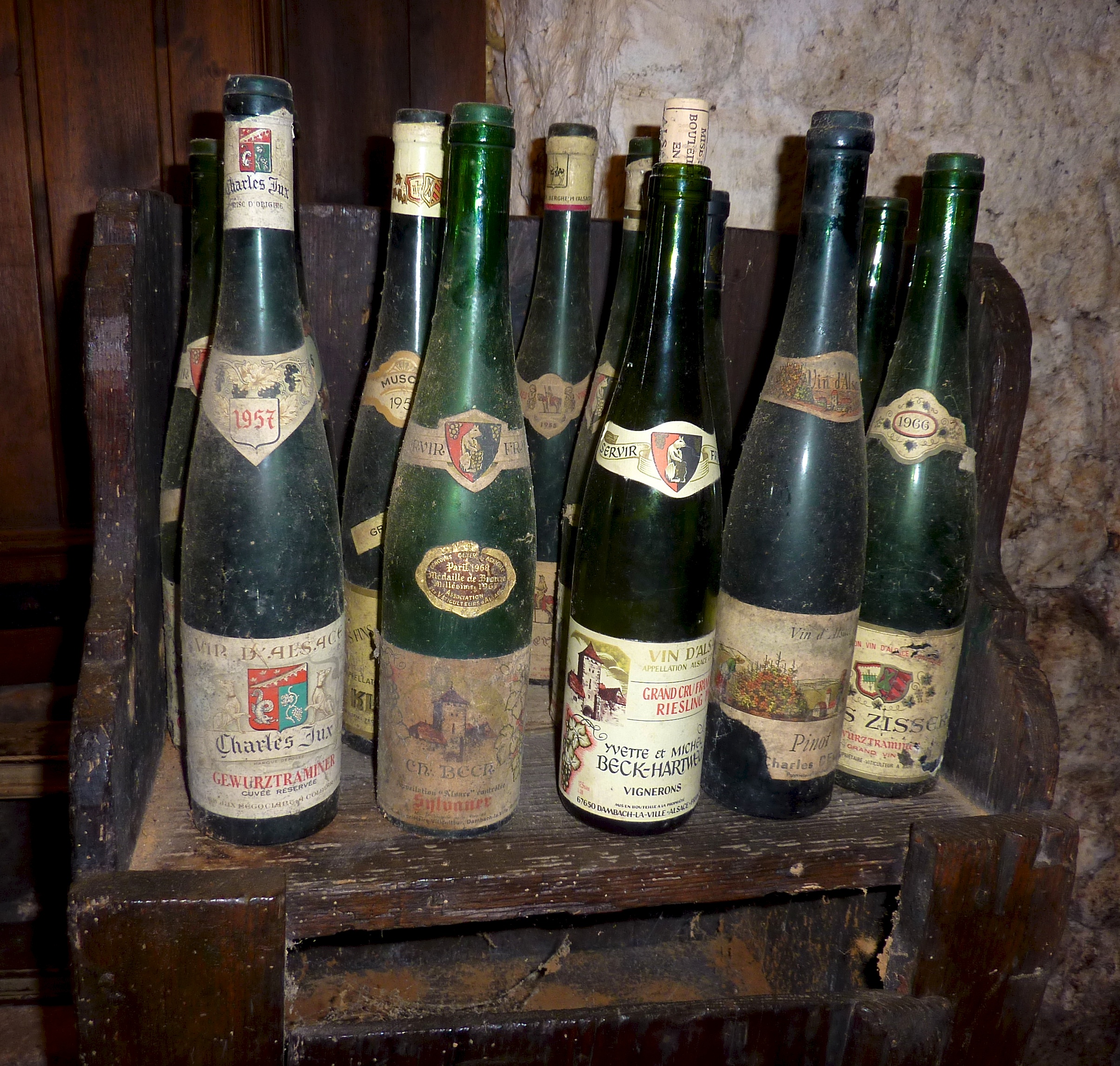
    Don't think anyone will be tasting these!


      Alsace blog 34


     A wonderful birthday weekend I had!

  •  

    Romania – The People


    ROMANIA people 15   

    We had a blast in Romania and it surprised us on so many levels.  It is a country of great natural beauty and is rich in cultural heritage.  Where do I begin our eleven day adventure?  Let me start with the people.  Despite the fact that most did not speak any English; they were very friendly and helpful and went out of their way to make our holiday special.


    ROMANIA people 24

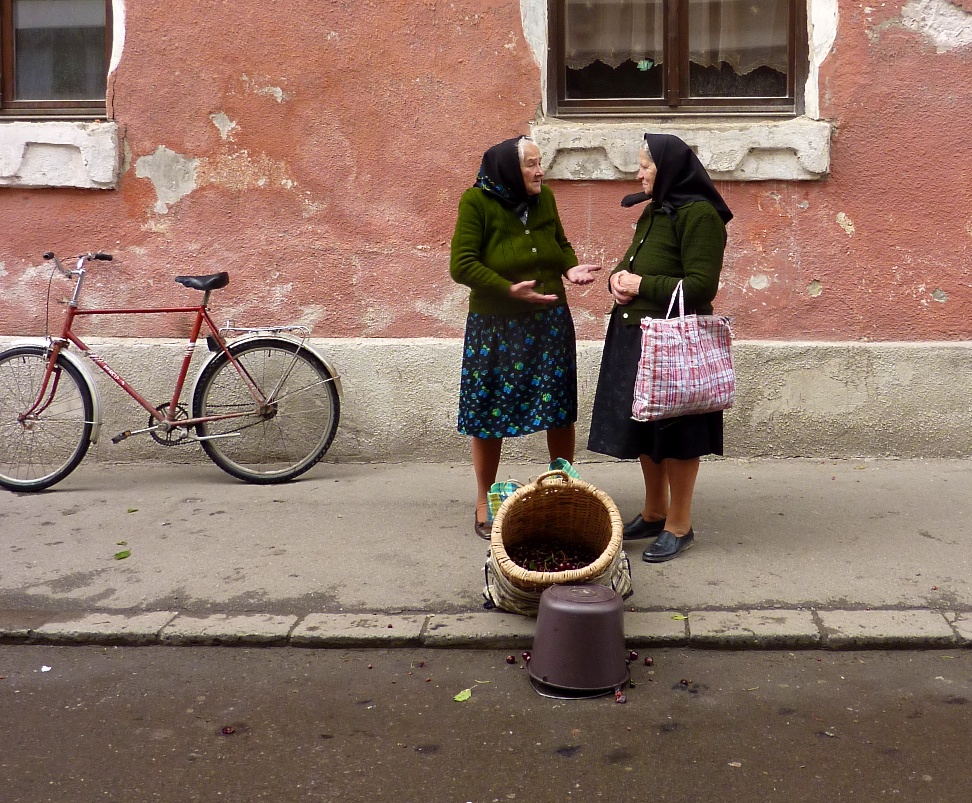
    The women above are wearing the very traditional dress of the region.  A black scarf, a sweater, an a-line skirt (often a flower print), and odd colored tights.   In other regions they wore colored scarves, but pretty much the same outfit.


    ROMANIA people 16

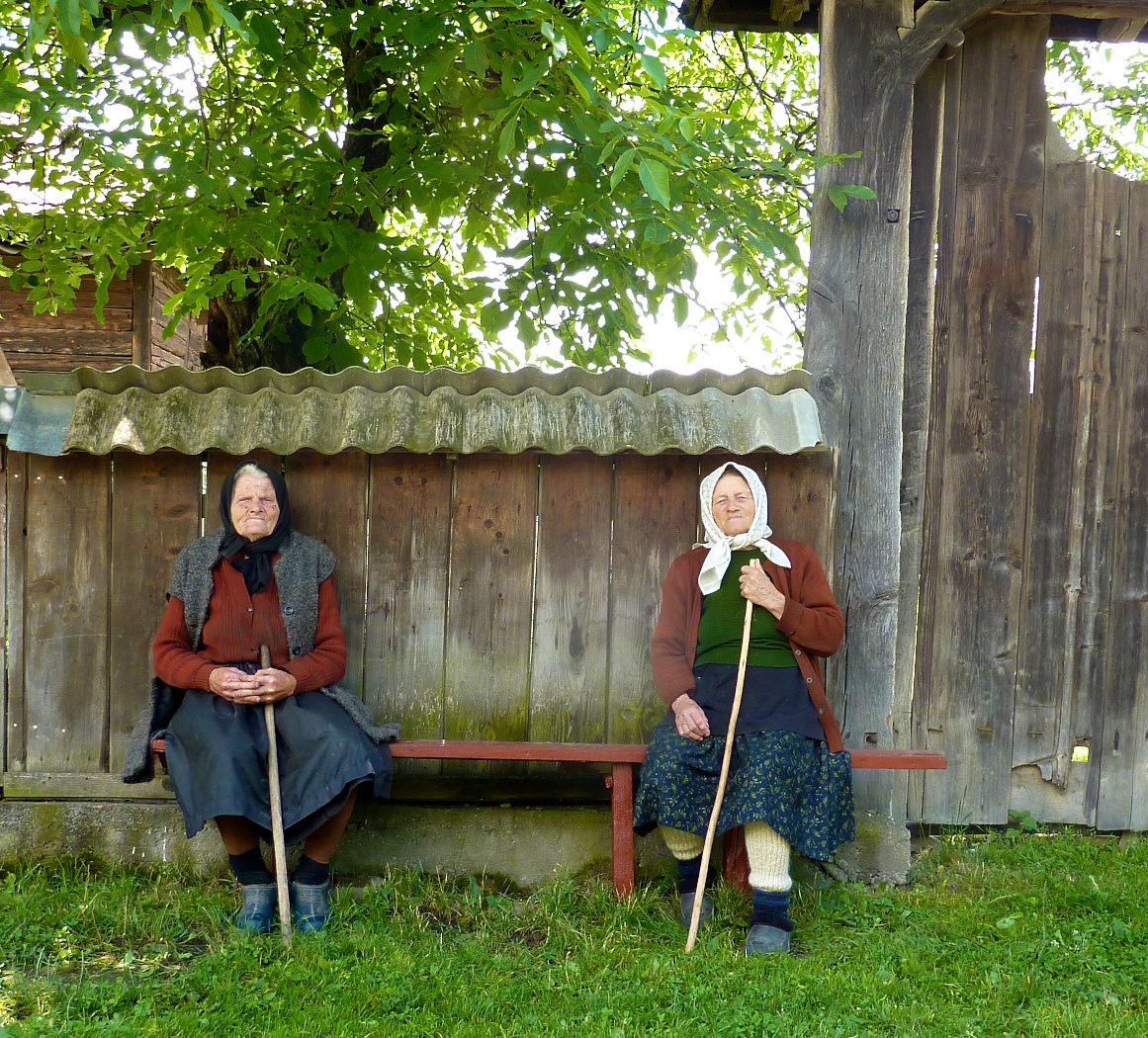
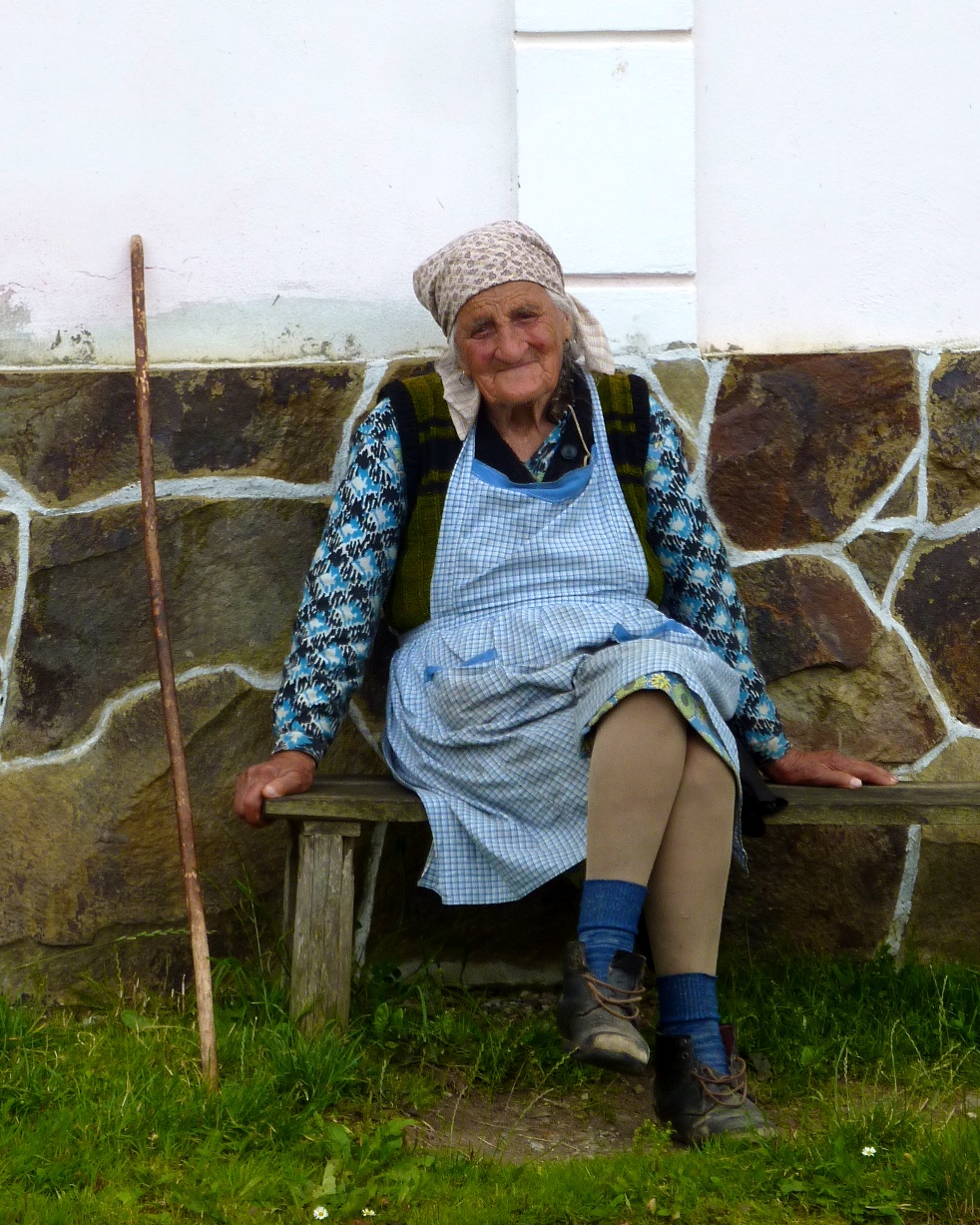
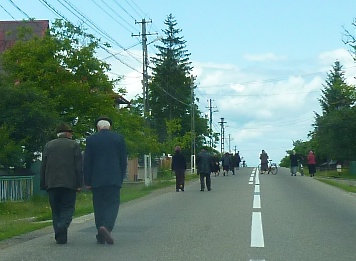
    One thing we found really fascinating was that so many people sat outside of their houses.  We would drive for blocks and EVERY house had people sitting out front.  Notice that it really isn't their front yard, as all of the yards have fences around them.  They sat outside of the fences, on the edge of the street.  We have never seen this before. And boy did they check us out as we drove by!  The group in the photo below are not waiting for a bus, they are just relaxing!


    ROMANIA people 14


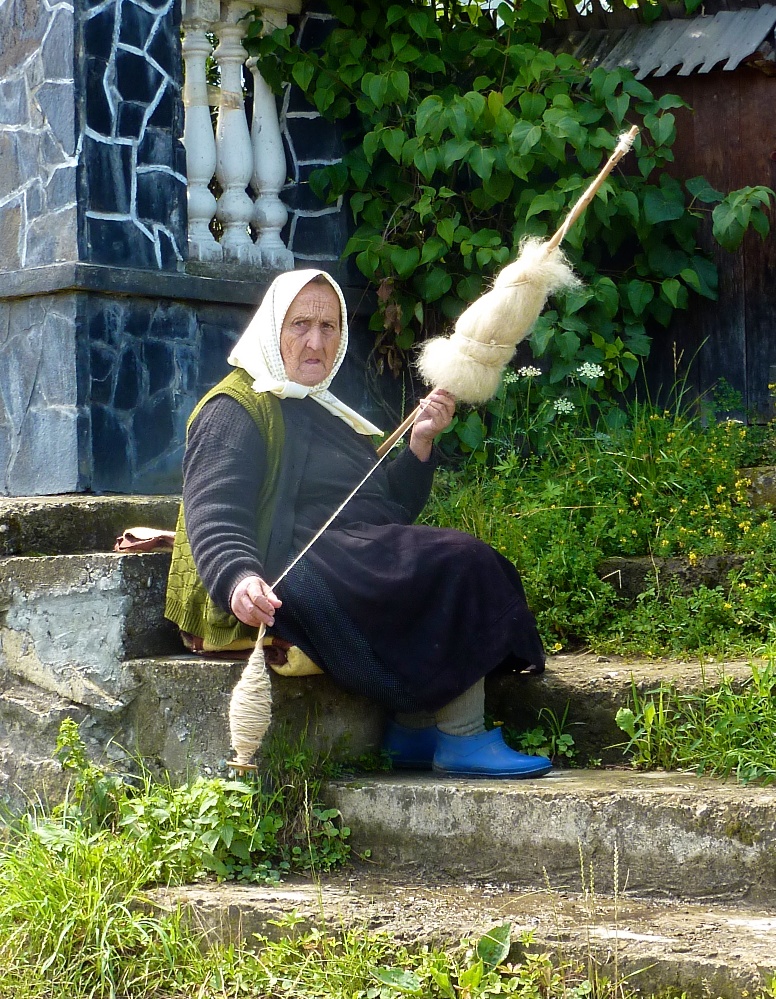
    We saw several women knitting or winding wool onto spindles, like she is doing below.


    ROMANIA people 18


      ROMANIA people 11


    ROMANIA people 19

    We did ask most people if we could take their photo.  We only had one women say no.  They actually seemed to really like it. They were intrigued that Americans came for a visit – not many people tour Romania, let alone Americans. 


    ROMANIA people 10

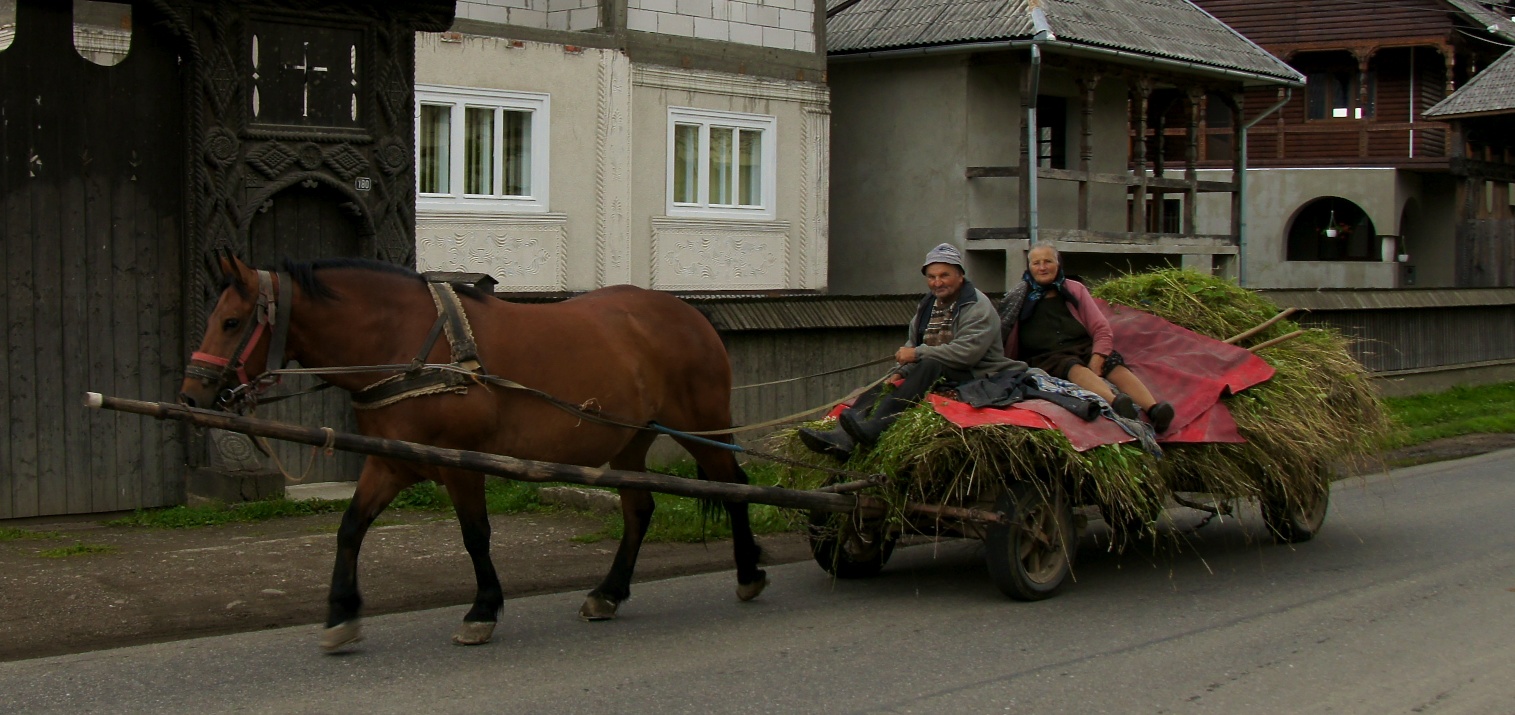
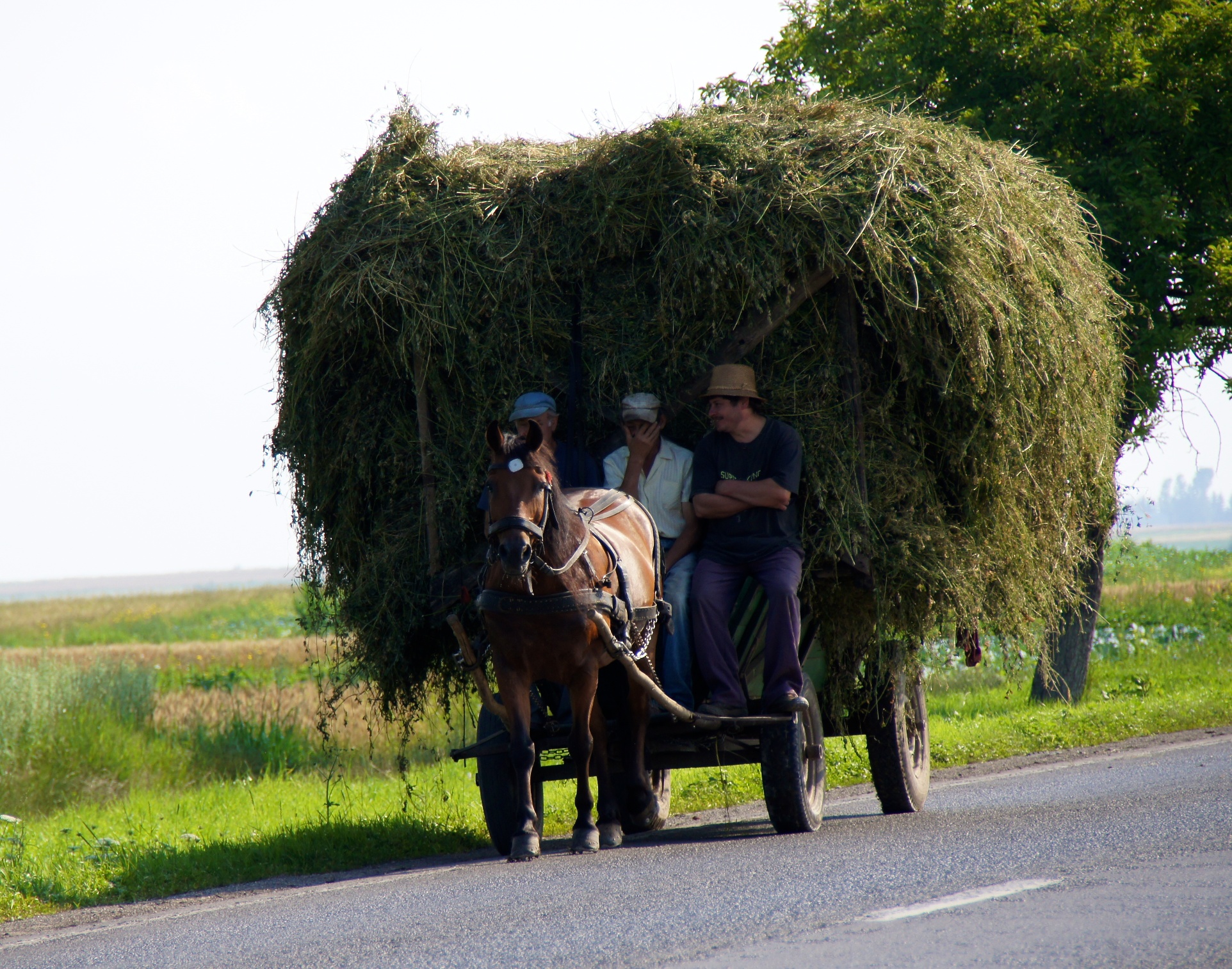
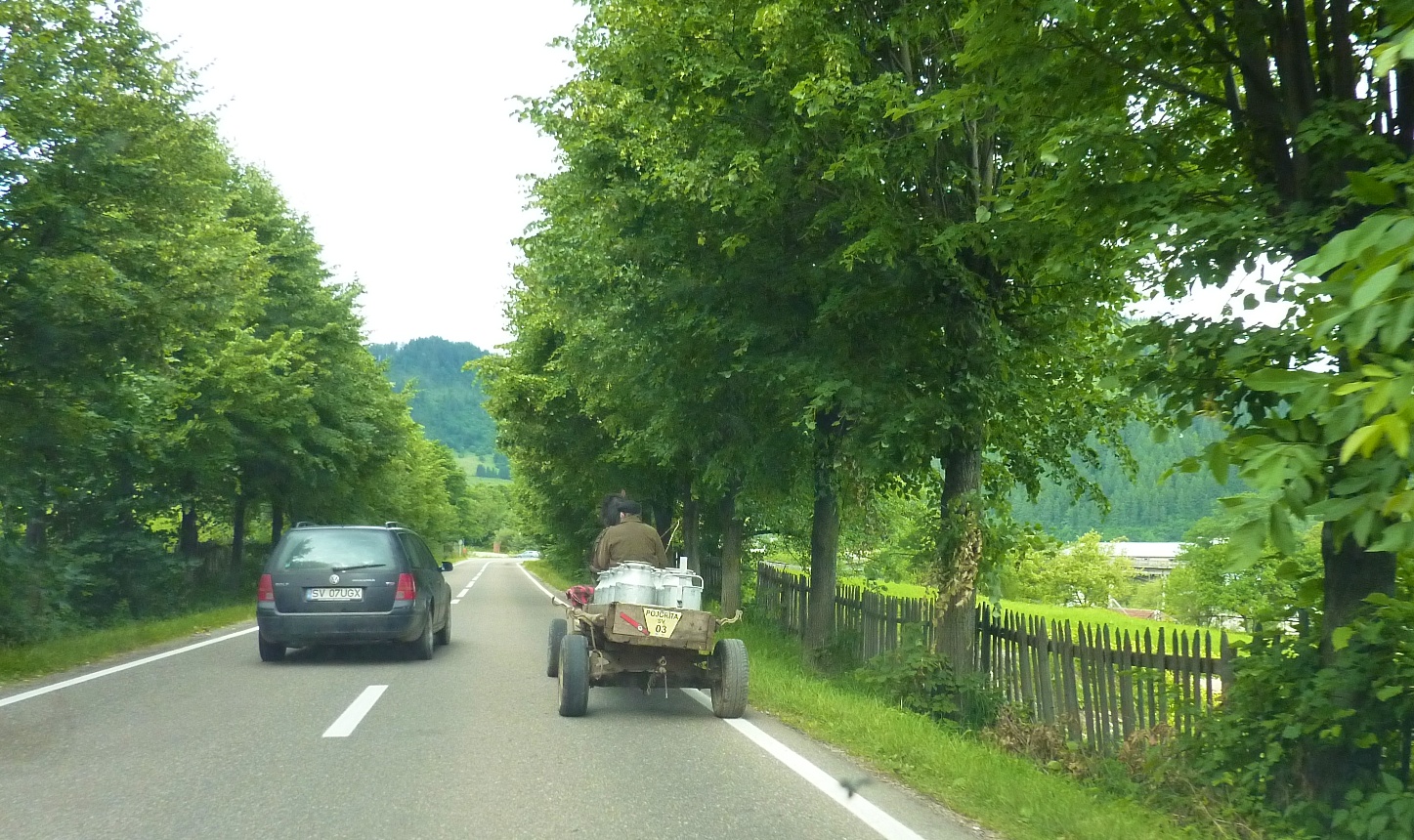
    One we got outside of the main cities, we felt like we dropped into the 1900's.  It was not uncommon to see a horse-drawn wagon carrying a family along with a day's worth of hay.  It was the norm vs. cars.


    ROMANIA people


    ROMANIA people 6


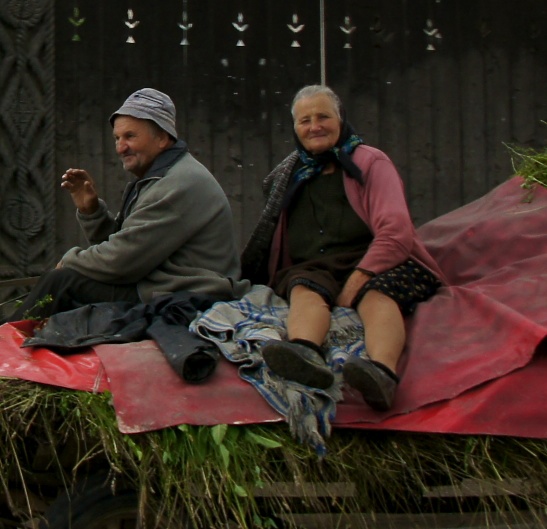
    This group of men are looking very serious but as they went by, they all waved and smiled.  Unfortunately, the waving photo was not clear.  Look at the red tassles on the bridles of the horses.  Most of the horses in Romania had them.  It is said that they wear them to ward off the evil spirits of the vampire.


    ROMANIA people 8 

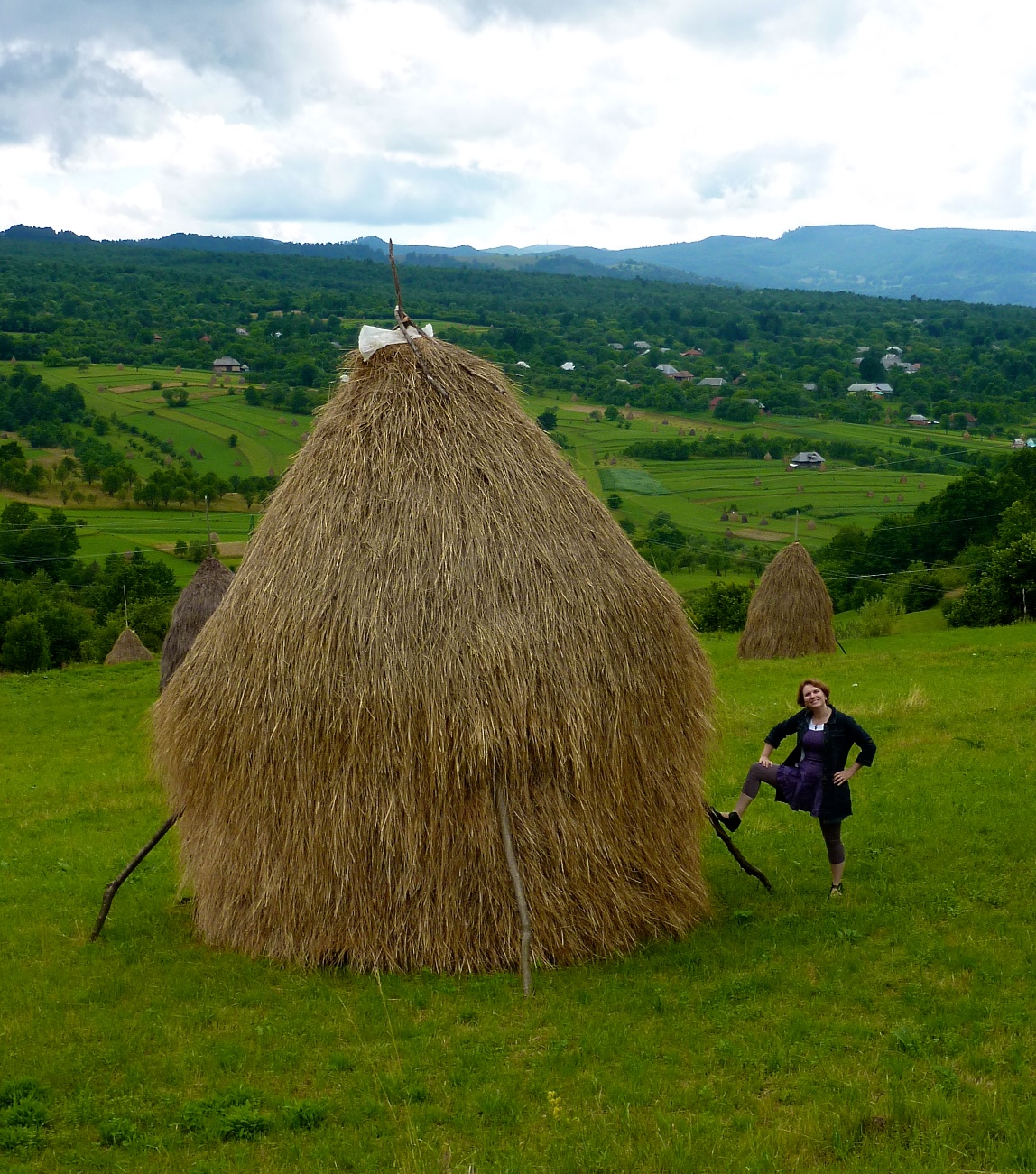
    A common sight – hay stacked high, looking like it would tumble over taking the horse and the men with it.


    ROMANIA people 9
     

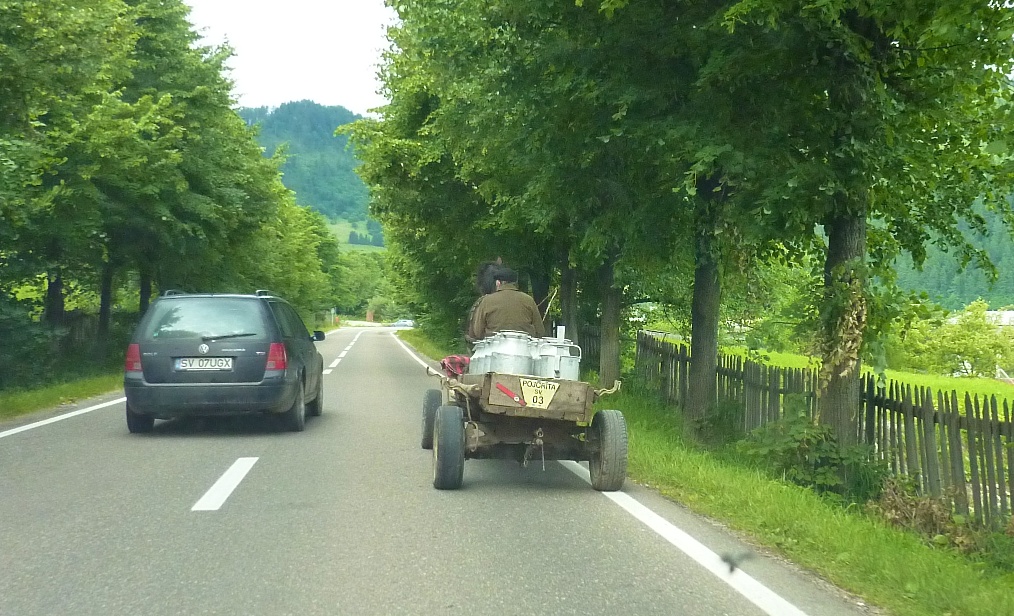
    Romania is a very poor country and many of them do not own cars.  So they walk everywhere.  Many countries we have visited do not have cars….but here it seemed like the streets were always full of people,


    ROMANIA people 3


    horse carts,


    ROMANIA


    chickens….


    ROMANIA houses


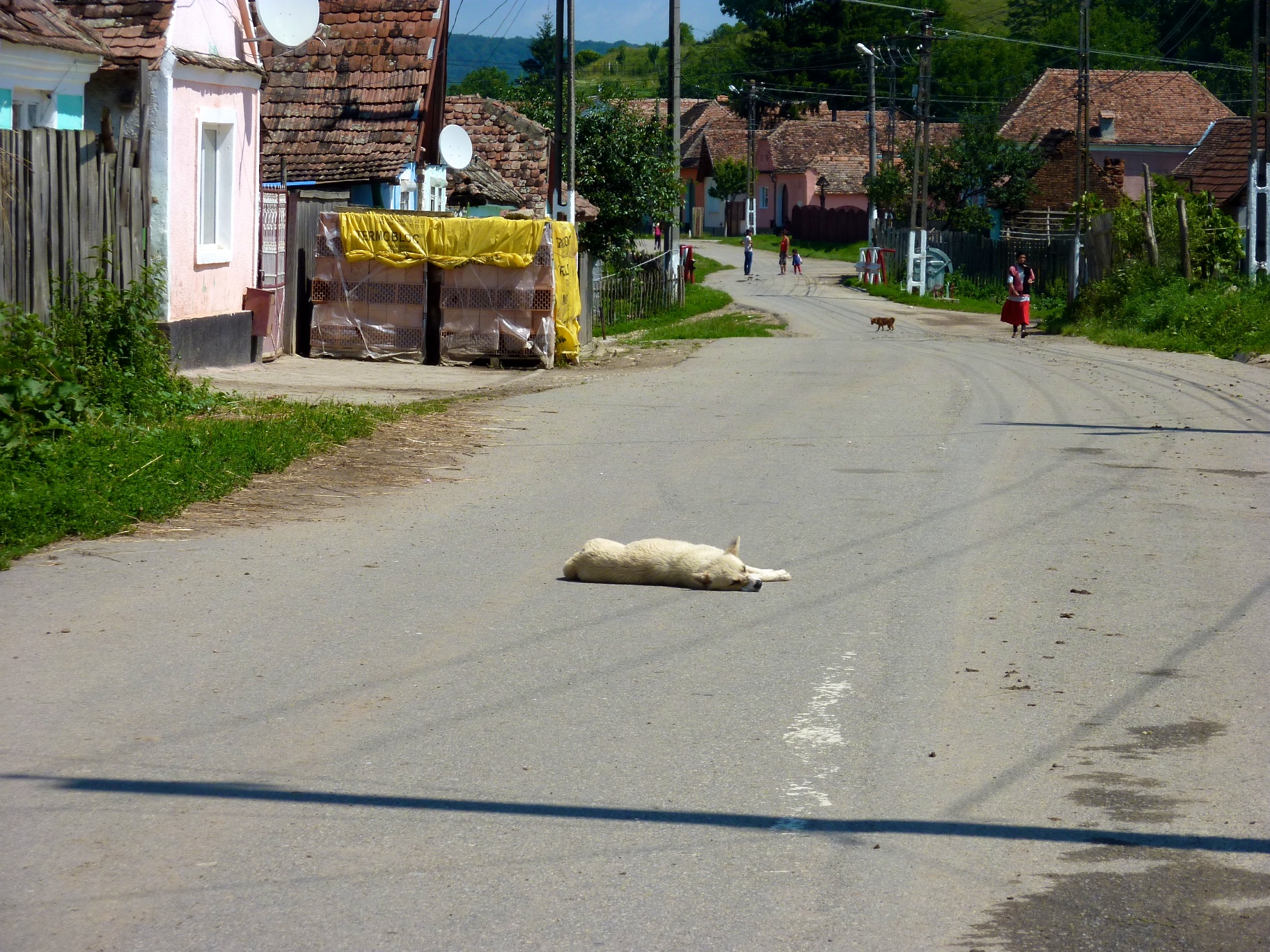
    even dogs!  Yes – he really is sleeping as he picked his head up and peaked at us from one eye as we drove around him…..


      ROMANIA 54

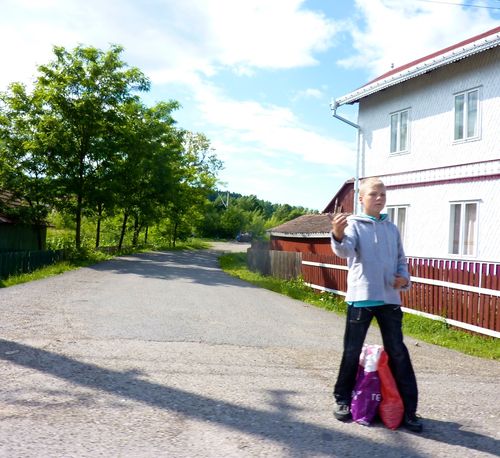
    There were not as many bicycles as you would have thought, but hitchhiking was a common mode of transportation. We saw 8-year olds to 80-year olds hitchhiking.  Again, something we have not seen in such numbers in any other country.


    ROMANIA people 13


    We saw lots of people walking to work with their scythe.  Most of them older people whom we thought would have been retired.


    ROMANIA people 31

    Again, notice the traditional women's dress.  She also has the patterned bag they all carried as well as the colored tights.


    ROMANIA people 21


    ROMANIA people 22


    We flew into Bacau, Romania via Blue Air (don't ask!)!!  Bacau was the smallest airport we have ever flown to.  Our flight over was jammed packed with so many babies and children.  Even the flight attendants commented on the number of infants.  Lets just say we were glad it was only a two and a half hour flight.  


    ROMANIA 46

    I had a 21-year-old girl next to me on the flight who spoke decent English.  She was very excited that we were visiting her country and was thrilled to see there was actually a tour book about it.  She told me Romanians think Americans have refrigerators full of fast food.  Well, maybe that's true. 


    ROMANIA 41

    We stayed in a hotel near the airport as we landed at 11 pm.  The next morning they delivered our rental car to our Hotel.  We drove to Bucovina, where we stayed for two nights.  Below is a view from the bedroom of our B&B. The countryside was green and lush with little villages tucked in the hillside.


    ROMANIA 19


    The Monasteries of Bocavina


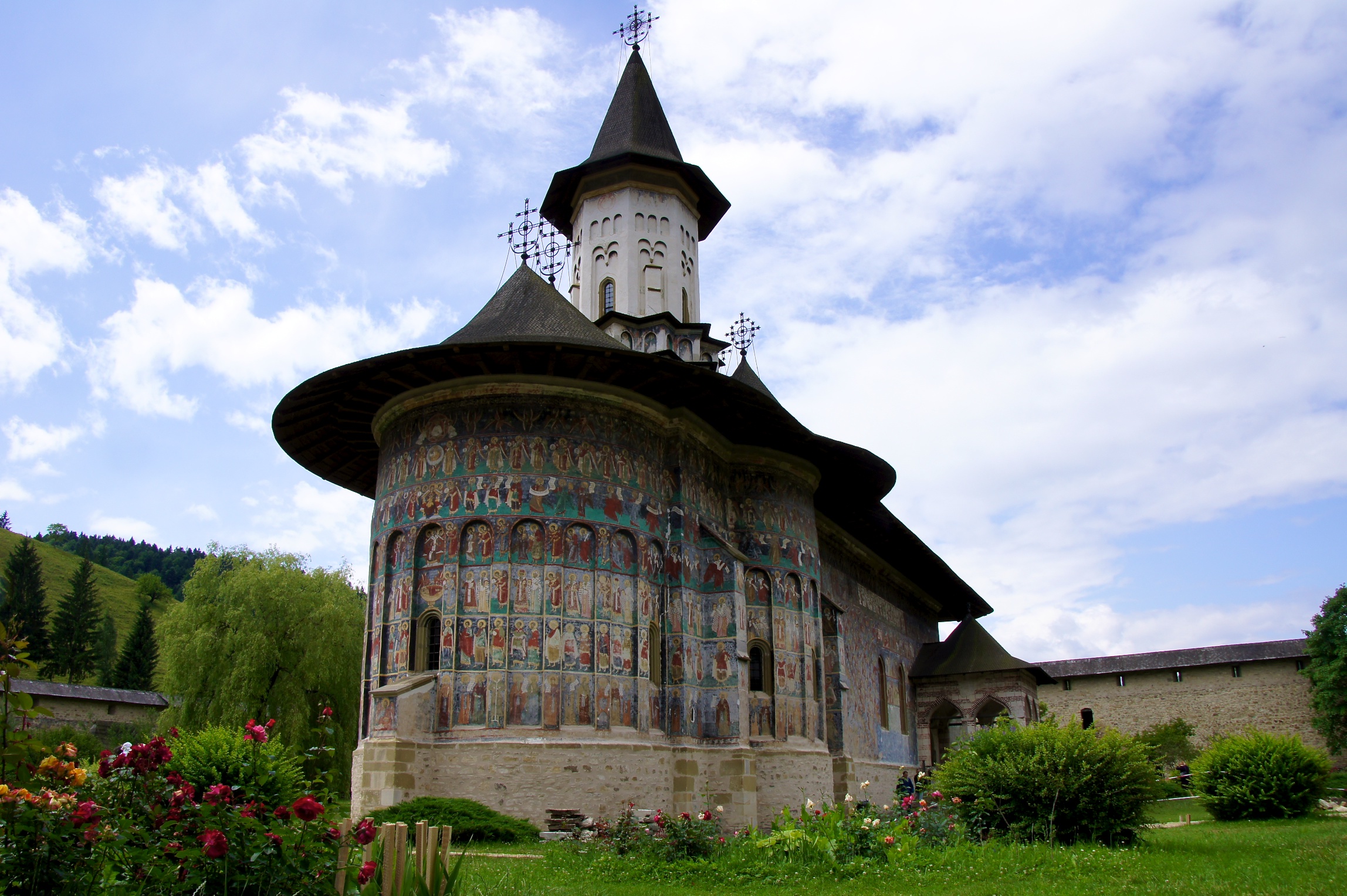
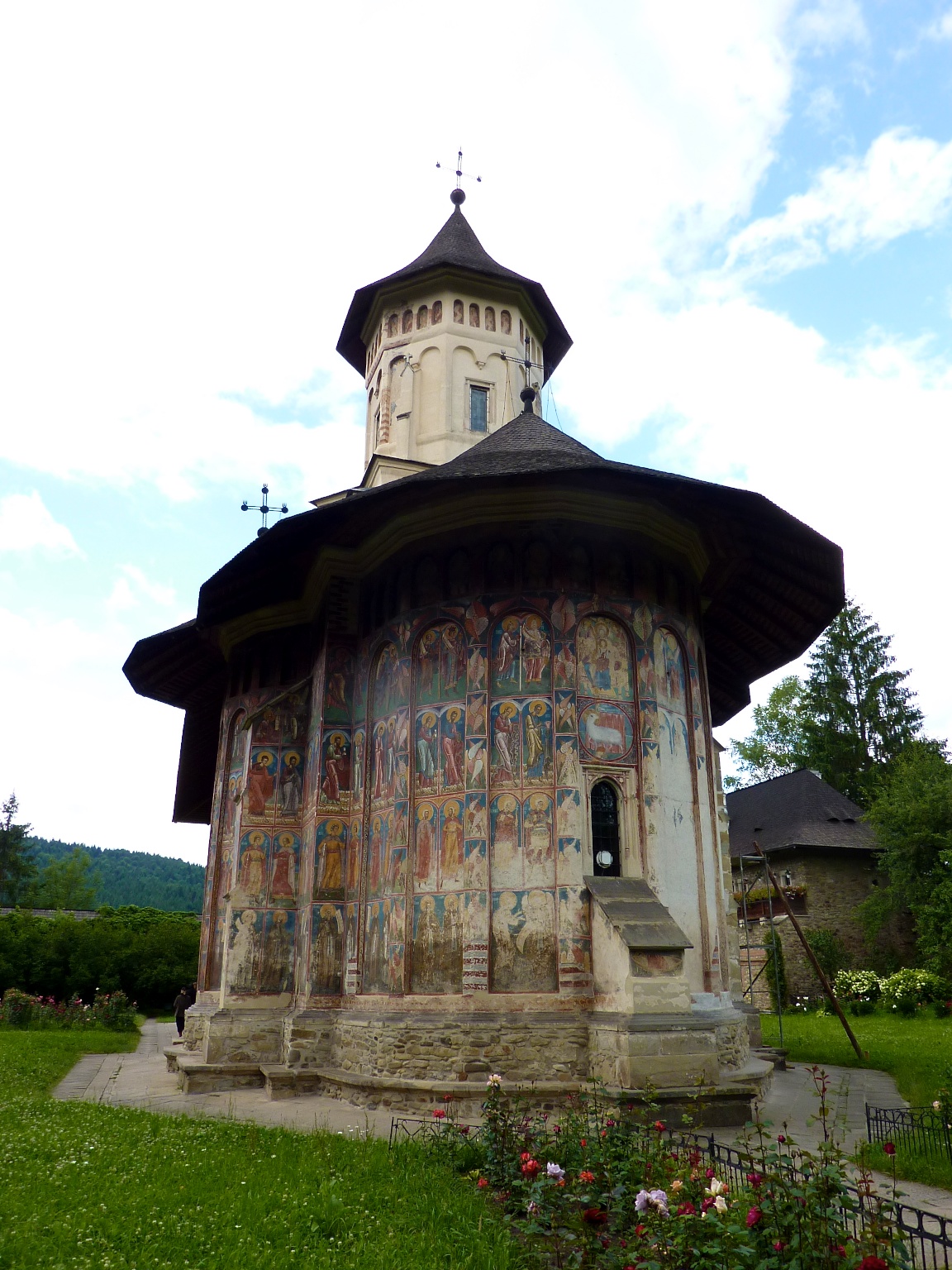
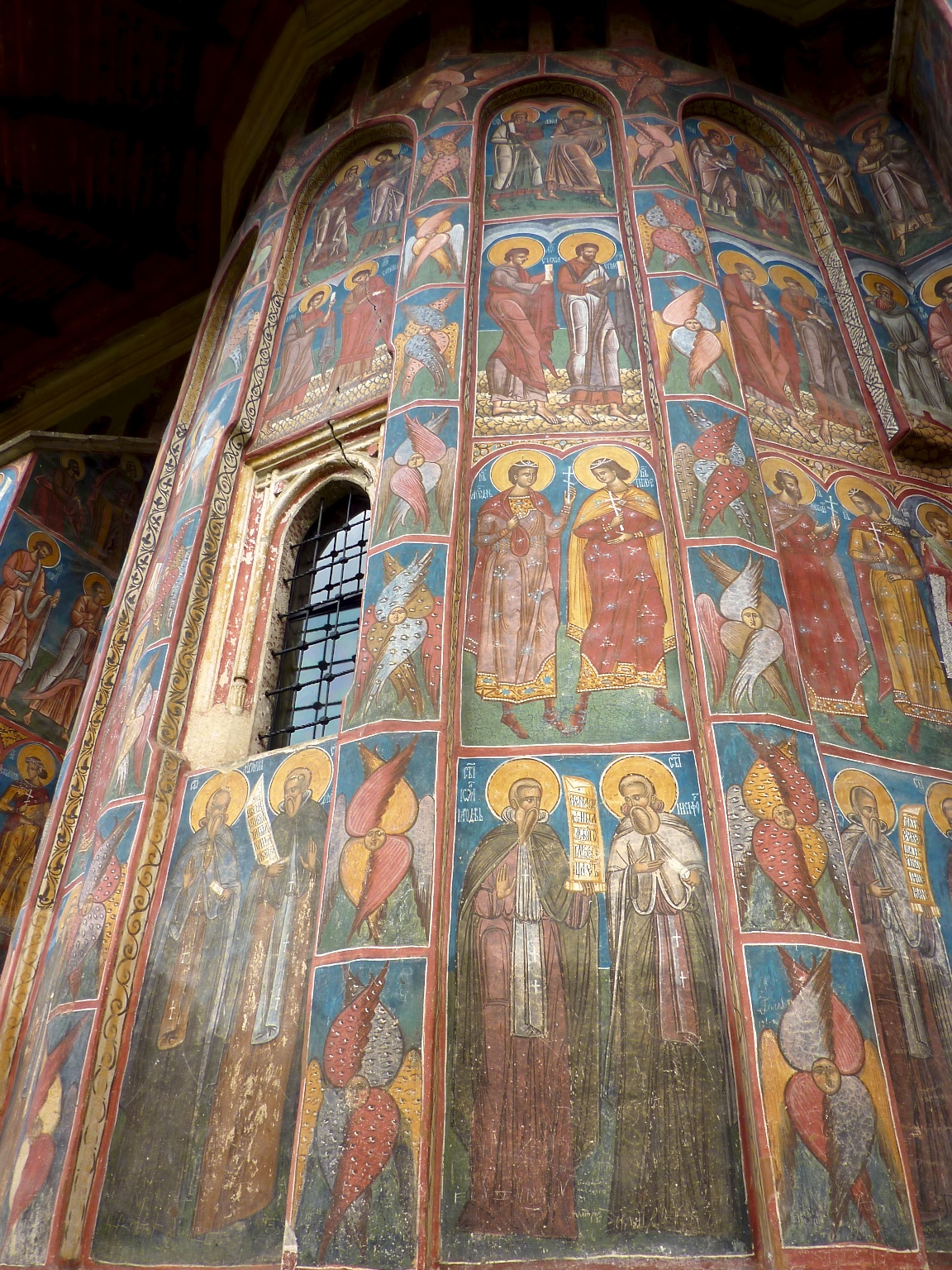
    We selected the Bucovina area for their impressive painted monasteries dating back to medieval times, most of which were added to UNESCO’s World Cultural Heritage List in 1993. There is no other place in the world where a group of churches exist with such elaborate, colorful, and well-preserved exterior frescoes.  The churches were originally built as family burial places of princes and high nobles. 


    Voronet Monastery


    ROMANIA 3


    Voronet Monastery was built in 1488 by Stephen the Great, a very prominent figure in Romanian history – he was the Prince of Moldavia and a great military leader.  In 1547 the exterior paintings were created. 


    ROMANIA 2


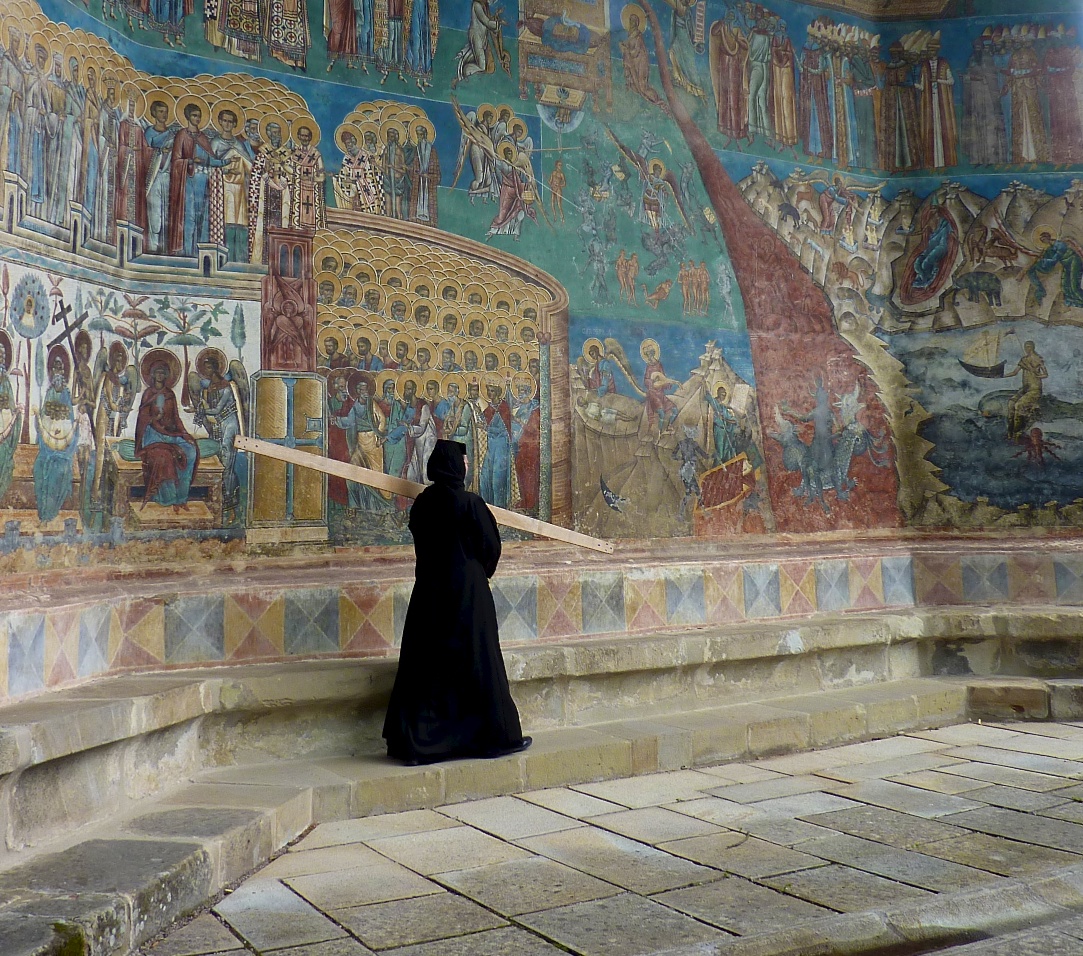
    Monastic life at Voronet was interrupted in 1785 due to Hapsburg Empire rein and it did not become a working monastery again until 1991.  The nun below is tapping out a call to prayer.  She walked around the church carrying a long beam (called a toaca or a chop) and stopped every few feet to tap on it with a mallet.  


    ROMANIA 5


    ROMANIA people (1)

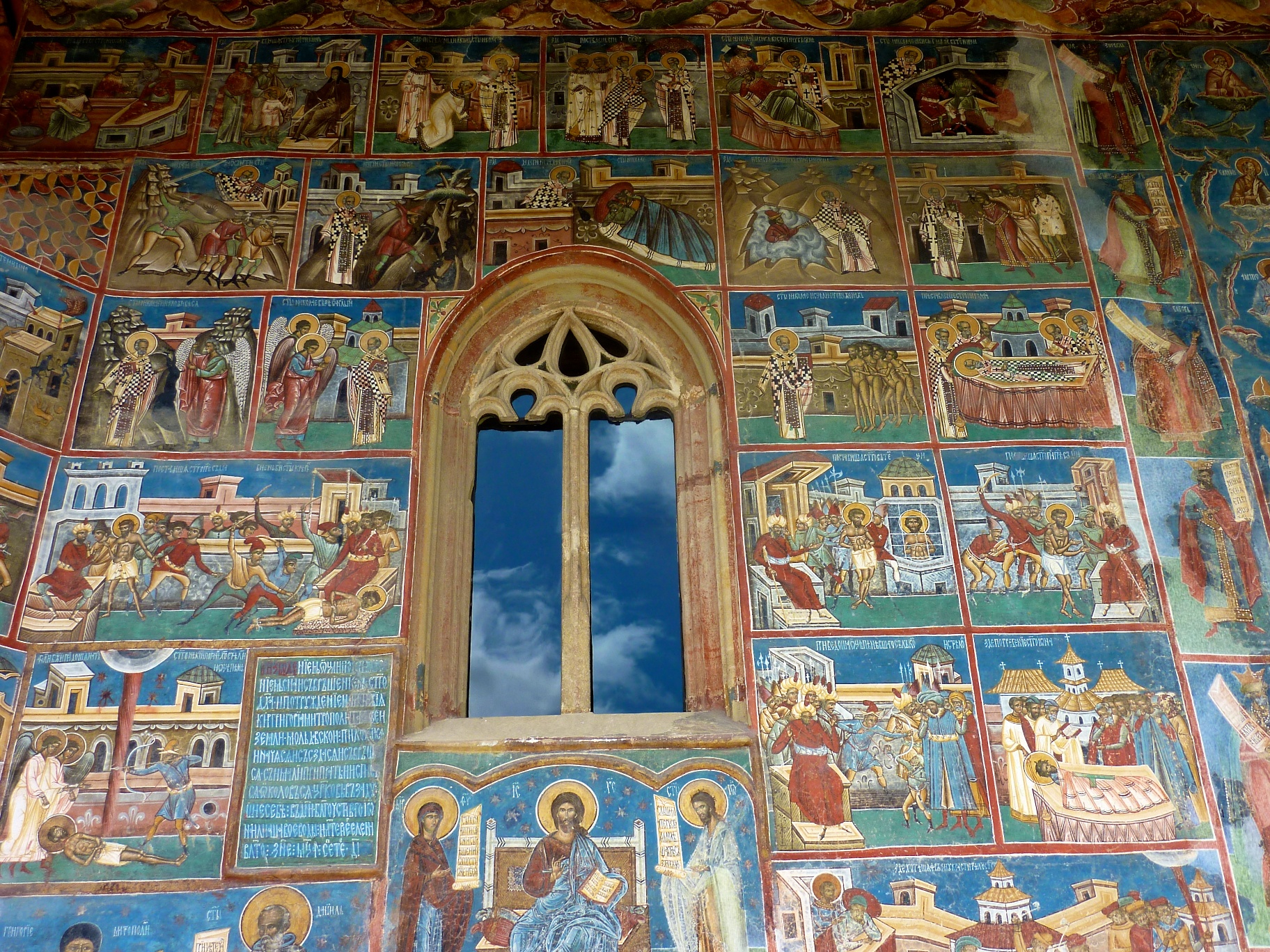
    Voronet is considered by many to be the "Sistine Chapel of the East", due to the magnificent frescoes on the west wall.  This is where "Voronet Blue" got its name, from the intense shade of blue, which has never faded.


      ROMANIA 4


    Humor Monastery


    Humor monastery was built in 1530 and is the smallest painted monastery, but was one of the first to be painted with frescoes.  


    ROMANIA people (1)


    Humor is mainly painted in reddish brown (from oriental pigment), complemented with rich blues and greens.   Petru Rares, the prince who had Humor built is buried in the church with his wife, Anastasia.


      ROMANIA people (2)

    ROMANIA people (3)


    Sucevita Monastery


    Sucevita was the last built and is said to be the greatest among the painted monasteries.  It certainly was our favorite.  


    ROMANIA 8

    It was erected in 1581 and the frescoes were painted in 1595. 


       ROMANIA 10

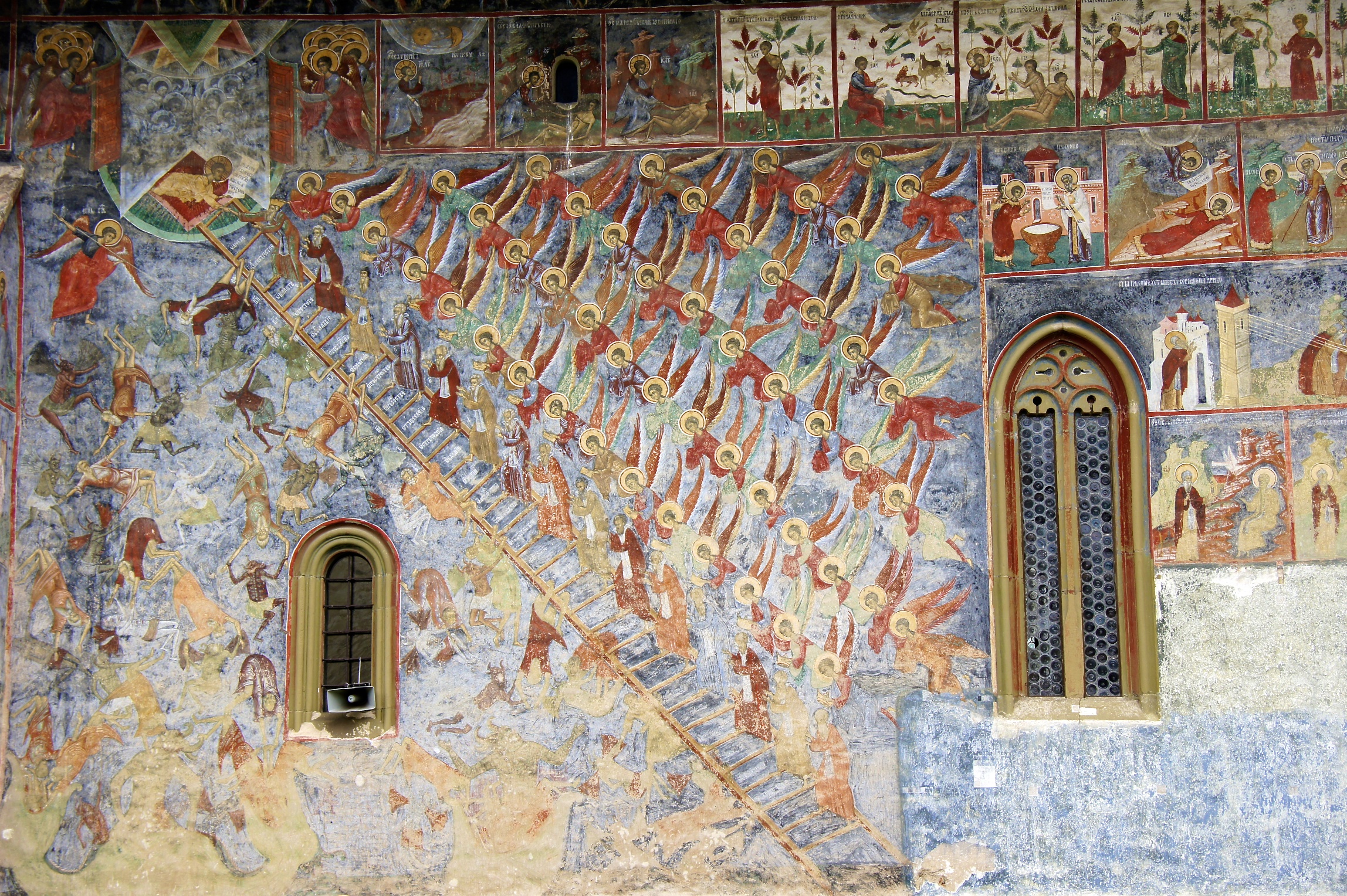
    The most outstanding paintings are the Ladder of Virtue, showing the angels who assist the "good" into Paradise, while sinners are punished by a demon.  It was never finished because the artist fell down from the scaffolding and died.  Yipes!


      ROMANIA 9


    It appeared to be a lively and thriving monastery.


    ROMANIA 11


    ROMANIA 12


    Moldovita Monastery


    ROMANIA people (3)


    Prince Petru built the Moldovita Monastery in 1512.  The frescoes were not painted until 1537.  It has the appearance of a fortress, with imposing towers and high, thick walls.


      ROMANIA people (4)


    The interior and exterior walls have scenes from 16th century Moldavian daily life.  There was a church service going on while we were there so it was a very unique experience. 


       ROMANIA moldovita


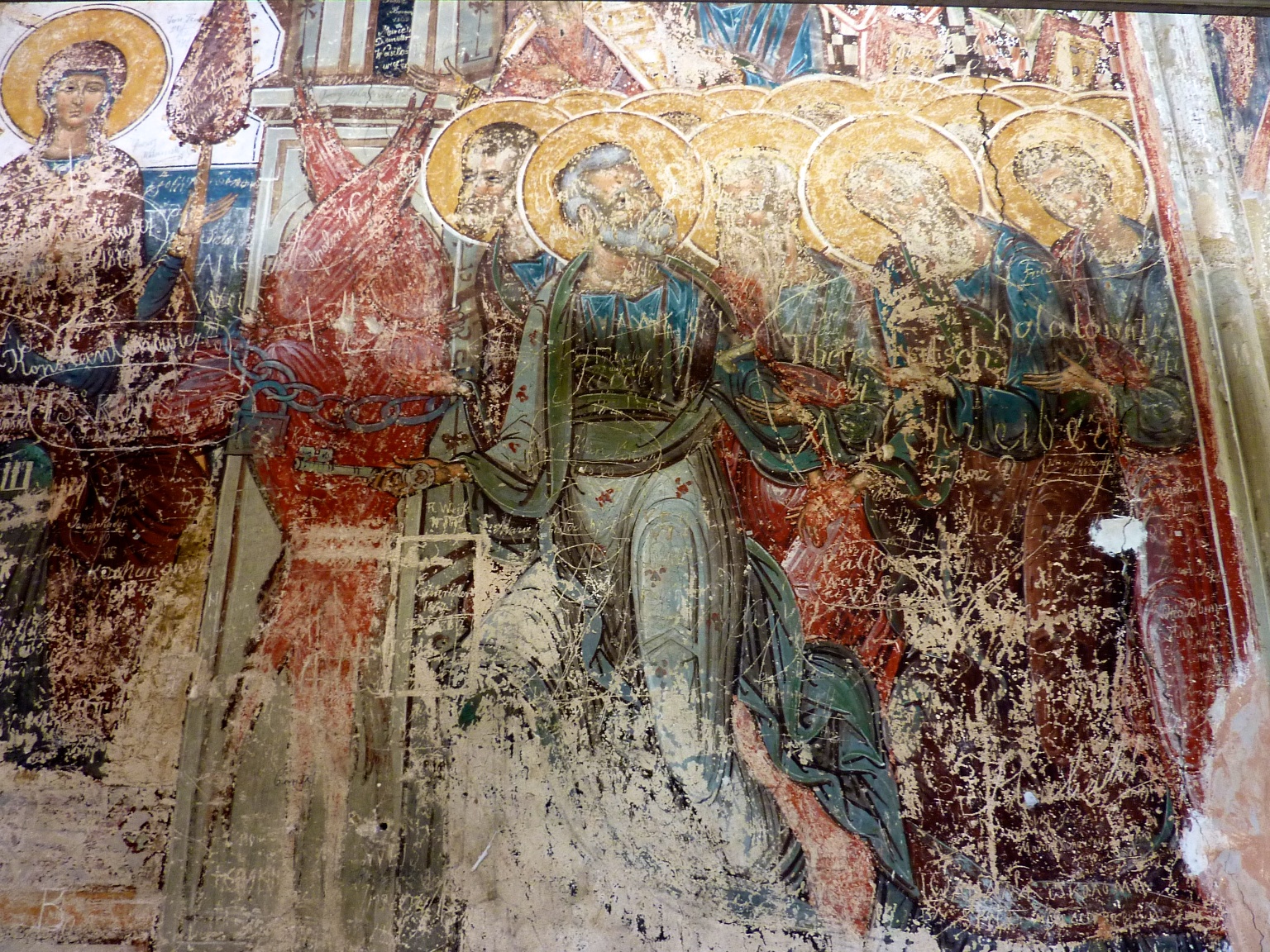
    Many of the paintings are damaged with graffiti-names and scratches.  Sad.


    ROMANIA moldovita (1)


    Putna Monastery


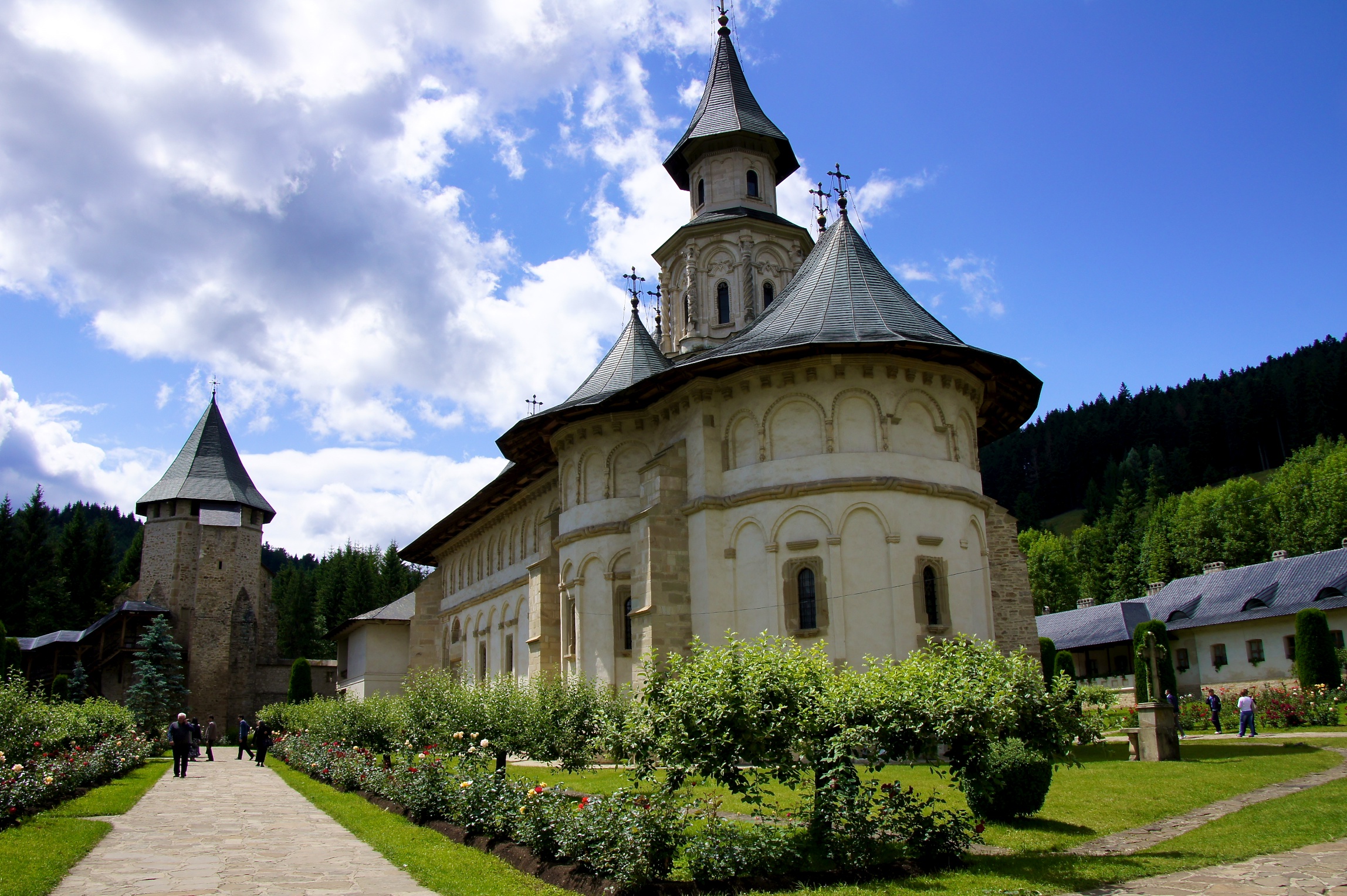
    The first building was built in 1449, but was badly damaged in a fire 1484.  The present building is from the 17th century.  Putna was the first monastery built by Stephen the Great.  He wanted it to be his burial place and he is buried here, along with his two wives and sons.


    ROMANIA 13


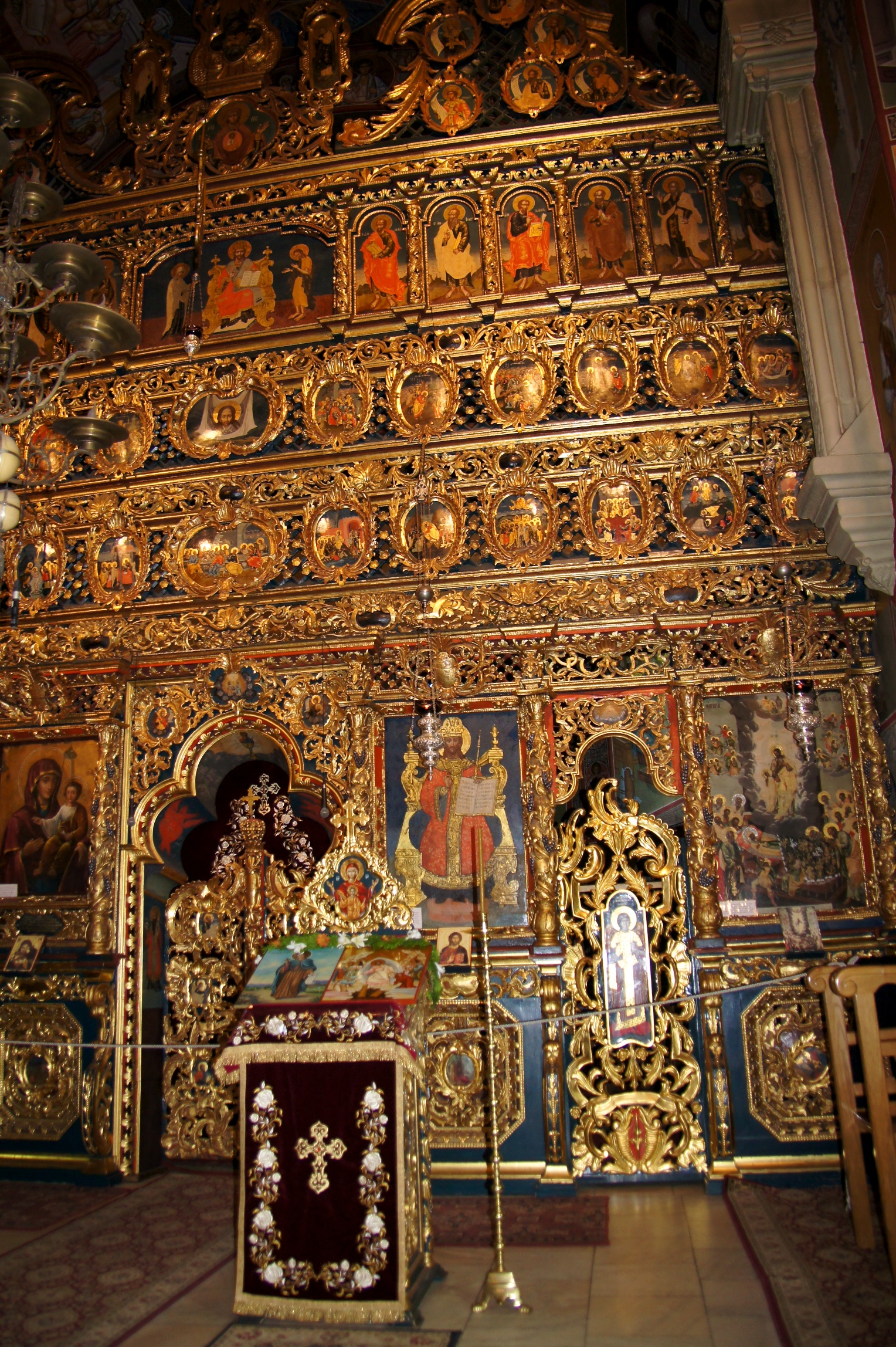
    This was one of the only painted monasteries where we could photograph the inside.  It was very representative of what they all looked like. Very ornate alters where people stood in line to kiss a book of a photo of Christ.


    ROMANIA 15

    The frescoes inside were quite beautiful and so colorful, protected all those years by the darkness of the church.


    ROMANIA 14


    This was an odd scene – maybe the "priest" was sick?  He was out in the middle of the monastery courtyard.


    ROMANIA people 12

    Most evenings we would eat at the B&B's.  At the first one, the owner arranged for a local band to come out and play music on the porch.  It was very entertaining. 


    ROMANIA 23


    I don't think we could go as far as to say they were good – just fun and a view into their culture.  This one was quite the flirt, he even kissed my hand!


    ROMANIA 22

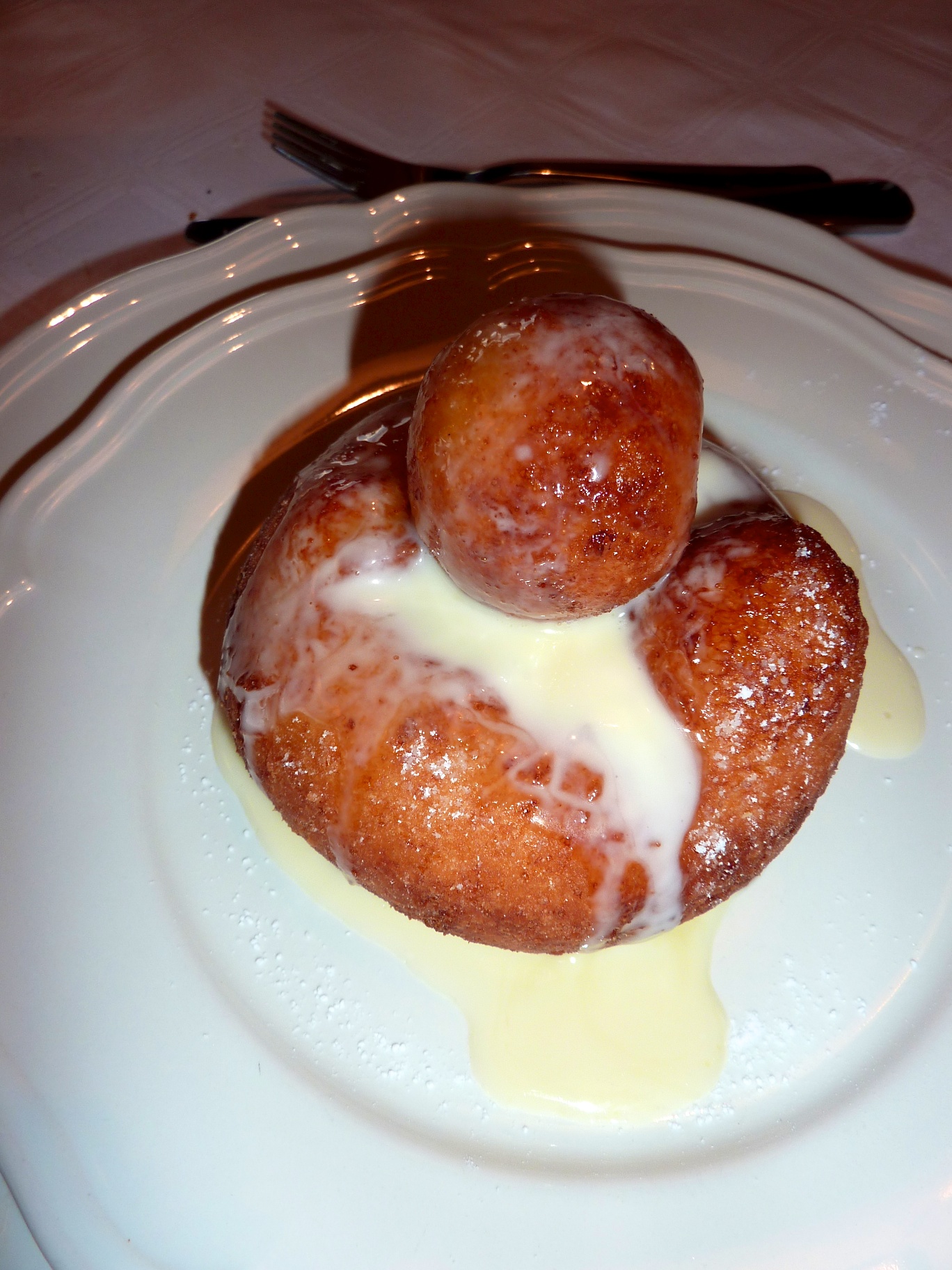
    This is where we had our favorite dessert of the trip (papanasi cu branza), a fried doughnut-like pastry filled with tiny strawberries (which were in season), then covered in cream.  Yummmmm.


    ROMANIA 24

    Our next stop was in the Maramures region – very close to the borders of Ukraine and Hungary.  This is the area where we really felt like we dropped back in time.  Driving through the mountains we stopped and bought honey.


    ROMANIA 26


    They are very well known for their honey and colorful bee boxes along the roads.  It is delicious and I wished I bought more!


    ROMANIA 27

    Donald has a thing about bridges, when he sees one he wants to explore it.


    ROMANIA 6

    And this was one rickety old bridge!  The little ladies in the neighborhood came out to see what was going on – so there I am waving so they know we are friendly as Donald risks his life to cross the bridge.  Well, maybe that is a bit over exaggerated  :  )


    ROMANIA 7


    We ate lunch at a little restaurant where we discovered that Pizza in Romania was just cheese and the toppings and you squeezed the sauce from a container.  At first I just thought the waitress brought us ketchup, but it definitely was pizza sauce.


    ROMANIA 28


    And for dessert a traditional apple fried tart 1.5 lei =  51 cents.  Romania was very cheap.  It was 1/3 the price of the US dollar – and most times items were inexpensive to begin with.


    ROMANIA 29


    We had a unique experience finding our B&B.  In fact it took us three tries to find it.  Why?  There were three B&B's with the exact same name.  D entered one into the GPS – nope wrong one.  Well good thing I wrote the address down…. nope wrong one too.  Thanks goodness for D's blackberry, as we had to use it to look up the correct address!


    ROMANIA 33

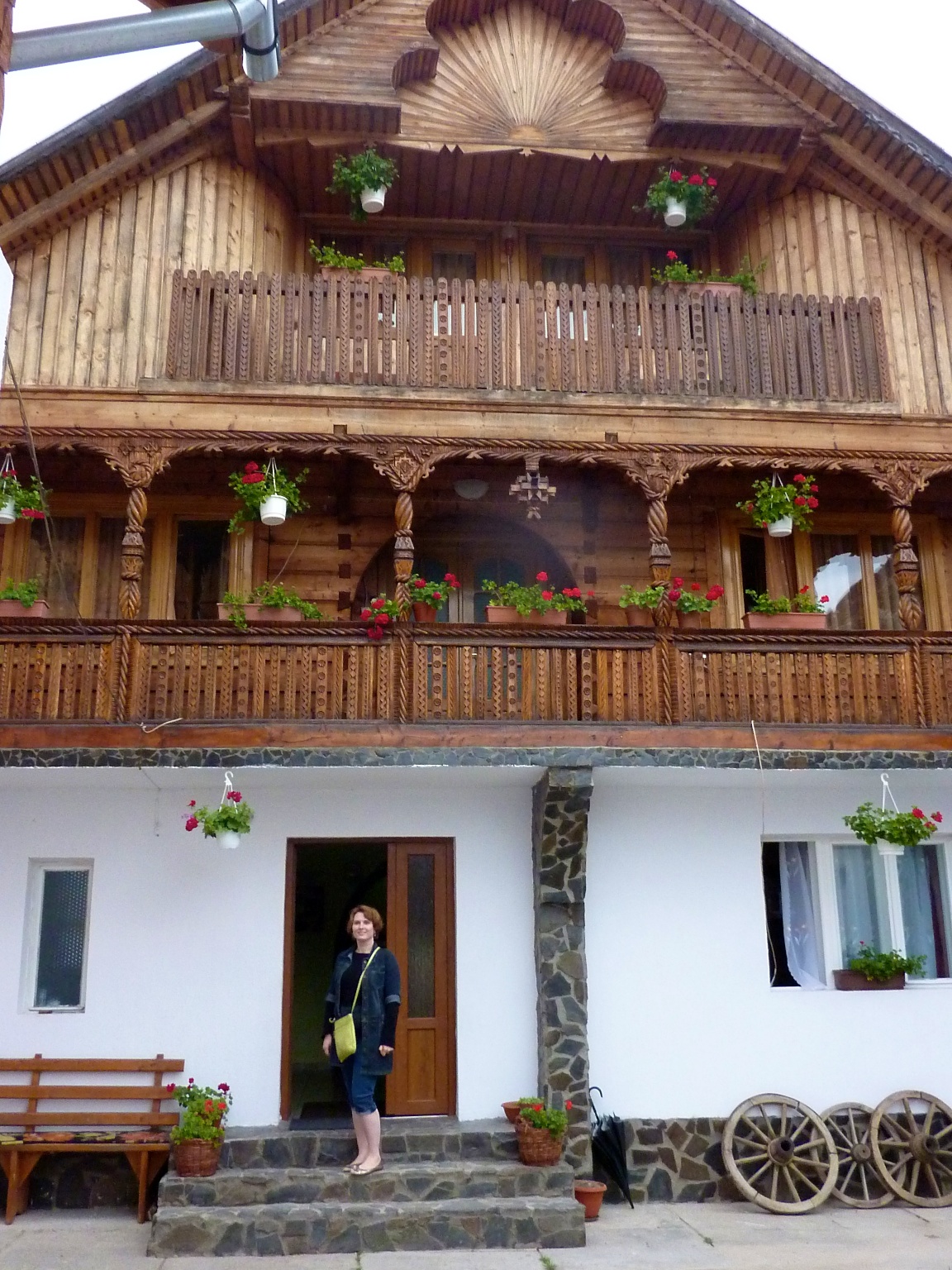
    We are glad we found it, as it was such a sweet place.  Not fancy by any means but wow was it local.  They had chickens and two cows.  It was like we were staying in the home of a family.  The sisters were in the kitchen cooking all day and we ate the meal of the day.  The photo below was on the wall in the dining room.  These are very traditional colors in this area.


    ROMANIA 35

    In the front yard was a "pot" tree.  We saw many of them around town.  Fortunately one of the Romanian guests at our B&B spoke English and we were able to ask him some questions at dinner, as the hosts did not speak any English.  We learned that the pots on a tree means that there is a daughter of marrying age living in the house and they are looking for a spouse.


      ROMANIA 34


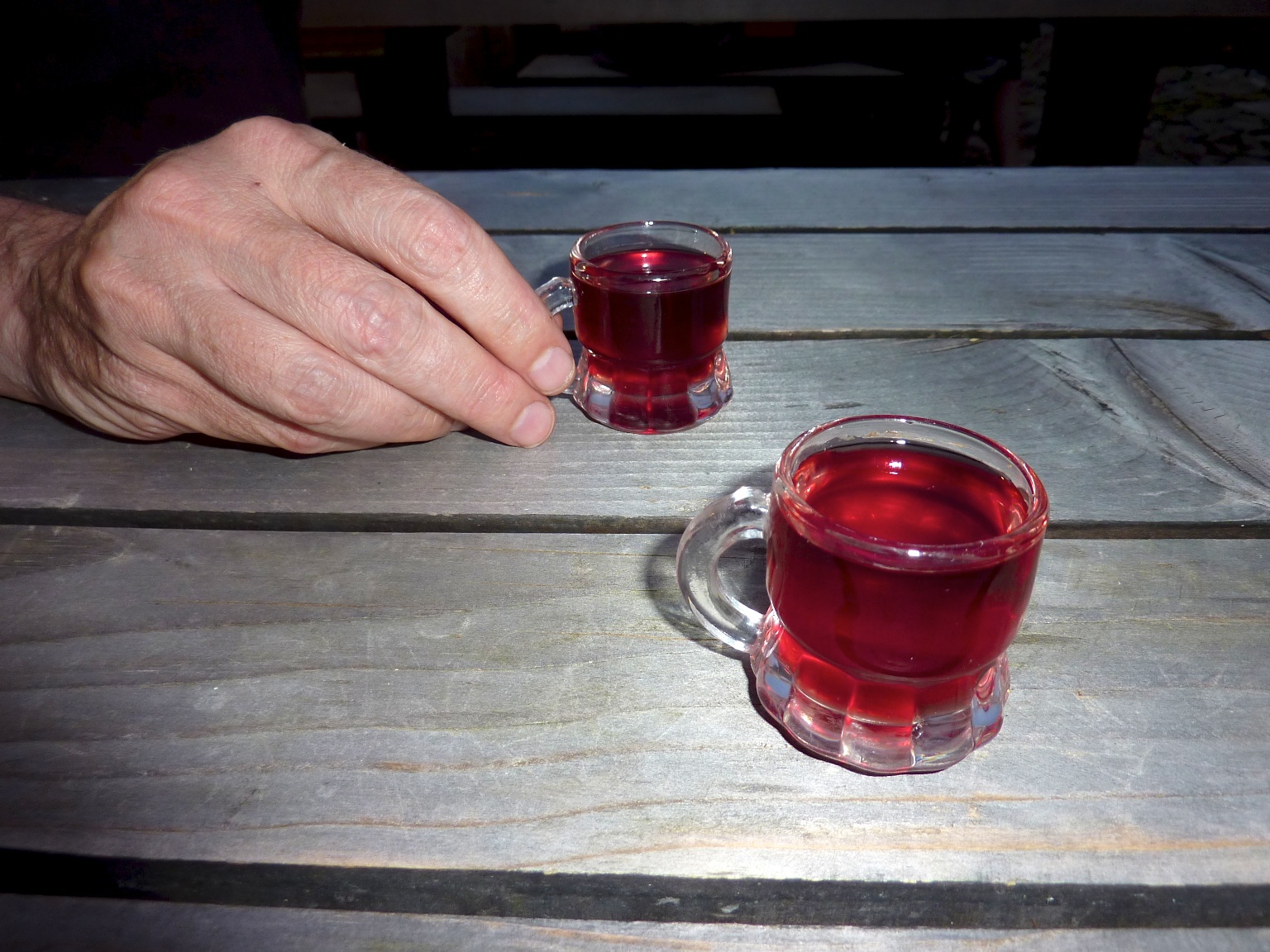
     It was here that we learned to love the Romanian homemade moonshine called palinca (brandy), and depending on the region, it was made from either plum or cherries.  Always served in teeny-tiny glasses and a full bottle.


    ROMANIA 59


    It made us both happy…


    ROMANIA 45

    and sleepy!


    ROMANIA 60


    Market Day


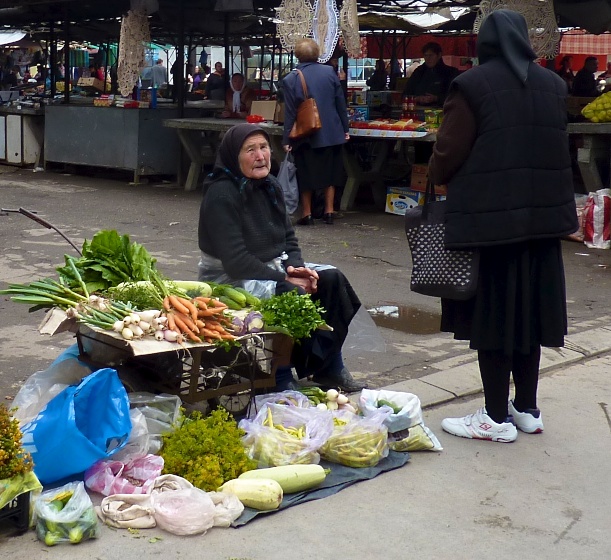
    We did catch one outdoor food market which we love to visit as you can learn so much about a culture from the food.


    ROMANIA people 25
     
    There were many older ladies selling just milk.  Probably from the family cow.  We drank fresh unpasturized milk for breakfast at all the B&B's we stayed.


    ROMANIA people 26


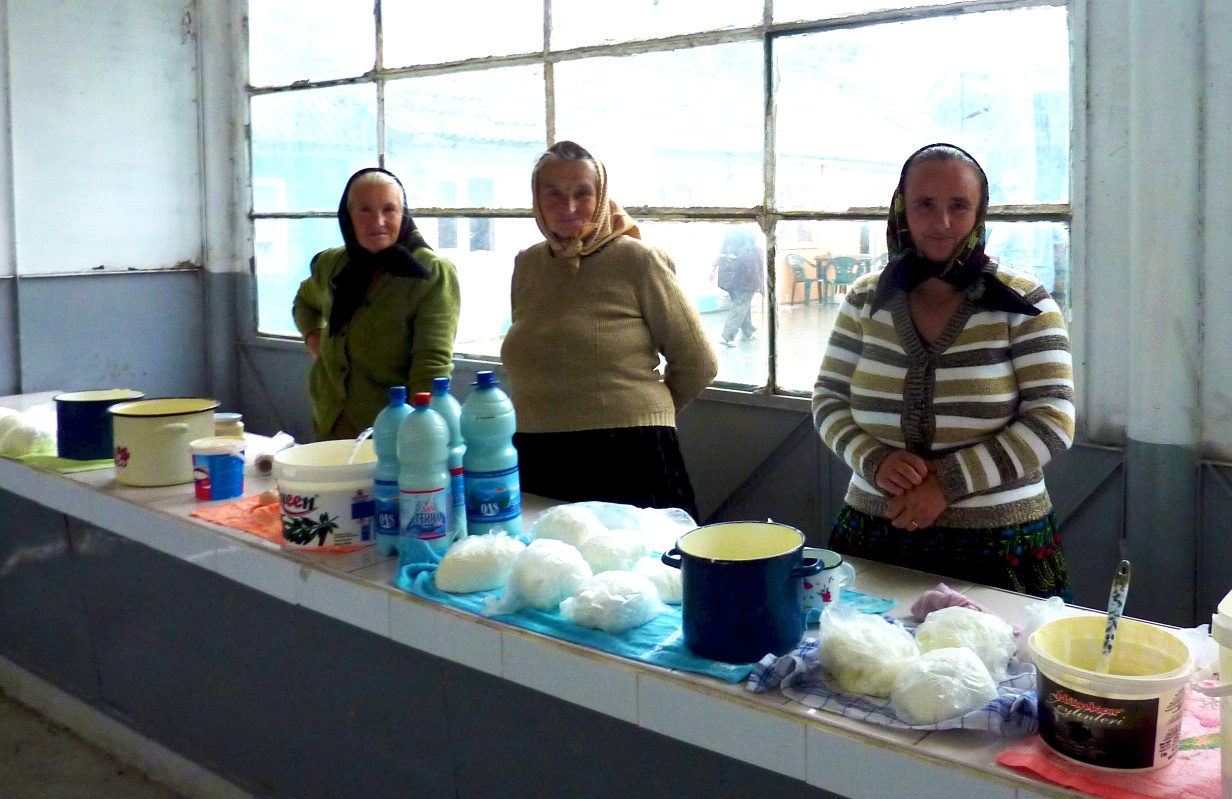
    We tasted  several different kinds of fresh cheese and yogurts, all of which we really enjoyed.  The "cheese room" at the market  had a very sterile feel to it.


    ROMANIA people 27


    Houses of Romania


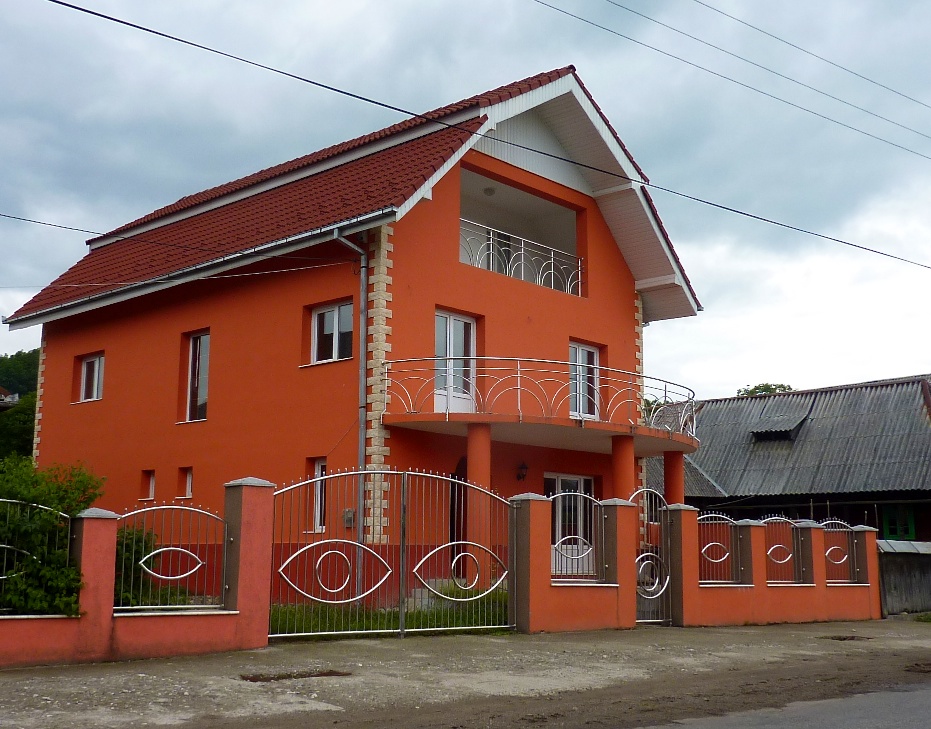
    This was another thing that had us baffled….the houses in Romania.  It is one of the poorest countries in Europe, but you would have never known it from the houses.  There were many that were very modern and VERY colorful!


    ROMANIA houses 14


    ROMANIA houses 15

    There were so many new large ones being built.


    ROMANIA houses 5


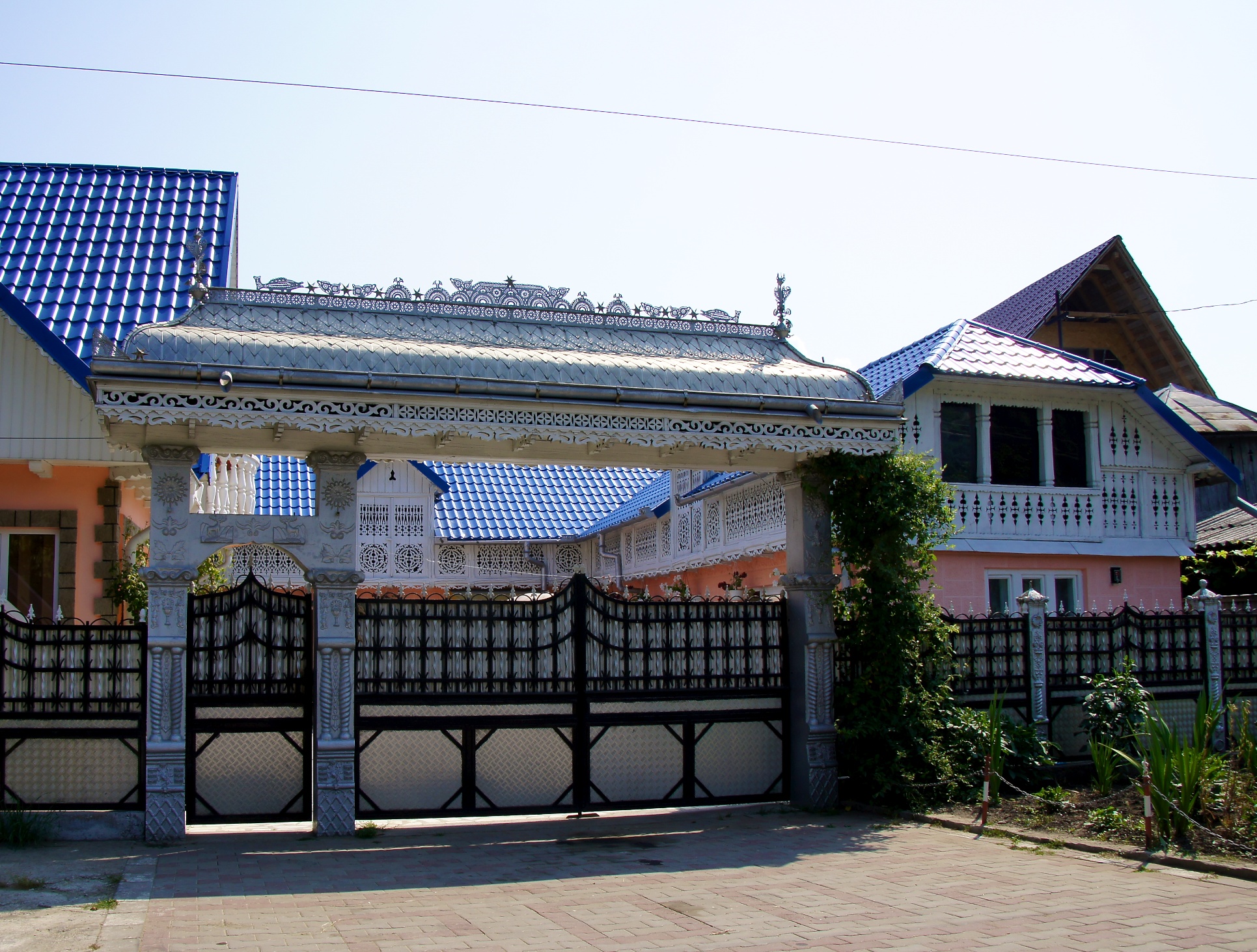
    And they had very large, ornate gates – high enough to bring in the horse buggy filled with hay.


    ROMANIA houses 9

    ROMANIA houses 8

    Here is a good side view to see that the gates really are just a facade.


    ROMANIA houses 7
     

    They also had very beautiful crafted structures to cover their wells.


    ROMANIA houses 6


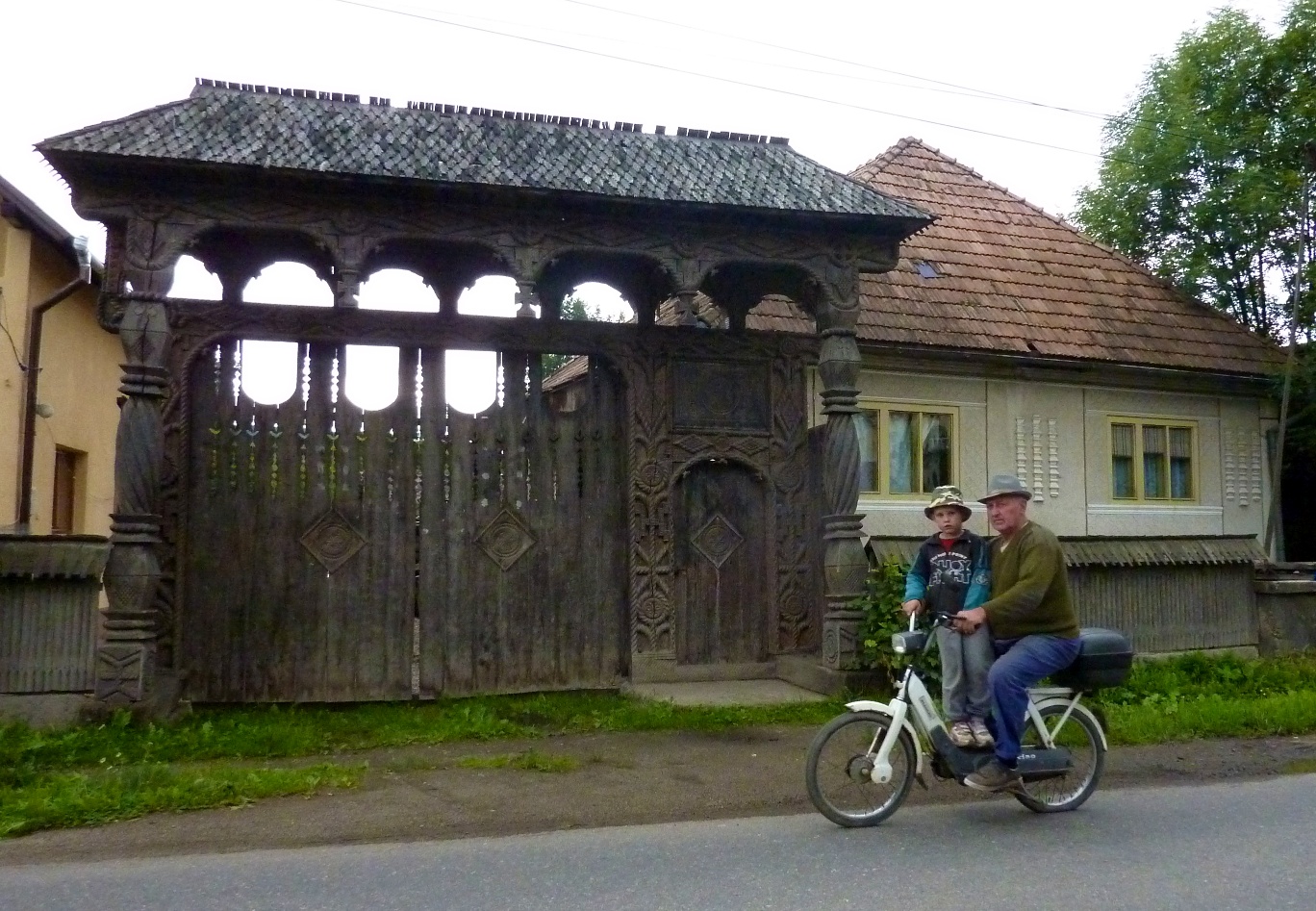
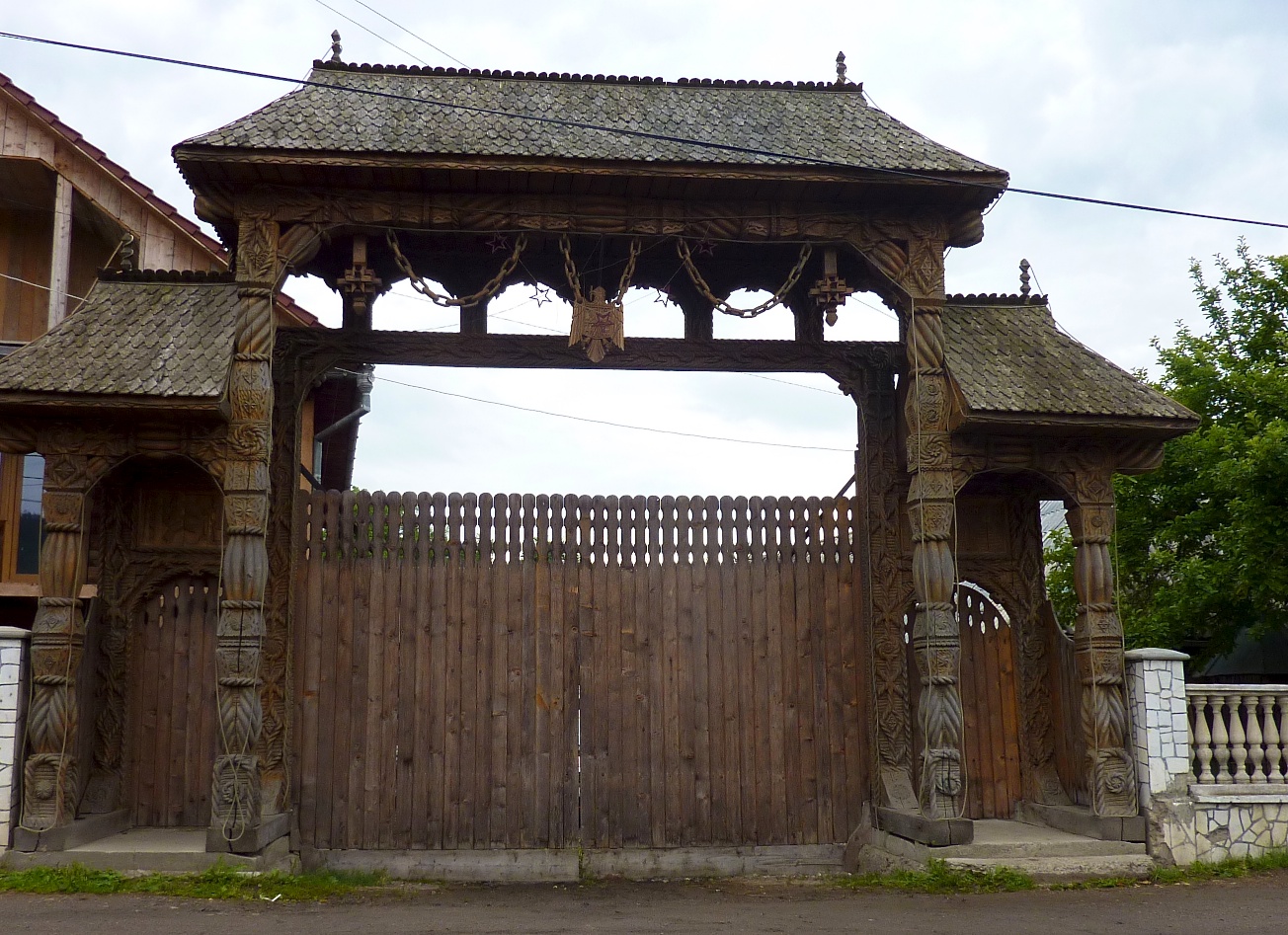
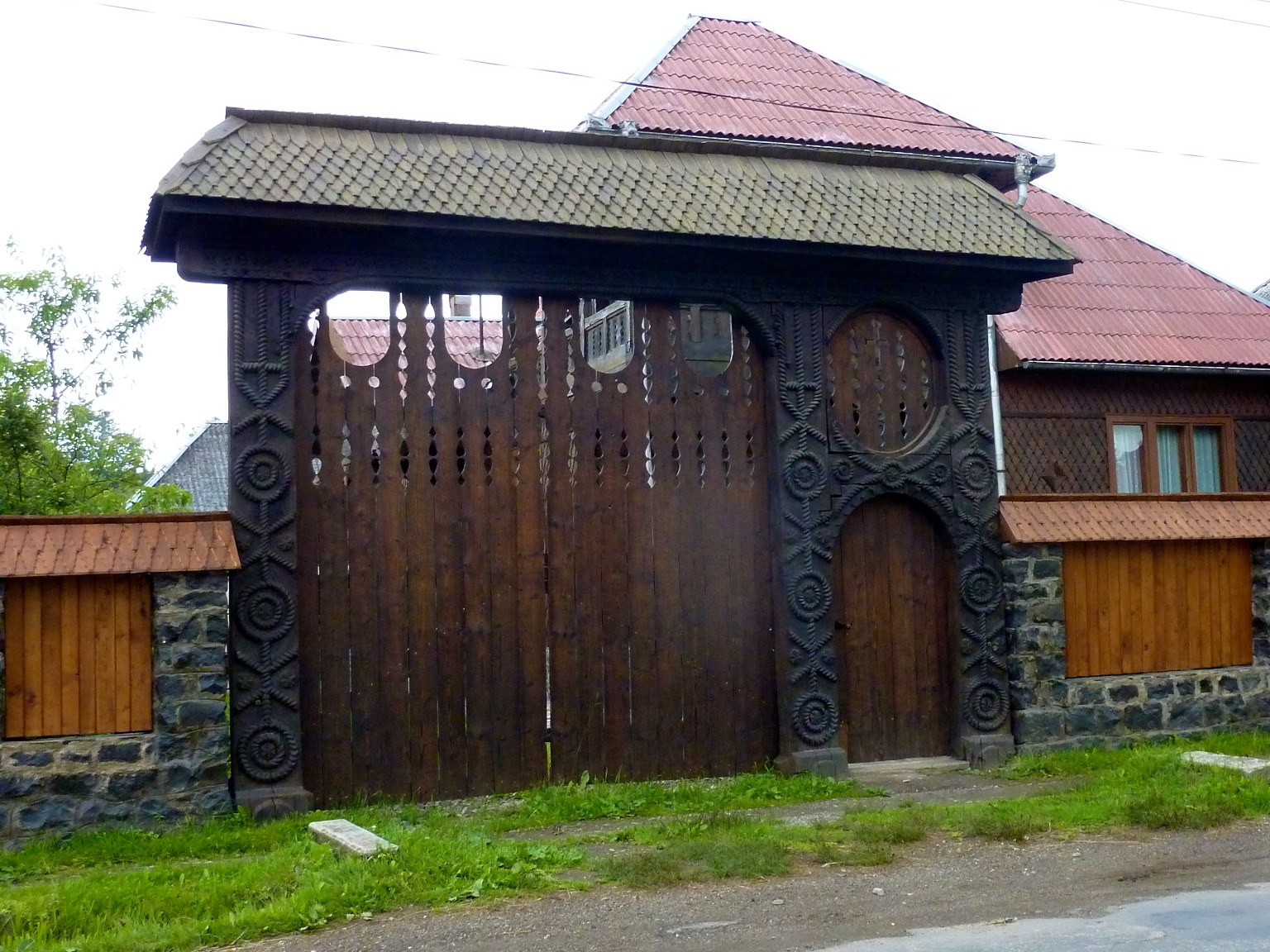
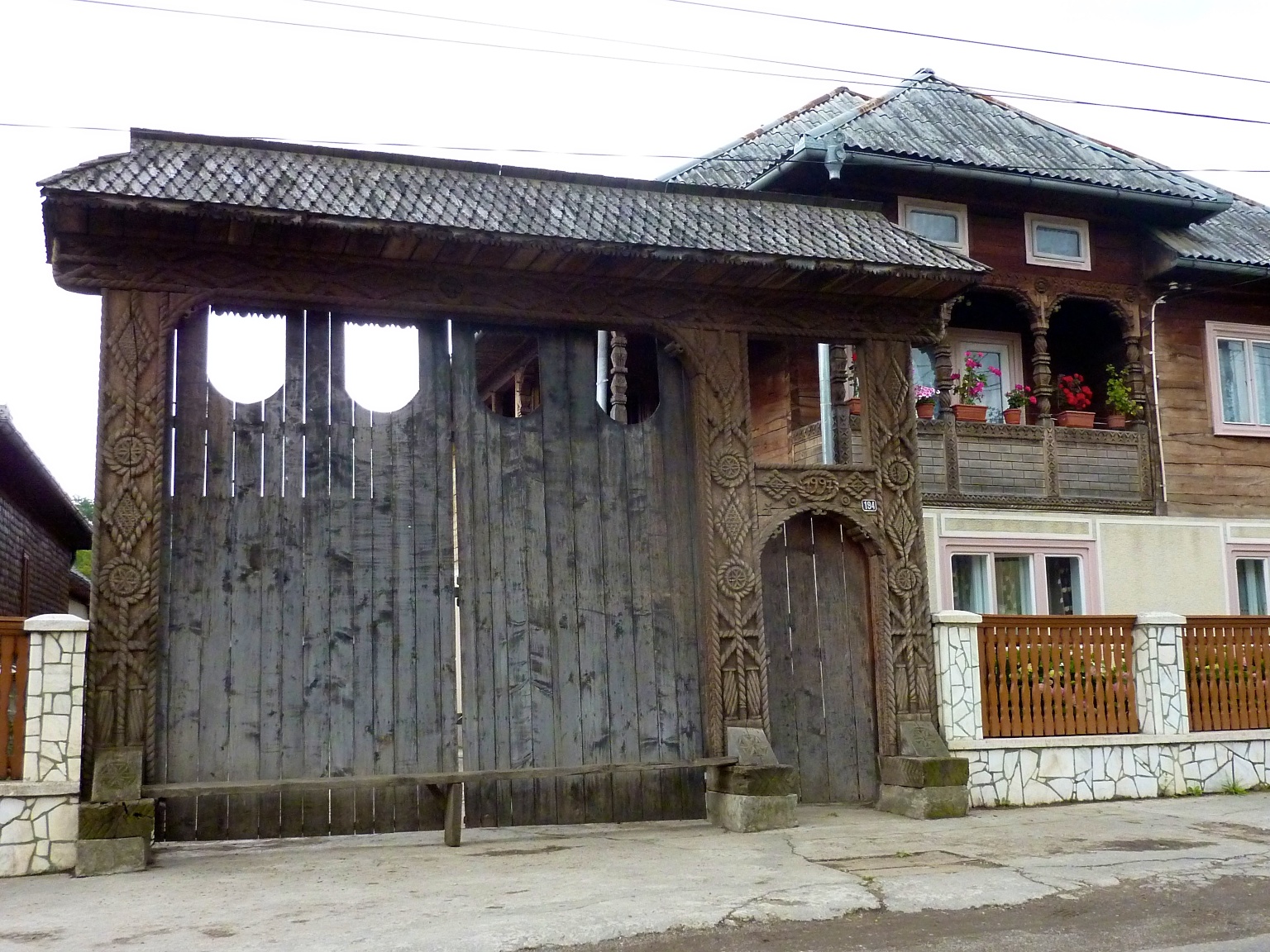
    This remote Northern region is also known for their elaborately carved wooden  gates leading to family homes. 


    ROMANIA people 23

    Some were massive.  We learned that the larger the gate – the wealthier the family.


    ROMANIA houses 13


     The knots and sun designs come from ancient pagan motifs. Popular motifs include grapevines, acorns, twisted rope, sun symbols, crosses and forest animals.


    ROMANIA houses 11


    ROMANIA houses 10

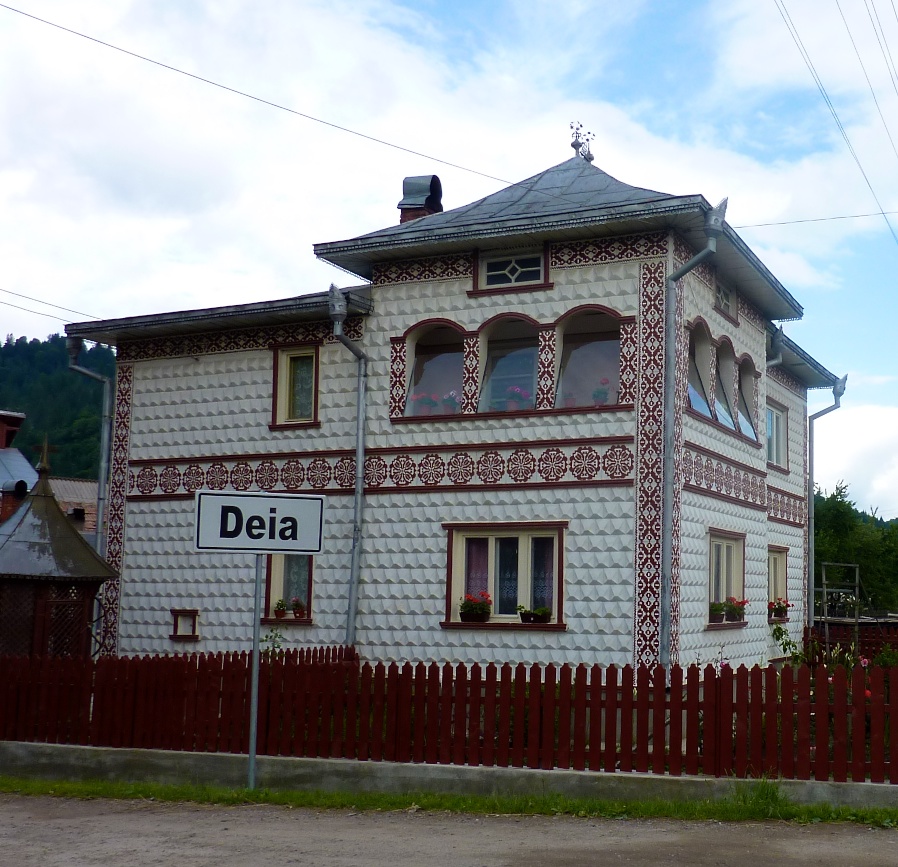
    Here are a few more houses to show how decorative and colorful they are.


    ROMANIA houses 1


    ROMANIA houses 2

    ROMANIA houses 3 

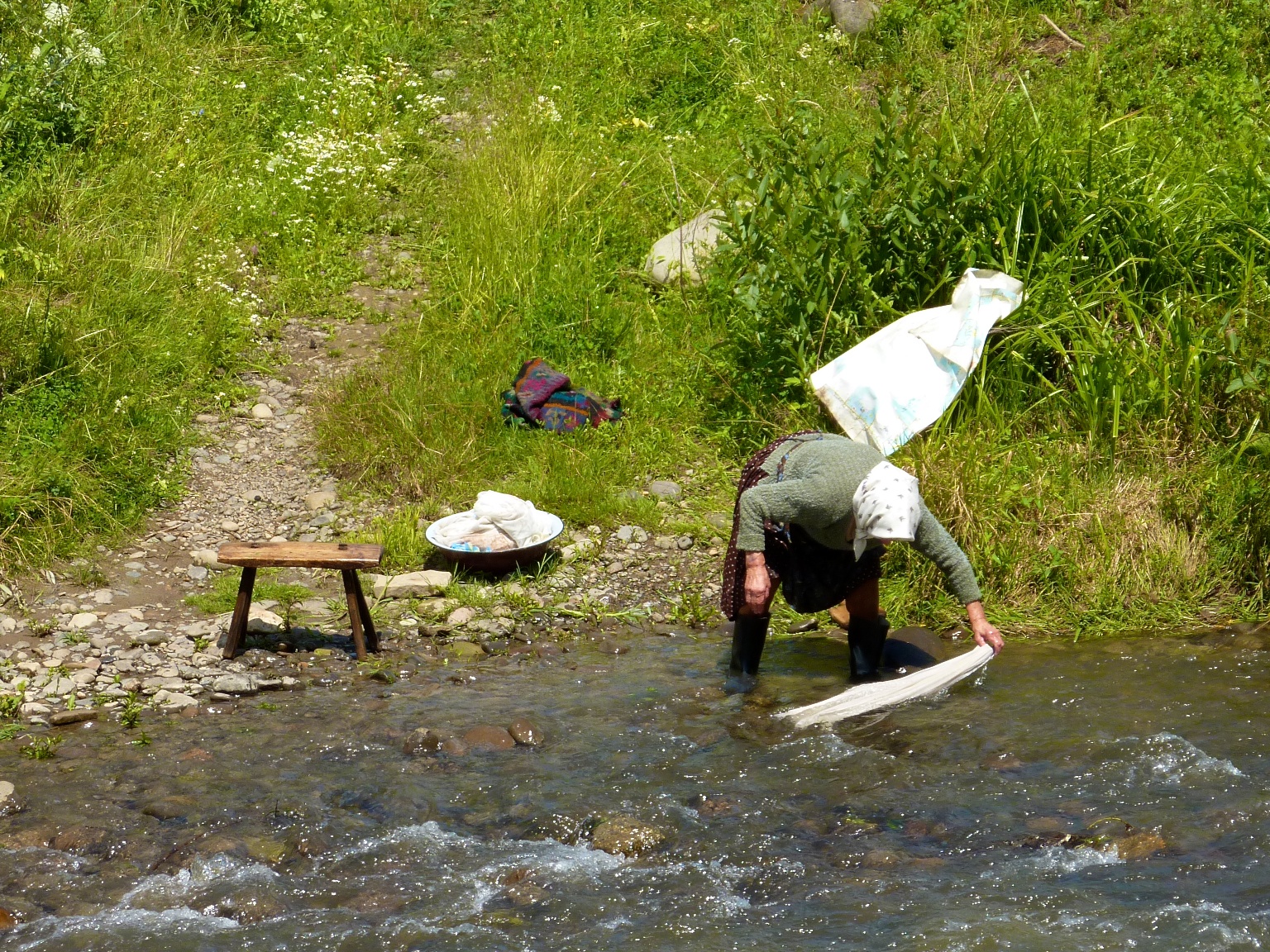
    This was an unforgettable scene…..a woman washing her clothes in the creek near the side of the road.  We were driving through a very small village when we saw her.


      ROMANIA people 29


    ROMANIA people 30

    Merry Cemetery of Sapanta


    ROMANIA 36

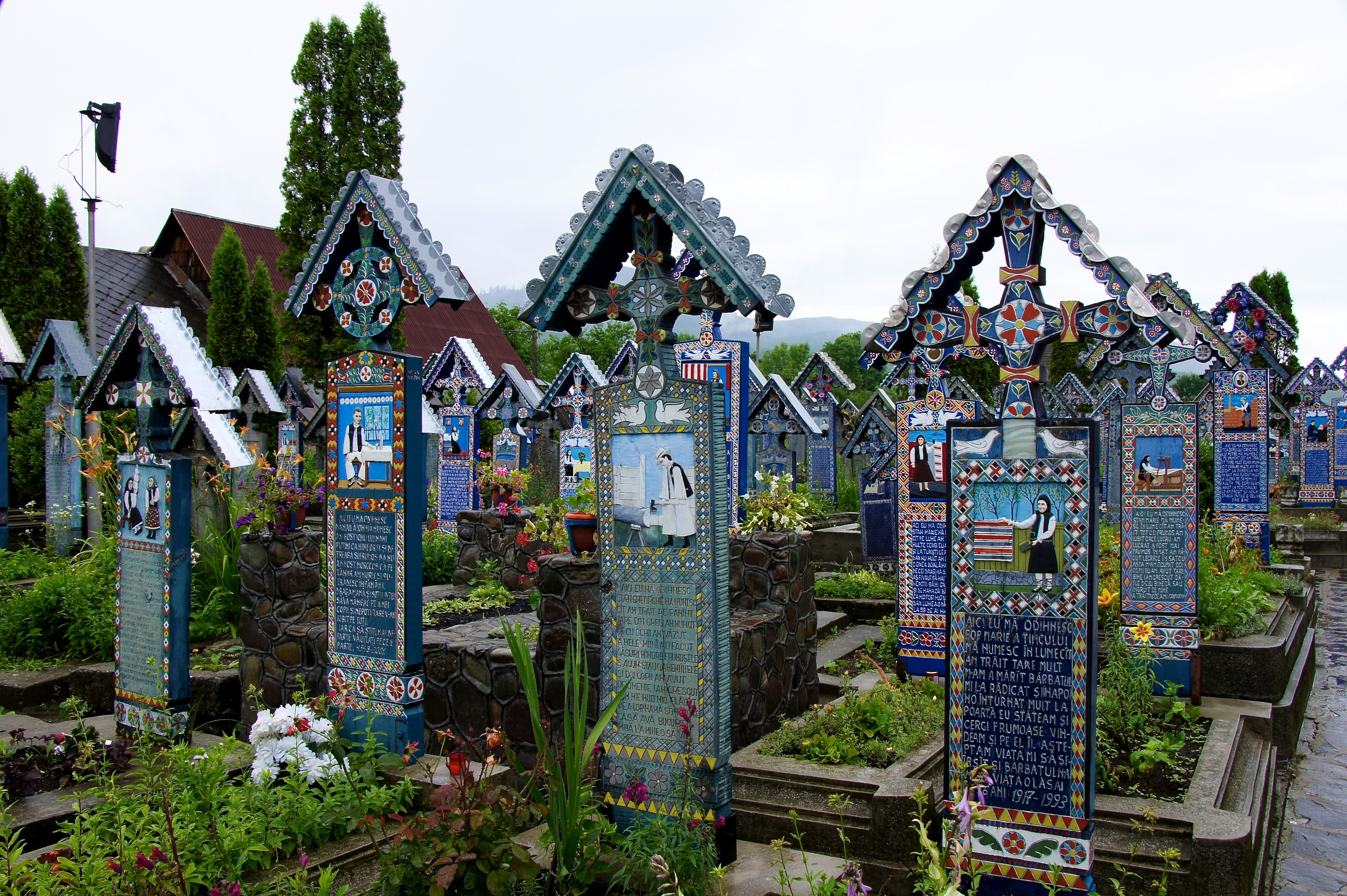
    The Merry Cemetery of Sapanta, which dates back to 1935 was a unique sight.  What makes it so special are its 800 folk art graves made of wood crosses and painted with colorful caricatures of the deceased depicting an important time in their lives. 


    ROMANIA 38

    The sayings on each grave are ironic or humorous … which explains the place’s name – the Merry Cemetery. 


    ROMANIA 37

    The earlier ones, 700 of them, were carved by Stan Patras.  The main color he used was a special blue named by experts as Sapanta blue.  It looked like most of them had been recently repainted.  It was very unique, not like any other cemetery we had ever seen. 


    ROMANIA 39


    Wooden churches


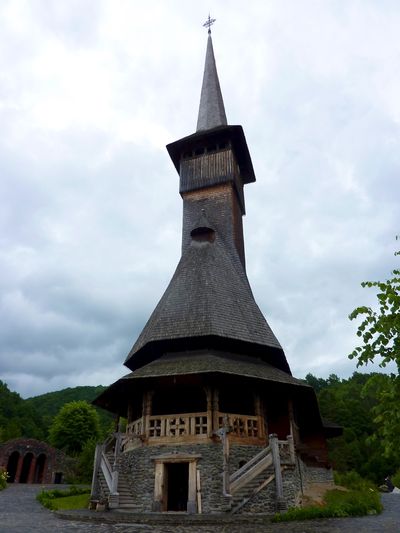
    The Maramures is known for their wooden churches.  History tells us that foreign rulers did not allow the people living here to build long-lasting stone churches. So instead, the local carpenters created beautiful wooden churches.  


    ROMANIA 42


    Most were built in the 17th century, but some are as recent as 19th century.  They are Orthodox churches.  They are extremely tall with slim bell towers made of oak and are very hard to photograph!  They have weathered time and 42 still stand today.  Eight are listed by UNESCO as World Heritage Sites.


    ROMANIA 43


    I lost track of the names….so you'll just have to enjoy the photos!


    ROMANIA 44


    Barsana Monastery

    Barsana Monastery is a new complex created in 1989, on the site of a church abandoned in 1791.   Its 56 meter-tall church is the tallest wooden structure in Europe.   No power tools or nails were used to make it.


    ROMANIA 30

    Barsana is on the UNESCO World Heritage List


    ROMANIA 32


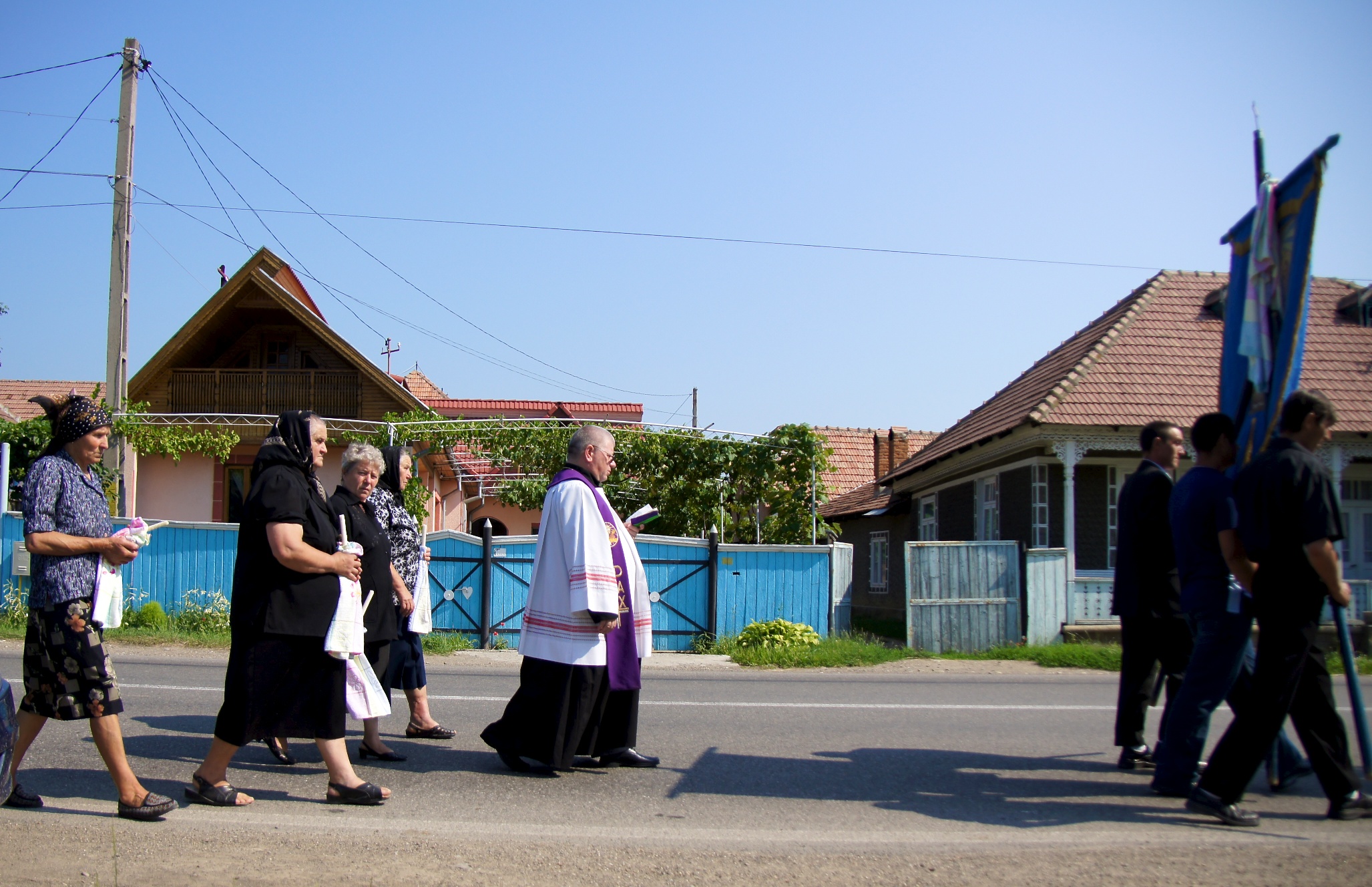
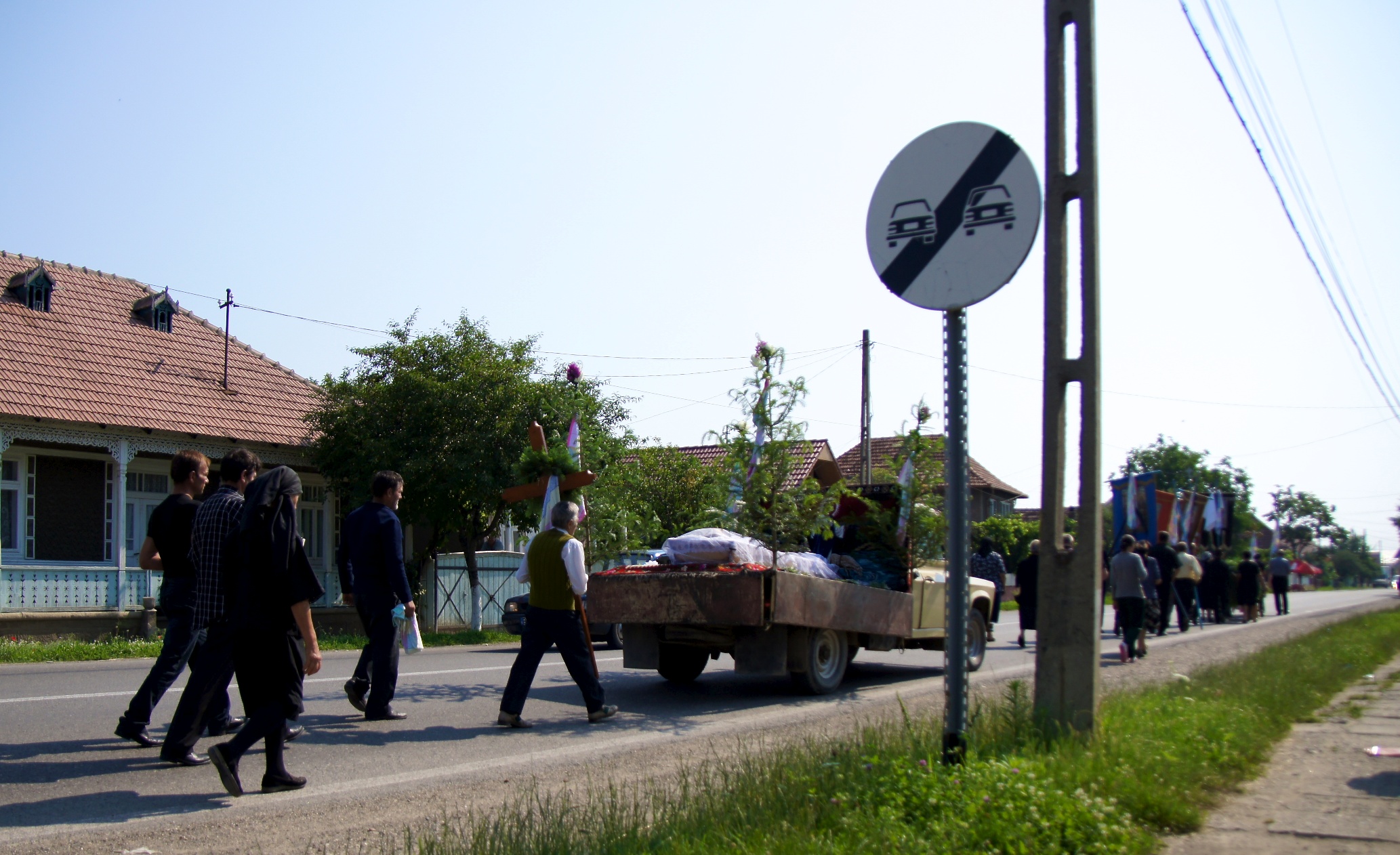
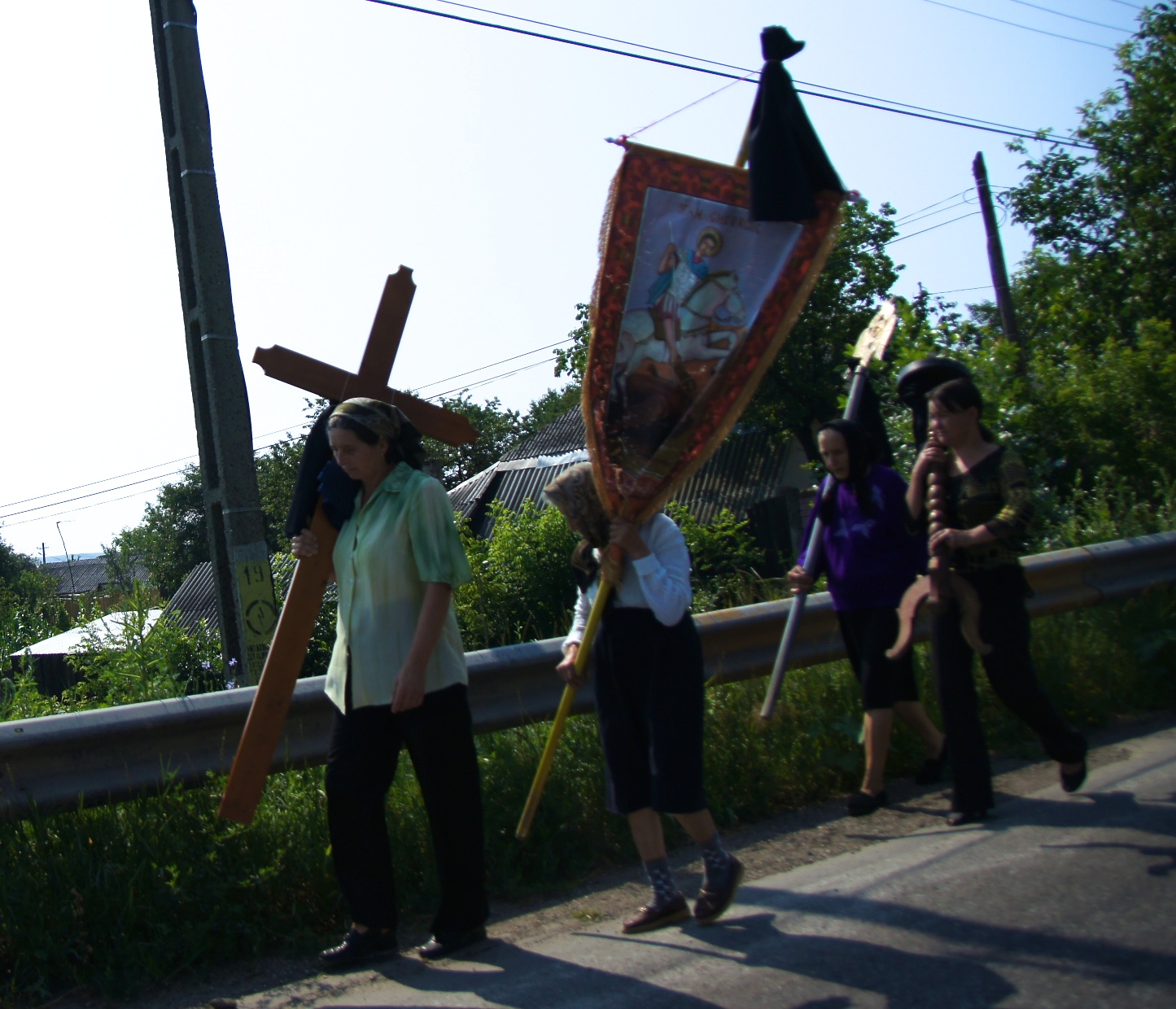
    I was not sure if I should post the following photos, a funeral procession.  But, it was so interesting and so different from the way we bury the dead, I decided to share it.  The procession started at the church and they walked to the cemetery.


    ROMANIA 72


    I felt guilty taking photos of such an intimate event.  In the photo above you can see several women holding towels.  I did a little research and found that they buried a towel with the deceased to keep vampires away (remember it is Romania – land of the vampire!)


    ROMANIA 74


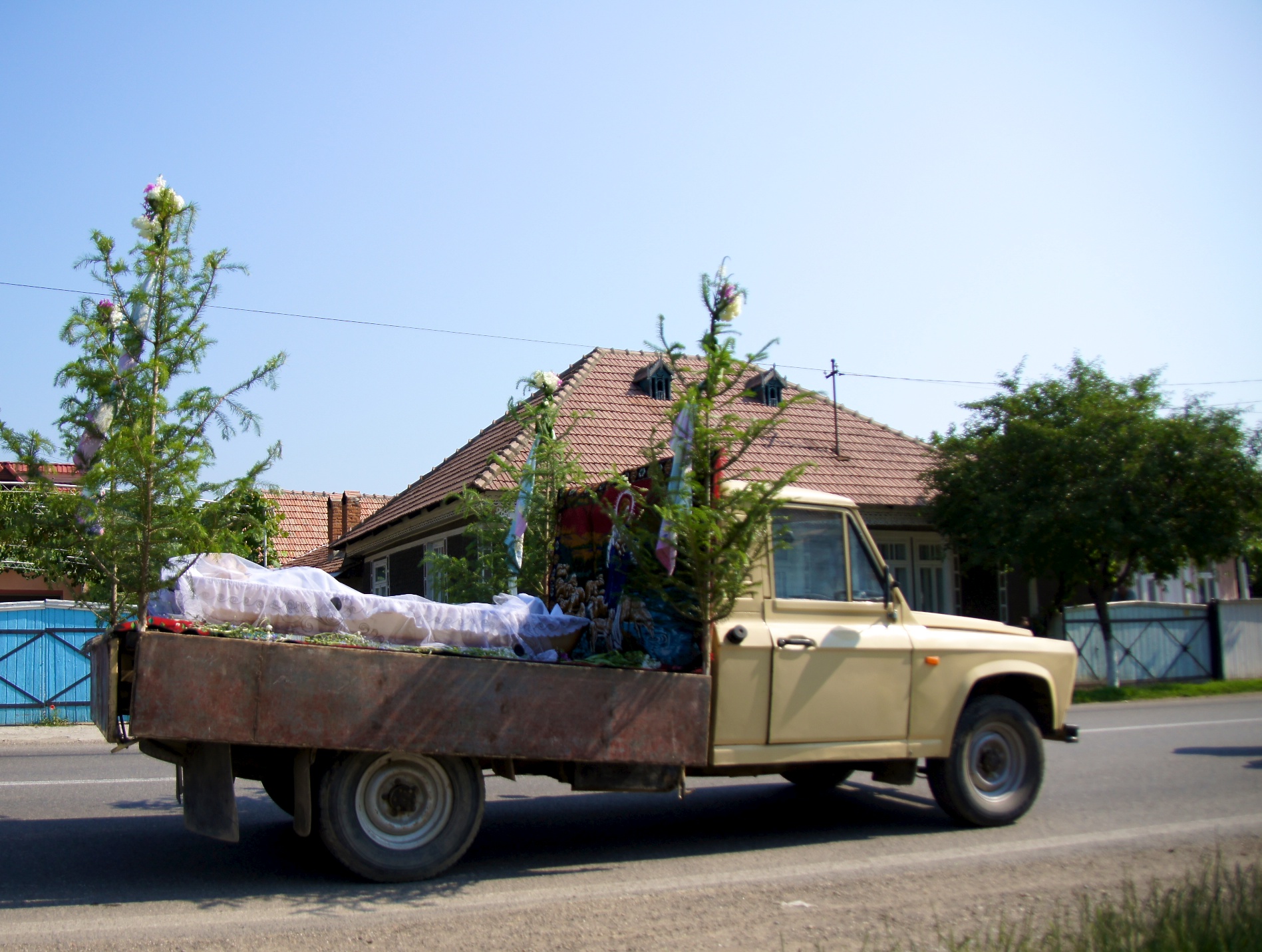
    Below is the actual corpse – wrapped in a cloth and laid in the bed of a truck.  It appears this is the customary way .  We could see the face of the deceased through the cloth – it was a very old woman.


    ROMANIA 73


    The casket is carried separately from the body and has four trees, one on each corner – I was not able to find the significance of this.

      ROMANIA 75


    Less than ten minutes later we ran into a second funeral procession.  In this one they were carrying a table with food.


    ROMANIA 76


    And a large cross.


    ROMANIA moldovita

    This body was carried on the back of a truck, like the other procession.


    ROMANIA 77

    May they both rest in peace! 


    Onto a brighter note…but maybe scarier…….Transylvania!!


    ROMANIA 47
     

    Sighisoara was our next stop, a sixteenth century medieval town in Transylvania.  It is designated as a World Heritage Site by UNESCO.  Growing up, I always thought Transylvania was a made up place.  


    ROMANIA 61


    Our B&B (above on the left) was attached to the side to the city gates and the actual building we stayed in dated back to 1797.  There was a little festival going on while we were there.


    ROMANIA 58

    Sighisoara's claim to fame is…….it is the birthplace of Dracula!  Dracula isn't just a name in fiction he is a real-life notorious 15th-century noble known as Vlad the Impaler.  Born in 1431, he was the son of Vlad Dracul and legendary for impaling thousands.    


    ROMANIA 48


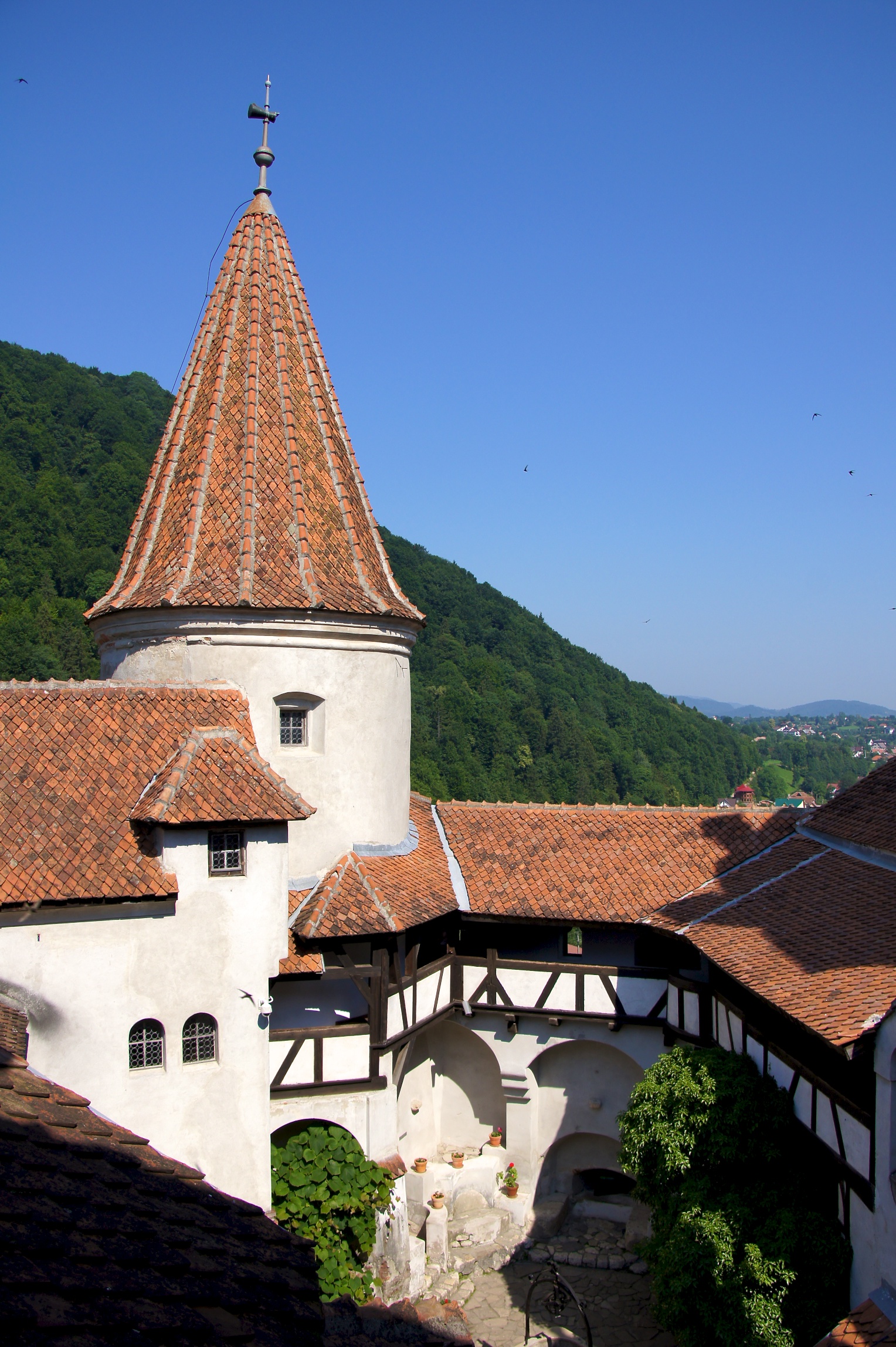
    It was Vlad the Impaler who inspired Bram Stoker's fictional creation, Count Dracula.  But the connection between Stoker's Dracula and Vlad Dracula ends with the name.  We also toured Dracula's castle, in the town of Bran.  It is actually called Bran's Castle and dates back to 1377.  


      ROMANIA 67


    Did Dracula really live here?  Was he really a vampire?  Many believe the answer is yes!    Many say Vlad Dracula never knew it even exisited!


    ROMANIA 68


    I like this B&W photo – makes it look scary like you would expect Dracula's castle to look.  Did we see any vampires while we were there?  We will never tell.  But how cool is it to say you have been in Dracula's castle????  


    ROMANIA 69

    Our last stop was in Brasov, by far the most modern city we visited.


    ROMANIA 65


    Unfortunately D got very ill (we think food poisioning) and we had to rest for a full day at the B&B – but they were so super sweet and took such good care of us.  I wish I had taken a photo of the owners for the Blog.  It was our favorite B&B of the trip.


    ROMANIA 66

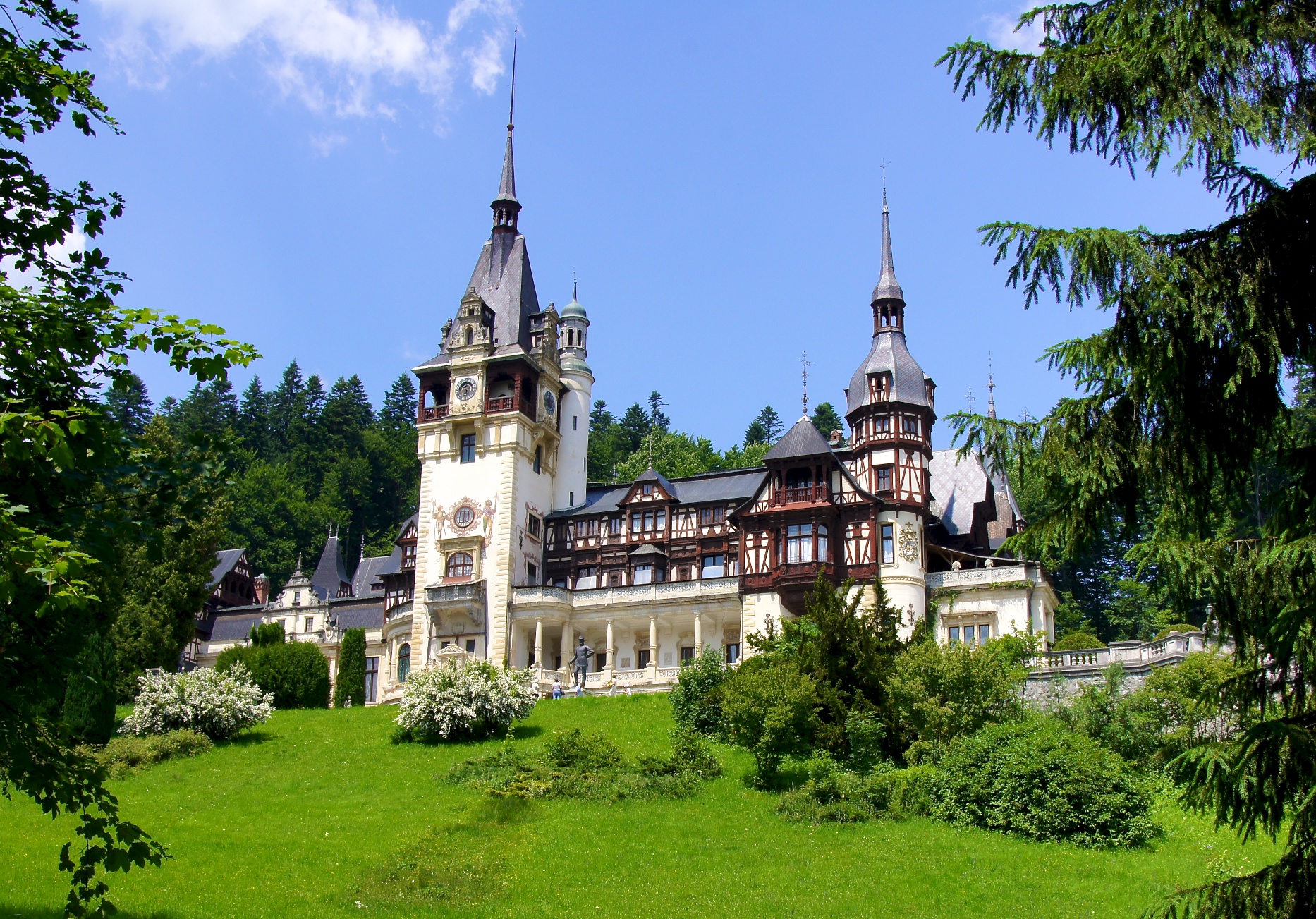
    On our last day, D was back to normal and we went to visit Peles Castle.  We drove through the famous Carpathian Mountain to get there.   We loved this castle!  King Carol of Romania built it in 1797.  We were not allowed to take photos inside.  It was fully decorated with exquisite furnishings.


      ROMANIA 71


     One last story to close out this adventure….we had read and had been warned about the wild dogs who roamed the streets of Romania and attacked people.  And it was true – there were dogs all over….and we encountered several.


    ROMANIA 16


    These two were attacking me!


    ROMANIA 17

    And this one was after D!  Romania did have an excessive amount of stray dogs living in the villages, but they all were sweet and appeared to be well fed.  


    ROMANIA 18


    And for our die hard fans (our two moms) – an album with just a few more photos!


    As they say in romania – Drum Bun – which translates to "we wish you a good road" – or as we say, "bon voyage"!


    ROMANIA 57


  •  

    Berlin and hamburg 9

    D had a conference in Berlin so we decided to take a train and stop in Hamburg on the way home.  Believe it or not…..I took very few photos!  Why?  We had a few days of rain in Berlin and two solid days of rain in Hamburg.


    Berlin and hamburg 6
     

    We really enjoyed our visit to the Berlin Wall East Side Gallery, a  section of the wall that is still remaining.  It is covered with art.  To see more of the paintings visit my art blog, Ma Vie Trouvee.


    Berlin and hamburg 3

    Berlin and hamburg 4


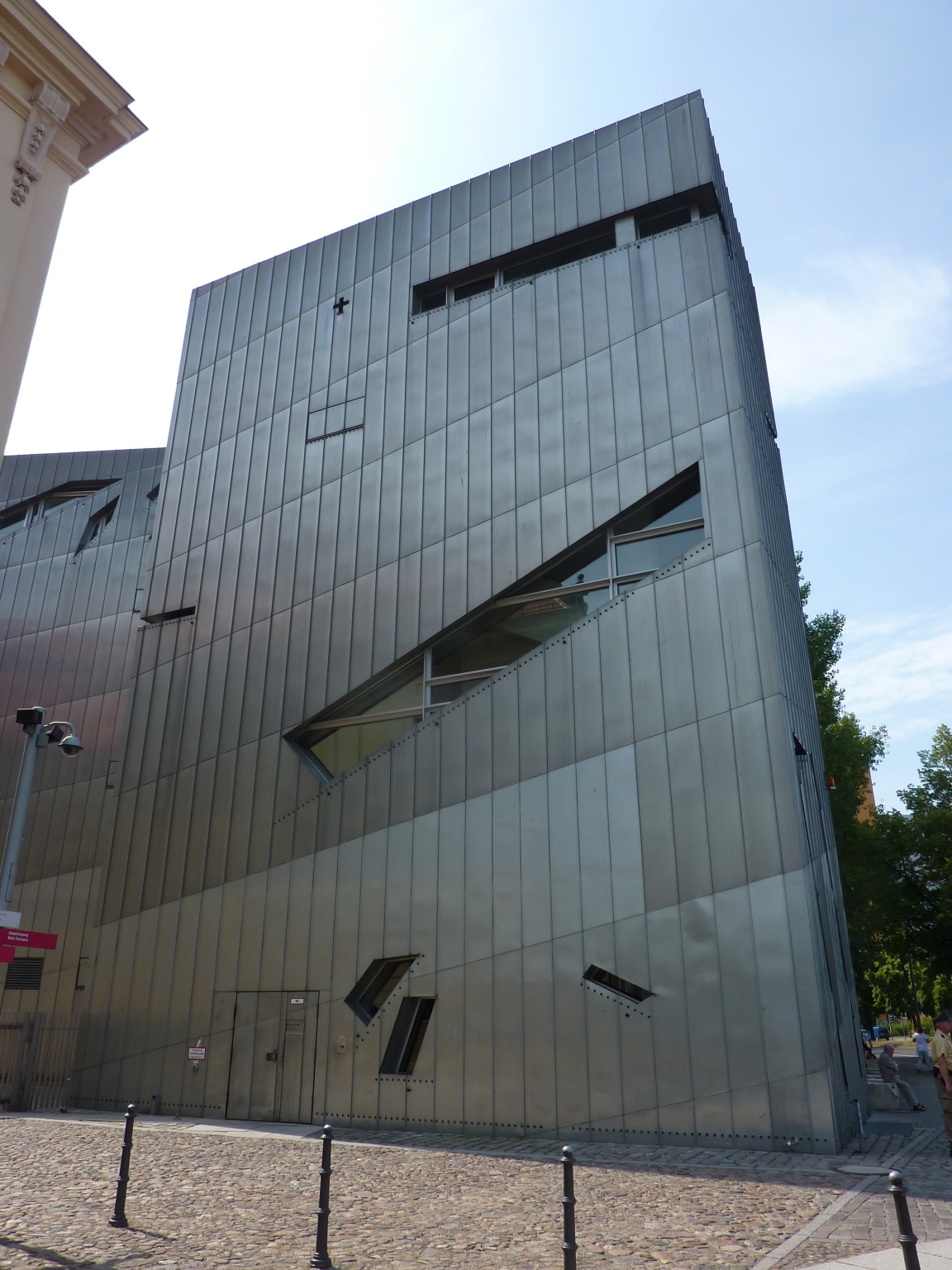
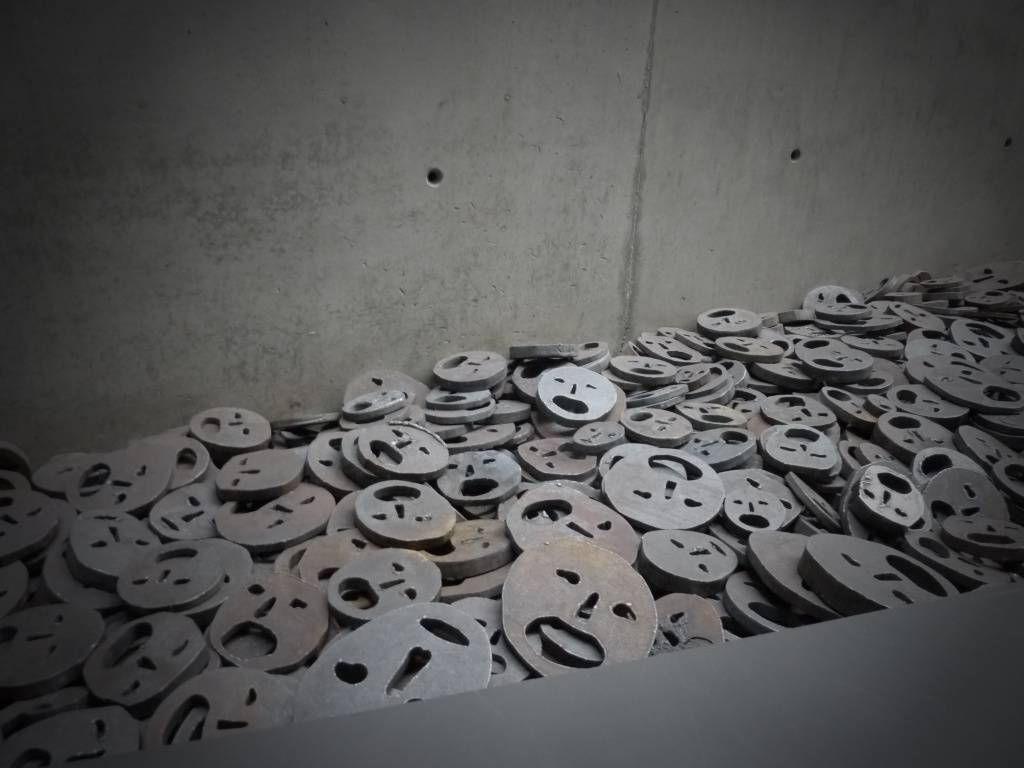
     My friend Fatima was also in town with her husband for the conference and we went to the Jewish museum.  It is an excellent museum in a very modern building.


    Berlin and hamburg 10


    A view from the inside of the building.


    Berlin and hamburg 11


    Berlin and hamburg 12


    A few images I found interesting in the city:


    Berlin and hamburg 13


    Berlin and hamburg 16


    Strawberries are sold throughout the city – in the metro stations and in little huts like the one below.


      Berlin and hamburg 17


    Instead of circles for thier green and red lights, they have Ampelmännchen (little men) – running man for go (green) and a stopped man for red.


    Berlin and hamburg 18


    The Ampelmännchen is a beloved symbol in Eastern Germany, being one of the few features of communist East Germany to have survived the end of the Iron Curtain.  After the fall of the Berlin Wall, the Ampelmännchen acquired cult status and is now a popular image on souvenirs and T-shirts.  


    Berlin and hamburg 15


    How about this for playground safety?  I don't think we would ever see this in the US.


    Berlin and hamburg 20

    We enjoyed Berlin.  Donald's conference went well and of course we ate lots of good food including the lasagna we deemed "the best lasagna" anywhere when we were in Berlin three years ago!  It took some work, but D was able to locate the restaurant, Latini, and it was just as we remembered.


    HAMBURG


    Berlin and hamburg 26

    We had fun in Hamburg.  I selected Hotel East for its super modern design.  Due to a little issue with our first two rooms, we were upgraded to a suite with a chilled bottle of champagne waiting for us, an extra large tub for two, a water-bed and free breakfast each morning……including champagne!  It was extra nice due to the fact it was such a rainy weekend.


       Berlin and hamburg 28 

    We spent several hours in the modern art museum and  despite the rain, we did a little shopping.  My very favorite store was Scarpovino –

    (Scarpo= shoes and vino=wine)  They sold shoes and wine!  Brilliant!


    Berlin and hamburg 22

    Reeperbahn street in Hamburg's St. Pauli district, is the hottest spot for Hamburg's nightlife.  It is also the city's red-light district.   In German it is also called die sündige Meile (the sinful mile).  We enjoyed an evening of people watching.

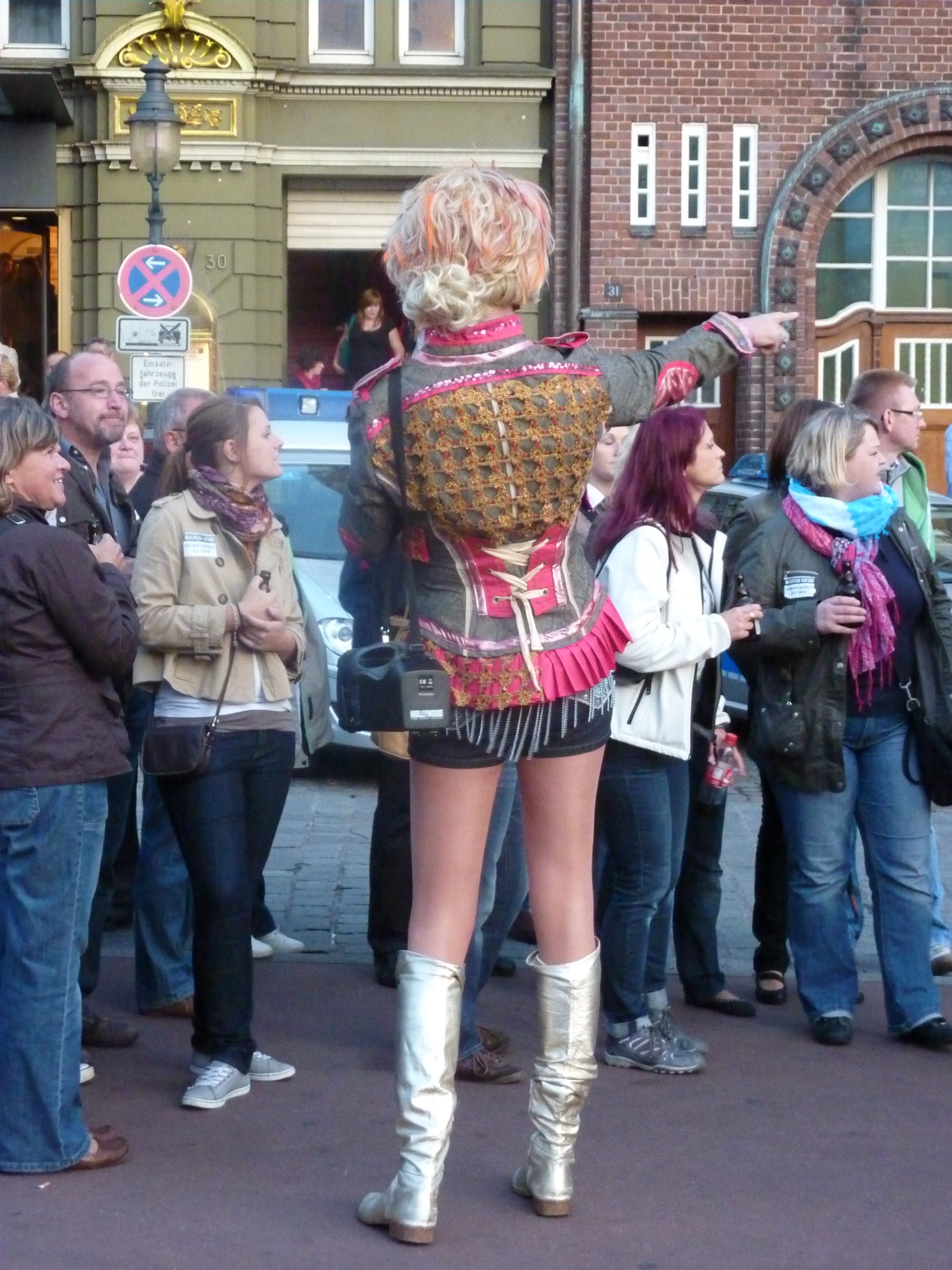
    A VERY unique tour guide.  And she he is wearing flats!


    Berlin and hamburg 37


    Hen-do and Stag-do (bachelor/bachelorette) parties were very poplular on this street – we saw 10 or so.  This group seemed like they were really enjoying the night.


    Berlin and hamburg 29


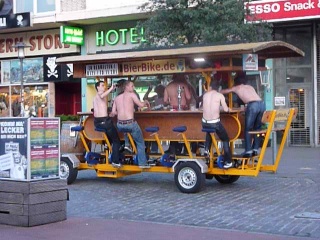
    We are seeing more and more of the Beer Bike in cities across Europe – they are so funny.  I will admit, it was the first time we had seen them all shirtless.  Have they hit the states yet? 


    Berlin and hamburg 33

    Hamburg is definitely a party city!

  •  

      Istanbul blog 82


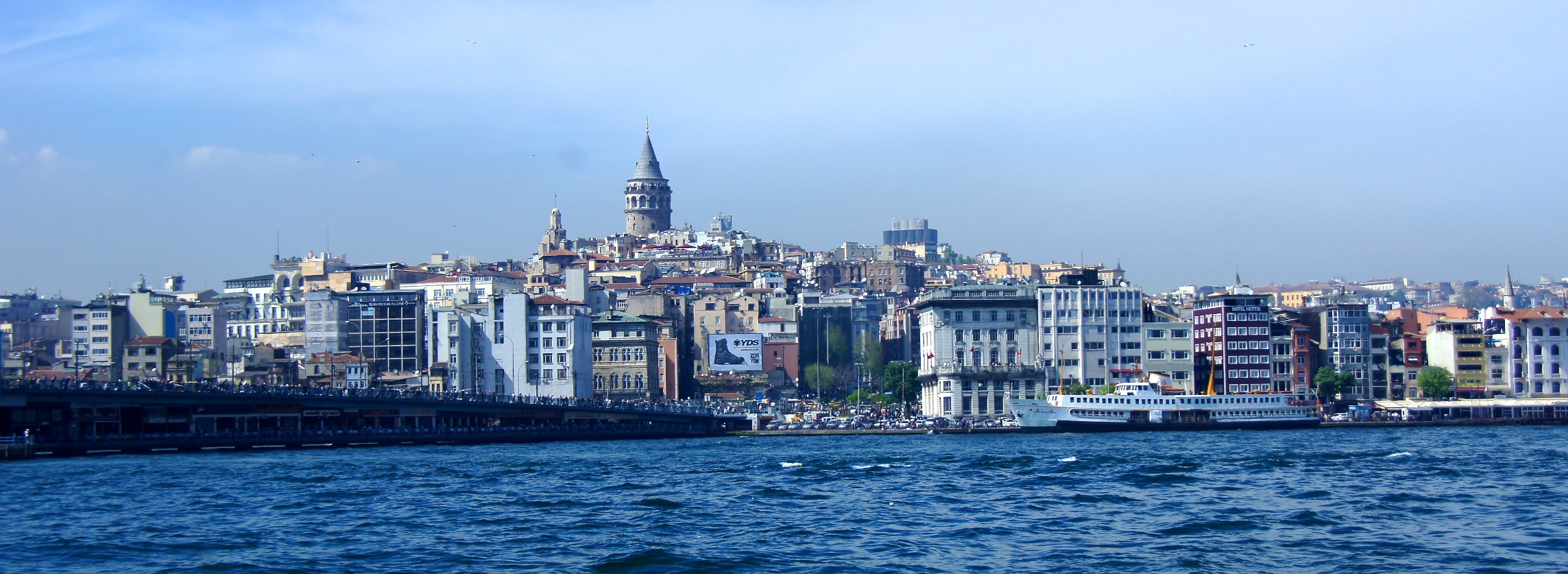
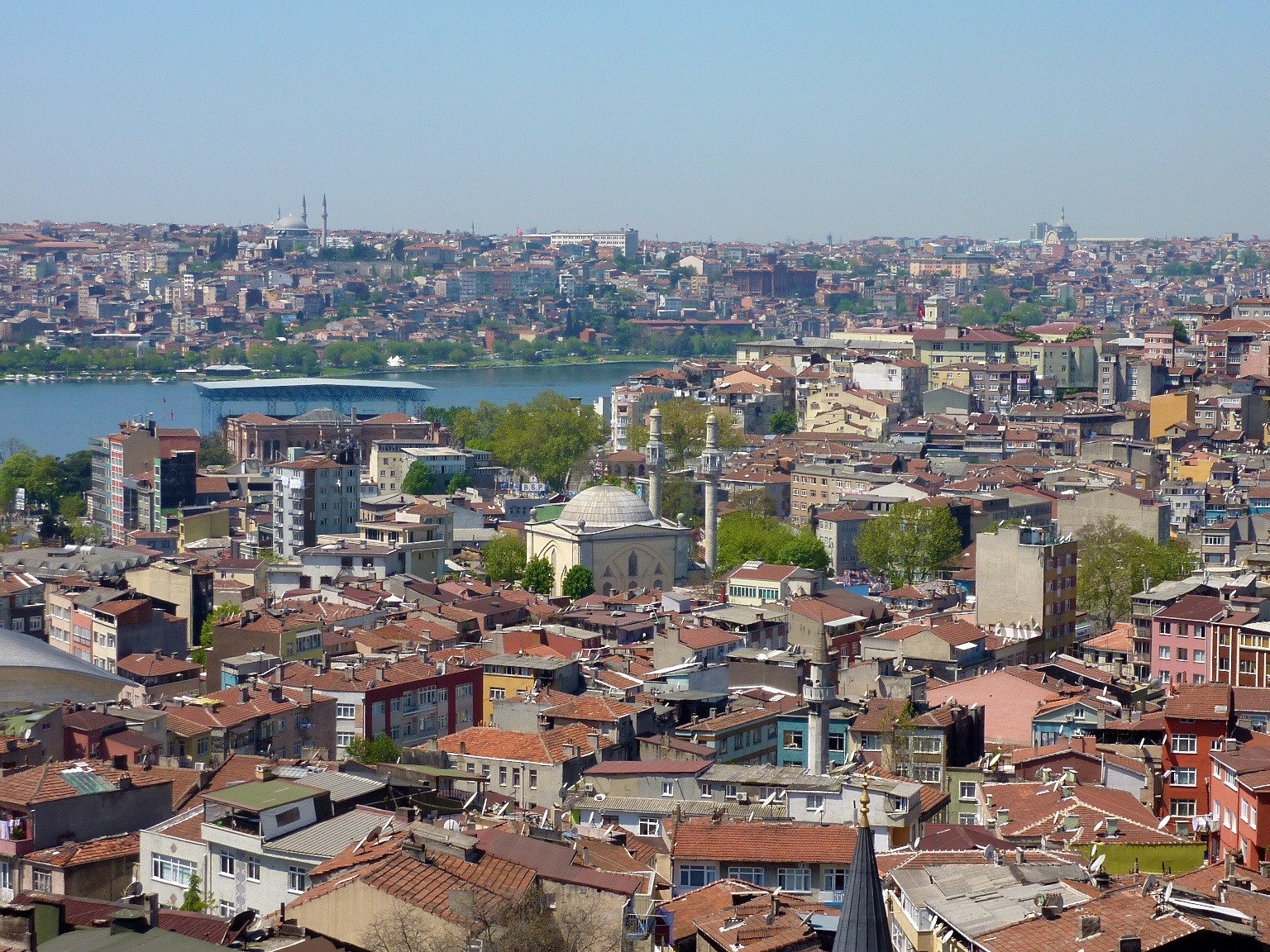
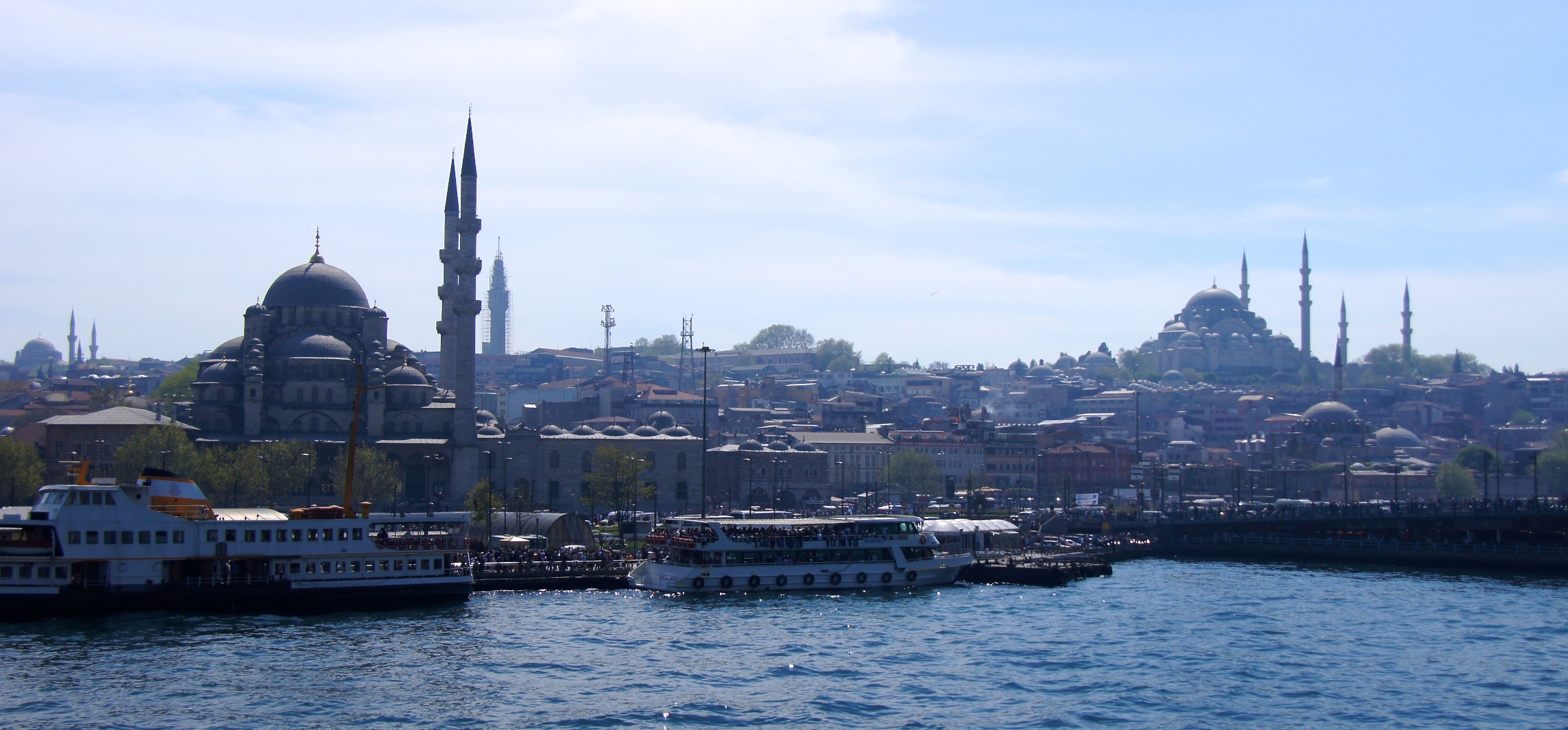
    Istanbul is a modern, interesting, fun city with over 12 million people.  The streets and trams were unbelievably crowded at all times of the day.  Istanbul is second only to Shanghai as being the most populated city in the world.  We were pleasantly surprised at how "European" Istanbul is, along with being cosmopolitan, fashionable, and fairly wealthy. 


    Istanbul blog 78

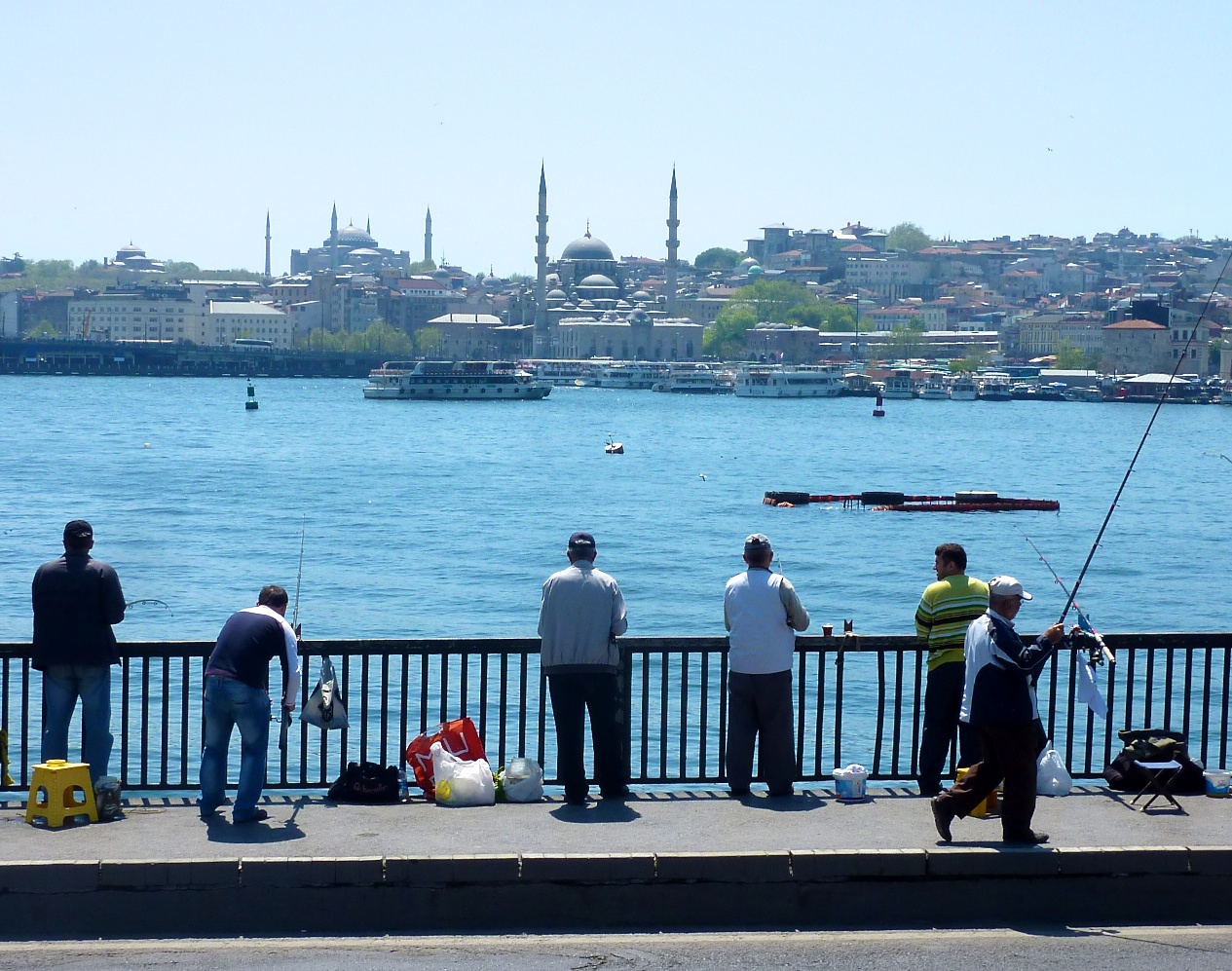
    A fun fact about Istanbul – it is the only city that is in two continents, Europe and Asia.  The Bosphorus (also know as the Istanbul straight) runs directly through the city.  


    Istanbul blog 96


    The official language in Istanbul is Turkish, but many people speak English.  They are not part of the EU (European Union) but are trying very hard to become a member.  Their currency is the Turkish Lira.


      Istanbul blog 97


    Istanbul’s old city has a fascinating history, dating back to 800 BC.  It is a city that began as a Christian society; but today, it is over ninety percent Muslim.   Even though it is mostly Muslim, Turkey prides itself on being tolerant to all religions without discrimination to different cultures.


      Istanbul blog 105


    In 306 AD, the Emperor Constantine the Great made the city the capital of the entire Roman Empire and named it Constantinople. 


    Istanbul blog 81


    In 1453, Constantinople was attacked and conquered by the Ottoman Turks led by Sultan Mehmet II, who renamed it Istanbul.  It was during this rule that the old world Christian city was gradually transformed into a Muslim society and the cathedrals were converted to mosques.


    Istanbul blog 80


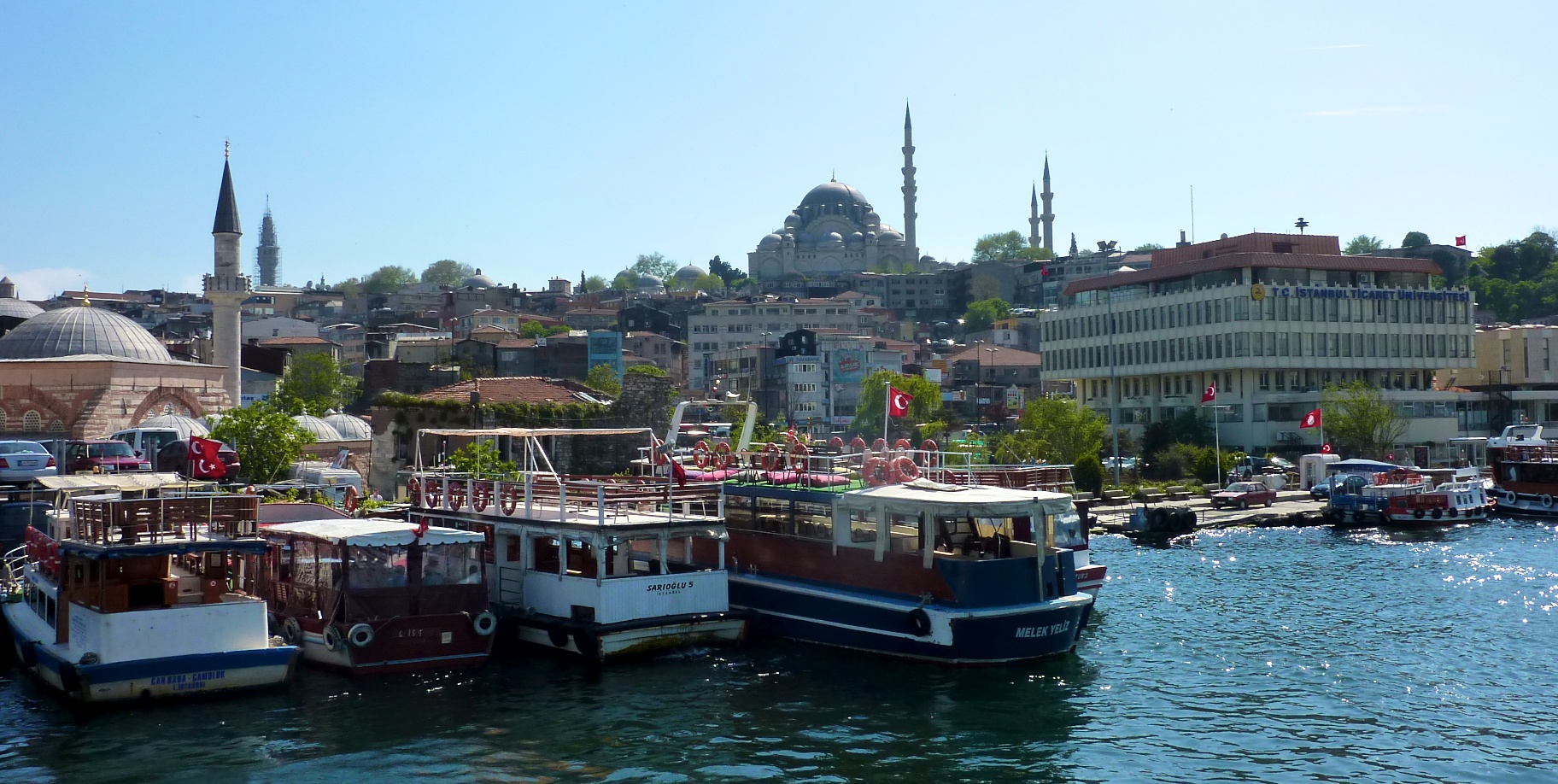
    Today, over 3000 mosques fill the skyline in Istanbul.  Most mosques have between one and six minarets, which were originally used as a high point to make the call to prayer (adhan). 


      Istanbul blog 76


    The call to prayer occurs five times each day: dawn, noon, mid-afternoon, sunset, and night.  Minarets remain a decorative feature of most mosques as the call now occurs via a loudspeaker.  When you first hear the call to prayer you really stop to listen, as it is quite an experience.   After a while, like a church bell, it does not even register.  We enjoy hearing the call.


      Istanbul blog 101


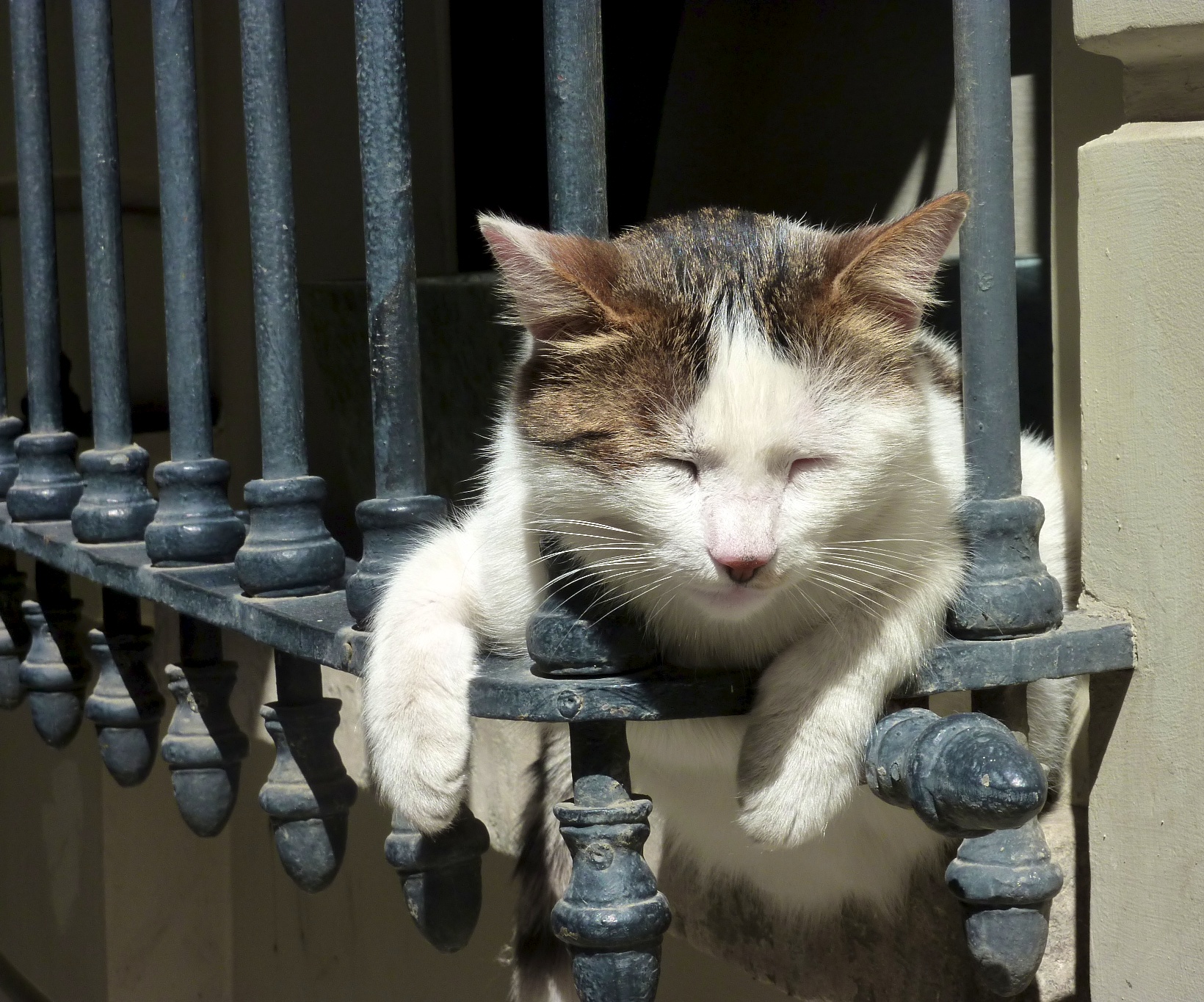
    We stayed in the older part of the city on the European side, in a beautiful apartment.  It was an interesting neighborhood with local restaurants, shops, and lots of dogs and cats.


      Istanbul blog 118


    The dogs and cats live on the streets and everyone takes care of them.  The two above were always outside our apartment.  One day they were running down the street, each with the end of a shoe in their mouth.


    Istanbul blog 98


    This is Domino – he lives in a little boutique.  As seen in this photo, he really talked to you when you said his name!


      Istanbul blog 99


    Famous Mosques


    Our first day we headed out to visit the Hagia Sophia or Ayasofya as it is known in Turkish, one of the most famous mosques in the world.  It was built in 360.  What is so amazing is it was built in just five years.  


    Istanbul blog 41


    The main dome has a diameter of over 101 feet and a height of 160 feet and the interior is covered with expensive colored marbles and ornamental stone inlays.


    Istanbul blog 16


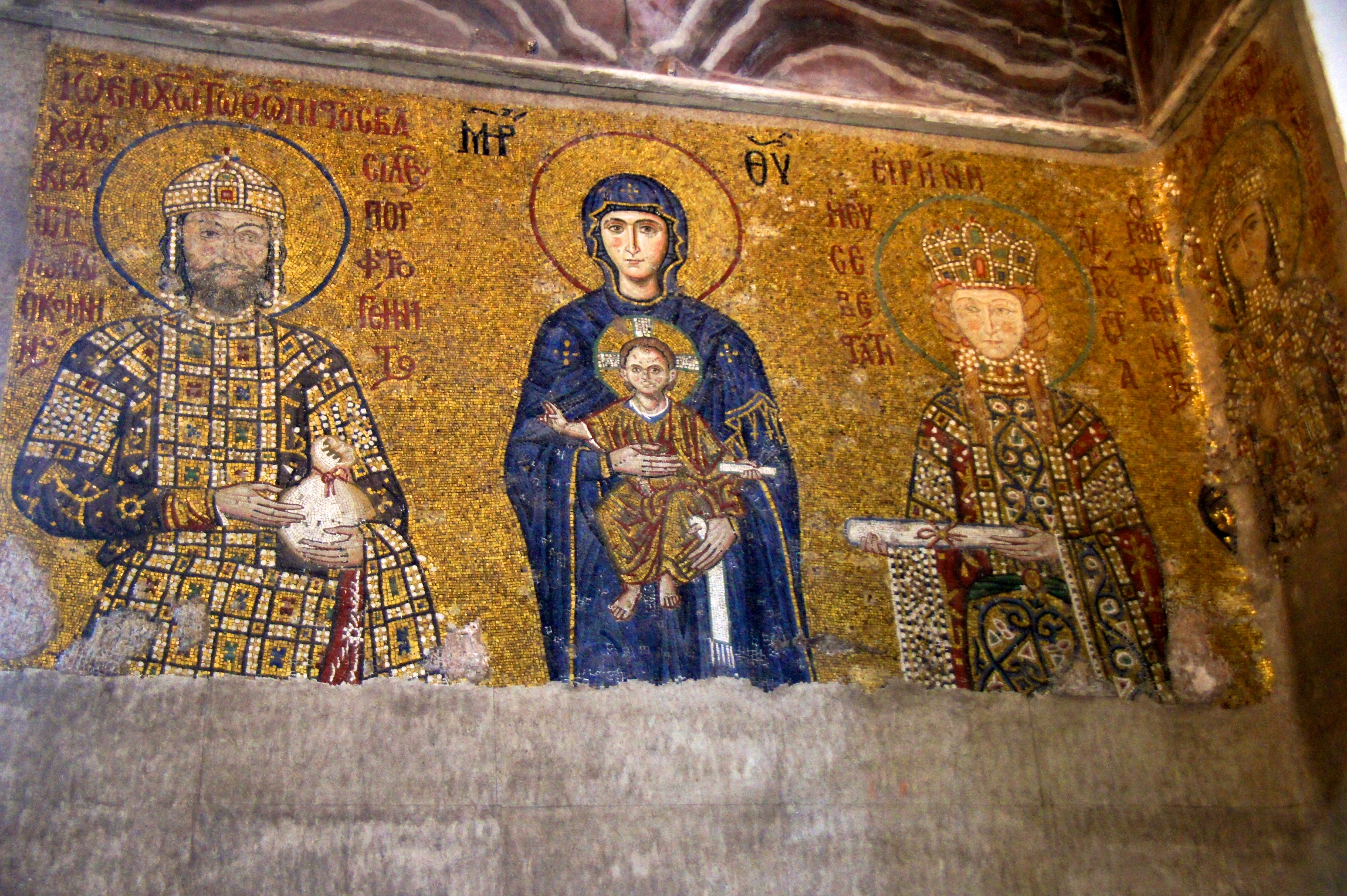
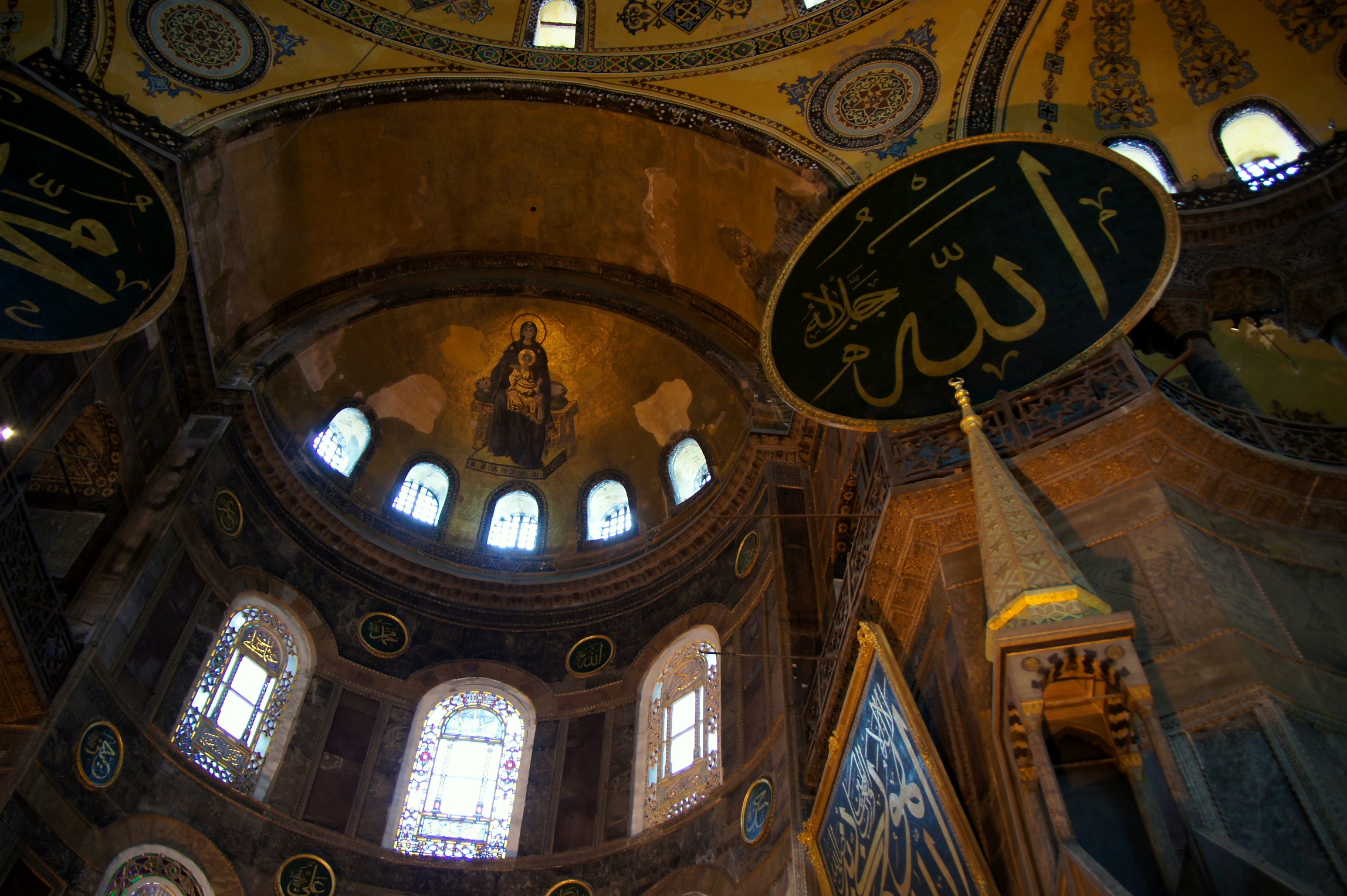
    I was originally built as an Orthodox basilica and for many years it was used for Roman Catholic services.  In 1453 it was converted to a Mosque.  During the conversion, they covered up everything related to the Catholic religion.  The plaster is now chipping off and you can see the religious images again (see below).  


    Istanbul blog 18

    Historians say they will not intentionally uncover the paintings, but if the images show through, they will restore them.  It is interesting to see the Virgin Mary (in the dome below) next to the Muslim script.   


      Istanbul blog 15


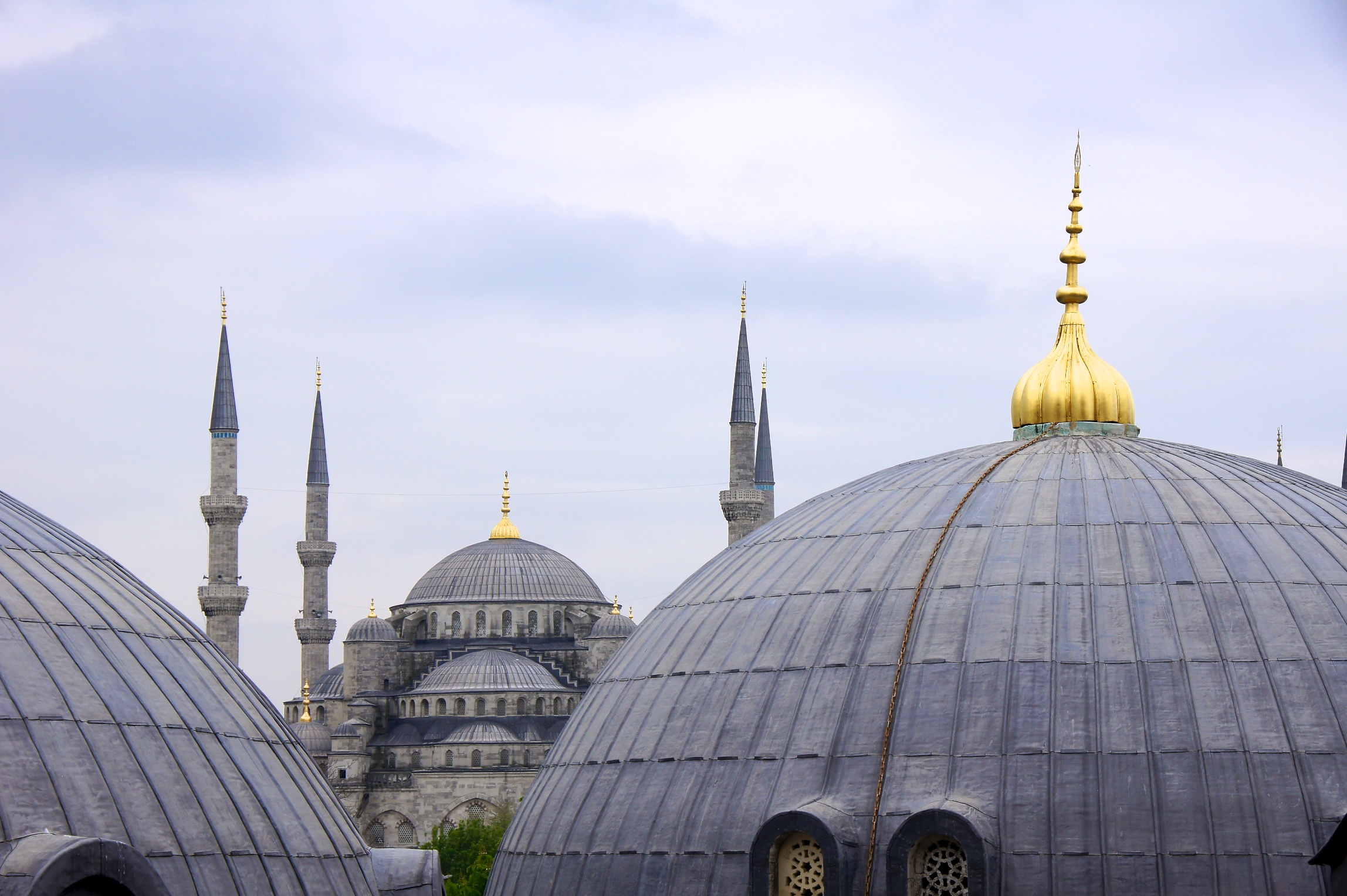
    D captured this beautiful view looking out of the window of the Hagia Sophia.  That is the Blue Mosque in the distance, our next stop.


    Istanbul blog 17
     

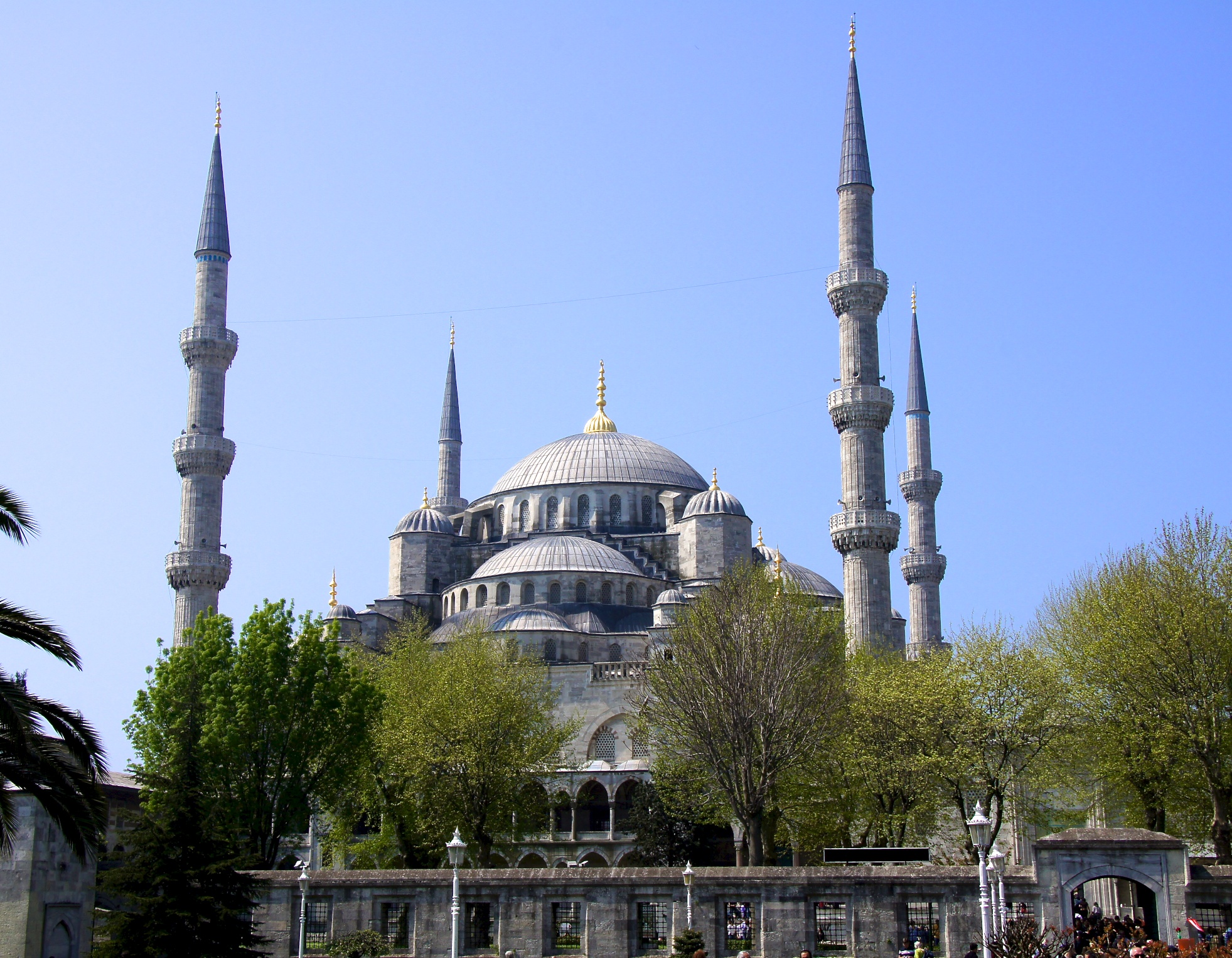
    The Blue Mosque – officially known as the Sultan Ahmed Mosque is the largest mosque in Istanbul. 


    Istanbul blog 39


    Sultan Ahmet I commissioned it when he was only 19 years old. Construction began in 1609 and only took seven years to build.  Sadly, he died just a year after the completion of his masterpiece, at the age of 27.  He is buried outside the mosque with his wife and three sons.


    Istanbul blog 45


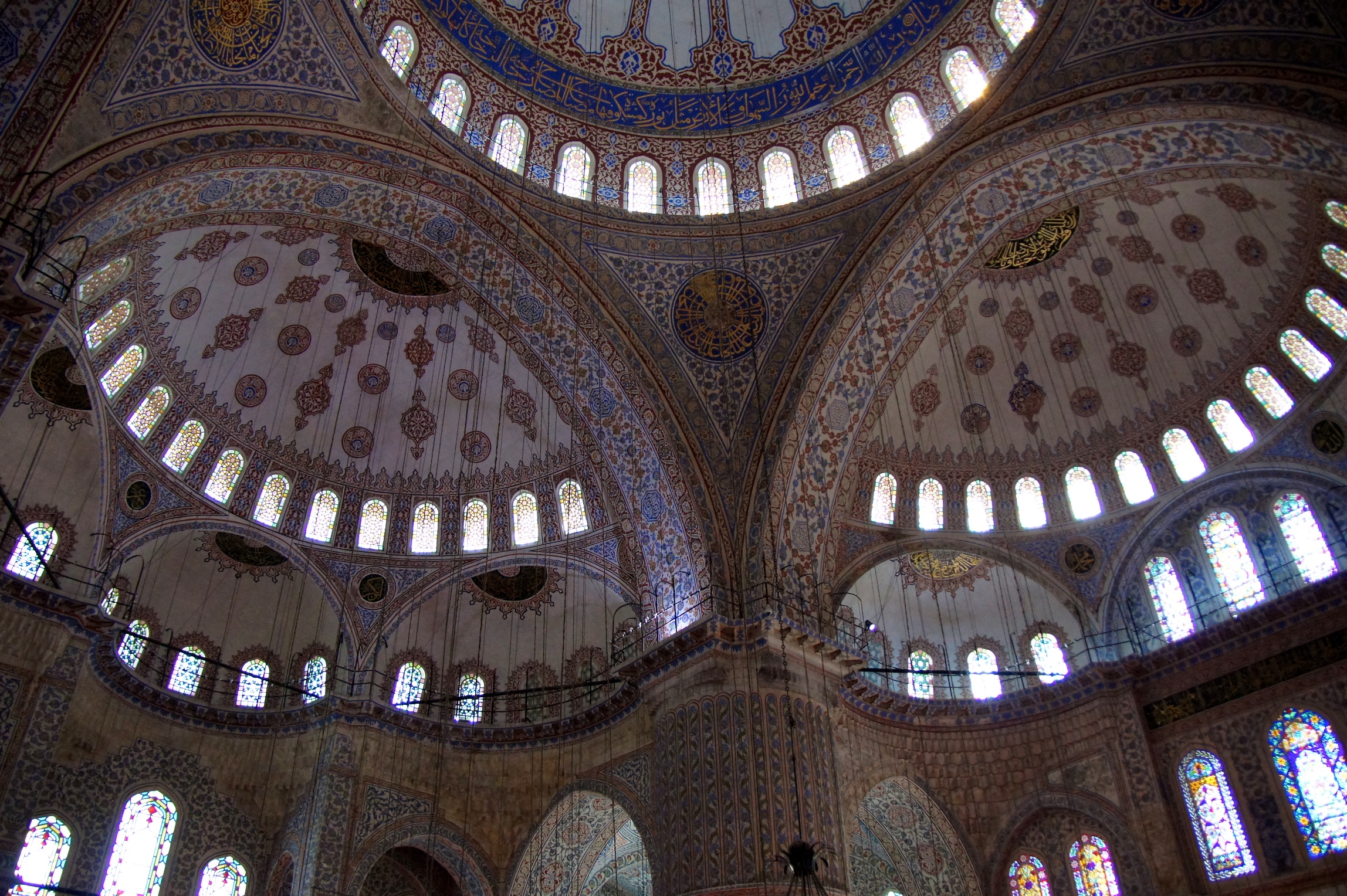
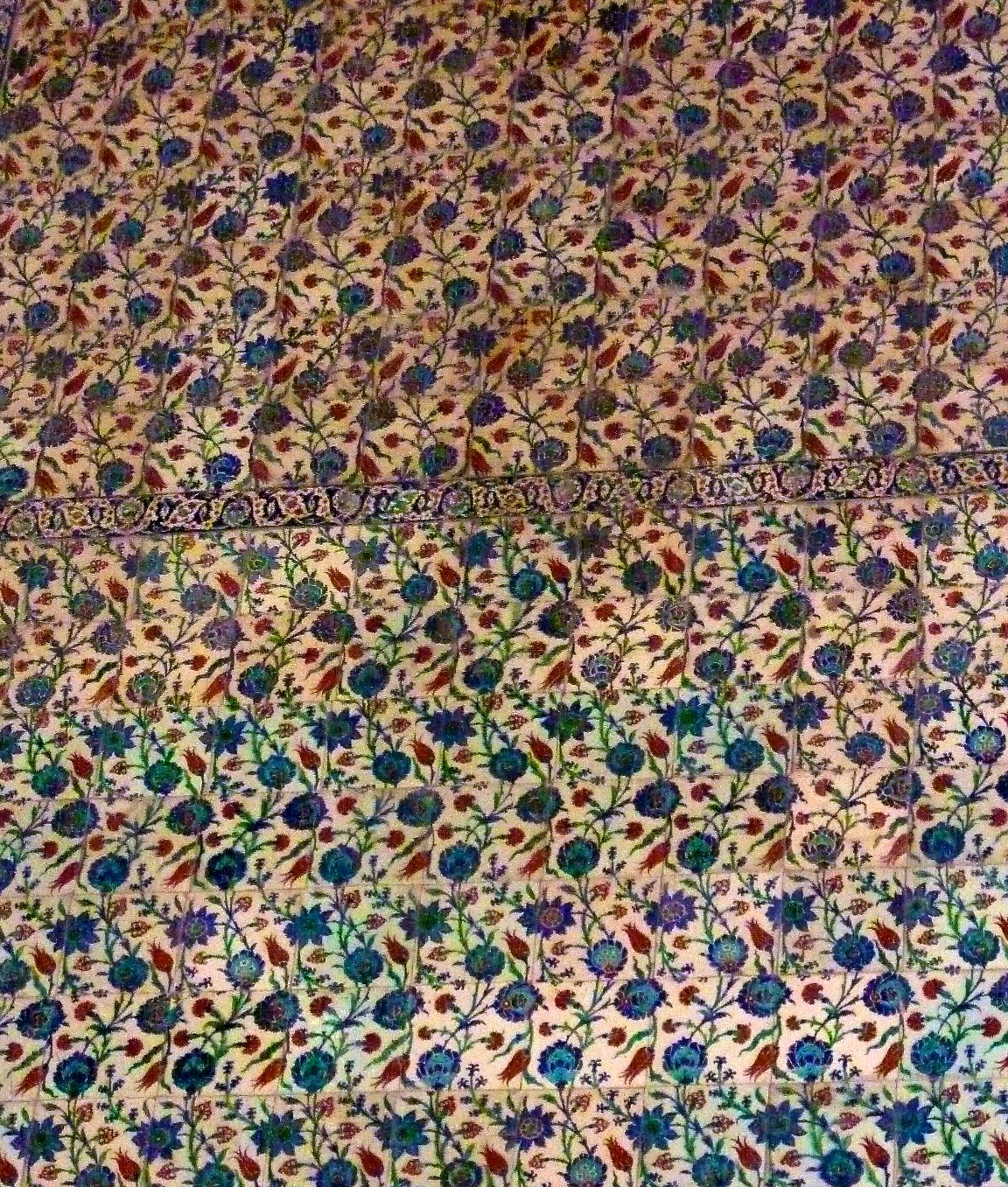
    It is known as the Blue Mosque because of the blue tiles adorning the walls of its interior.


    Istanbul blog 46


    Istanbul blog

    It is still used as an active mosque.


      Istanbul blog 38


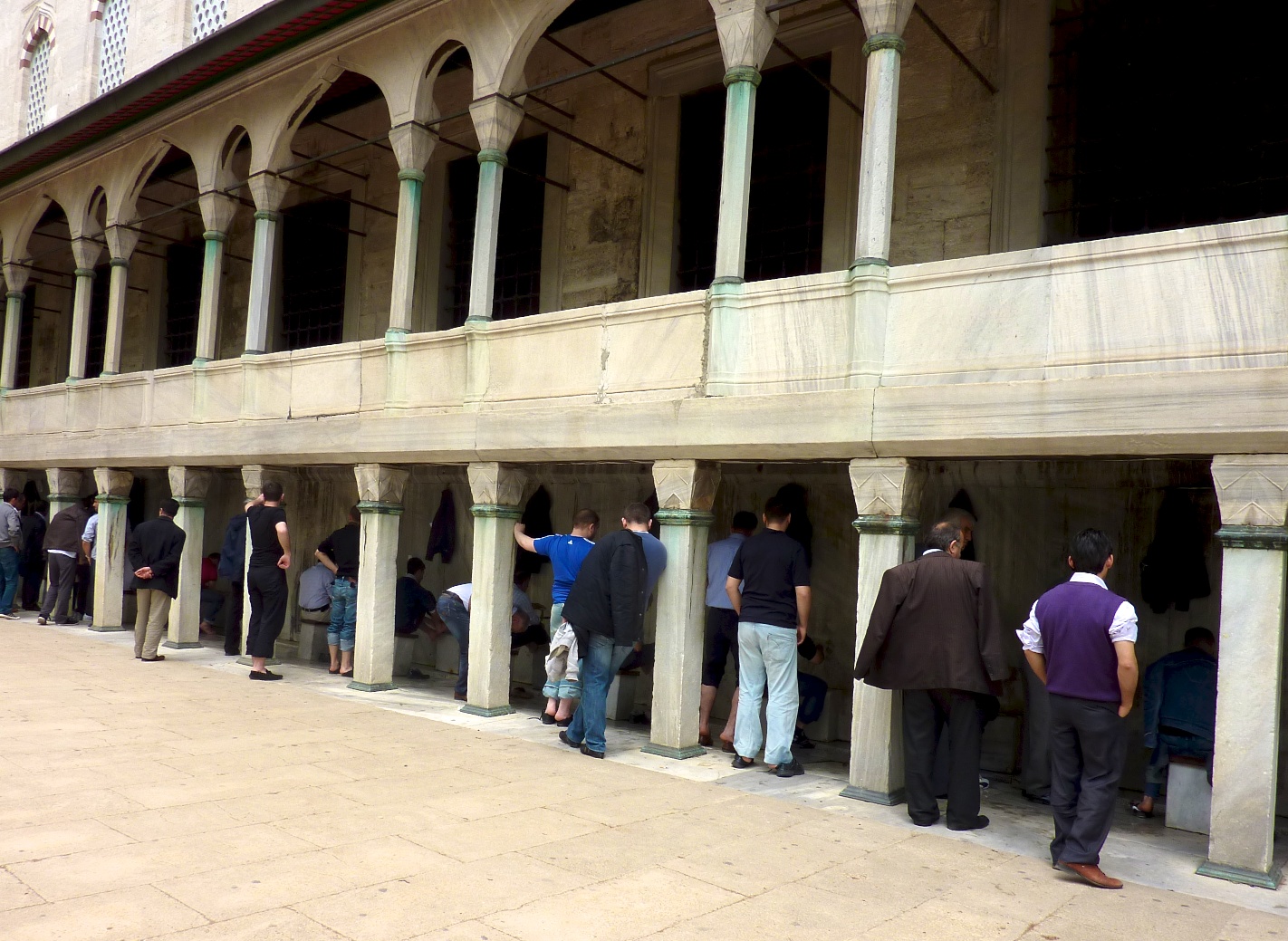
    The first time we tried to tour, it was Friday at noon; not the time to visit a mosque, as Friday is their holiest day.  But we were actually glad we arrived at this time, as we were able to see the men prepare for the service.


      Istanbul blog 44


    They must wash their feet and hands before entering the mosque for prayer.


      Istanbul blog 42


    Istanbul blog 43

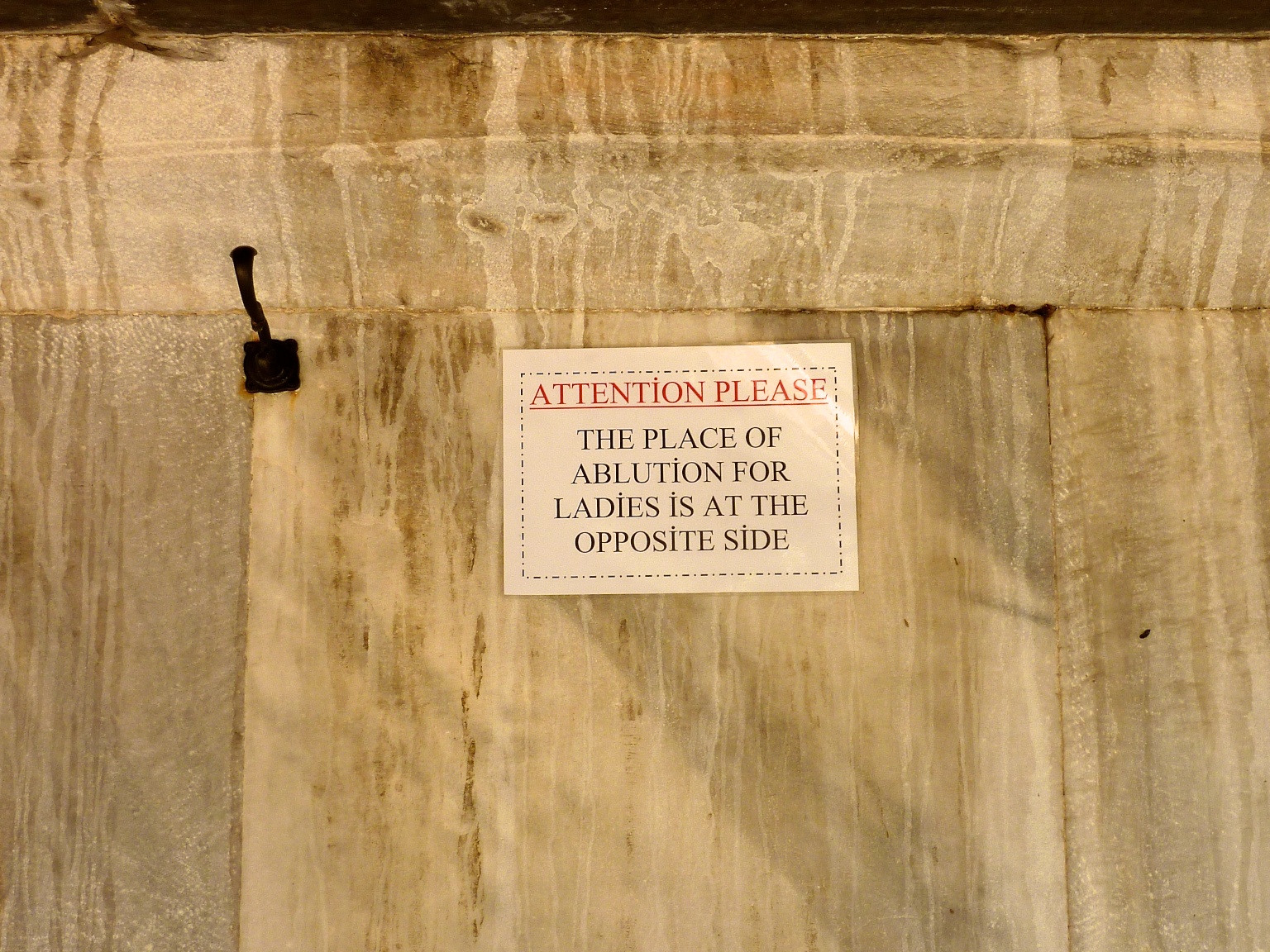
    Note this sign for the women.  Maybe Istanbul is not quite as modern as I thought.


      Istanbul blog (1)

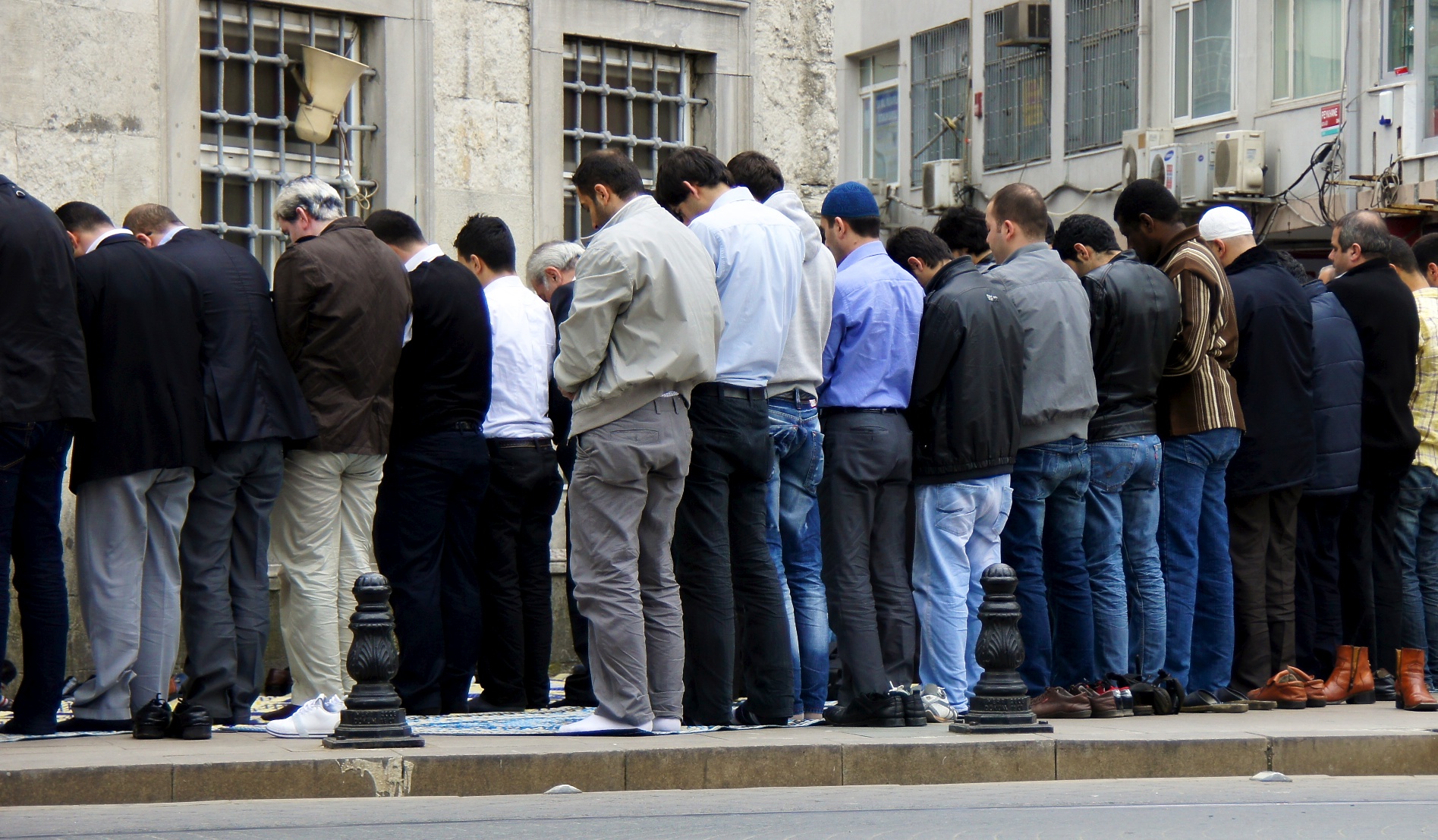
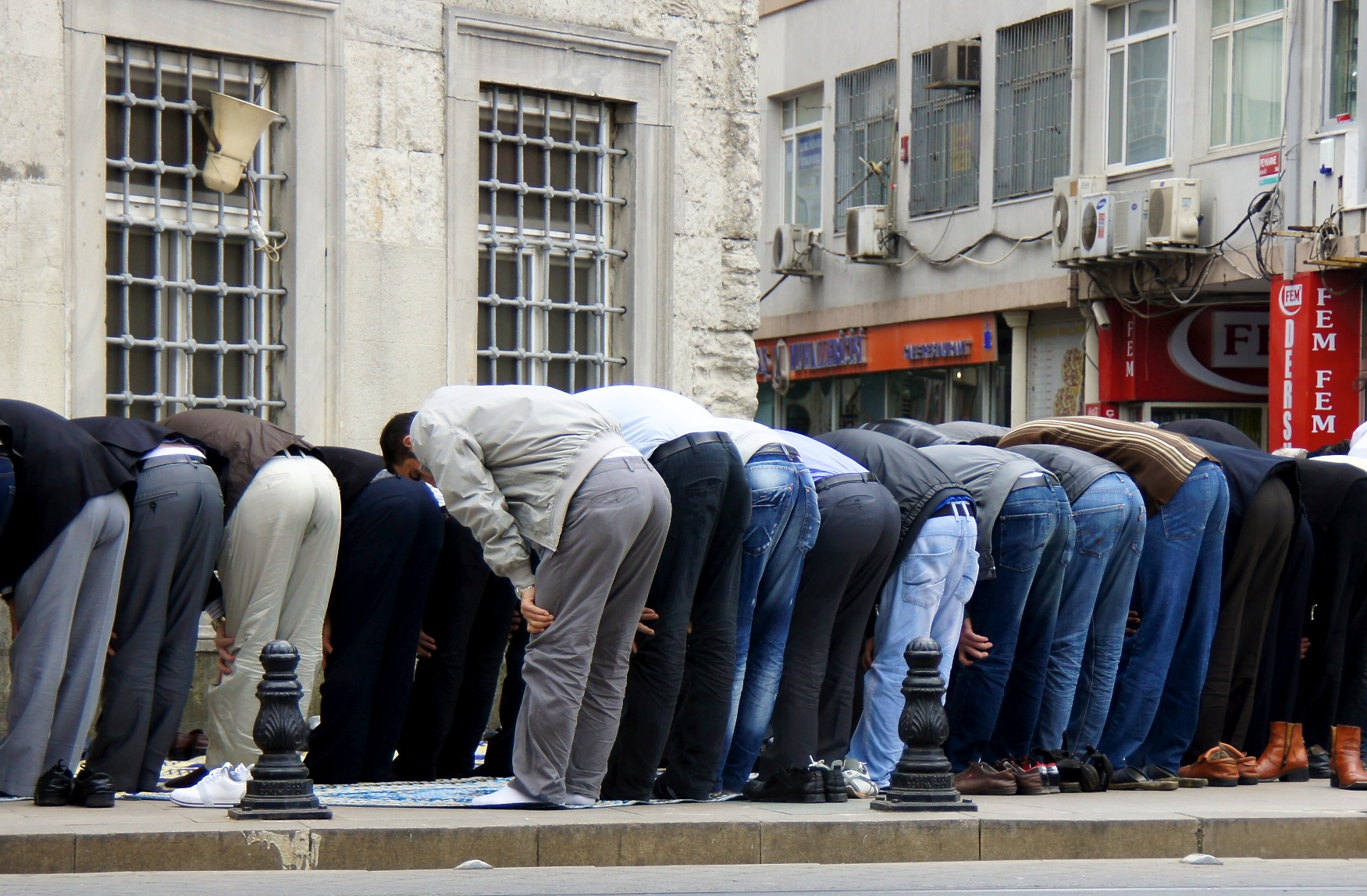
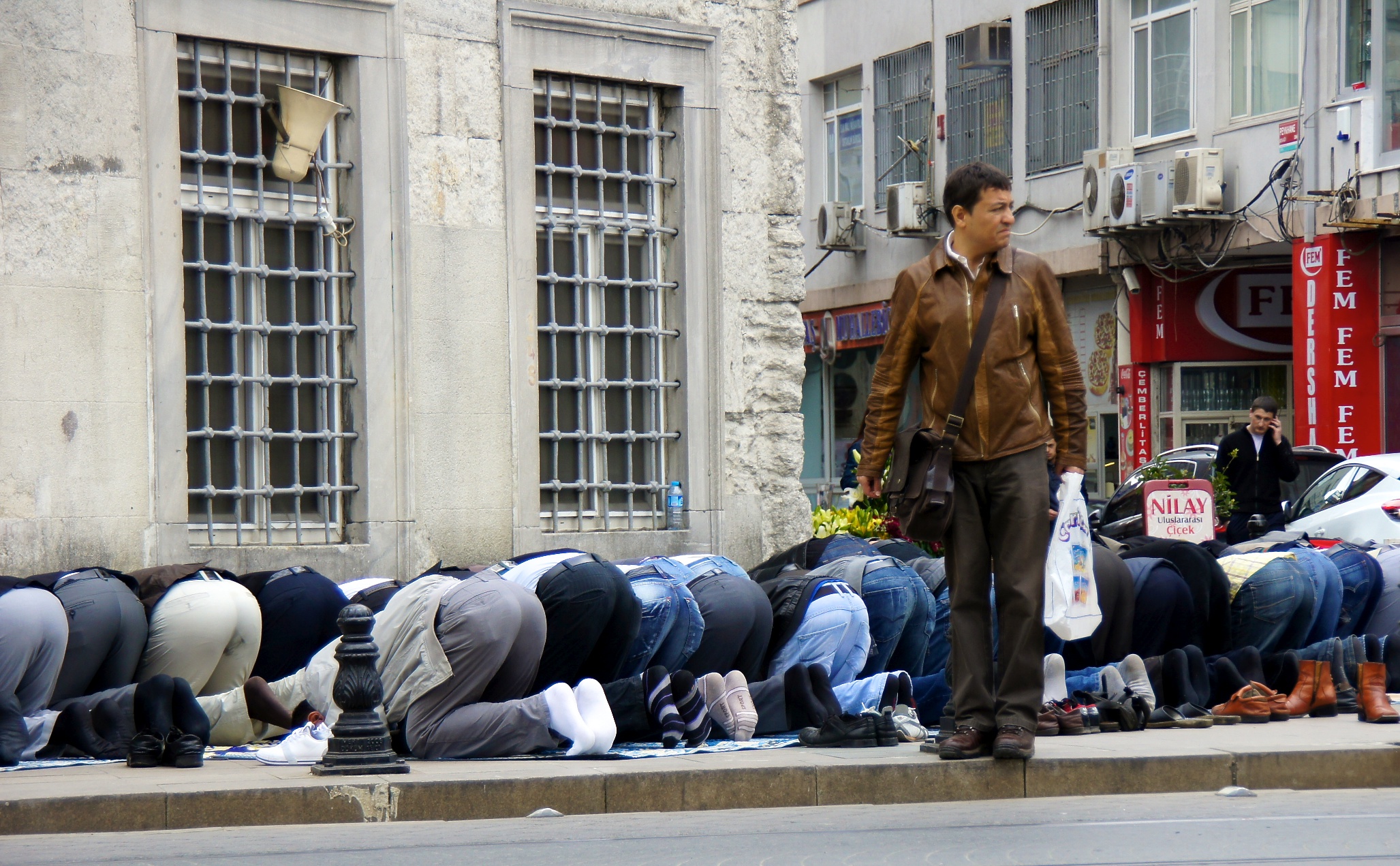
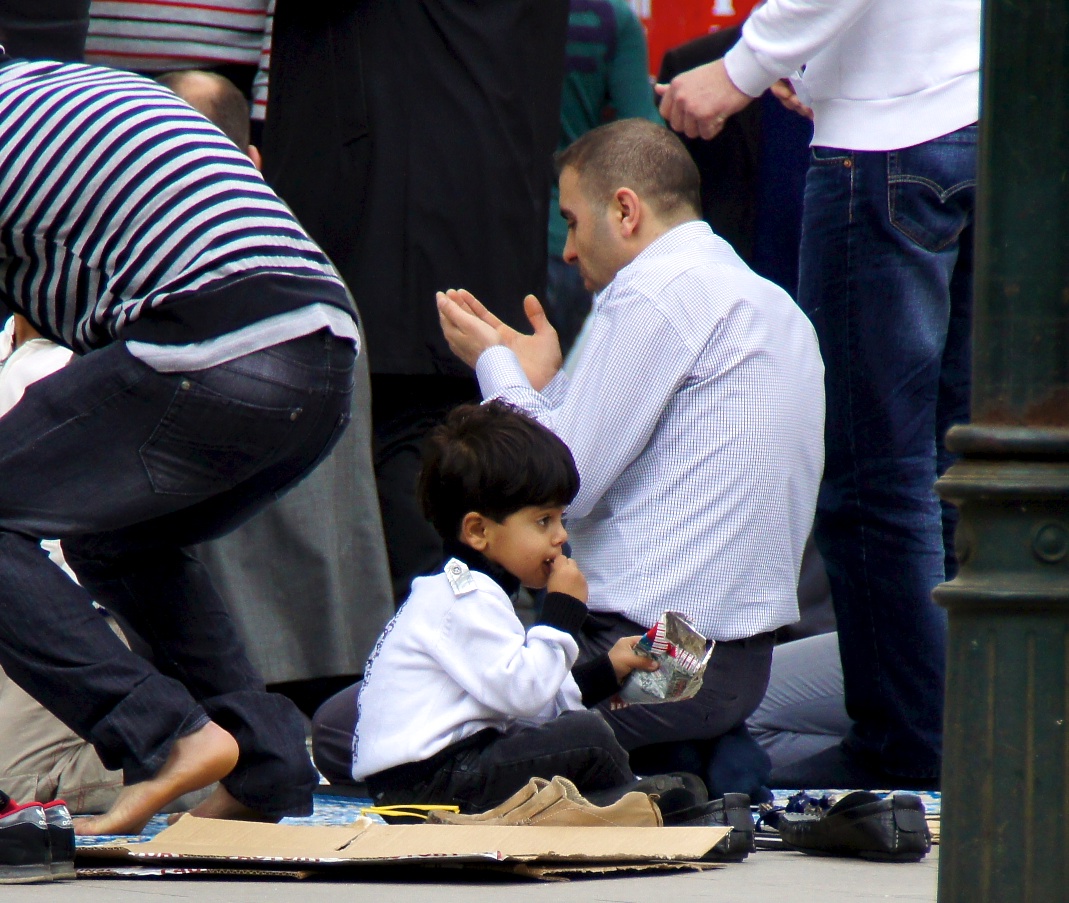
    One day we were sitting in a restaurant at lunch and watched a mosque across the street during noon prayer.  The Mosque was so small, many of the men spilled out onto the sidewalk.  We captured these photos.


    Istanbul blog 19


    Istanbul blog 20


    Istanbul blog 21

    Because we are not allowed in the Mosque during prayer, we thought it was very special to see them in such an intimate moment.  And how cute is this little one eating his chips, attending prayer, but not yet understanding it.


    Istanbul blog 22

    The Basilica Cistern was built by the Romans and is the biggest of Istanbul’s surviving Byzantine sites.  It was built around 532 AD to provide water for the city. This cistern is an underground chamber of 336 marble columns, supported by columns and arches. 


      Istanbul blog 48


    We really enjoyed this eerie site, as it was so different from anything we have seen.  It has been described as a flooded palace, which I thought was a good description.


      Istanbul blog 49


    The Grand Bazaar and the Spice Market


    Istanbul blog 23


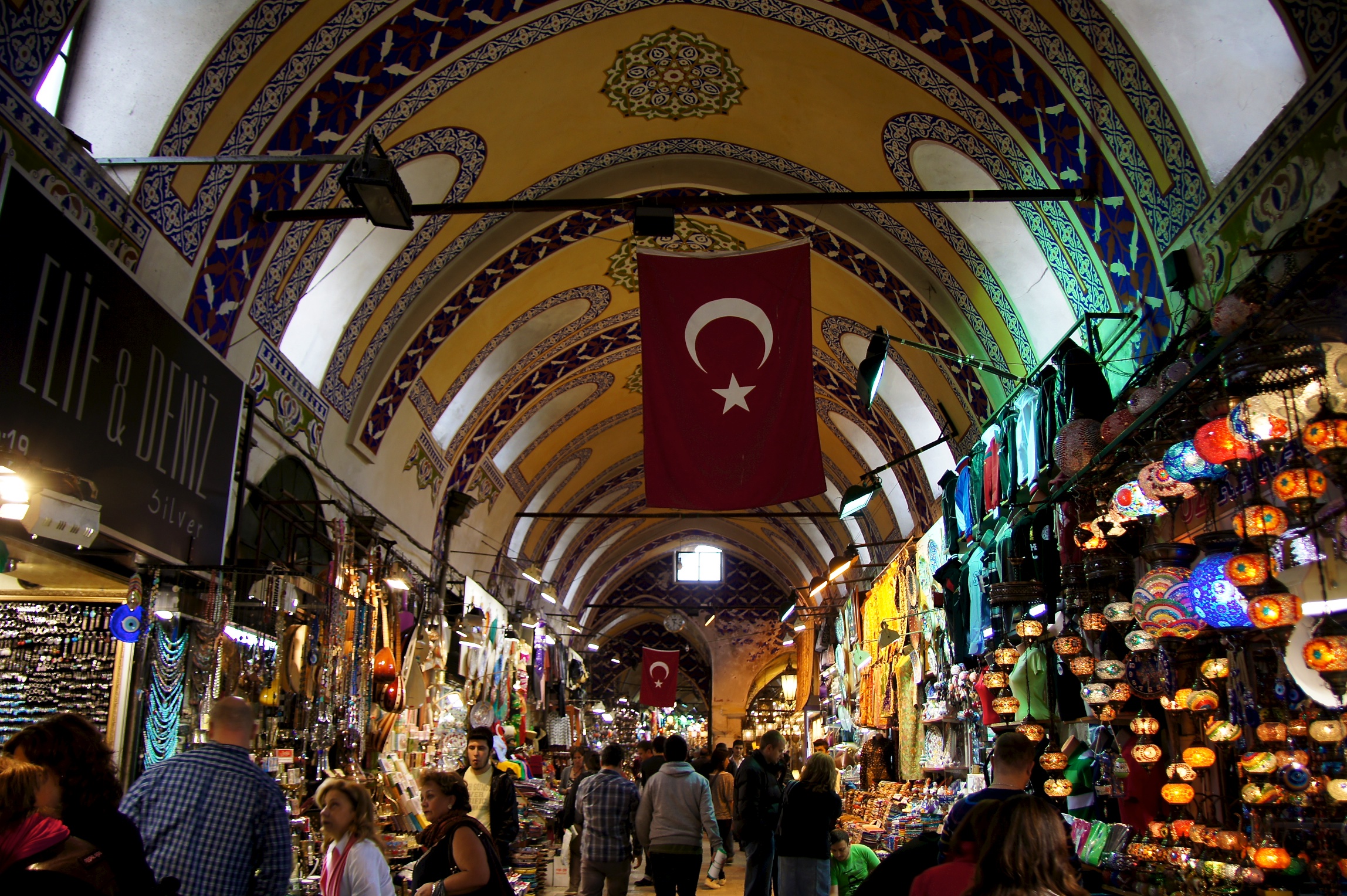
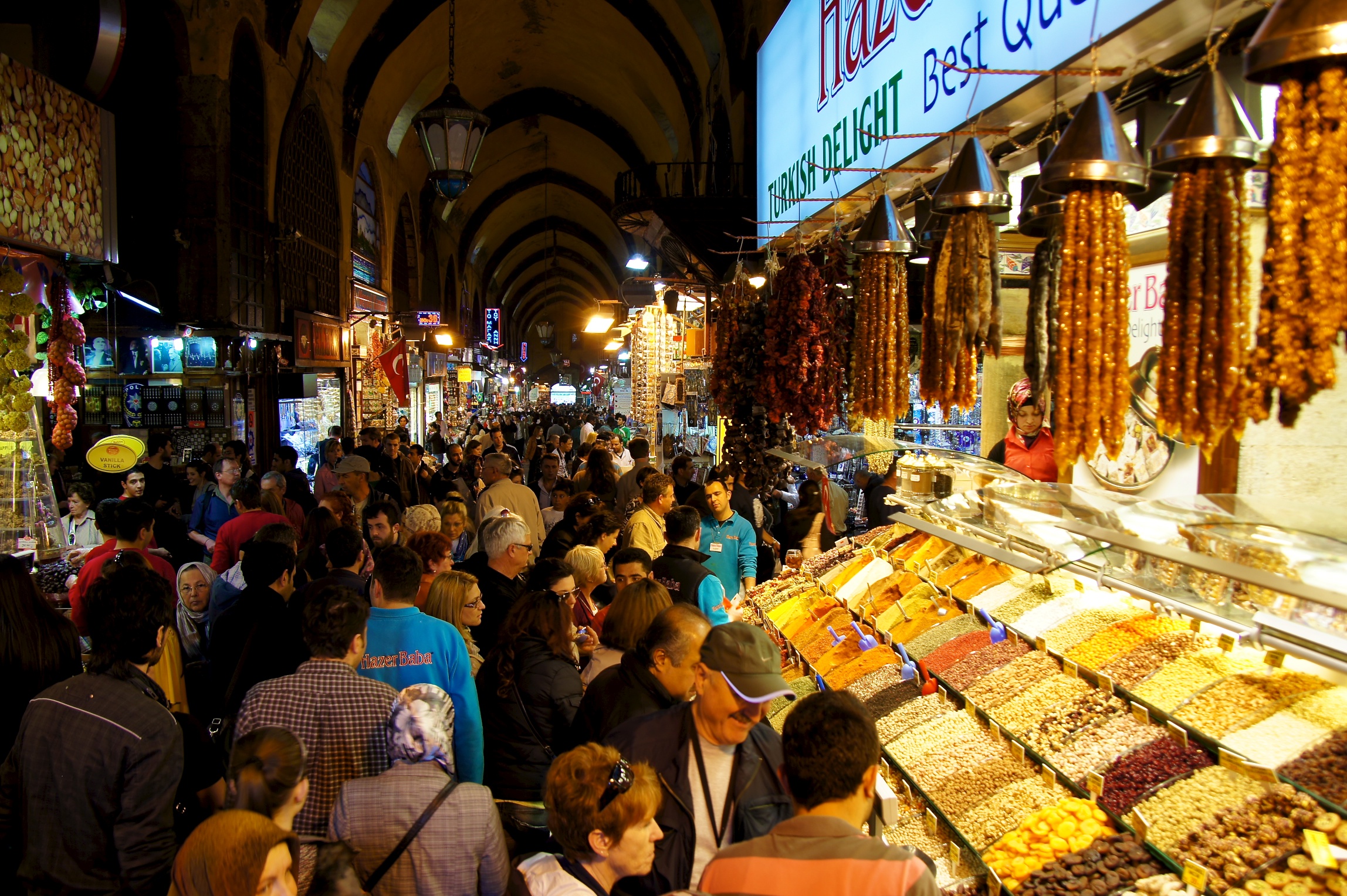
    The Grand Bazaar, created in 1461, is one of the largest covered markets in the world with 60 streets and 5,000 shops.


      Istanbul blog 24


    At the spice market I bought honey and pomegranate juice for salads – both local products.


    Istanbul blog 33


    After visiting the markets in Bangkok and Morocco, we were not that impressed with the two markets.  However, we did enjoy all the streets that surrounded the Bazaar.  


    Istanbul blog 27


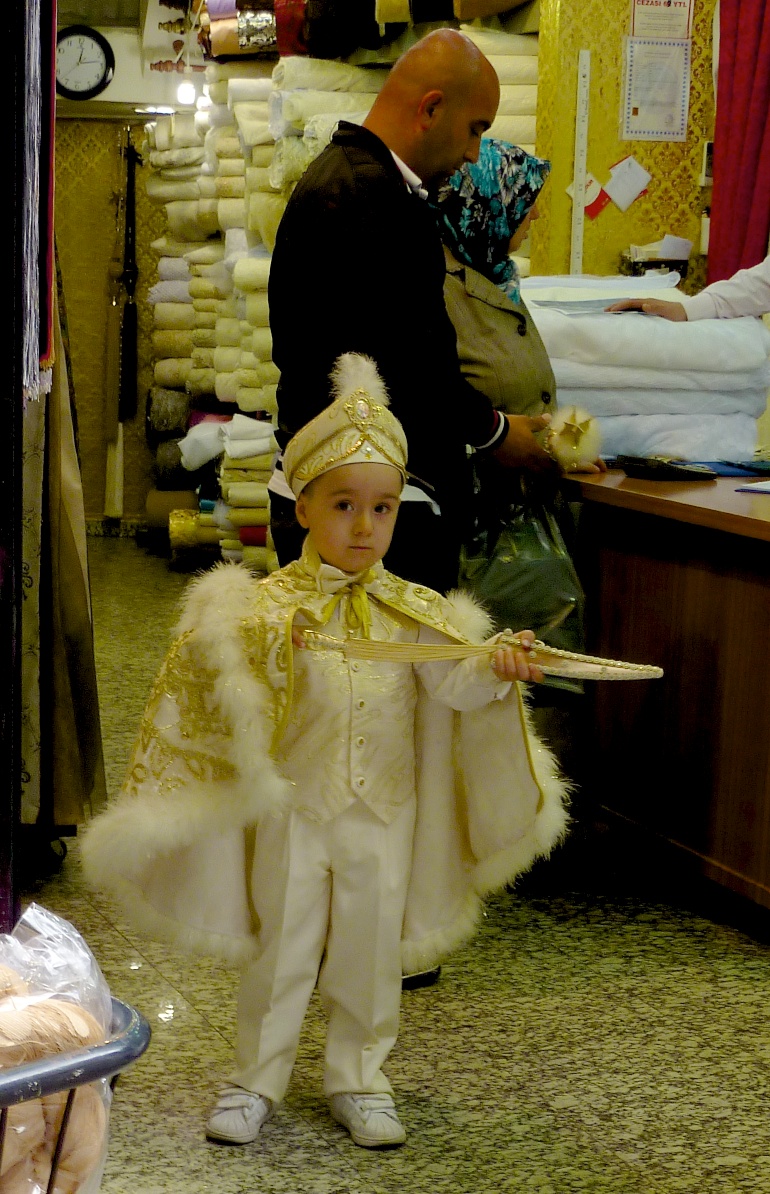
    We learned that the "little prince" outfit this wee one is wearing is used for the celebration of his circumcision.  It usually occurs between the ages of 2 and 14.


    Istanbul blog 29


    As you can see many of the women cover their heads with scarves, but very few wear the full niqab (face covering).


     Istanbul blog 51


    Food!


    Istanbul blog 54

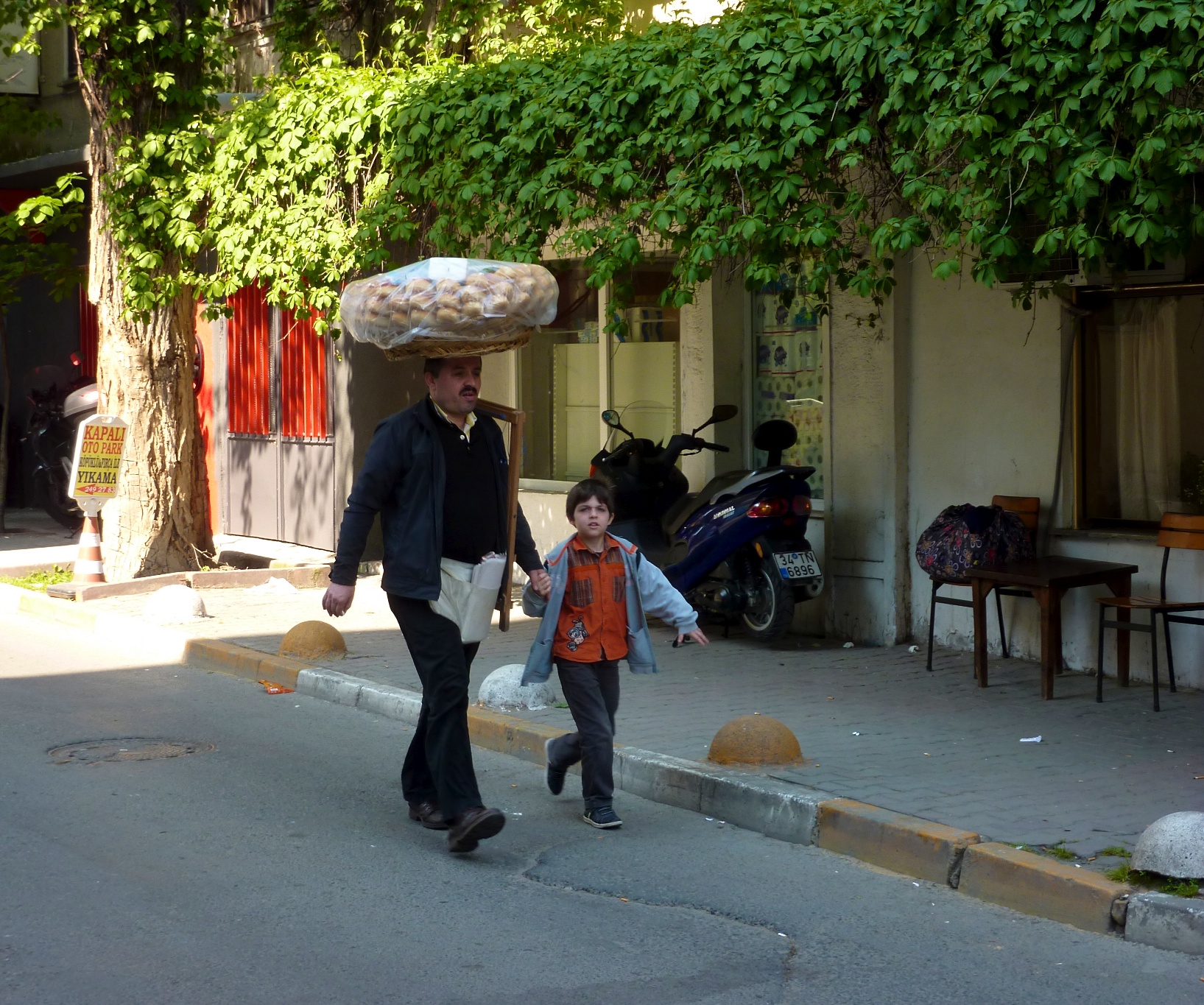
    Get ready – you know how we love photos of our food!  There are many street vendors around the city – mainly selling various forms of the pretzel. 


    Istanbul blog 8


      Istanbul blog 61


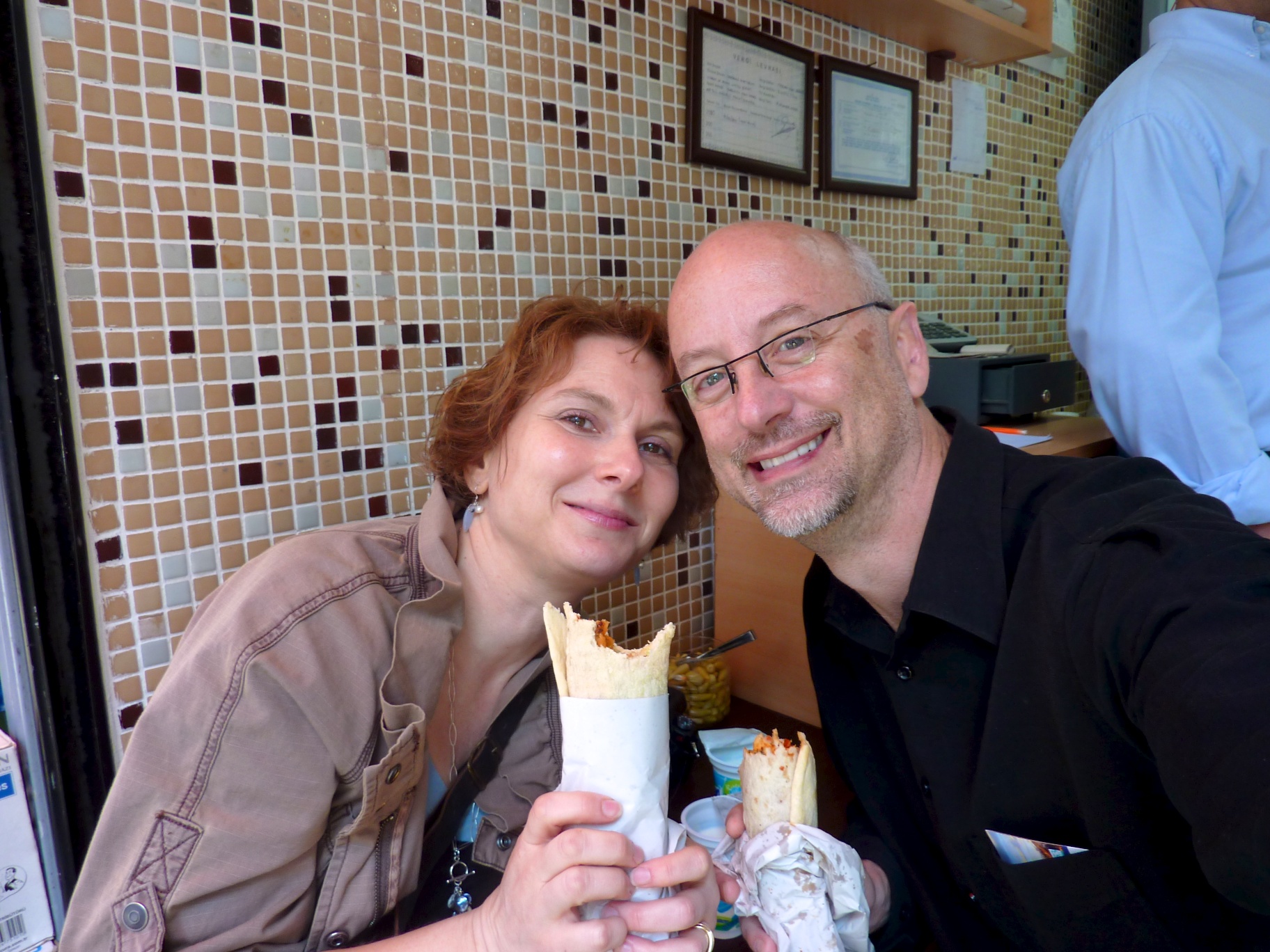
    D eating a Simit – a crisp, ring-shaped bread with sesame seeds.


    Istanbul blog 7


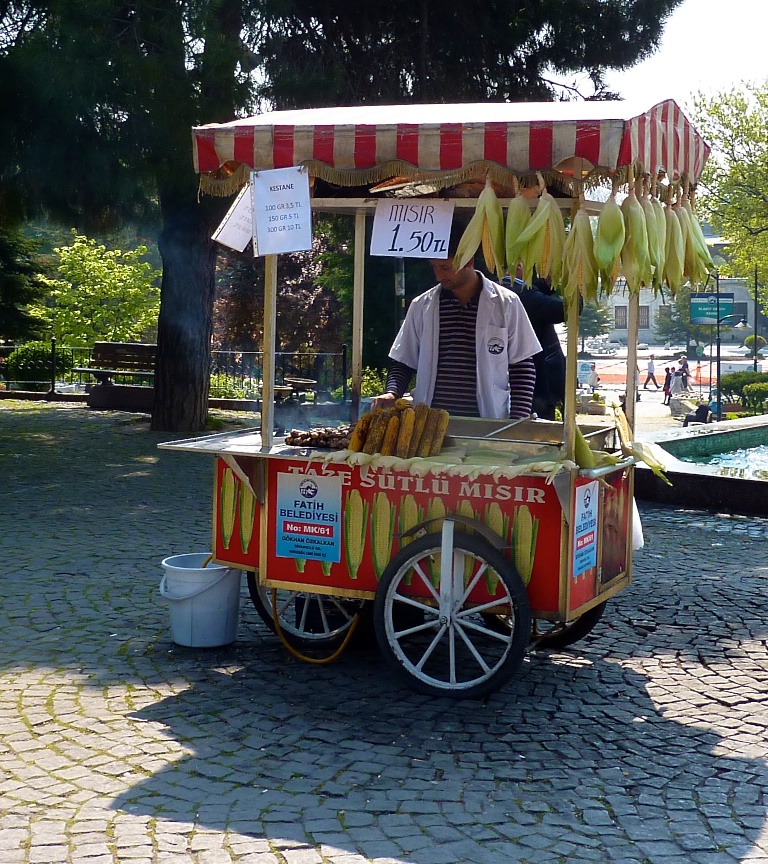
    Other street items were fresh fruit drinks, nuts, and Misir (grilled corn).


    Istanbul blog 36

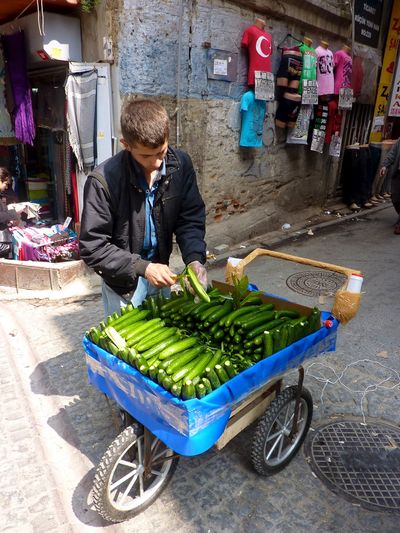
    This one was great – a cart of cucumbers.   He quickly peeled the cucumber (notice the plastic gloves) and handed it to us in a napkin.  Yummy and a healthy snack!


      Istanbul blog 9


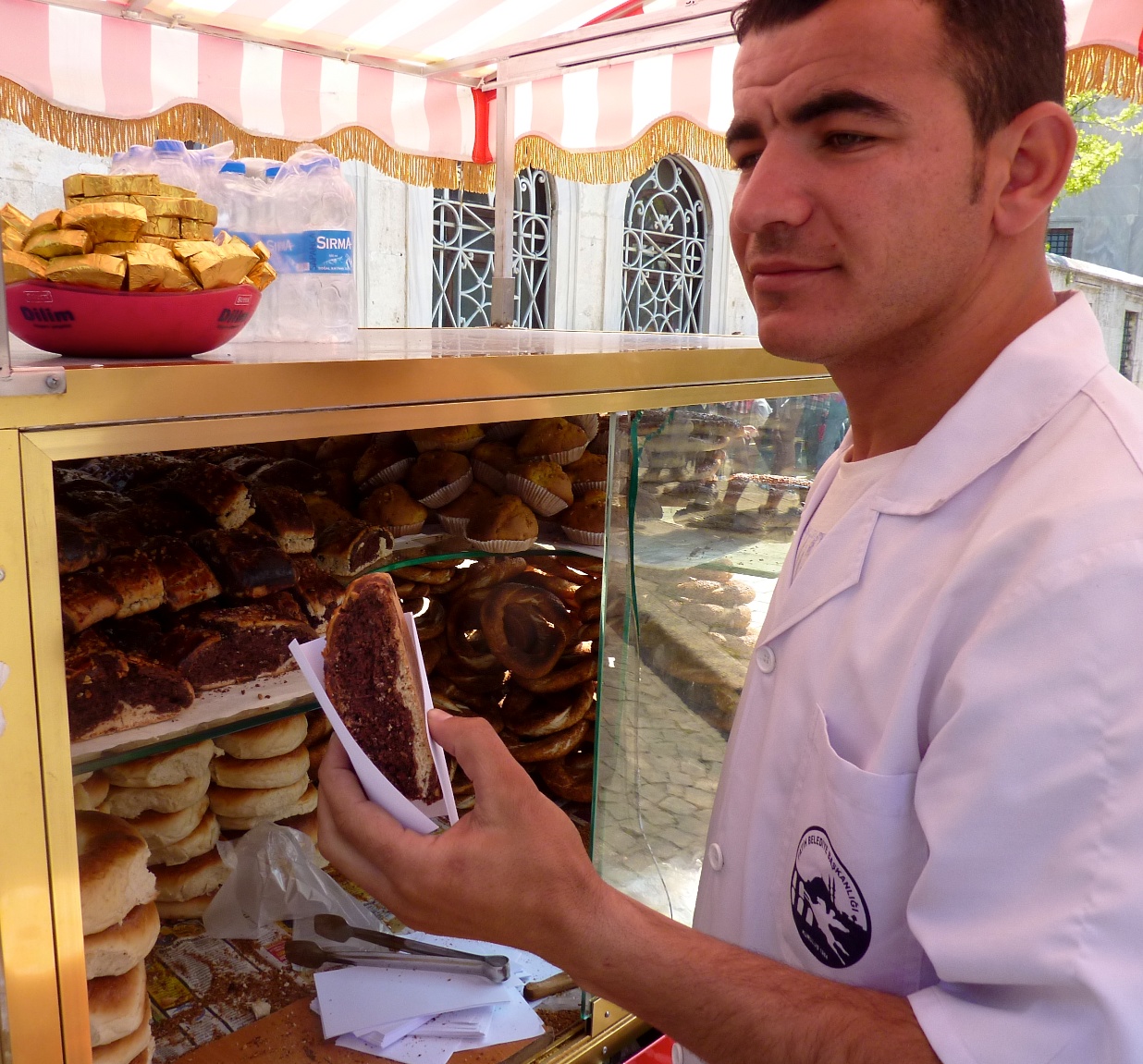
    A dense chocolate cake.  Not very sweet but tasty.


    Istanbul blog 47


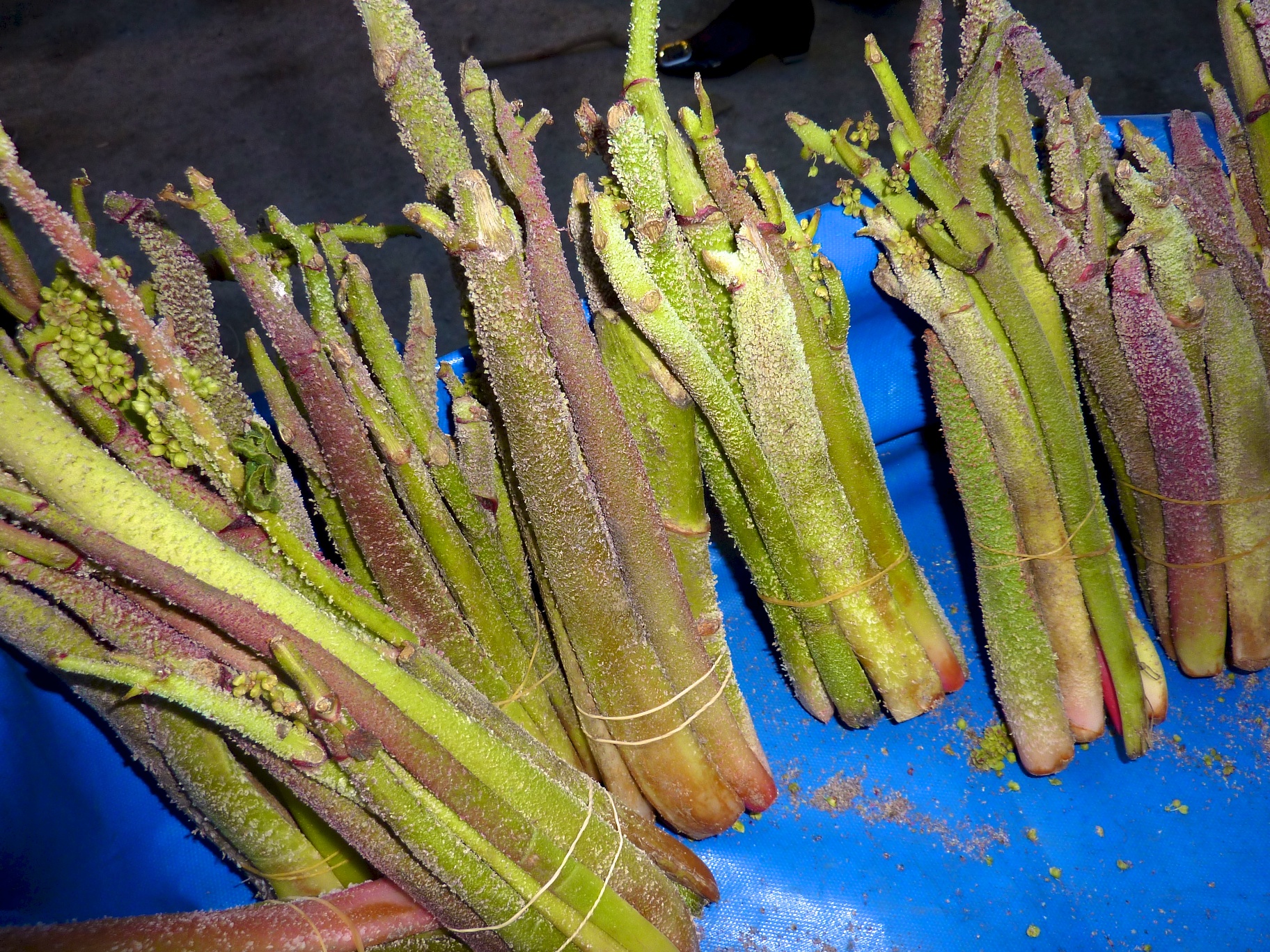
    This was a vegetable we had never seen, called iskin.  We bought a cluster to taste.  It is often eaten raw or can be used for a sorbet.


    Istanbul blog 70


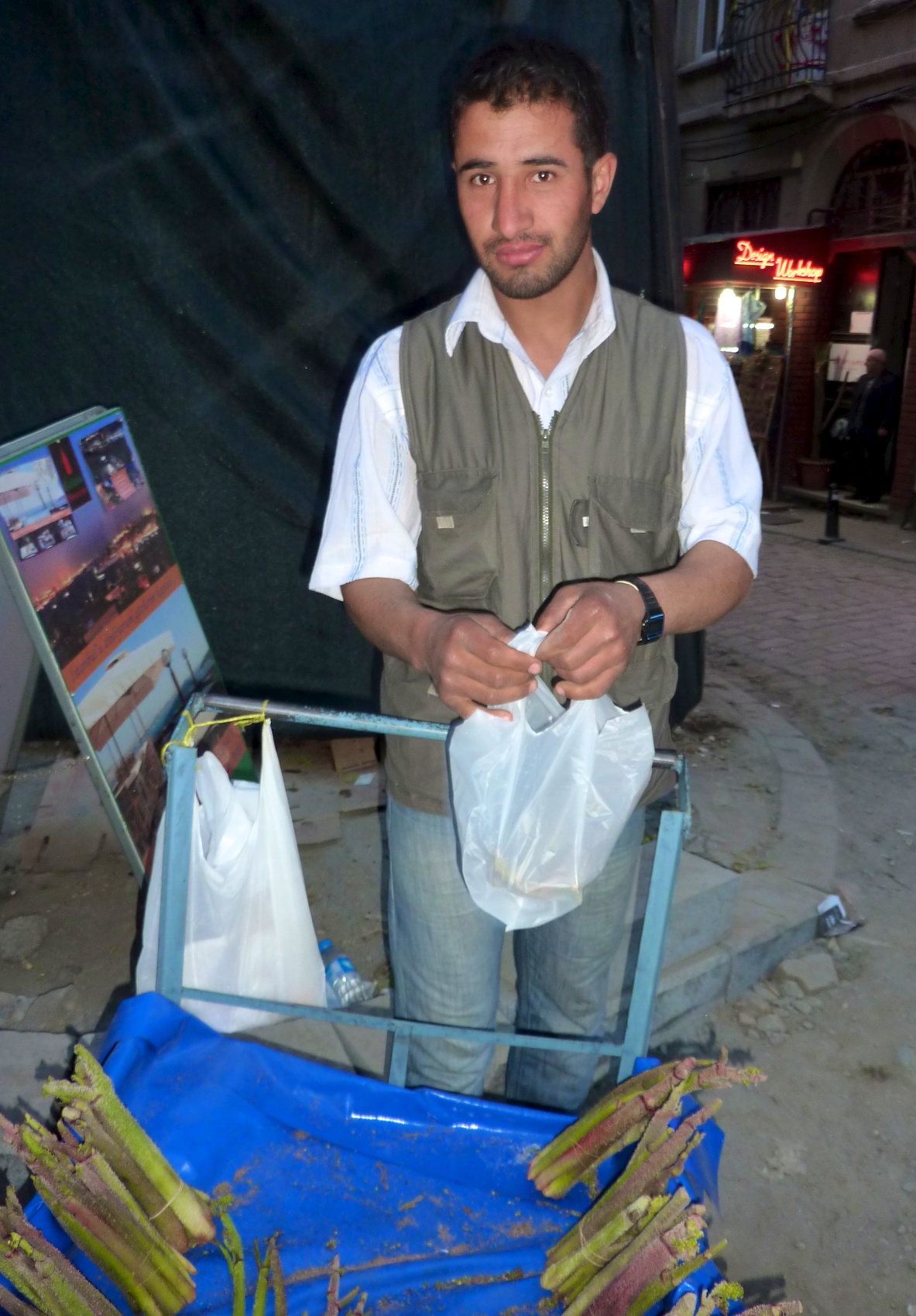
    It is very similar to rhubarb and has a very sour taste.  We both love rhubarb, but did not really care for the iskin.  But how  handsome is the young man selling it  :  )


    Istanbul blog 69 


     An older woman selling seeds for the pigeons.


    Istanbul blog 11


    We were pleasantly surprised at the freshness, healthiness, and quality of the food.   They use mint in almost every dish.  They do not cook with heavy sauces.  Humm – how did we each gain four pounds then??  Below was at a kebab restaurant.  Yes – only two of us were eating. Maybe this is the answer to how we gained weight!


      Istanbul blog 2


    We were very amused at the tiny tables and the tiny chairs EVERYWHERE throughout the city.  We had not seen this in any other country.


    Istanbul blog 32


    Istanbul blog 52


    Especially funny when there were grown-men crouched in the tiny seats.


    Istanbul blog 34


    Istanbul blog 31


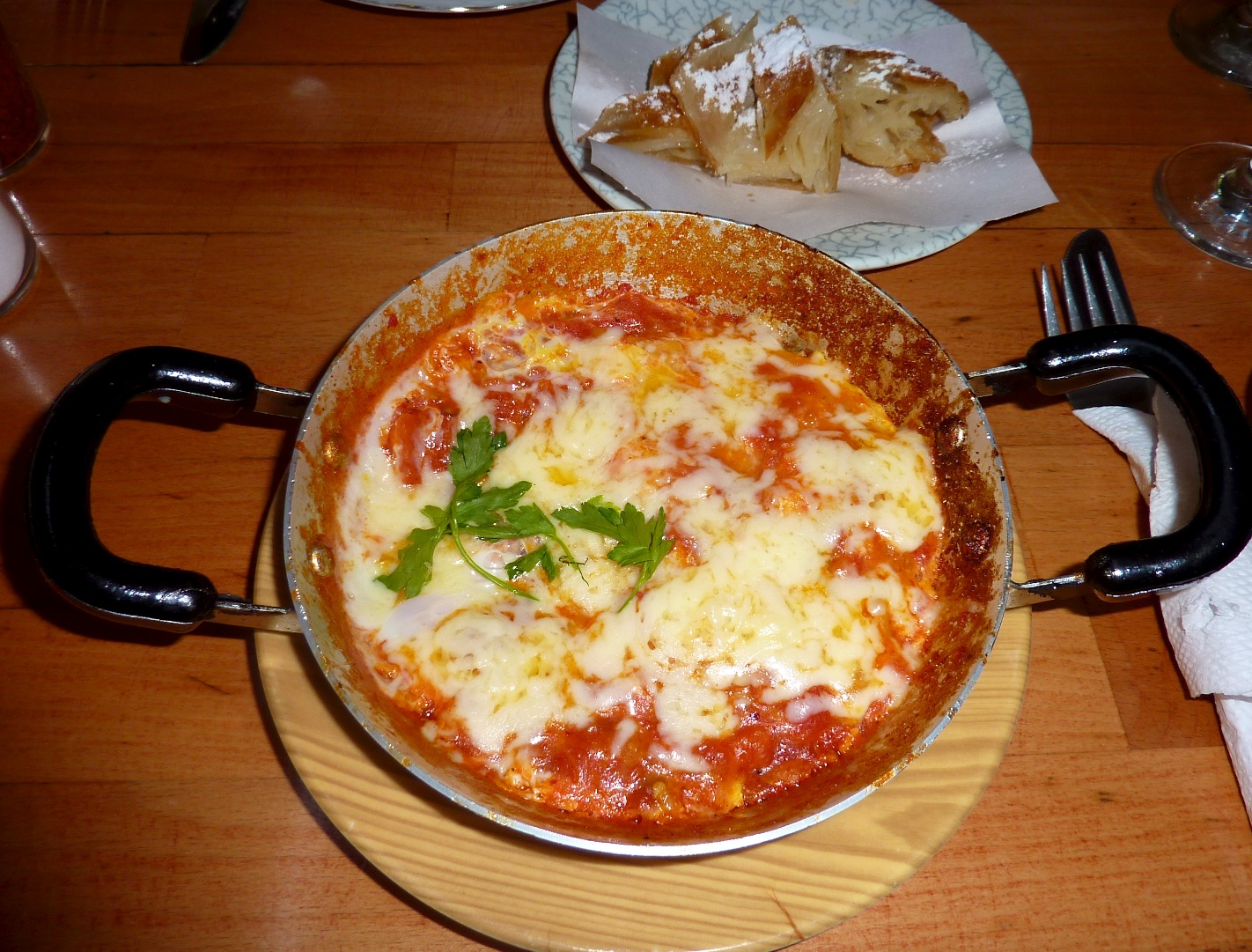
    The breakfasts were probably our favorite meal.  We really enjoyed the menemen made of a scrambled egg-like mixture, onion, tomato and green peppers (paprika), and spices such as ground black pepper, ground red pepper, salt, oregano, and mint.  


    Istanbul blog 12

    You can also order it with meat products such as sucuk (a spicy sausage).  It is cooked and served in single-serving metal pans.


      Istanbul blog 13


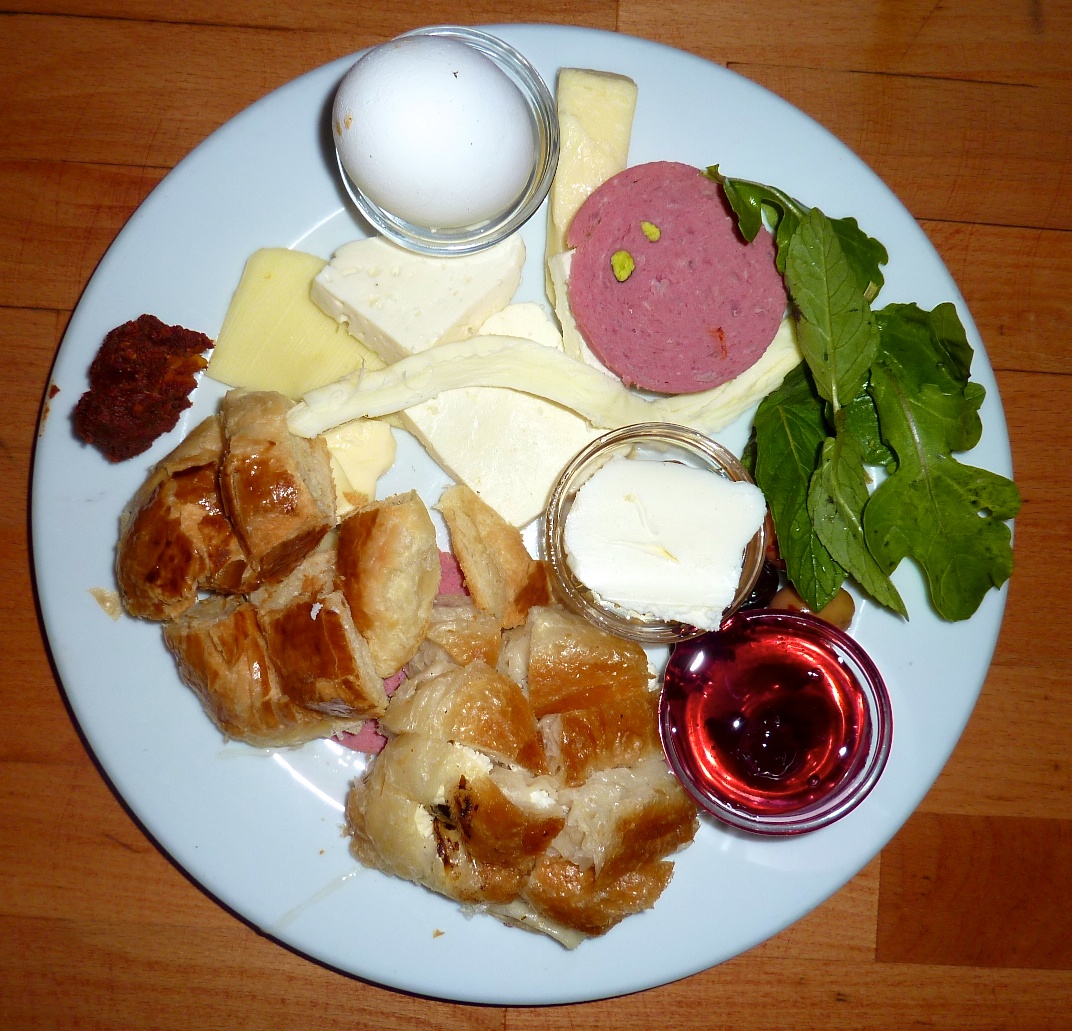
    And the traditional breakfast plate where the main star was cheese.  Along with cucumbers, tomatoes, olives, a red spicy sauce, cherry jam and honey.


      Istanbul blog 4


    This was our favorite breakfast restaurant, which we ate at three times.  They were super sweet to us, especially when we came back the 2nd and 3rd time.  On the last day, we told him we were going home and he gave us a bag of rolls for the airport.  If you look closely – you can see the owner giving the peace sign through the window.


      Istanbul blog

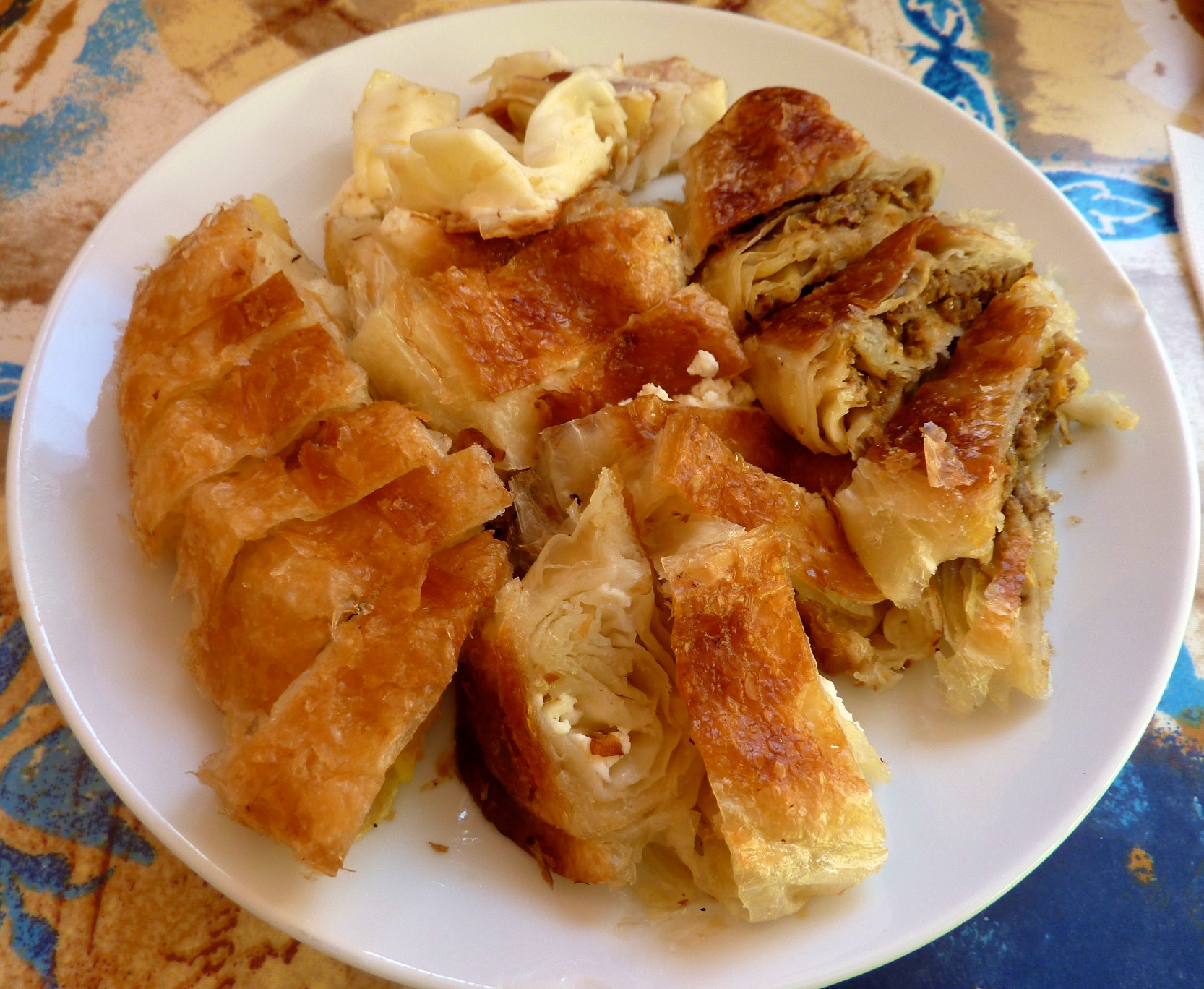
    Another breakfast item was Pogaca – a flaky savory breakfast rolls – plain, with cheese, or with meat. 


    Istanbul blog 67


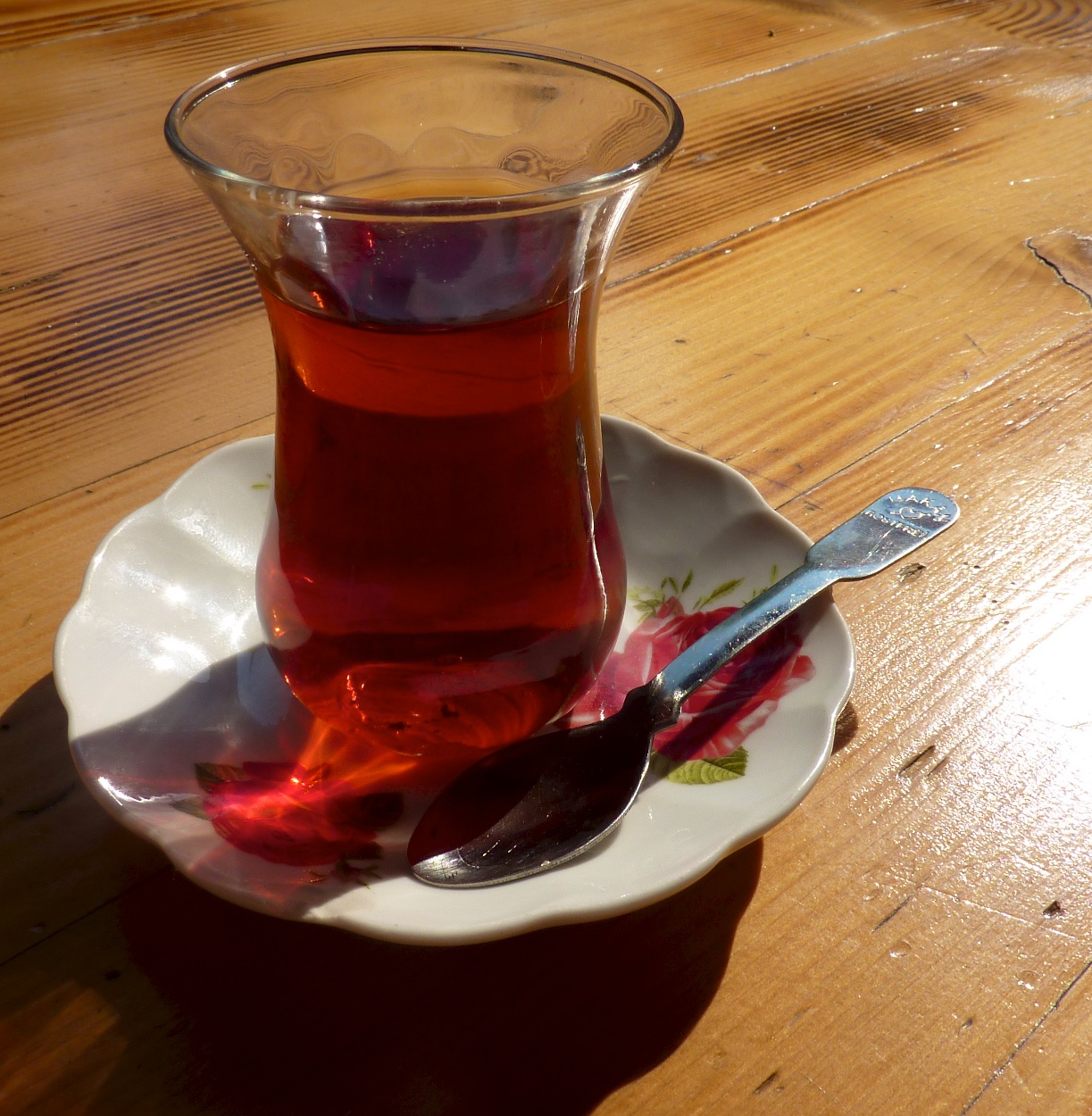
    Turkish black tea is served at breakfast, NOT coffee. The Turkish word for breakfast, kahvaltı, means "before coffee".  One morning we ordered coffee and it was almost the same price as our entire meal.  We learned to order tea.  


    Istanbul blog 125


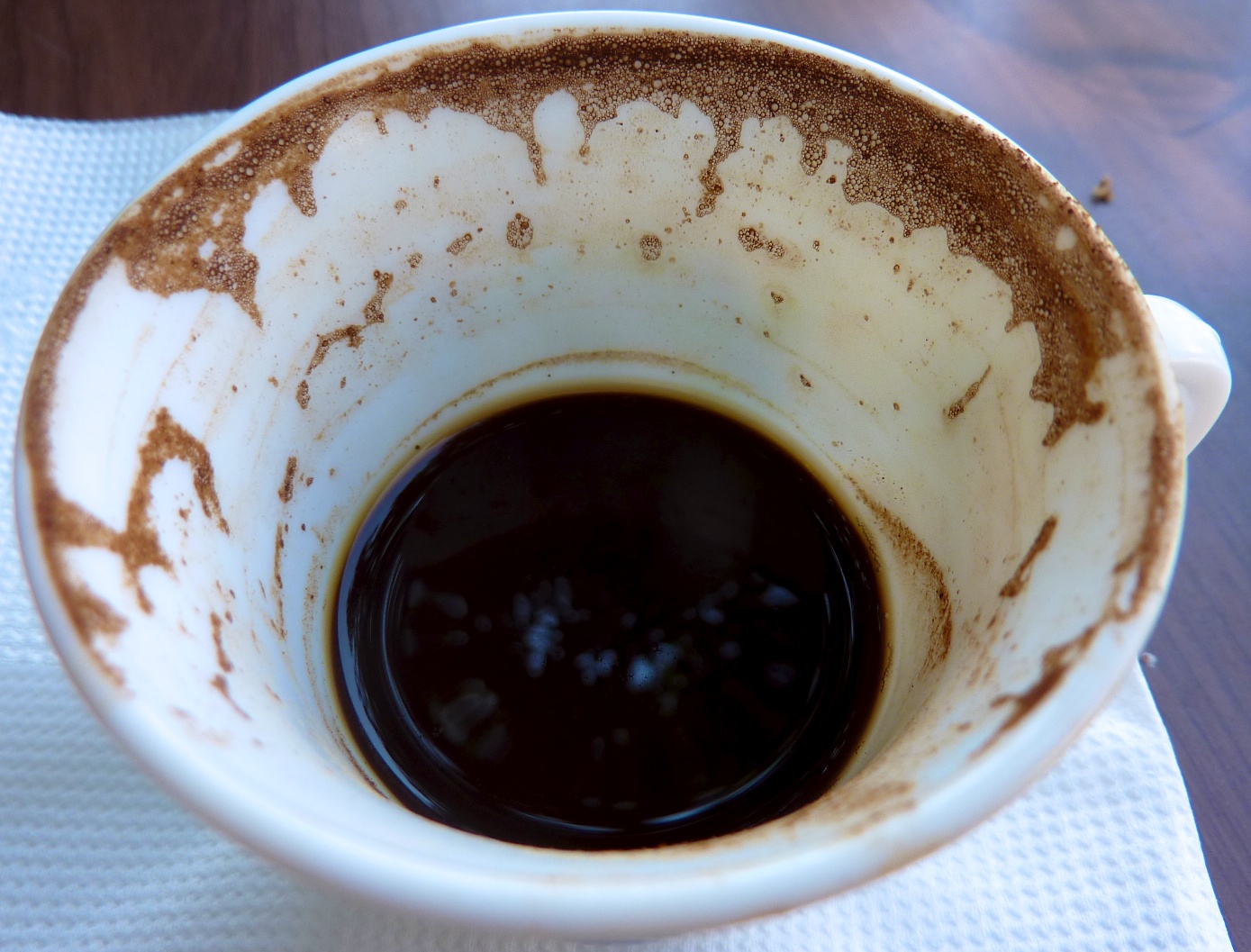
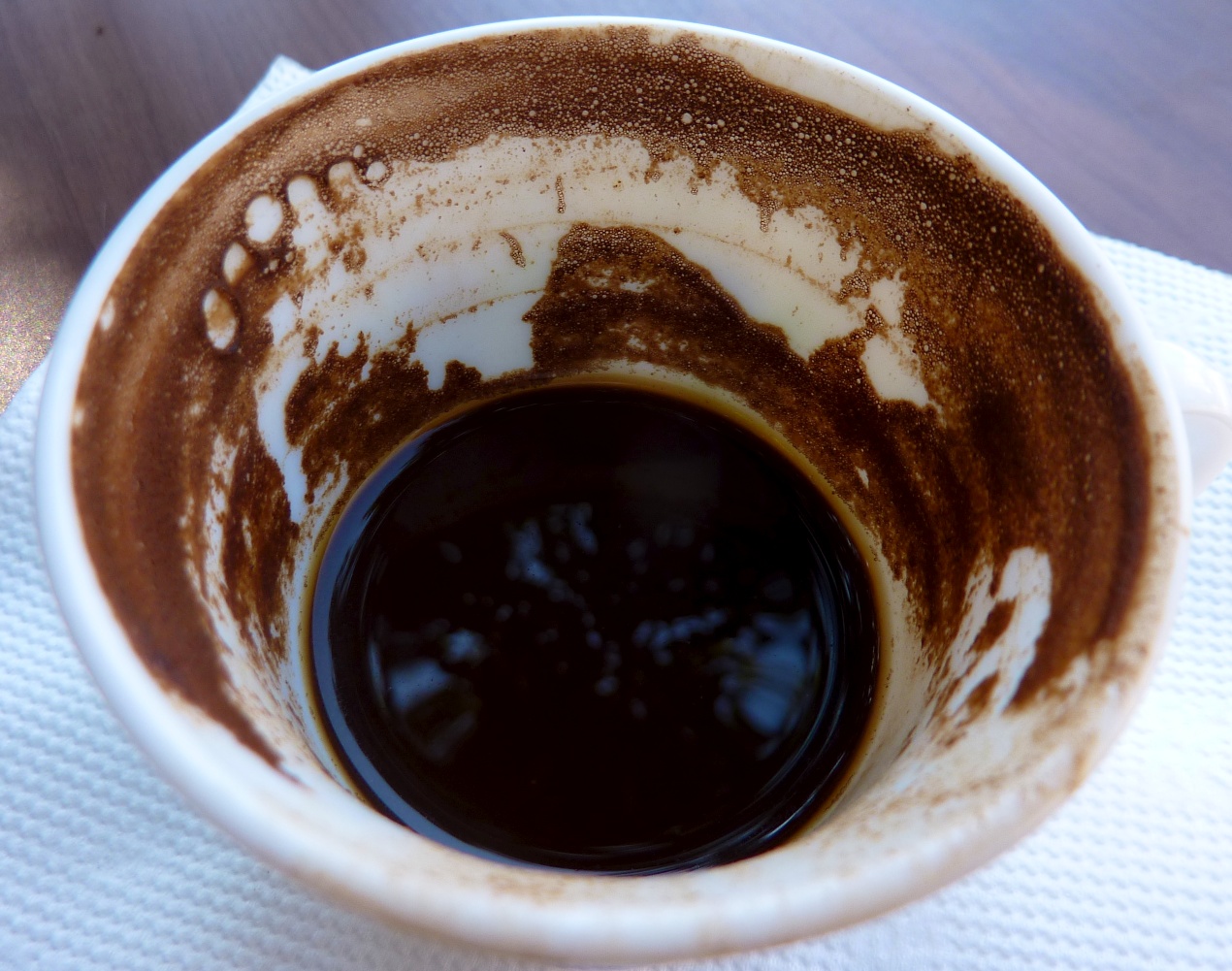
    One afternoon we tried the famous Turkish coffee, prepared by boiling finely powdered roast coffee beans in a pot (cezve) and serving it directly into a cup without straining it.  A heavy slush-like mixture settles to the bottom.  You do not drink the bottom.  It is common to do a “reading” from the sediment left in the cups.  


      Istanbul blog 84


    What do you think our cups say?


      Istanbul blog 85


    I thought the Europeans loved yogurt – but the Turkish do even more!  We have never seen such large tubs sold in the small markets.  They also consume a salty yogurt drink called Aryan with most meals.


      Istanbul blog 53


    Two items of the food found most everywhere are Kofta – basically a meatball with spices and doner kebabs usually made of lamb or beef.  This is a huge doner spit.


    Istanbul blog 10


    I ate the one below, a chicken doner…


    Istanbul blog 55 


    and D had this one……which, we did not know until we looked it up, was actually called kokorec and is lamb's intestine wrapped around sweetbreads (thymus gland and or pancreas) on a skewer then grilled horizontally.  I did take a bite and did not like it.  Thank god I did not order it!  Yuck!


    Istanbul blog 56


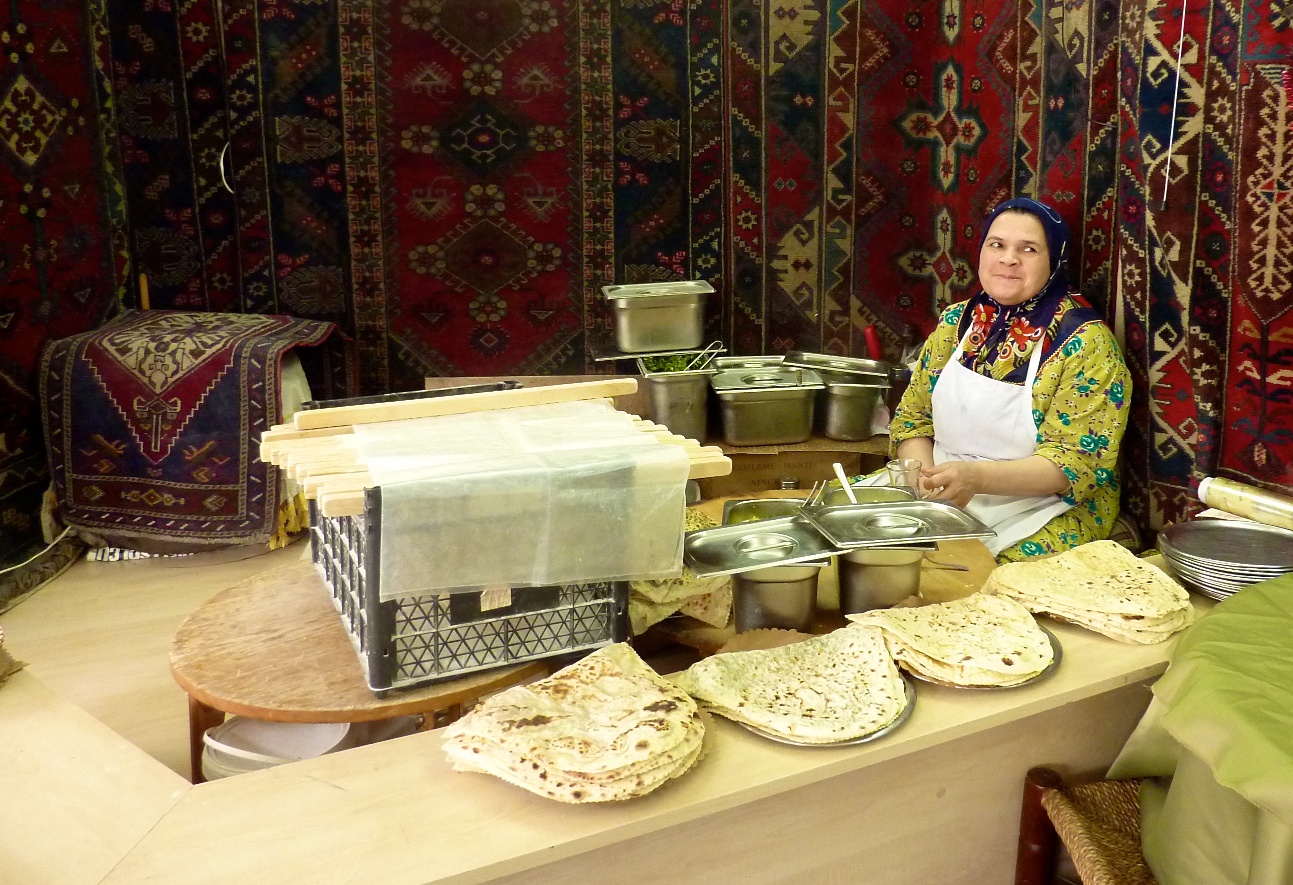
    We ate at a little restaurant were the "mama" was making homemade bread.  A little touristy but still good.  I had mint and cheese in mine – loved that combination.


    Istanbul blog 5


    D had spinach and meat.


    Istanbul blog 6


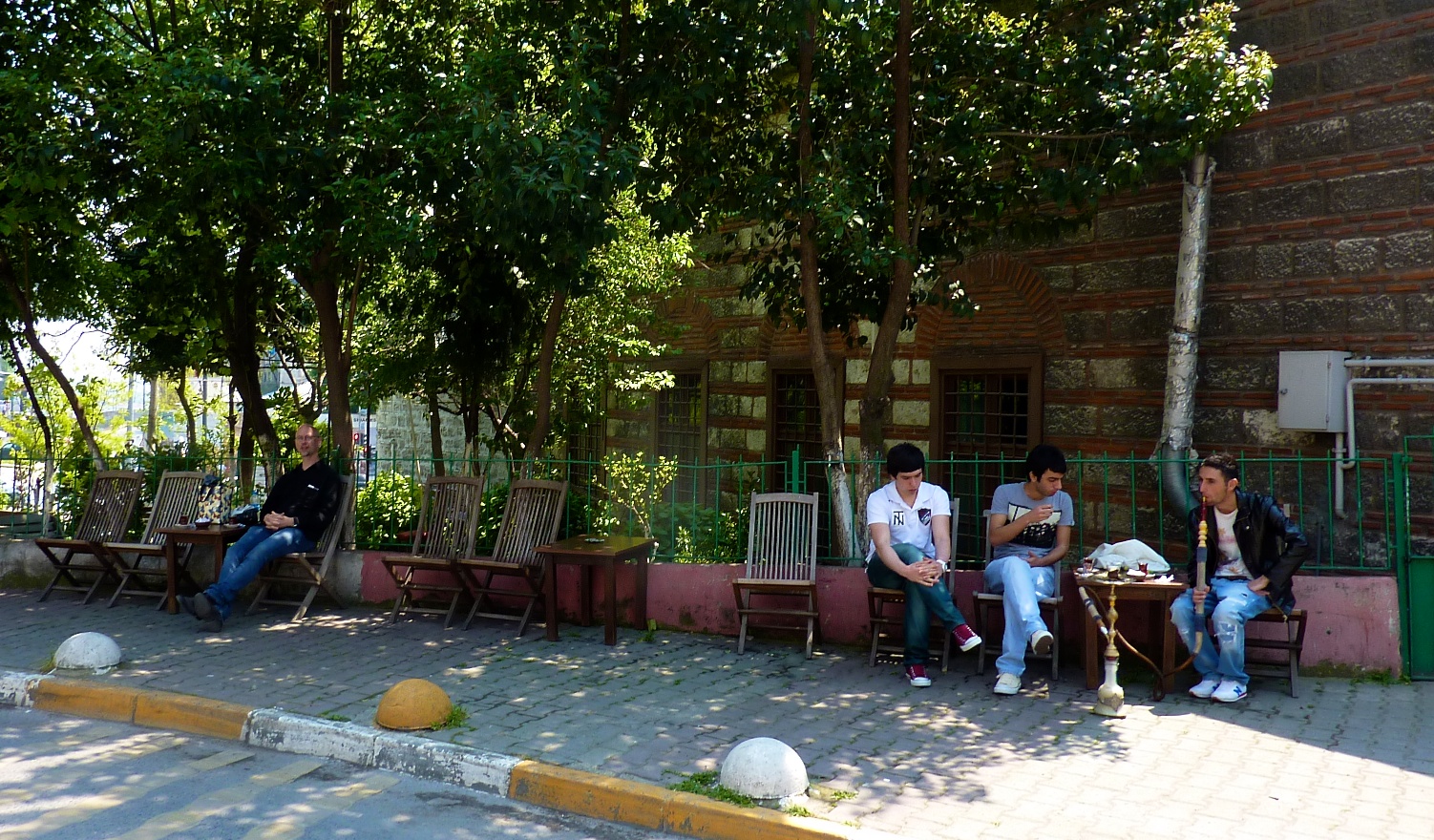
    We drank more tea in five days then we have in a year.  One day we had four cups.  Tea drinking is a ritual that you see everywhere in the streets, especially among the men.  Here we are drinking tea at what became our favorite neighborhood cafe.  The tea is always served in little glasses on a saucer.


    Istanbul blog 104

    They also had hookahs (smoking pipes) at our cafe.  These boys, smoking the traditional Hookah, were very friendly and shared a sour fruit (see below) with us.


    Istanbul blog 58


    Istanbul blog 123


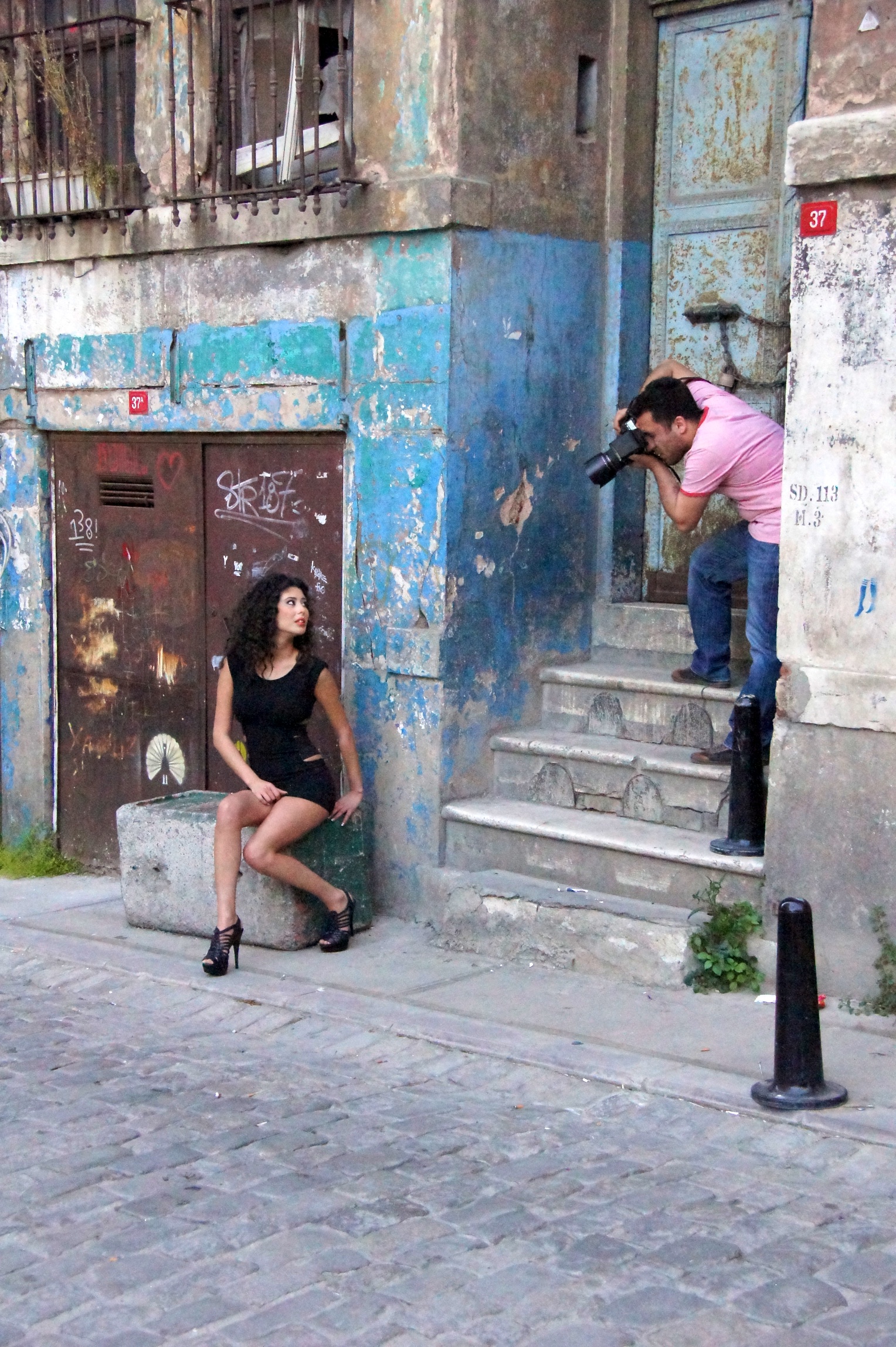
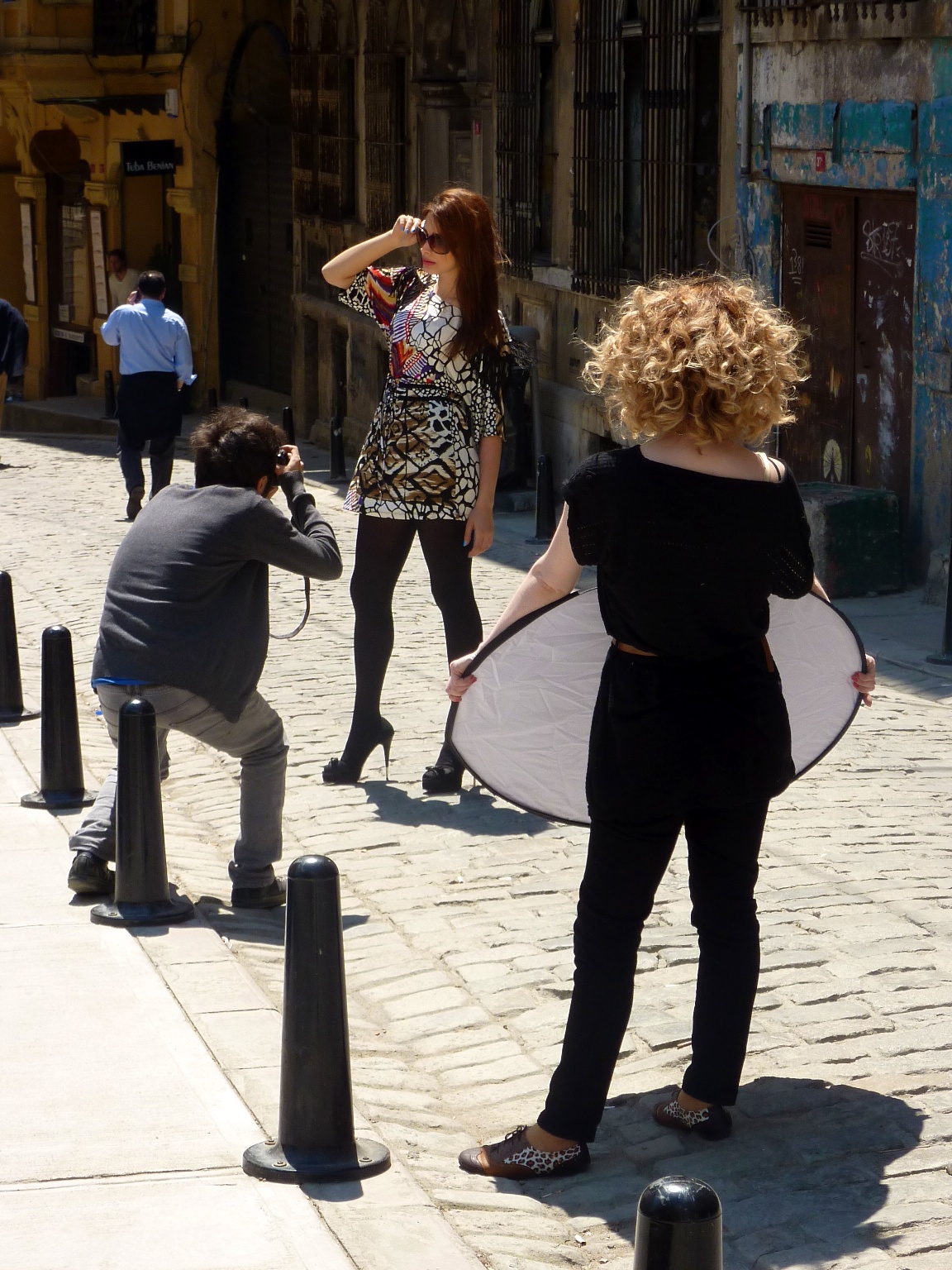
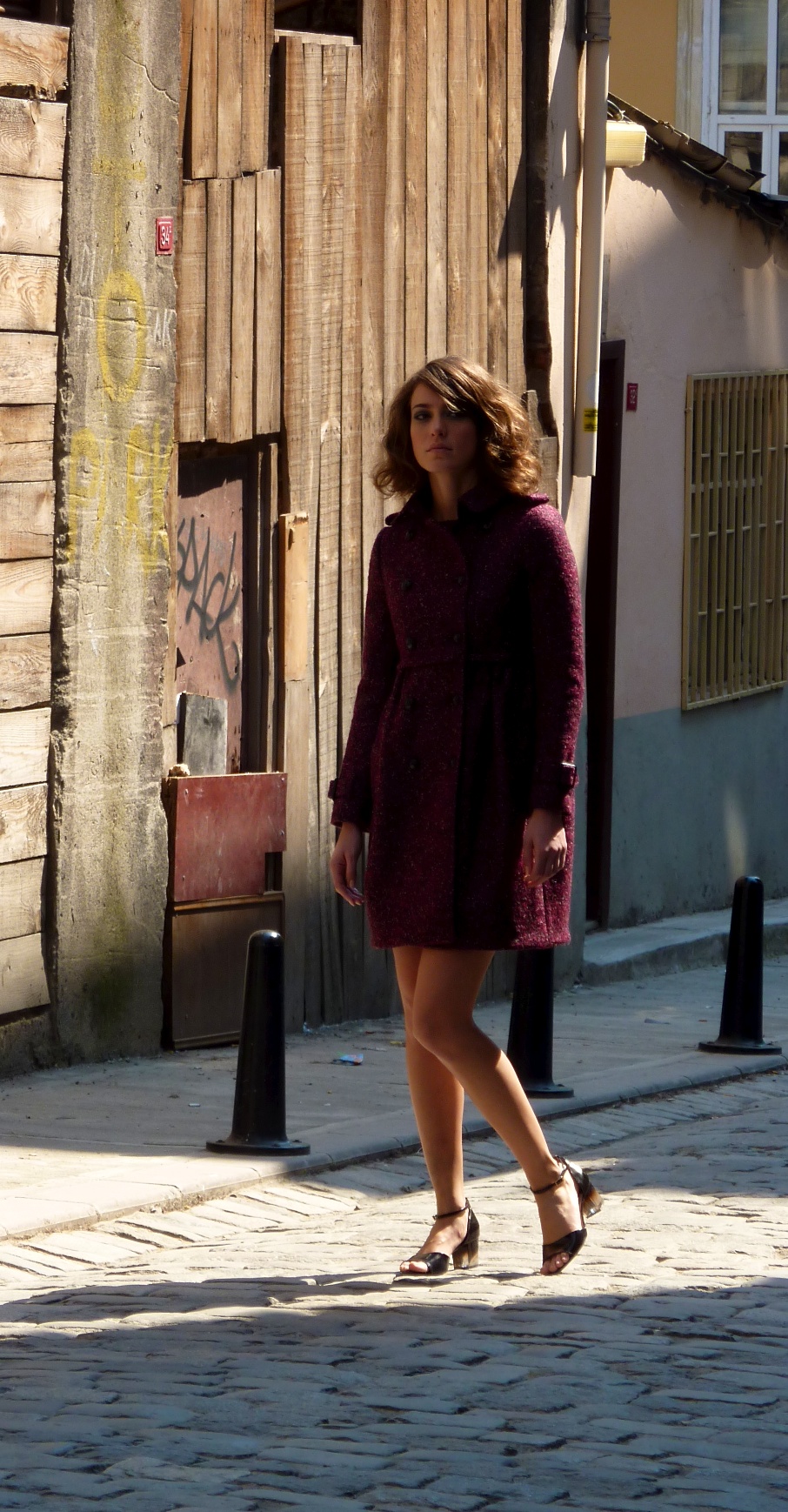
    Right around the corner from our hotel was a very expensive street with many fashion designers ateliers located there.  Because of this, we saw several fashion shoots in the streets.


    Istanbul blog 90


    How skinny is she?  Okay sexy too!


    Istanbul blog 91


    Istanbul blog 88


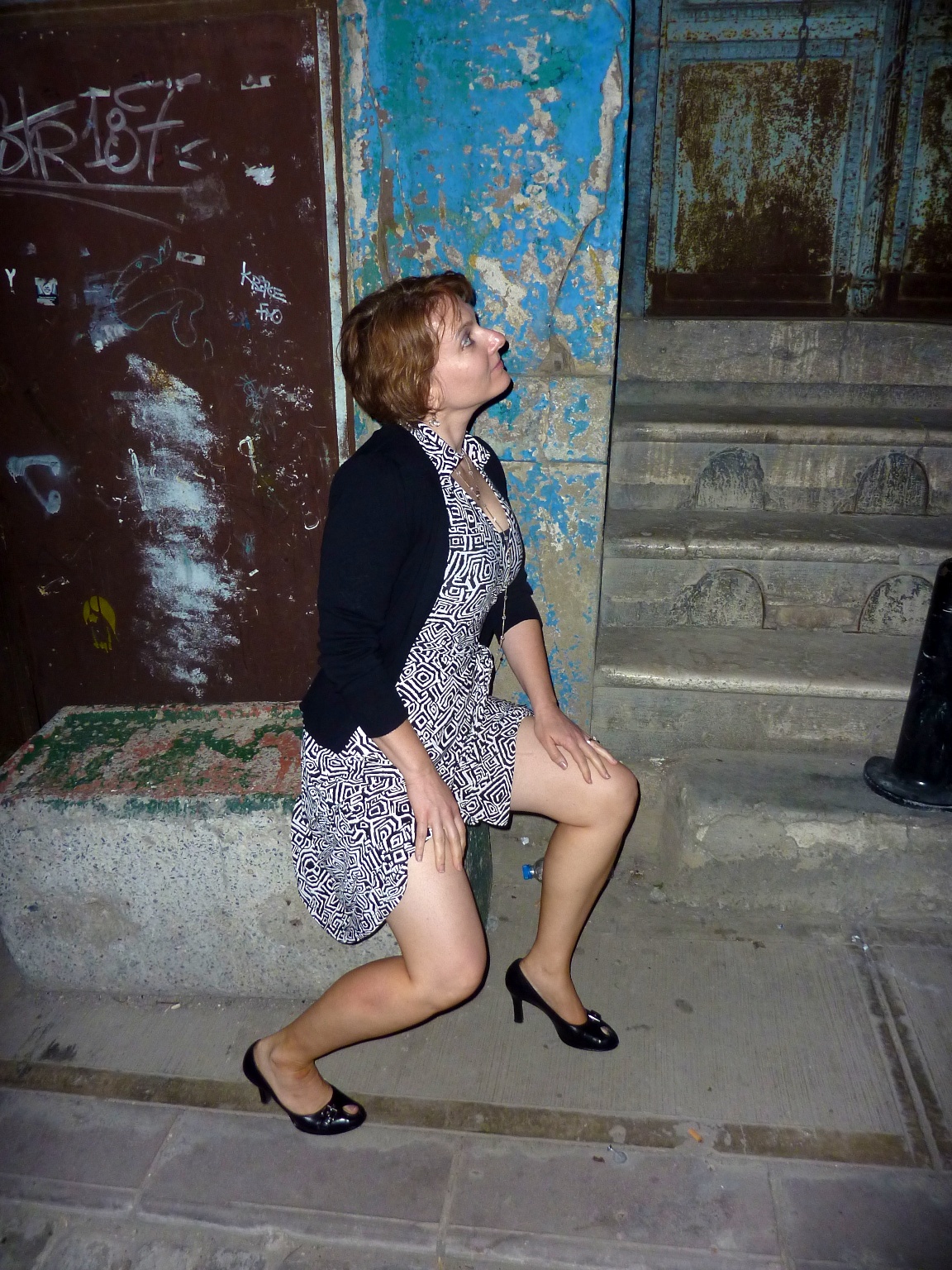
    After a few too many glasses of wine – we reenacted the fashion shot at the exact location.  Okay – now that you are done laughing…….


    Istanbul blog 89


    Here are two more REAL models.


    Istanbul blog 103


    Istanbul blog (1)

     And me again  :  )  same location as the model – same leg pose and all!


    Istanbul blog

    And my fashion shots of D – well – I thought they looked artsy!


    Istanbul blog 63


    Istanbul blog 64

    And this shot I thought was very funny.  A young coupled asked D to take their photo – check out that pose Photographer-D has going along with his Euro boots.


    Istanbul blog 40

    While D worked (yep, he really does work on occasion), I visited the Modern Art Museum, which was very enjoyable.  I also did the Hop-on Hop-off tour, where a bus takes you around the city for a two-hour tour.  It was good, not great.  And of course, I did a little shopping.


    Istanbul blog 109

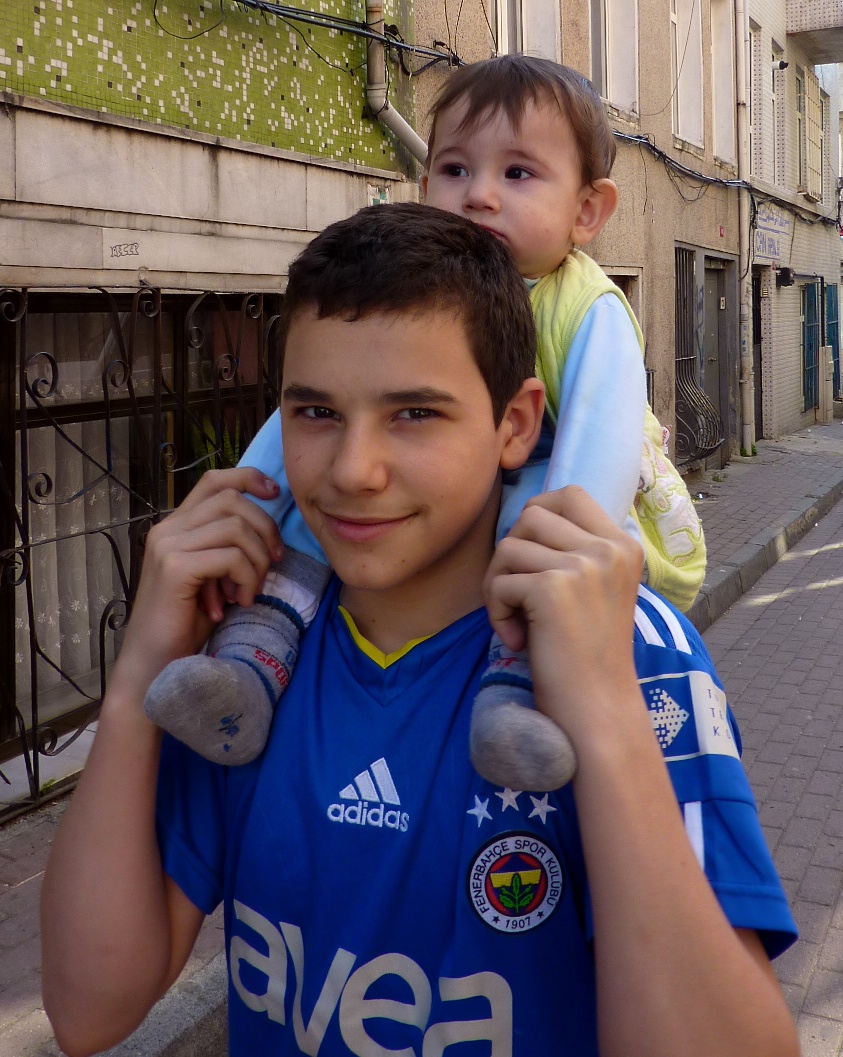
    On our last day we wandered into Balat, a non-tourist neighborhood, full of color.  The teenagers asked us to take their photo, striking poses for the shots.  He was so animated when he approached us, but then became very serious for the photo.  cute!


    Istanbul blog 108


    Istanbul blog 114

    Drawers


    Istanbul blog 110


    This one was so cute, she was posing for me and the other women jumped in the photo – maybe her mom?  The young girl was not happy.


    Istanbul blog 115

    Then she asked me to please take one of just her.


    Istanbul blog 116


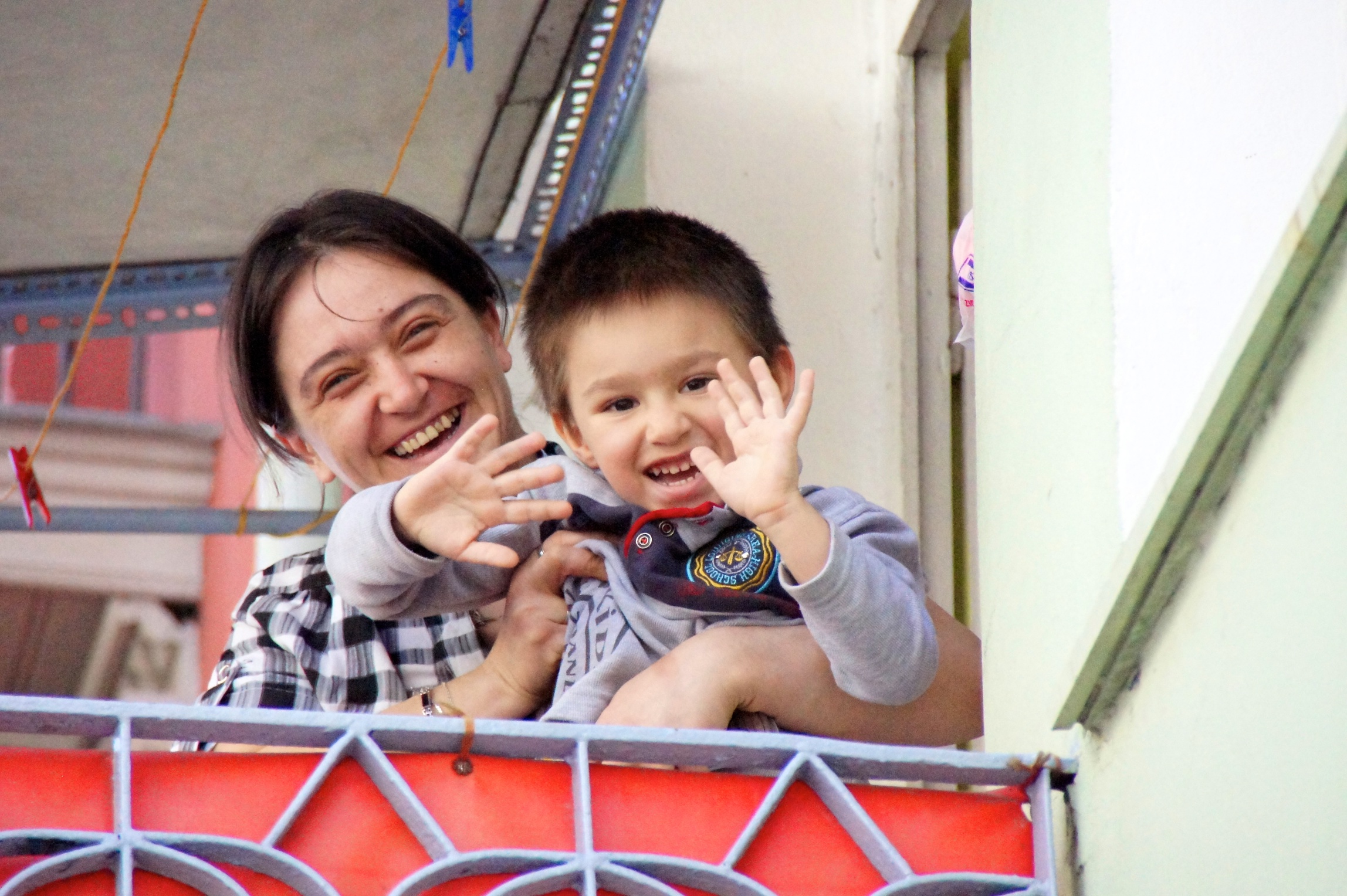
    This was sweet, the mother held him up in the window so D could take his photo.  We found all of the people of Istanbul to be genuinely friendly and eager to welcome you to their city.


    Istanbul blog 107
     

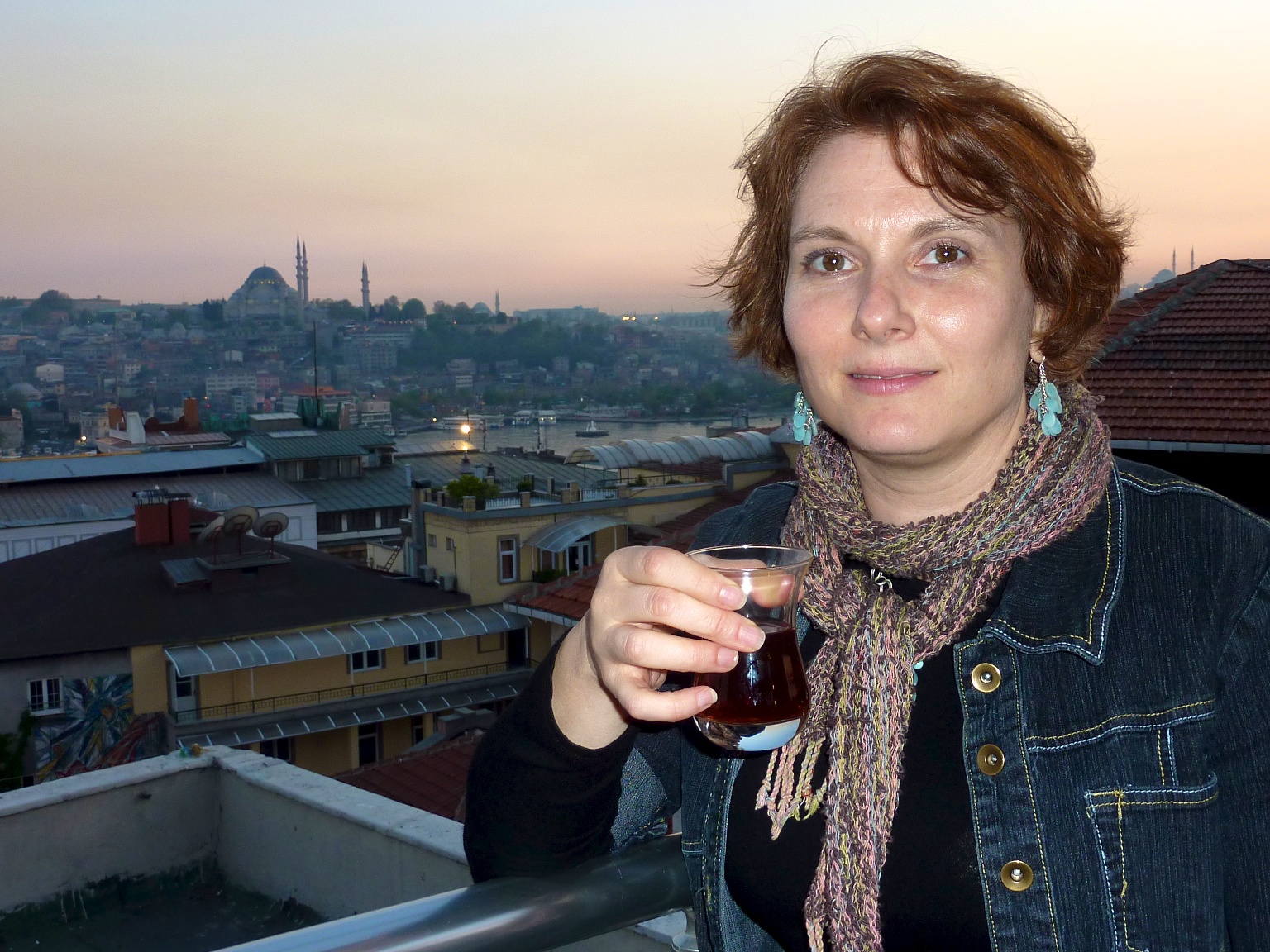
    Our last night we went to a restaurant with a roof top terrace to watch the sun set, eat dessert, and drink tea.


    Istanbul blog 92


    Istanbul blog 93


    Istanbul blog 94


    A strikingly beautiful city.  We loved Istanbul and hope to go back soon!


  •  


    Temples of cambodia 21

    The great temples of Angkor Wat are situated in the province of Siem Reap Cambodia. These ancient temple ruins are considered the largest religious complex in the world.  Interestingly, this area was abandoned for nearly 1000 years, hidden by the jungle.  In 1890, a French explorer rediscovered the "lost city".


     Temples of cambodia 7


    Designated a World Heritage Site by UNESCO in 1992, Angkor Wat is not just one Wat (temple); it is a large park with over 1,000 temple sites, but most of them are now barely standing.  Today, 200 of the temples have been restored in some way to allow visitors to tour. 
     

      Temples of cambodia 17

    We visited eight temples during our stay.  One day we hired a guide and a driver with a car to show us the major temples.  The next day, we hired a tuk tuk driver to visit a few lesser-known ones.  The Khmer Empire built most of these stunning temples from 879 to 1191 AD while they were at the height of their power.  The whole area is about 250 miles, which also includes the surrounding forests.


      Temples of cambodia 10


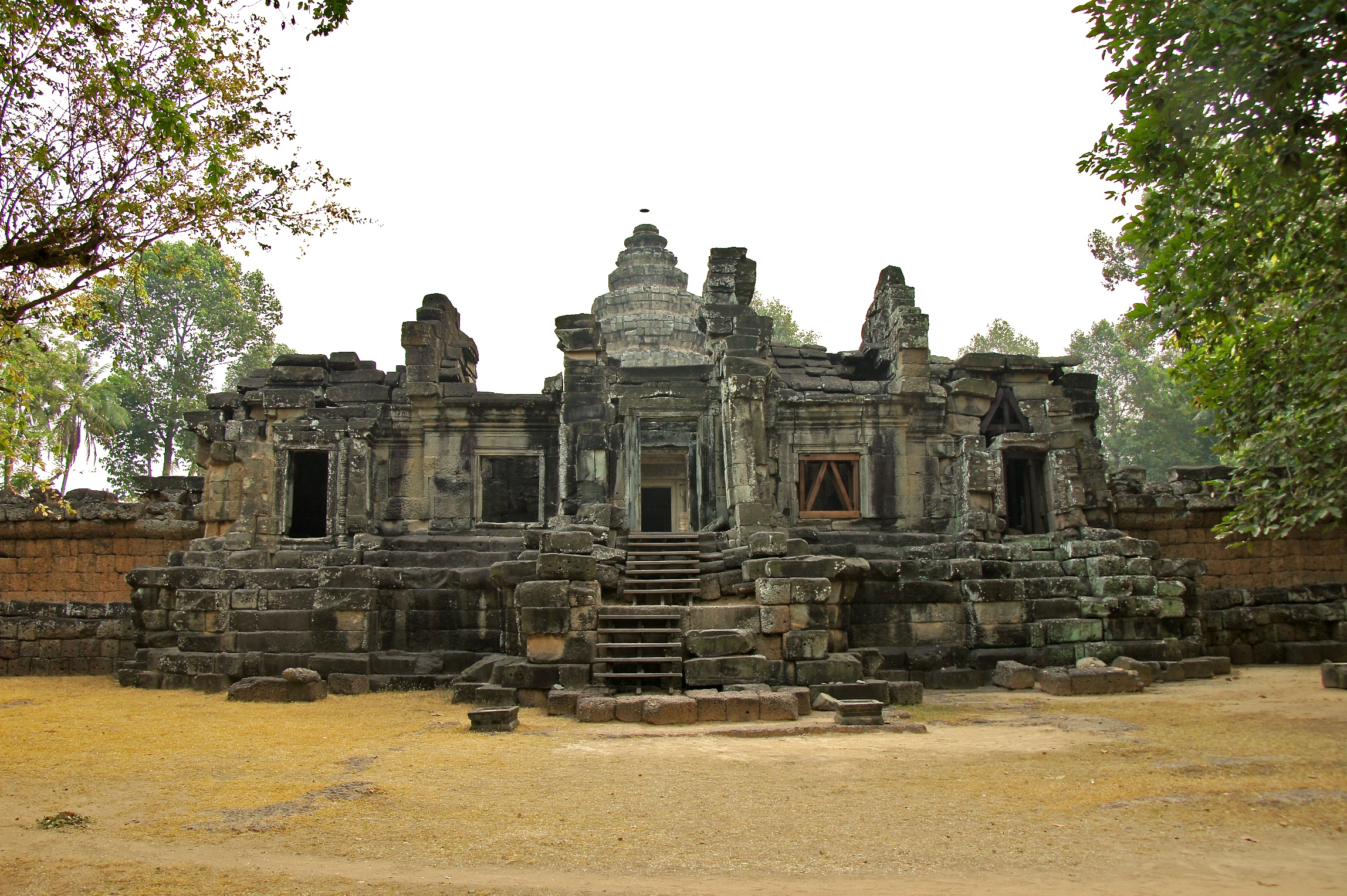
    Wat Athvea


    Our first stop was the small temple of Wat Athvea.  The temple's design and the distinctive style of its devata (sacred female images) indicate that King Suryavarman II, who also built Angkor Wat, built it in the early 12th century.

        Temples of cambodia 4a


    Wat Athvea and Angkor Wat are the only two temples that face west.  It is thought that the reason was that King Suryavarman intended one of them to serve as his funeral temple.

     
      Temple  3

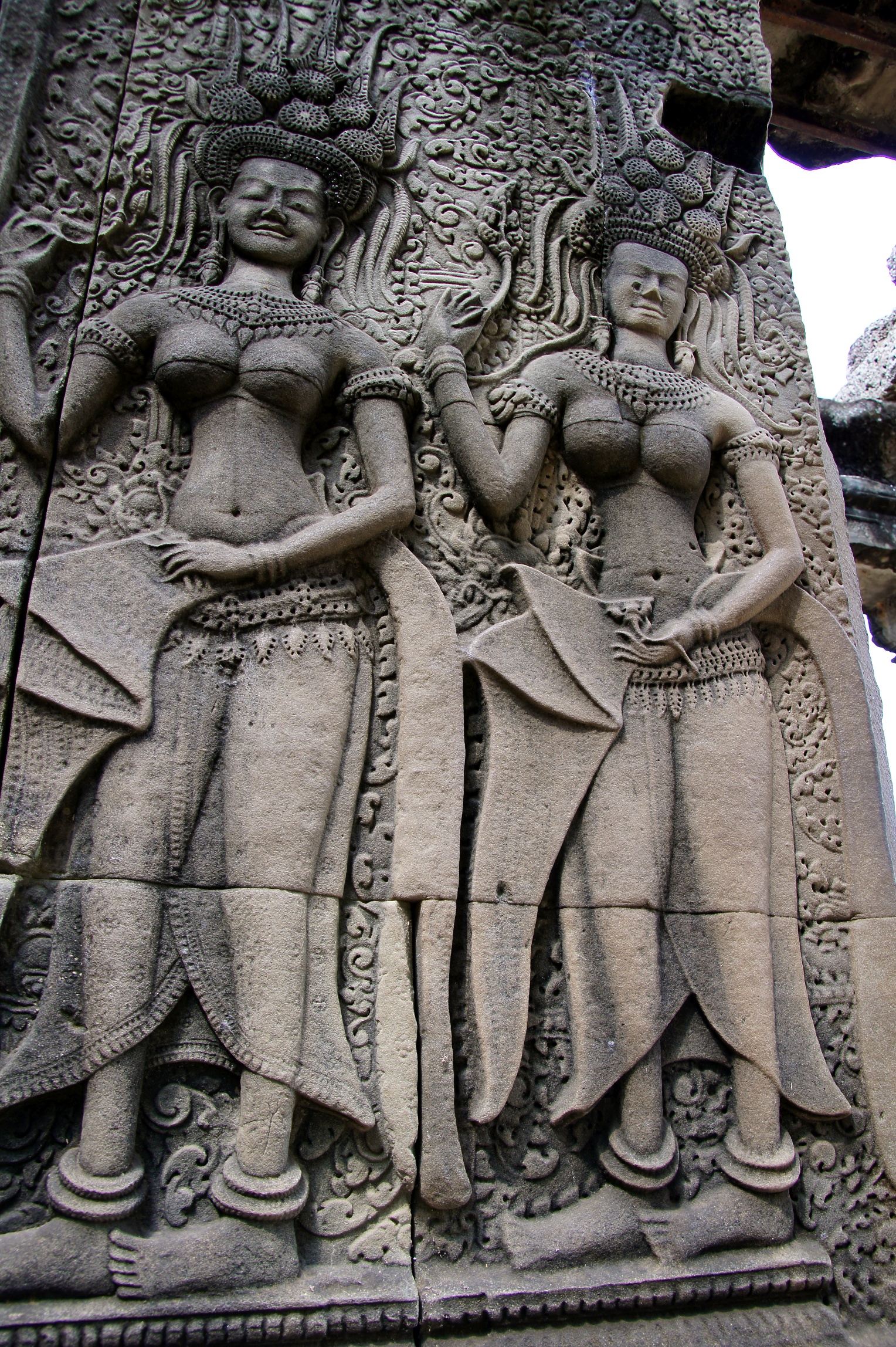
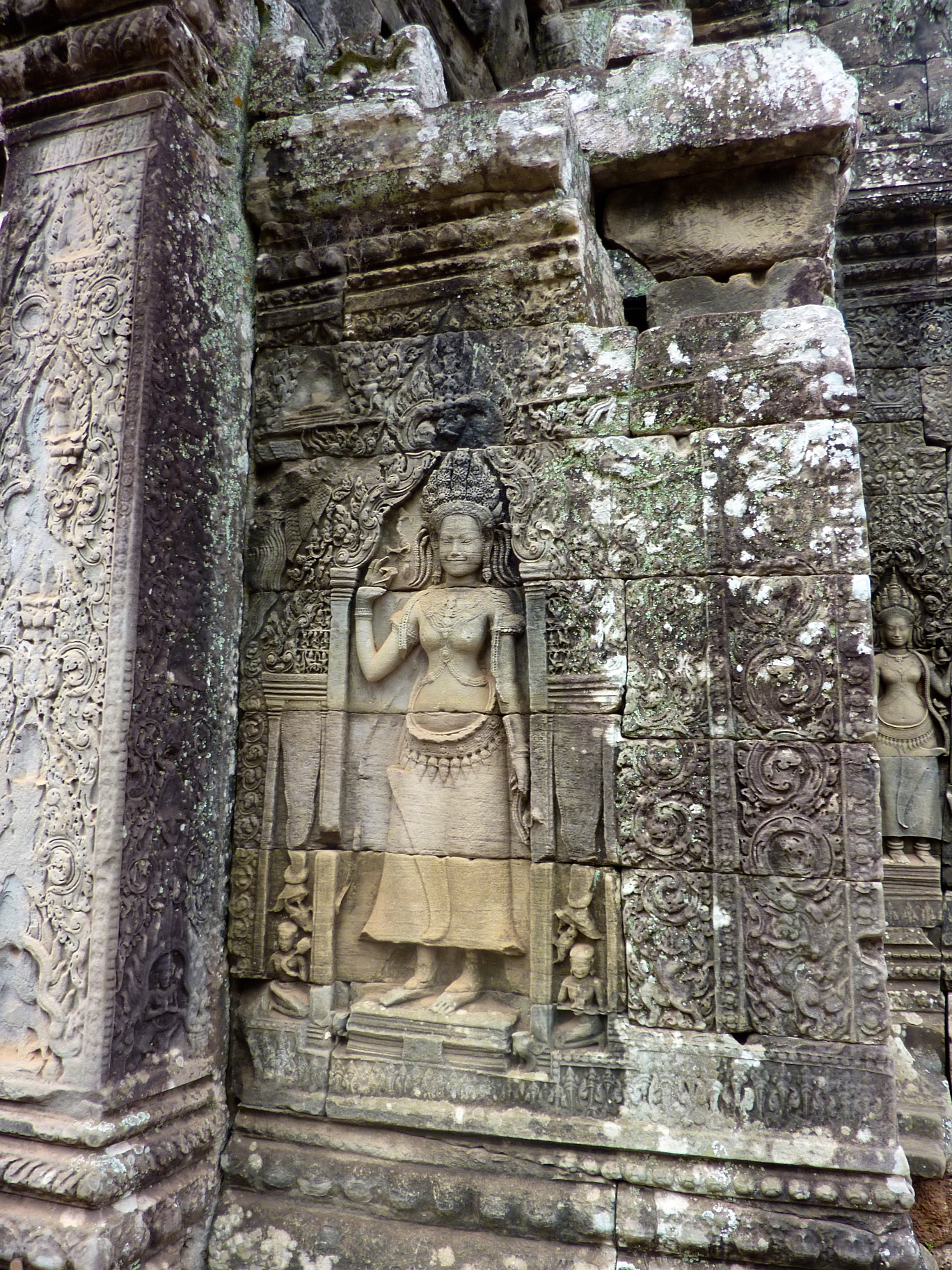
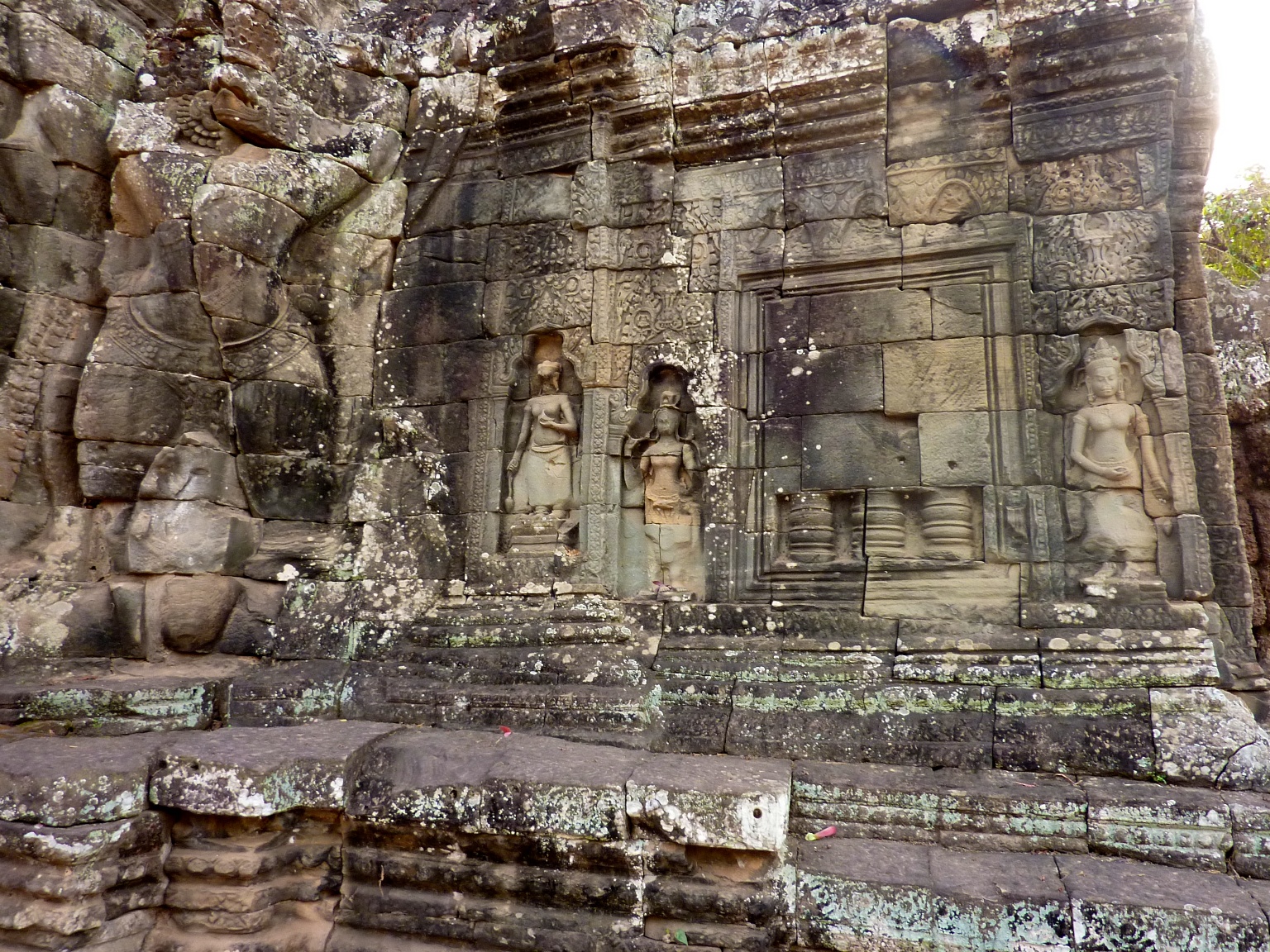
    Below is one of three well-preserved devatas, each decorated with lotus crowns, heavy necklaces and belts, armbands, finger rings and rich sampots (Khmer style waist wrap).  Their likeness is comparable to women found at the highest level of Angkor Wat, implying that this temple was founded for an important reason.


      Temples of cambodia 2


    During Khmer Rouge times the temple was shrouded in jungle and the wat was used as a sanctuary from the Khmer Rouge.  Today, it is still an active Buddhist temple and cemetery.


      Temples of cambodia 4


    It was in the village just across the street from our hotel.  Because of the location, this temple is not on the tourist route.  We visited it three times as it was part of our daily walk and we never saw any other tourists.


     Ta Prohm Temple


    Temples of cambodia 2 (1)


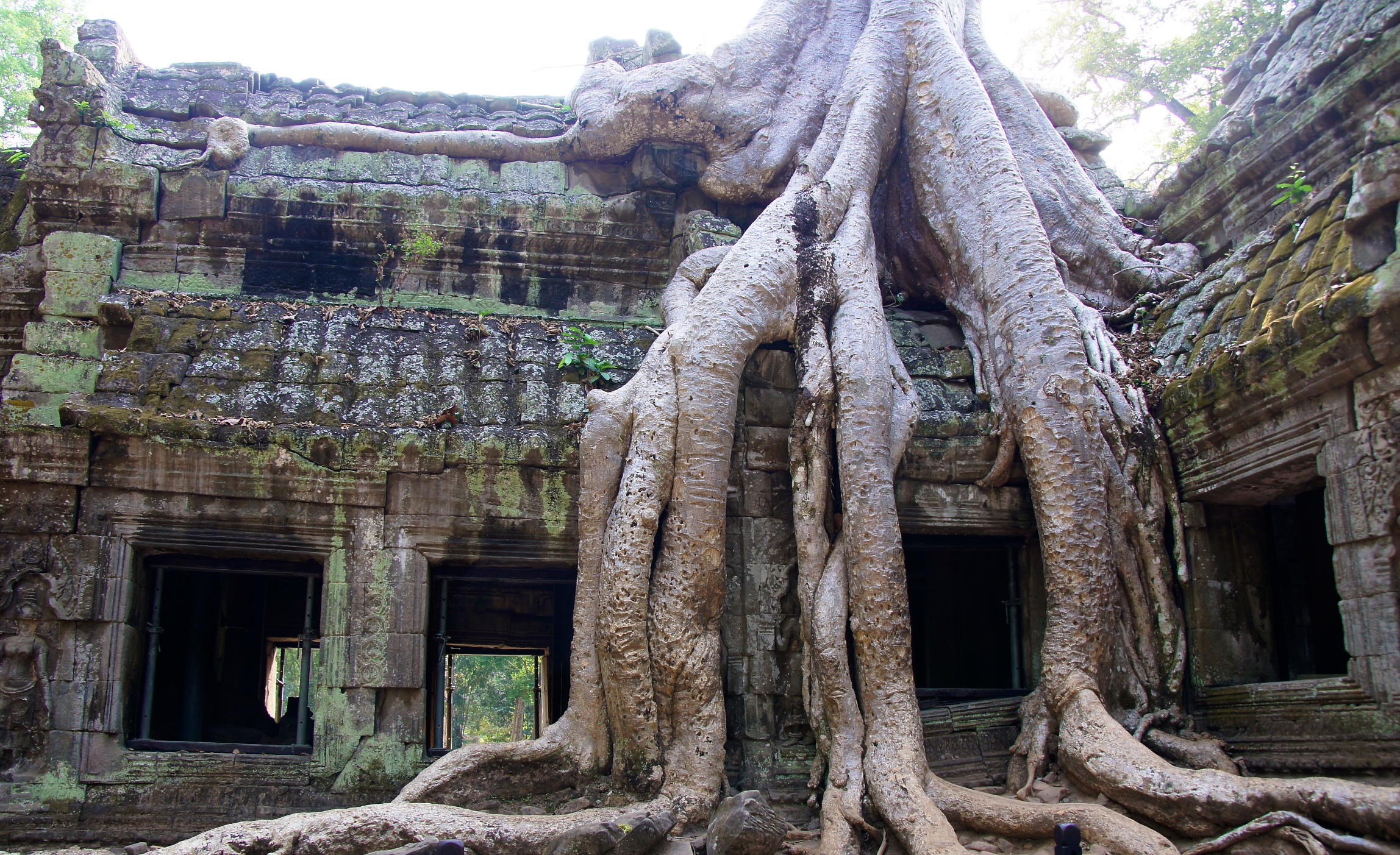
    Ta Prohm, the Jungle Temple, was one of our favorite temples, often described as the most magical place in all of Angkor.  


      Temples of cambodia 2

     
    This temple was built about mid-12th century to early 13th century (1186).  It was a Buddhist temple dedicated to the mother of King Jayavarman VII.


    Temples of cambodia 13

    Fig, banyan and kapok trees spread their gigantic roots over stones, probing walls apart, as their branches and leaves intertwine to form a roof over the structures.  


     Temples of cambodia 6


    Here is a funny shot of the roots through the doorway.  You tell me what this looks like!


    Temples of cambodia 8

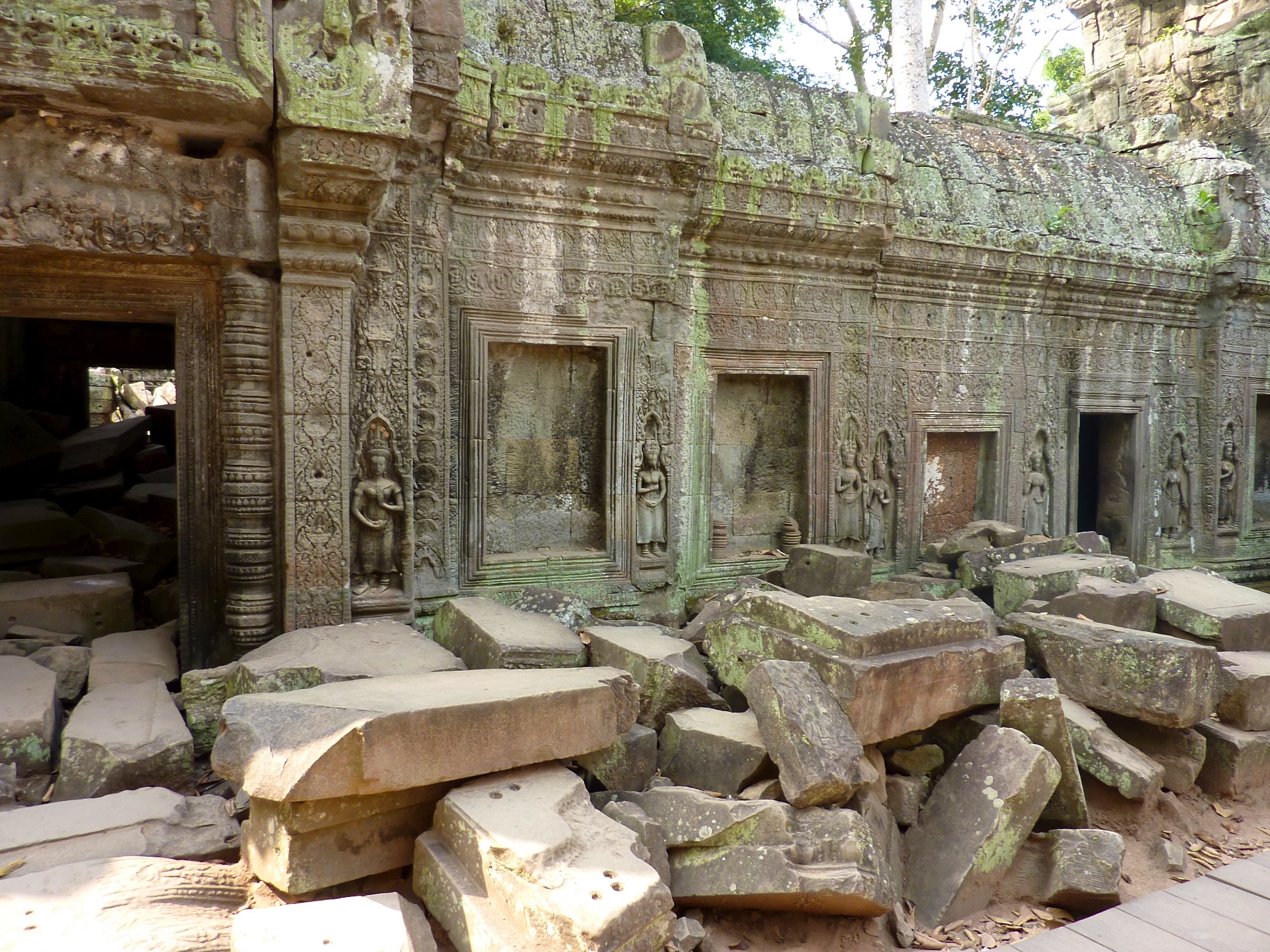
    Ta Prohm has been left untouched except for the clearing of a path for visitors and structural strengthening to stop  further deterioration.   Delicately carved reliefs on the walls sprout lichen, moss and creeping plants giving it a beautiful green glow.


      Temples of cambodia 2 (2)


    This temple really brings to mind Indiana Jones or Lara Croft (which was filmed here).  Visitors are no longer allowed to climb onto the crumbling stones, due to the potential damage to the temple and the safety of the visitors.


      Temples of cambodia 11


    Sadly, Ta Prohm was looted quite heavily in recent years due to its relative isolation and many of its ancient stone shrines have been lost.


      Temples of cambodia 12


    Bayon Wat


    Temples of cambodia 20

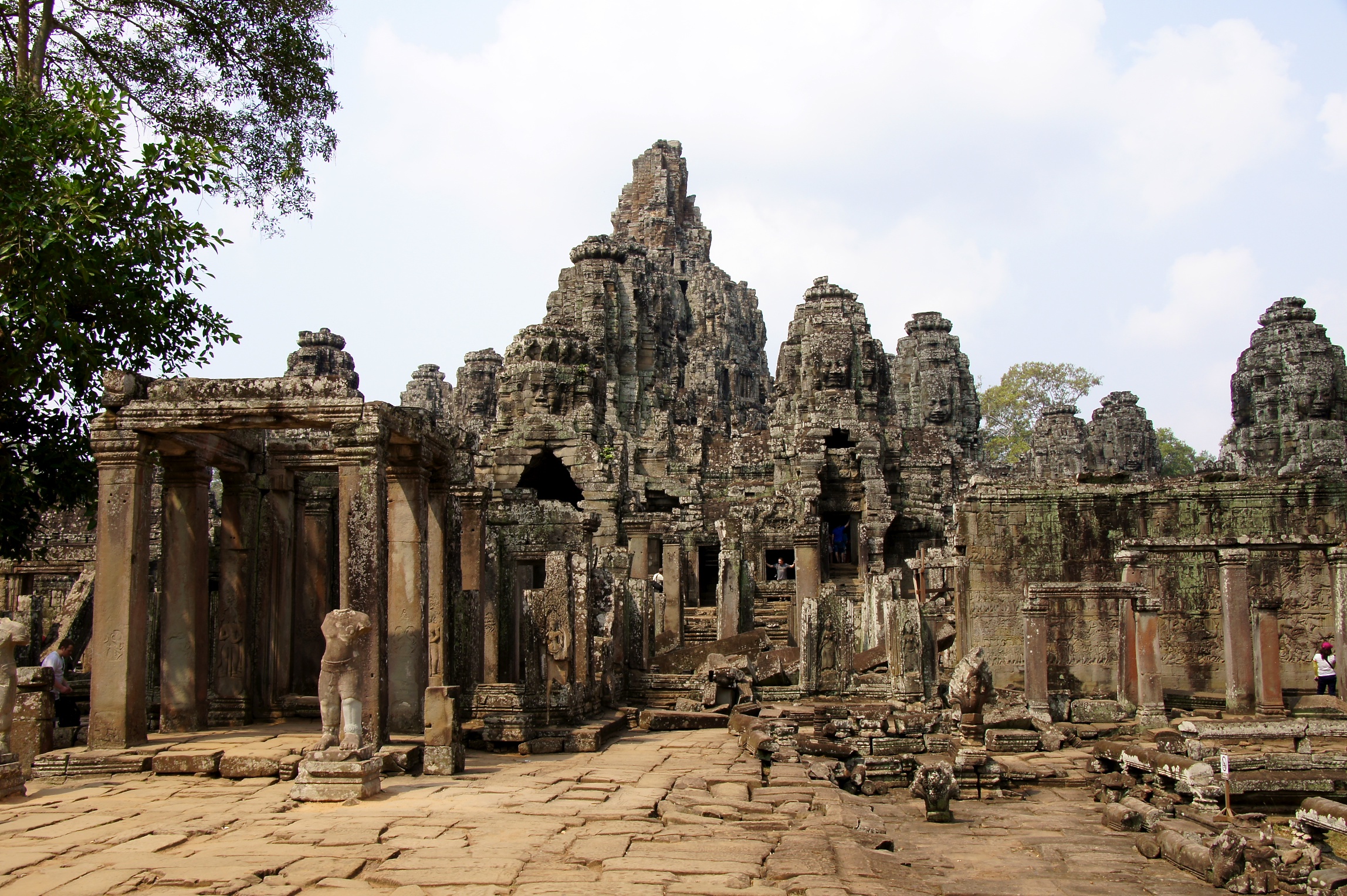
    From a distance, Bayon Wat looks like a pile of blurry stones.  But as you get closer, the magic appears…


    Temples of cambodia 14


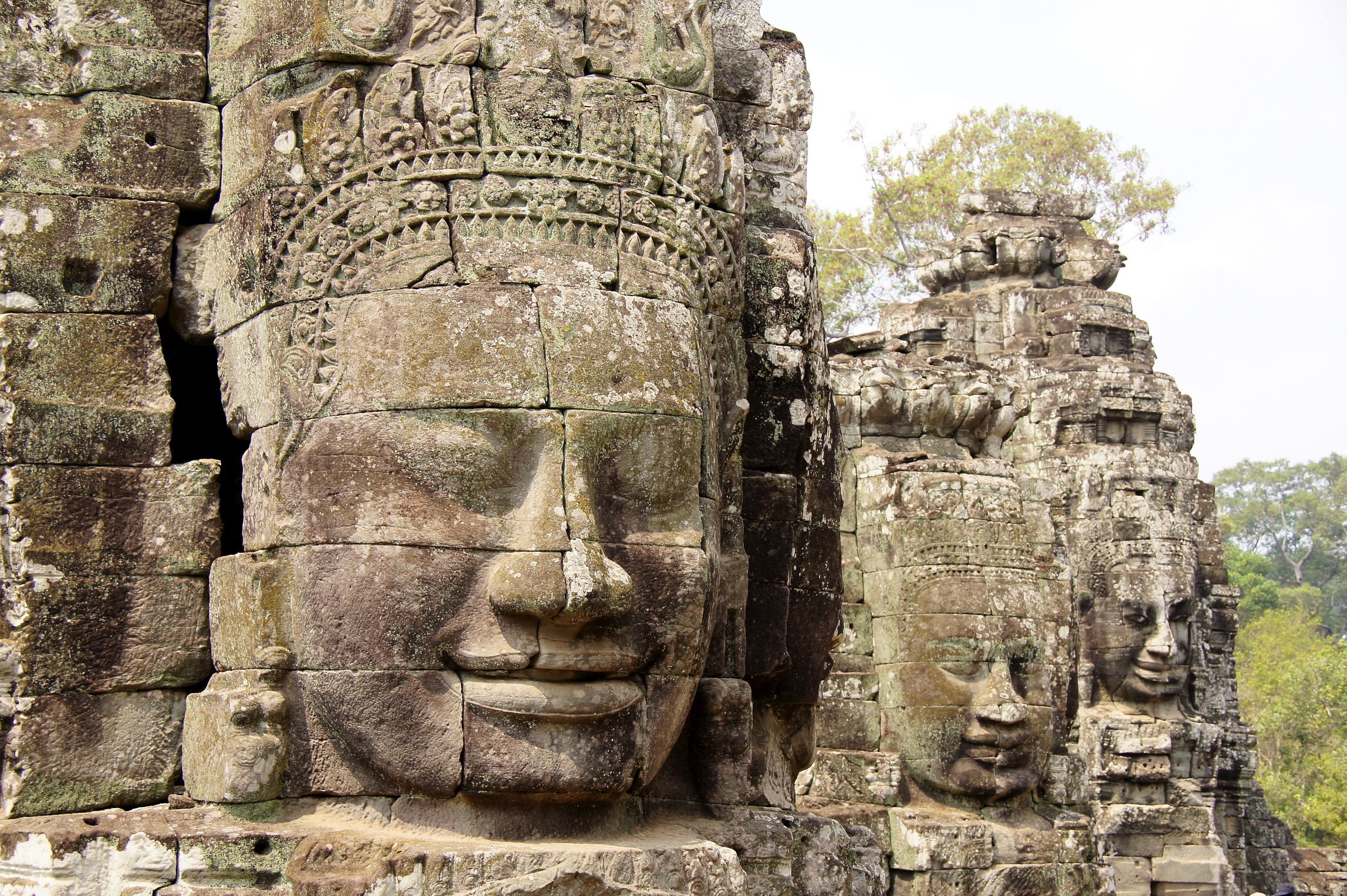
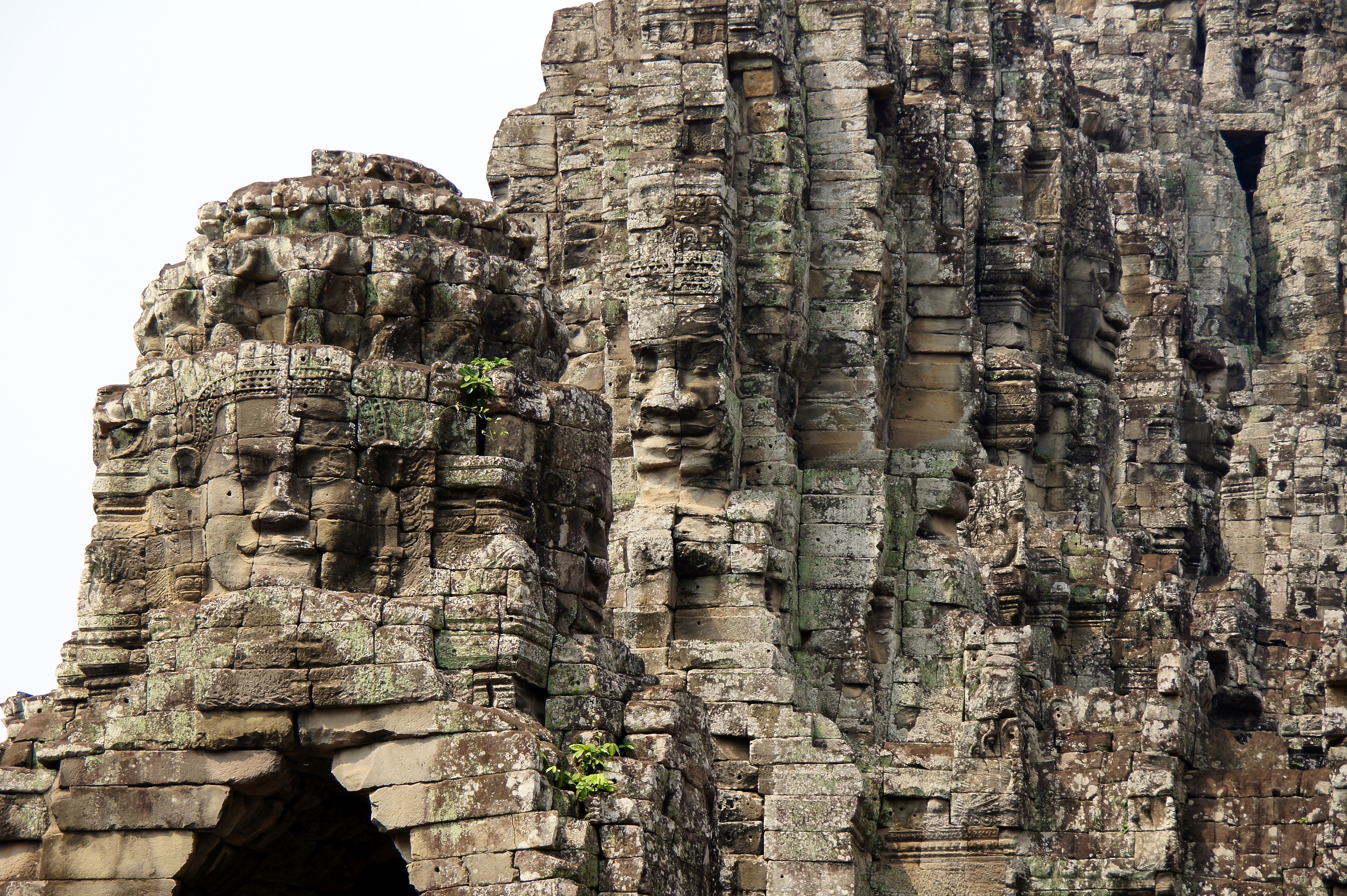
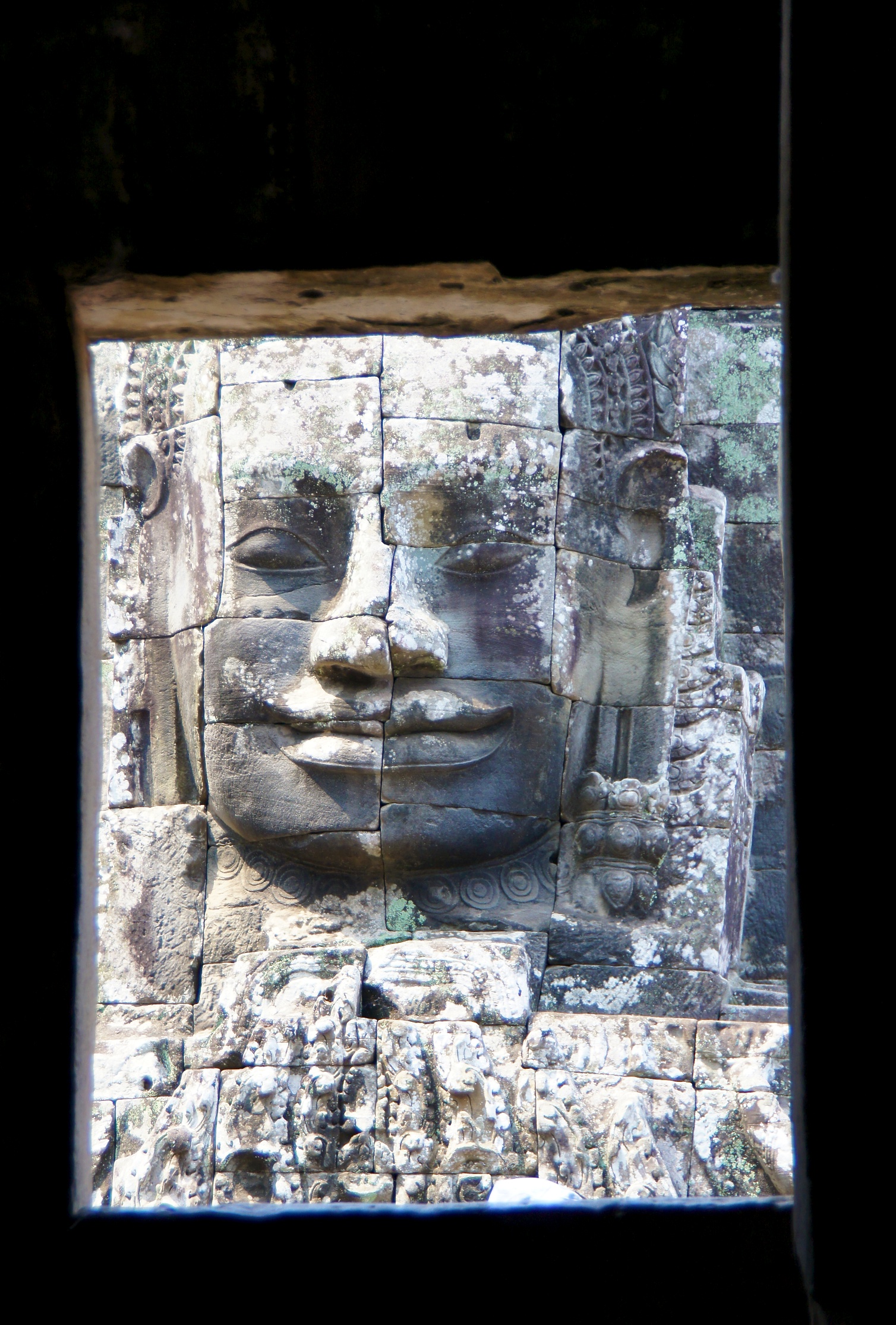
    Faces begin to materialize in the stone……


    Temples of cambodia 16

    Built by Jayavarman VII the temple has 54 towers and 216 faces.  No one knows exactly whom the faces represent.


      Temples of cambodia 18


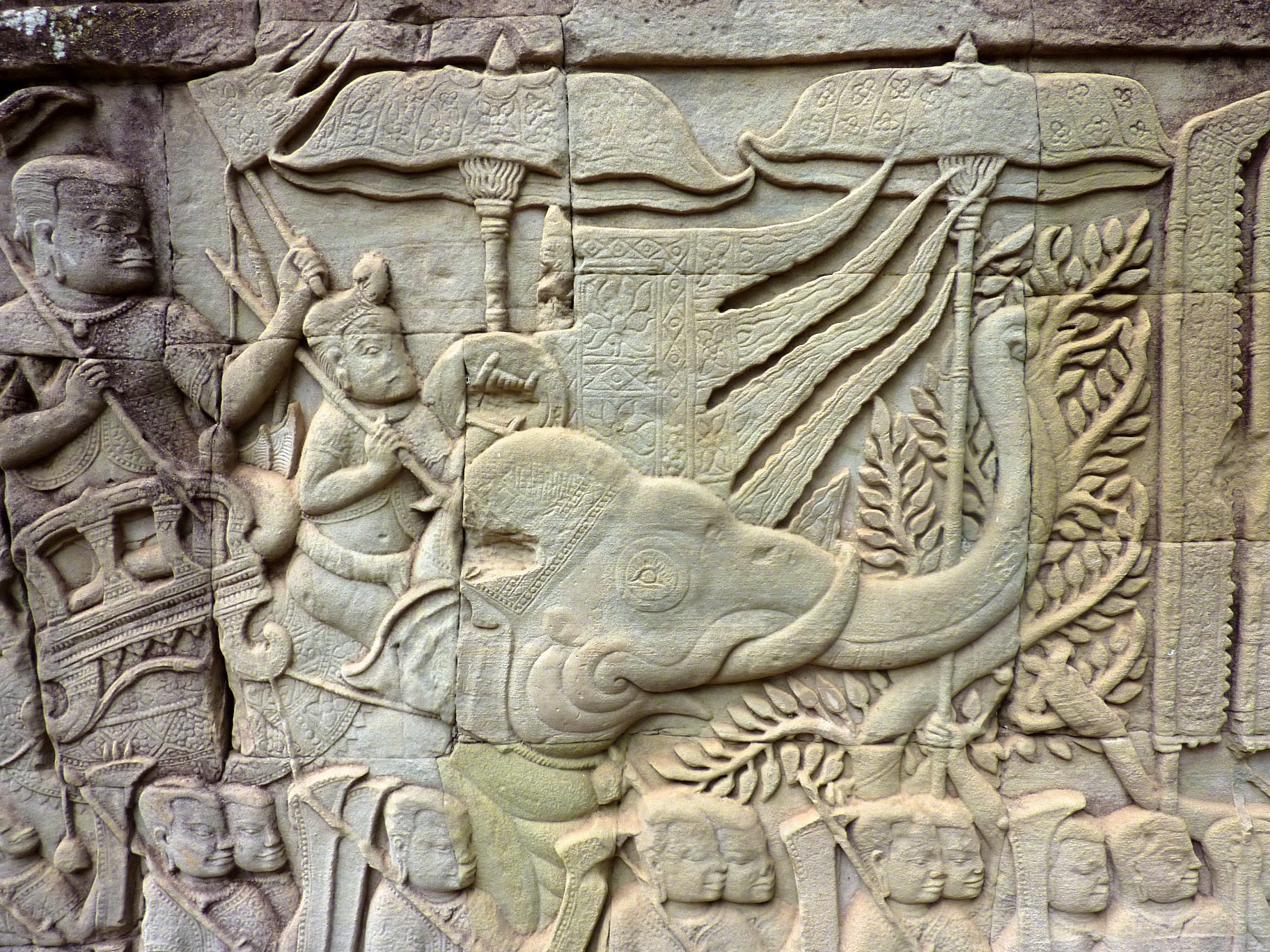
    The Bayon  also houses very unique bas-reliefs on the exterior walls depicting real-life scenes from the historical sea battle between the Khmer and the Cham.


    Temples of cambodia 22

    There are also extensive carvings of scenes showing everyday life, including market scenes, cockfighting, chess games and childbirth.  The intricacy and details were amazing.


    Temples of cambodia 23


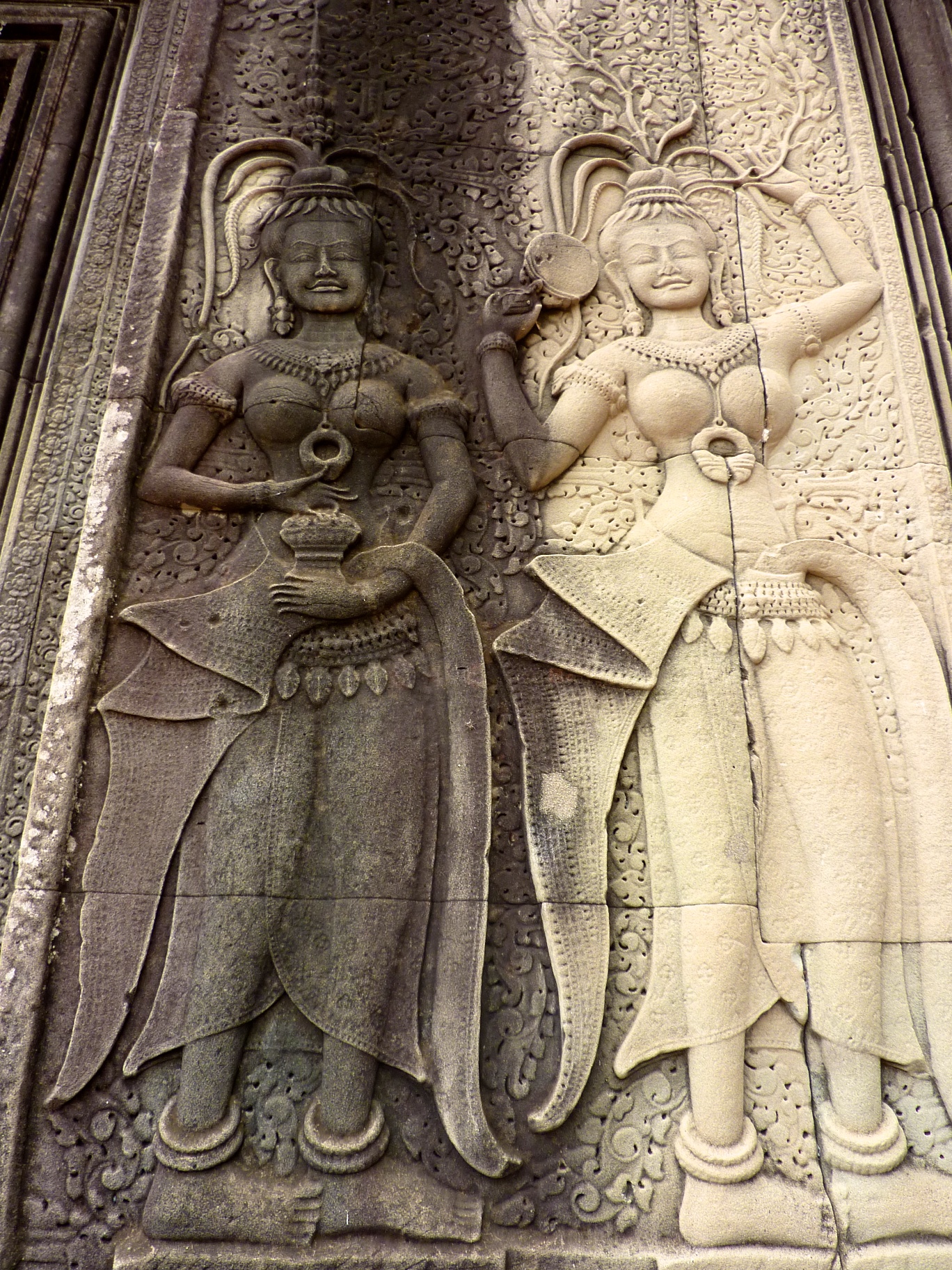
    The Bayon has thousands of female figures carved into the stone.  It primarily features two types of sacred Khmer women: Apsara (celestial goddesses) dancing on lotus flowers, usually located on pillars;


    Temples of cambodia 4c 1


    and devatas, who stand gracefully in niches surrounding the structure.


    Temples of cambodia 4c 2 

    I really liked this temple.  It had so many interesting angles to view the faces providing so many photographic opportunities.


    Temples of cambodia 19


    Angkor Wat


    Temples of cambodia 24


    Angkor Wat, City Temple, is the main temple.  It has become a symbol of Cambodia, appearing on its national flag, the worlds only flag which features a building.  It was built between 1113 and 1150.  Unfortunately it was under construction so all of our photos have green tarps in them.   


    Temples of cambodia 5q (1)


    This 12th century temple was constructed by King Suryavarman II, it was his personal mausoleum (tomb) and as a temple to the Hindu god Vishnu.  It was designed as a pyramid representing the structure of the universe: the highest level at the center of the temple represented Mount Meru, the home of the Hindu gods. The moat around the complex represented the oceans that surround the world.


    Temples of cambodia 29

    What was so interesting to us (and scary) was how you could walk along the edge and there was no railing.  Look down at the people in the photo below to get a good perspective of how high up we were – just hanging off the side!


    Temples of cambodia 30


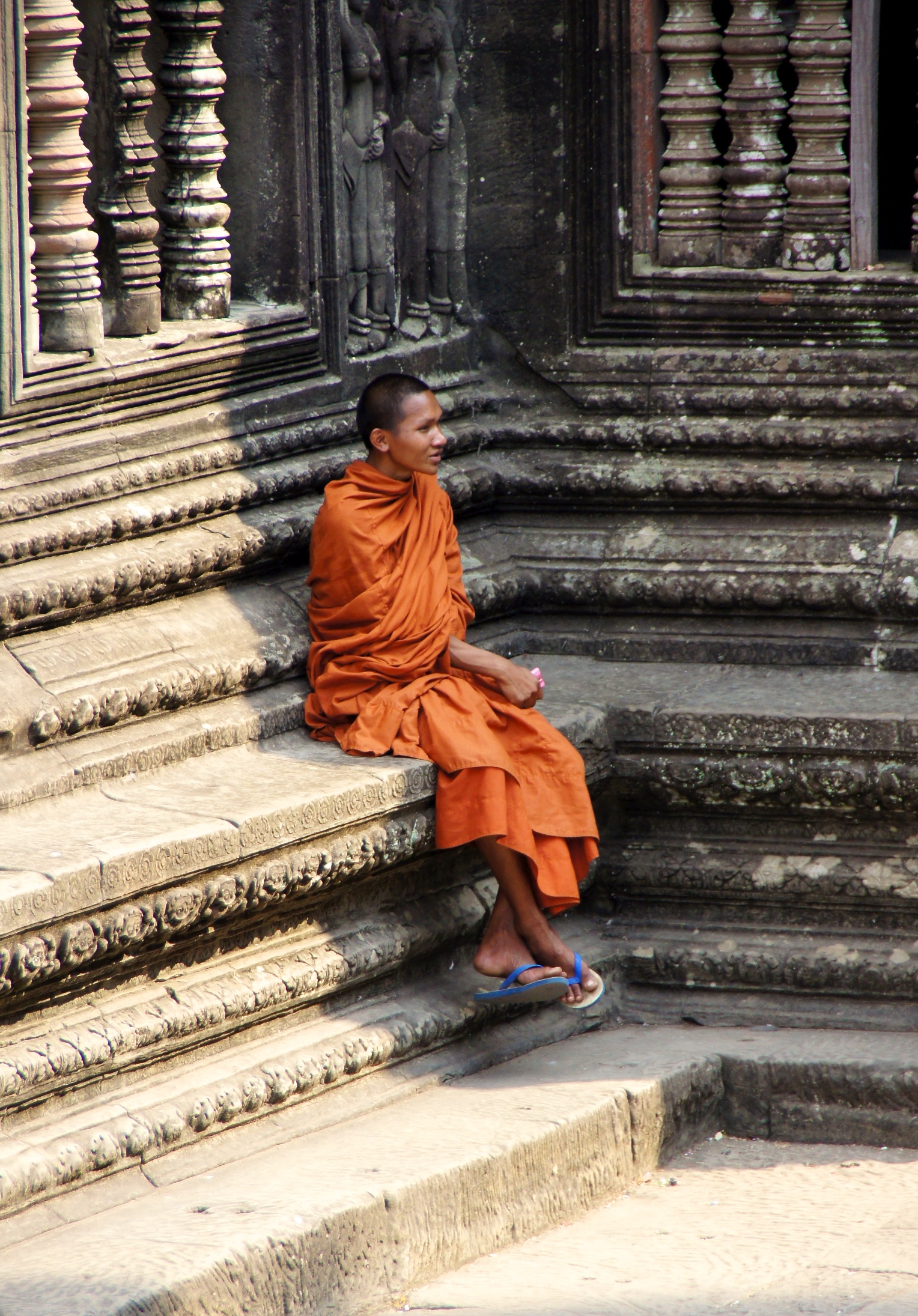
    A peaceful photo of a young monk relaxing in the sun.


    Temples of cambodia 28


    The most famous decorations of Angkor Wat are the Apsara.  There are more than 300,  always bare-breasted and usually dancing, representing an ideal of female beauty.  I was intrigued with these figures  with basically the same proportion as Barbie, so I did a little research.  History dismissed the women as  ”wives to entertain the king in heaven” or ornaments “to decorate bare sandstone walls”.  Recent research suggests that these women served much more profound roles than mere decoration. And perhaps these women were the driving force behind the civilization itself.


    Temples of cambodia 27

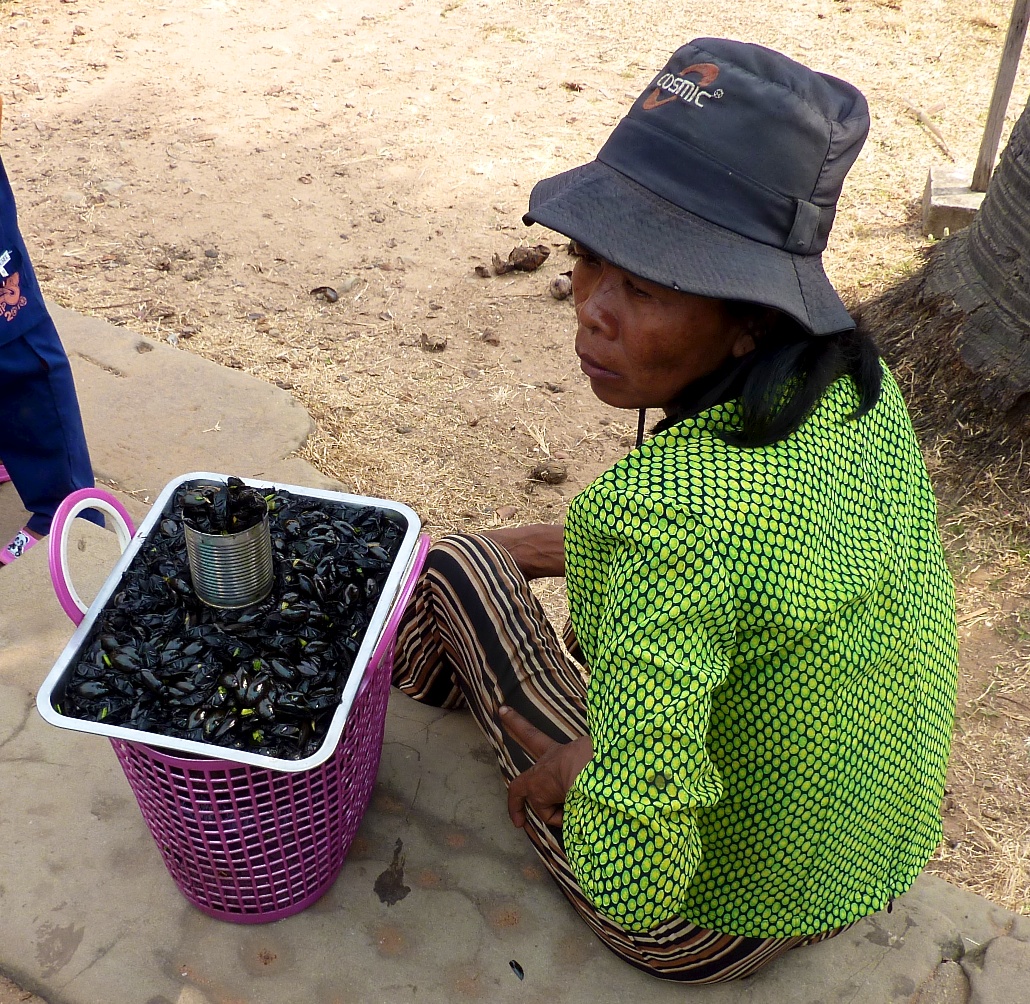
    On the temple steps this women was selling a bucket of beetles, supposedly a favorite snack in Cambodia.  We did not sample them.


    Temples of cambodia 25


    Temples of cambodia 26

    It was an exhausting day seeing all of these temples and hearing so much history.  But we really enjoyed seeing such mythical and spectacular structures.  We were very pleased with our guide and our driver.  


    Temples of cambodia 31

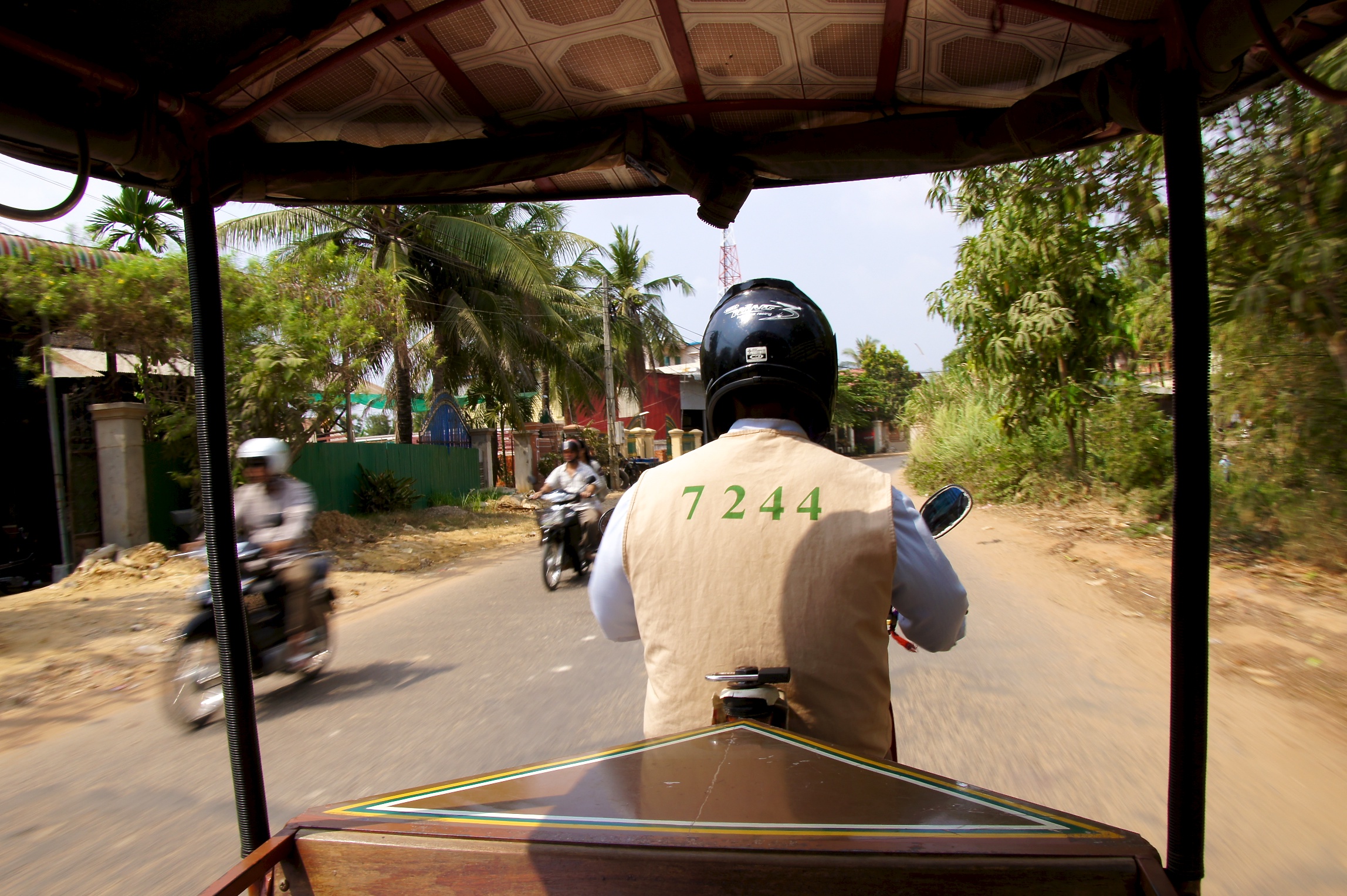
    The next morning we decided to rent a tuk tuk instead of a car to take us to some of the lesser know temples.  Above is the view from the inside of a tuk tuk.  Not sure how safe they are……but we thoroughly enjoyed the ride.


    Temples of cambodia 32


    Passing all kinds of other motorized vehicles including a moped with three girls pulling a  fourth girl on a bike.


    Temples of cambodia 33


    Banteay Srei


      Temples of cambodia 34


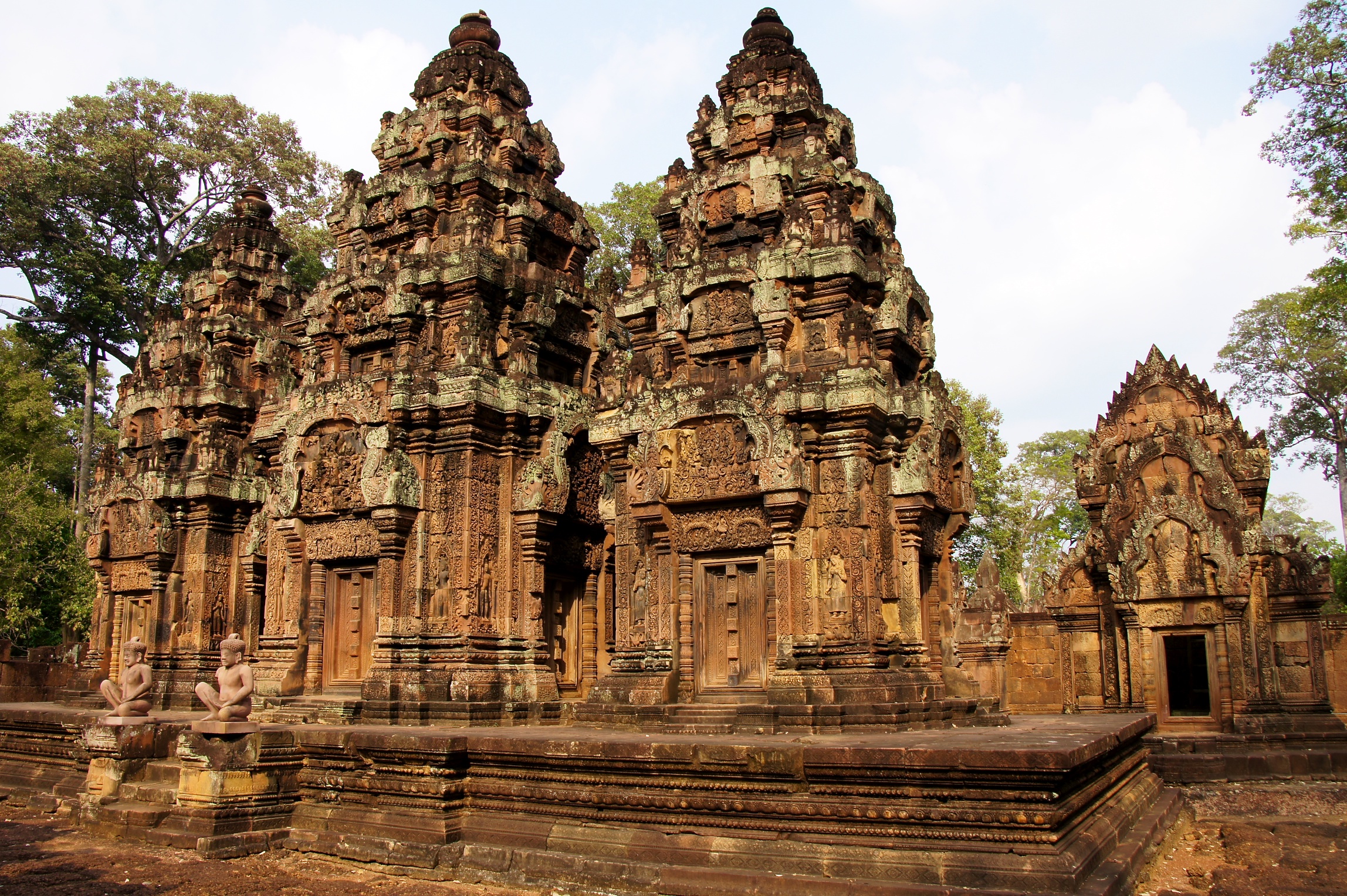
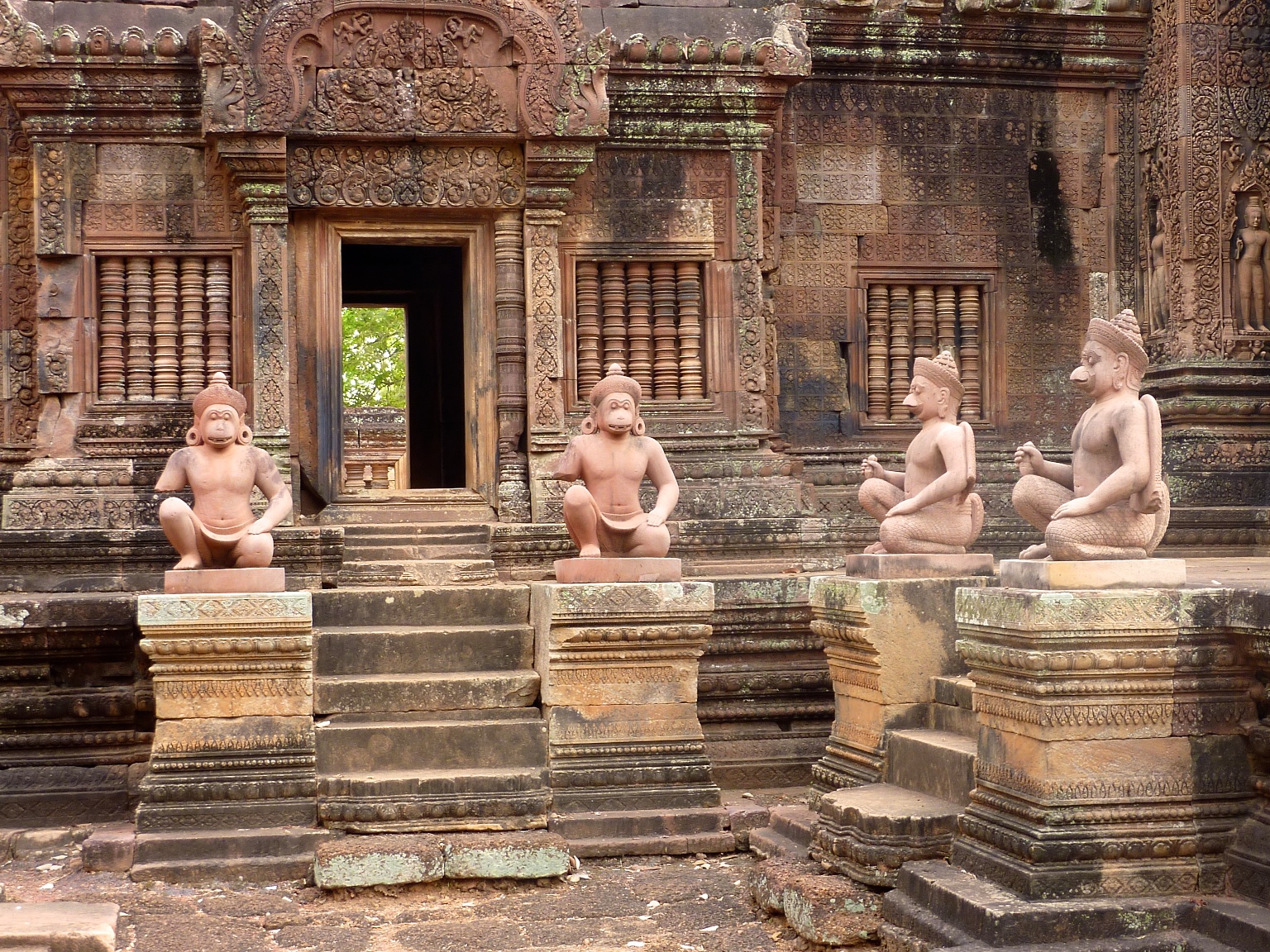
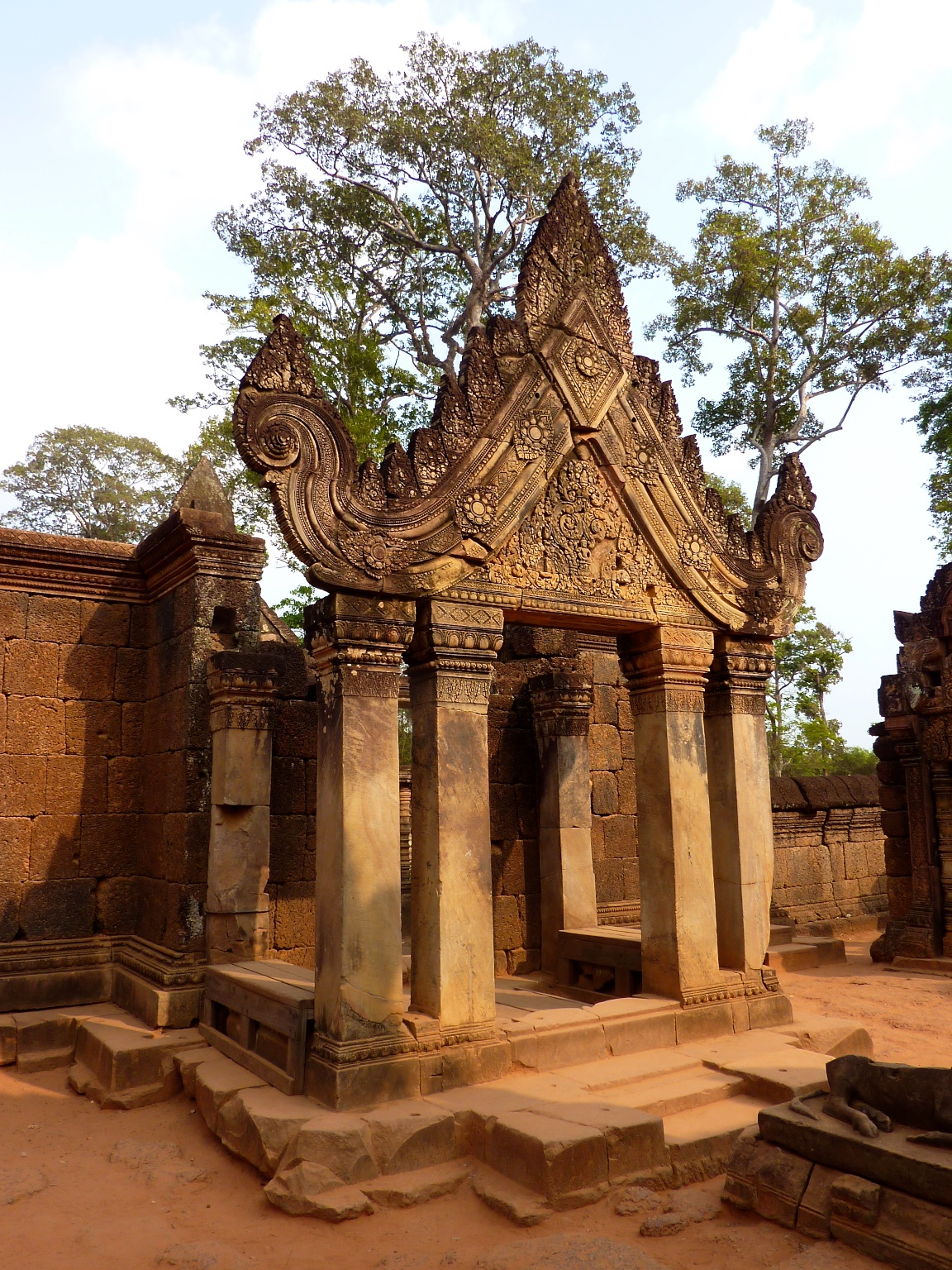
    Banteay Srei is 23 miles from the main village and on a tuk tuk  it took about 2 hours to get there.  The name Banteay Srei "citadel of the women" or "citadel of beauty" is referred to as the lady temple, not because of the carvings, but the fact that the reliefs on this temple are so delicate that the hand of a woman could only have carved them. It is built of red sandstone, which can be carved like wood.


    Temples of cambodia 36

    What I was referring to as the monkeys are actually called Dvarapalas (temple guardians).  Their function is to protect the temples.


    Temples of cambodia 35


    Banteay Srei is the only major temple  not constructed by a monarch, but by a courtier.   It is known for its small scale and the extreme refinement of its decorative carvings, including several famous narrative bas-reliefs dealing with scenes from Indian mythology.


      Temples of cambodia 38


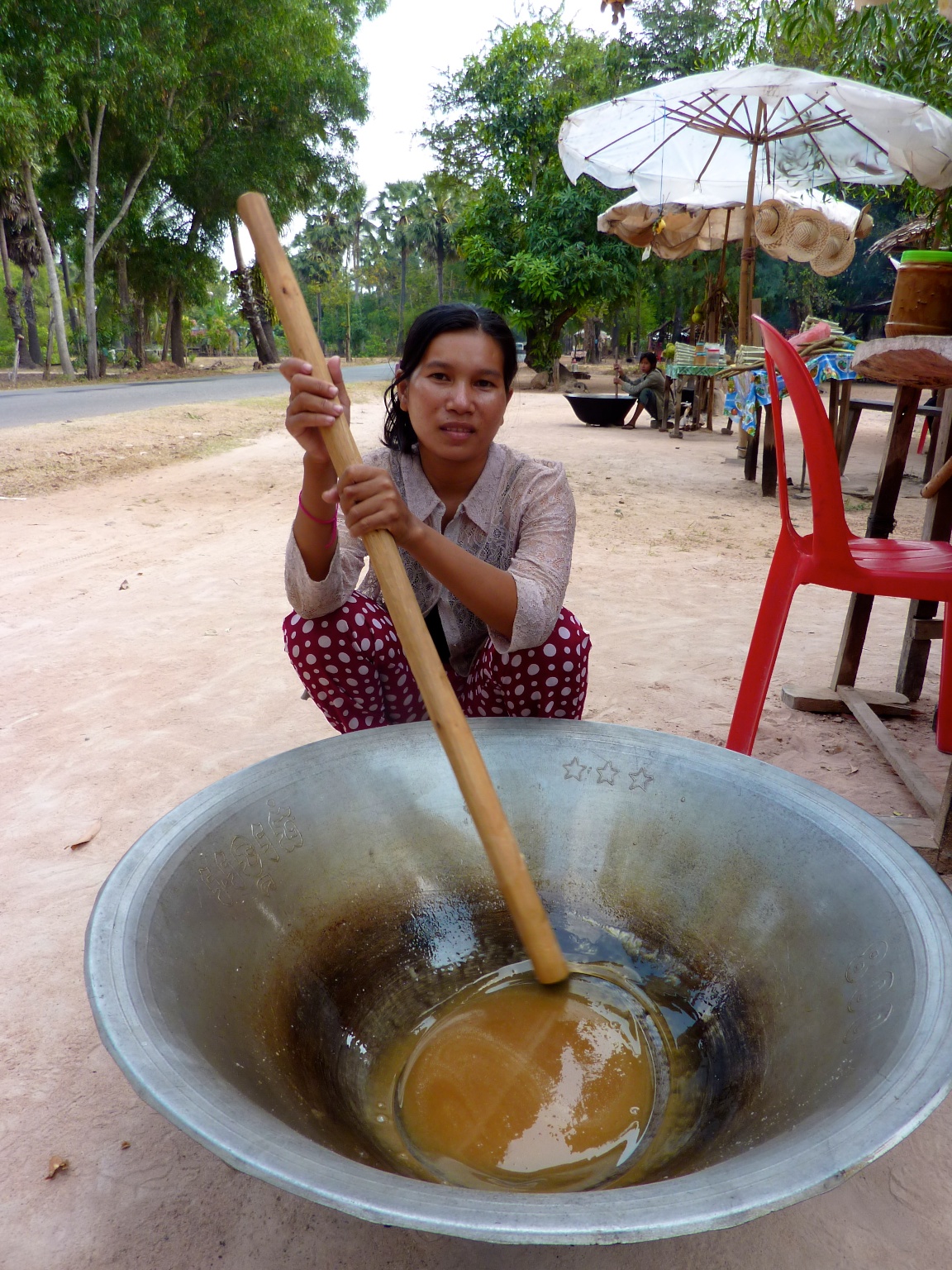
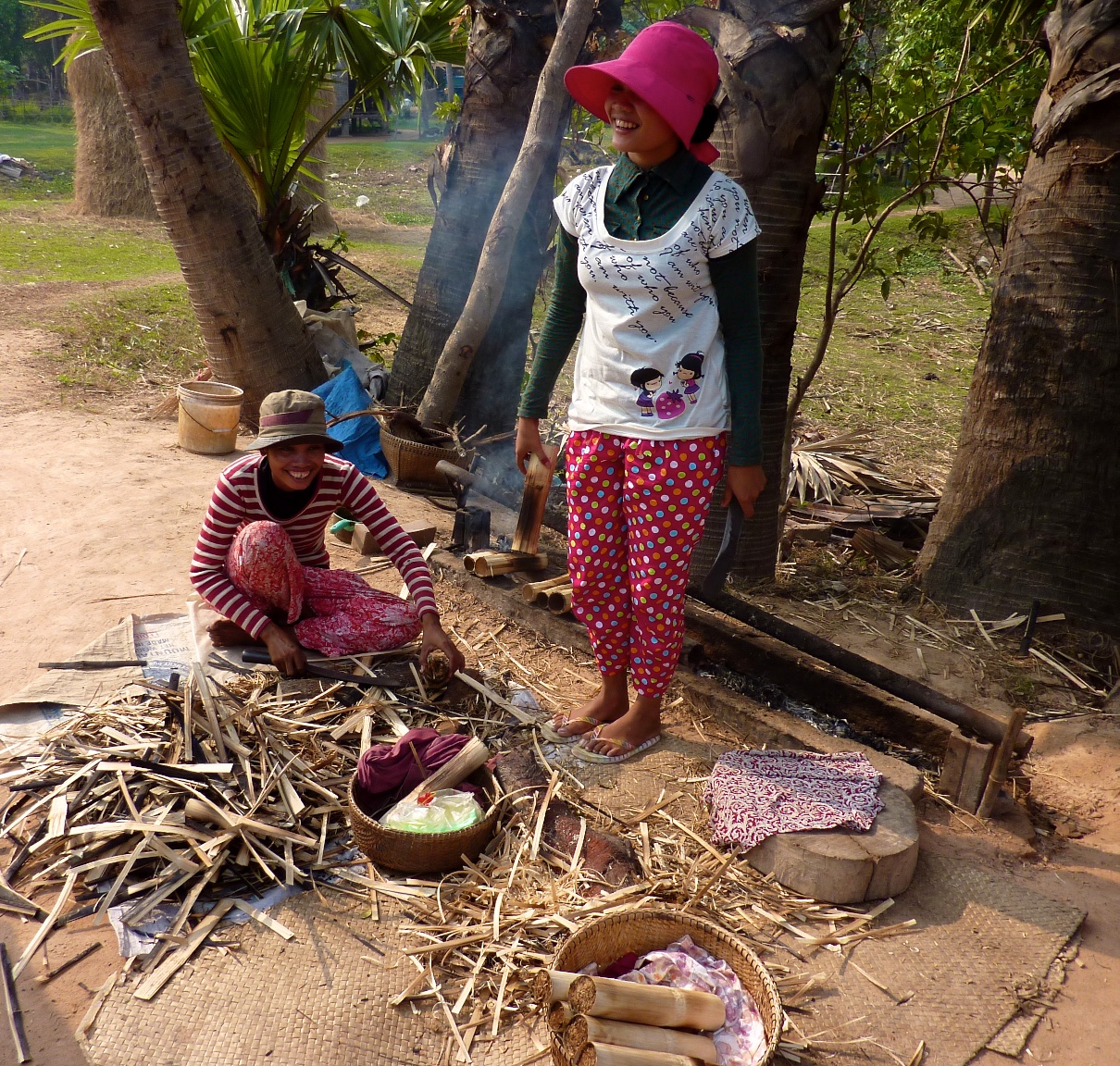
    The ride on the tuk tuk through the villages was as fun as visiting the temples.  Many women were making and selling sweet sticky rice in bamboo along the roadside.  This first photo shows a woman melting the sugar cane for the rice.
     

    Temples of cambodia 39


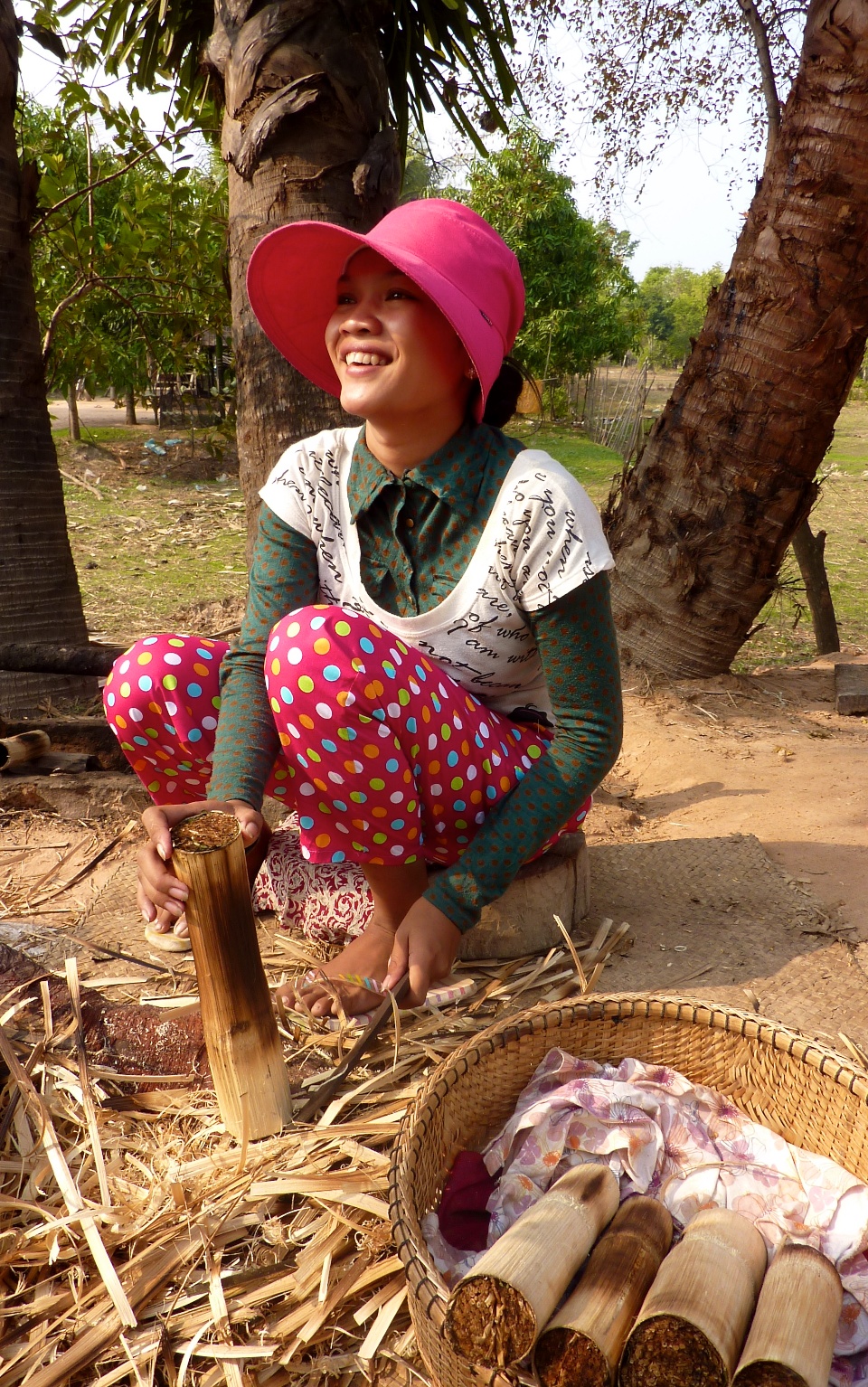
    The rice is then placed in a bamboo tube and the end is plugged with a piece of coconut husk wrapped with banana leaf to keep in the steam so the rice will cook  (see basket below).


    Temples of cambodia 55


    To cook the rice, the bamboo tubes are placed over charcoal. 


    Temples of cambodia 54


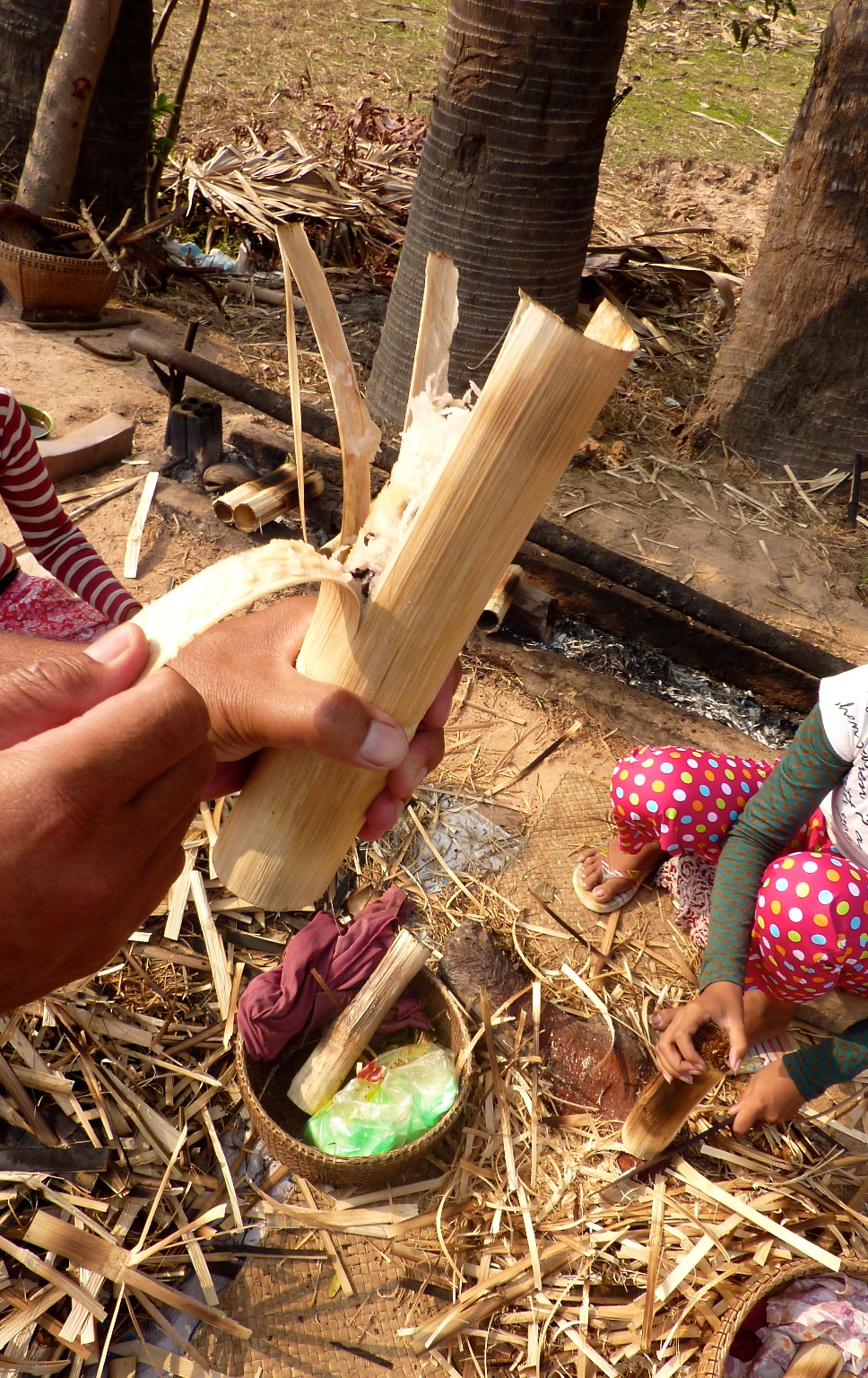
    Our driver showed us how to peel open the bamboo to get to the sweet treat.  The rice was very sweet and had a handful of black beans in it.  


    Temples of cambodia 56


    Banteay Kdei


      Temples of cambodia 5q (7)

    Banteay Kdei appears much as it did when early explorers first discovered it.  It was built in the late 12th to early 13th century during the reign of Jayavarman VII.   It was originally erected as a Buddhist monastery. 


    Temples of cambodia 52


    What I loved about this temple were the colors.  We were there in the early evening and the setting sun cast a glow that created beautiful rich purple and green tones.


    Temples of cambodia 51


    This temple was built of soft, inferior sandstone and many of the galleries and porches have collapsed.  It is in a state of ruins.   But this ruined appearance doesn’t take away from the temple’s charm and beauty.


      Temples of cambodia 50


    The back entrance has a spectacular tree, which is spreading its roots over the ruins.  For years it was difficult to reach this temple, but recently a road was built to get to the complex.


      Temples of cambodia 49


    We found that we really preferred the more ‘ruined’ temples, as opposed to the neatly preserved ones. 


    Pre Rup


    Pre Rup was one of those monuments that was more beautiful from afar.  The temple’s name means "turn the body".  Cambodians believed that funerals were conducted at the temple, with the ashes of the body being ritually rotated in different directions as the service progressed, hence the name, Pre Rup.


    Temples of cambodia 46


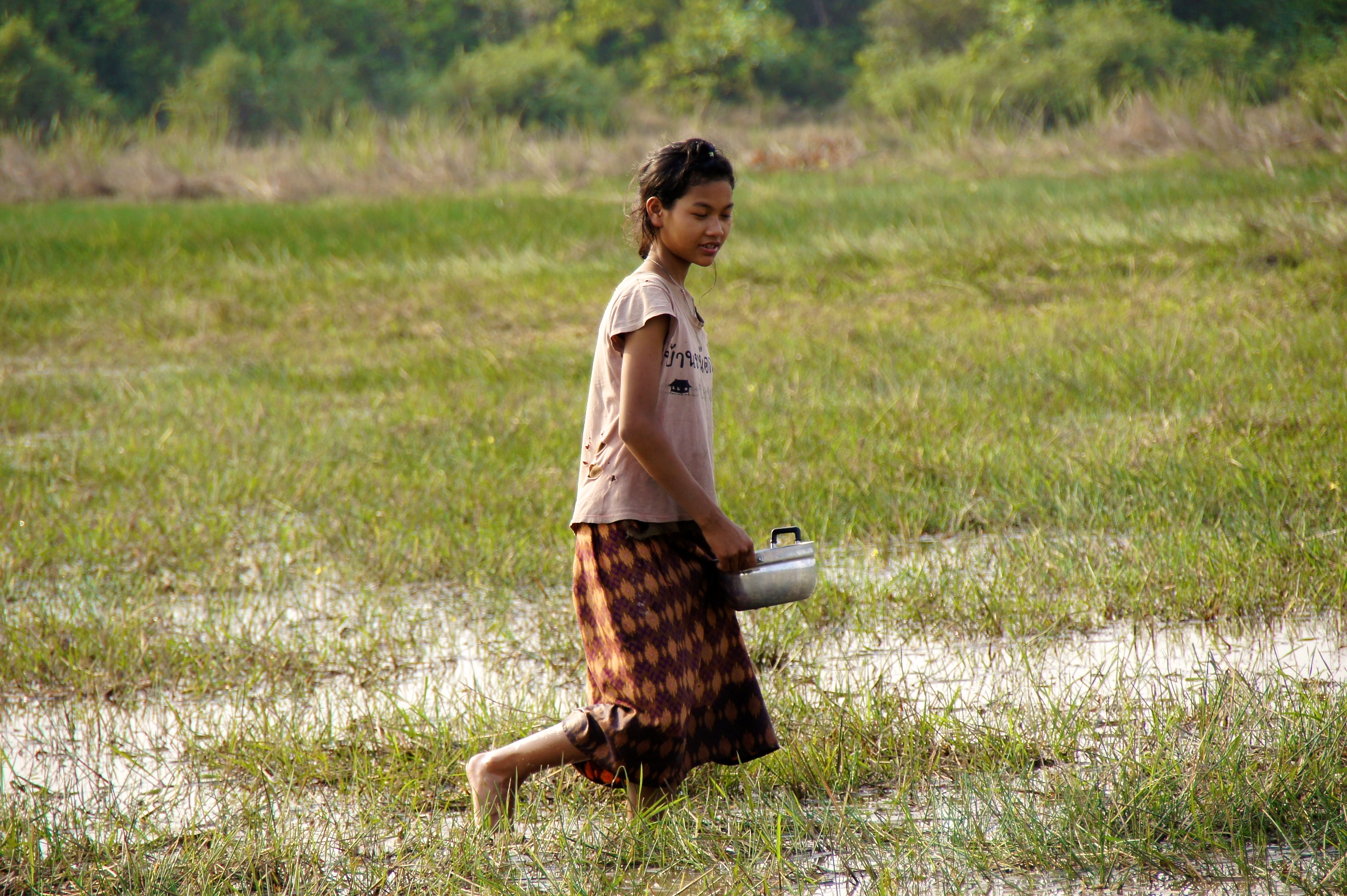
    Our tuk tuk driver was very good about stopping along the way for us to take photos of everyday life.  In the distance we saw several young girls fishing for something in the water.


    Temples of cambodia 41


    They were laughing and having such a good time.  We walked to the marsh edge to talk to them… well our tuk tuk talked to them.  Of course D wanted to take off his shoes and go in the water.  I convinced him that this might not be the most sanitary thing to do – he calls me his "joy smasher" when I tell him not to do things like this. 


    Temples of cambodia 42

    This girl was very shy and she never came up to us.


    Temples of cambodia 43


    What were they catching?  Snails.


    Temples of cambodia 44


    Like the children of the village, the girls got a kick out of seeing their own image on D's camera.  Except for the shy one.


    Temples of cambodia 45


    The late afternoon sun cast a delicate glow on this oxen in the field.  It makes the scene look like a painting.


    Temples of cambodia 47


    Beng Mealea


    Temples of cambodia 57

    You would think after visiting so many temples they would all start to look a like, but this was not what we experienced.  Each one was so different, so spectacular and interesting in its own way. 


    Temples of cambodia 58


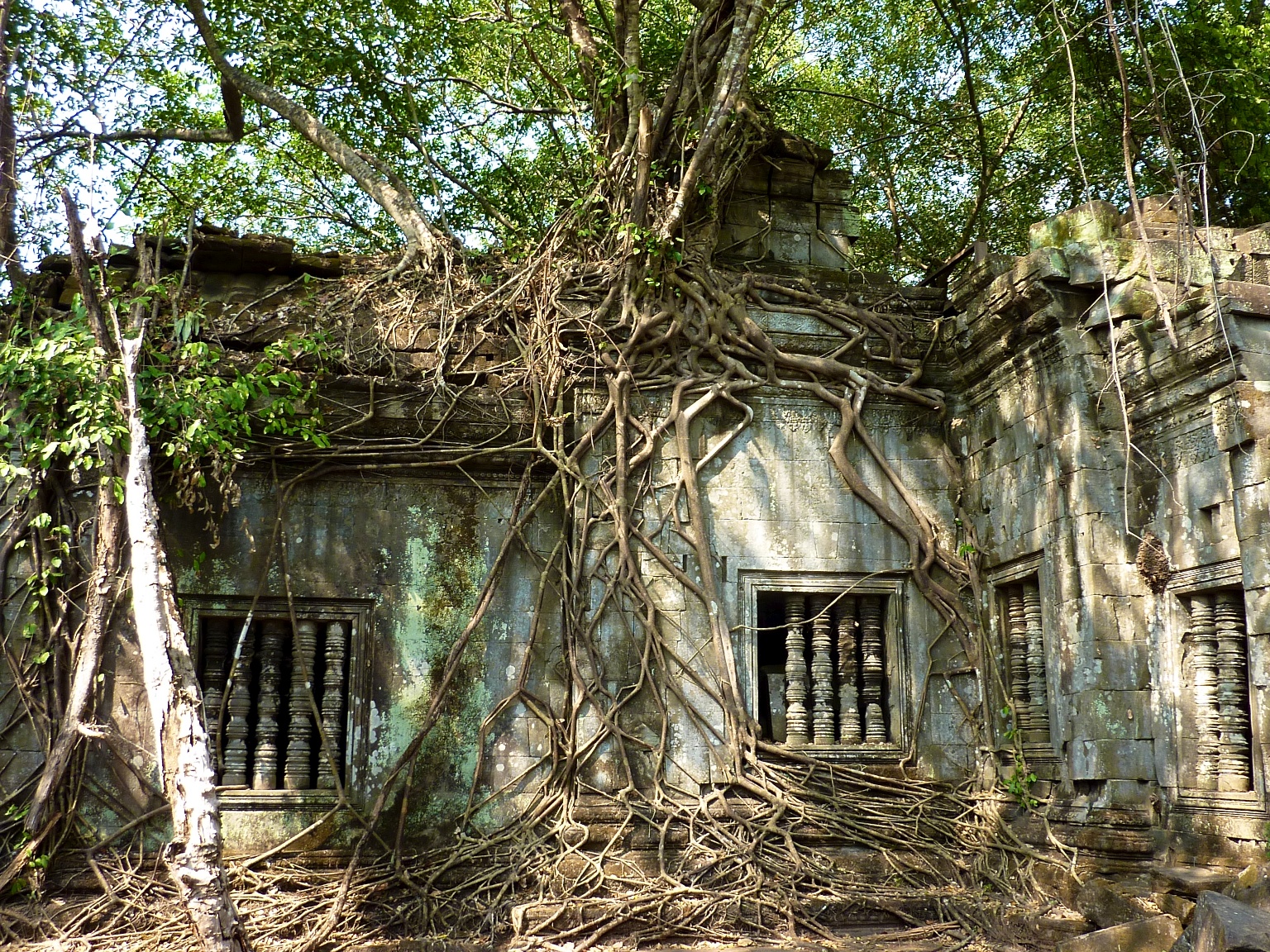
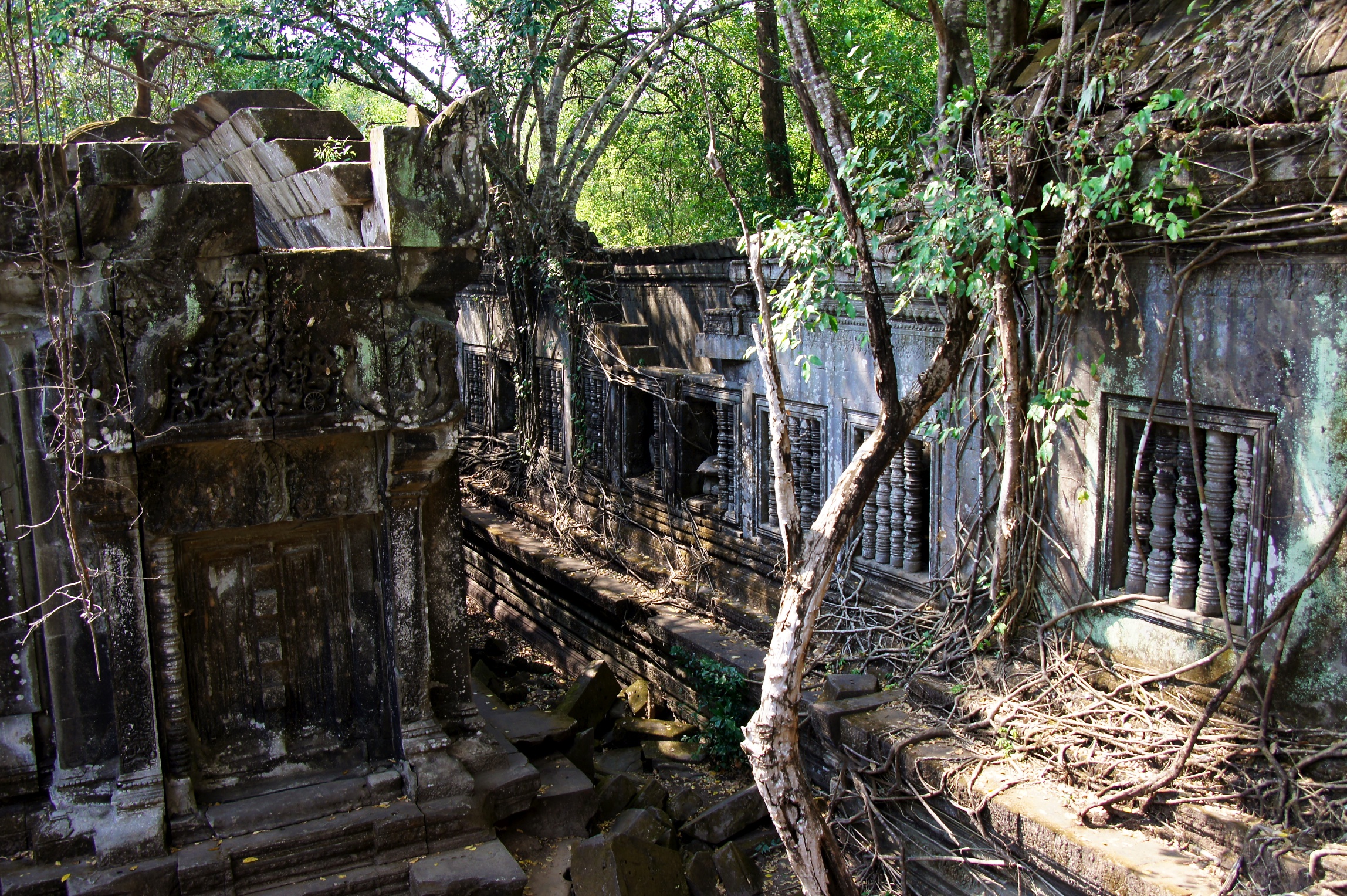
    Beng Malea was special because it is one of the only temples that has been completely left alone.  It has not been restored in any way, they do not even prune the trees.

     
    Temples of cambodia 60

    The history of the temple is unknown and it can be dated only by its architectural style, similar in style to Angkor Wat, historians think it was built during the reign of king Suryavarman II in the early 12th century.  The roots of the trees were taking over their ruins.


     Temples of cambodia 59


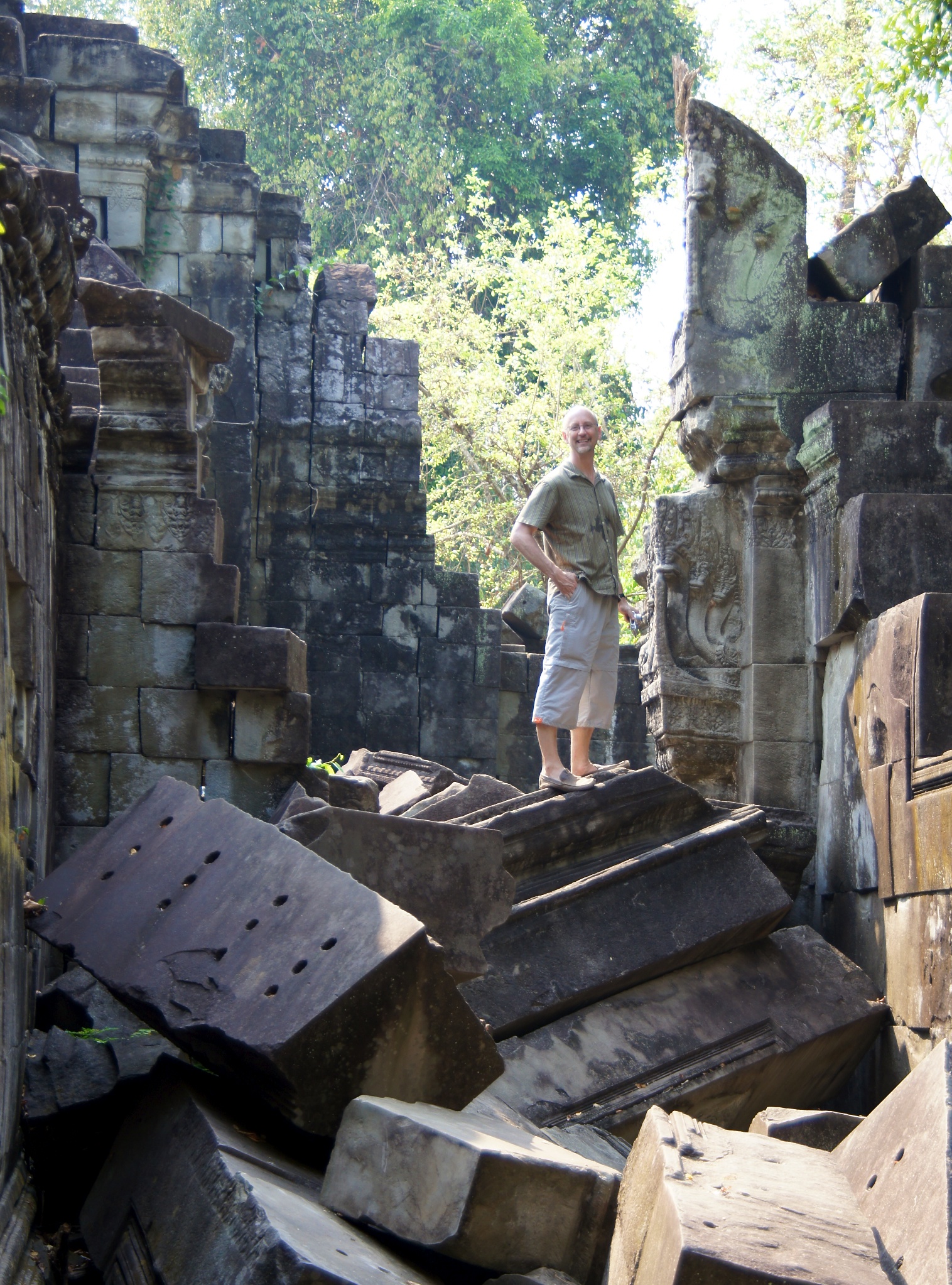
    This temple had such an erie feeling to it.  Again, we were amazed at how we were allowed to climb all over the ruins – no railing to stop us from falling of the edge!  


      Temples of cambodia 66


     I felt more comfortable sitting down when I was near the edge. 


      Temples of cambodia 67


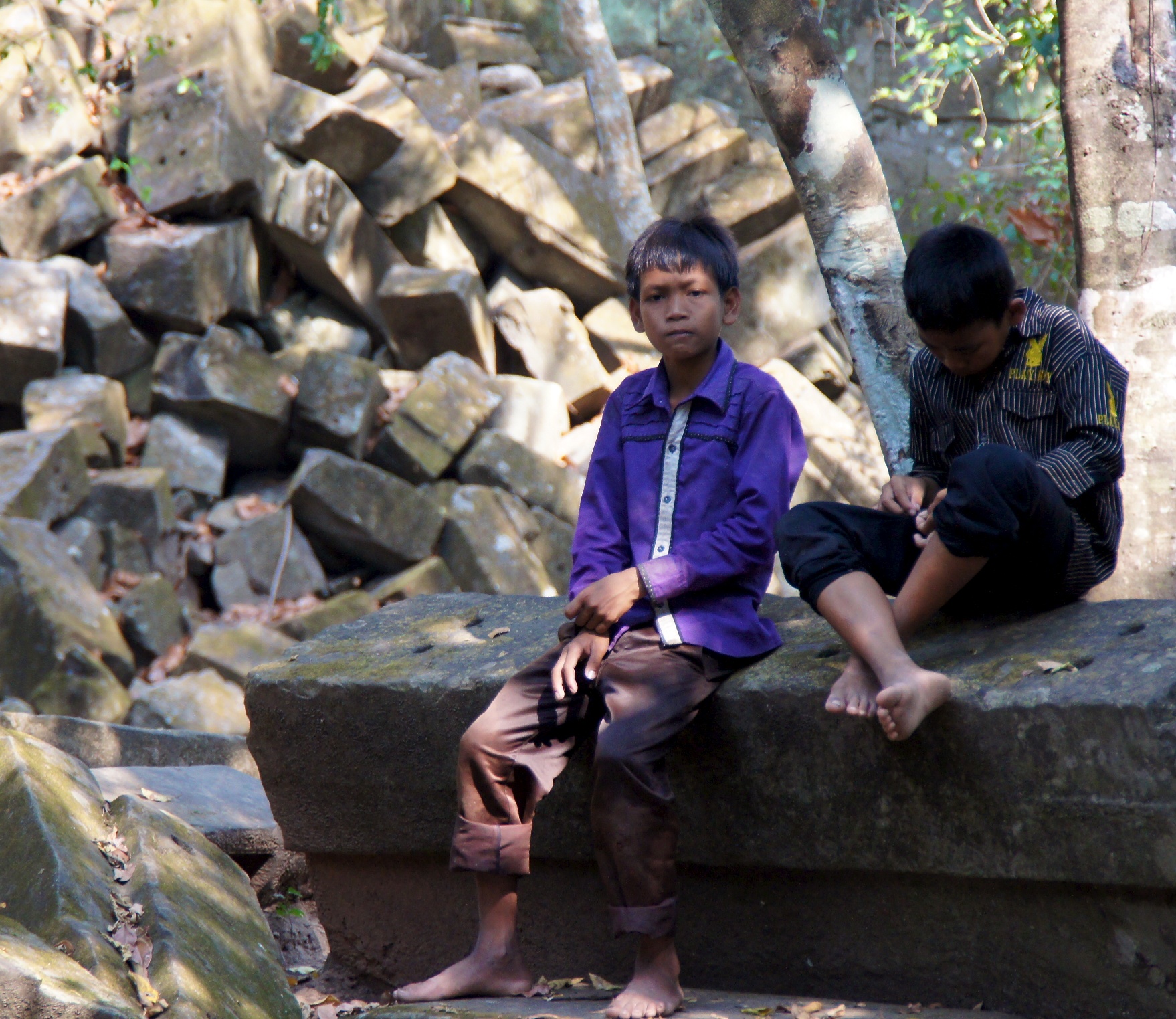
    There were many beggars, both adults and children wanting to be our guide.  This was the only temple were we experienced this.


    Temples of cambodia 62


    We kept saying no to their offers, but one man just started following us around pointing at things – giving one word descriptions and telling us what direction to go in.  He became our unofficial guide. 


    Temples of cambodia 65


    At first we were annoyed but then we embraced him as he would not leave.  At this point, it became humorous.  And in the end, the temple was so complex, he was actually helpful so we gave him a tip.


    Temples of cambodia 64


    An interesting sign at this temple.  We all have heard about land mines, but to see this sign was pretty eye-opening.  And the area we were walking on was cleared just four years ago.


    Temples of cambodia 63

    As usual we took too many photos 4000 in Cambodia.  I  put a few more of my favorite temple shots in a slide show.


    And a handful on my art blog ma vie trouvee.


    Temples of cambodia 53


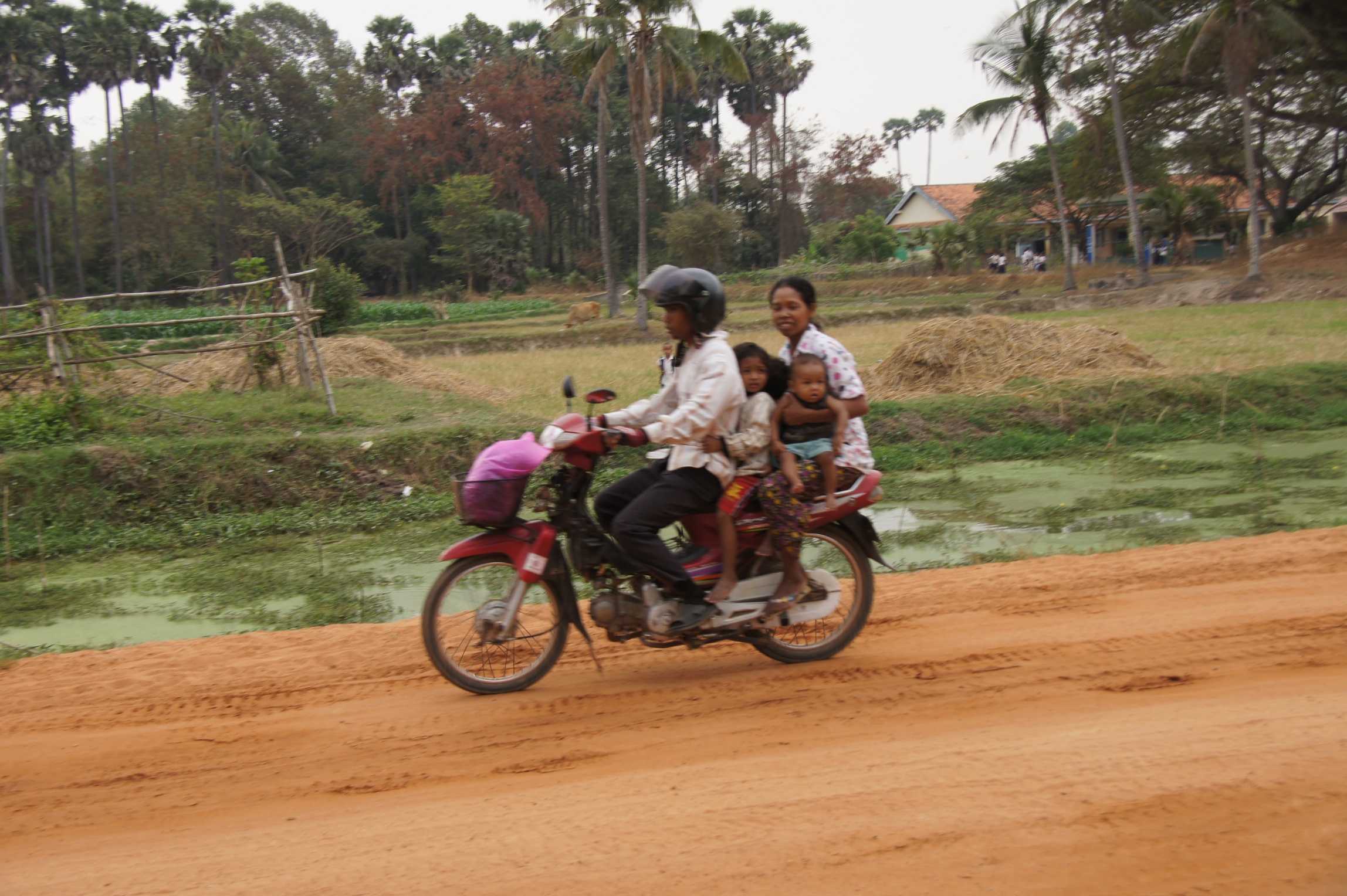
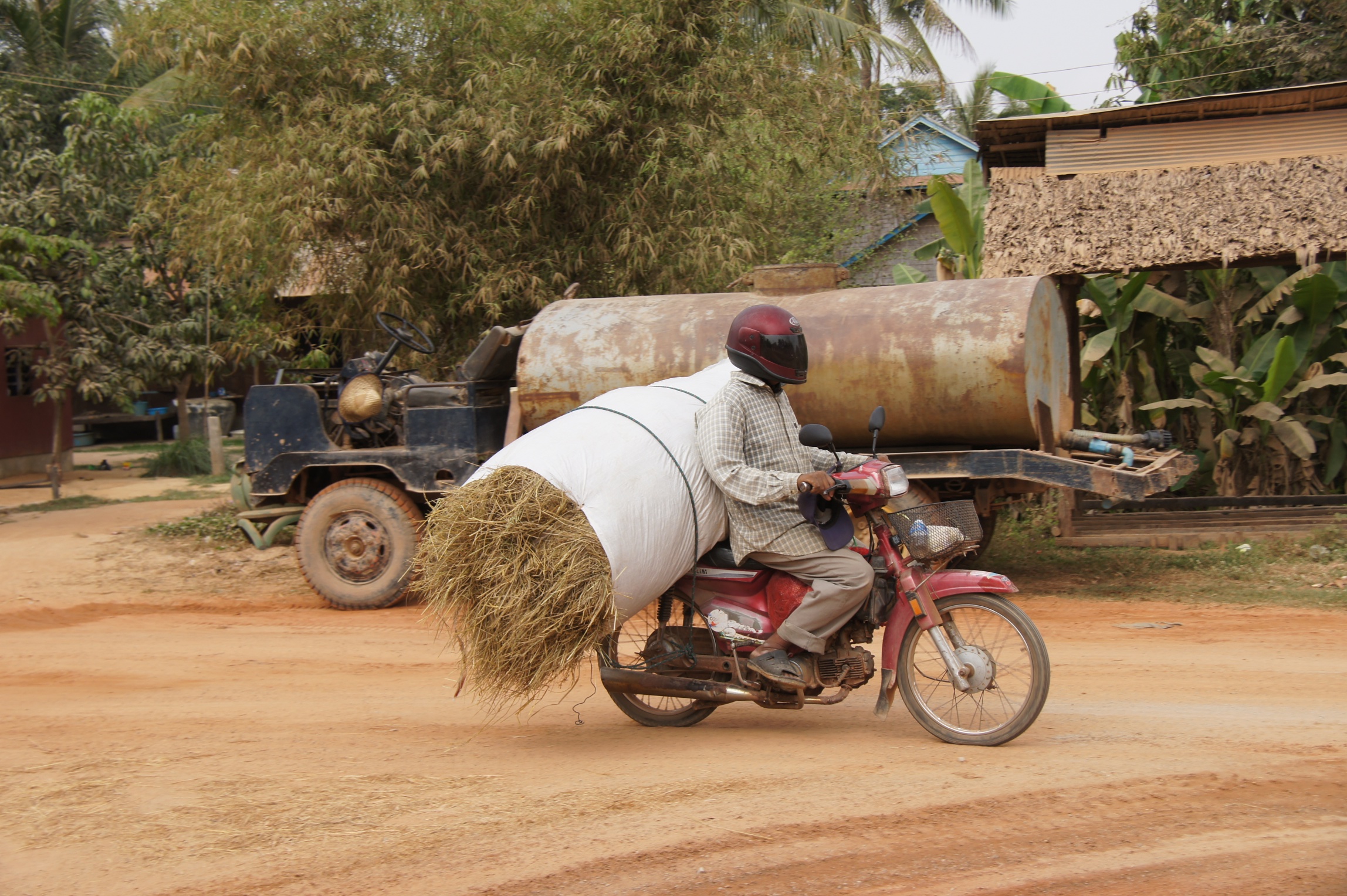
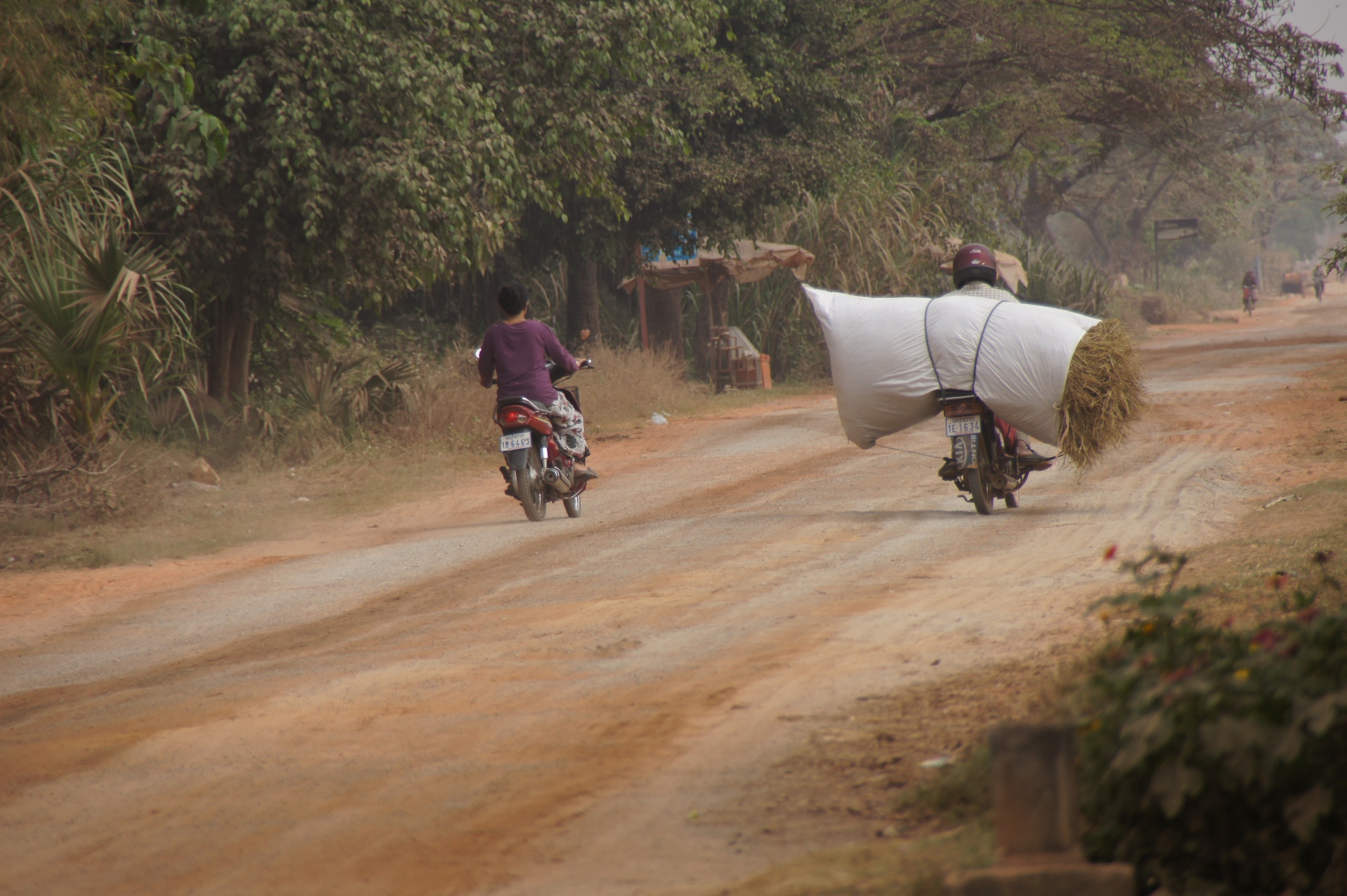
    To end this blog……more crazy moto bike shots.  How is she keeping that shoe from falling off?


    Temples of cambodia 68


    Out of curiosity I looked up the law for helmets on moto bikes in Cambodia – as of 2009 it is a law for only the driver to wear one.  


    Temples of cambodia 70


    But what about all that precious cargo!  How cute is he?


    Temples of cambodia 69

    We hope you enjoyed all of our photos of Cambodia.  This is a country we truely fell in love with!


  •  

    Stilted village for blog 28

    In Kompong Khleang, we visited a stilted village and a floating village on the Tonle Sap Lake in Cambodia.  It was one of the most fascinating experiences of our lives. 


    Stilted village for blog 32

      Stilted village for blog 33


    With all the traveling we have done, we have experienced many cultures and have seen so many different ways people live – from the very wealthy to the very poor.  But this community struck us as the most unique and different way of living we have ever seen.  It was as if we dropped into the middle of a National Geographic Magazine.


      Stilted village for blog 3


    We hired a driver as this village was a two-hour drive from Siem Reap.  Because it was the dry season, we were able to drive thorough the local village before getting to where the boats dock.  The village was an amazing sight in itself, with the stilted houses sitting so high up in the air – up to 15 feet! 


    Stilted village for album


    During the rainy season (November – May) the road will be completely flooded and the water level will go up the bottom of the houses. 


      Stilted village for blog 2


    Like Sojourn village, the people were exceptionally friendly and were NOT begging for money….the children were just busy waving and and calling out "goodbye, goodbye".  Sweet.


    Stilted village for blog 1


    Fishing is the main income for the entire community.  As we drove through the village, we saw trays of fish lying out in the hot sun to dry. 


    Stilted village for blog 4


    The people of Kampong Khleang, make Cambodia's famous fermented fish paste, Prahoc.  This paste is unique to Cambodian cuisine and is made by fermenting whole fish, or shrimp, with ground rice and salt.  


    Stilted village for blog 5


    The smell was extremely pungent.  This is where we wish we had scratch and sniff capabilities on our blog   :  ). After the fish are dried, they are seasoned and packaged for sale.   Thinking you would never eat this?  Chances are…..if you have eaten Cambodia food you probably have, as it is used in almost every  savory dish.


    Stilted village for blog 6


    We rented a private boat and our driver came with us – he had also been our driver the day before and we really liked him.  He was able to give us information about the people and their life on the water.  Our "captains" were two fairly young boys where the younger of the two had the job of emptying the water that was seeping into our boat.  No safety requirements here!  But if you look at the top left of the photo – there were safety vests.


    Stilted village for blog 7

    There were so many great photographic opportunities along the river, but keep in mind we were in a boat…..moving most of the time, so the photos are not as sharp as I would have liked.


    Stilted village for blog 12


    We were awe-struck as we started our journey down the river.  The height of the houses teetering up on the stilts (look at the brown house in the backgound below) were a sight to be seen.  By the end of June, the lake will be come within a foot of the house below. 


    Stilted village for blog 48


    We also found it amazing to see that the men spend most of their life IN the water.  Not "near" the water or "on" the water, but in the water… usually up their necks all day long.


    Stilted village for blog 8


    Tonle Sap is one of South East Asia’s largest fresh water lakes.  It is connected to the Mekong River.  There are over 200 species of fish on the lake.    The fishing industry in Cambodia is so important that even the currency, the riel, is named after a small fish used in the fish paste.


    Stilted village for blog 11

    Kompong Khleang is the largest permanent settlement on the lake. with over 20,000 people living there.


    Stilted village for blog 44


    Some houses were built right on the water's edge. They are temporary thatched huts which are dismantled during the rainy season and moved along the causeways on trucks.


    Stilted village for blog 17


    The community undergoes dramatic and continual changes due to the seasonal flood levels caused by the reverse flow of the Tonle Sap river.  On the water's edge or on the lake, they are all used to moving their entire houses around.  Below, a house is being pulled by a boat to a new location.


    Stilted village v 2
     

    Every moment of this journey was a surprise.  We saw children playing in the water - 


      Stilted village v 3


    Stilted village for blog 36

    women washing their clothes –


    Stilted village


    Women cleaning fish to be dried-


    Stilted village for blog 9


    A family doing daily chores – maybe getting ready for a meal? Grandma must be in good shape having to go over the side of the boat all day long.


    Stilted village for blog 29


    Lots of men fishing with nets –


    Stilted village for blog 13


      Stilted village for blog 34


    Stilted village for blog 10


    Stilted village for blog 14

    And families traveling across the river.  Looks like they are as curious about us as we were about them.  This was definately NOT a tourist site.  In fact, we only saw one other group of tourists, a couple, the entire time we were there.


    Stilted village for blog 16

    Stilted village for blog 35


    How sweet – she is blowing us a kiss!


    Stilted village for blog 41

    The houses along the riverbank became sparse as we traveled about 20 minutes into the heart of the river where we began to see the floating village in the horizon. 


    Stilted village for blog 27


    The floating village has about 100 families and is completely separate from the stilted village; both in location and ethnicity.  The floating village sits in the middle of the lake and is populated by Vietnamese.  The stilted village is Cambodian and is connected to the shoreline.


      Stilted village for blog 18


    How about this little guy hanging on the end of the boat with no supervision….and we sometimes worry if the kids are in the next room by themselves!


      Stilted village for blog 24


    I imagine him to be thinking – gee – can't a guy get any privacy around here?


    Stilted village for blog 25

    This really took my breath away – to see this small child hanging off the side of the boat like this.  I have to share just one more photo…..humm guess no diapers are needed for him!


    Stilted village for blog 26

    Here is another one, a little girl not much older.  Looks like she is washing dishes. And again, no adults in sight.


    Stilted village for blog 40

    How about these four little boys?  Think of how much mischief four boys would get in to on dry land…can't even image in a boat on the water!


    Stilted village for blog 30

    What an incredible way to live – to do everything by boat…..pull up to the local restaurant:


    Stilted village for blog 19

    Shop for clothes:


    Stilted village for blog 42


    Seventy percent of the villagers make their living as fishermen and the remaining 30 percent have mainly fishing-related occupations, such as boat building, making nets and processing the catch.  The houses looked nicer than I had expected.  Some were by themselves


    Stilted village for blog 20


    Others were in clusters –


    Stilted village for blog 22


    There were big ones painted bright colors.


      Stilted village for blog 23


    They even had two schools.  This one is called the "Love Your Neighbor School".


    Stilted village for blog 39
     

    We were guessing this to be the school for the older children as it has a playgound off the back.  As you can see, the schools are beautiful new boats.


    Stilted village for blog 43

    Look how they keep the wood up high so it does not get wet.  This is the dry season so no big storms will be coming through and raining on the wood.


    Stilted village for blog 21


    There is a concern as to how much longer the villagers will be able to live this way.  The fish are decreasing each year and illegal fishing for commercial use are huge problems.  When they come in and farm for profit, it does not leave enough fish for the villagers to live.


    Stilted village for blog 31


    As we were sitting out there on this boat – surrounded by a floating village…..it was one of those moments were I thought – WOW – not in a million years would I ever have imagined I would have such an opportunity to see such a fascinating, remarkable, wondrous sight. 


  •  

    Sojourn village 7
     
    Our recent trip to Cambodia was one of the most memorable trips we have taken.  We both fell in love with the country, especially the people.  I have a hard time putting it into words – Cambodia had a heart.


    Sojourn village 3

    A little history on Cambodia:

      Sojourn village 1 (9) 

    No one knows for certain how long people have lived in what is now Cambodia.  Studies suggest that people using stone tools lived in caves in the area as early as 4000 BC. 


    Sojourn village 2


    Cambodia has a population of 14.8 million people.  Around 96% of the population is Buddhist.  Cambodia is slightly larger than state of Missouri and lies between Thailand and Vietnam in mainland Southeast Asia, with a smaller stretch of the northern border adjoining Laos.  


    Sojourn village 56


    For most of its history, agriculture has been the most important sector to the Cambodian economy, with rice being the principal crop.  Rice has been grown on Cambodian soil since well before the 1st century AD.

    {A women washing her lettuce in the water collected from the rain}


    Sojourn village 10


    With only 4 days, we selected Siem Reap as our main destination.  It is where all of the beautiful temples are located.  I cover the temples in a separate post.  In researching hotels, I stumbled upon a little hotel/bed and breakfast, Sojourn Villas, which was outside of the touristy part of Siem Reap.  It had only 10 rooms, 6 of which are individual huts. 


    Sojourn village 71

    Our entire stay with them was fabulous; the room, the staff, the food, the tours, but most of all we loved the exposure we had to the three little villages next to the hotel they help to support.


      Sojourn village 16


    Fifty percent of the staff working at the hotel come from the three little villages, giving them opportunities and an income they would have never imaged.  The hotel also created the  Treak Village Enrichment Program, which helps to improve the lives of the people living around Sojourn.  This program focuses on four key areas – supplying water filters and the repair of water wells, trash collection, and planting trees. 


    Sojourn village 1 (10)

    Early evening we took a stroll through the village.  We were a little intimidated at first as this was definitely NOT a tourist attraction.  But this quickly went away as soon as the kids came out to say hello!


    Sojourn village 1 (11)

    They were so precious and did not beg for money.  They just wanted to meet us and have their picture taken. 


    Sojourn village 6


    Their favorite thing, which evoked many squeals was to see their own image on the camera.


    Sojourn village 8

    As we continued our walk,  every group of children we saw were delightful.  They could not speak other than to say hello and goodbye.  When they saw us they stopped what they were doing and came running for a picture.


    Sojourn village 14

    They all chimed hello…hello… hello…


    Sojourn village 15


    Sojourn village 17

    Sojourn village 12


    The next day we took a paid tour by one of the young staff members at the hotel.  Fifty percent of the tour cost went directly to the village.


    Sojourn village 38

    We had a million questions to ask and we thought this would be a good way to learn about the village. 


    Sojourn village 9


    Look at these wee ones chasing the ducks.


    Sojourn village 1 (2)

    Below is a typical house in the village; no electricity, no running water, basically a palm leaf hut.


    Sojourn village 26


    All of the houses are built on stilts for many reasons – because of floods, to keep out wild animals, and it provides shade during the hot day.  With no walls, the air can flow freely.  We even saw a few put the cows and oxen under there for shade.


    Sojourn village 27


    The hotel is trying to help them clean up their community and each month an award is given to the family who has the cleanest property. Last month's winner can be seen below.  The award?  A 100-pound bag of rice, which can feed the family for a month.


    Sojourn village 28

    And to help keep the common areas clean, the hotel hired this woman who picks up trash and sweeps the common areas, all of which are dirt.


    Sojourn village 25

    Notice the chicken inside of the house.


    Sojourn village 29


    Sojourn village 30


    Fortunately we had our guide with us the day we saw this man carving a head of the king out of wood so we were able to ask him about it.  His wife and baby are in the photo above.  


    Sojourn village 31


    We bought one of his carvings.  D was a little iffy on it as it is not our style – but I am so happy I did.  It is a beautiful piece of art.  He was not finished so our guide went back the next day and picked it up for us.  The king's head is supposed to bring good luck.


    Sojourn village 32


    This is the local store.  It is under one of the houses.


    Sojourn village 36


    D decides he wants to buy something to help support the economy so he purchases a bag of chips and a homemade…did you get that HOMEMADE rice cake thing – it looked liked the marshmallow rice-crispy cakes we ate as children.  I told him not to eat it… so did the guide!  But you know D


    Sojourn village 37


    D handed the storeowner a dollar and said to keep the change, but the guide made D take back the change.  I think it cost him 20 cents.


    Sojourn village 47


    We kept seeing these odd little stands with lots of bottles filled with liquid.  Our guide told us it was gasoline for the motorcycles and mopeds.  Gas is very expensive and they buy it off the black market.


    Sojourn village 39


    We walked to the local school where he told us that only the older children attend.  It was time for the morning session to end so we got to interact with the older kids.  They were learning English in school so they asked us very simple questions – what is your name? how old are you? and they giggled a lot  :  )


    Sojourn village 40


    The guide was a bit embarrassed that they asked our age and he explained this was what they were learning – we told him we did not mind at all!


    Sojourn village 41

    Such a cutie and quite the character ……hanging with all the girls!


    Sojourn village (1)


    D took a close up of each one  – you can see them in the slide show at the end.


    Sojourn village 1 (8)


    This is a very common scene – a family of three on a motorcycle.


    Sojourn village 22

    How about a family of four?  And notice only the man has on a helmet.


    Sojourn village 19


    We were amused at how much they carry on motorcycles.


    Sojourn village 23


    Sojourn village 24

    When this truck came around the corner it reminded me of something from an action movie.


    Sojourn village 42

    Just across the street from out hotel was a temple where many of the young monks live.


    Sojourn village 43


    Sojourn village 21


    Sojourn village 1 (9)

    Our guide was so sweet and we learned so much from him.  The hotel has provided two deep-water wells and they supply water filters to each family. Access to safe drinking water is one of the most urgent needs across Cambodia, where one in seven children die before their 5th birthday, mostly due to water related diseases. 


      Sojourn village 53


    Our last night we made sure we got back to the hotel before sunset so we could visit the village one last time.  It was around dinnertime so the families were very active.  Look how each of these little girls have pretty necklaces on.


    Sojourn village 59

    Many of the little children ran around without pants on.  Some were completely naked others had on tops.  The boys would start to wear pants around the age of five, the girls a little younger.


    Sojourn village 54

    Every time I saw them I laughed – it was so cute.  And trust me, we saw a lot of little naked ones!  The photo below is my favorite.  Working away with her little broom but stopped to wave.


    Sojourn village 65

    Just like the previous days, they all came running when we came.  We never saw any other tourist the entire four days we were there.  It was quite a distance form the main part of Siem Reap so I think most people would not visit unless they were staying at the hotel.


    Sojourn village 51

    This group was really wound up! D was trying to photograph the little girl and the boys were jumping all over him.  And the parents were around…busy with their tasks.  They did not seem to mind us photographing the children.


    Sojourn village 48


    Sojourn village 1 (1)


    These guys were drinking a special concoction….they could speak a little English and invited D to have a glass.  His mean wife told him no – I was less worried about what it was than was there water in it??  Remember this entire village does not have running water!


    Sojourn village 63

    With the sun just beginning to set, it cast a beautiful light on this family working out in the field.  It looks like a painting.  The image on the far right is a scarecrow.


    Sojourn village 1 (1)

    Everyone was bringing in his or her animals for the night.  This kid was pulling his oxen with his bike. 


    Sojourn village 55

    And this woman was walking her water buffalo home on a leash.


    Sojourn village 57

    D walked over to say hello!


    Sojourn village 58

     And for the last photo from this special village, our tuk tuk driver from the day before.  He drove us all day to see temples and then to our restaurant in the evening.


    Sojourn village 60

    When he saw us walking around he went and got his young daughter to show us.  Isn't she beautiful?


    Sojourn village 61

    As you can see, life in this village is fairly simple.  It made us look at life with different eyes.  D made copies of all the photos and we mailed them to the hotel and asked them to please pass them out to the people we met in the village.  We doubt they have photos of themselves.

    We took over 4000 photos in Cambodia.  I broke it into 3 different posts and albums.   We hope you enjoy all of them!  Click on the arrow below for more photos of the village.


    A note about Cambodia's history: 

    The Khmer Rouge is a very important part of it's history.  There is so much to be told it would take me an entire blog…..what I will tell you is when the Khmer Rouge ruled between 1975 to 1979, it is estimated that 1.4 to 2.2 million Cambodians were killed.   Half of those deaths were from executions, and the rest were from starvation and disease.  Most of the people killed were the wealthy and educated.  This horrible part of history devastated Cambodia and they are still trying to recover and it is still one of the poorest countries in the world.

  •   Thailand bangkok 43

    Donald was invited to be a keynote speaker in Phuket, Thailand.  How can we make the most of this 13-hour flight?  Visit Bangkok, Cambodia, and Phuket!


    Thailand bangkok 64

    In order to get a good price on our flight we took the train to Paris, then took a flight to Singapore, and then a 2-hour flight to Bangkok.  The extra bonus of flying out of Paris was we got to fly on the new A380 Airbus – the largest plane in the world.  It can seat up to 550 people! 


      Thailand bangkok 47


    Bangkok, home to 9 million people, became the capital of Thailand in 1782.  Thais refer to Bangkok as Krung Thep, the City of Angels.


    Thailand bangkok 54

    We arrived in Bangkok mid-afternoon.  After a little nap, we explored our neighborhood located in the heart of the city.  We were baffled by the number of street vendors selling food – who really are "in the streets".


    Thailand bangkok 8

      Thailand bangkok 1


    Thailand bangkok (1)


    Thailand bangkok


      Thailand bangkok 81


    Most of the carts were pushed by hand and they moved along with the flow of traffic.  Talk about a crazy commute!


    Thailand bangkok 6

    A popular and cheap mode of transportation is the tuk tuks.  They are open-air three-wheeled vehicles. Basically a motorized rickshaw.  Look how many people are in this one.


    Thailand bangkok 21


    Thailand bangkok (2)

    They are also used for deliveries.


    Thailand bangkok 66

    Are they safe?  Probably not!  But of course we rode in several of them anyway.


    Thailand bangkok 55


    Mopeds are also very popular, especially among the young women.  I had read that these are very dangerous so I refused to take any of them.  Check out those GREAT shoes!


    Thailand bangkok 76

    Because it is so warm all year long, many businesses were set up outside, like sewing shops.


    Thailand bangkok 3

    The Thai women are petite and very beautiful.  D obviously agrees!


    Thailand bangkok 4
    The other thing that struck us was the number of shrines in the city; pretty much one on every corner.


    Thailand bangkok 88


    Most Thais are Buddhists but there are also many Hindu shrines.  While worshippers go to the shrines with different objectives in mind, most have a protective function.  It is way too complicated to go into more detail – I would have to do a post on this alone.


     Thailand bangkok 2


    When Thai visit the temples they will normally make an offering such as flowers, incense, food and or drink. 


    Thailand bangkok 74

    I was particularly intrigued with the offerings left.


    Thailand bangkok 42

    What's up with this?  The Barbie doll shrine?


    Thailand bangkok 7


    The Erawan Shrine is one of the most popular ones where visitors wish for dreams to come true, good luck, or love.  Built in 1956, is in the middle of a very busy intersection.  It is a shrine that houses a statue of the Hindu God Brahma.  As you walk up, the incense hits you full force.


    Thailand bangkok 86

    I purchased the traditional flowers, incense, and gold leafing and followed the instructions to make an offering to the Gods. 

     In a clockwise direction starting at the entrance:

    1) Light the incense and or candles and place them on the alter.


    Thailand bangkok 83


    2) Make an offering of flowers by hanging them on the gate.


    Thailand bangkok 82


    3) Placing the small square of gold leafing on the Buddha,


    Thailand bangkok 84


    or in this case part of the gate for good luck.


    Thailand bangkok 85


    You could also make a donation and have the ladies do a special dance for you. 


    Thailand bangkok (4)

    Every day has a corresponding color in Thailand.  We saw a lot of yellow flowers at the shrines, which shows respect for the king who is celebrating his 80th birthday this year and was born on a yellow-themed Monday.


      Thailand bangkok 79


    People love the king of Thailand and portraits of him are hung in most shops, businesses and in their homes.


      Thailand bangkok 87


    Another interesting thing we have not seen in any other county is the traditional greeting done by pressing your hands together and bowing.   This act is known as the Wai and a way to say hello, thank you, and goodbye.  In all the stores, our hotel, the markets, every time we gave a tip – pretty much every time we interacted with Thais, they used this gesture.


    Thailand bangkok2

    Our first full day, Saturday, was the big day for the Jatujak Market. 


    Thailand bangkok

    This is known as one of THE BEST outdoor markets in the world covering 1,600 square meters and made up of 27 sections and only open on the weekend.


    Thailand bangkok


    It has 10,000 shops and 300 vendors.  It is packed with colors, sights and sounds!  They have a wide variety of “stuff” including Thai products, wholesale items, handmade crafts, beads, jewelry and lots of food vendors. 

       Thailand bangkok1

    But D and I committed to NOT eat any street foods in Bangkok as we had read/heard so many stories of people getting really ill from the street food in Bangkok.  This was going to be especially hard for D as we all know how he LOVES his street food.


    Thailand bangkok 10


    We were there approximately 20 minutes when D decided to try the street food…."but we promised", I said.  He said this pork was fried so much that no germs could grow on it.  Look how happy he is!


    Thailand bangkok 11


    We continue with our shopping and we turn the corner.  What's that?  Homemade coconut ice cream.  Humm, can I pass this up?  It's ice cream!  But what about getting sick? 


      Thailand bangkok 13


    Okay – this promise lasted long…..look how happy I am!


    Thailand bangkok 14

    Look at those yummy coffee drinks.  Let's have one.  


    Thailand bangkok 23

    Wait – it is made with ice.  We really are NOT supposed to drink the water…..


    Thailand bangkok 15


    Even though this qualified as shopping, D enjoyed the colorful, busy atmosphere of the market.  I bought lots of stuff; jewelry for me and presents for everyone.  D even bought a pair of flip-flops.


    Thailand bangkok 30

    We were feeling fine (i.e. no tummy problems) after our market food so we ventured into our first street vendor for dinner.  You have to check out this kitchen….


    Thailand bangkok 17

    and the street seating….


    Thailand bangkok 19

    and the beautiful delicious food!  Let's throw in a running egg to really test us!


    Thailand bangkok 18


    Grand total for the entire meal including two bottles of water? $3.00 (USD).


    Thailand bangkok 20


    We had so much fun at the Jatujak Market we went back again on Sunday.  We started the day off with ice coffee from the same shop and sugar toast, a local breakfast item.


    Thailand bangkok 24

    We ate lunch at a little restaurant in the market, check out this outdoor kitchen:


    Thailand bangkok 29

     We sat at communal tables.


    Thailand bangkok 28

    Food was very local and very fresh.  Total for the entire bill with drinks – $4.00 (USD). 


    Thailand bangkok 25


    Thailand bangkok 26

    They even had D's favorite – chicken wings!


    Thailand bangkok 27

    That afternoon was our couple's massage.  No photos here, but quite an interesting story.  First, let me say that massages are very popular in Thailand and very cheap.  We had ours at the hotel, which was a very nice hotel and the total for the two of us for 90 minutes was $70 (USD).


    Thailand bangkok 71


    Being massage amateurs, we both left our underwear on, but I took off my bra (this will be important to know in a few minutes).  Part way in, D's lady says – you need to take off your underwear.  So poor D stands up and drops his drawers in front of two little Thai women, me peaking out from the cloth over my face and there he is stark naked in the room.


    Thailand bangkok 50


    The massage is going well and all the sudden my girl gets up to my breasts.   Wait a minute, I have had several massages in the US and they have never massaged "the girls".  Yep!  Full breast massage!  You ask…..What was I thinking??  My first thought was, wow I can't wait to tell this story in my blog, and my second thought was – is D seeing this?  My third thought, this feel like a gynecological exam  :  )  I'll pass on this part during my next Thai massage!


    Thailand bangkok 32

    That evening we ate at a somewhat street vendor who only sold seafood.  Here is one of the omelets we had.  Total cost for two large fresh seafood (shrimp, clams, mussels, etc…) omelets with drinks – $4 (USD).


    Thailand bangkok 31

    For dessert we walked to another street vendor for the famous Thai Mango with sticky rice – WOW was this GREAT.  And we were in the peak of mango season.


    Thailand bangkok 34


    When we tell people that we visited Bangkok, their first response it – did you visit the Patong district.  YES we did visit the area and NO we did not go into the sex shows.  We did sit on the main street, had a drink and watched people. 


    Thailand bangkok 22


    This was a show in itself.  This area, known for very raunchy sex shows is also very famous for the ladyboys or kathoeys – which are young Thai men, transvestites, who are dressed like women.  It is an accepted way of life here almost like a third gender. Oh yeah – there is a really good night market on this street – the main reason we went. 


      Thailand bangkok 44


    On Monday we took the riverboat to the Grand Palace, which was established in 1782, the year Bangkok was founded.  It consists of the royal residence, the throne halls, and a number of offices. 


    Thailand bangkok 49


    When we got off the boat we were in a sea of street vendors.  D purchased grilled mystery meat on a stick and gobbled it up.  We walked the wrong way so we had to pass back by the street vendor and D was so excited as he wanted more street meat.  Where was the little lady he bought it from?  Where were all the street vendors?  It had only been 5 minutes since we passed by.  They were all gone, stands and all….but the police were there!  It was a raid.  Humm, wonder what that meat really was he ate?  He did not care – said it was excellent!


    Thailand bangkok 45


    The Grand Palace has been the official residence of the Kings of Thailand from the 18th Century until now.


    Thailand bangkok 38

    However, the present King of Thailand, Rama IX, lives elsewhere allowing the Grand Palace to be opened for tourists.  Yak – the mythological giant, which guards the complex from intruders.


    Thailand bangkok 36


    Next we visited Wat Po (the official name is Wat Phra Chettuphon Wimon Mangkhalaram Ratchaworamahawihan) is the oldest and the largest of the temples in Bangkok; it also houses the famous reclining Buddha.


    Thailand bangkok 56

    The temple was established in the 16th century but was not made public until the 1800's.


    Thailand bangkok 57

    The Reclining Buddha, one of the largest images of the Buddha anywhere measures in at 150 feet long and 50 feet high. The statue is gilded from head to toe.   This temple is famous for the invention and teaching of traditional Thai massages.


    Thailand bangkok 59

    There are over one thousand Buddhas housed here.
     

    Thailand bangkok 53


    We took the local boat back to the hotel via the Chao Phraya River – this was a CRAZY experience!  Talk about dangerous. 


    Thailand bangkok 90


    Locals primarily use it.  When the boat pulls up to your stop you have to jump onto the side…it never really stops. 


    Thailand bangkok 98
     
    It holds about 60 people with seats that are just wood planks, similar to a rowboat's seats. The people who collect the money hang on to the outside as they reach in to get your money.  


      Thailand bangkok 97


    The boats are long tail skiffs, and fit about 60 people.  You only have one or two minutes to get aboard the boat. The boat driver will start moving the boat quickly, and the deck hand will pull a rope to raise a tarp on both sides. This will protect you from the spray of water, as these boats go very fast.


      Thailand bangkok 33


    That evening we went back to the outdoor stand where we had the mango sticky rice and had dinner AND sticky rice again. 


    Thailand bangkok 35

    For dinner we ate two duck plates and drinks for $3 (USD).  The sticky mango rice was actually quite expensive compared to all the meals we were eating.  For two plates it was $4 (USD) and we enjoyed it so much we bought two plates to go for breakfast! 


    Thailand bangkok 63

    Our last day we explored the streets and ventured into a fascinating area, Pak Klong Talat, the flower market which is open 24 hours a day, everyday.  It is mainly wholesale, but any one can purchase flowers here.


    Thailand bangkok 62


    Thousands of flowers everywhere!


    Thailand bangkok 77


    Most of them were made into little bouquets to sell at the shrines for devotion.


    Thailand bangkok 70


    Two women just outside of the main market making flower bouquets to sell.  


    Thailand bangkok 80


    This area is also a very busy area for fresh veggies and fruits. 


    Thailand bangkok (3)


    Thailand bangkok 60


    The tuk tuks pack as many sacs in as they can for delivery.


    Thailand bangkok 65

    Thailand bangkok 61


    Thailand bangkok 75


    But the big event of the day was eating at the local "restaurant"  inside the clothing market.  I am not sure how D got me to actually eat there.  We could not have gotten further on the scale from day one where we promised that we were not going to eat any street food to THIS!


    Thailand bangkok 92


    Okay so the food does look really nice and they were so excited that we were eating there.  I am pretty certain few tourists eat there.


    Thailand bangkok 91


    Thailand bangkok 94


    The food was good, and very local and cost us $3.00 (USD) for two dishes each and tea.  I did not drink the tea.  I was convinced this food would  do me in.  NOPE!  Neither of us got sick.


    Thailand bangkok 95

    We took a video to help you experience this with us!


    This photo is a little blurry, but it captures so much of the experience we had eating there.


    Thailand bangkok 96

    Just a quick note about shopping and shopping malls in Bangkok – OH MY GOSH!  More than you could ever imagine and so large…a shopper's paradise.  I found it to be overwhelming and expensive.  The markets were where the bargains could be found.

    D had a hard time passing up any of the street vendors without buying meat on a stick!


    Thailand bangkok 69

    This photo truly captures Bangkok – modern day (Louis Vuitton and young kids) juxtaposed with the woman balancing baskets on her shoulder to sell her goods on the streets.


      Thailand bangkok 89

     
    WE LOVED BANGKOK! 

    As always, I have a few more photos!  It takes just a minute for it to start once you click on the triangle.


    Next stop…….Cambodia – one of our most favorite countries!  Keep an eye out for this post in the next two-week.  We took 4000 photos there!  I promise not to post all of them.