There are onlyseven Trappist breweries in the world; six in Belgium – Westmalle, Westvleteren, Chimay, Rochefort, Orval and Achel and one in the Netherlands, De Koningshoeven.
A Trappist brewery is one where the beer is brewed by the Monks. No other Belgian breweries are entitled by law to apply that name to their product. One of the things D wanted to do while we are in Belgium was to visit all six in Belgium. We had two left, Orval and Rochefort. On Saturday we headed out for a two-hour drive south to visit both, as they are only a few miles apart. Photo below is at Rochefort.
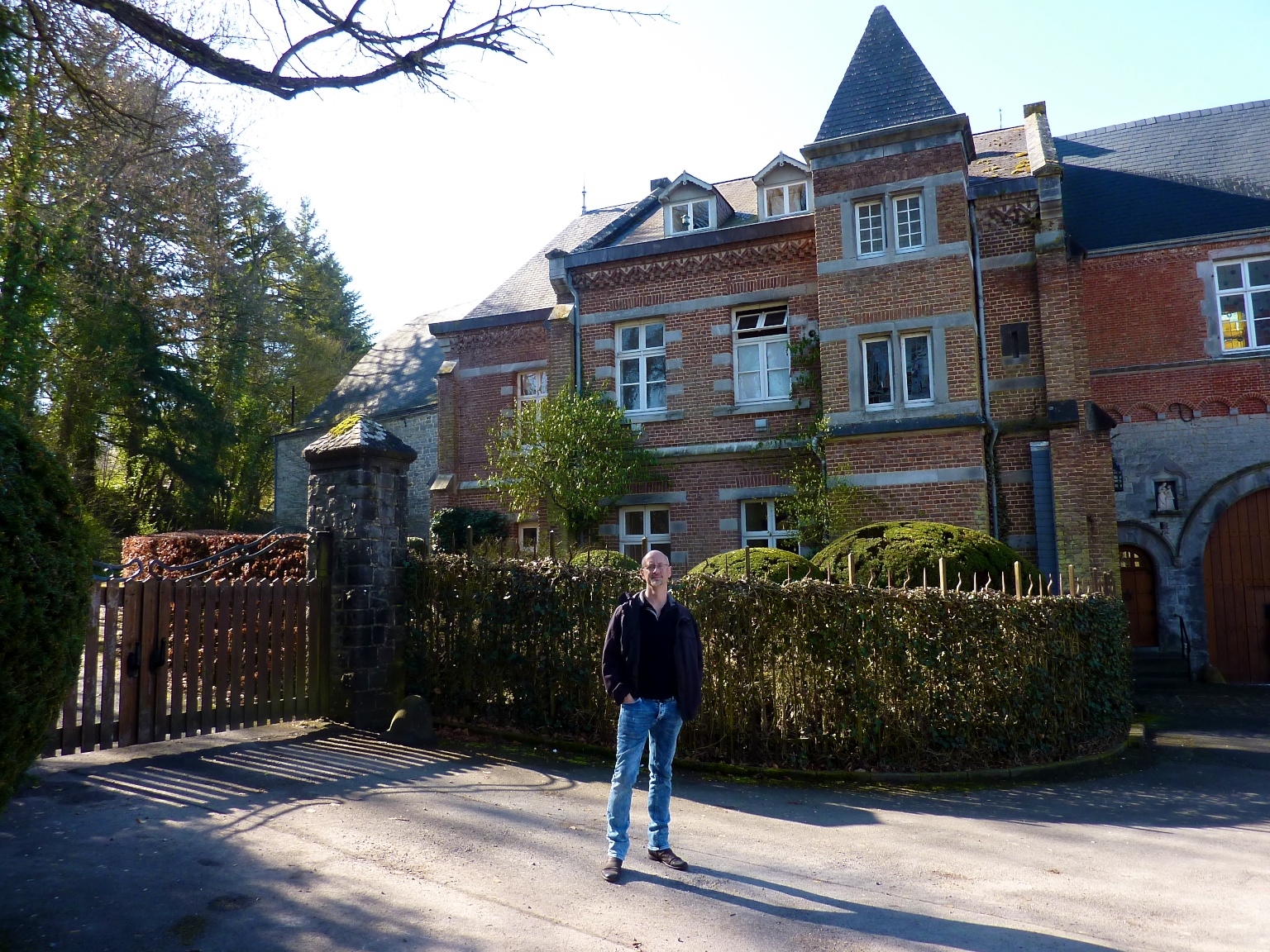
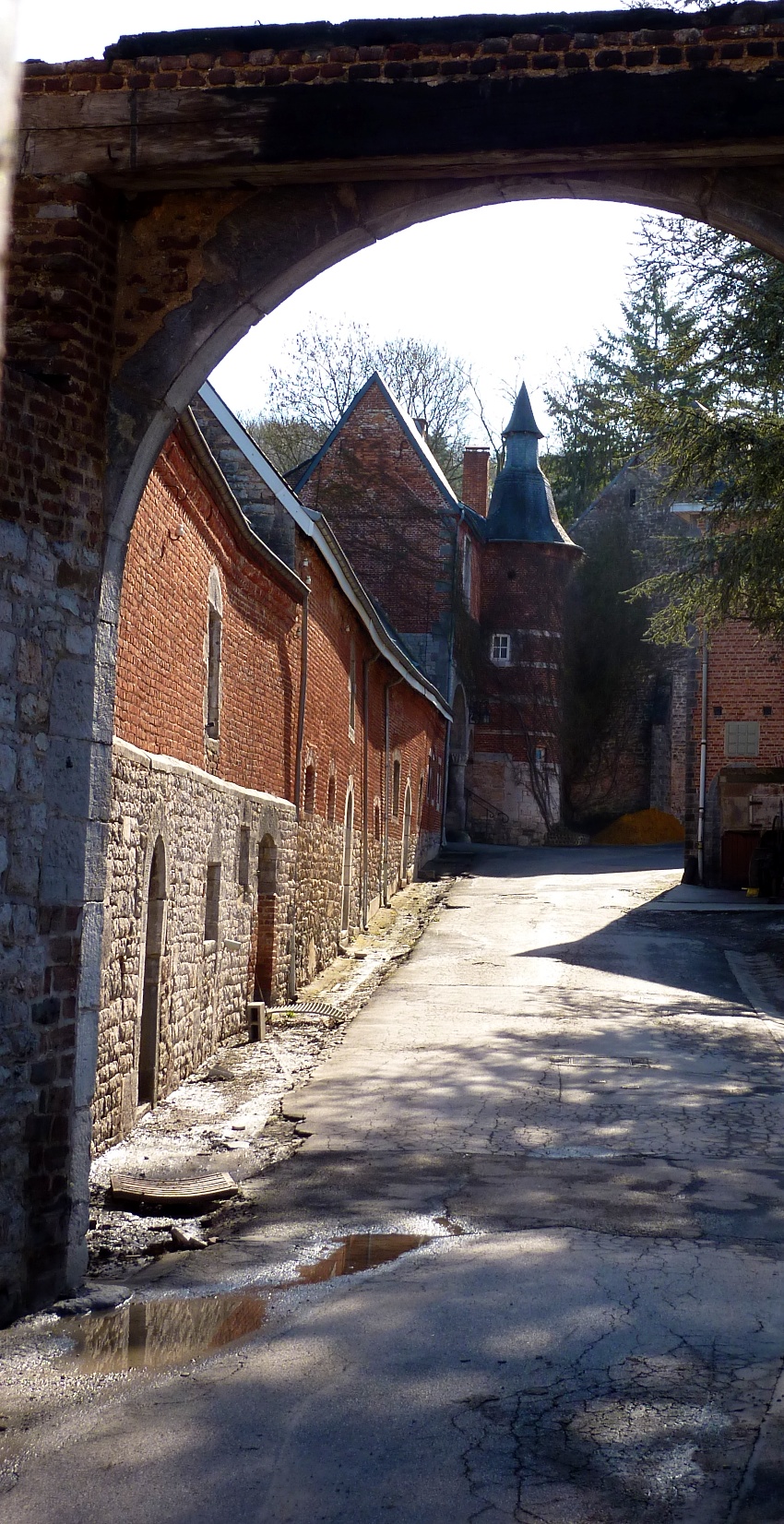
Rochefort is located inside the Abbey of Notre-Dame de Saint-Remy, near the town of Rochefort. The monks are very secretive about the brewing process and the brewery is not open to the public so we had to peak through the gates.
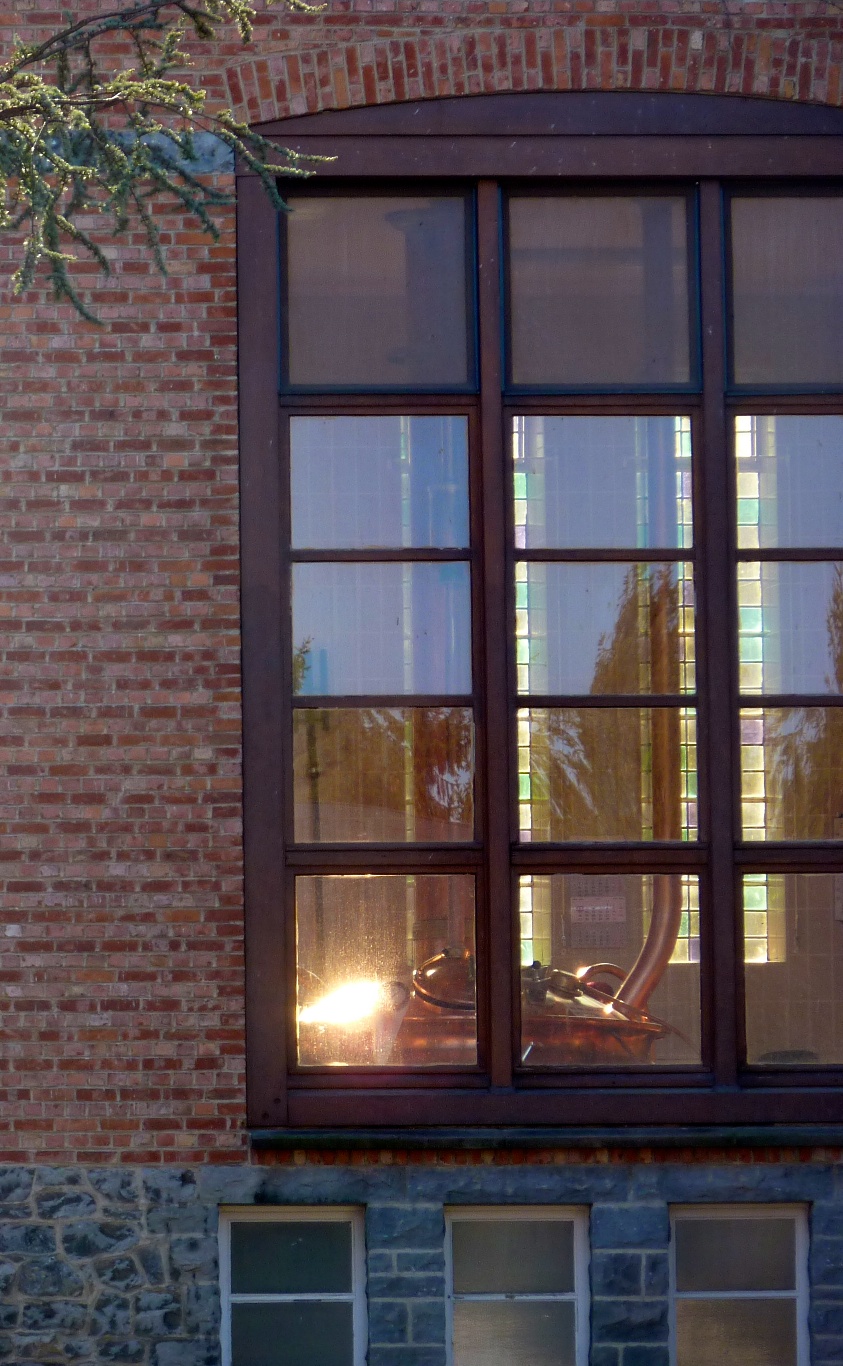
It was amazing to see that modern brewing equipment through the windows.
It was founded in 1230, and the monks began to brew beer sometime around 1595. There are approximately 15 monks resident at the monastery. We were allowed to walk around the church and the grounds.
They make three beers: Rochefort 6 (7.5% alcohol). It is only brewed once per year, representing approximately 1% of total beer production. The other two are Rochefort 8 (9.2% alcohol) and Rochefort 10 (11.3% alcohol). The water for the beers is drawn from a well located inside the monastery walls. The Rochefort 10 is D's favorite of the three… and his 2nd-favorite beer of all beers he's tried. Rocherfort 10 is excellent when fresh, but also can age for 10 – 15 years.
As with all other Trappist breweries, the beer is only sold in order to financially support the monastery and some other charitable causes. The monks will not increase production based on demand or profit motives, but only enough to support themselves, resulting in a fairly limited supply of beer. D has never had any problems buying any of these beers.
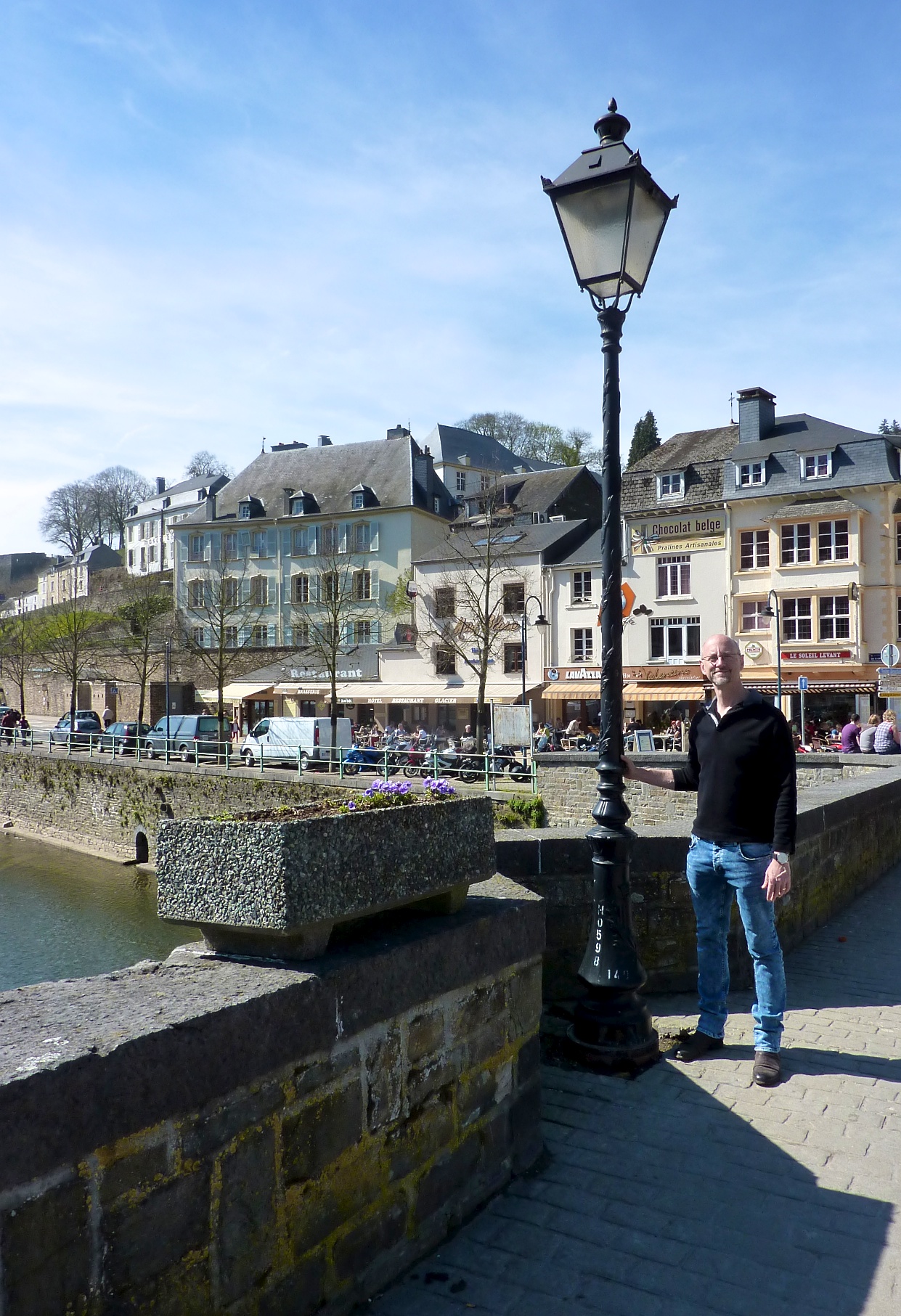
For lunch, we stopped at the town of Bouillon, in the province of Luxembourg (not to be confused with the country of Luxembourg).
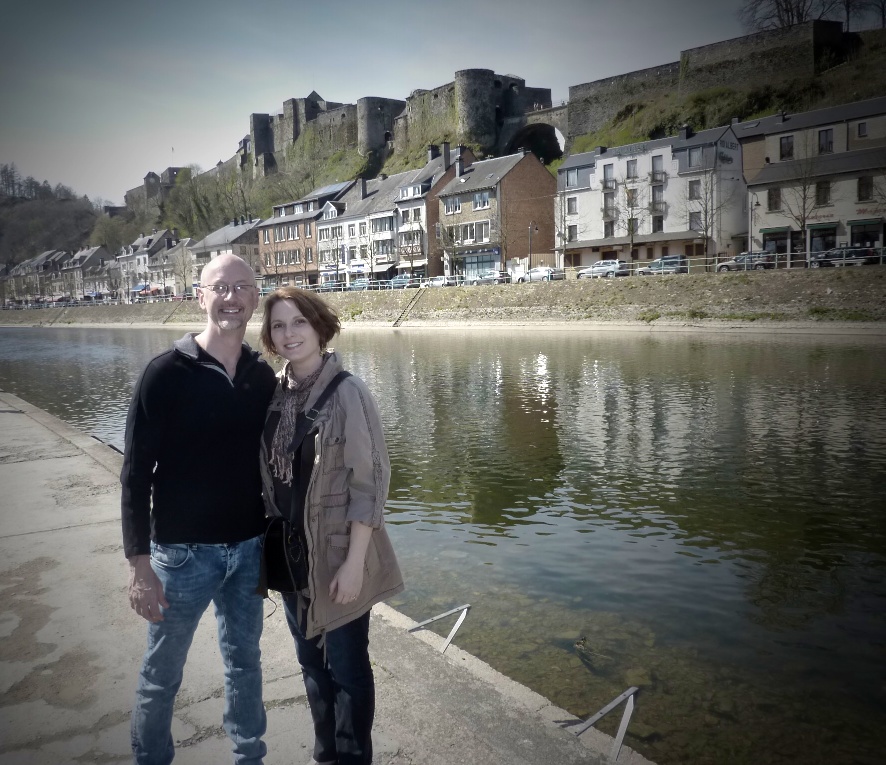
It is a very pretty little town close to the French boarder and it has a large castle built around 1050.
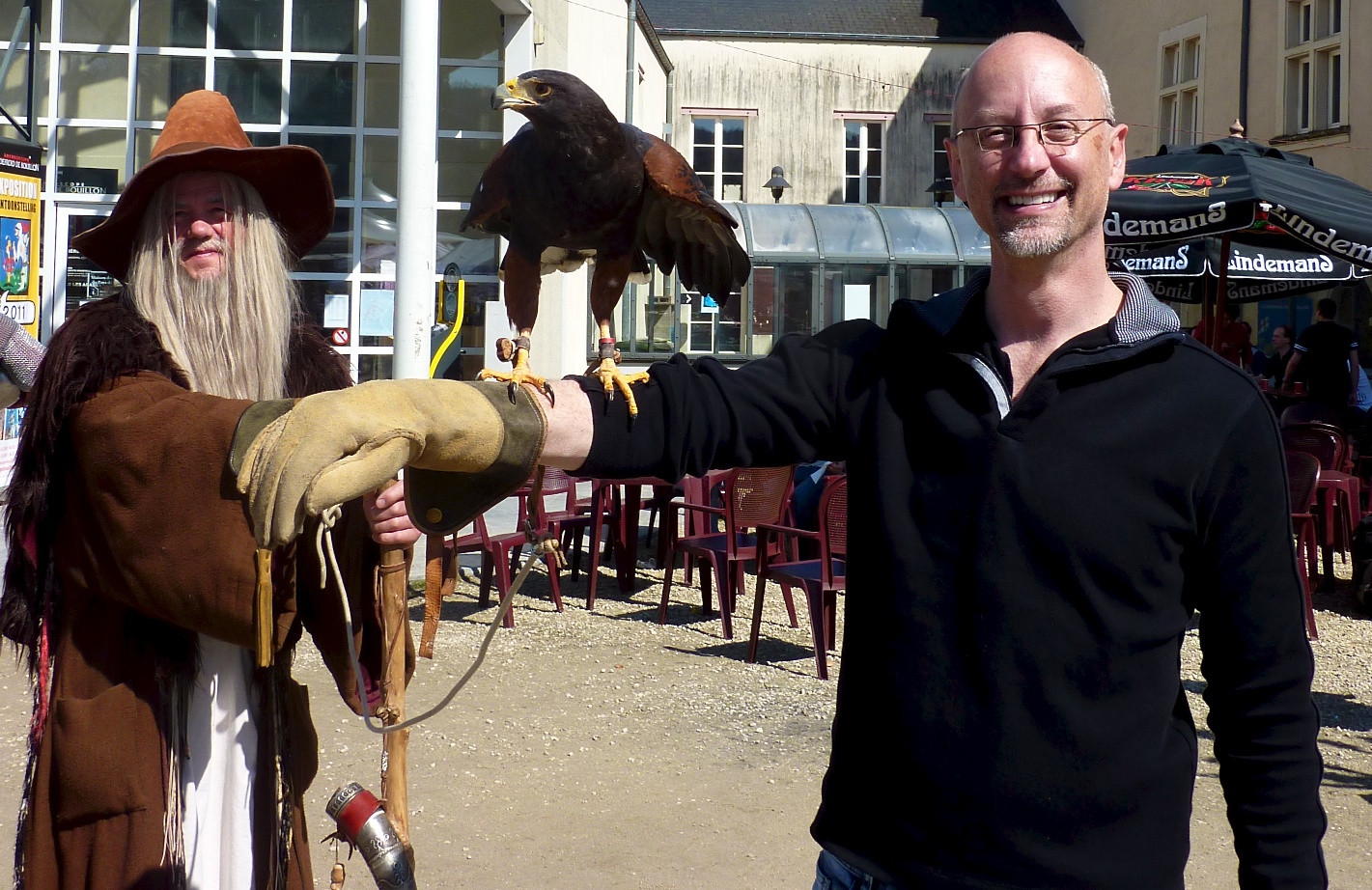
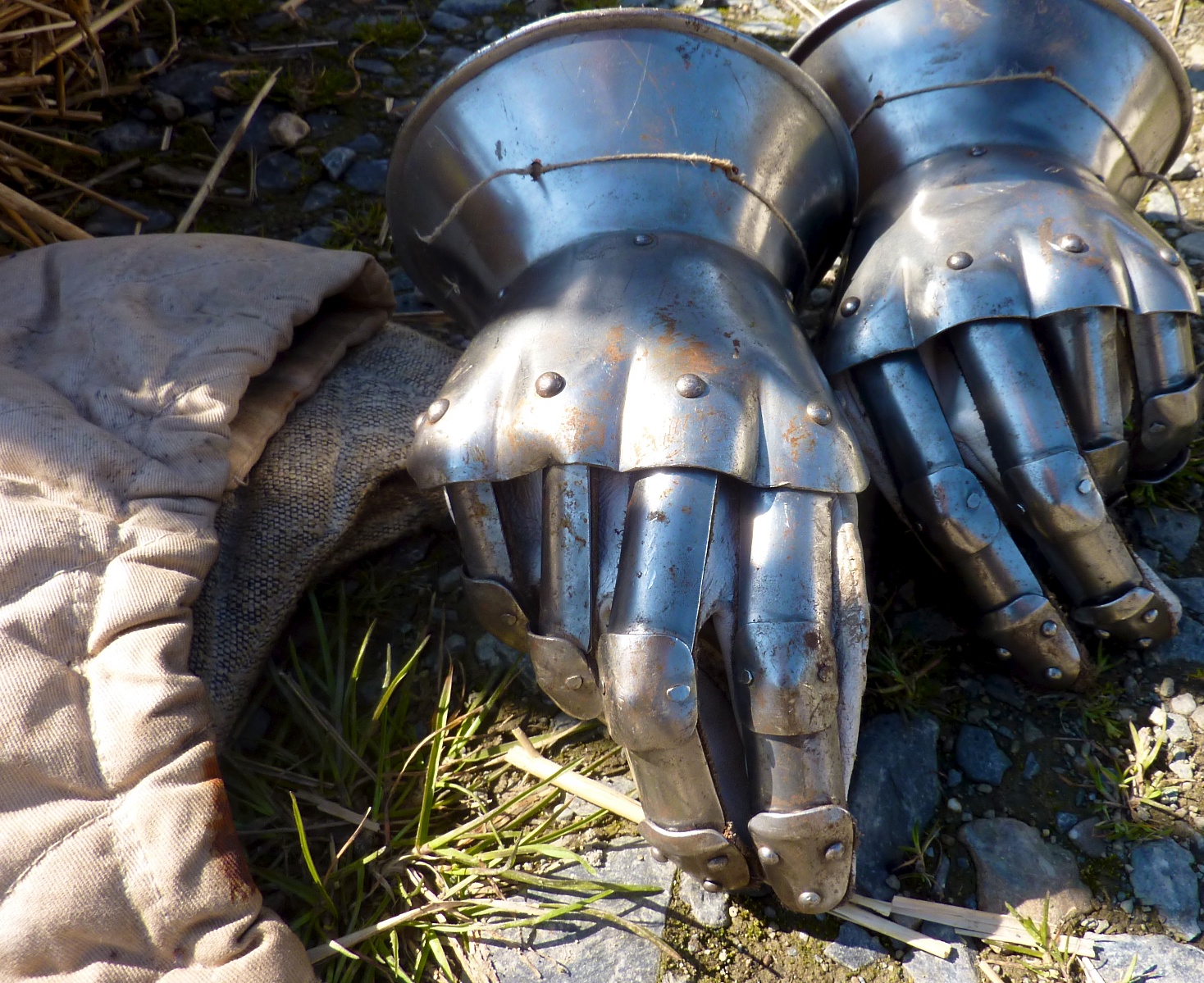
The castle is in excellent shape. We did not tour the castle , as that will be for our next visit. We did check out the crazy medieval fair that was taking place.
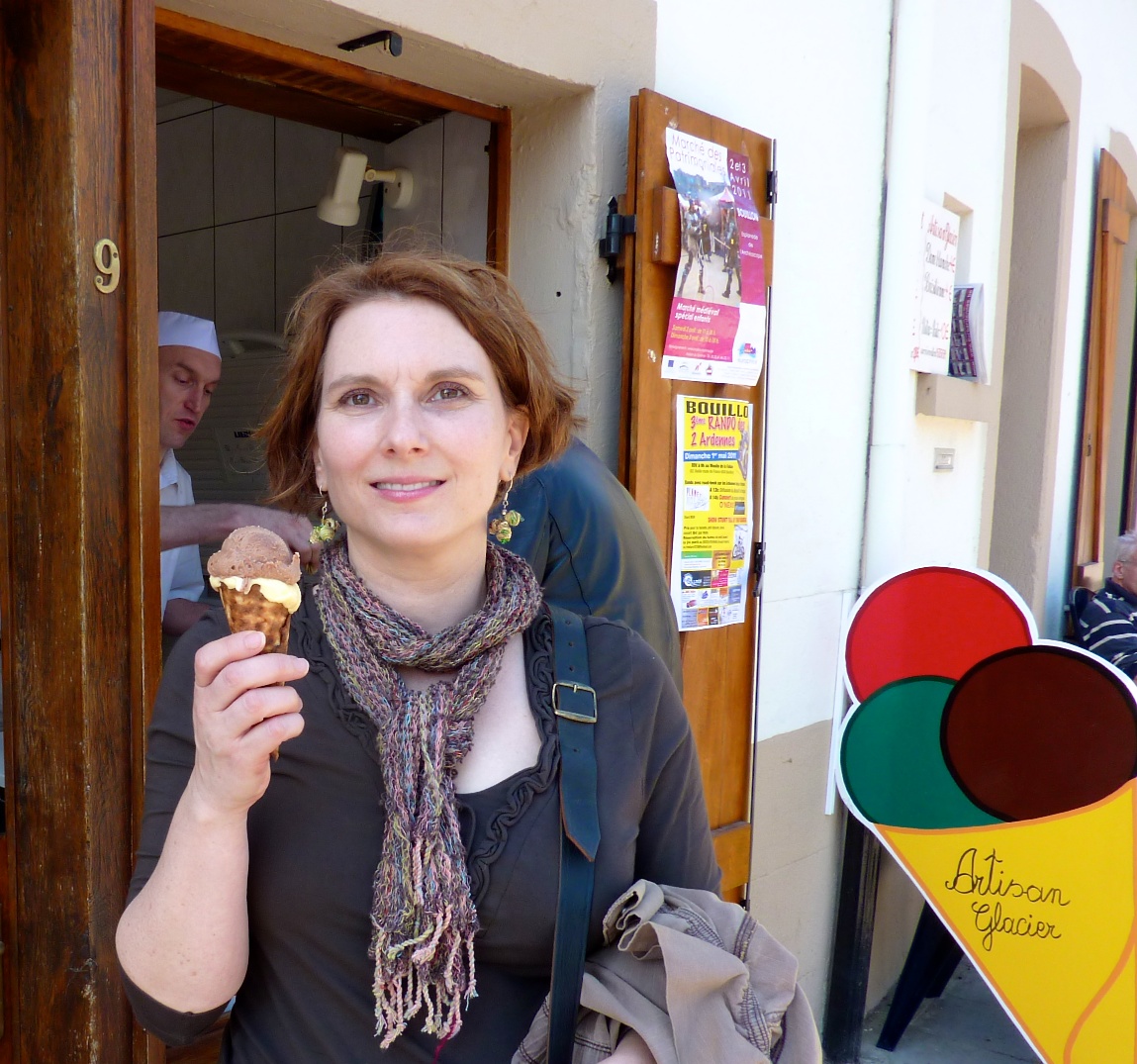
We grabbed a quick homemade ice cream cone for the road and headed out to Orval.
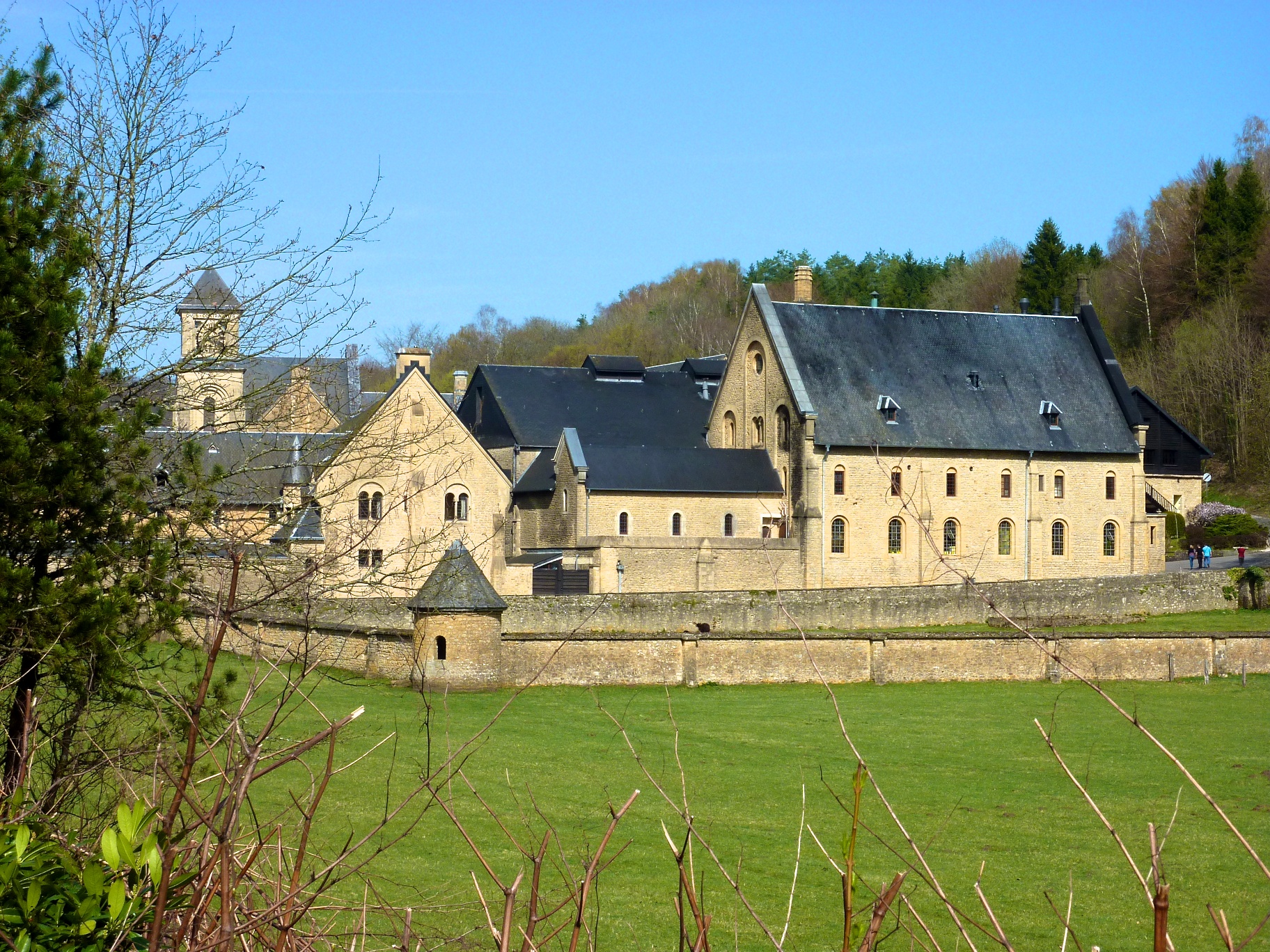
Like all the other trappist abbeys, Orval's brewery is closed to the public.
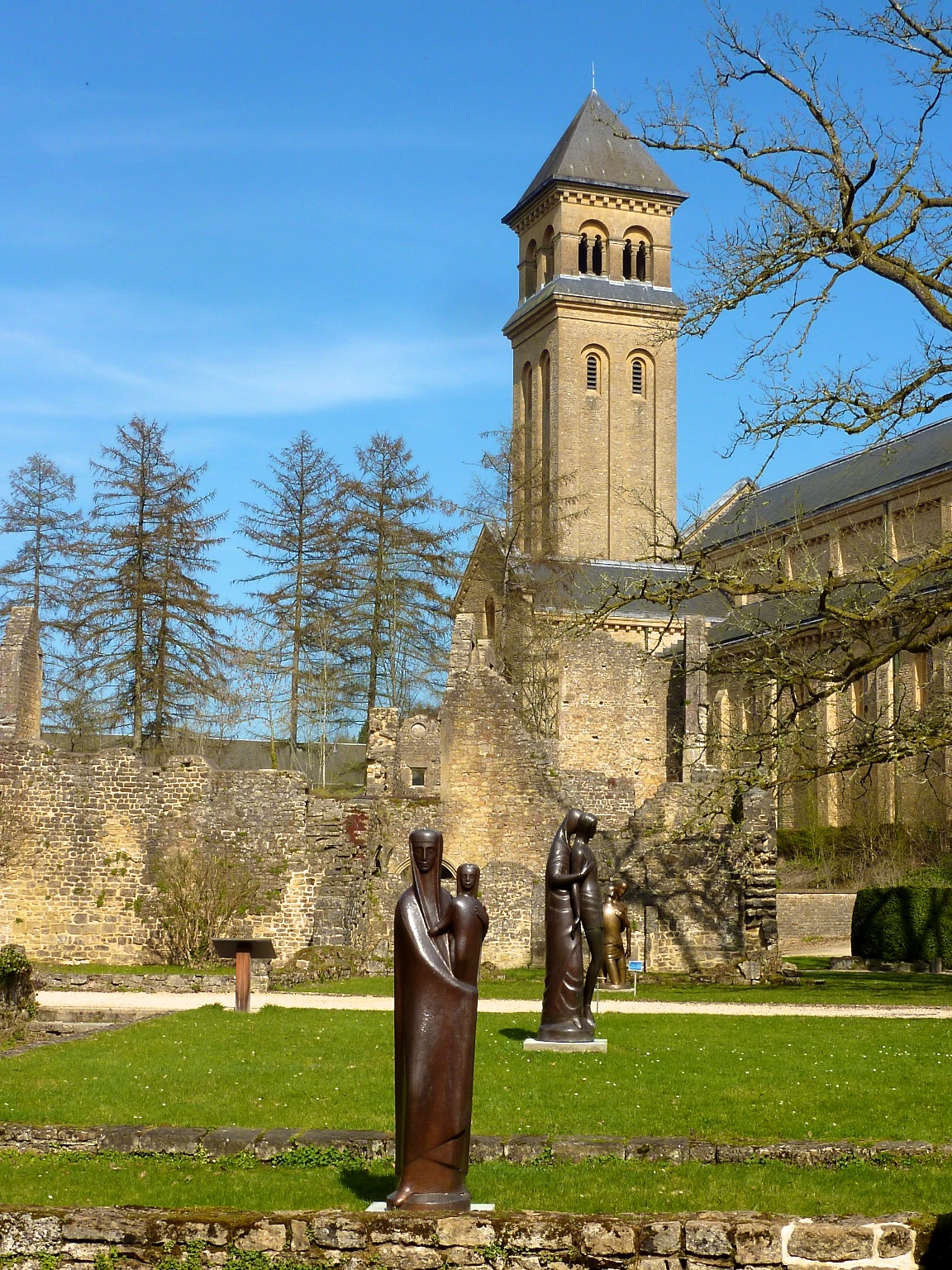
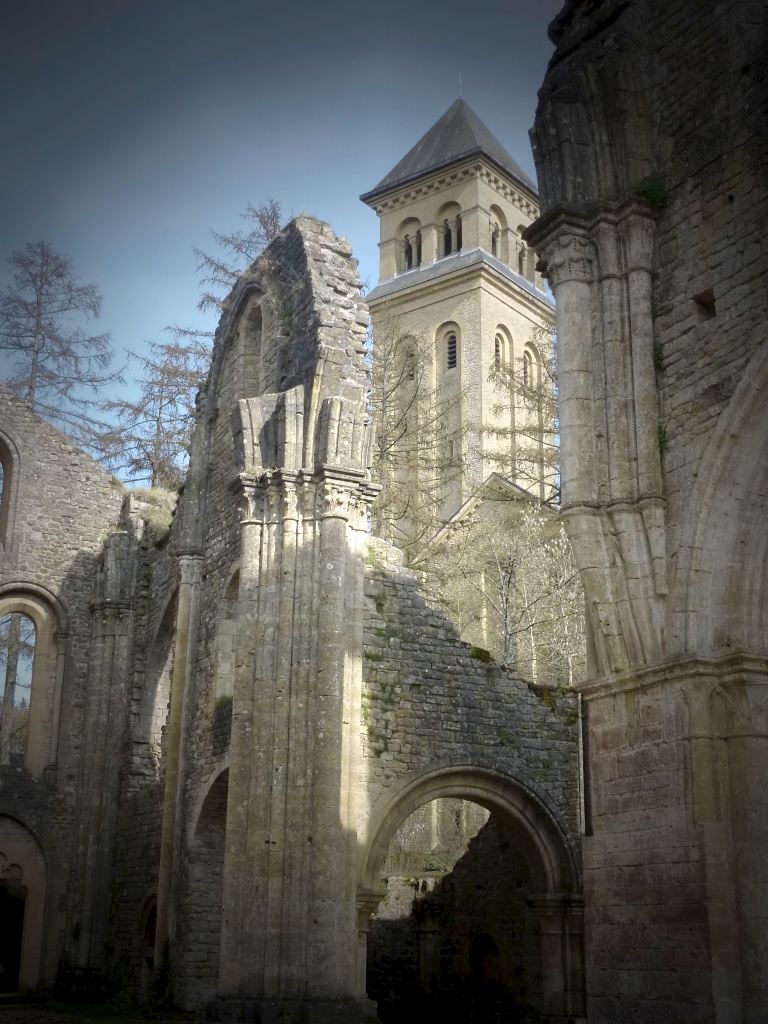
But what made Orval more special than the others was its stunning ruins that were open to the public.
First the beer info: Orval is the oldest of the brewing monasteries, founded in the 11th century by Benedictine monks. There really is only one beer sold for commercial consumption called Orval and has a 6.2 % alcohol content. They do make a second beer call Petite Orval, but this is only for the monks. Orval is best when aged between 2 and 5 years before drinking.
Now the ruins –
There is evidence that there was a chapel here in the 10th century. In 1070, a church and monastery was started, but not finished until 1124. In 1793, during the French Revolution, the abbey was completely burnt down by French forces and these are the ruins that exist today.
Between 1926 and 1948, under the direction of the Trappist monks, the new monastery was constructed and in 1935 Orval regained the rank of Abbey.
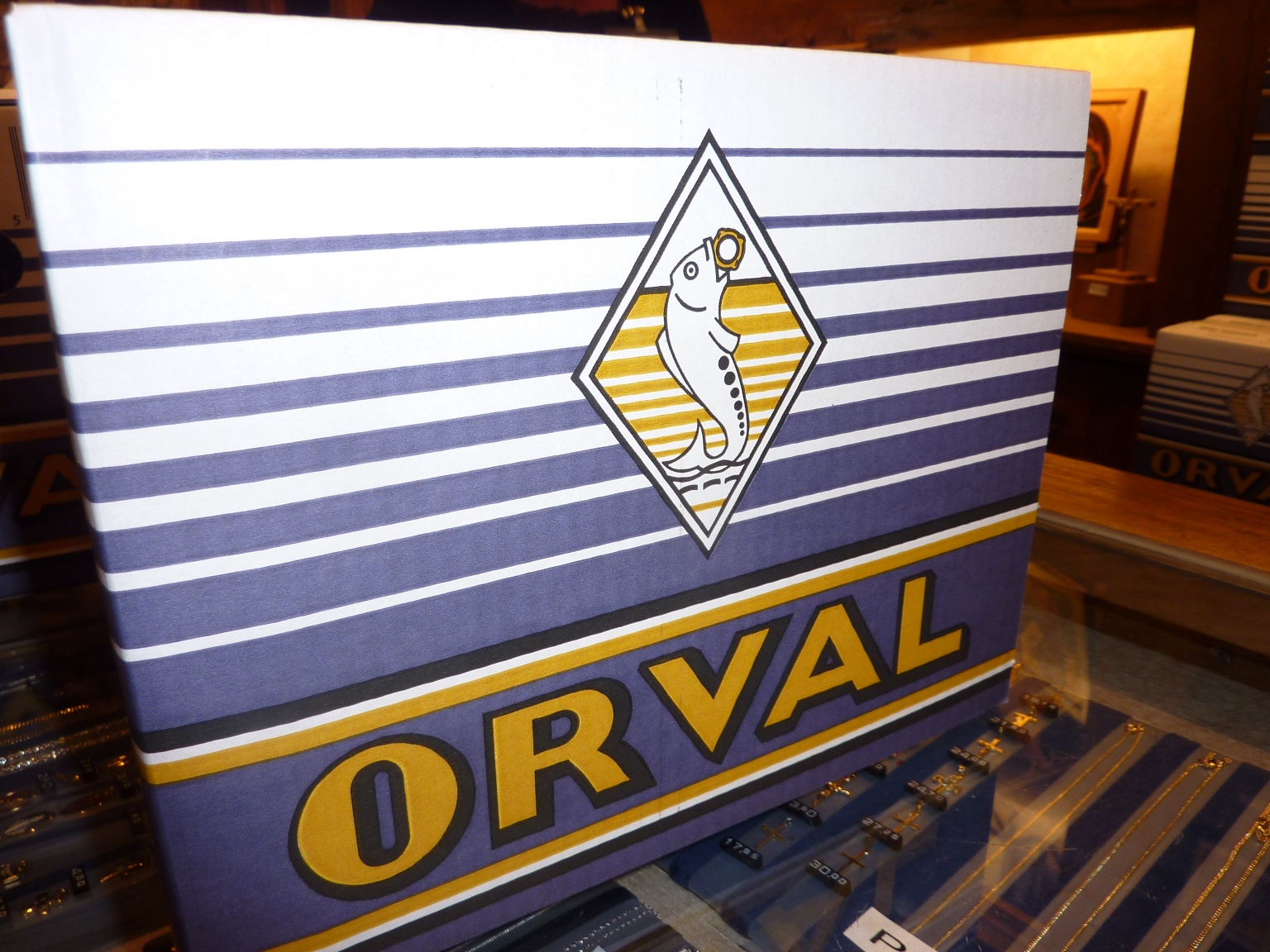
There is a legend of the abbey, which explains the Orval logo. Countess Mathilda of Tuscany was visiting the site, when she lost her wedding ring in a spring.
Distraught by her loss, she asked if God would return her prized possession. If he would, she would declare the land sacred and donate the money to build the abbey. At that moment a tiny trout appeared at the water's surface with her ring in its mouth. The label of Orval beer displays the trout and ring.
In 1926, the newer monastery was started and completed in 1948. The new monastery is built on the foundations of the 18th century monastery, reproducing the original plan.
They have a very nice gift shop at the abbey where you can purchase beer, cheese made at the abbey, beer glasses, post cards, books, bottle openers, and a variety of other stuff. We bought beer and cheese.
As you can see from the photos – we had beautiful weather. We really had a fun day and can now say we have been to all six Trappist breweries!
Up until this trip, all of our flights have been uneventful. Not this one. As we were ready to land in Marrakesh, a big storm system moved in. We circled at a very low altitude for 40 minutes as well as the pilot tried to land the plane twice. By this time I had motion sickness and was crying in my seat. The three "aviation experts" I was traveling with thought it was fun {sigh}.
The pilot had to divert the plane to Casablanca where, after three hours in the airport, and a chewy sandwich, we boarded a bus for a three-hour road trip to Marrakesh. This is where our adventure began.
The taxi dropped us off on a side street at midnight where a handsome young man {Ismail} dressed in traditional Moroccan-wear met us to lead us to our B&B, Riad Zolah. We walked through dark alleyways, twisting and turning for quite a distance, passing eerie dark figures. But strangely, enough we were not frightened.
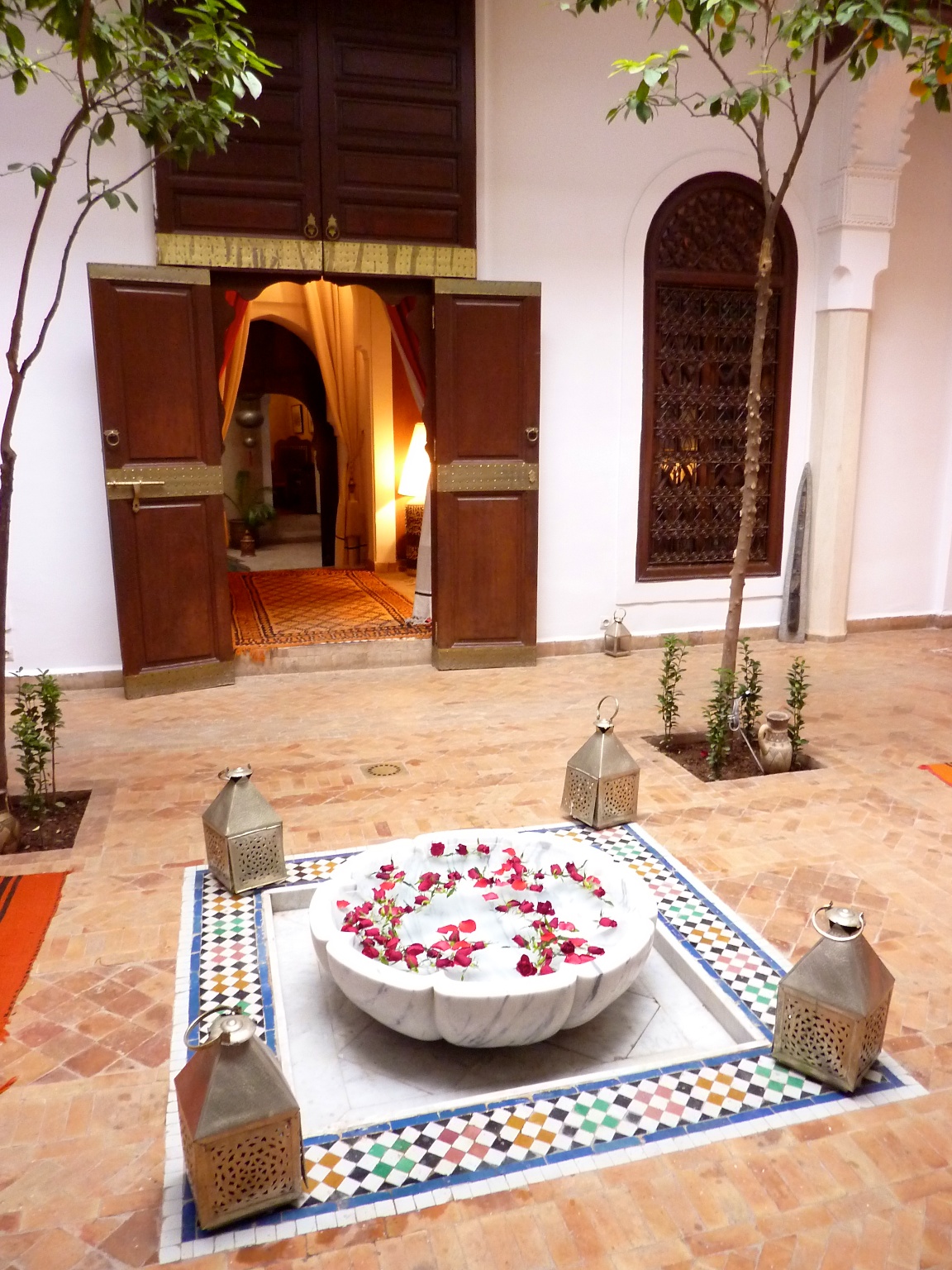
We finally came upon a very plain door. You would never had know it was the Riad had Ismail not escorted us there. Once the door was opened we entered into a absolutely magical place. There were candles burning everywhere even in our room and rose petals sprinkled on our beds – how romantic.
After a good nights sleep and a delicious breakfast at the Riad we ventured out into the twisted maze of a city on our own. I immediately fell in love with all the colors and vibrant life in the streets.
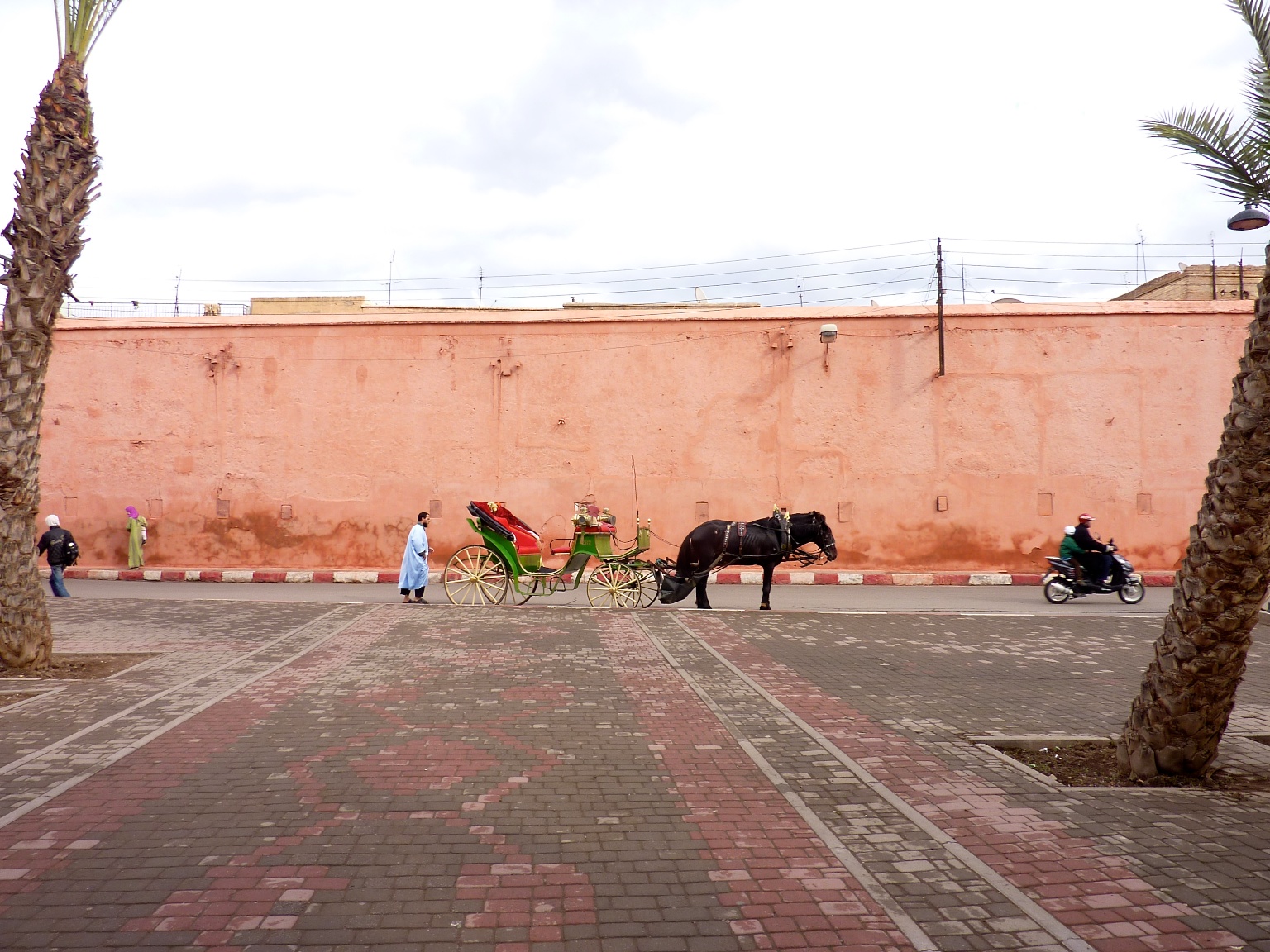
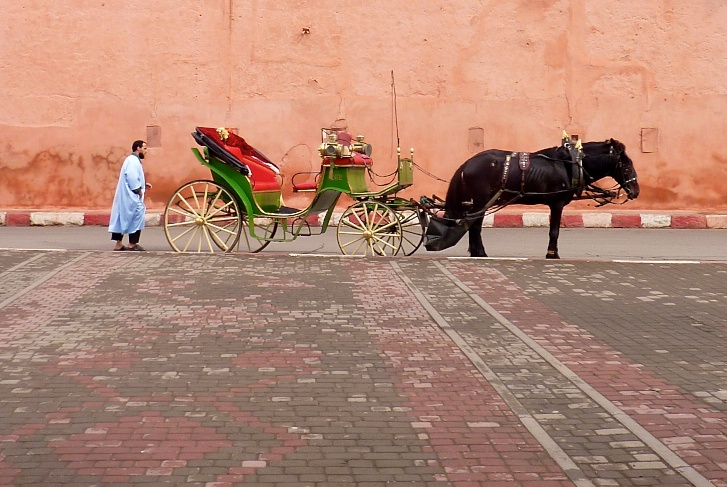
Marrakesh is in the southeast part of Morocco, in Africa, and dates back to 1070. It is known as the red city due to the walls that surround the old fortified city known as the Medina.
Marrakesh has the largest traditional Souk (market) in Morocco.
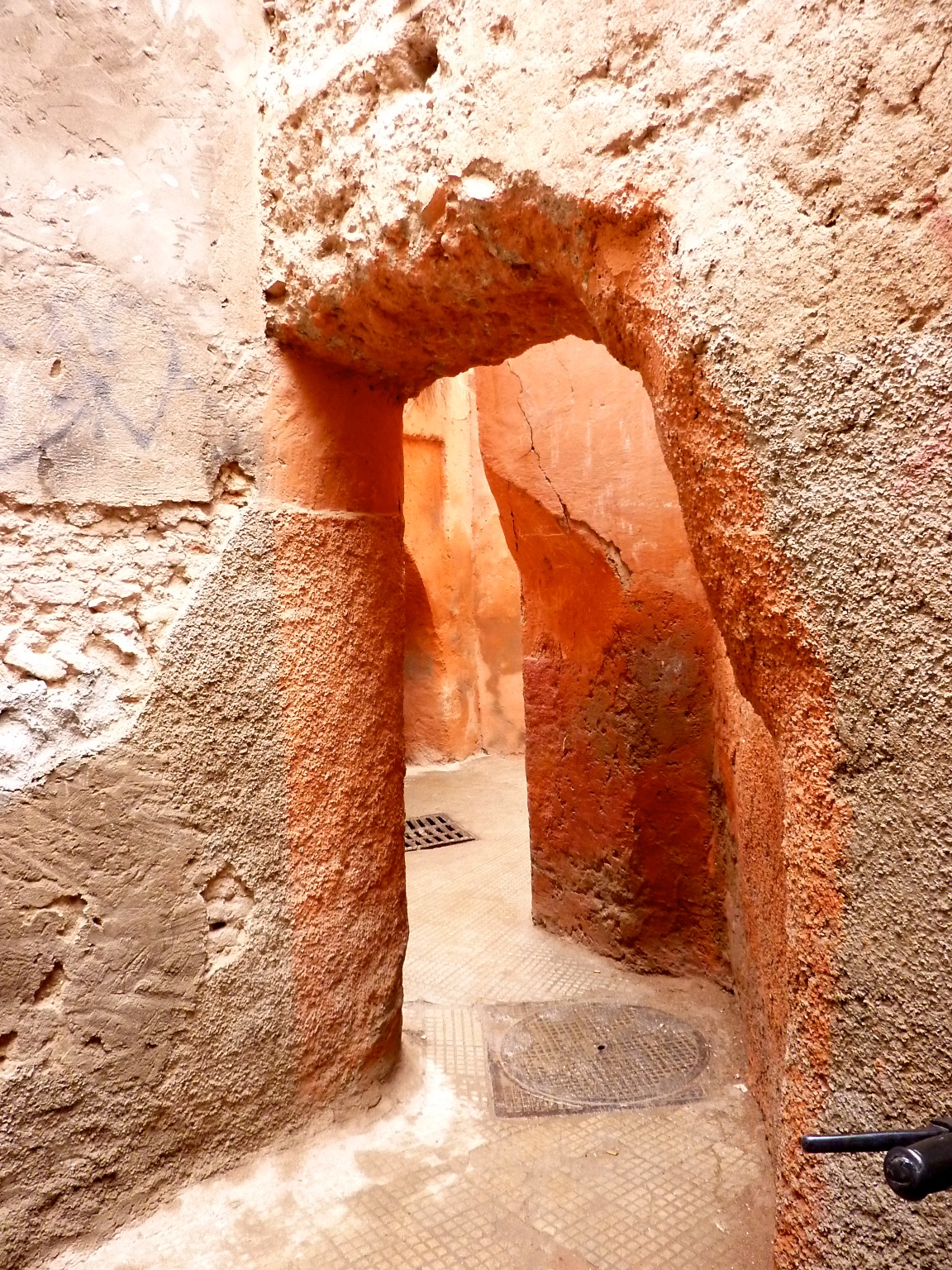
It runs for miles and is made up of endless alleys that twist and turn making it very easy to get lost.
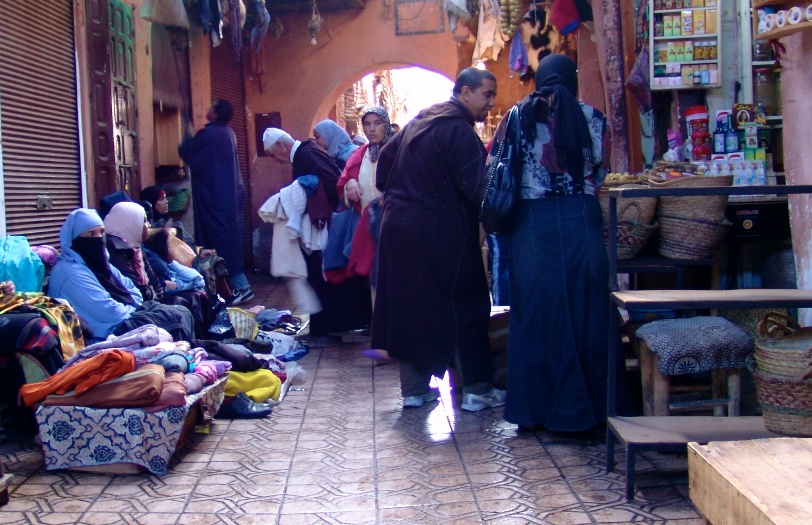
The outer streets of the medina are run predominately for tourists, but once you get deeper into the maze, you will experience where the locals live and shop.
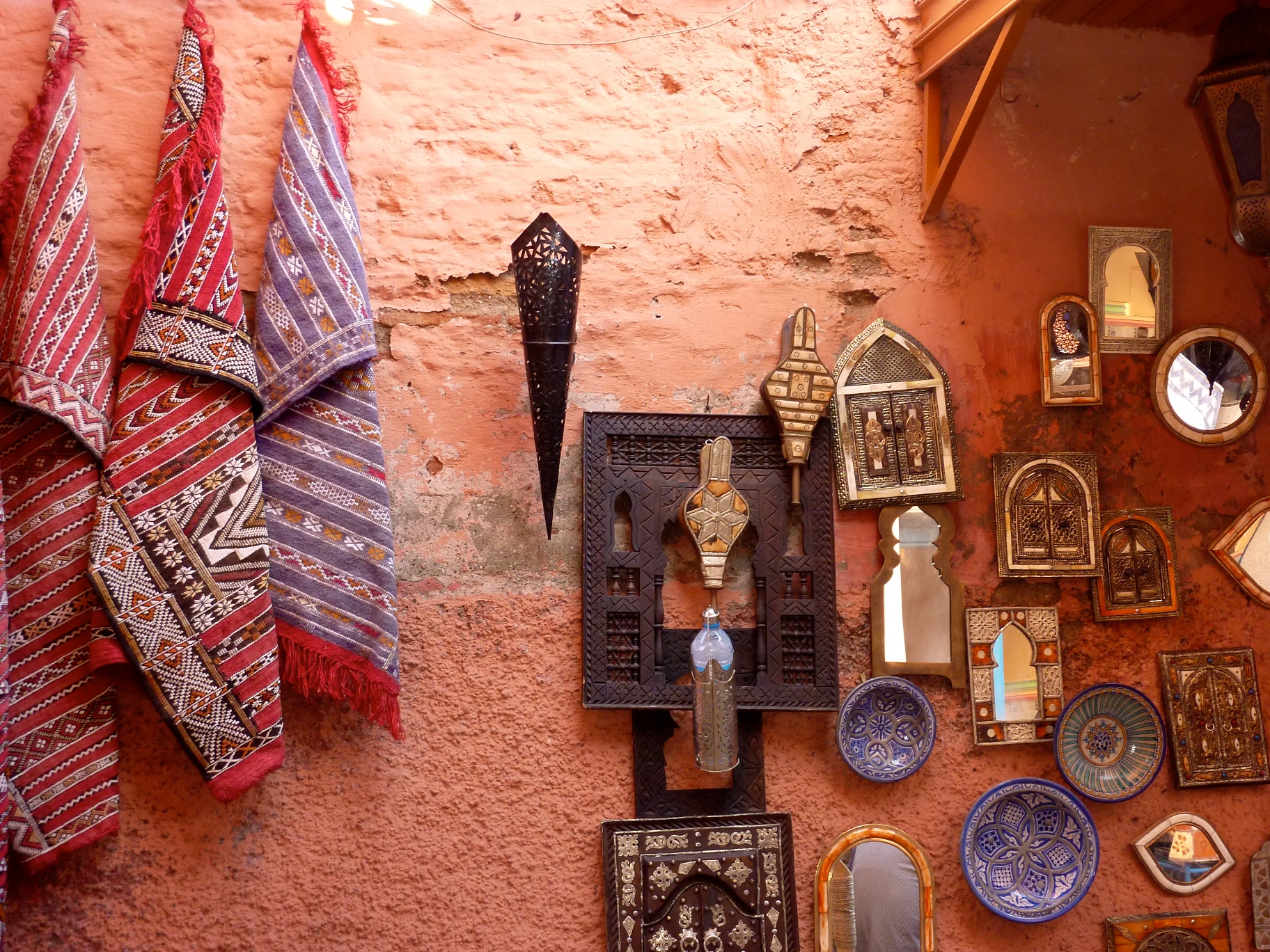
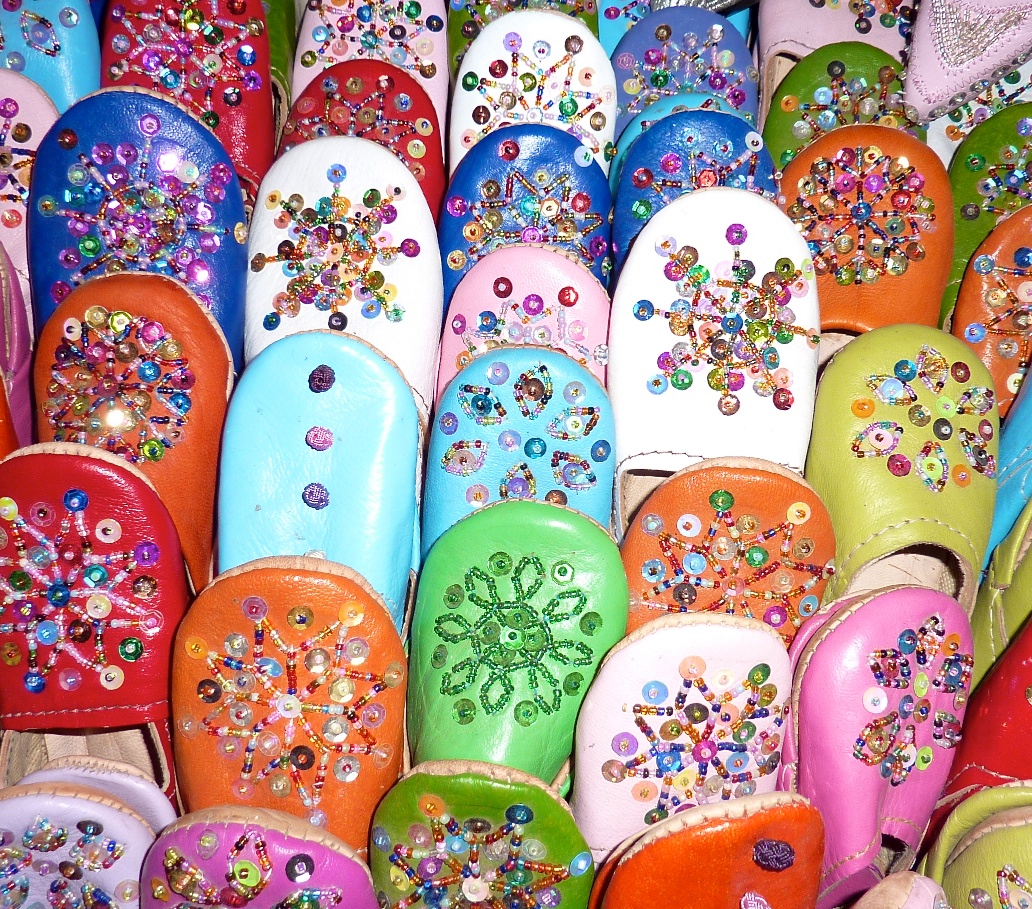
They say that the souk is pretty much unchanged since the early days. The stalls are the size of a cupboard and sell just about everything from carpets to fabrics to jewelry to copperware to beads to leather to slippers…
to tassels….
to lizards….
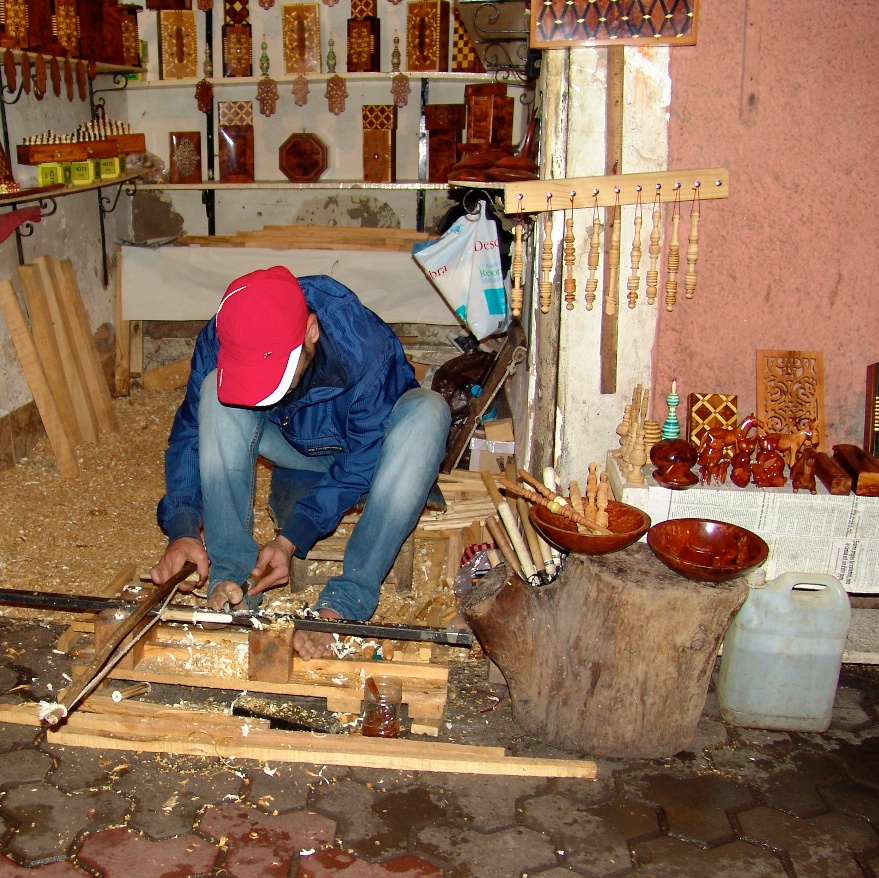
to small carved toys created by young boys with their feet and a bow…. All the sellers cry out, "Hey my friend, for you I give a special price!". Most will ask you where are you from. When you tell them you are American – they all say, "We love Obama! We love America"
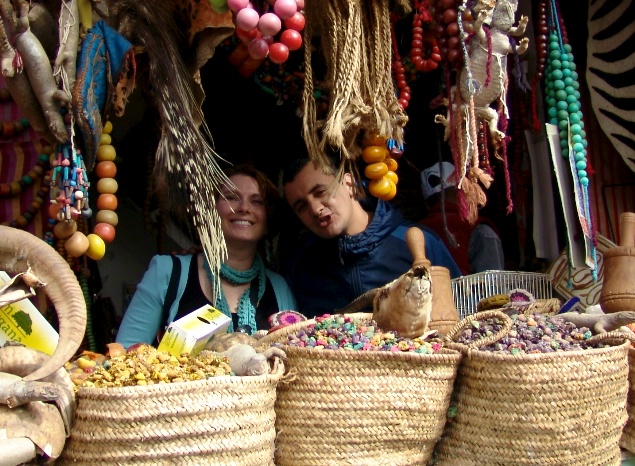
Negotiation is an art and a game in Marrakesh. Part of the game is to build a relationship/friendship with the shop owner. We all thoroughly enjoyed talking to the owner of this particular shop.
He was very well educated and told us about the King, Mohammad VI, whom the people love. One thing the King is well known for is helping all citizens' own homes. He is a fairly young King at 47 years old with a three-year-old son. The shop owner was born on the same day as the king so his family was given special gifts as well as money every year.
D2 did a pretty good job negotiating and A walked out with the backpack she wanted. We were in there so long I walked out with a purse : )
D got orange slippers!
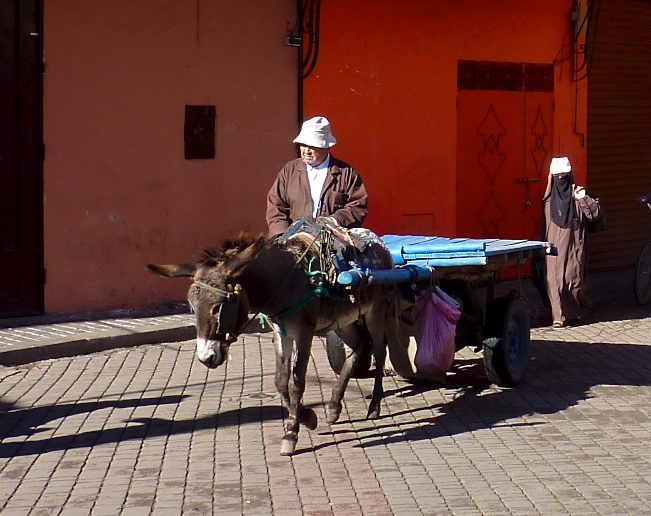
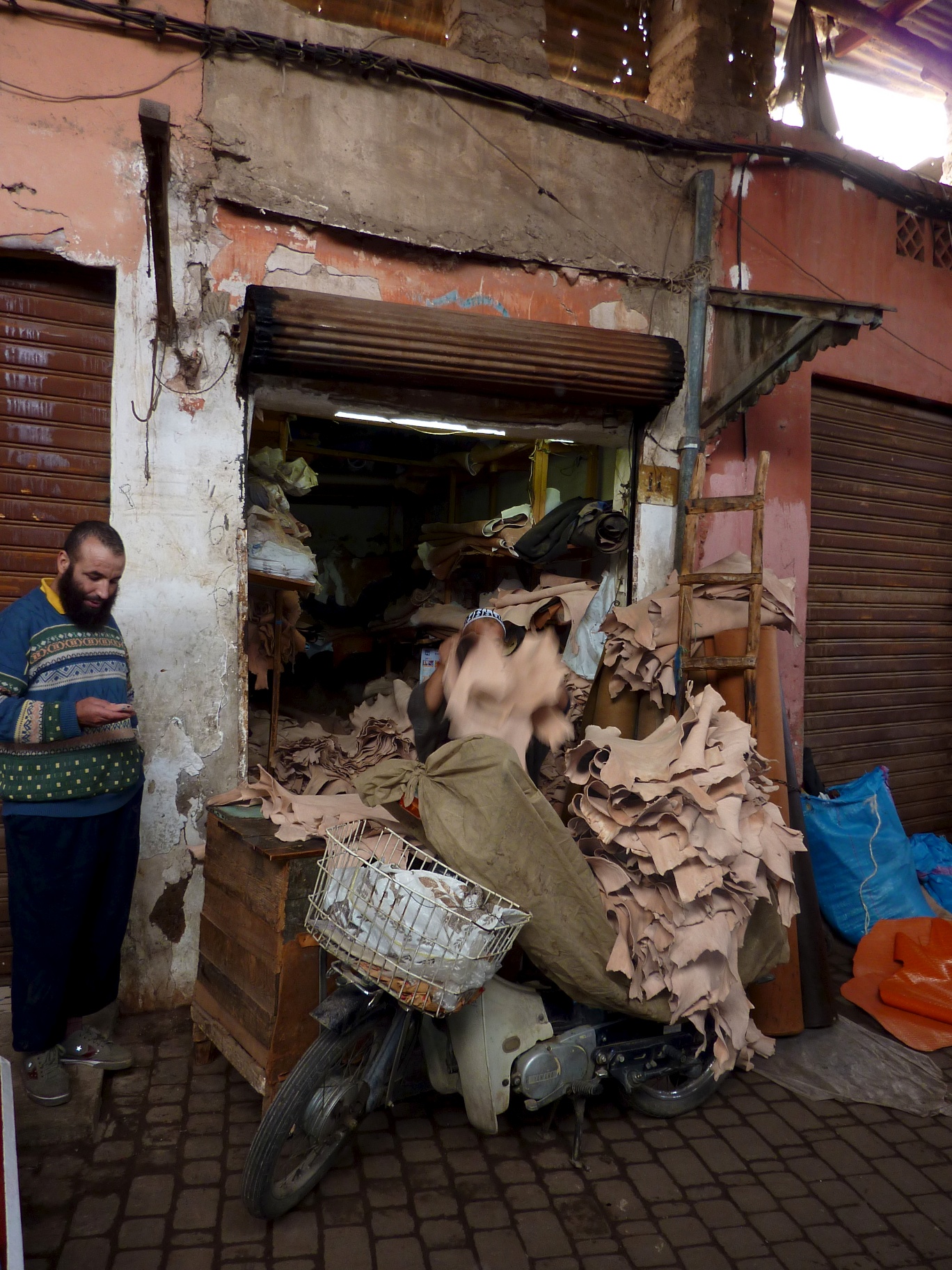
There were mainly two modes of transportation – mopeds and donkeys!
It was amazing to see how much they stacked on the mopeds and then drove with them like this! We were often jumping out of the way to miss being run over by a moped. The donkeys moved a bit slower.
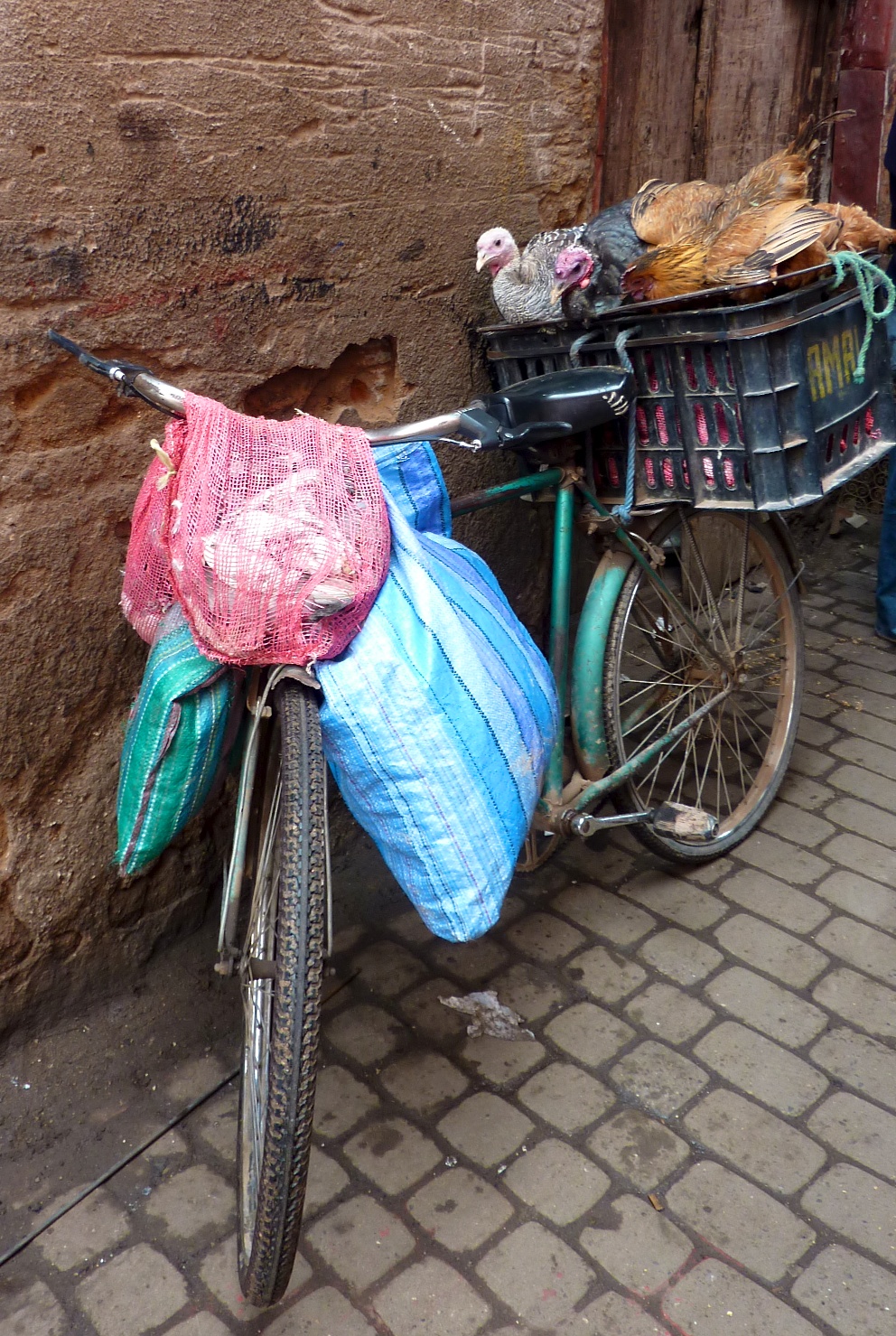
There were also lots of bicycles. Look closely at the what is in the basket….
Dinner!
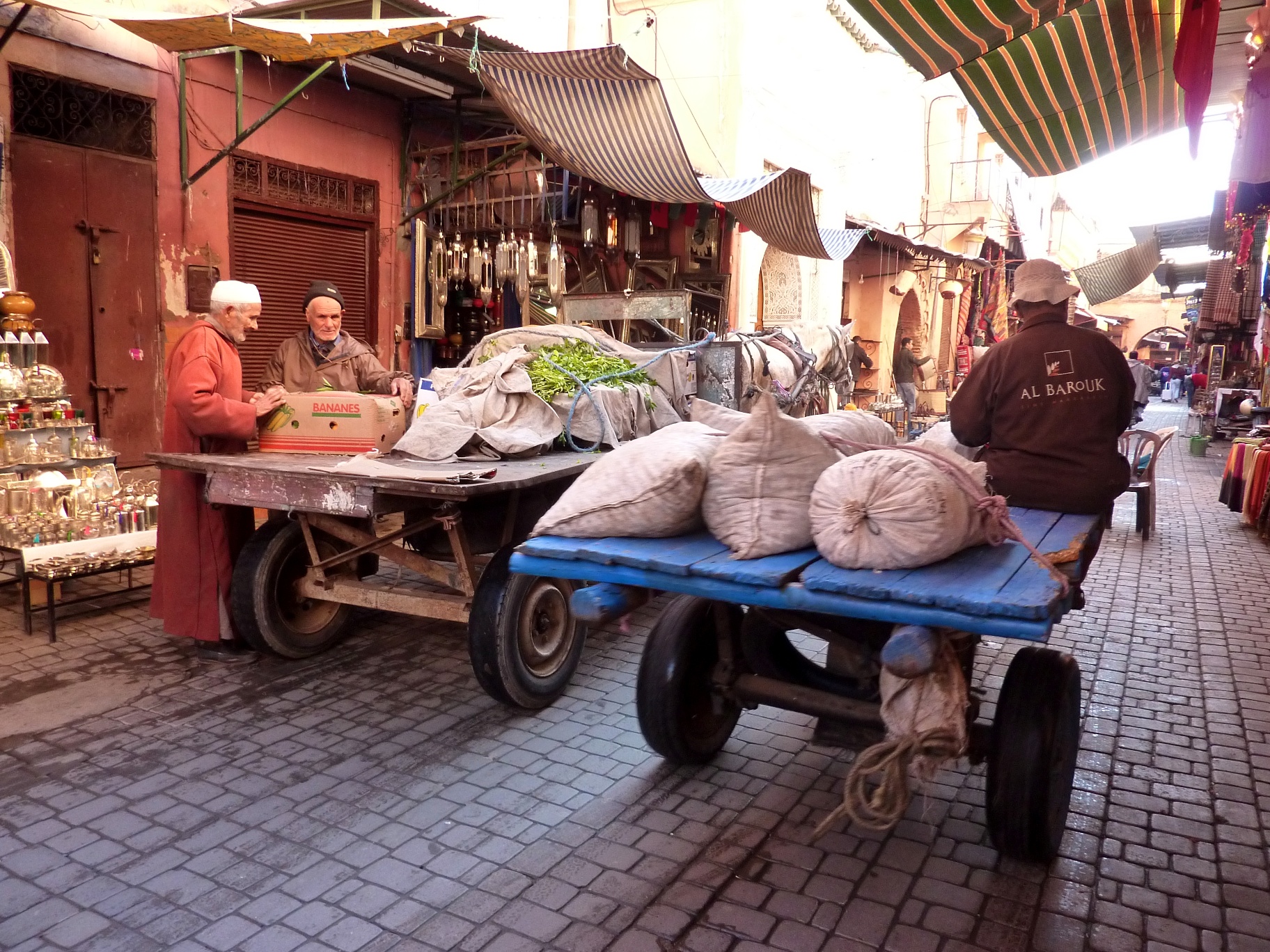
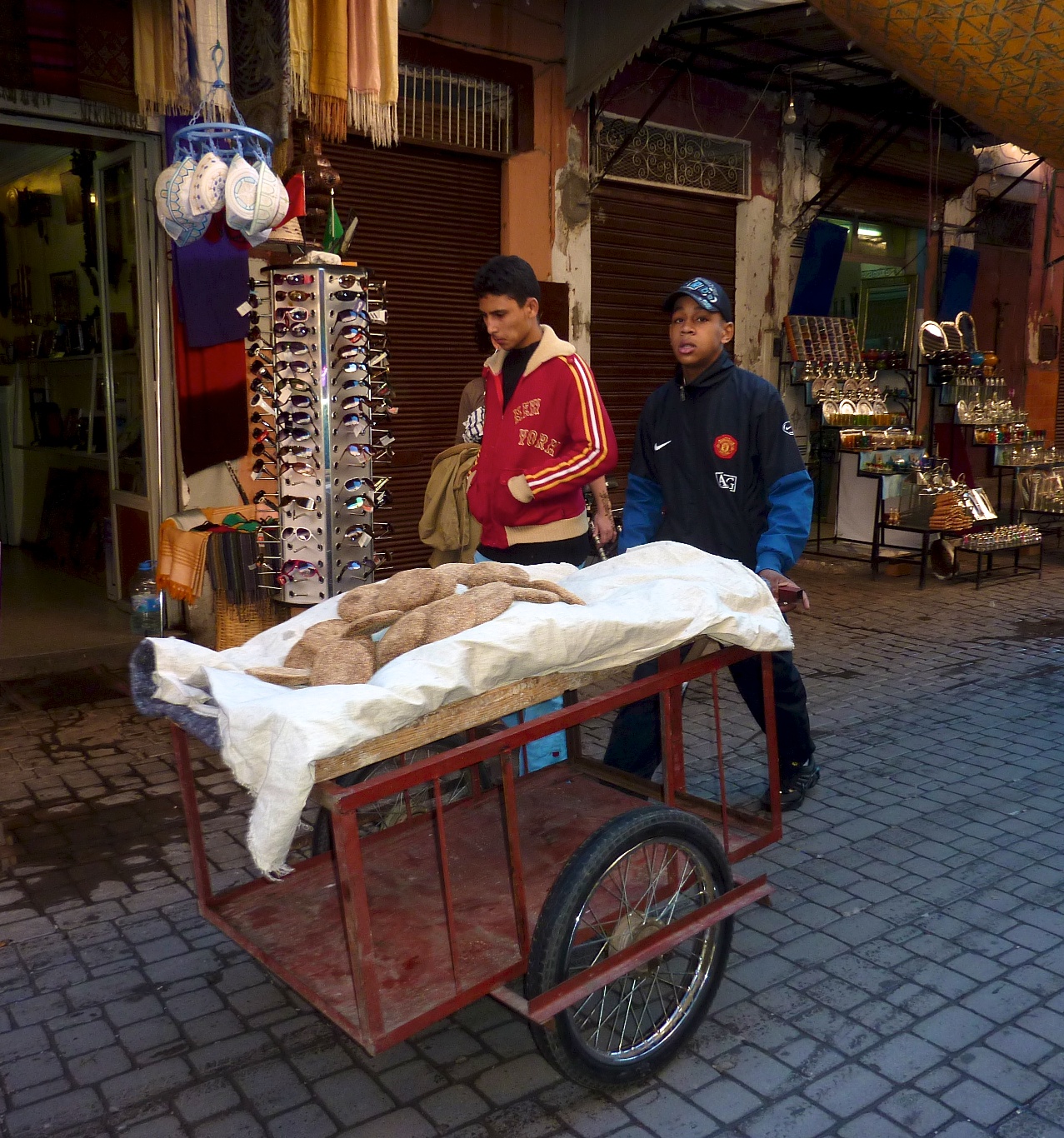
There were pull-carts waiting everywhere to help the locals deliver goods. They sold fruit and other items from the back of the carts.
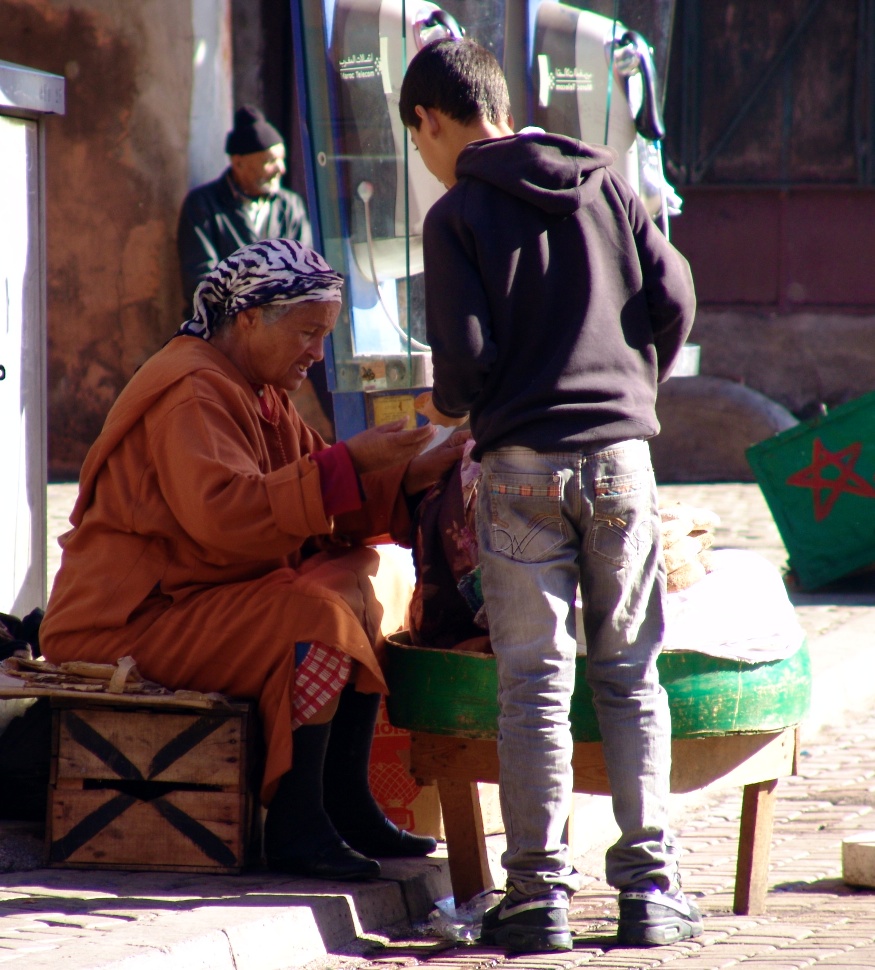
They have beggars, but most try to sell you small items, such as cookies instead of just asking for money. They love to give you directions for a small fee. And yes, many are young children.
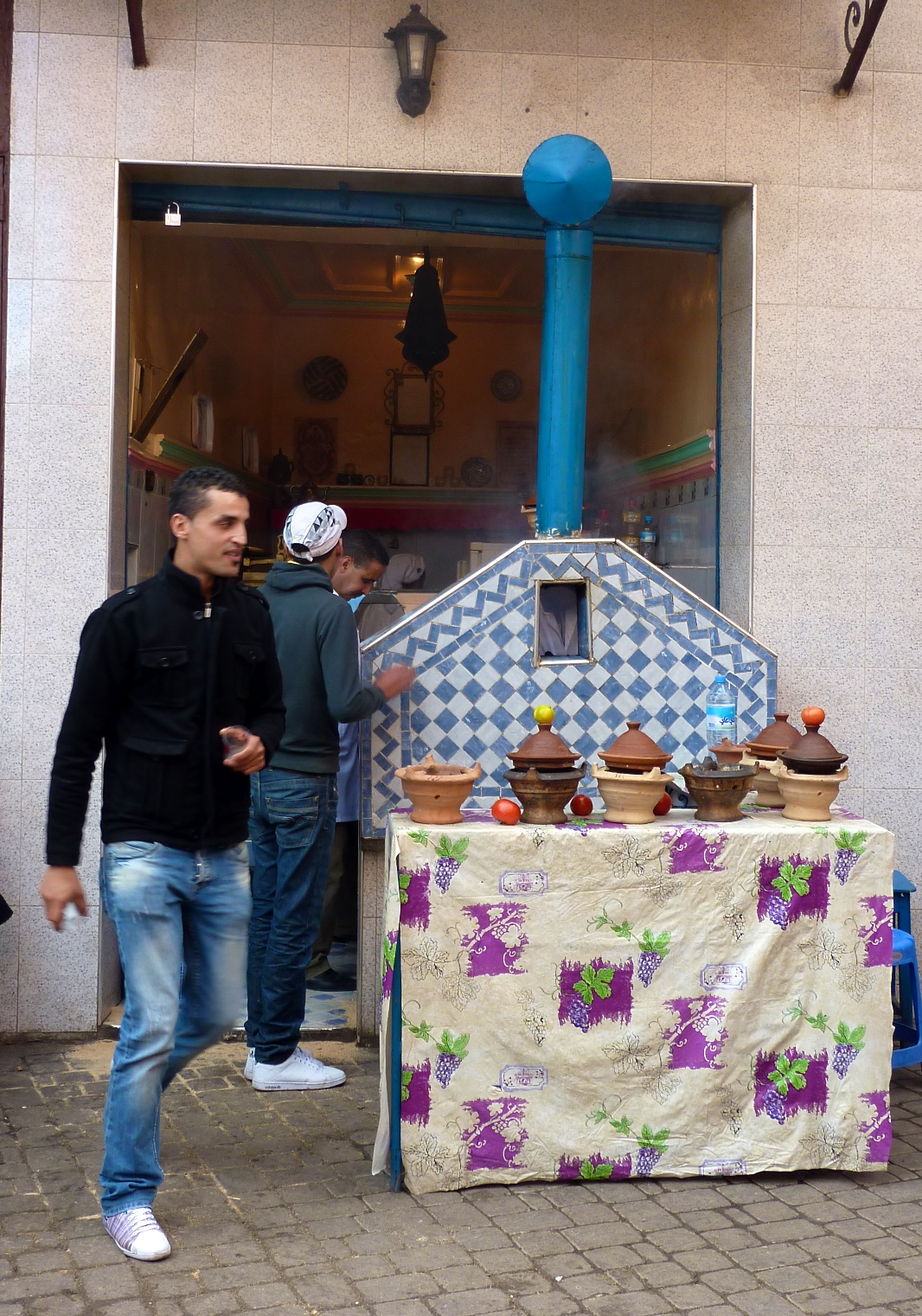
I thought one of our most interesting and fun meals we ate was in the souk at Chez Abdela. One young man who we purchased goods from showed us where it was. He was alone in his stand so he had to hurry. He raced through the zigzagged maze with us running behind him. We thought he was going to take us around the corner…instead he took us 10 streets away – winding around the souk.
The tangine pots (sitting in front of the blue-checked grill) were cooking for hours at a very low heat, which makes the meat tender. Tangine is a traditional Moroccan dish named after the special clay pot it is cooked in.
We ordered a tangine and grilled meats, another specialty of the area. All the food was delicious and very authentic.
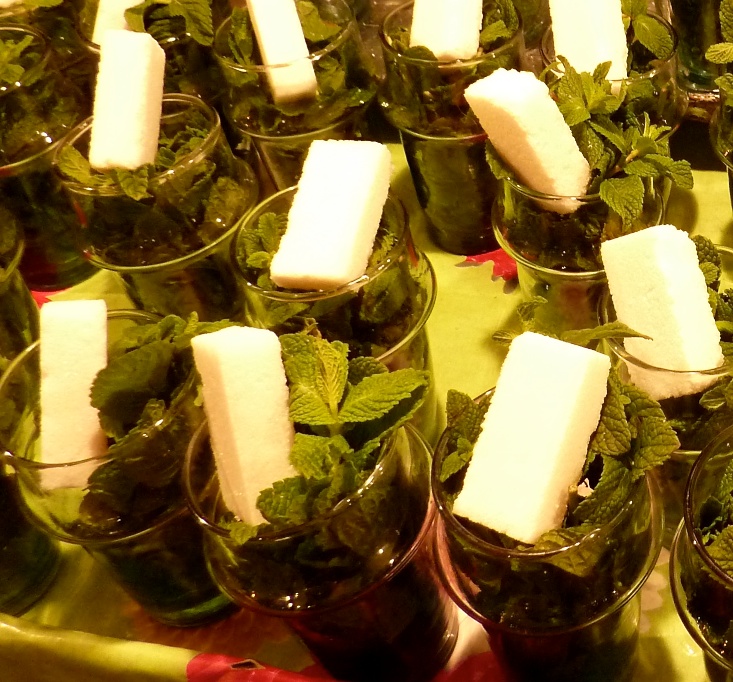
The most popular drink is sweet mint tea. AND I MEAN SWEET. Here are the drinks lined up at a stall with the sugar cubes and mint. Look at the size of those sugar cubes!
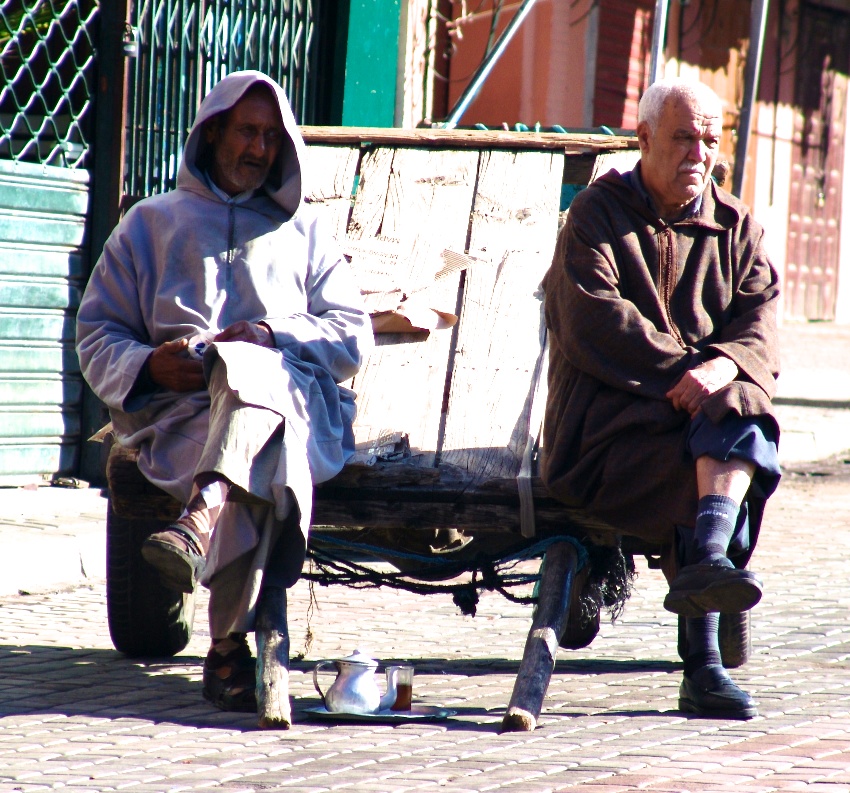
The scene below is typical – men drinking tea in the streets…..waiting with their cart for someone to come hire them to move goods.
Located in the Medina is the main square in Marrakesh, the Djamaa El Fna. The square bustles with hustlers waiting to prey on tourists; musicians, storytellers…..
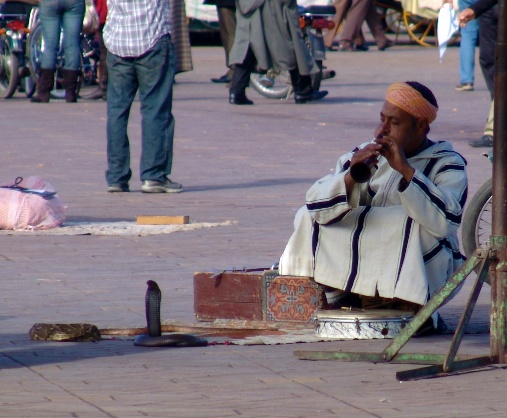
snake charmers…
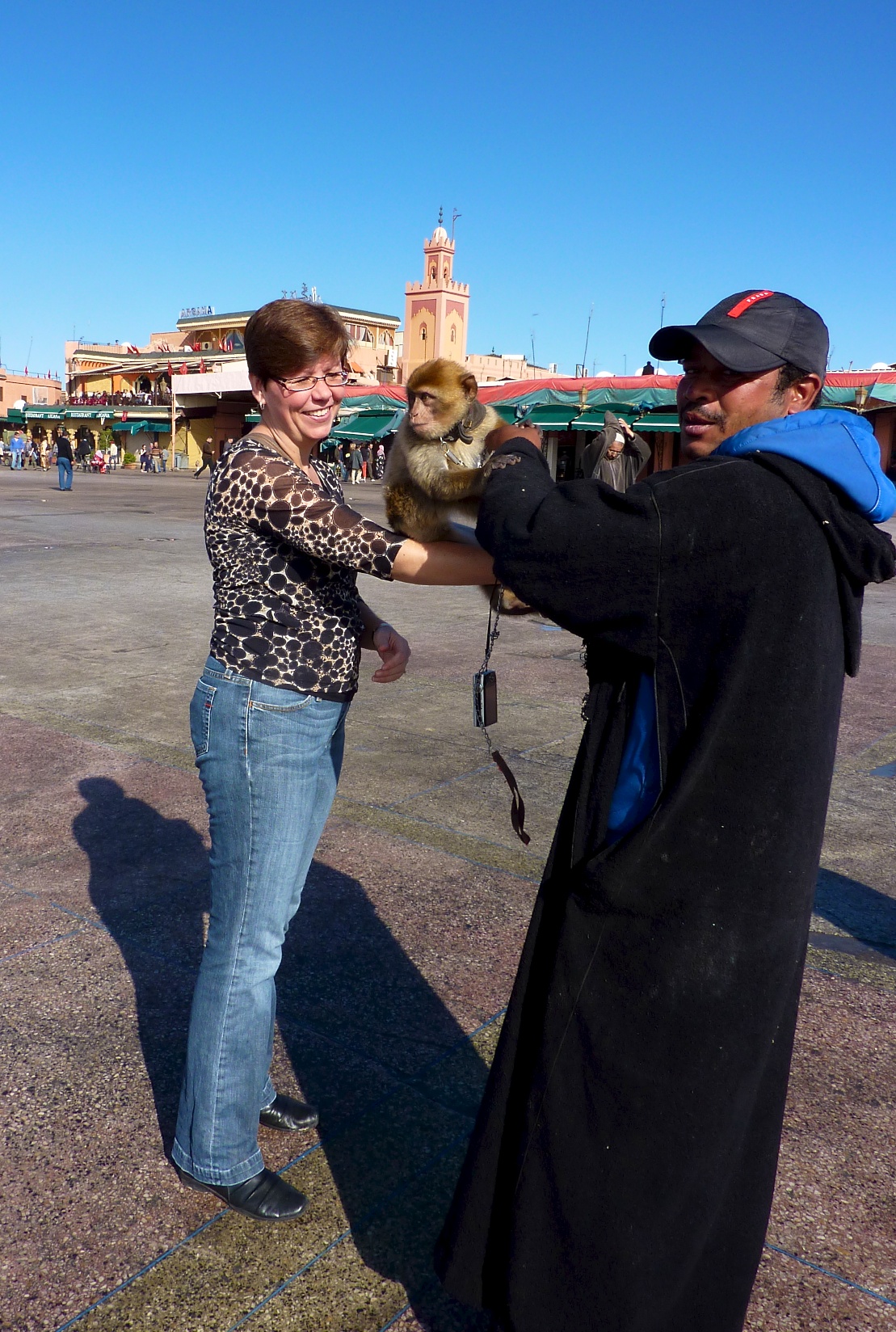
……and monkeys. If you take ANY photos you must tip them. They become very nasty if you do not tip. Even though it looks like she reached for the monkey….A did NOT ask for him to put it on her, so I felt it was fair game for me to take a photo……nope. Does not work that way. The young man started yelling and demanding money. We did not pay him any – but mainly because we did not have any small change.
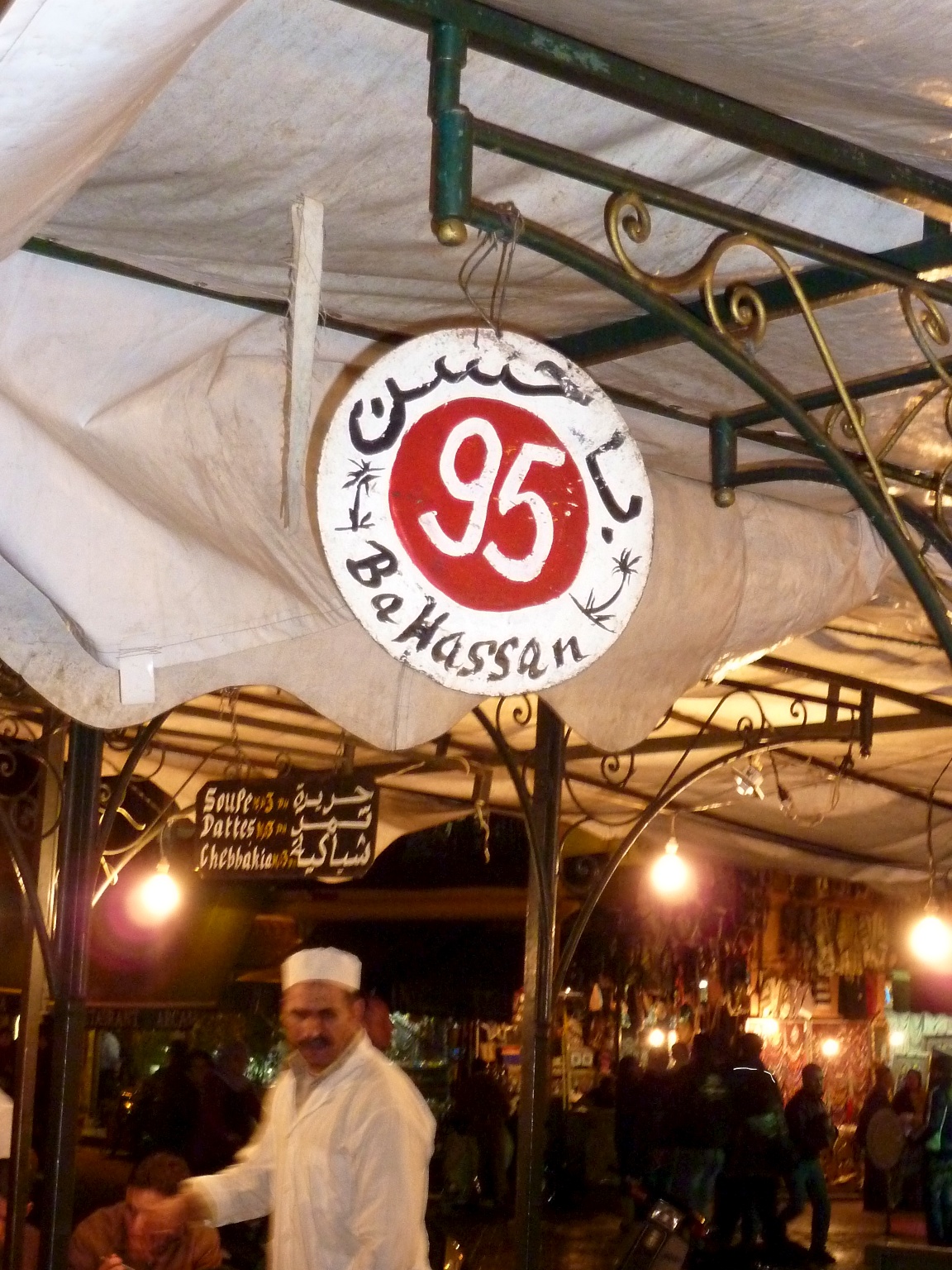
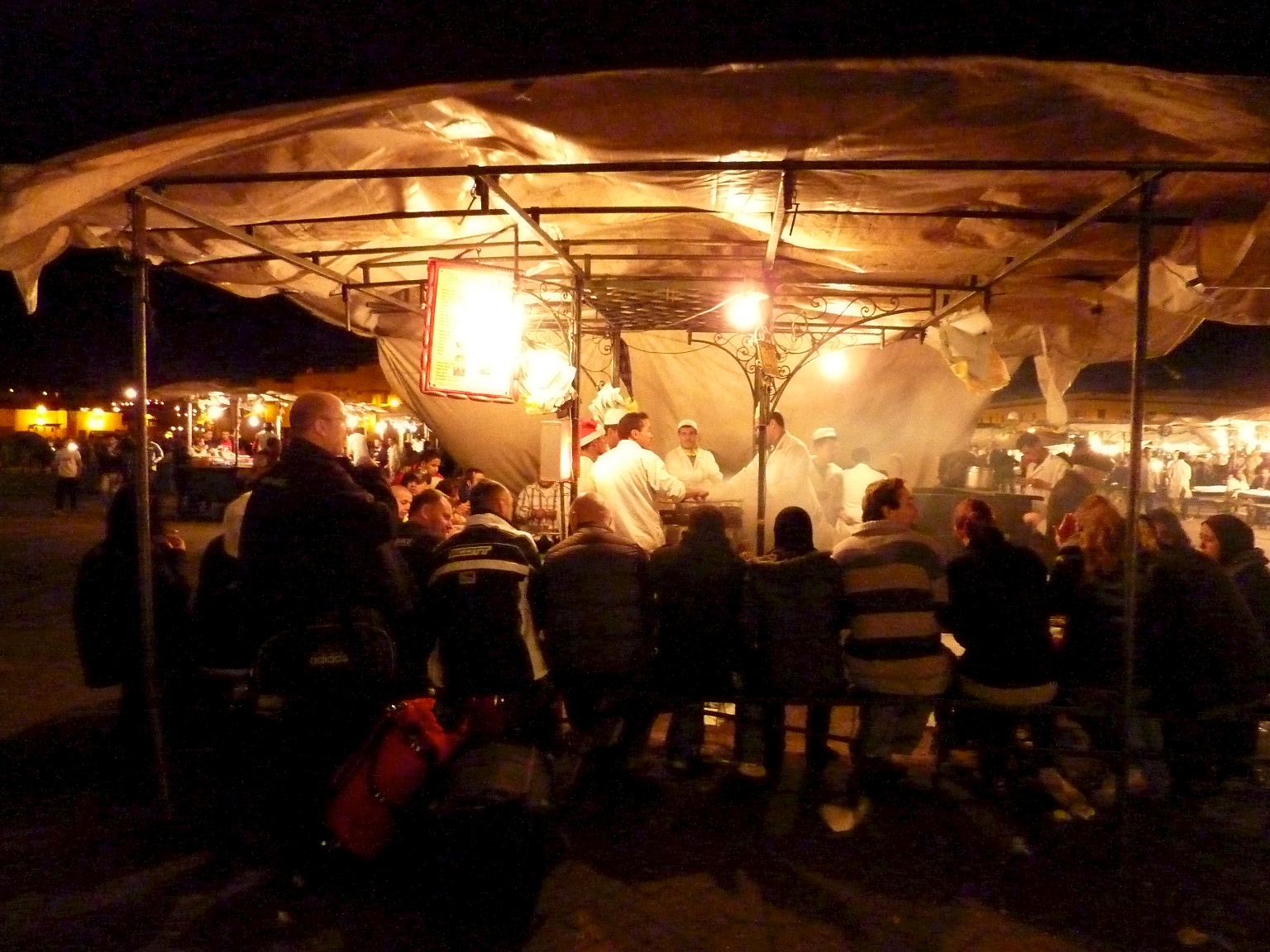
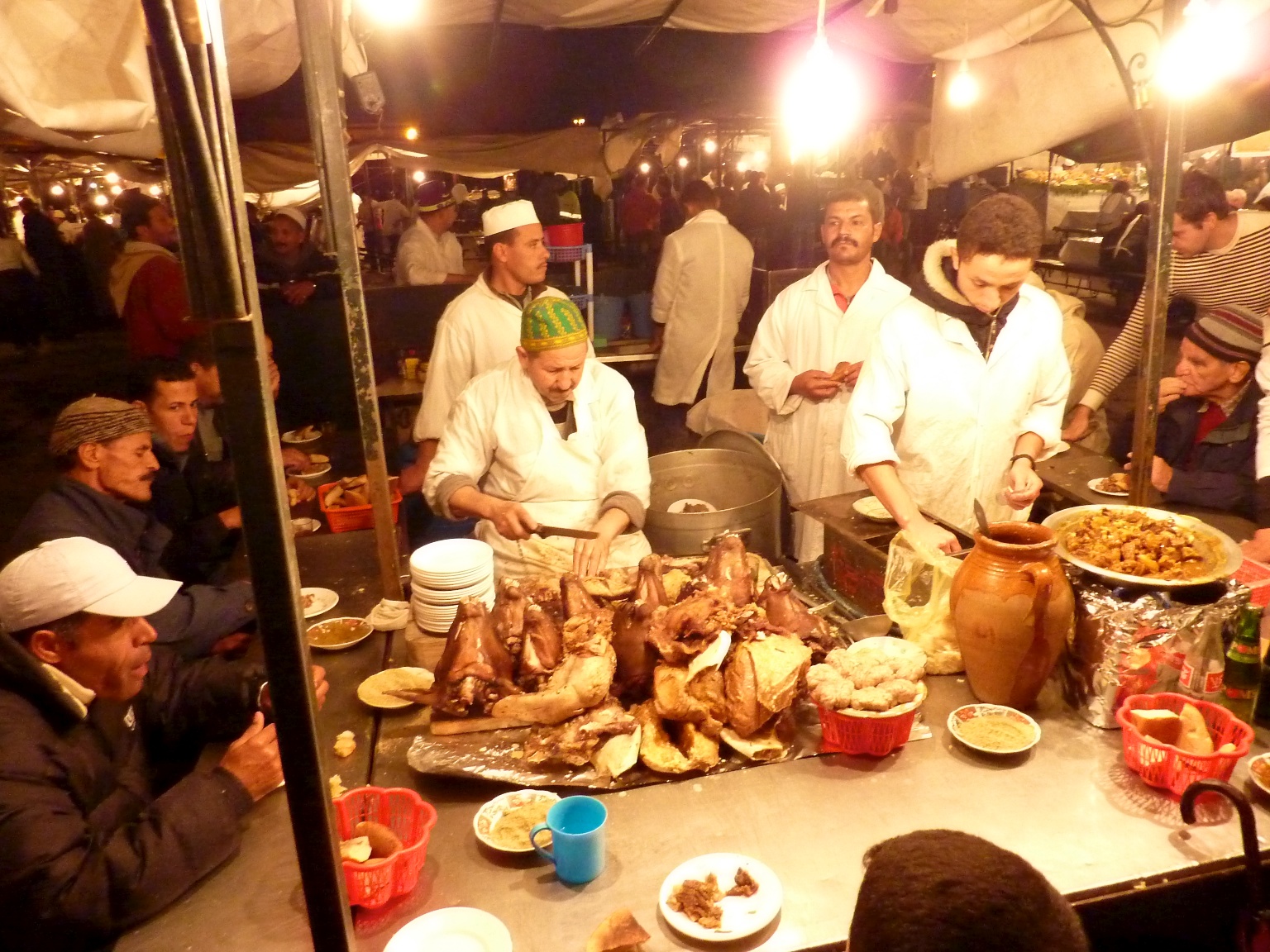
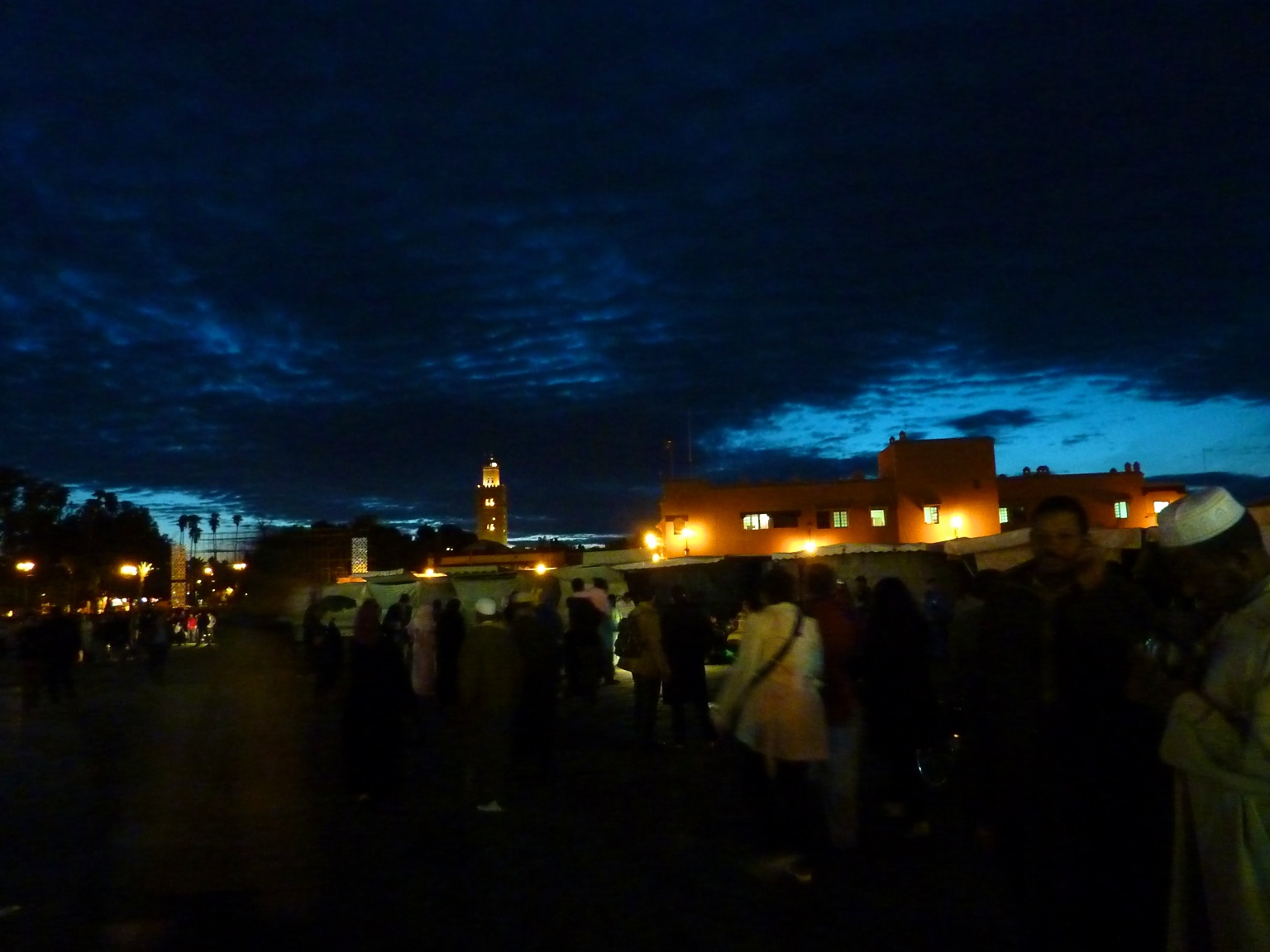
At night, rows of dazzling food stalls open in the square turning it into a huge open-air restaurant. With servers yelling out for you to come eat at their stall which, is as good as Jamie Oliver or they say they have air conditioning. It is as much of a performance as is it a meal.
We started off our meal with the traditional harira soup made from chickpeas and lentils. The food wasn't necessarily the best we've eaten but it was fun.
The chef usually sits in the center where they cook and the diners sit around the edge.
Some stalls were so smoky from the cooking; we were not sure how people ate.
One of the traditional dishes served at the stalls were sheep-heads.
Here is a closer look. No, none of us tried it. We mainly ate grilled meats, salads, and fish.
My very favorite dish of the trip was the sweet & savory chicken pastilla – a phyllo pastry filled with chicken spiced with cinnamon, nutmeg, ginger, etc with almonds.
We tried this dessert. I am not even sure how to describe it other than a mountain of dense cinnamon that sucked all the moisture out of your mouth.
We were smiling for the photo, NOT for the love of the dessert!
The next day we ventured into the non-tourist area of the souk where we had a celebrity sighting – Andre Leon Talley! To read more about this post visit my art blog – ma vie trouvee.
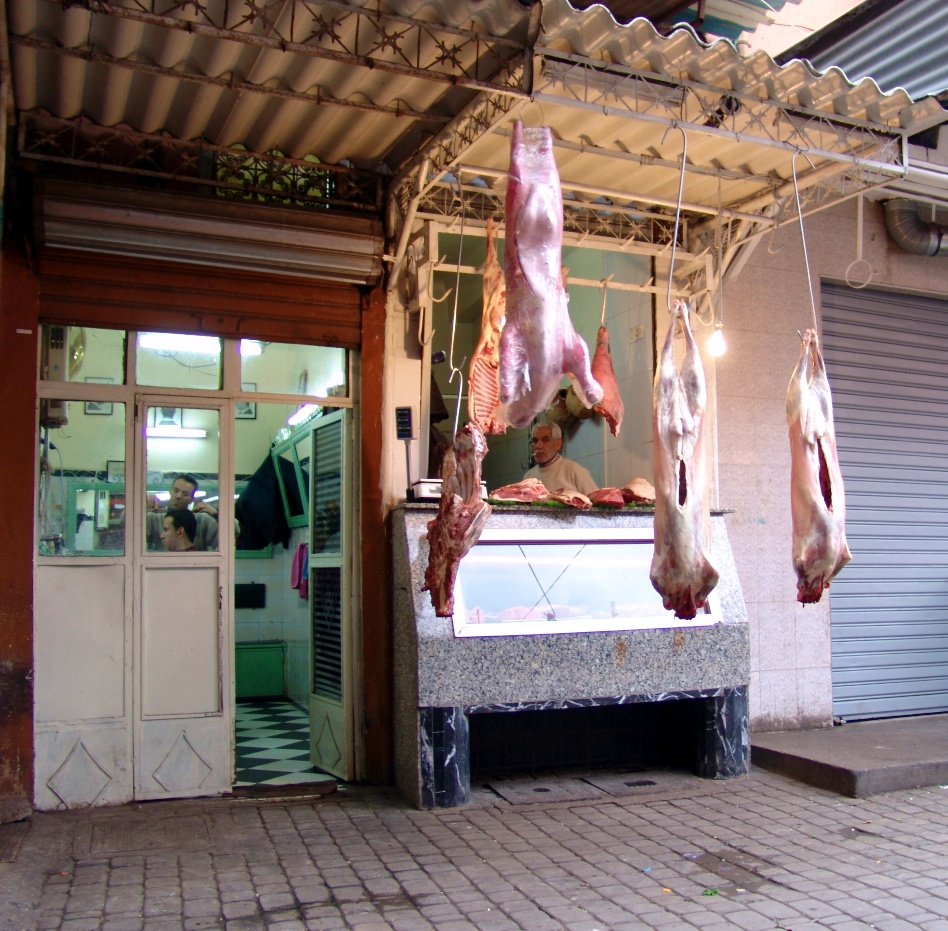
This area was captivating, so local and real. Fresh meat for sale, hanging out next to the barber.
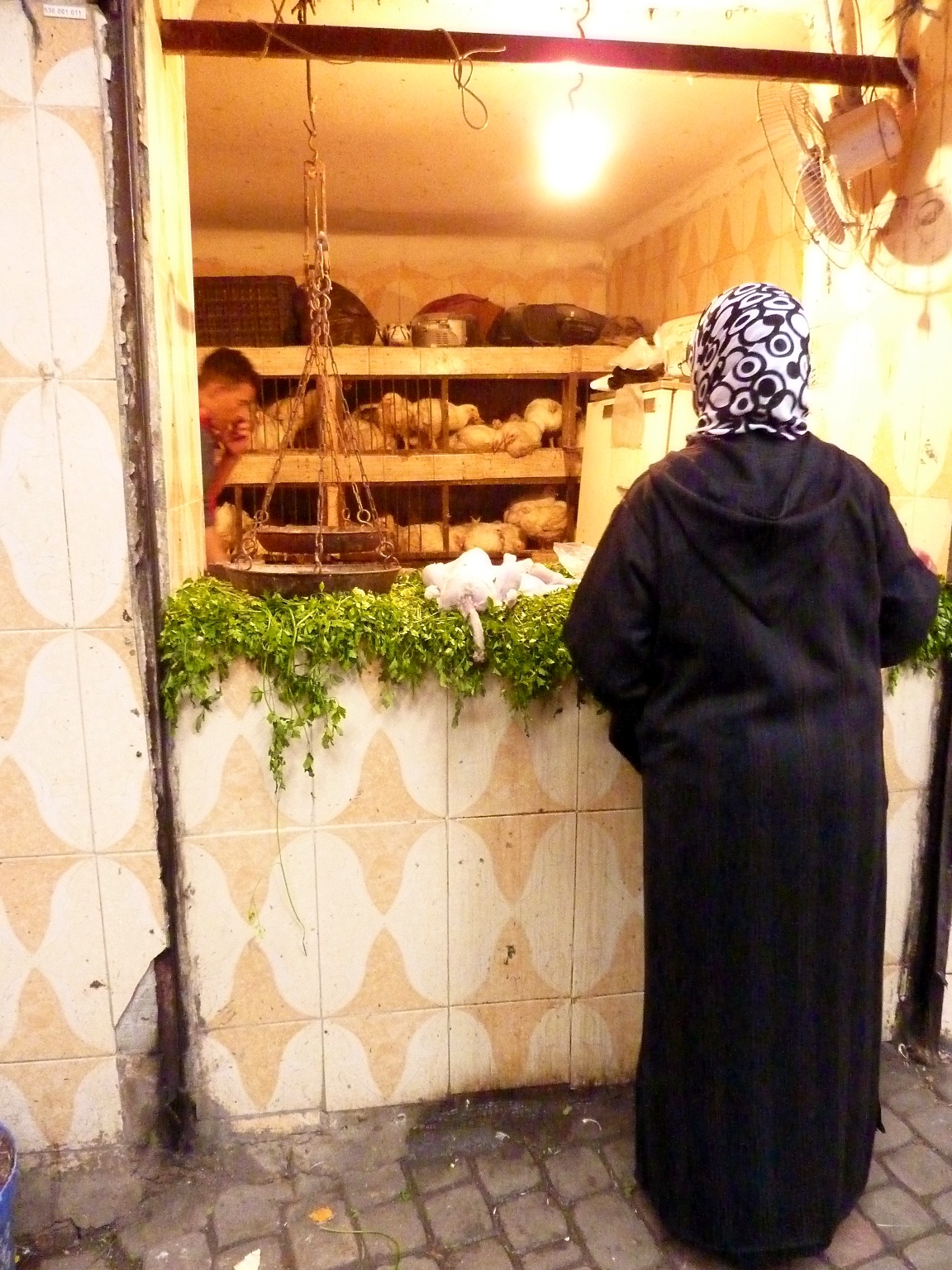
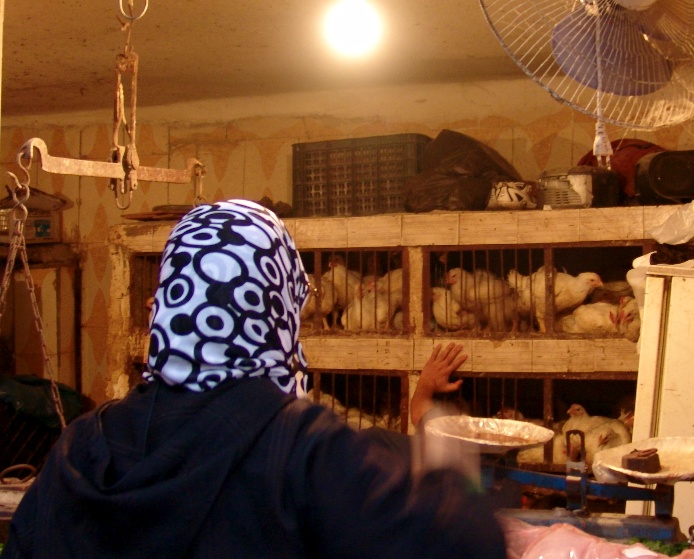
And live chickens…
Might be a little too fresh for me.
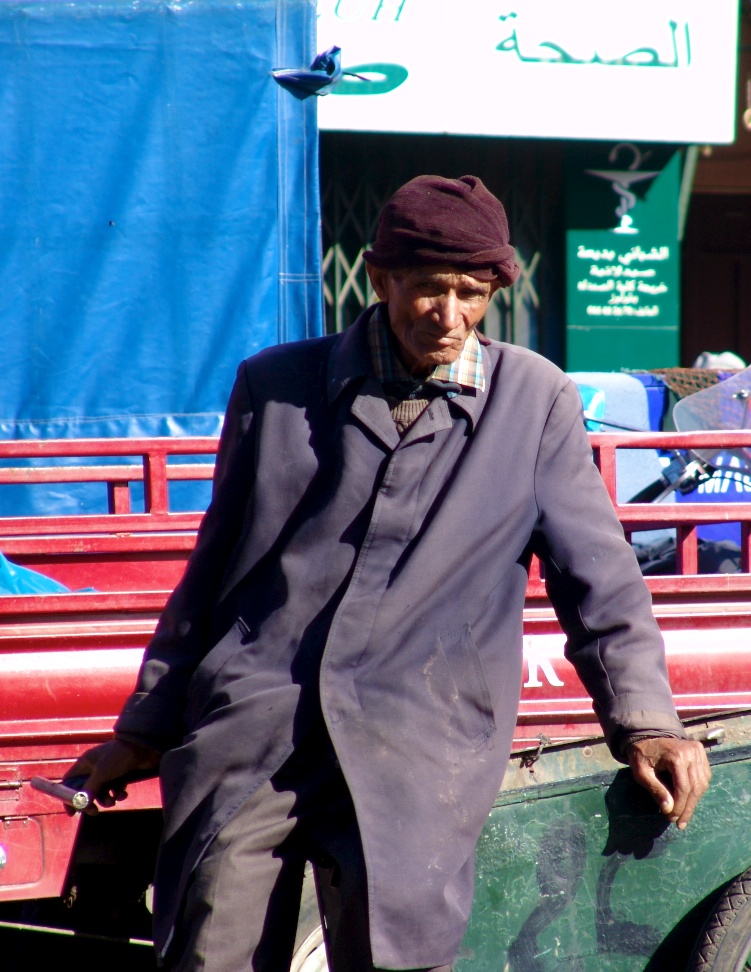
Many of the older people wore robes like the one below.
This gentleman was not happy I was taking his photo – see him shaking his finger at me?
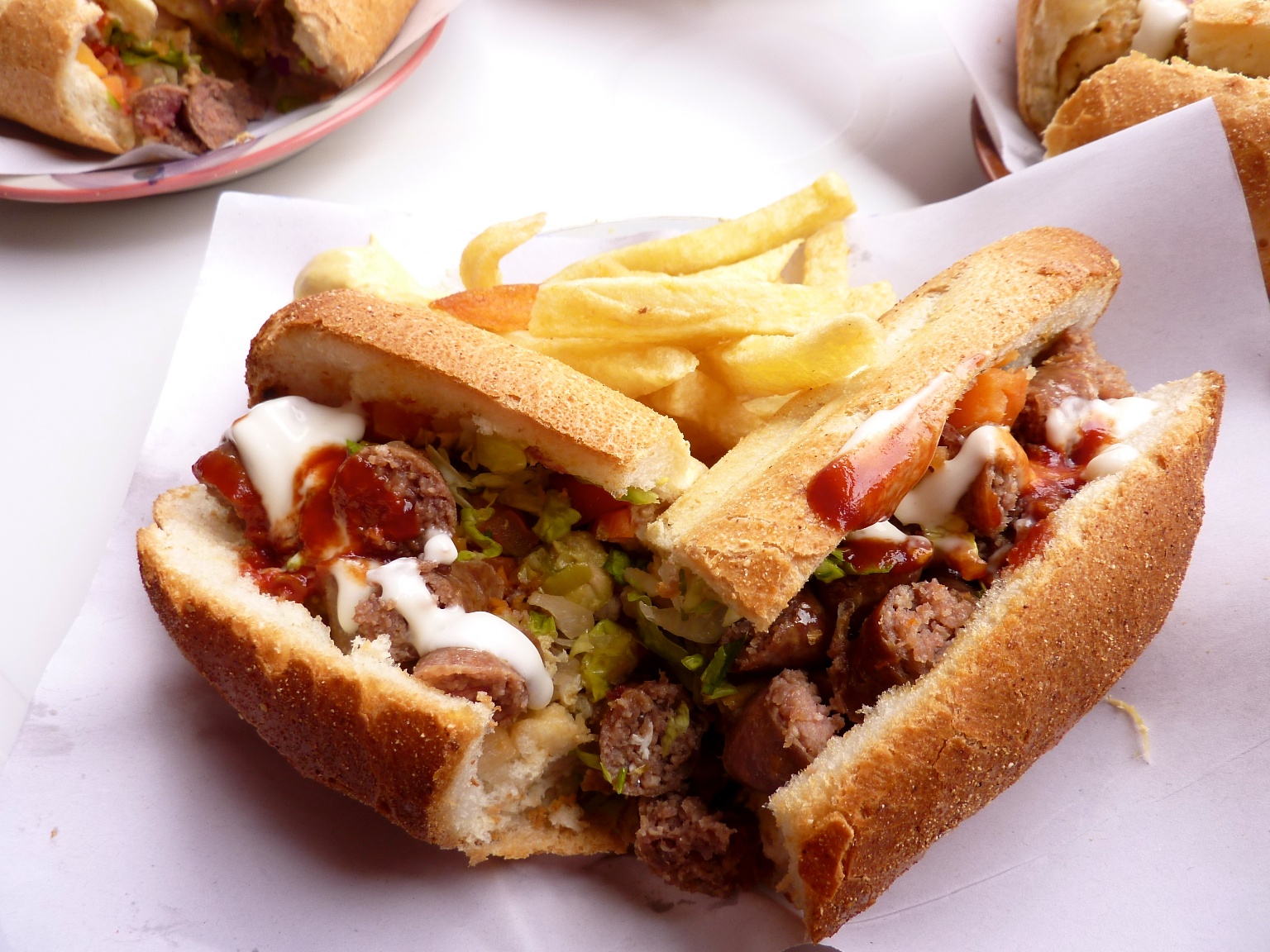
We had another fun lunch in the Medina. D loves to eat as local as possible and he managed to find us this sandwich joint where he paid $5 for 4 very large sandwiches and drinks. Nope, none of us got sick!
Look at this yummy sandwich!
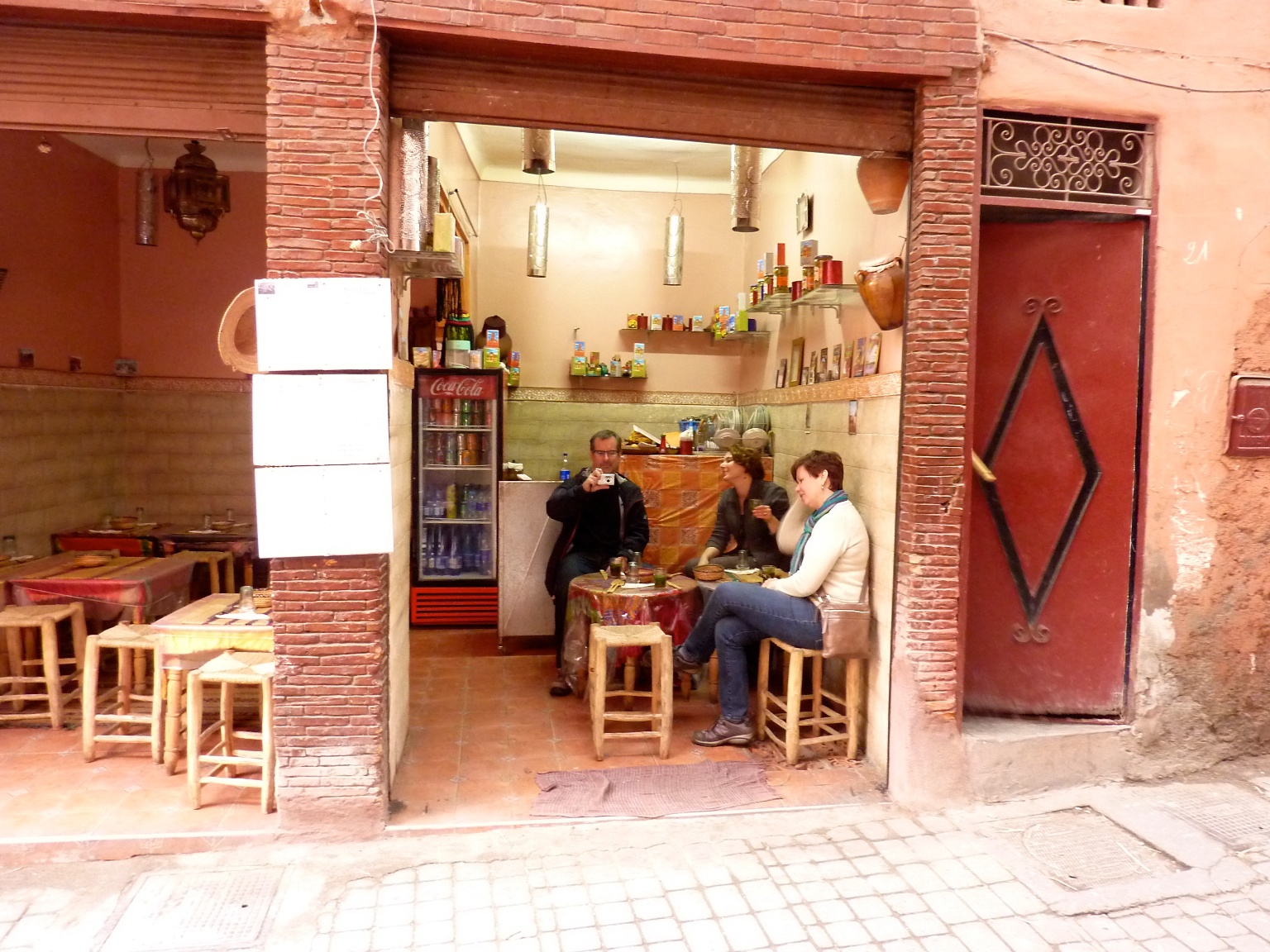
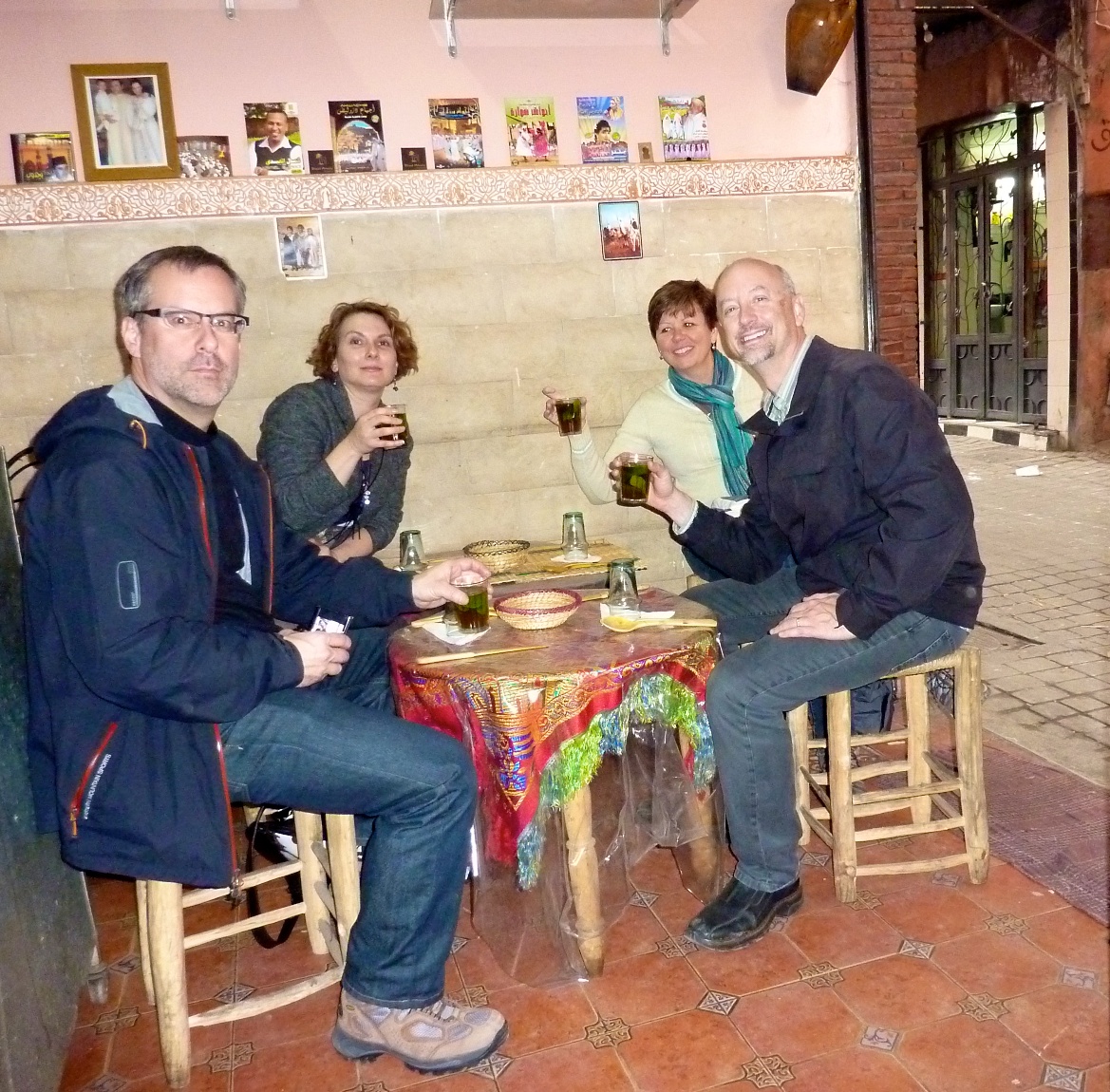
Time for a sweet mint tea break in a little cafe.
You would have thought we were drinking alcohol….even the young woman who ran the shop was laughing at us…..why?
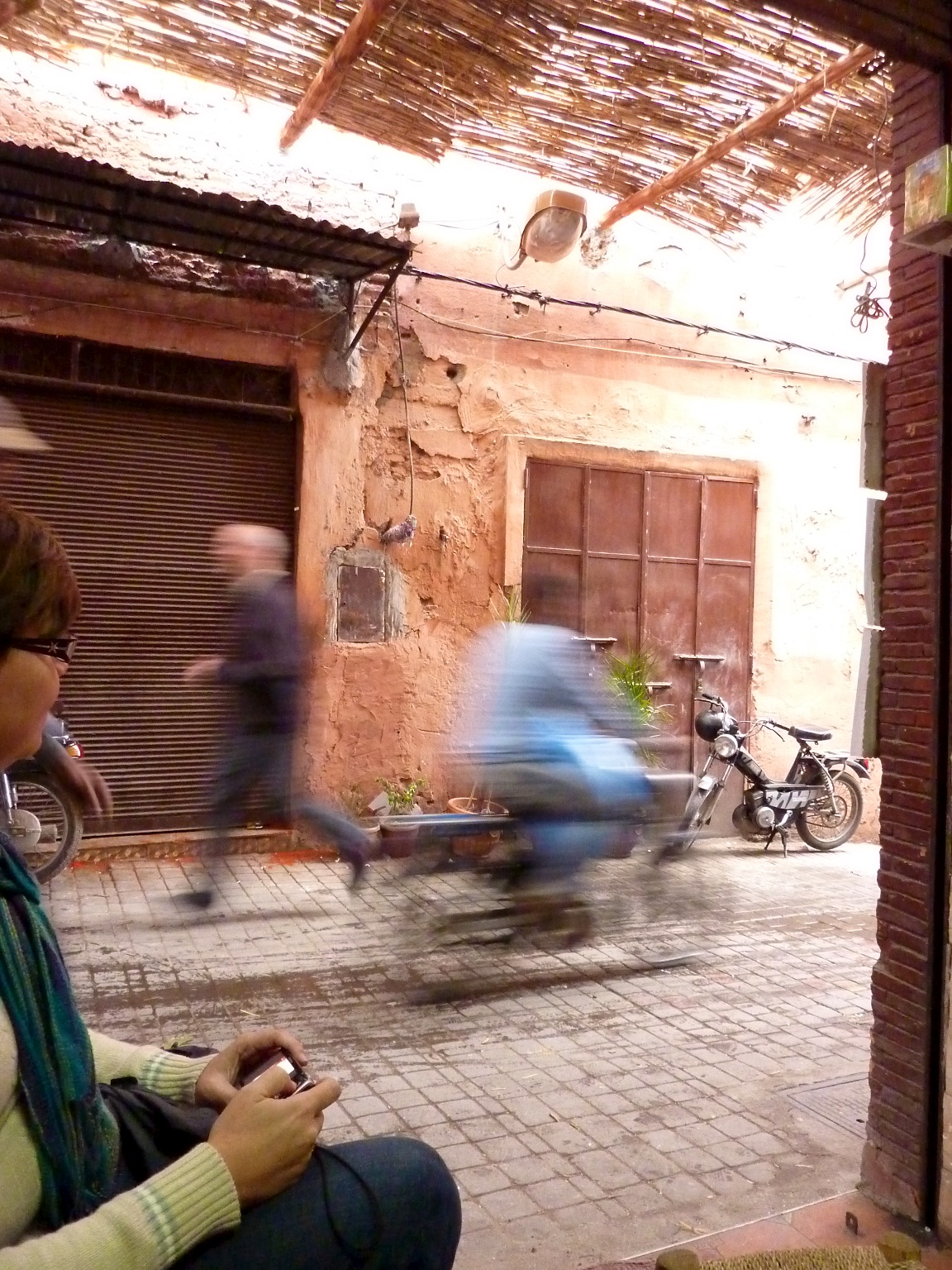
For some reason we got into taking photos of people/mopeds/carts going by. They were actually very cool – creating a ghost-like image.
Then, my "always-thinking" husband decided it would be even cooler if he was in the photo. So he stood on the opposite side, waiting for a moped to go by. He would then RUN from the other side into view. He did this 10 times or so…..this is what had us all laughing hysterically. Look quickly to see him run by!
We took a walk to the Gueliz, the part of town outside of the Medina. It primarily has locals who shop here. Bananas seemed to be the fruit of the season.
Interestingly, the donkeys and the hand-pushed carts drove on the main roads. I am pretty sure this cart would have been pulled over in the US for a mulititude of reasons!
We purchased a bag of the coconut cookies sold on the street. They were yummy. D2 would not eat them. We laughed and wondered what the kitchen looked like where they were baked. This one is for you mom!
Back in the souk D & D2 try to negotiate for pomegranates – which by the way were inexpensive, huge, and delicious. I am pretty sure they negotiated up instead of down on this transaction! They bought a pomegranate that weighed 1/2 kilo, plus one spark plug.
That night we went back to the open square for dinner.
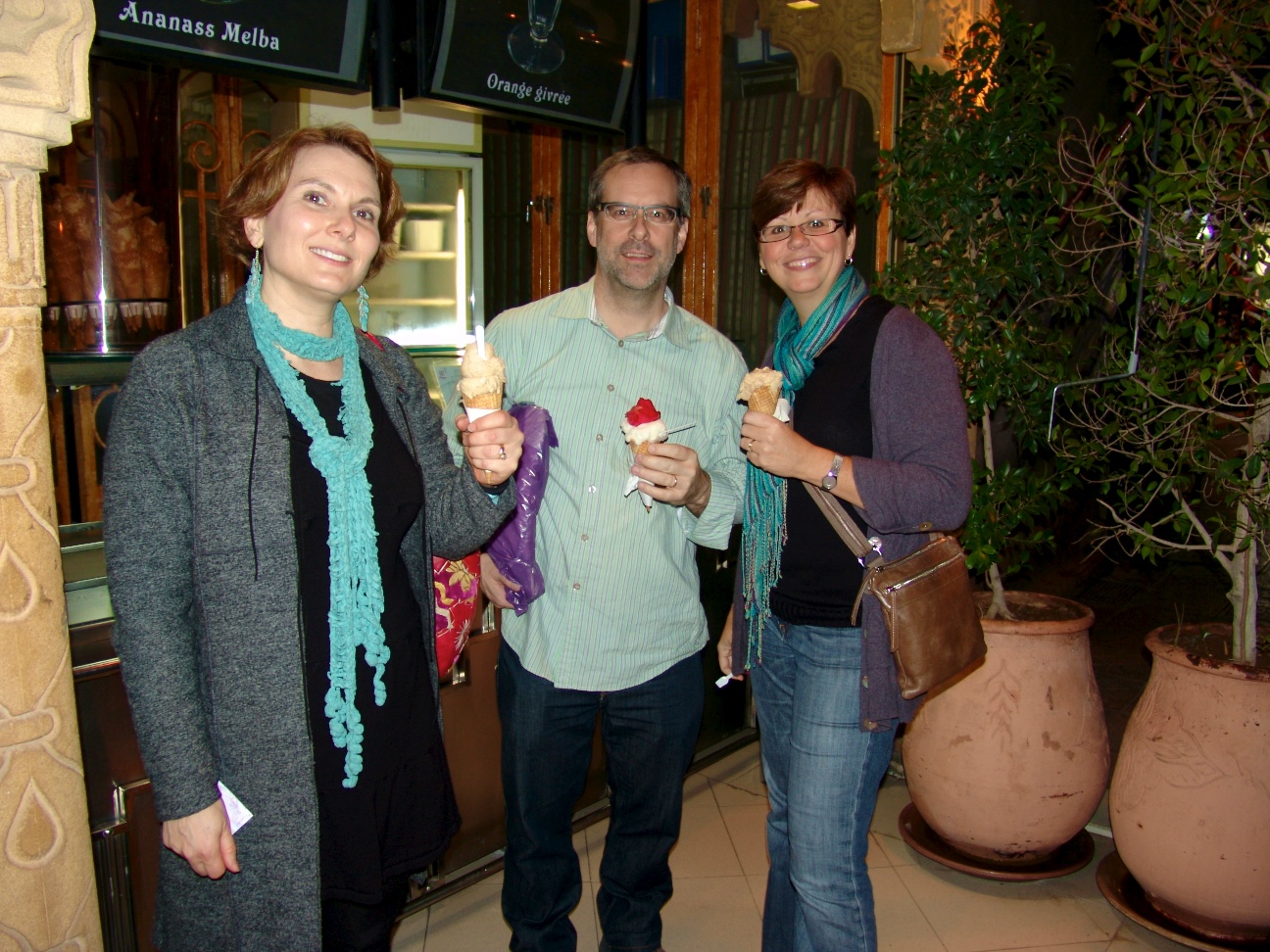
And we finally had ice cream! Highly rated by D2 and me, the ice cream connoisseurs! We went back the next night to verify our findings.
We ended the evening with a cup of mint tea at our Riad. Here is the owner, Aziz, giving us a traditional pour!
We all loved visiting Marrakesh – such an amazing array of colors, sights, tastes, and sounds. We highly recommend a visit if you have the chance.
Please continue to the next post, part two of our Morrocan trip as we tour Essaouira, a very colorful town on the water.
Hop over to my art blog, ma vi trouvee, for a blast of color.
And if that still is not enough, click on the slide show below.
Our last day in Morocco we hired a private car and driver to take us to Essaouira, a coastal town in Morocco. One of the most picturesque towns we have visited.
Just to put things in perspective, we paid the same amount for a driver to drive us three hours to Essaouira and back, as we pay for a taxi from the Brussels airport to our apartment. And that included the five hours he sat and waited for us!
We enjoyed all the sights along the way. Since we had a driver, we could not pull over as often as I would have liked so many of the photos were taken while driving.
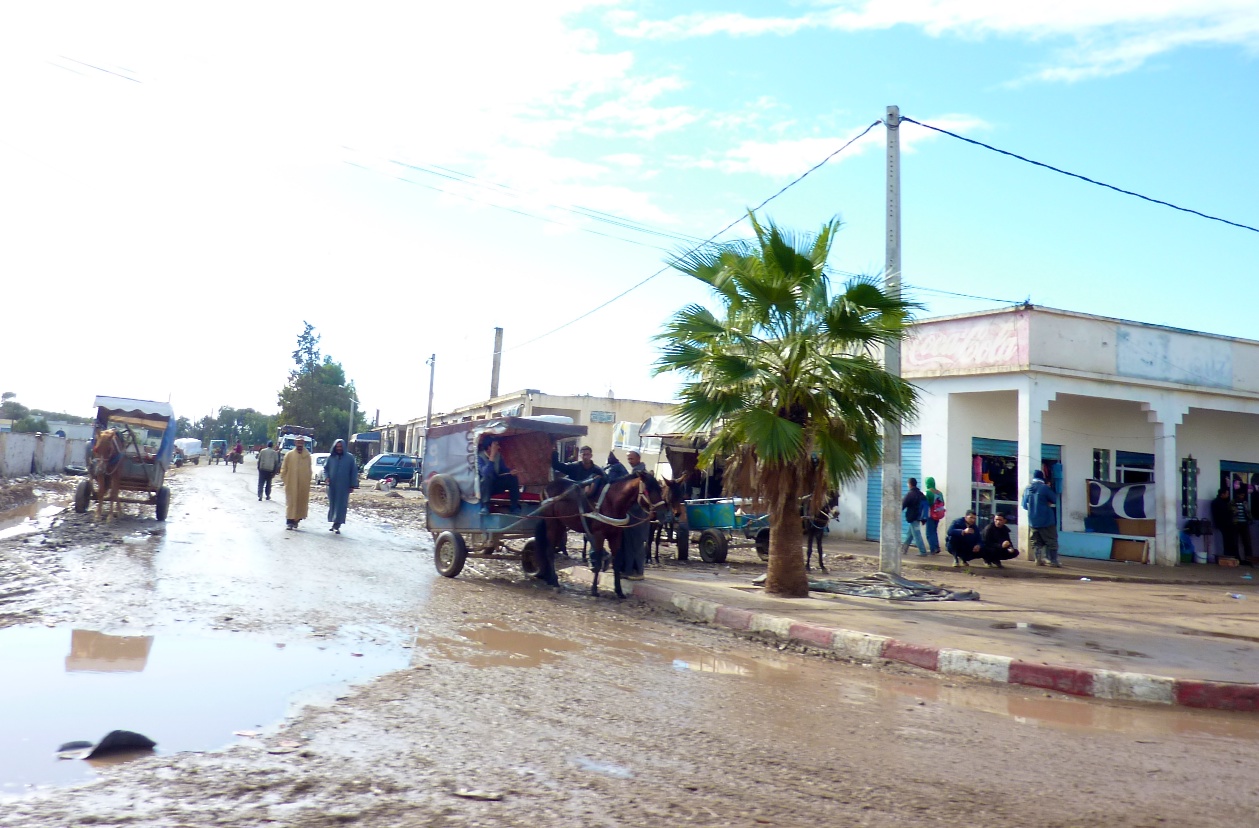
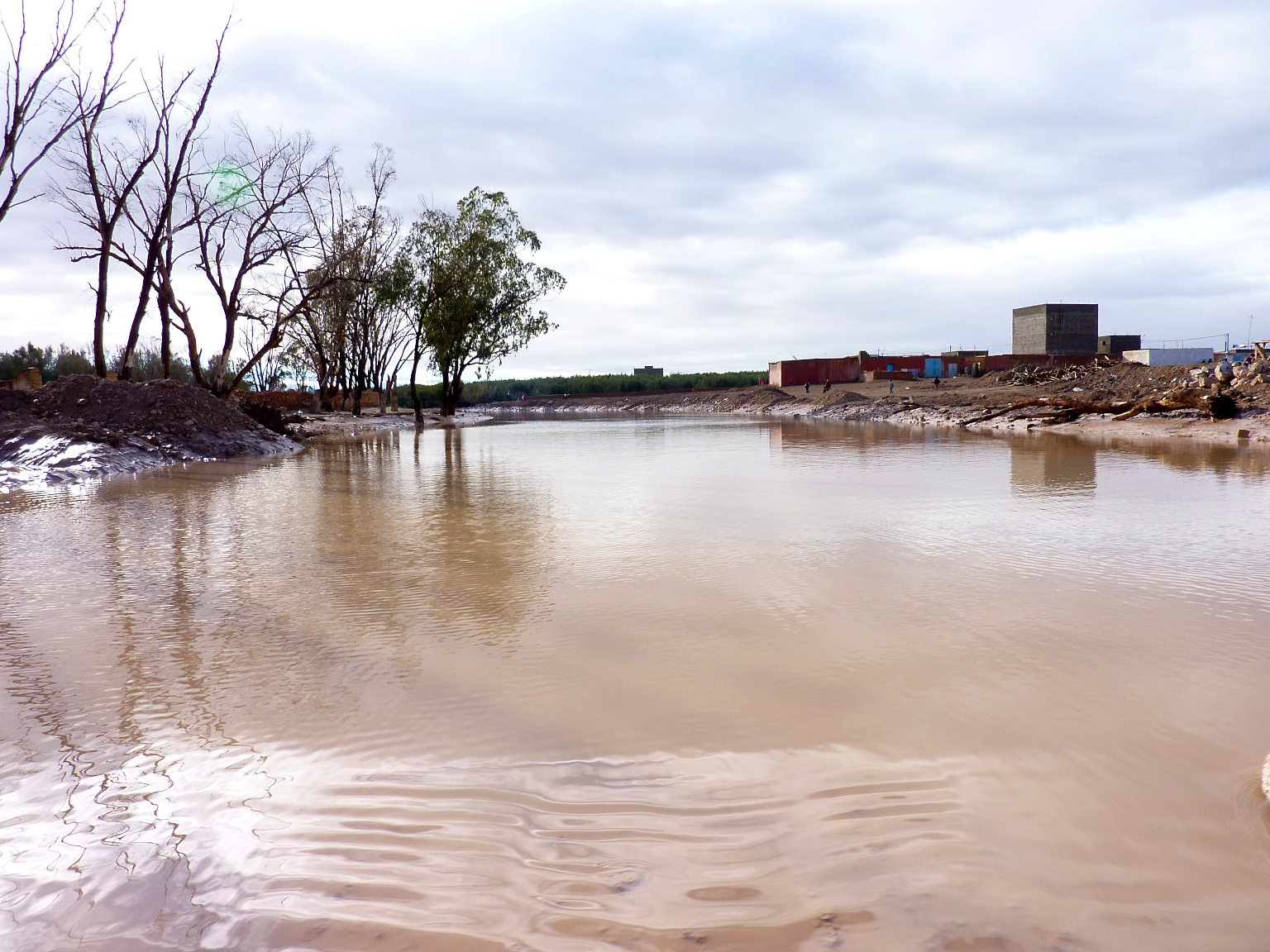
There was heavy rain the day before and they warned us that parts of the road might be flooded.
Below, we had to drive though a foot of water. But I was thinking it was probably easier for us in a car then the two men with the donkey cart!
If you look in the far distance, you can see snow on the Atlas Mountains.
This shot picked up some unusual tones from the tinted window.
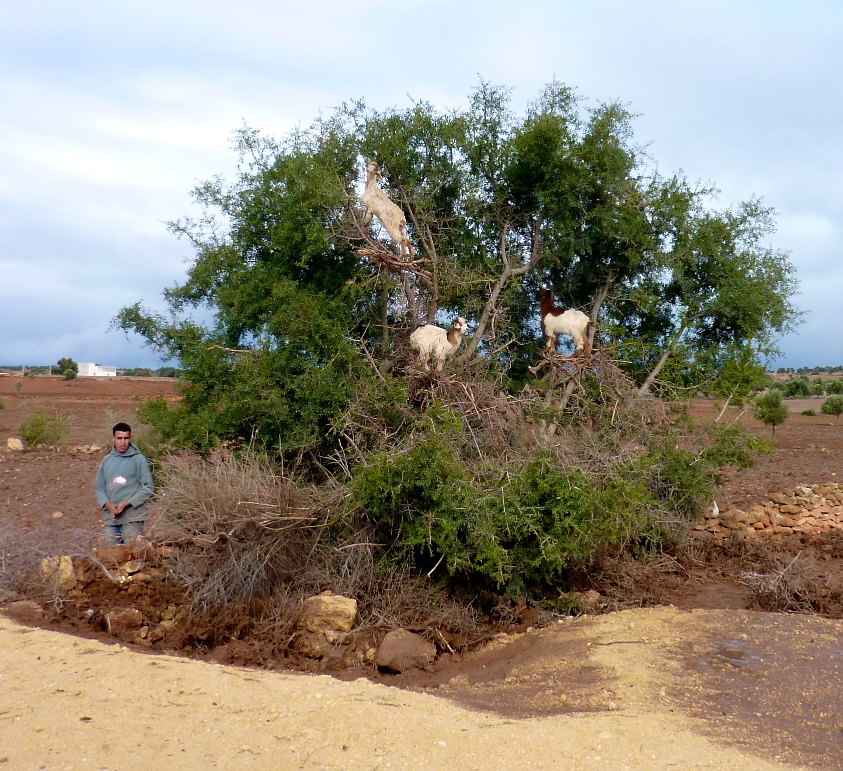
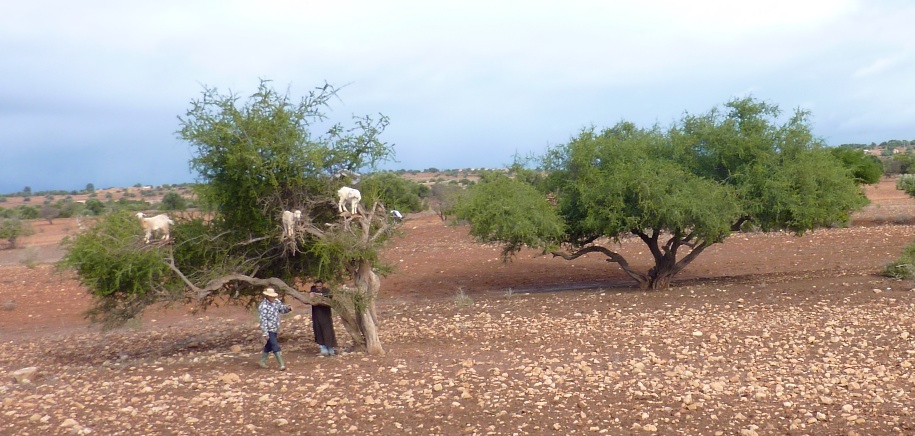
We saw one of the most fascinating sights ever!
Those are some BIG birds in the trees….
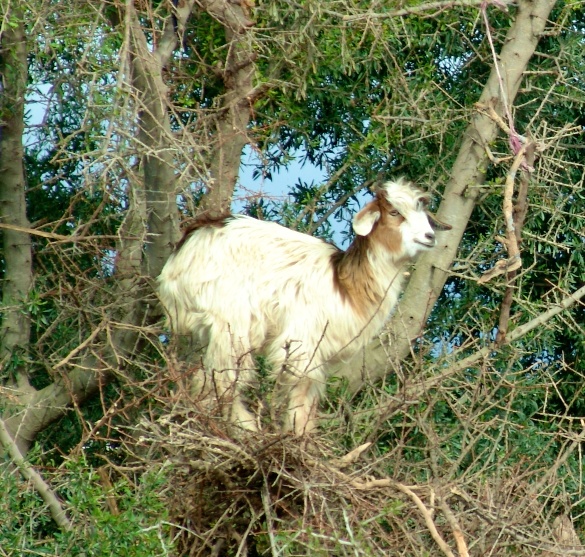
Wait – look a little closer…
They are goats! Are they real? Yes and no. Yes, they are real goats in the trees, but the men place them up there when cars go by to obtain tips.
However, the goats really do climb the argon trees to eat the fruit, which is similar to an olive. Farmers actually follow the herds of goats as they move from tree to tree because the fruit of the tree has a nut inside, which the goats can't digest, so they spit it up or excrete it, which the farmers then collect. The nut contains 1-3 kernels, which can be ground to make argon oil used in cooking and cosmetics.
They say you have to go off the main road to see them, but it really is a very common sight. They do look pretty happy in the tree.
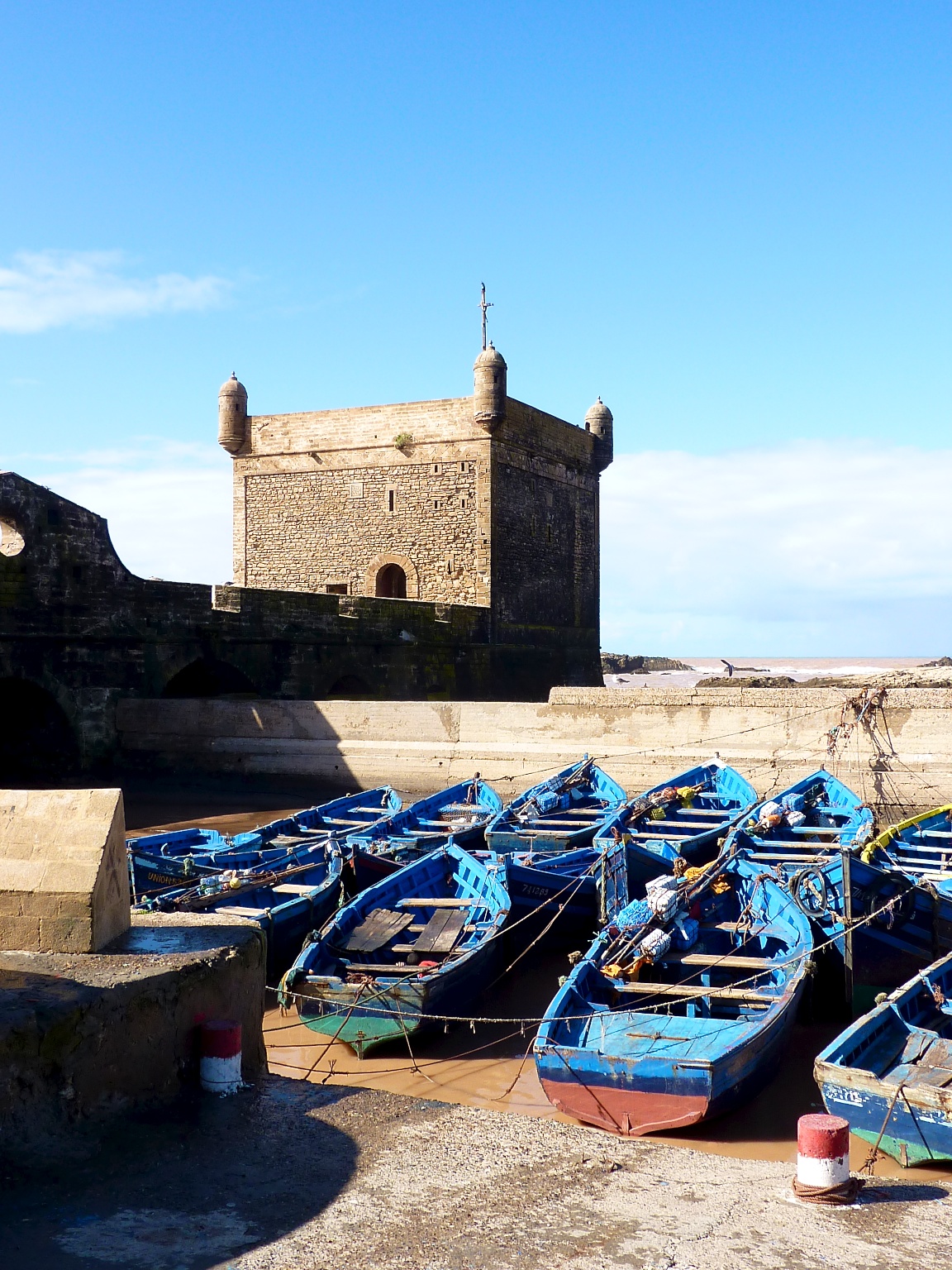
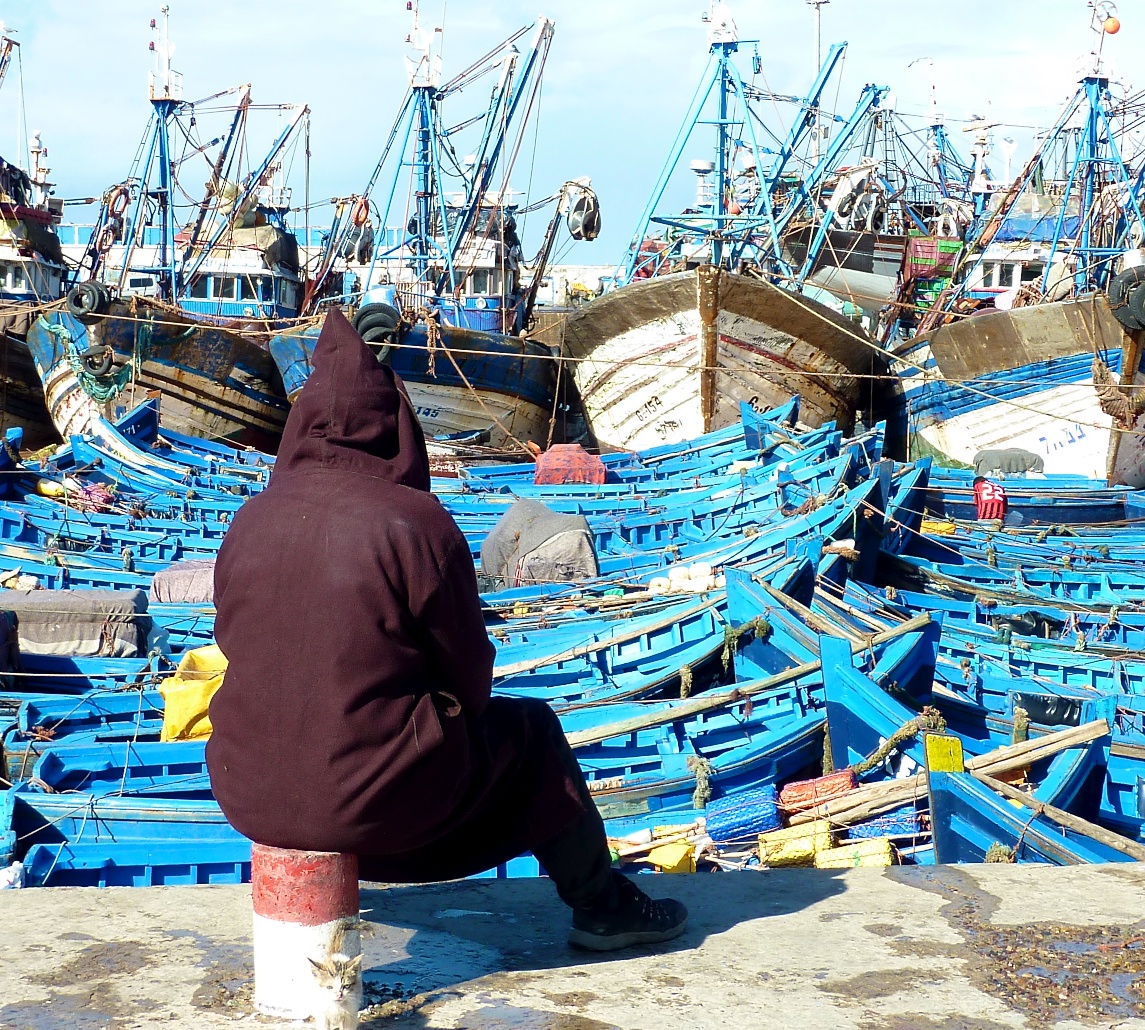
We had a few sprinkles along the way, but we arrived to gorgeous blue skies, which made the blue boats look even bluer.
Essaouira was stunning. Our first stop was along the pier where all the fishing boats were docked. Due to heavy rain the day before, many of them were not able to go out.
This is usually a very active fishing port, but today was a day for relaxing.
Essaouira was established in 1506 as a Portuguese settlement. Modern Essaouira was built between 1760 and 1770.
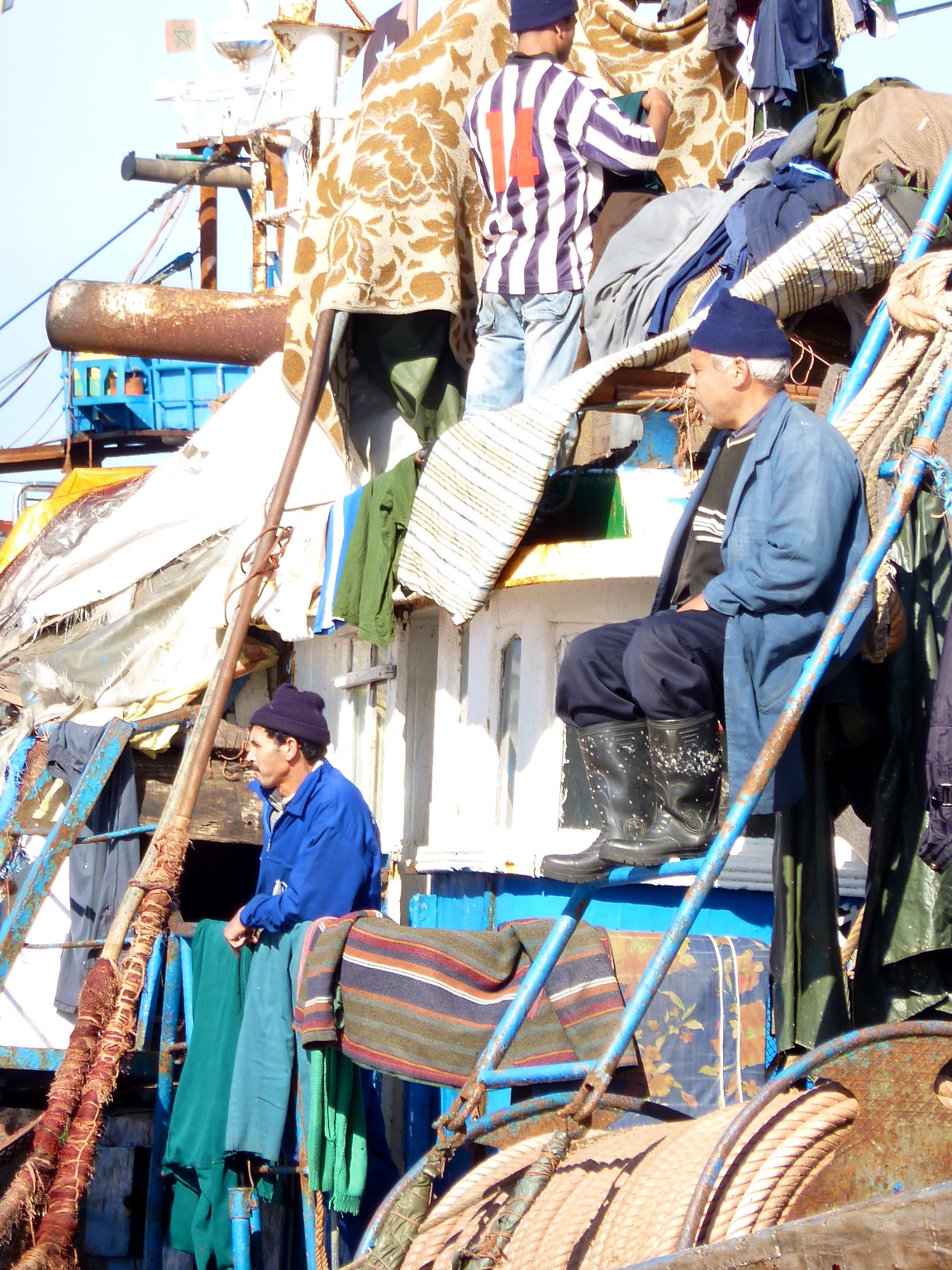
And I thought my art-room was cluttered! Looks like today was washday? Where's Waldo?
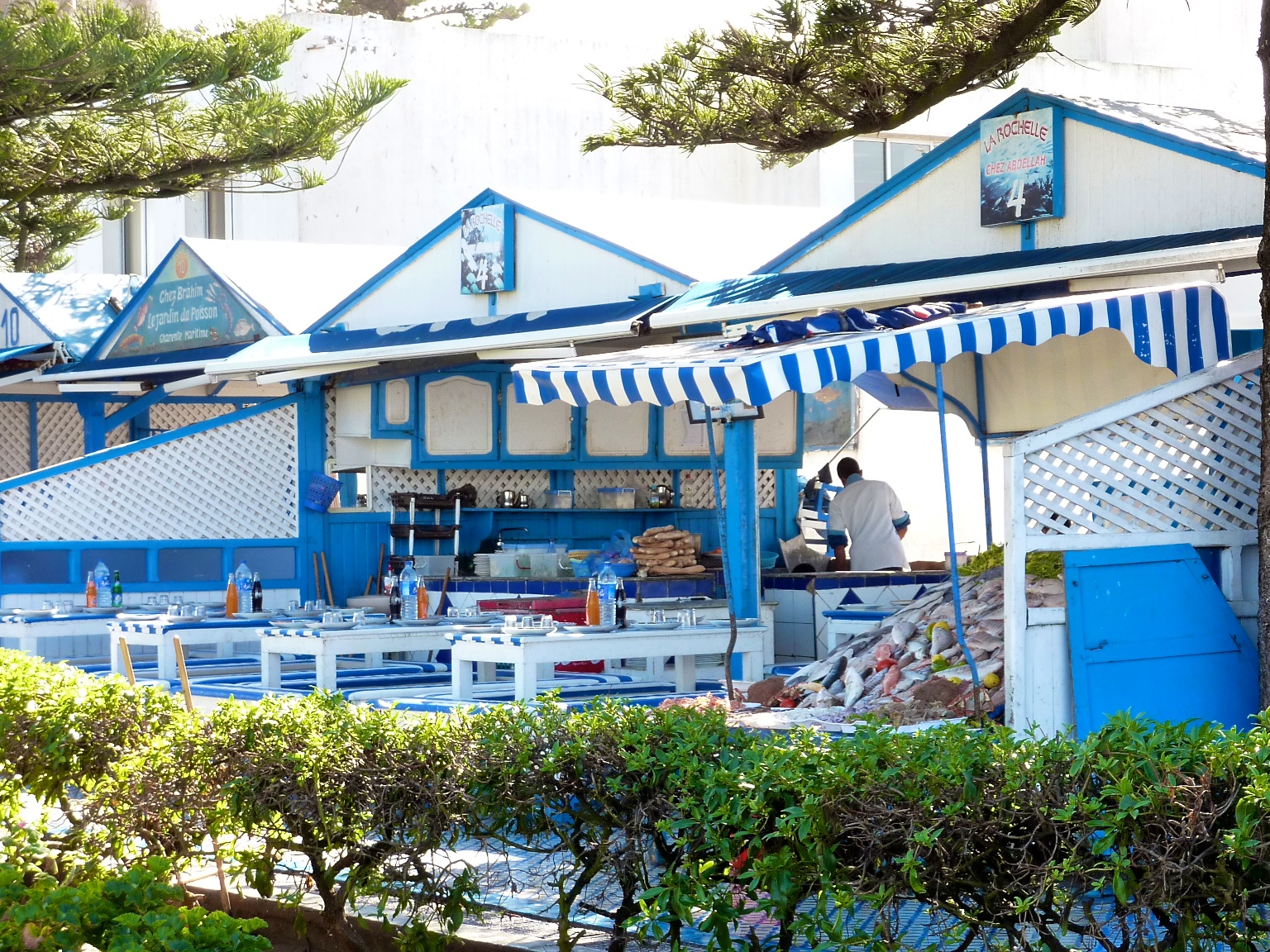
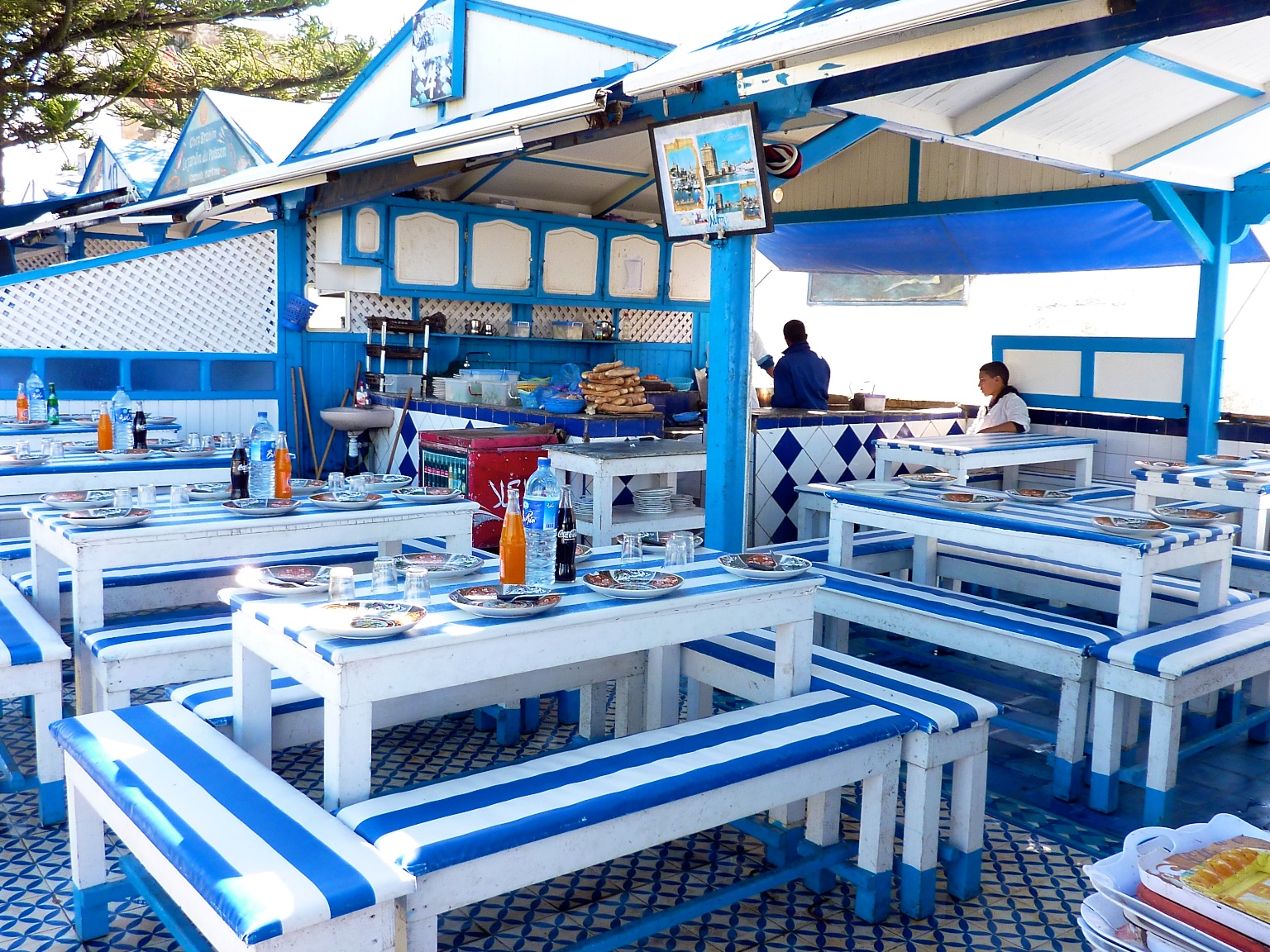
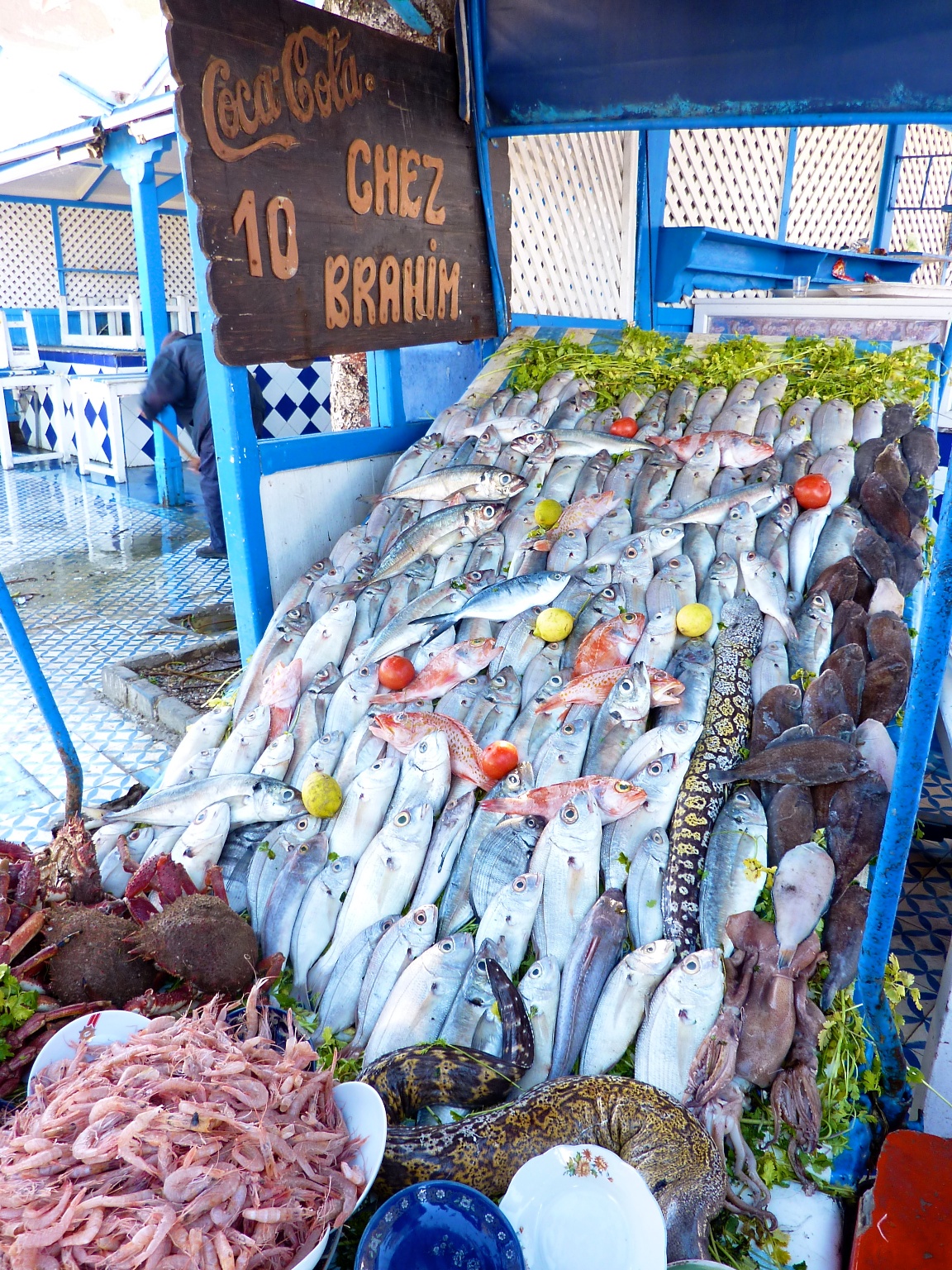
We had read about the outdoor restaurants where you select your own seafood and they grill it for you.
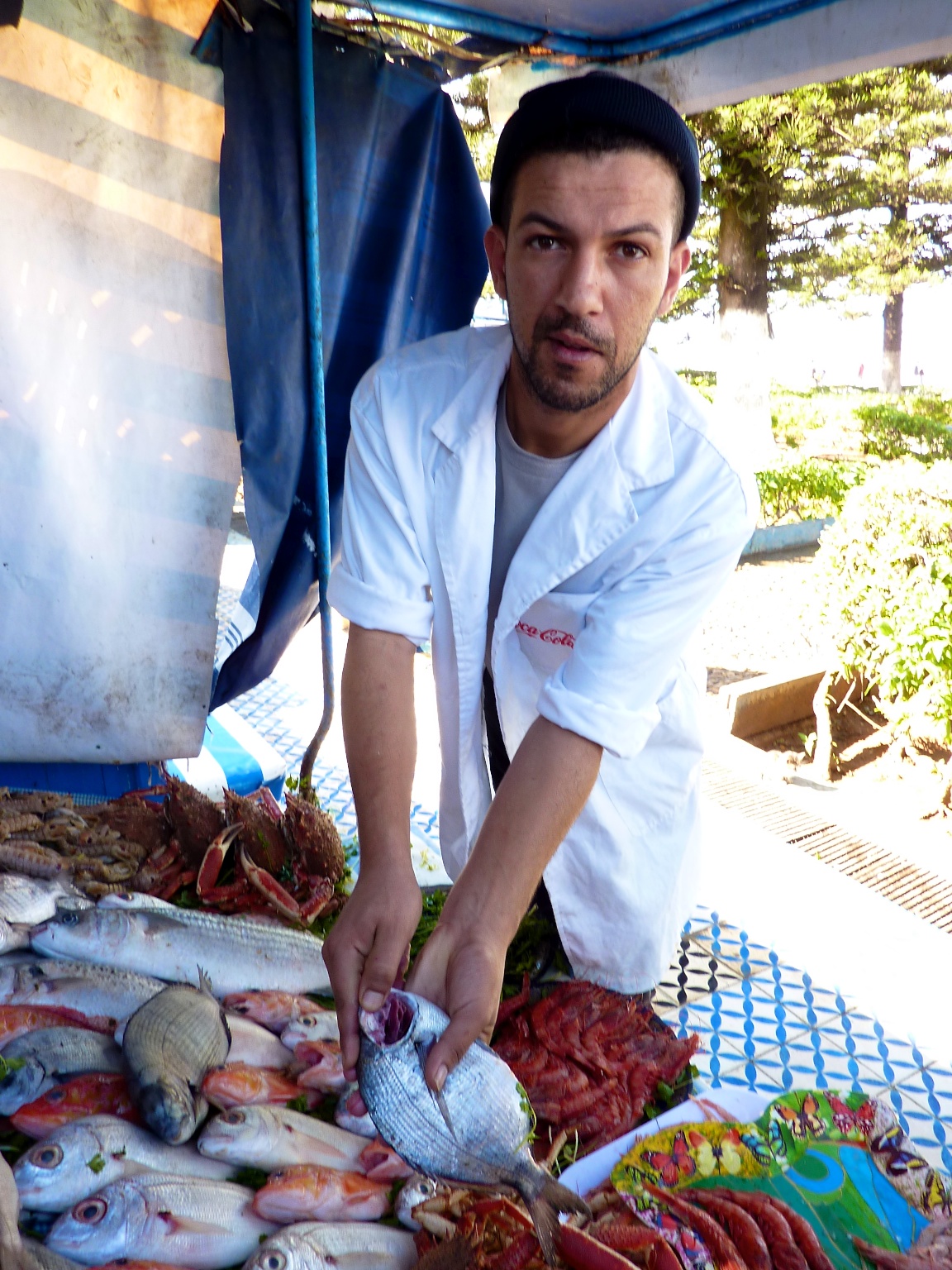
So we headed there for lunch. The chef is showing us the inside of the gills so we can see how fresh the fish is.
Squid, sardines, shrimp, sea bass and others. All of it was amazing.
Well worth the three hour drive to get there!
D particularly enjoyed the grilled sardines – one of his very favorite fish.
And a beautiful fresh salad.
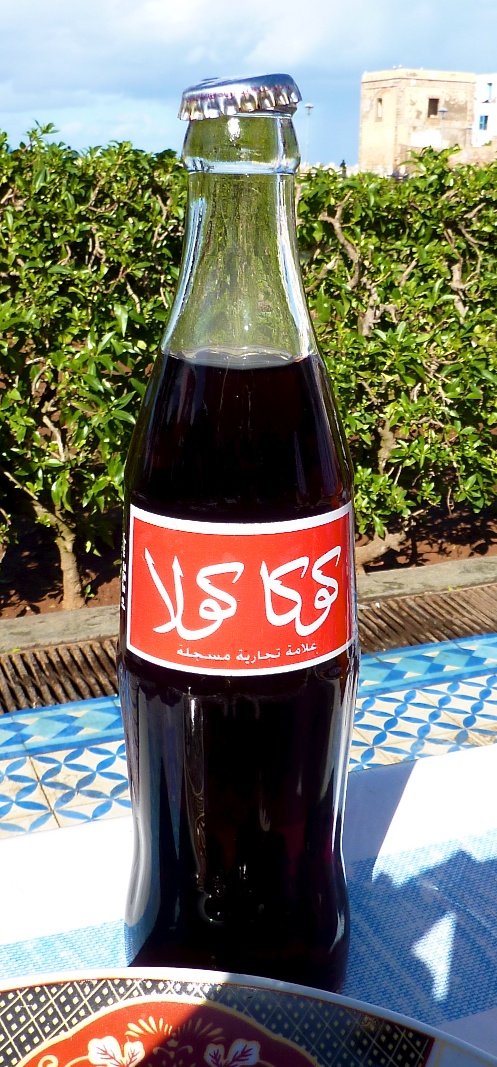
Cool coke bottle.
After our scrumptious lunch, we strolled through the medina (old town) which, is a Unesco World Heritage Site. It has a hippy influence and in the days, was frequently visited by the likes of Bob Marley and Jimi Hendrix.
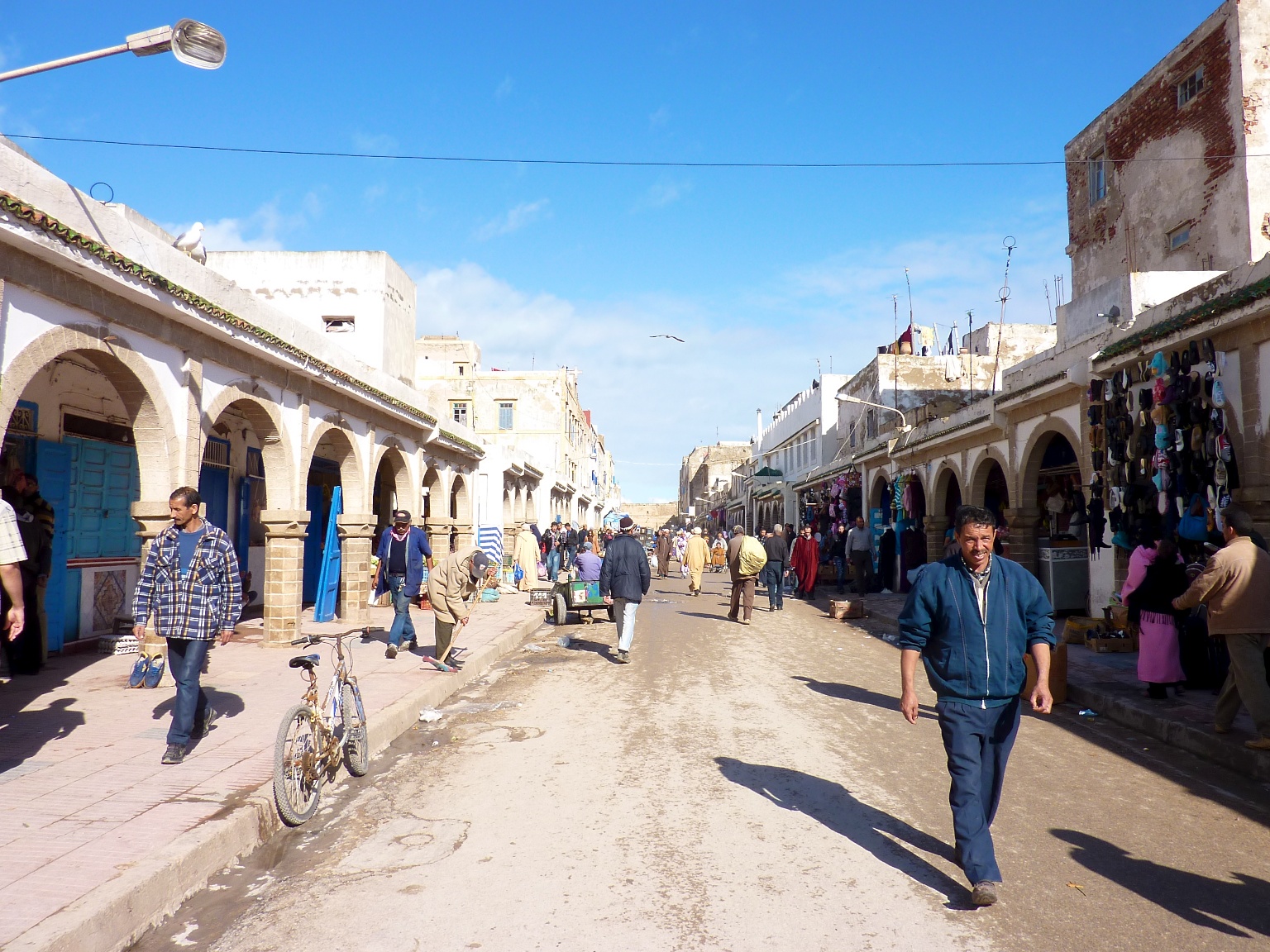
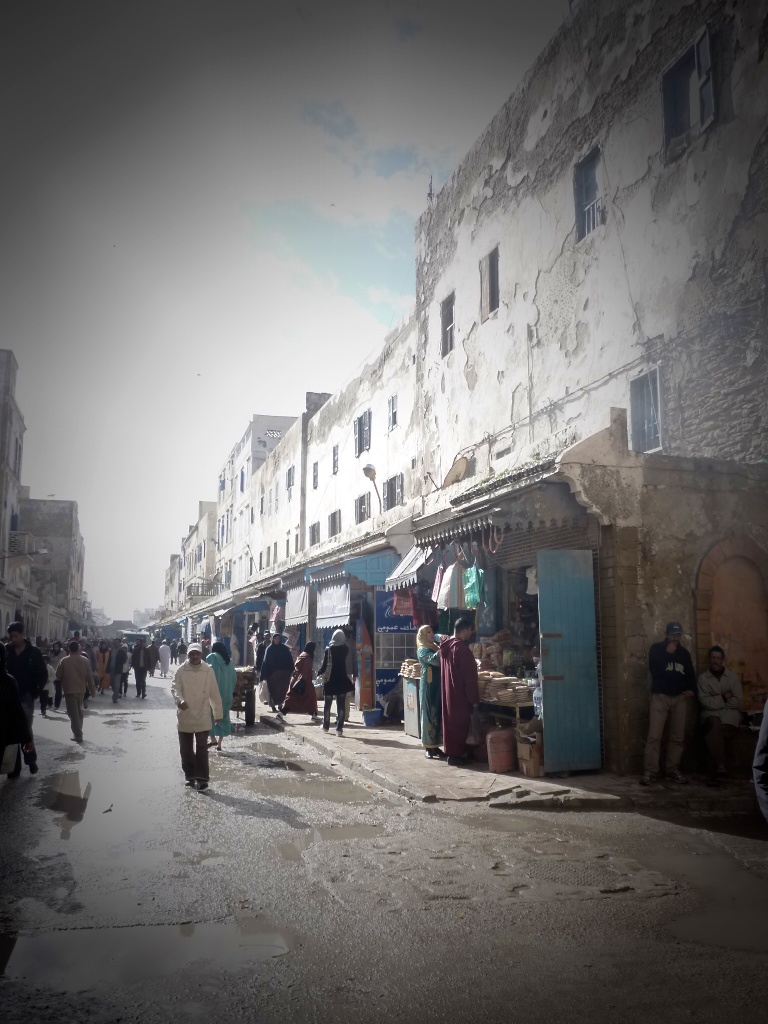
It had a very different feel from Marrakesh – much grittier. You probably have also noticed how "blue" it is – from the boats to the buildings to the sky where, Marrakesh was "red/orange".
I was fascinated with the picturesque paint-peeling doors. To see several more photos of doors, visit my blog ma vie trouvee.
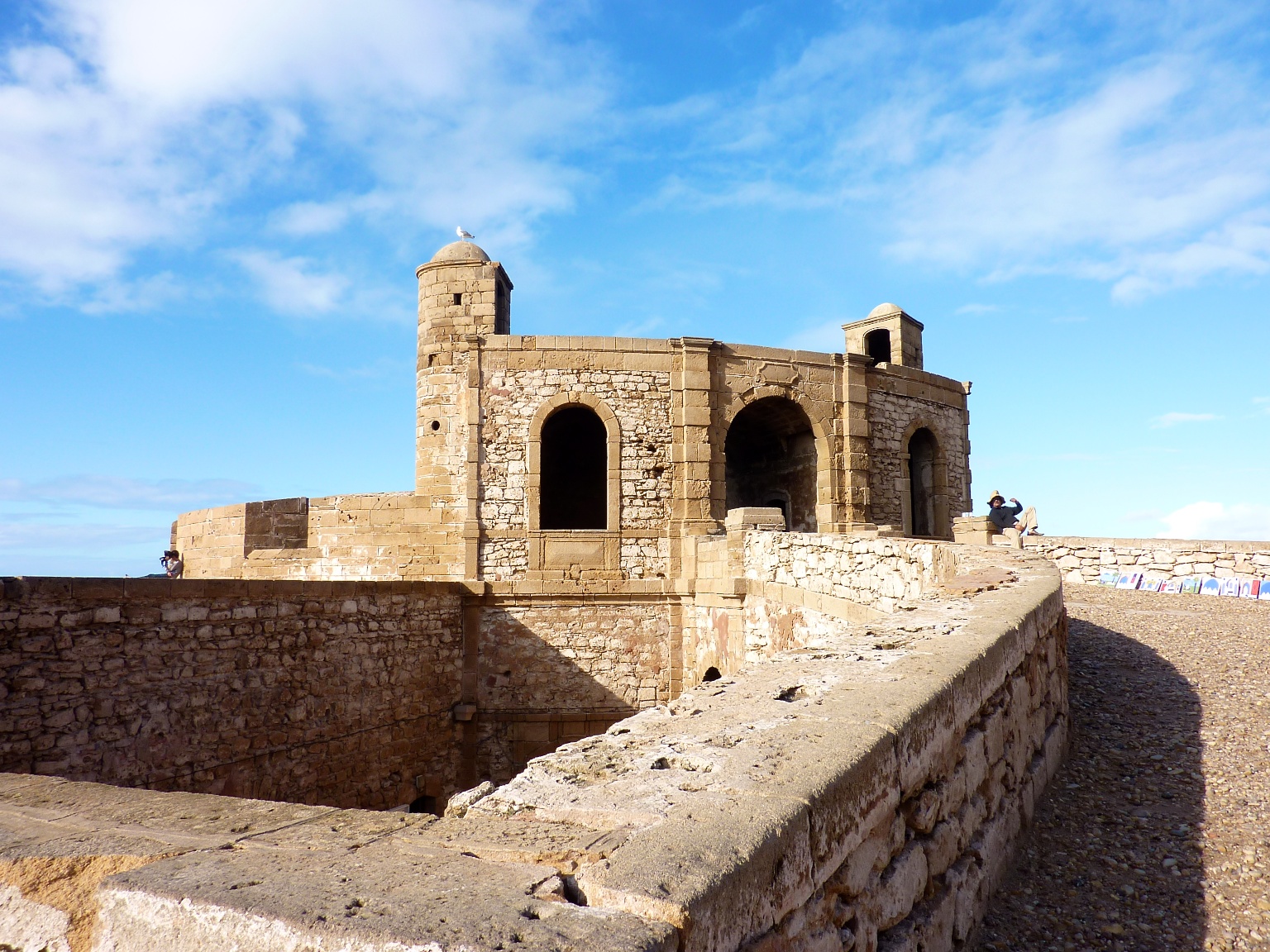
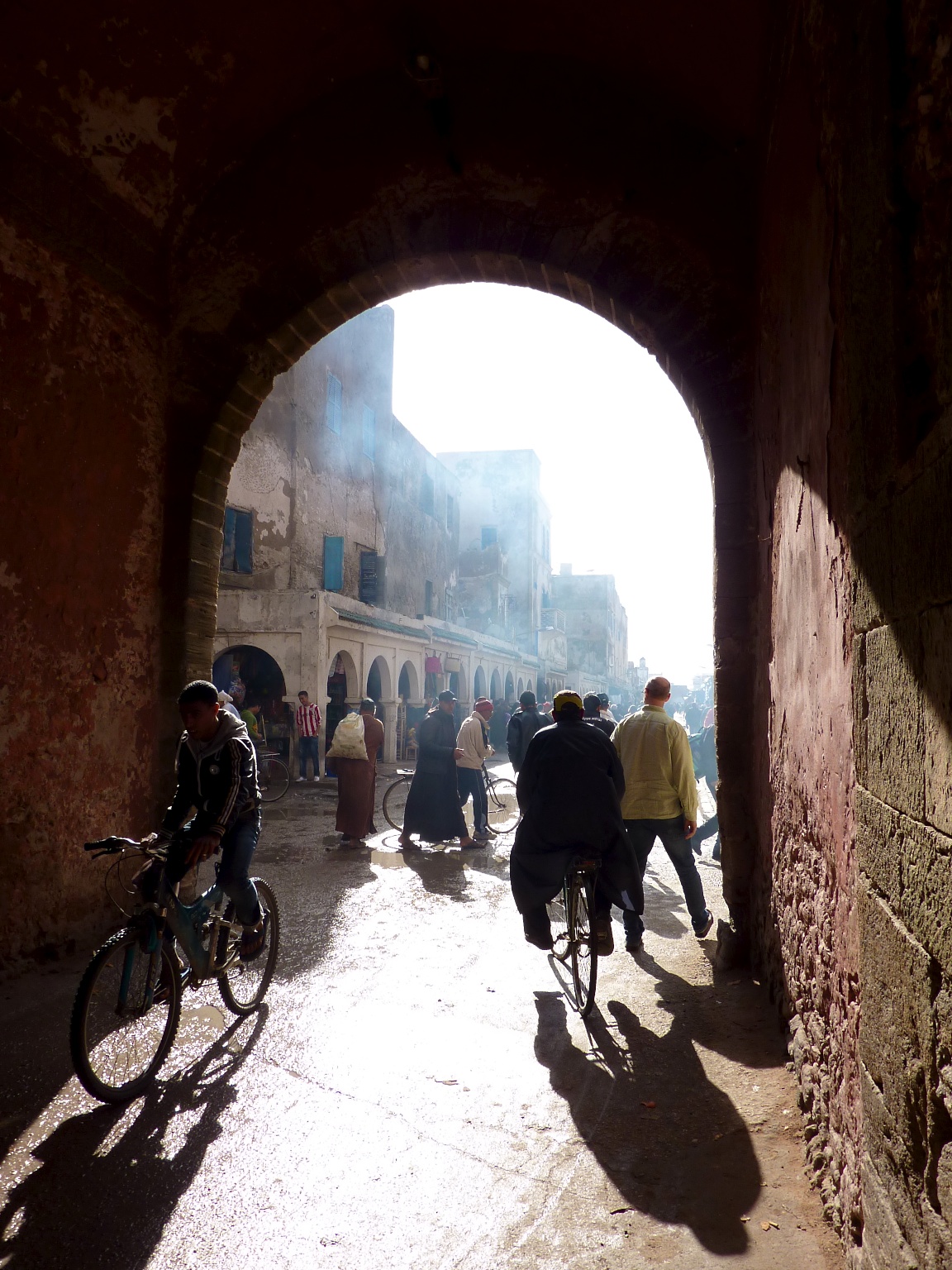
A wall encircled the town with several gates leading into the main streets.
There was a souk here as well, but not as big as Marrakesh. The town also had some very non-tourist areas we wandered into.
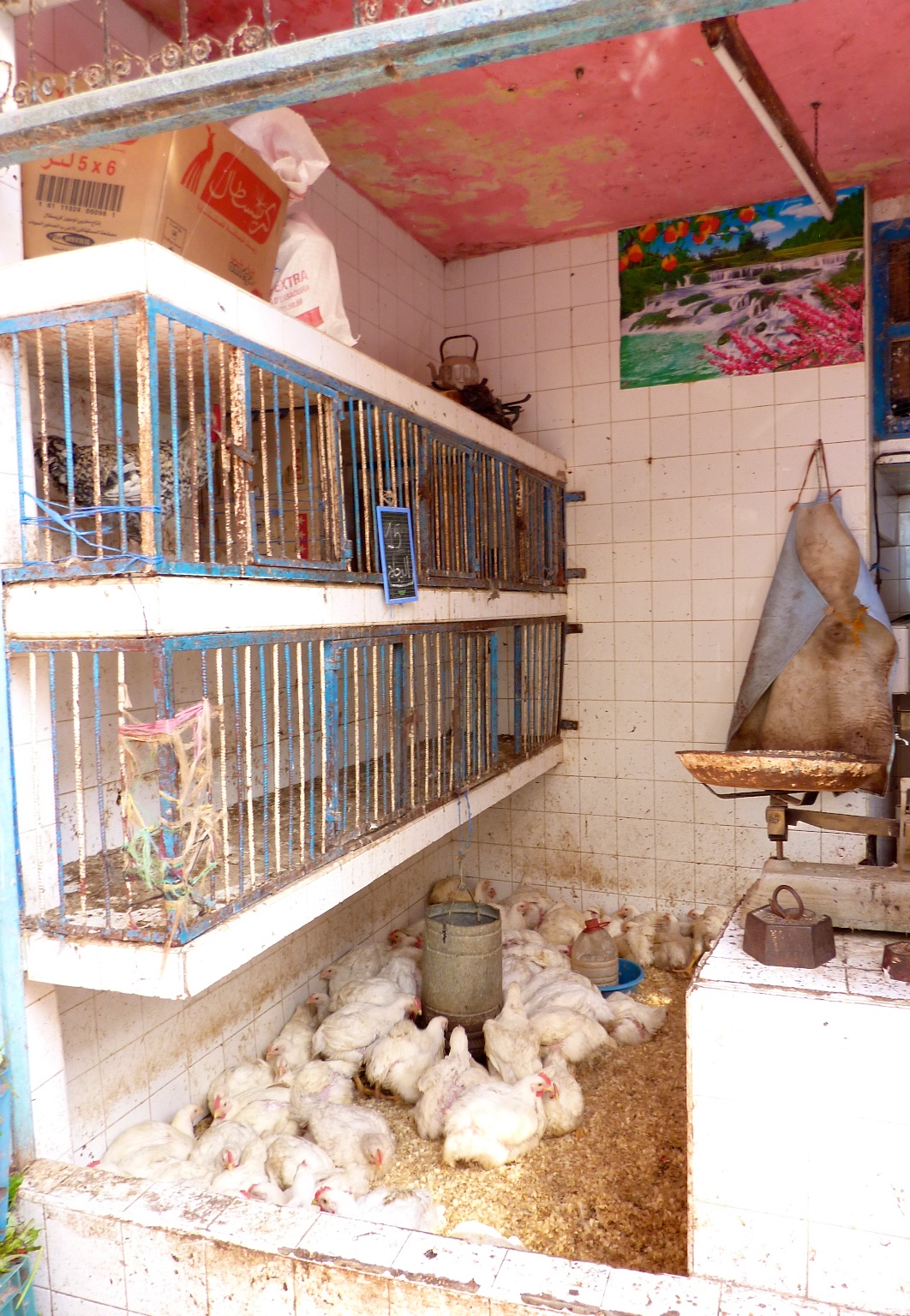
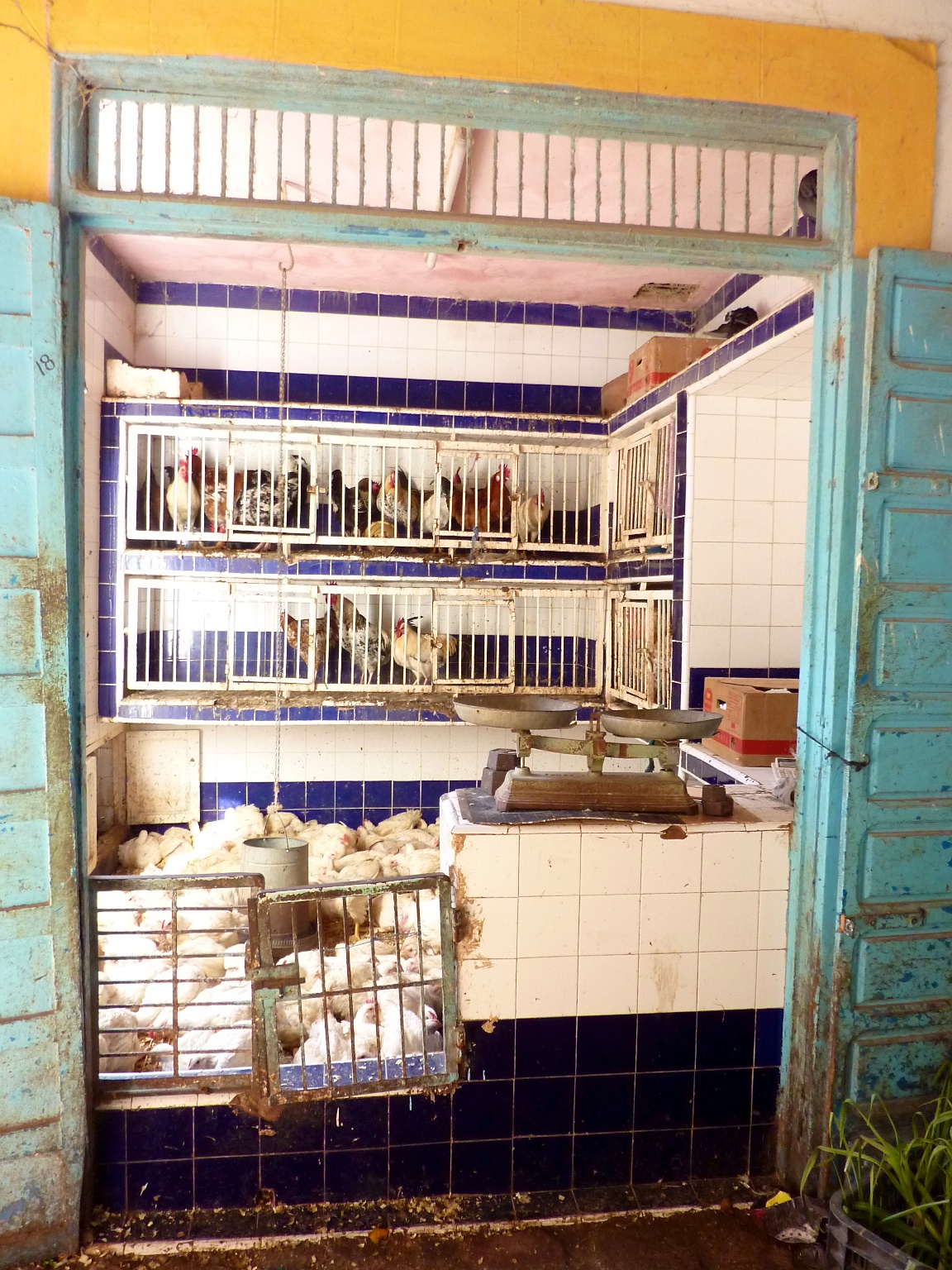
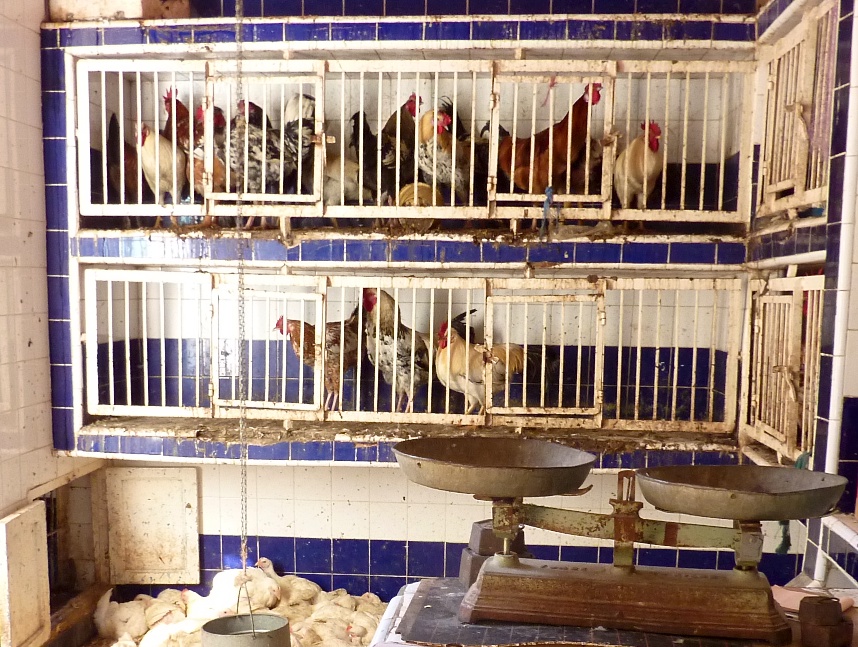
I was very curious with the live chicken stalls. Aren't they colorful? Aren't they scary?
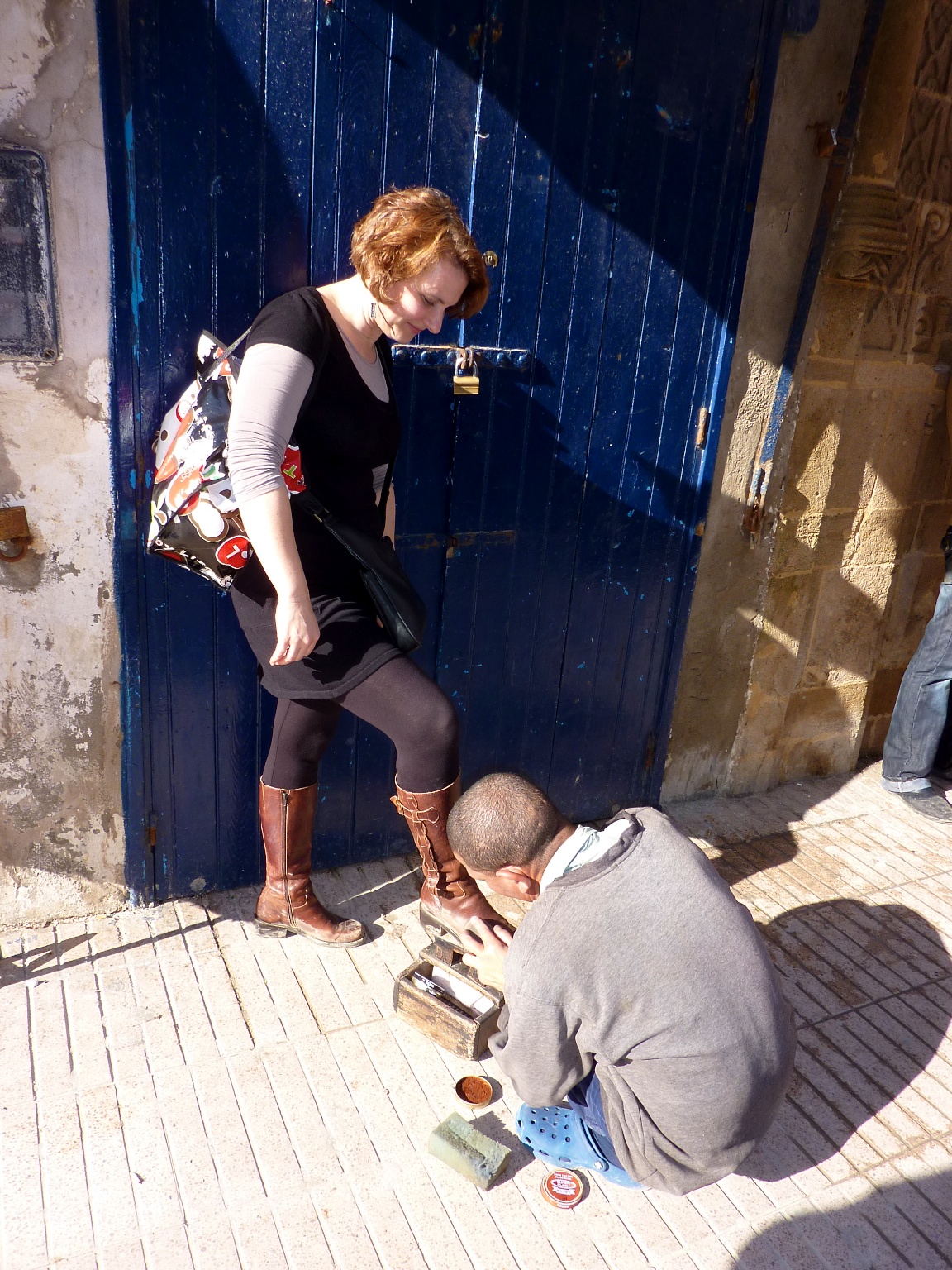
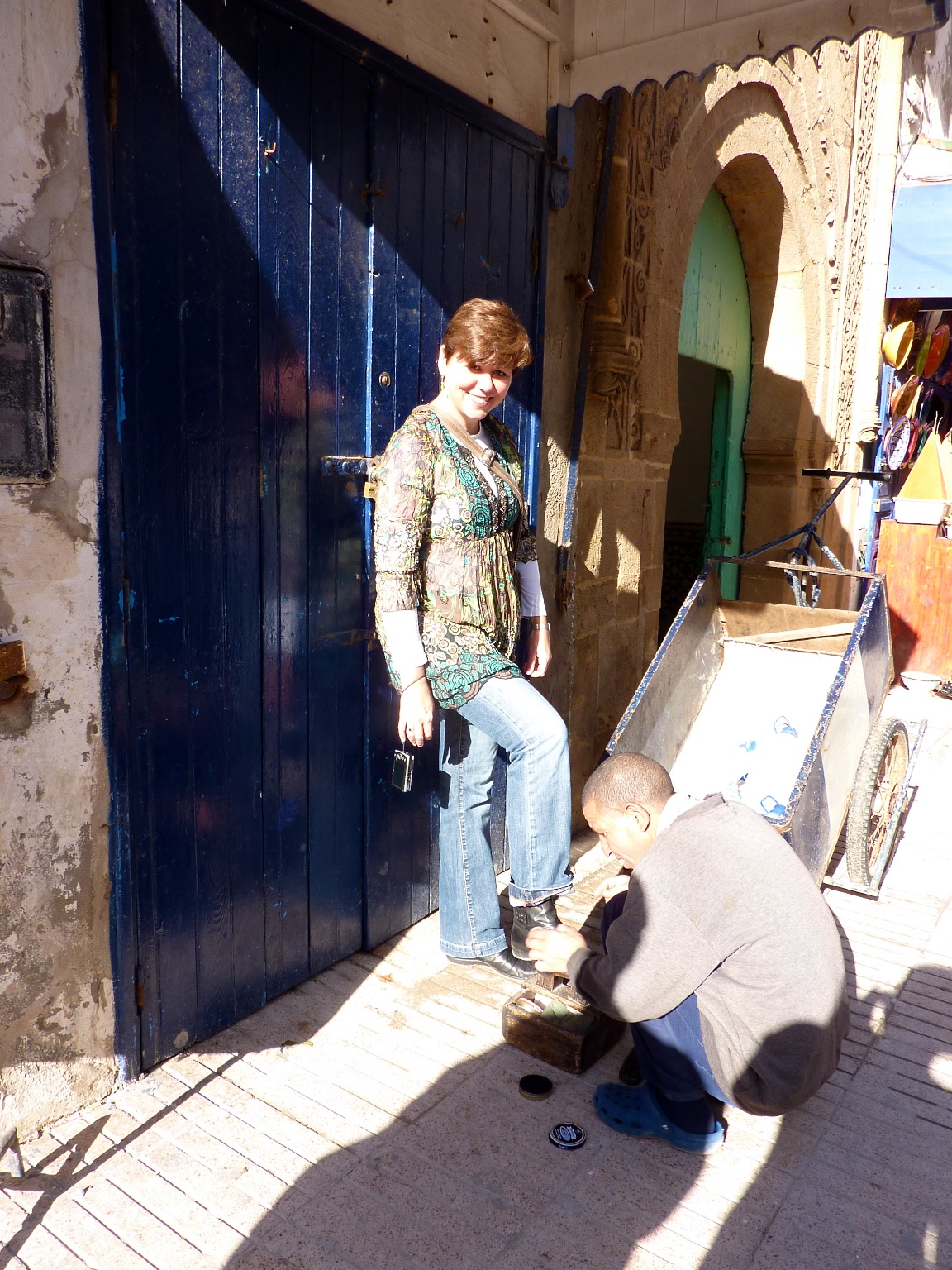
A and I both had our boots polished as we were very dirty from walking around in the mud when we got out of the car to see the goats. He did a really nice job so we paid him twice what we had negotiated {1.00 usd}.
They had an old Jewish quarter called the Mellah. Moroccan Jewish were encouraged to settle in Essaouria and handle the trade with the Europeans. It was a very lucrative lifestyle. The area has since deteriorated.
We had such a wonderful year of travel in 2010 – visiting four continents and 16 countries (not counting Belgium and the US), many of them more than once. We learned about many new cultures, saw spectacular sights, and tasted wonderful food.
We thought it might be fun to do a recap and show our favorite photo from each trip – the photo that best captured the feel of that particular adventure. If the country is underlined, you can click on it and go to that post.
When we sat down to decide where we should go for our Christmas holiday, we both thought it would be fun to do a "snowy-cold-Christmasy" place and to hit a few countries we have not been to – so we picked Tallinn-Estonia, Helsinki-Finland, and Stockholm-Sweden.
At this time of year, mid December, snow is iffy in these countries. Wow did we hit the mother load! Record snowfall in all three!
First stop – Tallinn – Estonia:
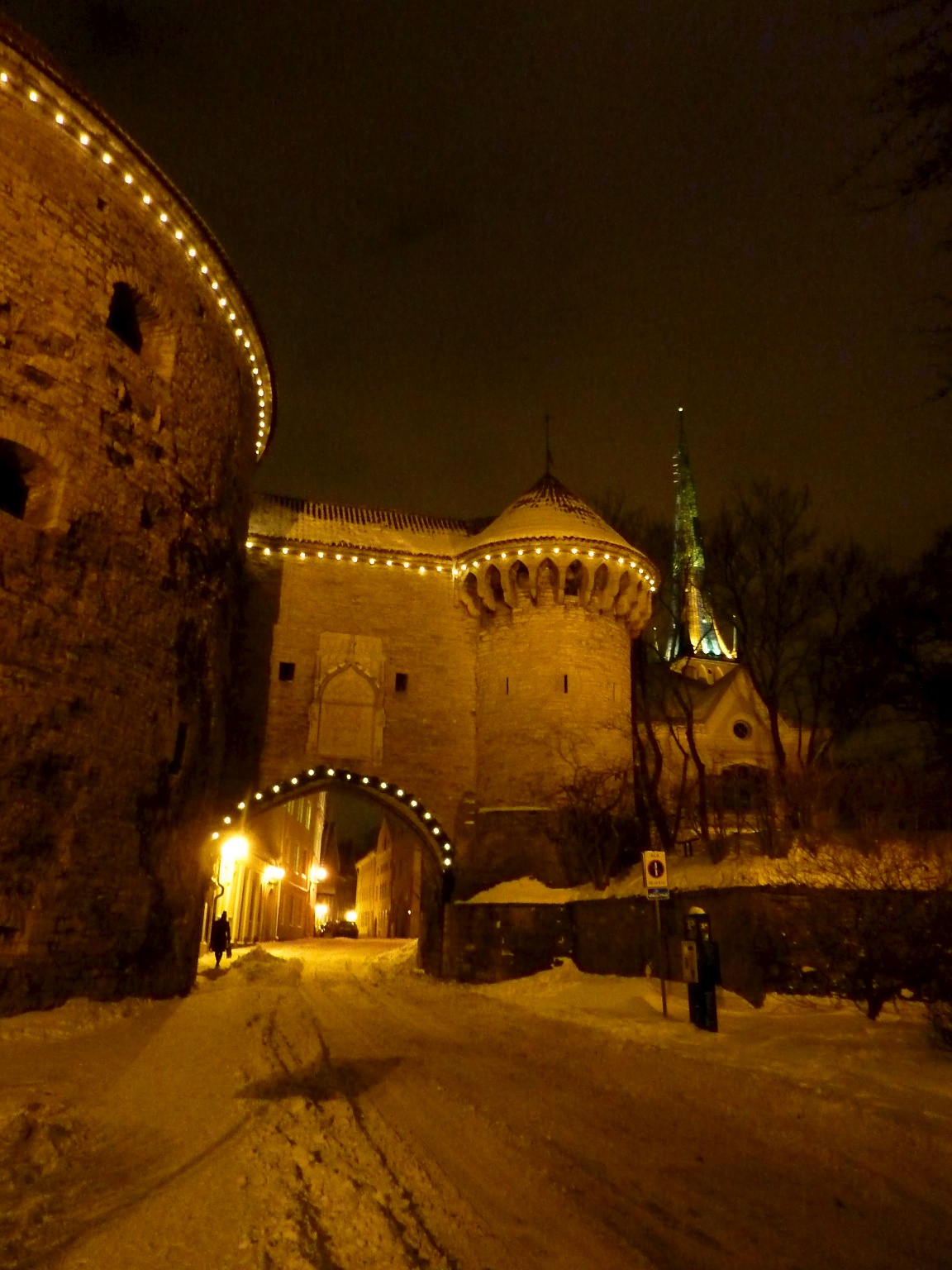
We knew very little about Tallinn before arriving, other than it was supposed to be the quintessential Christmas town – and that it was!
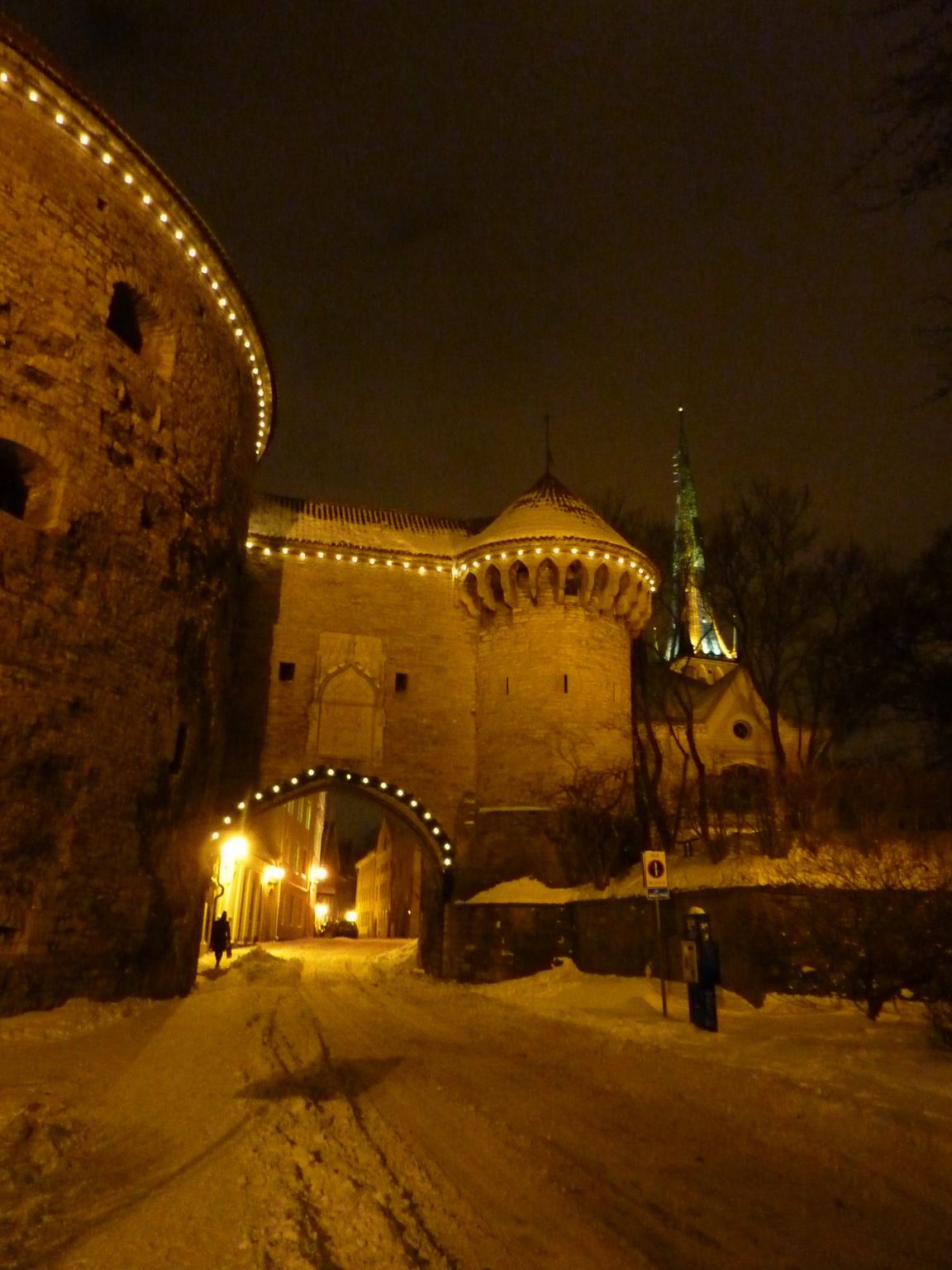
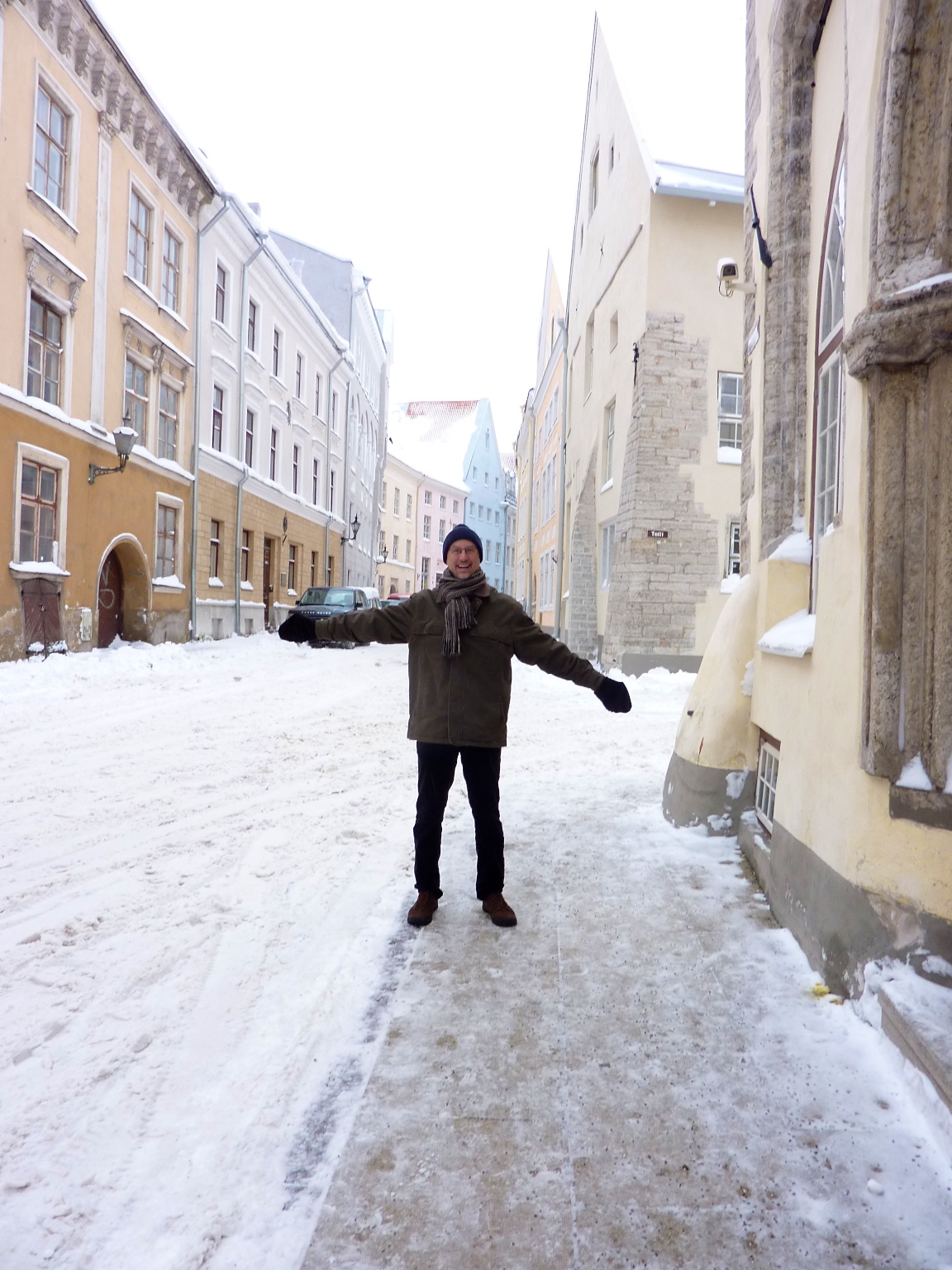
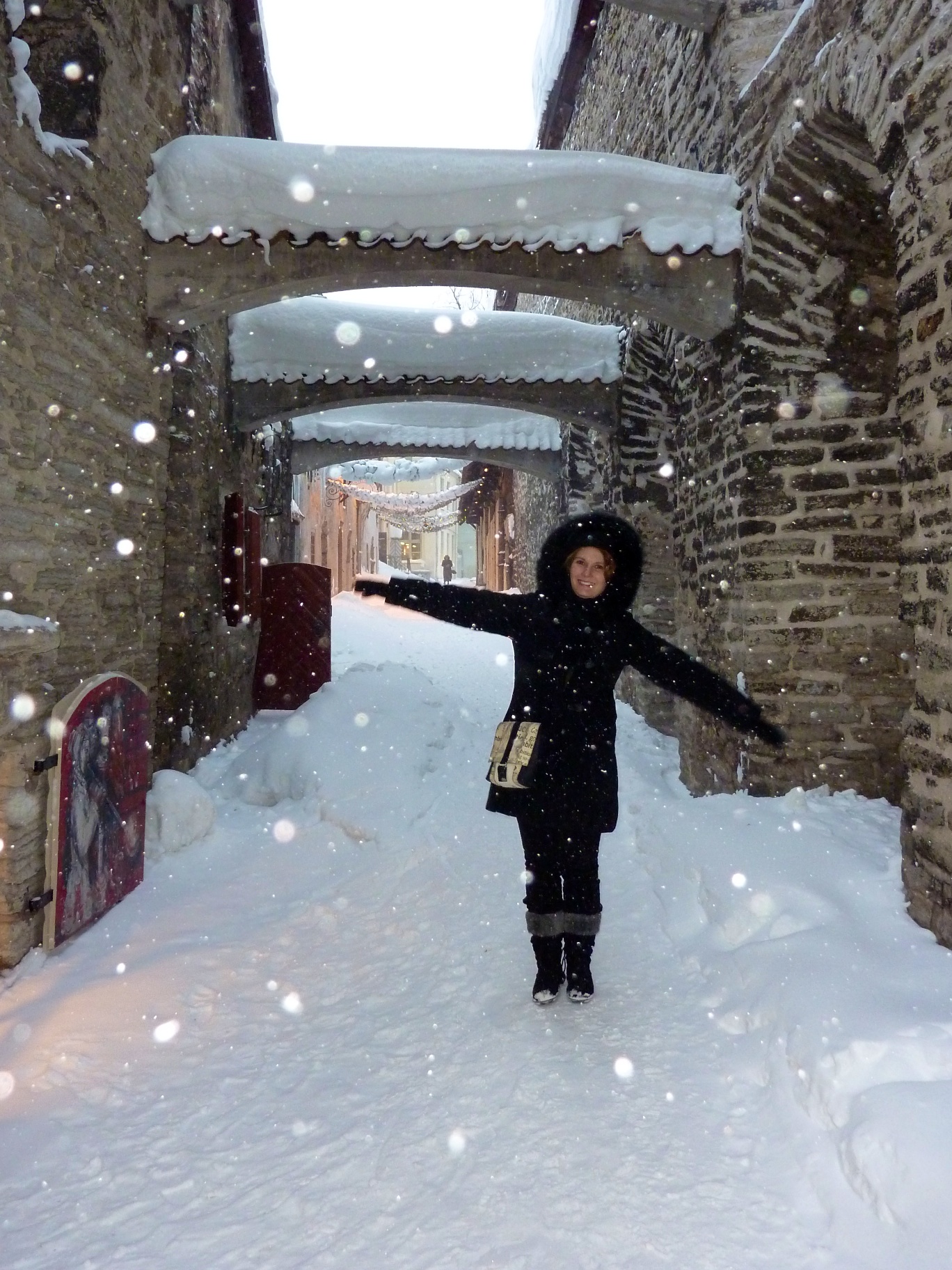
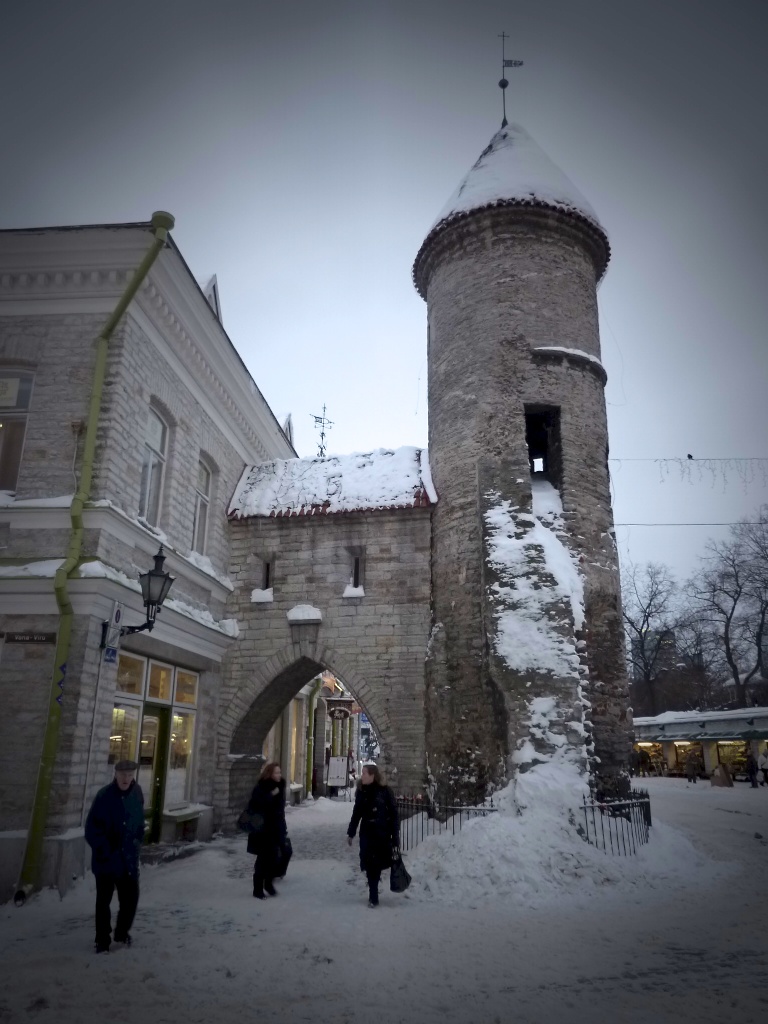
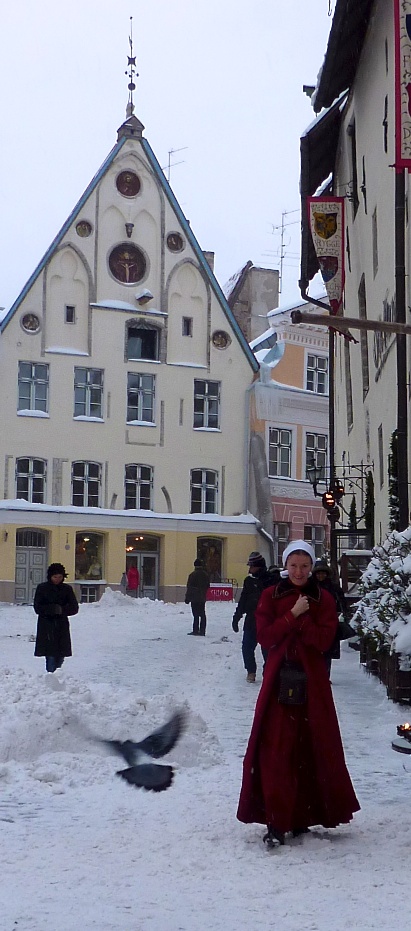
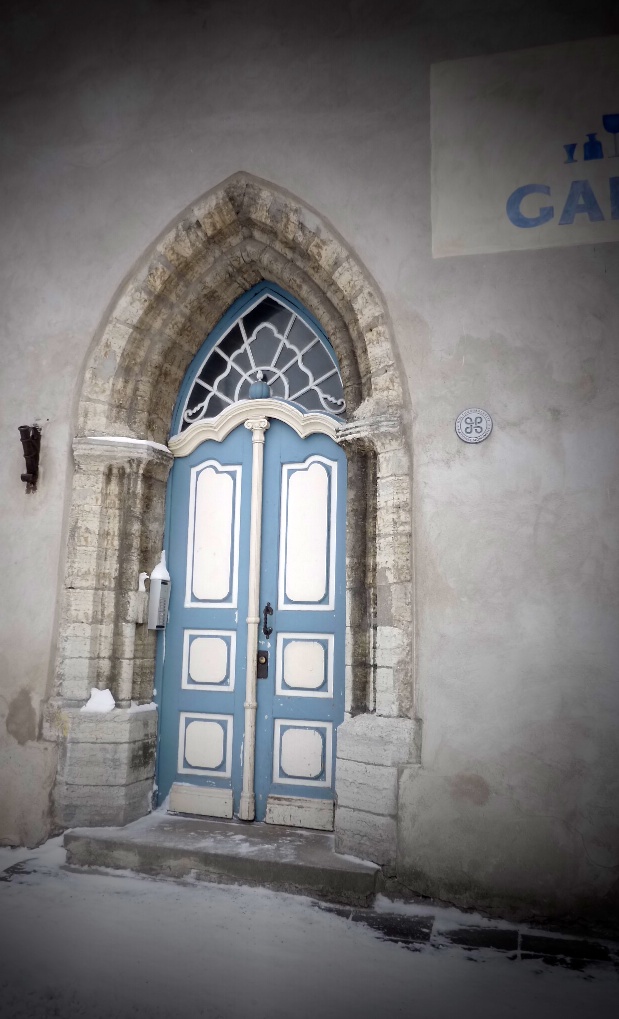
Tallinn is the capital of Estonia and the largest city. It is a very quaint old town with old world charm. The snow made it extra special. The old town is a UNESCO World Heritage Site.
Tallinn as a city goes back to 1154 and has quite the history of who ruled it from Denmark to Sweden to Russia to Nazi Germany and back to Russia. Finally, on Aug 29, 1991 Estonia declared independence and Tallinn became its capital.
Today Estonia considers itself a European/Scandinavian country with close ties to Finland (ethnic, language and culture). On January 1. 2011 they will officially begin using the Euro. We bought Kroon but found out we could have used Euros.
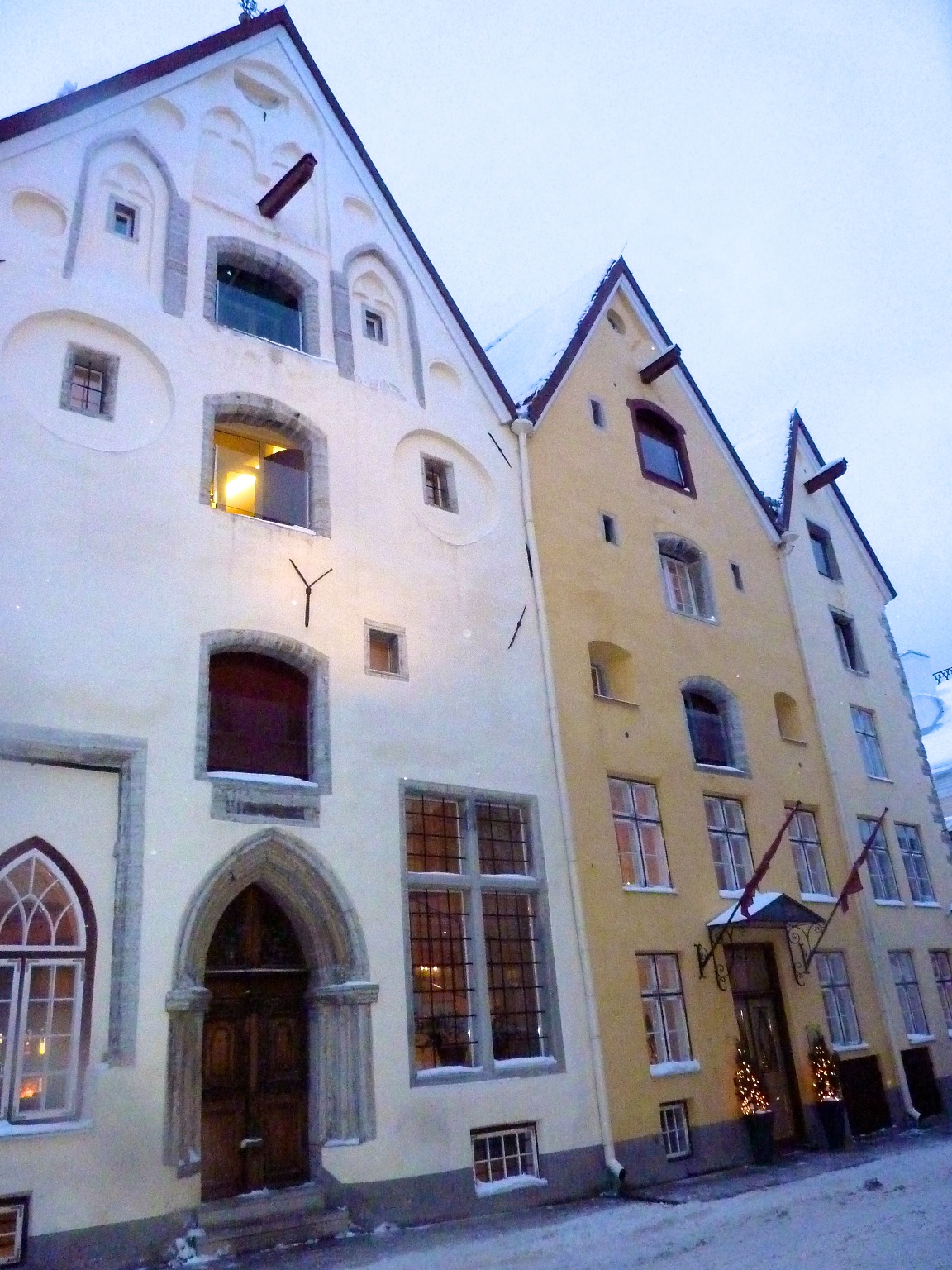
I loved the romantic boutique hotel we stayed in, the Three Sisters, built into three famous medieval houses which, were originally built in 1362. The room was very modern yet had the backdrop of the medieval times. Our bed had a billowy canape and in the room was a huge claw-foot tub.
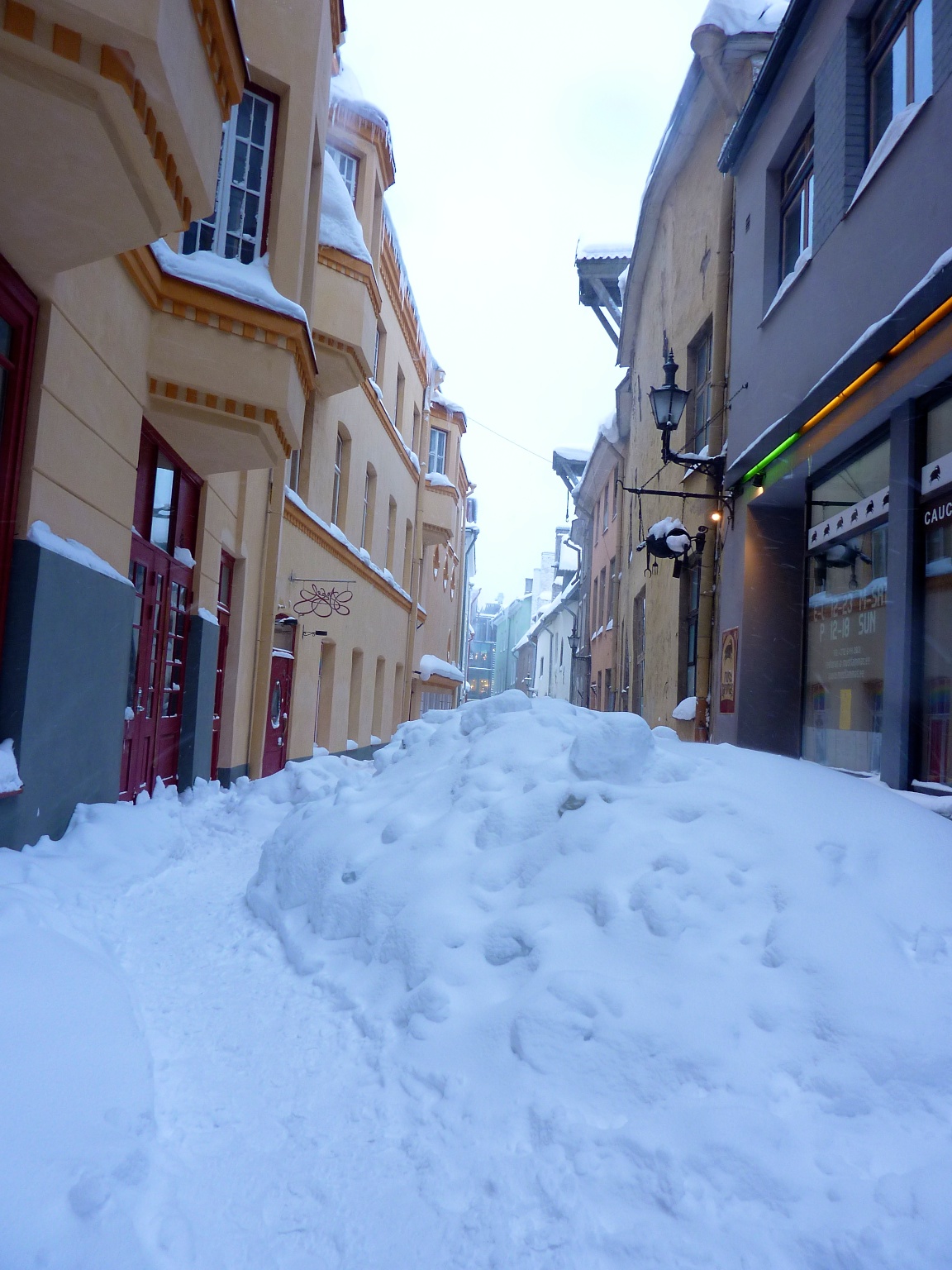
Two days before we arrived they received a foot of snow. We did not get to see the quaint cobblestones, but the snow made the town magical.
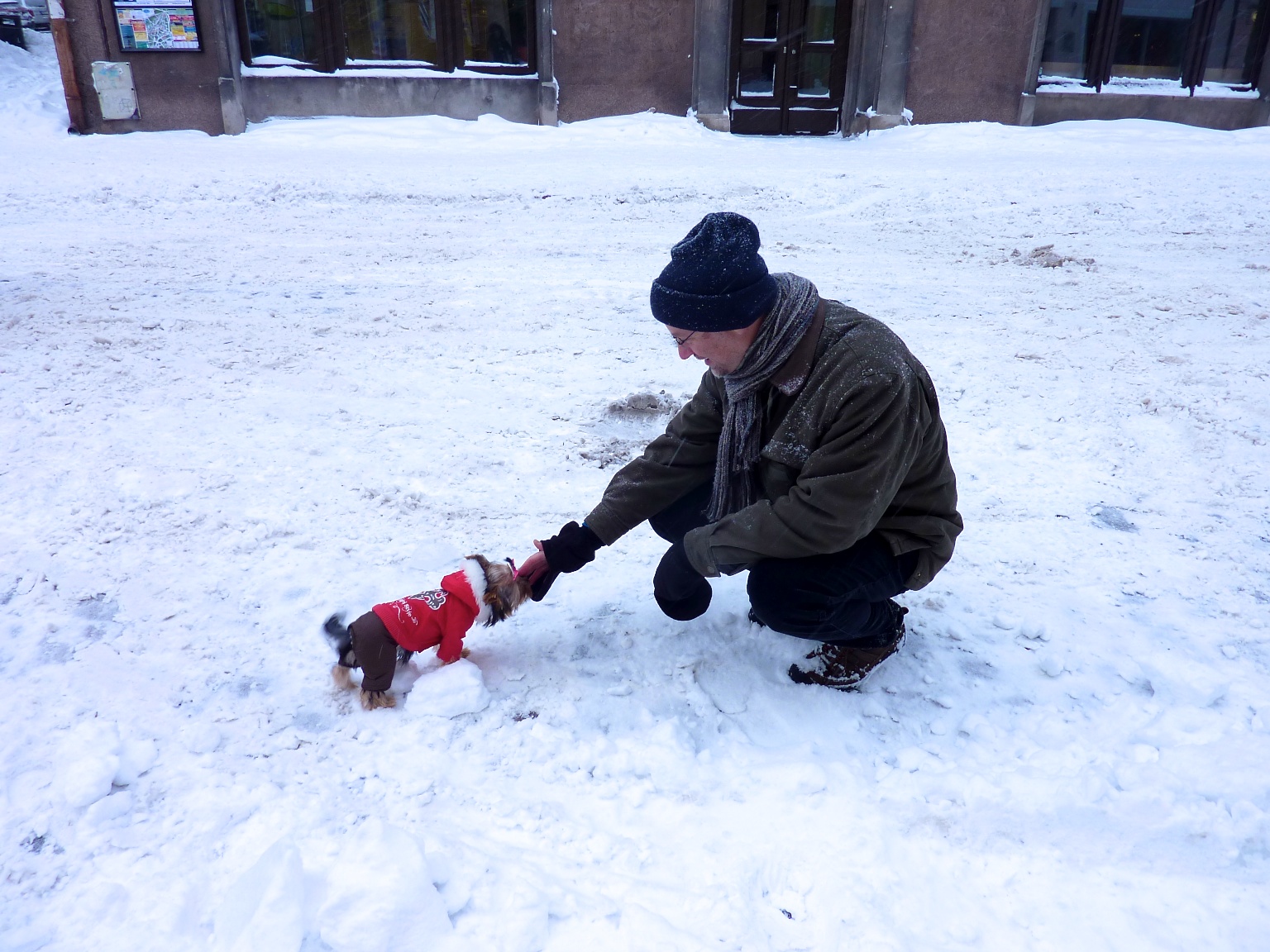
They really do not clear the roads so the snow stayed very clean and white. Donald made a little friend in the snowy street.
The Kadriorg Palace is set in a beautiful park where the Prime Minister's house is located. The Prime Minister is the actual political head of state, and their President is mainly a symbolic figure, who does not hold any executive power.
We are pretty sure he was there as the flags were up, the red carpet was out, and guards were walking everywhere.
It was a lovely walk through the park. The Palace and park were created by Tsar Peter I in the 18th century for his empress Catherine. The name, Kadriorg, means Catherine's Valley.
We toured the Royal Palace, which is now an art museum. The outside was under construction so the photos of the full palace were not very good.
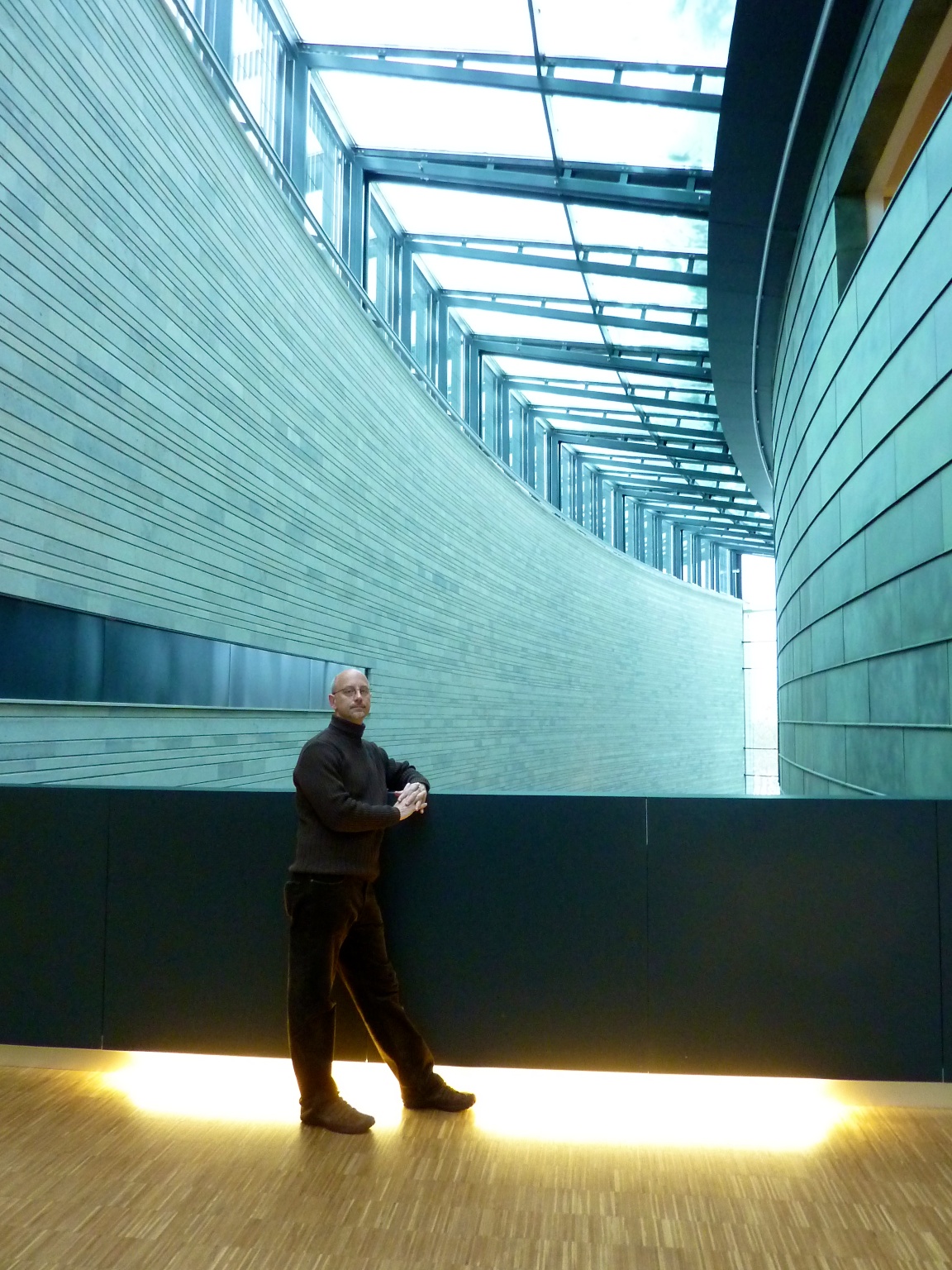
We also toured the Kumu Art Museum. It was very modern structure and had some interesting exhibits of Estonian art from the 18th century on.
I had fun posing D for a few artsy shots.
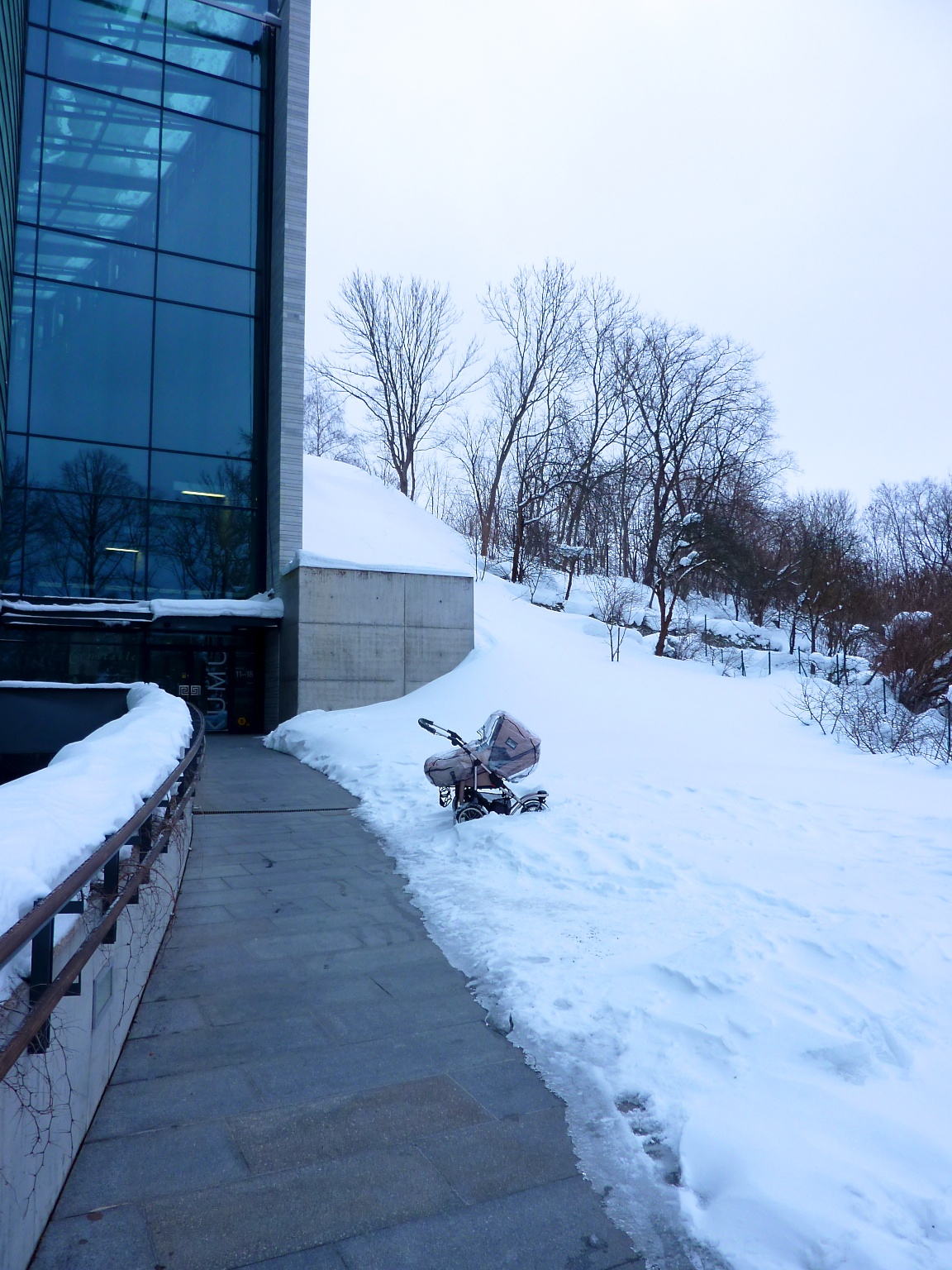
But the most interesting part of the museum was on the way out – there was a baby stroller, or as they say in Europe – a pram, just sitting there…no one was around.
AND the baby was in it! First of all, it was around 20 degrees, and second of all – who leaves a baby alone in a park? Well… in Scandinavia and Estonia this is fairly common because the crime rate is so extremely low. Baby prams are often left outside of stores with the child bundled in blankets.
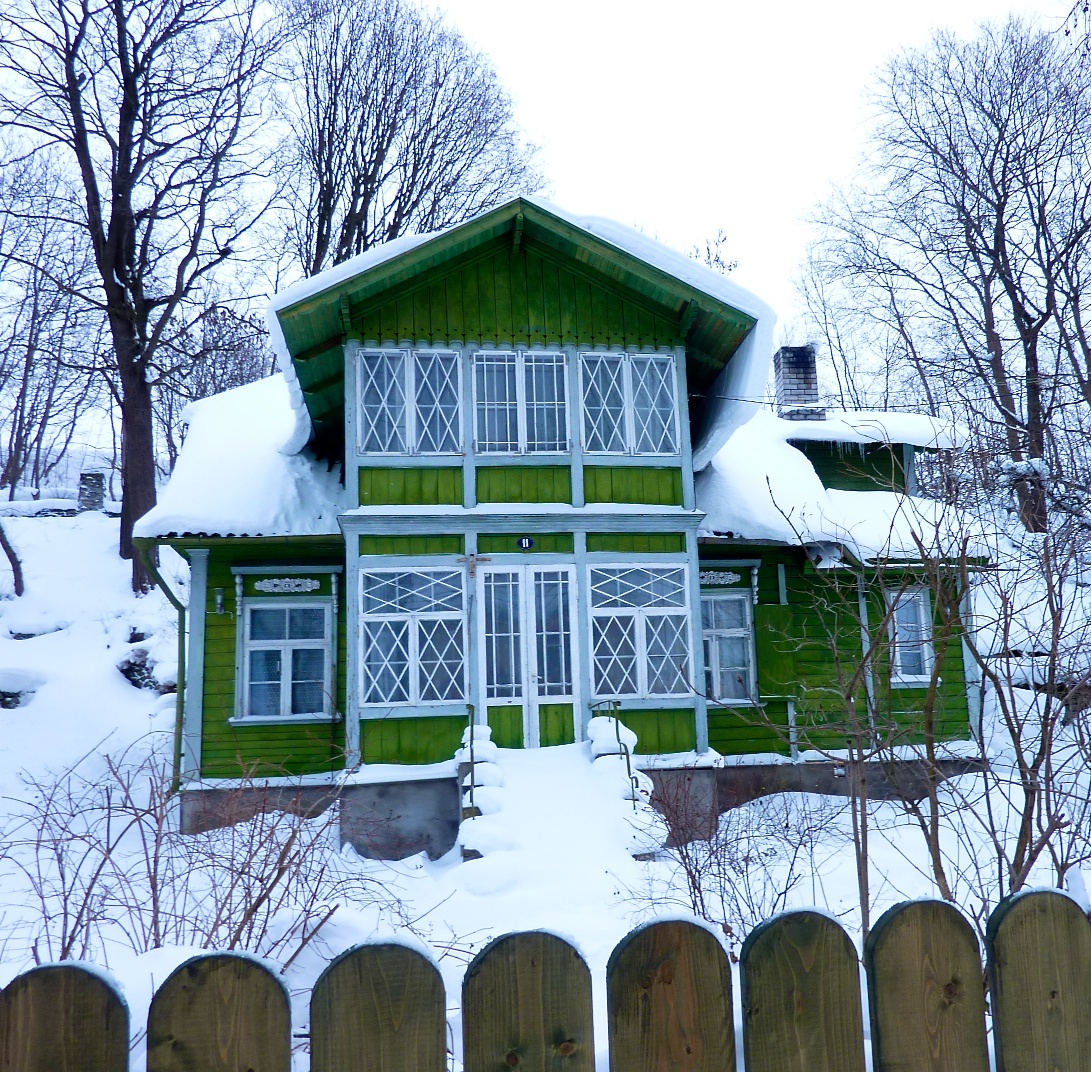
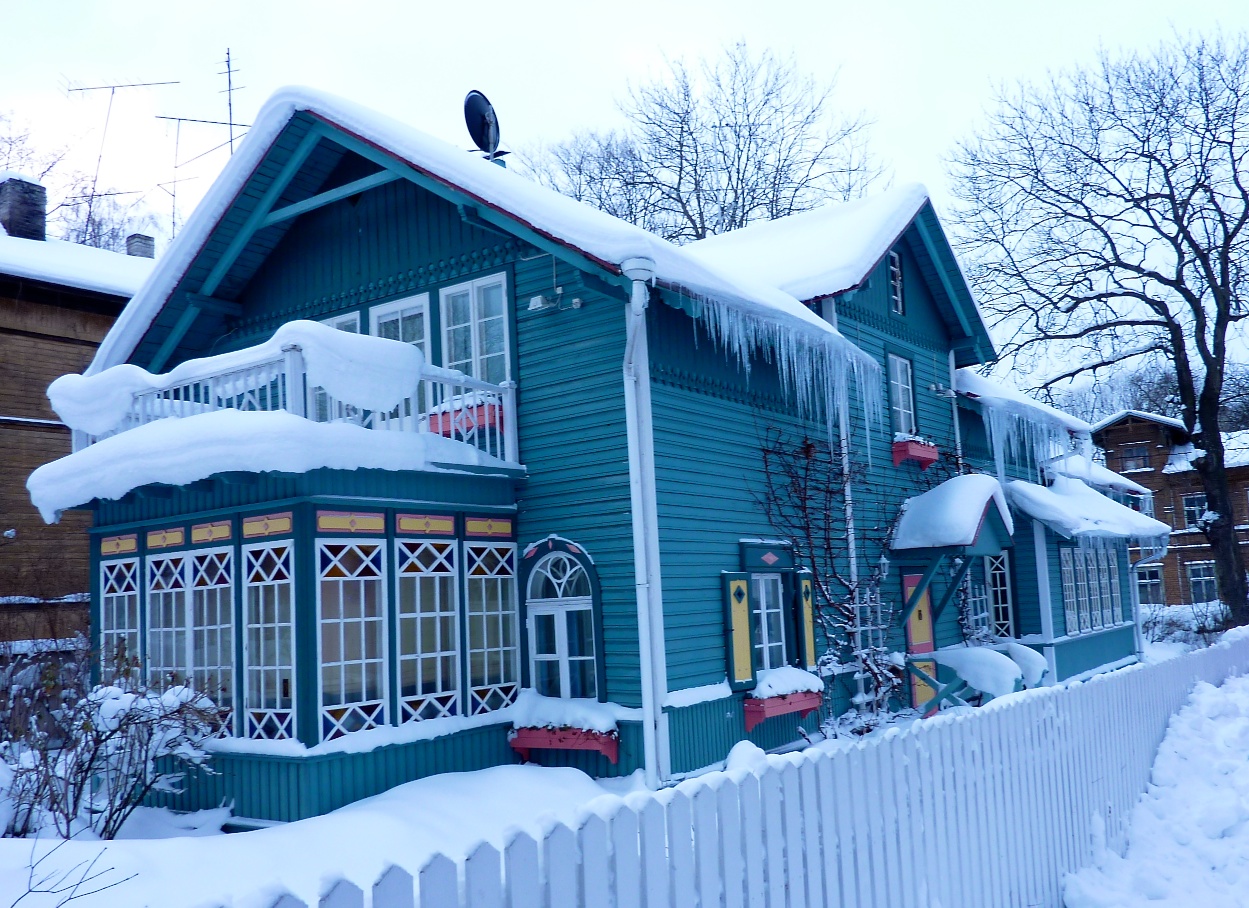
On our walk back to the hotel we went through a neighborhood and found the houses to be quite charming and very colorful. Not what we were expecting in an ex-soviet country.
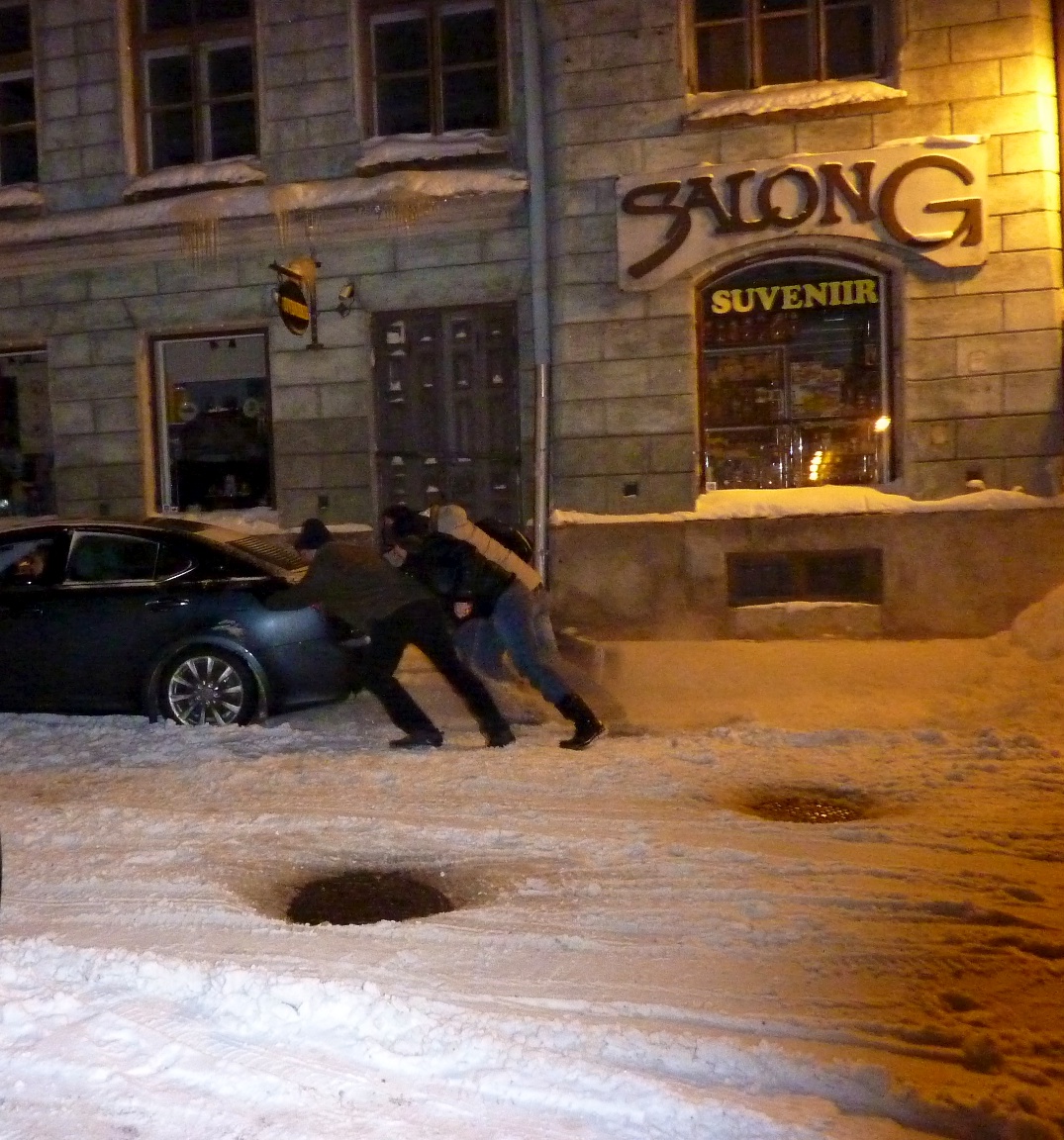
My ever-helping husband!! Here he assists the locals in pushing a women's car who was stuck in the snow.
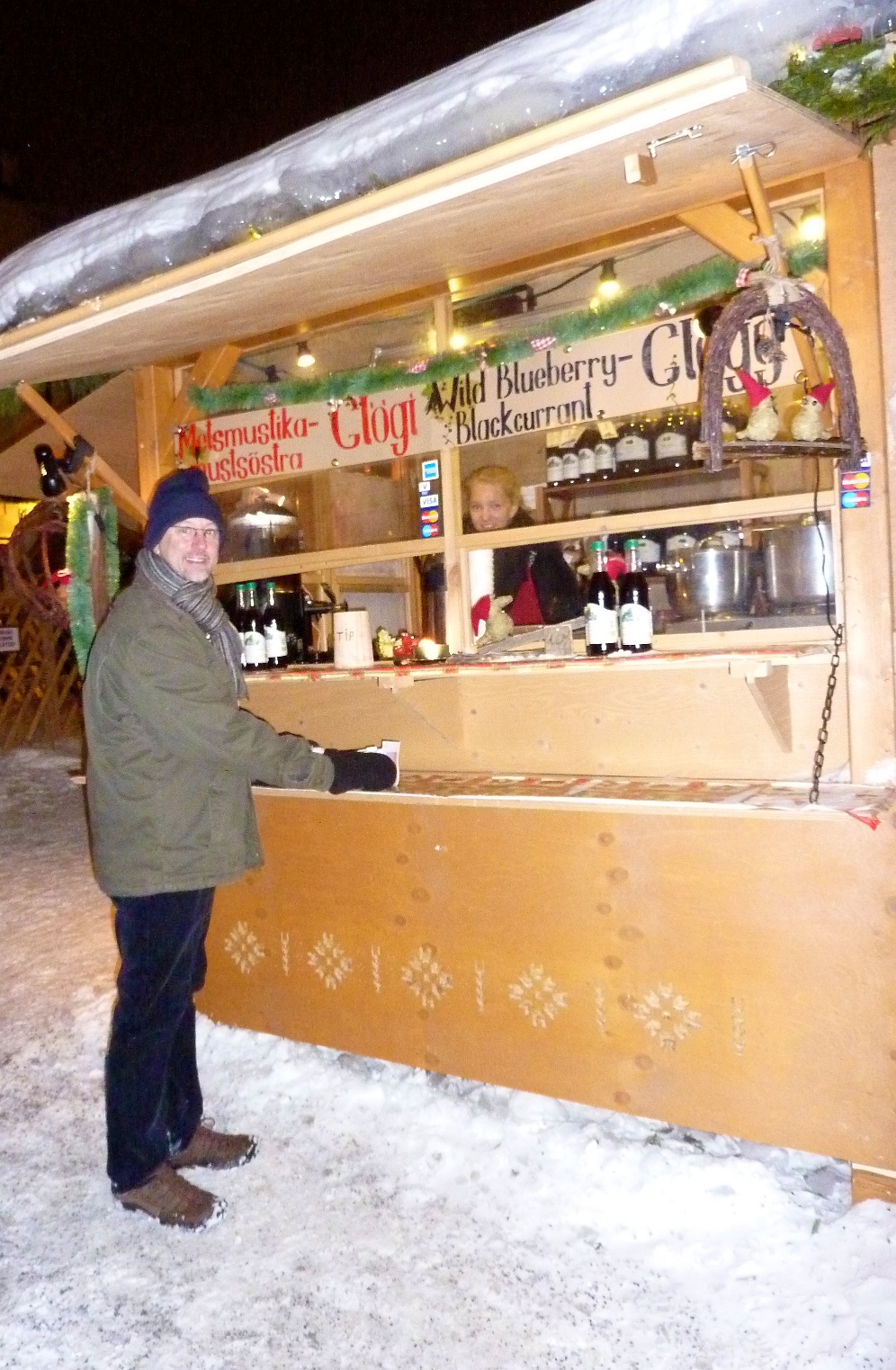
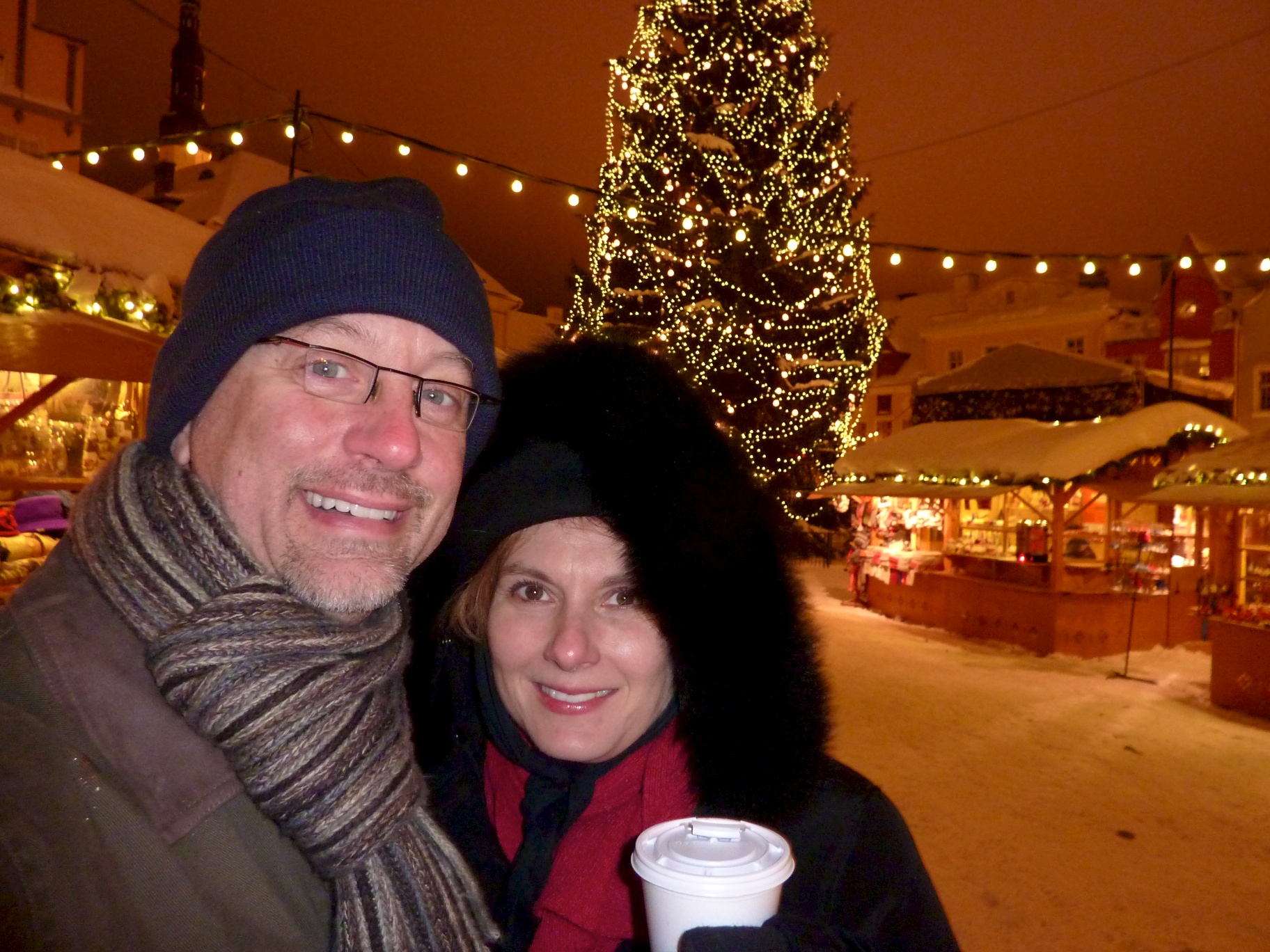
A drink of the local hot wine, Glogg. It had the flavors of blueberry and black current. It was very good, but we prefer the Gluhwein in Brussels. But as cold as it was ANY hot beverage would have been great!
Christmas Eve is the highpoint of the season. They used to put out clean straw and place it on the floor and table to bring good luck, After dinner, the family would leave the food on the table for the souls of ancestor. It was believed that ghost moved around freely on Christmas eve. Santa is a modern day character to them.
As to the food??? They served lots of savory pancakes with fillings of cheese shrimp, bacon, etc. One night we ate at a Russian Restaurant, Cafe Pushkin, where we felt like we were in an old cafe in Russia in the early 1900's.
We thoroughly enjoyed our three days in Tallinn.
Onto our next adventure: Helsinki – Finland
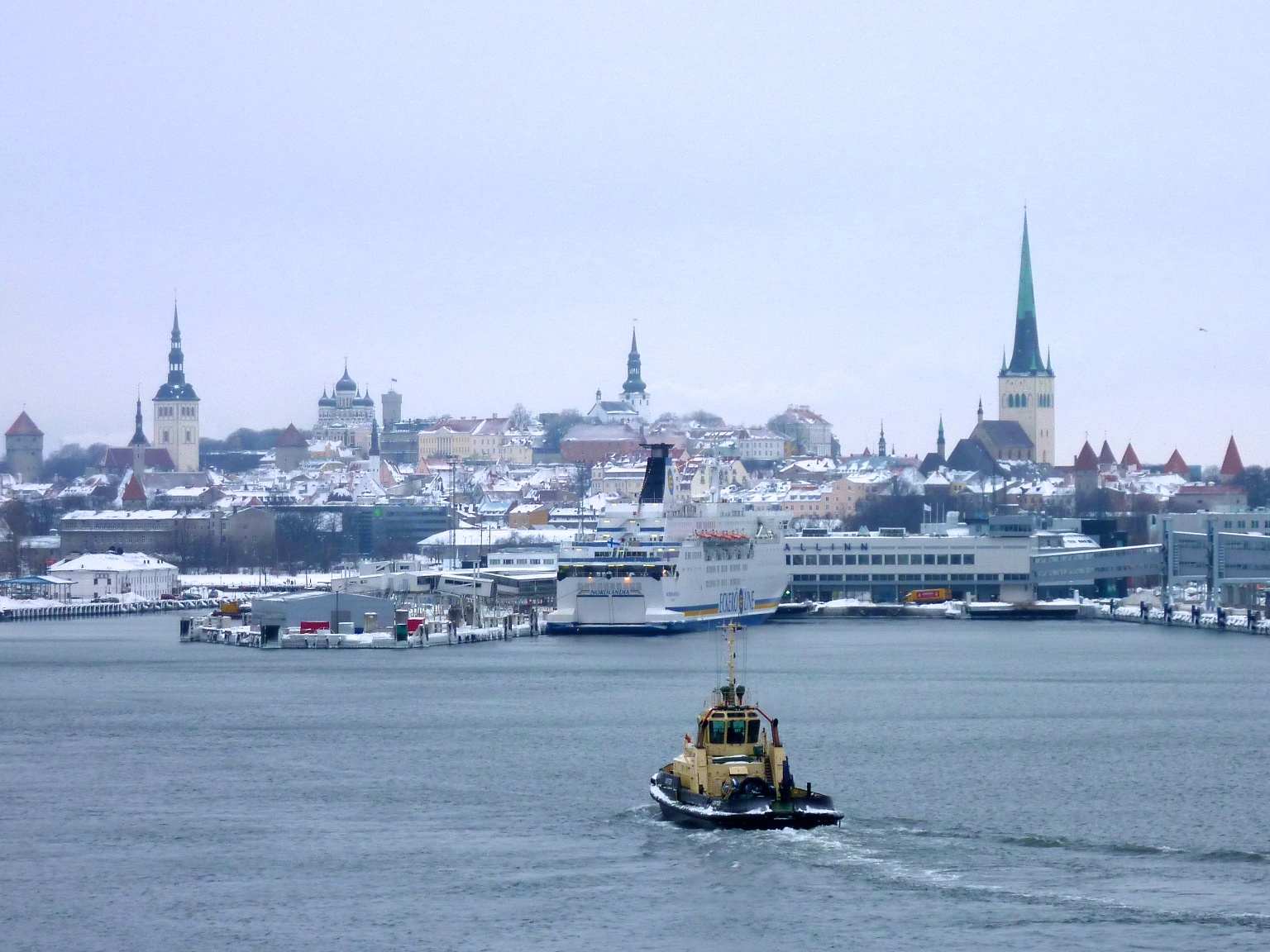
To get there, we took a two-hour ferry ride. Looking back on the picturesque town of Tallinn from the ship.
We claimed a round table at the front of the ship. I took advantage of this time to catch up on my sleep!
Helsinki is in the Baltic Sea. Founded in 1550, it is the capital of Finland. It was ruled by Russia from 1089 to 1917, the year it proclaimed independence. Today it is a very prosperous city and has a high standard of living.
It is one of the World's northernmost capitals and has a lengthy and very cold winter, which lasts from October to April. Winters are also very dark with the sun setting around 3:15 the days we were there.
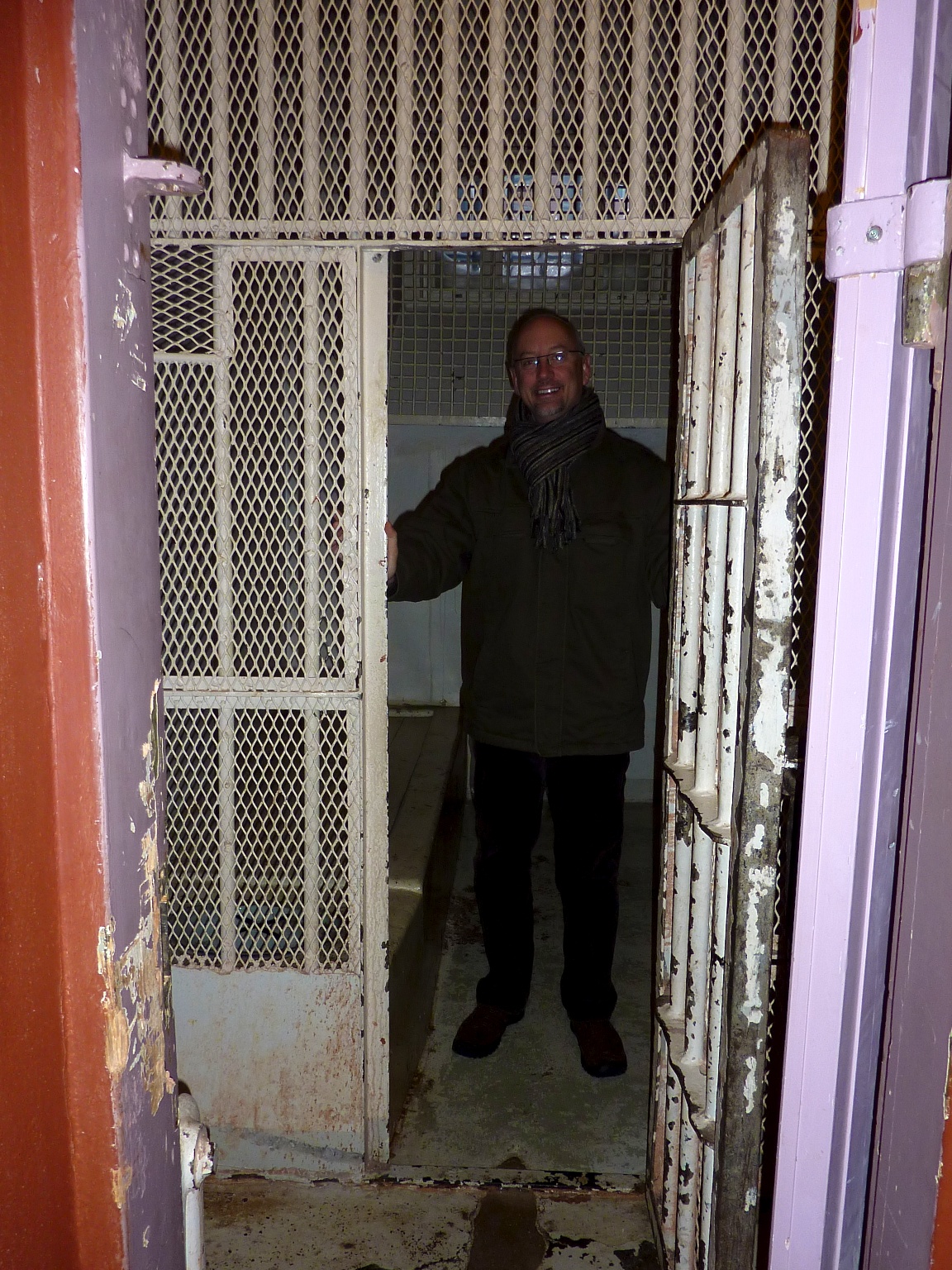
Our hotel, Hotel Katajanokka, was an old prison dating back to 1837. It served as a prison up until 2002 and then converted to a hotel in 2007. Our room was the equivalent of two prison cells and was very quiet, as it should be with those thick walls!
At breakfast they served us on plates like the prisoners would have eaten off of. All of the workers and maids wore striped black and white shirts. Hokey, yet it was fun.
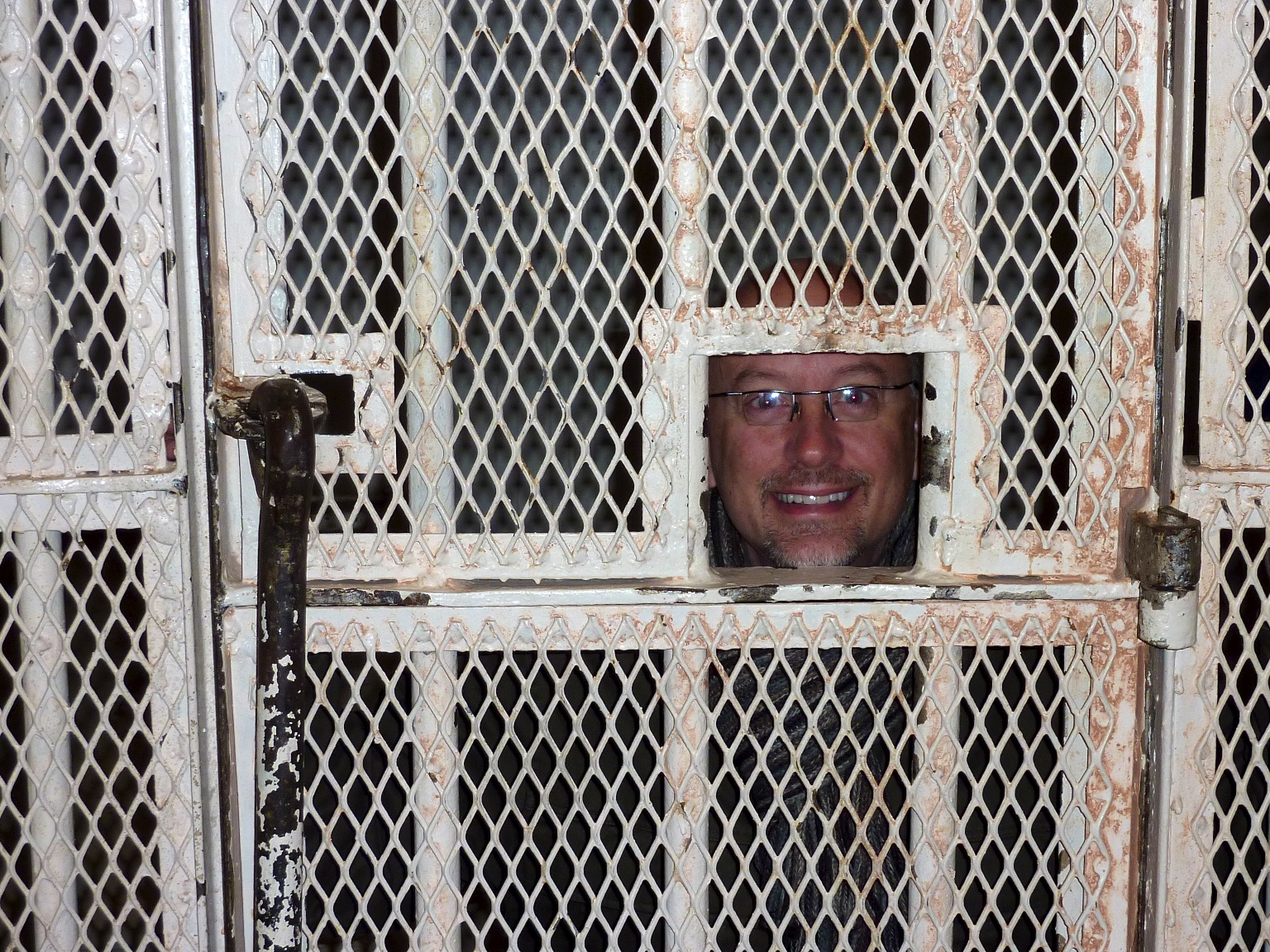
One cell was kept in its original state so you really could see what it was like. Guessing the prisoners were not smiling like D is here.
They also had a fun outdoors Christmas Market and a special art show going on the weekend we were there. We bought two beautiful coffee cups made of ceramic with a felt cozy they sit in.
In Finland they believe Joulupukki (Father Christmas) lives in the northern part of Finland called Lapland. They are one of the only countries where children see Father Christmas in the act of giving the presents.
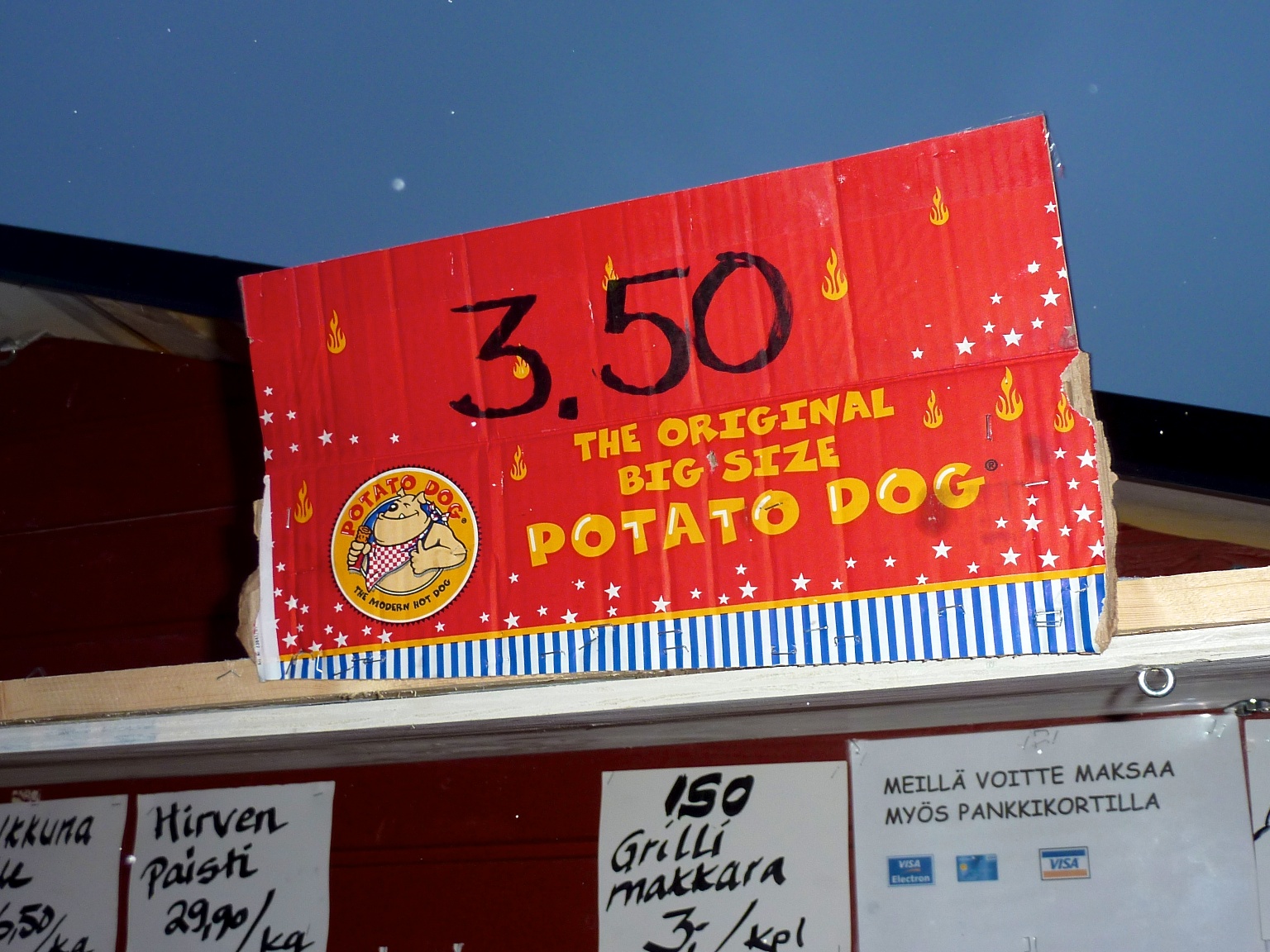
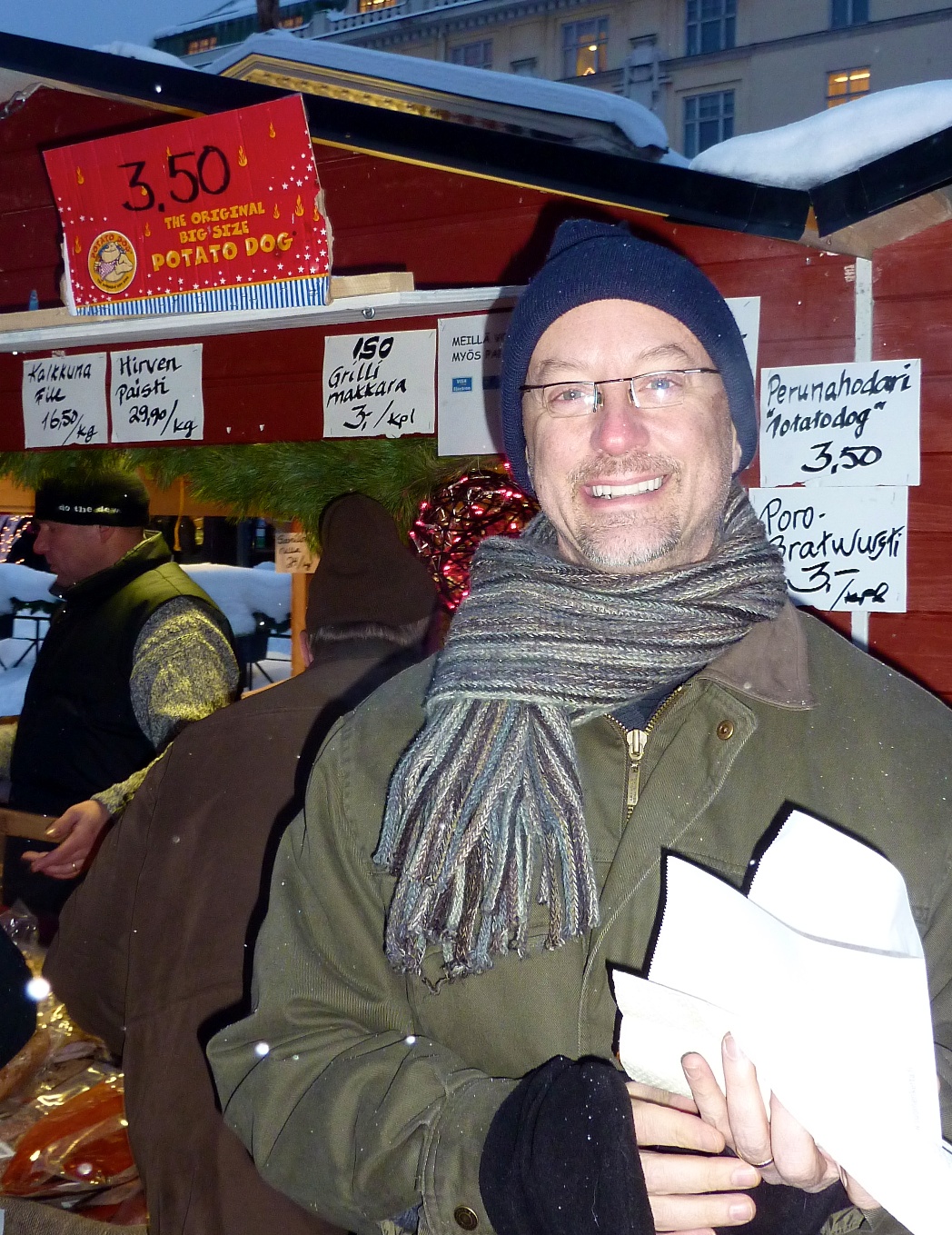
And interesting food at the market such as potato dogs. What, you ask – is a potato dog?
Basically a hotdog wrapped in tater tots. I'll pass, but D enjoyed.
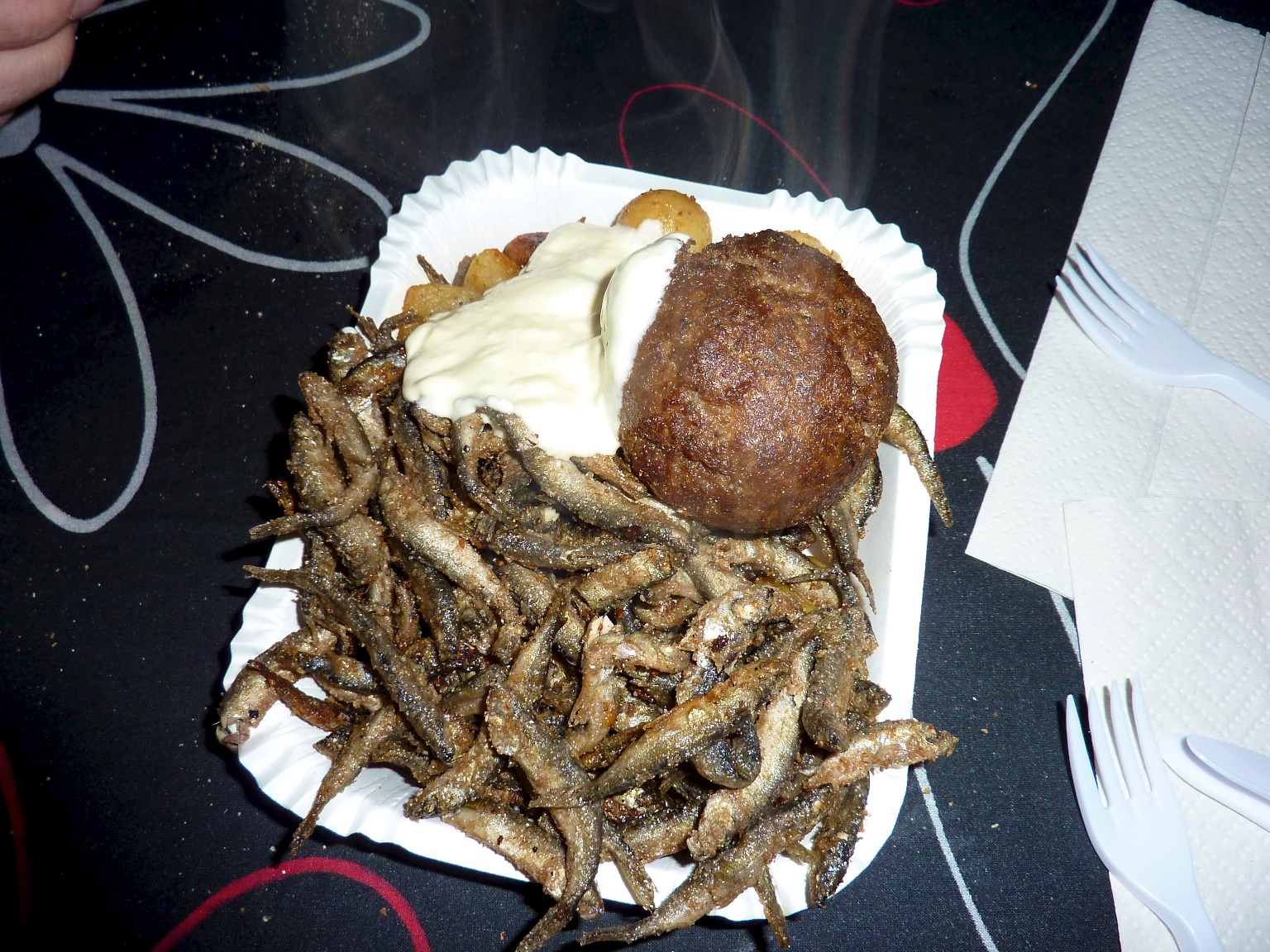
I preferred the muikku, a small fish, fried in rye flour and eaten whole along with potatoes.
Plus a big glob of garlic mayonnaise! And the big round ball…..reindeer meatball! Yes, I actually ate Rudolph.
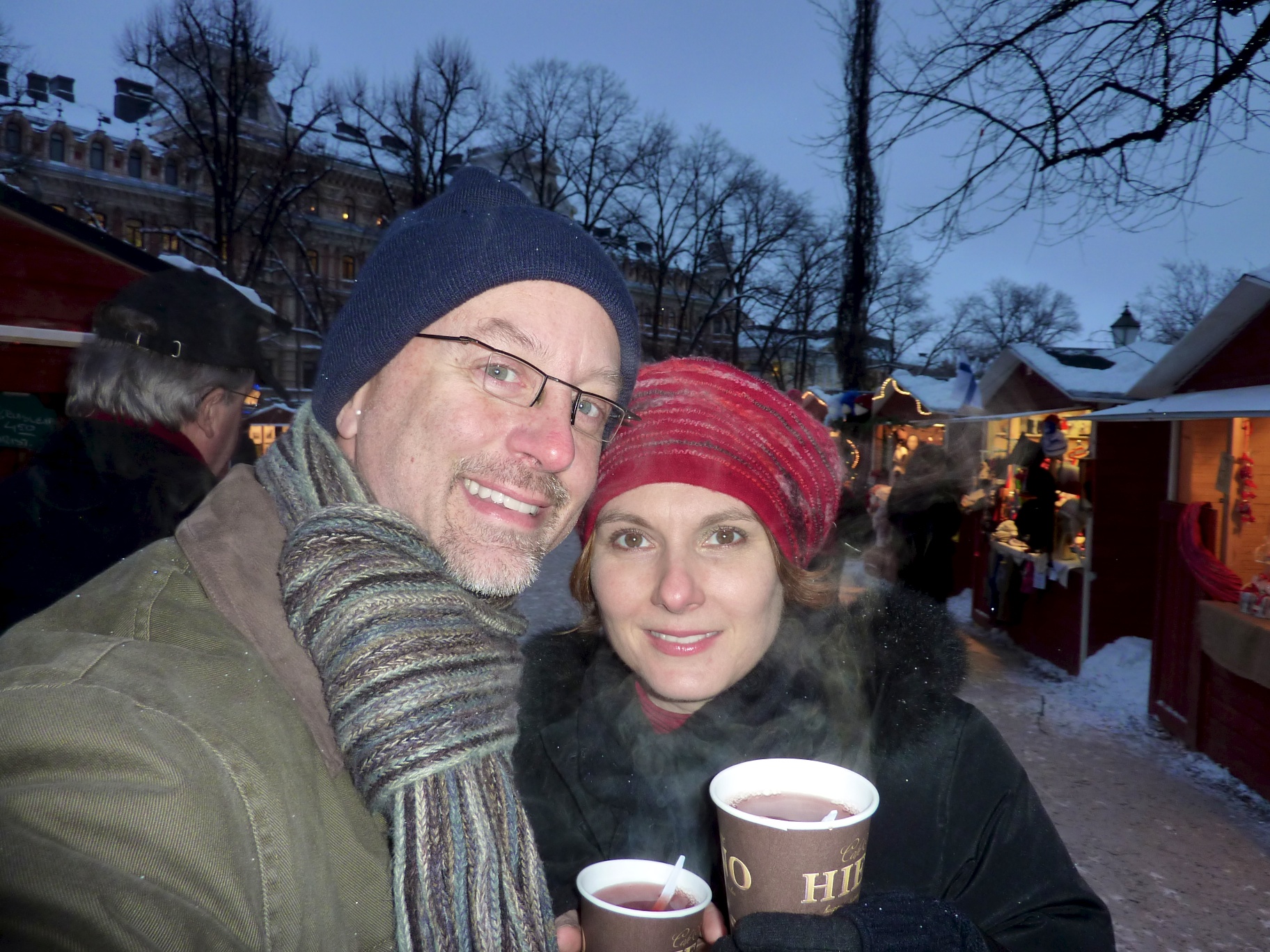
And glogg to wash it all down.
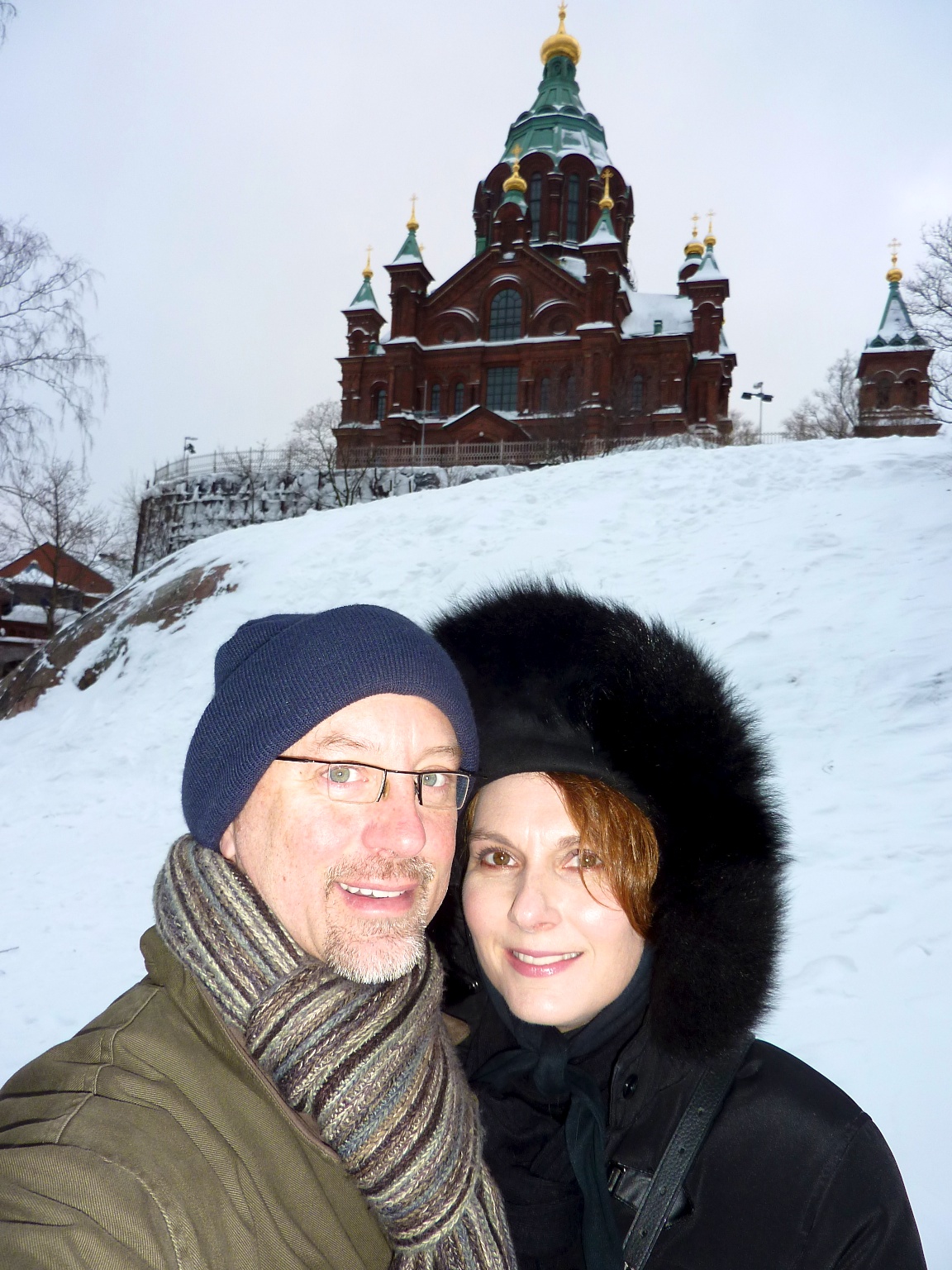
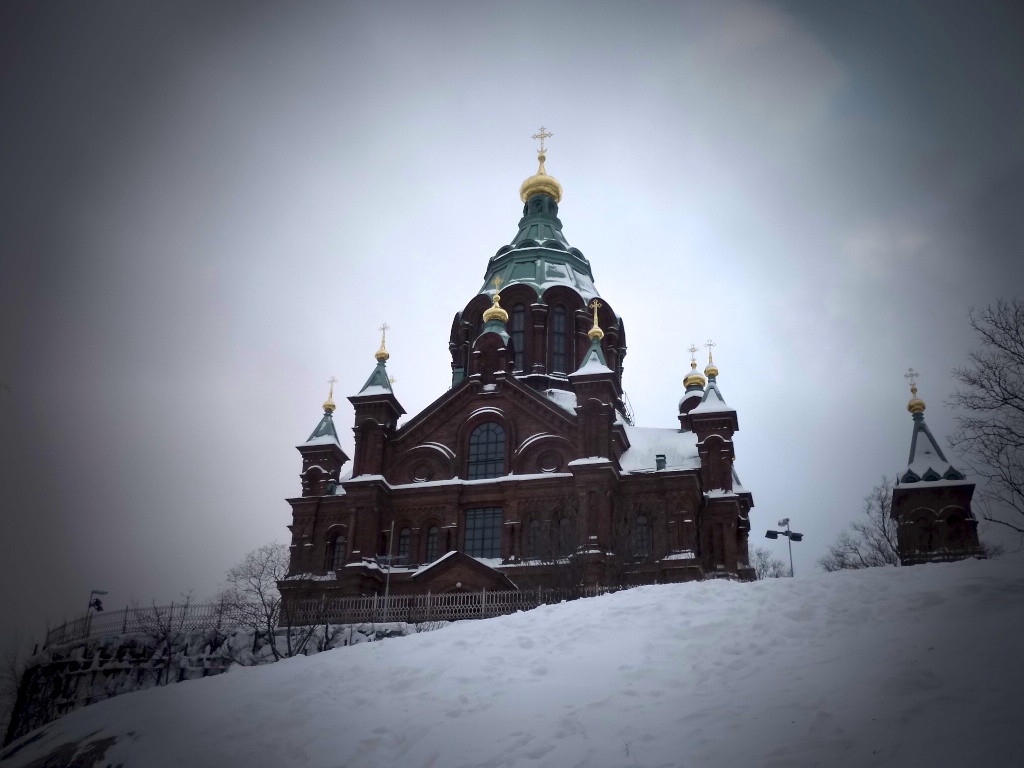
Our stay in Helsinki was short (one night, so we did not get to see many of the tourist sights. This is the Usponski Cathedral built in 1862; unfortunately, it was closed when we went to see it. It is the largest Orthodox Church in Western Europe.
We did have time for fur shopping.
I did not buy anything – way too expensive (several hundred Euros). But oh so lovely!
Now comes the traumatic part of the holiday – our 14-hour cruise to Sweden (well my opinion). Here is a photo of the actual boat we were on, taken across the port near our hotel.
Looks like fun, right? I thought so…look how happy I was getting on the ship.
It started out great – we had a glass of wine and sat at the front of the ship as we pulled out of the very frozen port. Out into the black of the night.
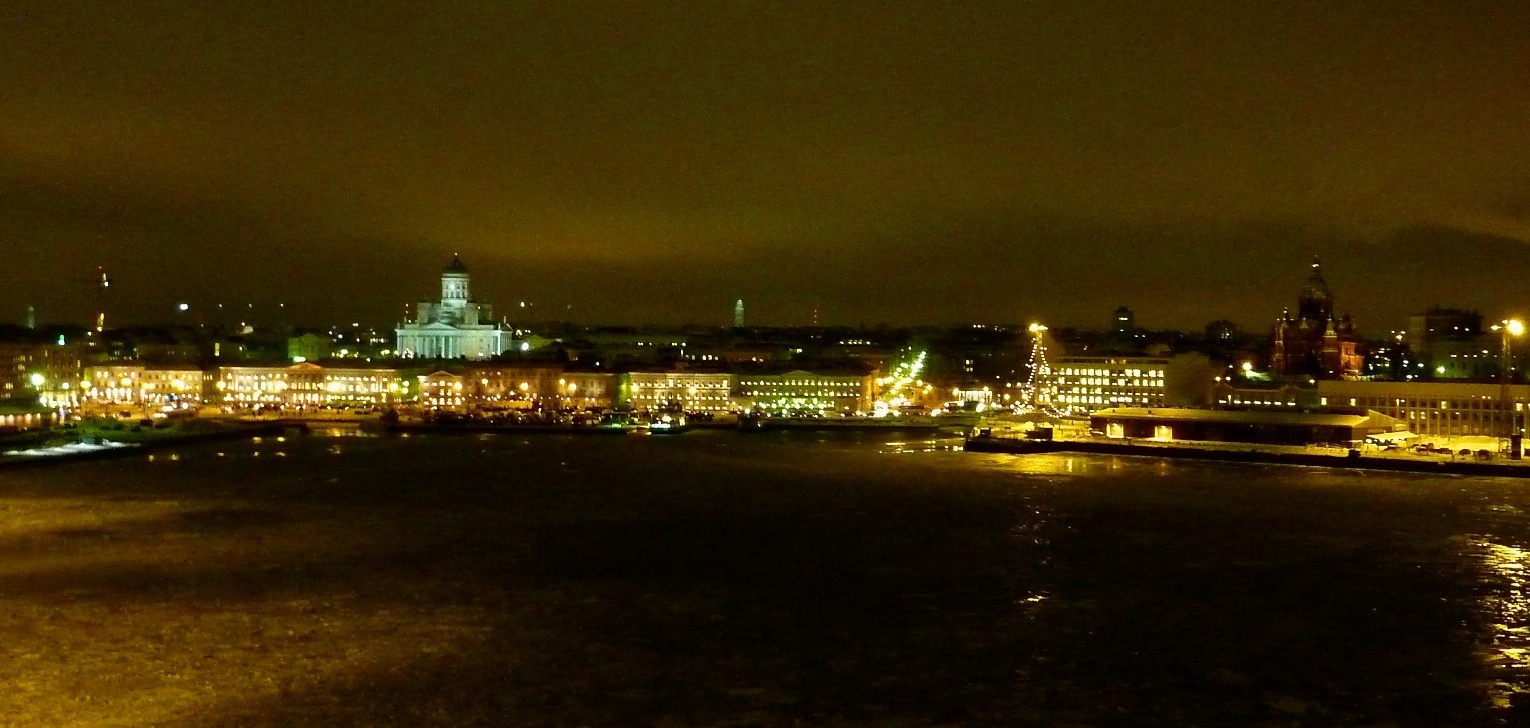
Seeing the night skyline of Helsinki as the ship pulled away from shore was striking.
Check out our little teeny tiny room. Twin beds and one pulled out from the wall into our walking space! As you can see D is laughing and thought it was very funny. On the other-hand, I was not amused. Okay, it is only one night – how bad can it really be?
We enjoyed a few variety shows just like a long cruise.
And games….D's favorite little game and he wins all the time – but not this time.
About three hours into the cruise I started to feel the motion of the boat. I could not move. Just had to sit for a few hours where we watched a band and some very drunk people dance. Just for the record, I was not drunk although this is how I felt.
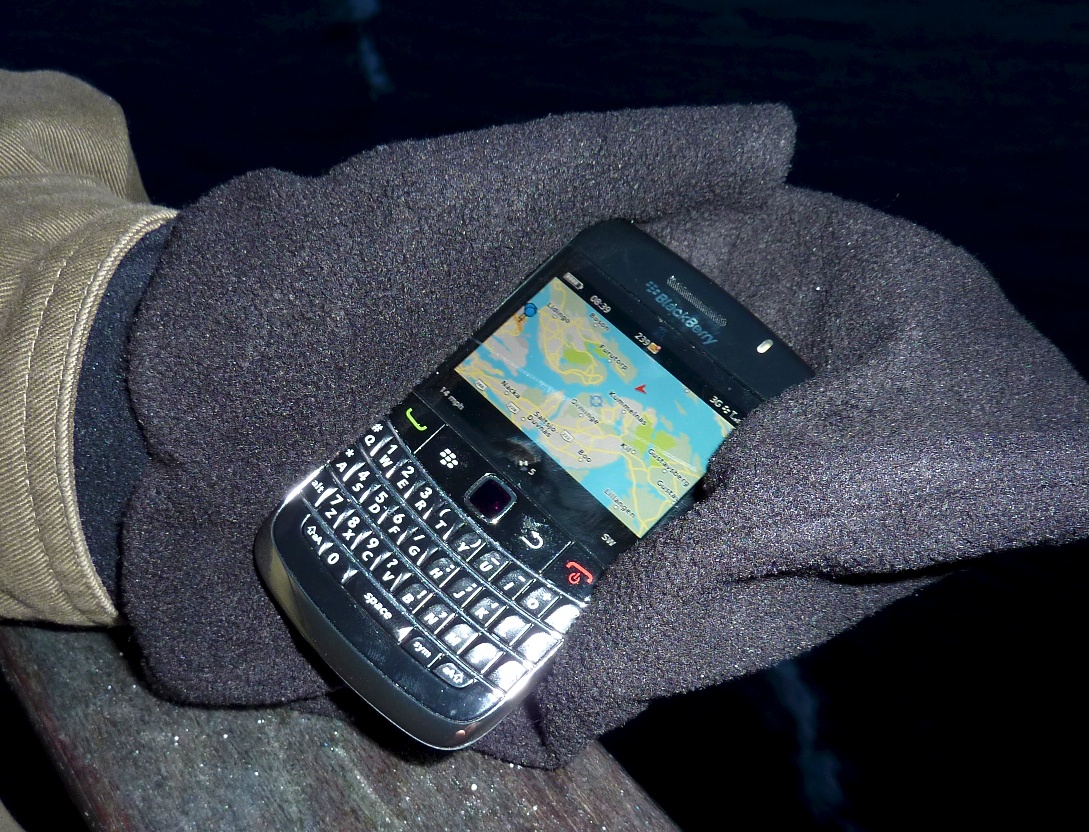
D enjoyed tracking our journey on the tracker map on the ship and on his GPS on his Blackberry.
I was a mess all night long. Of course D found the motion to be very soothing.
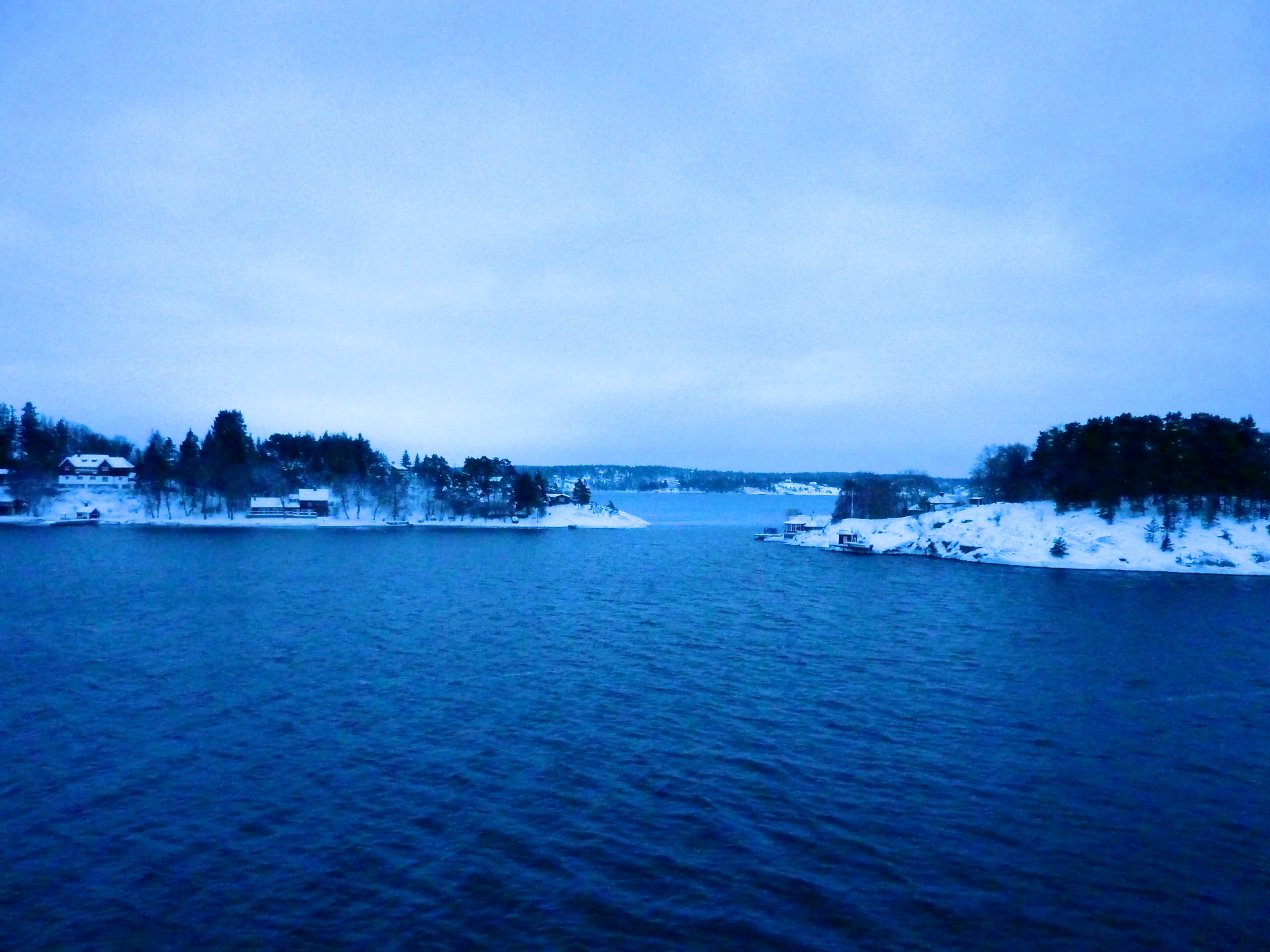
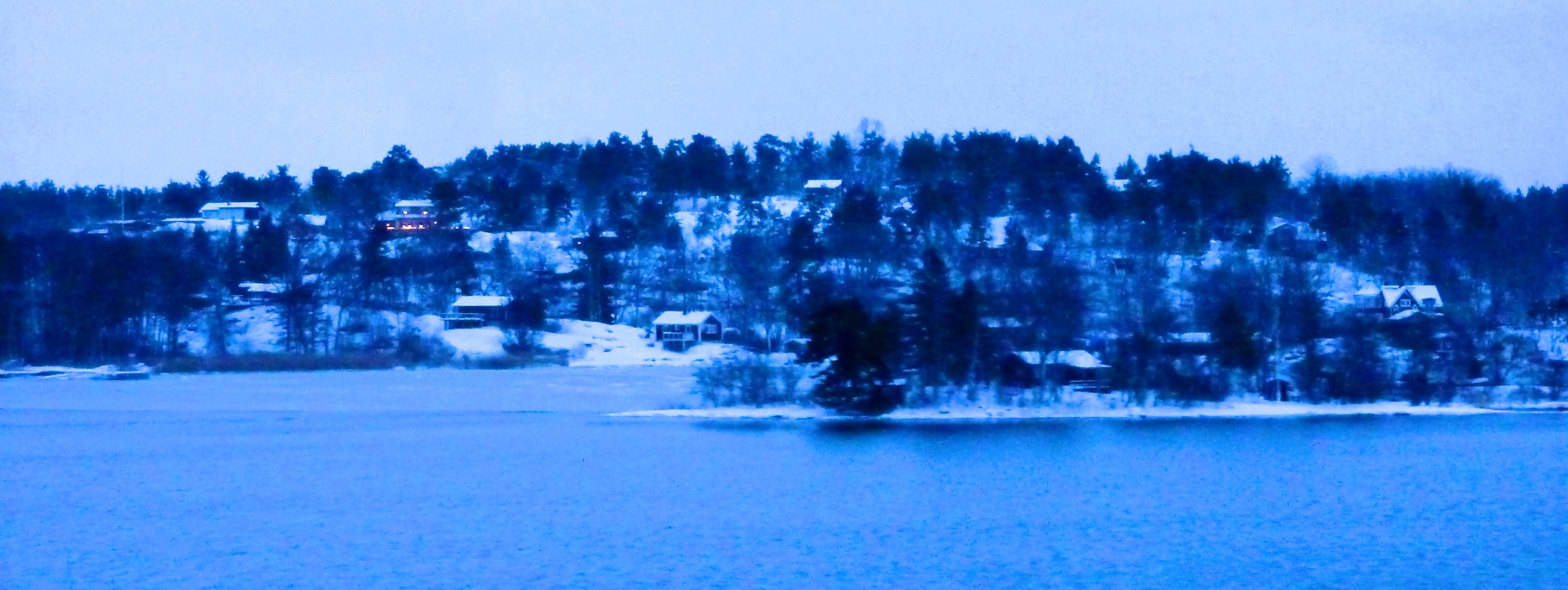
The last few hours of the trip, when we were close to land, was stunning scenery and very enjoyable. The photos have a blue tint as the sun was just beginning to come up.
Will I ever take another cruise – NO WAY! I am a city girl.
Here we are on arrival – dragging our suitcase through the snow a mile to the metro. D finally stopped to see I was not behind him.
Stockholm was a pretty city but it did not have the quaint feel of Tallinn.
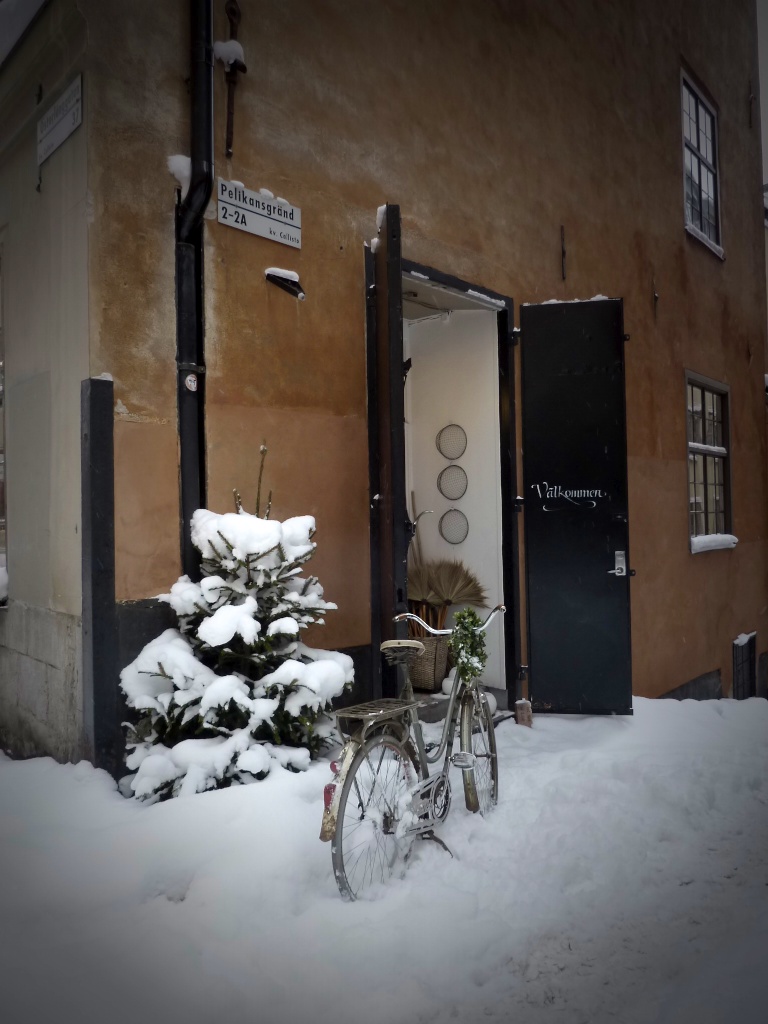
Lots of snow here too and it snowed everyday we were there with temperatures around 18 degrees.
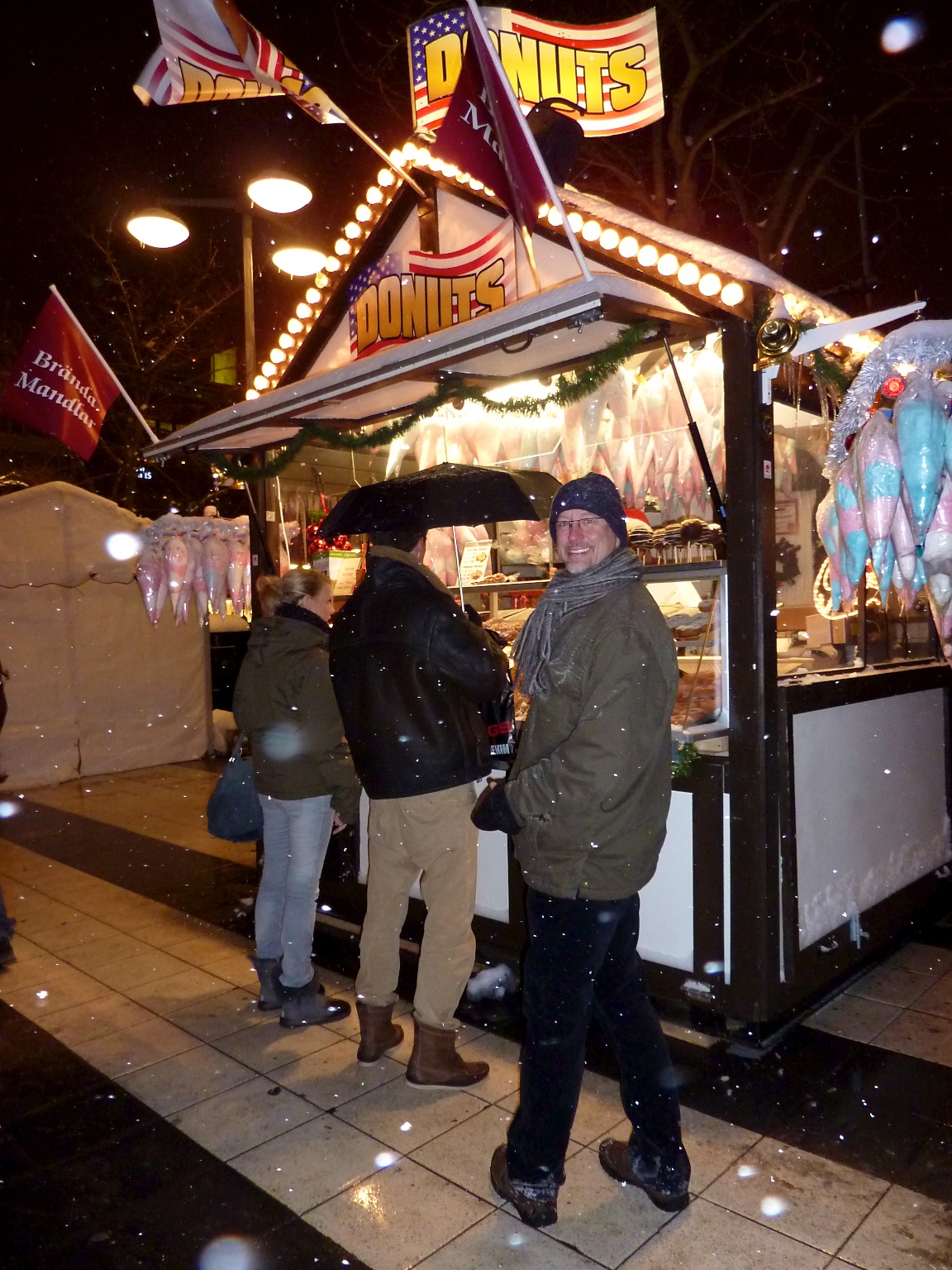
For some reason doughnuts seemed to be a big seller on the streets. Notice the American flag at the stand. We figured we needed to try one – the verdict, okay but not great. Not like a Belgian waffle!
The downtown area was like any city with lots of chain stores and restaurants. There were a wide variety of international foods (Italian, Chinese, Thai) to choose from, but really nothing local.
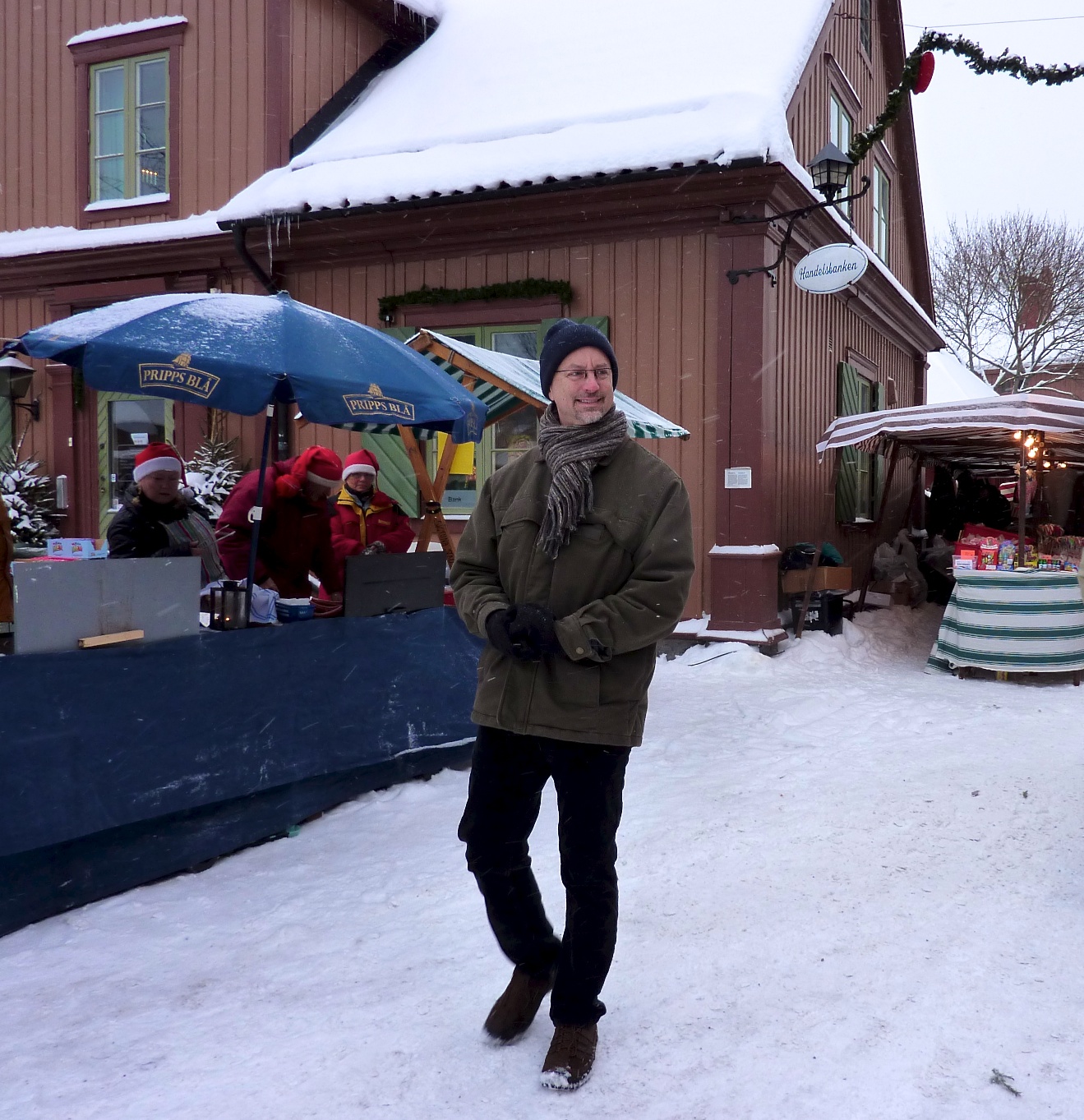
On Sunday we took a train 45 minutes to the little town of Sigtuna. This photo was taken from the window of the train. I love the feel it has with the scratches from the train window.
We had read Sigtuna was one of the prettiest towns and the oldest living town in Sweden, dating back to 980 ad.
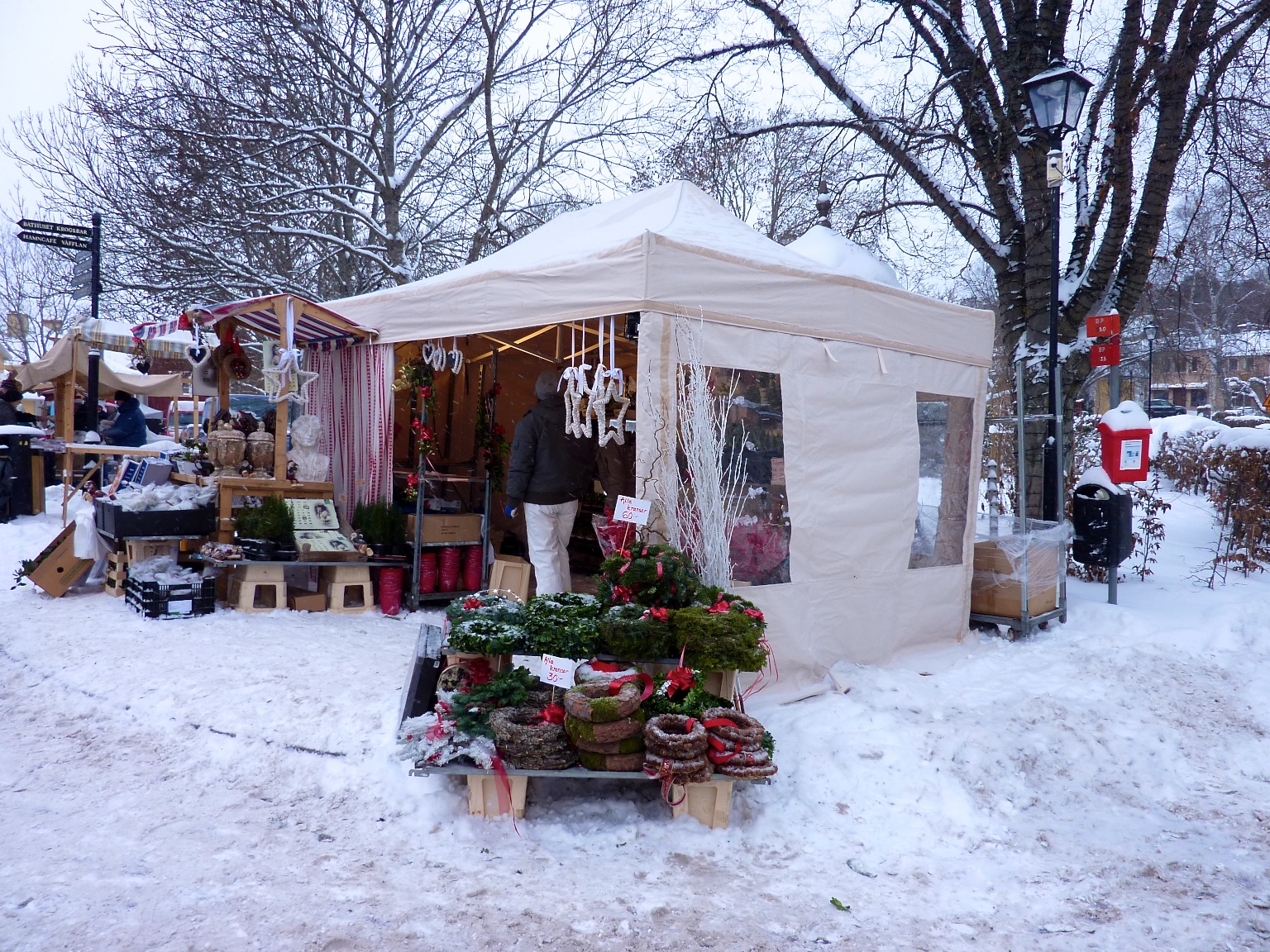
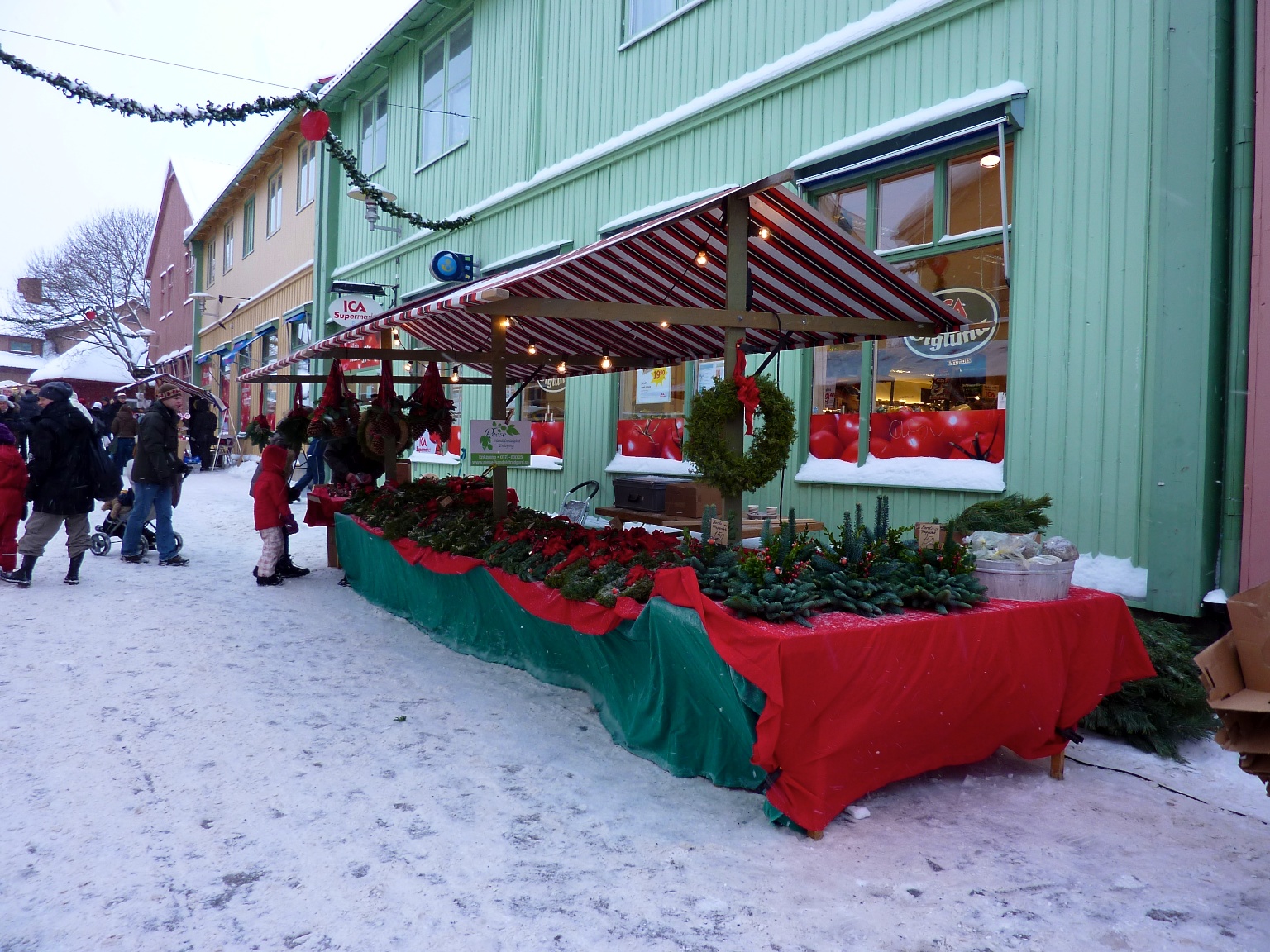
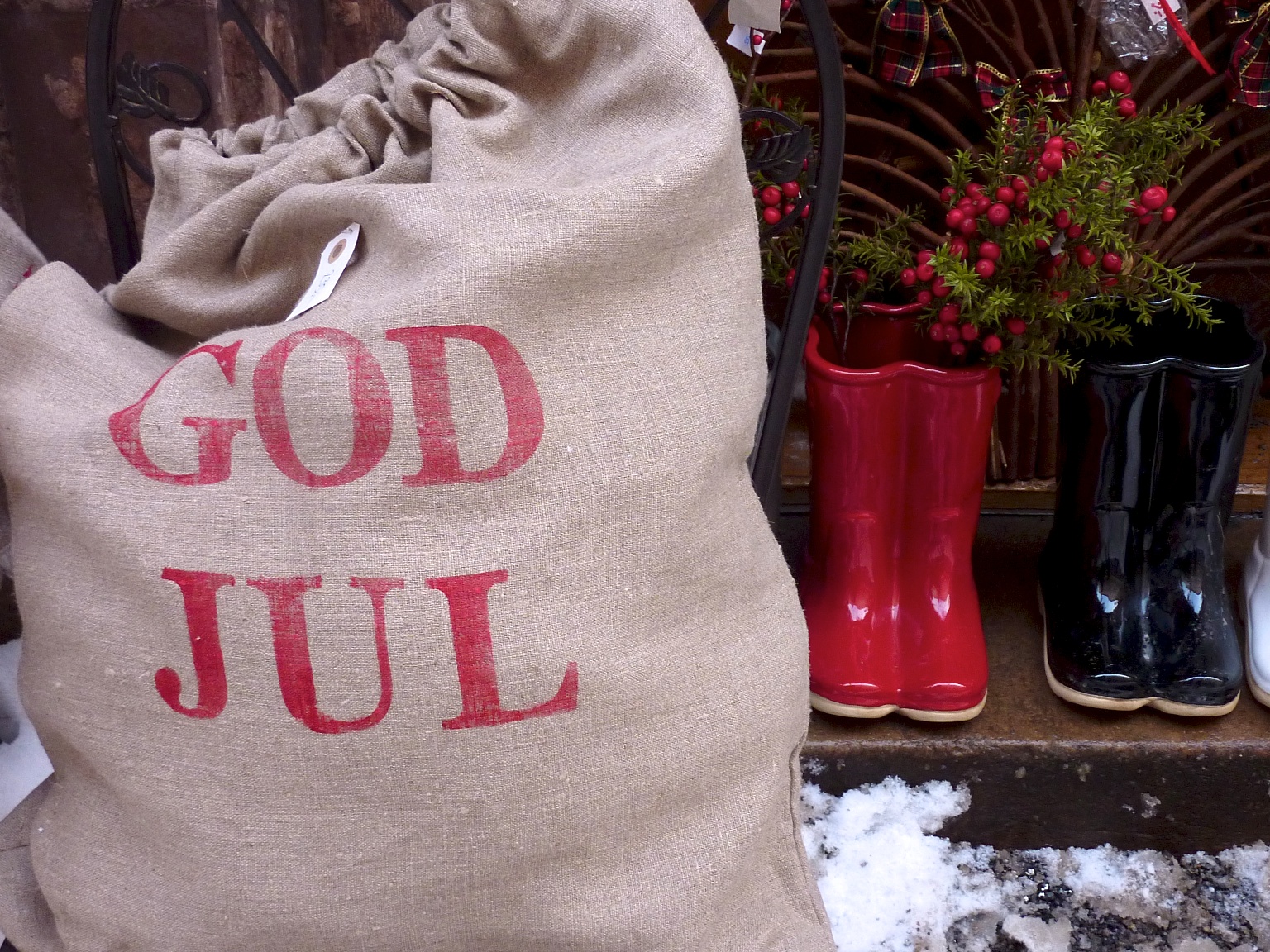
They had a Christmas Market on Sundays or as they call it Julmarknade. In Sweden Santa is called Jultomten and is a cross between a little gnome and a German/British Santa. The kids leave him a bowl of porridge on Christmas Eve.
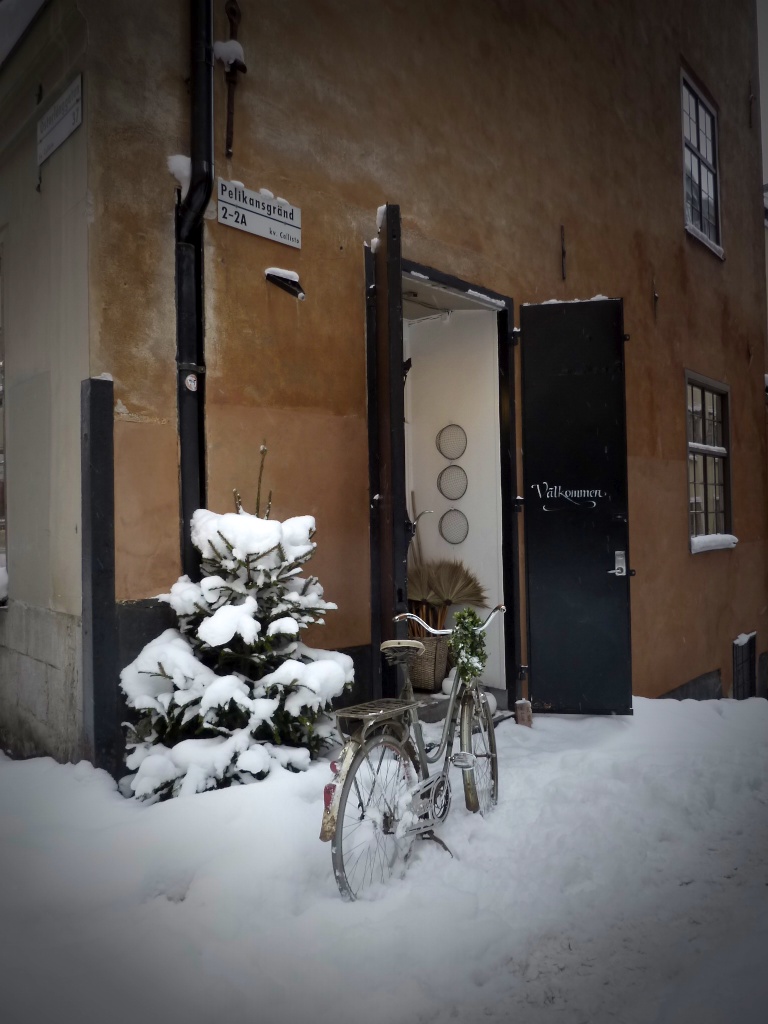
The town was so picturesque.
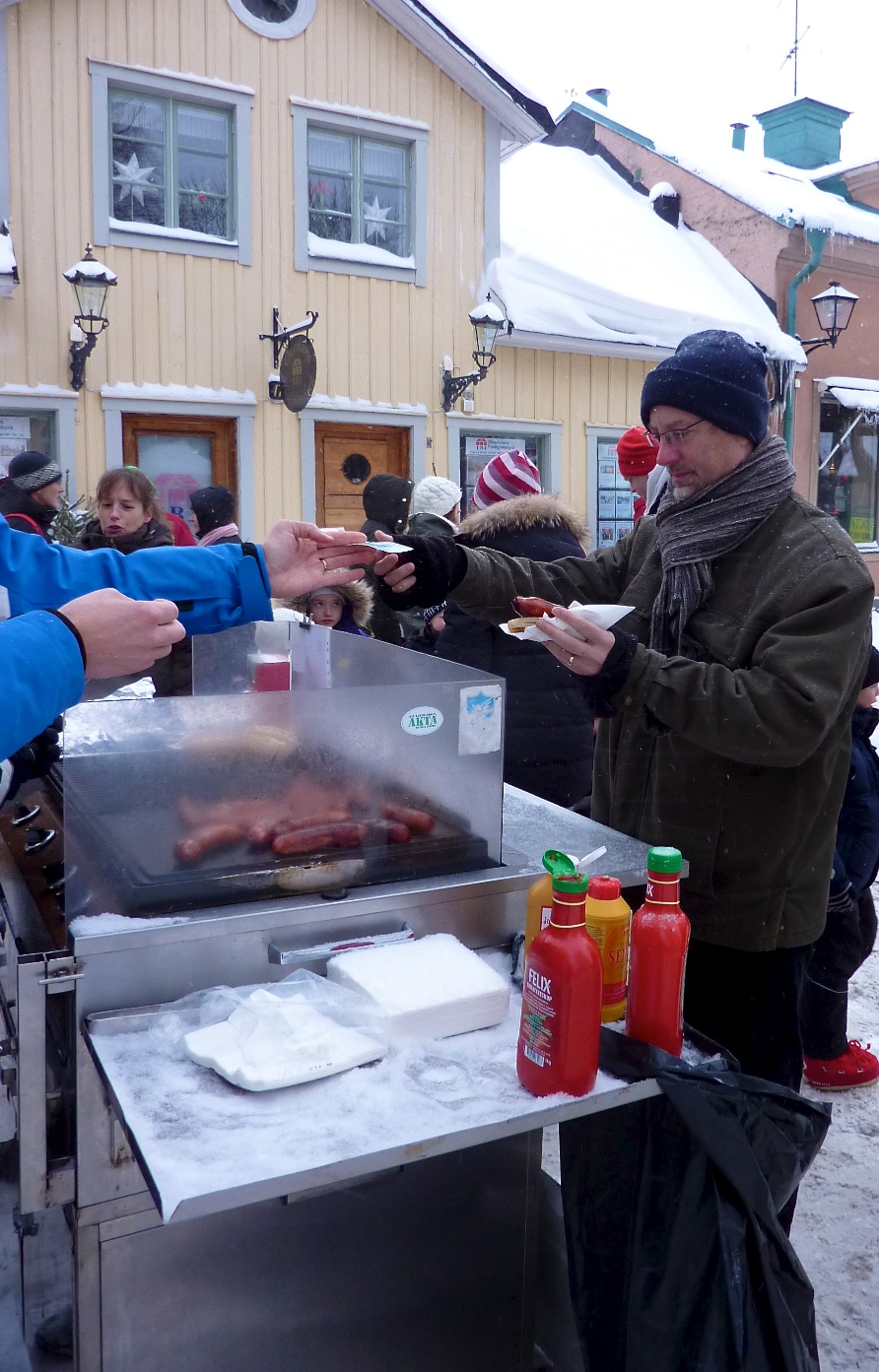
And had great market food! Grilled plump sausages –
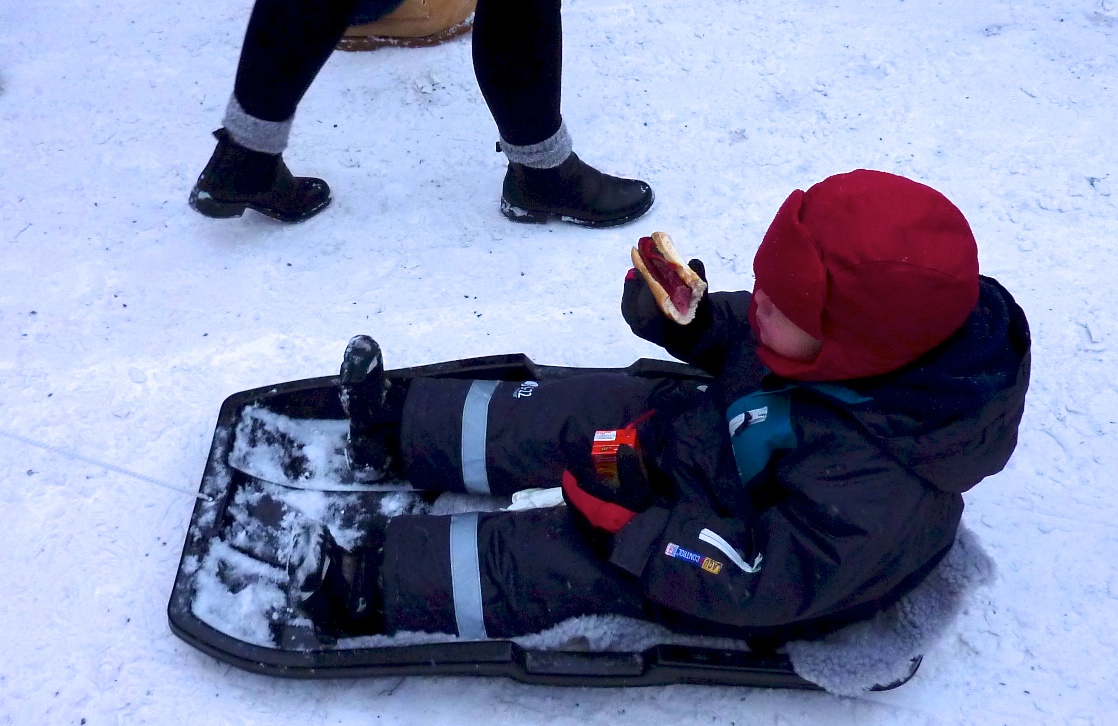
I know D would have preferred to eat his this way! Is this the life or what?
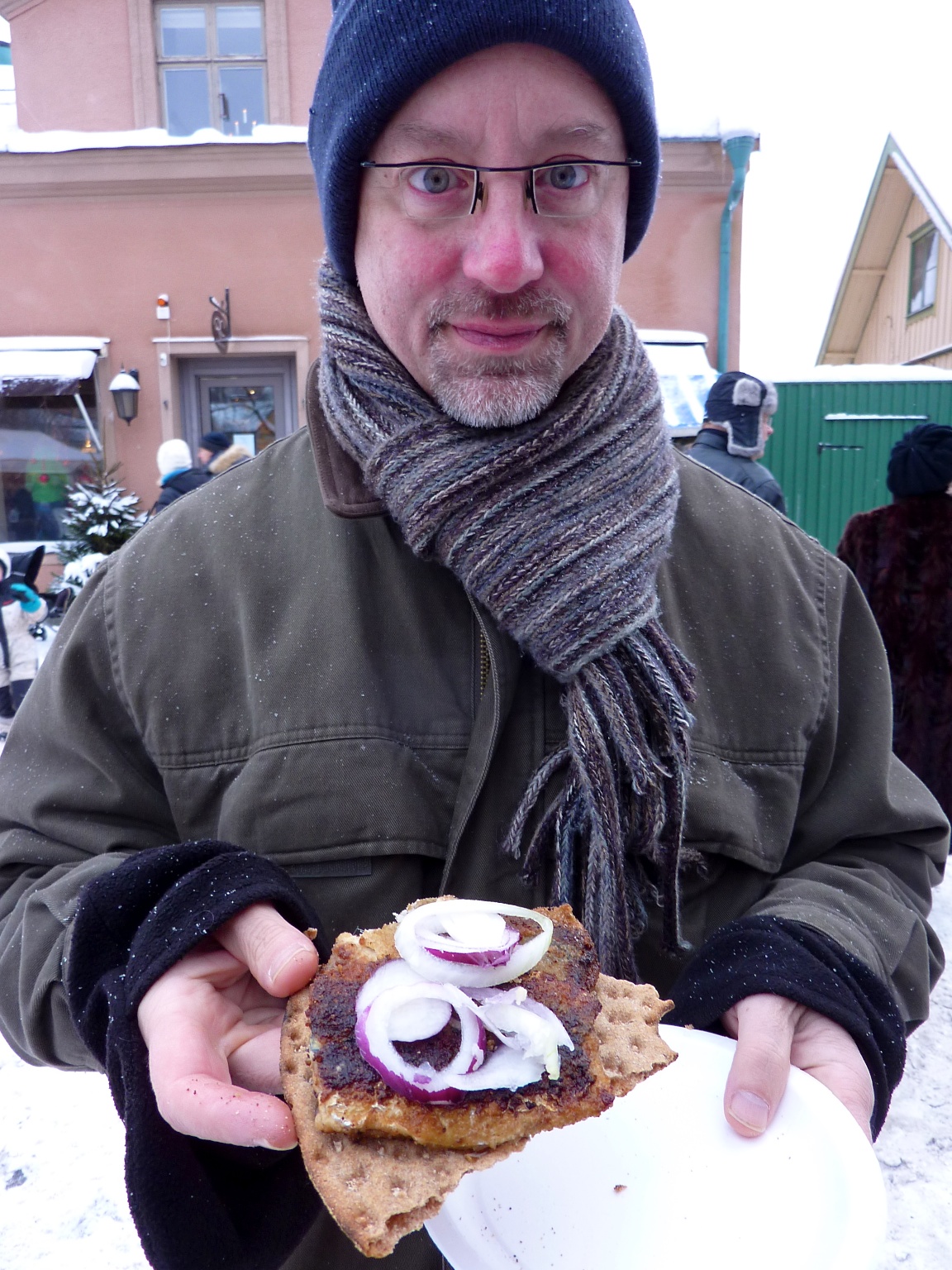
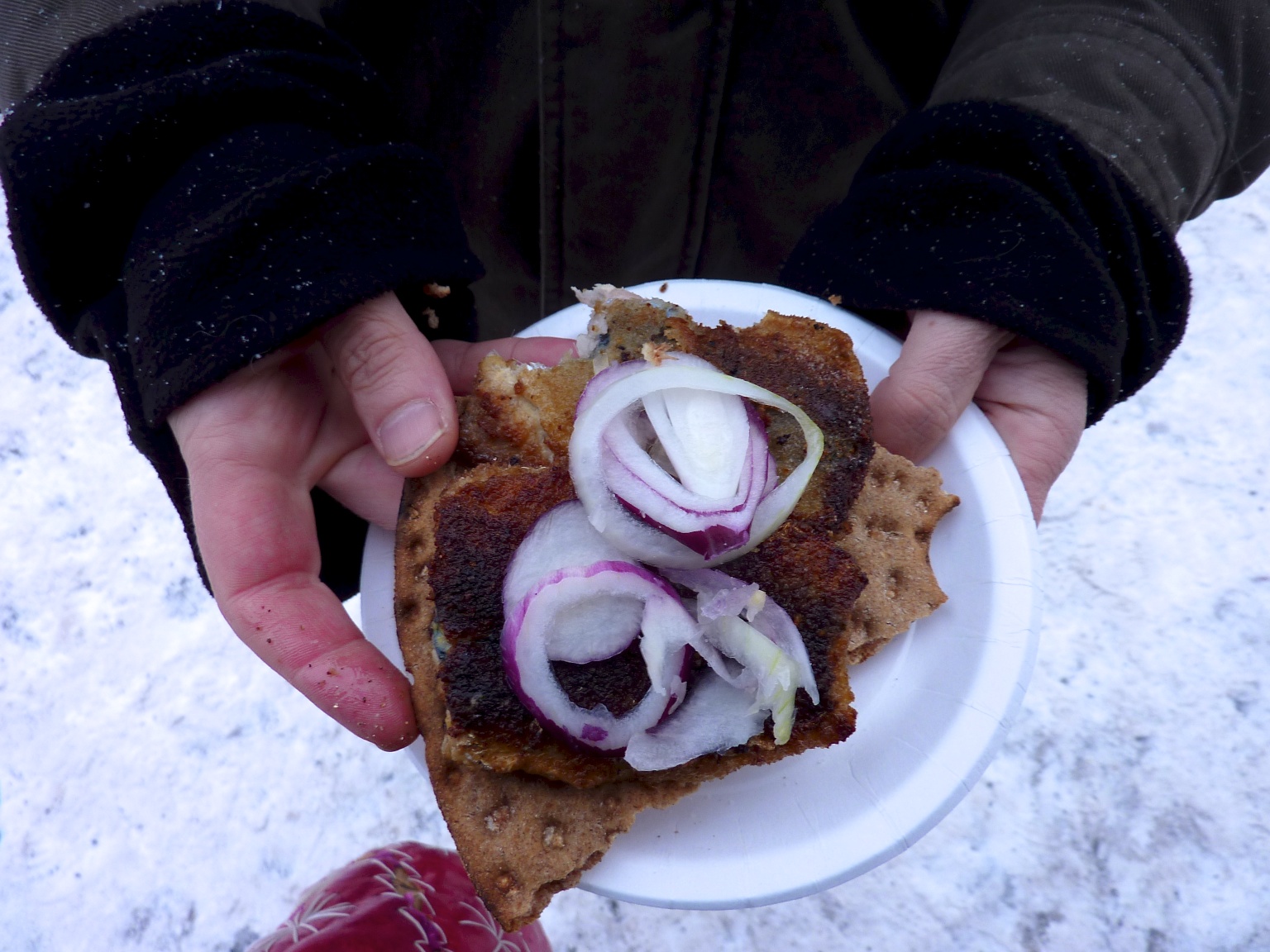
And of course being Sweden – grilled herring This was one of my favorite dishes of the trip. As we were eating it, a local started talking to us about it. Said it was a very traditional dish, but from long ago. We asked him a bunch of questions about the town. Funny enough, a large aviation population lived there. He was a pilot and his wife was an air traffic controller.
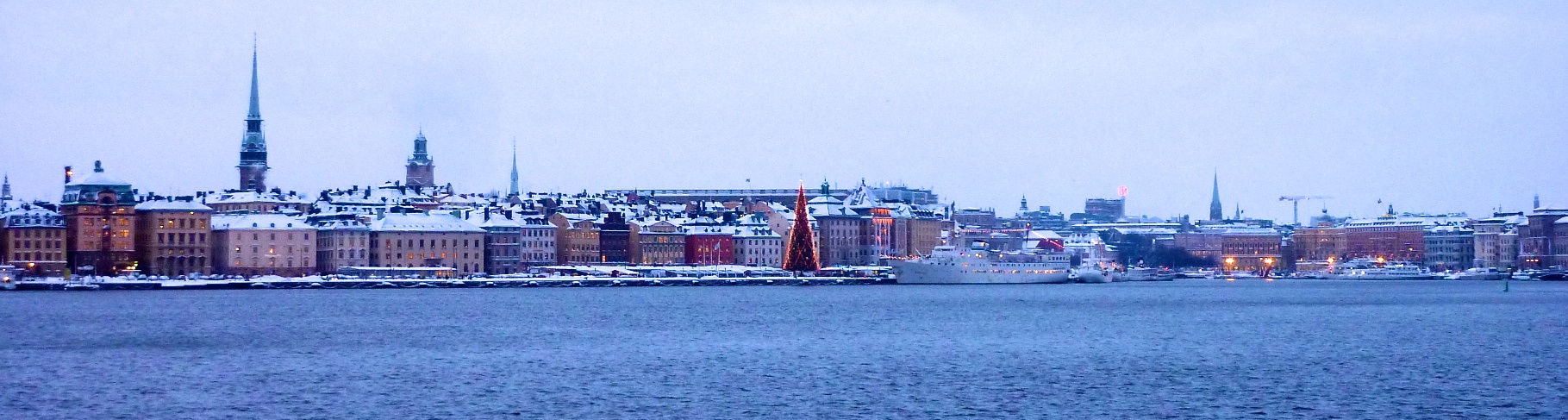
In Stockholm, I preferred the Gamla Stan, the old part of town. It dates back to the 13th century and was very picturesque.
We walked (schlepped in snow over a mile) across the bridge to get a pretty view from across the harbor. We took the bus back.
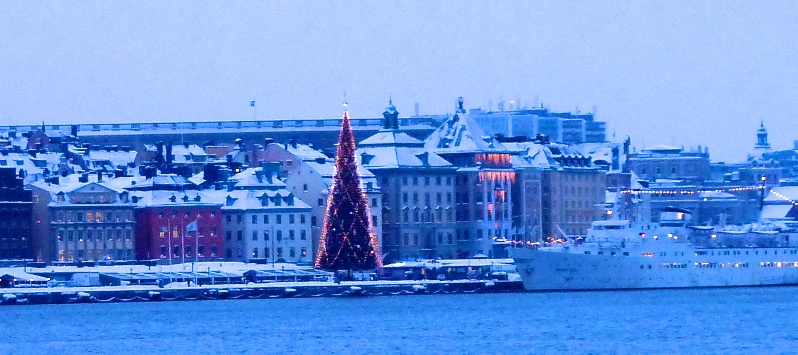
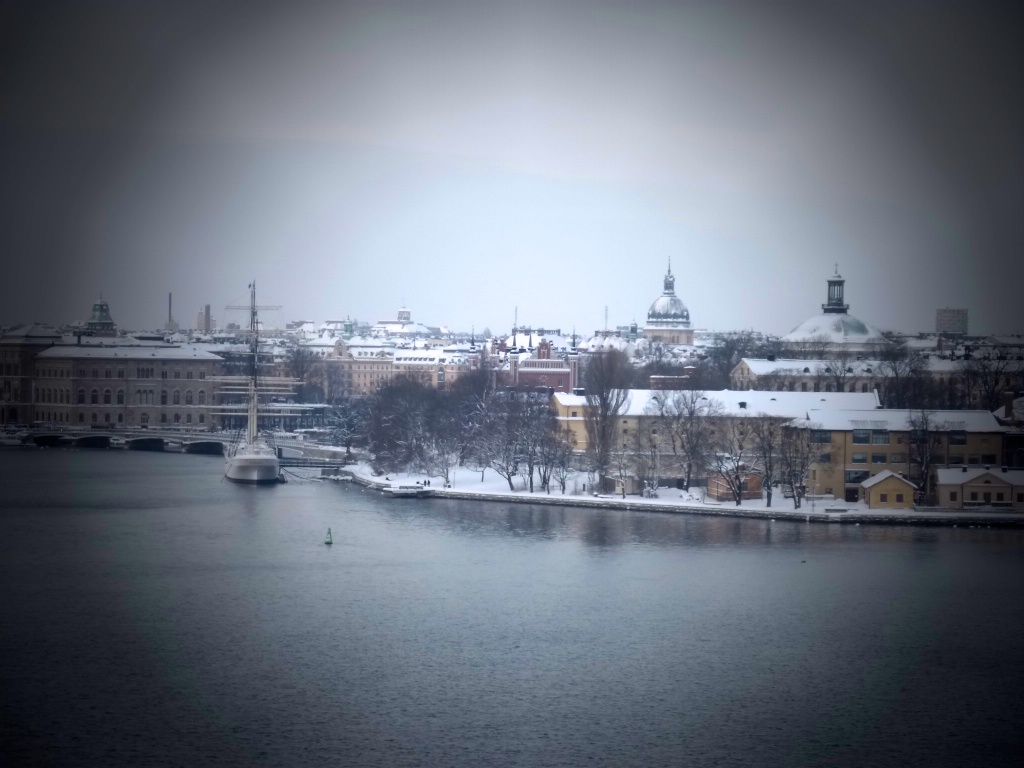
It was very beautiful looking back onto the skyline of Gamla Stan. There was also a new Photography Museum, Fotografiska that just opened in May of 2010. It was on the waterfront in a refurbished Art Nouveau building from 1906.
They claim it is the largest museum in the world dedicated to modern photograph. We thoroughly enjoyed this museum and spent several hours wandering around in it.
These shots were taken looking out of the cafe in the museum at dusk.
We were glad we selected Estonia, Finland and Sweden for our winter vacation. As you can see, there were so many lovely sites.
And we were lucky to have snow in each country. We were also lucky to get home, as this was the week all the planes were cancelled across Europe. But we skated through the cancelled flights with only a one-hour delay.
Warning: Parts of this blog are not for the faint-hearted!
D&A invited us to their new house in Ascot, England for Thanksgiving. We arrived on Wednesday and A swept us of for a tour of their new little town. Ascot's claim to fame is the very famous horse races which date back to 1711.
The Queen still attends the races today during Ascot week. Our first stop was the butcher to pick up the turkey.
Here is a before photo of mr turkey…
and after photo. He was a biggie and cooked to perfection!
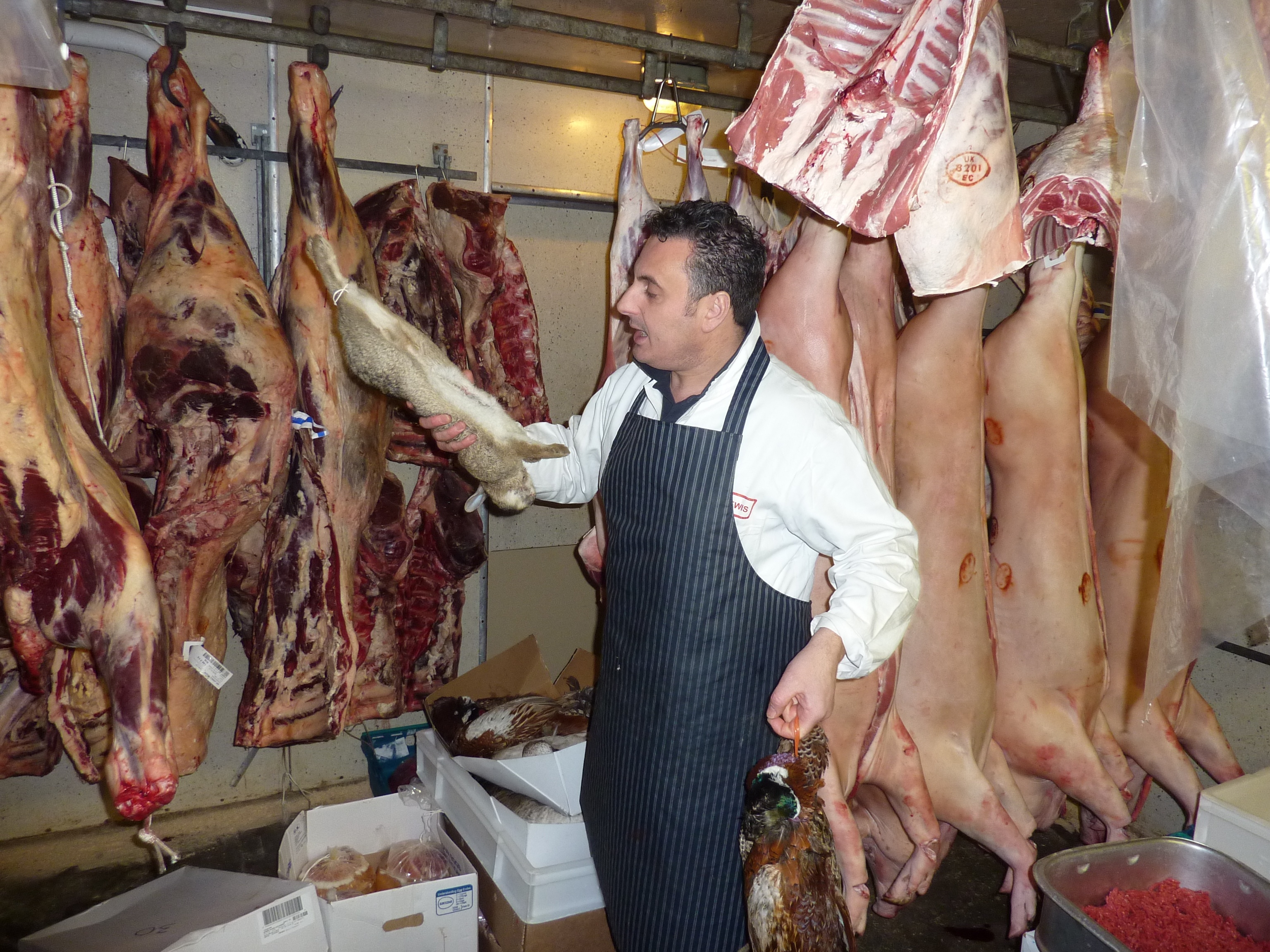
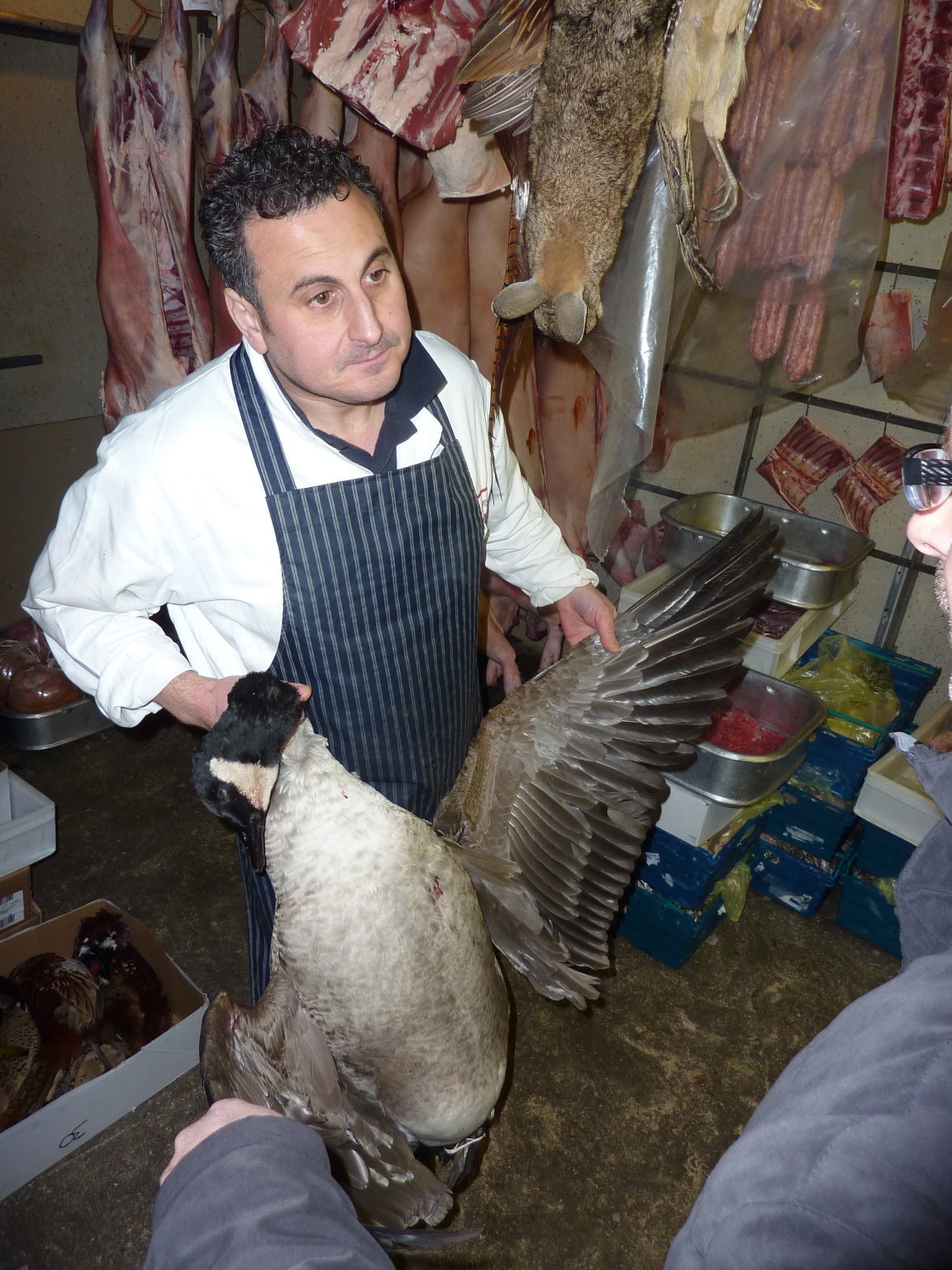
But even more interesting than the turkey was the cold storage room the butcher invited us to see.
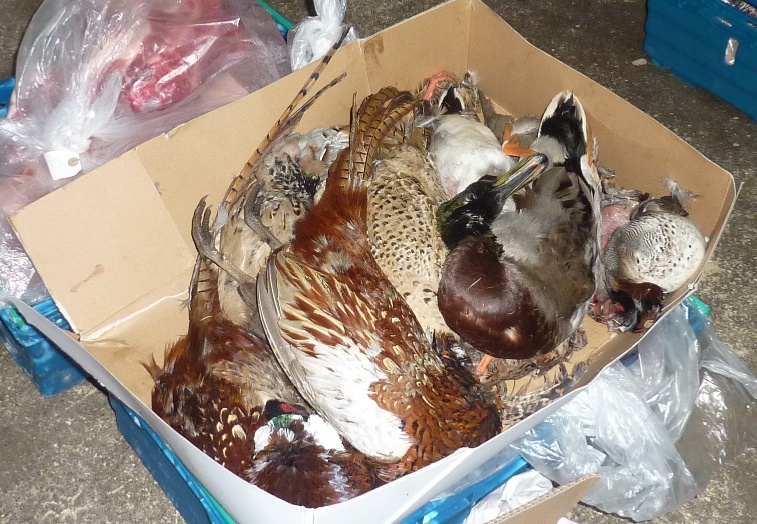
He told us that many people in town hunt their own animals (box below) and they bring them to the butcher to clean them up.
He is explaining to D2 about the rabbit. He had me pet the dead rabbit! EEEEKKK
D was very excited about this tour and the butcher was impressed with D's knowledge of various meats and the cuts of steak. The boys picked steaks out for us for Wednesday night. They were delicious!
The goose was unbelievably huge and so soft.
Yep – had us pet this one too.
Four little piggys all in a row. Poor piggys!
Dave took this photo – what a classic! The butcher carrying the full pig while chatting on the phone.
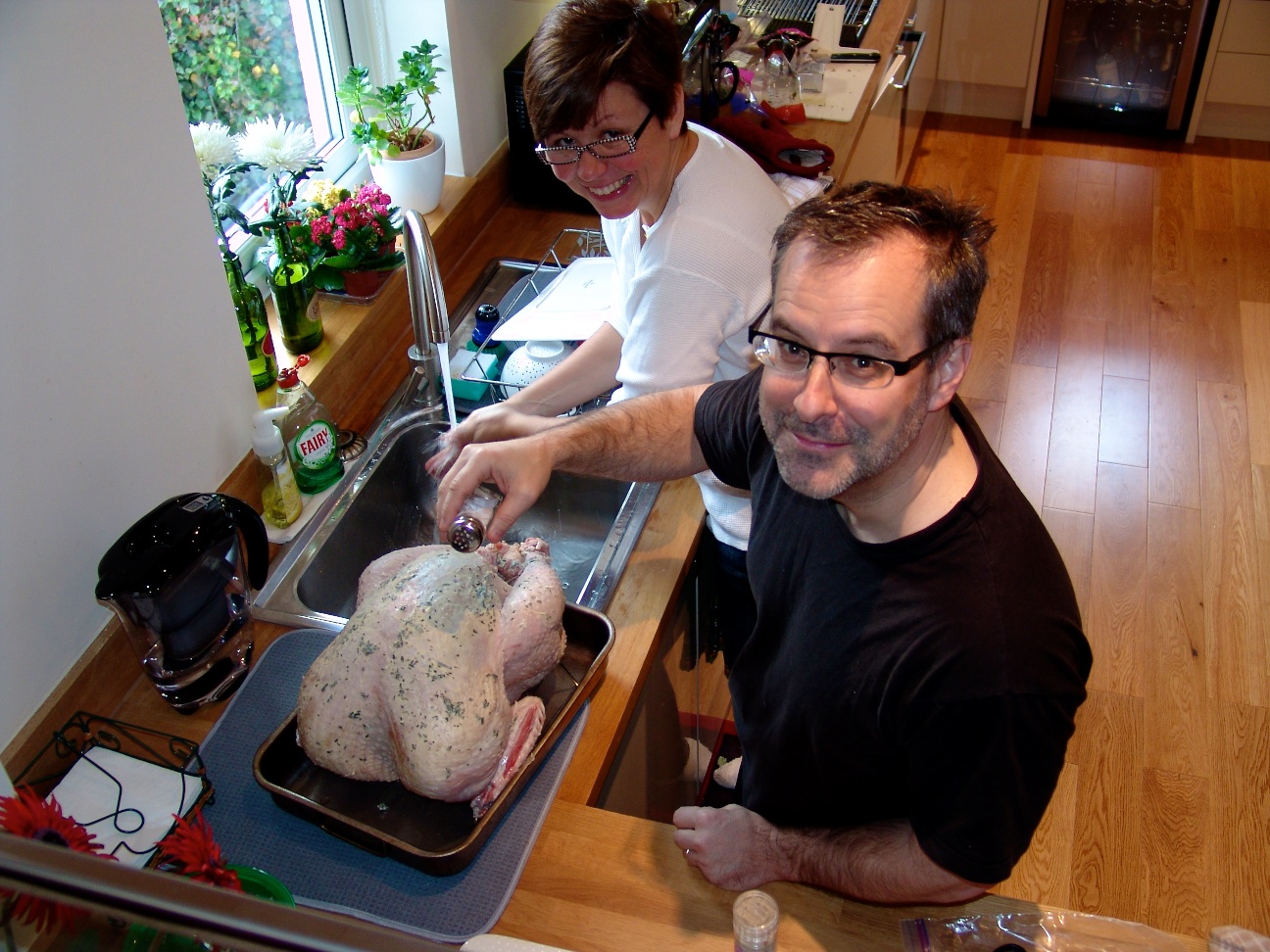
Back to Thanksgiving. D2 and A prepping the turkey.
I am not a list maker, journaler or planner of any type, so I was quite amused when I found A's map for the dinner – impressive! But then again, she IS an engineer!
I was given the job of setting the table. Now this is more my speed. Easy to do with A's beautiful china.
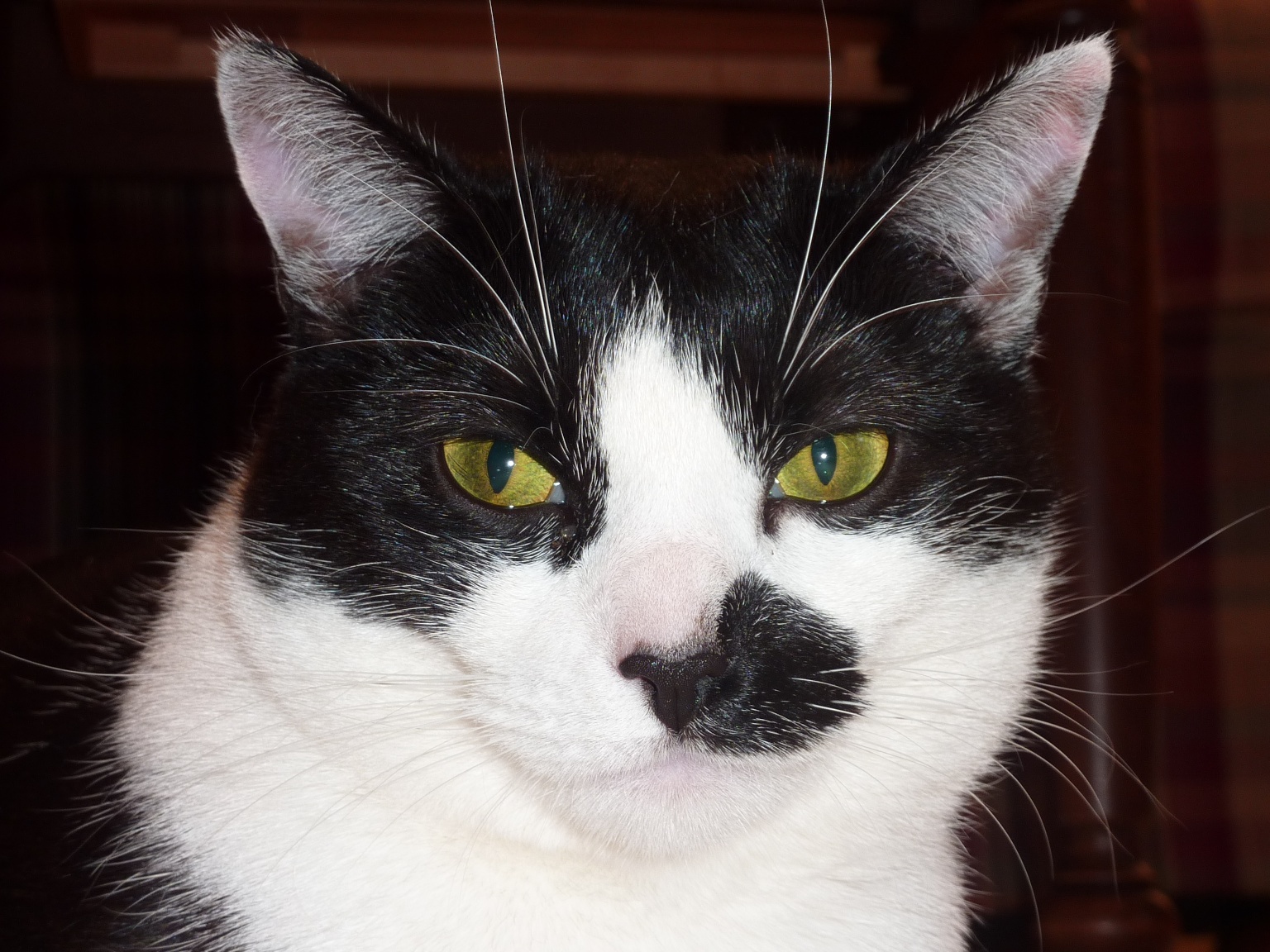
Emma kitty loved getting her photo taken – but not her sister, she was no where to be found!
Friday we set out to visit Henley-on-the-Thames.
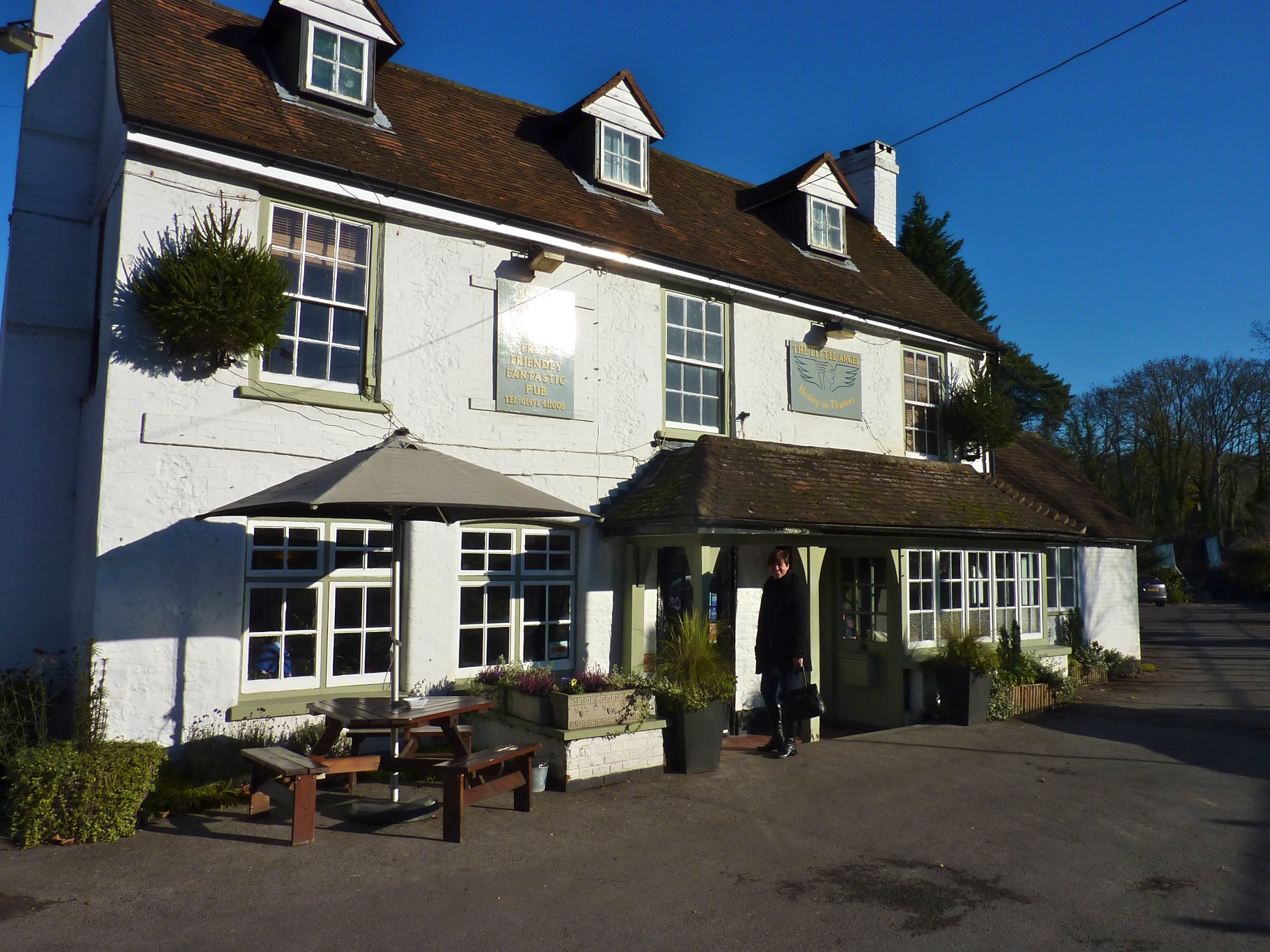
This medieval town dates back to 1179. We ate lunch at a sweet little pub on the edge of town, The Little Angel. It had modern updated pub food. Much better than the old stuff!
Henley is world renowned for its rowing and holds the annual Henley Royal Regatta. The town was lined with very old Tudor style house, now housing quaint little shops.
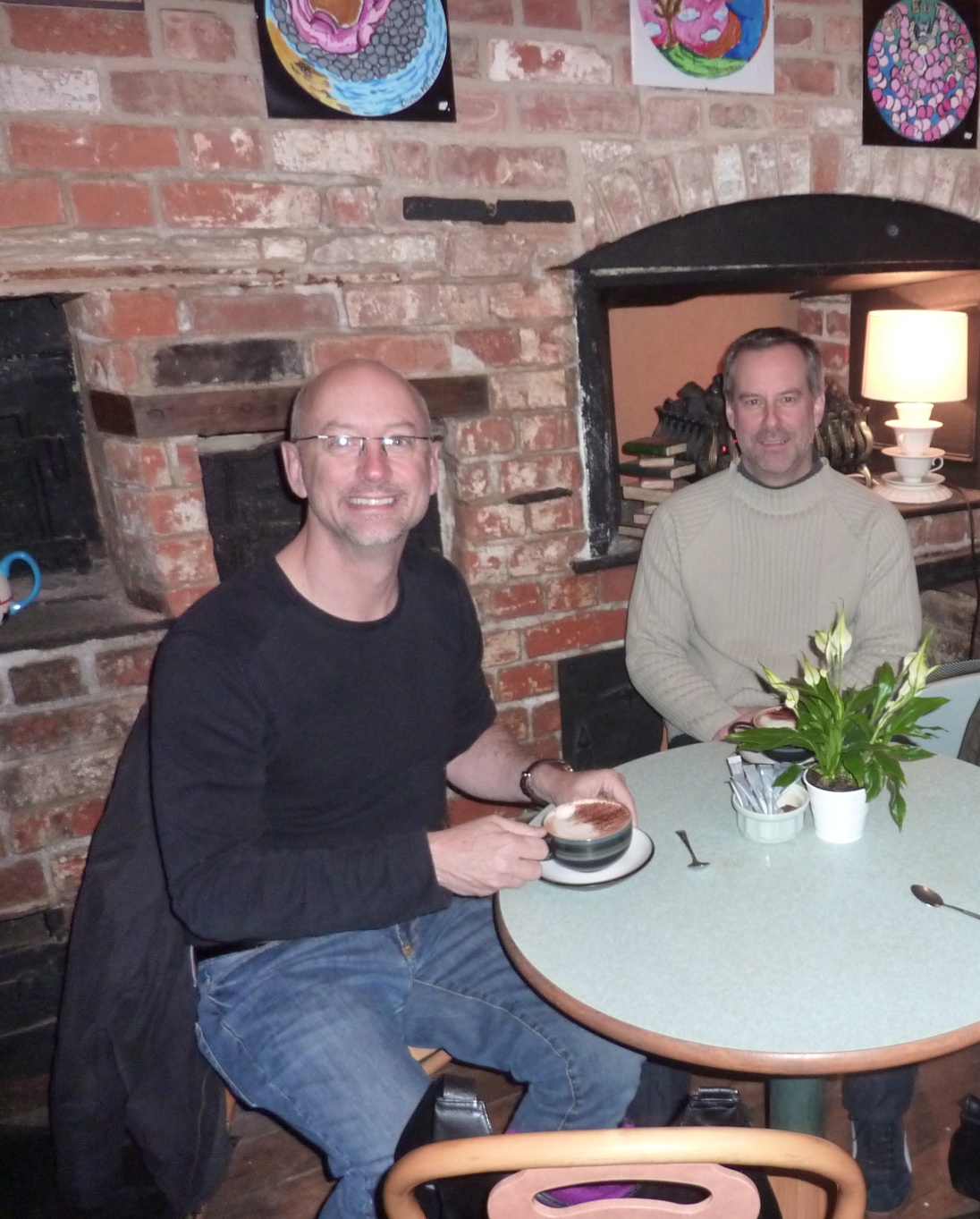
It was a chilly day so we stopped for a coffee break at an old bakery converted into a coffee shop. Complete with old wood burning stove.
I love this photo A took of the two of us!
Good friends, good food, another wonderful Thanksgiving weekend at D2 & A's! On Saturday we all hopped on the plane to Marrakesh – what an adventure – watch for this post….coming soon!
Asia is not part of D's region so we were extra excited when he found out he had meetings in Singapore in november. It was a long flight (12 and a half hours) for such a short visit (six days) – but oh so worth it.
Interesting tidbits about Singapore:
English is the official language.
The population is extremely diverse. We (Caucasian) were definitely in the minority. The government recognizes four languages; English, Chinese (Mandarin), Malay, and Tamil. All four are represented in the sign below.
Singapore is an island off the tip of the Malay Peninsula. It consists of 63 small islands.
It has a tropical rain forest climate – whoa mama was it HOT! On an average day, relative humidity is around 90%. November and December are know as its monsoon weather and we had rain every day, at times very heavy.
Their currency is the Singapore dollar and is about 75 cents to our dollar. Food was cheap, but that was about it.
SLEEP * EAT * PLAY
SLEEP
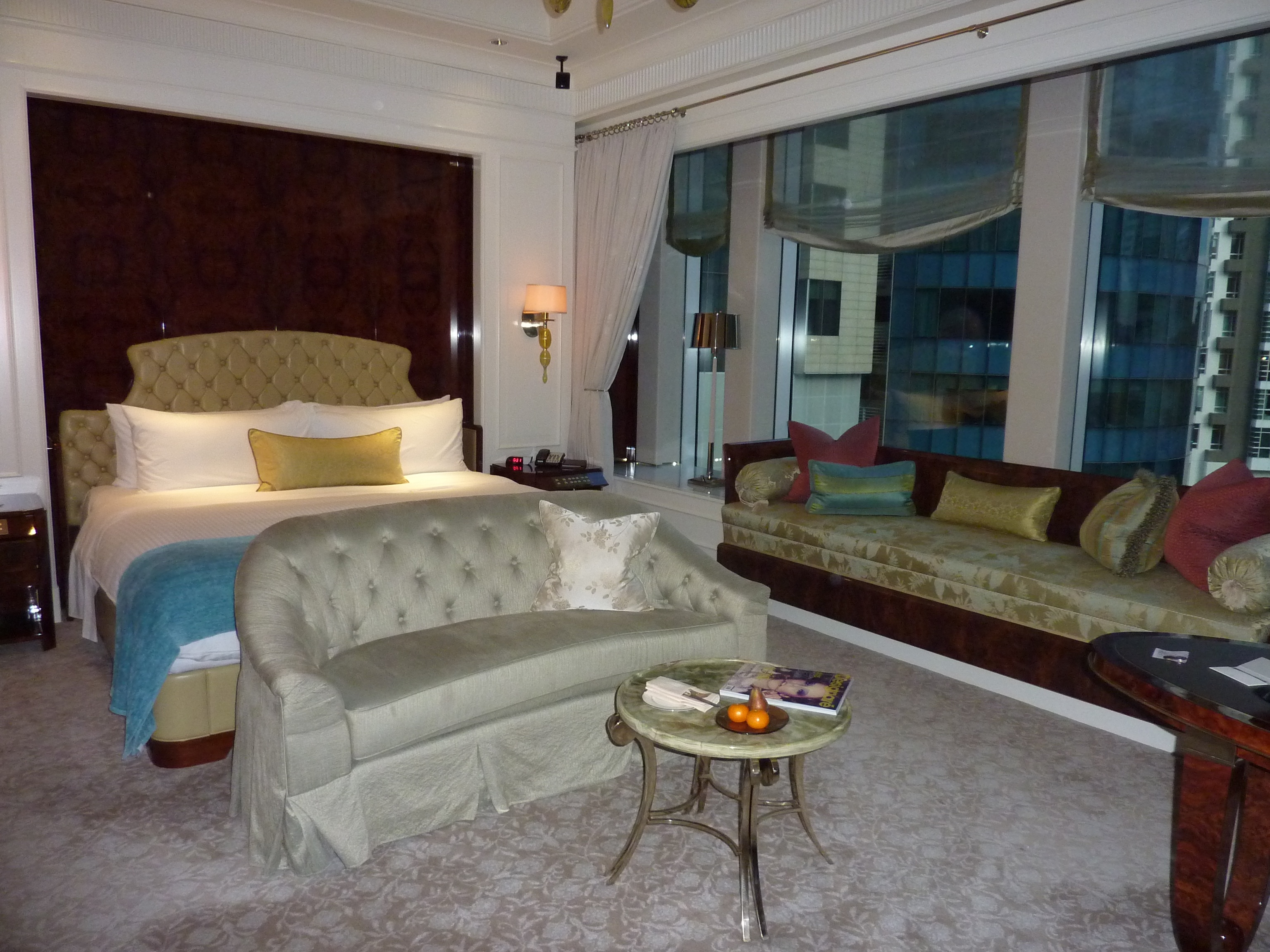
Our hotel, The St. Regis Singapore, was amazing! I normally do not show our hotels – but this one you have to see.
It had one of the largest bathrooms of all the hotels we have stayed in. It even had a walk-in closet. It also had a very large shower with showerheads coming from all angles….oh and look at the tub! If you look closely there is a TV screen in the bottom of the mirror by the tub faucet.
One morning, they hotel had a red carpet out and the entire staff was lined up at the door. We waited for 20 minutes but no one came and we were hungry.
We asked when we go back who was coming and they told us the Prime Minister of Singapore and the President of China. There was security all through the hotel.
EATS:
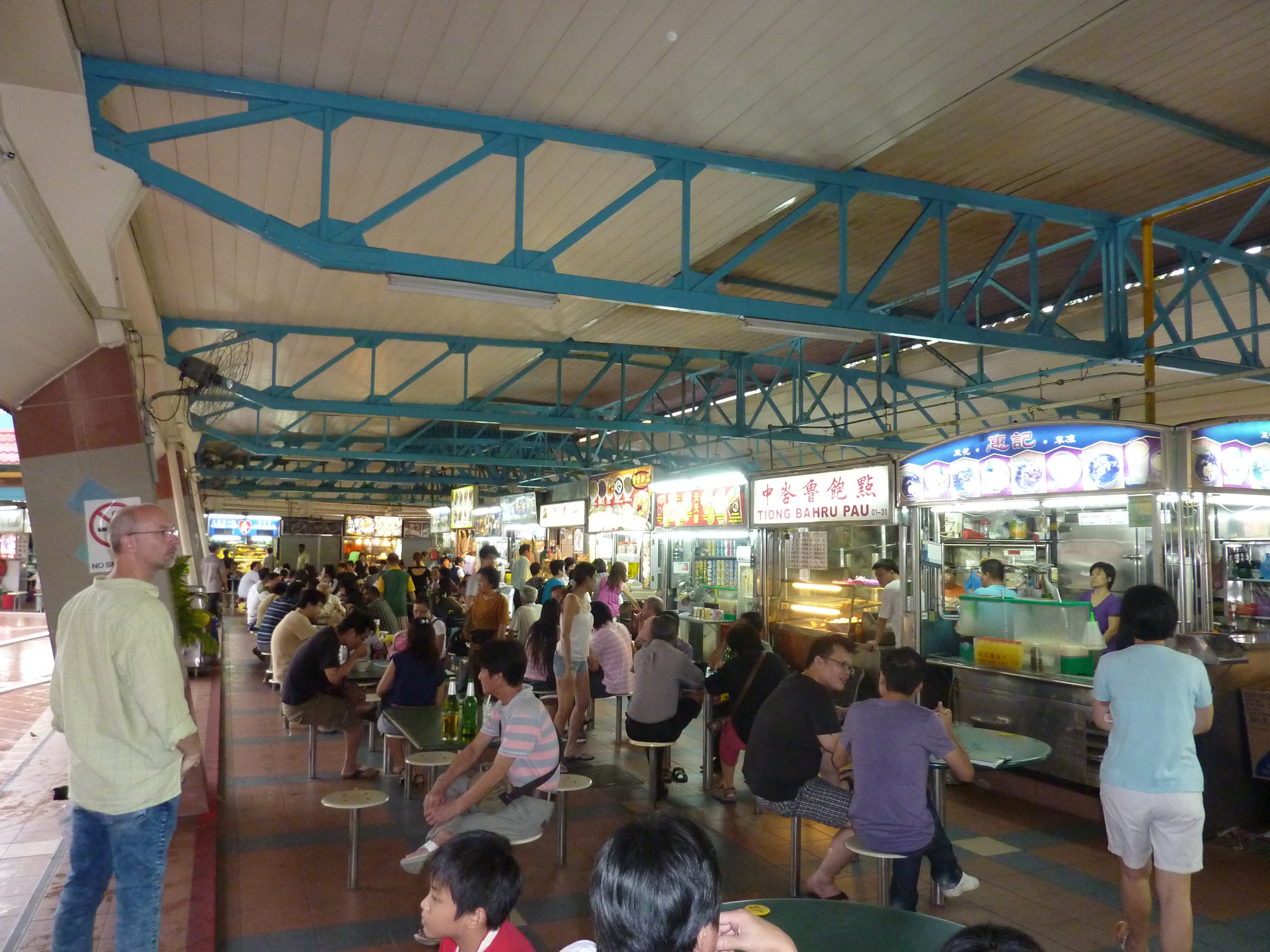
We ate every meal in Hawker stalls. These are individual stalls selling inexpensive food. They are everywhere, in every mall, large office buildings and many open air stalls just outside of the main part of the city.
We wanted to hit an authentic one so we took the metro out 45 minutes to check out this Hawker Stall. It was the best and no tourist but us!
There was one old guy at this table (blue striped shirt) who was intrigued with us. I asked to take his photo then he wanted to take one of us.
As we were eating, one of the women who owned a stall came over with a glass of sugar cane water (popular drink) and said, "your friend bought this for you." He then came over and talked to us. Very sweet.
A sampling of what we ate in Singapore:
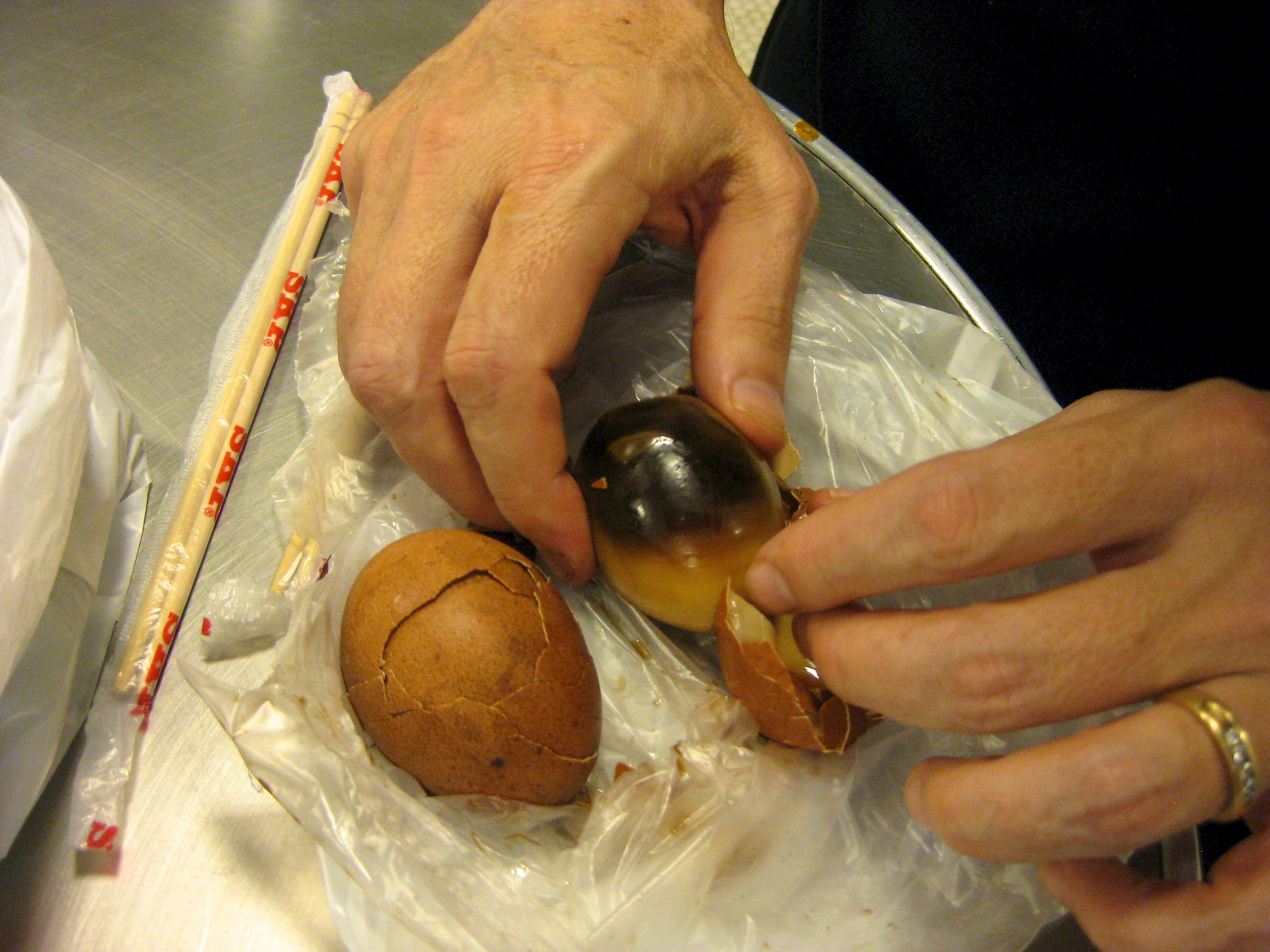
Tea-eggs or marbled eggs
A dish of the region, chicken-rice.
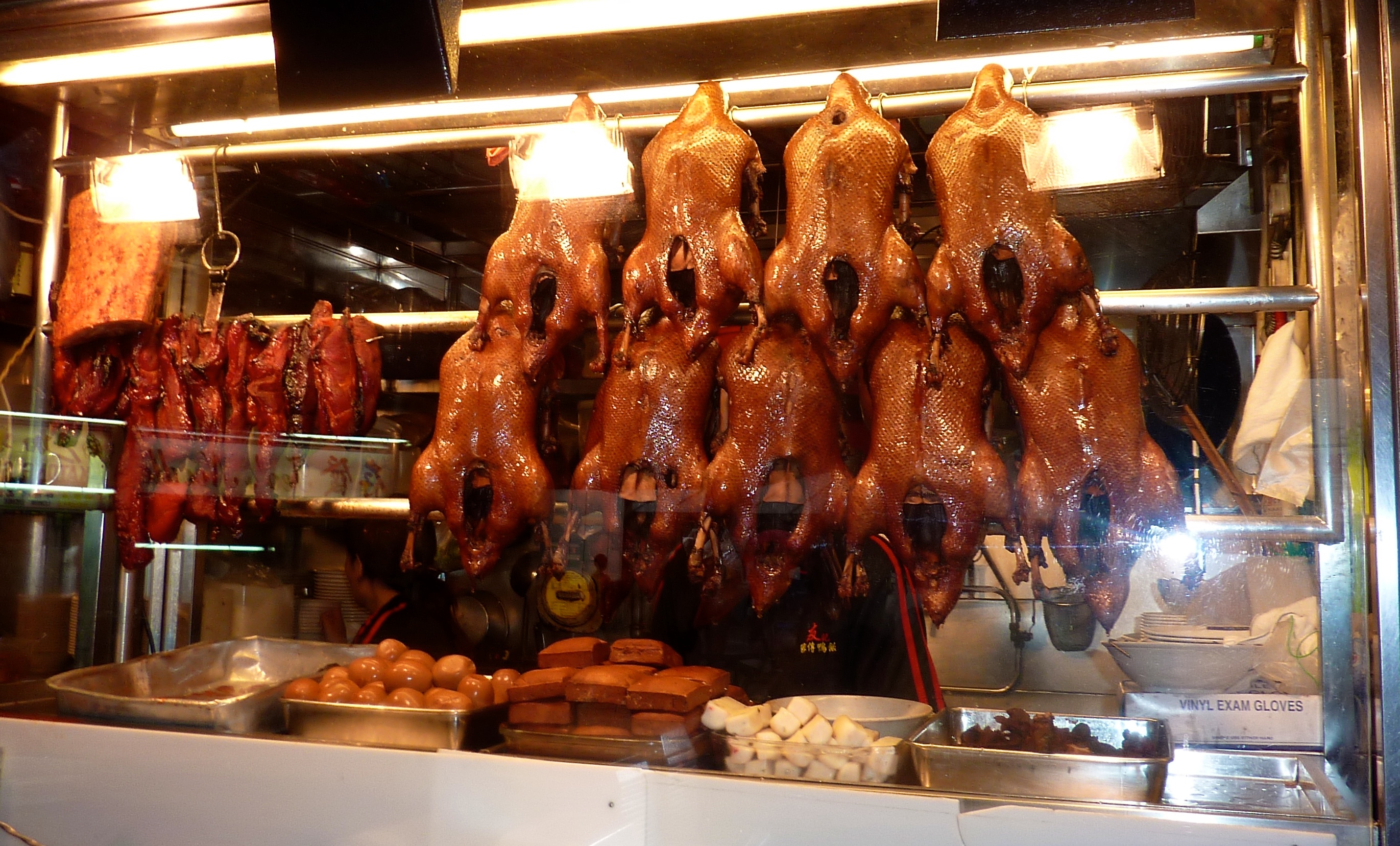
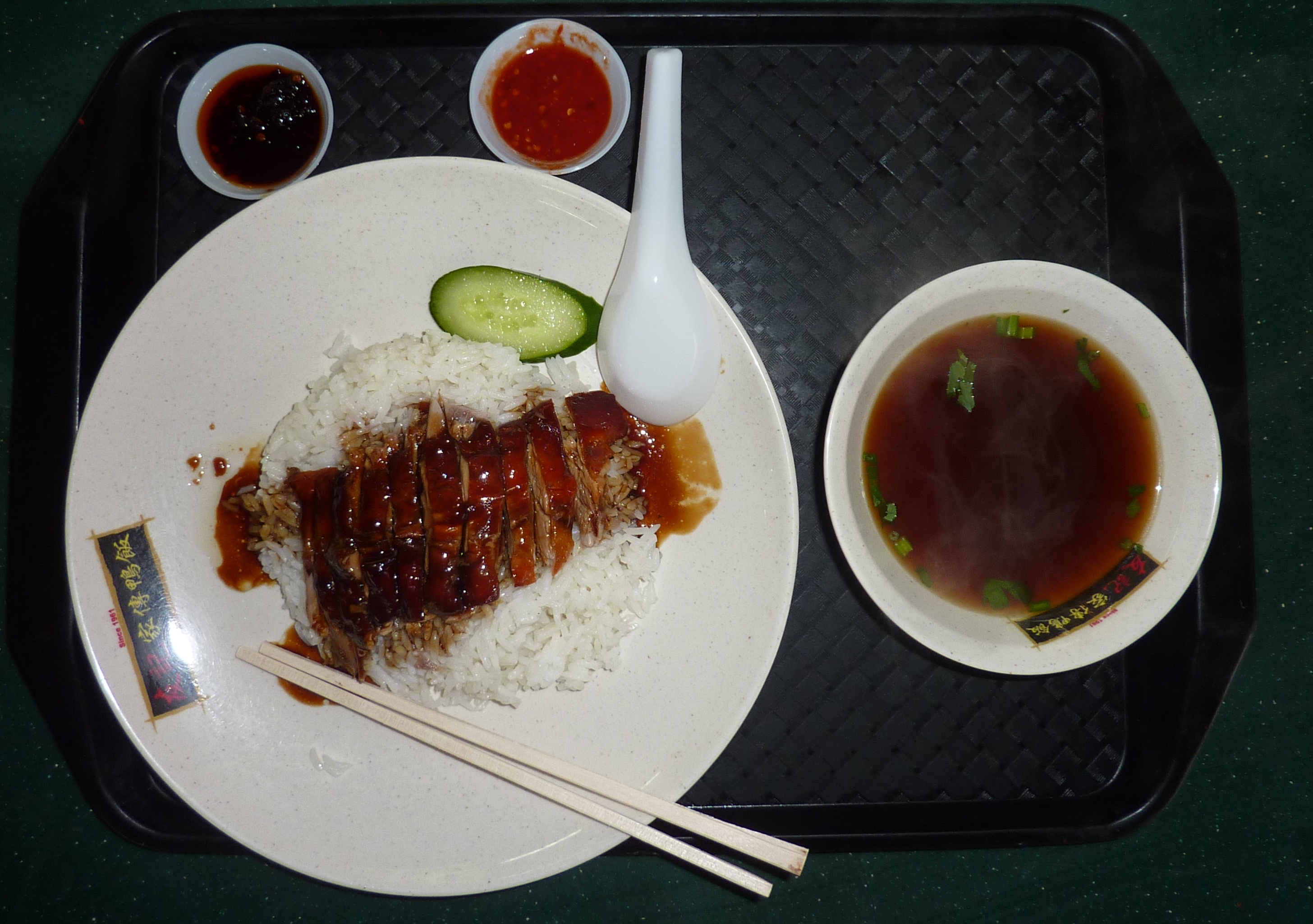
Two different versions of duck with noodles.
Radish dumplings and although they do not look that good, they were delicious.
And the unusual desserts, shaved ice with fruit – fresh and canned mixed.
Yes, it was yummy!
Another dessert we bought on the street from the motorcycle vendors, scattered all around the city were ice cream sandwiches.
Most of the ice cream vendors were seniors and husband and wife. Cost – one Singaporean dollar, about 75 cents. We wanted to help the seniors…so we ate several the week we were there.
The ice cream comes in a big cardboard box and they slice it with a big knife and place it in rainbow colored sweet bread.
They had several flavors, the basics – chocolate, chocolate chip, strawberry and lots of other more exotic fruits – mango, honeydew, durian, and sweet corn. It was best when the ice cream softened and melted into the bread.
One evening we met up with Dave and Fatima (they live in Germany) and went to the popular Glutton's Bay Hawker Market.
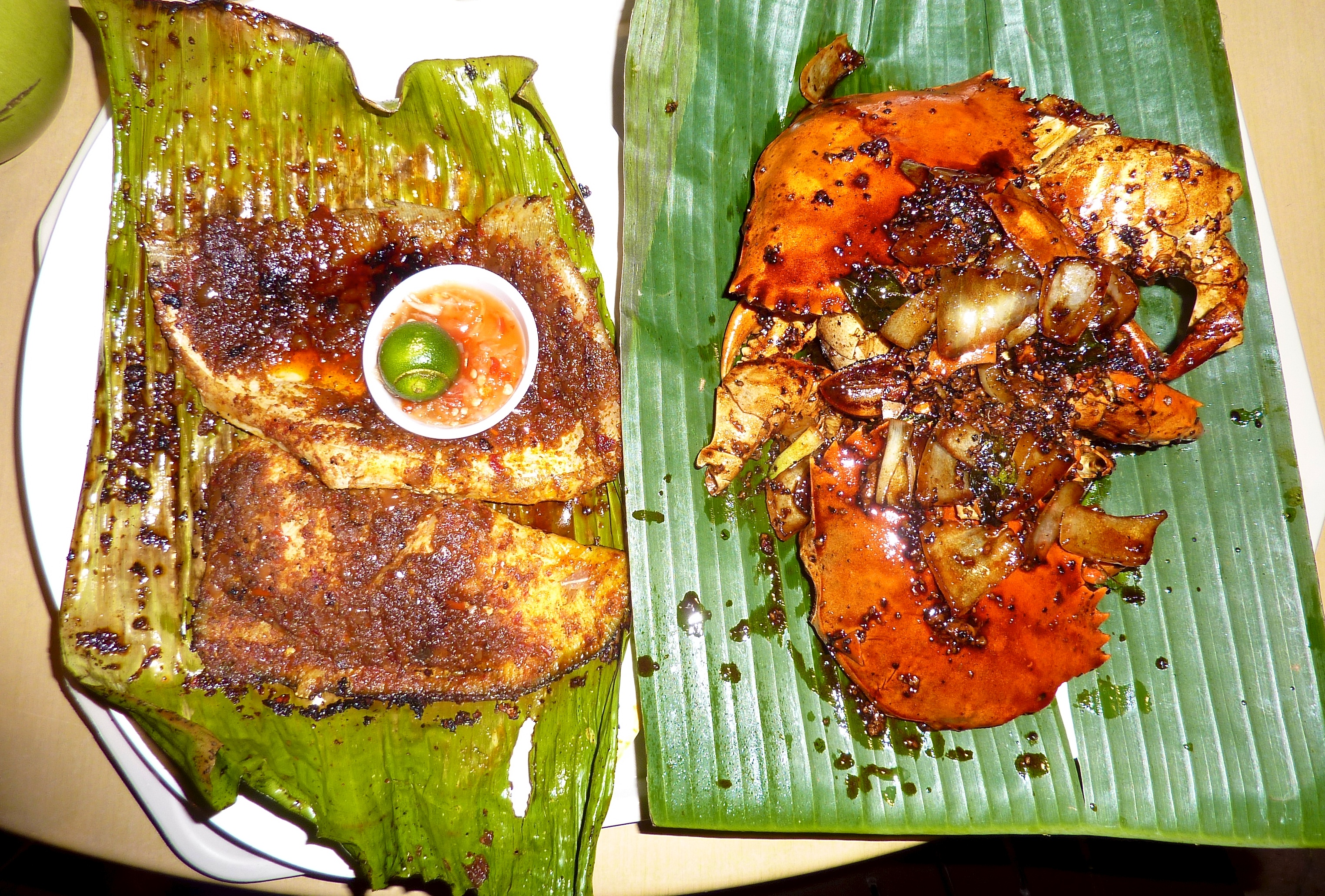
We ate the black pepper crabs and grilled stingray – both are specialties of Singapore.
D stood in line for 30 minutes for the black pepper crabs.
Worth it? Not really. Good but expensive and a long wait. We actually enjoyed the grilled stingray more, and the coconut juice fresh from the shell.
Seaweed Pringles anyone?
We took a 4-hour cooking class with Ruqxana, the one on the right. The class was in her home.
She used all fresh ingredients. We made a Cambodian dish – chicken curry with young jack fruit, one Indian – spice mutton with caramelized onions and one Indonesian – fish curry in coconut and tamarind gravy with basil.
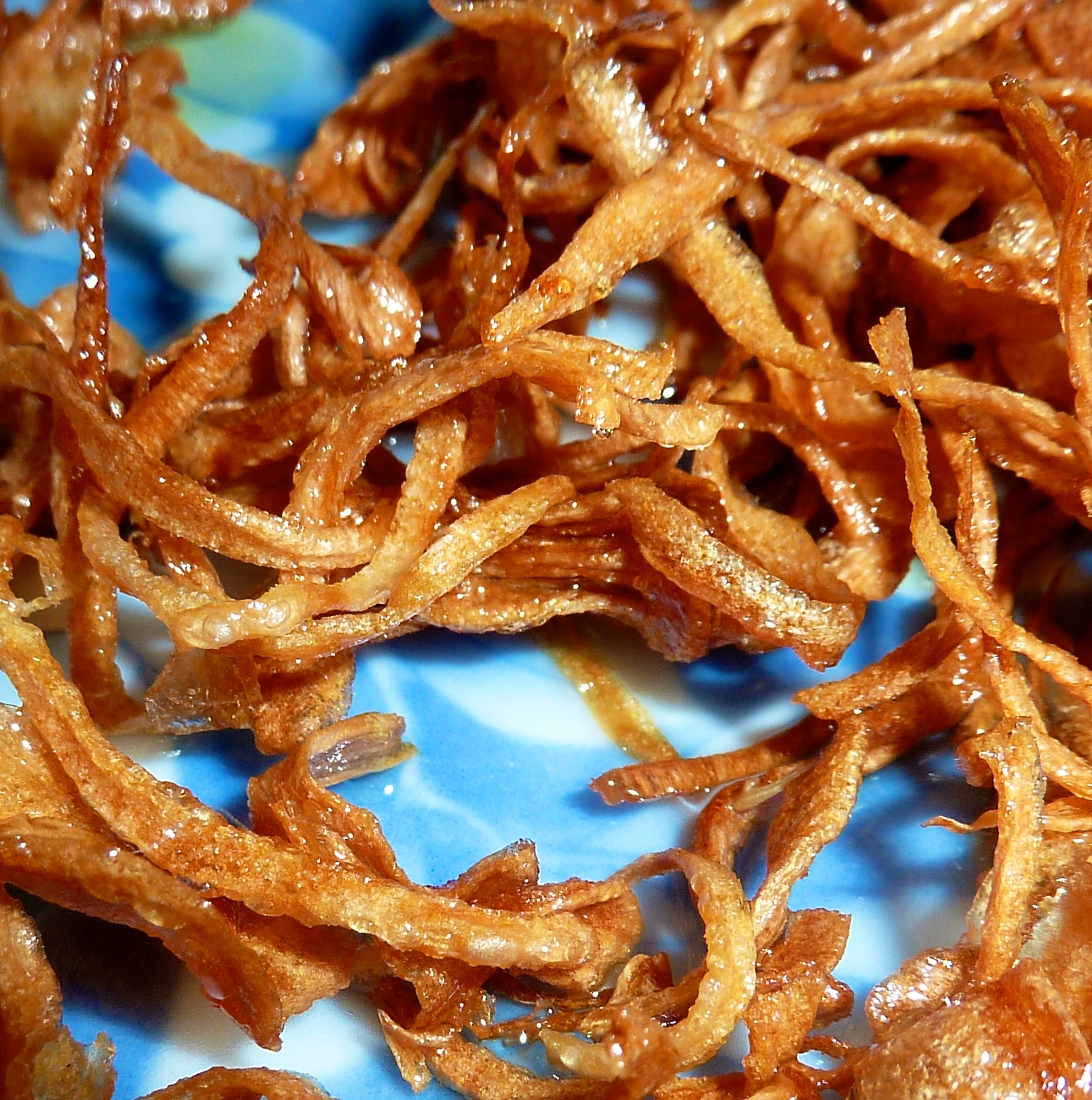
The caramelized onions were cooked to perfection!
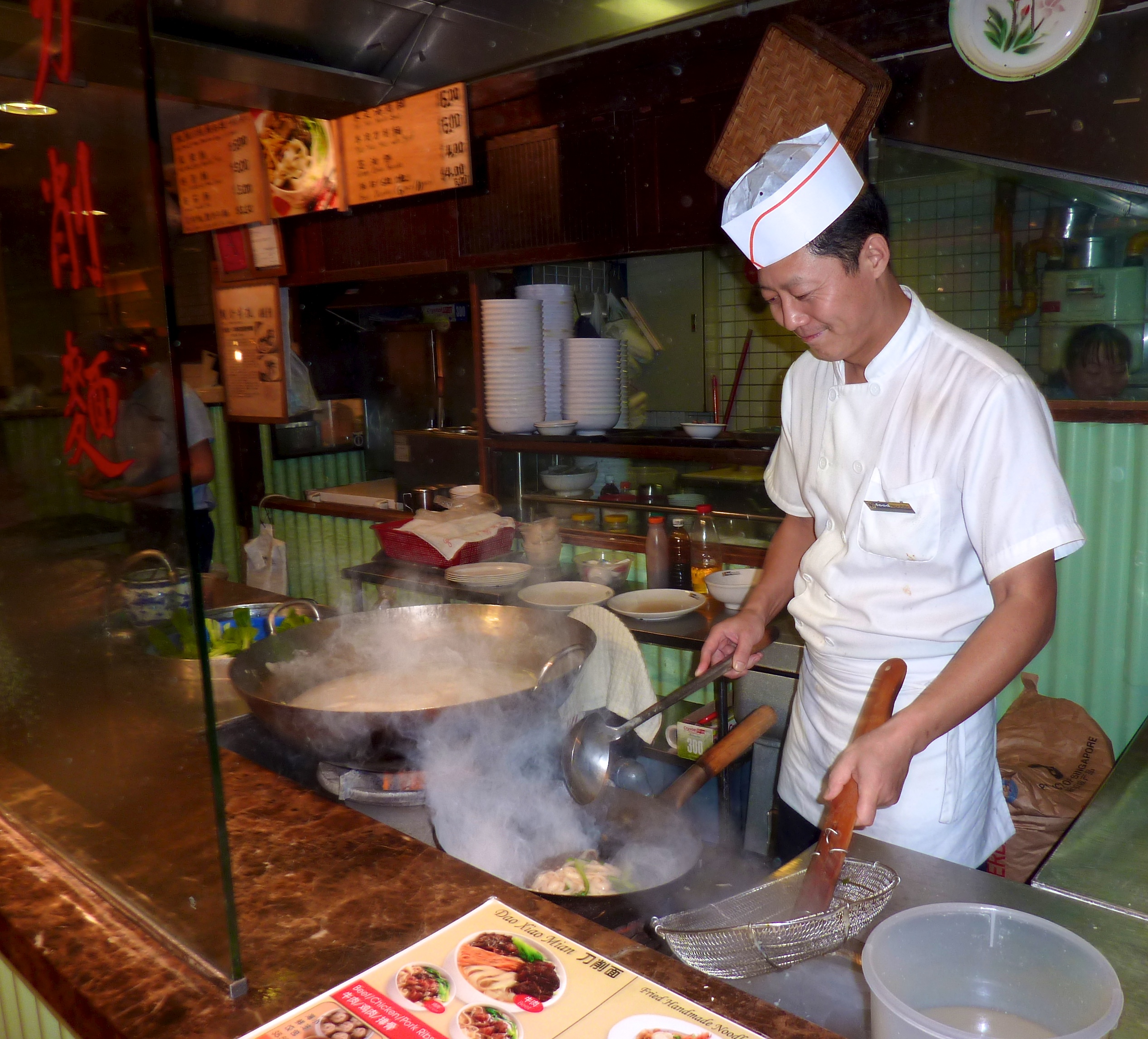
Okay Okay – I know I have pretty much shown you every meal we ate…but I have just one more to show you. Handmade noodles. The best, and very fun to watch the chef make them.
PLAY
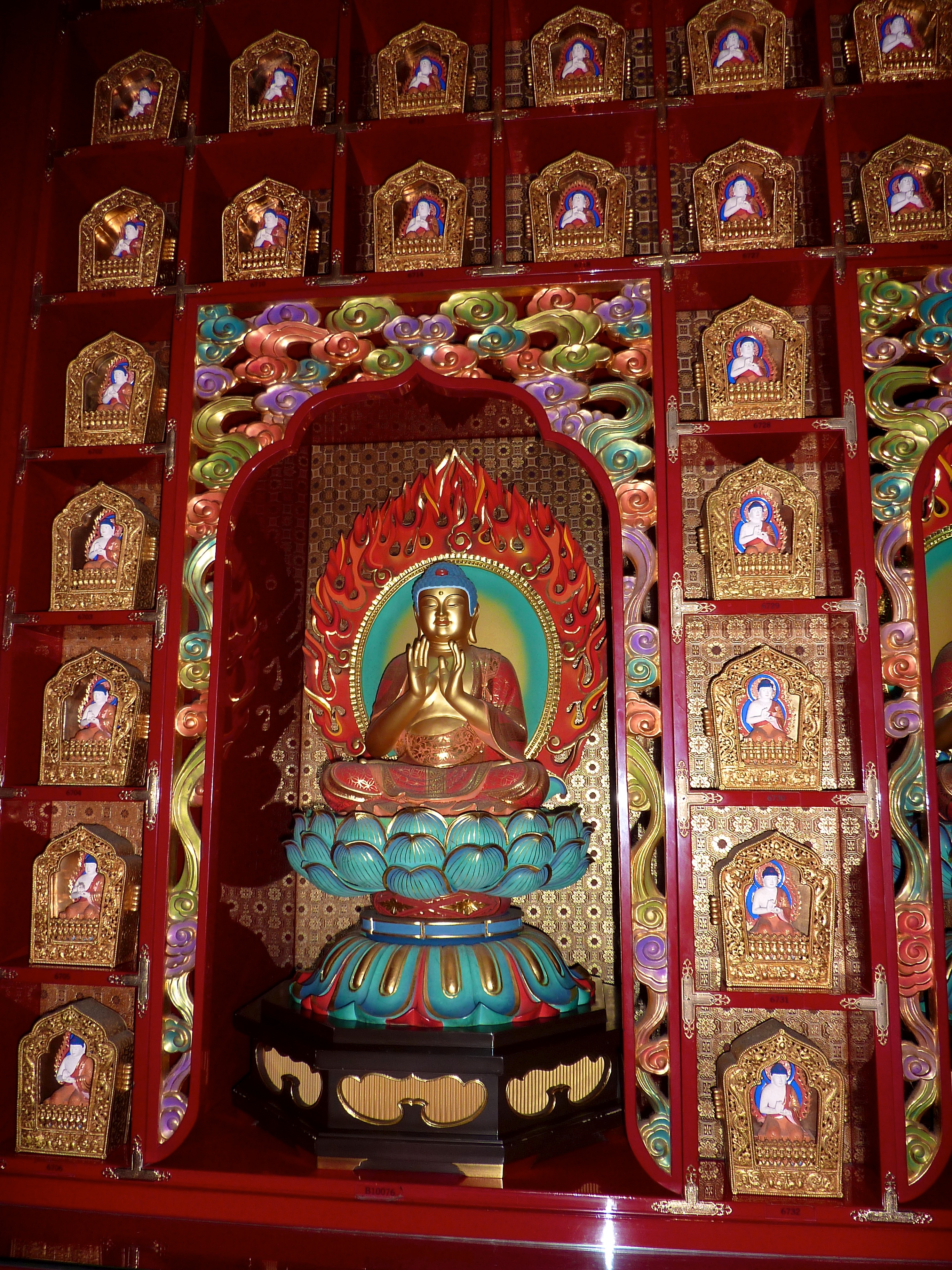
Visit to the Buddha Tooth Relic Temple and Museum
Except for the weekend, D worked every day we were there. So a lot of the Play is me playing! The Buddha Tooth Relic Temple and Museum houses the sacred tooth relic composed of 420 kg of gold. No photos allowed in this room but I can share that it was a special room and had a very spiritual feeling.
There is a lot of controversy surrounding the authenticity of the tooth – was it really from the Buddha? Many say it is too long and looks more like the tooth from a cow or buffalo.
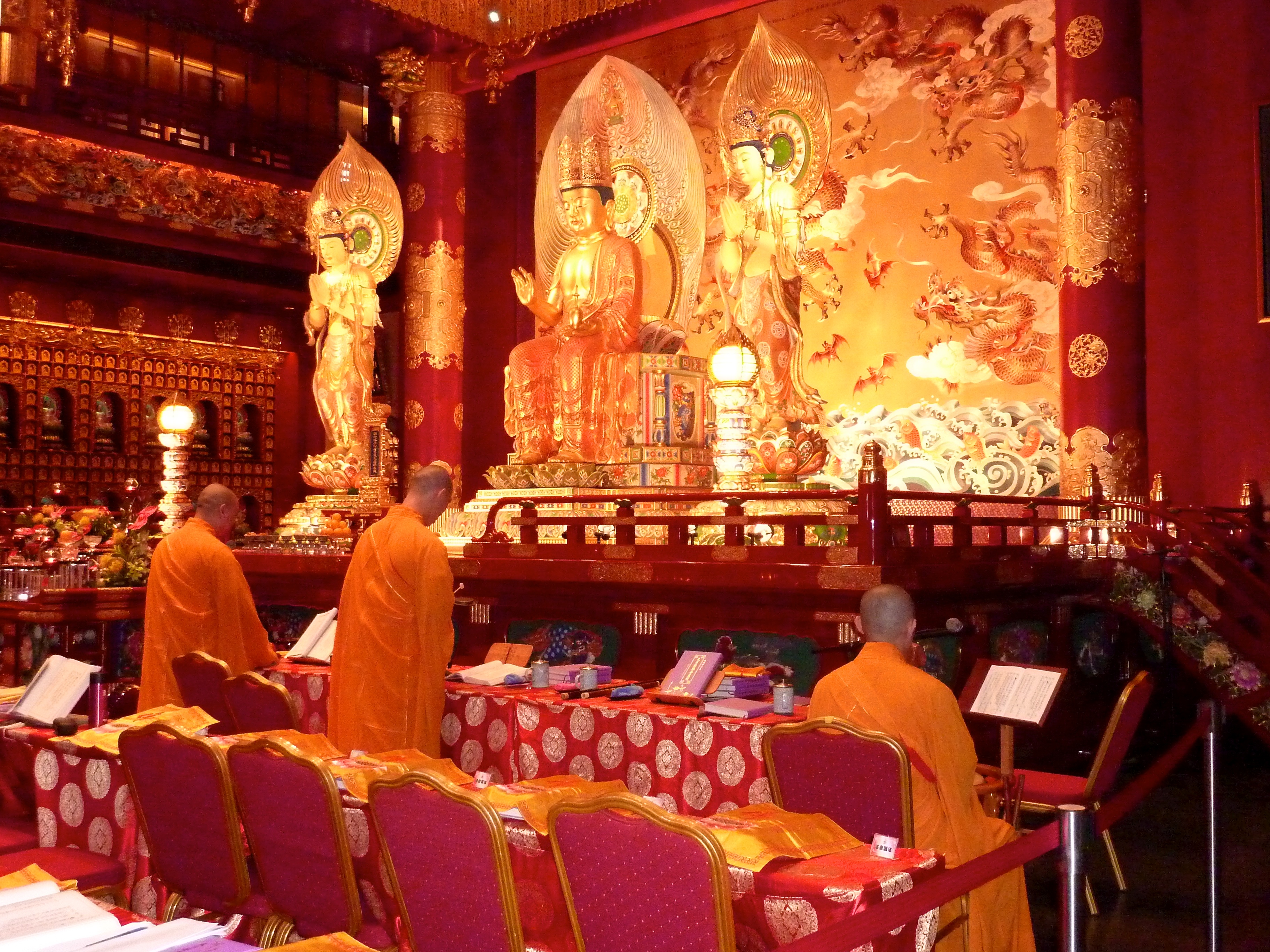
Below is the hundred dragons hall where they hold their meditation ceremonies. I was lucky to be in attendance while meditating/chants were taking place. I asked the guard if I could photograph the inside and she said yes. I felt like I was imposing on such a sacred time, but also thought how cool it would be to share this with my blog readers.
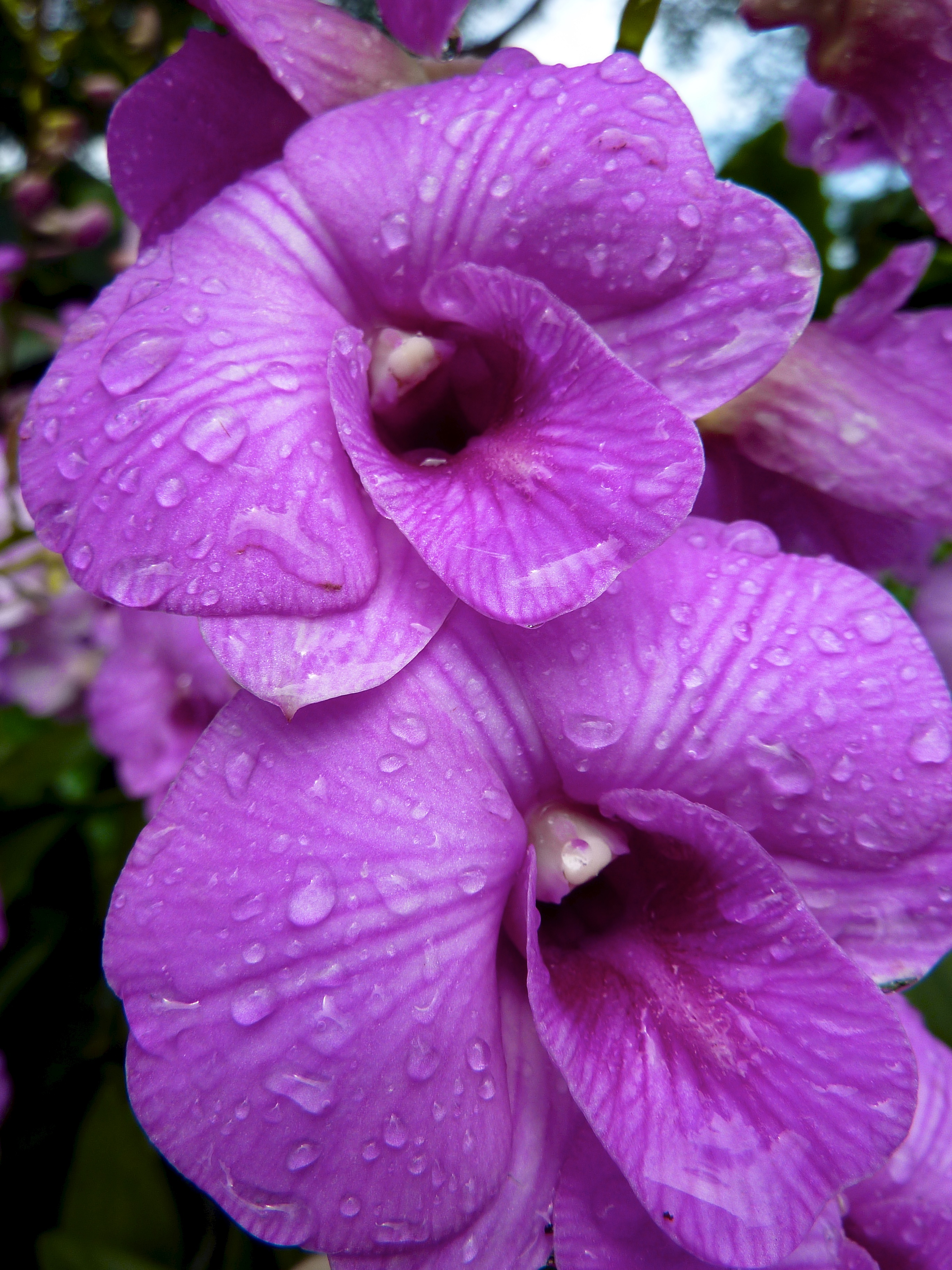
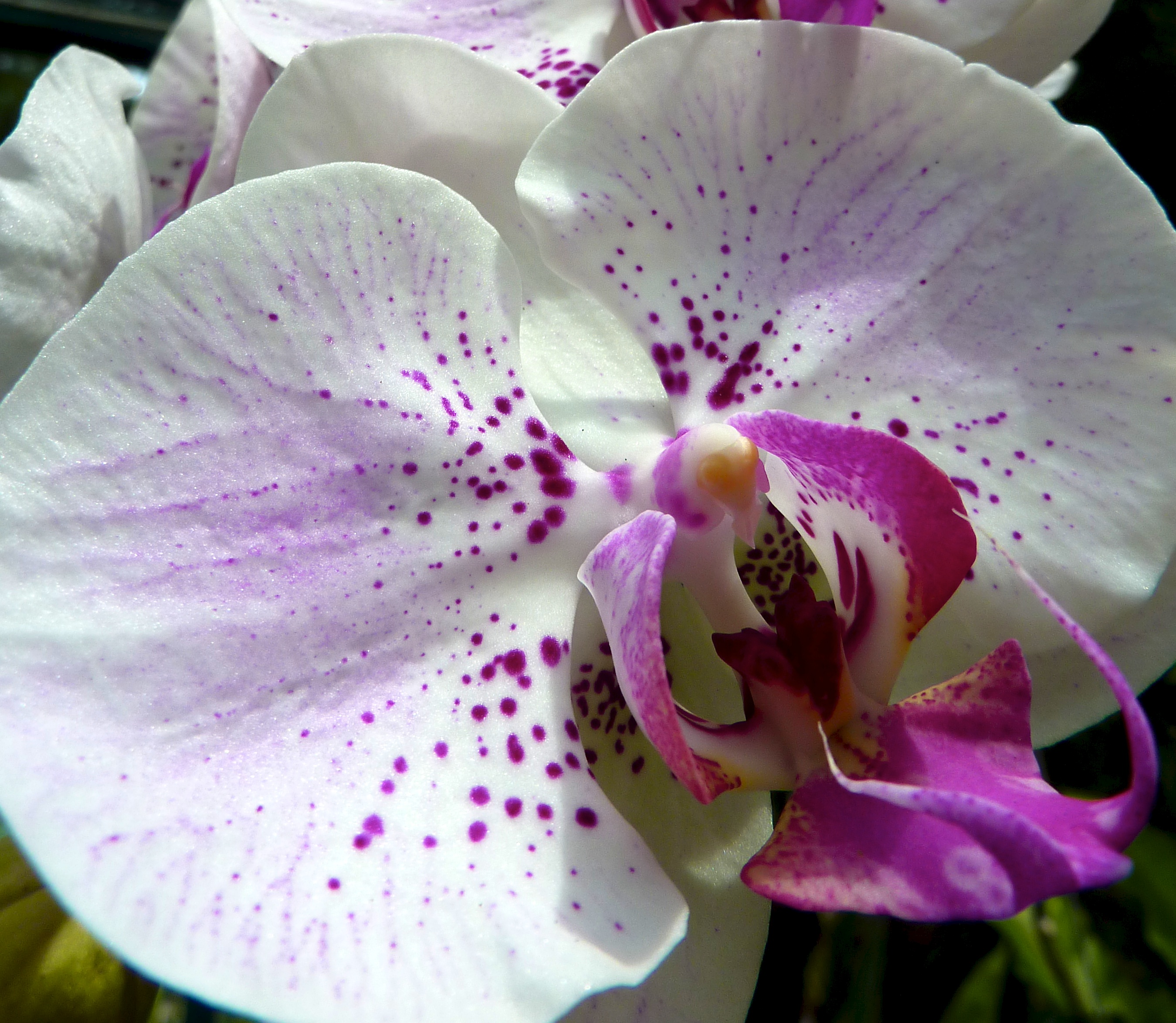
One day I visited the National Orchid Garden, that is part of the Botanical Gardens.
It was extremely impressive. I thought it would be indoors, but Singapore is so hot and humid, they grow beautifully outdoors. They have over 60,000 species of orchids, many of them rare.
As I mentioned there are many ethnicities that make up the population of Singapore, which creates very diverse and interesting neighborhoods.
Chinatown
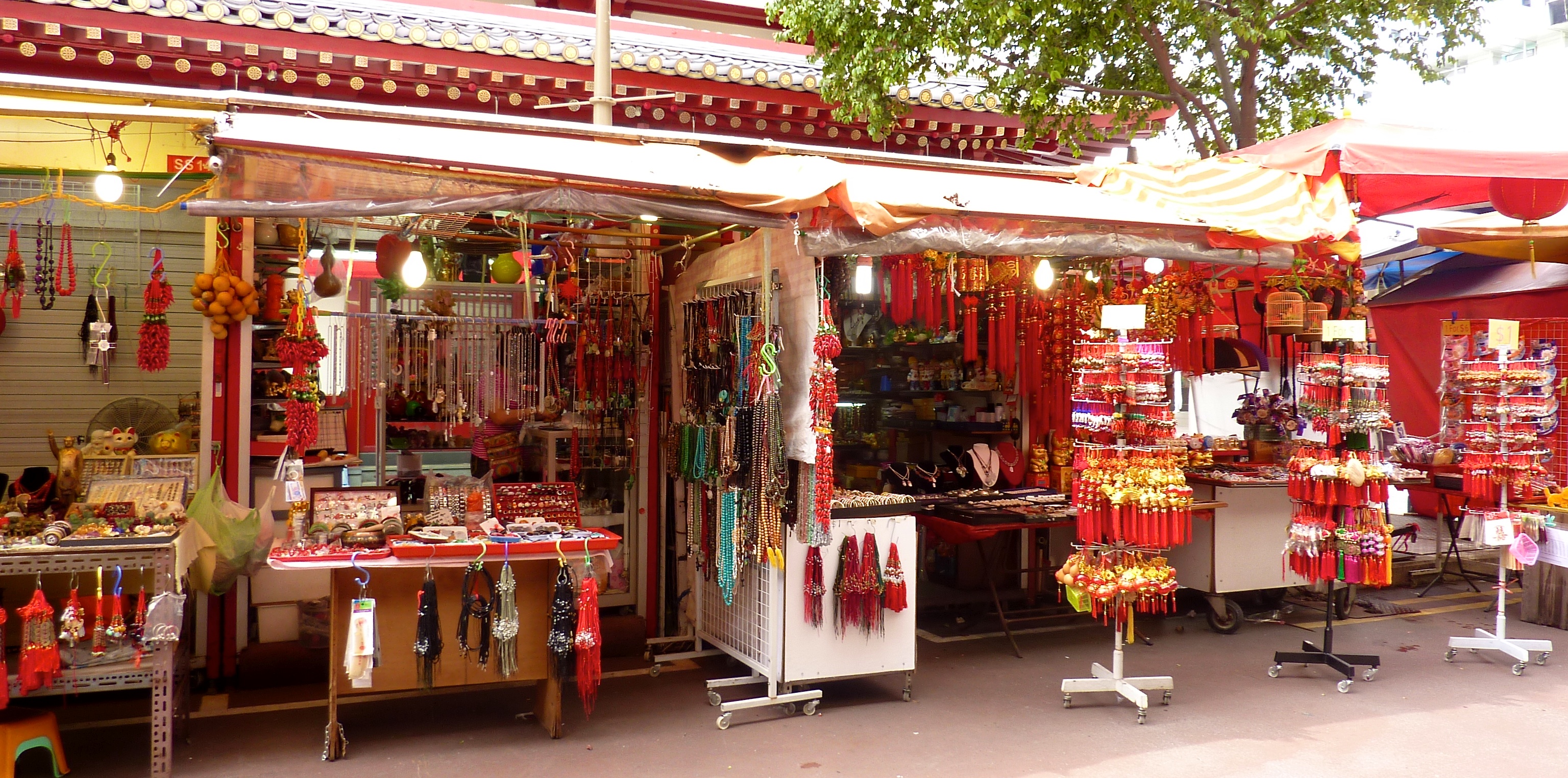
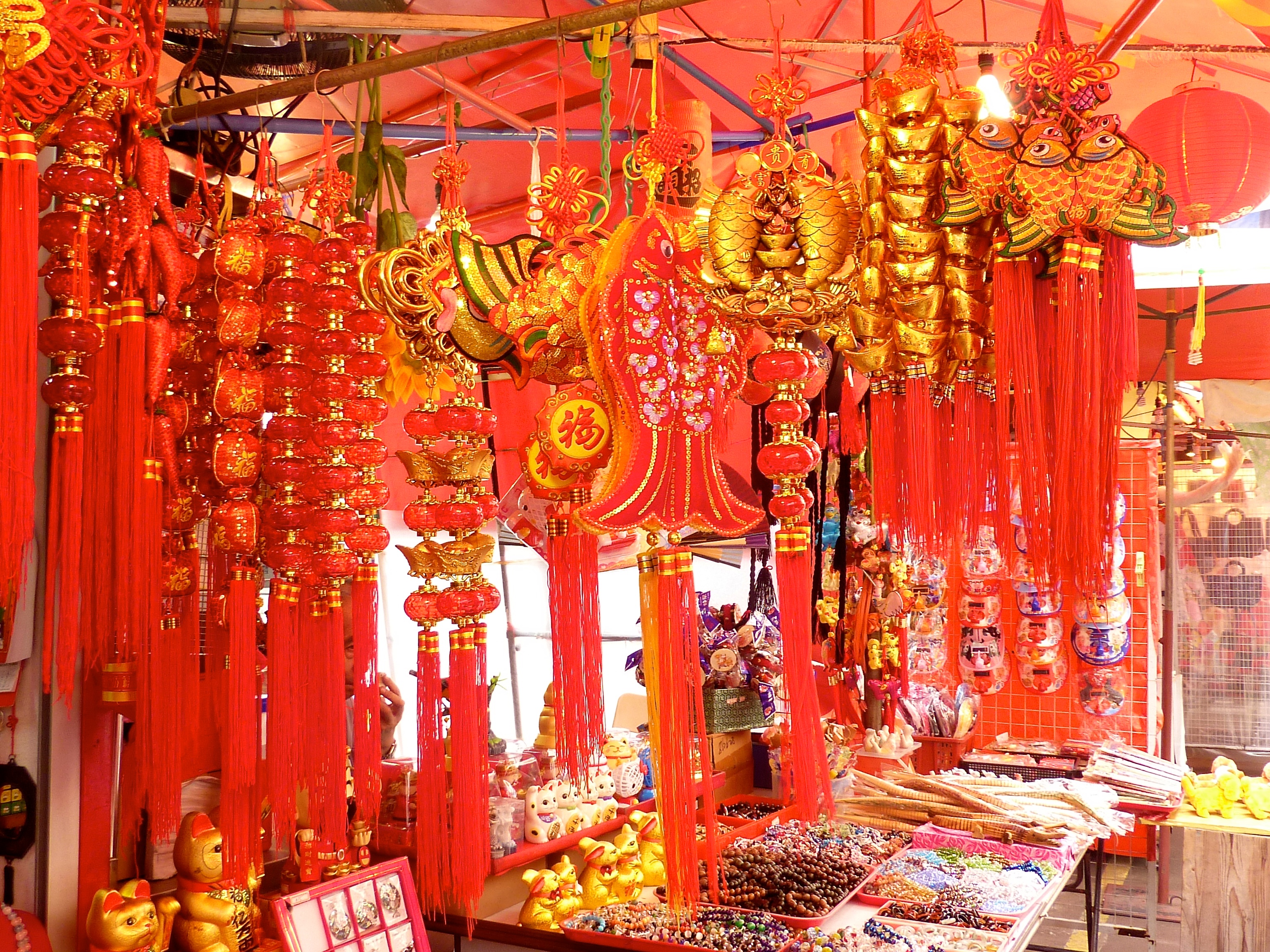
The Chinese community is the oldest and goes back to 1330. Up until 1961 Sago Lane had death houses, where people went to die. Today they house tourist shops like the stores below.
Chinatown is a colorful mix of old and new.
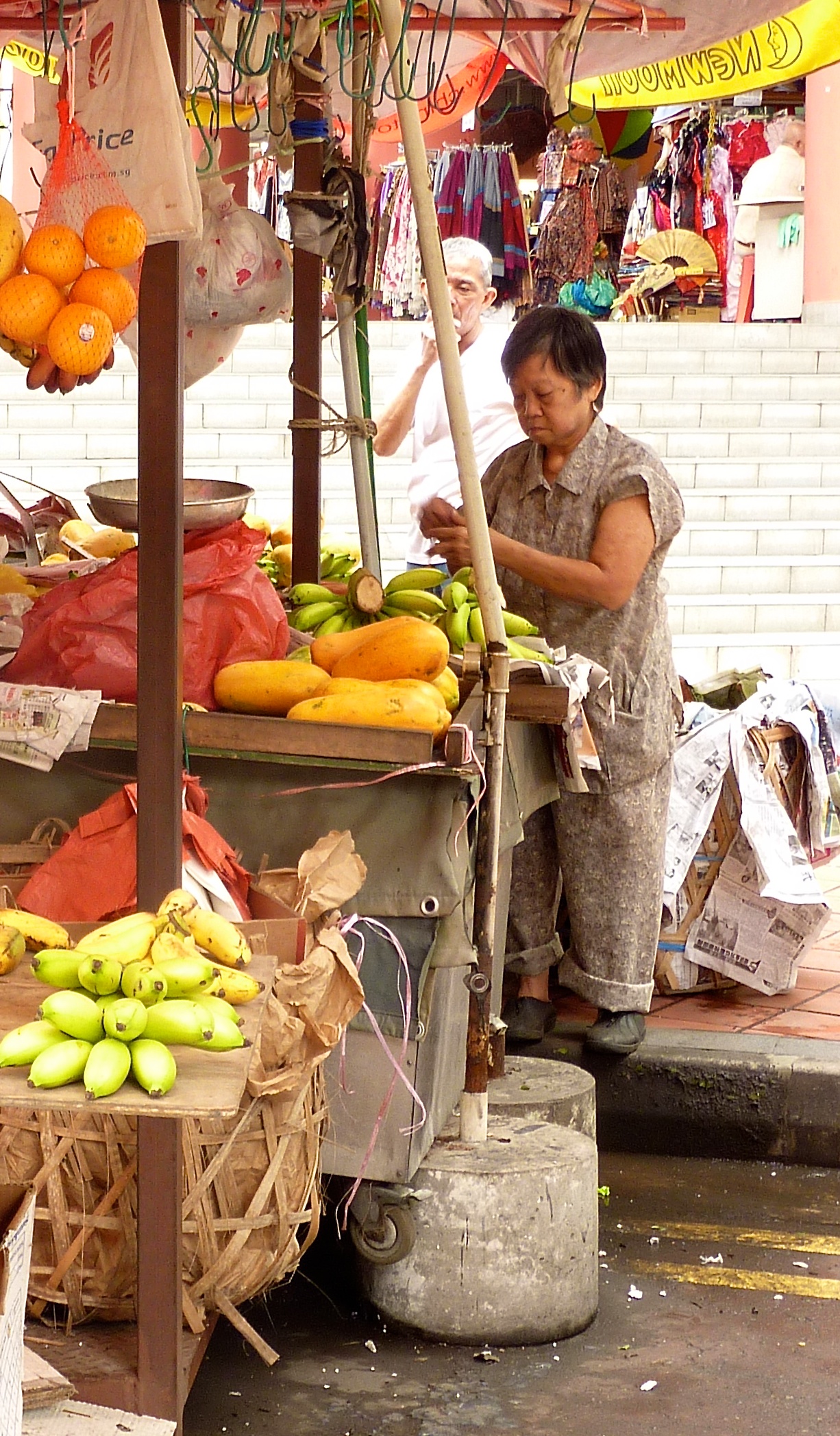
From family run stalls and medicine stores to textiles and jewelry supplies to dim sum shops.
Beautiful handmade brushes.
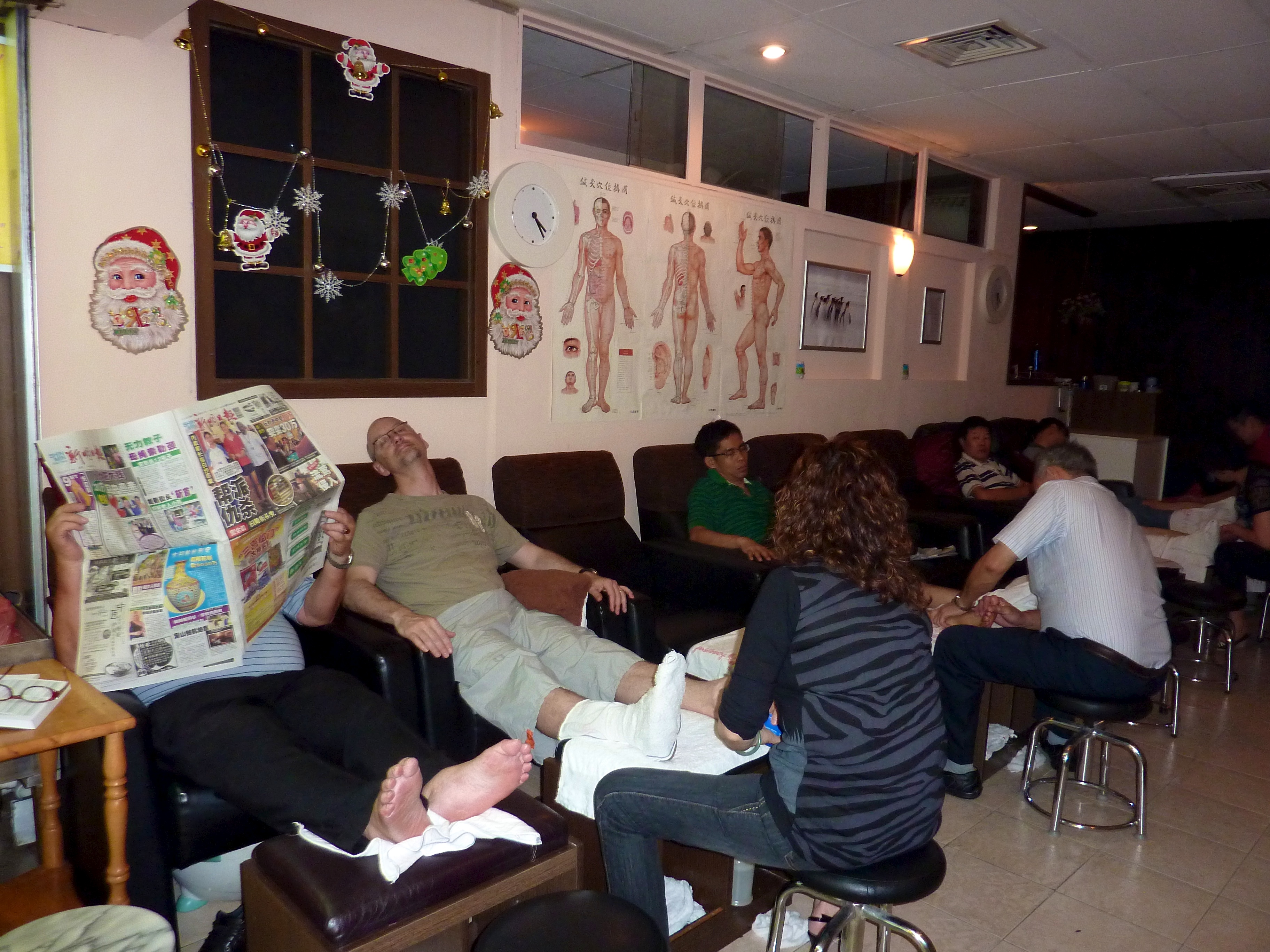
While I was checking out the EXTENSIVE jewelry supply stores, D decided to relax and get a foot massage. Was it relaxing? When I came back to meet him, the lady was pounding and I mean POUNDING on his legs. But he looks pretty relaxed here.
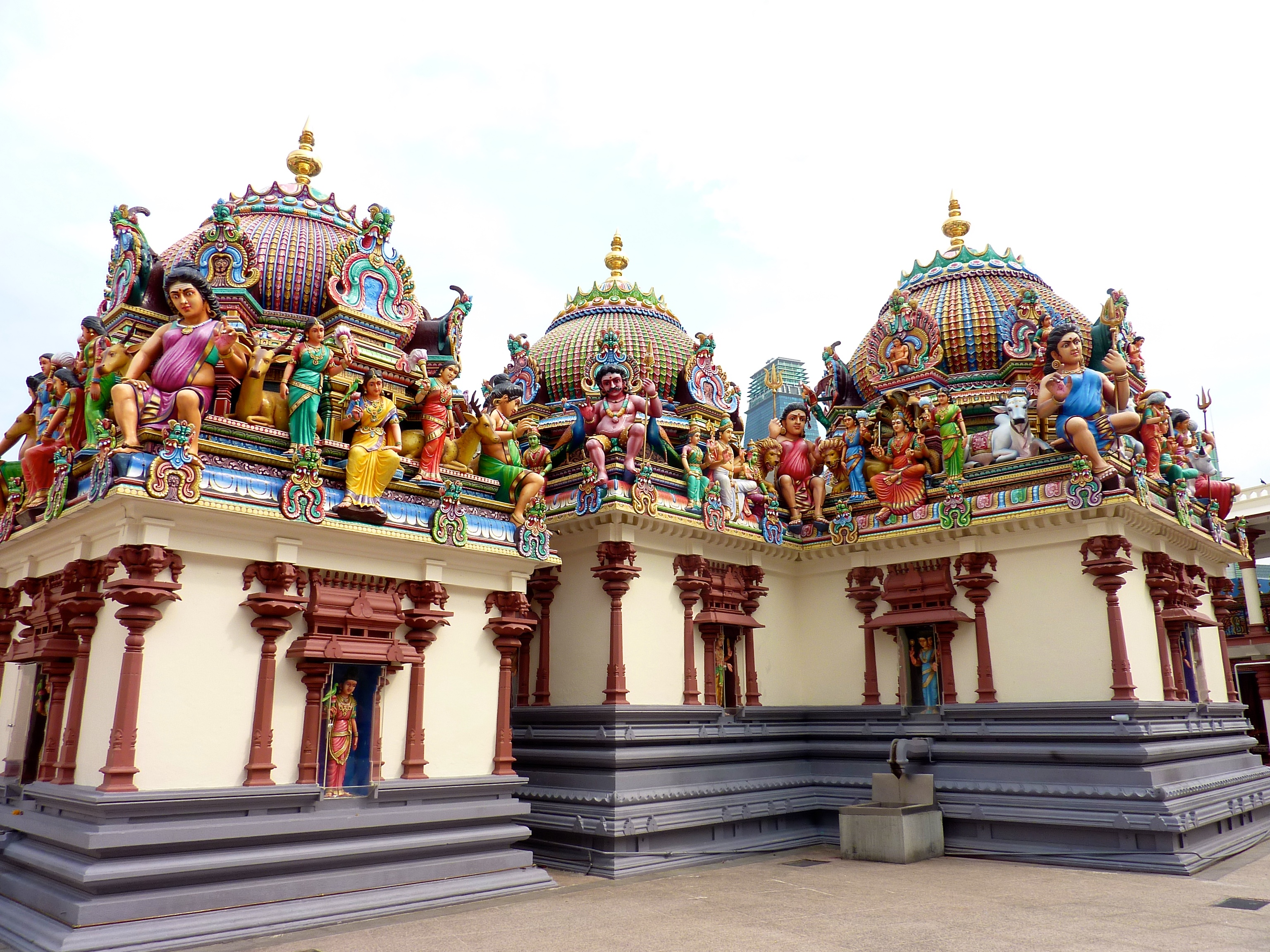
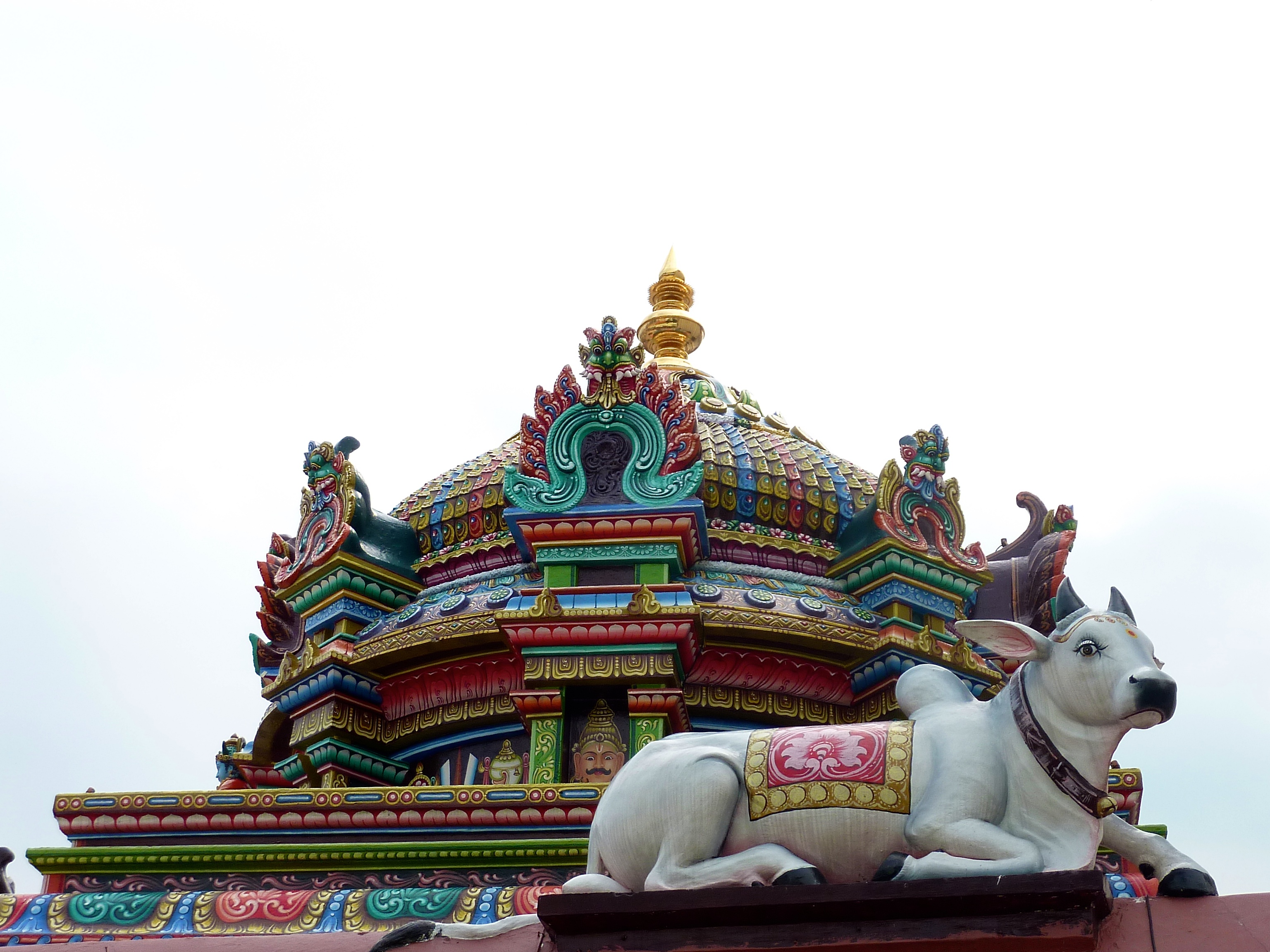
Oddly enough, the largest Hindu temple is in Chinatown, the Sri Mariamman Temple. It is also the oldest temple, founded in 1827. Sri Mariamman is the goddess known to help people.
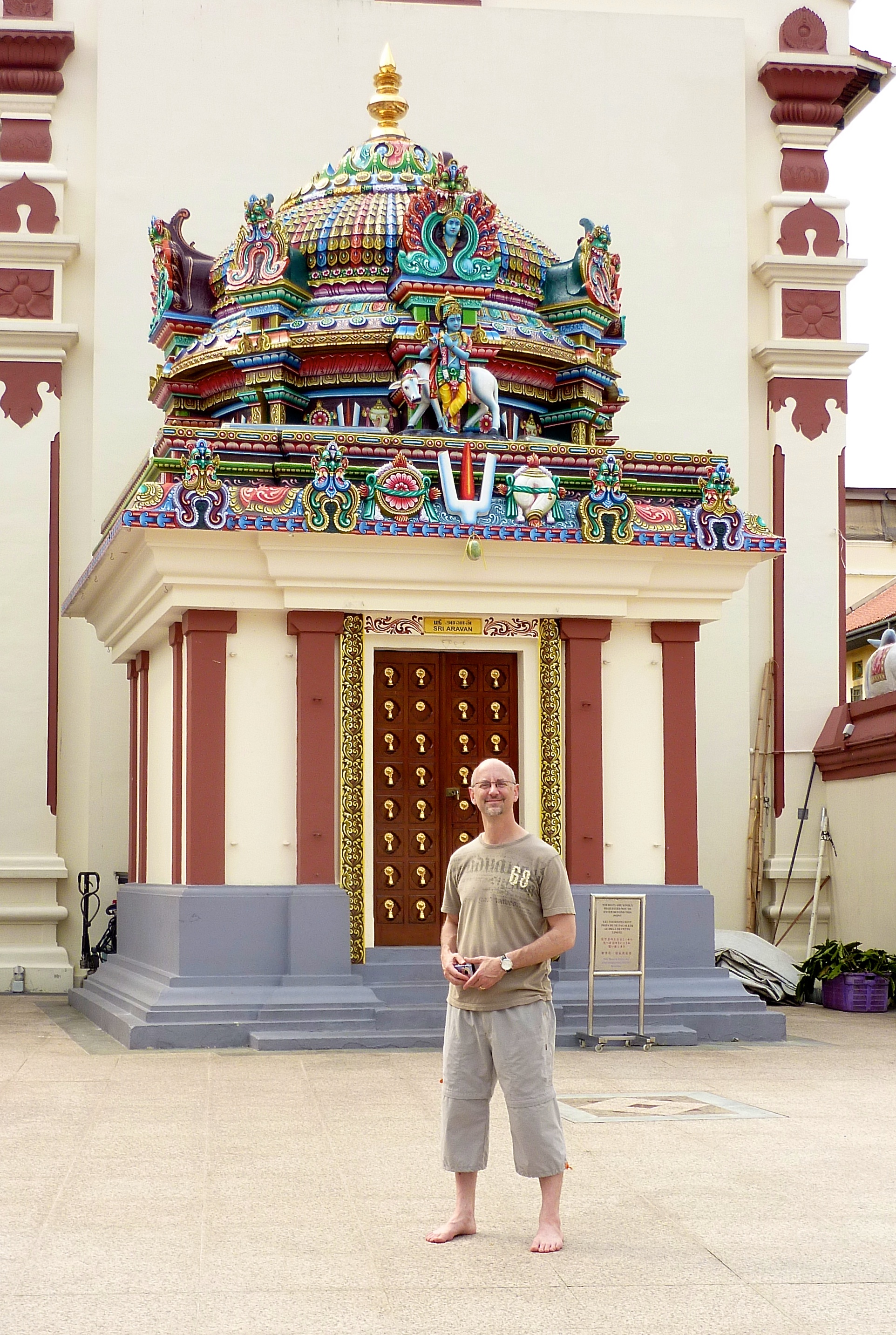
It is free to enter the temple, but you must remove your shoes. I think this is such a cute photo of D.
Since the temples inception, it has served as a refuge for new immigrants. Today it is also used for worship and community events.
The decorated roof is known as Vimana and is dedicated to the various Hindu deities.
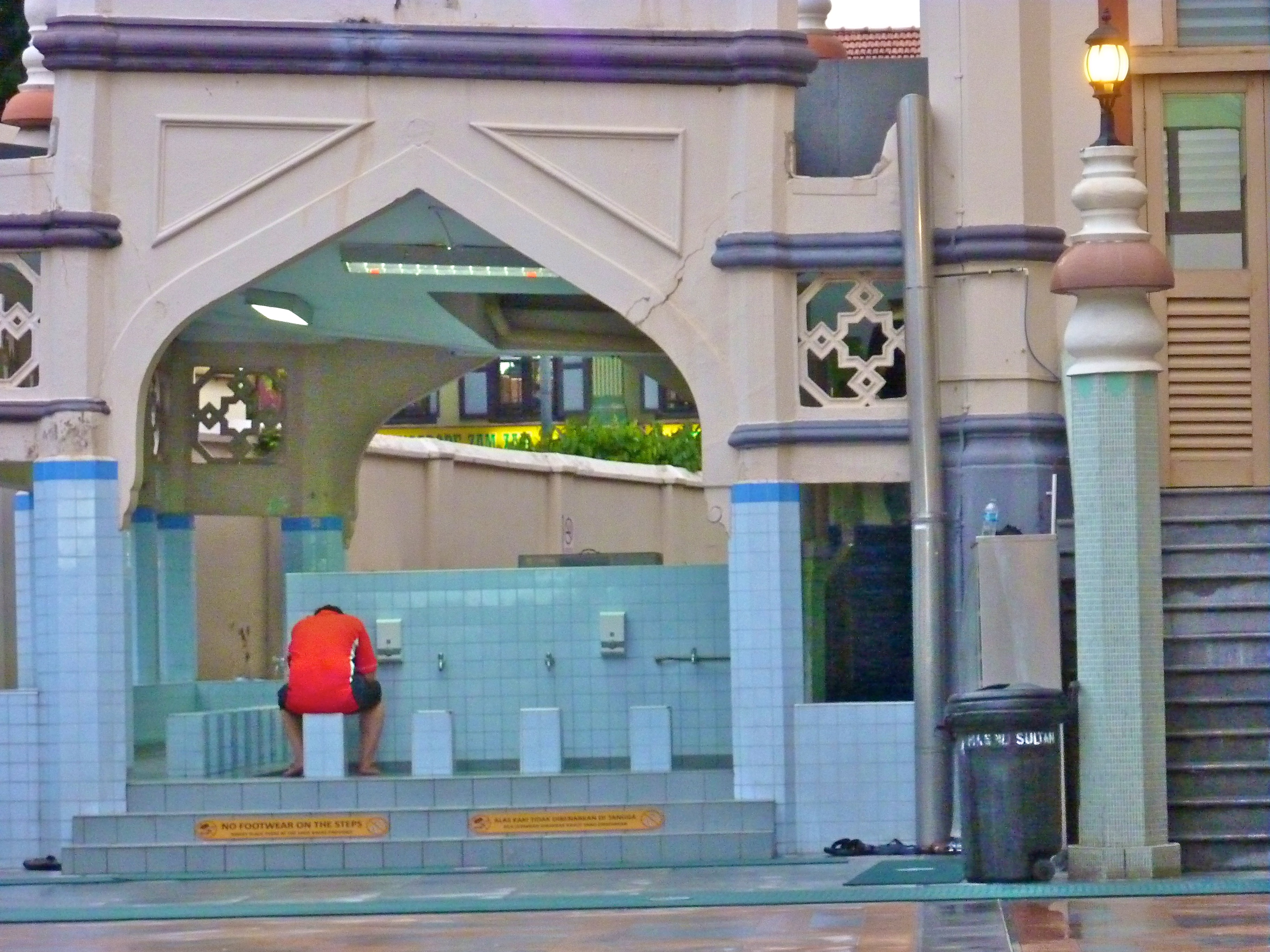
In the Muslim neighborhood, a man preparing himself (washing his feet) to enter the temple.
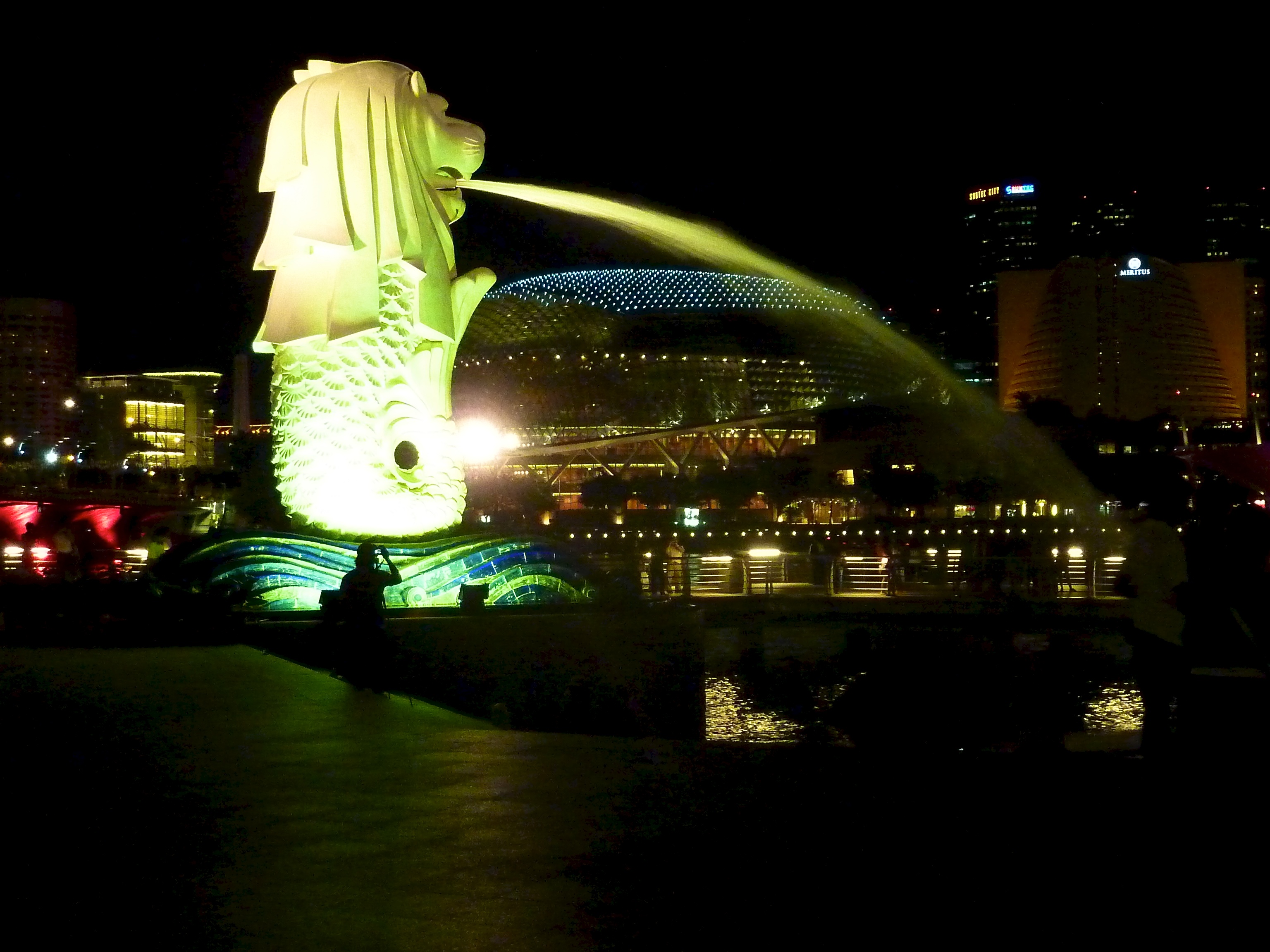
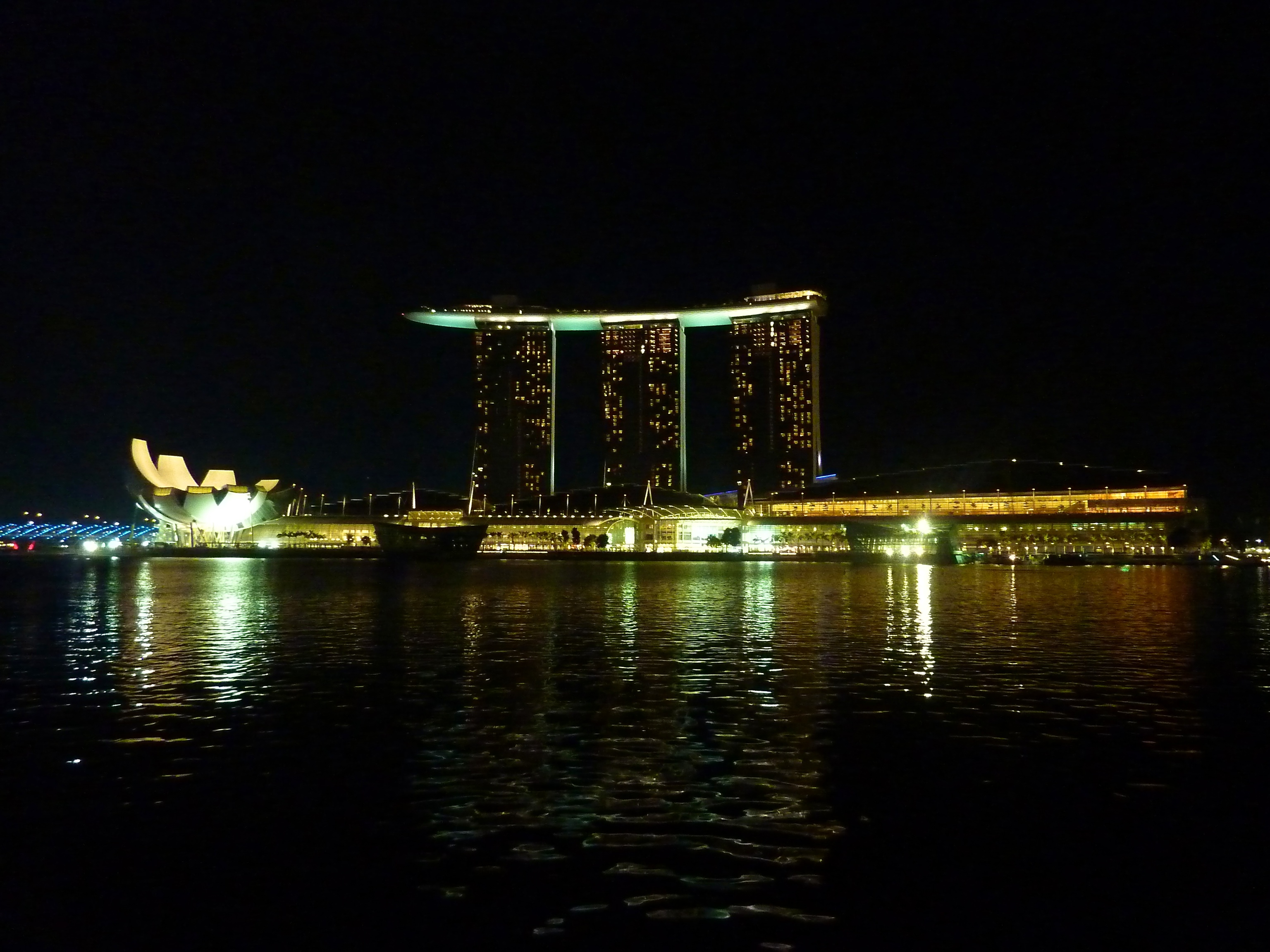
Singapore at Dark
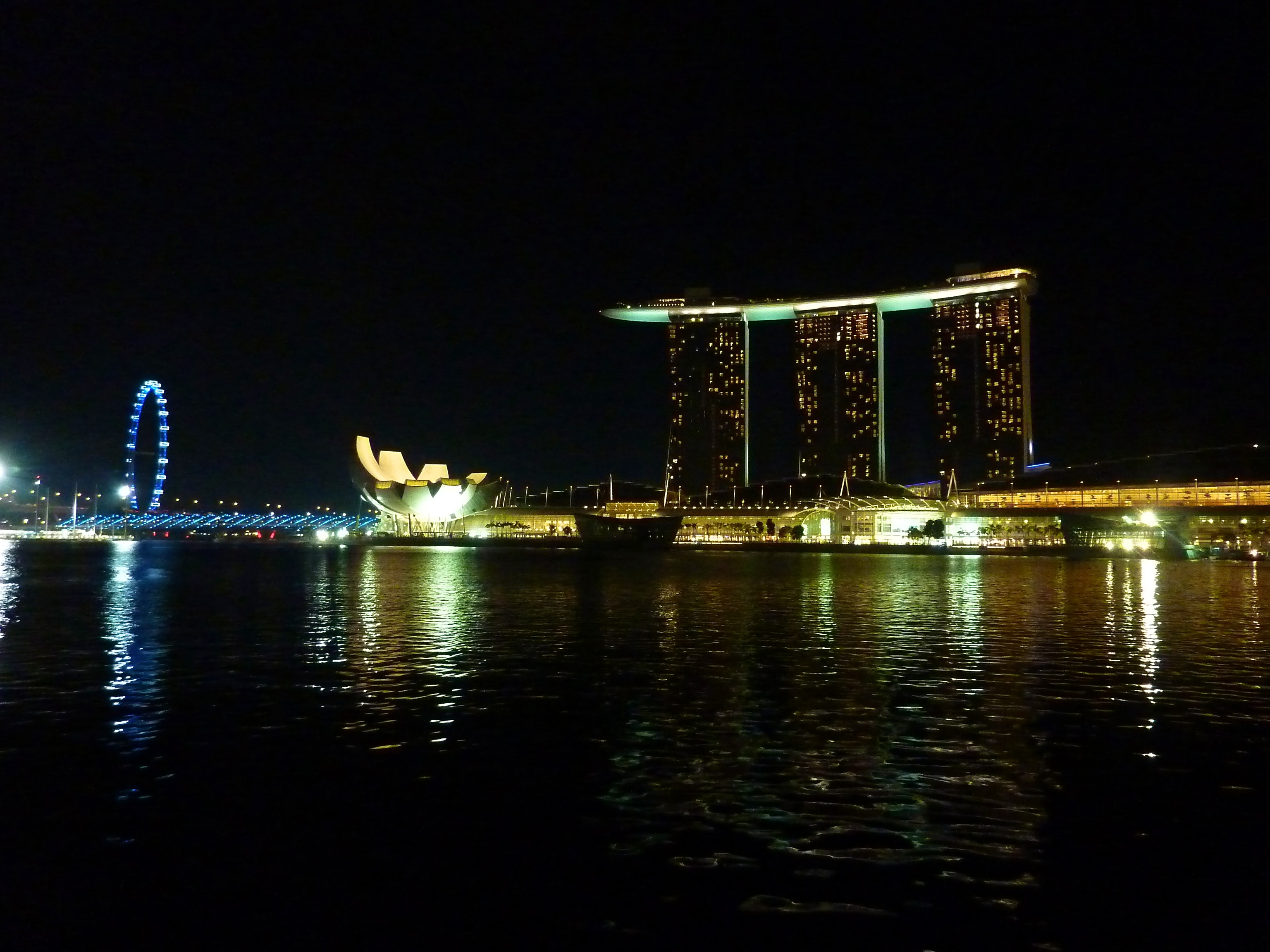
The Merlion is the city's most famous icon. It is part lion and part fish. The lion head represents Singapore's original name Singapura meaning "lion city".
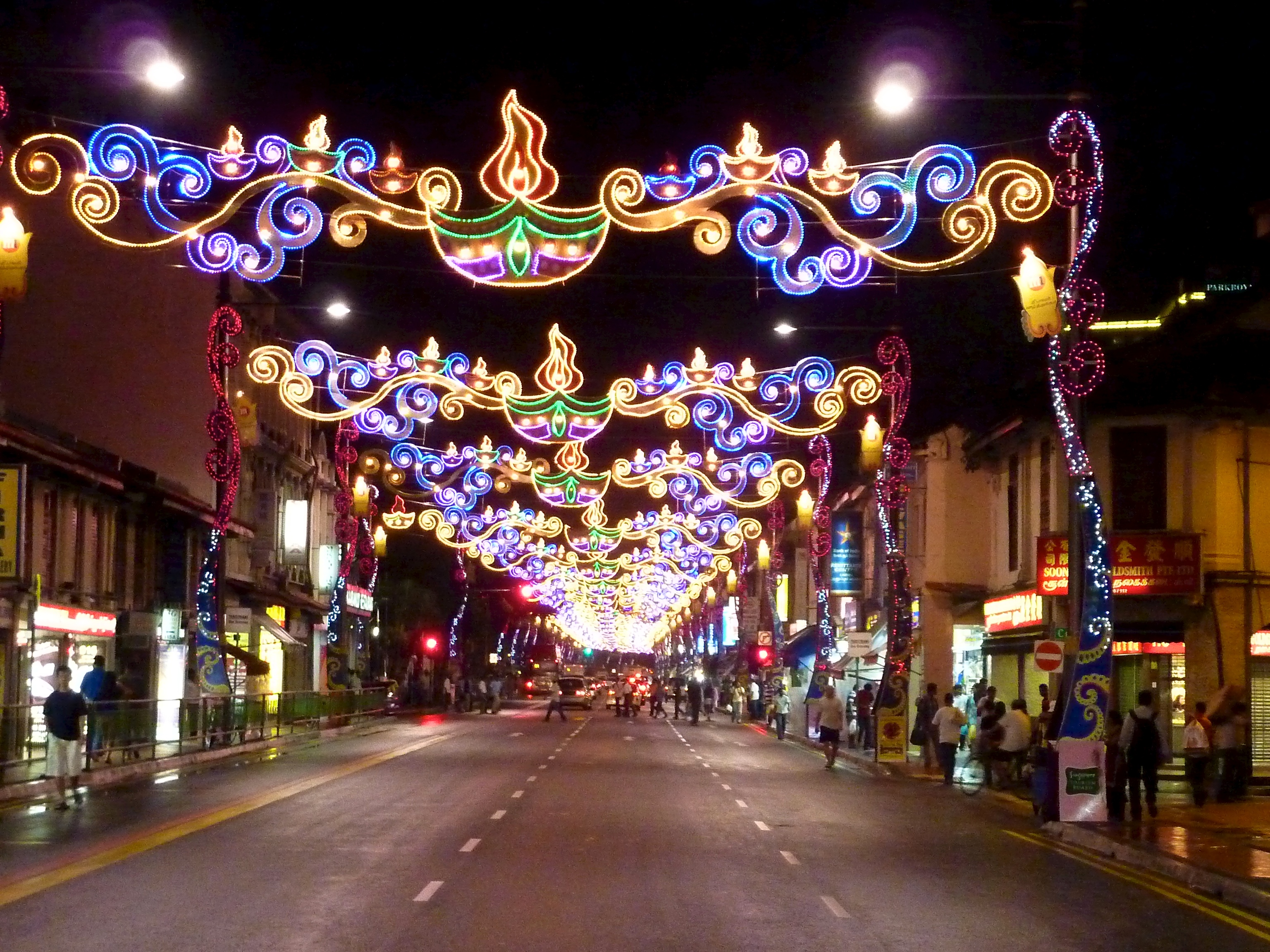
Hindus celebrate the annual festival of lights called Diwali. It is one of the most important festivals of the year and lasts for five nights. We were lucky as the night we visited Little India, the lights were still up, it was the last night for them.
Little India has a very robust night market.
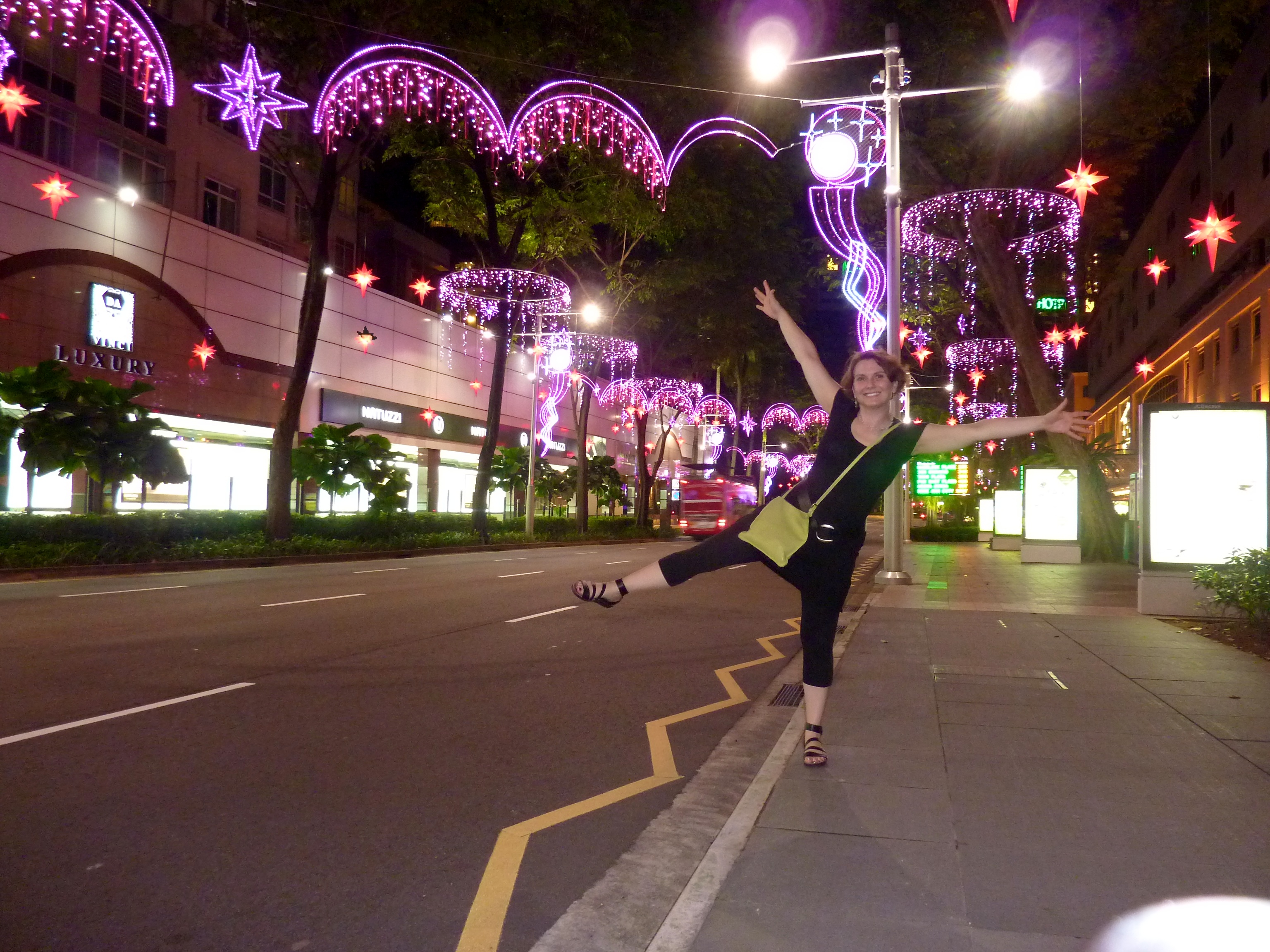
And the colorful purple Christmas Street lights on Orchard Road, the main shopping street in Singapore. They were not going to be turned on until the weekend after we left, but for 15 minutes, they were testing them so I got to enjoy them. Beautiful but odd…….Christmas lights in 90 degree weather?
Singapore was interesting to see, but too hot for me! Wish you could see a few more photos? Click on the slide show below.
Yesterday D took off work and we drove an hour and a half into the western part of Belgium to go to
St. Nicholas Hostellerie – a two-star Michelin restaurant.
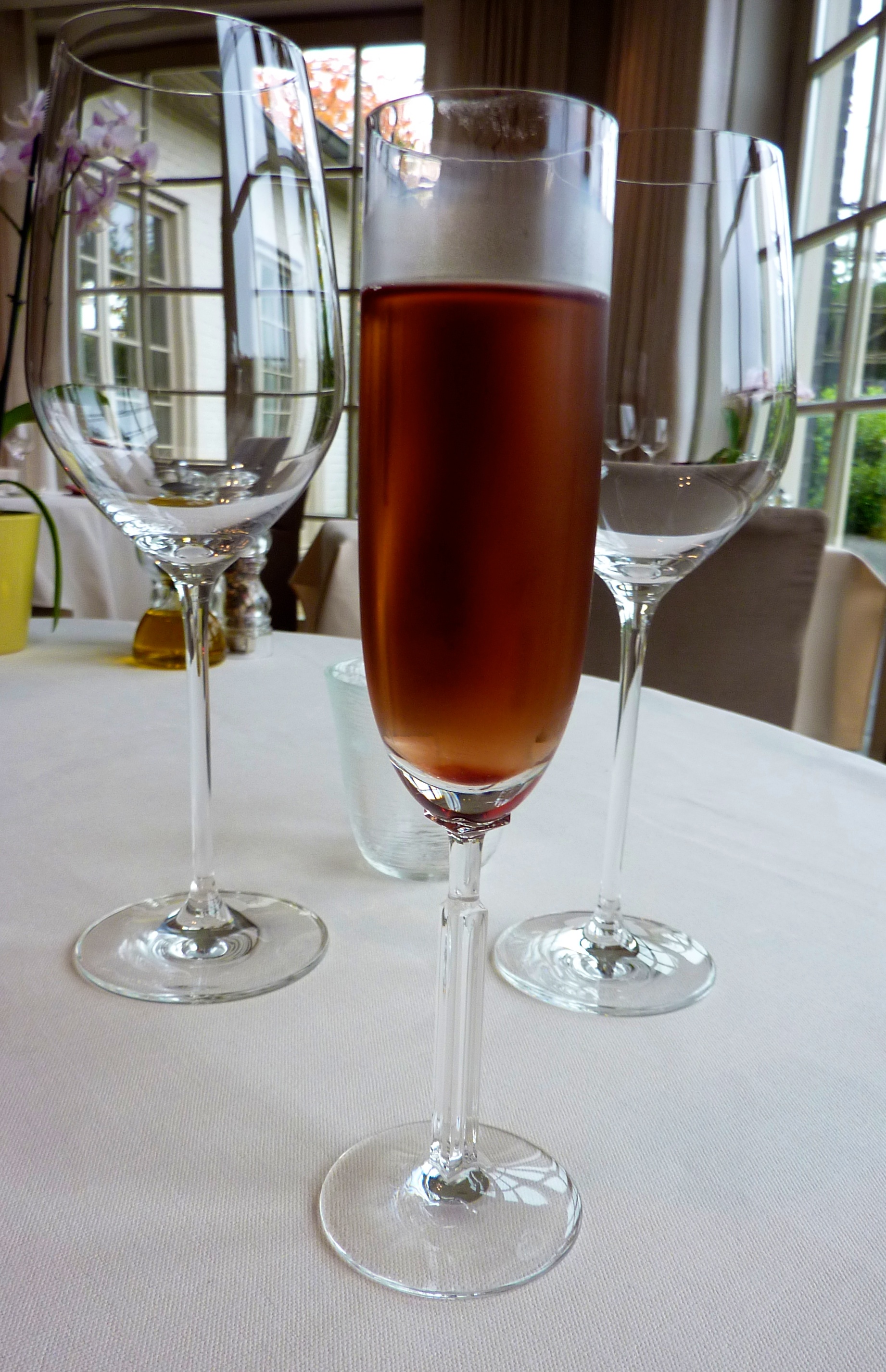
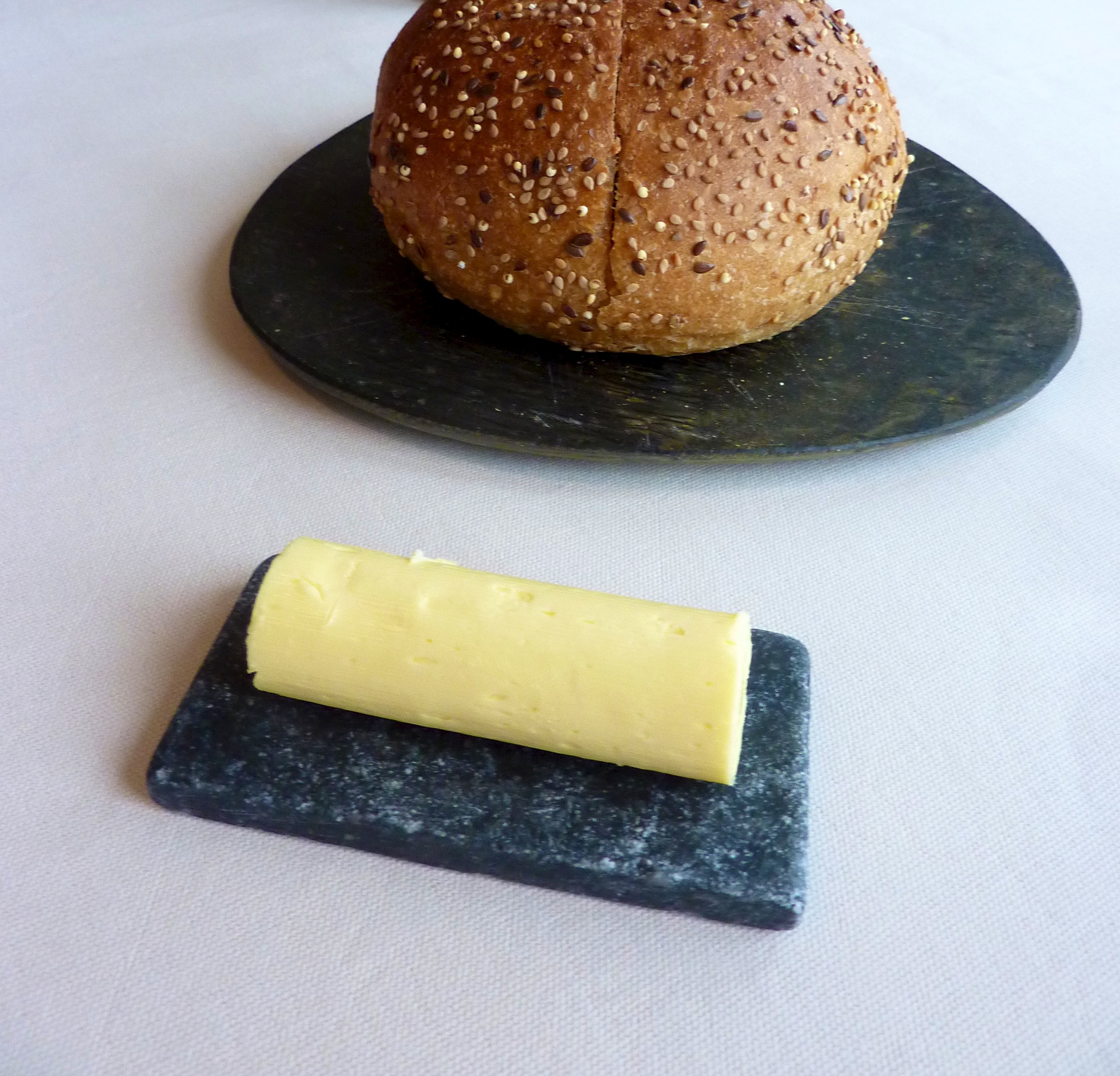
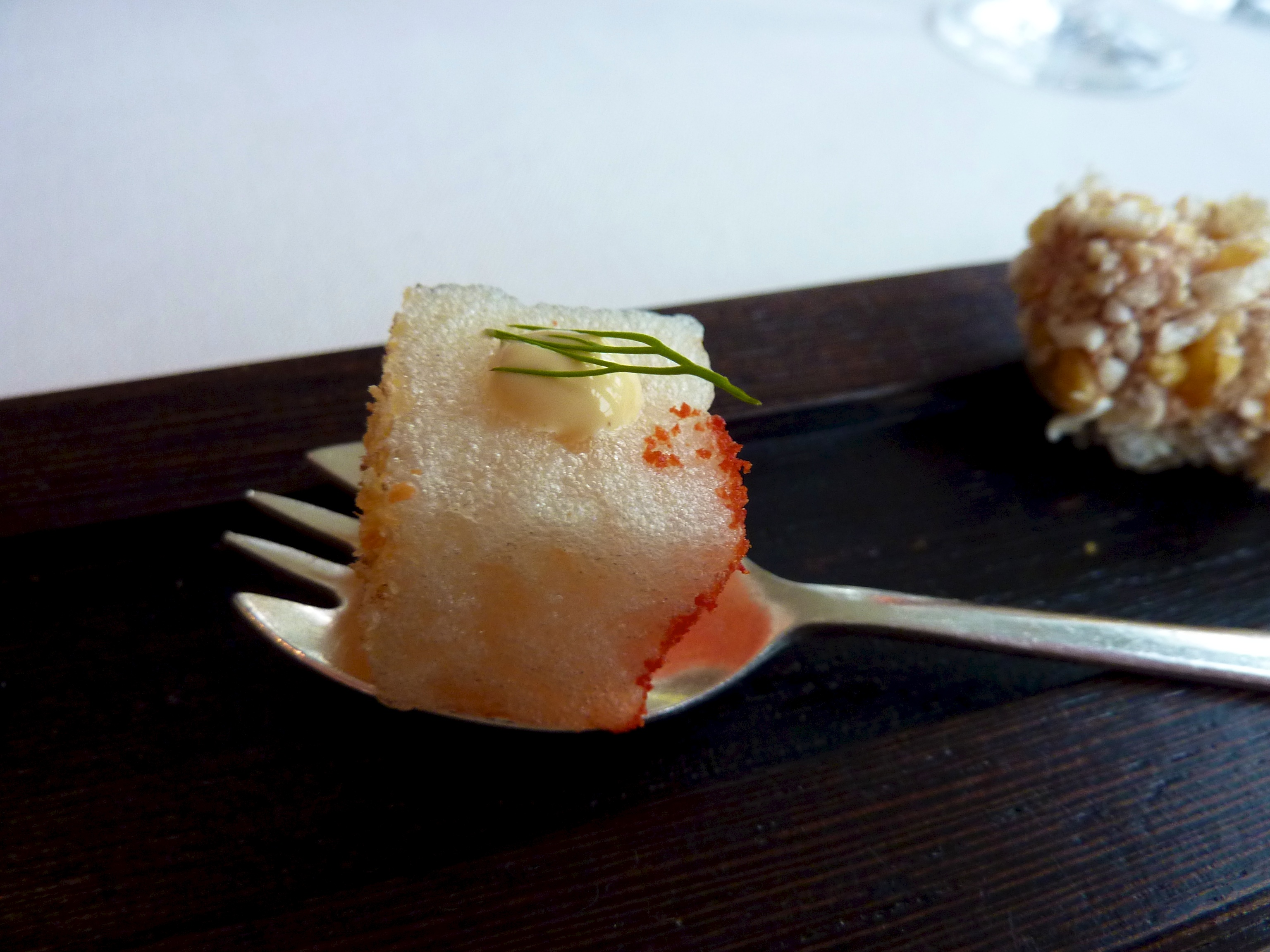
Warm bread was immediatly brought to the table. Then, our first course, an amuse bouche. From left to right: a guacamole pillow wrapped in bacon, prawn marshmallow, and goose foie gras covered in a crackle crust served with a glass of kir.
The little pillow crunched in our mouths
and then a shot of guacamole flooded in.
The marshmallow melted like air, dispersing
a shrimp flavor over our tongues.
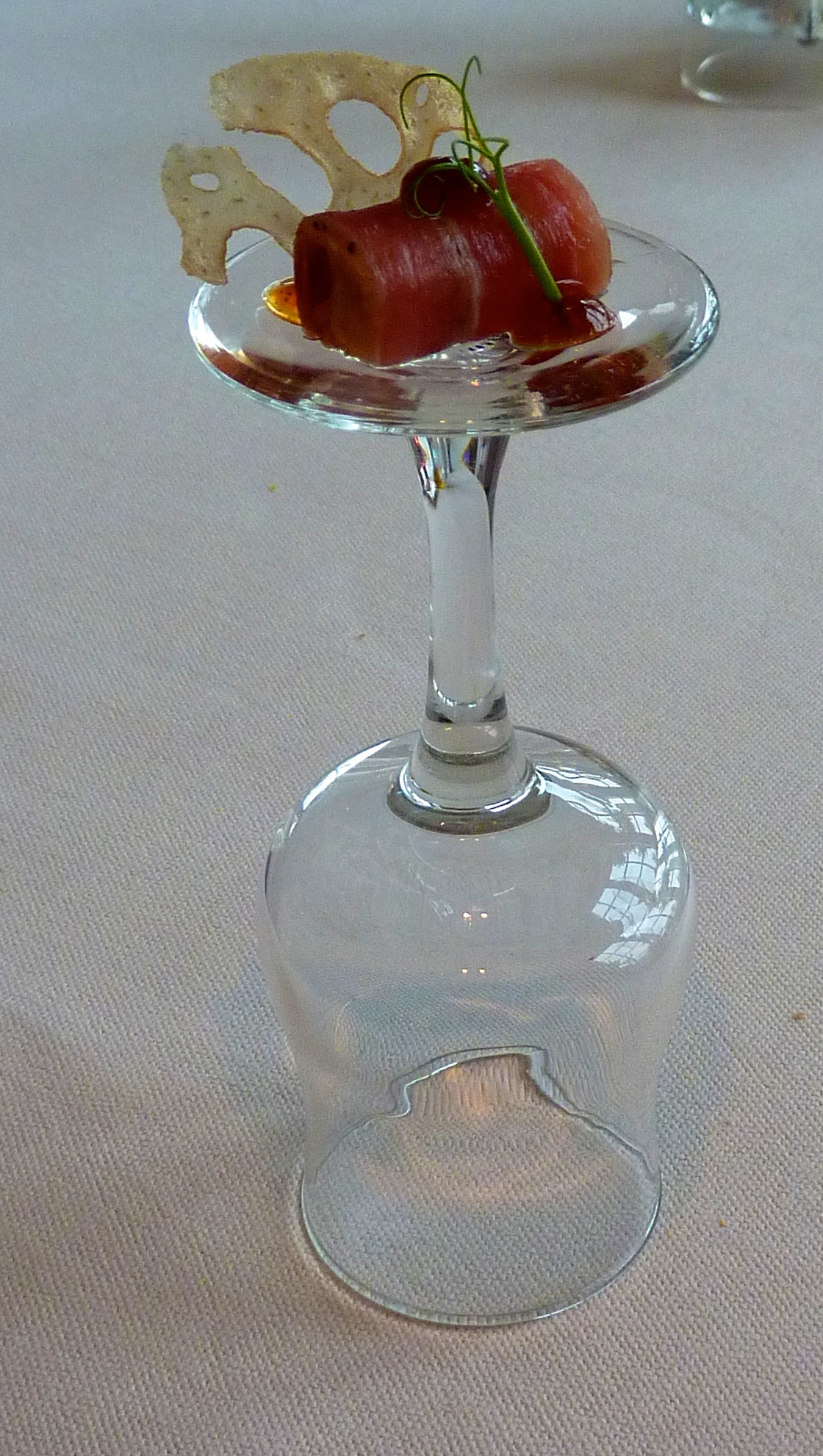
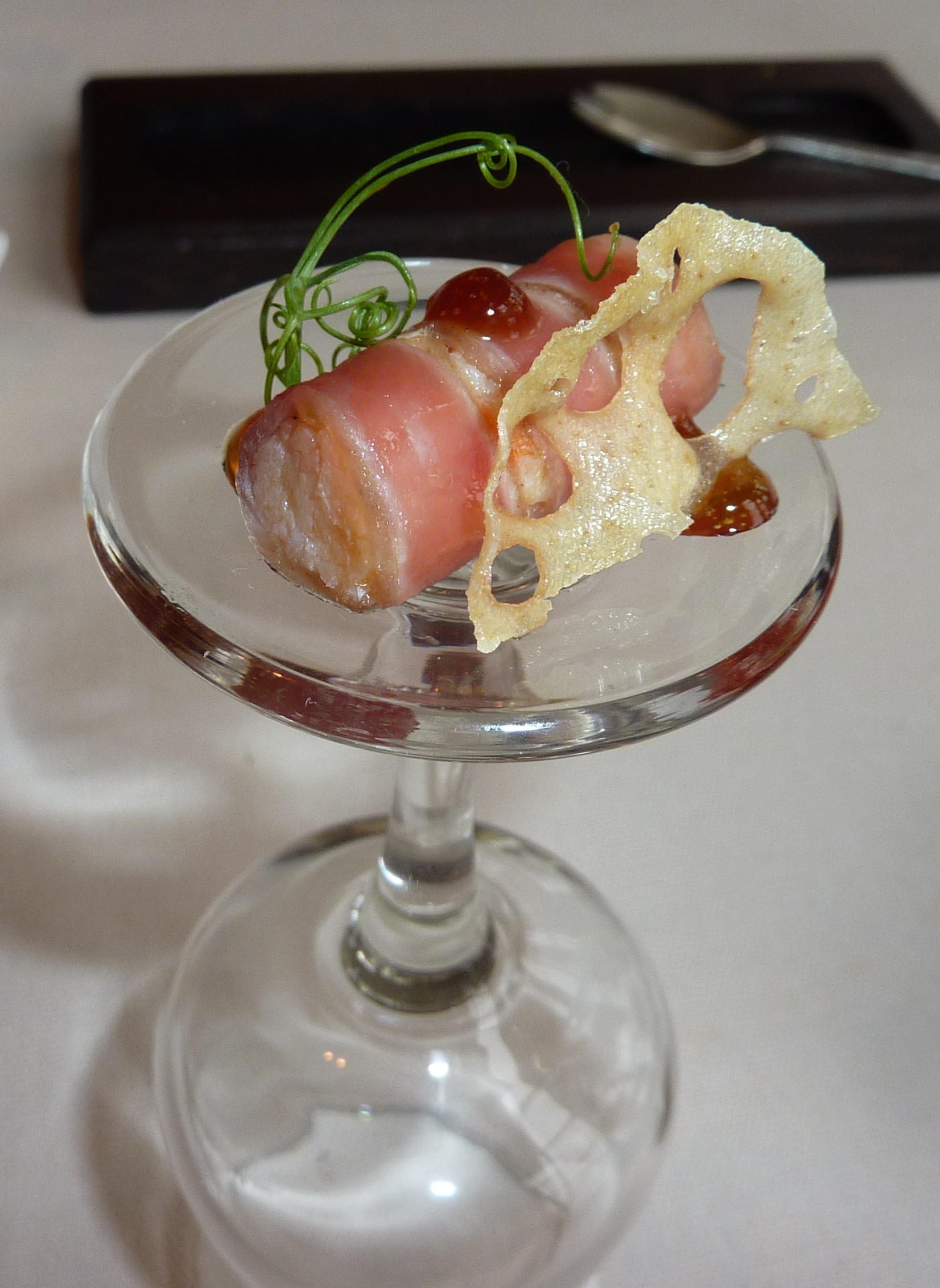
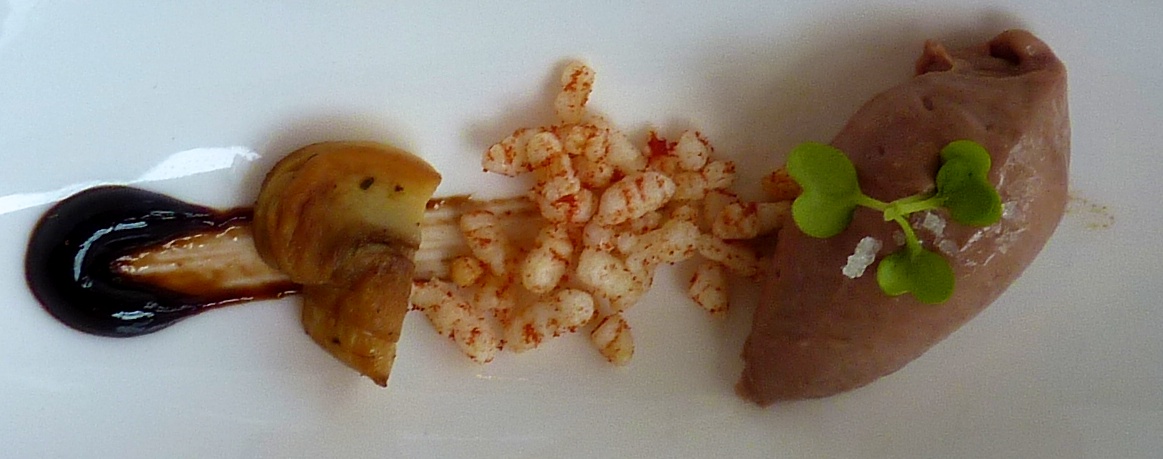
The next course, another amuse bouche, was king crab wrapped with beef carpacchio; and in the white dish, (right to left) goose and quail liver parfait with shrimp, risotto, and a mushroom. The parfait was delectable. This was served with a nice white wine from Spain.
What a fun way to serve a small taste.
Just a simple glass turned upside down.
Beautiful!
The chef, Franky Vanderhaeghe, described the main theme of his cooking as "pure gastronomic pleasure".
Here is a detailed shot of the goose and quail liver parfait.
The chef is fairly young to have two stars.
He creates very innovative and creative dishes.
We have never seen black gloves worn by the servers. They had them on when they placed the silverware on the table or when serving a dish. I wonder how many time they take those gloves on and off in a day?
Our third amuse bouche was a cup of prawn bisque with veal tartar on the bottom. The herb leaf was peppered with parmesean cheese. And on the plate was ham pate wrapped in a vegetable casing.
Look at the little puprle leaf on the left.
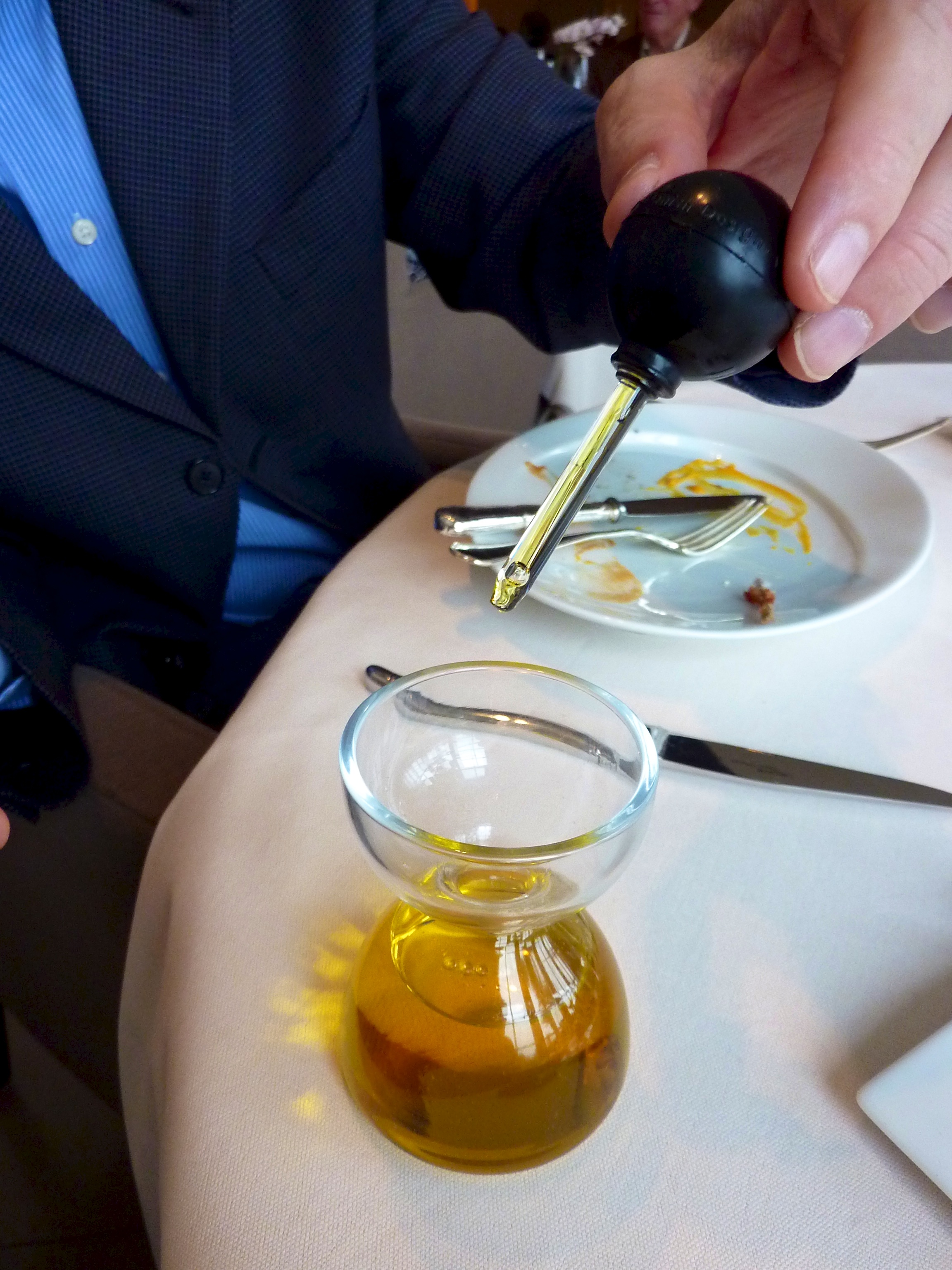
A unique table accessory, an eyedropper design used for olive oil for our bread.
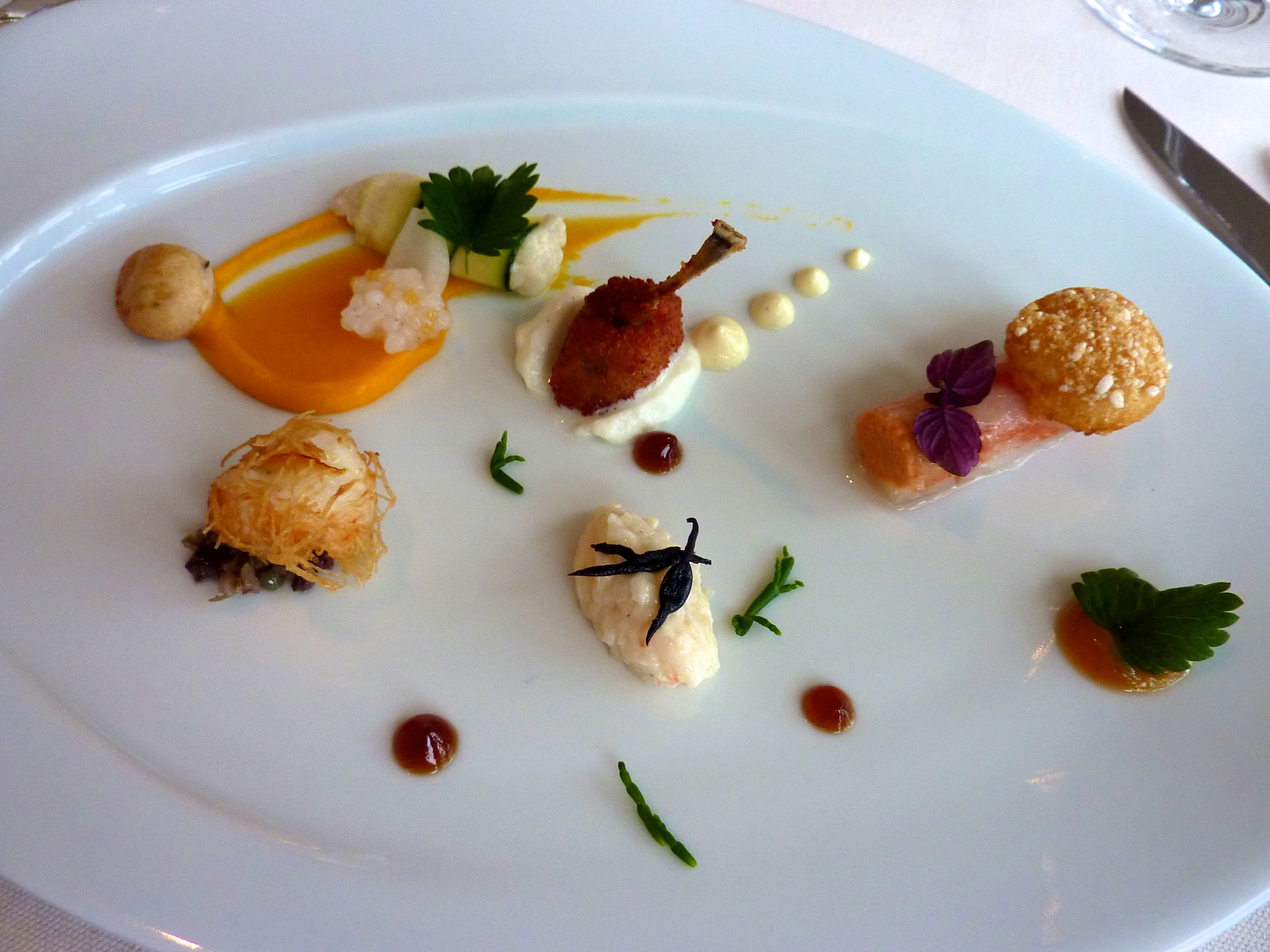
Our appetizer was shrimp served five ways.
But we think there was a frog leg thrown in there (sometimes hard to tell with the language barrier) : ) all were divine.
The biscuit on the end of this shrimp roll was so savory.
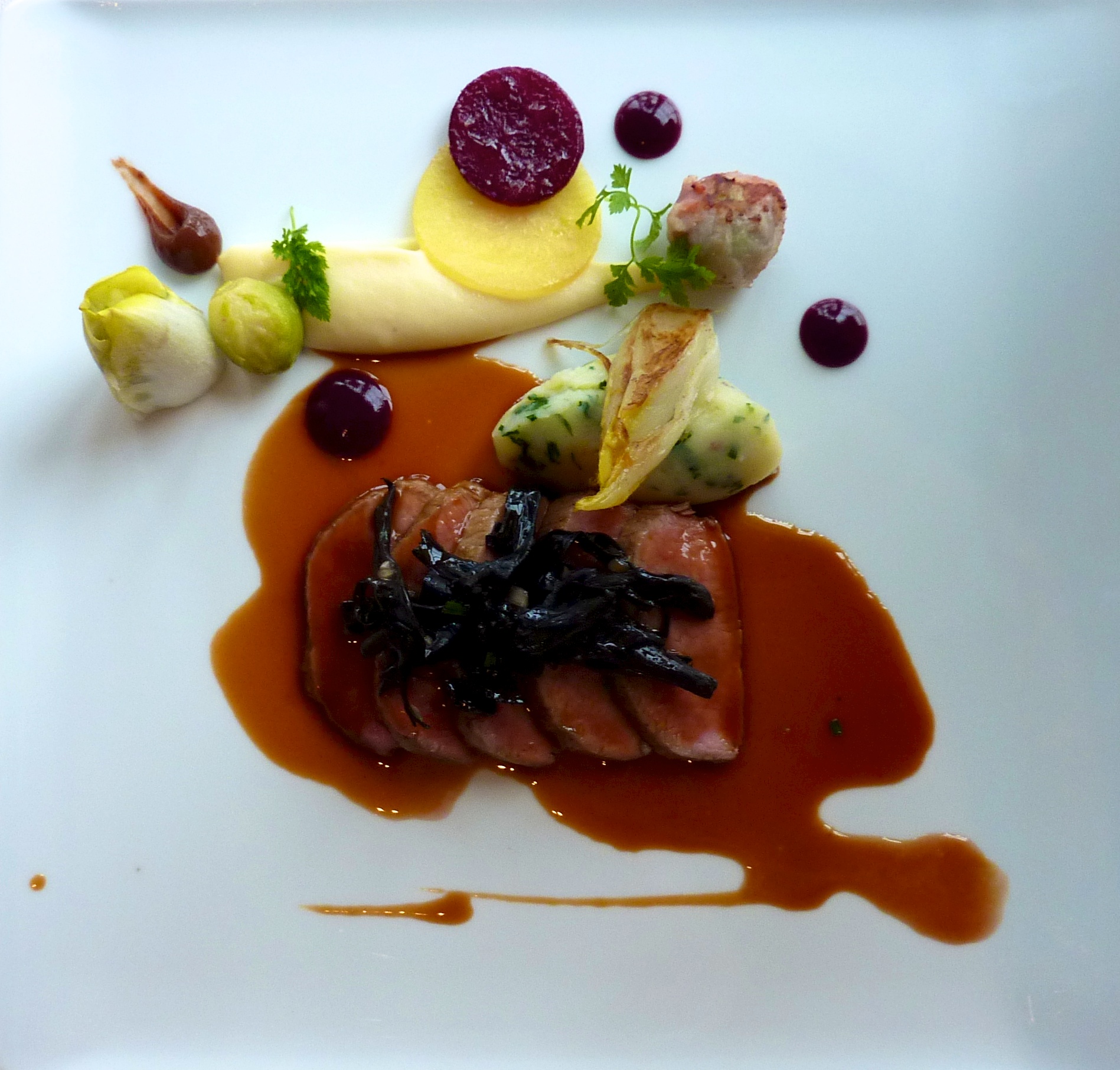
Our main course was wild boar with potato quenelle, celeriac puree, and mixed fall vegetables. They pared a soft red wine from Bordeaux.
At first we were told it was deer and it was described to us as white pork – remember we are in west flanders – the Dutch speaking part of Belgium. We tried again with another server who was able to tell us in French which of course D was able to understand…wild boar.
The boar meat was delicious and as tender as butter.
We thought this garnish was very creative – endive leaves wrapped around the potato quenelle. We may have to give this one a try at home.
Dessert time! For the first round, we were served pear sorbet and mint foam marshmallows.
With a little biscuit and meringue.
The yellow cube is the mint marshmellow.
Next came our coffee.
I absolutely loved the container the cream came in. When we took off the lid – it had a little ladle.
I need to look for one of these for us to serve our cream!
This is what I love about the Michelin restaurants, just when you think you are finished, out comes another round of desserts!
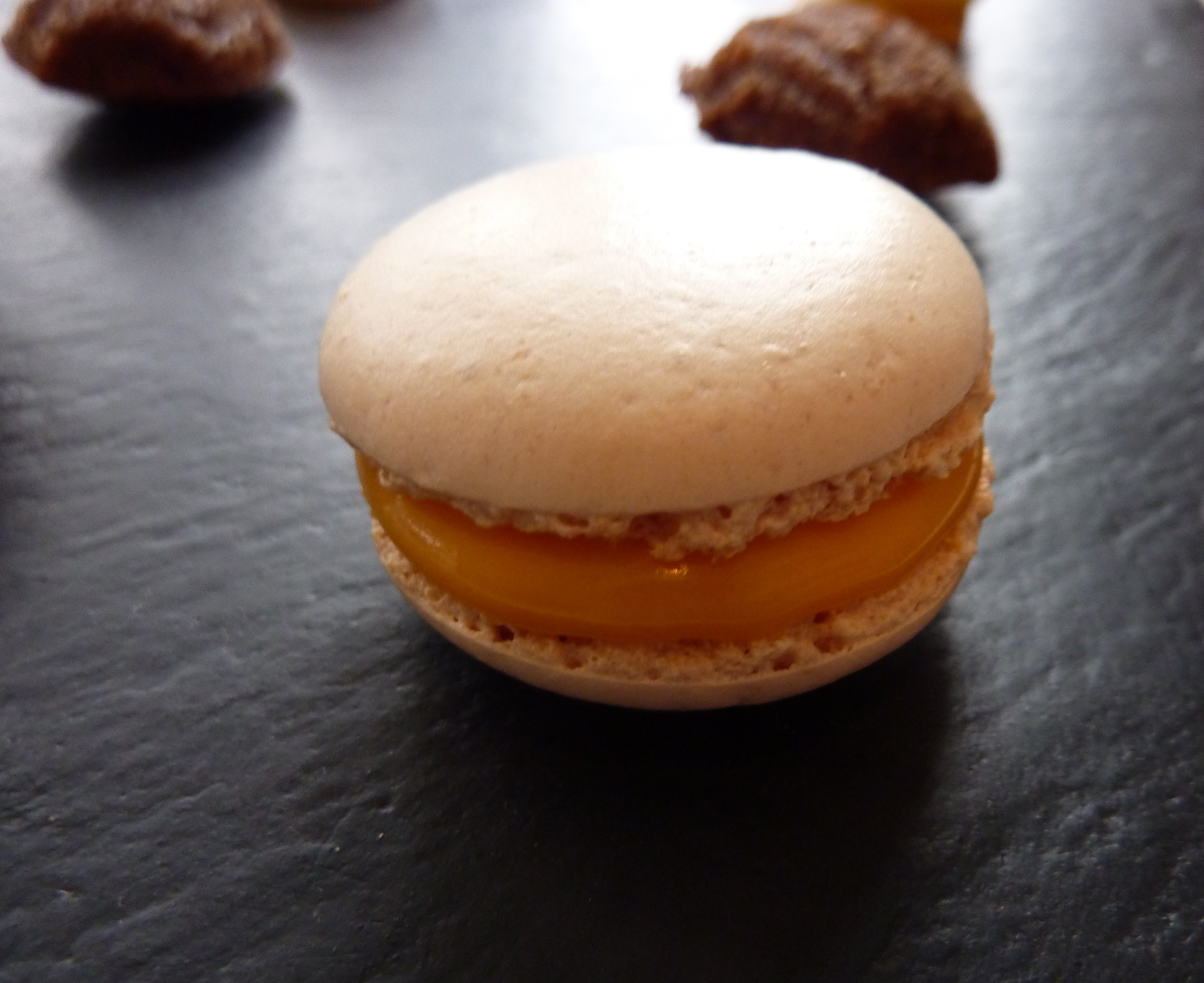
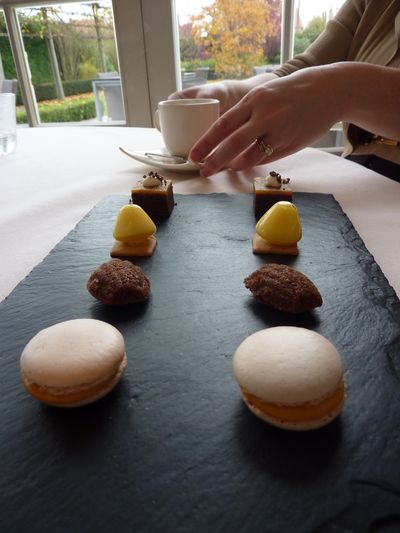
The very popular macroon with an orange filling,
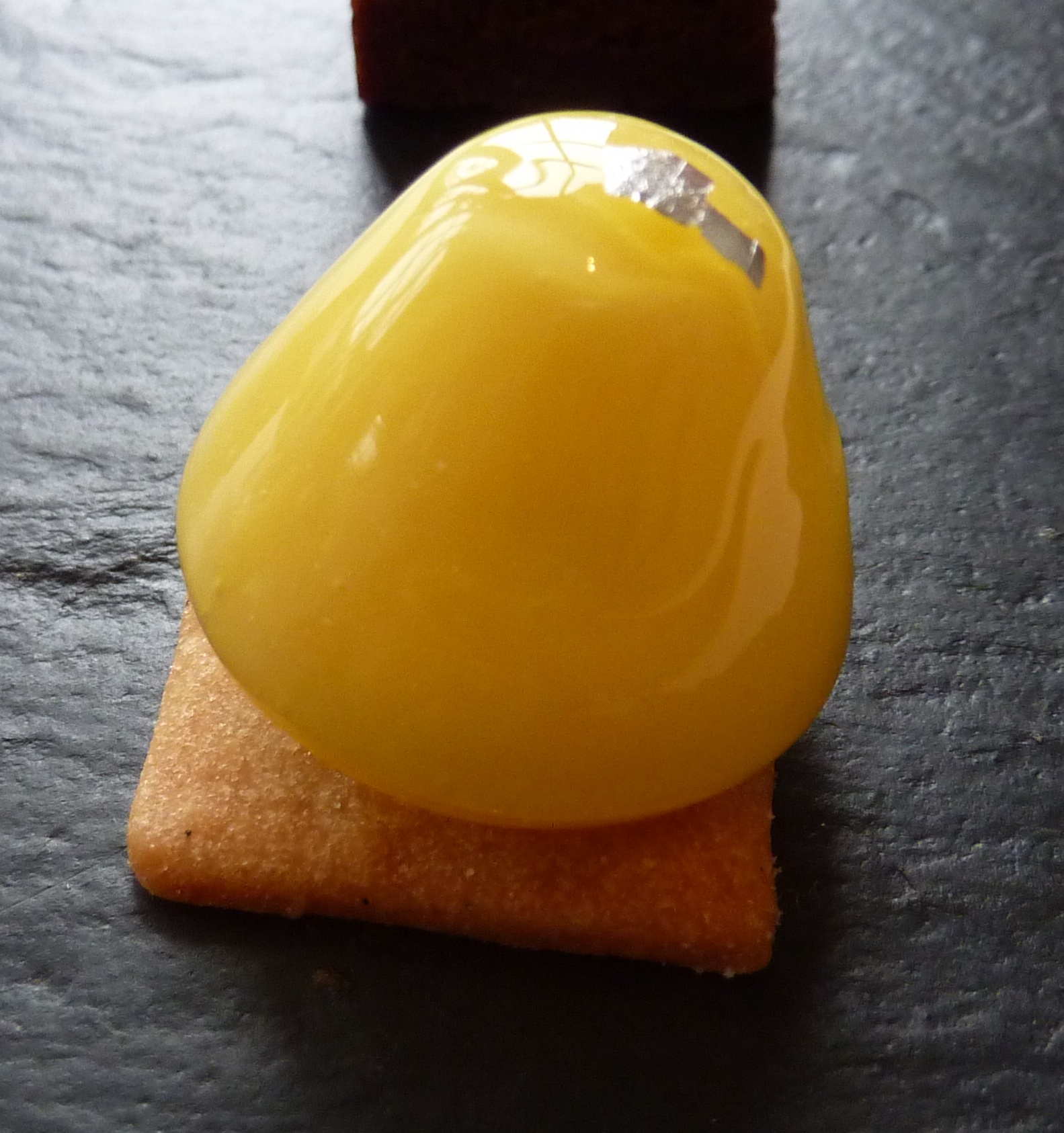
a lemon drop with silver leafing which burst with flavor as we bit into it,
and a decadent brownie bite.
I like this angle D captured of our sweet little morsels.
When we finished the second round of desserts, D leaned back and declared this to be a perfectly wonderful meal!
D had business in Madrid on Thursday and Friday and we stayed the weekend. We were lucky with beautiful days as the week before they had heavy rain all week. But with beautiful skies comes crowds of people!
Colorful Streets
Madrid has really colorful streets. It is the capital of Spain and is the largest city. The city dates back to the 9th century.
Architecture
Since I was on my own for two days, I decided to do the Hop 0n – Hop Off open top bus tour. They are always interesting and give a good overview of the city. Here are a few buildings I thought were pretty.
For you sports fans – here is the Real Madrid football stadium (we call it soccer). Sapin won the 2010 World Cup. Remember, the pulpa Paul predicted it!
The sight I enjoyed the most was my visit to the Monasterios de las Descalzas Reales – the convent of the barefoot nuns founded in 1559 in the former palace of King Charles I of Spain and Queen Isabel of Portugal. Their daughter, Joan of Austria, founded this convent after the death of her young husband.
Throughout the remainder of the 16th century and into the 17th century, the convent attracted young widowed or spinster noblewomen. Each woman brought with her a dowry, which included such treasures as precious metals, paintings, and religious relics. With all these possession, the convent became one of the richest convents in all of Europe.
By the mid-20th century it was mostly home to very poor women. It still held its priceless collection of treasures, but the nuns were forbidden to sell anything. The state eventually intervened and, with a special dispensation from the pope, the convent was opened to the public as a museum in 1960.
This place, with so many beautiful objects and art to look at mesmerized me. Photos are not allowed inside. I took D back on Saturday so he could see it. I had a different guide and she only repeated 25% of what the first one said – so I learned quite a bit between the two tours.
They say 19 or 20 barefoot nuns still live here, growing vegetables in the garden. Fyi – the name barefoot nuns came from the open sandals they wore.
Food
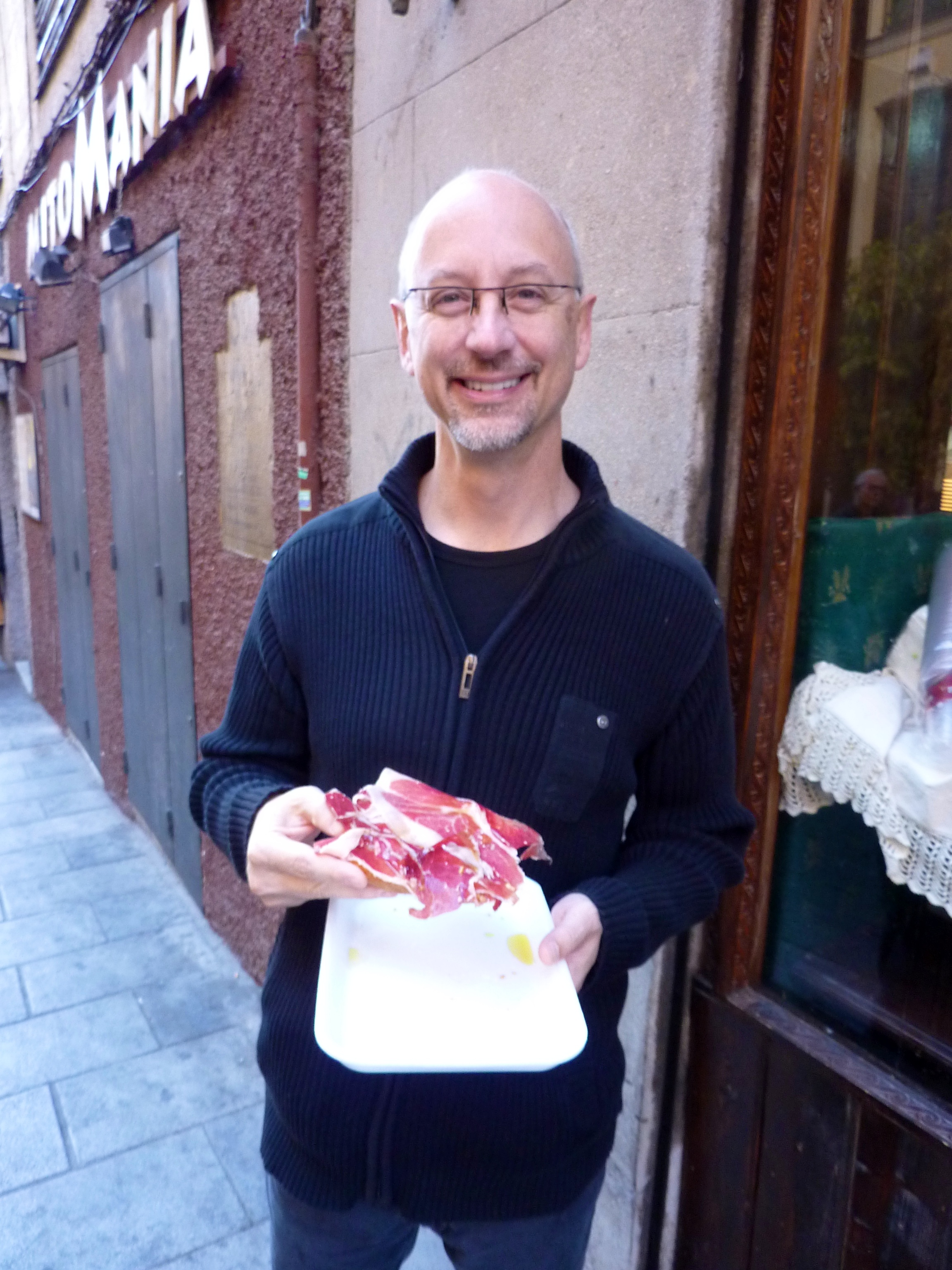
One of D's all-time favorites – Jamon Iberica also called pata negral (black footed pig) is a specialty of this area. It is cured ham. The pigs are fed a special diet of acorns. To cure them, they hang the meat to age for a minimum of 12 months but most cure it for 36 months before serving. I am not a fan. It smells just like you would expect a non-refrigerated ham that has been out for 36 months would smell. I can't even tell you how much of this he ate the five days we were in Madrid.
FYI – it is only 10 am when this photo was taken and we had eaten a big breakfast. D even tried to convince me to let him buy 1/2 pig to bring home.
But I won the argument with the simple fact that I needed the seat on the airplane more than he needed the pig. Plus with the amount of weight he gained, it was like he brought one home : )
D's other favorite – grilled sardines.
At his favorite bocas (tapas bar), Bar Santurce. Notice how they throw the napkins on the floor and that there are no tables. This is very typical of the bocas.
The grill was going non-stop the entire time we were there.
I prefer the calamari to the sardines.
Our new favorite food discovery was the pimientos de padron with lots of salt. We decided they might actually be healthy.
We found the best Mexican restaurant we have eaten at in Europe, Taqueria Mi Ciudad – Sabor de Mexico. Cheap and oh so good.
Now onto my favorites – of course they are the sweets! A tray of delectable muffins. Guess which one I picked?
The ooey-gooey apple caramel one!
And a specialty of the region, churros and hot chocolate.
We had ours at Chocolateria San Gines, founded in 1894. It is said to be the best.
People
Like Portugal, Spain has a high unemployment rate, 20 %. So scenes like the one below, a young boy and his father selling fruit on the corner, are not uncommon.
I am always drawn to the artists painting "en plein air". This gentleman is painting the very famous Prado Museum.
People out and about in the city. Guess she knew I was taking this photo, as she is looking straight at me. I took it from the bus.
Street performers
Because it was such a beautiful weekend – the street performers were out in full force.
Elegant ones –
….Odd ones. She did not move, even when we gave her money.
….Funny ones. He had us laughing and we did not understand a word he was saying. His face expressions said it all!
And probably one of our favorites of all time, the toilet man:
He was very entertaining and again, we could not understand what he was saying. In fact, we could not read what we were supposed to do. But he was made us laugh so we gave him money. You can't tell from the photo but I am scratching behind his ear and he was cooing.
As we stood watching a woman stepped up, gave him a euro and pulled the cord. He made a flushing noise….down went the puppet and……
And up came a new one. BRILLIANT!
We had to get a video clip of this one. Yes, we gave him several Euros for all the photos we took
Well hello Kermit! We are not sure how many puppets he had; we saw at least eight of them.
If you'd like to visit the Madrid flea market and see a few more photos – click here to hop over to my art blog, ma vie trouvee.
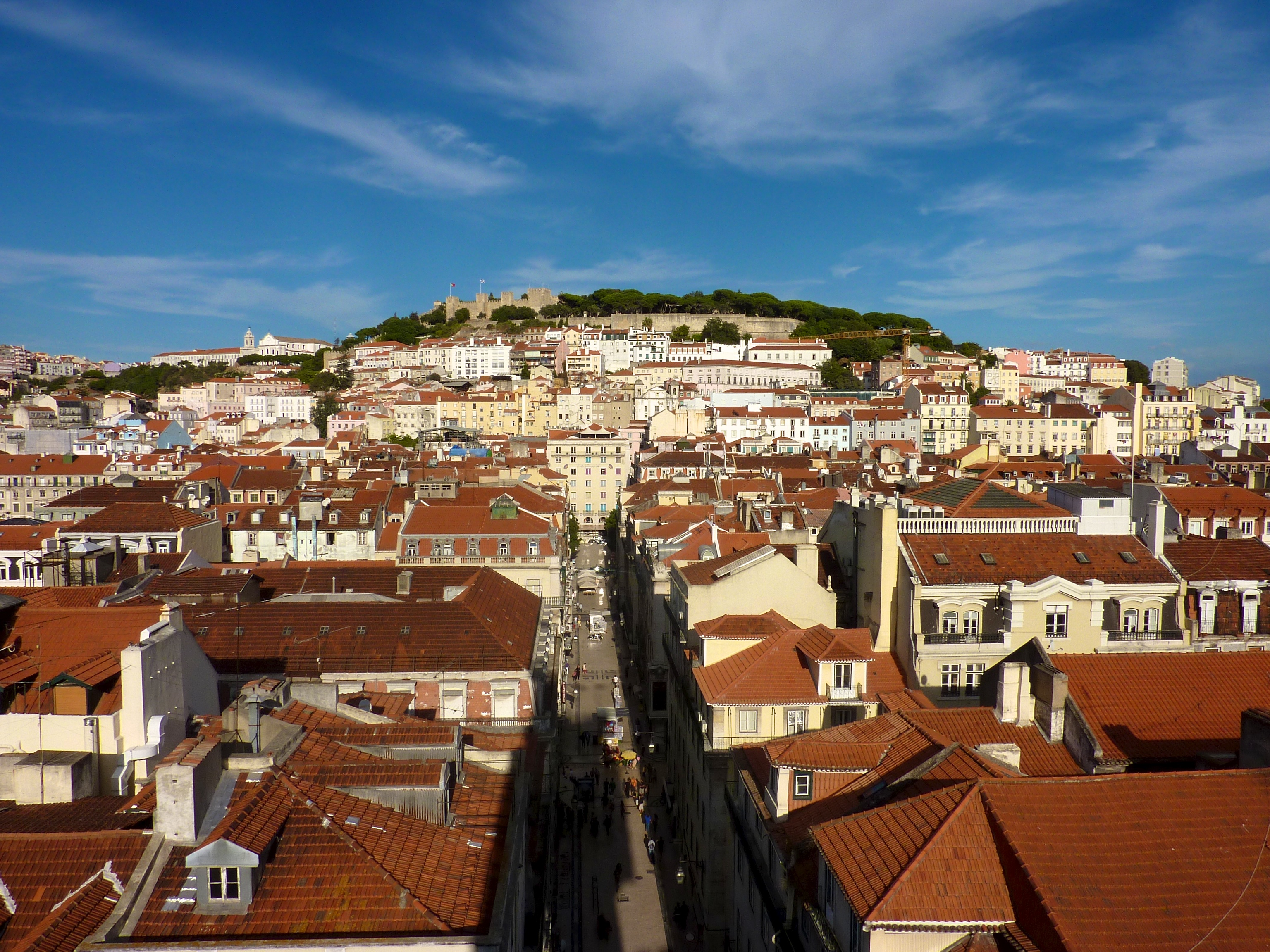
We started our Portuguese adventure in Lisbon where D had three days of business. Lisbon is one of the oldest cities in the world dating back to the Neolithic age. In 1755 it was almost completely destroyed by an earthquake that registered at 8.9.
Portugal is part of the EU (European Community). They speak Portuguese which most people associate with Spanish, but when you hear them speak it sounds more like an Eastern European accent.
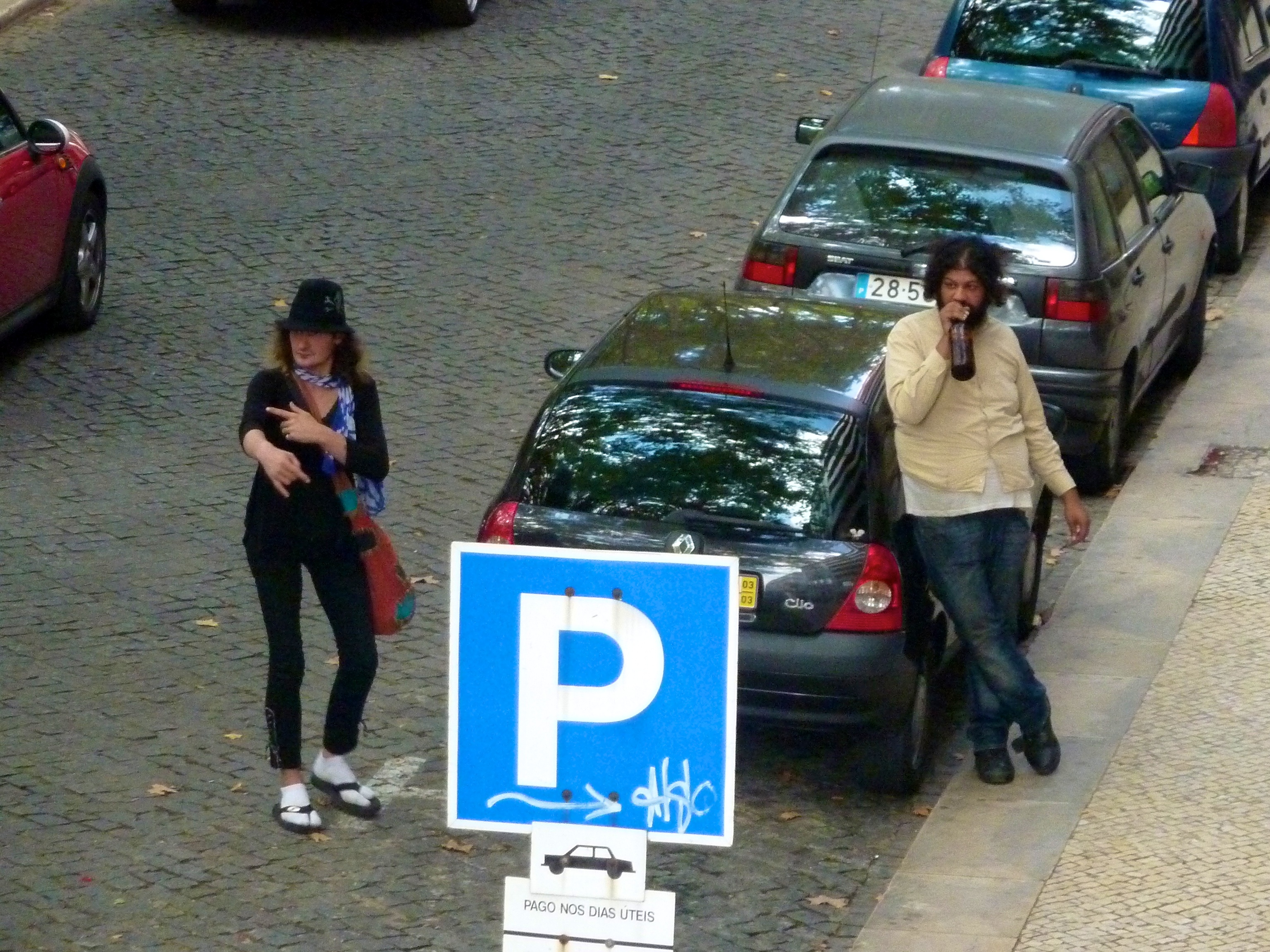
Portugal is a fairly poor country but you would never know it. They keep their cities very clean and the people are exceptionally happy and friendly, even the bums. We watched these two earn money by helping to park cars.
When a parking spot became available, they would stand in it. The one with the scarf and purse would flag the cars down and the one with his bottle would help them parallel park. We watched them from our hotel window. It was very entertaining, like a comedy routine. Most people did tip them.
D's co-worker, Thien, was also there and he had never been to Lisbon before. We enjoyed showing him around. Experts that we were from one previous trip! Here the boys are "working".
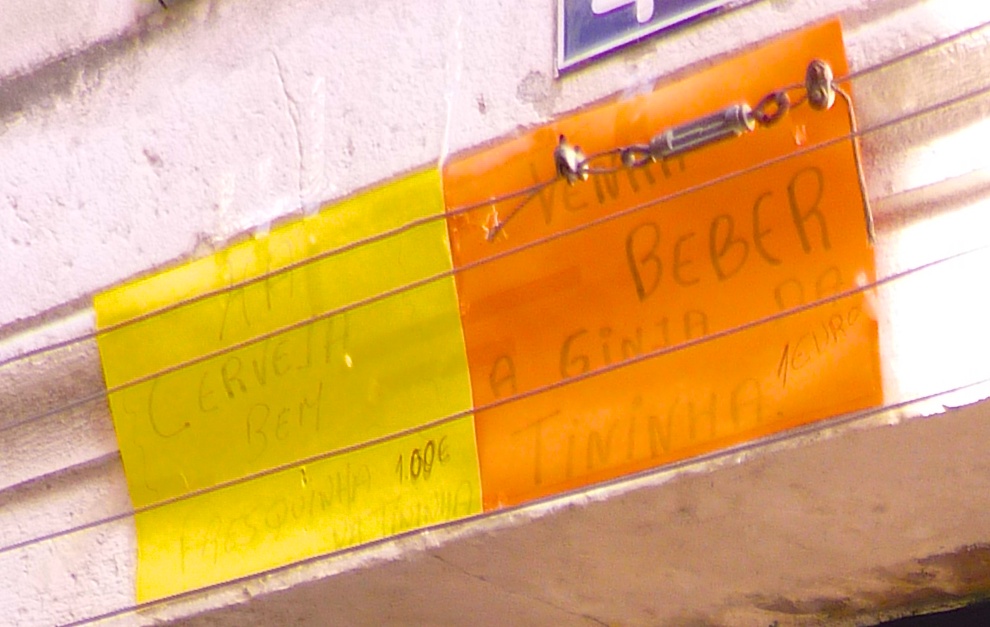
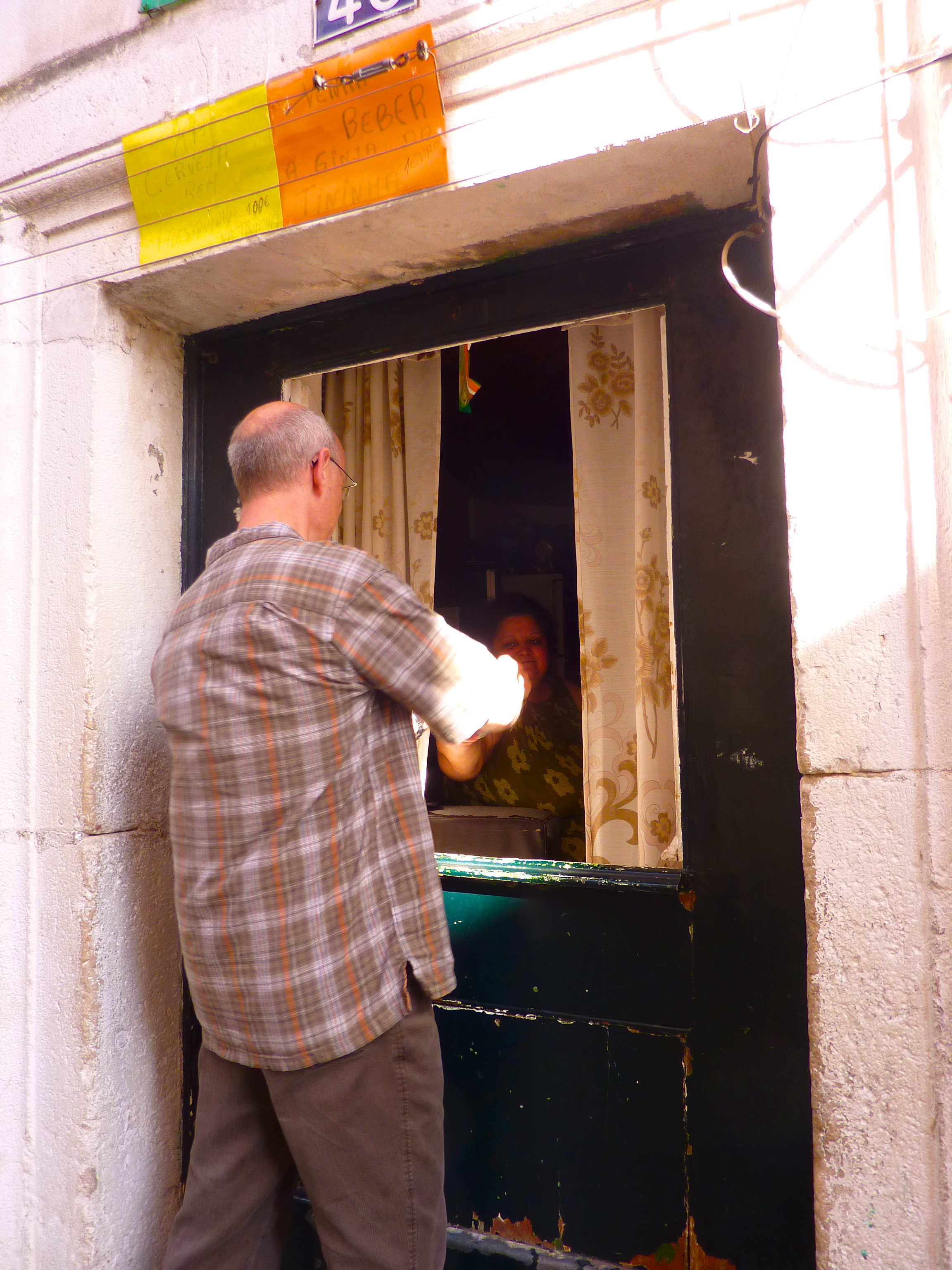
The old part of town is charming with twisting cobblestone roads. No telling what you might stumble upon as you wander and get lost. For instance we passed by a sign, cerveza (beer) for one Euro.
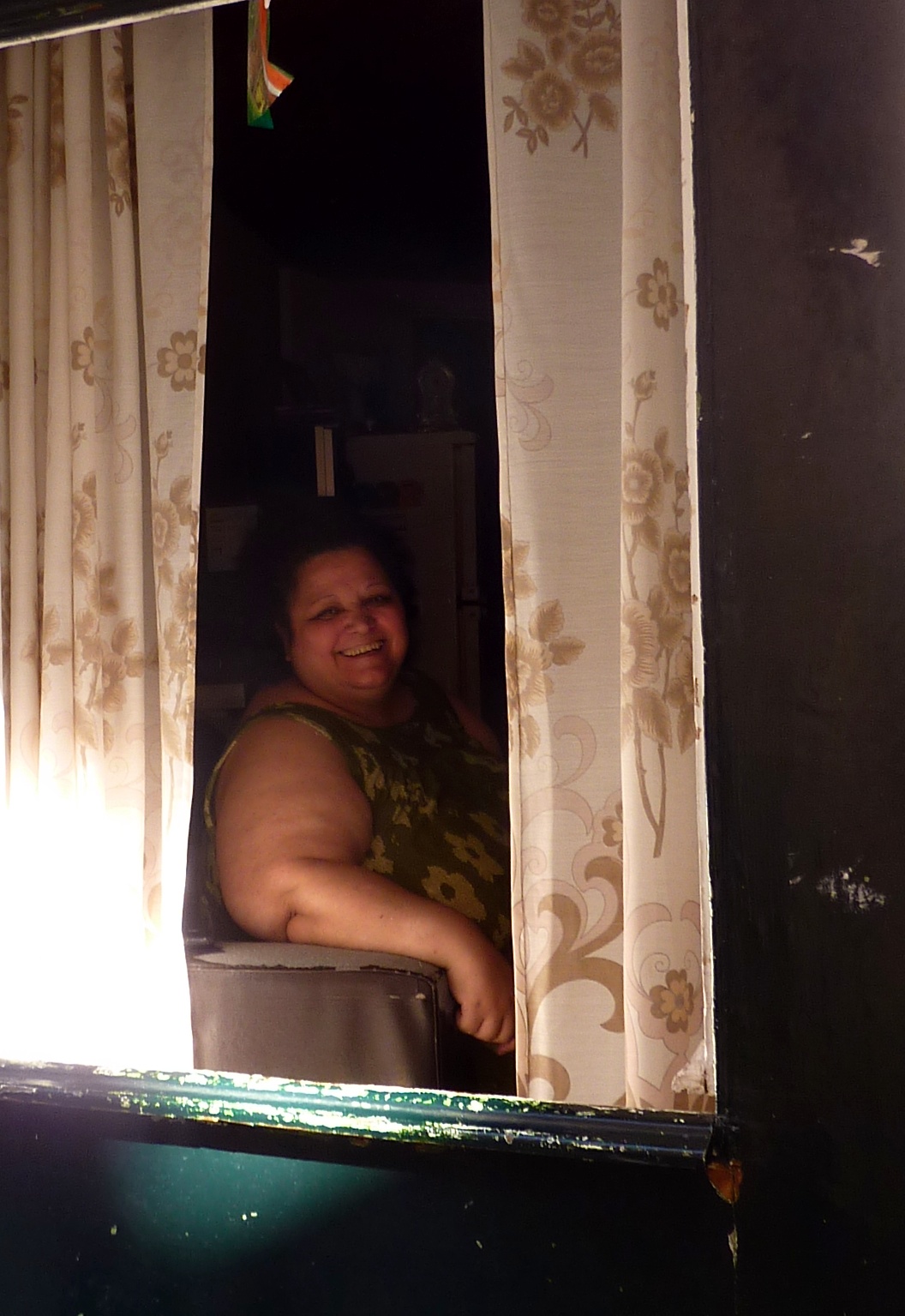
A woman was selling it out of her window. Thien and I made Donald go buy one so I could take photos.
She was very friendly and liked that we were taking photos. Wonder how many beers she sells in a day?
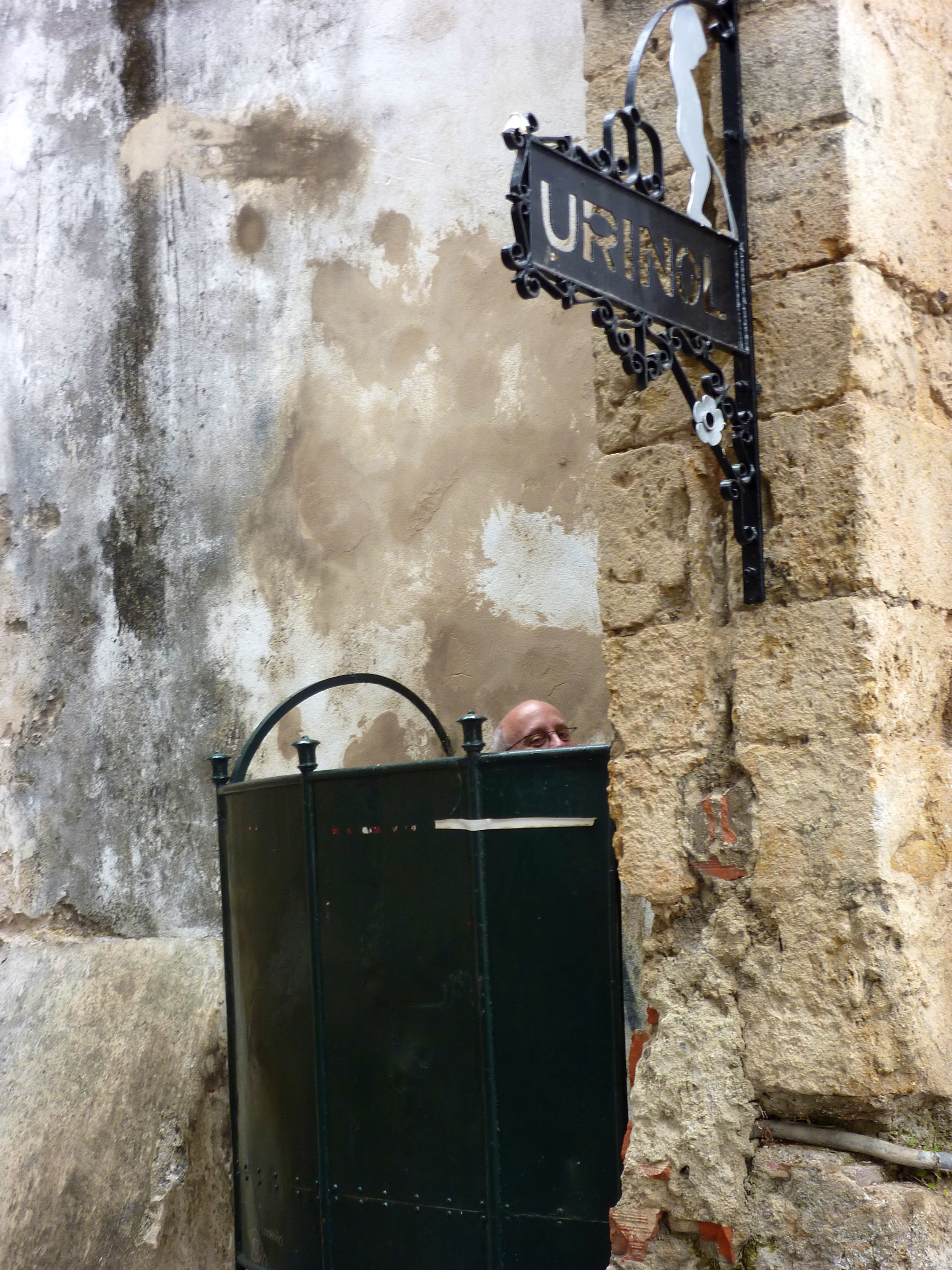
After that beer, good thing D found the……..
Ahem……..Outdoor Urinal! A group of people walked by as I was taking the photos – I announced "he's mine" so it's okay to photograph him. As Thien pointed out – what a proud moment for me to be "claiming" he's my man!
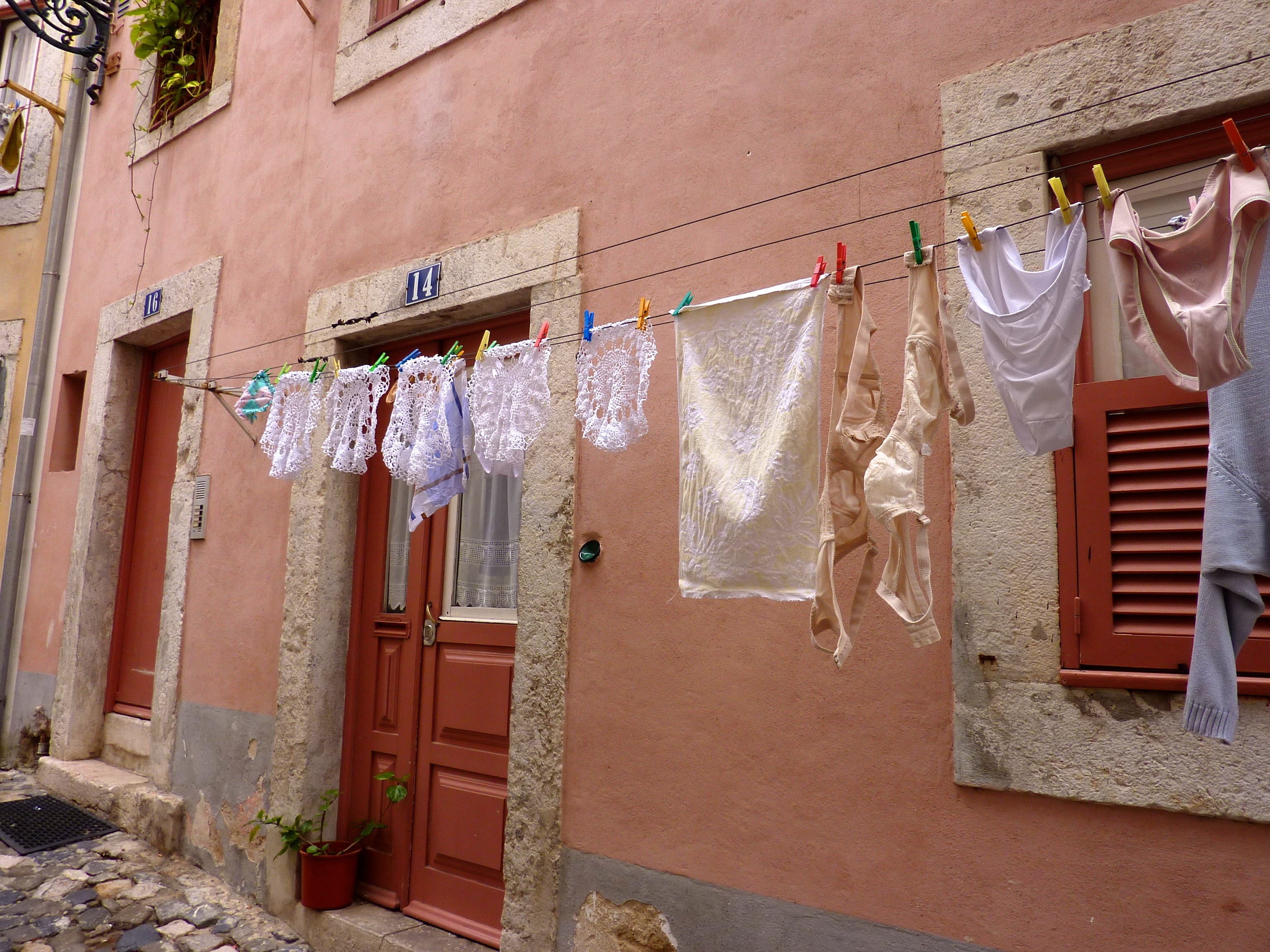
The Portuguese hang all of their laundry out to dry. You can see pretty much everything! For some reason I love taking laundry photos. You would never see this in Belgium.
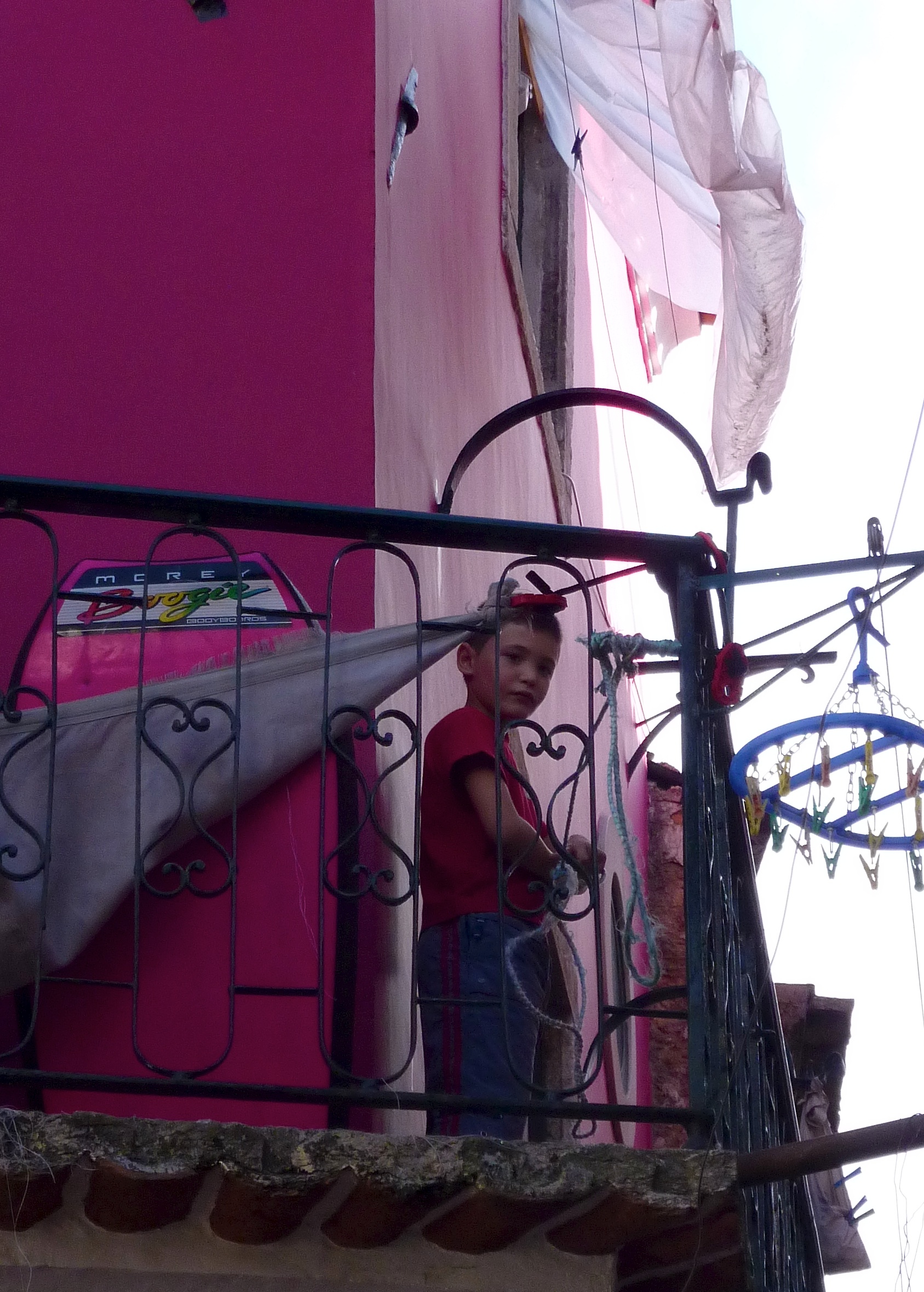
A sweet photo of a young boy playing on his balcony.
Okay, time for our favorite subject – FOOD! Thien was very easy to hang with as he also loved to eat like we do, especially at mom & pop places.
For dinner, we found an out-of-the-way restaurant where there was a big burly man sitting next to us. In a dark alley he would have scared me….but he struck up a conversation and shared his appetizer with us, a type of bean, explaining how to eat it and what it was. He worked at the Fado museum. Not so tough : )
The food is very fresh and inexpensive. We enjoyed a lot of fresh grilled whole fish including calamari and one of D's favorite treats, grilled sardines. The only other place we have ever found grilled sardines is in Madrid.
One evening a Spanish co-worker who was in from Majorca joined us for dinner. We went to a restaurant where your cook your own meet on hot stones We enjoyed it so much D and I went back our last night in Portugal.
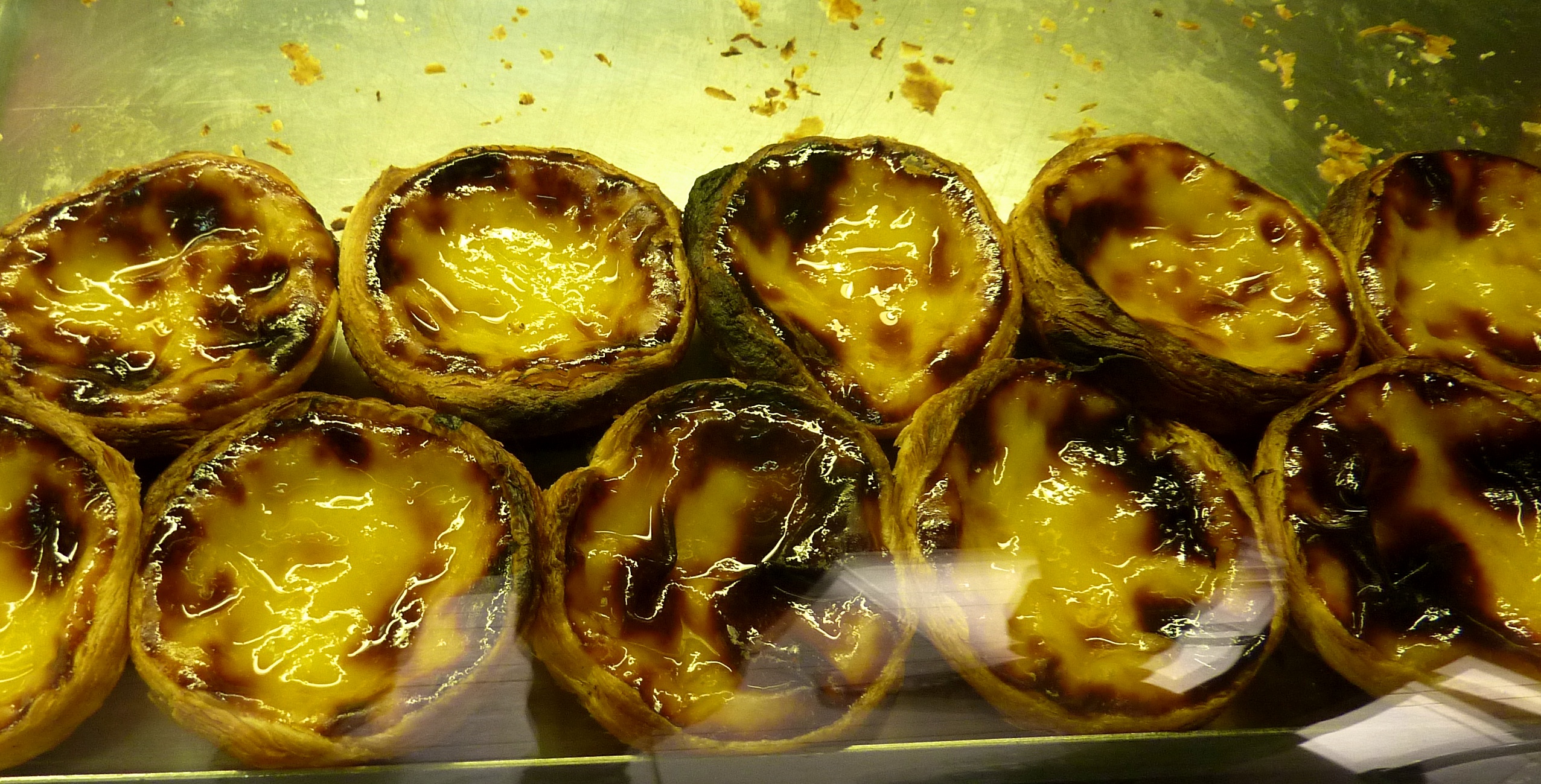
One of the specialties of Lisbon is the Pastel de Nata or Pastel de Belem, created by a Catholic nun in the 18th century to help earn money for their monastery. Known as the Portuguese custard tart, the recipe is a highly guarded secret. A lot of people seem to be in on this "secret" as you can buy them all over.
I am not a big fan of custards. But this….ohhhh ahhhh.
One day, when D was working and I was eating lunch in a little cafe, I was chatting with the young waiter. He was very excited to be practicing his English. An older gentleman (late 70s/80s) was listening in and smiling at me.
I politely smiled back. When I was finished with my meal, the waiter said your bill has been paid. I said "what"? And immediately asked if it was the gentleman sitting across from me – he nodded yes. When I got up to leave I said "Obrigato " (thank you) and shook his hand. And NO he was not trying to pick me up – I think he just enjoyed making people happy. He certainly made my day! If you are curious – my bill was probably 4 Euros : ) I had a pork sandwich and a bottle of water.
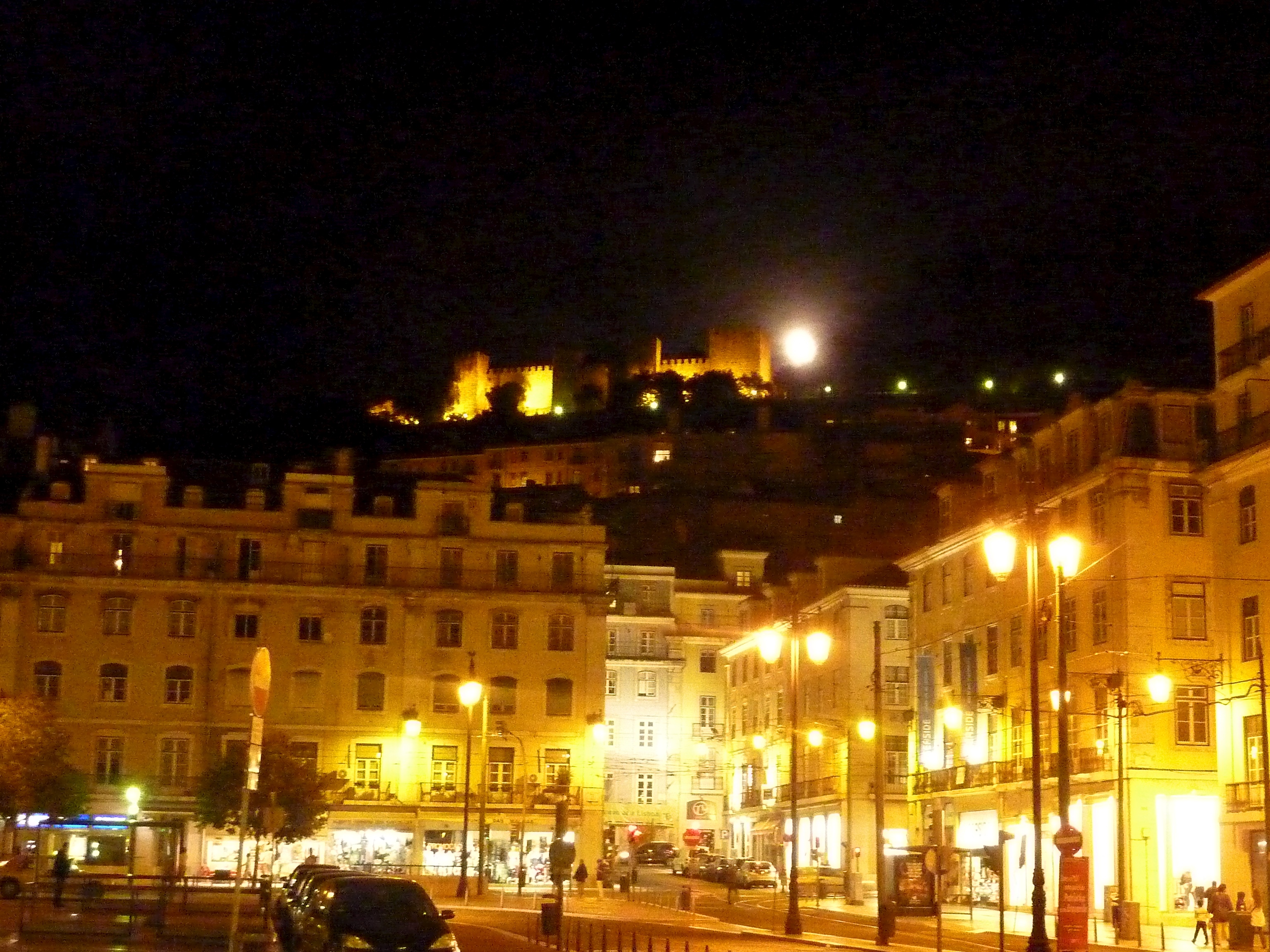
There was a full moon while we were there. It made the city look even more magical.
Saturday morning Thien flew back the US and we rented a car and headed east. Portugal was full of interesting sites we had never before seen. As we drove out of Lisbon we immediately encountered the cork trees they are known for. Portugal is the world's largest producer of cork.
Cork is actually the bark of the cork oak tree so it renews itself after harvesting – making it environmentally friendly. Fall is the harvest time.
The bark can be harvested every 9 to 12 years to produce cork. By law, they cannot be cut down in Portugal except for forest management (old trees that are not producing).
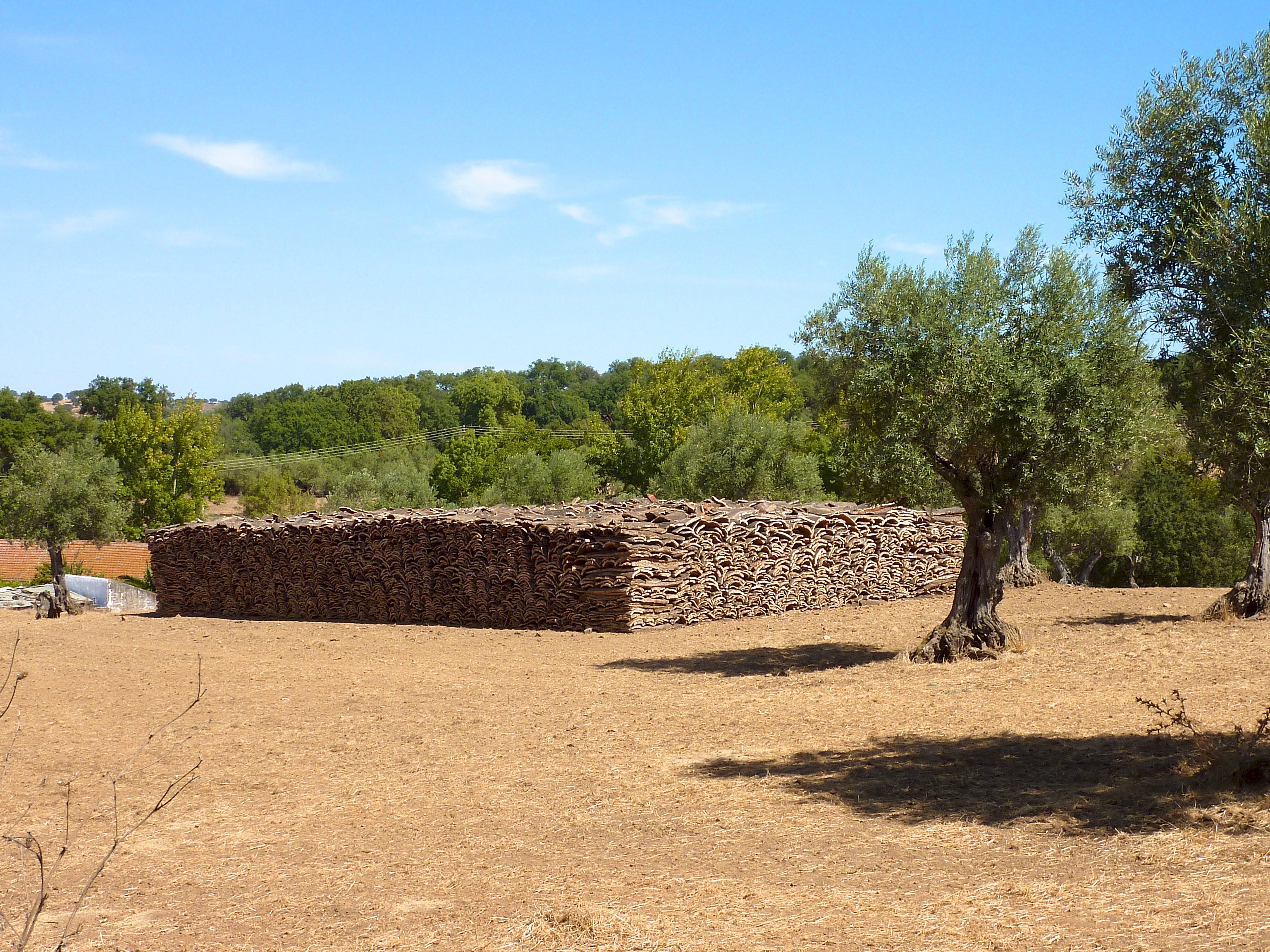
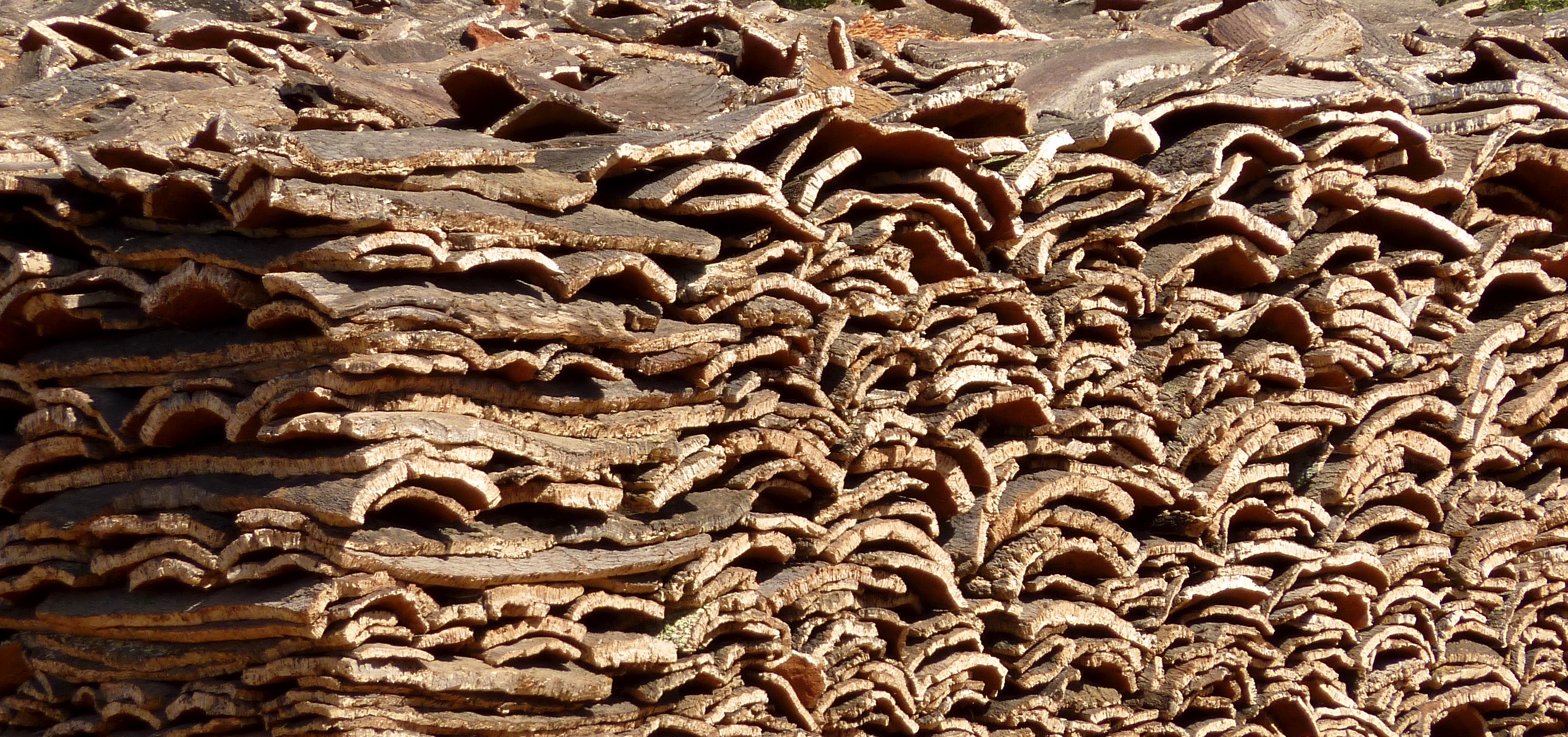
We were fascinated by them. They can live to be 150 to 250 years old and can be harvested 12 times in their lifetime. They have to be 25 years old before the first harvest. They are harvested completely by hand – no machines are used. Below is a stack of the cork drying in the sun.
A close up shot –
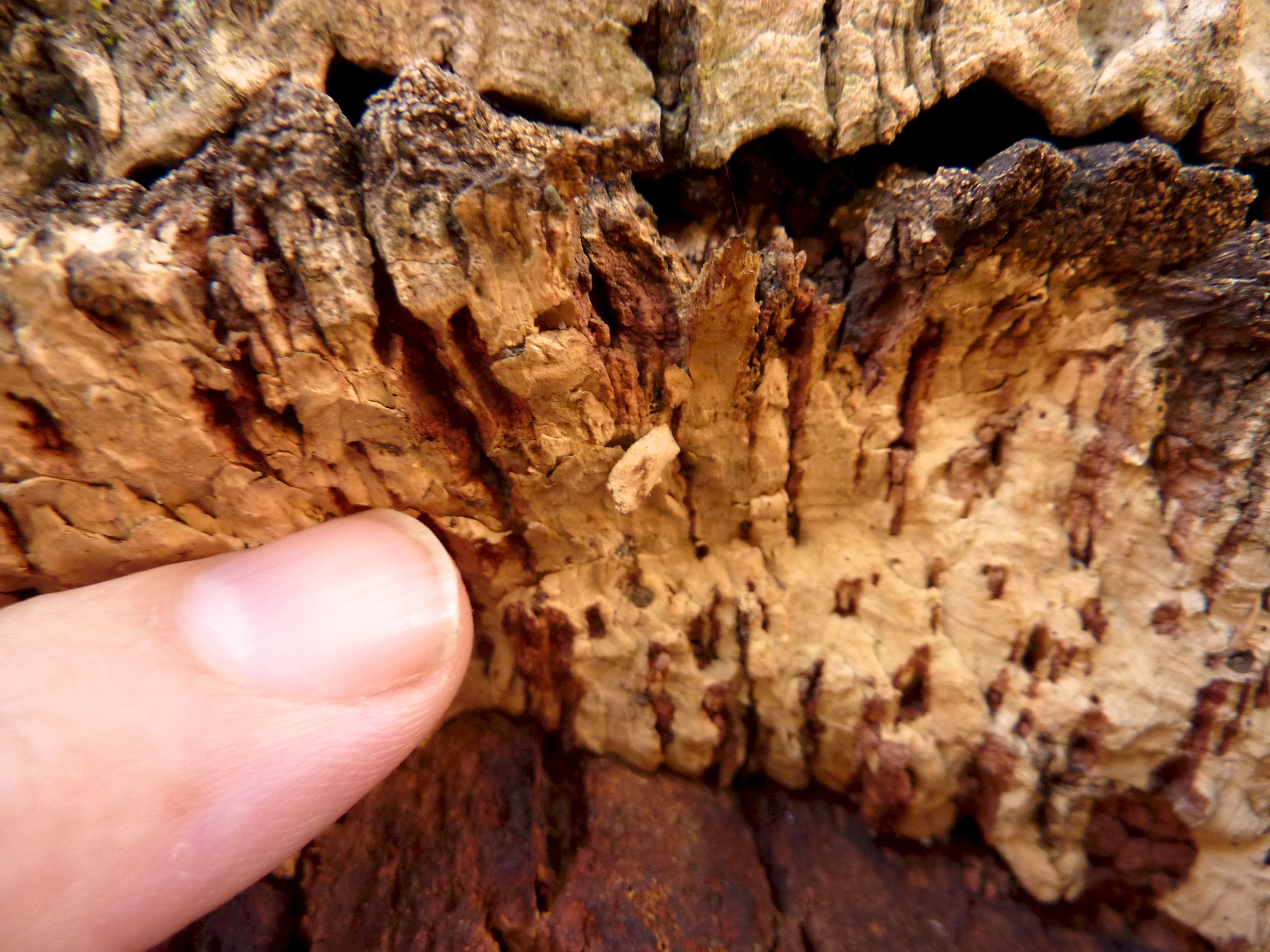
Wine cork is only 15% of the usage by weight, but 66% of revenue. Wine corks cannot be made from the first harvest so farmers have to invest 40 years before they can harvest a wine cork…..makes me not want to throw them away!
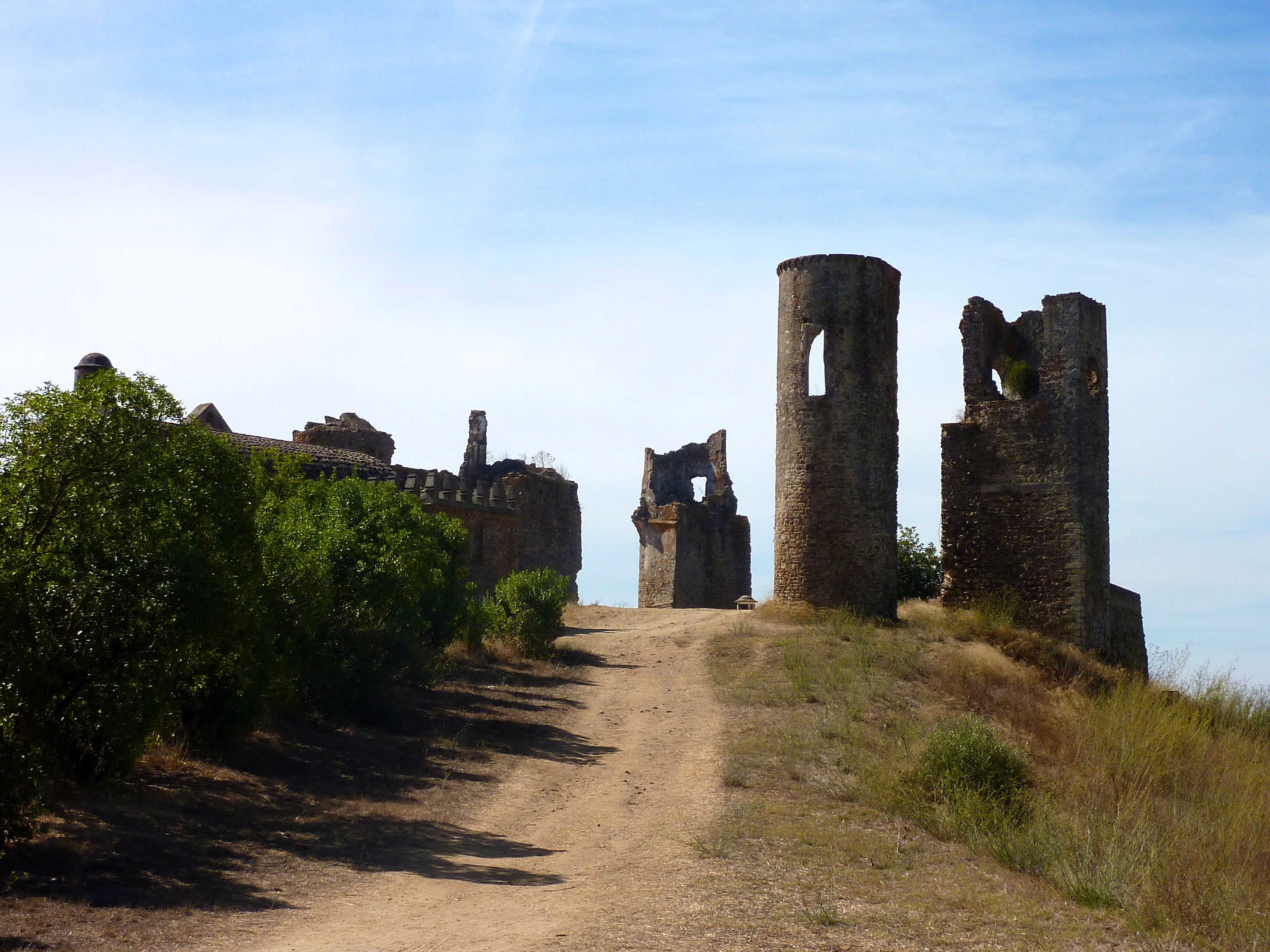
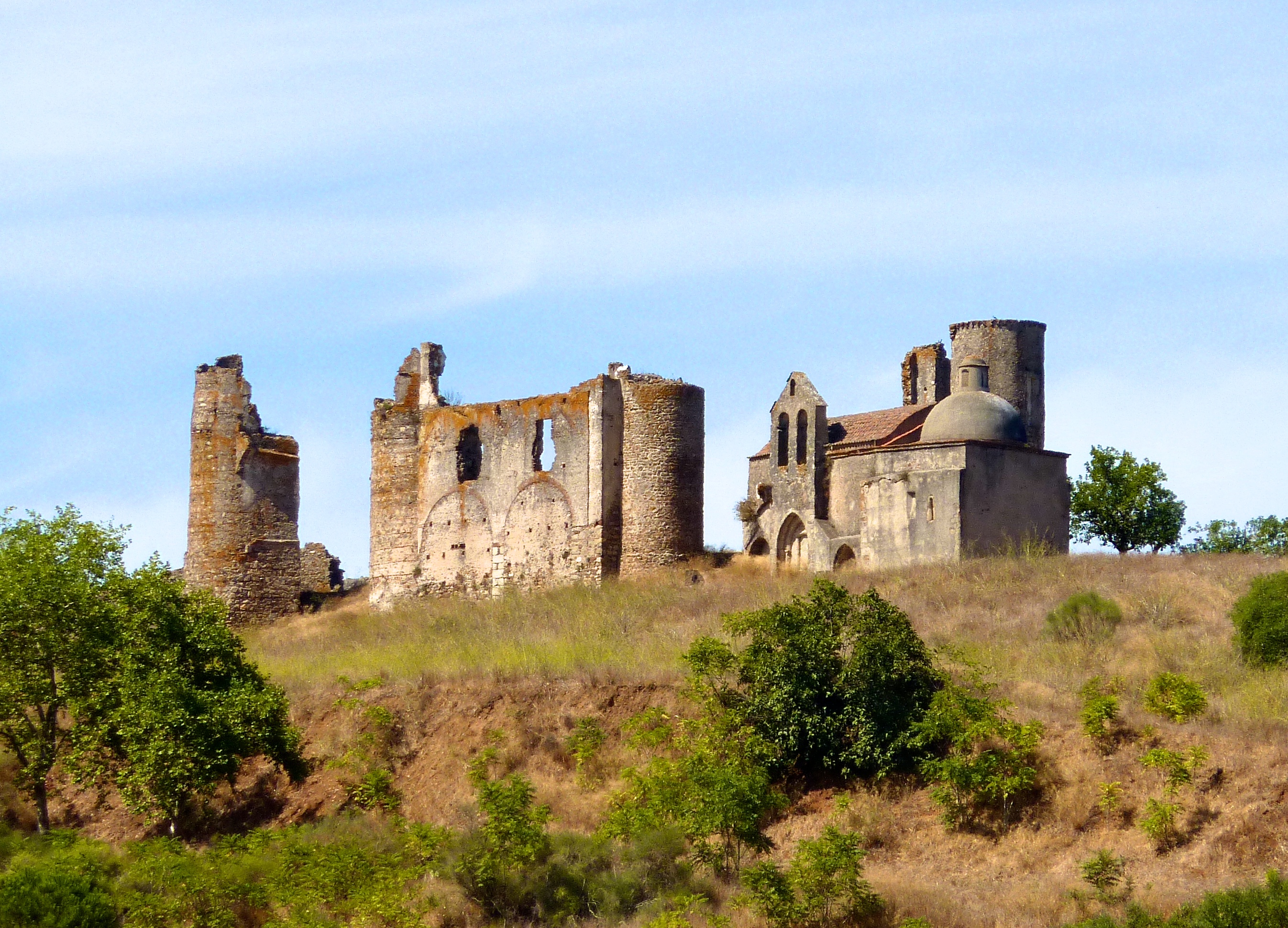
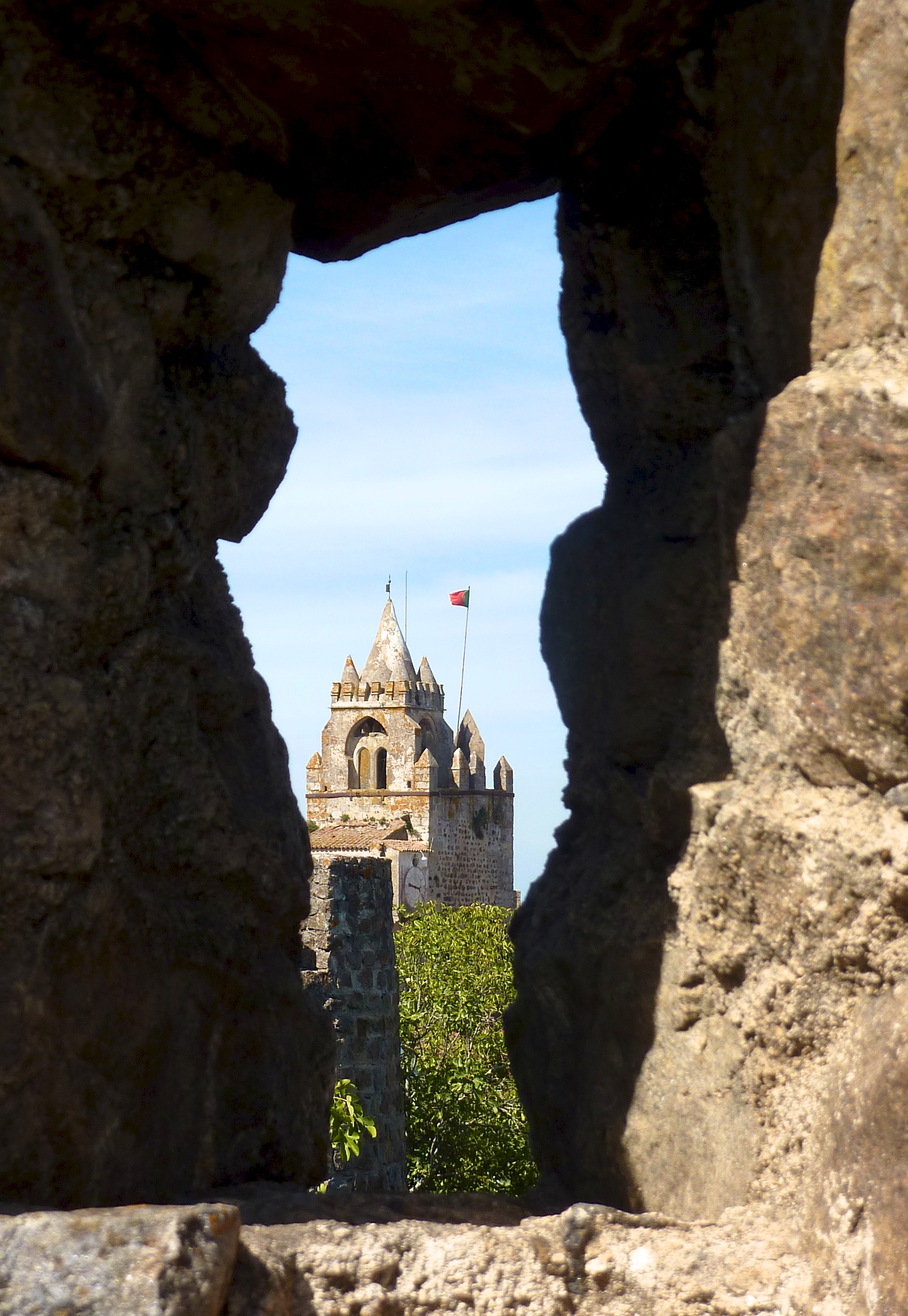
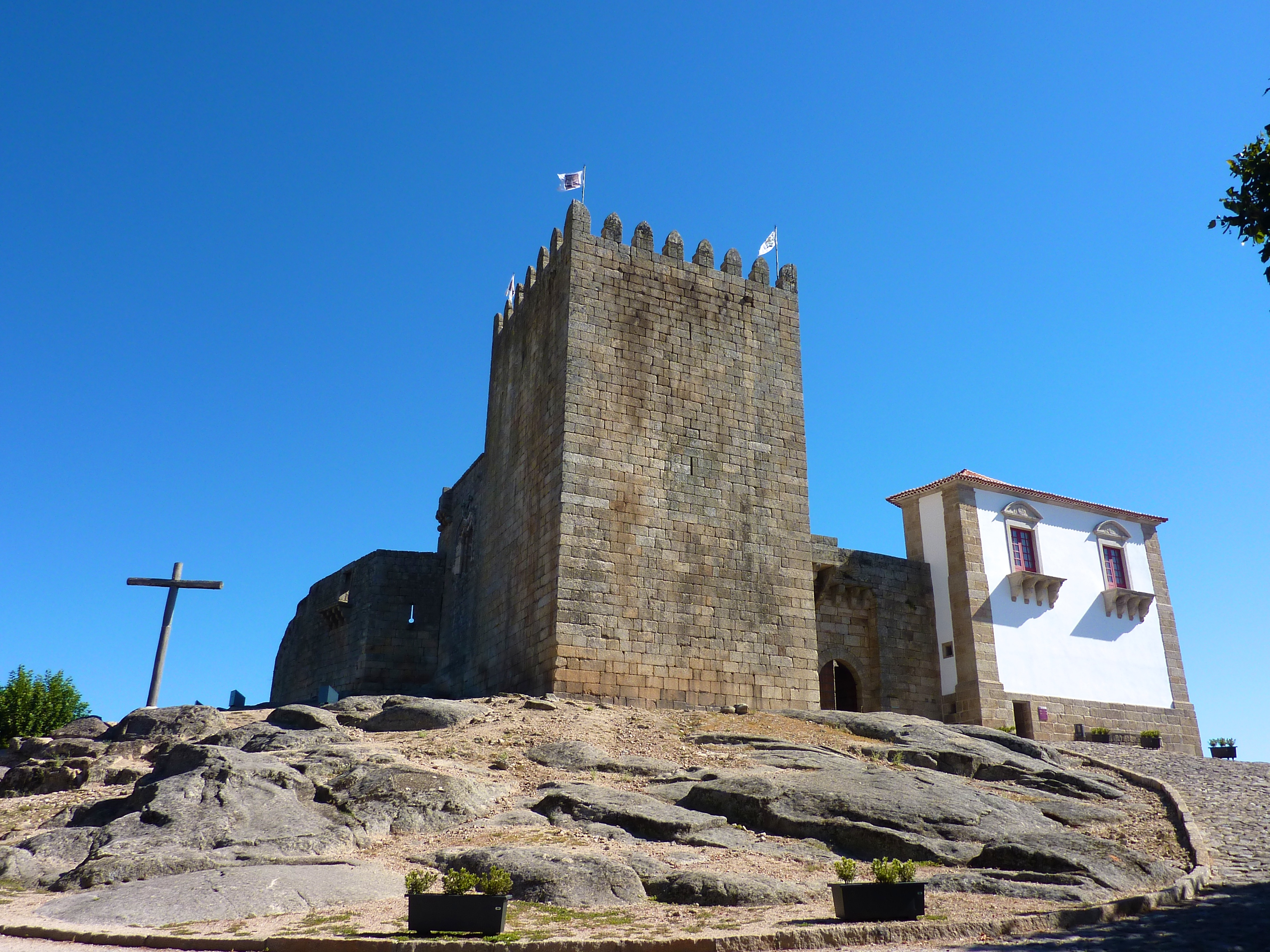
One of my favorite sites of the trip were the ruins of Montemor-O-Novo Castle. No one knows when they were built, but it is estimated that it was made by the Romans. They have record of kings using it in 1500.
It is said to have been one of the largest castles in Portugal.
We were the only visitors at the time which gave it a very peaceful yet haunting feeling.
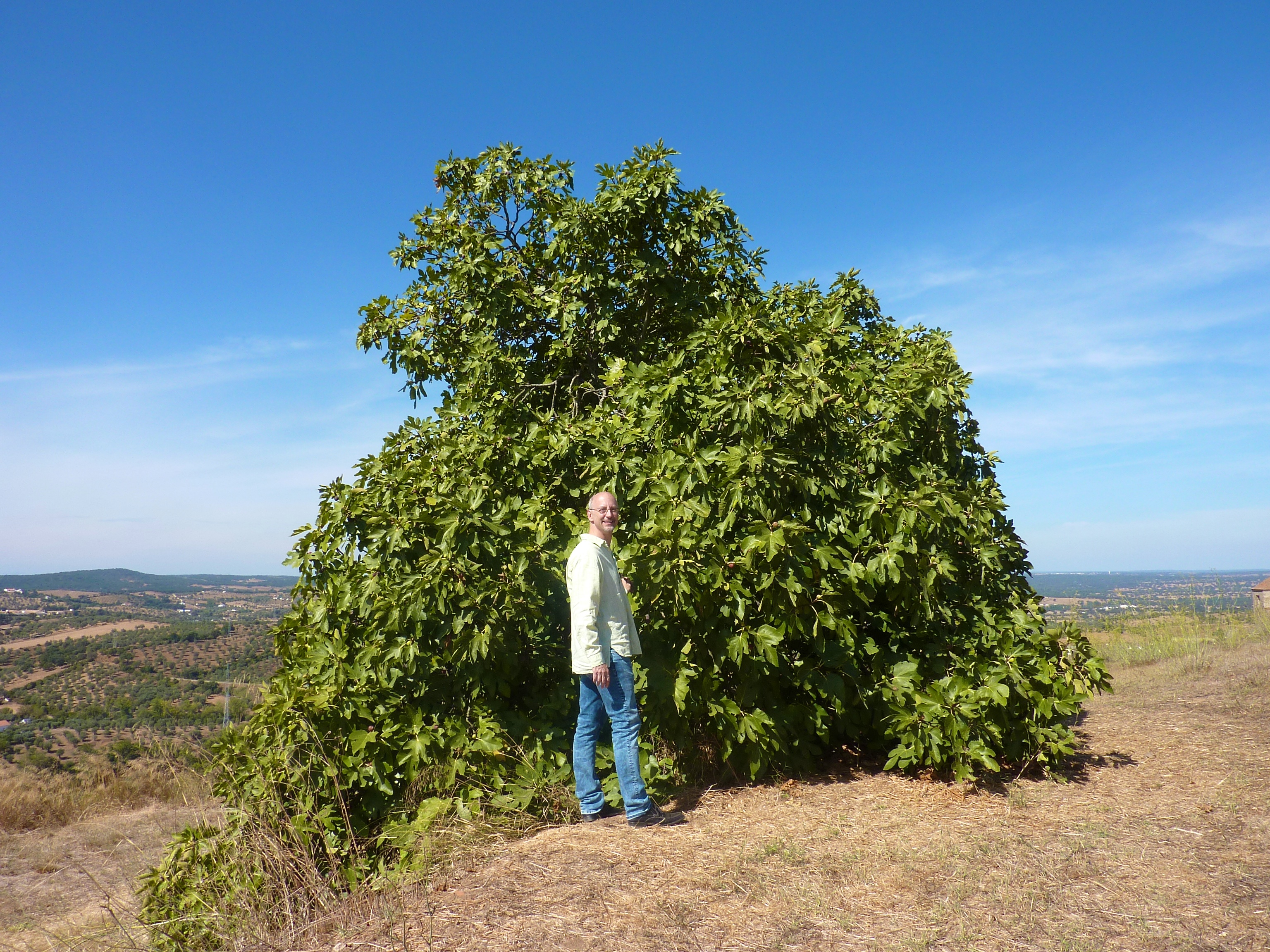
And there was the GIANT fig tree. Have ever told you how much I LOVE figs? D was picking the ripe ones and we were eating them on the spot. Then we started filling up my pockets for breakfast! Heaven.
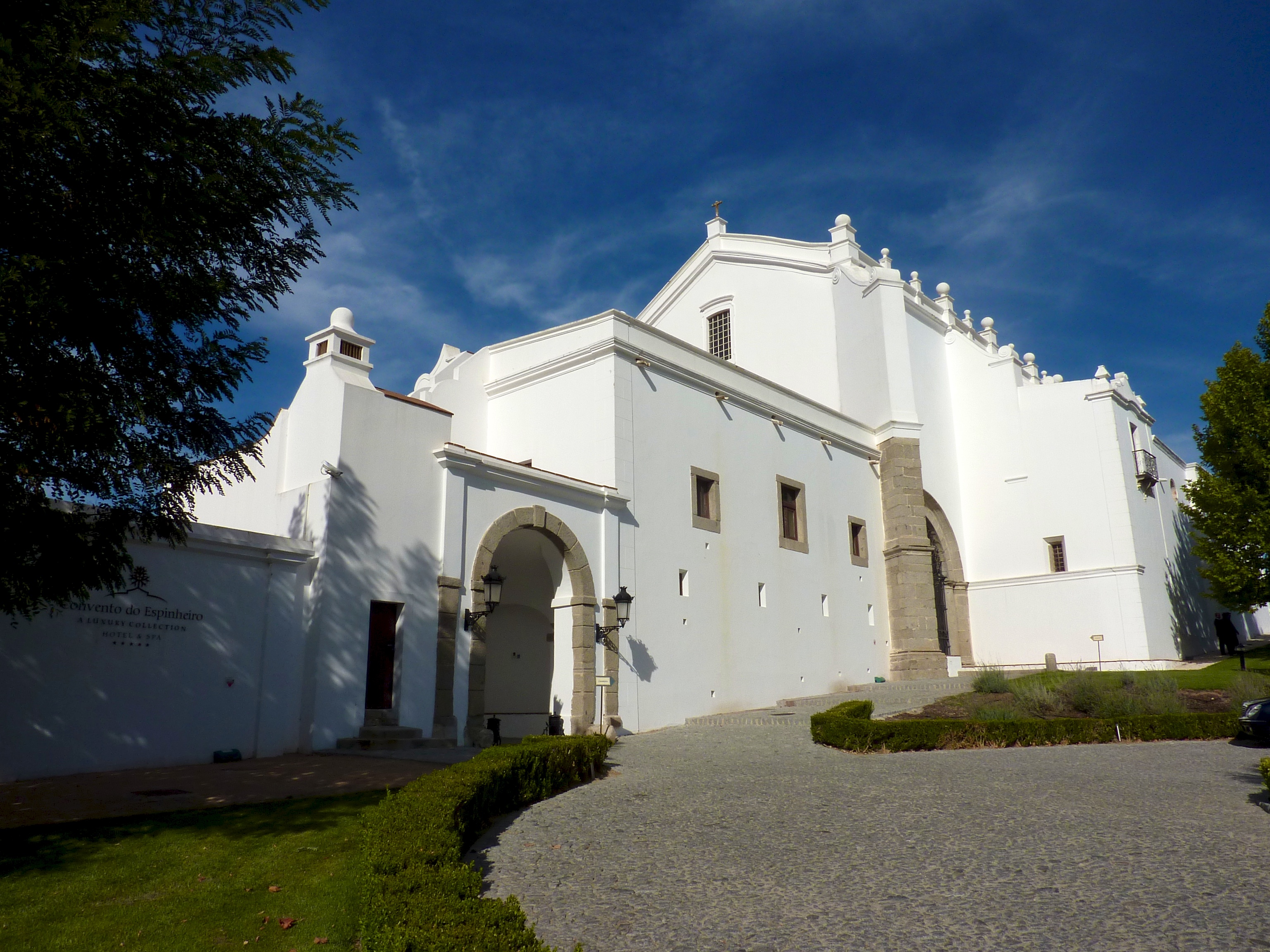
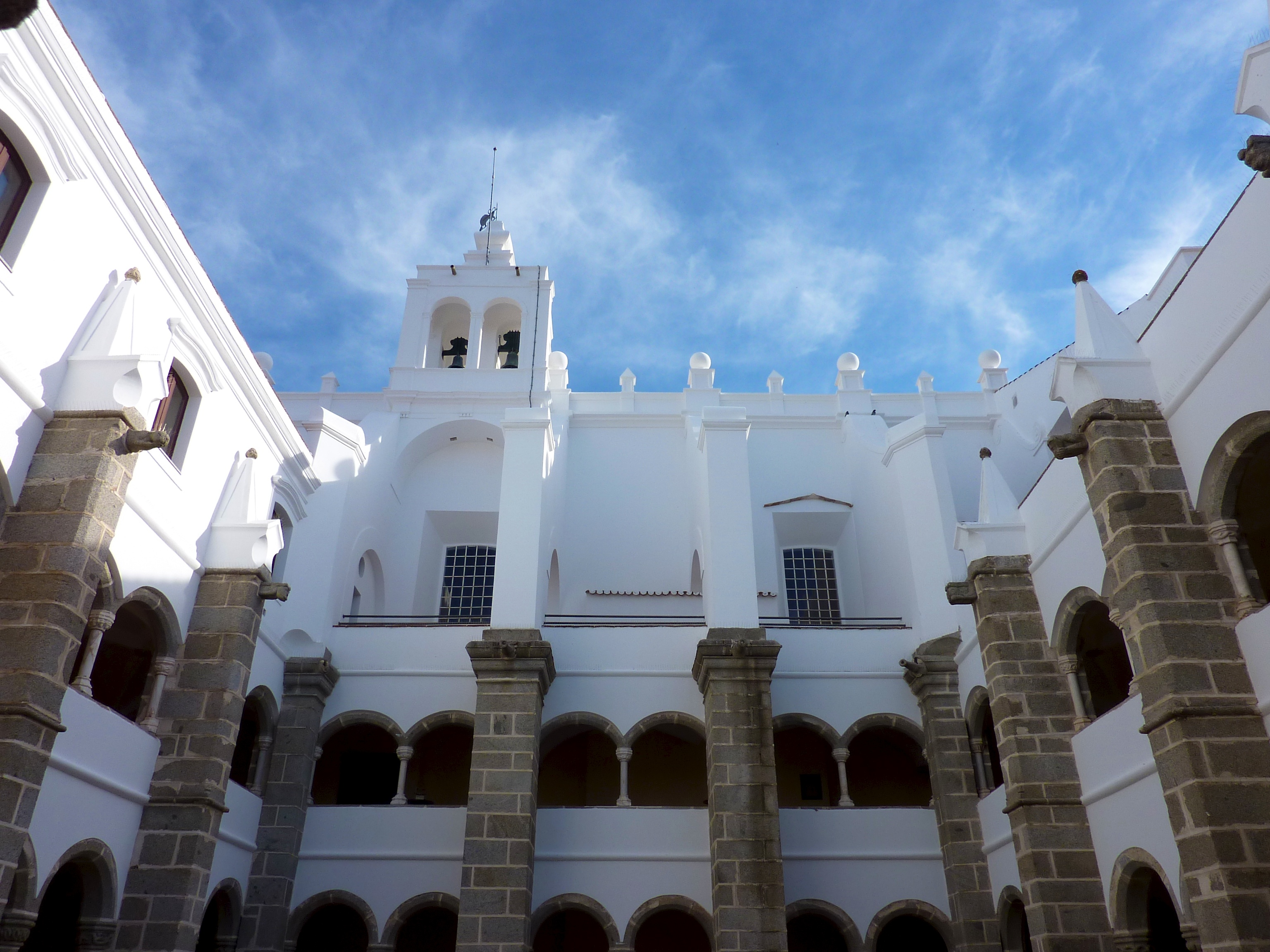
Our next two nights we spent in the Alentejo region in the charming town of Evora, a UNESCO World heritage Site. It goes back to 52 BC where it was conquered by the Romans and turned into a walled city. We stayed in a very special convent that was converted to a hotel, The Convento do Esponheiro.
Legend says that an apparition of the Virgin Mary appeared above a thorn-bush around 1400.
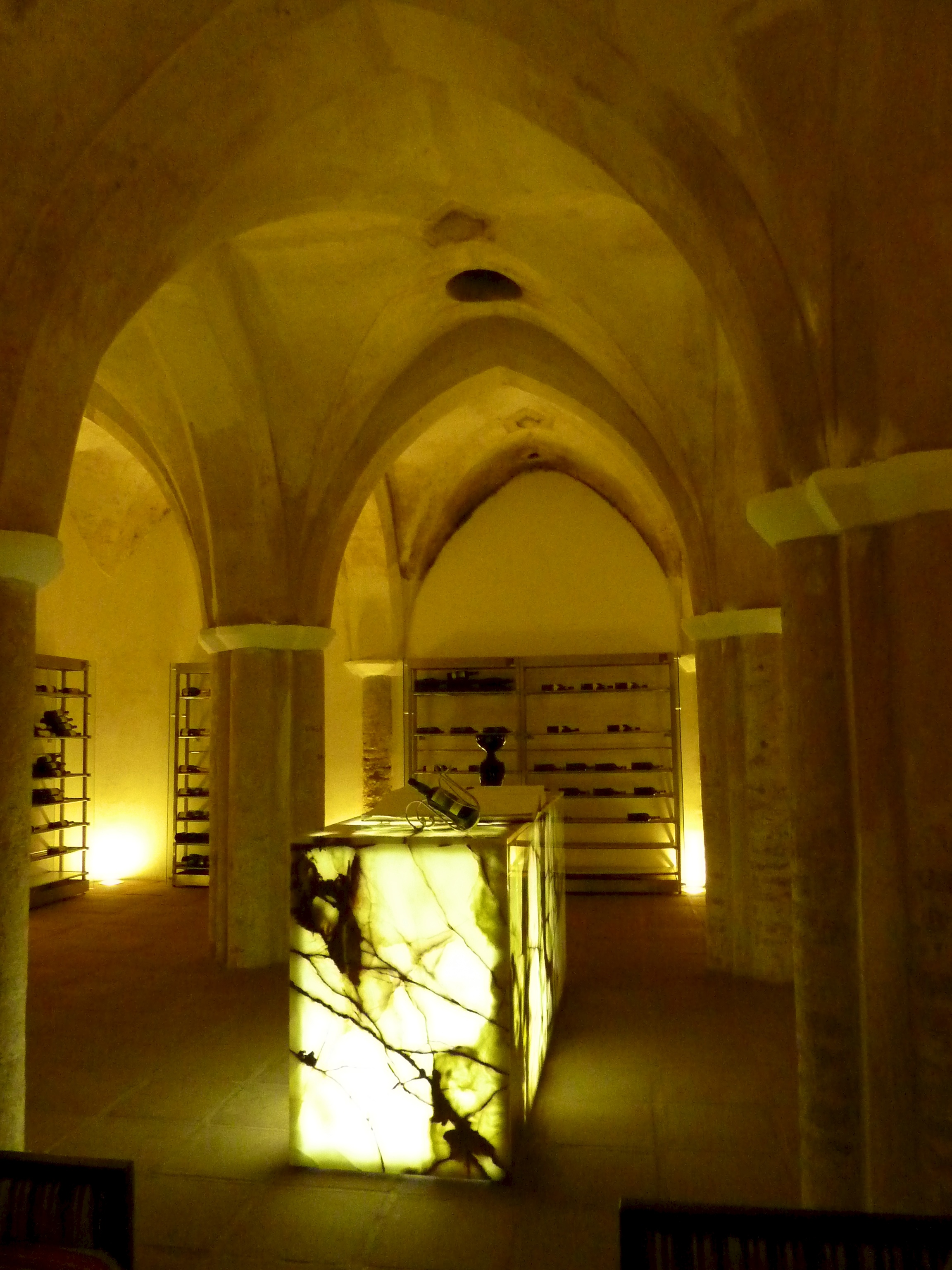
In 1412 an oratory was built in honor of it. During the 15th and 16th century the convent was frequented by Portuguese monarchs who gave the convent valuable gifts. Check out this wine cellar.
We stayed in the old part, where the kings and queens slept 500 years ago! Here is the view from our window –
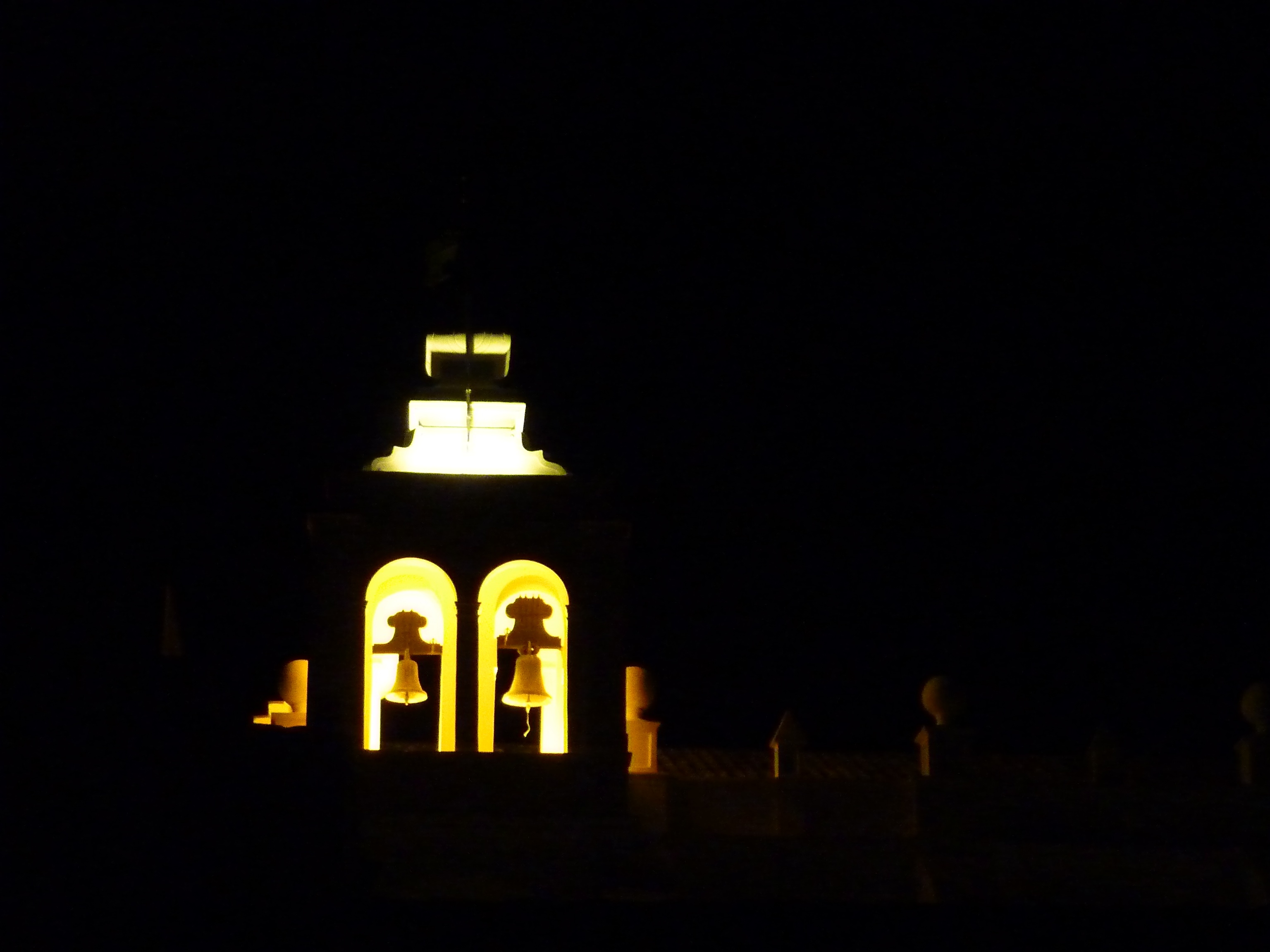
And at night, zoomed in on the bell tower –
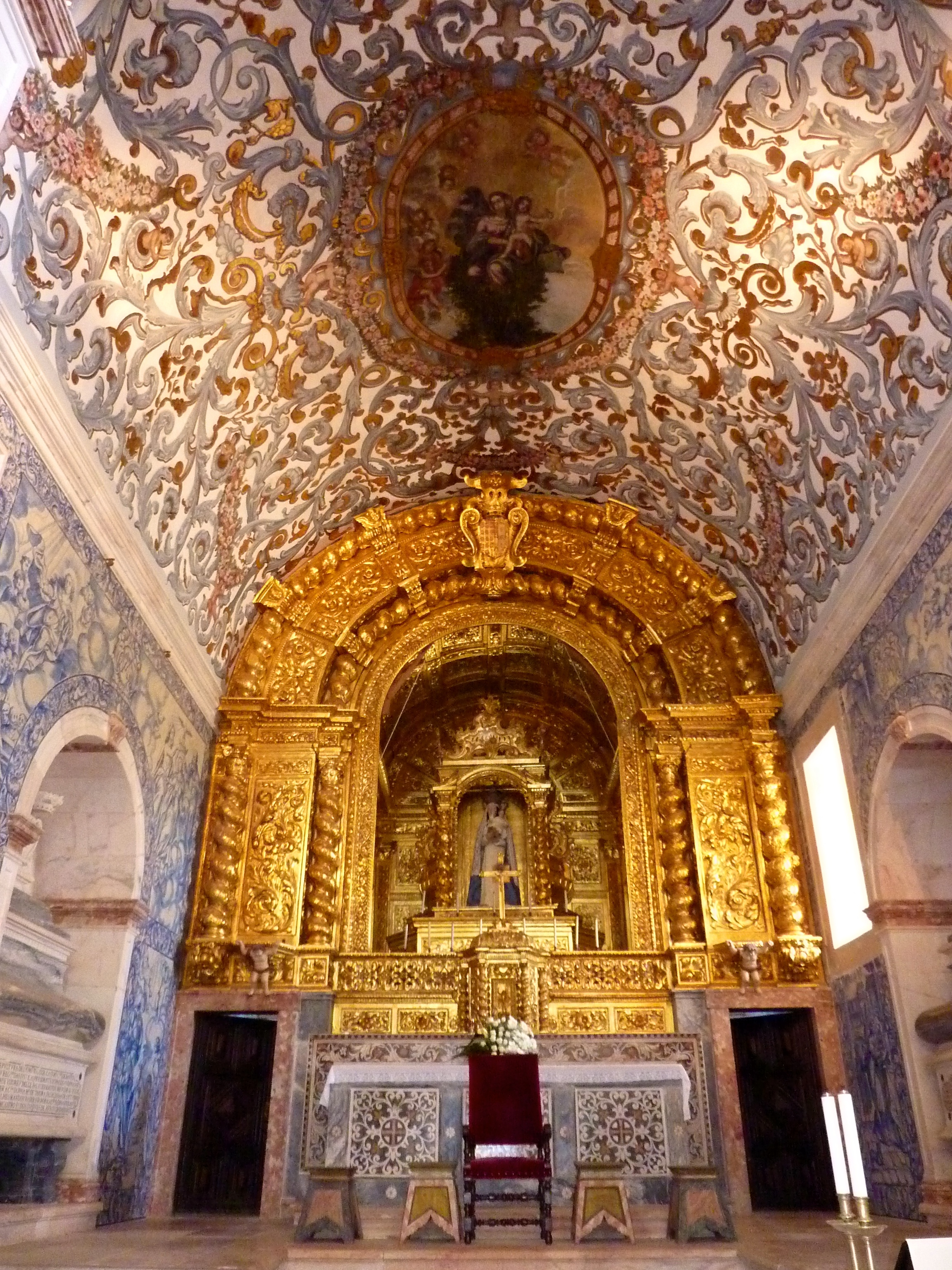
I can't begin to describe how unique and beautiful this place was. They had their very own chapel, built in the 16th century.
A close up of the alter.
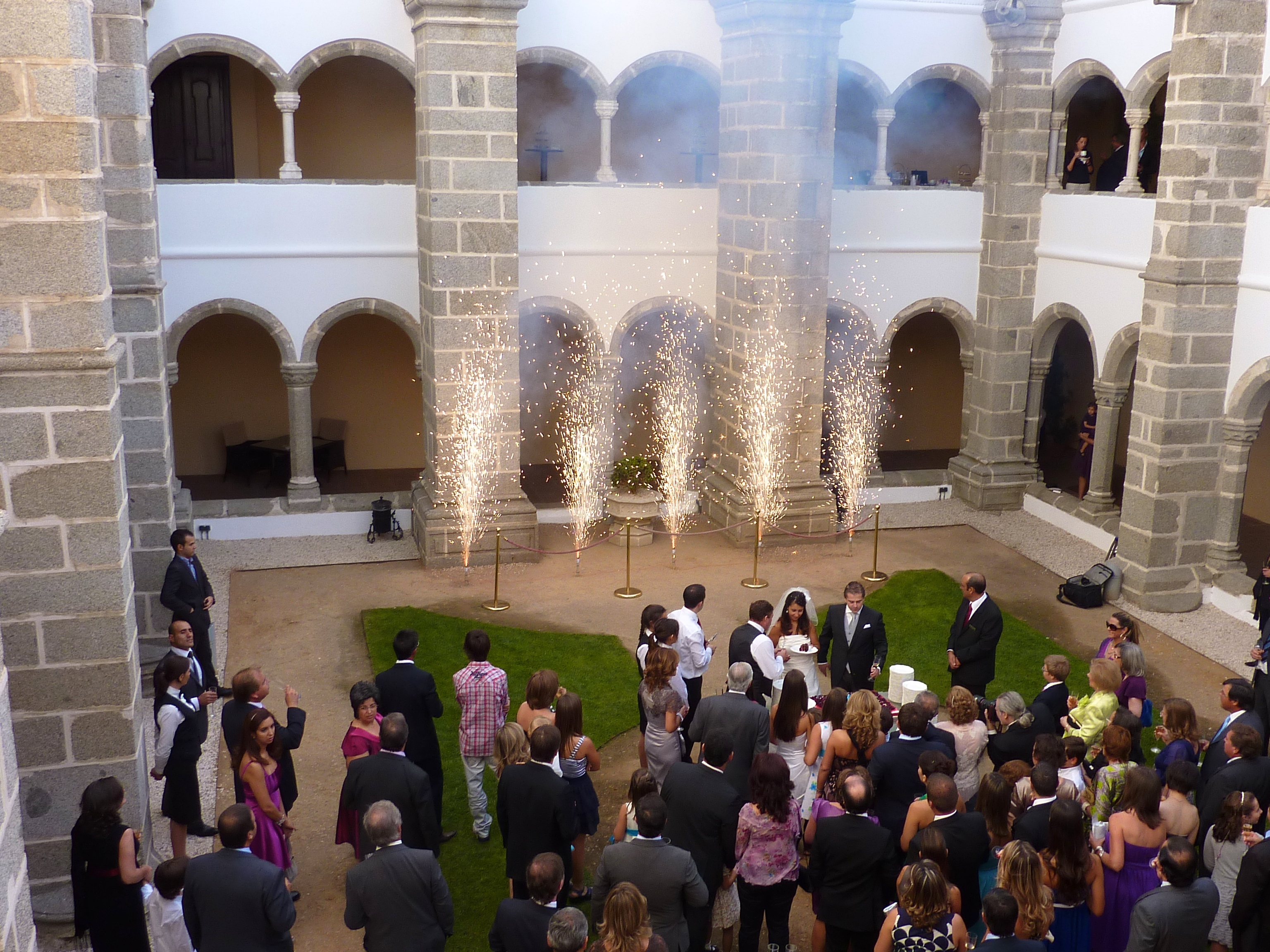
The day we were there a wedding was taking place. Isn't this interesting how they set off fireworks at the wedding as the couple cut the cake? Different from how we do it, they cut the cake almost immediately after the ceremony, before the meal.
And D's favorite part – for some odd reason they had Sunday football broadcasted from the US! Most hotels and B&B's do not even have English speaking channels – football? He set up camp for the evening. Our dinner was junk food including my new favorite potato chips – cheeseburger flavored.
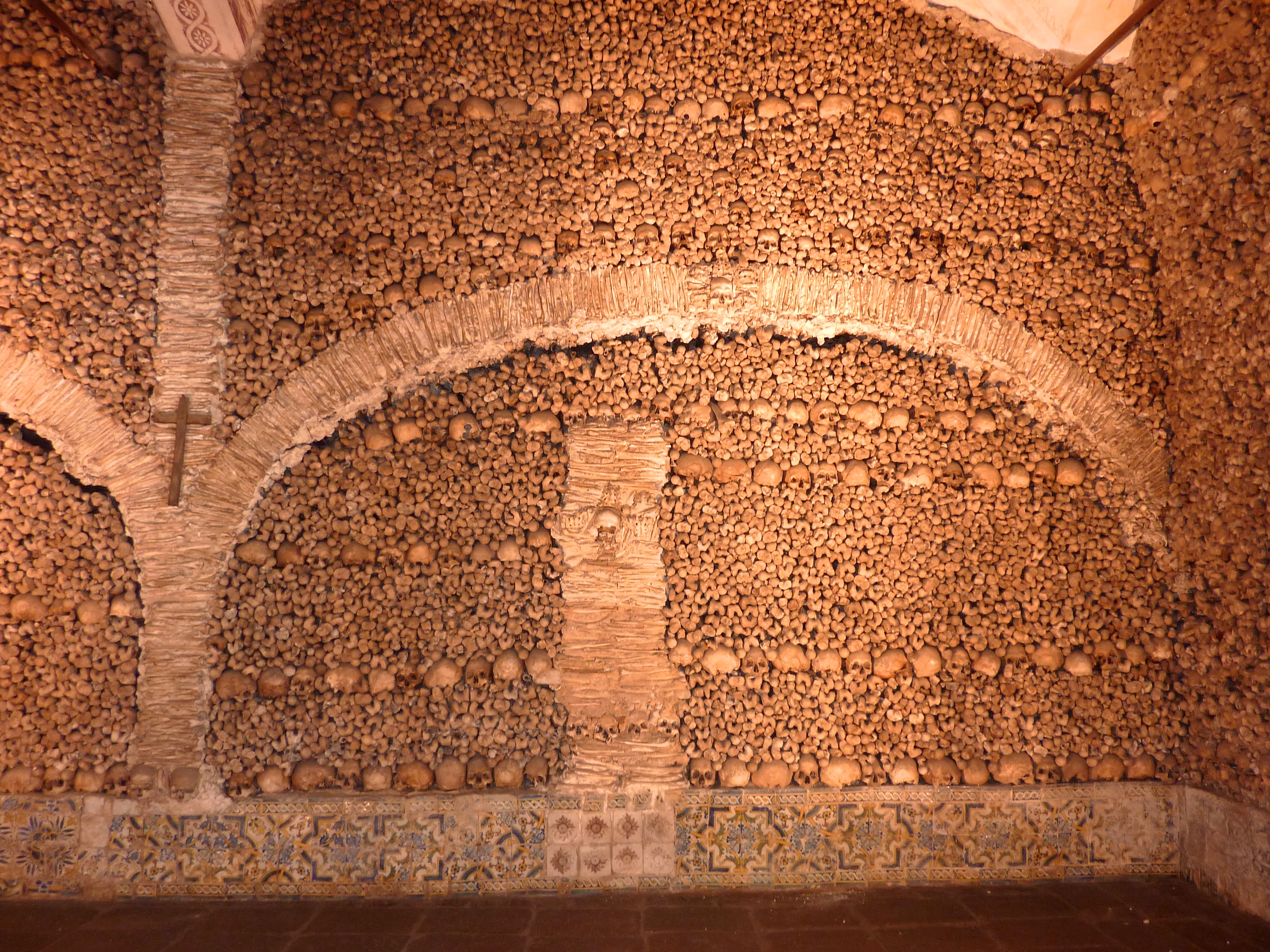
We visited a very odd site in town. Can you guess what this wall is made of?
BONES! The Capela dos Ossos or Chapel of bones is in a small chapel next to the Church of St. Francis.
It was built in the 16th century by a Franciscian Monk who wanted to send the message of life being transitory. This is clearly shown in the famous warning at the entrance Nós ossos que aqui estamos pelos vossos esperamos (“We bones, lying here bare, are awaiting your's").
Its walls and eight pillars are "decorated" in carefully arranged bones and skulls held together by cement. The ceiling is made of white painted brick and is painted with death motifs. The number of skeletons of monks was calculated to be about 5000, coming from the cemeteries that were situated inside several dozen churches.
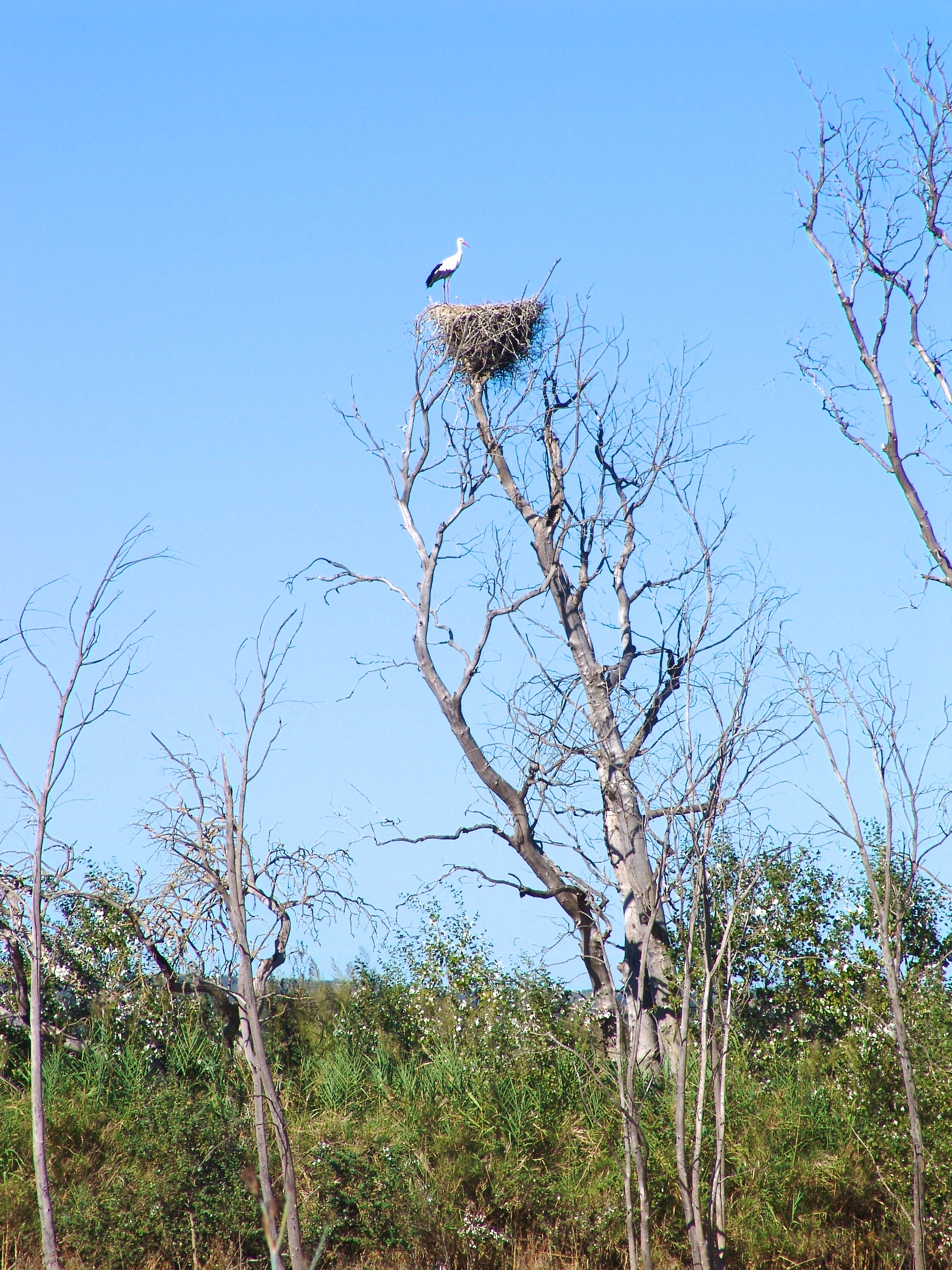
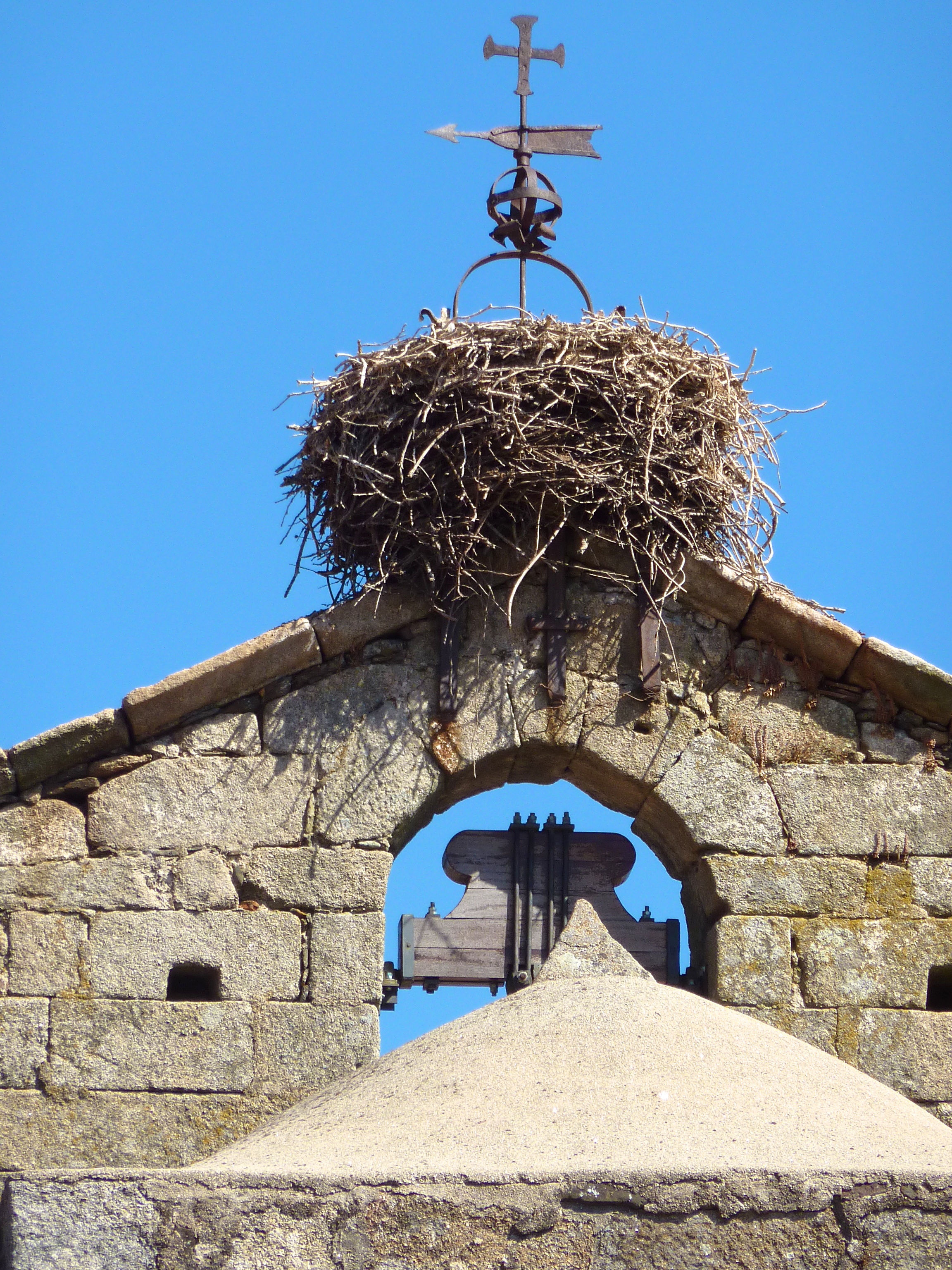
On to a happier subject. This area is known for the white stork, the legendary stork that brings babies.
In fact, they just came off of the endangered species list due to Portugal's help in providing better nesting and feeding opportunities.
We saw many nests, but only one that was occupied.
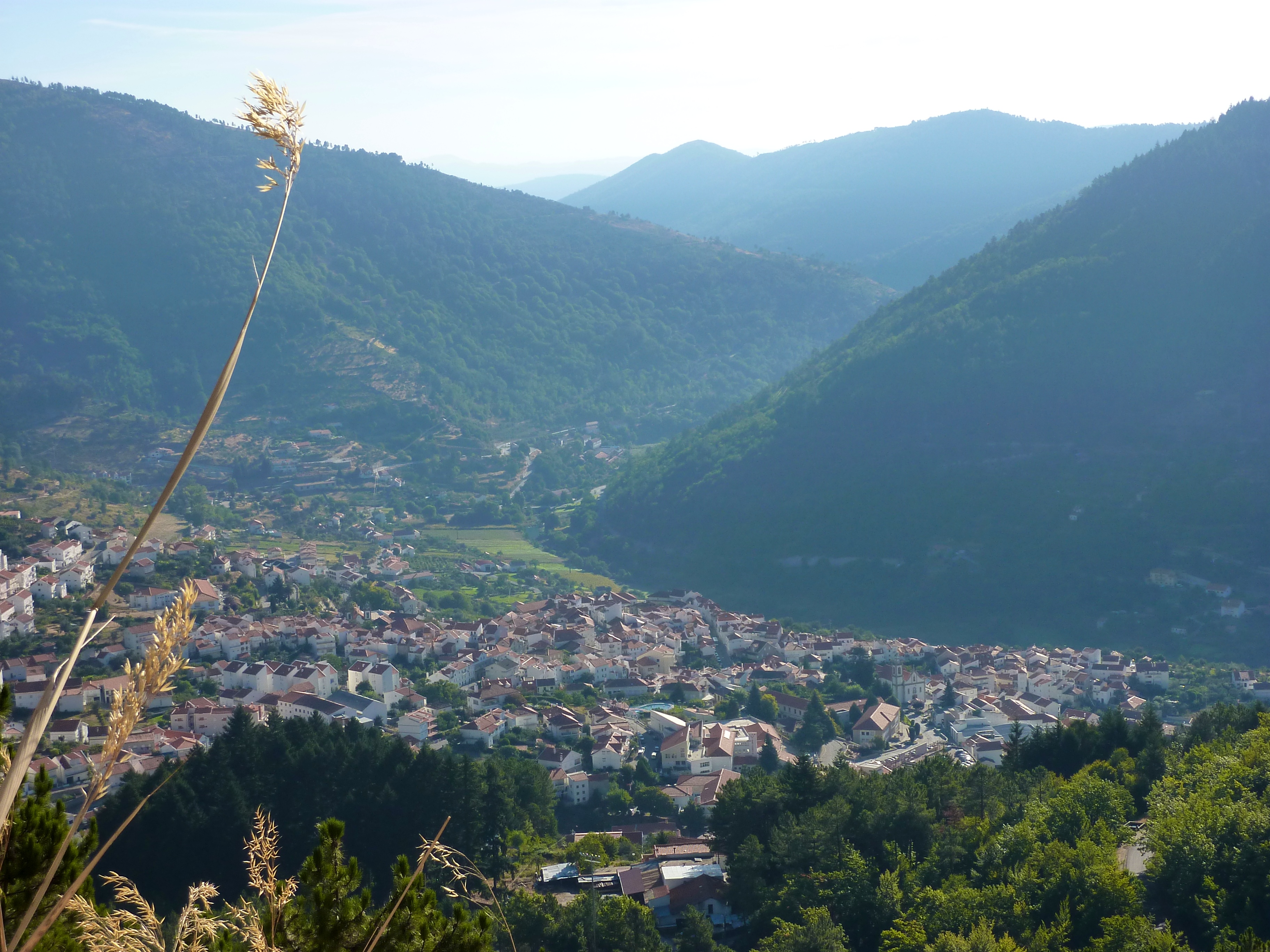
Next we moved onto the Guarda region which is very mountainous. We were in a small town called Mantegas which is at an altitude of 2290 feet and is nestled between the mountains.
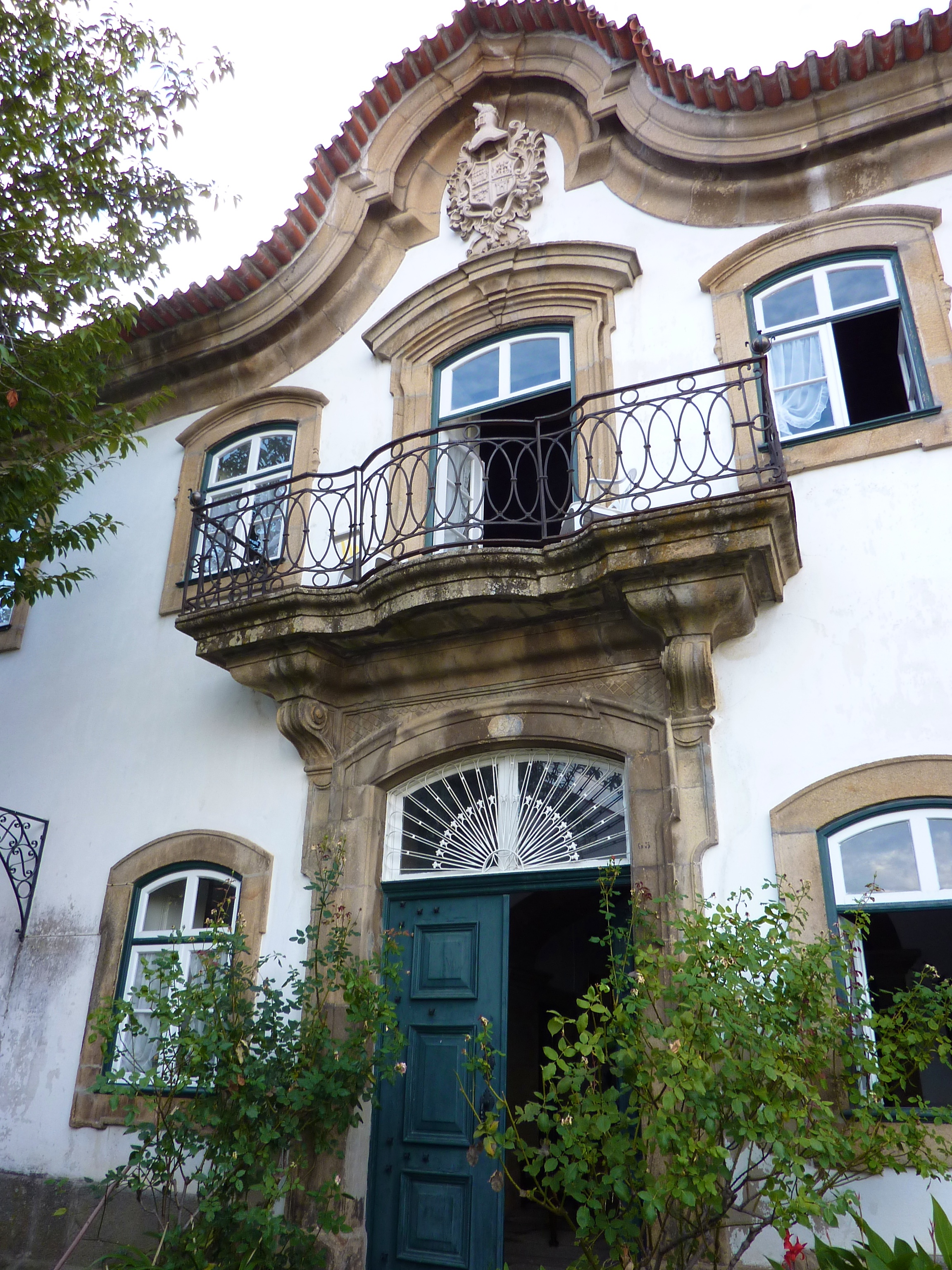
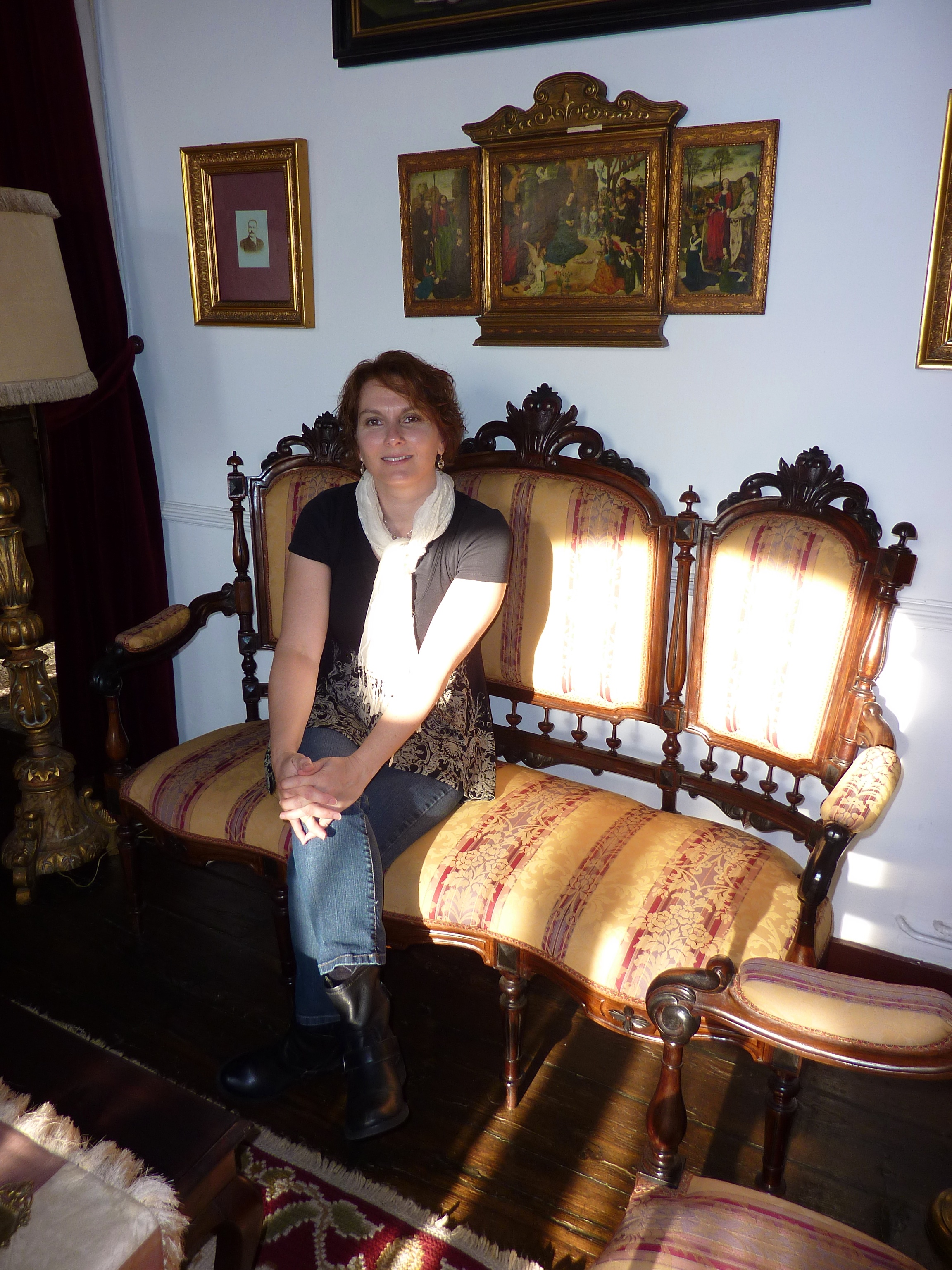
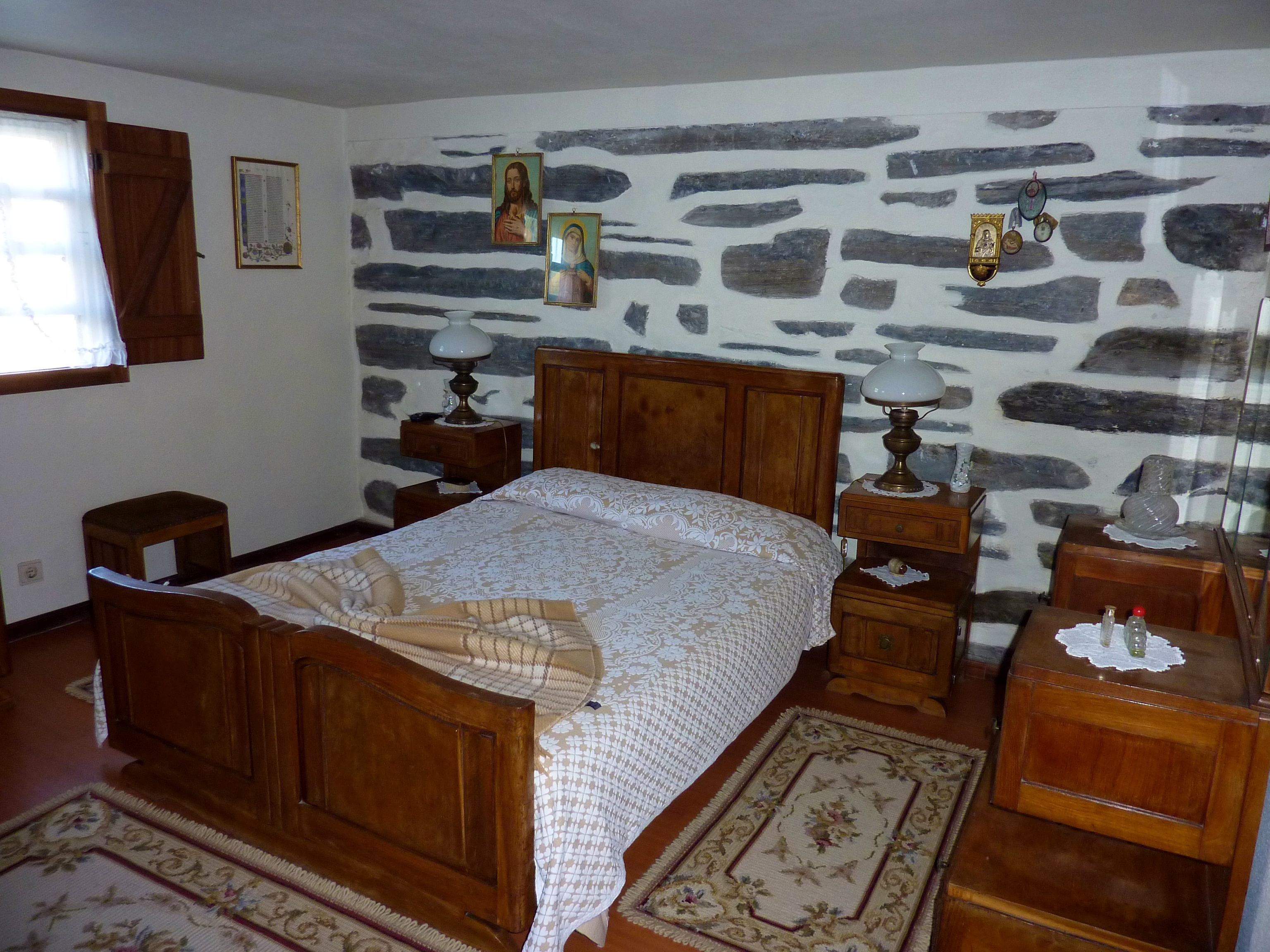
In this town, we stayed in a stunning old mansion, Casa Das Obras, which was built in 1770.
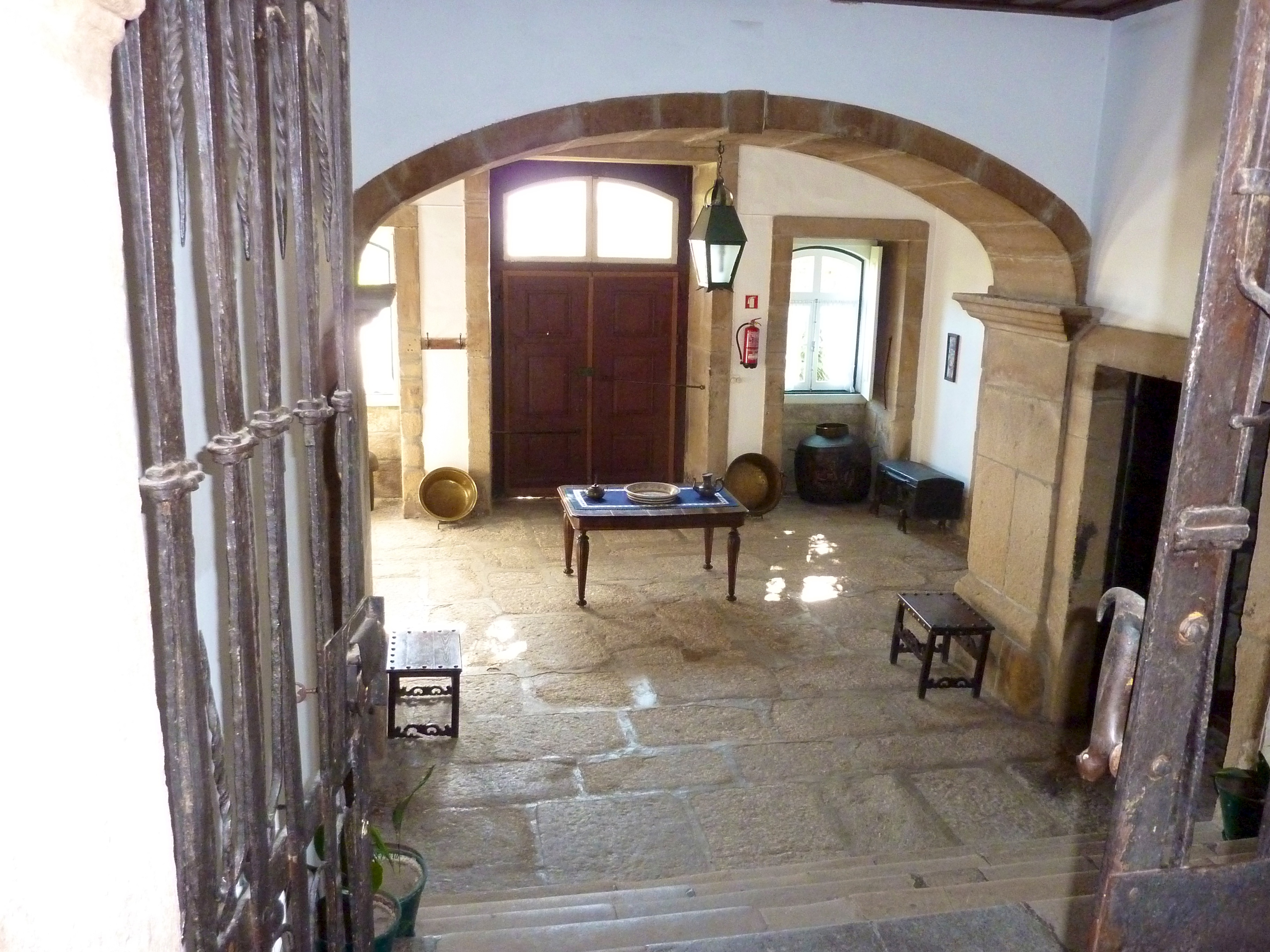
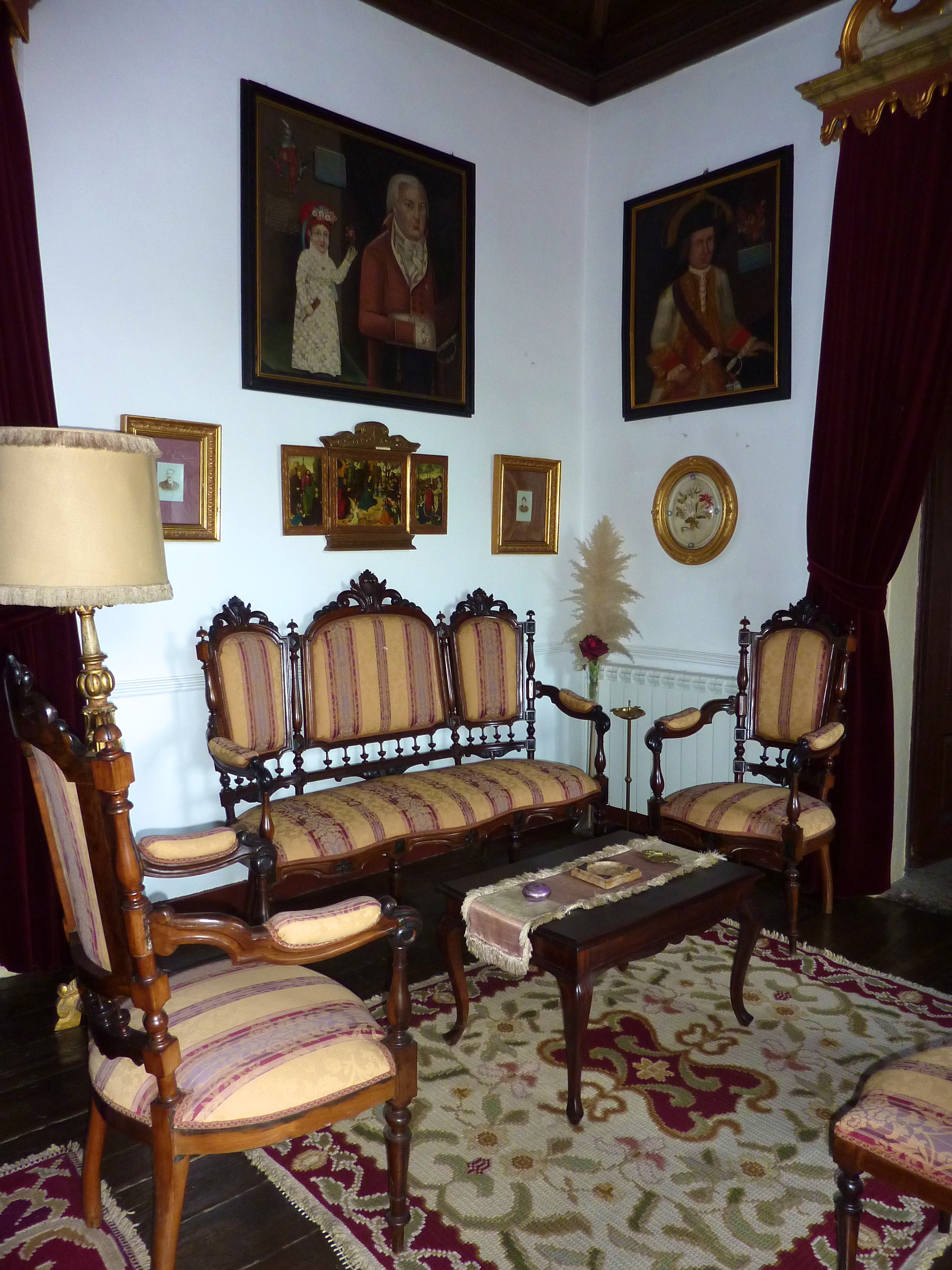
The owner told me that most of the furniture and decorations were 400 to 500 years old. Here is a view of the entrance way.
The sitting room.
The sunset as viewed from the breakfast room.
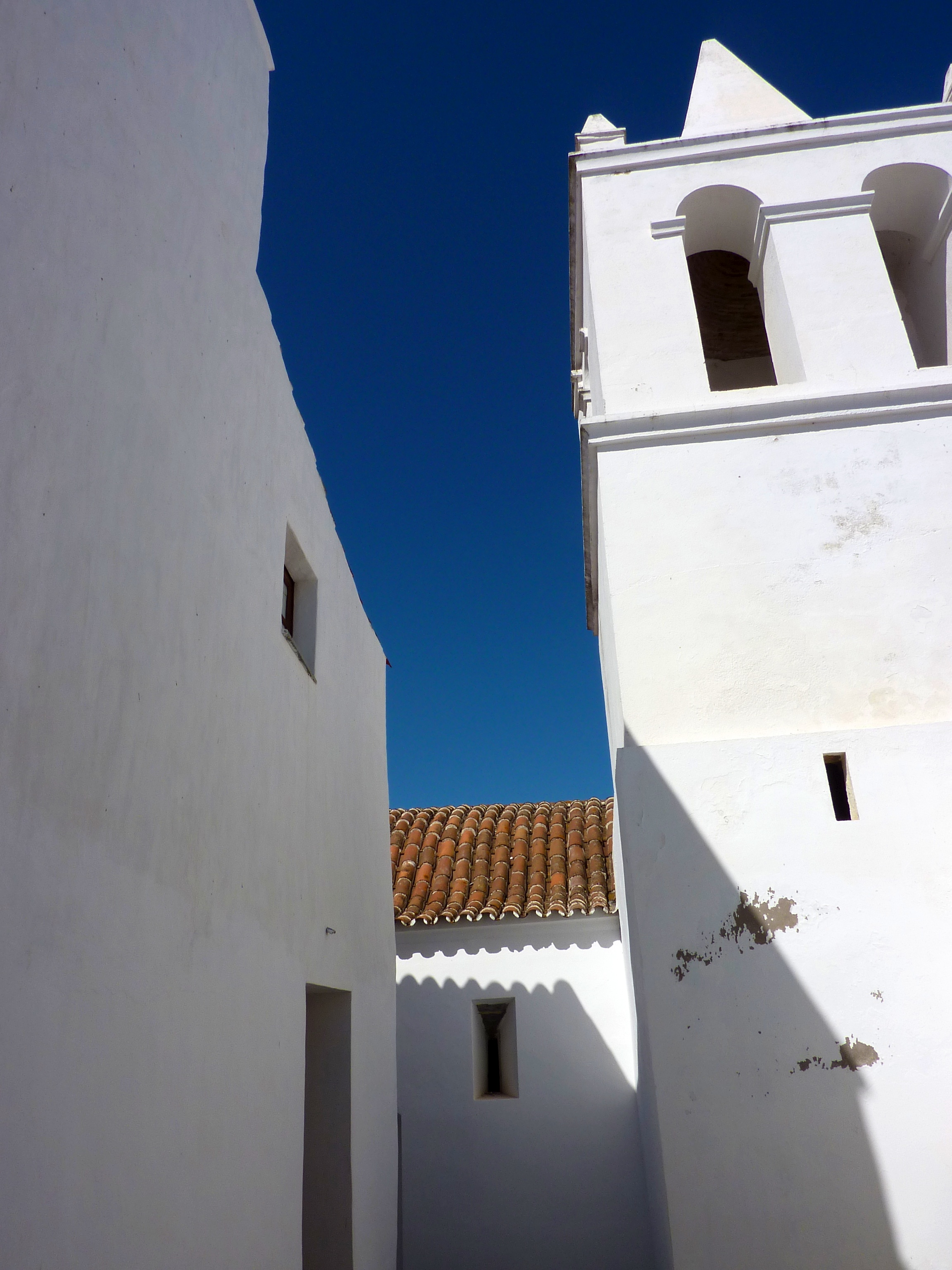
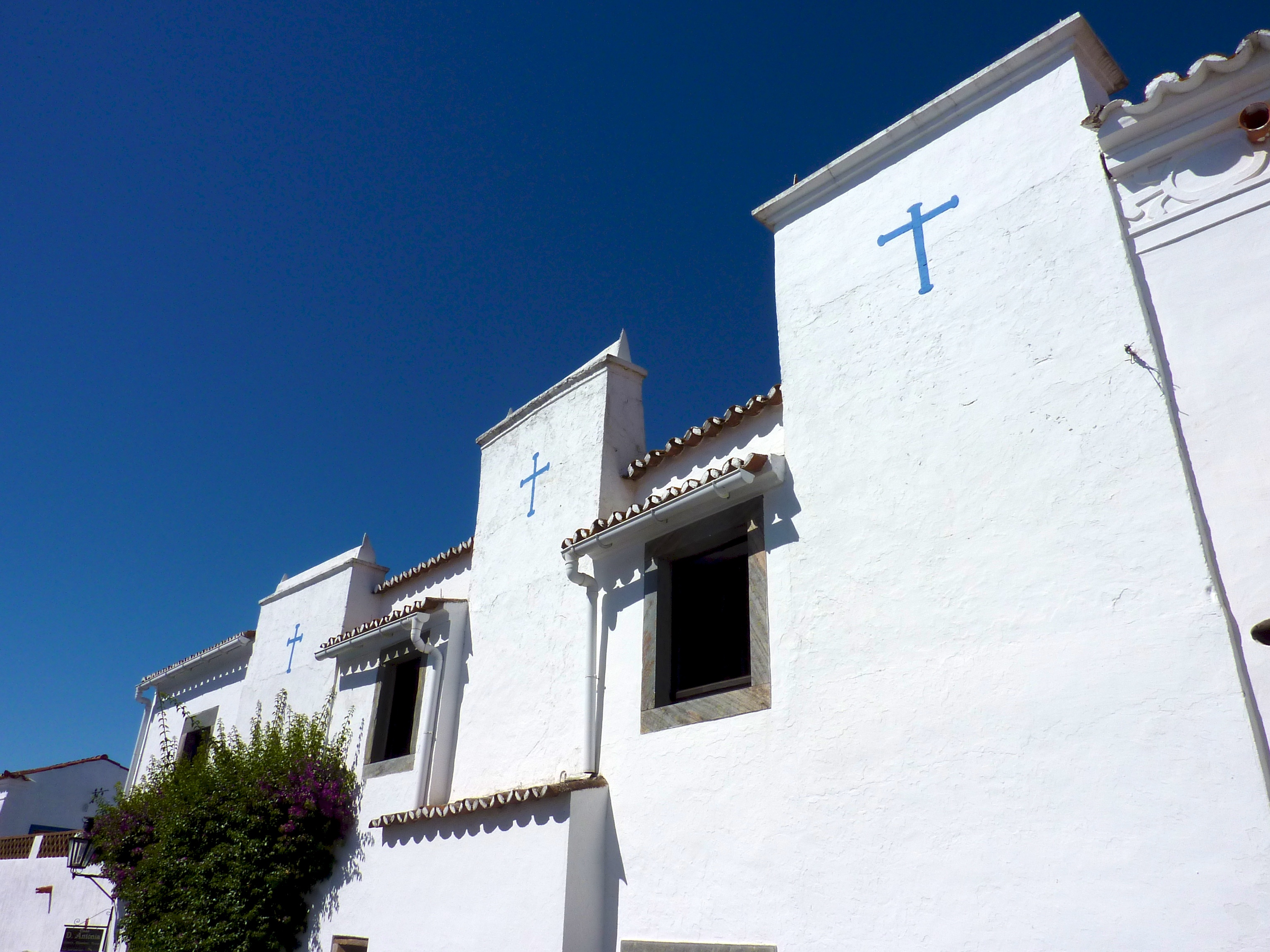
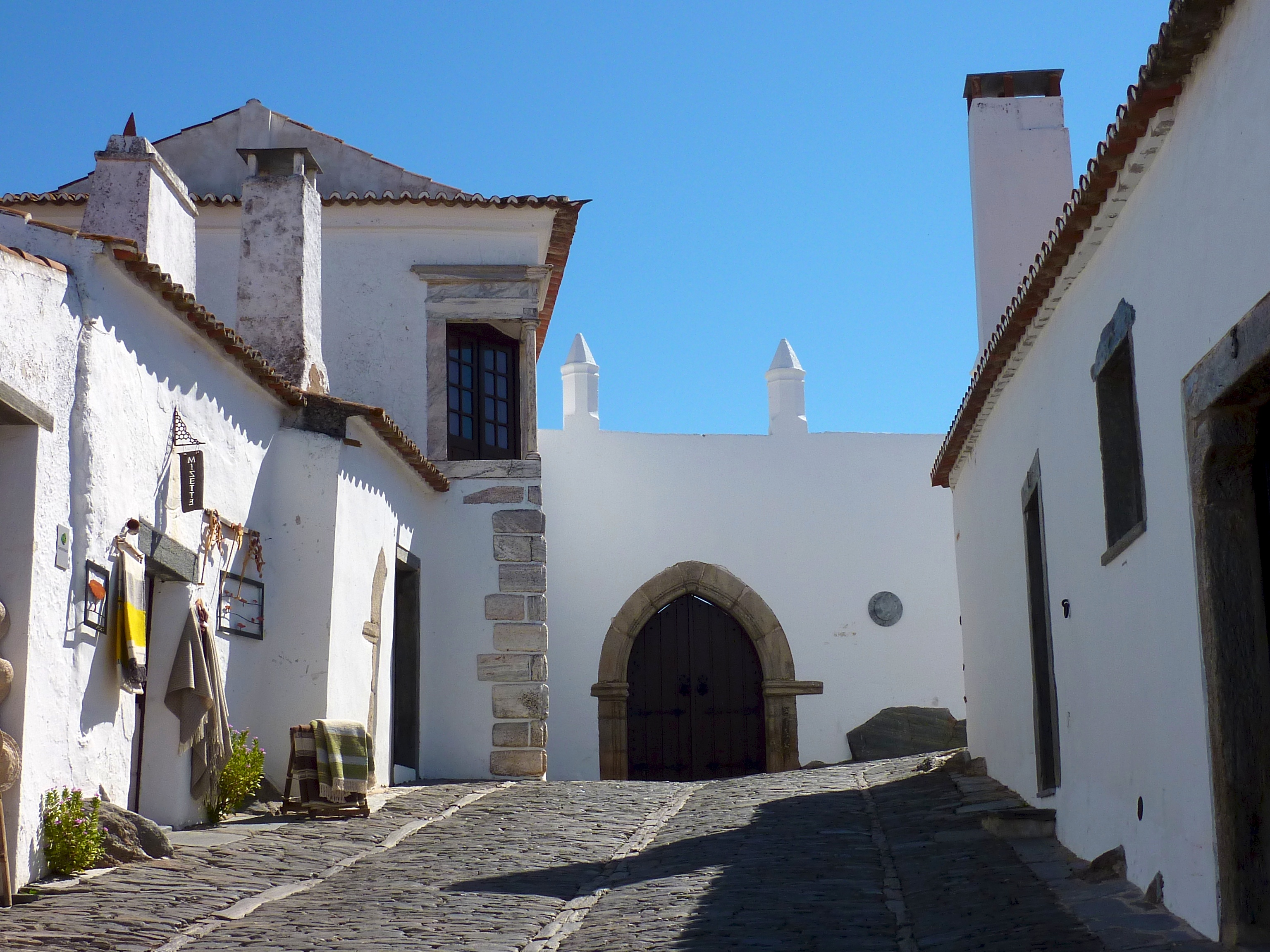
Monsaraz was a charming white washed town described as a fairytale village. And this is was!
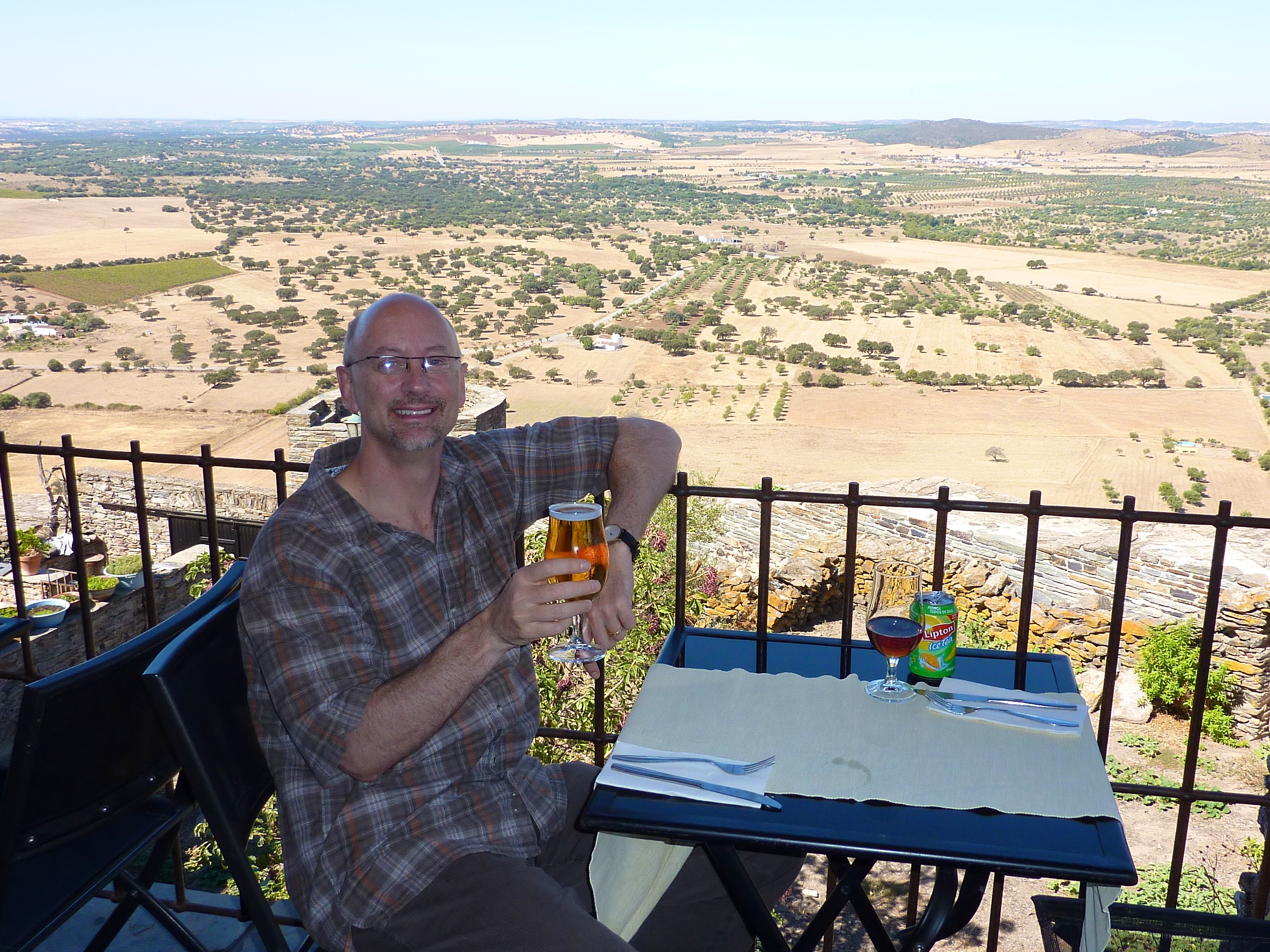
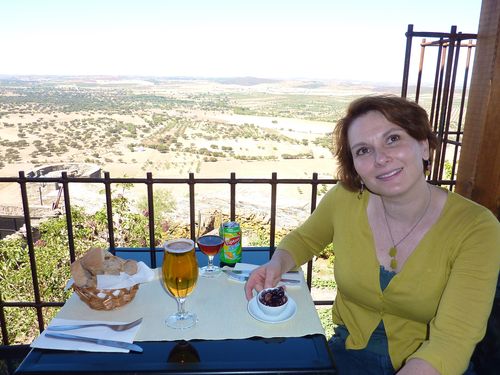
We found a little cafe for lunch with and extraordinary view.
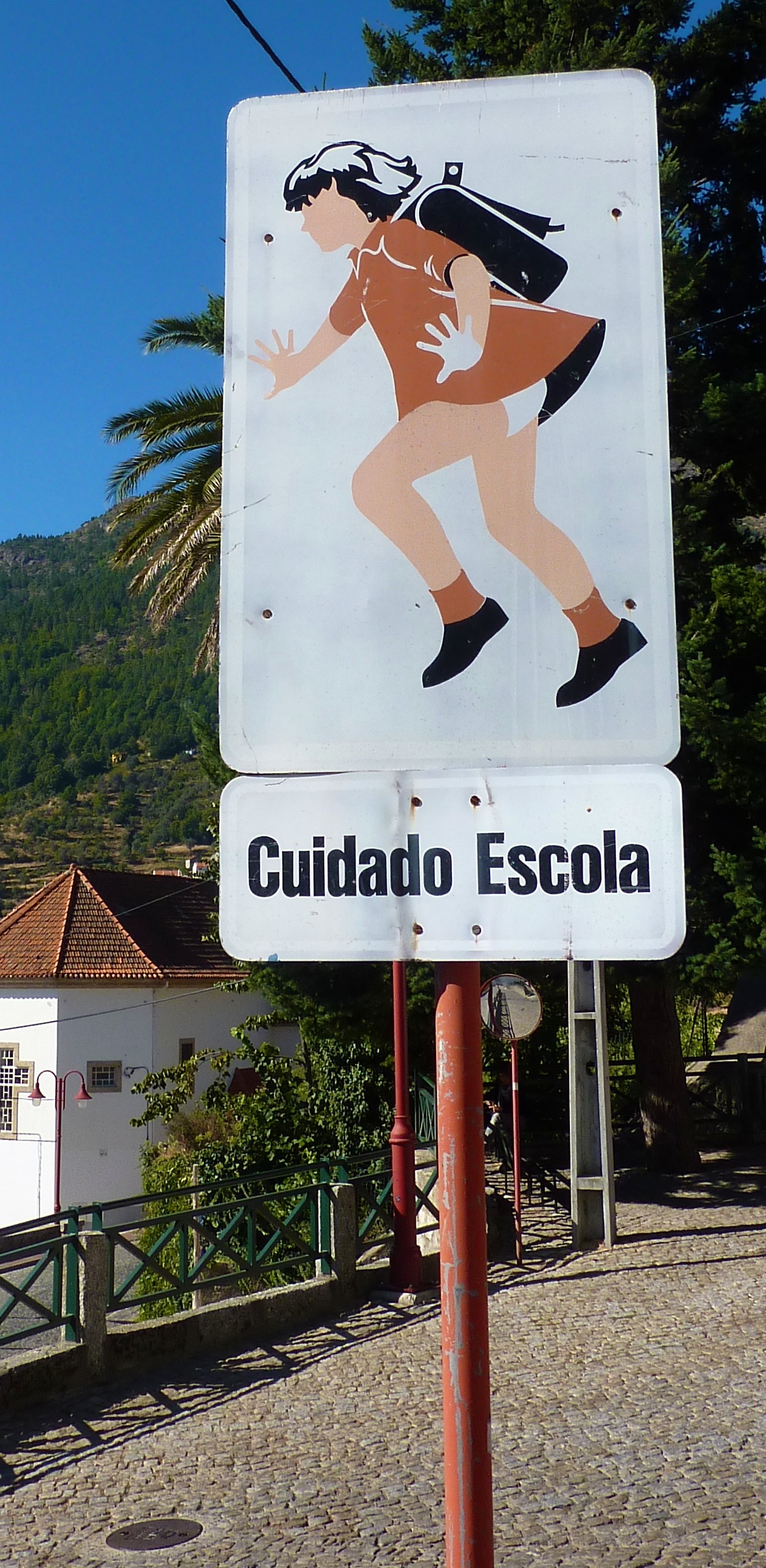
This funny sign for school crossing in the neighborhood of our B&B. Why they had to show her panties???
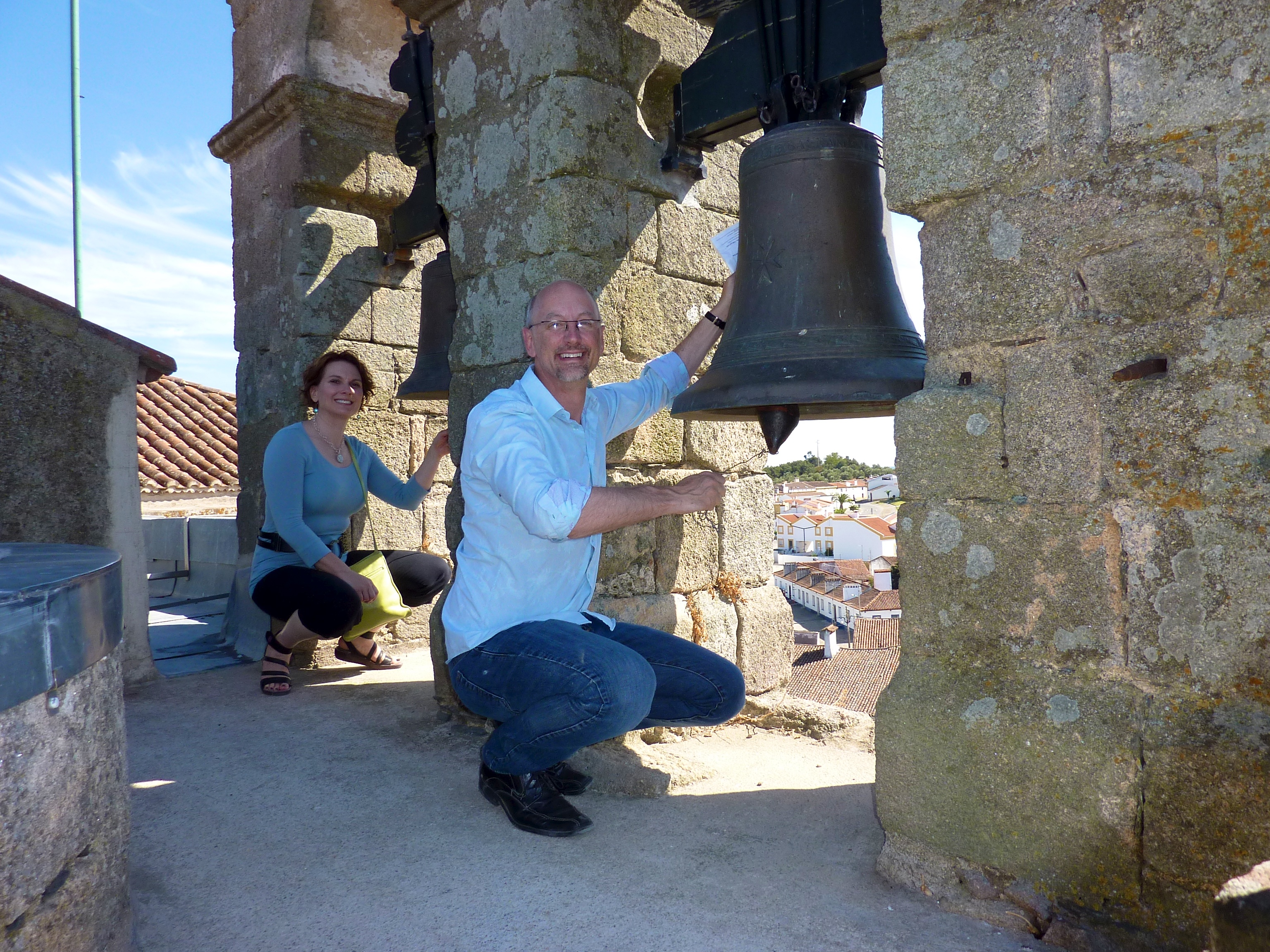
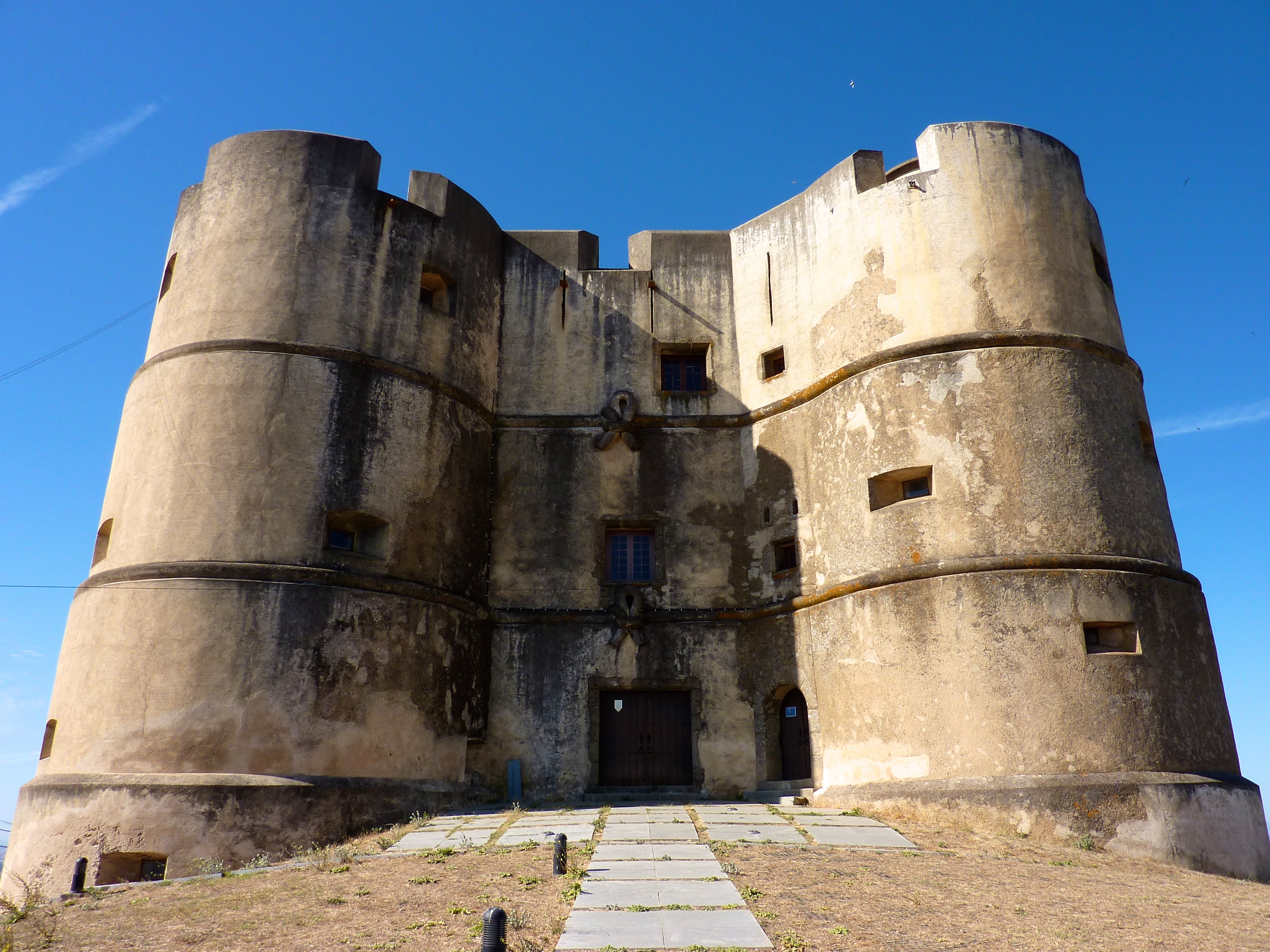
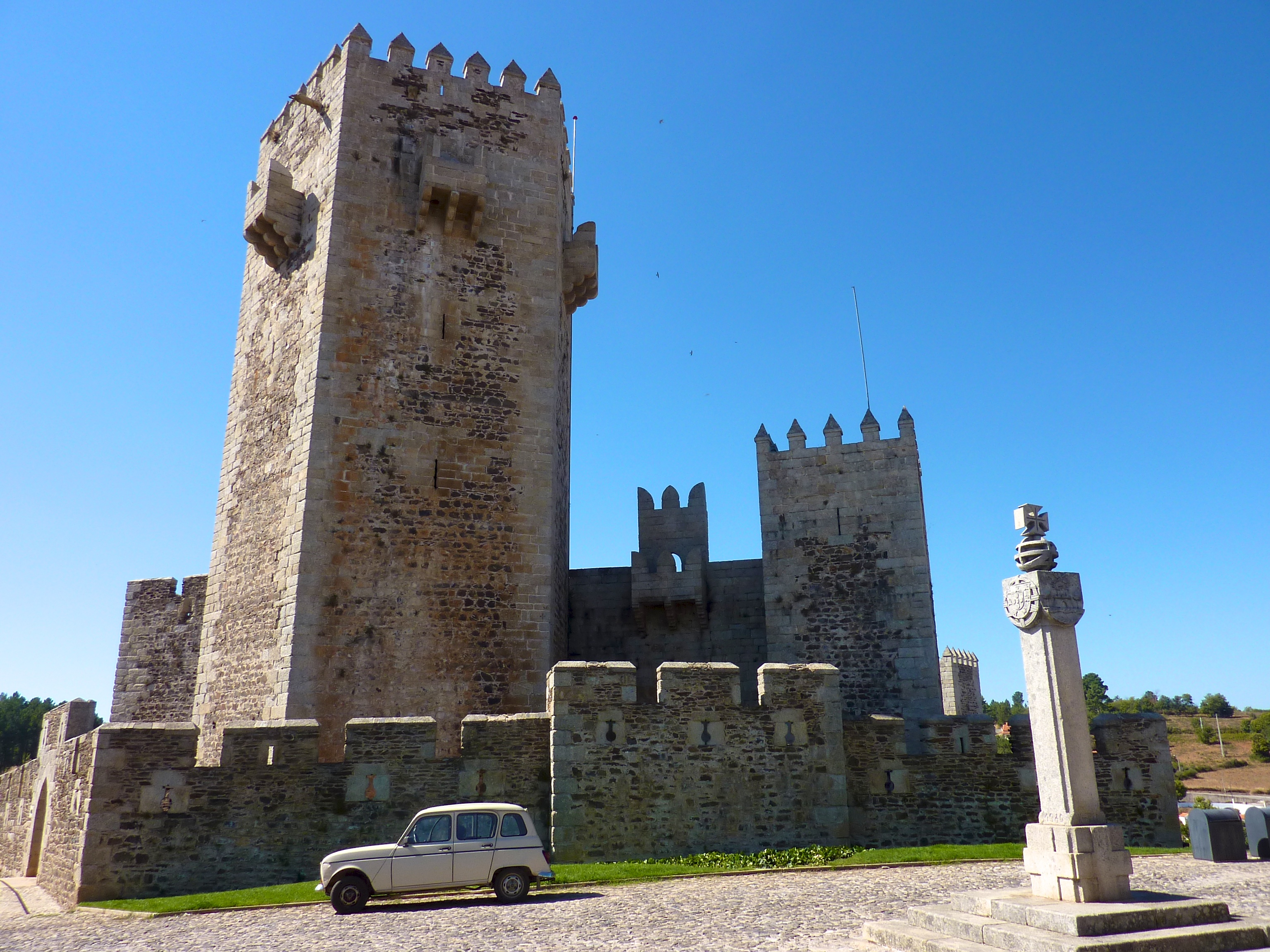
We saw many castles and Monasteries in our travels – varying quite a bit in style and materials. We enjoyed the Flor de Rosa, a converted monastery.
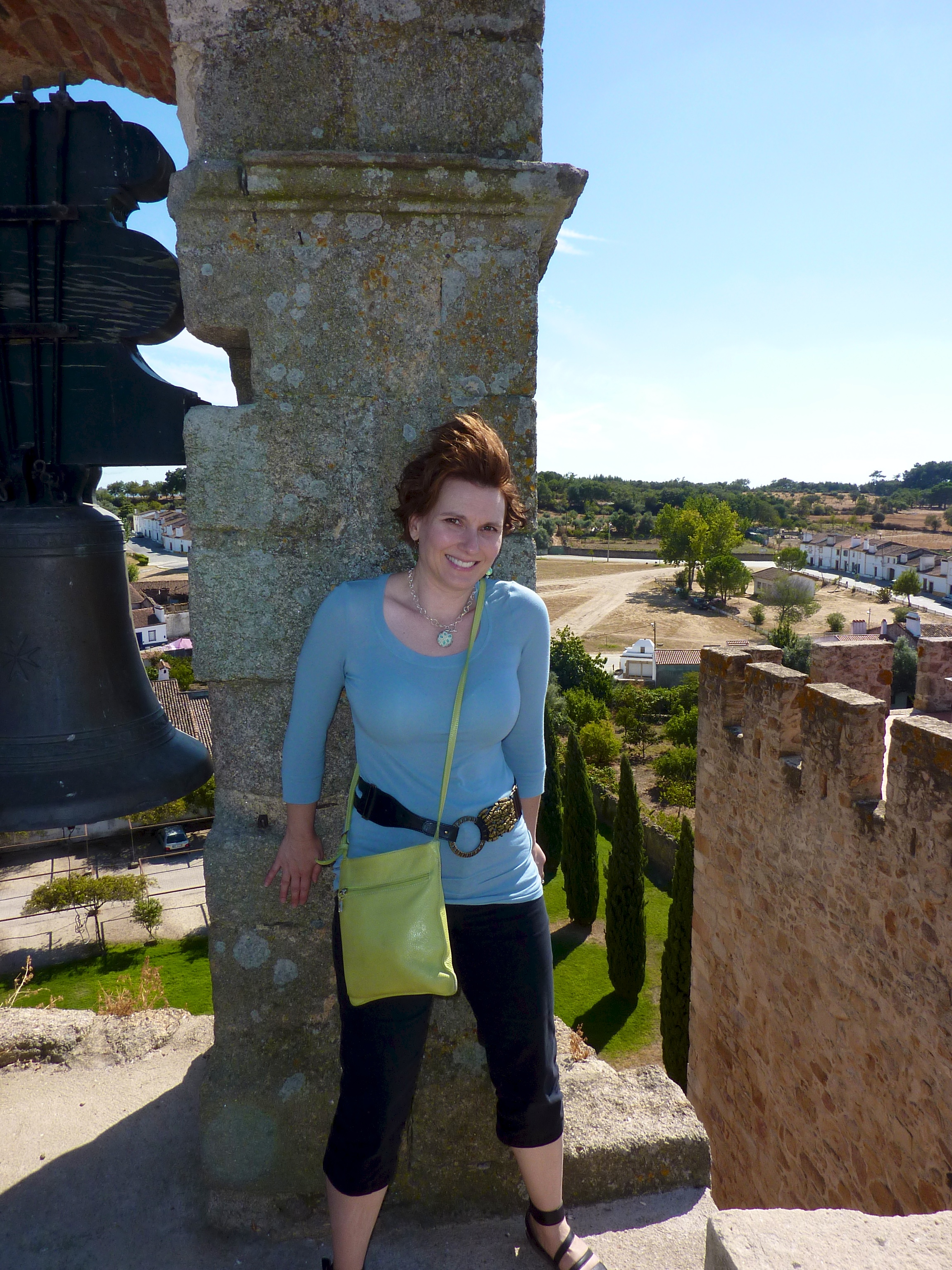
For free, you could climb to the top of the bell tower and legend has it that if you ring the bells, you will have good luck. We both won our fantasy football this week so it is true!
For some reason D gets great joy out of making me stand on ledges so he can see that look of fear on my face. Okay, I wasn't THAT close to edge. Amazing how they do not put up any guardrails in Europe.
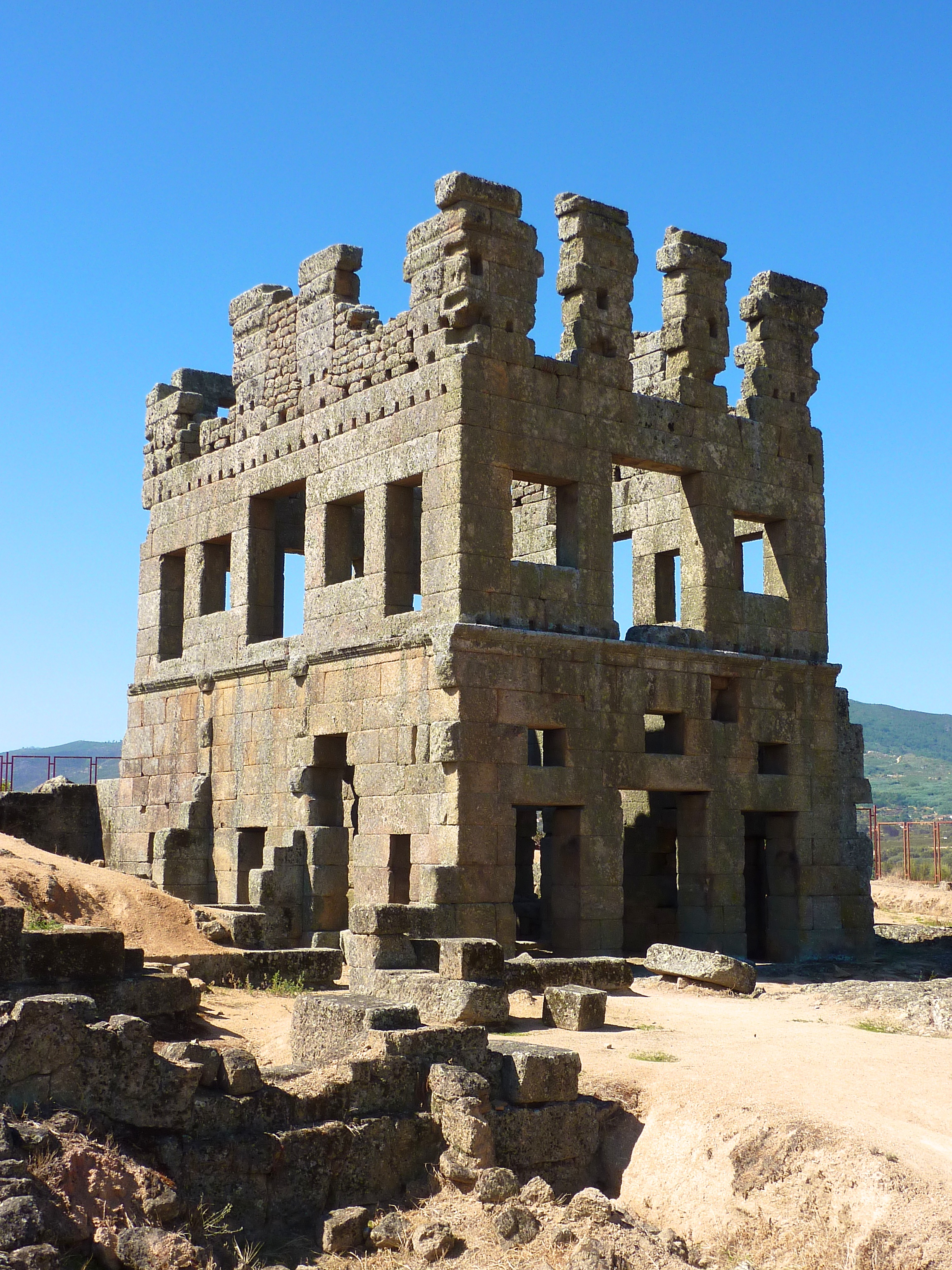
A few other castle ruins we visited/toured.
Some even had knights!
I was completely fascinated by one tiny little town we stopped in, I do not remember the name. They hung the clothes out like in all the other towns, but here they had their washing machines in the street. Take a close look at this washing machine.
The last leg of our trip was to the wine region of Duoro Valley, east of the city of Port. Our B&B was not fancy but we really loved our stay here.
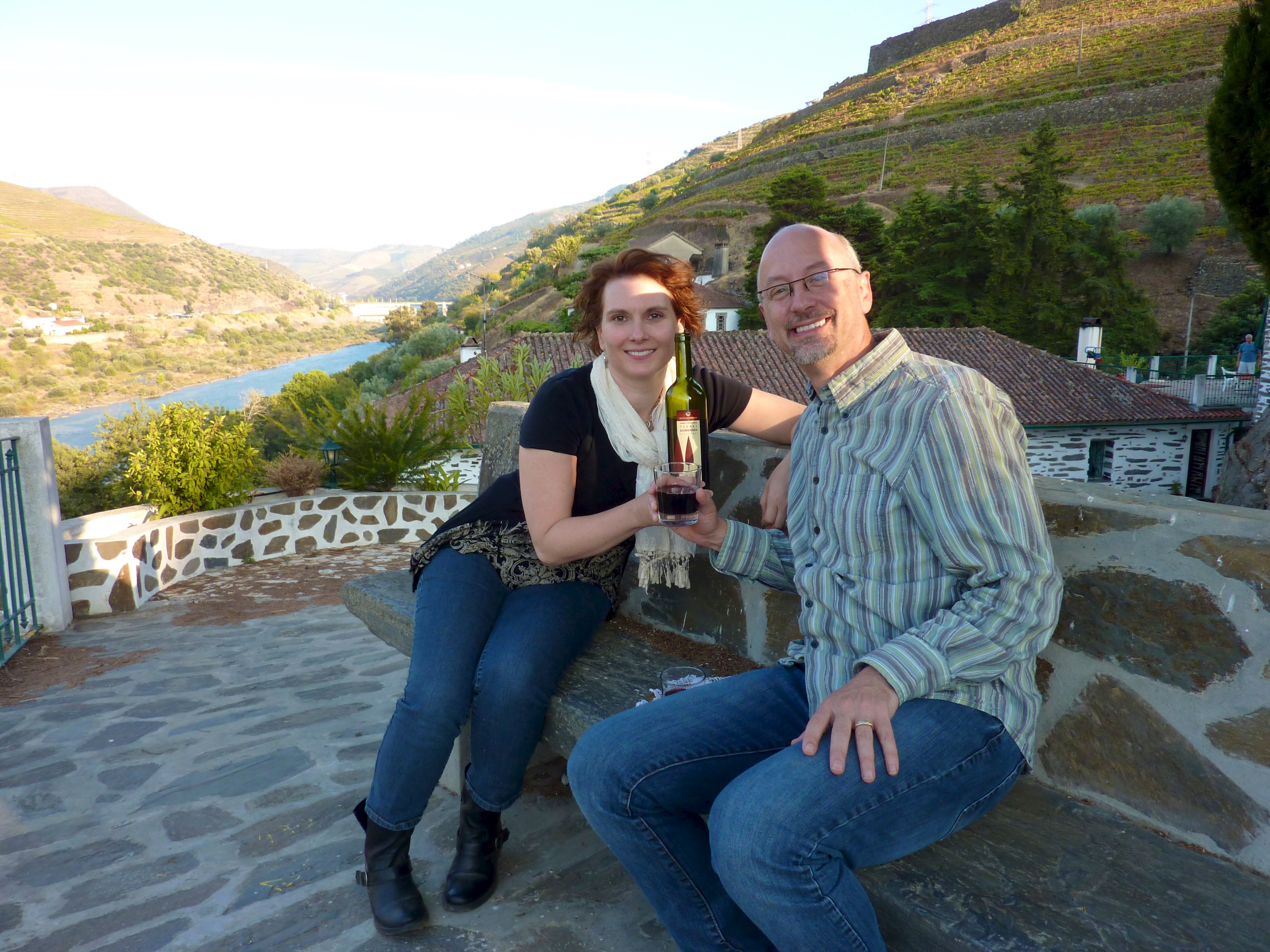
Quinta de Marrocos is a family run vineyard producing the port wines Portugal is so famous for. Cesear, the owner, spoke excellent English and gave great advice as well as a tour of the Quinta. Here we are enjoying a glass of wine on the property.
A view from the other side –
And directly across –
Jaw-dropping scenery 360 degrees! Here is our sweet room.
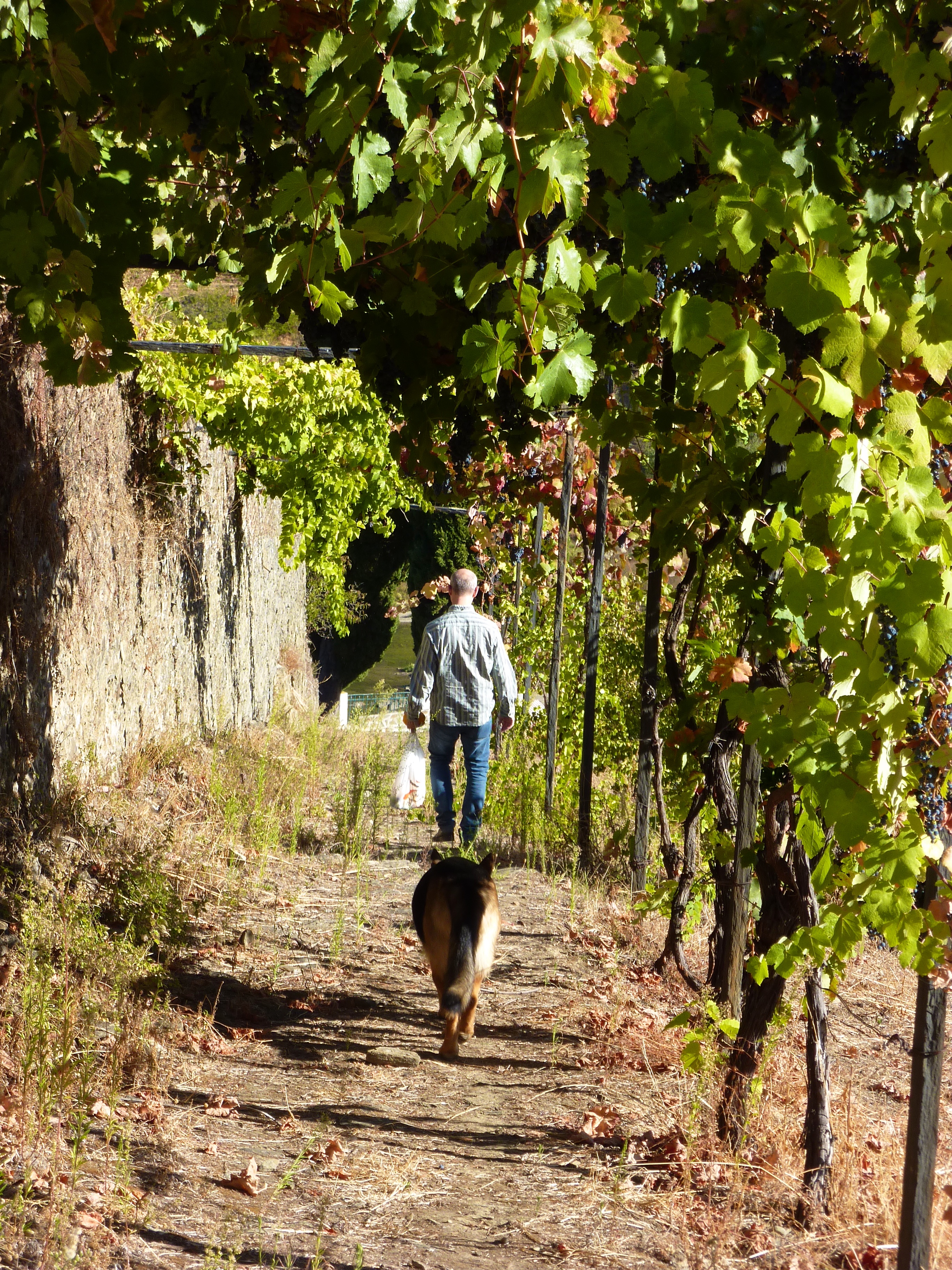
We were able to explore and walk all through their vineyards. Donald found a new best friend who followed him all over. And this crazy girl ate grapes like there was no tomorrow. She is the only one of their four dogs who does. Cesear told us she was an expensive dog to keep!
Look closely, you can see a wee-me between the trees.
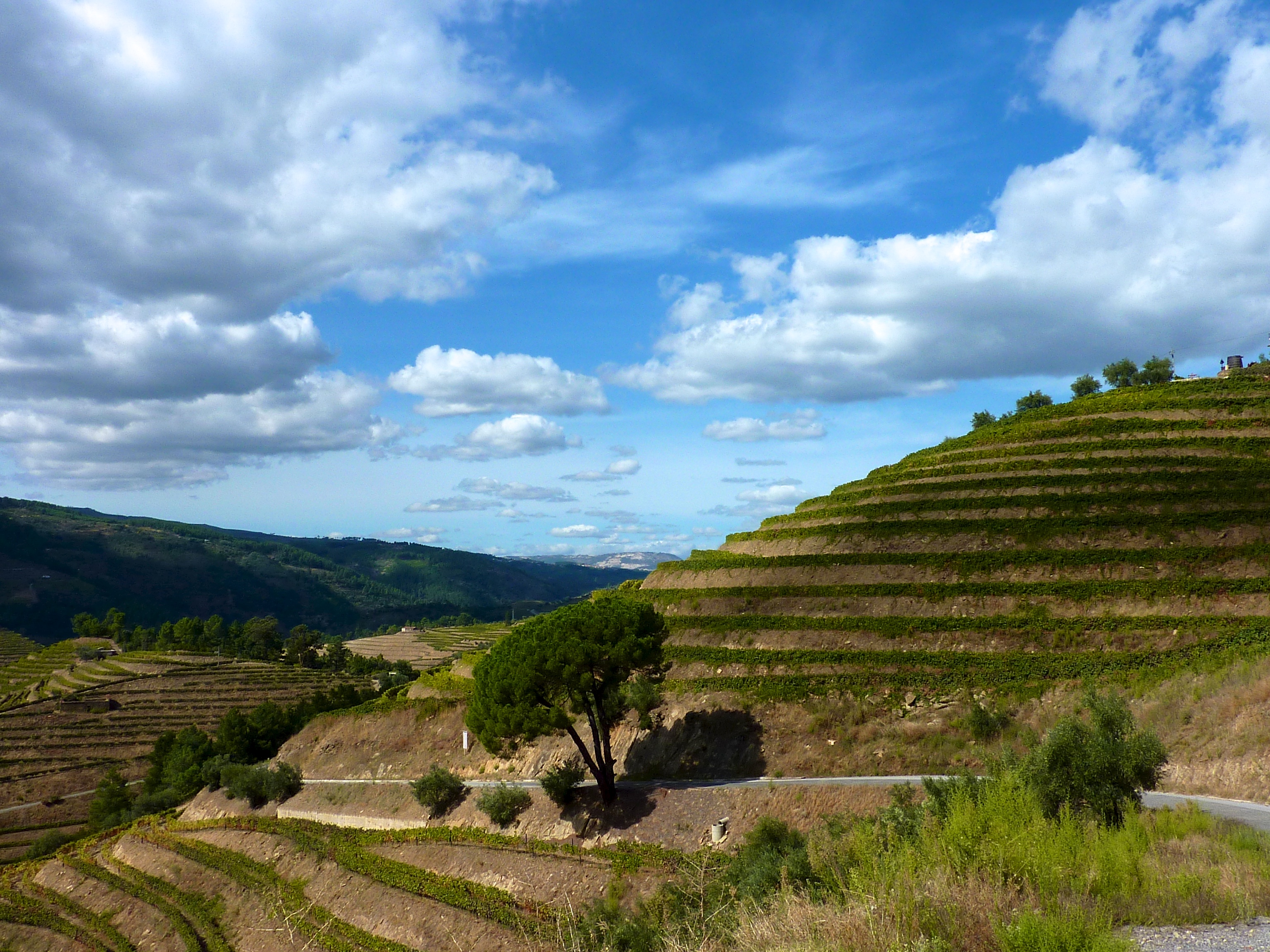
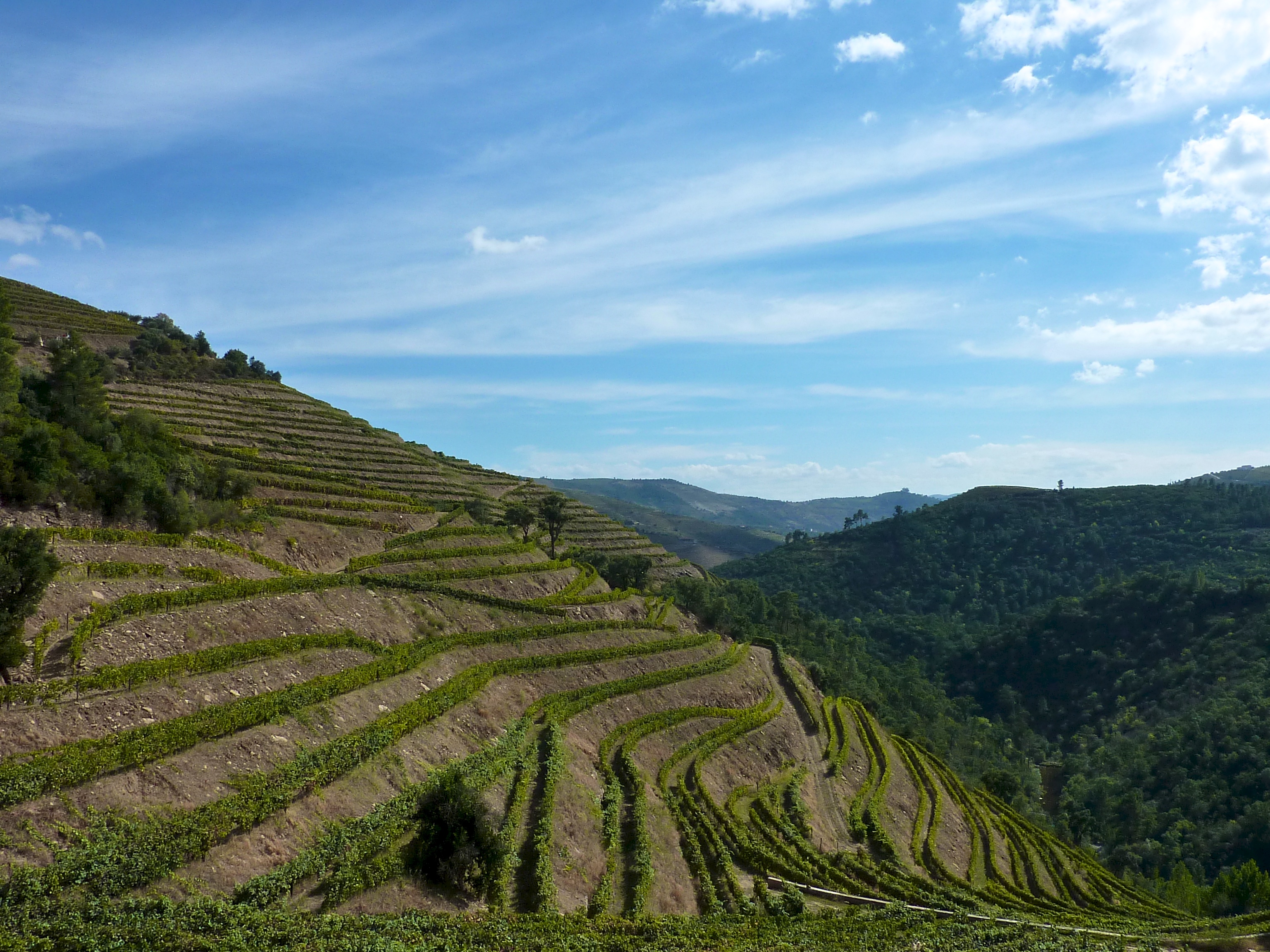
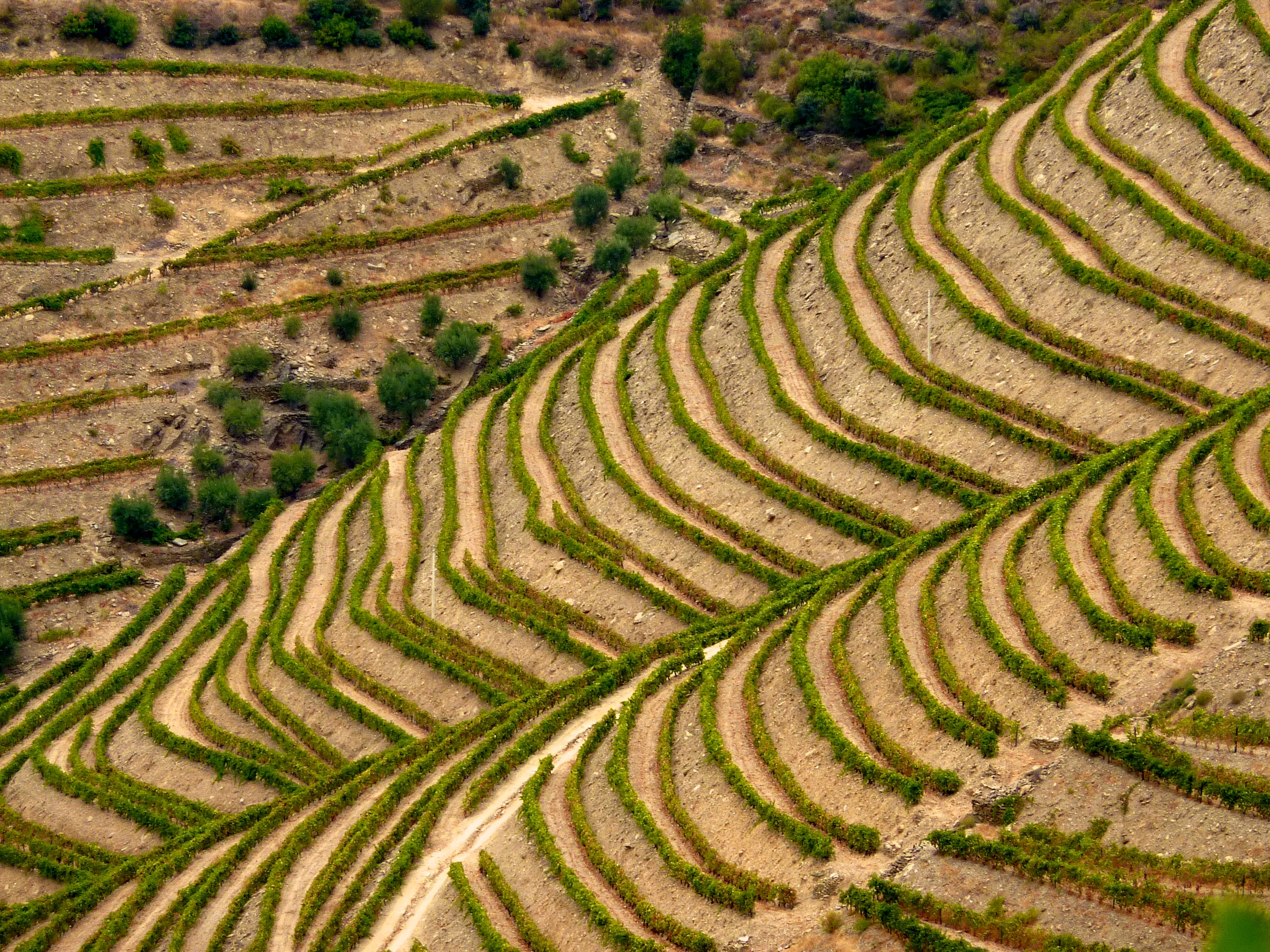
The vineyards are incredibly steep. And the walls are all made of hand-stacked stones. Most are over 100 years old.
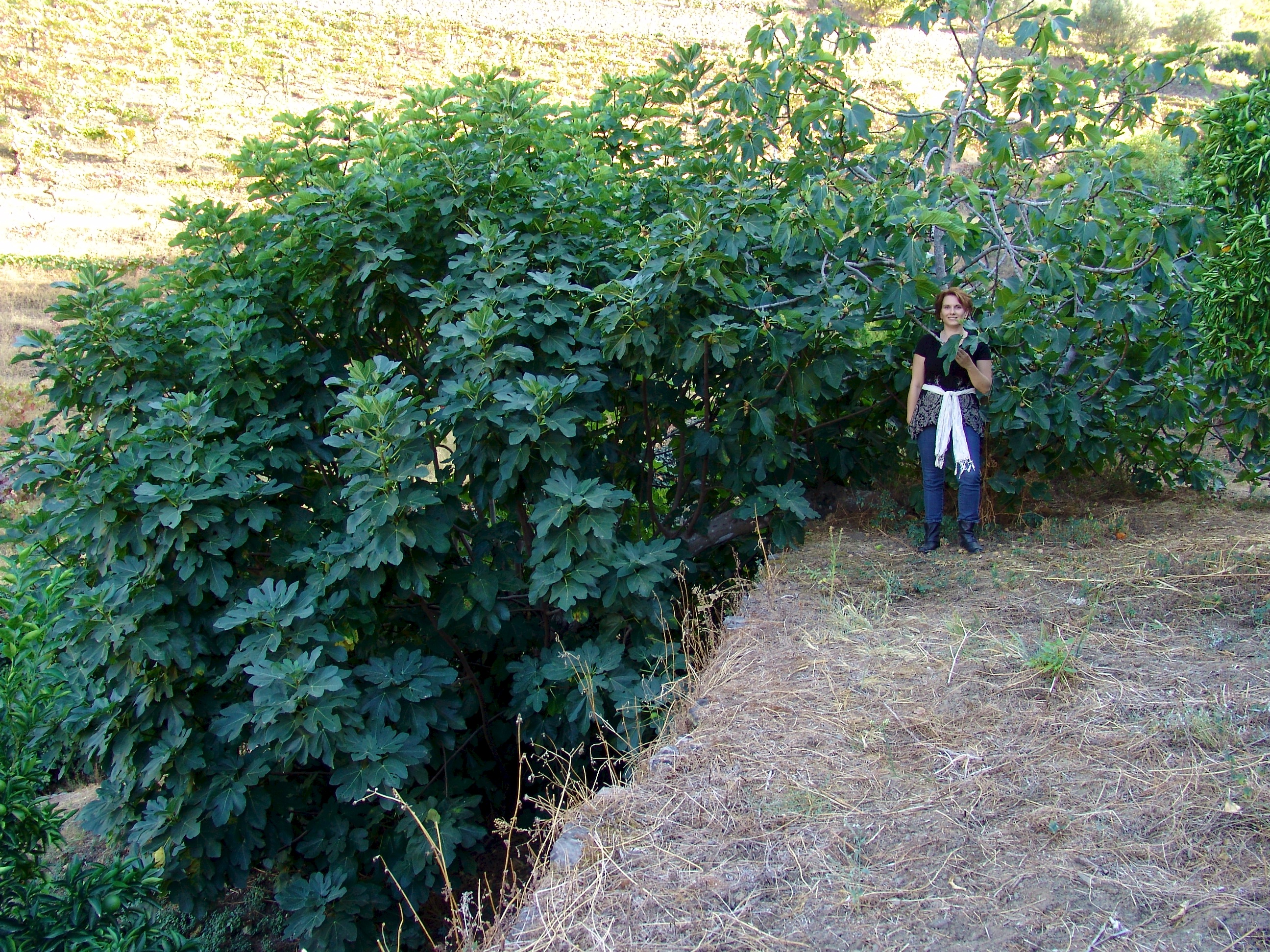
They also had fruit trees; fig, apple, orange, persimmon, kumquat, lemon, and limes. Check out the size of this fig tree. The trunk was one tier down.
And yes, we dined on this fig tree too! This is the season when figs are at their best to eat. Look at the deep red color of the flesh. Delicious!
We had dinner at the B&B the first night and met a couple from Missouri. We were able to sample the wines and port during the delightful meal which was cooked by Cesear's wife and daughter. It was an enjoyable evening.
The B&B has four rooms was originally a Franciscan convent in the 19th century. They have 13 ha (32 acres) of active vineyards. Most vines were close to 100 years old.
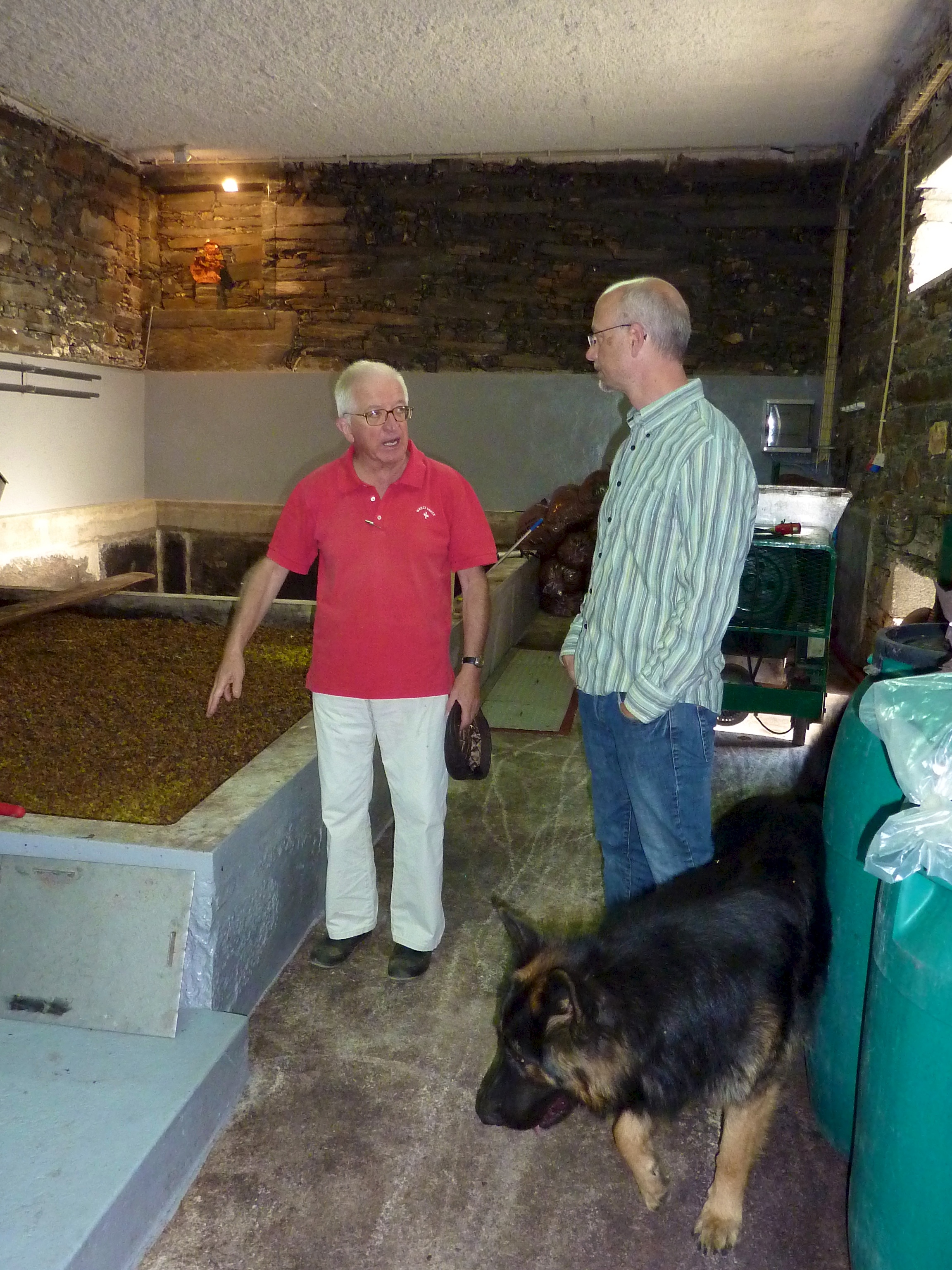
Cesar gave us a tour and told us about the wine making process in Portugal. We were there at peak season.
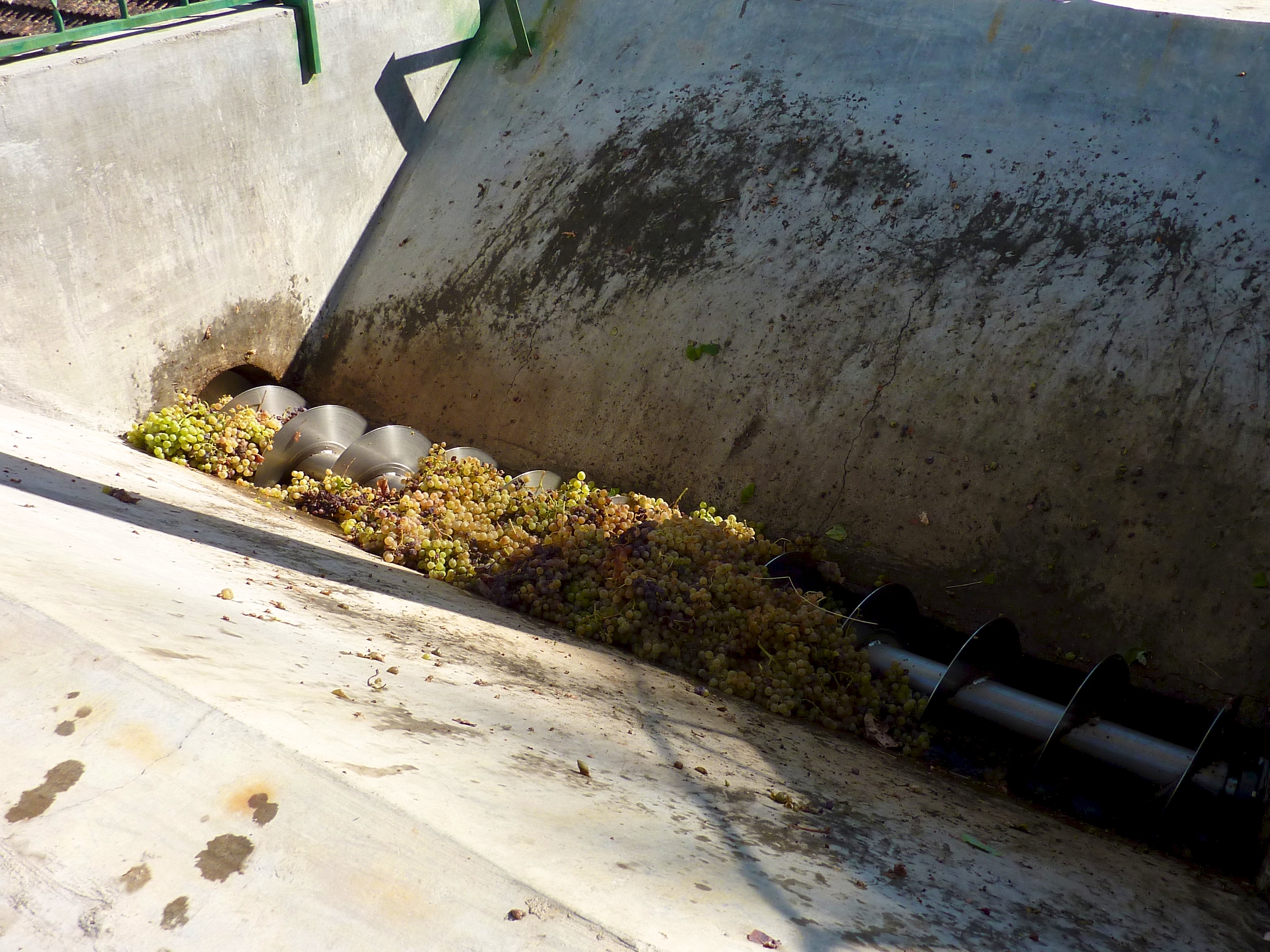
Here is a vat of freshly picked grapes, the first step in the port making process.
The next step is to separate all the seeds and stems from the flesh.
It is interesting to see how much is wasted (to the left) and the small amount that continues on in the process (the small bin).
Next step – fermentation in the crush tanks (Cesear is pointing to it). Believe it or not, they still crush the grapes the old fashioned way…with their feet. And we were off by three days…otherwise we would have been able to participate in this event. How cool would THAT have been?
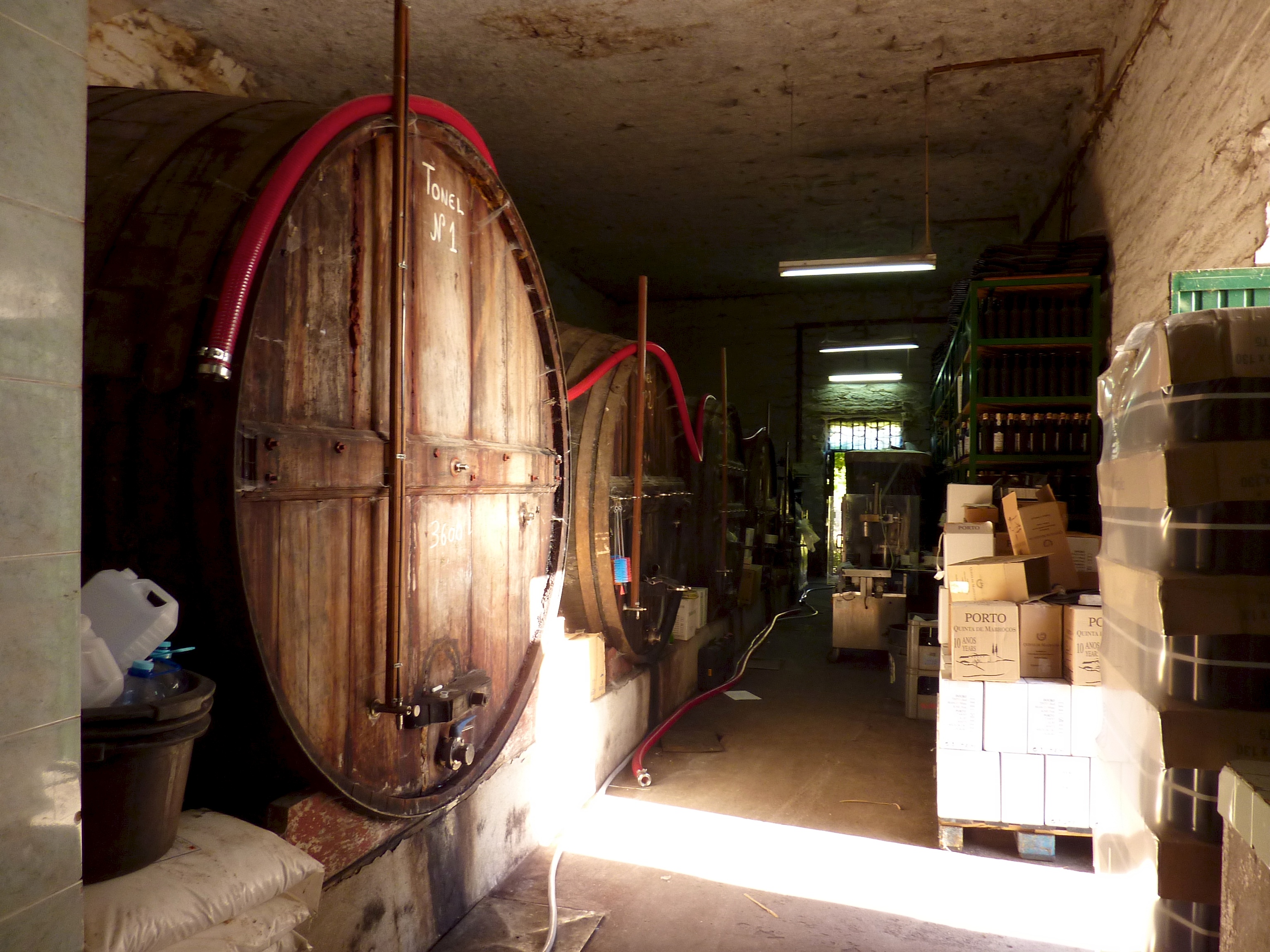
After crushing the grapes they are put into the vats to fortify. A distilled spirit is added to stop the fermentation and create the port. This can take up to 5 years. Port is 18 to 21 % alcohol.
Most of his grapes go to making port. He explained that the port business is heavily monitored by Portuguese law and that only certain grapes can be used. If your farm is "approved" you are given a set amount of the distilled spirit mentioned above. This is the maximum you can make. If you have more – the grapes must be made into wine or discarded.
It was very good and we bought two bottles to bring home. We were flying otherwise we would have bought more.
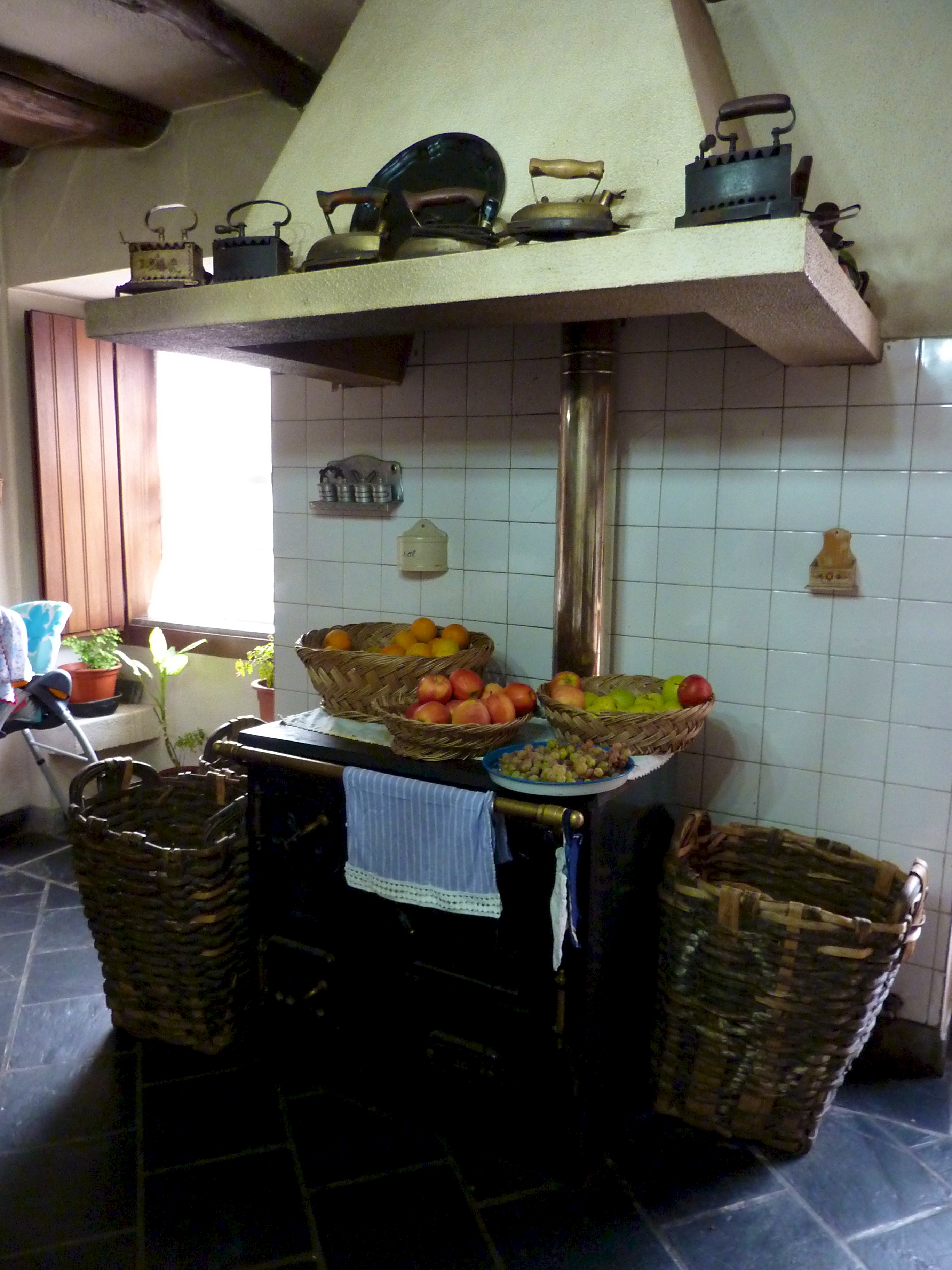
Breakfast was served in the old family kitchen. Fresh breads and jams from the fruit from the farm.
Our day in the Douro Valley we did a driving tour that Cesear mapped out for us. It was a delightful drive.
We have been to some of the best vineyards in Europe; France, Germany, and Spain and we think these may have been the most beautiful.
They were very steep and so meticulously maintained.
The stone walls also added to the beauty.
Have you ever seen such perfectly spaced vines?
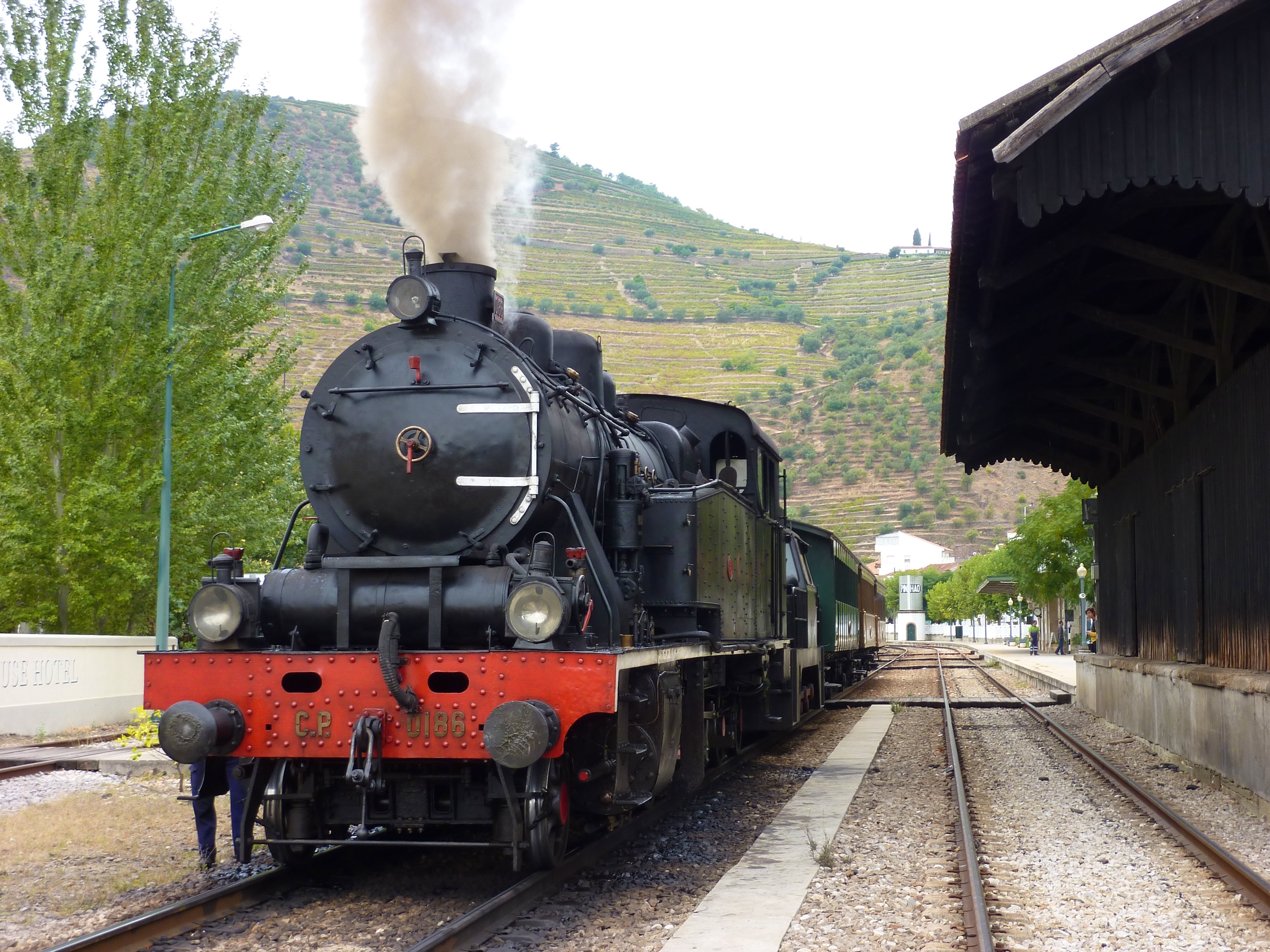
We were walking through one small town when the steam locomotion pulled in the train station.
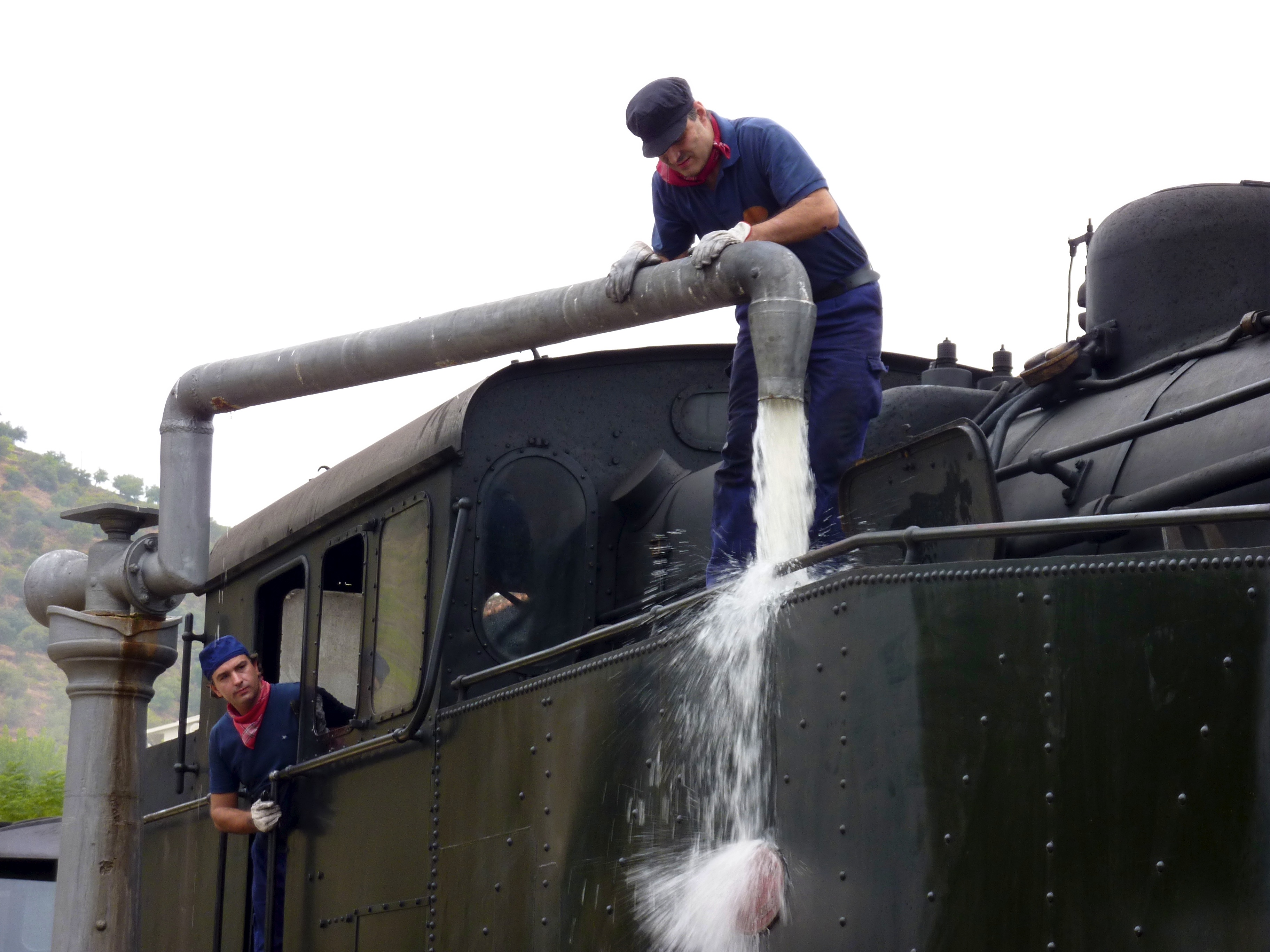
It was the stop where they cleaned and did maintenance on the train.
D was completely memorized by this event. But I have to say….I found it very interesting to watch as well. How many steam engine trains do you see these days?
D created a little video. Dave – this one's for you!
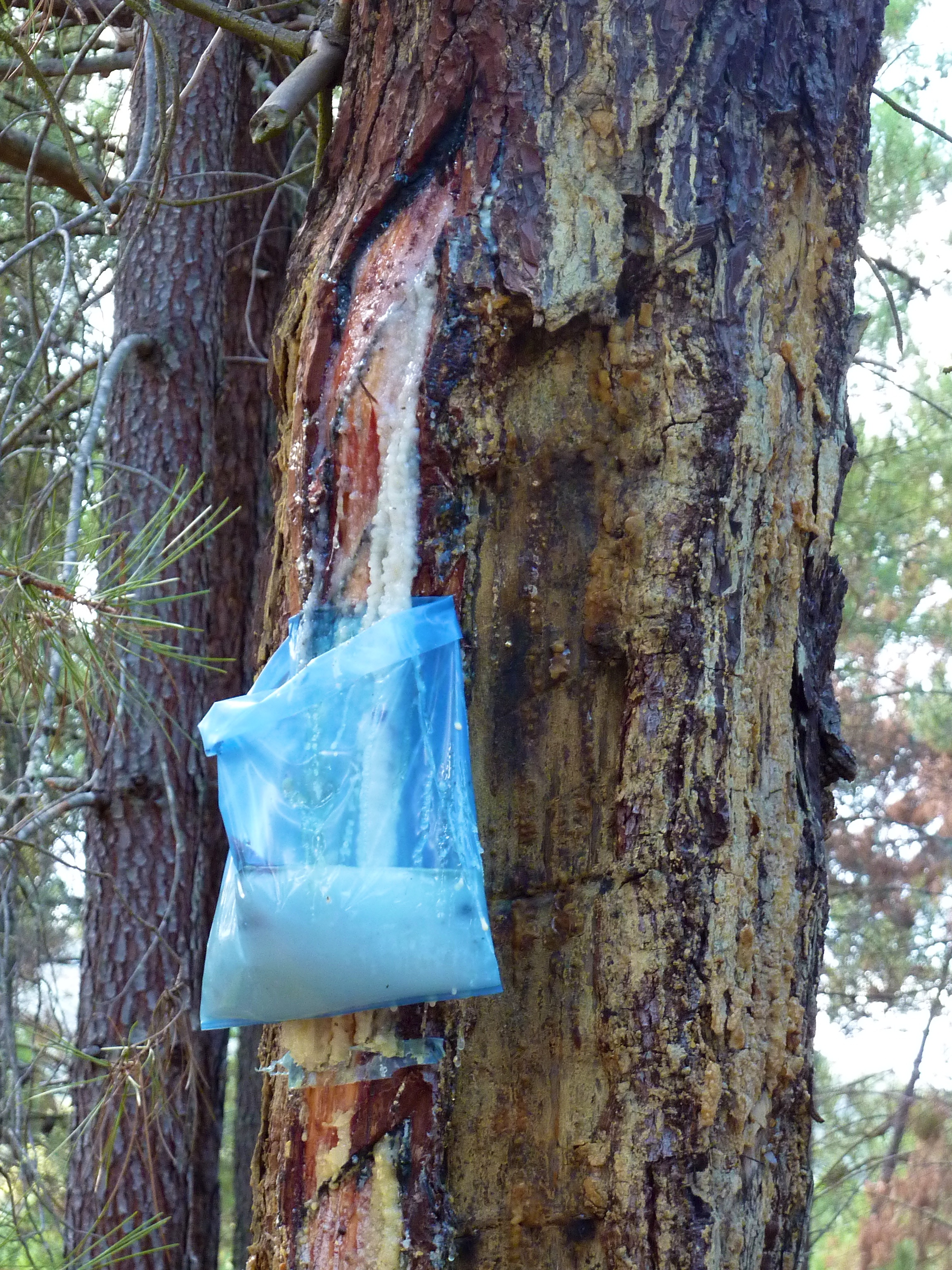
One part of the drive was a wooded area where we saw several bags hanging from the trees.
We stopped to take a closer look and they were collecting sap. It was very sticky and smelled of strong pine.
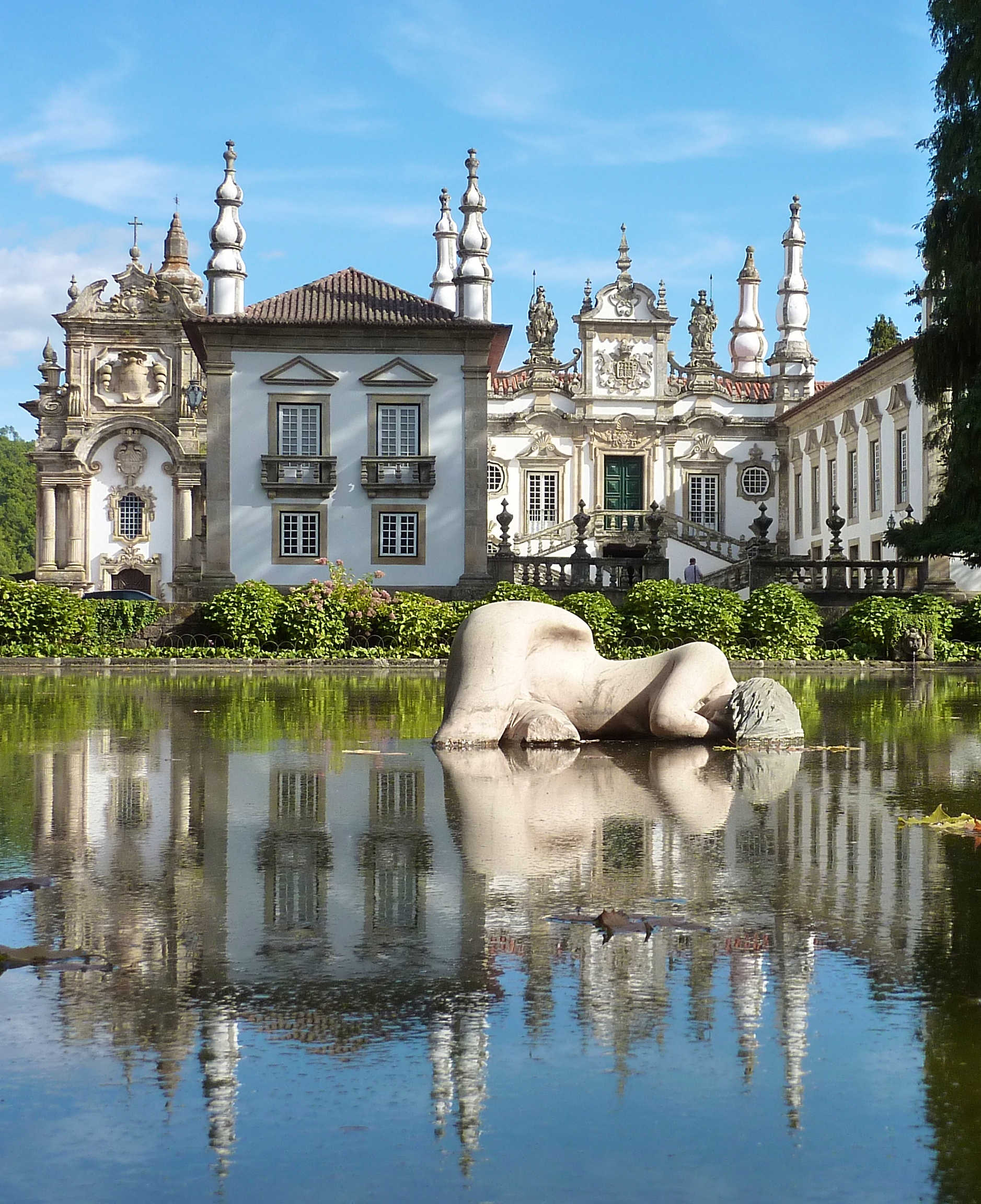
Our last stop was at the famous Mateus wine Chateau. We got to tour the inside which is still lived in by the family.
We both remember our parents drinking Mateus wine growing up. Back then, that was considered the "good stuff".
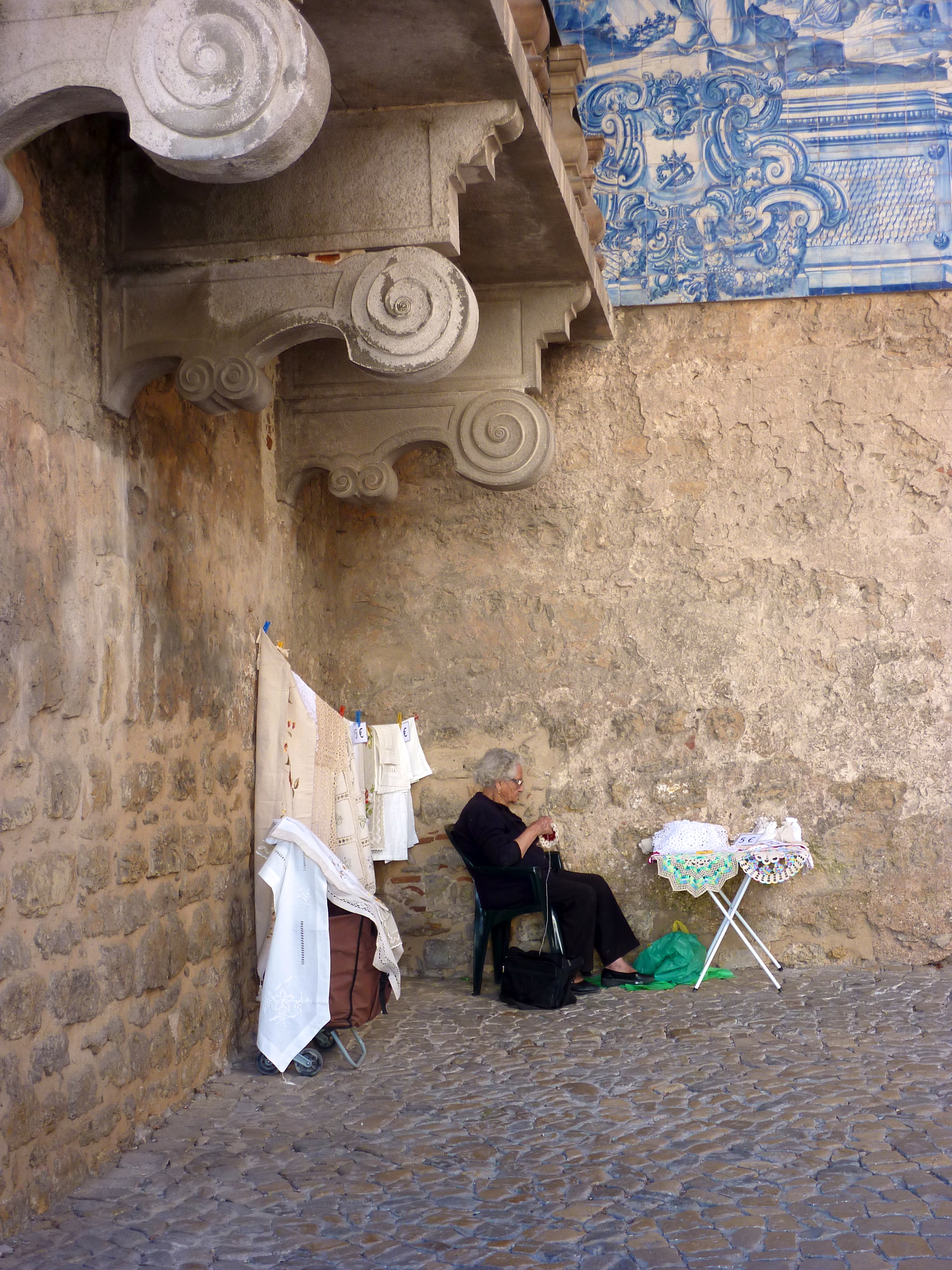
On our last day we had a long drive as we had an early fight home the next day. We did take a break and stop at the picture postcard town of Obidos, a walled medieval town. It was very touristy but still charming with its windy streets and white-washed buildings.
And sweet little lady crocheting.
The rooster is the symbol of Portugal and is said to bring good luck.
We certainly had great luck with our weather and a fun interesting trip.
More photos you ask? Why yes….click on the Portugal album in the upper right hand corner of this page.





























































































































































































 The XtraSuitcase