•  

    Phnom Penh, Cambodia

    March – 2013


    We flew to Phnom Penh, the capital and largest city in
    Cambodia, for a long weekend.  The flight was only two hours.  We had a wonderful time, eating, sightseeing, and just relaxing.


    Phnom Phen 11a


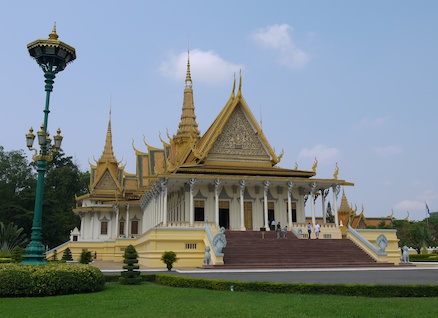
    We toured the Royal Palace, a complex with several buildings, built in 1866.  The buildings, with their beautiful towering spires, are a
    great example of the classic Khmer architecture found in Cambodia. 


    Phnom Phen 1


    The current King, Norodom Sihamoni, lives here.  The King of Cambodia is an elected monarch, making Cambodia one of the
    few elected monarchies in the world. The King's role is a symbolic figurehead; he does not have any power.  His father, a king the people really loved, passed away earlier this year.  


    Phnom Phen (6)


    We were not
    allowed to tour the royal residency, but we did see the Throne, the Silver Pagoda where the floors are all silver, and a few other buildings.   The current King is 60 years old and he never married.


    Phnom Phen


    Wat Ounalom, built in 1443 is the most important Wat
    in Phnom Penh. They say it has a hair from the Buddha’s eyebrow.  It consists of 44 structures.  Many which were damaged during the
    Khmer Rouge but have since been
    restored.    


    Phnom Phen 2


    Phnom Phen 3


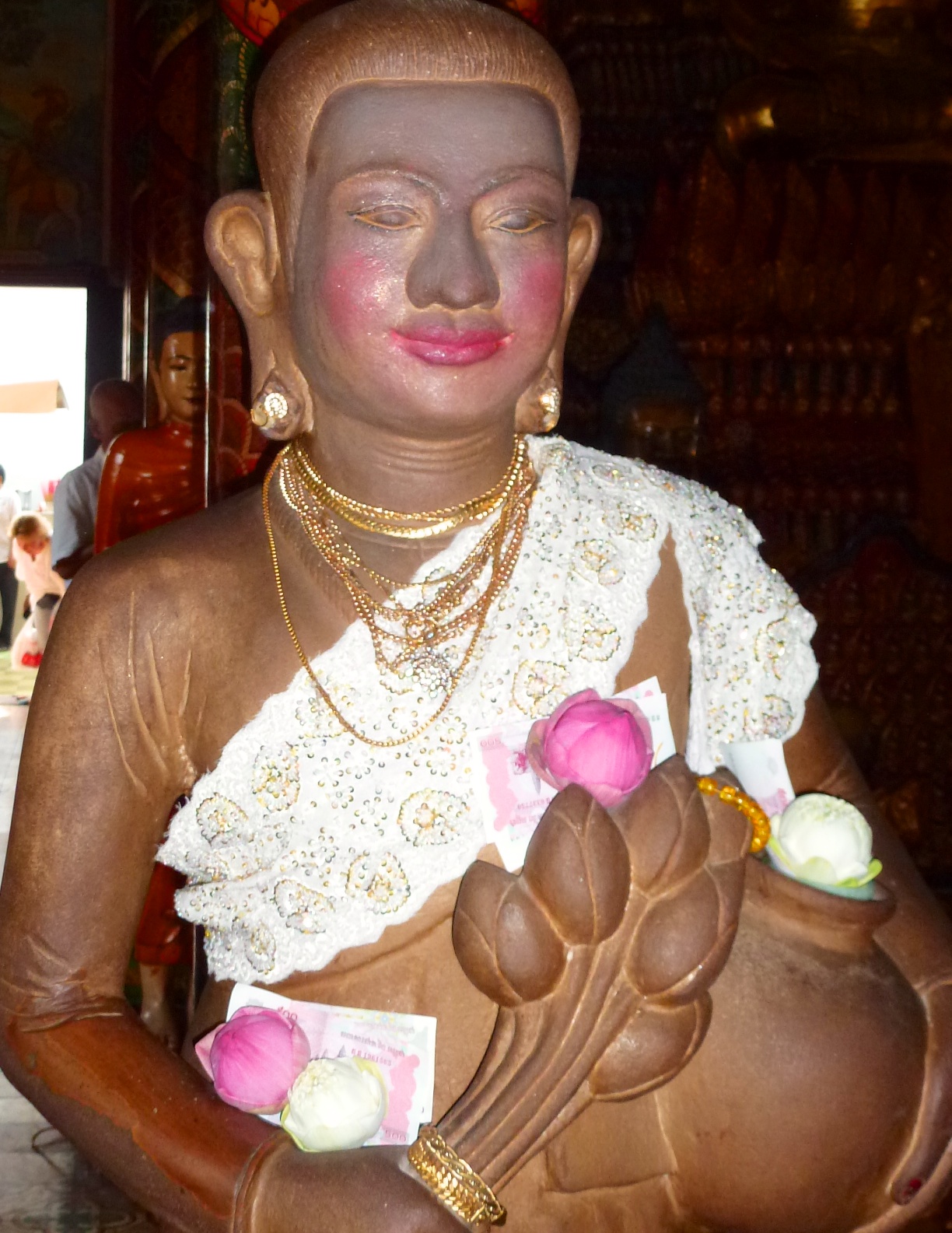
    Isn't this Buddha interesting adorned in make-up and jewelry?  We saw several like this.


    Phnom Phen 19a


    Look closely to the right of the Buddha below, worshippers left nail polish as an offering.  Must be the Buddha of beauty.


    Phnom Phen 21a


    Phnom Phen 23a


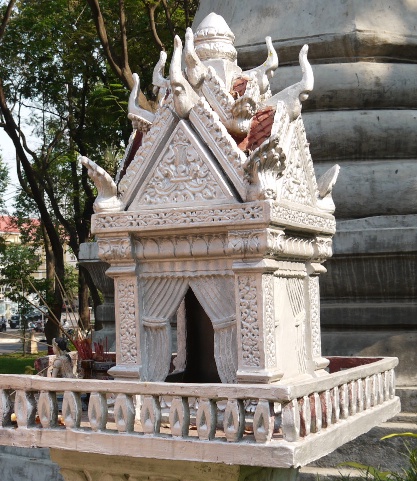
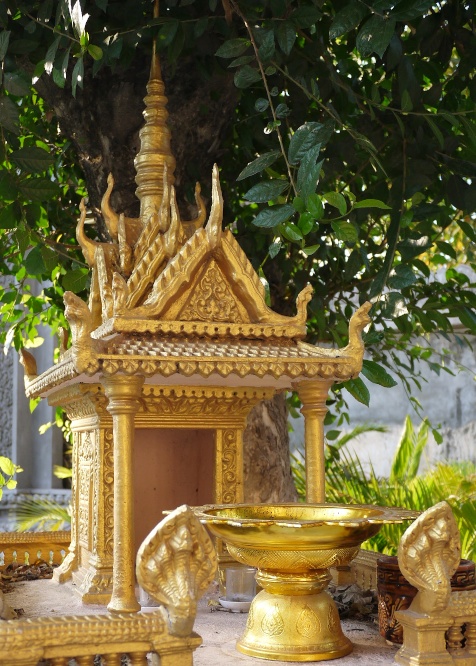
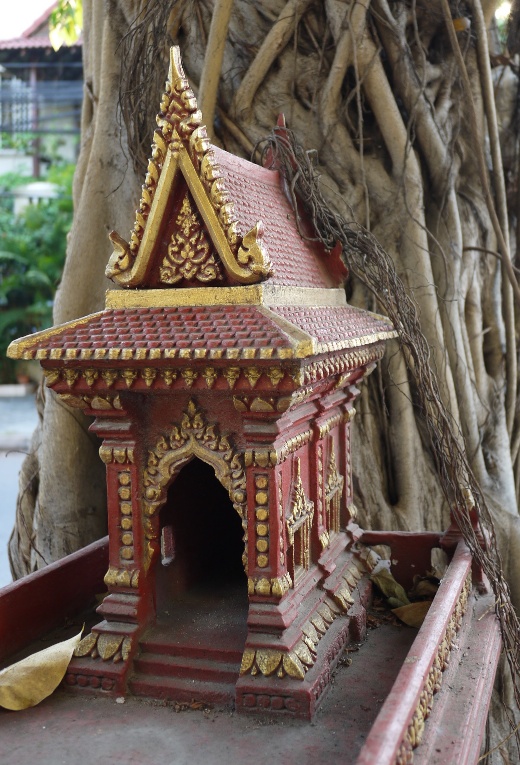
    I was intrigued with the miniature temples outside of the main temples.  They are approximately three to four feet tall.  I could not find any information about what they are used for…  maybe to burn incense?


    Phnom Phen (3)


    Phnom Phen (1)


    Phnom Phen (2)


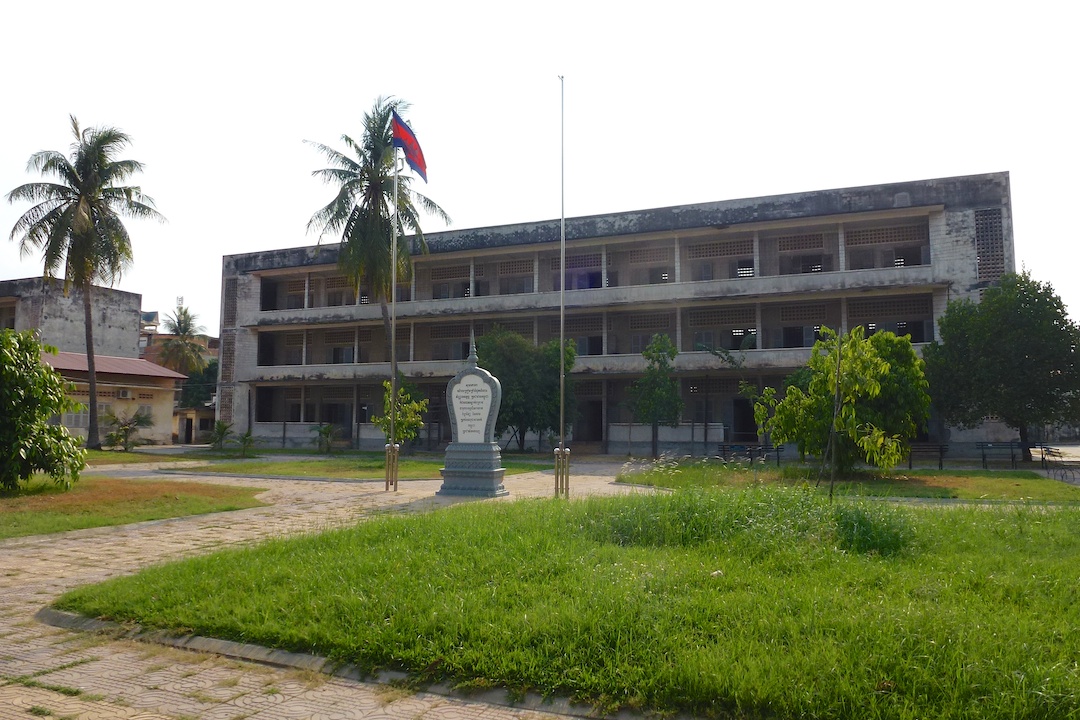
    We also visited the Tuol Sleng Genocide Museum, a heart-breaking
    site, as over 20,000 prisoners were killed there.  Originally a high school, it was used
    by the Khmer Rouge as a Security Prison called 21 (S-21) from its rise to power in
    1975 to its fall in 1979.


    Phnom Phen 6


    Phnom Phen 7


    Our guide lived through this horrific event and he shared his story with us.  As a child, he was sent out to the
    countryside where he worked as a slave from sunrise to sunset without any food
    or water.  He lost most of his family
    members during the Khmer Rouge era.


    Phnom Phen 8


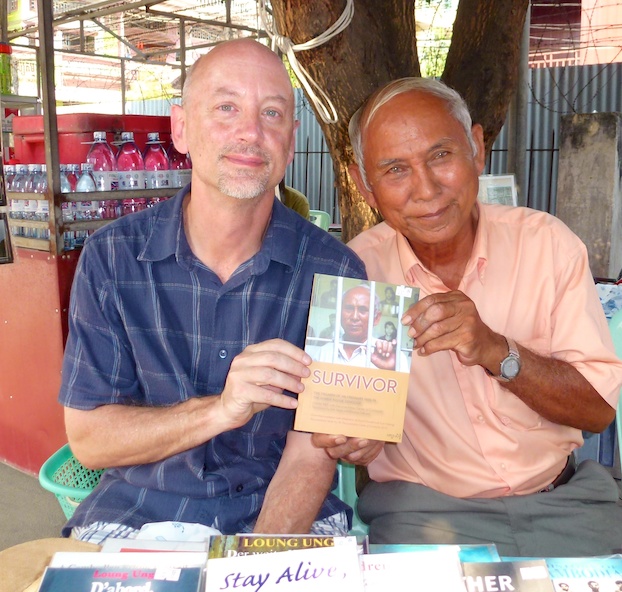
    We also met Chum Mey, one of only twelve known
    survivors of the Khmer Rouge S-21 Tuol Sleng camp.  He survived two years in the death camp but unfortunately
    he lost his wife (she was pregnant) and his first-born child.  They were murdered right in front of him.  We purchased a copy of his book and he
    offered to let us take his photo.   He is now 83 years old.


    Phnom Phen 10


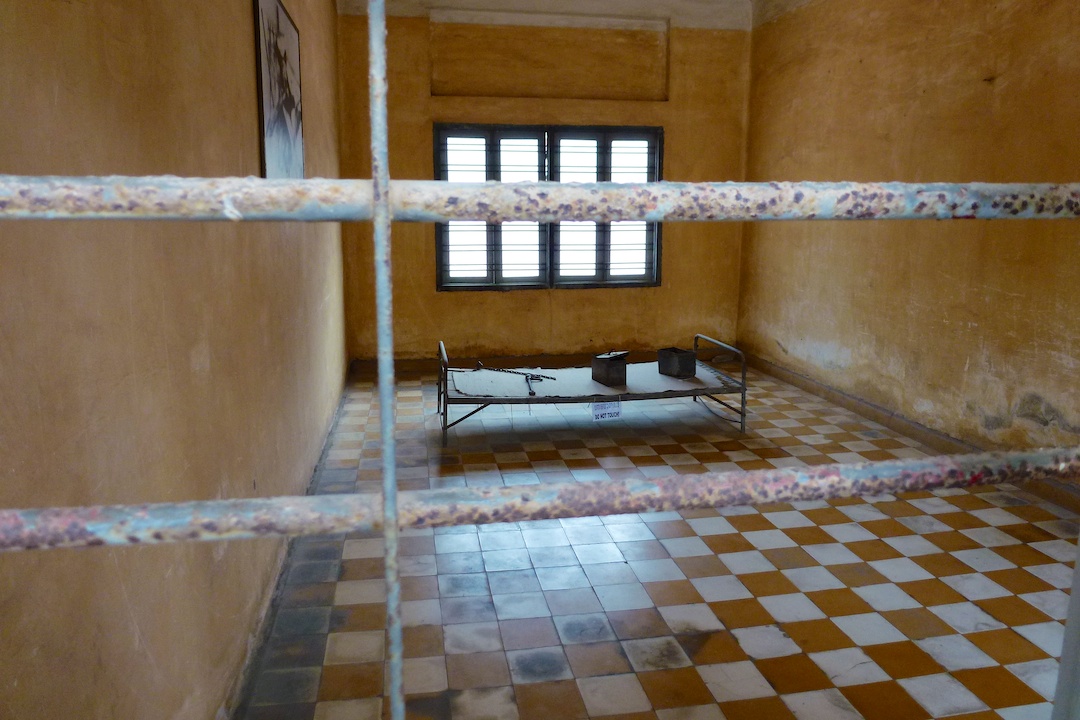
    This was the room where he was imprisoned.  He probably survived because he was a trained auto mechanic and had valuable machinery skills.  


    Phnom Phen 11


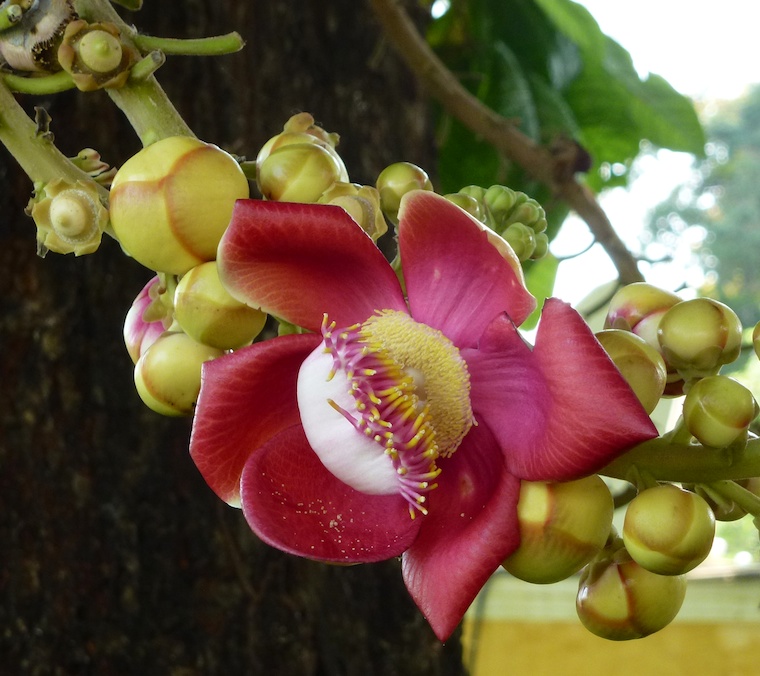
    This unusual flower grows on the Cannonball Tree also called the "Buddha tree".  They possess antibiotic, anti fungal, antiseptic and analgesic
    qualities. 
    The trees are also used to cure colds and stomach aches.  


    Phnom Phen 4


    Below is a flowering banana tree.  In Asia, the banana flower is considered a
    vegetable and it is edible.  If you take away the hard outer leaves, the inside is very tender.  It can be eaten raw, but many recipes require cooking.  I have never tasted it – but will now be on the hunt to give it a try.


    Phnom Phen 12


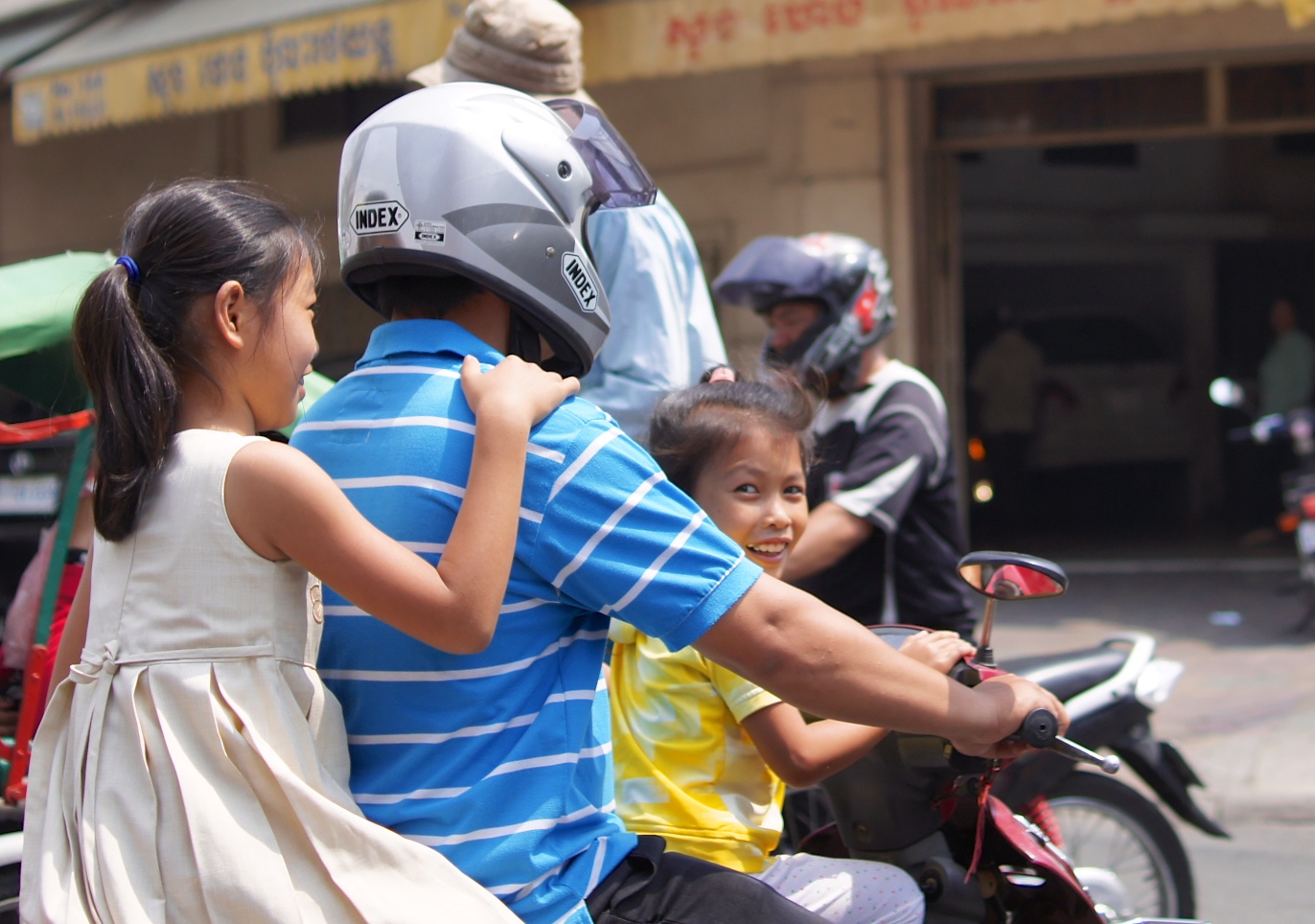
    Sweet children


    Phnom Phen 12a


    Phnom Phen 13a


    We
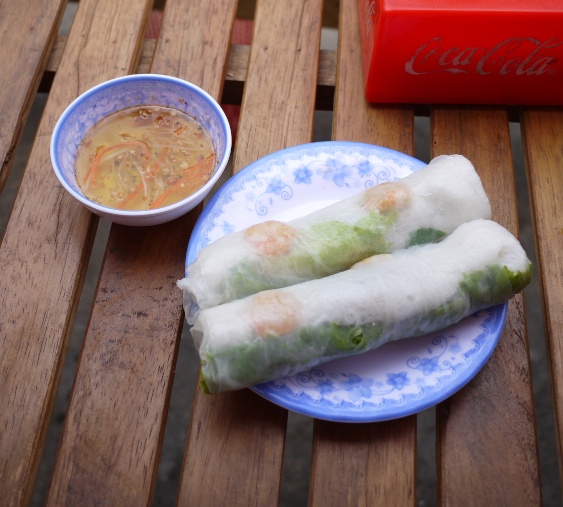
    enjoyed lunch at a local restaurant next to our hotel.  Two bowls of
    noodles, spring rolls, and a coke for $3.  It was very good, as was all
    of the food we ate during the trip.


    Phnom Phen 17a


    Phnom Phen 14a


    A


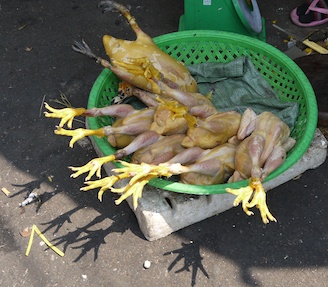
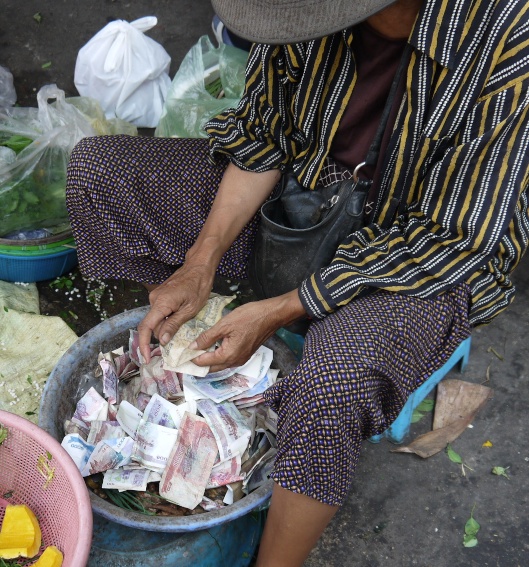
    A visit to the market…


    Phnom Phen 15


    Phnom Phen 16


    Must have been a good day!


    Phnom Phen


    Phnom Phen 1


    This little piggy really went to market!


    Phnom Phen 2


    ?????   I am guessing these rings on his back are from cupping, an ancient
    Chinese practice that balances
    the Chi in the body.  It relaxes muscles and is said to have similar
    effects of a massage.


    Phnom Phen 3


     A gas station –

    Notice the chickens for sale in the cage next to her… and the gas!


    Phnom Phen 7


    Phnom Phen 8


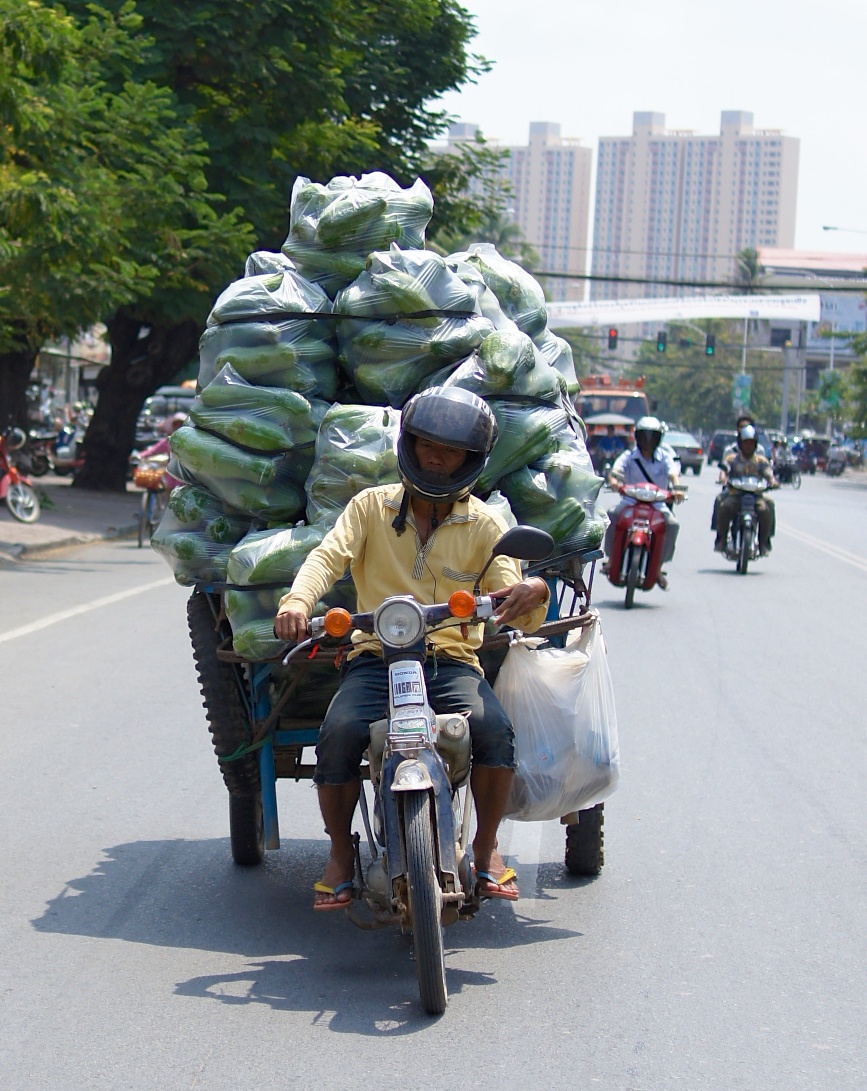
    Look how the mound of veggies and the motorbike is leaning one way and he is leaning the other way to balance it.


    Phnom Phen 9


    Phnom Phen 10a


    We really had a fun time in Phnom Penh.  Our hotel was beautiful and the people of Cambodia are happy, friendly people.  Quite an achievement considering the past 35 years of history in their country.


    Phnom Phen 22a


  •  

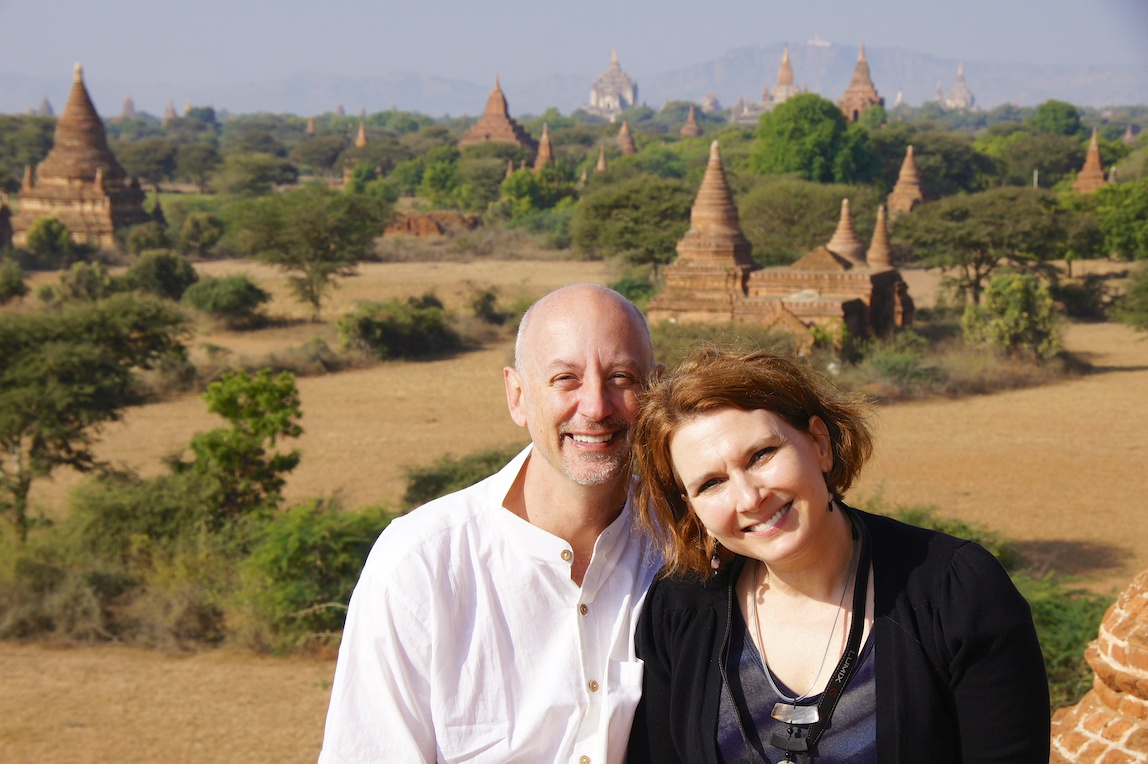
    At the beginning of the year, we had the opportunity to travel to Myanmar (Burma).  It was high on both of our "countries to see" list.  I can't even come up with words that accurately describe this country.  We loved it!   We took over 3000 photos in one week.  I will break it into several posts so you can absorb the beauty of this unique country. 


    People of myanmar 1


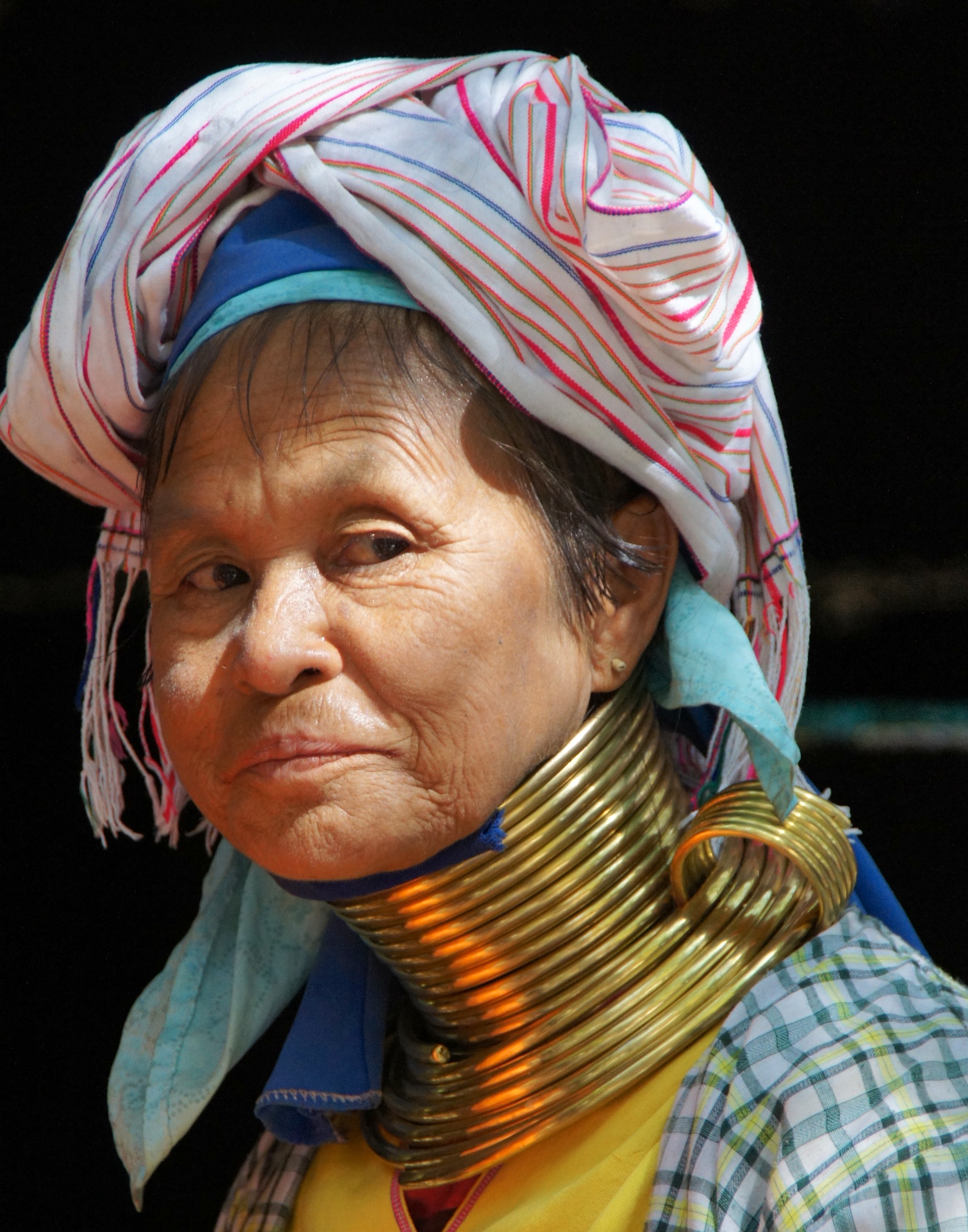
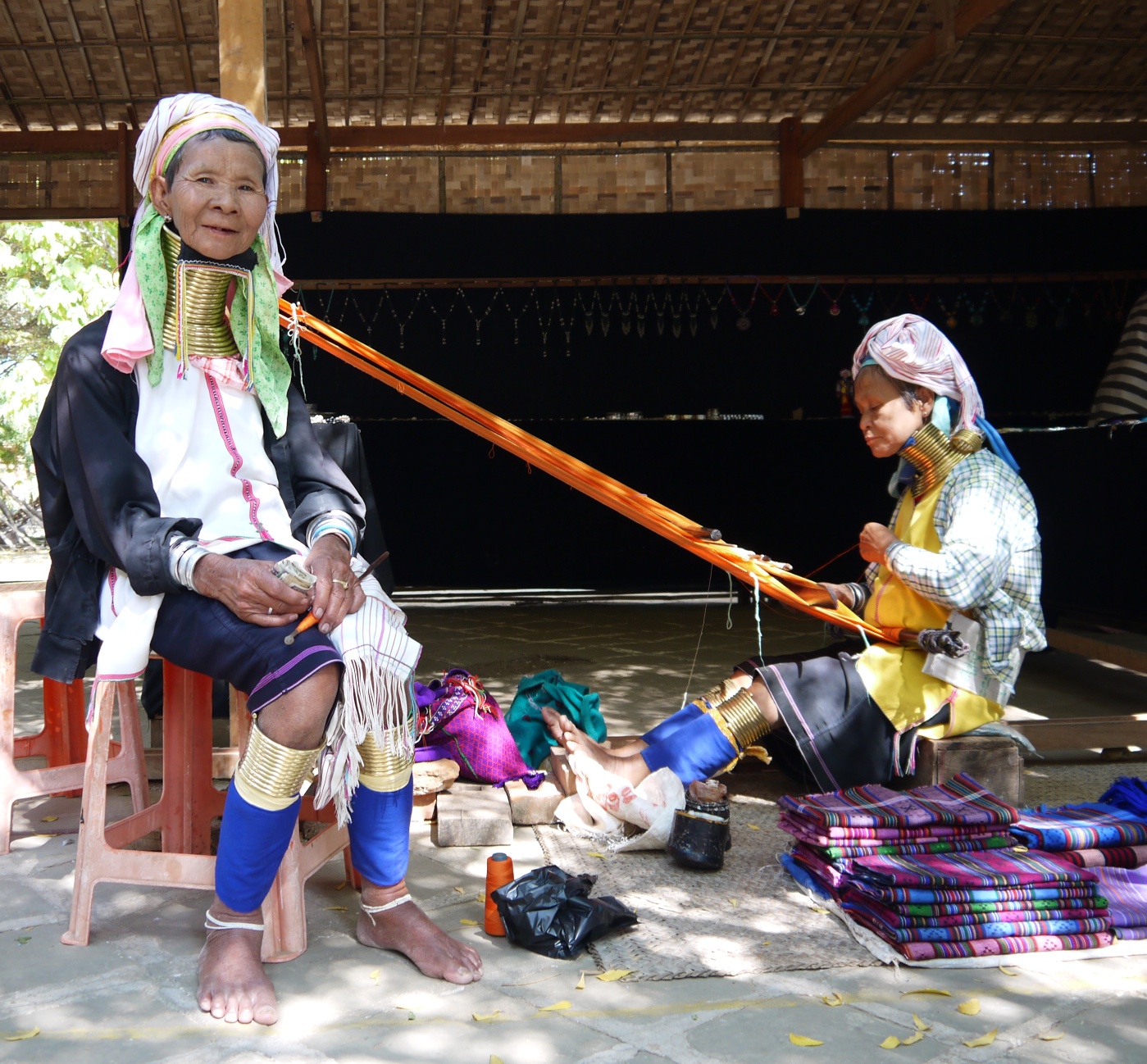
    These two Padaung women were at a temple and were
    there for the tourists.  They were
    probably from the mountain villages between Burma and Thailand where the Kayan people
    live.  The Padaung is one of
    the eight ethnic Karen communities (in Myanmar, the Karen is known as Kayah).


    People of myanmar 2


    This group is known for their women wearing brass rings around their necks, arms and legs.  They are often called the long-neck women of Myanmar. The
    brass coils are first applied when the girls are about five years old, and as she grows older, longer coils are added.  The coils do not really stretch their neck, rather the weight of the brass pushes
    down the collar bone and compresses the rib cage, giving the appearance of a
    very long neck. 


    People of myanmar 3


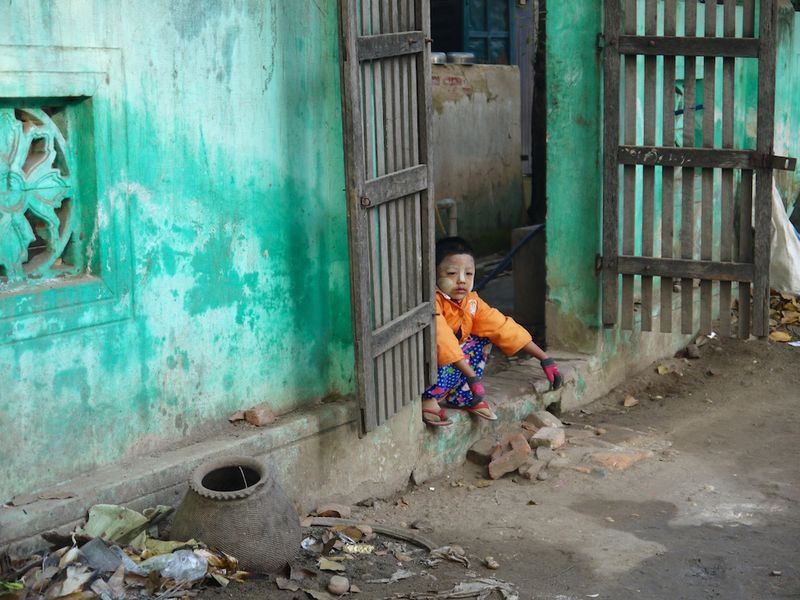
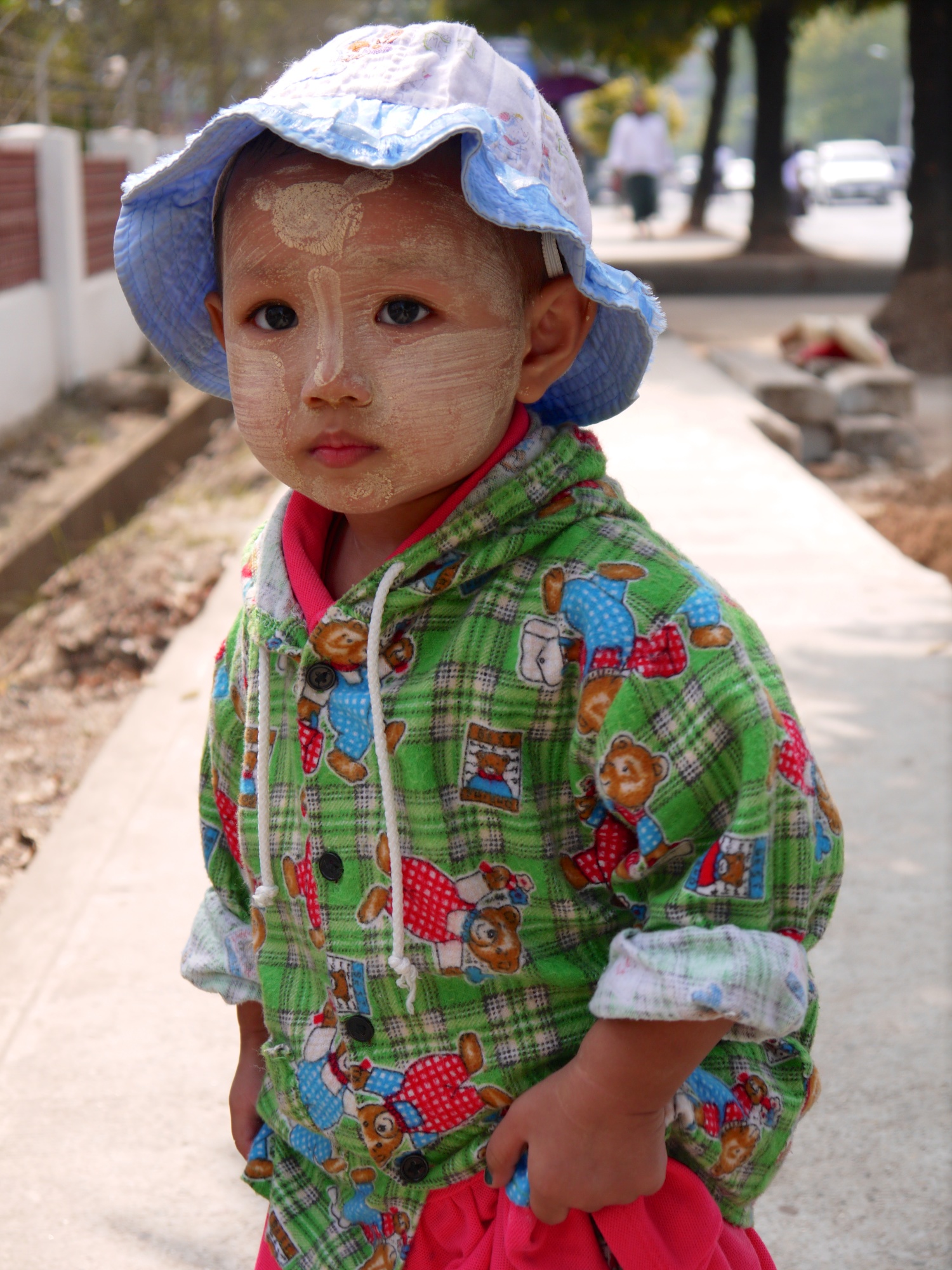
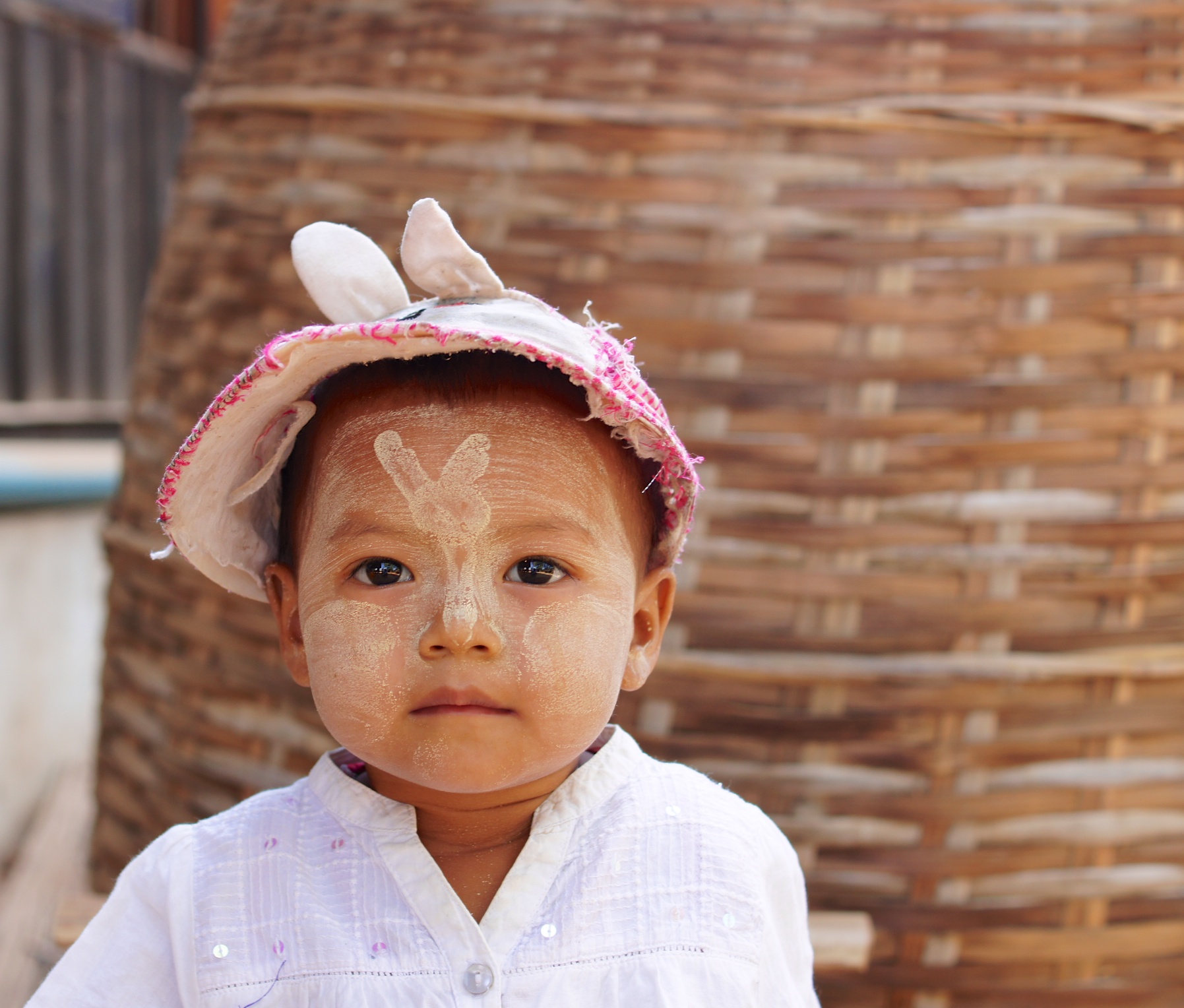
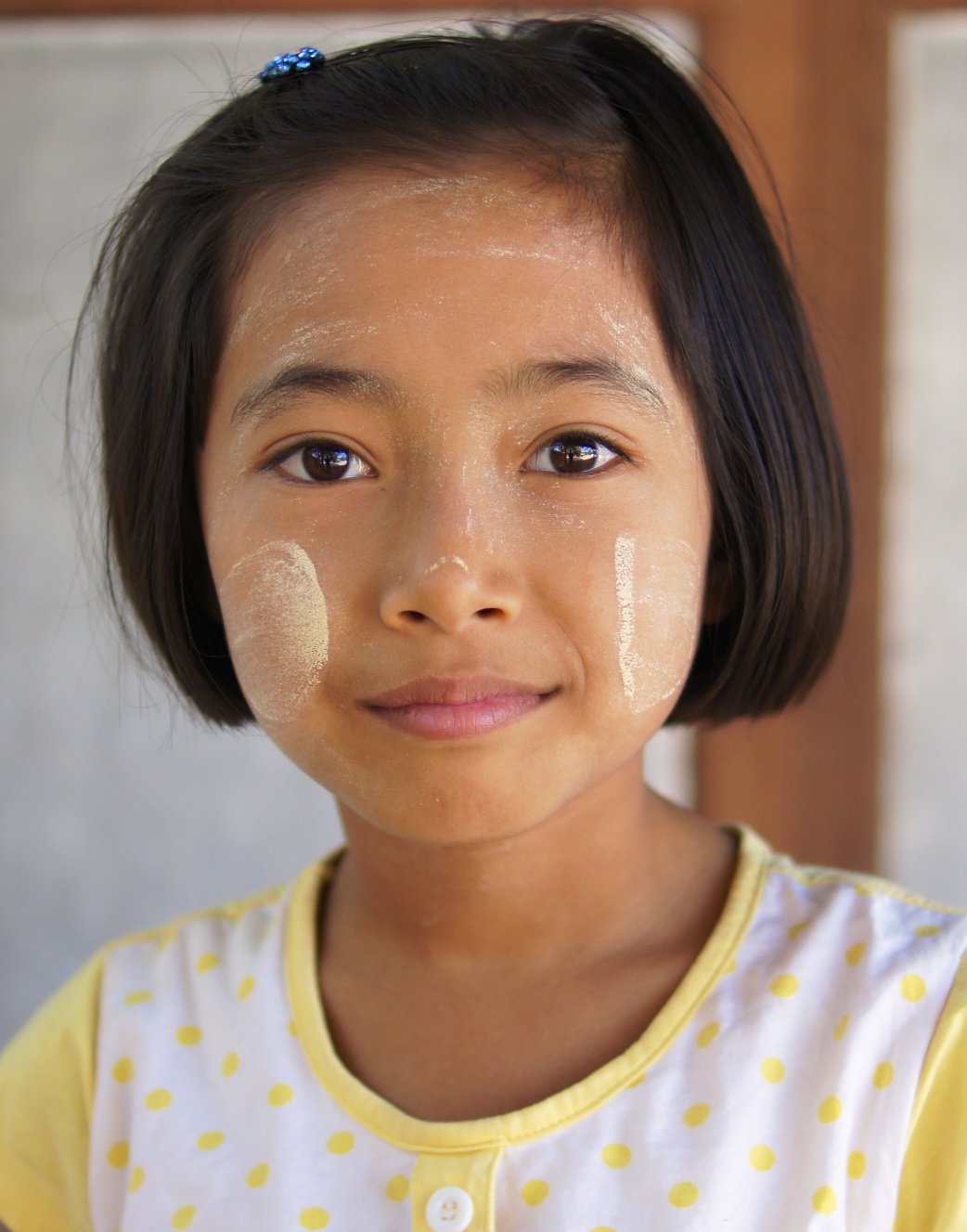
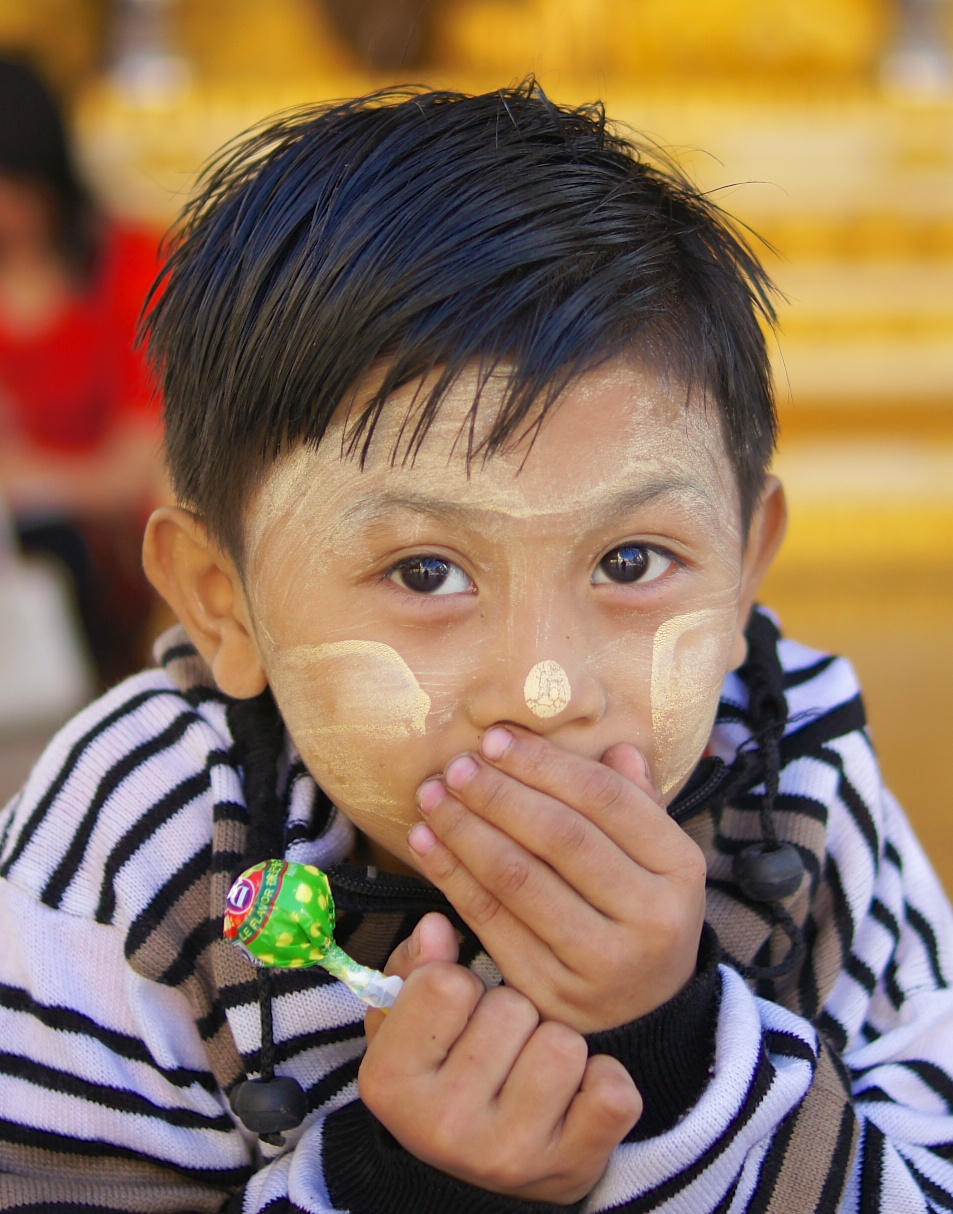
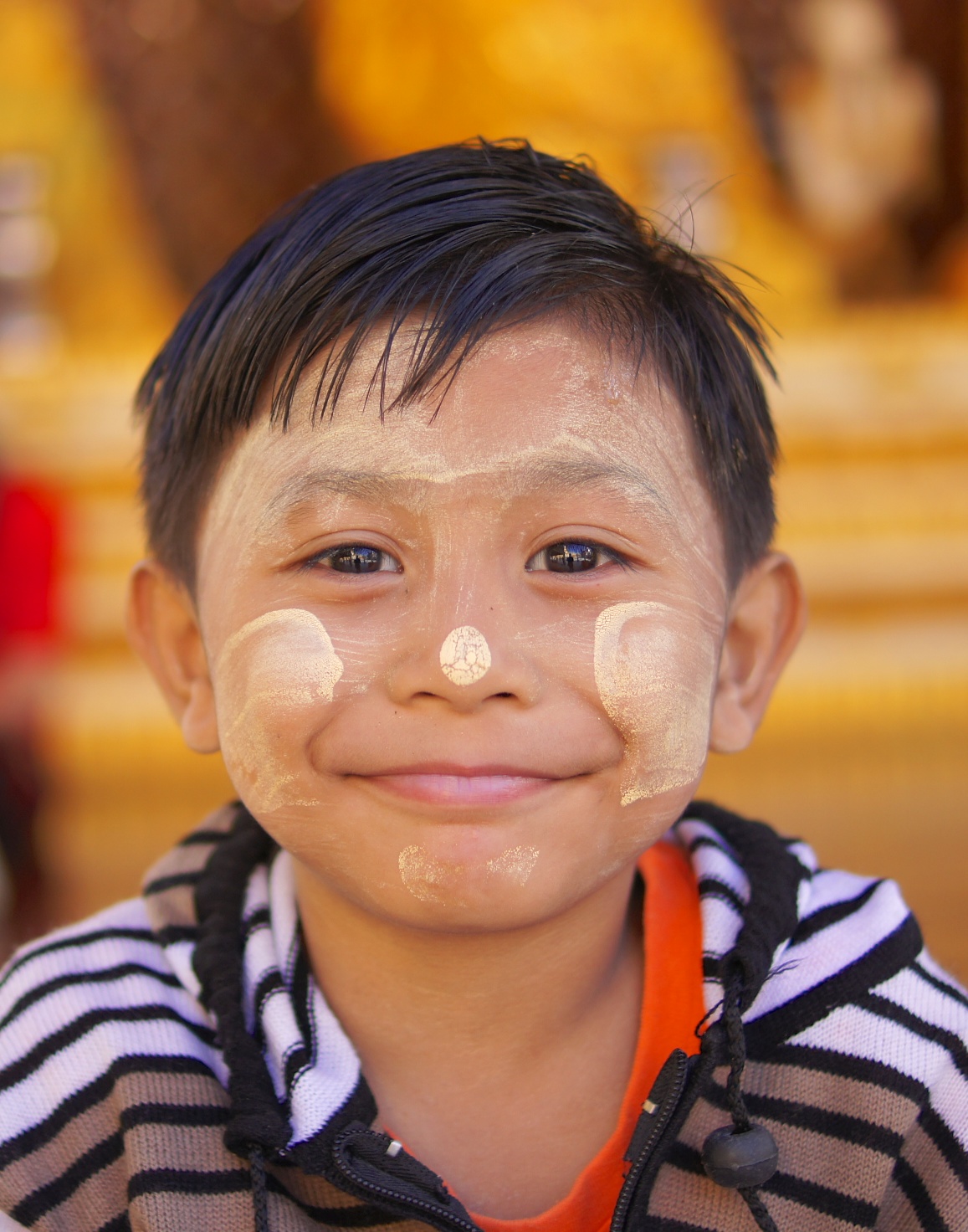
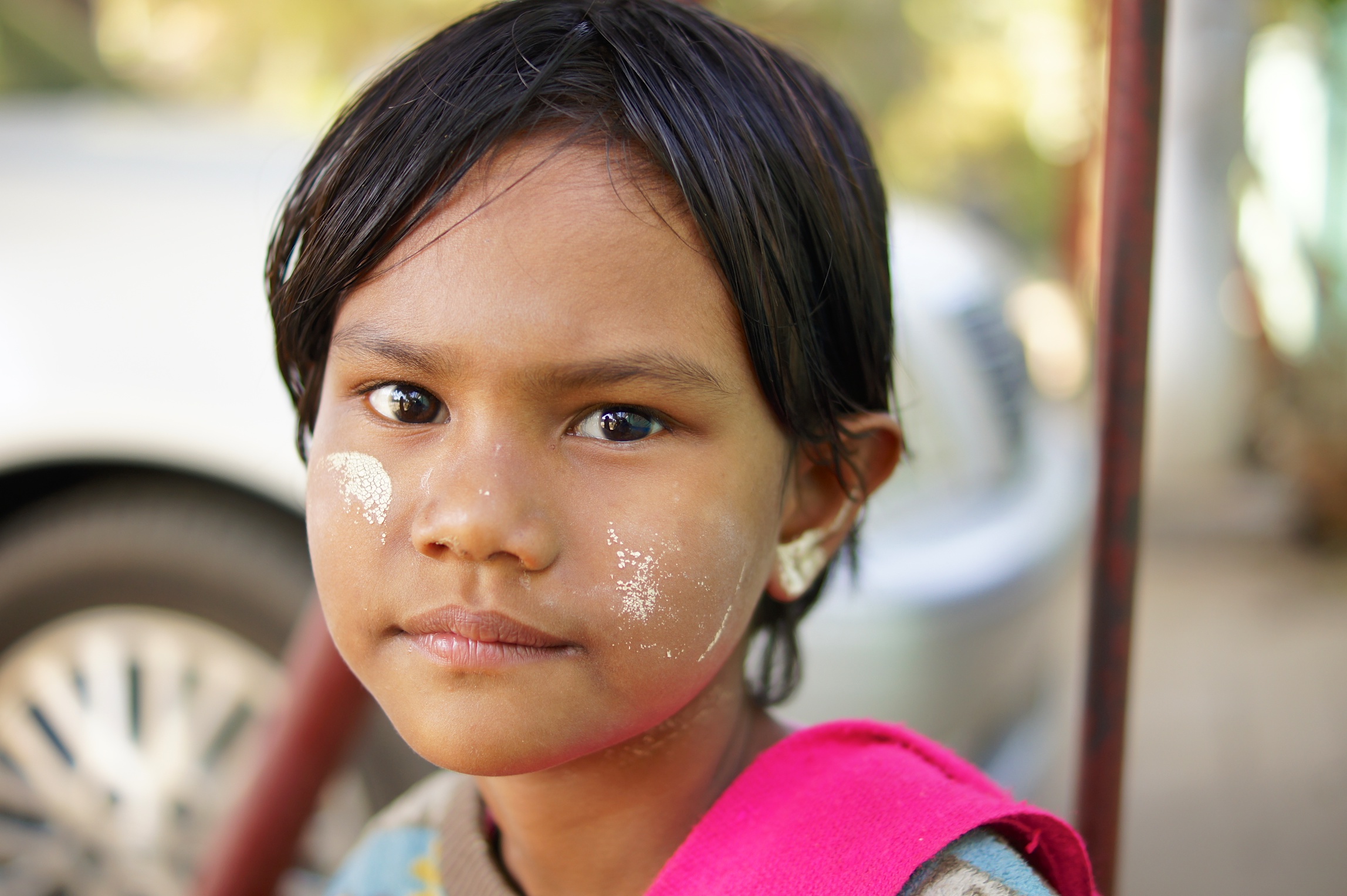
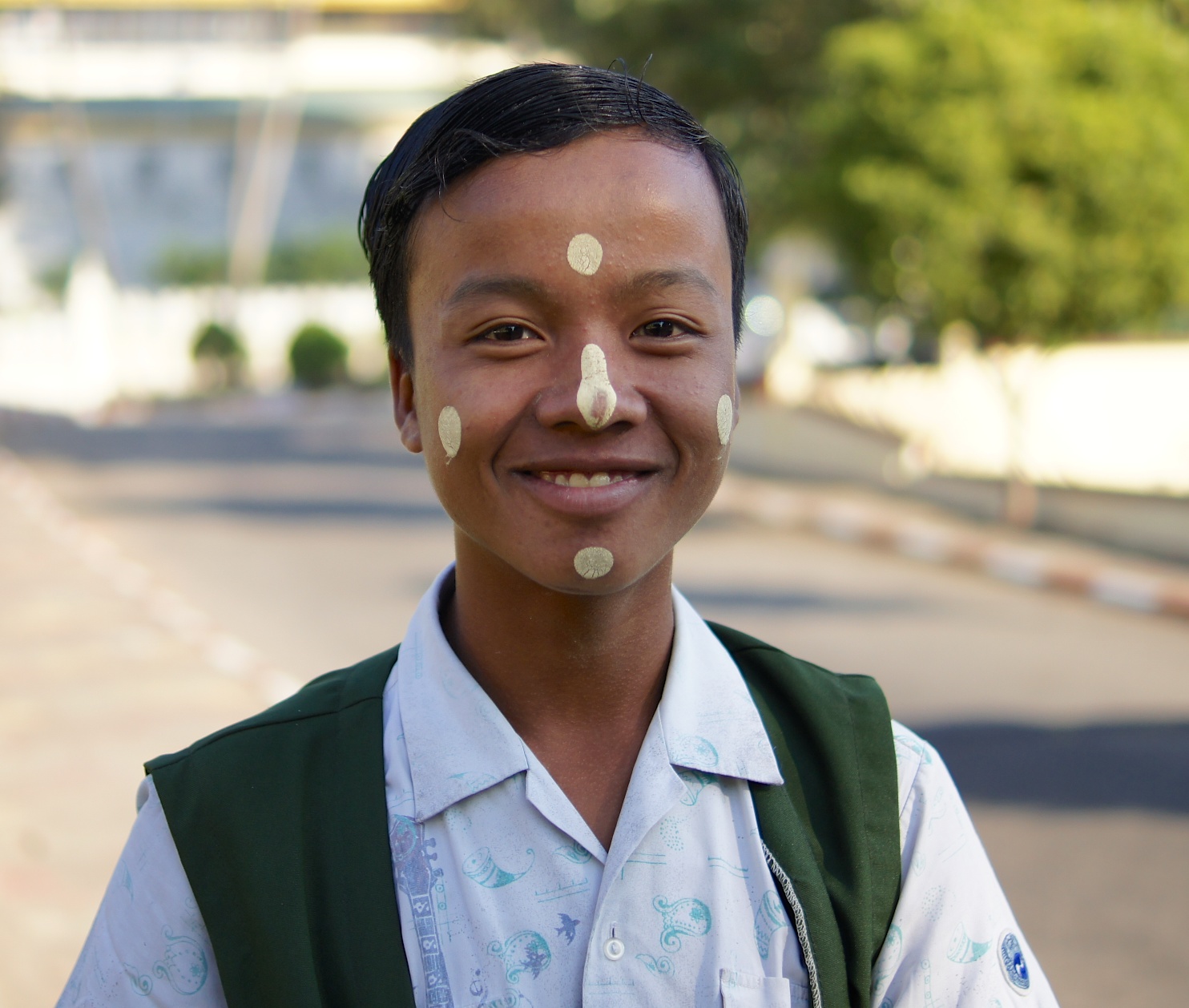
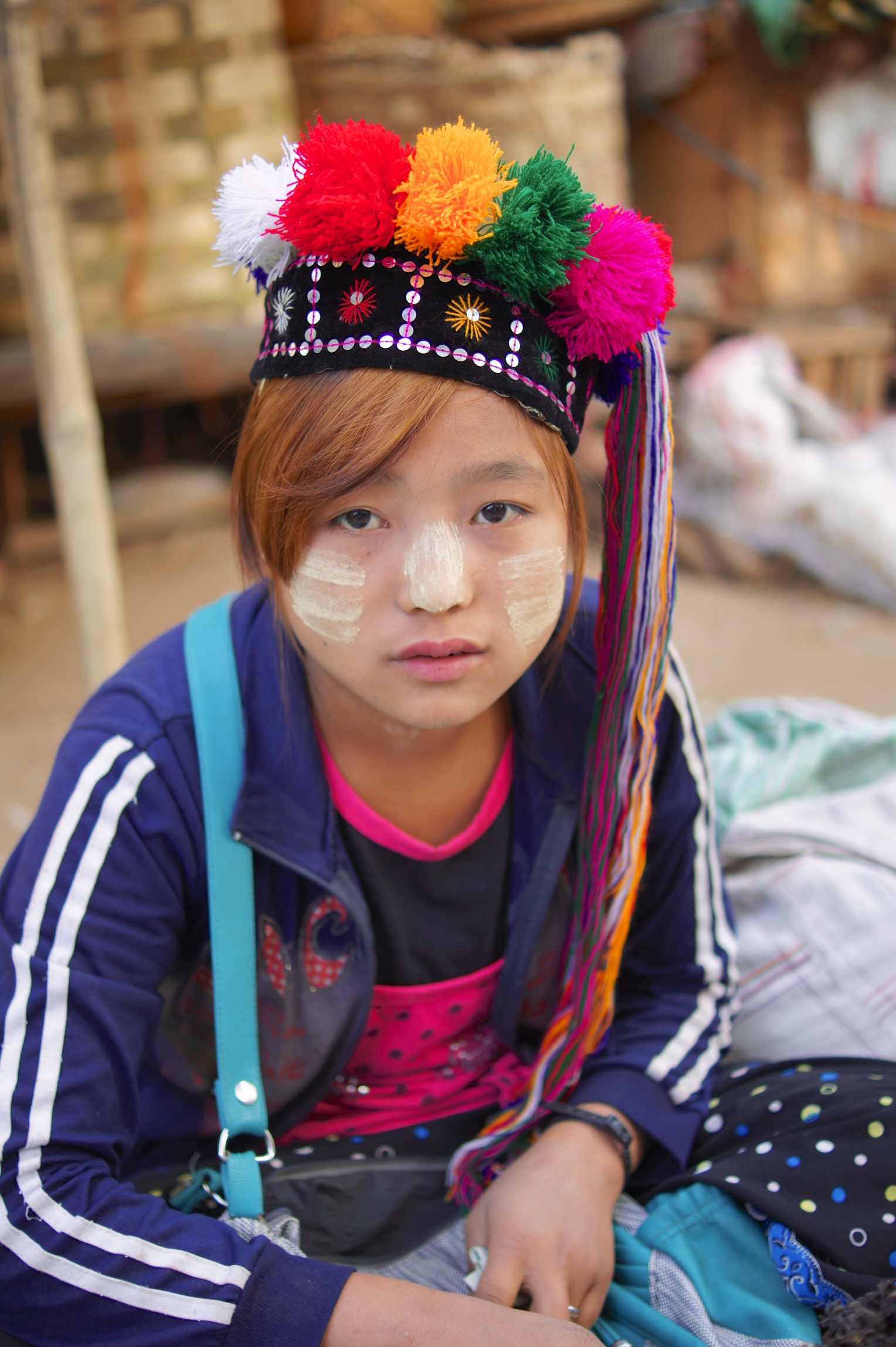
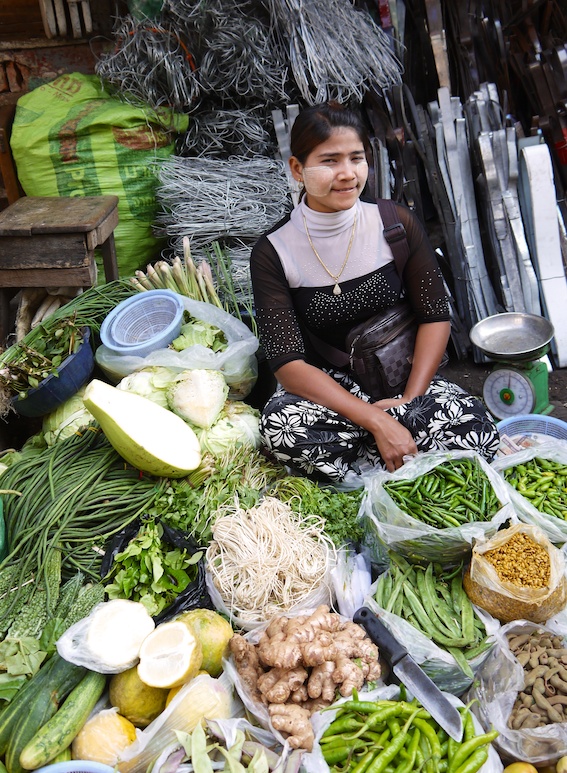
    The yellow color on the faces of the Myanmar is called Thanakha.  Only women and children wear it.  It
    is used as a sunblock, insect repellent, and make up.  We had read about Thanakha prior to our visit, but thought we would only see it in the countryside.  We were quite surprised when the women checking us in at the passport counter had it on.  We learned that is is still very popular and is worn throughout Myanmar, even in the modern cities.  No other country uses it.


    People of myanmar 5


    People of myanmar 4


    Myanmar (1)


    People of myanmar 8


    People of myanmar 10


    Misc (1)


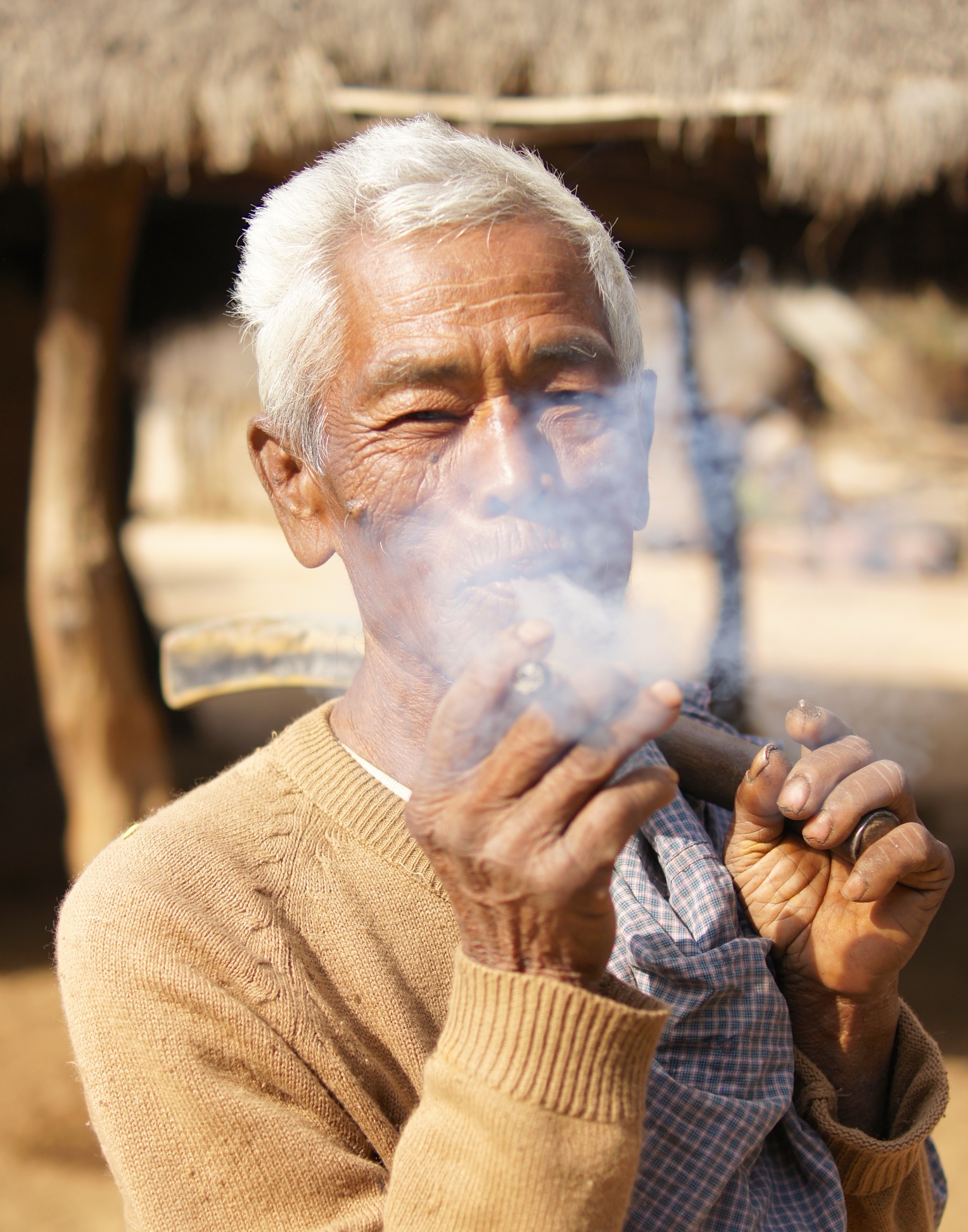
    People ask us all the time if we ask permission before we take our photos, 95 % of the time we do.  We just hold up the camera and point.  Rarely do people turn us down, but if they do, we respect them.  In Myanmar, more than a few asked us to take their photos, children and adults.  The man below wanted us to take his.


    People of myanmar 11


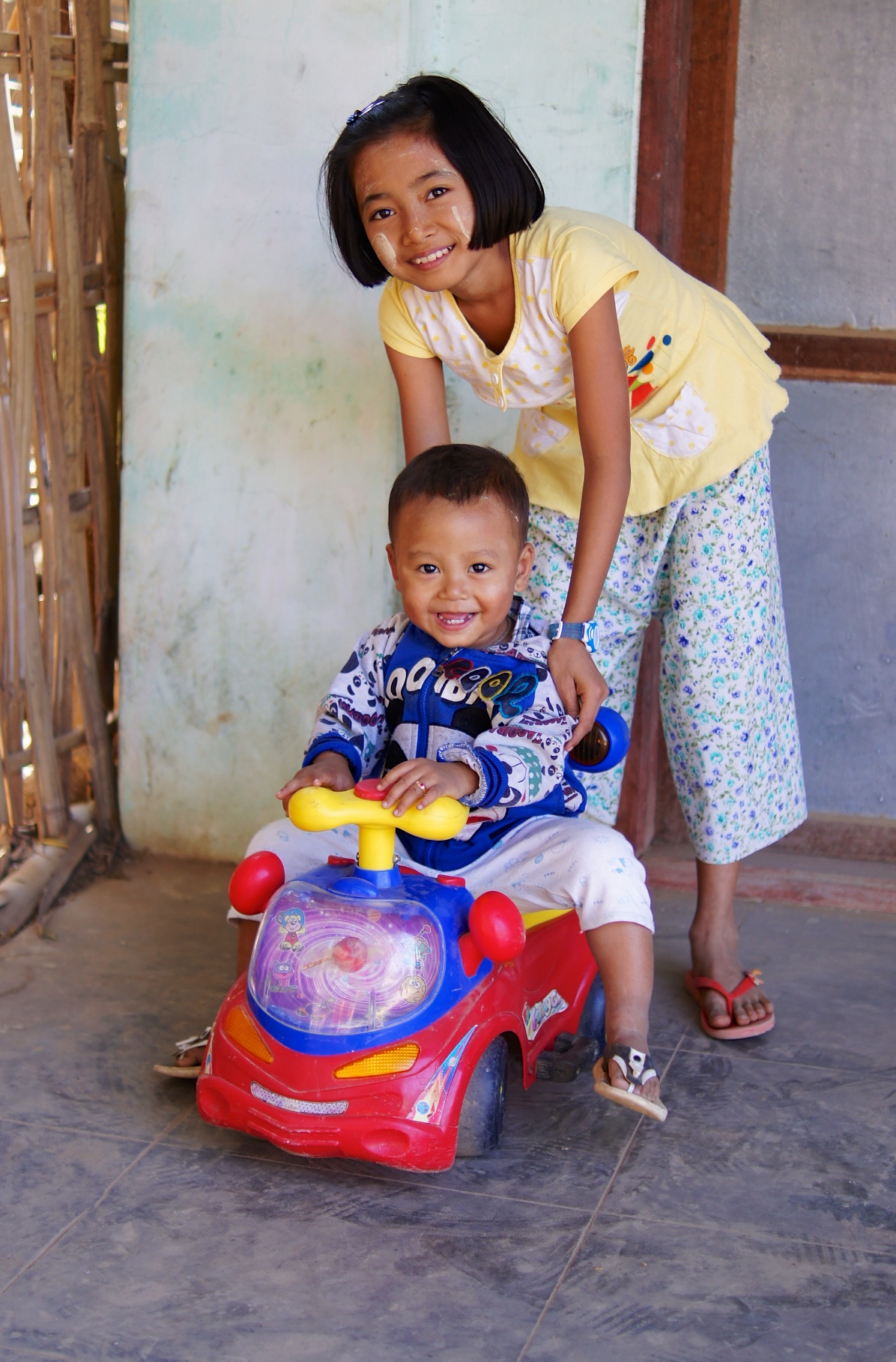
     The Children

    They were just precious. 


    People of myanmar 14


    People of myanmar 15


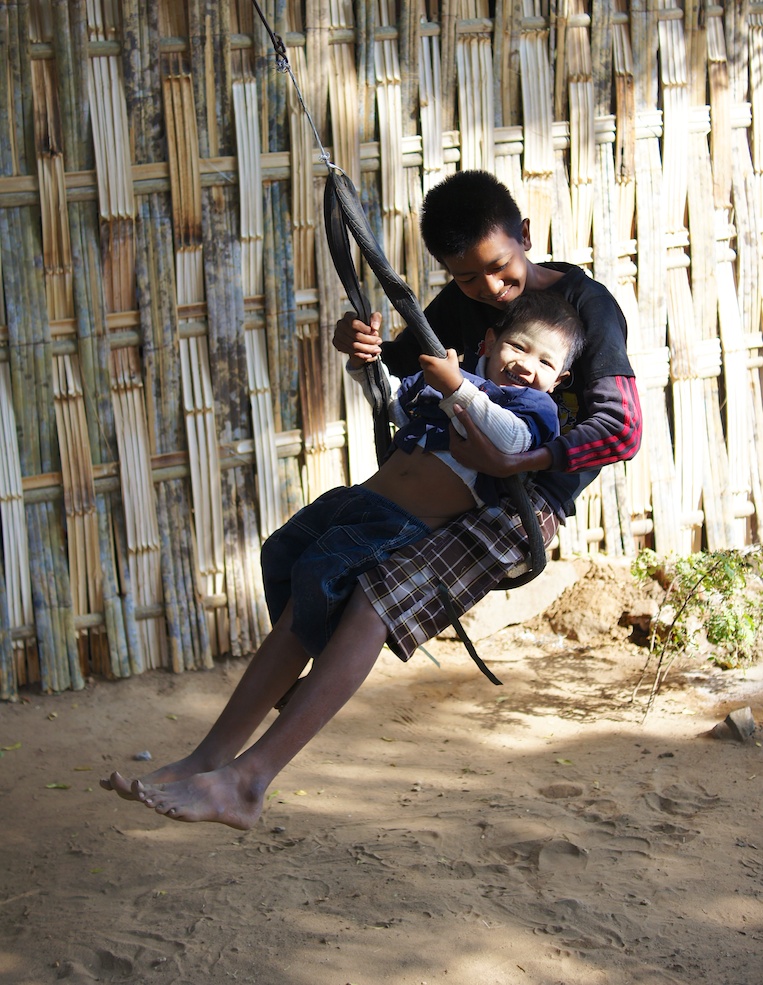
    One of my favorites… best friends.  


    Myanmar


    This bunny is just too cute!


    Misc (2)


    People of myanmar 22


    People of myanmar 23


    People of myanmar 24


    People of myanmar 25


    People of myanmar 27


    You would think it was winter from their hats and coats on, but it was just a cool morning (around 68).


    People of myanmar 28


    People of myanmar 30


    People of myanmar 39


    The little fashionista


    People of myanmar 38


    People of myanmar 37


    People of myanmar 40


    People of myanmar 19


    People of myanmar 32


    People of myanmar 34


    People of myanmar 42


    People of myanmar 43


    People of myanmar 45


    People of myanmar 46


    People of myanmar 47


    A country of beautiful people.  If you you are considering visiting Myanamar – go now!  Check back for lots more photos and facts about this stunning country.


  •  

    Myanmar, January 2013

    “This is Burma, and it is unlike any land you know about.”


    This is a famous quote by Rudyard Kipling in his "Letters from the East" (1898), and it still rings true 100+ years later. 
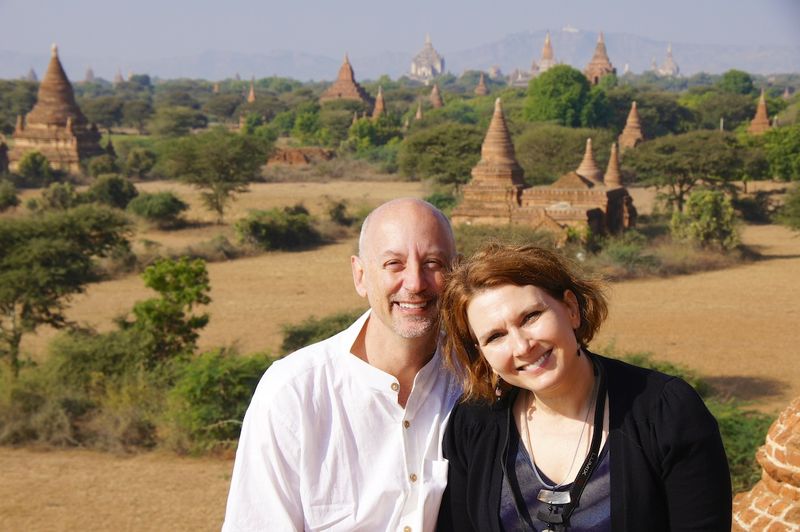
     

    Bagan 1

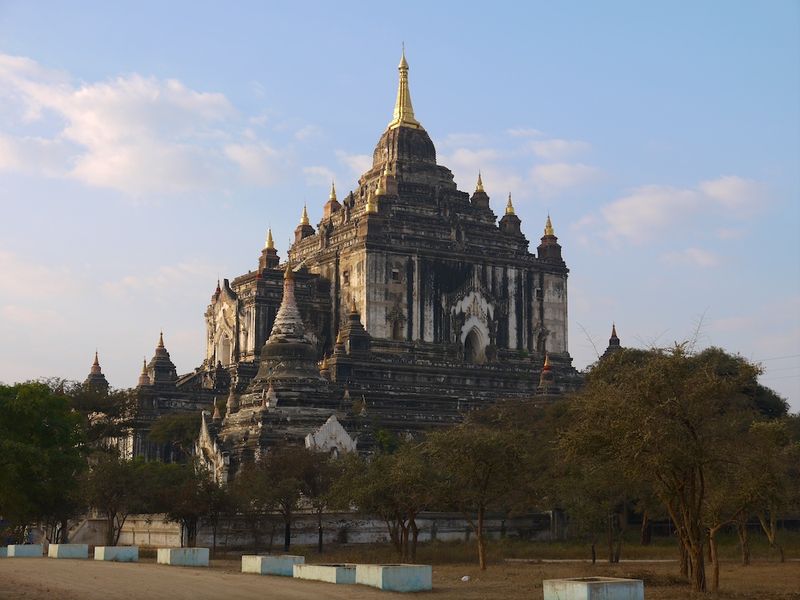
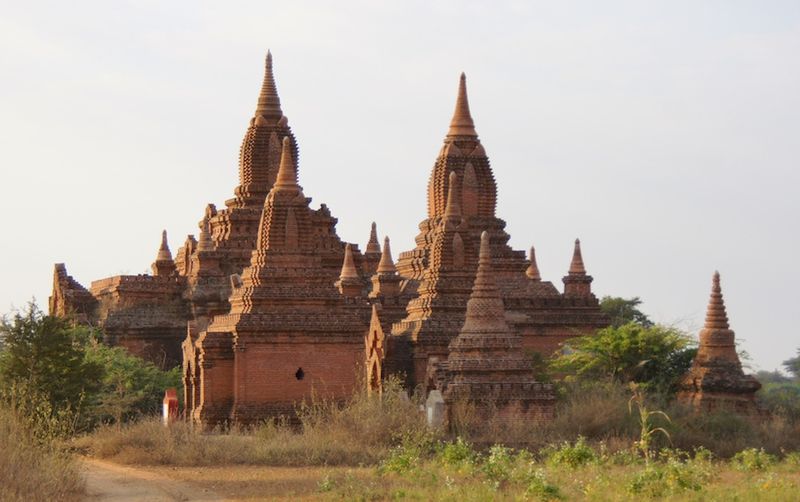
    We loved Burma.  It is a very special place.  No McDonald’s, Starbucks, or KFC.  There are no chain restaurants – period!  The landscape is STUNNING!  Today, Bagan has more than 2,200 temples and pagodas.  They say kings filled the land with as many as 4,400 temples to earn religious merit during the height of the kingdom (11th and 13th centuries).  Temples are still being built today – to make good for wrongdoing.
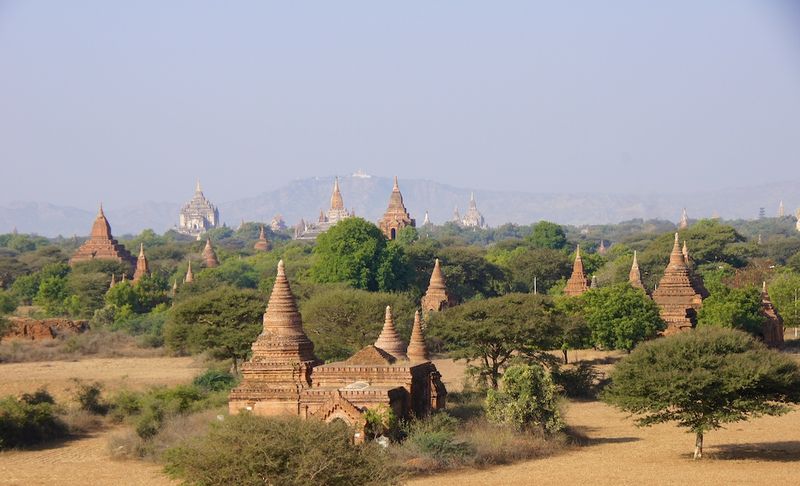
     

    Bagan 3

    Myanmar has a long and complex history.  The first signs of civilization date back to 300 BC.  In 1885, after a war, Myanmar fell under the British rule and was a British Colony until 1948, when it became an independent country. Because of the British rule, people in Myanmar speak very good English (better than most Asia countries we visit). We were surprised by this.
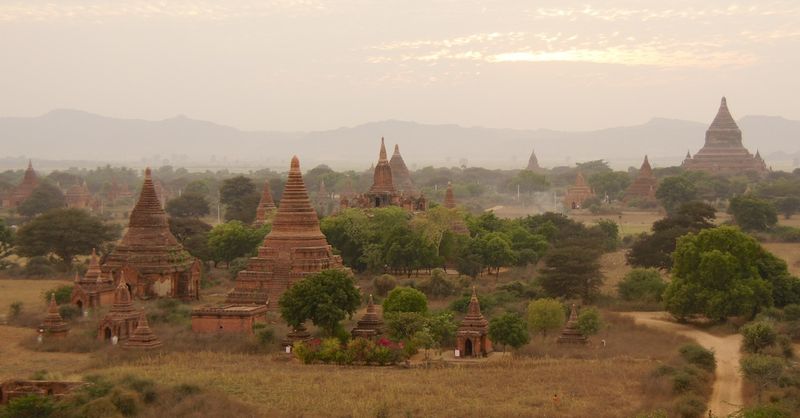
     Bagan 2


    Over the last 40 years, Myanmar has been one of the most isolated countries in the world.  Which is correct – Myanmar or Burma?  In 1989, Burma became a democracy and the government changed the name to Myanmar.  Interestingly, the United States still calls the country Burma.  
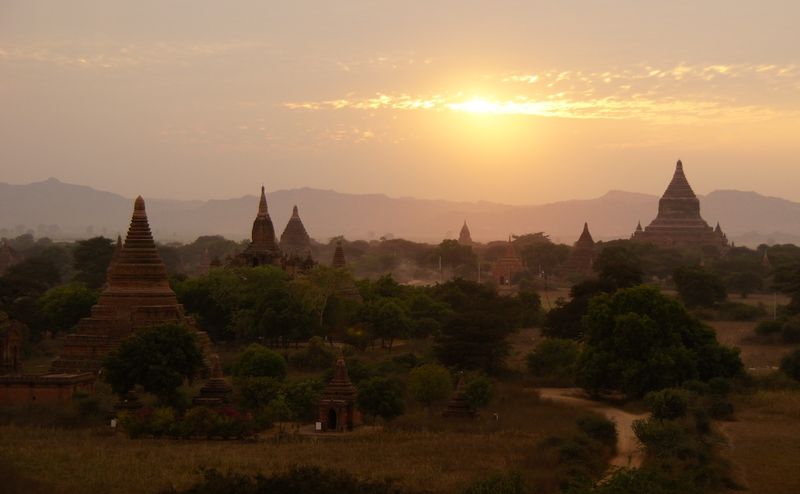
     

     Bagan 4


    Myanmar is a resource-rich country with a strong agricultural base, and is a leading producer of gems, jade, and teak. However, military rule prevents the economy from developing, and the Burmese people remain poor.  In March of 2011, Myanmar began to open its doors to the world.


      Bagan 5


    Bagan – day two


    We normally do not hire guides, but we learned about a professional photographer, Htay Win at Magical Bagan.  Htay gives historical tours and takes you to the best place for photos, so we gave him a try.  He was AWESOME!  Here is a photo I took of Htay while we were waiting for the monks to arrive.


    Bagan 6


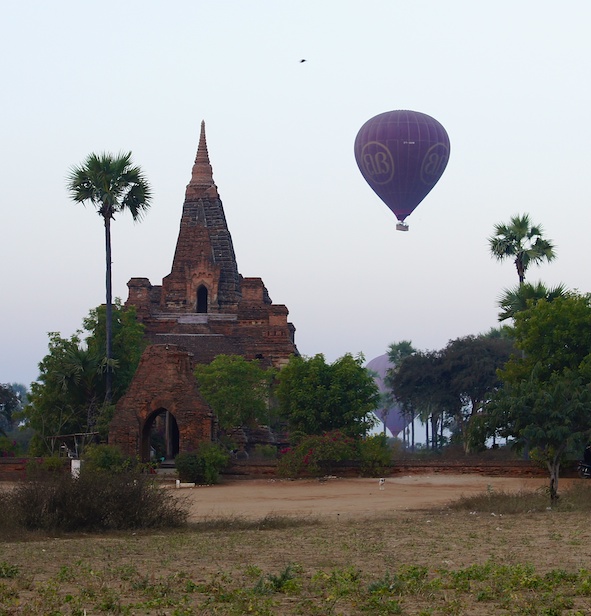
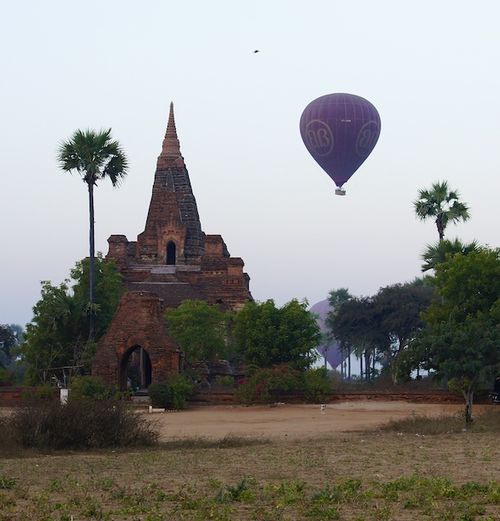
    We started very early to see the hot air balloons rise for their morning run.  No… we did not ride in one, as this is NOT on my list of things to do before I die!


    Bagan 7


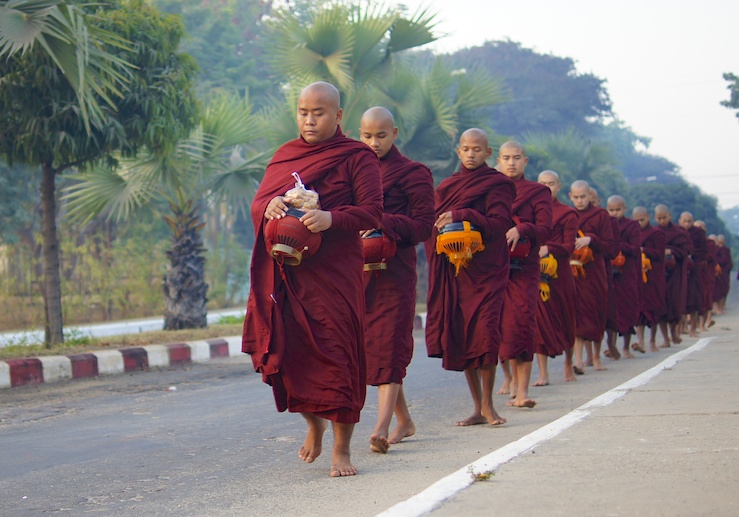
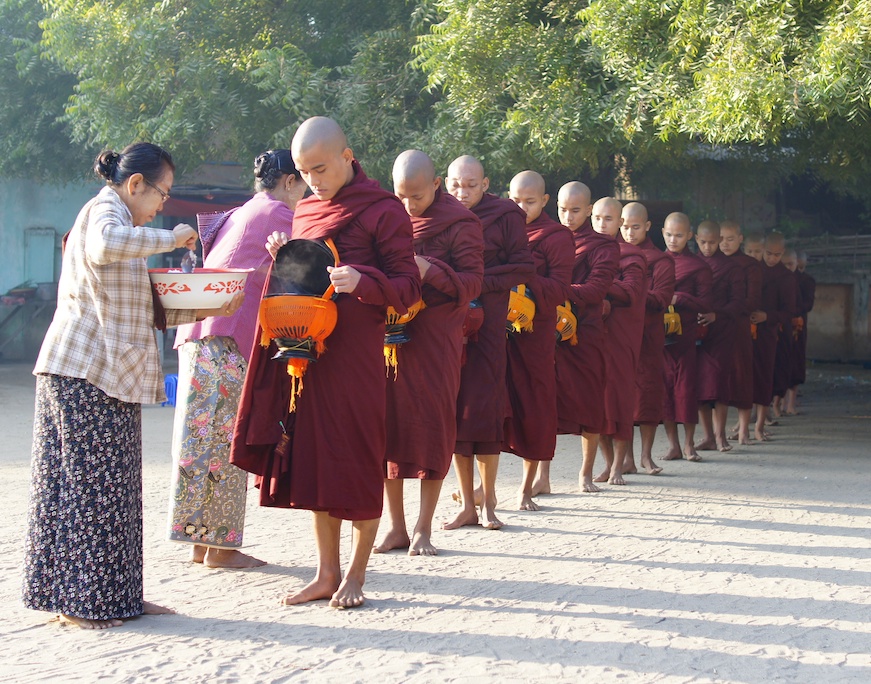
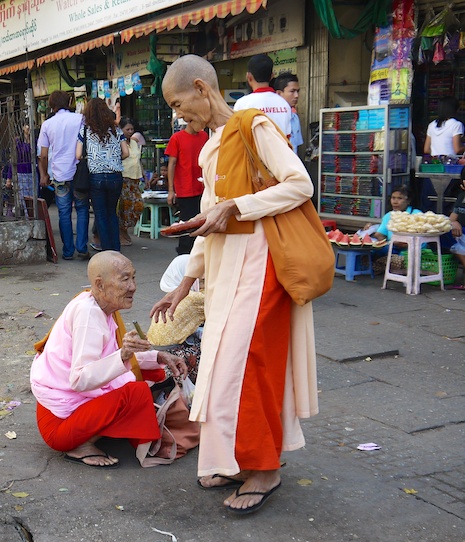
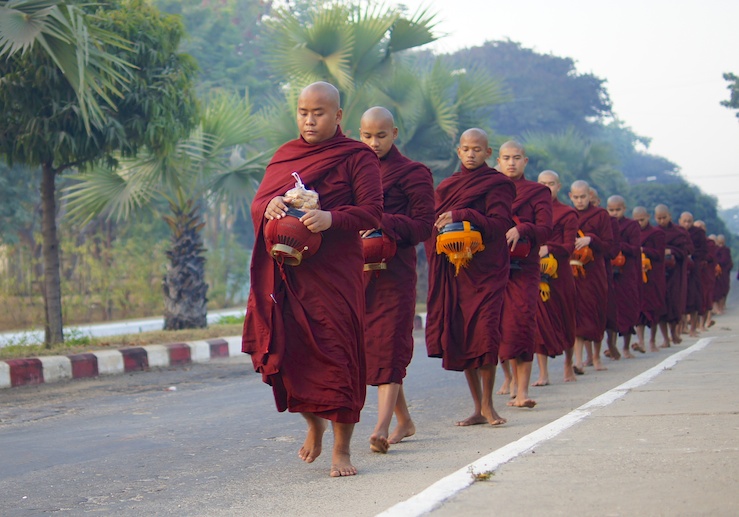
    Next we followed the monks around town while they collected their daily alms (food).


    Bagan 8


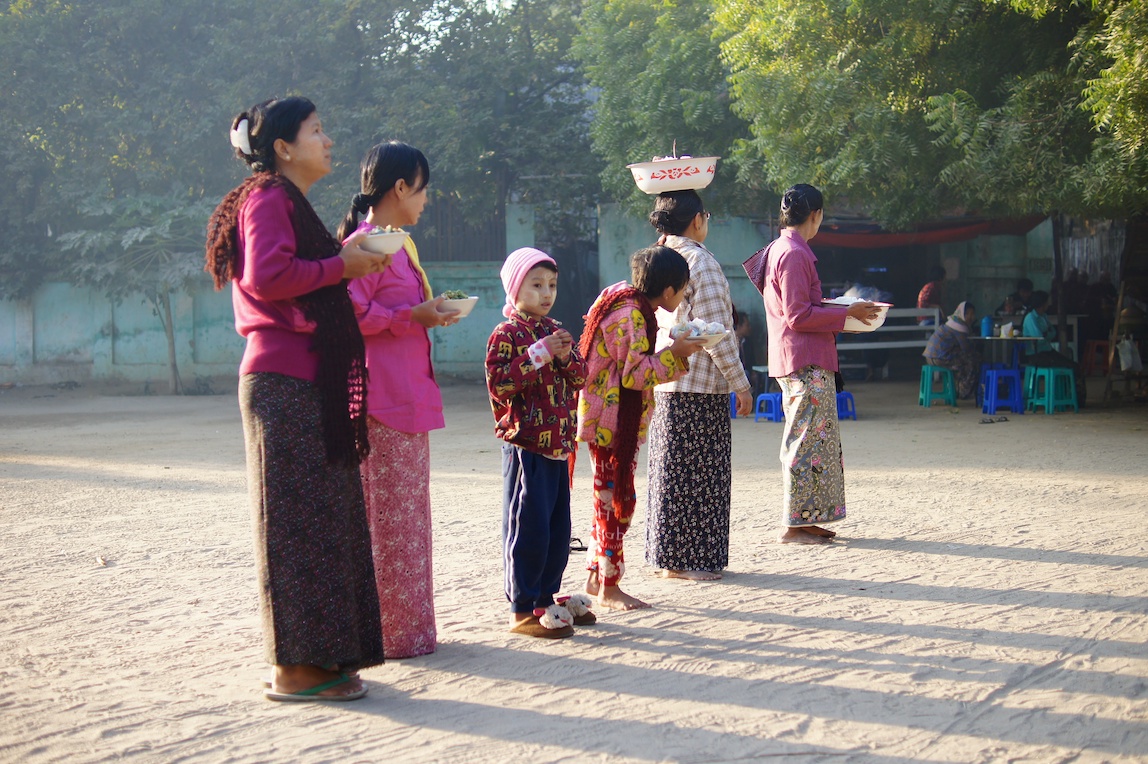
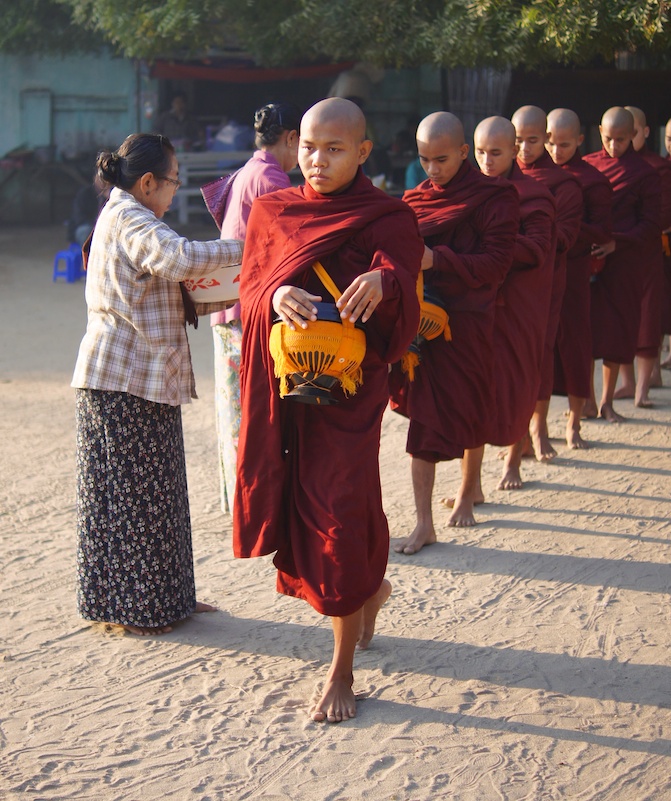
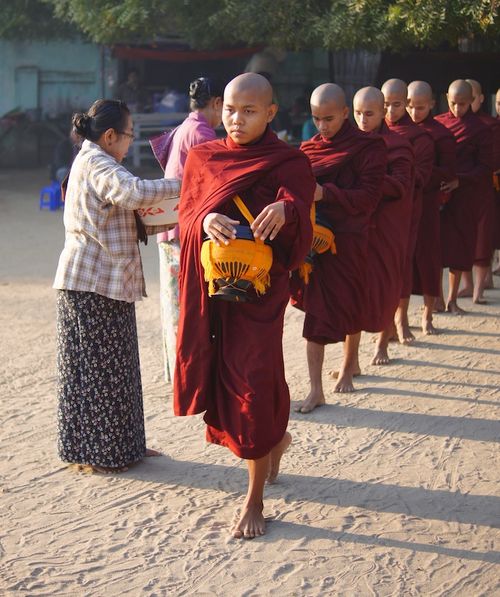
    Htay was so good, he even asked the people feeding the monks if they would stand on the left side of us so we could get the perfect shot.


    Bagan 16


    And D did capture two awesome shots!


    Bagan 17


    Bagan 18


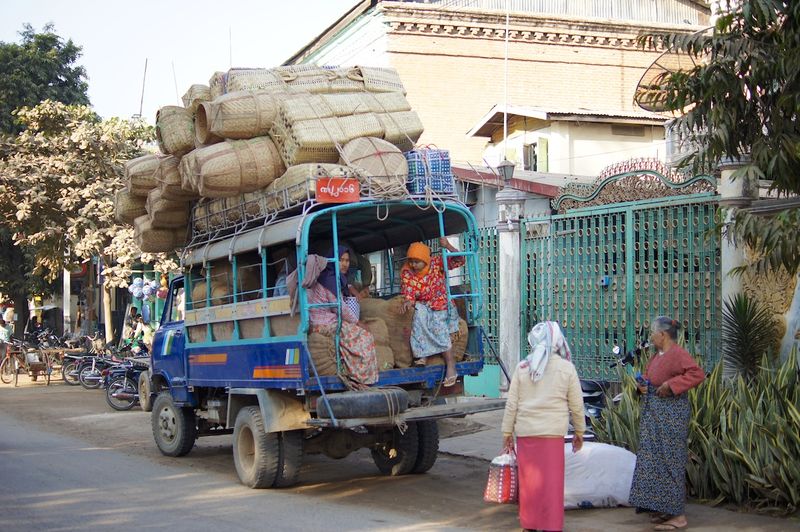
    The streets of the city had so much to take in – the local bus…


    Bagan 9


    Cooking in the street…


    Bagan 10


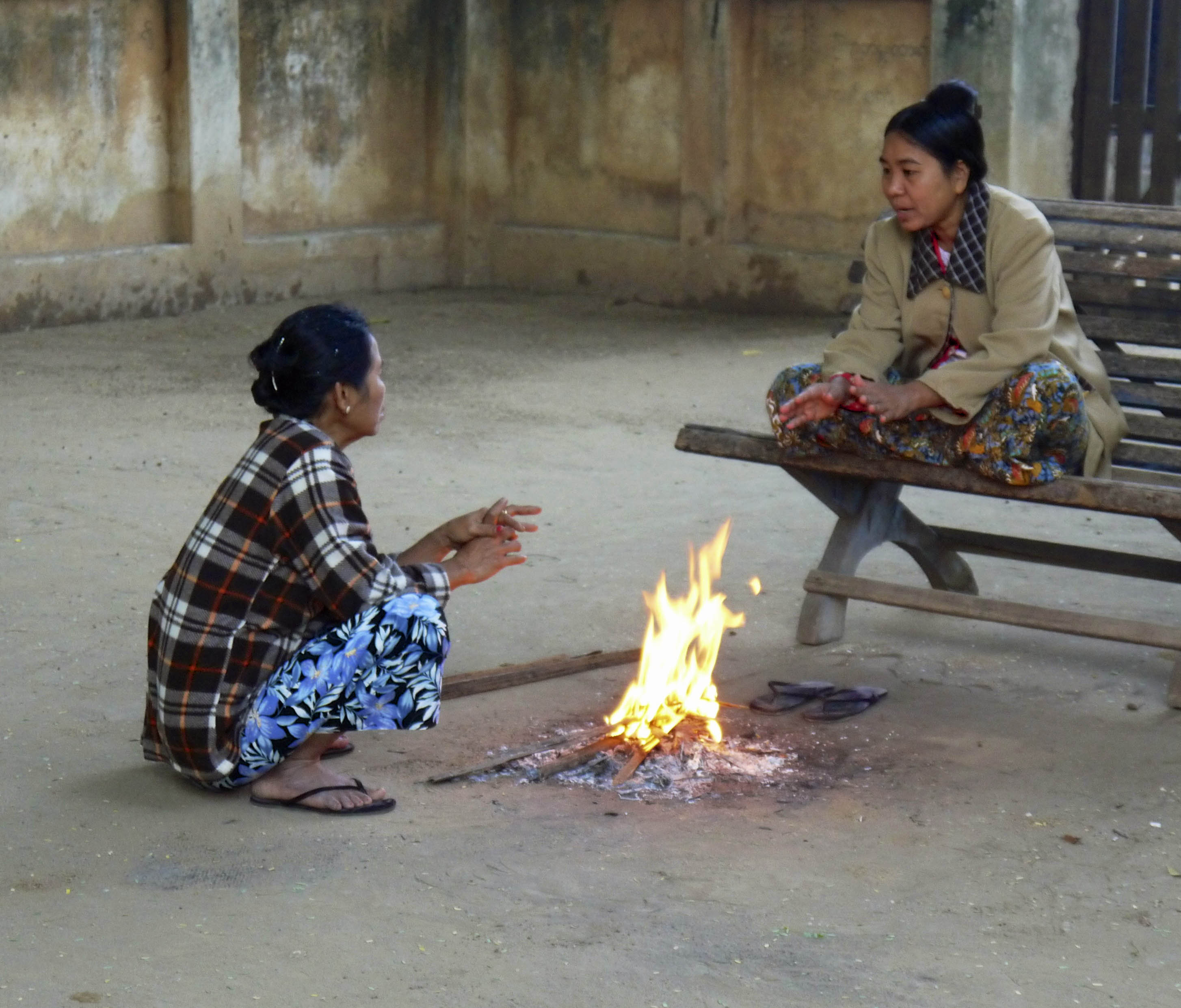
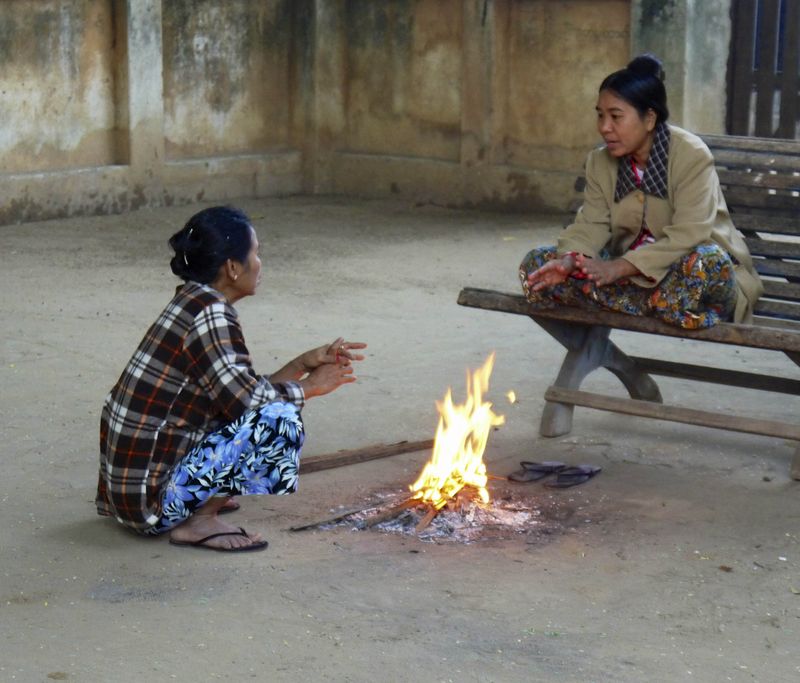
    Chatting by the fire – love this photo.


    P1070363


    Bagan 11


    Bagan 12


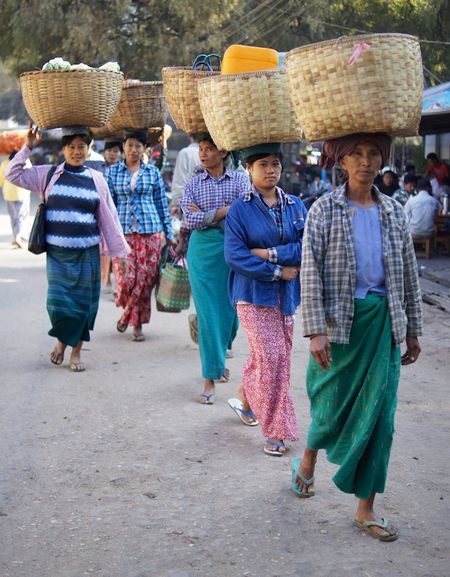
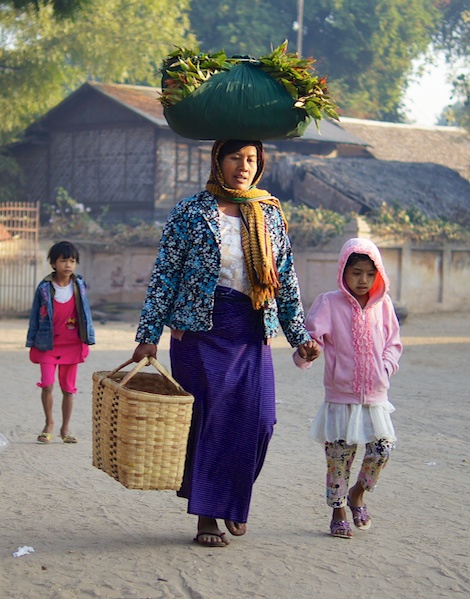
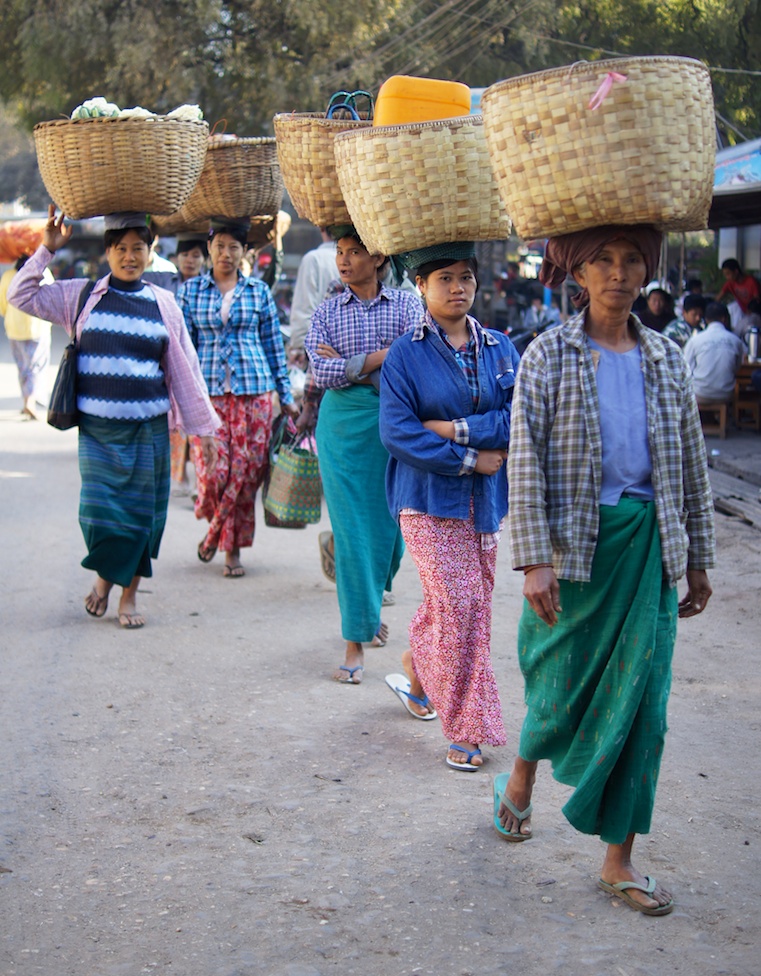
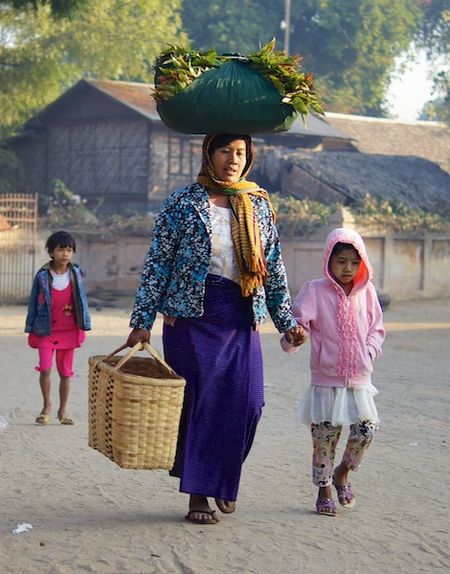
    Women everywhere carried items on their heads – now that is multi-tasking!


    Bagan 15


    Bagan 23


    Bagan 13

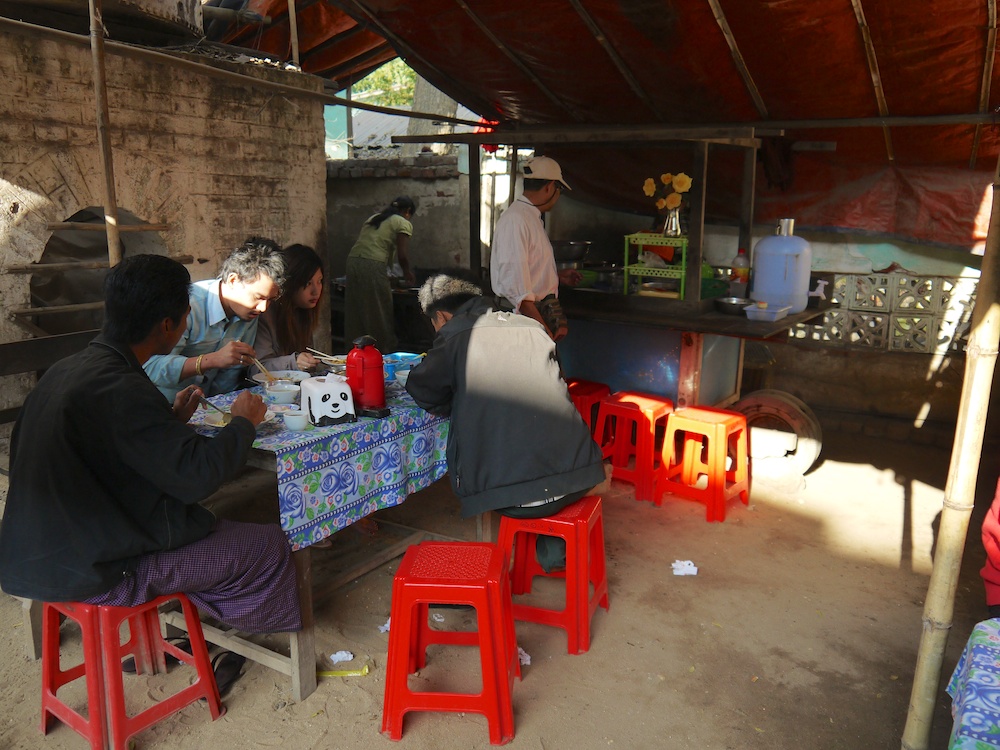
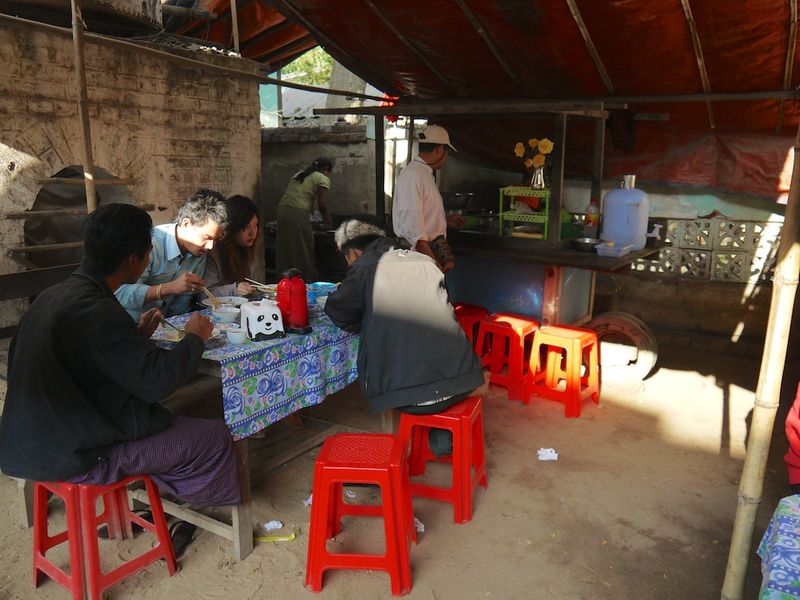
    As I mentioned, we got a very early start so we stopped for breakfast at a local roadside restaurant.


    Bagan 24


    I love the tablecloth and the fresh flowers in the "kitchen".  The food was delicious, and we did not get sick!  I am pretty sure after living here a year,  we now have "Asian", or "iron" tummies! 


    Bagan 25


     On to the market…


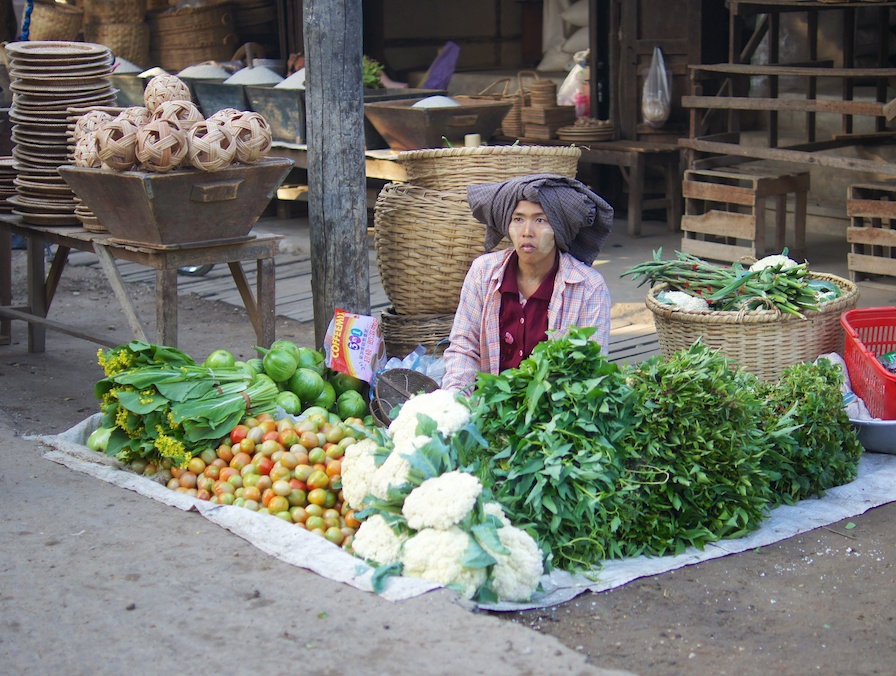
    Bagan 19


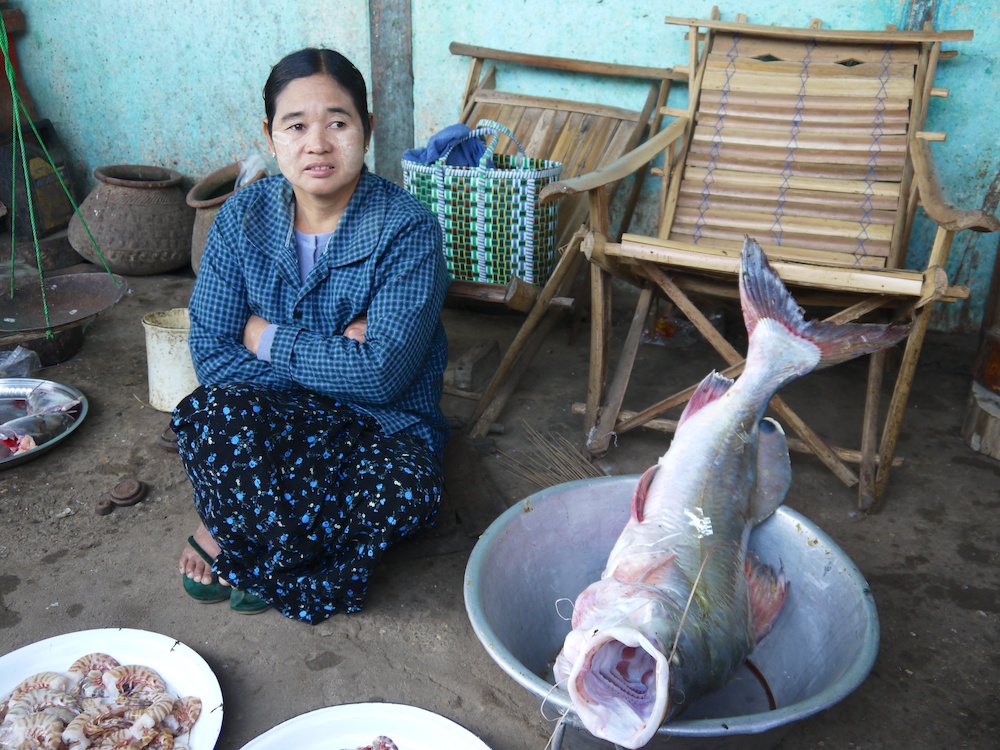
    Look at the size of that fish!


    Bagan 20


      Bagan 22


    Bagan 21


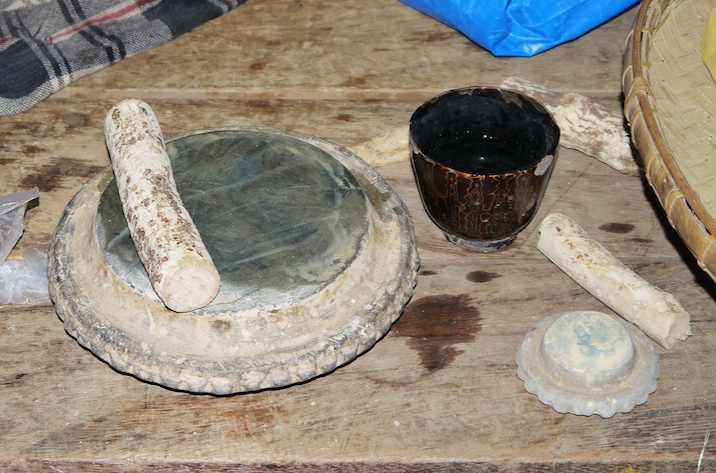
    We finally learned what the cream is they put on their faces.  It is called thanaka cream and it is made by grinding the bark, wood, or roots of a thanaka tree.   


      Yangon myanmar 59


    They then add a small amount of water on a circular stone slab.  Burmese women and children have used Thanaka cream for over 2000 years to protect themselves from the sun and insects; and as decoration.  Men do not wear it.  To see many more photos of people wearing Thanaka, click here.


    Yangon myanmar 58


    Myanmar shares borders with Thailand, Laos, China, India, and Bangladesh.  Over 57 million people live there.  Officially, there are 135 different ethnic groups.  Ethnic minorities mainly live on the border and mountainous areas where there continues to be a lot of fighting.  The Myanmar government will not allow tourists to visit this area.


    Bagan 27


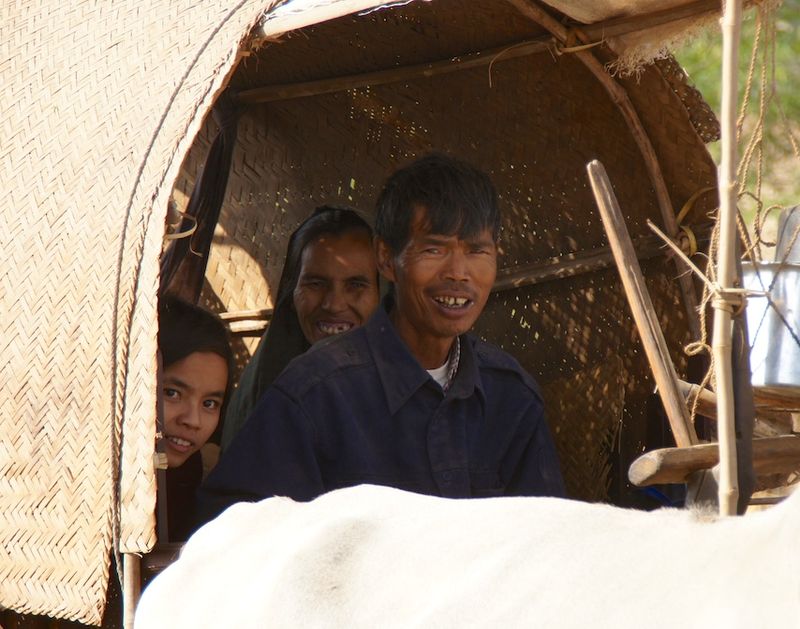
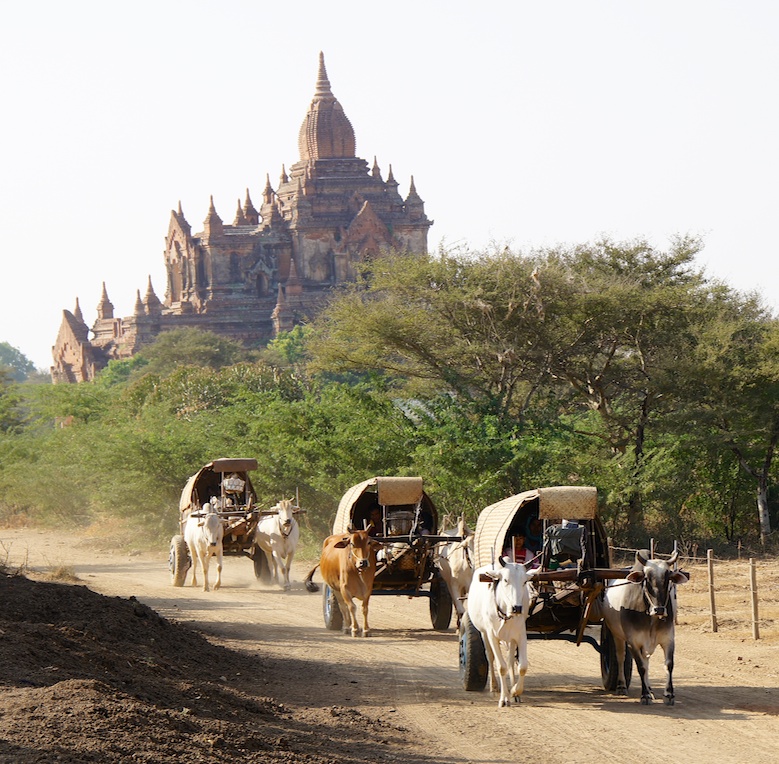
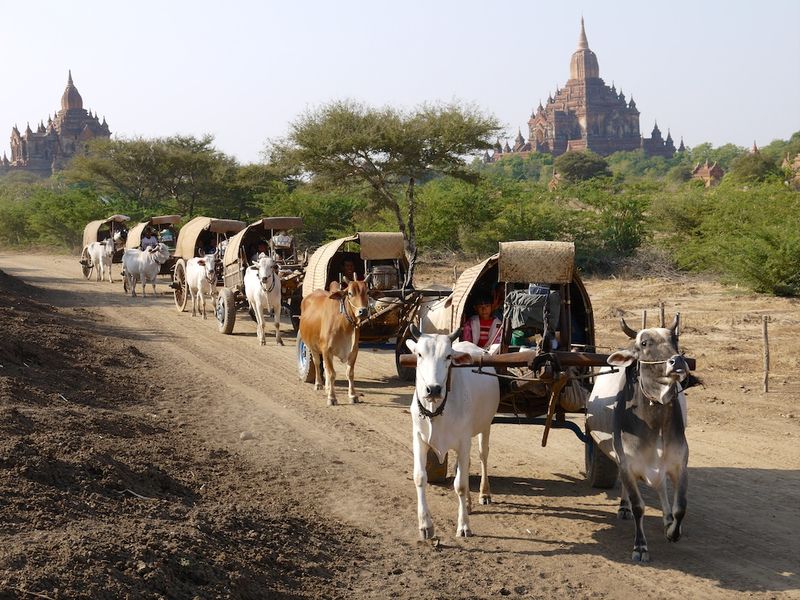
    As we were heading out to see the temples with our guide, we spotted these cattle carts and took a detour to photograph them.


    Bagan 28


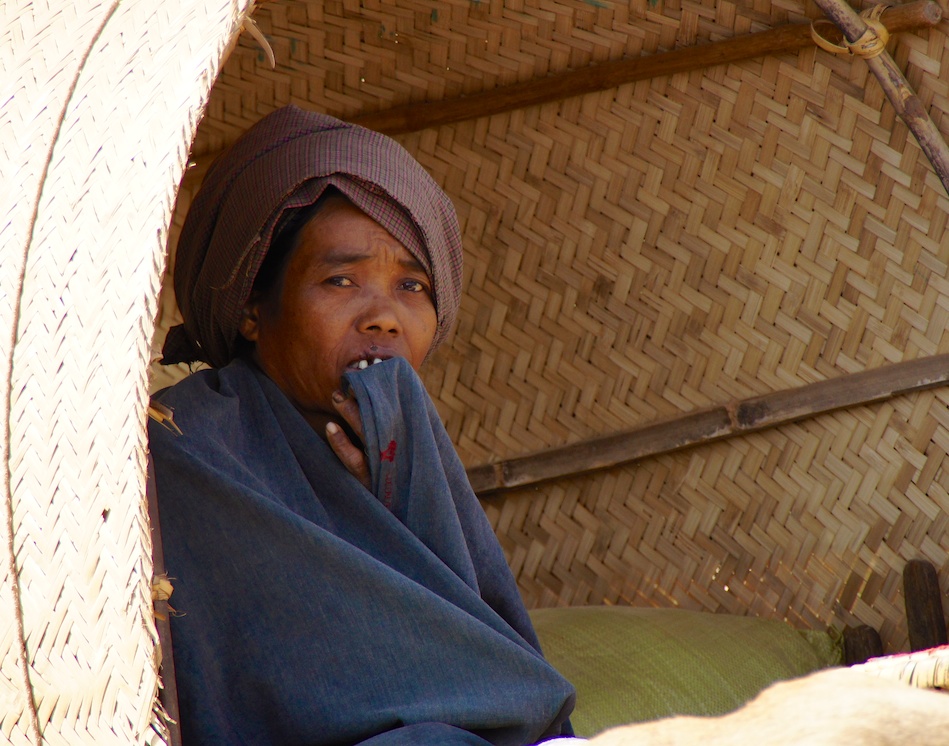
    It was like something out of a movie.  Our guide told us they were coming in for the big festival occurring in three days to celebrate the full moon.  They primarily travel from city to city following the festivals – like gypsies. 

    They people are quite friendly and let us take their photos.  It helped that our guide was Burmese.


    Bagan 29


    Bagan 30


    Bagan 31


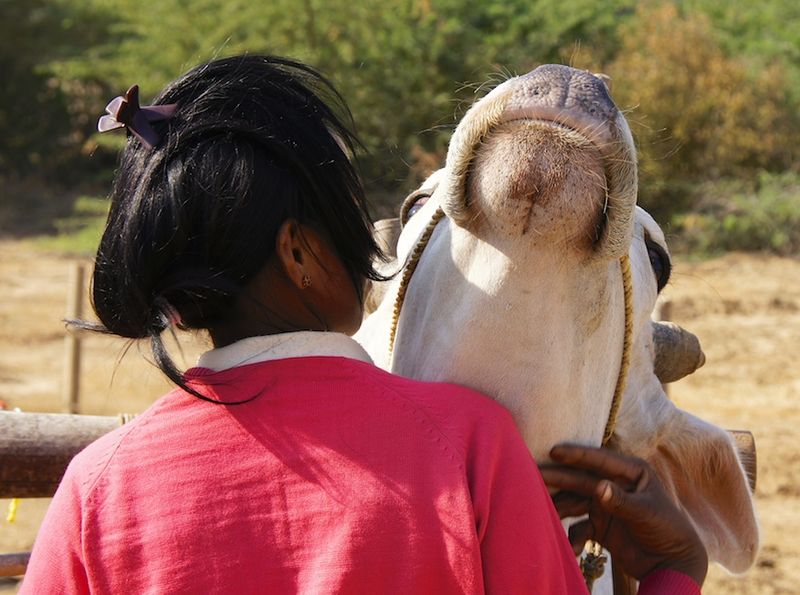
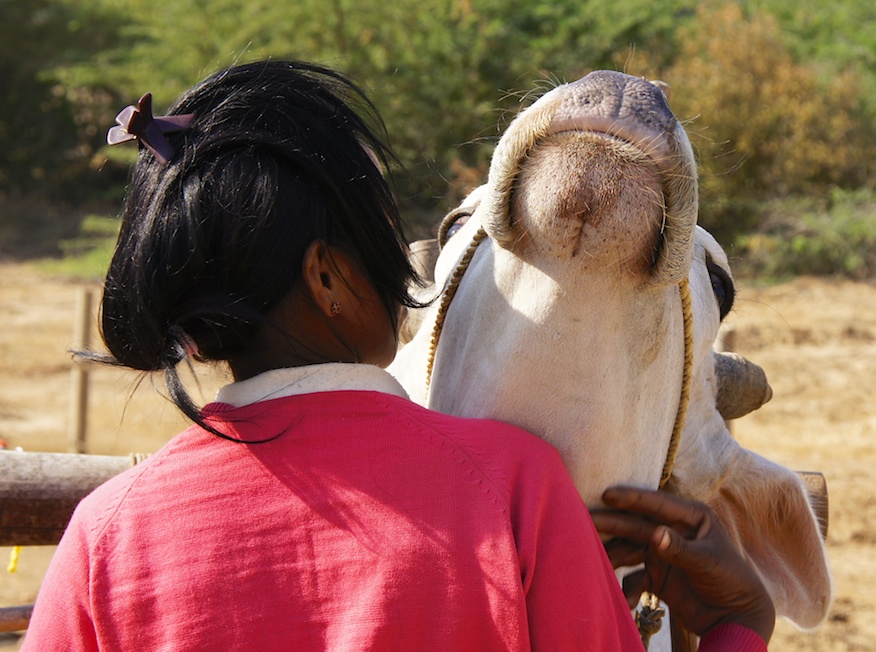
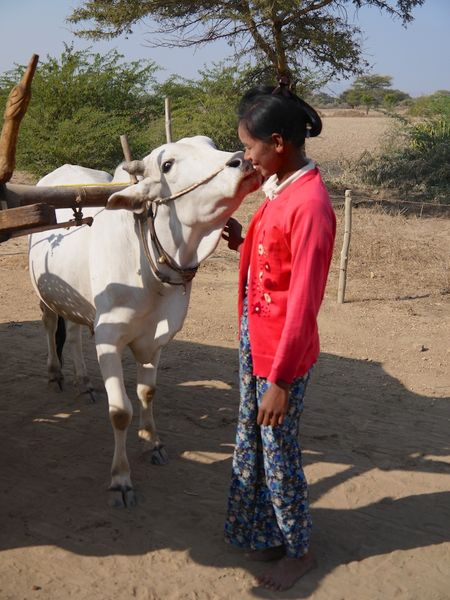
    I found it amazing how this cow was so affectionate to the owner.  Our guide translated and we learned that the cows were a little apprehensive with us nearby.


    Bagan 33


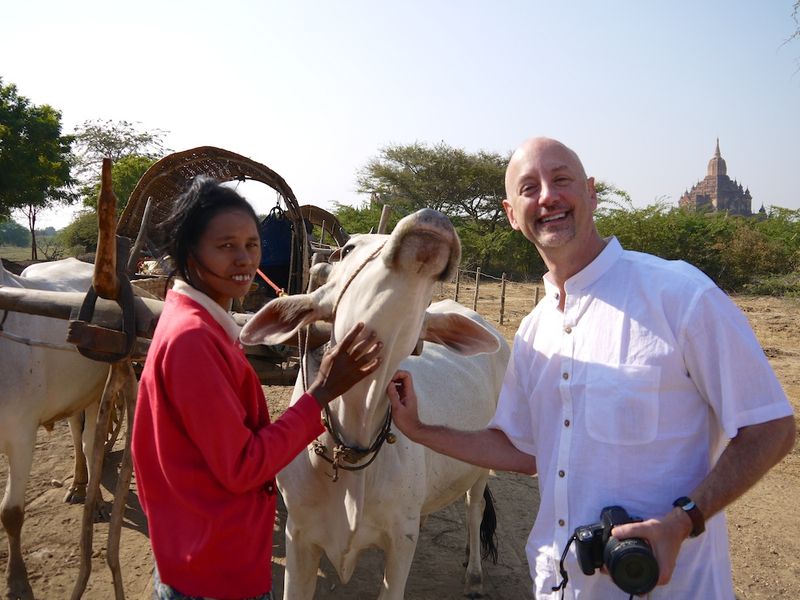
     That is one happy cow!


    Bagan 34


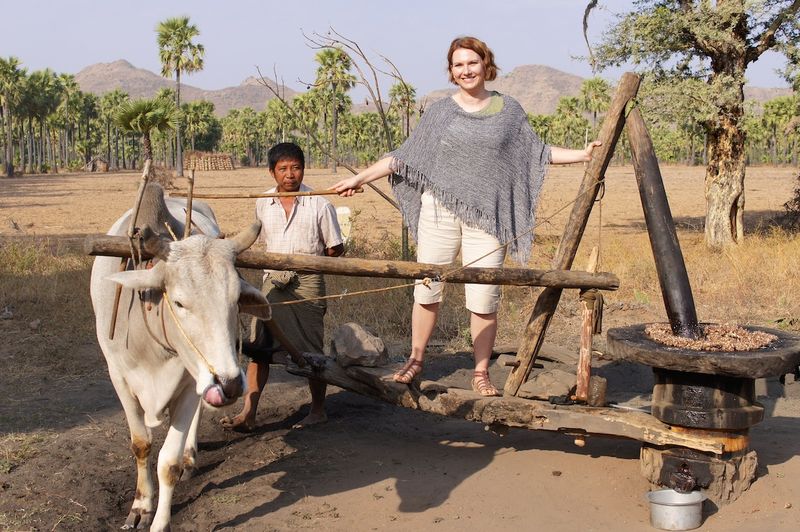
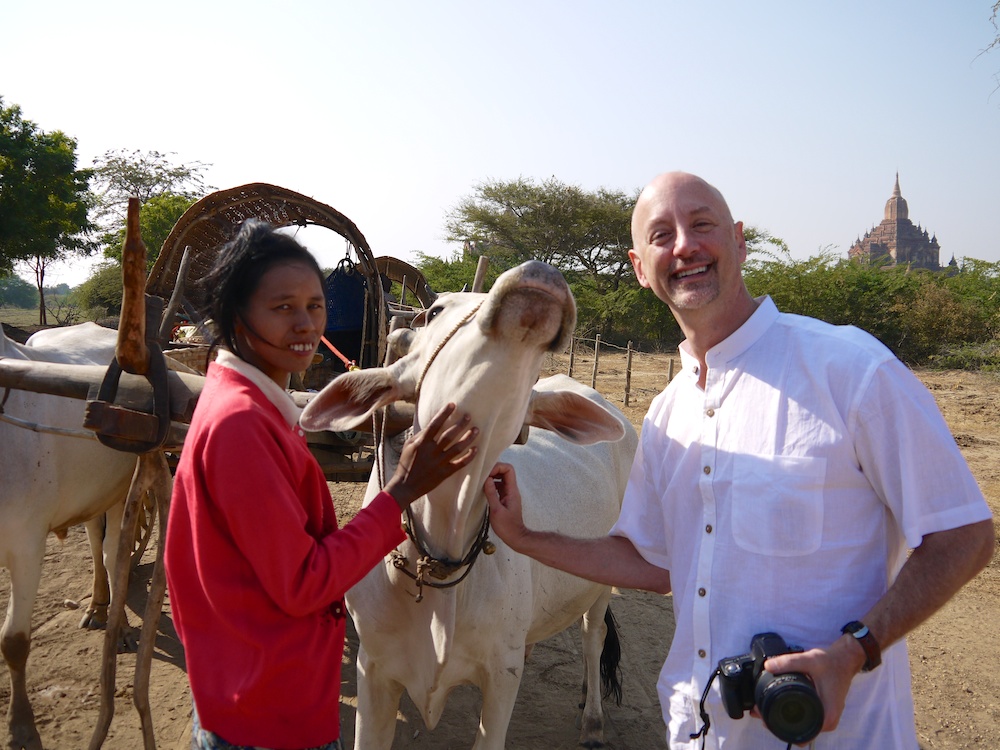
    She was willing to give D a little love too  :  )


    Bagan 35


    Again, the scenery looked like it was staged.


    Bagan 36


    Bagan 37


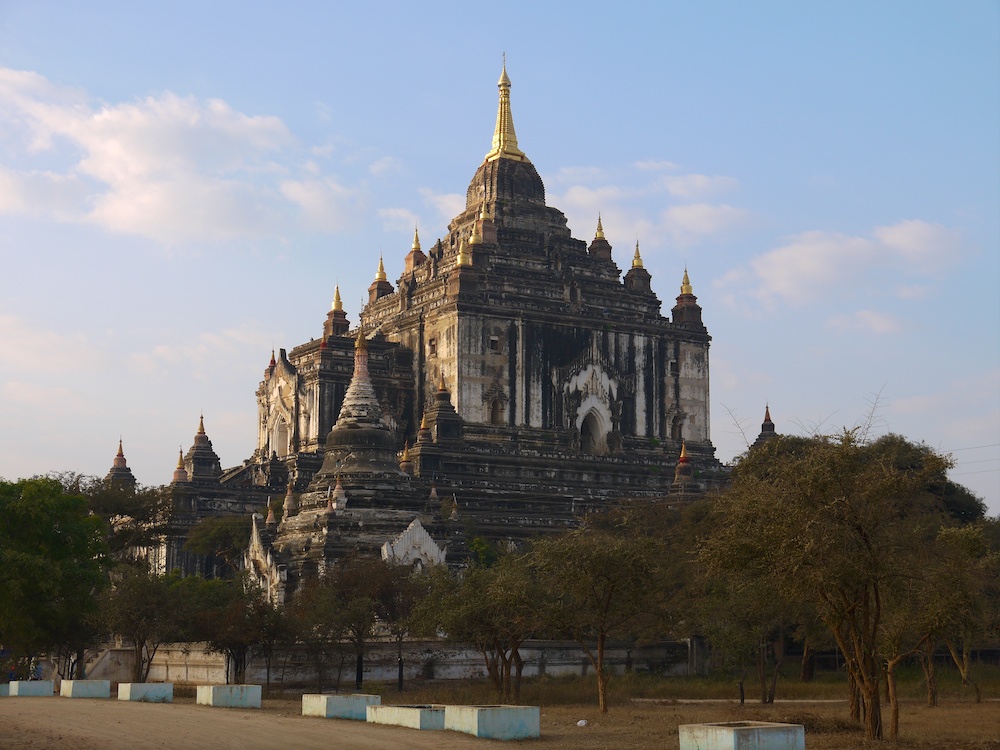
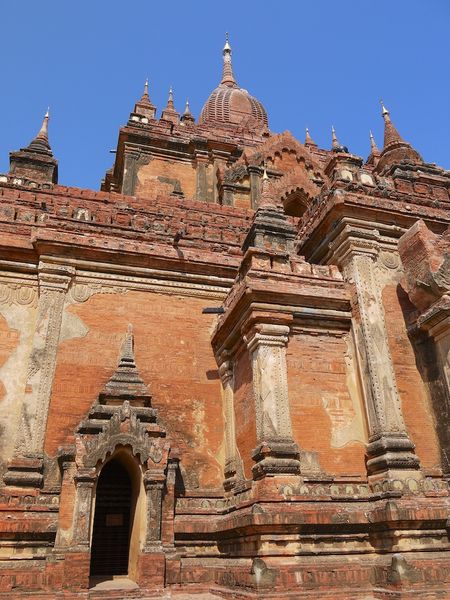
    We eventually moved on to see the temples, which are amazing.  Bagan is located in an active earthquake zone and the temples have suffered greatly over the years.  In the 90’s, many of the pagodas underwent restorations by the government.  Unfortunately, no attention was paid to the original architecture, styles, or materials so they are not completely authentic. 


    Bagan 38


    Because of this, they have not been able to win the designation of UNESCO World Heritage Site.  I have been to many UNESCO Sites and this definitively should be one.  There are enough temples that have not been restored and therefore should qualify.

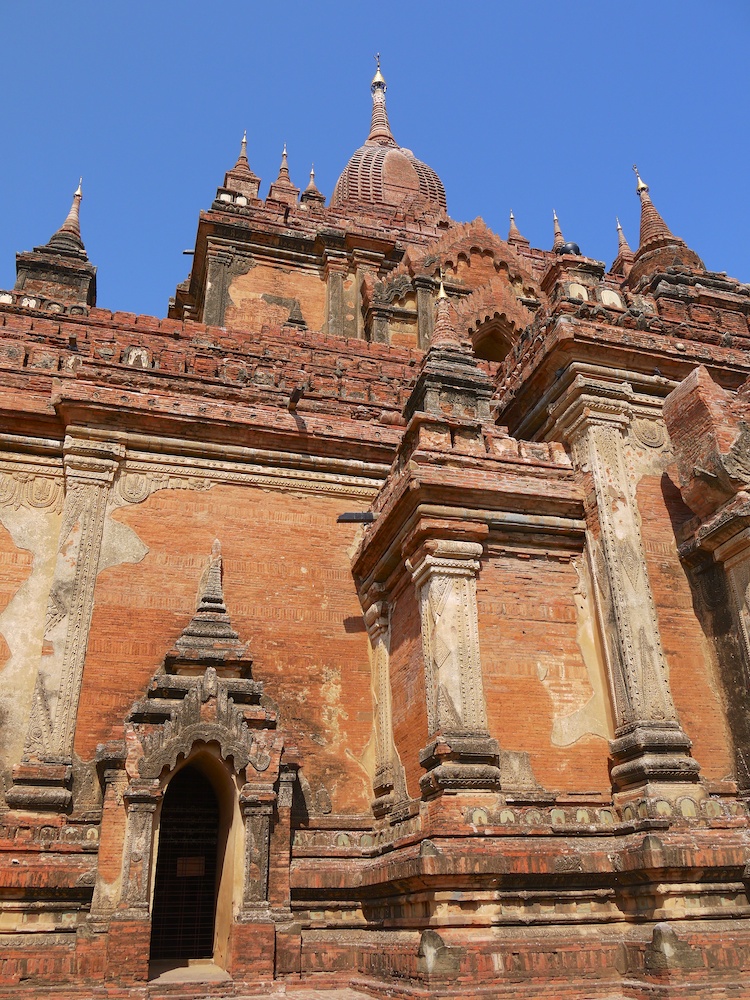
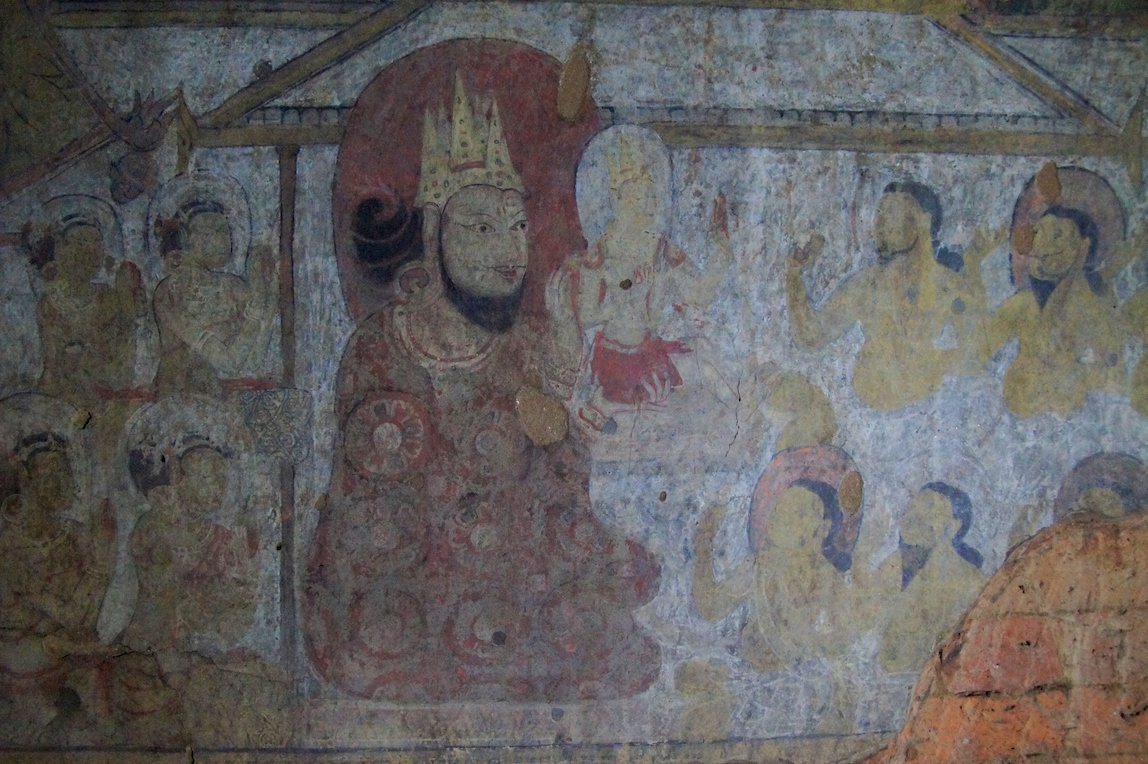
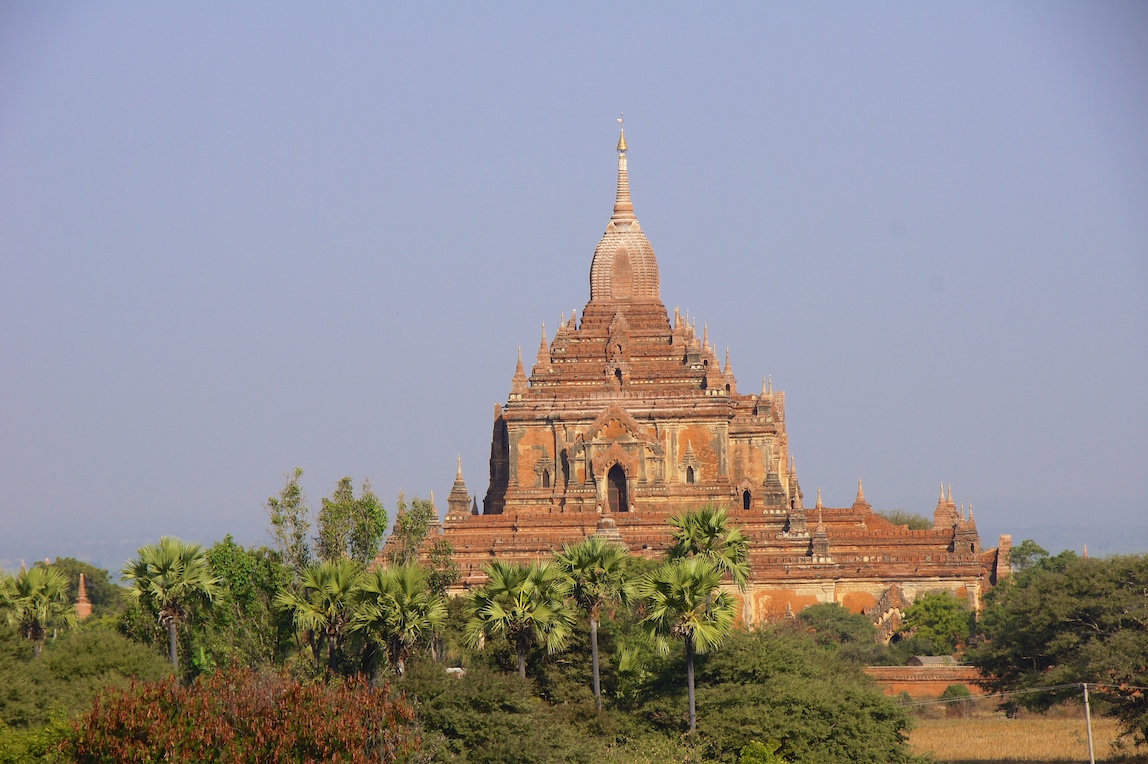
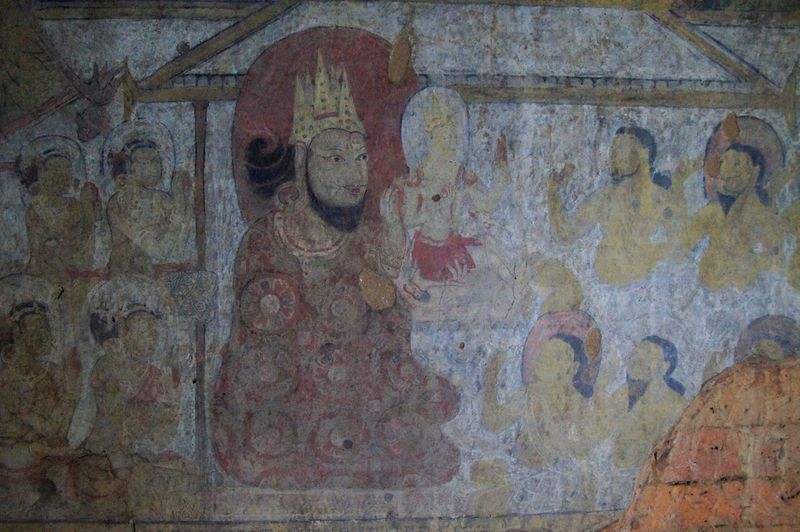
    Sulamani temple was built in 1181 with brickwork that is considered some of the best in Bagan.


    Bagan 39


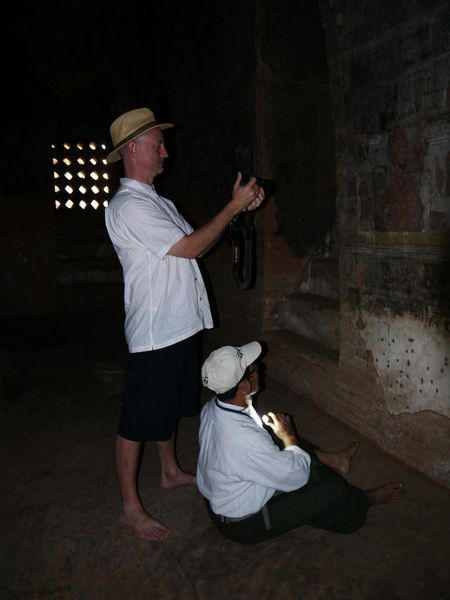
    Below our guide is holding up the flashlight to help D get a good photo.  Not only did we learn the history and facts about Myanmar, but we also picked up several photo tips.


    Bagan 41


    Bagan 42


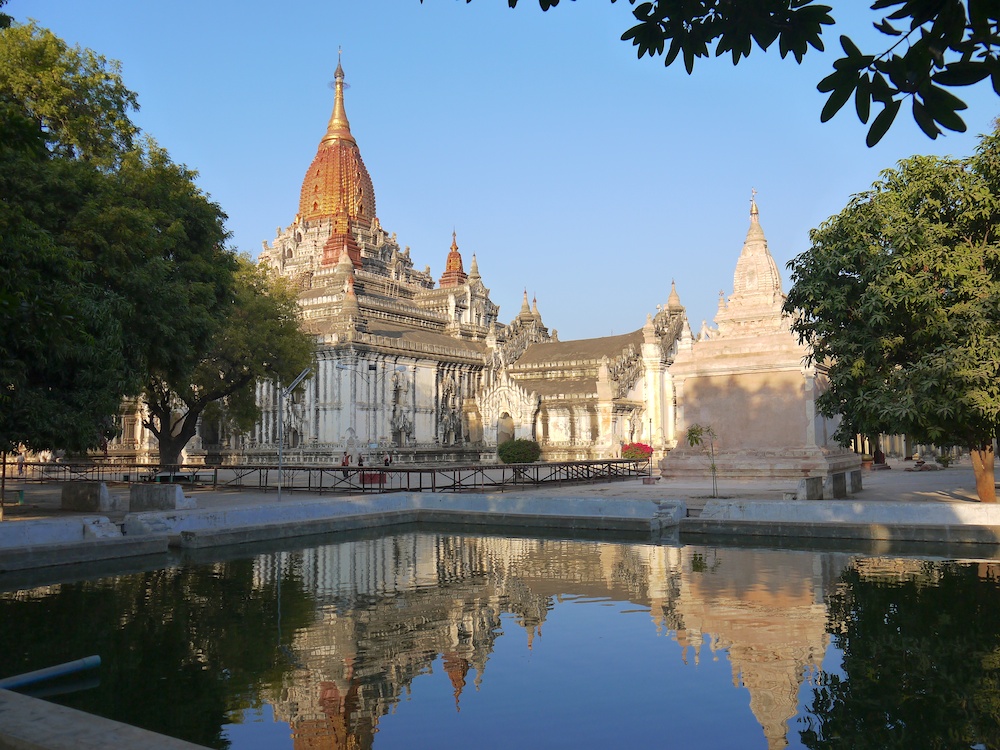
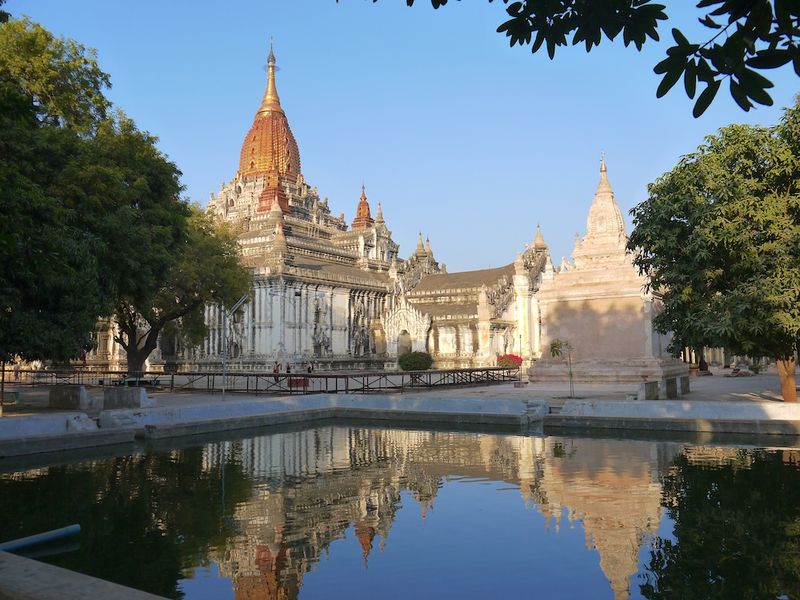
    The Ananda Temple was built in 1105 AD and is one of four surviving temples in Bagan.  The temple is unique in that it is part Mon and part Indian architecture.  
     

    Bagan 43


    The Shwezigon Pagoda was completed in 1102 AD.  The pagoda is believed to hold a bone and tooth of Gautama Buddha.  


    Bagan 67


    day three


    The next day Htay was free so we hired him to take us to Mount Popa and to a local, non-touristy village.  The Popa Taungkalat monastery at the top of Mount Popa, a volcano about one hour outside of Bagan, was another sight that seemed unreal.  


    Bagan 62


    The shrine is home to 37 Nats, or spirits.  There are 777 steps to climb to the top and you must do it bare-footed.  We decided it was one of those sights that was better to view from afar, not to mention there are many monkeys on the way that jump on you and grab for treats.  Our guide said he has to take a stick when he goes up to keep them off.  He was happy we did not want to climb to the top  :  )


    Bagan 63


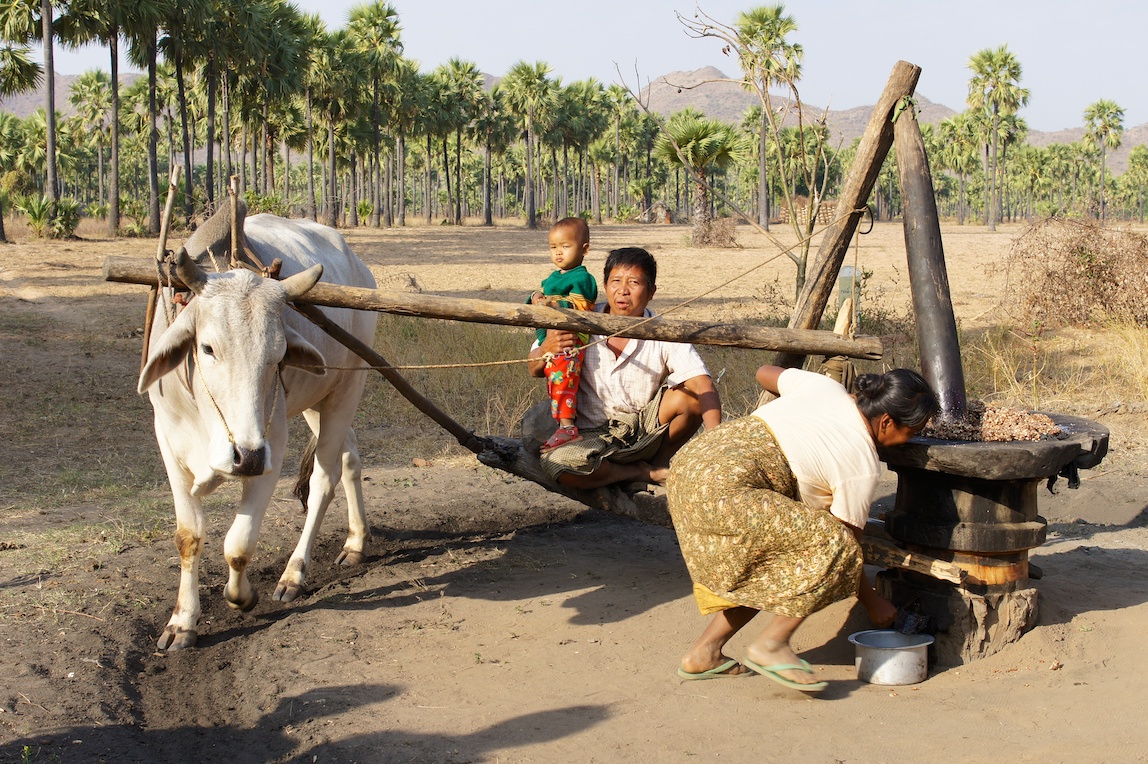
    On the way to Mount Popa, there are a few tourists stops along the way.  They were fun to visit and see the families making palm oil.


    Bagan 44


    Although they allow tourists to stop and observe, they were still making it for a living.


    Bagan 45


    They even let me give it a try.


    Bagan 46


    He is making grain alcohol – see the bottle at the end of the spout?  We purchased a few trinkets from them, some sugar, and tea.


    Bagan 47


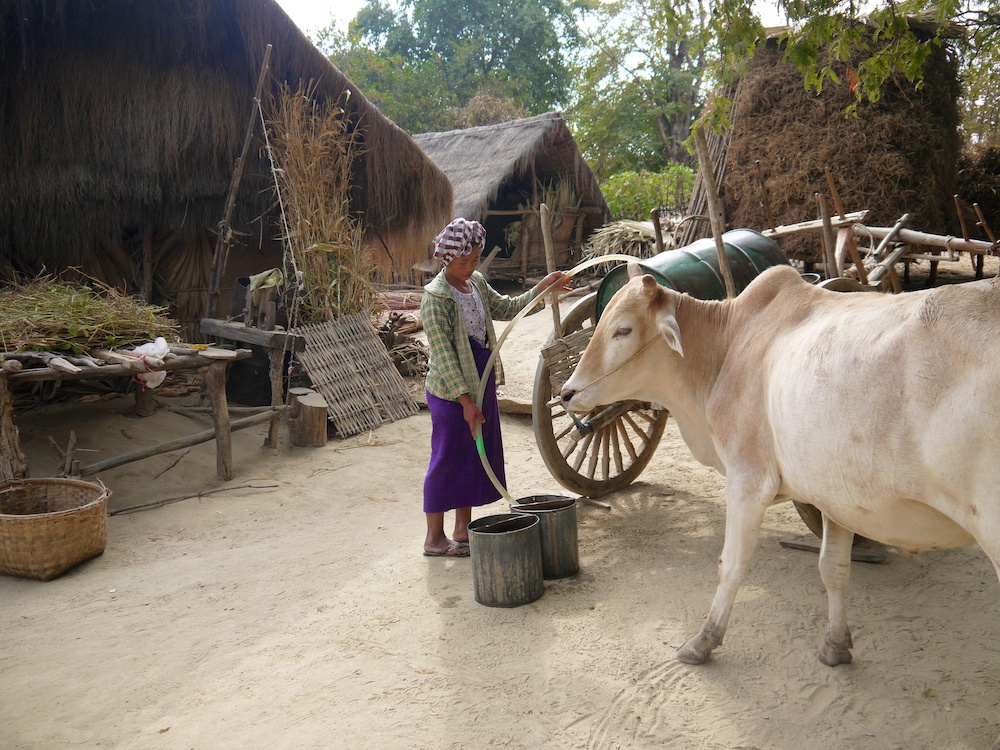
    On the way home from Mount Popa, Htay took us to a village that was truly off the beaten path.  We did not see any other tourists there.  And unlike the photos above, which were set up for tourists, this was a real village – rarely getting tourists.


    Bagan 48


    What struck us most about this village was the cleanliness.  Take note of the ground in the photo above.  We think they swept the dirt.


    Bagan 51


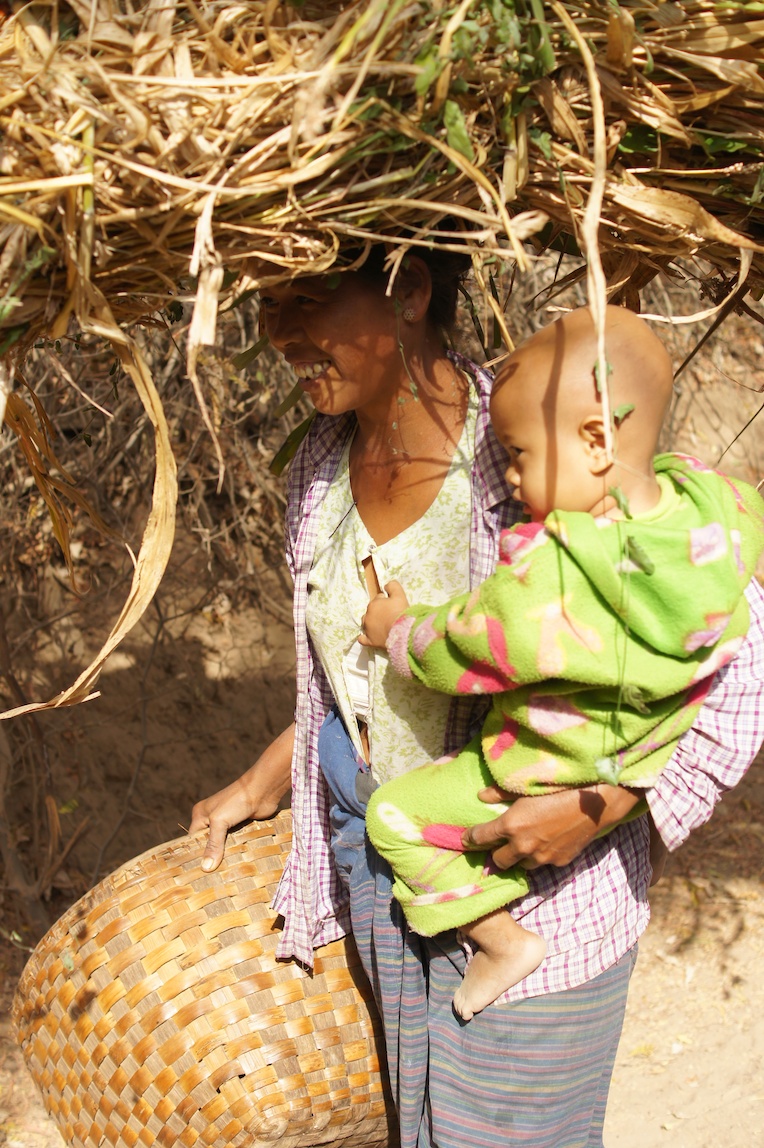
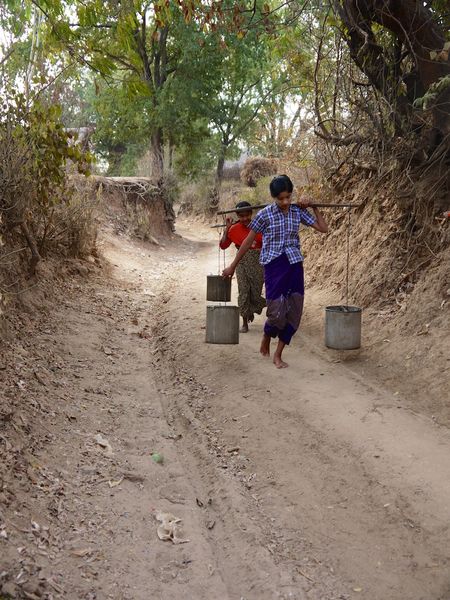
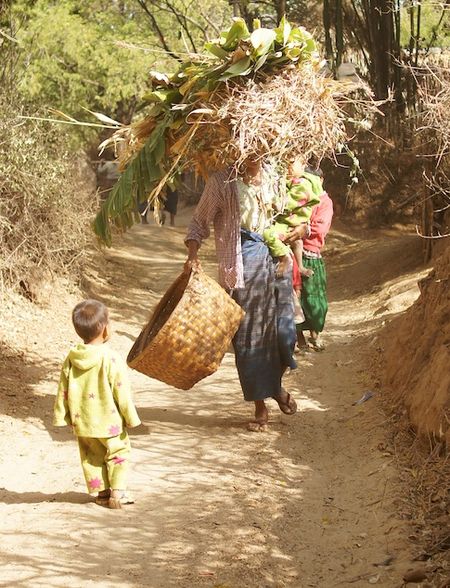
    Ladies, when you think you are having a bad day trying to juggle all your tasks – consider if you had to carry pails of water, or a load on your head with a baby on your hip!


    Bagan 52


    and she is still smiling!


    Bagan 53


    Again, this village looks as if it is set up for tourists, but it is not!  These are everyday tasks they are doing.  Below she is cutting hay.


    Bagan 54


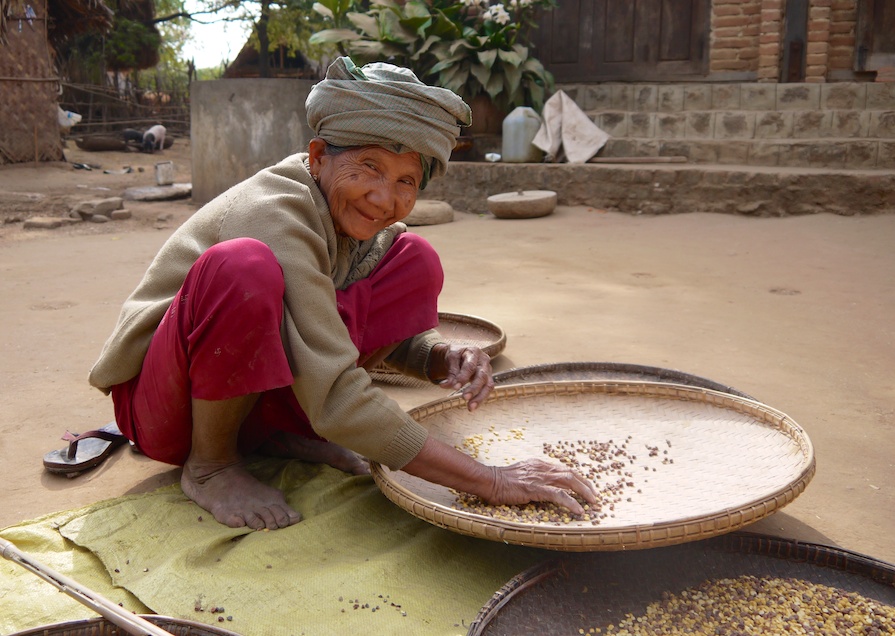
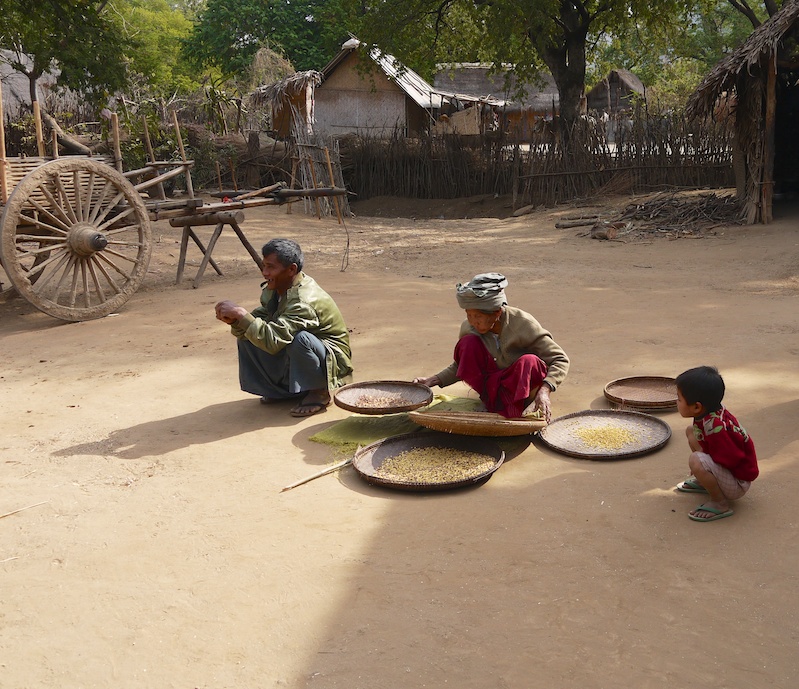
    Grandma is sorting seeds.


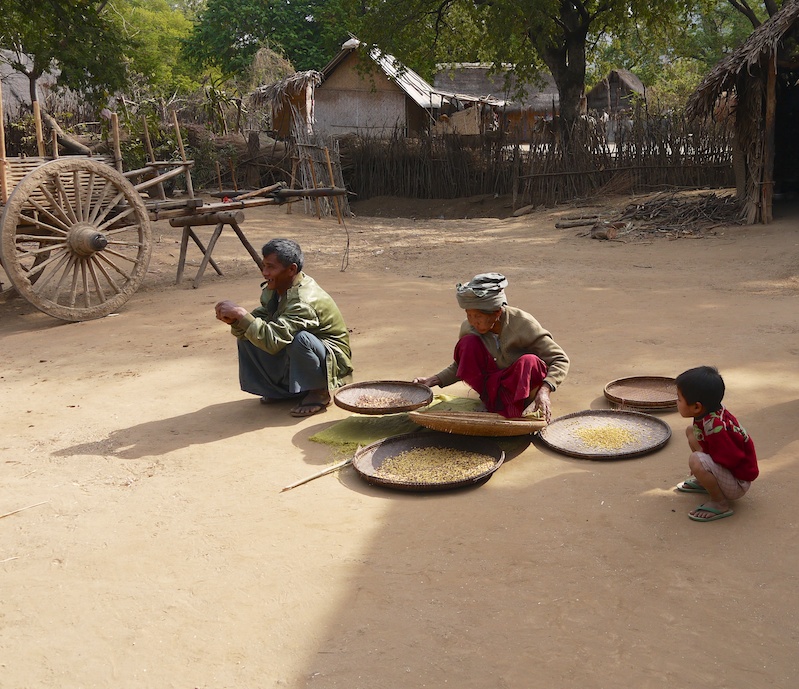
    Bagan 55


    The way all three generations are squatting is very typical in Myanmar.  Instead of using chairs, they squat.  So interesting how the little one is doing it too. 


    Bagan 60


    This man had just gotten his bull the previous day.  He was so proud of it and wanted us to take his photo.  This village did not speak any English so Htay did all the translating for us.


    Bagan 59


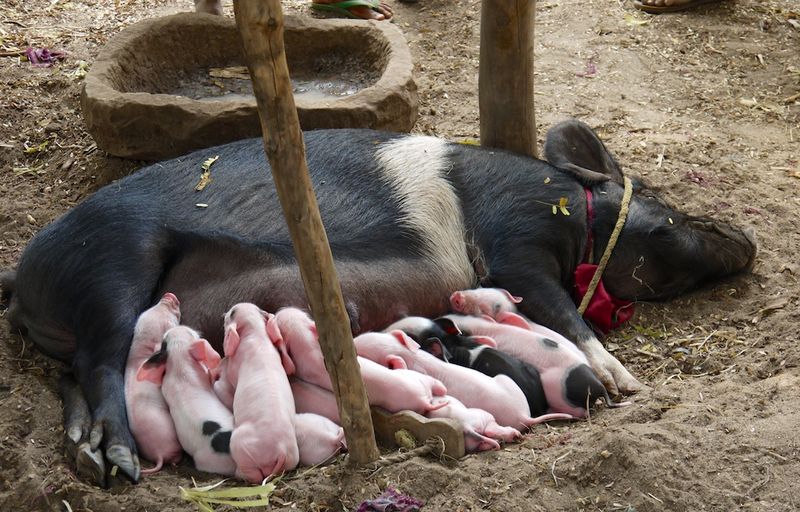
    Piglets – born the night before.  Precious. 


    Bagan 49


    Okay one more photo – too sweet to not share!


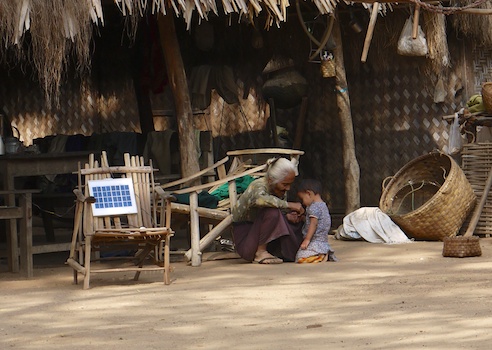
    Bagan 50


    Grandma feeding her little granddaughter.  Notice the grid on the chair, probably used for solar power.  It was the only sign of modern technology we saw in the village.


    Bagan 61


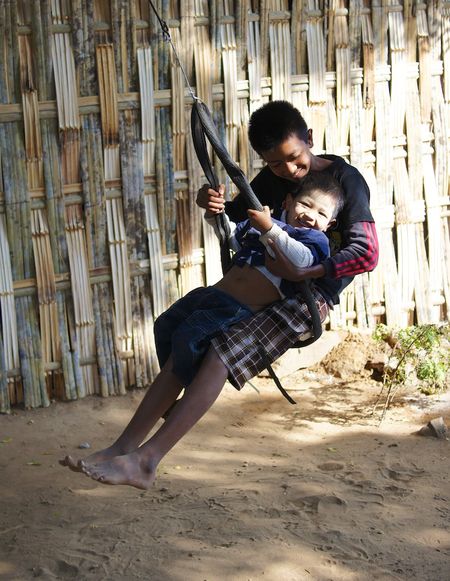
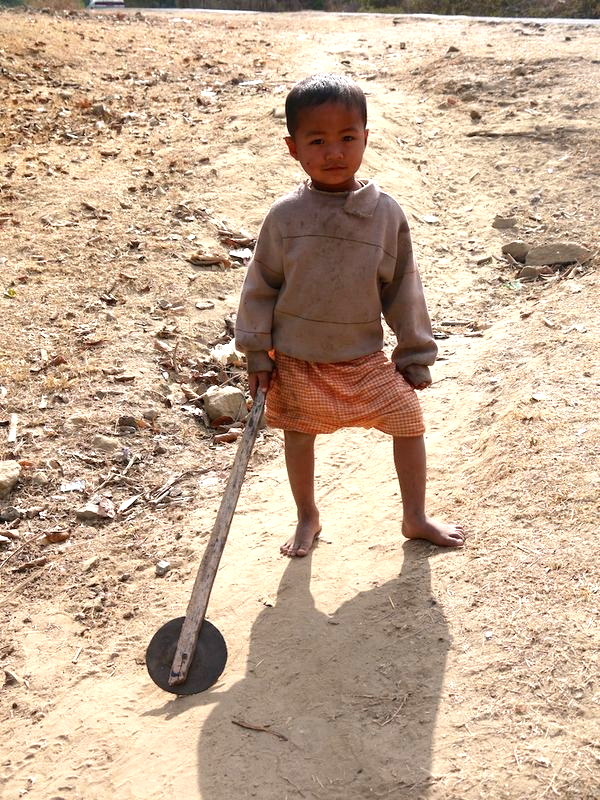
    Love this little guy with his handmade toy.


    Bagan 56


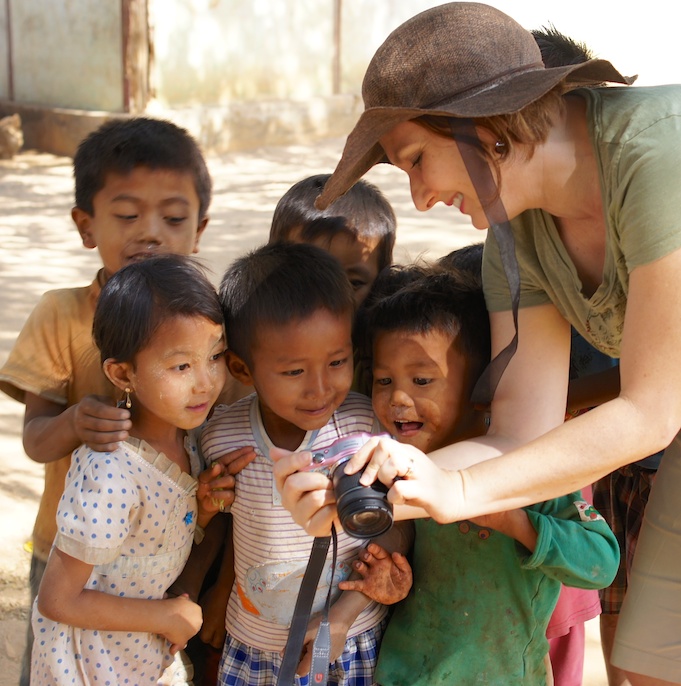
    The children are always so fun to photograph.  And they did not beg for anything… they only wanted to see their image in the camera.


    Bagan 64


    Bagan 83


    Bagan 79


    day four 

    We only had a few hours before our flight, so we hired a horse-drawn carriage to take us to a few more temples and for a cup of tea at a local shop.  Notice how young the boy is who served us.


    Bagan 82


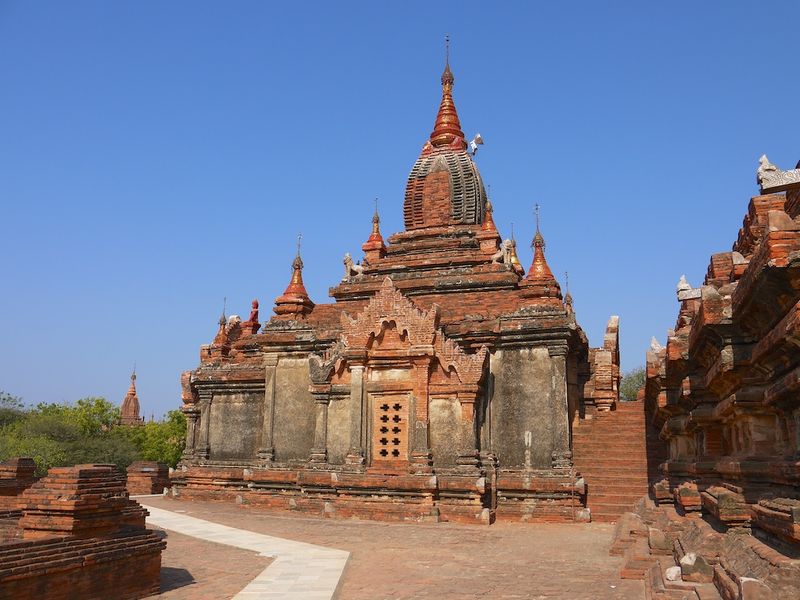
    The temples also known as "gu" were inspired by the rock caves of Buddhists.  They were places of worships that included frescoes and sacred shrines with Buddhas.  Many of the originals have been stolen so they have replicas. 


      Bagan 66


    Bagan 65


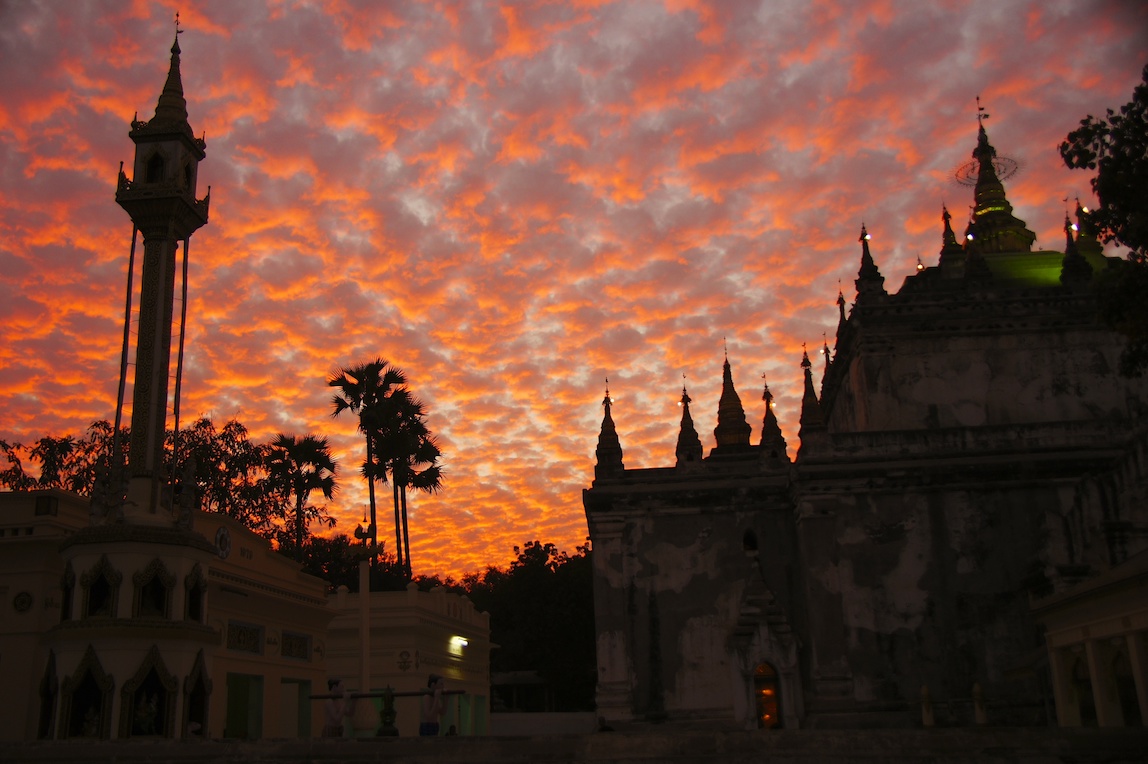
    Most of them you can climb to the top, but as you can see they have very steep steps.  We sat on them to watch the sunset (photos at the top of this post).


    Bagan 68


    Bagan 69


    Bagan 70


    Bagan 72


    We never get tired of goats or lamb crossings during any of our travels!


    Bagan 76


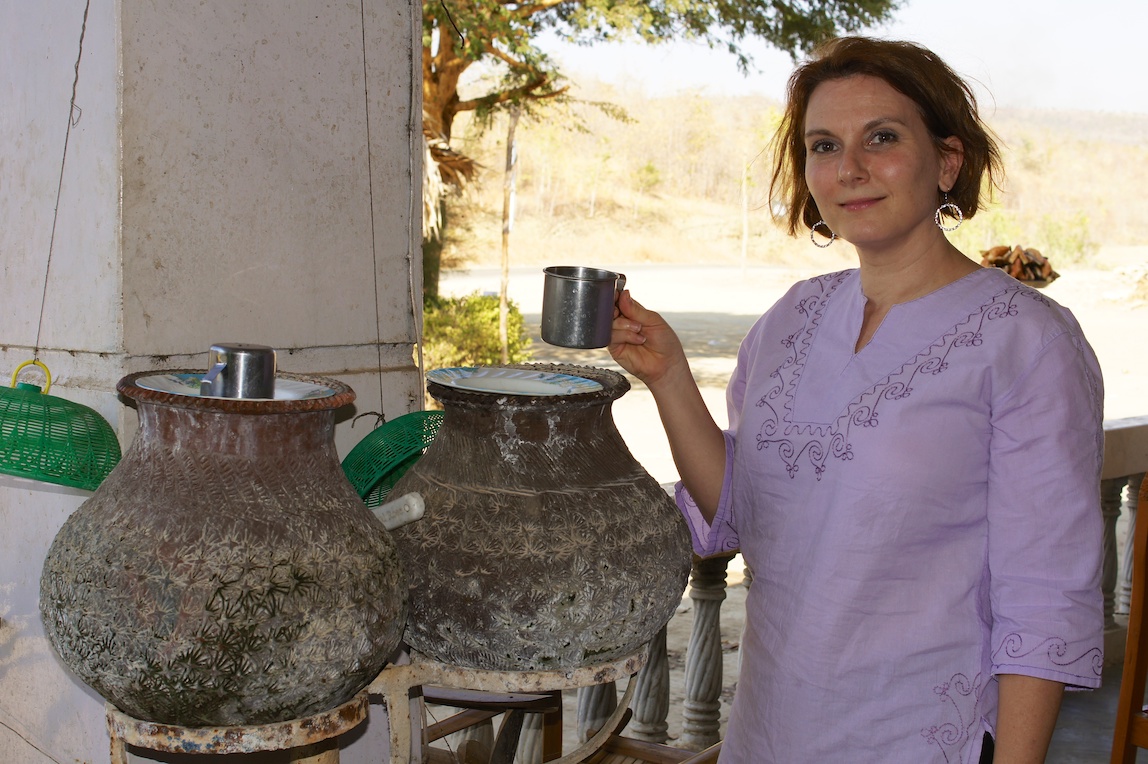
    And I leave you with one last interesting tidbit… the communal drinking stands.  They were all over the country.  And, were usually in sets of two,  with cups attached.  No, I did not drink from it – but I found them to be rather pretty and unique. 


    Bagan 77


    Bagan 78


    If you are thinking about going to Myanmar – go now – before it gets bombarded with tourists and fast food restaurants.  It is in our top five favorite places we have traveled to. 


  •  

    Yangon, Myanmar

    January 2013


    Yangon, formerly known as Rangoon, is the largest city in Myanmar, with a population of over 4 million people.  It was founded in the early 11th century (circa
    1028–1043) by the Mon.

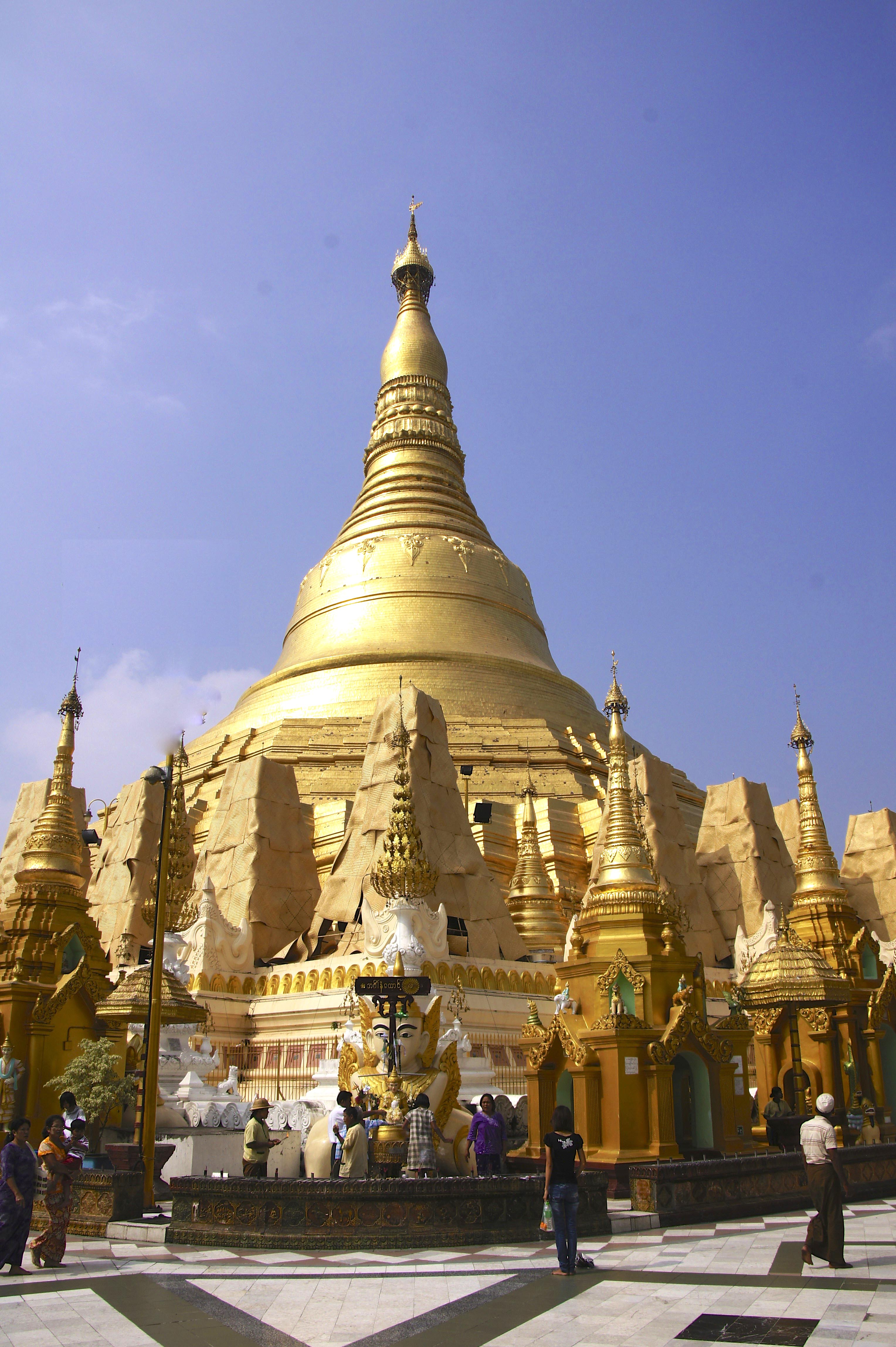
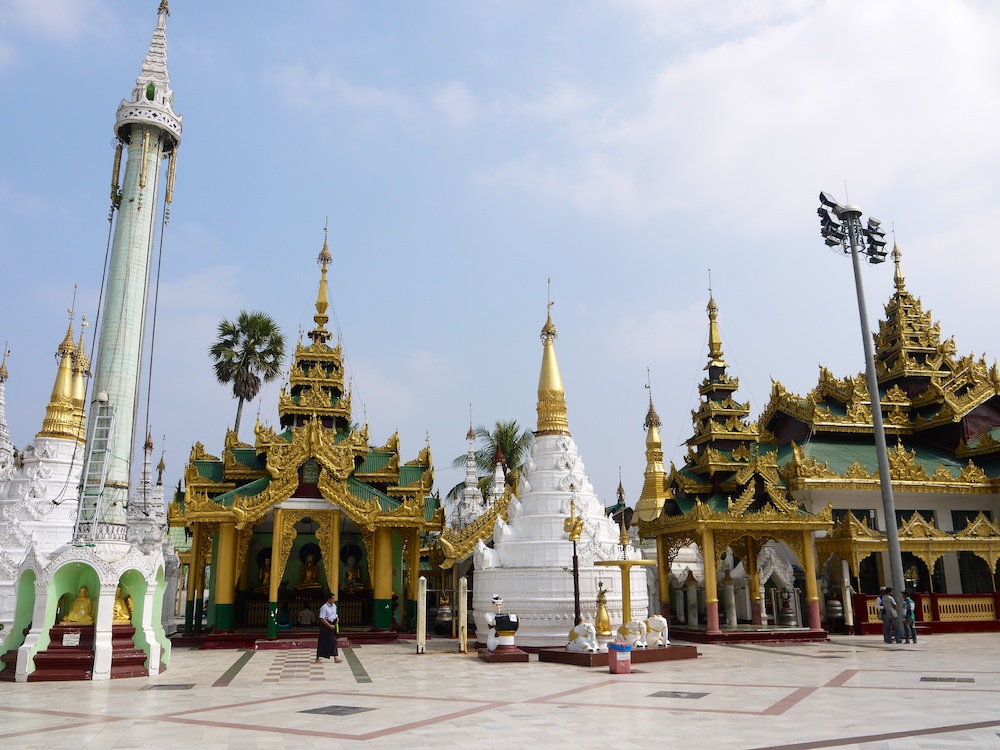
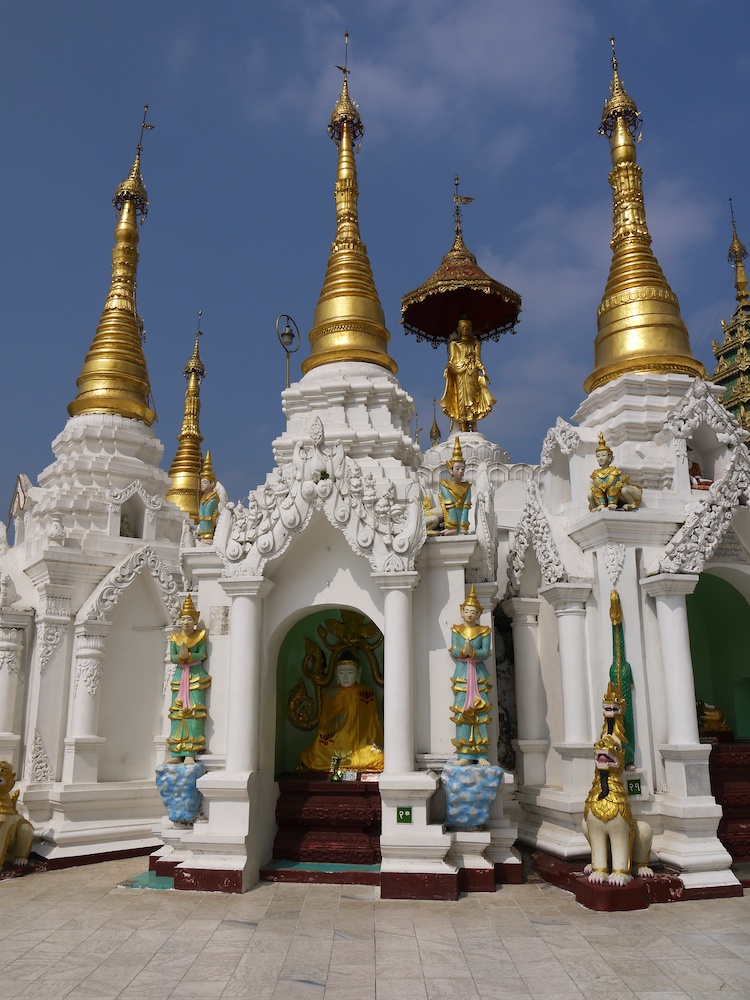
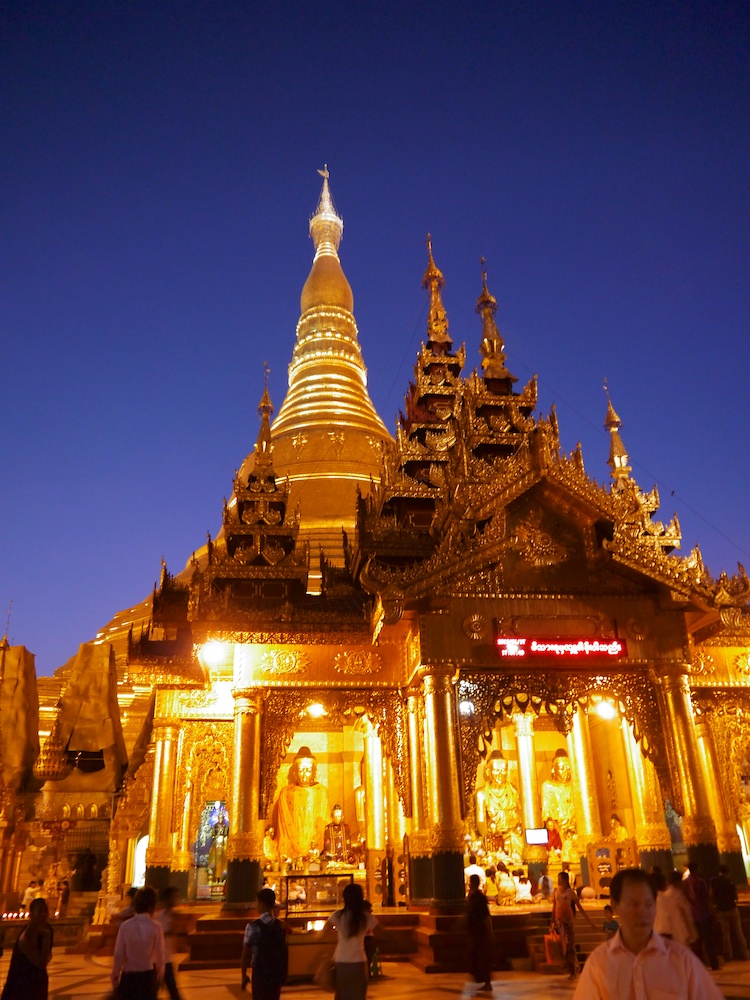
    The highlight of this city is the Shwedagon Pagoda.  Also called the Golden Pagoda, it is a stunning structure.  You can see the dome (or stupa) from almost anywhere in the city.


    Misc


    The base is built
    from brick that has been covered in gold plate. The crown of the Pagoda is
    tipped with 5,448 diamonds and 2,317 rubies, and at the very top a diamond
    bud tipped with a 76-carat diamond. 


    DSC07840


    As you can see from the photo above, construction was being done on several of the small, surrounding stupas and they were covered in cloth.


    Yangon myanmar 8


    According to legend, the Shwedagon
    Pagoda has existed for more than 2,600 years, making it the oldest historical
    pagoda in Burma and the world. 
    Some historians and archaeologists believe it is only 1.400 years old, built by
    the Mon people between the 6th and 10th centuries CE.


    Yangon myanmar 12

    The Shwedagon Pagoda is Buddhist, as are most people in Myanmar (89%).  They practice Theravada Buddhism, the oldest surviving Buddhist branch, where they study "the Teaching
    of the Elders".  


    Yangon myanmar 2


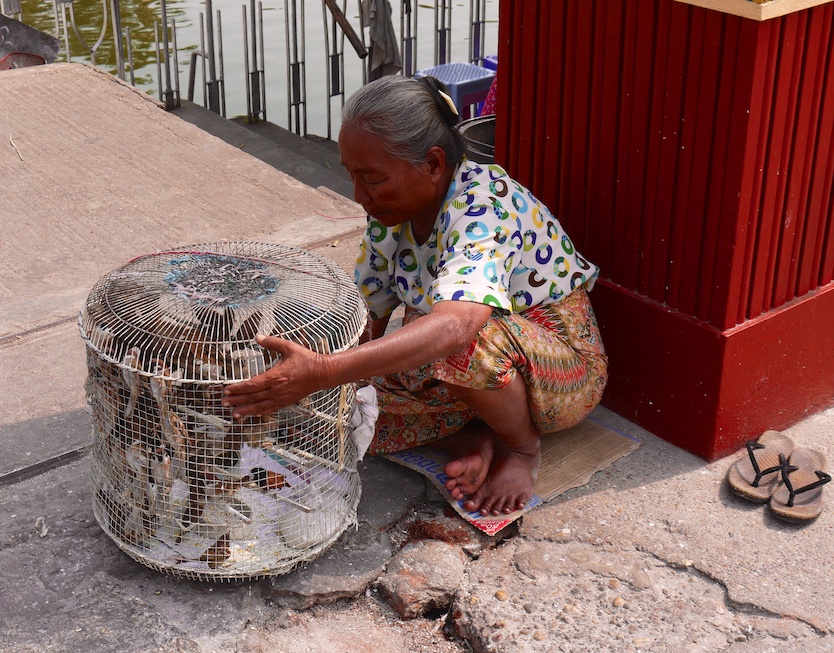
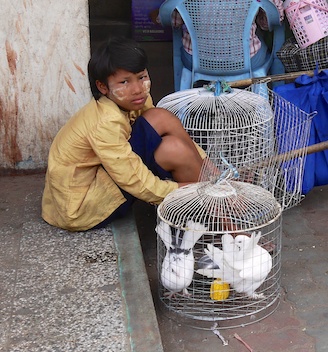
    Outside the temple people sell birds to release for merit.  Buddhists believe that
    releasing animals back into the wild can help an individual to accrue merit.


    Yangon myanmar 6


    Yangon myanmar 5

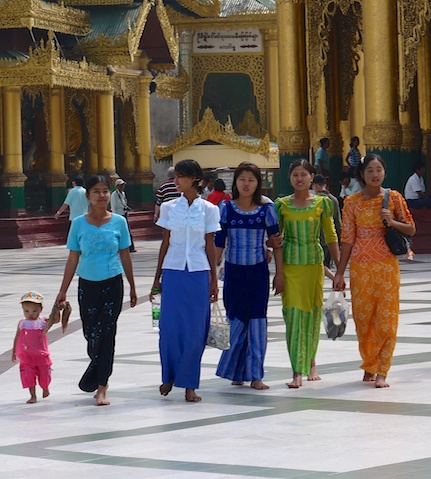
    All visitors must remove their shoes to visit the pagoda.  The skirts you see on the ladies below are called longyi and are an integral part
    of the Myanmar wardrobe.  Both men and women wear them.  It is fabric sewn into a tube-like shape.  It is slipped over the head and tied in a knot at the waist.  


    Yangon myanmar 9

    We visited the pagoda three times because the light can vary significantly from morning until night, giving it a very different feel.  Our first time was around noon when the monks make their daily walk.


    Yangon myanmar 15


    And said their prayers.


    Myanmar


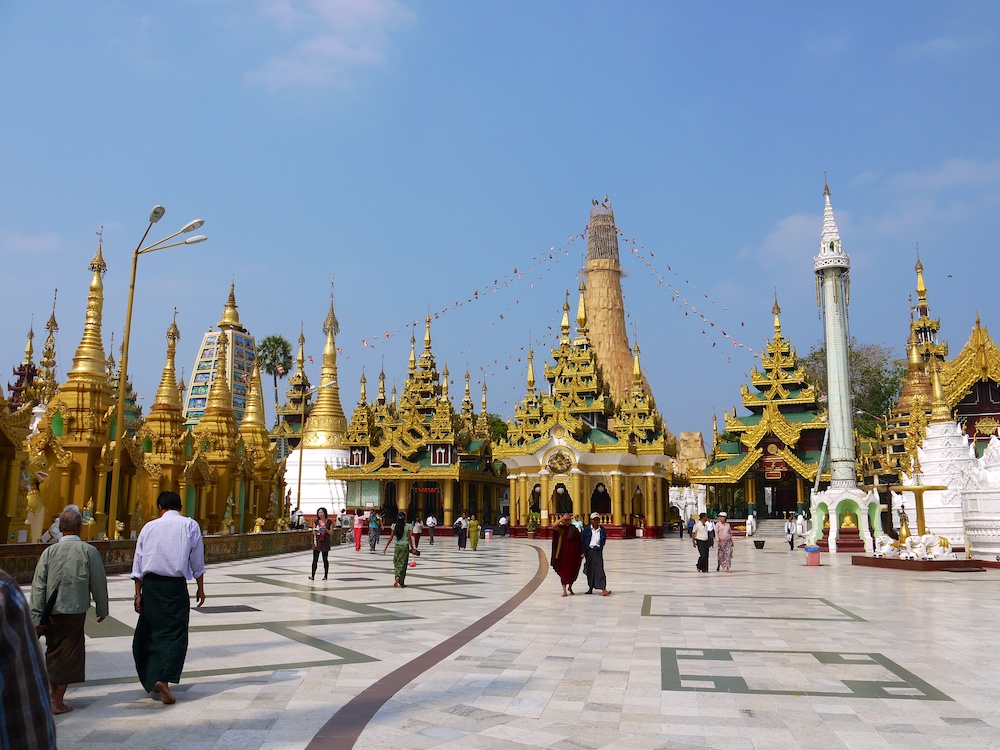
    There are hundreds of small stupas that surround the large one, each housing a Buddha.


    Misc (5)

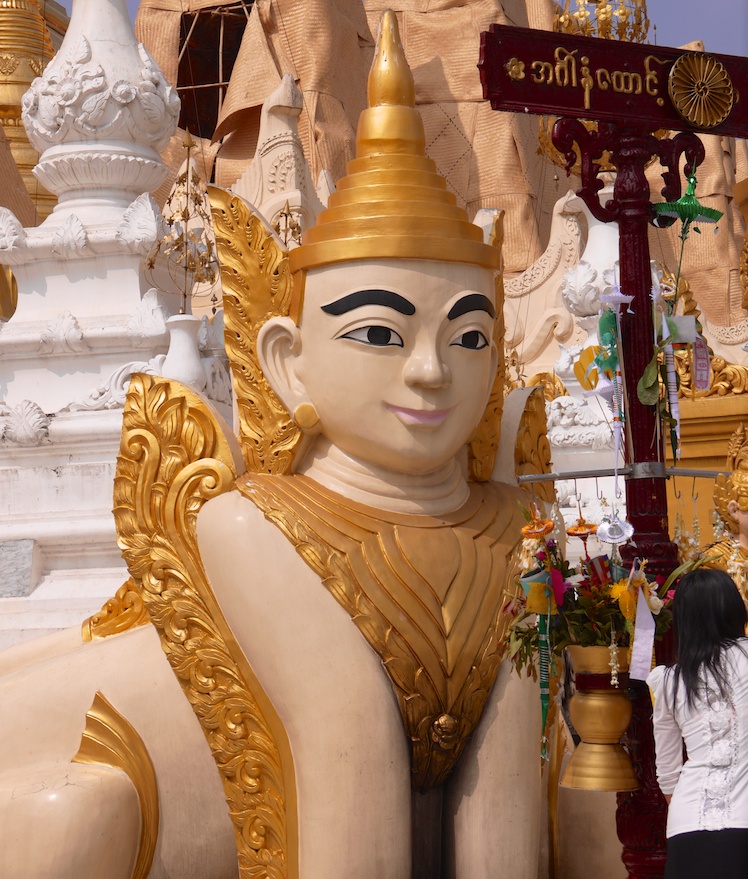
    Notice how the large Buddha dwarfs the monk praying.  The position of the Buddha's hands means protection, reassurance, and blessing. 


    Yangon myanmar 17


    The roof had intricate carvings all in gold.


    Yangon myanmar 13

    Many Buddhist believe in astrology and it is very important for them to
    recognize the day of their birth by pouring cups of water over their "posts" to avoid bad luck and misfortune. 
    They say to pour one cup for every year you have lived. 


    Yangon myanmar 10


    There are eight posts; Wednesday is split in two,
    a.m. and p.m. They are marked by animals that represent the day: Bird for Sunday,
    tiger for Monday, lion for Tuesday,
    tusked elephant for Wednesday a.m., tusk-less
    elephant for Wednesday p.m.,
    mouse for Thursday,
    guinea pig for Friday and dragon for Saturday.


    Yangon myanmar 11


    I randomly picked one to pour water on… Tuesday the Lion.  Later I learned that I was born on a Tuesday so that was my post!  I am also a Leo….so a double lion.  D was born on a Saturday and is a dragon.  If you Google "what day of the week was I born" you can find your post.


    Misc (4)


    Shwedagon
    Pagoda is regarded as the most sacred Buddhist pagodas in all of Myanmar.  It
    contains relics of the past four Buddhas.  To see more Buddha images from Myanmar,  vist my art blog, Ma Vie Trouvee.


    Buddha


    We also went to the Pagoda at sunset. 


    Misc (2)


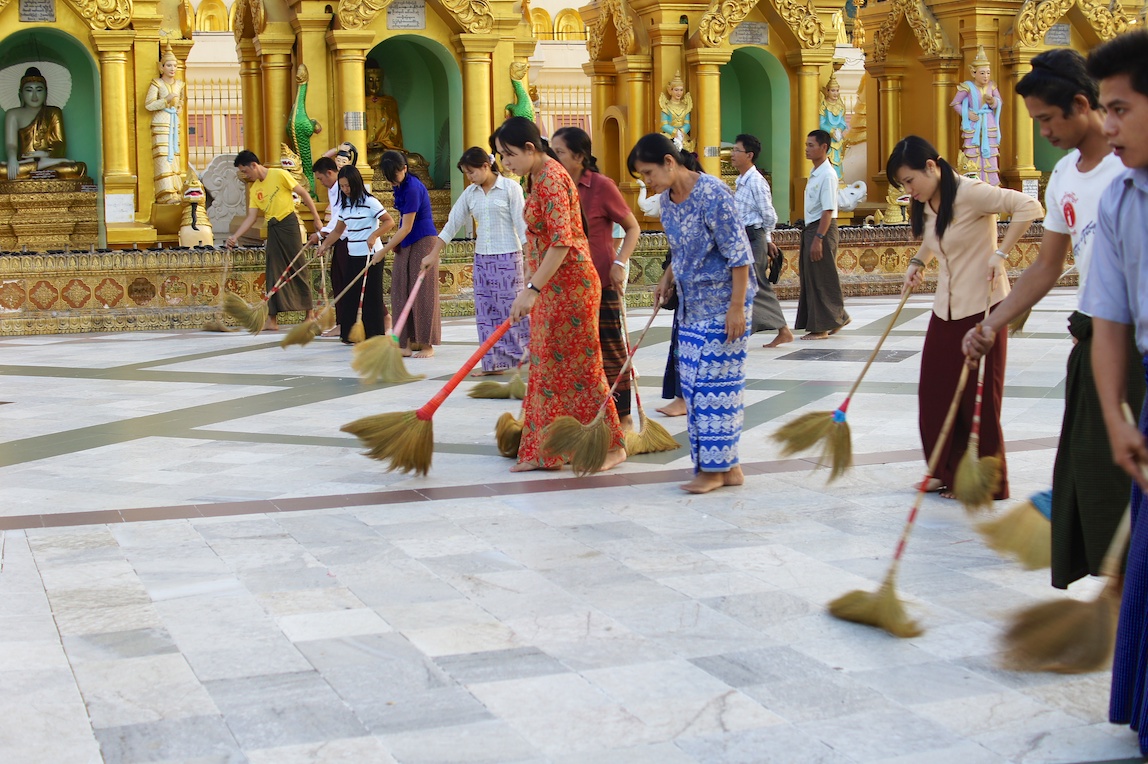
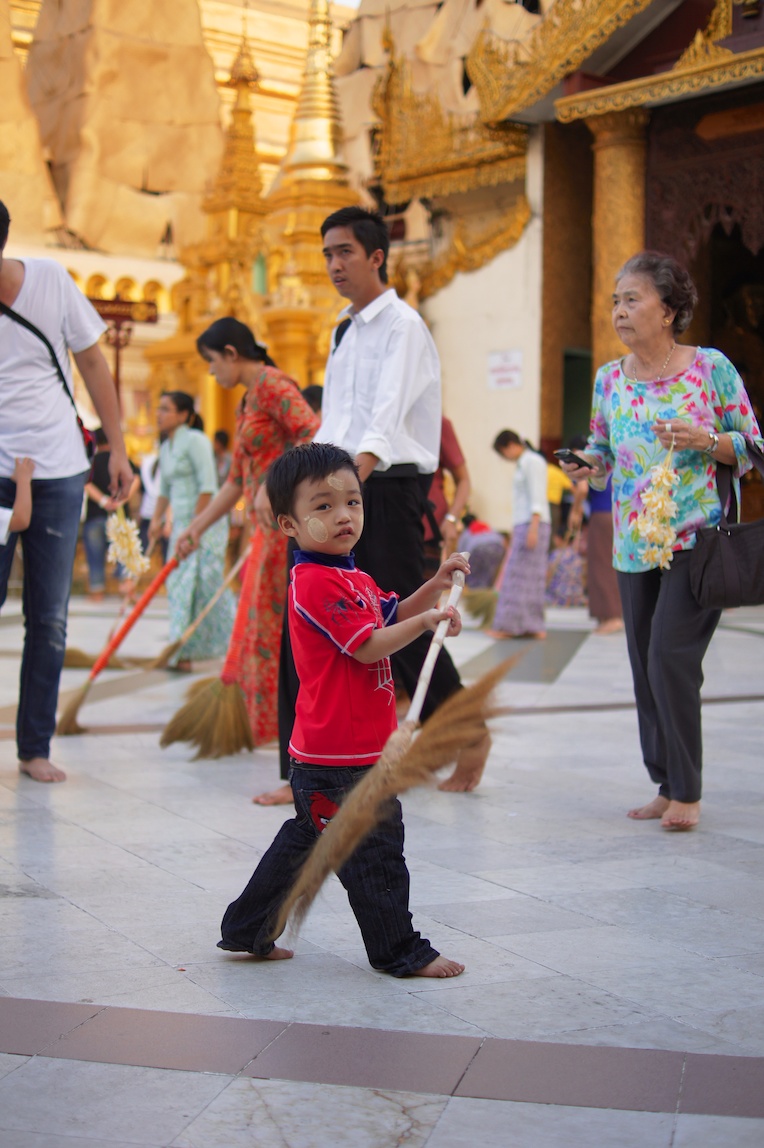
    Volunteers help to sweep the floors in the early evening.  It is said to bring good luck to those who participate.


    Yangon myanmar 18


    Even the little ones helped out.


    Yangon myanmar 19


    The Pagoda was equally as pretty at night.


    Yangon myanmar 20


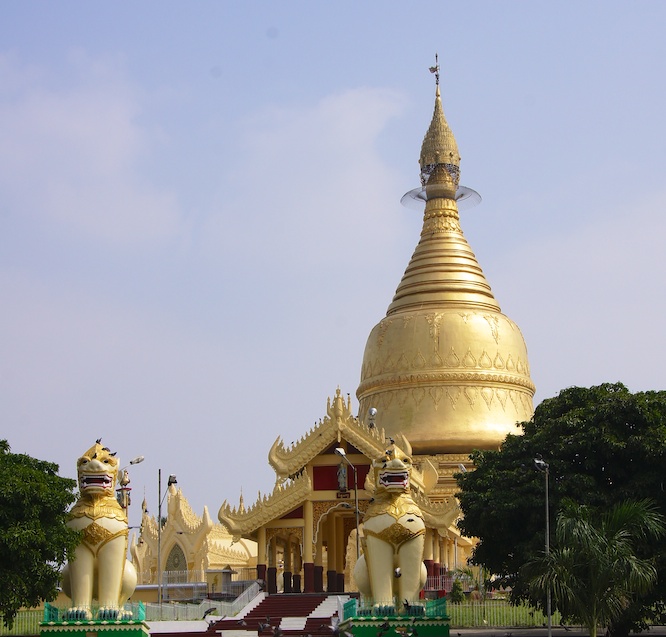
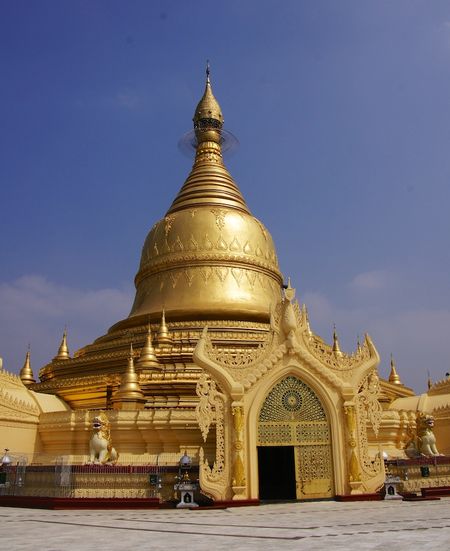
    Another beautiful structure, the Maha Wizaya Pagoda.  A new Pagoda, built in 1980 has a mix of modern and traditional architecture.


    Burma


    Yangon myanmar 4


    A bit about money…

    They
    were implementing the very first ATM machines while we were there. 
    Really, the only way to get money is to take US dollars and exchange
    them at the airport or a bank.  When D was in the states he went to the bank and looked at every 100 bill before accepting them.  They must be brand new (big head),
    with no marks or creases.  They refused to accept one below because
    of the small red mark at the very top, caused by the counting machine
    at our bank in the US.  And NO credit cards!


    Money


    A co-worker had traveled there a few years before and out of
    400 $100-notes he carried; he was only able to use one!  We think they have become
    less strict with more tourists visiting, but if you plan to travel there, don't
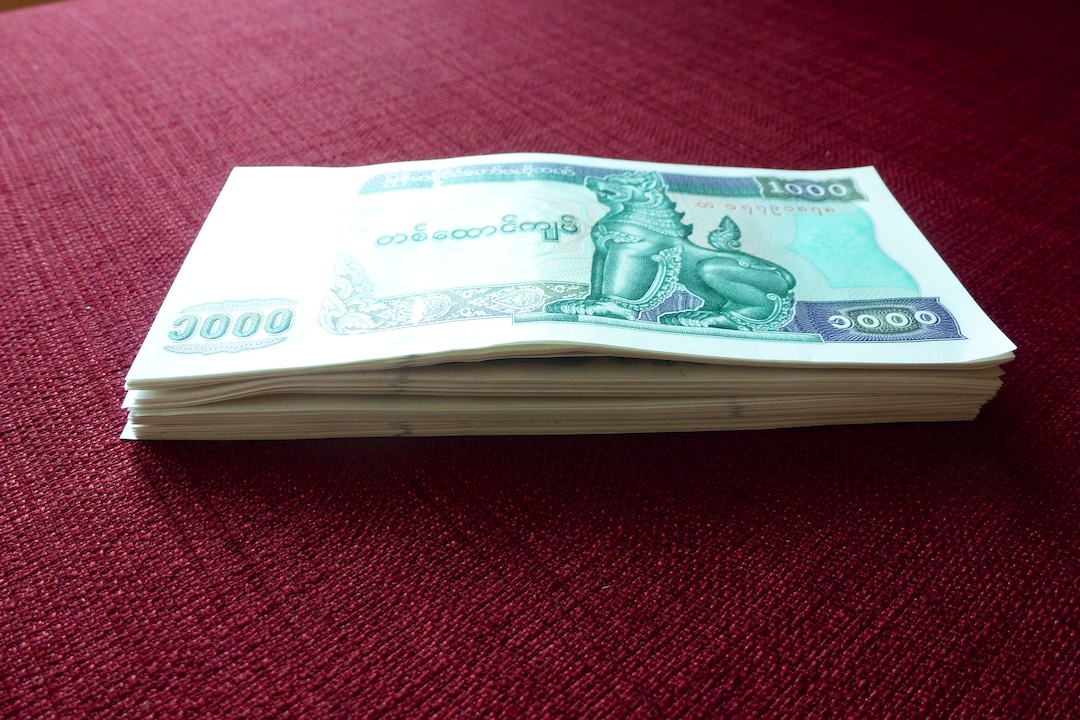
    take any chances.  Interestingly, they gave us all 1000 kyat-bills in exchange; equal to $1 USD each.  It was quite the stack to carry around – but easy to calculate when paying.


    Yangon myanmar 57


    The Streets


    Yangon myanmar 21


    Yangon is a very crowded, dirty city –
    both the streets and the air.  We loved that is felt "untouched" and
    "raw".  There are no fast food restaurants or American chains of any kind.


    Yangon myanmar 34


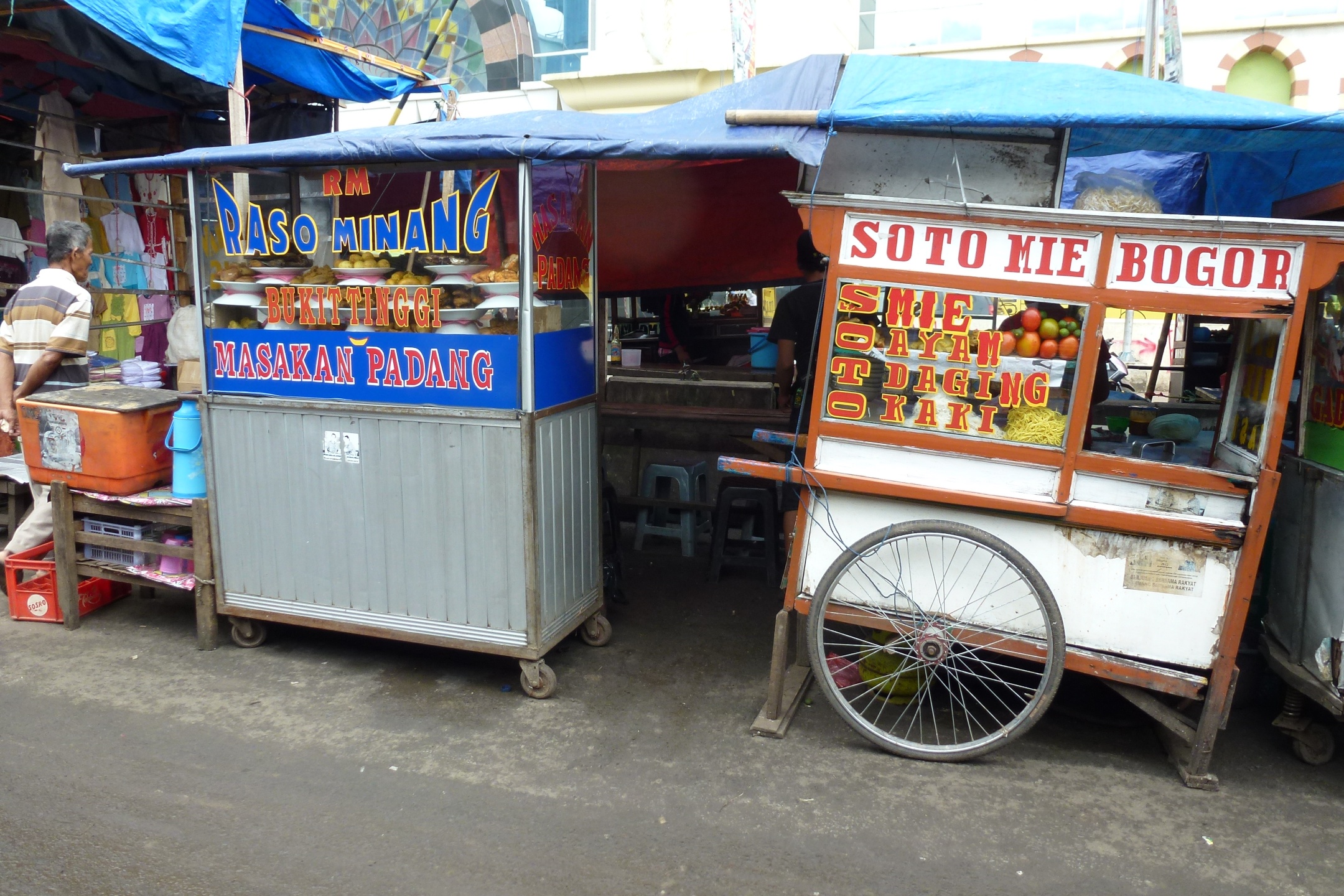
    Like many countries in Asia, the people use the streets as living space, particularly for eating.


    Yangon myanmar 22

    We
    spoke to a woman who has been traveling here for the last 10 years and
    she said that just last year, there were 75% fewer cars then there are
    today.  It is changing fast.


    Yangon myanmar 24


    Yangon myanmar 25


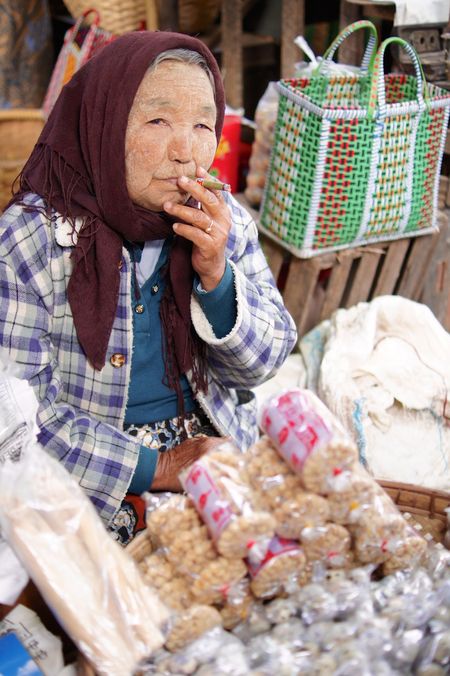
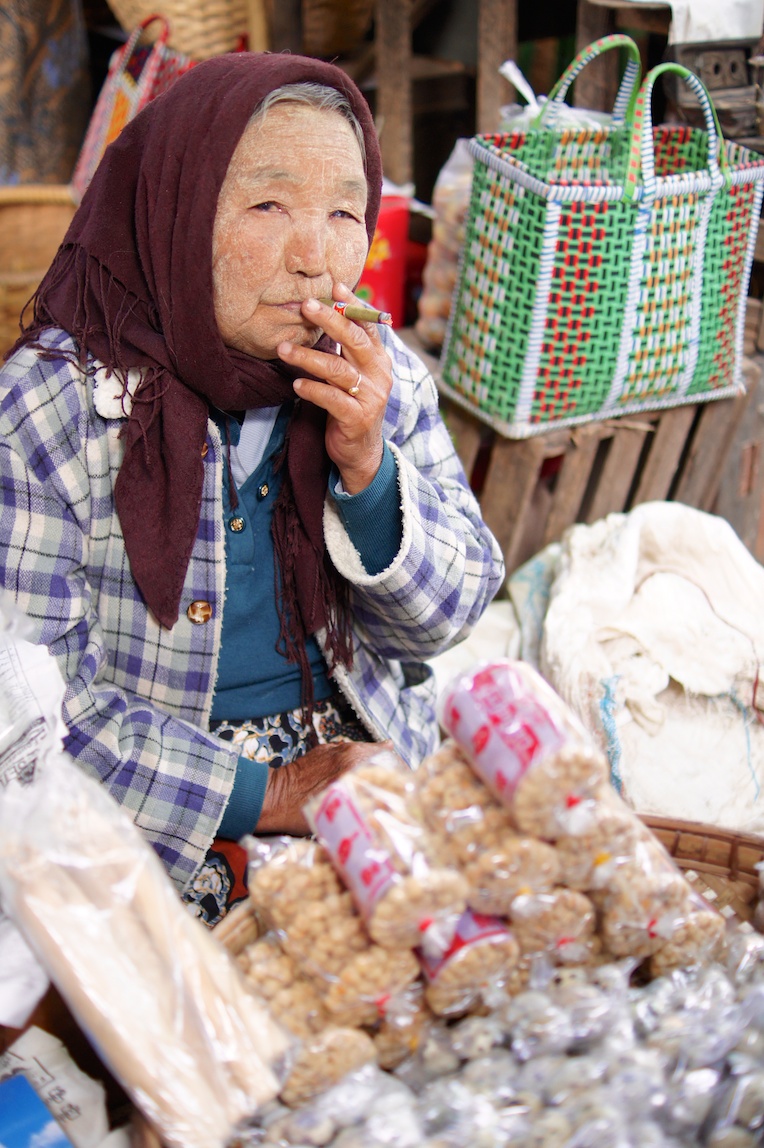
     These two women are nuns.  Yes, sharing a cigar!


    Yangon myanmar 36


    Most people carry one of the silver stacked tins below to work with food, mainly rice.  Rice is a staple eaten at every meal.


    Yangon myanmar 32


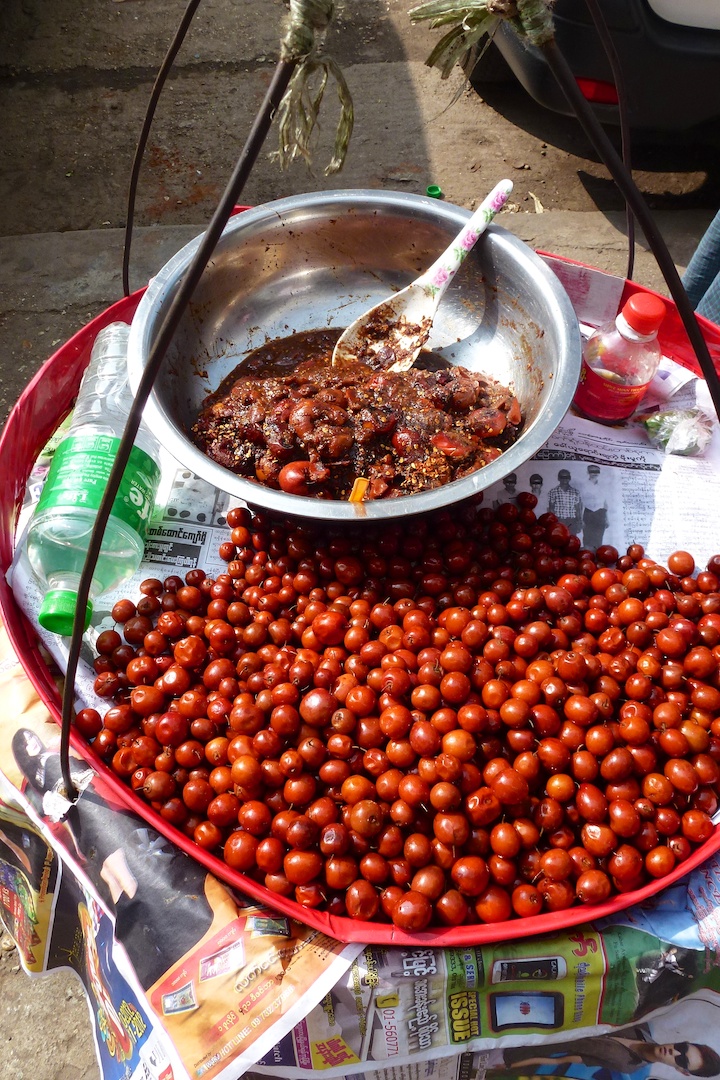
    Cooked
    tomatoes were a popular street food.  I ate them in a restaurant and
    they were delicious.  We did not eat street food in Myanmar.


    Yangon myanmar 27


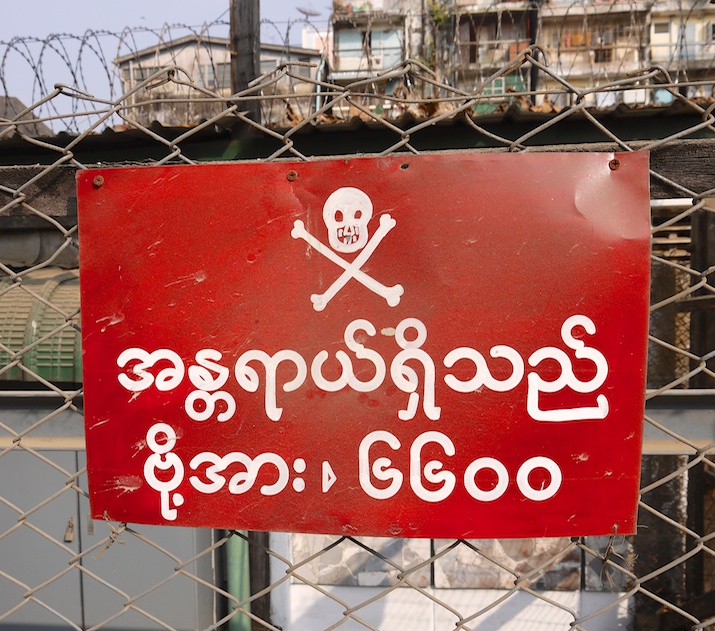
    Not quite sure what these were, a rodent of some sort?


    Yangon myanmar 28


    I think this was a sign saying not to eat them….


    Yangon myanmar 29


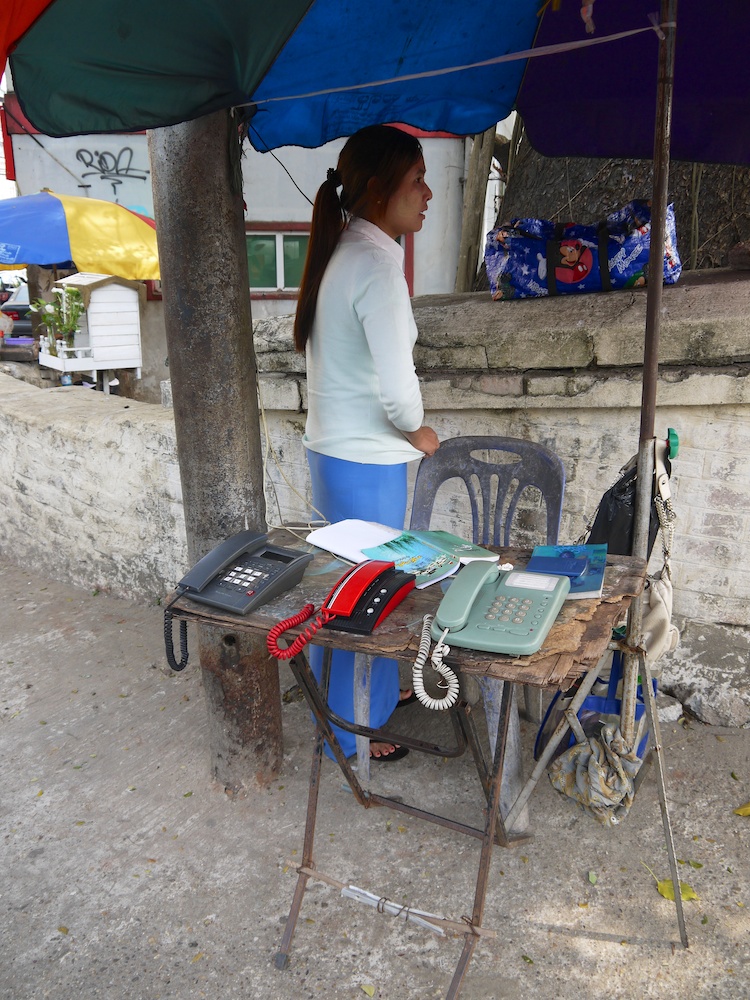
    Telephone booths


    Sometimes I think we have seen it all, and then we are surprised.  Like the public telephones.  This is the very first country we have visited where D's blackberry did not work…..at all!  Myanmar does not have a cell phone network.  Little tables with mismatched phones like the one below are all over the city… in case you need to make a "mobile" phone call.


    Yangon myanmar 51


    Yangon myanmar 52


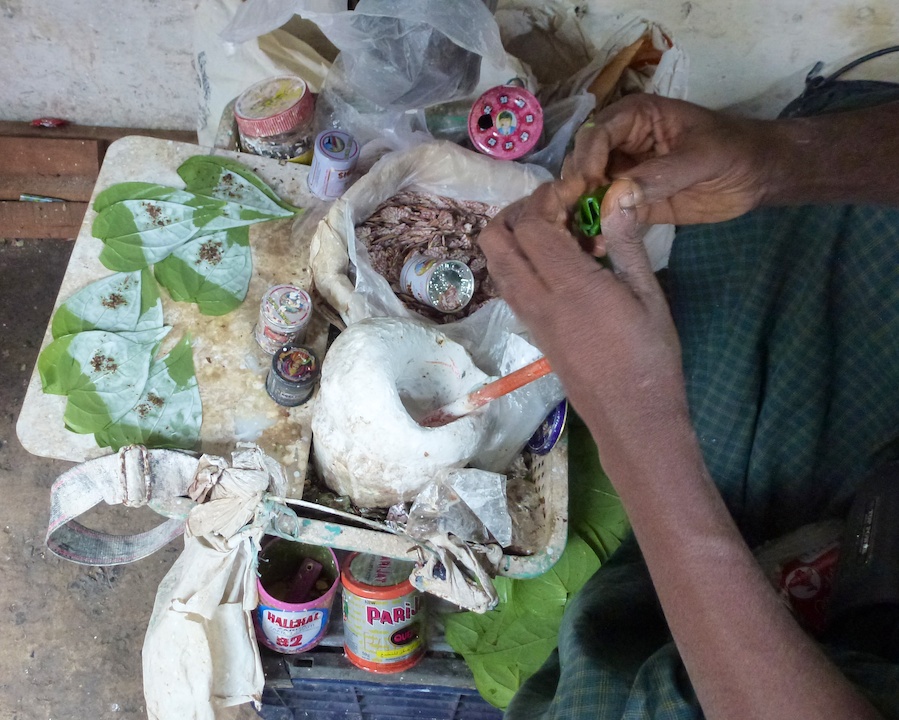
    Betel nut is very popular among the men.  Vendors brush white liquid (limestone paste) over betel leaves…


    Yangon myanmar 55


    … then place a mix of areca nuts and/or coconut, cloves, or cardamom on the leaf and roll it up.  They then chew it.  Then spit it on the streets.  It leaves gross red marks all over the sidewalks and roads.


    Yangon myanmar 54


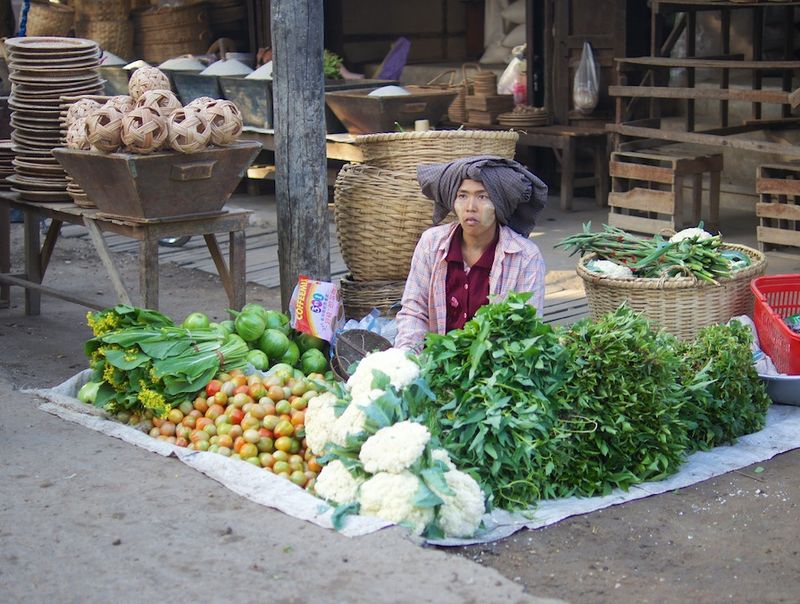
    A local market


    Yangon myanmar 37


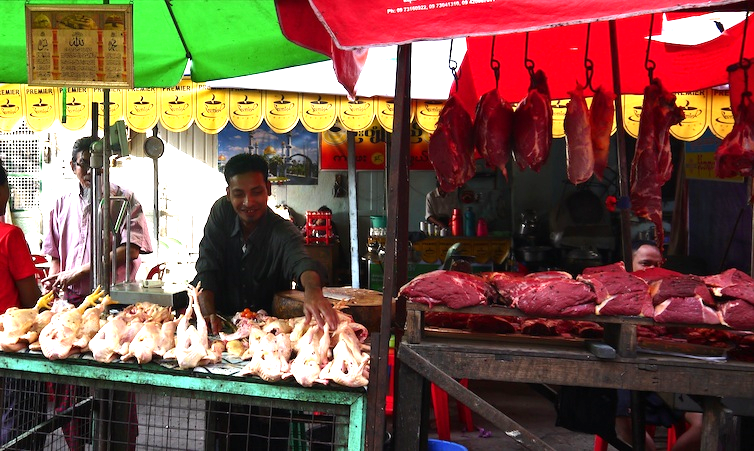
    Those of you who follow us know we love food markets.  You can tell so much about a culture from the markets.  I hate to say this, but this was the dirtiest market we have ever visited.


    Yangon myanmar 38


    There were hordes of flies on all the meat.  This young man was waving a feather duster contraption to try and keep them away.


    Yangon myanmar 40


    This man was so friendly and wanted us to take his photo.  Throughout the market they were happy to see us, with lots of smiles and giggles.  I am sure they have rarely seen tourists at this market.


    Yangon myanmar 39


    Yangon myanmar 42


    Yangon myanmar 43


    As for the main food, there was predominately fish for sale.


    Yangon myanmar 44


    Yangon myanmar 45


    Adorable!


    Yangon myanmar 46


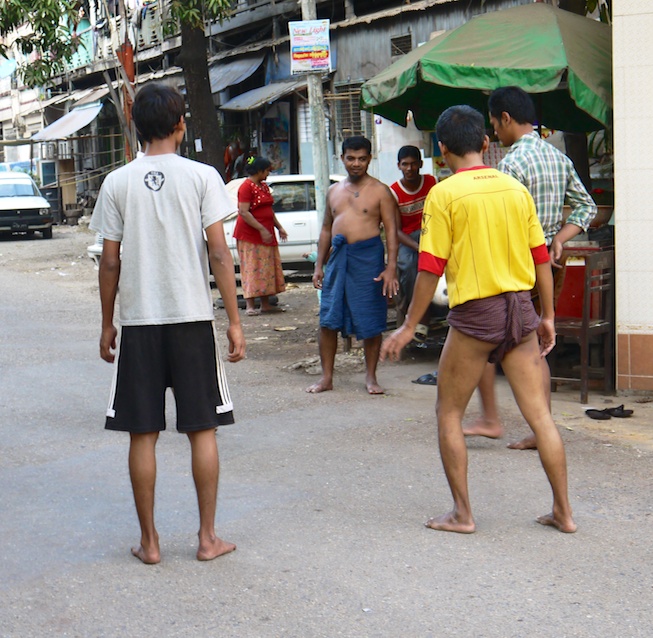
    And how do you play sports when wearing a longyi (skirt) – you roll it up to make shorts!


    Yangon myanmar 47


    Shopping – how is this for a crazy mall?


    Yangon myanmar 50


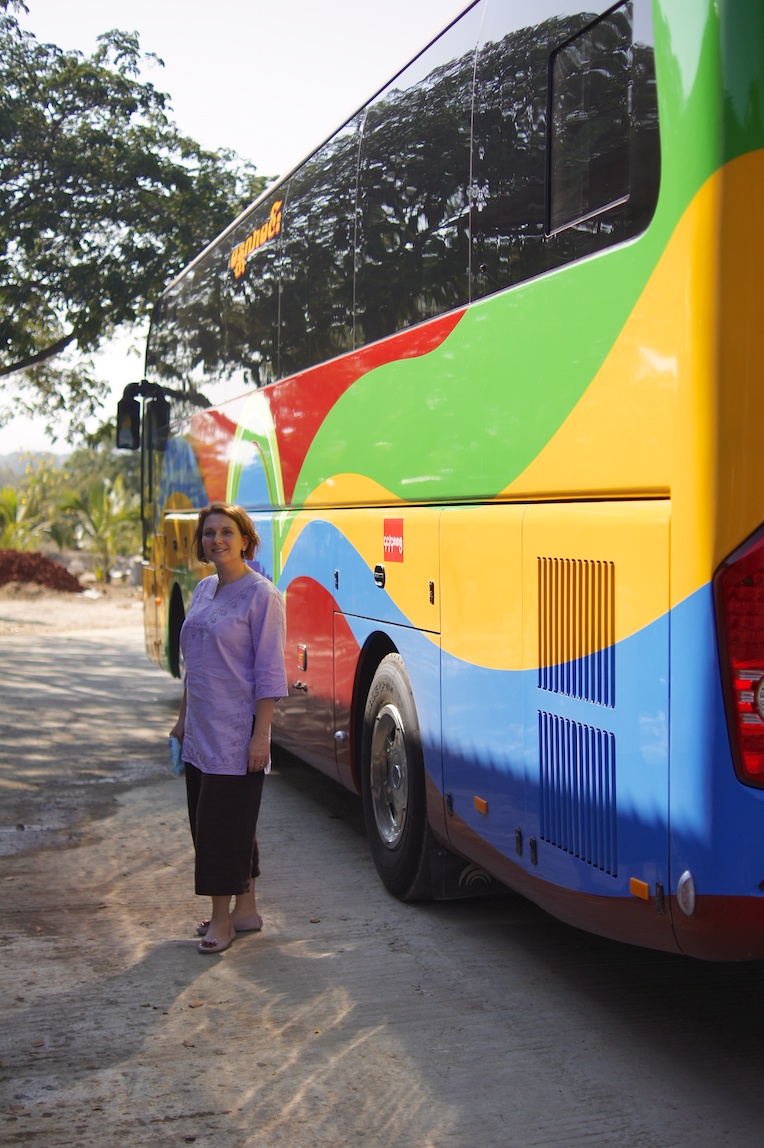
    Our bus ride to Bagan


    Our next destination was Bagan.  We
    could not book a flight, even trying two months in advance.  So we took a 10-hour bus ride, an adventure in itself!  Thank goodness it was a modern bus.  


    Misc


    We
    slept and watched TV.  Well… there was a slight problem in that it was
    all in Burmese!  There was one other tourists on the bus, the rest were
    all locals.  We stopped a few times for breaks.  Isn't it fascinating
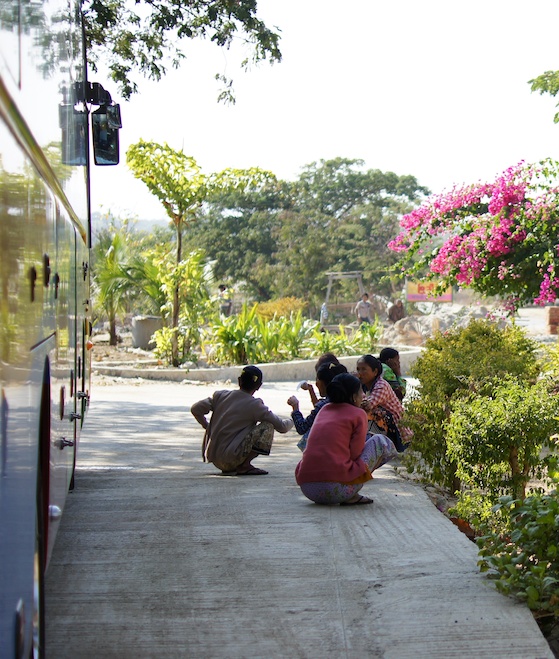
    how all the Burmese squat at the break?


    Misc (1)


    We could also purchase unique snacks…


    Yangon myanmar 61


    So you are wondering about bathroom stops… two in a real facility, one just on the side of the road.  No trees, just wide open space… men, woman and children.  Now we know why they wear the longyis.  Thank goodness we did not have to go  :   )

    Want to see more on Myanmar…

    Click here – to continue to Bagan – a must see!!

    Click here for the people of Myanmar

    An for the slide-show – click here.


  •  

    And if three posts were not enough….here is a slide show of Myanmar.  It it around four minutes long and is best viewed in full screen (click on the red arrow to start and then click on the brackets at the lower right of the slide-show).  If you have your volume on, you can enjoy tribal music – reed pipes from Myanmar's Shan State. 


  •  


    February 2013


    Jakarta 43


    Jakarta is a fascinating city.  I know I say this about many places we visit – but each one brings unique experiences for us.  It is a dirty city (both air and ground) with very few historical sights to see.  But if you scratch the surface, you can really enjoy this city as we did!  This was D’s 5th visit to Jakarta; but my first.


    Jakarta 14


    Jakarta is located on the island of Java.  It is the capital of Indonesia and largest city in the country.  We stayed in Central Jakarta – the heart of the government and financial district.  I was surprised at the modern high-rise buildings and high-end shopping.  


    Jakarta 10

    Jakarta has the extremely rich and the extremely poor, all blending together – with Gucci on one side of the street and begging street children on the other.  I am guessing these two are not too poor as the one has braces. They were so cute.  They asked me to take their photo, but then the one on the right became very shy. 


      J

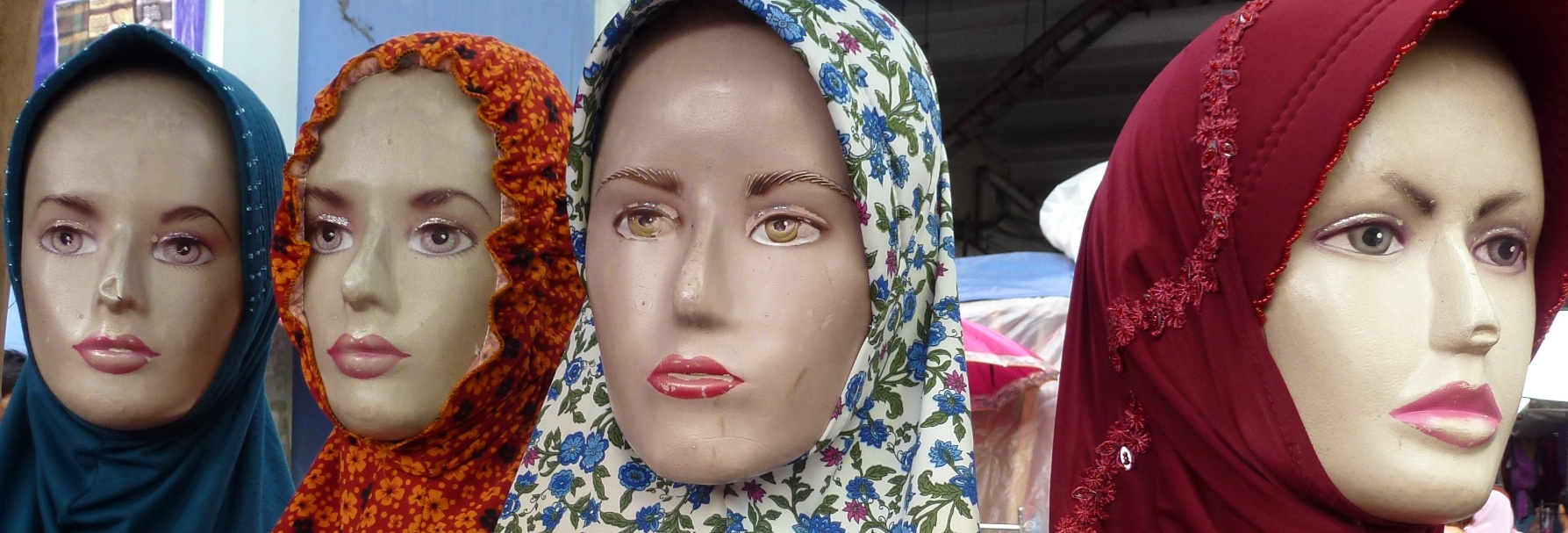
    Indonesia is the fourth largest country in the world (by population) and world’s largest Muslim country.  You can hear the call to prayer several times a day.  Most of the women do cover their heads with hijabs.


       Jakarta 44


    Very few people speak English so D had to navigate us several times in the taxi using his blackberry map.  Despite not speaking English, they were always ready to help us as we wandered about.


    Jakarta 15


    Sunday was our spa day.  We went to very posh spa for couples therapy.  I had a facial, and a hand-and-foot massage.  D had a full-body massage.  They lasted 1.5 hours and were wonderful.  Total price: About $75.  Then we went to Koi Kemang for a lovely brunch.


    Jakarta 5


    We visited the textile museum and learned how to make Batik.  D was a good sport and made one too.  It was pouring down rain, so it was relaxing to just sit and take a break.  It is easy to do, but very hard to do well!  You can see more about our creations here.
     

    Jakarta 24

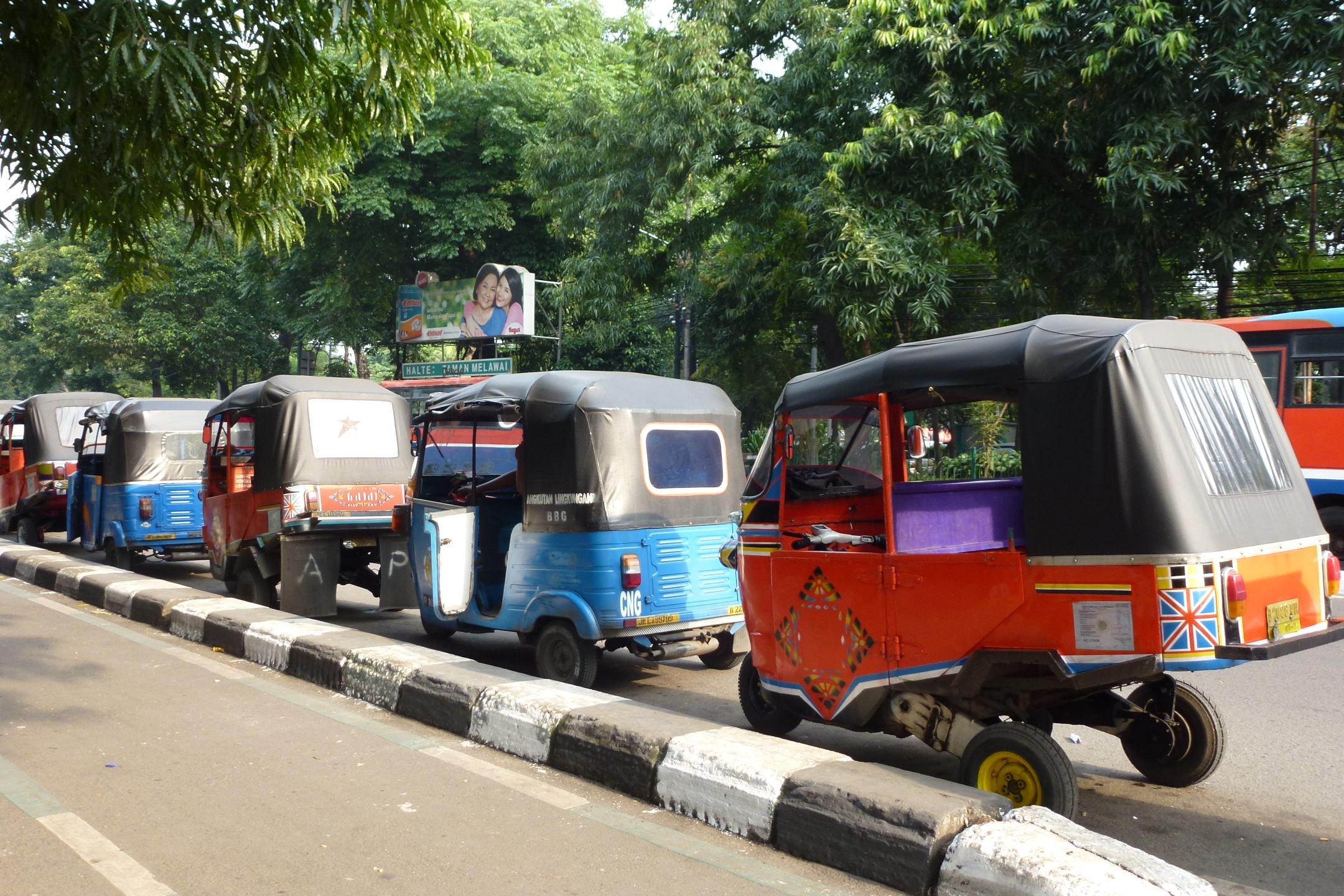
    Traffic is a nightmare in Jakarta.  We think it is even worse than Bangkok. One afternoon around 2:30 it took us one hour and ten minutes to go less than 3 miles.  It was pouring down rain, otherwise we probably would have walked.


    Jakarta 17

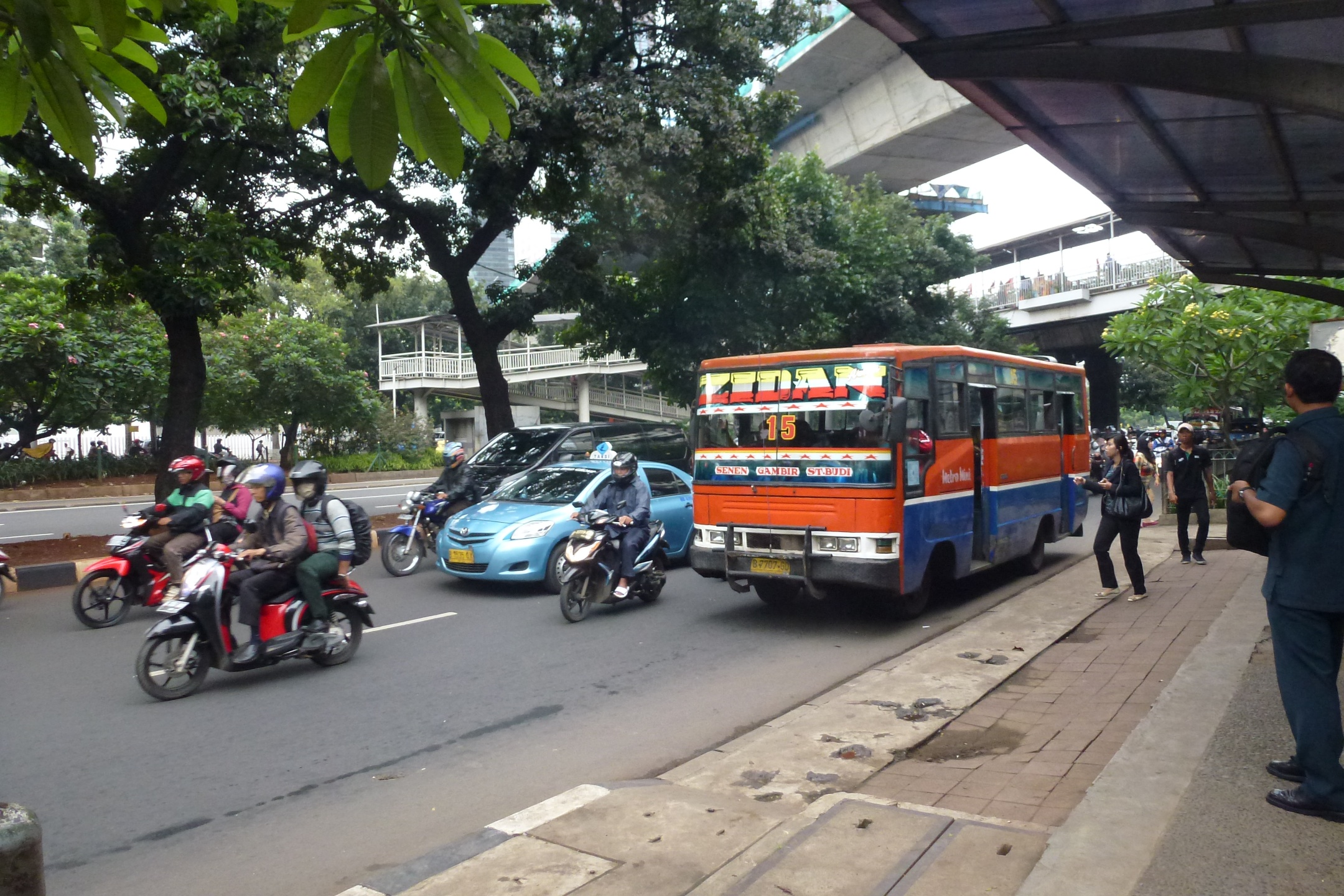
    D dragged me on the VERY local bus several times as they move much faster than the taxis.  And they are very inexpensive, 35 cents to go to most locations. 


    Jakarta 39


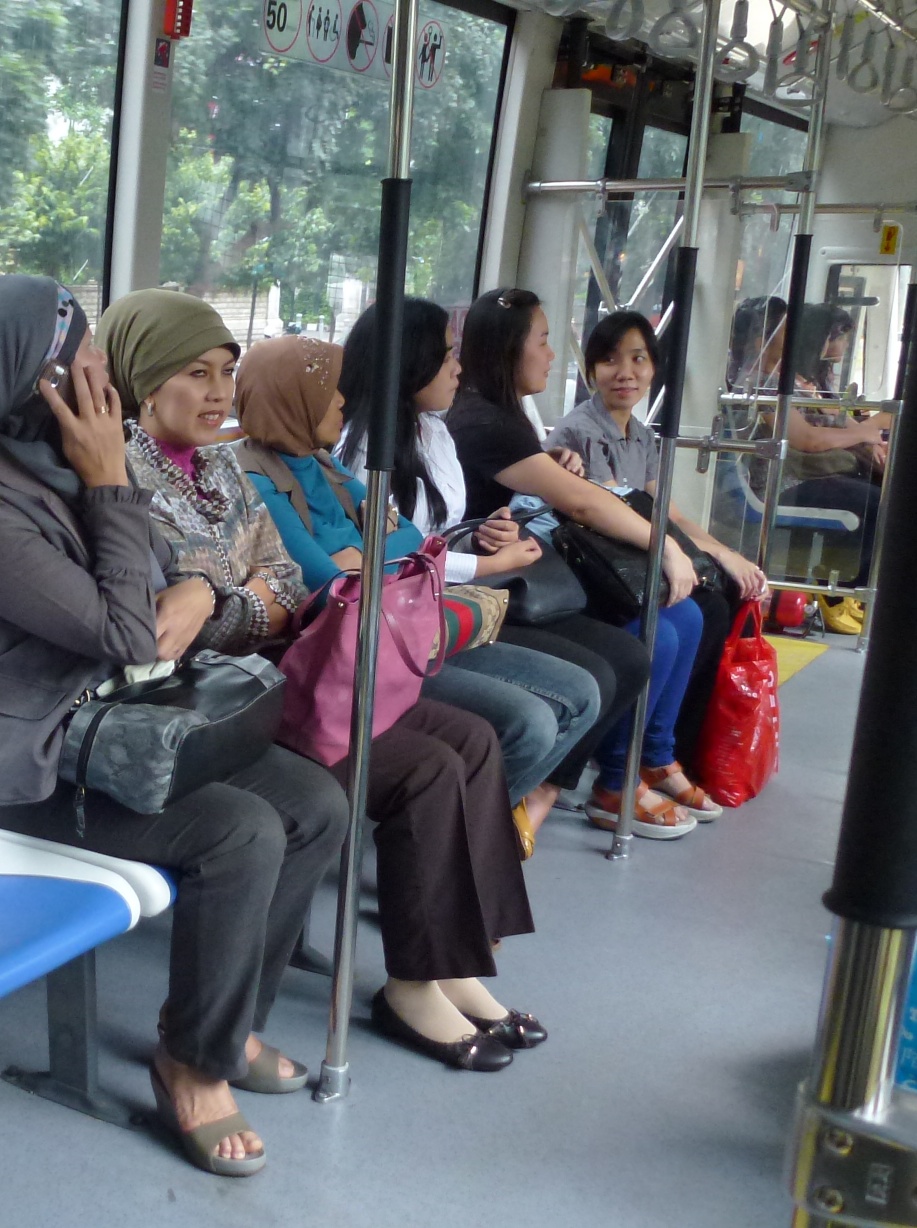
    The interesting thing is that women ride in the front of the bus… no men allowed!  I was curious about this so I googled it and found that this was in response to reports of sexual harassment in overcrowded buses and stations.  The  Governor is considering making some buses exclusively for female passengers this year.   


      Jakarta 16


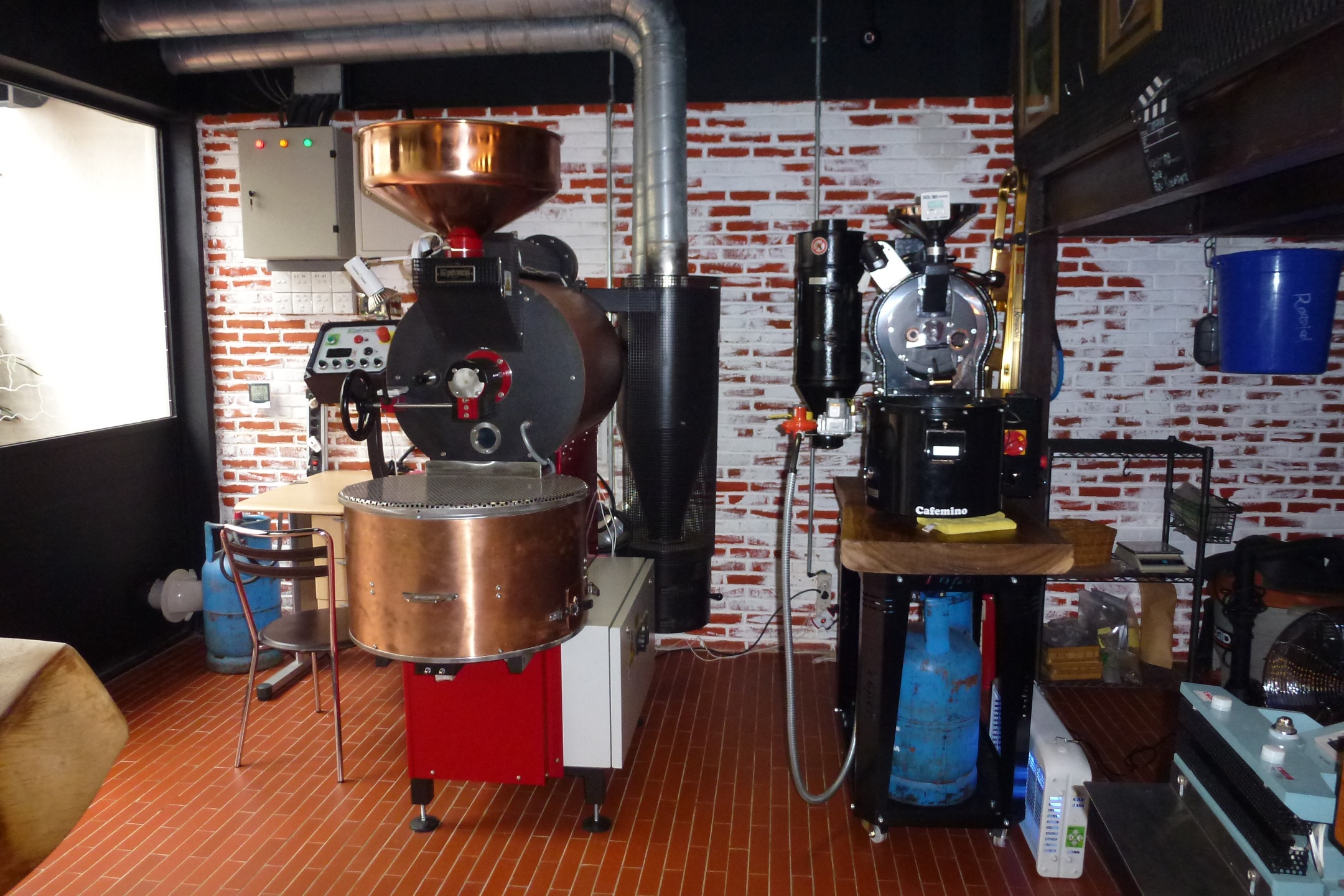
    A great coffee shop!

    We wandered into Giyanti Coffee Roastery and had an excellent cup of coffee.  Hendrik and his sweet wife just opened it a few months ago.  He knows quite a bit about coffees, and he is perfectionist as well, as evidenced when he "pulled" our cups.


      Jakarta 53


    Indonesia is the 4th largest coffee producer in the world.  At Giyanti they roast their own beans.  We bought two bags to bring home and it really is exceptional coffee.


    Jakarta 51


    It is a modern cafe with a great feel.  They also have a very comfy outdoor seating area.  The cafe is directly across from a row of antique shops so it is a fun area to visit.  We went back a second time we liked it so much.


    Jakarta 52

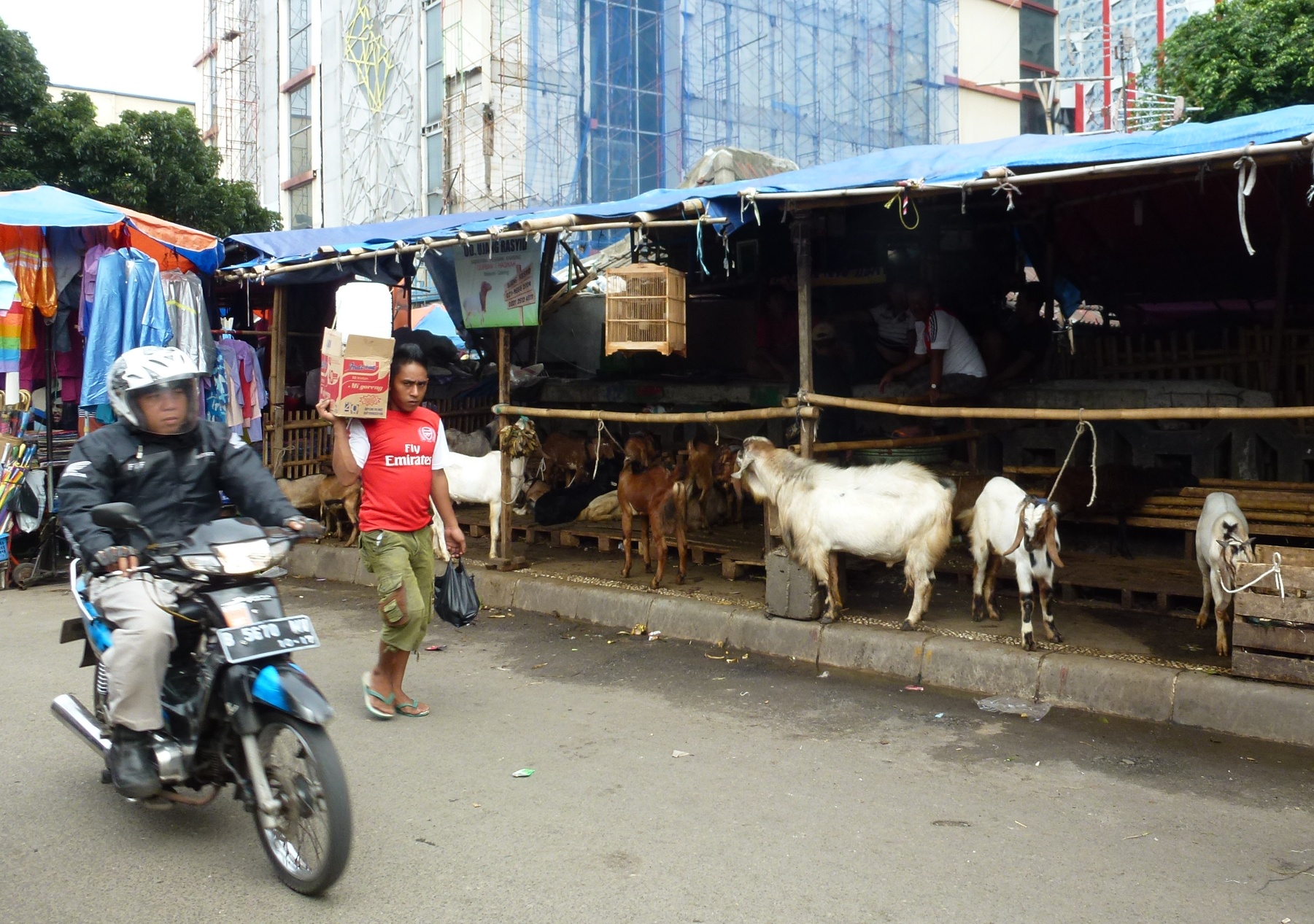
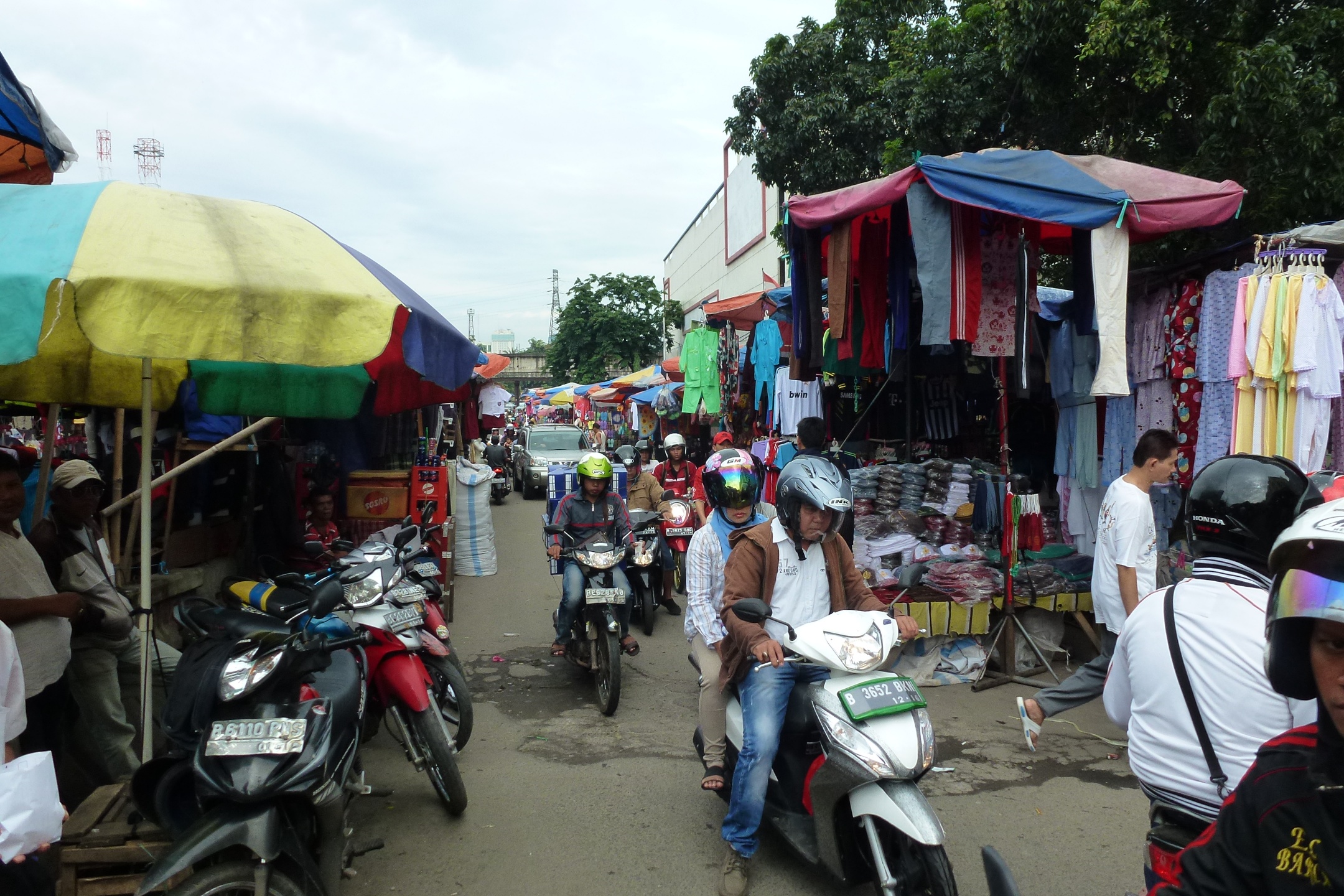
    The biggest wholesale market in SE Asia, Tanah Abang Textile Market, is in Jakarta.  We went for a few hours and had so many bags we had to leave!  And we only scratched the surface of this gigantic market Tanah Abang is said to be 300 years ago and it started as an animal market.  We did see goats on one side street waking to the market!


      Jakarta 47


    Stalls sell mainly textiles, clothes, shoes, and purses; but you could find almost anything.  The market is in a huge building but vendors sell on the the sidewalks and in the road.


    Jakarta 49


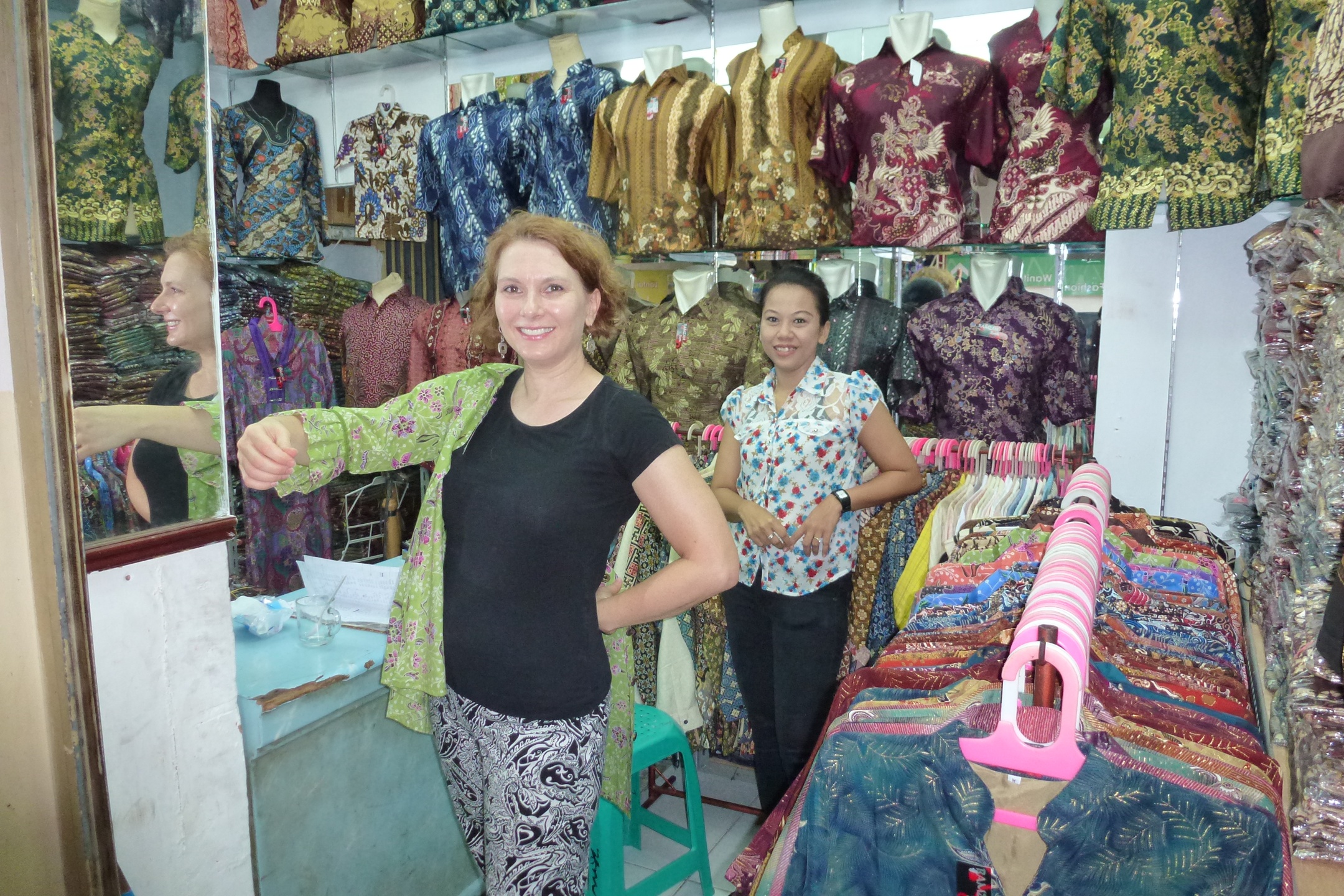
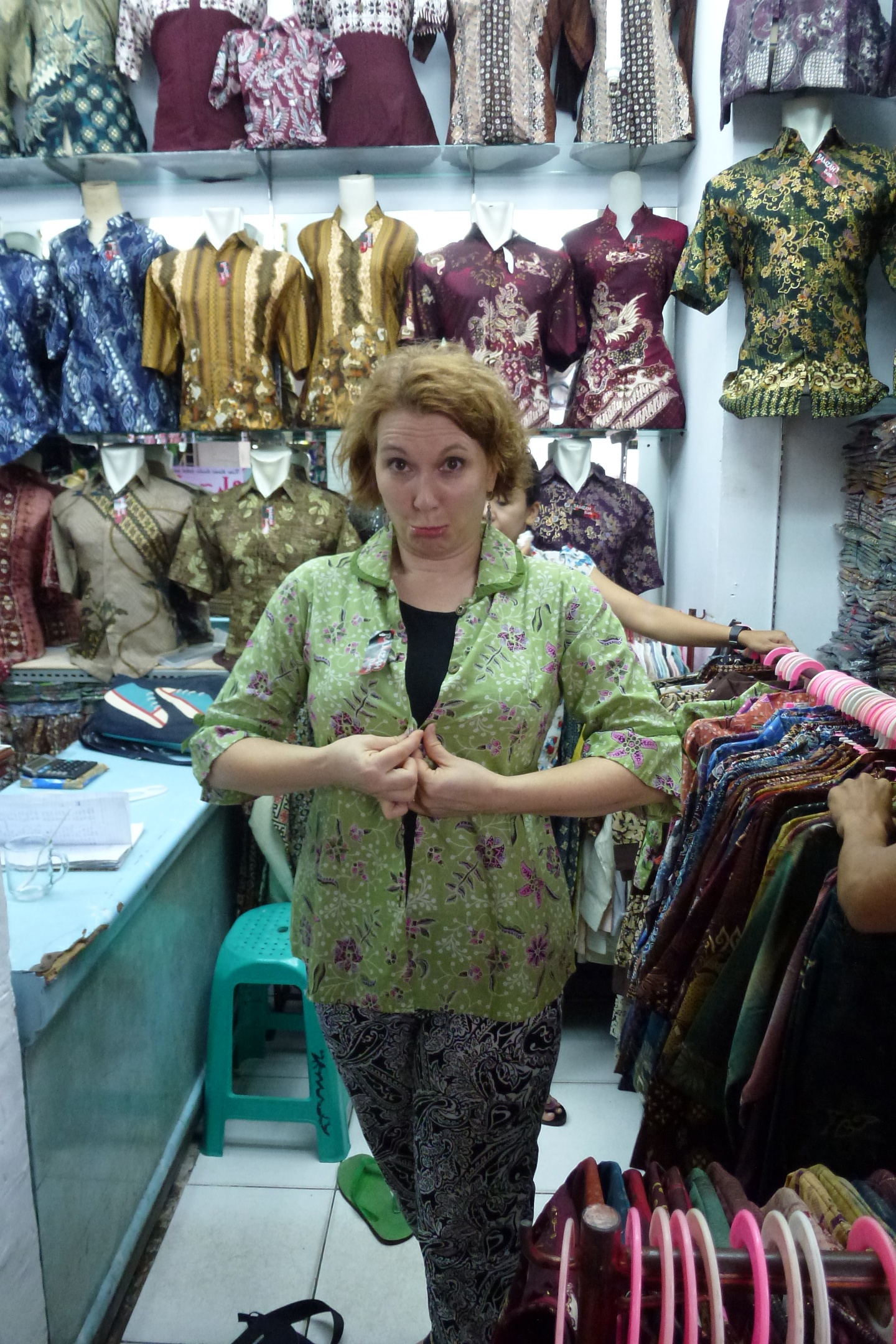
    Even though is was wholesale, most vendors would sell to us.  A few had a four or five piece minimum.  Me trying on a  batik shirt…


    Jakarta 45


    But the usual happened…. a large was too small!  A girl could really get a complex living in the land of the tiny!  Okay – we made a fun goofy purchase… matching shirts!!  Look closely at the red ones on the right hand side of the photo (my head is blocking the corner of the man's shirt).  Those are the ones! Oh what a cute Christmas photo this will make (gag)!!  


    Jakarta 46


     We had a great time in Jakarta and I will definatiely go back!


  •  


    Thaipusam Festival in Singapore

    2013


    Thaipusam 2013 c 204


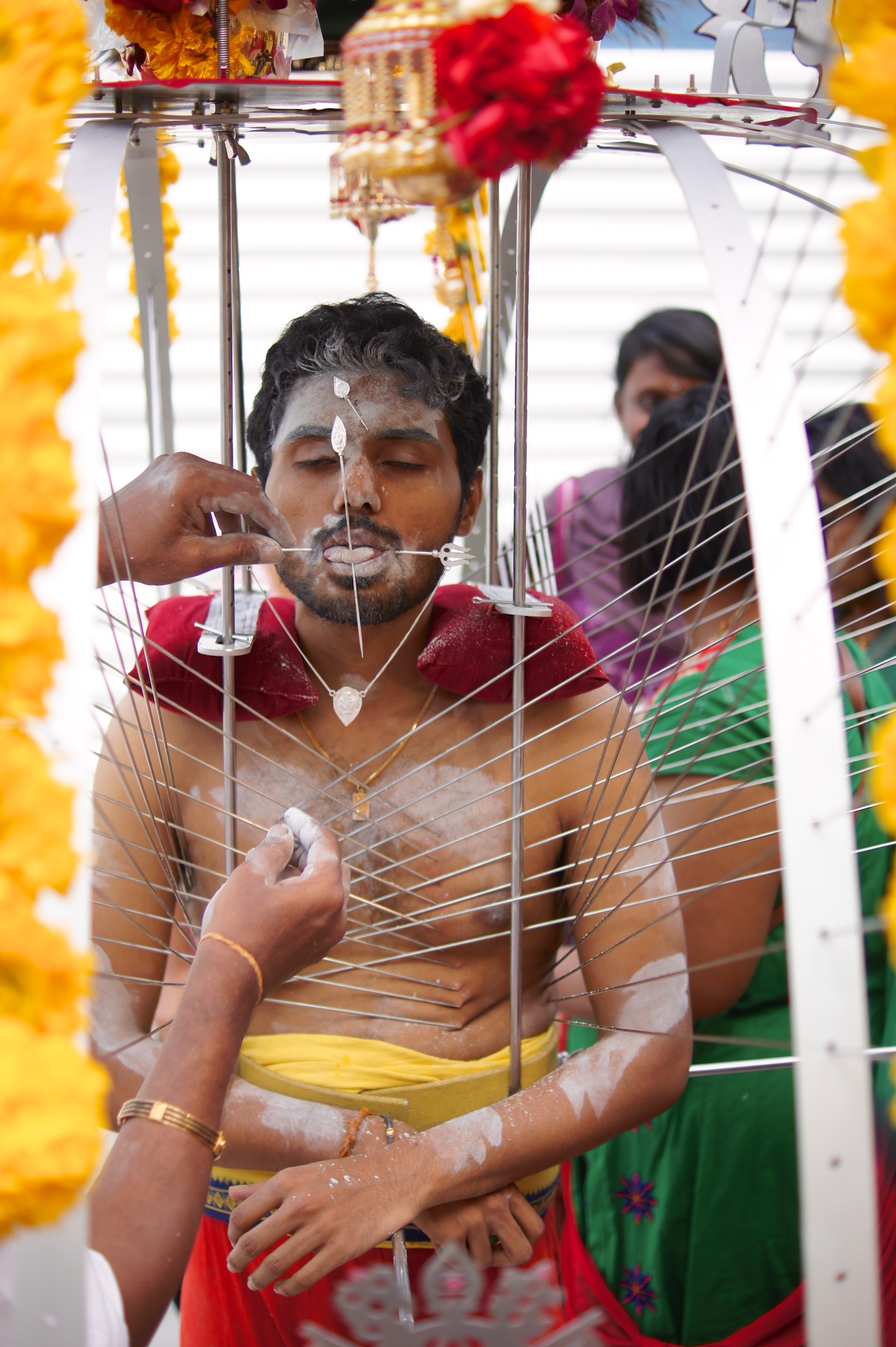
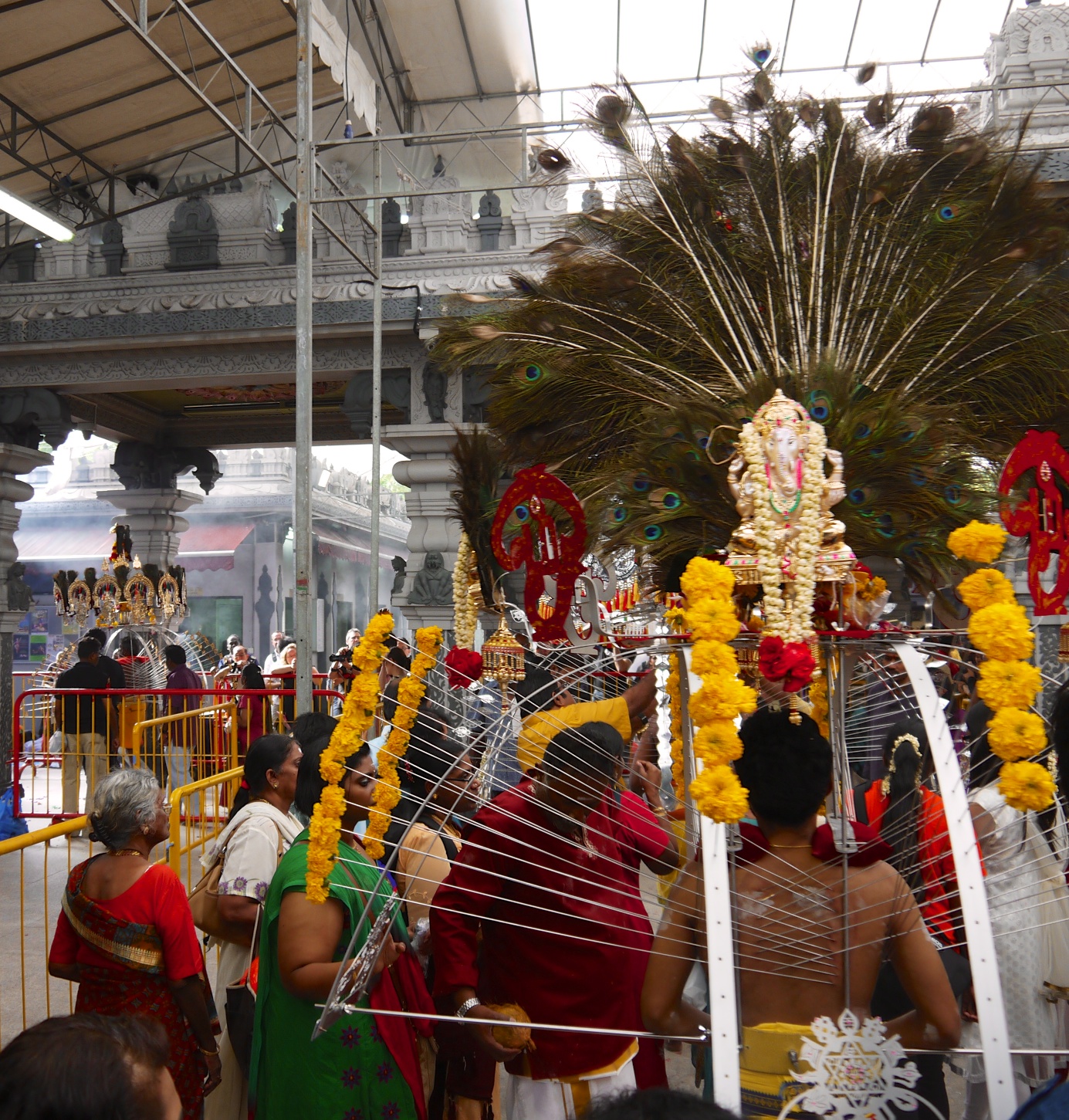
    Thaipusam is a Hindu celebration of devotion, occurring on the full moon in the Tamil month of Thai (Jan/Feb).  It is a time to give thanks to Muruga, the son of Shiva. Thaipusam is celebrated in many places around the world, with the largest observances in India, Singapore, and Malaysia.  Aren't we lucky it is celebrated here in Singapore! 


    Thaipusam


    My friend H and I went last year (click here to see the photos) and were mesmerized by the event.  At the end of my post I wrote… “next year, I hope to get to see the actual piercing take place”…. well guess what?  We went to the temple and saw the actual piercings!  Oh my.  If you are bothered by needles or piercings, you probably should not read any further!   


       Thaipusam 10


    And not only did we watch the piercings, we were invited to walk with a family – read all about this further down!  It truly is one of the most bazaar religious festivals in the world.  This year it fell January 27th, a Sunday, so D was able to join us.  Last year’s post has many facts, so please visit here if you want to learn more about this celebration. 


    Thaipusam 52


    The preparations and the piercings.


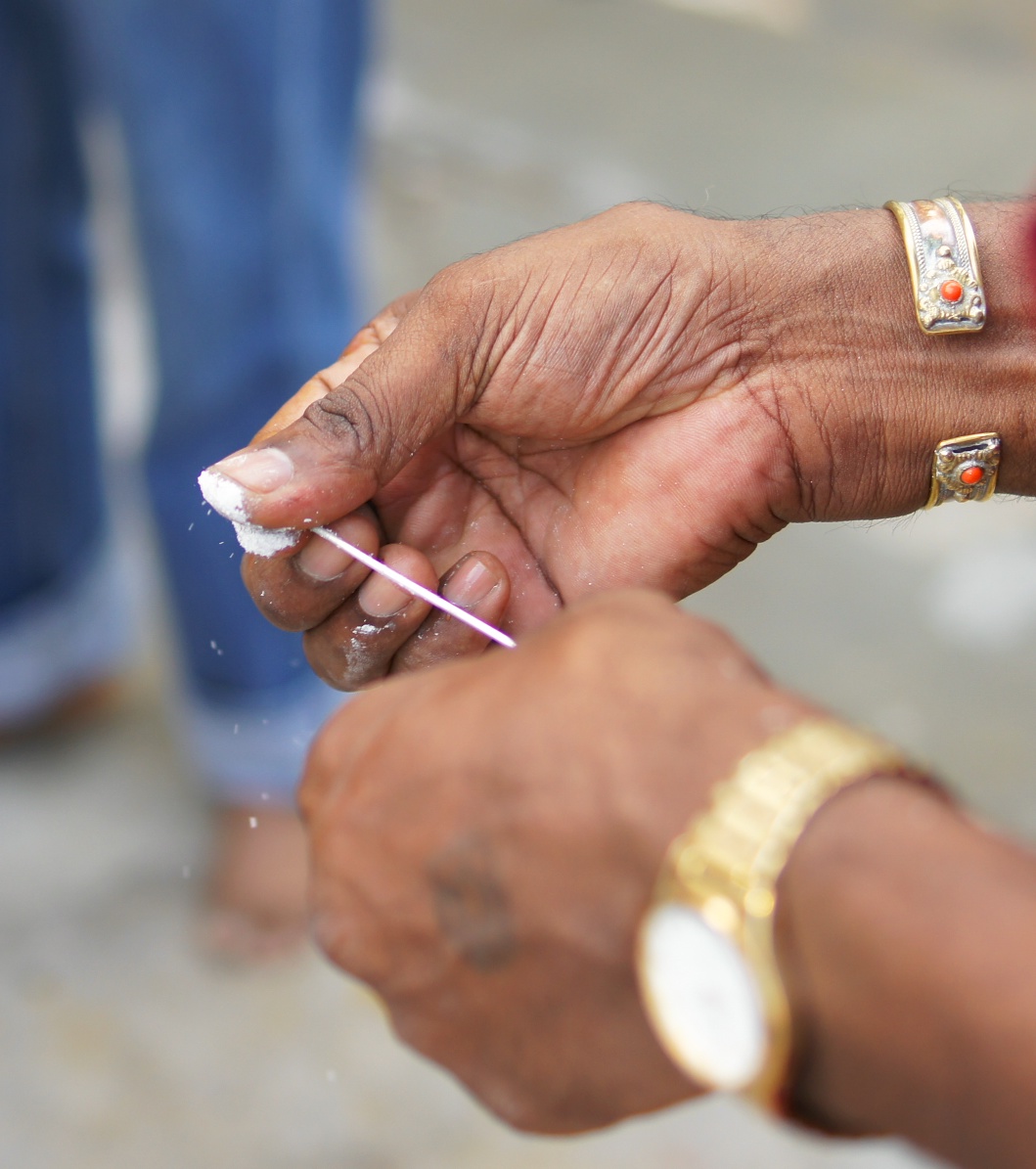
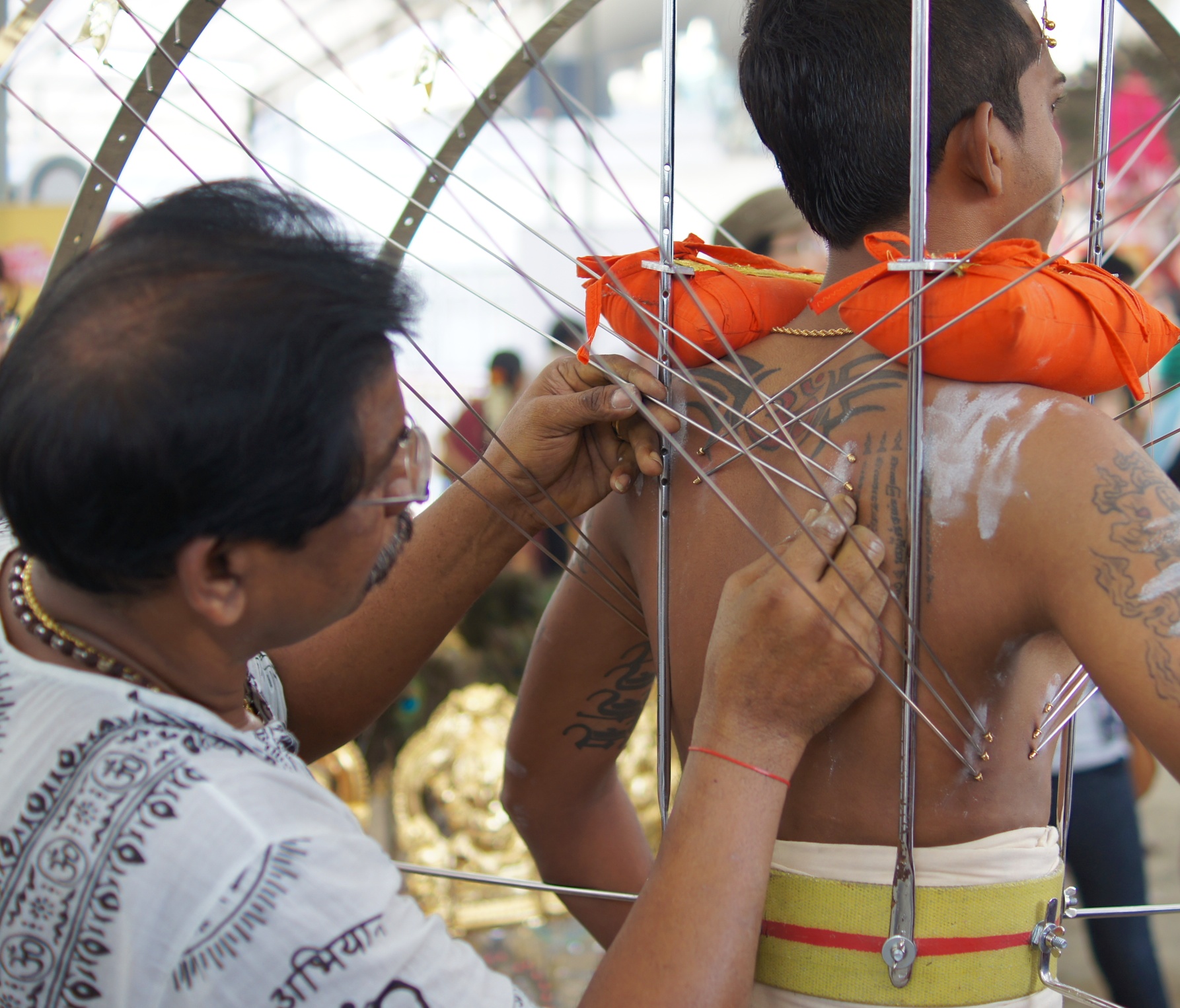
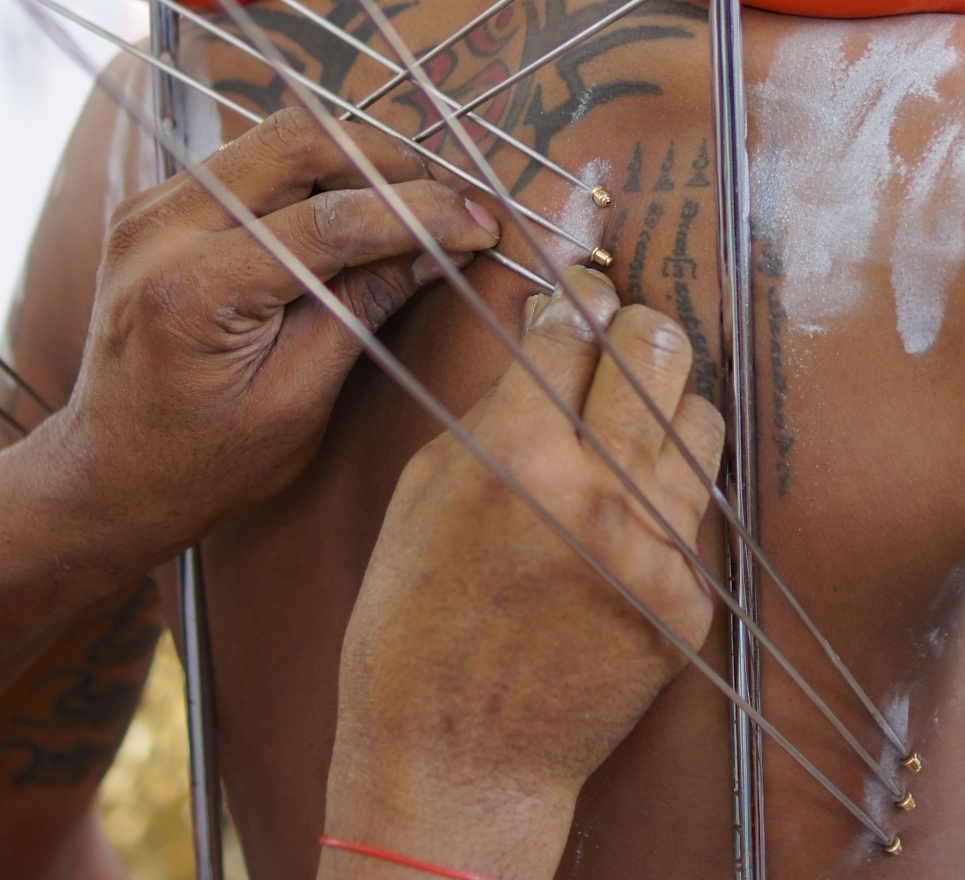
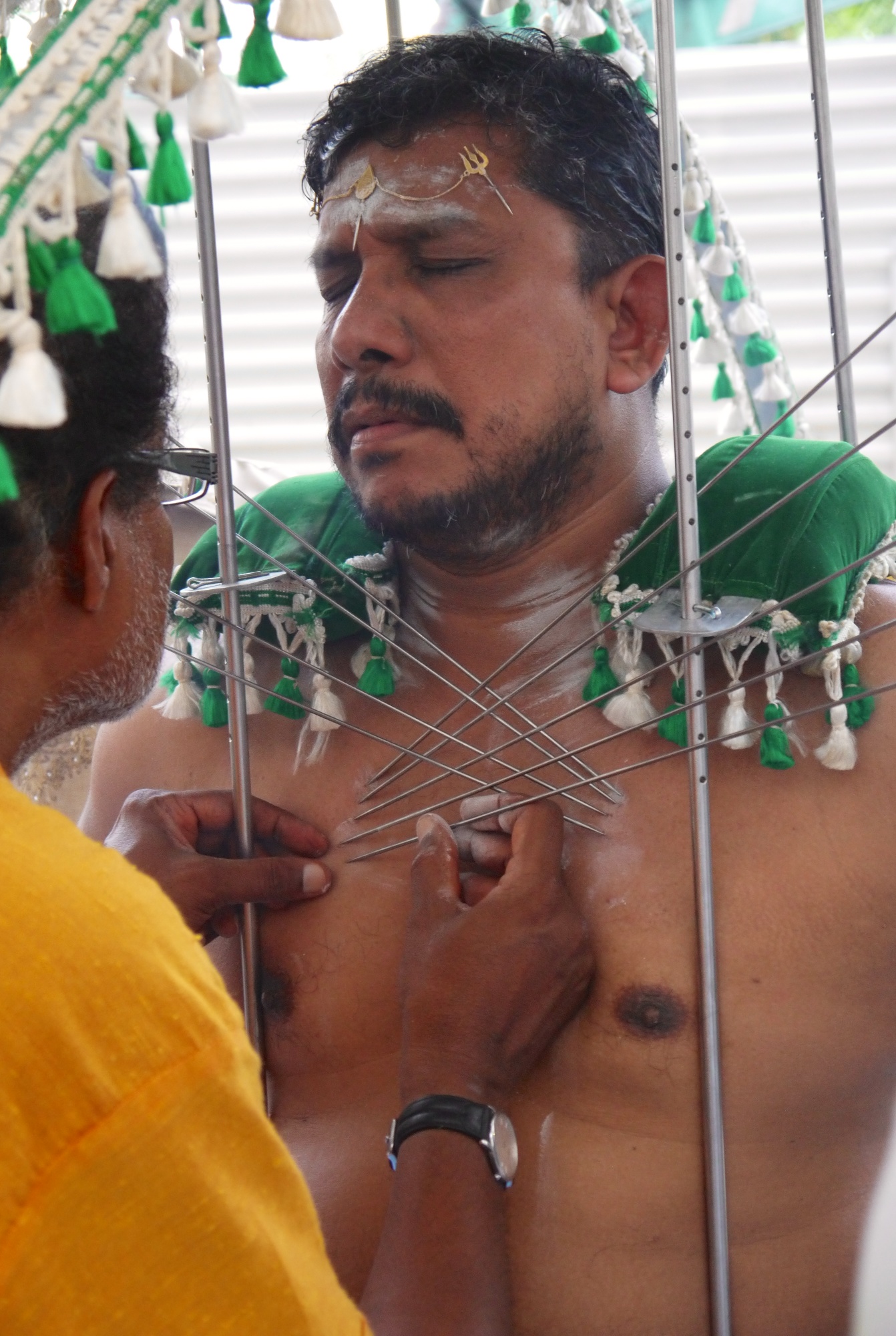
    Holy ash is placed on the needle before the piercing.  They say the sacred ash prevents pain, bleeding, scarring, and infection.  Some say it is made of burnt cow dung which has medicinal features and contains a styptic, similar to the shaving pencil that constricts blood vessels to stop shaving cuts from bleeding.  It also contains natural local numbing component.


    Thaipusam 22


    It must be something special as there is absolutely NO bleeding during the piercings.  What about sterilization you ask?  There wasn't any, other than the cow dung.  Prepare yourself for this video!  Just click on it to start.


    D watched and photographed this man's journey.


    Thaipusam 25


    The devotee begins mental preparations a month in advance.  They are only allowed to eat vegetarian food, cooked at home.  They observe strict celibacy, no alcohol or drugs.  They also fast several days before the walk.


    Thaipusam 26


    Thaipusam 27


    A sigh of relief, the first piercing is complete.


    Thaipusam 28


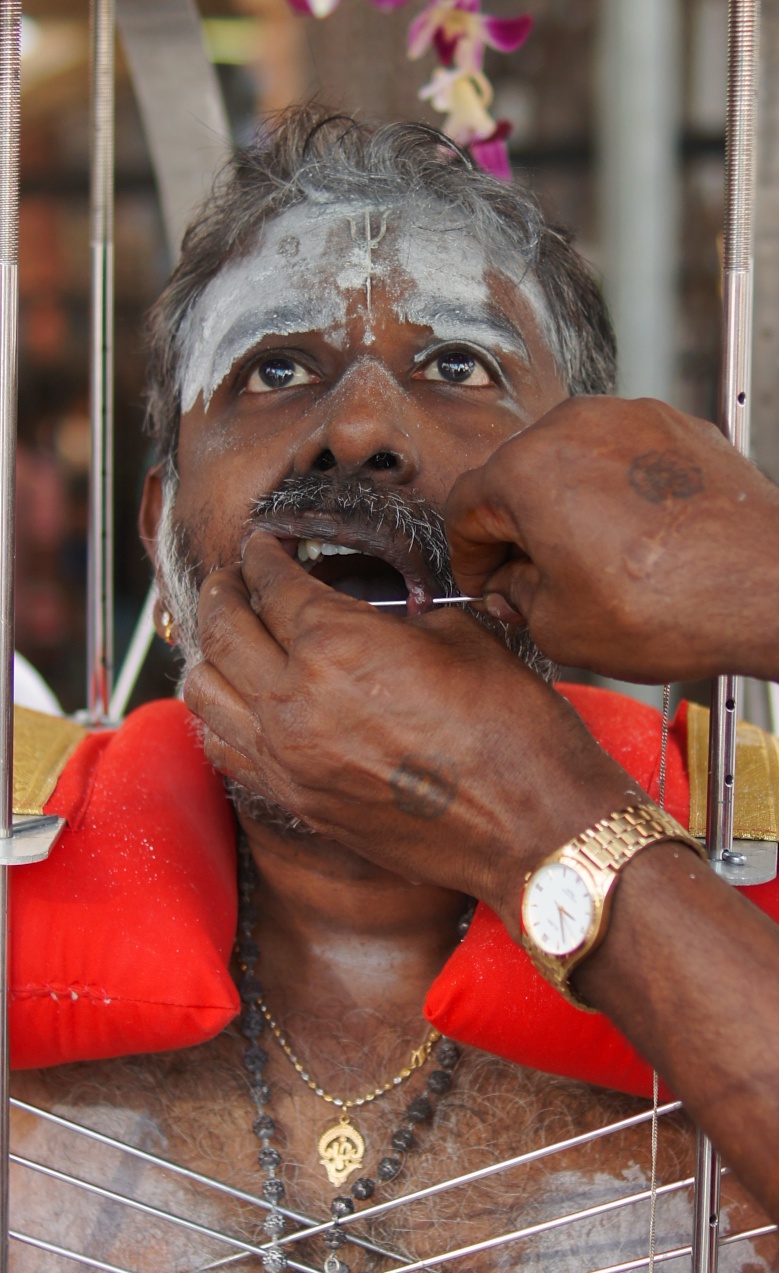
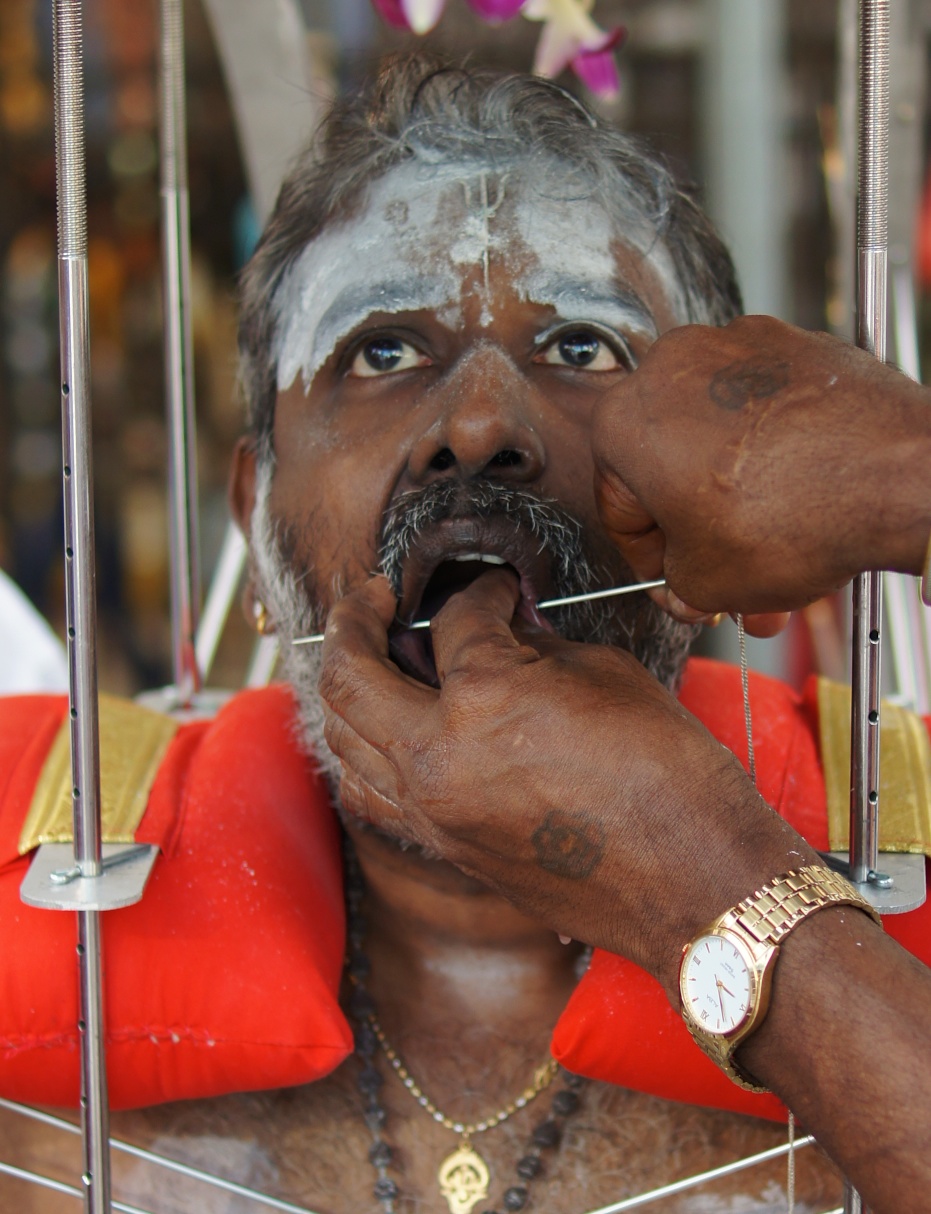
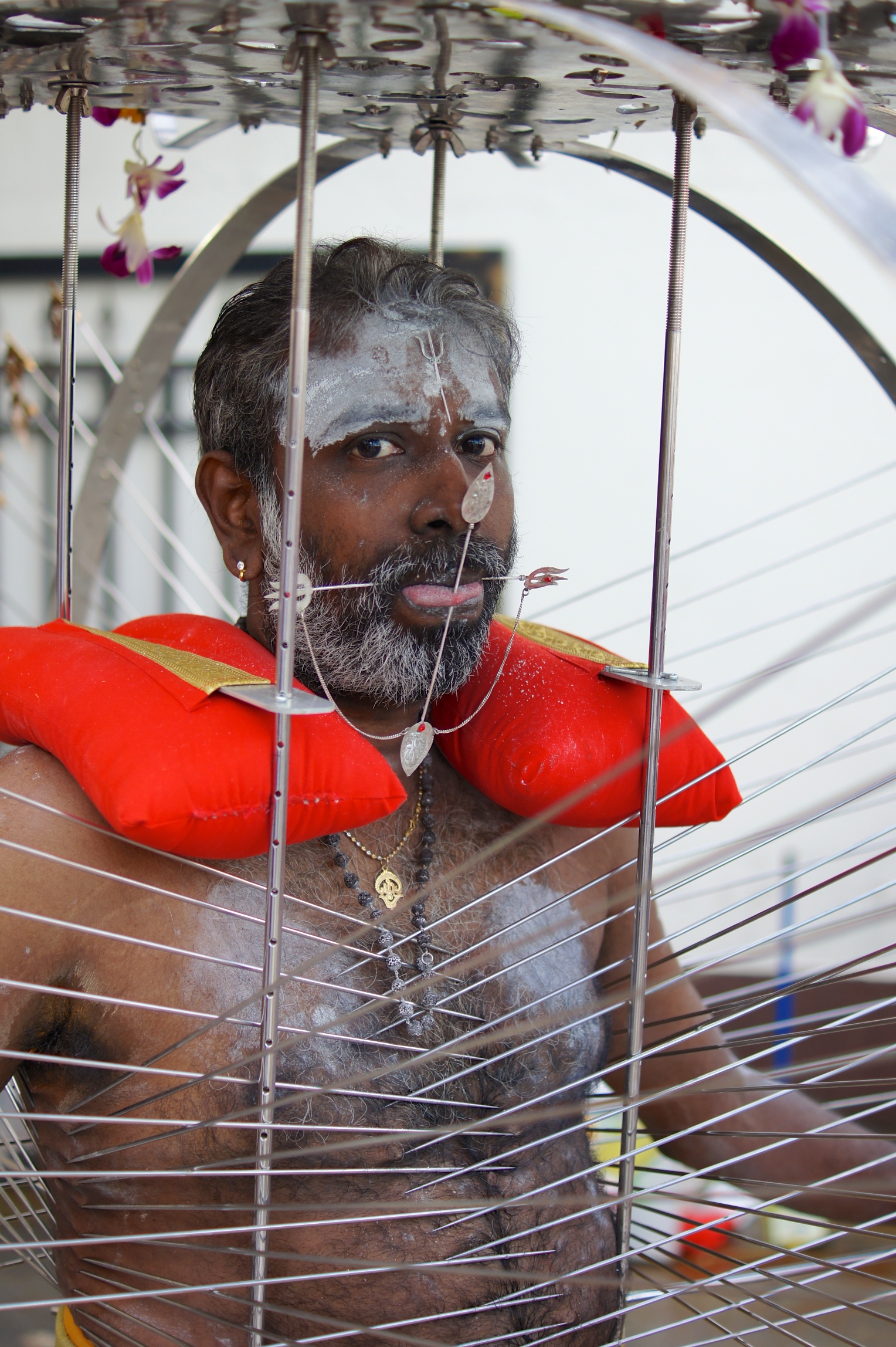
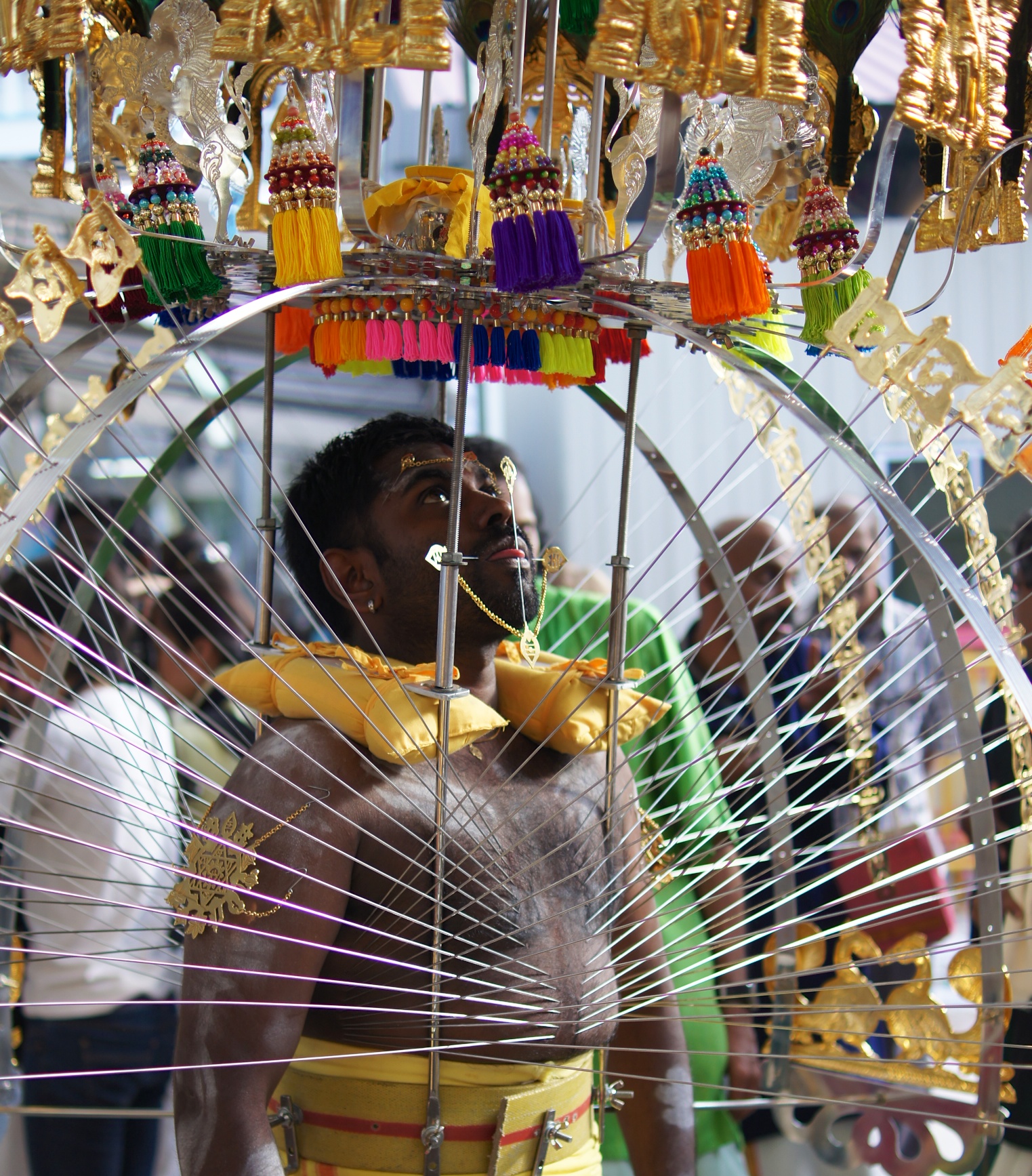
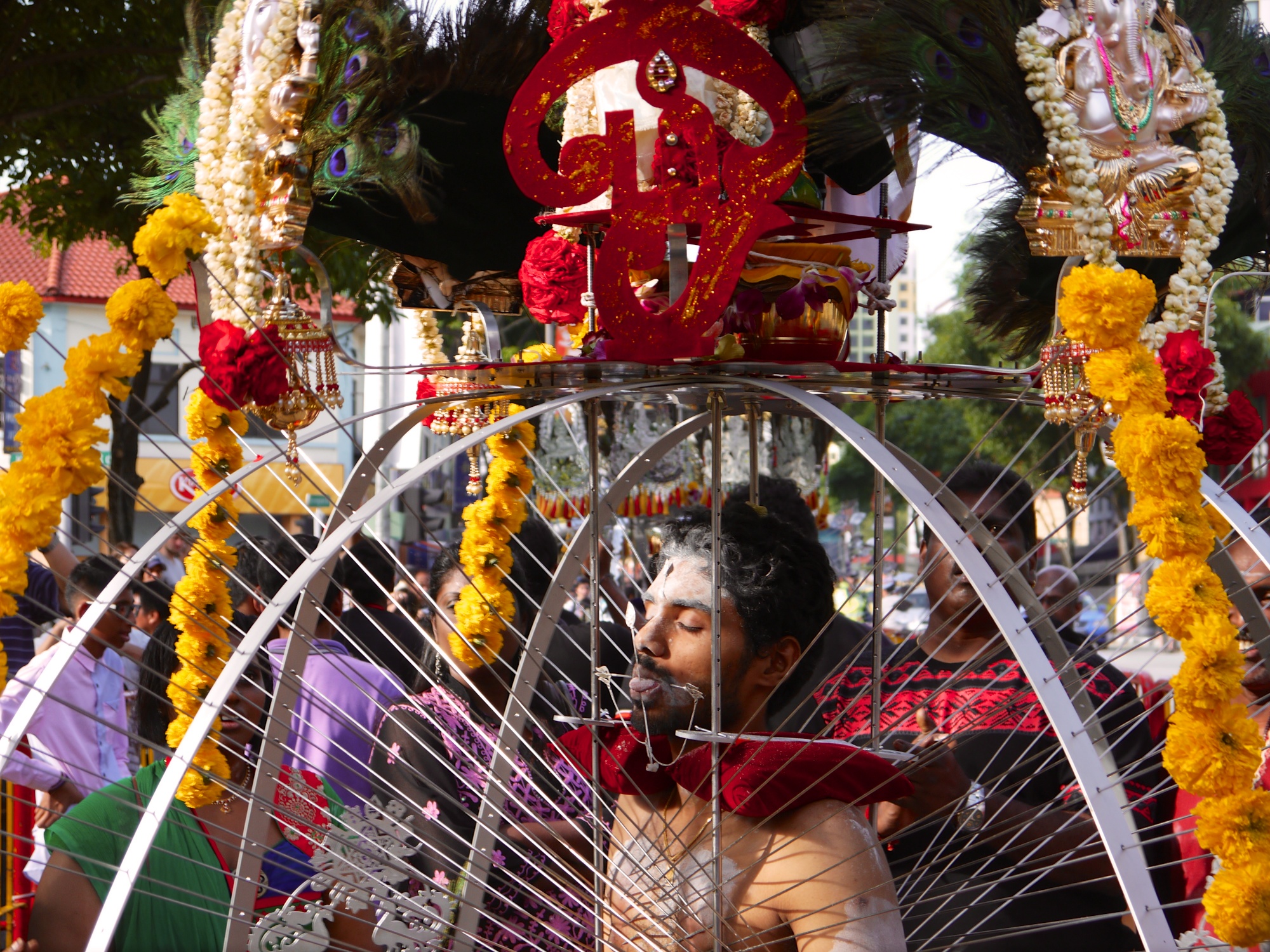
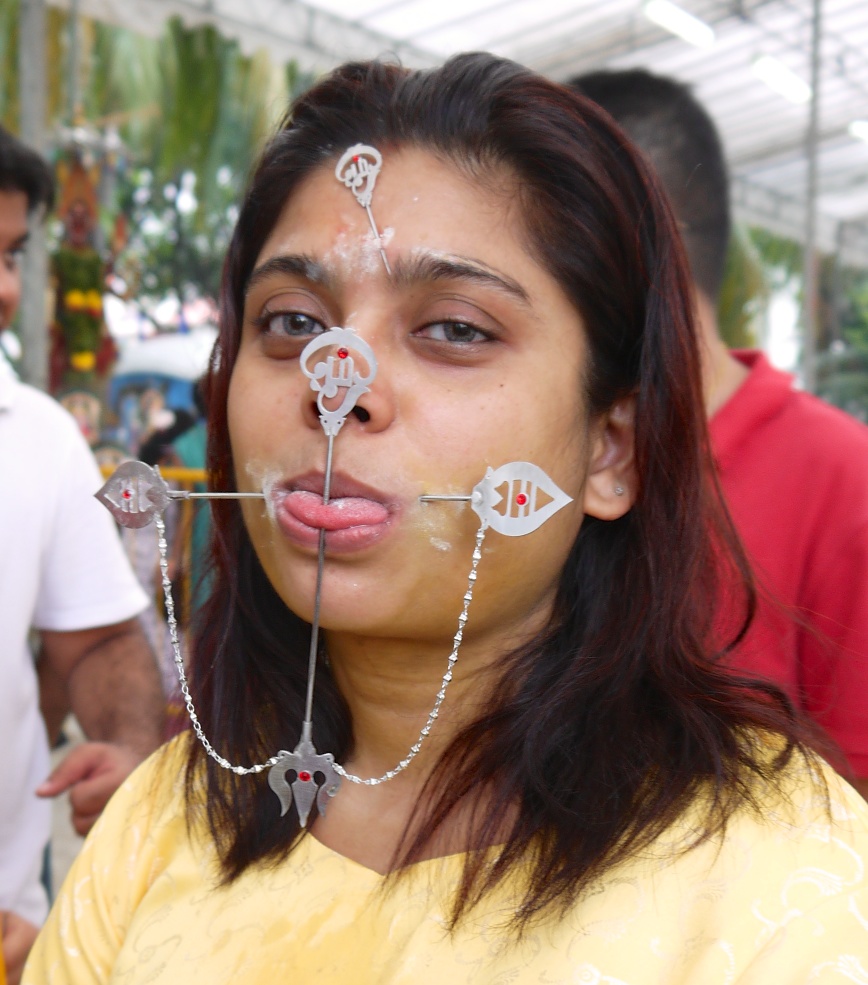
    It is said that a small spear pierced through the tongue "symbolizes" the vow of silence.  I am pretty sure it would be impossible for him to speak so I think it is a little more than a symbol!


    Thaipusam 29


    He is ready for the day.


    Thaipusam 30


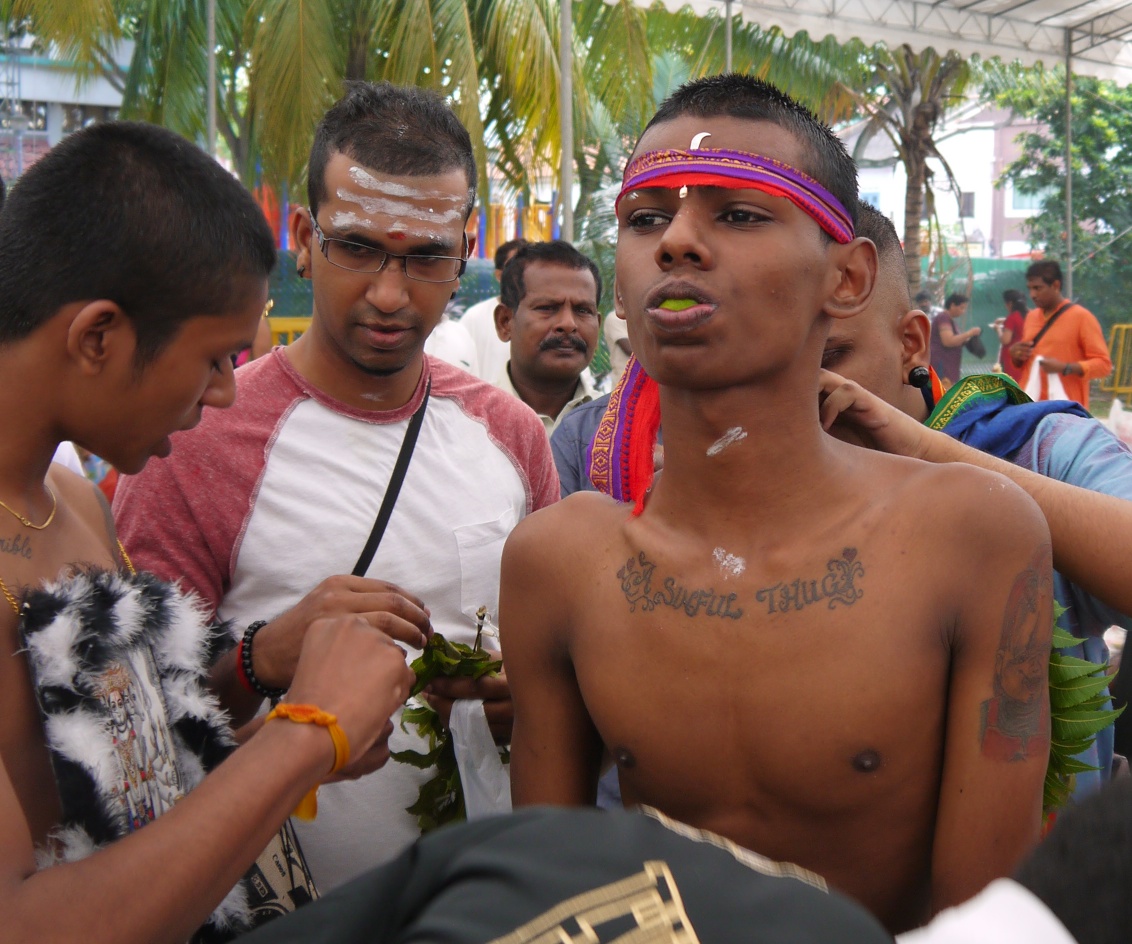
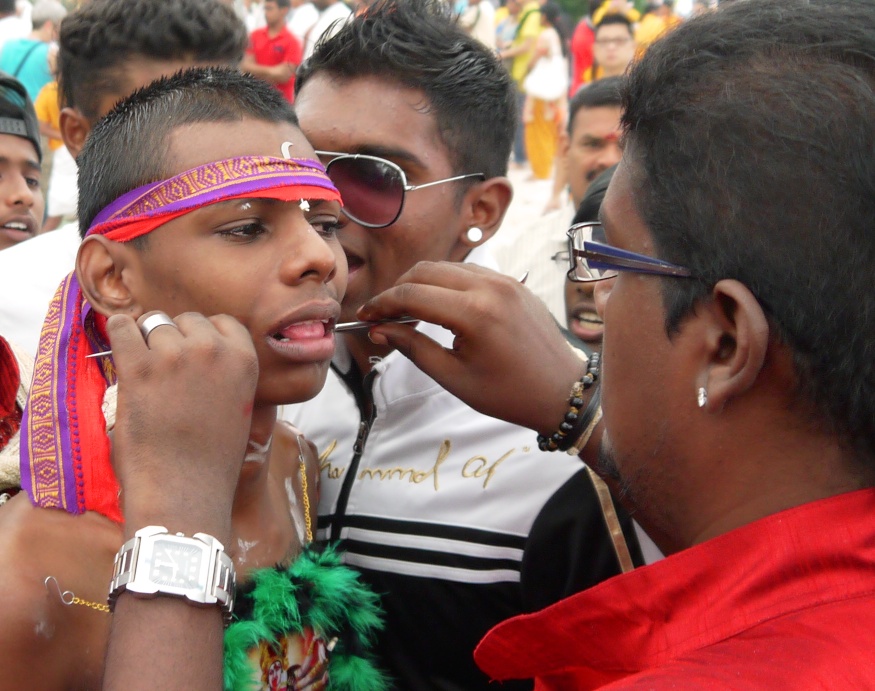
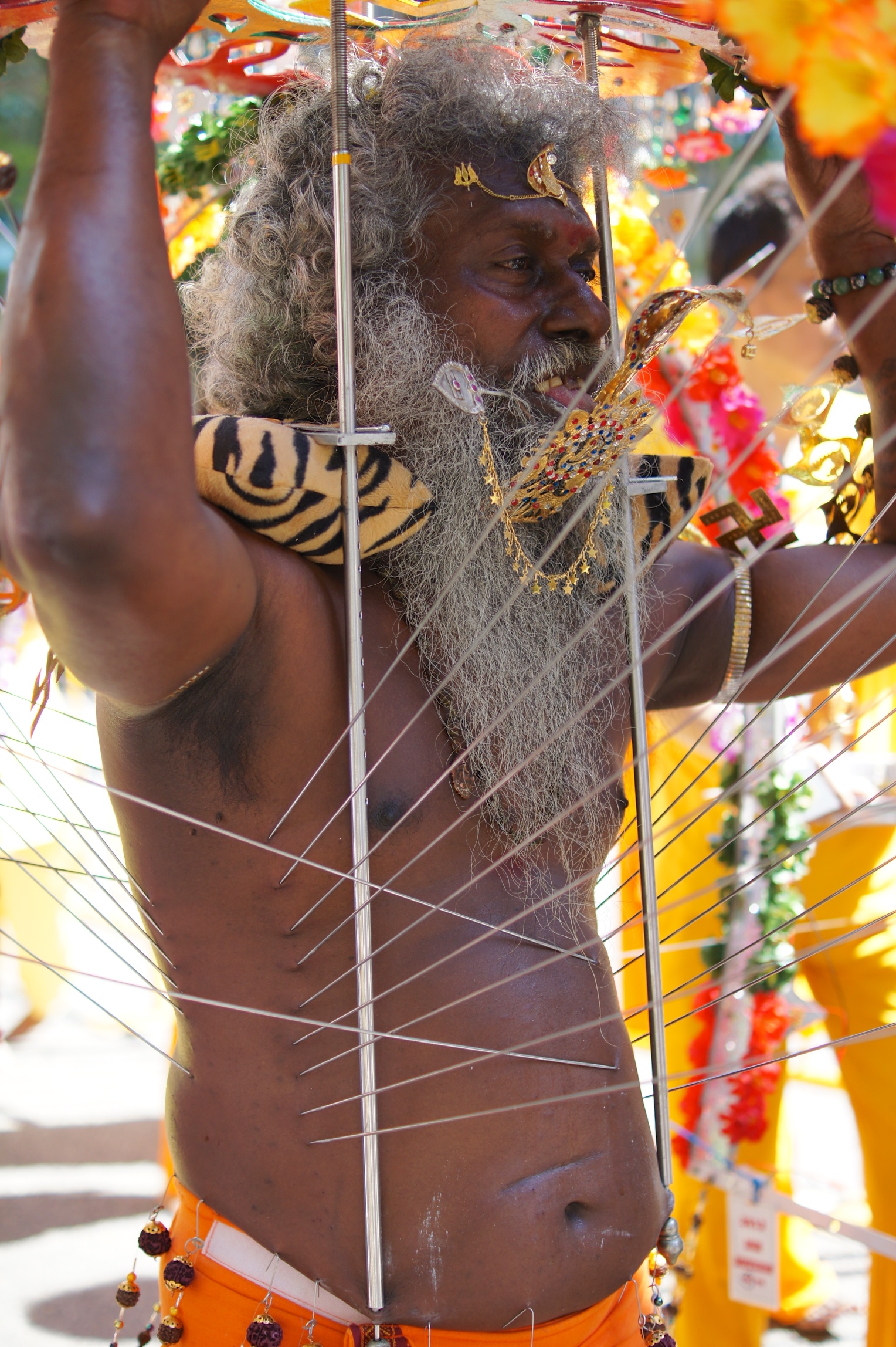
    This teen caught my eye, so I stayed with him through his piercing.  They started by hanging "burdens" on his back.  You will see a photo of his back later in the post.


    Thaipusam 21


    A little liquid to keep him going.


    Thaipusam 32


    They then pinned a green feather emblem to his chest.  The photo below shows his piercing guru coaching him.  I read that they put the subject in a trance before skewering the skin. 


    Thaipusam 31


    I could feel the support of his friends… and I could feel his pain.  Family and friends surround the devotee and loudly chant to the gods as he is being pierced.  Watch the friend on his left with the sun glasses in the series of photos – how he coaches him during the entire process.  


    Thaipusam 35


    There it goes.  There is NEVER any blood.  Mind boggling!


    Thaipusam 36


    Thaipusam 38


    I like this photo… his friends are all cheering him on.  He did not have a tongue piercing.  They say that is a more advanced piercing and this teen is pretty young; it is probably his first time.


    Thaipusam 39


    Other piercings at the temple…


    Thaipusam 62


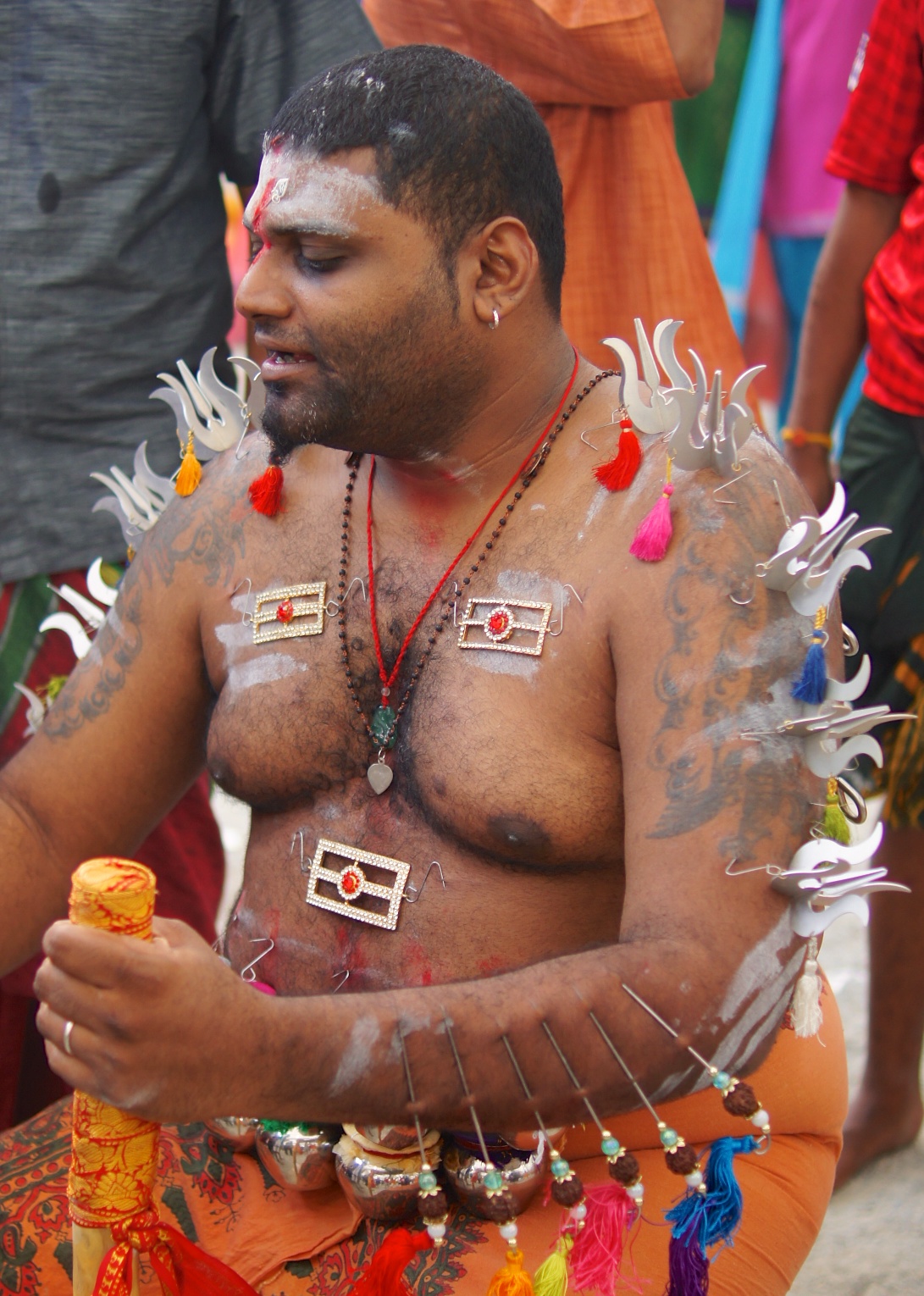
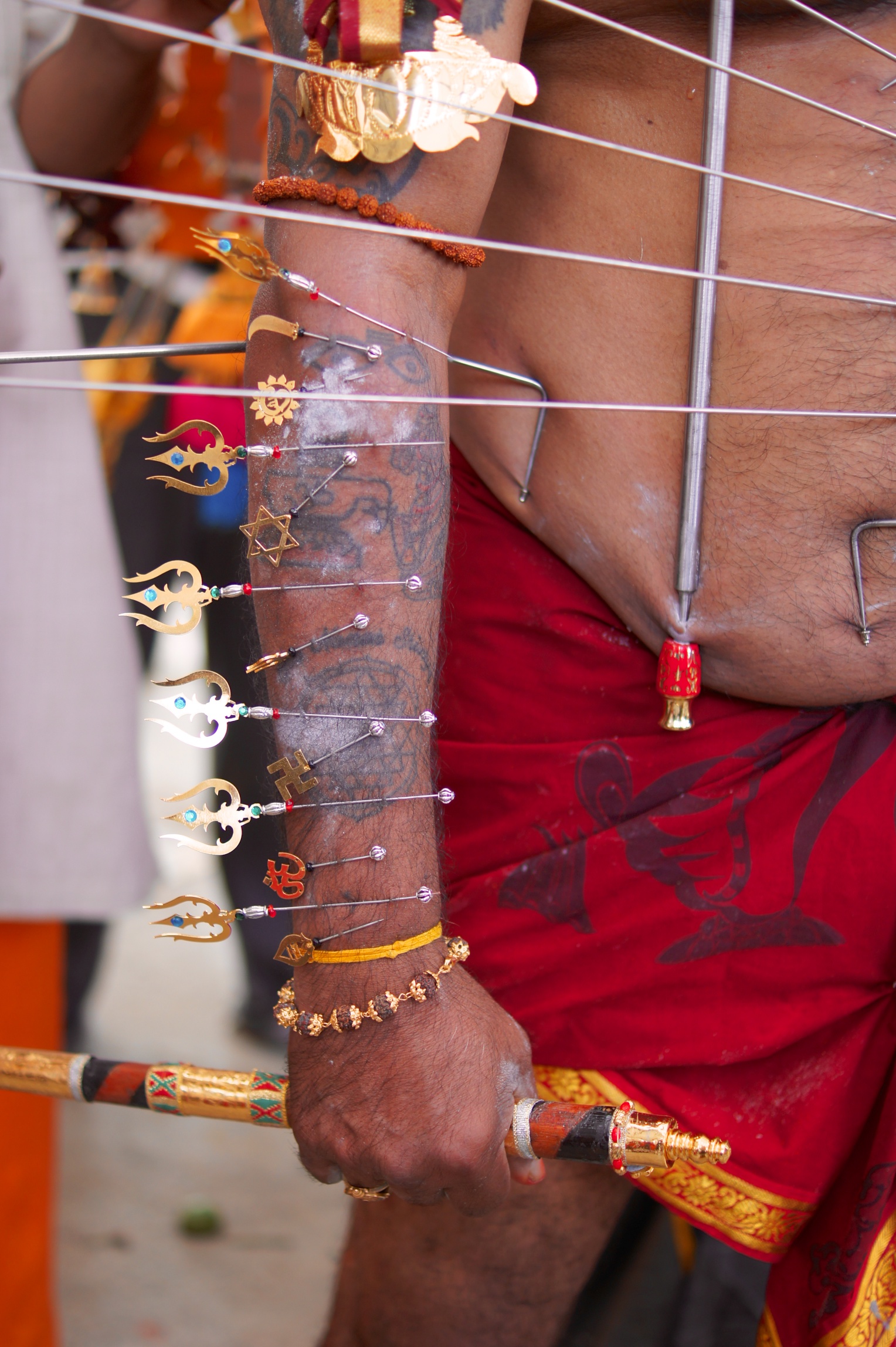
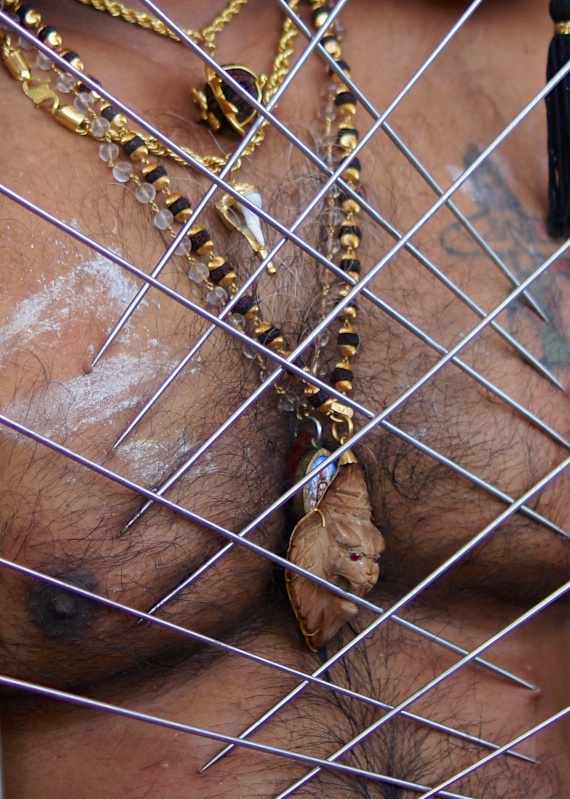
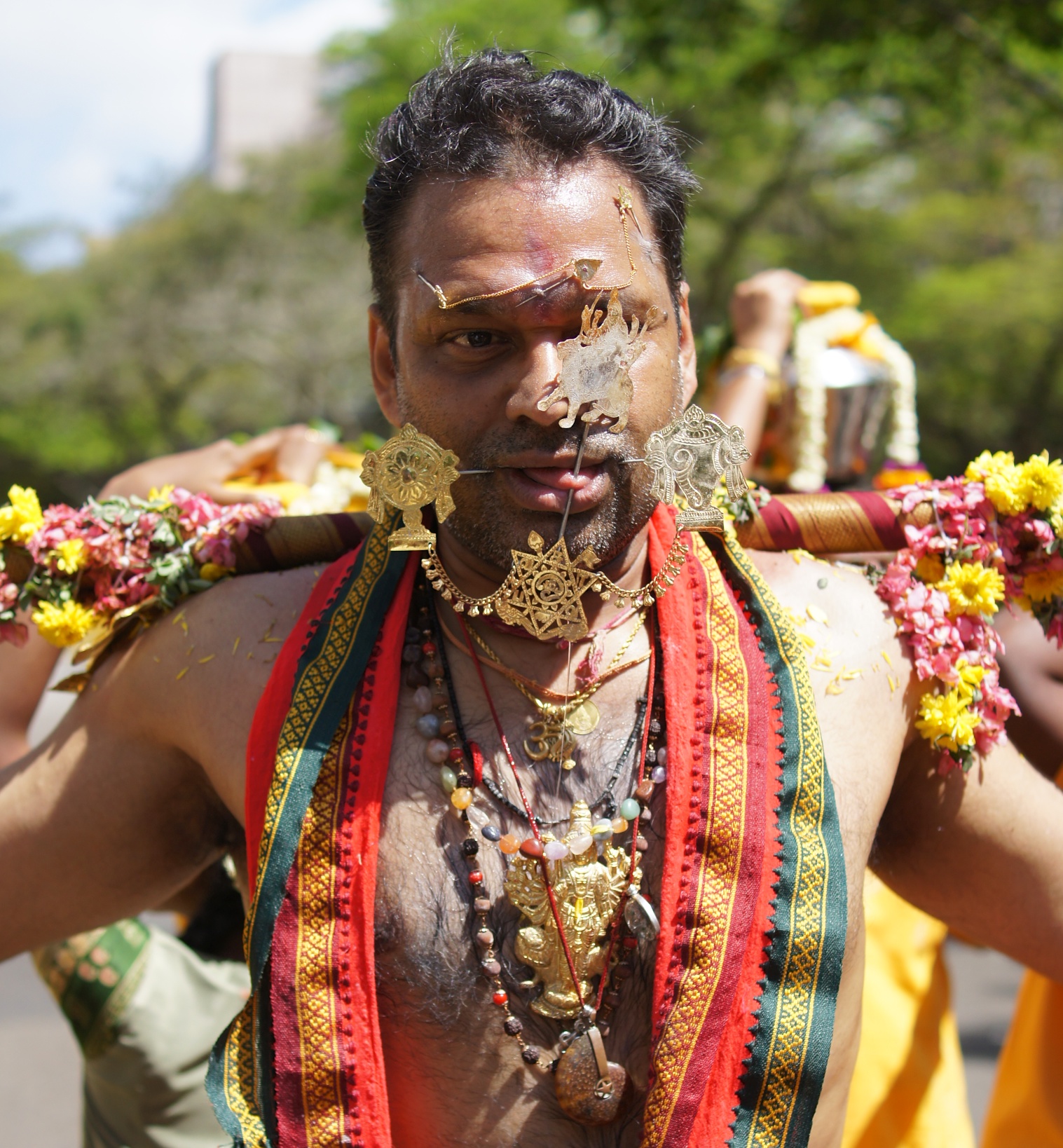
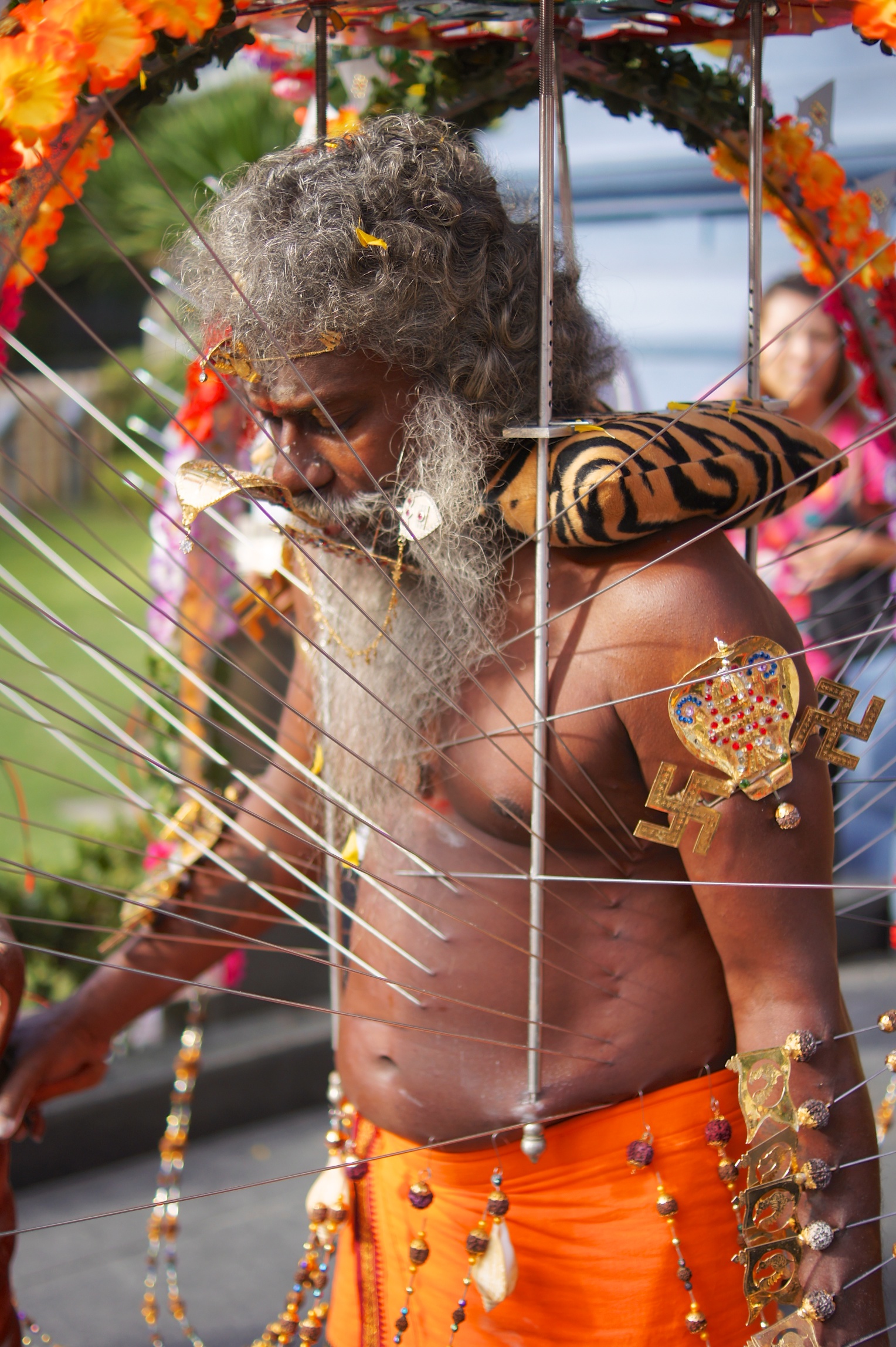
    Muruga (who the celebration honors) is regarded as a destroyer of evil and preserver of good. He is usually depicted with a  spear.  This is why the devotees pierce silver spears in various sizes through the skin of the back, cheek, and tongue.  It is a symbol of stopping evil, purifying yourself, and becoming more noble.


    Thaipusam 19


    Thaipusam 17


    Thaipusam 18


    Thaipusam 7


    The tip of the spear actually goes through the skin.


      Thaipusam 8


    Thaipusam 4


    I think he was psyching himself up for the long walk.


    Thaipusam 2013 c 64


    Thaipusam 14


    Thaipusam 2


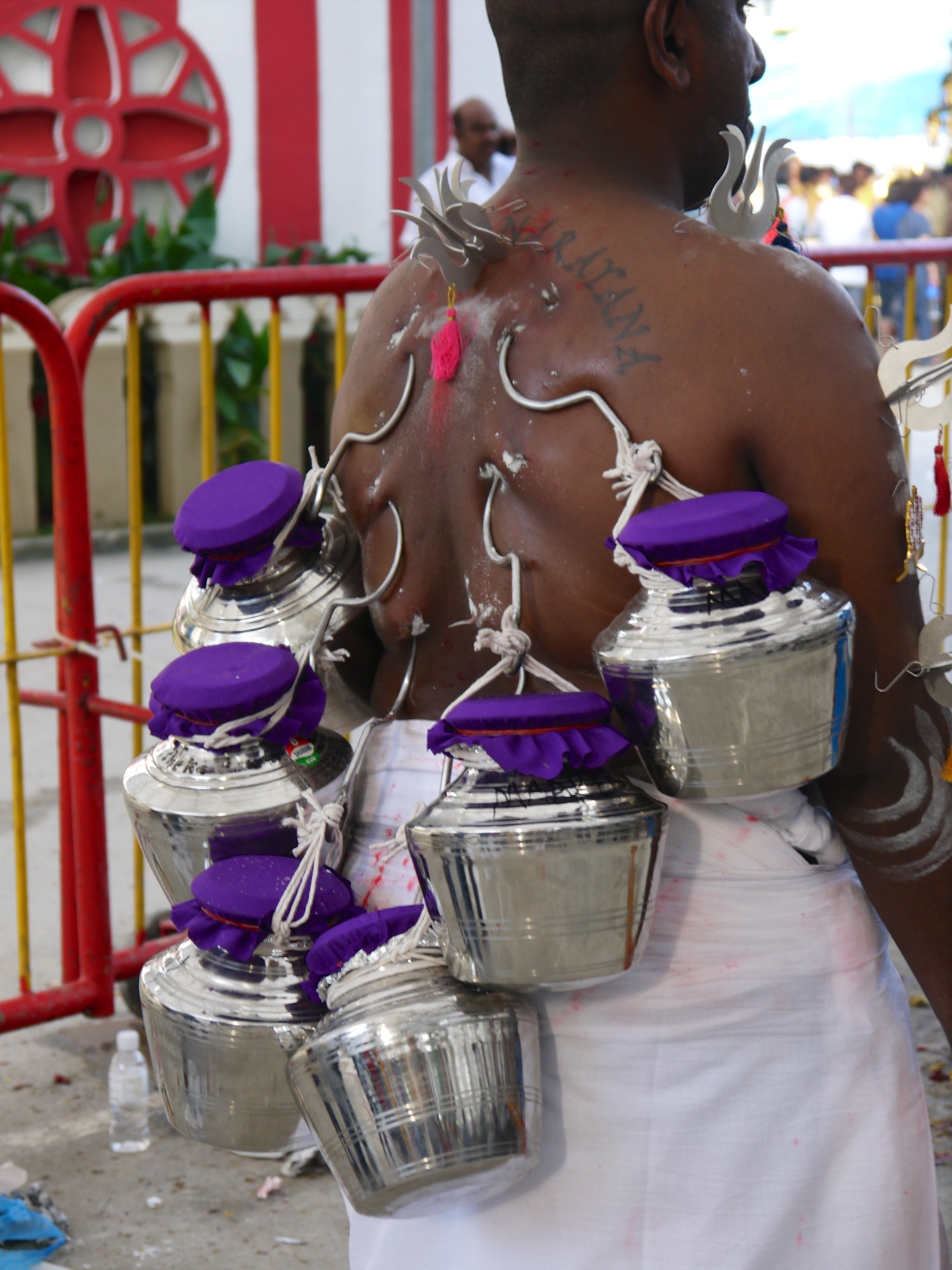
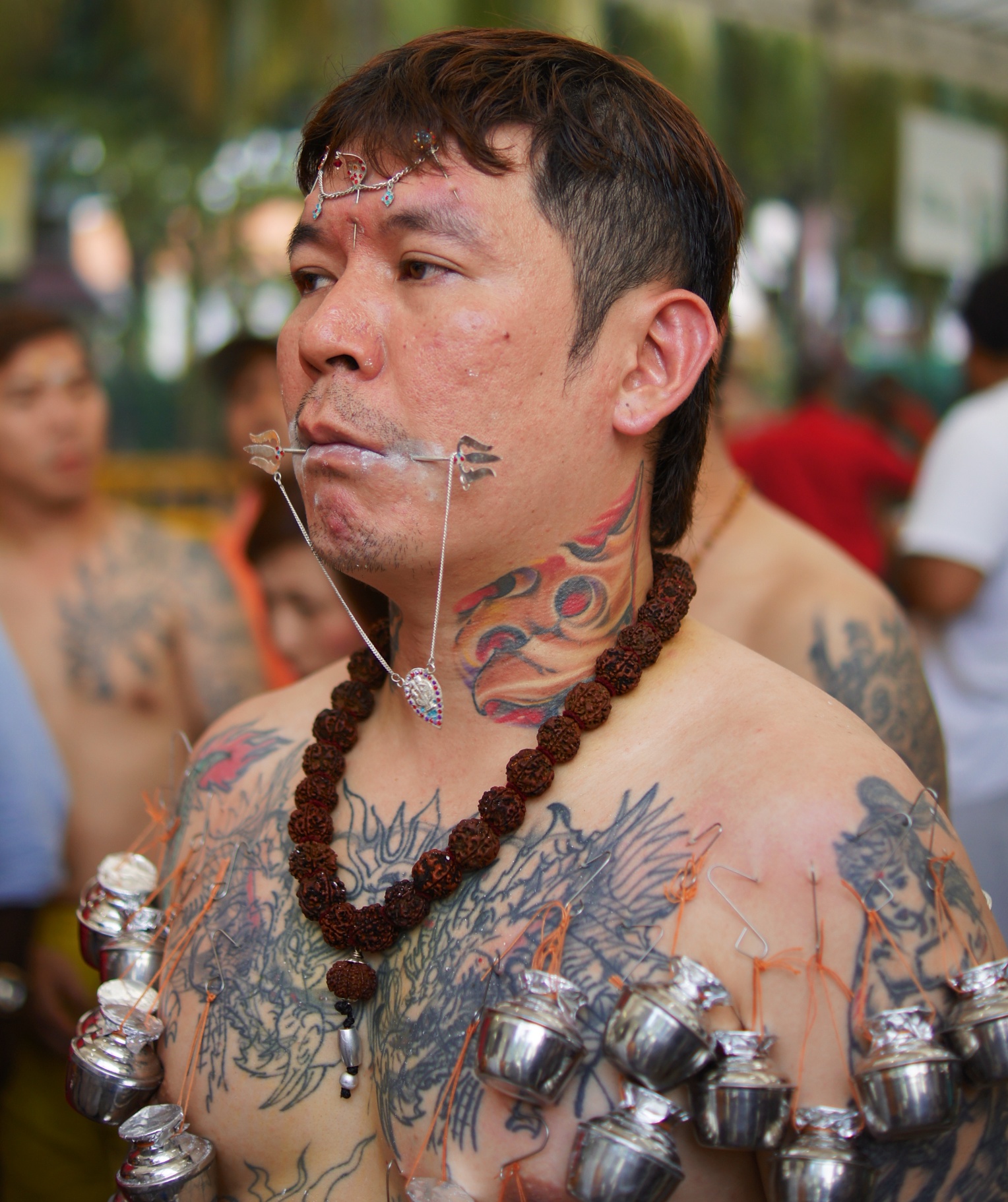
    Jars filled with milk hanging by hooks in the skin is a way to show devotion.


    Small…


    Thaipusam 43


    Medium…


    Thaipusam 42


    LARGE!


    Check out those large hooks to go with those big ones!


    Thaipusam 41


      Thaipusam 12


    Thaipusam 11


    Most devotee are of Tamil – Indian descent.  There were a few Asian guys who participated.


    Thaipusam 45


    Thaipusam 87


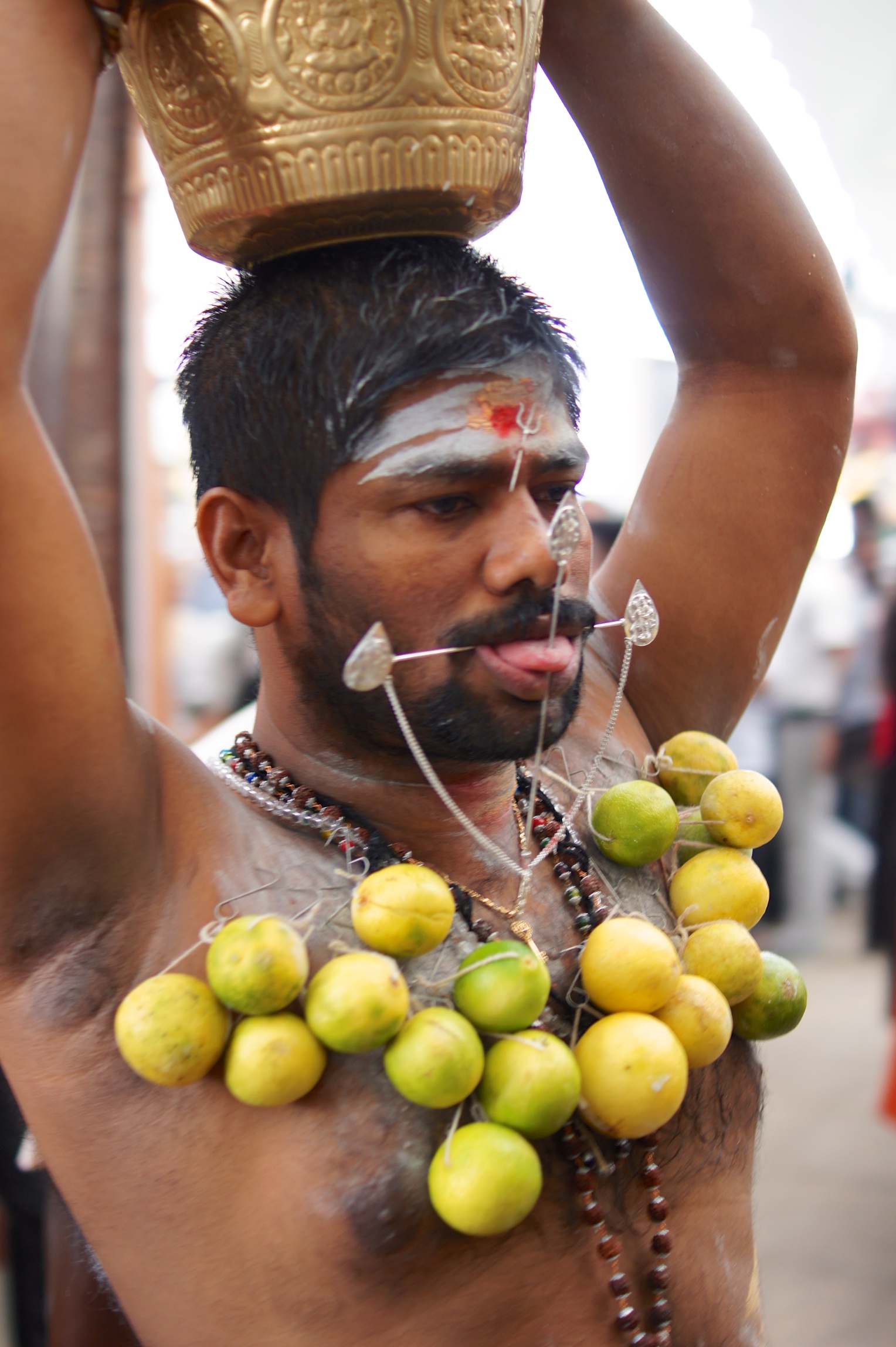
    Another way to show devotion is by hooking smaller burdens like lemons or limes on the chest or back.


    Thaipusam 70


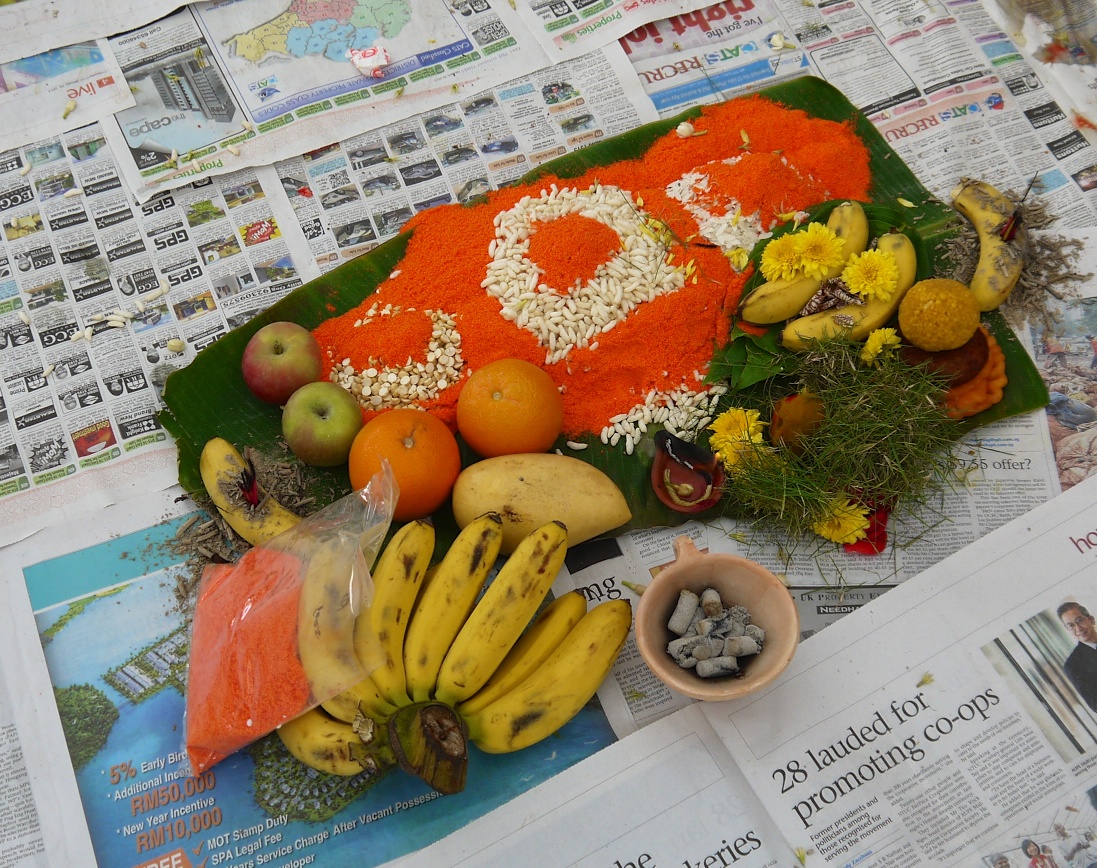
    There were colorful offerings at the temple.  In Hinduism, food plays an important role in rituals and worship.  The food offered to the gods is called prasada. The Sanskrit word "prasada" means "mercy," or the divine grace of God.


    Thaipusam 5


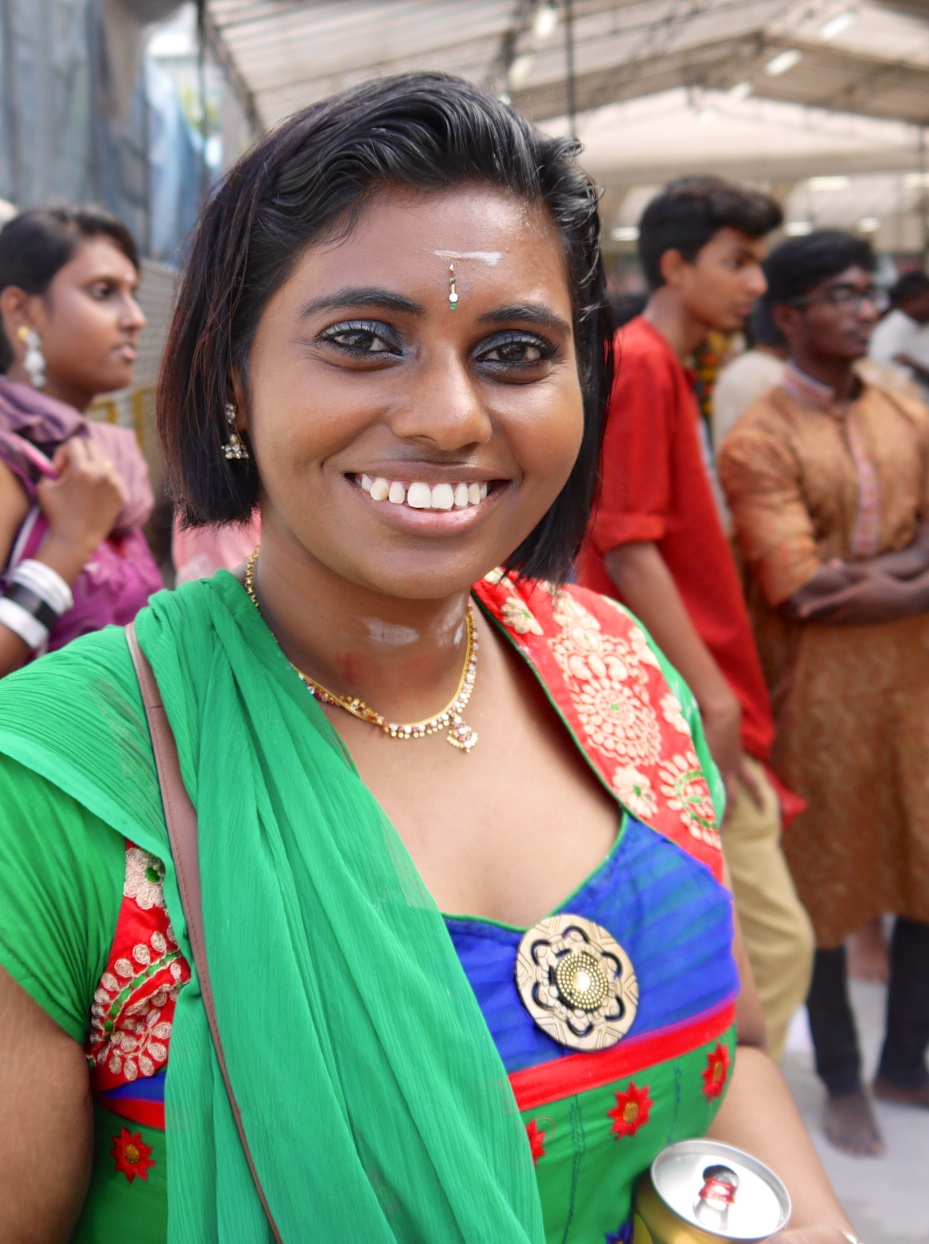
    The three of us separated to take photos in the temple.  After 30 min or so D comes to get me – he says… we’ve been invited to walk with a family!  What?  H was chatting with a young women (below) whose brother was walking for the first time carrying a Kavadi and she asked us to walk with them.  Oh my gosh – what an honor!


    Thaipusam 47


    "Our guy" was a 23-year-old student.  He was carrying his kavati (headdress) with a belt vs directly in his skin.  His sister told us this is a "trainer". 


    Thaipusam 15


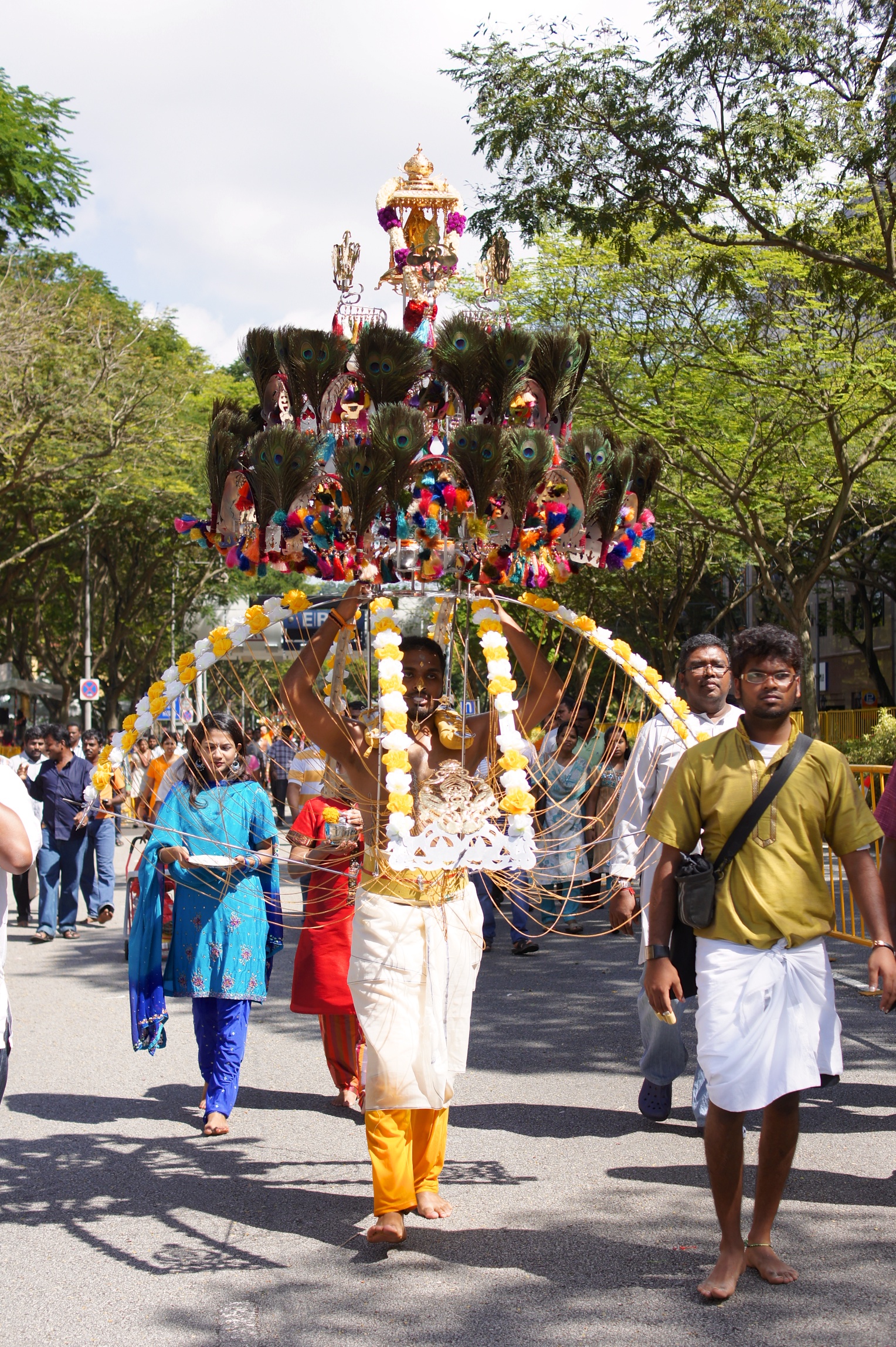
    Thaipusam is a family affair and supporting a kavadi bearer is the duty and honor of each family member.  His sister is helping him with his ankle bells.


    Thaipusam 48


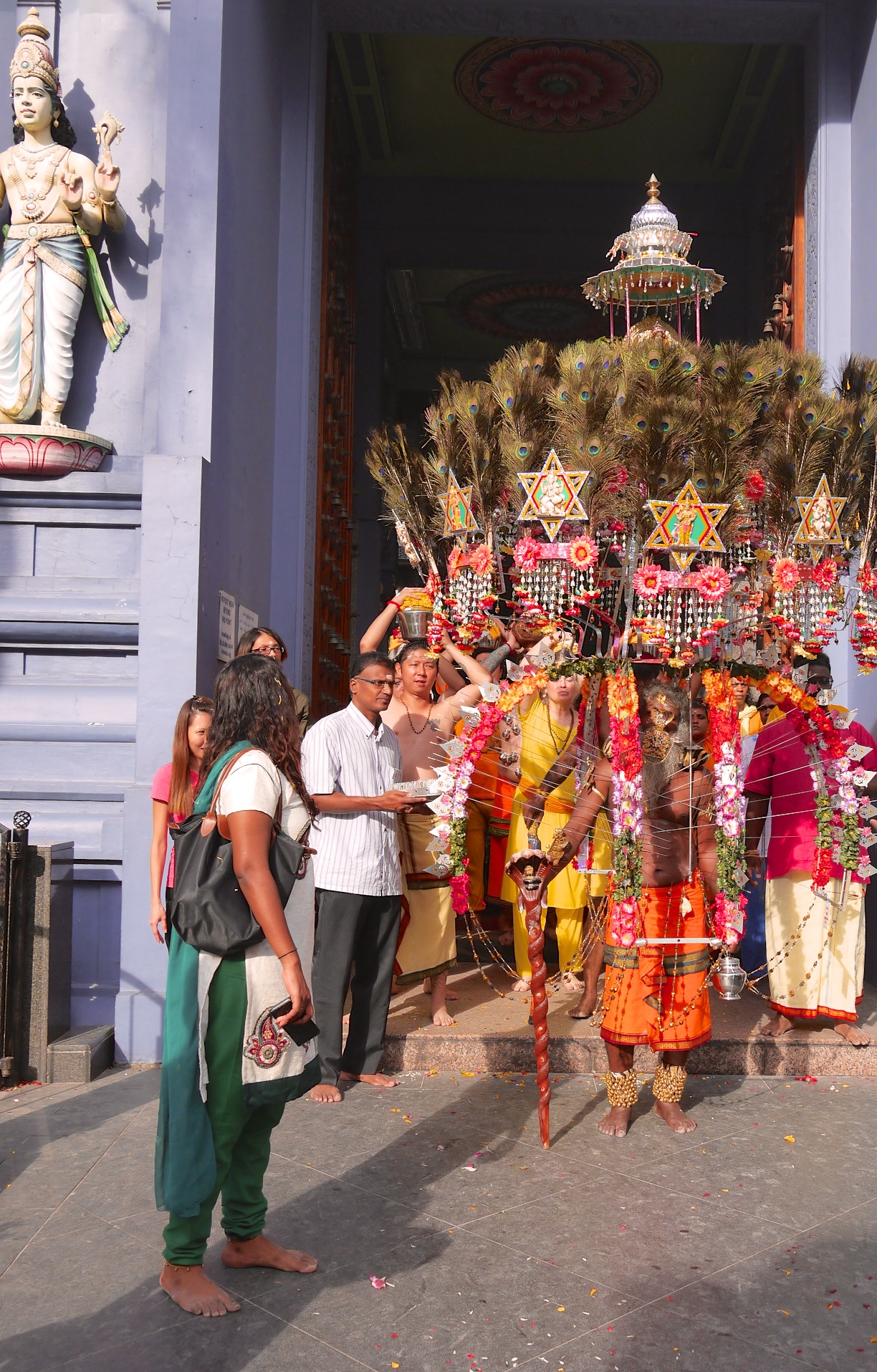
    We felt odd at first, not sure if we really should join in this special celebration.  We decided that we would insult them if we declined.  Here is the view as we walked out of the temple.


    Thaipusam 49


    This photo gives a good perspective on how tall the headdress can be. 


    Thaipusam 50


    The first young man in this video is our guy!  It is hard enought to just walk, every once in awile they dance.  Click on the middle to start the video.


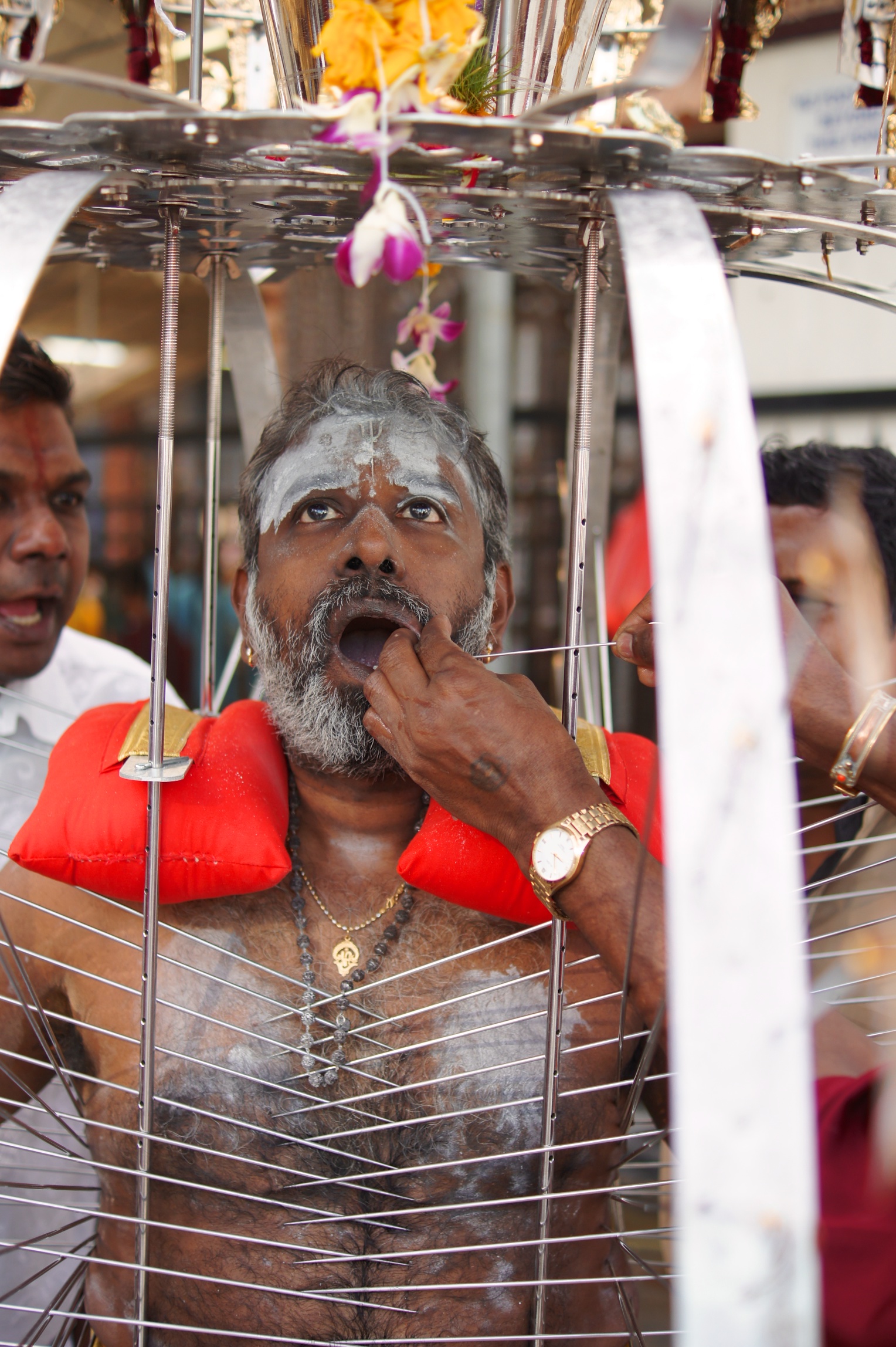
    If you look closely at the more senior devotee below, you can see where his kavadi rod goes directly into his skin on his stomach.


    Thaipusam 51


    Thaipusam 53


     Here is D walking in the parade.


    Thaipusam 55


    It was just over 3 miles and we walked the entire way barefoot.  Although not that big of a deal when you are walking with men carrying heavy headdresses with pins and rods in their skin!


    Thaipusam


    Thaipusam 56


    Some walk the entire three miles on spiked shoes.


    Thaipusam 85


    It was fun seeing the parade from the participants perspective.  One British woman in the crowd made the comment to us that we must be very special friends of the family to be walking with them.  Very few westerners walk in the parade.


    Thaipusam 66


    Thaipusam 83


    Thaipusam 78


    Thaipusam 69


    Thaipusam 60


     Our guy!


    Thaipusam 57


    Thaipusam 67


    Thaipusam 58


     Below is the teen I photographed for the piercing.  I am guessing these are "trainers" as well, as they do not have the weight of the lemons or the milk cans.


    Thaipusam 65


    Very few women participate in the piercing.  But I think there were more this year than last.


    Thaipusam 79


    Thaipusam 80


    Some devotees choose to shave their heads, a symbol of humility and atonement/ fulfillment.  The yellow color on their heads is saffron paste or sandalwood paste.  


    Thaipusam 74


    Even women and children shave their heads.


    Thaipusam 2013 c 51


    Not all worship involves self inflicted pain, and many men and women make the walk with an urn of milk on their head.  I read it is in thanks for any children born that year.


    Thaipusam 88

     Thaipusam 81


    We viewed the ceremony from a very different perspective this year.  We saw the love and loyalty of family and friends.  This is my favorite photo below  It was at the very end of the parade and they were backed up getting into the temple to take off all the spears and head wear.  It was very hot and they had been walking for over 4 hours.  Our guy is holding on to his sister and father.  I love his sister's worried look on her face – feeling the pain and exhaustion her brother was experiencing.


    Thaipusam 86


    We did know their names; I just did not want to put them in the blog.  We also talked with his friends and family as we walked.  A few hours into it we were even clapping along with them.  We did not understand the chants so we could only clap.

    Certainly an experience we will never forget!


  •  


     Vientiane and Luang Prabang, Laos

    November 2012


    Highlights from our trip….


    Monk procession 19

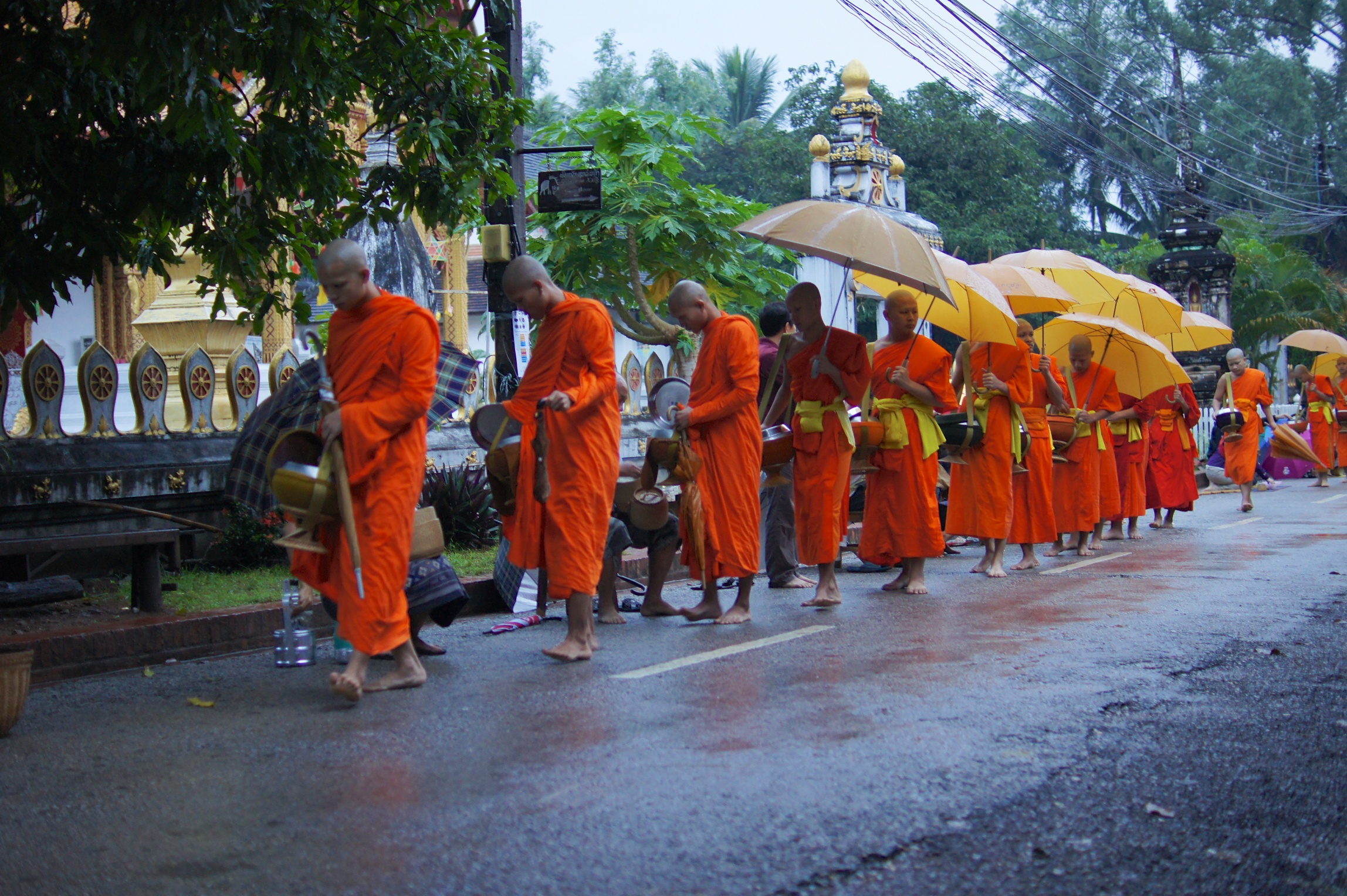
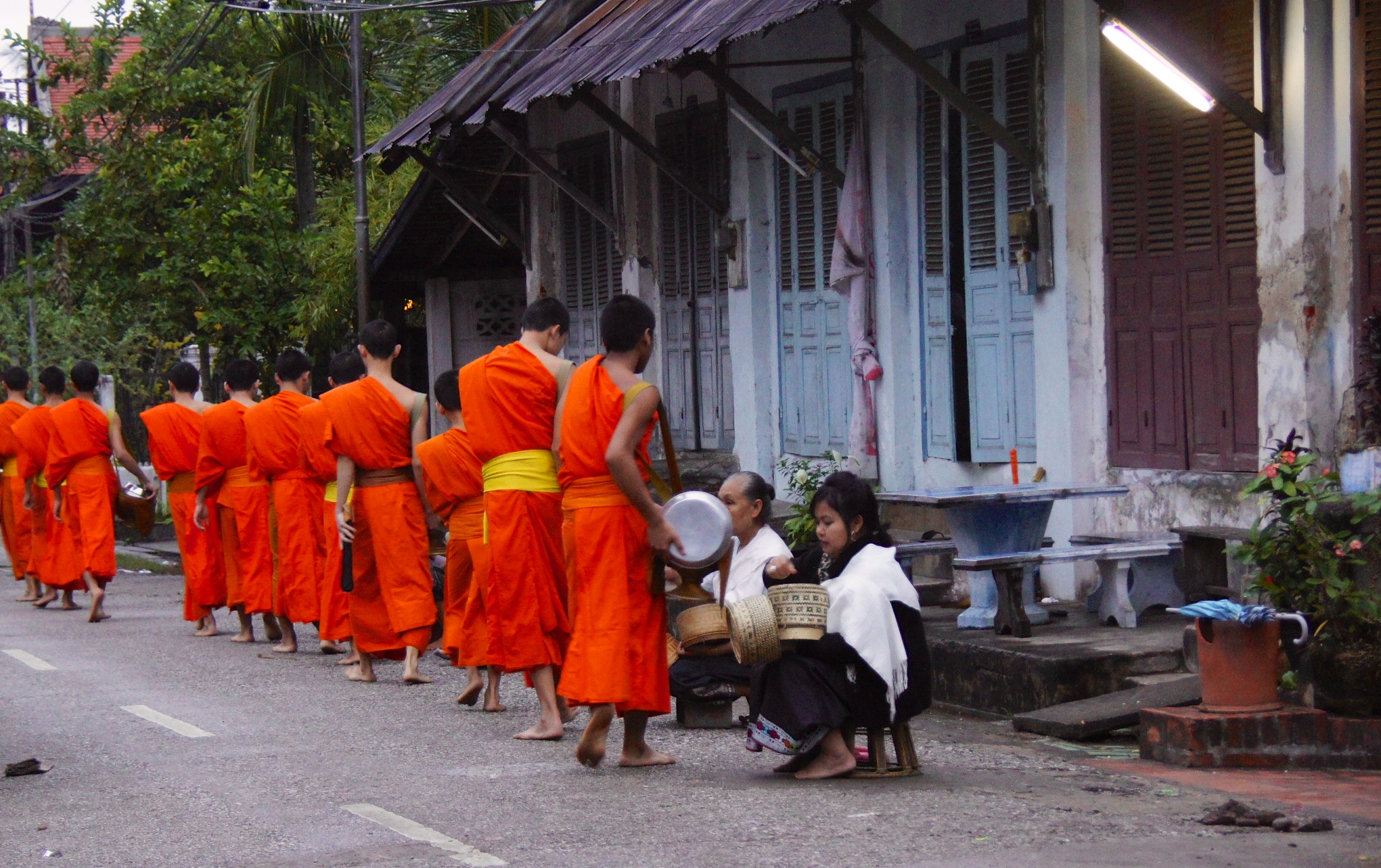
    The procession of the monks.  This ritual takes place every single day
    in Luang Prabang.  It is called "tak bak", or the gathering of alms.  It
    starts around 6 am, rain or shine.  Unfortunately, two of our mornings
    it was in the rain.
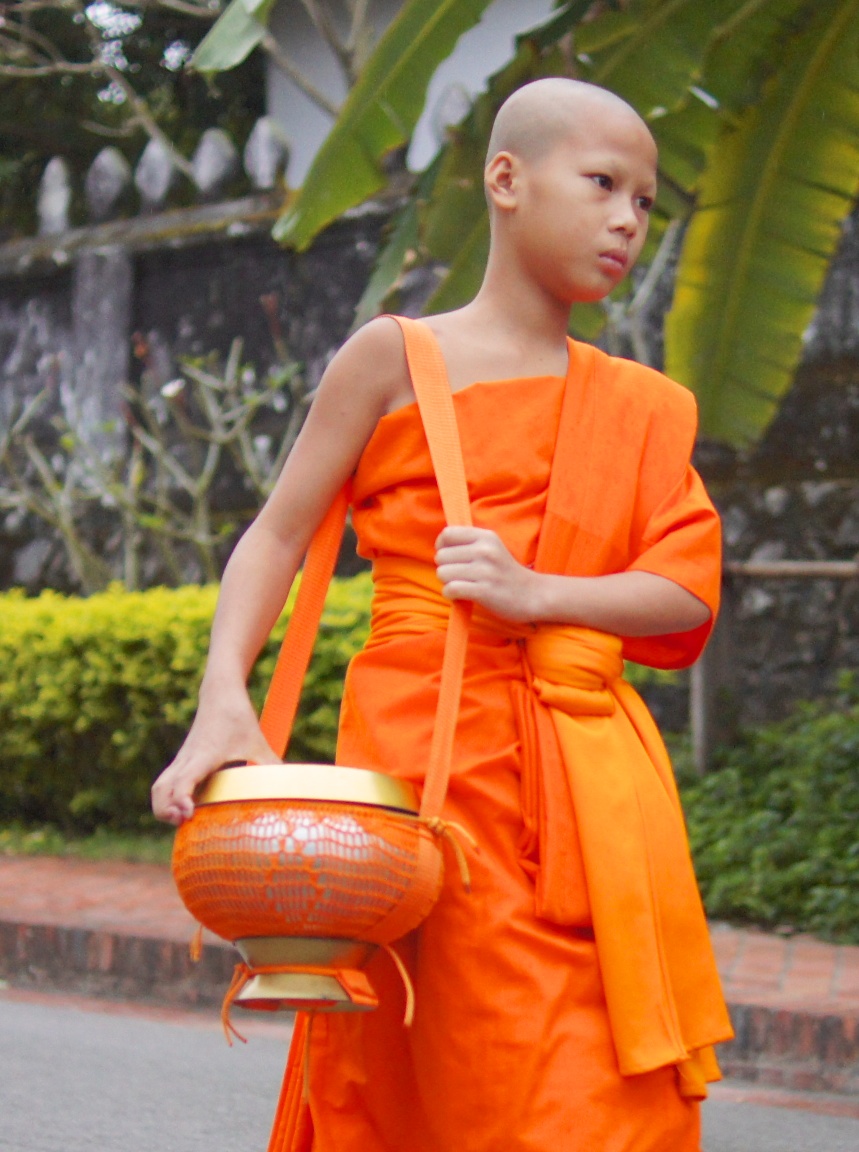
      And
    I did ask the monk above if I could take his photo by pointing at my
    camera.  


    Monk procession 2


    We were surprised at the quantity of monks.  All walking silently, single
    file, collecting food in their bright saffron robes.  The procession is ordered from the oldest to the youngest monk. 


    Monk procession 3


    Each
    monk carries a large bowl, attached to a strap hanging from his shoulder.  Sticky rice is the most common food given, but they also
    receive fruit, crackers, and cookies.


    Monk procession 8


    It is thought, that if you feed the monks, it will
    bring you good karma.  We both took
    turns feeding them, but not for that reason.  We just wanted to help.


    Monk procession 11


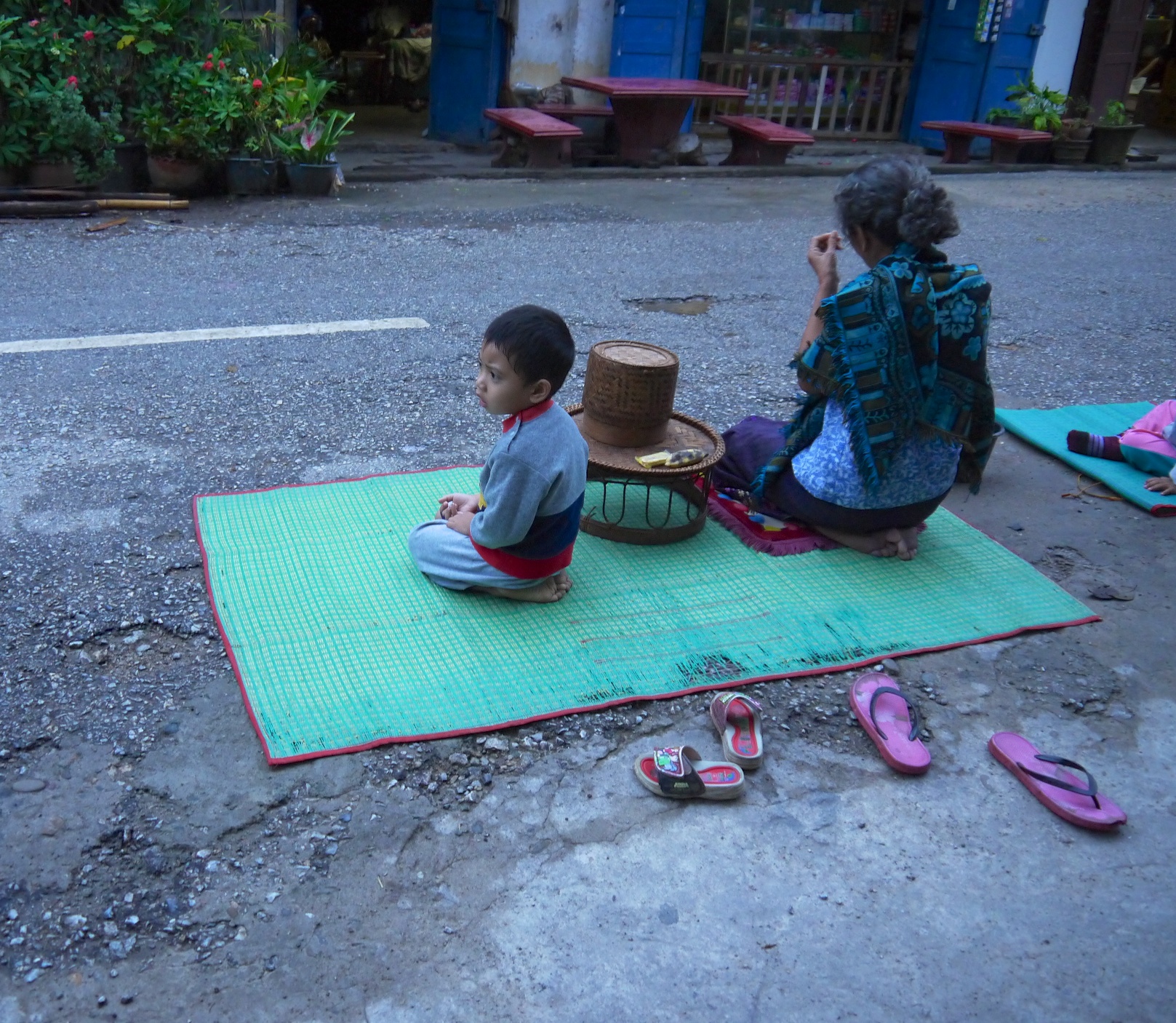
    Locals feed them everyday.  They sit down on a mat,
    take off their shoes, and kneel to feed them.  We wondered if this little guy did it with his grandma every day?


    Monk procession 12


    The first day D fed them from a bowl of rice we purchased from a
    local woman.  He was giving out
    pretty big fistfuls, and then we realized just how many monks there
    were.  He ran out very quickly.  We then watched the locals give out a
    tiny pinch. 


    Monk procession 15


    With almost eighty temples
    in Luang Prabang, this adds up to hundreds of monks, who take different
    routes depending on where their temple is located.


    Monk procession 4


    Most practice Theravada Buddhism.  Theravada
    is the dominant form of Buddhism in Southeast Asia and it is the "oldest"
    school.  


    Monk procession 6


    Unfortunately, with the increased tourism in Luang Prabang it has
    endangered the tak bat ceremony, as many tourists view the ritual as a tourist attraction, not as a
    religious ceremony to be respected.   We tried to respect them and stay off to the side (the photos were zoomed in).  


    Monk procession 7


    They
    say that Lao's officials are considering stopping the ritual as too many
    tourists are interrupting the ceremony and using flash, which distracts
    them from their meditation.  We did not use flash on our cameras.  See
    my dos and don't list so we can all help to preserve this
    ceremony.


    Monk procession 1


    An interesting thing is that most of the locals
    are poor themselves.  We watched
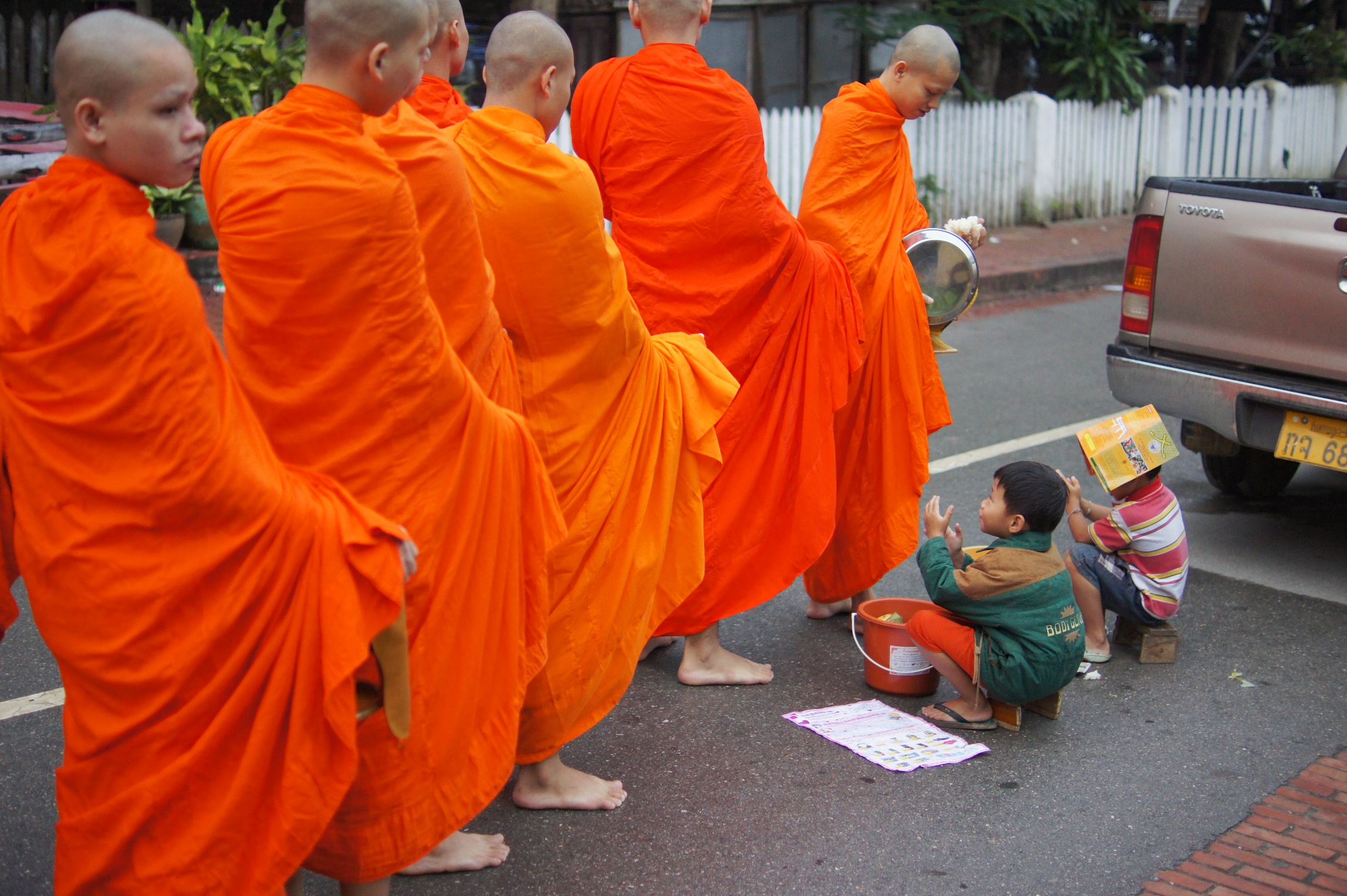
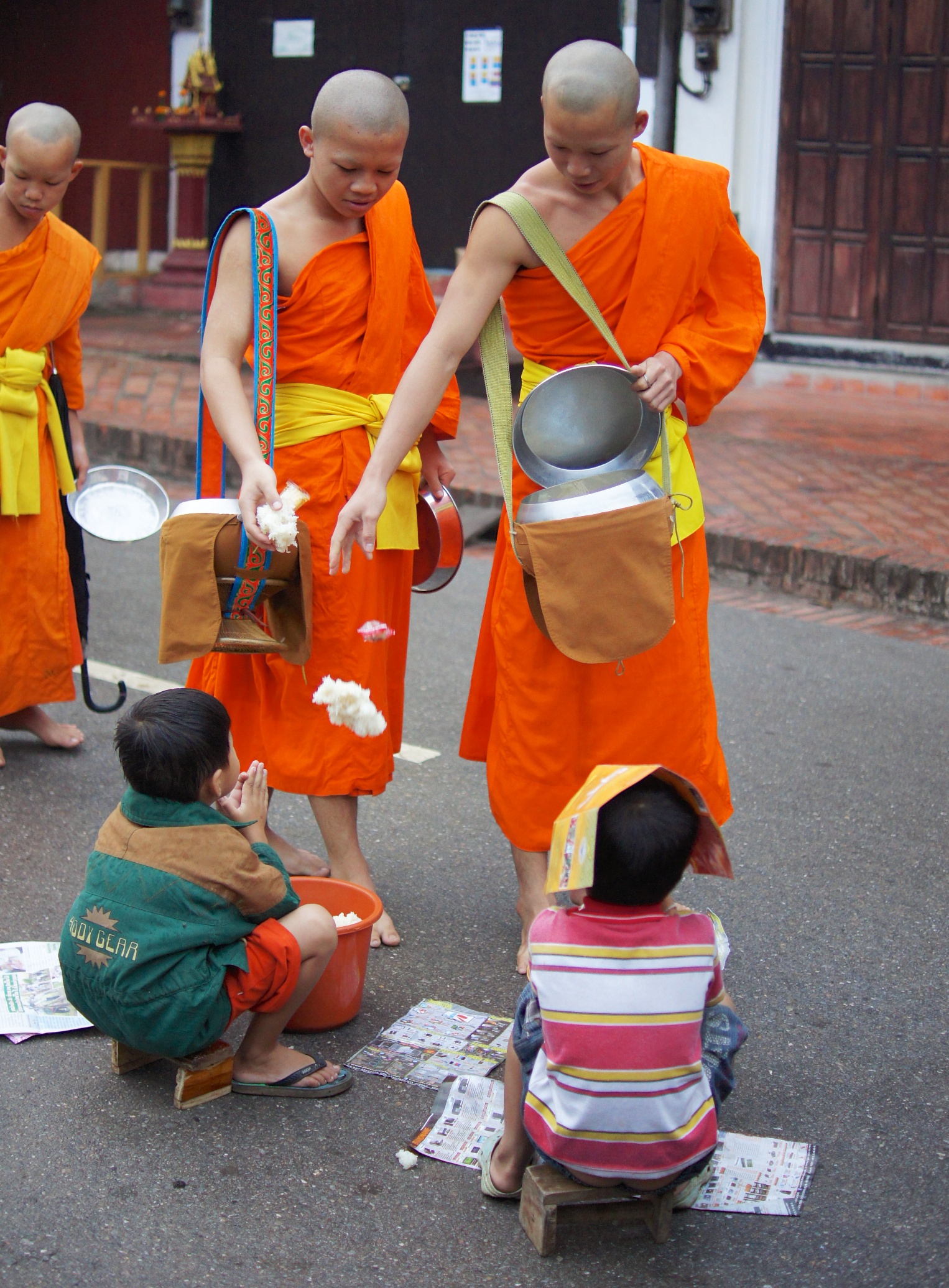
    the monks give food back to young children and dogs.  It was a fascinating system.


    Monk procession 14


    Here you can see the older monks dropping large handfuls of rice into the children's baskets.


    Monk procession 9

    I
    love this shot with the monk looking up at us.  The ritual
    is done in silence; the alms givers do
    not speak, nor do the monks. The monks walk in meditation.


    Monk procession 10


    This ritual has been going on for many centuries.  It is a symbiotic relationship between
    the monks and the alms givers.   Tak bat supports both the monks (who need the
    food) and the alms givers (who need spiritual redemption).


    Monk procession 5


    I
    wondered if it bothered the monks to have to eat food handled by so
    many different people (referring mainly to the tourists).


    Monk procession 13


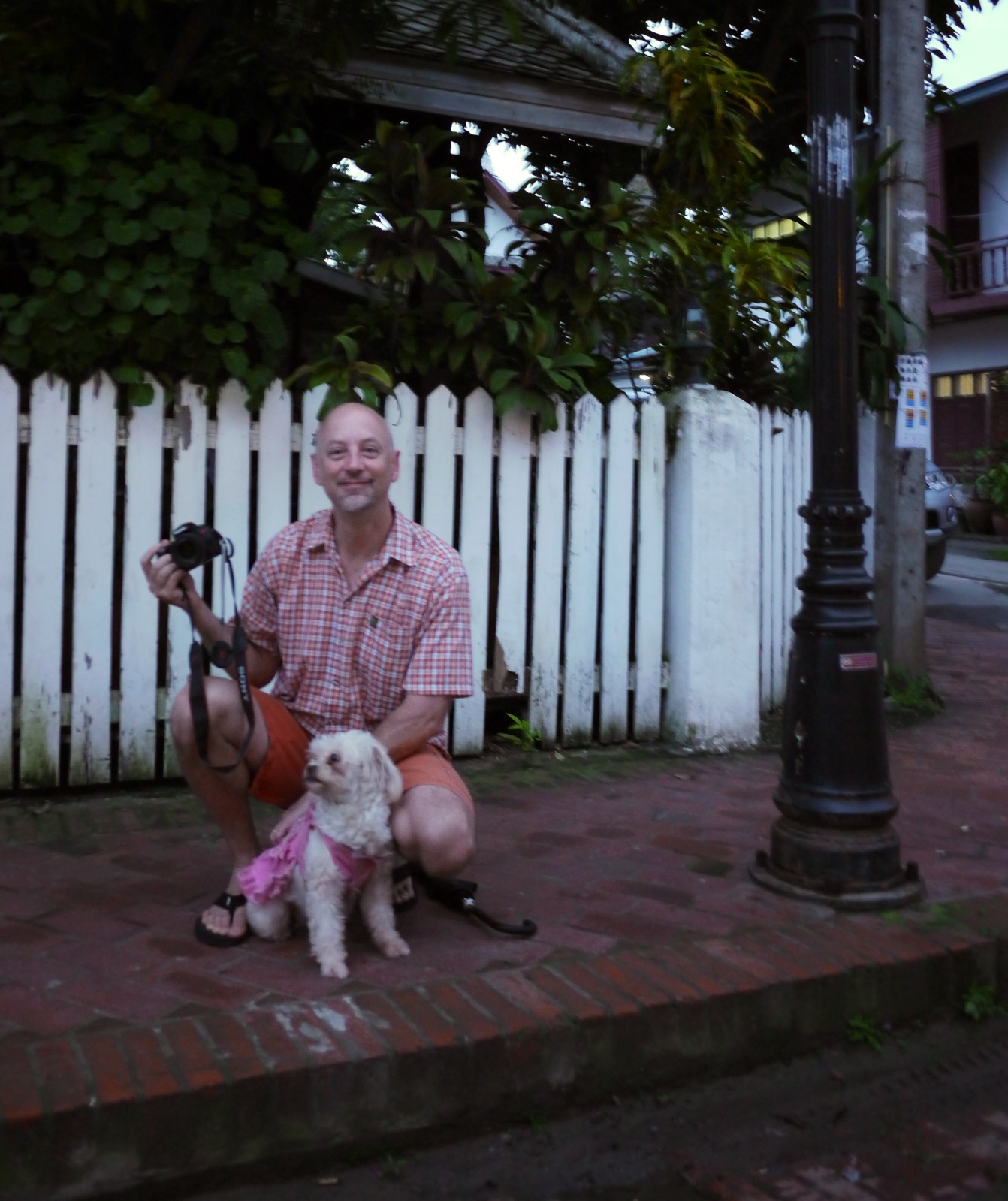
    The dogs have become very smart and follow the monks for small treats.  D made a little friend.


    Monk procession 16


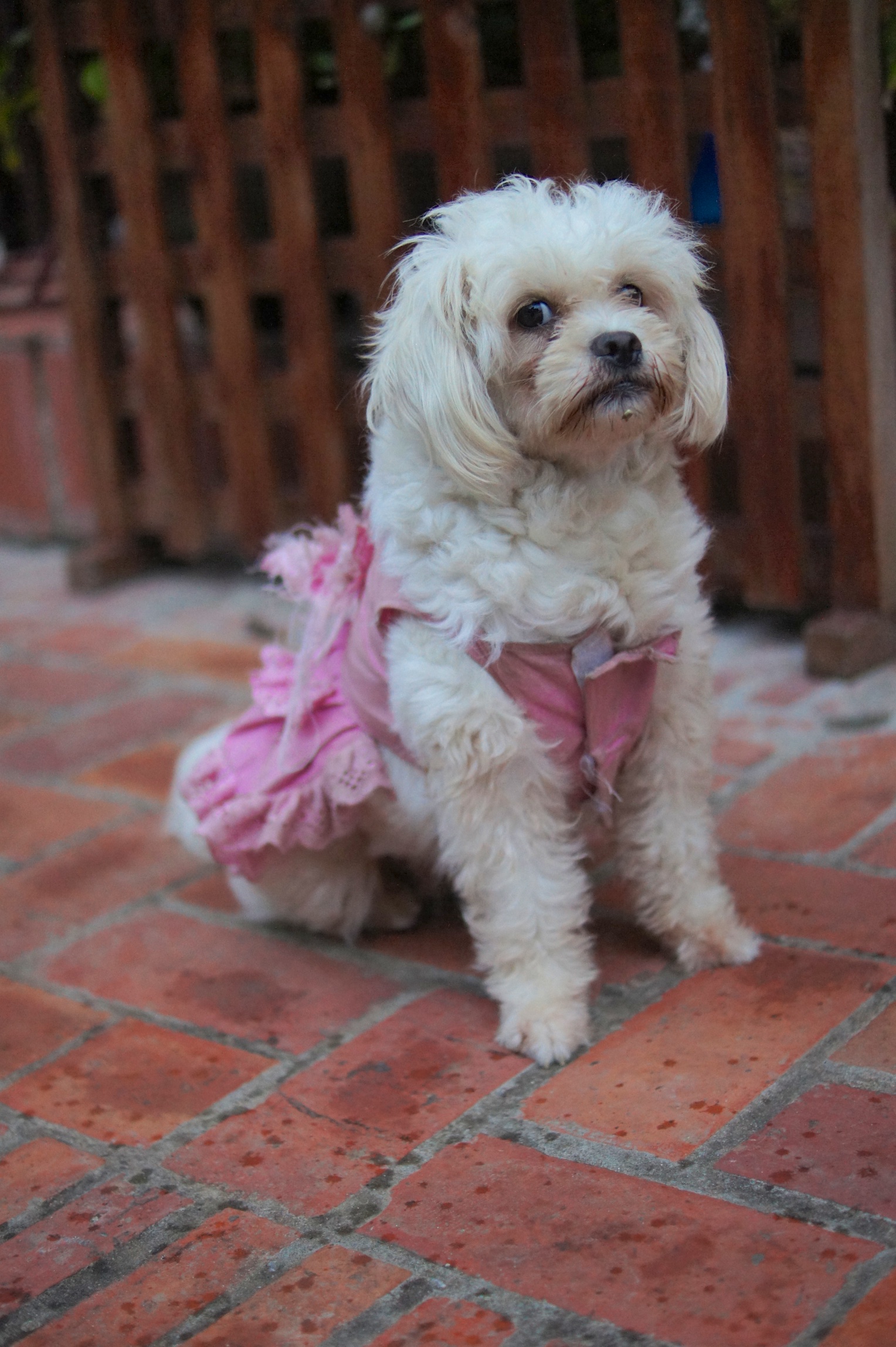
    It surprised me that in such a poor country a dog would have a dress???  And
    then the condition of it… notice how tattered the little dress is.  Like
    so many of the children, she has worn her dress very hard. 


    Monk procession 17


    Here is a list of
    "dos" and "don'ts" to help you, if you plan to visit:


     When you give alms:

    Kneel to feed the monks.  Take off your shoes.  Make sure your head is not higher than theirs.  Bow to show respect.  Make sure you are properly dressed i.e. no shorts or sleeveless shirts (same rules as when you visit a temple.  Do not make eye contact.  Do not touch them.  Do not talk to them.

    When you are not giving alms: 

    Keep a respectful distance.  Use your camera zoom.  Do not use your flash.  You will be tempted as they walk at sunrise and there is little light.  Do not make eye contact.  Do not touch them.  Do not talk to them.


    The Elephants


    The other highlight was our fabulous elephant ride.  Click here to read the full post on this adventure.


    ELEPHANT RIDE 48


    The Children


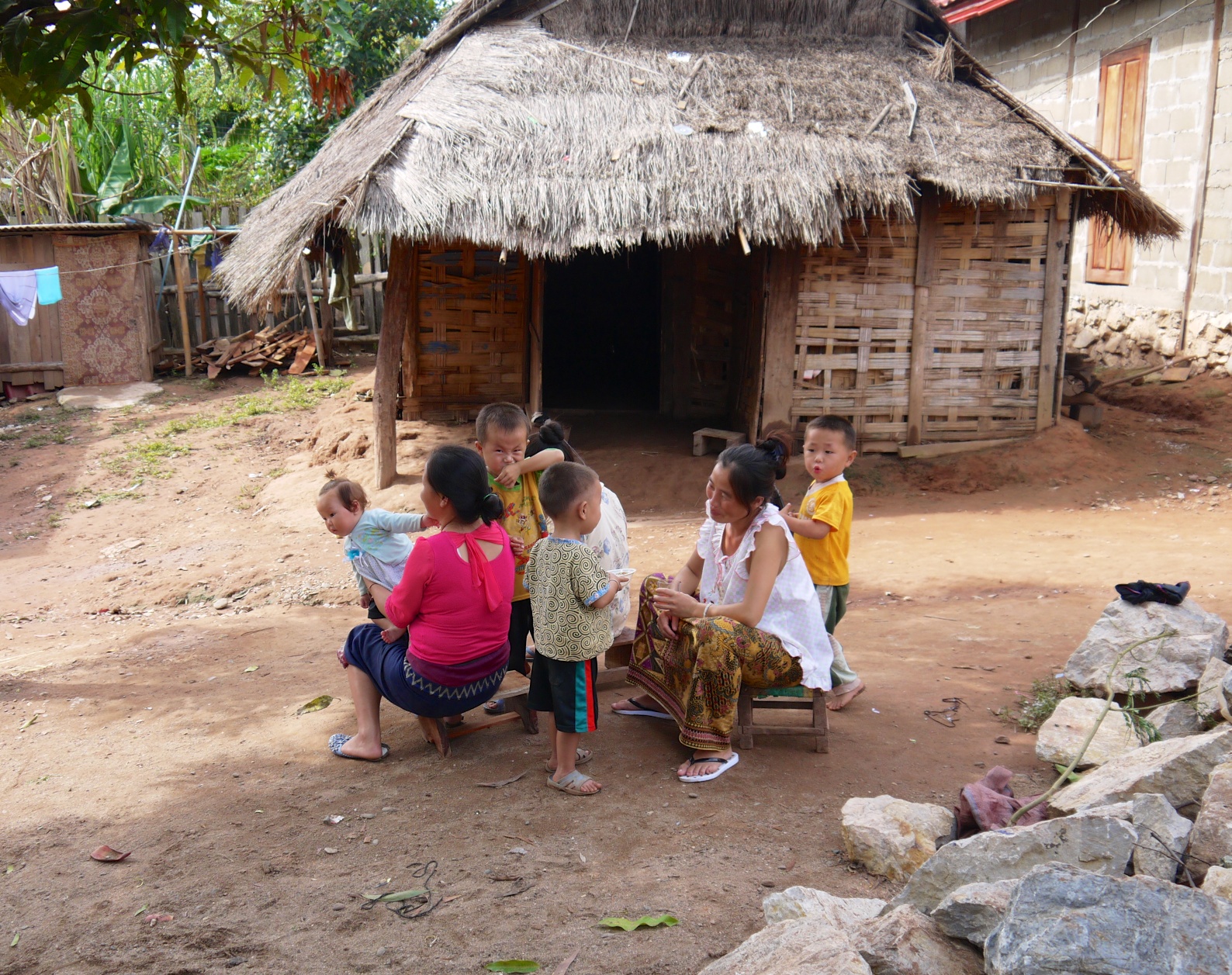
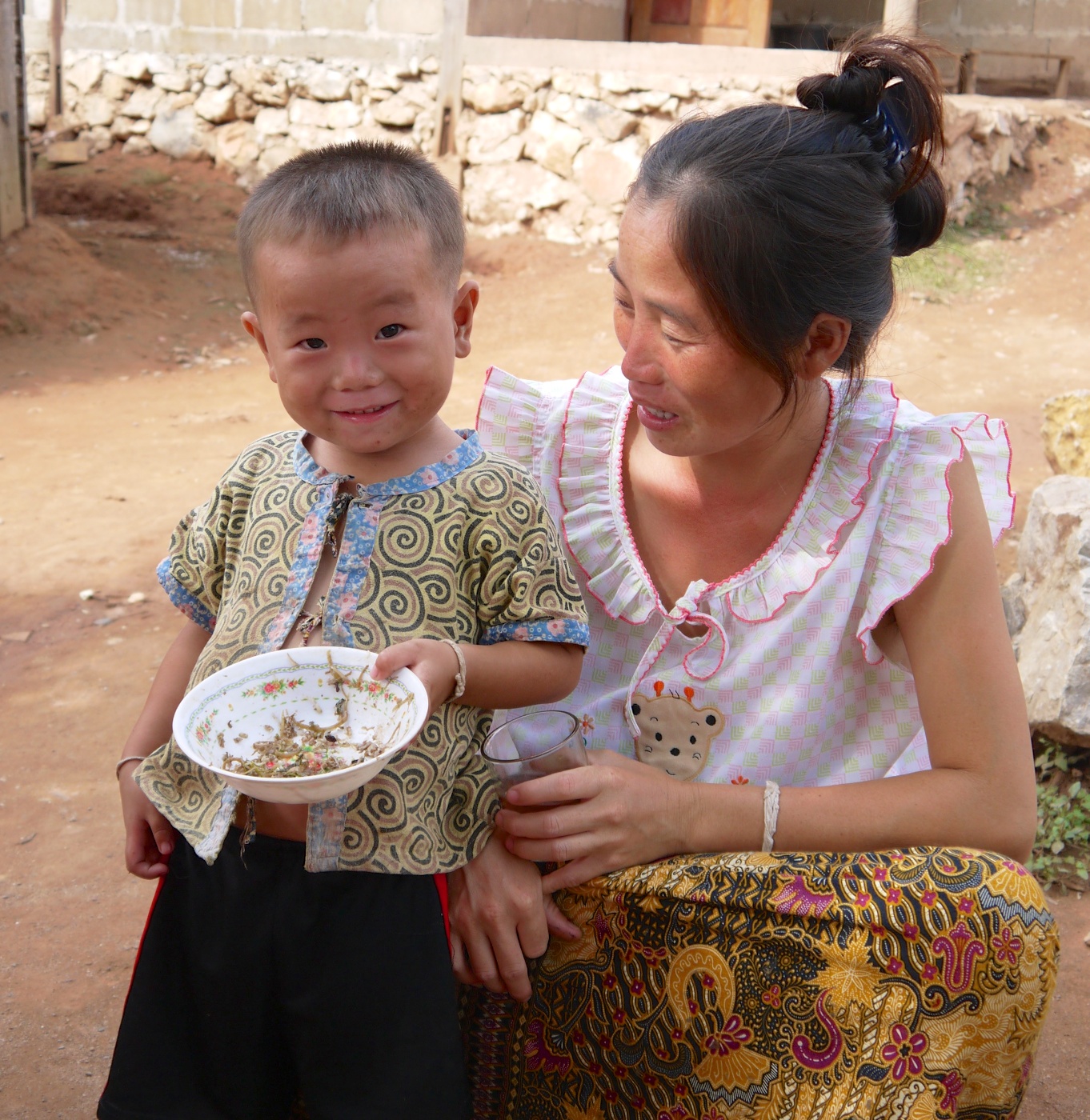
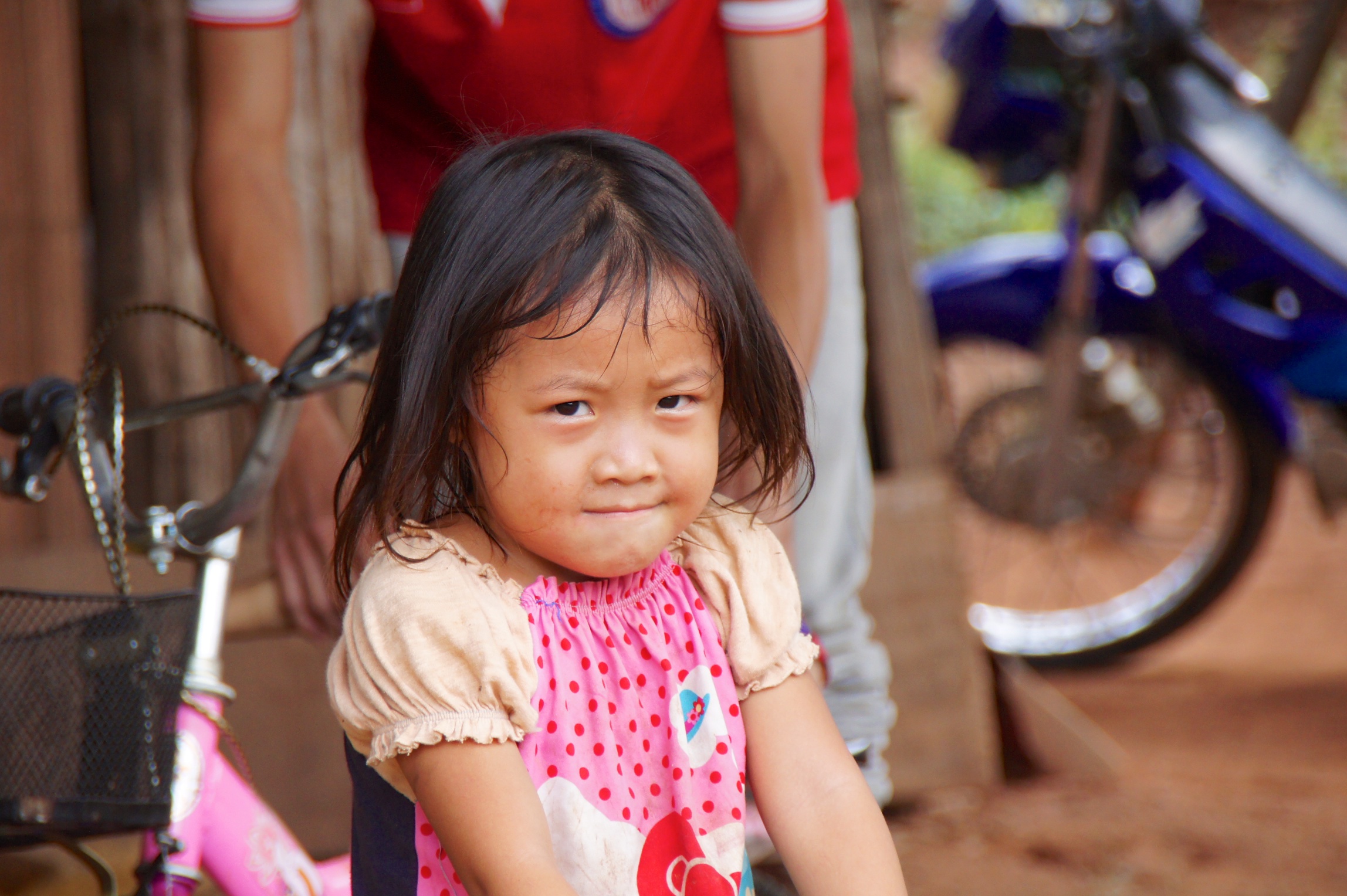
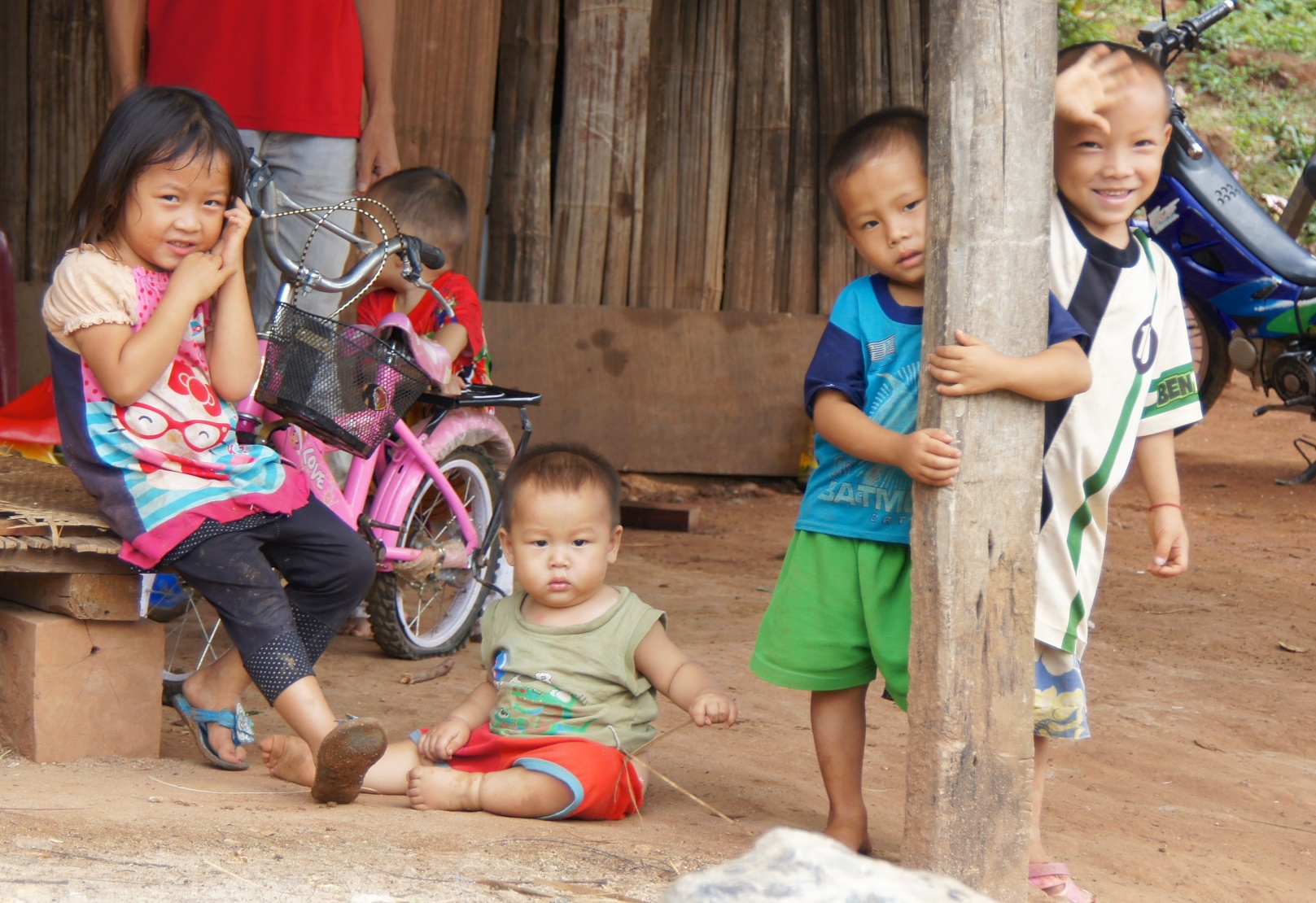
    We enjoyed getting off the beaten track to see how the local live.   We took several photos of the village children.  To see these photos, click here.


    Laos 62


    Temples and Buddhas


    Laos is the only landlocked
    country in Southeast Asia.  It is
    bordered by Burma, China, Vietnam, Cambodia and Thailand.  Its population is
    close to 6.5 million
     .  You can trace Loas history to the kingdom of Lan Xang
    (Million Elephants), founded in the 14th century.


    Laos 15


    I love the shape of the Temples in Laos.  Their architecture is a mix of French colonial and Buddhist with some
    influences from Thailand.  The Haw Pha Bang or Royal Palace is a relatively new structure, built in 1963.   


     Laos 2


    Up until very recently, Laos was difficult to travel
    to because of war and politics. 
    Now, Laos is considered a hot spot for travelers.  We were walking around Vientiane for
    about 15 minutes and I turned to D and said I have not seen a single Laos
    person – I have only seen tourists. 
    And most were young backpackers. 
    This surprised us.  I love this image below.  The young monk with a cell phone!  It shows how times have changed.


    Laos 9

    The main attractions for tourists include food,
    temples (wats), Buddhist culture and architecture.  Luang Prabang was made a UNESCO World Heritage
    site in 1995.  


    Laos 3


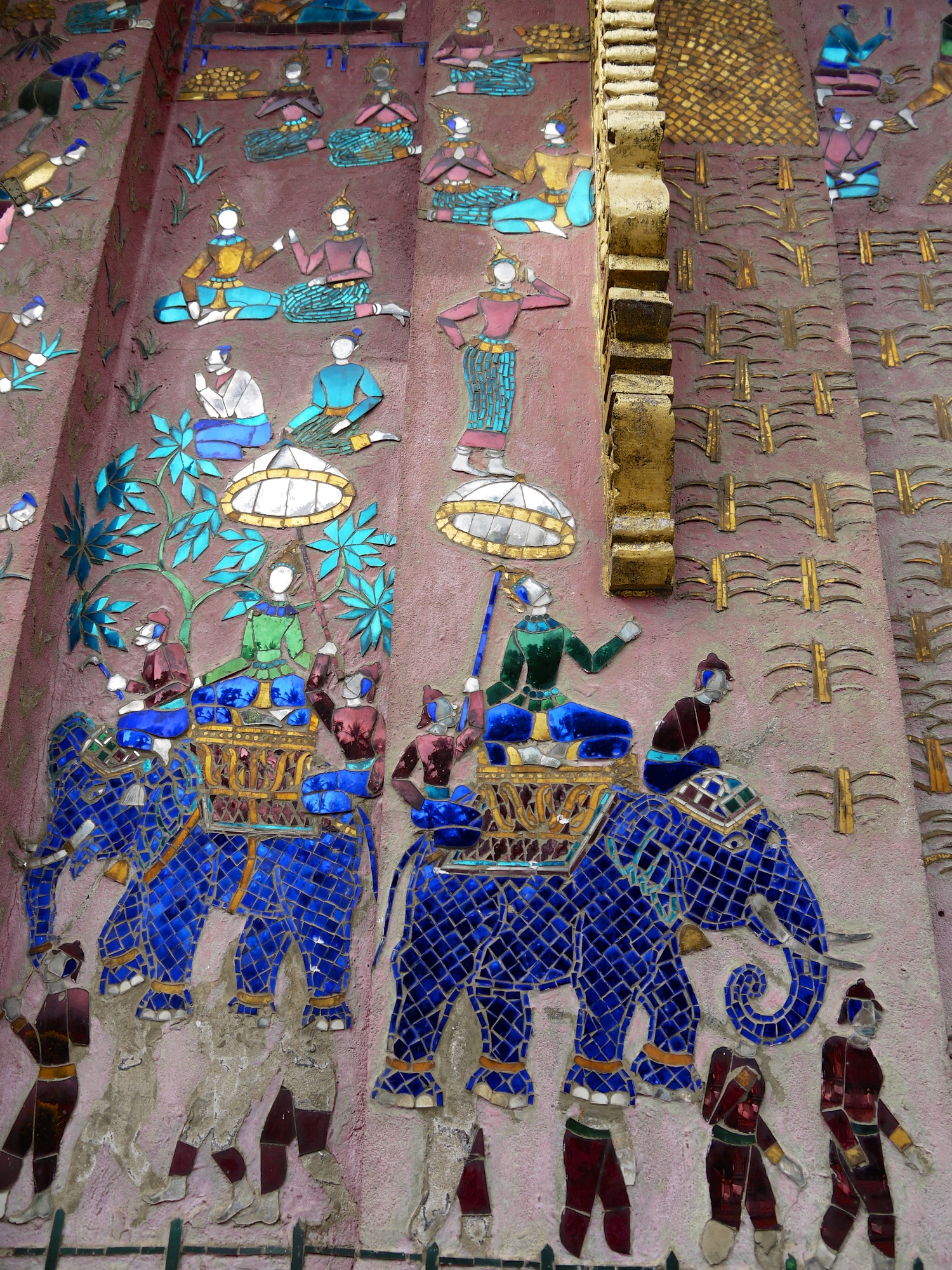
    Wat Xieng Thong was built in 1559-1560 and is one of the most important temples in Laos.  During the 1960s it was completely
    remodeled and redecorated.  The image above shows
    its famous Tree of Life mosaic in colored glass on
    a dark red background, created in 1960 by a Laos artist.  


    Laos 4


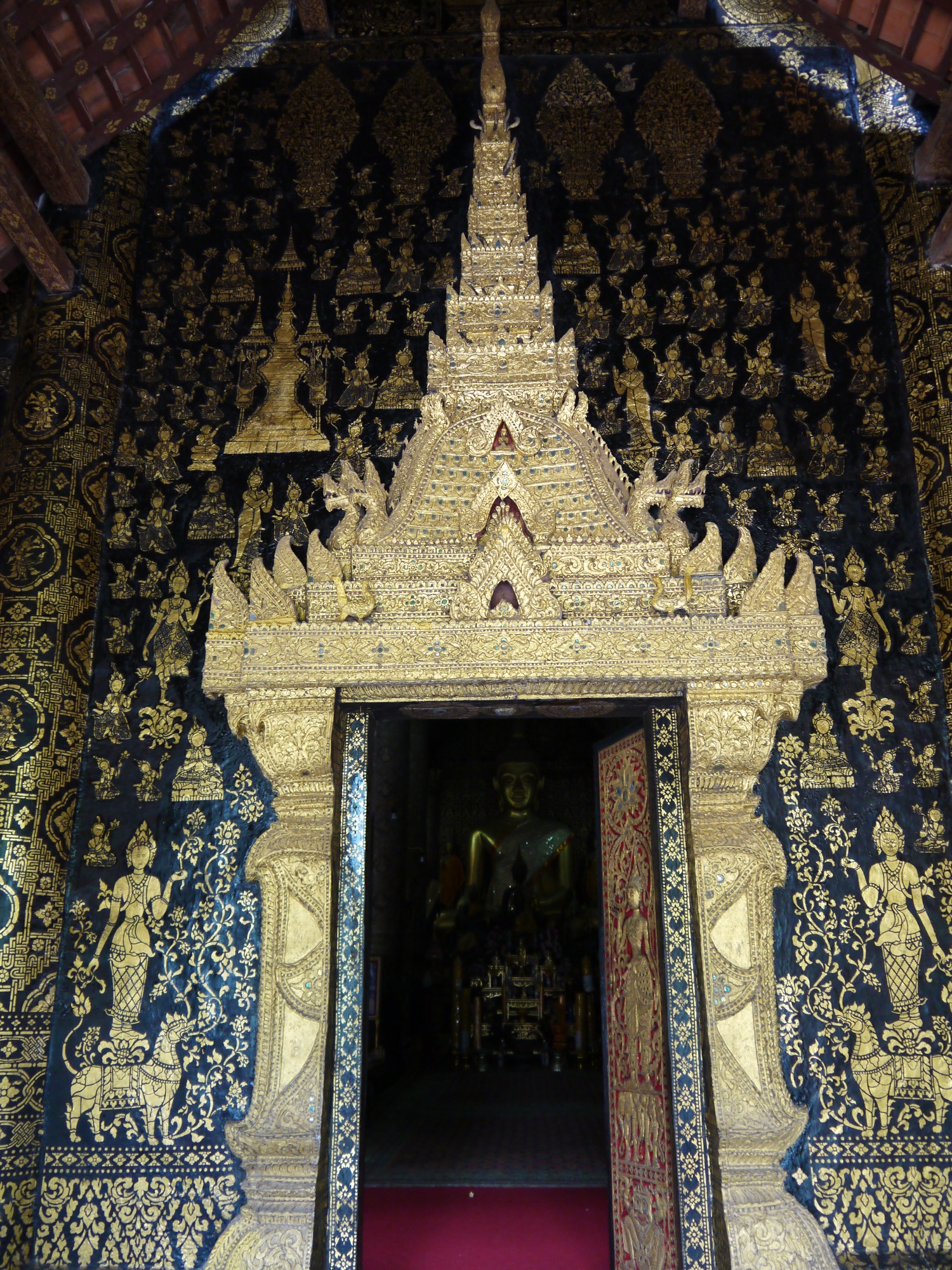
    It has intricate, colorful mosaic on the exterior walls.   


    Laos 5


    Of the people of Laos 67% are Theravada Buddhist,
    1.5% are Christian, and 31.5% are other.  Laos is a Communist state with the official
    language of the government being Laos, however only slightly more than half of
    the population can speak Lao, the remainder speaking various ethnic minority
    languages, particularly in rural areas.  


    Laos 6


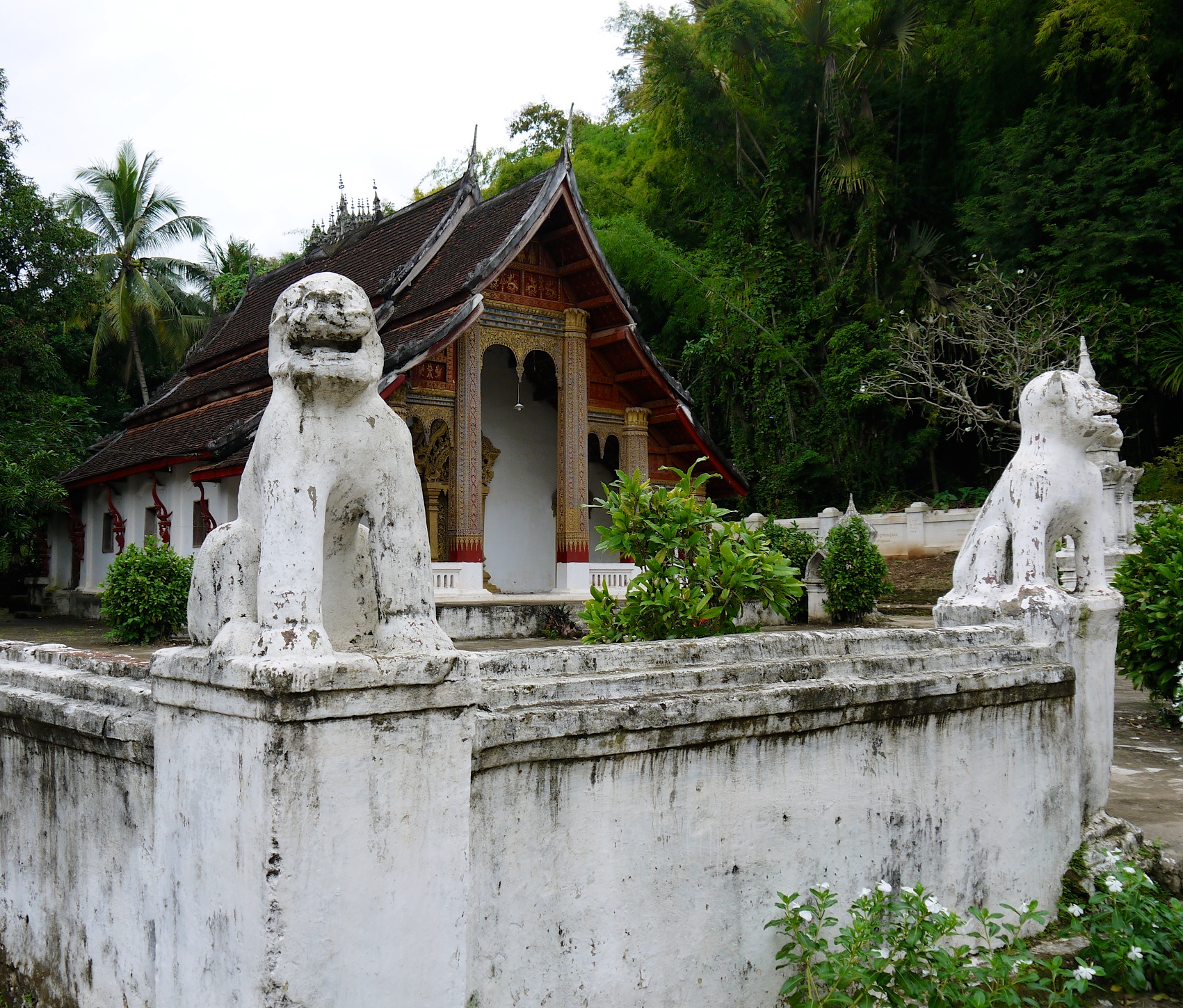
    Wat Nong Sikhounmuang (above) is
    one of the bigger temples in Luang Prabang. It was built in 1729, burned
    down by a fire in 1774, and restored in 1804.  The temple below is an older temple, off the beaten path, so it does not receive the donations like the better known ones or ones in the main part of town.  It therefore has not been restored.


    Laos 7


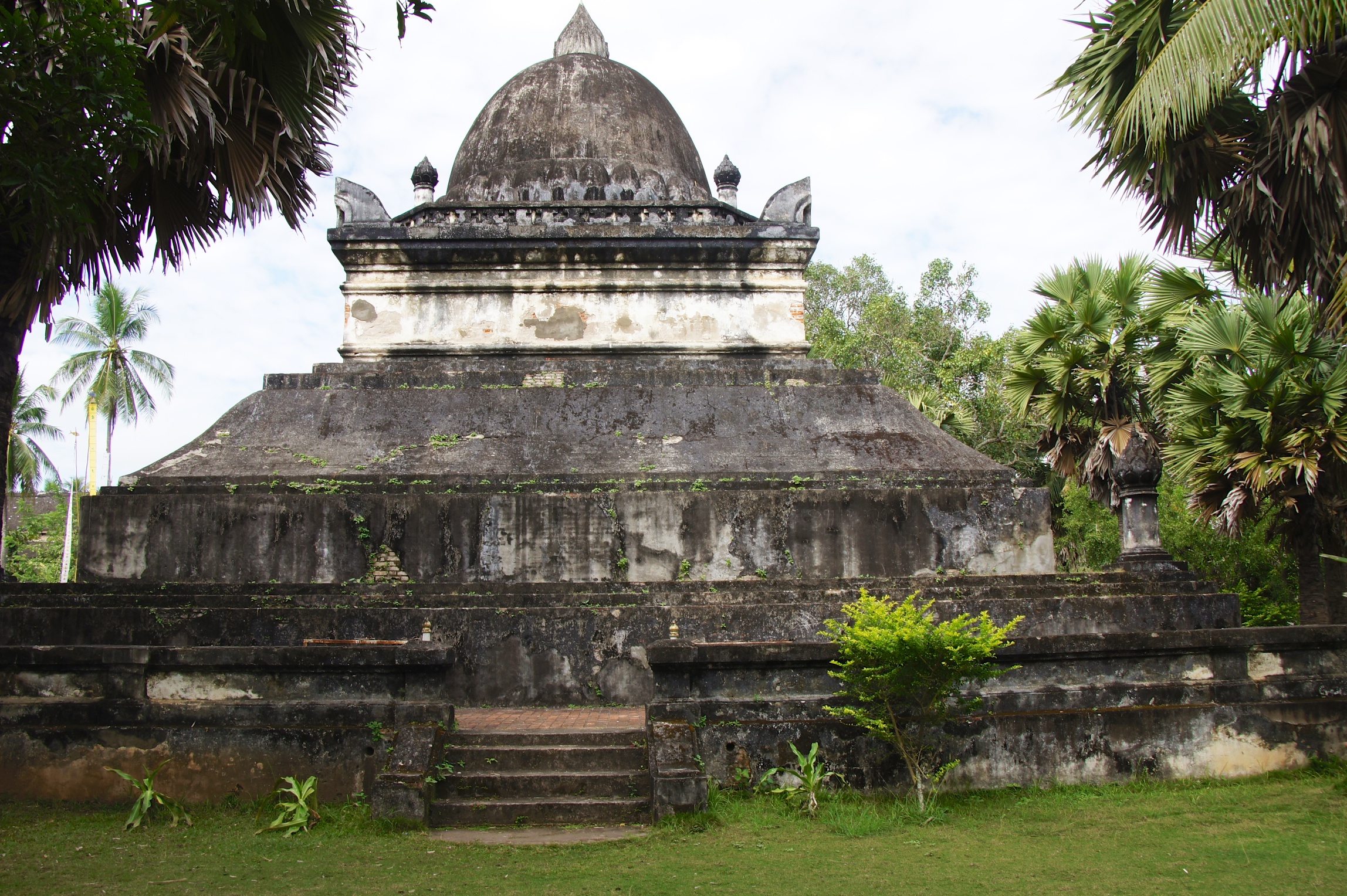
    That Pathoum, or Stupa is known as That Makmo (Watermelon) because of its rounded dome


    Laos 8


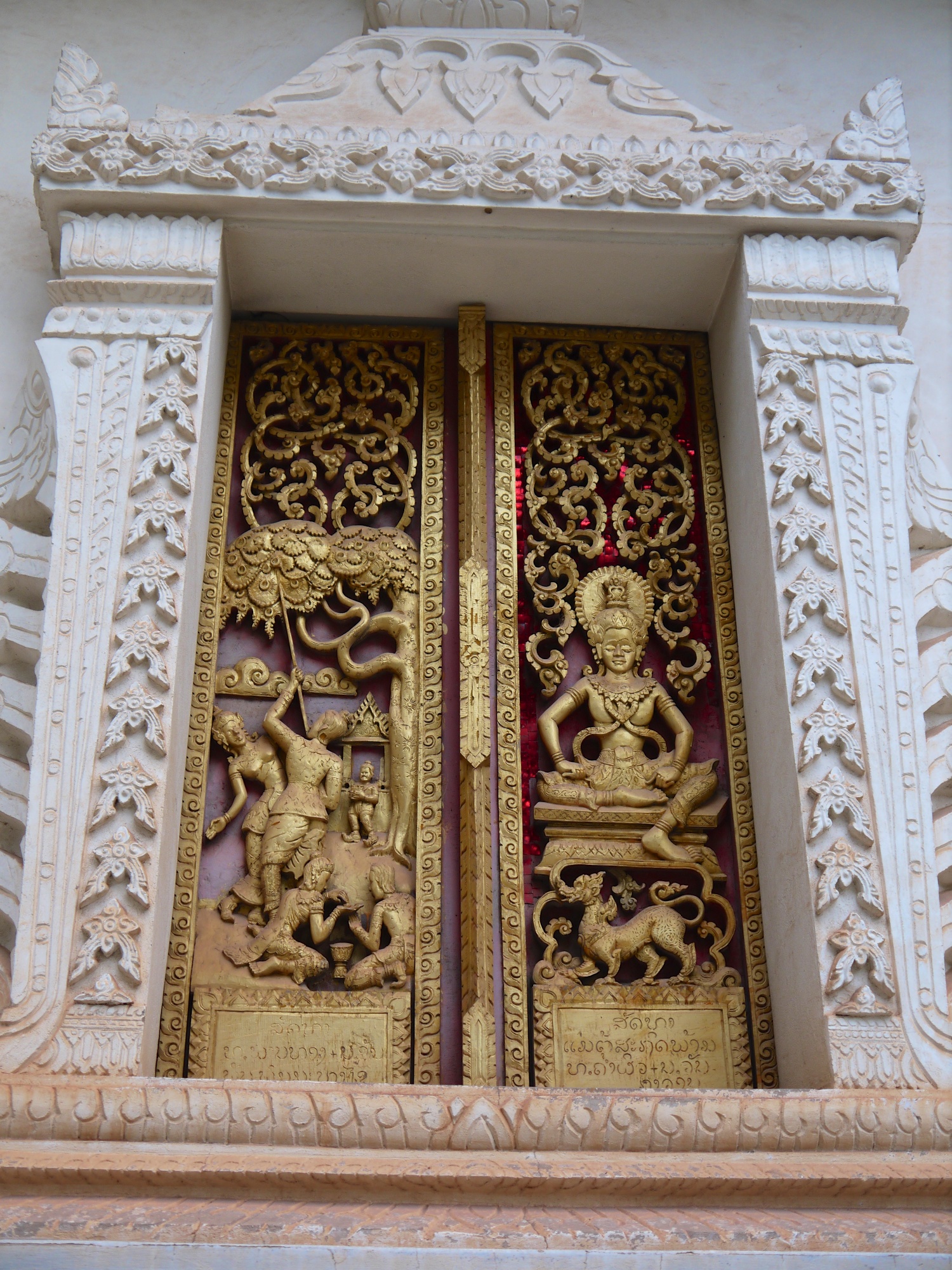
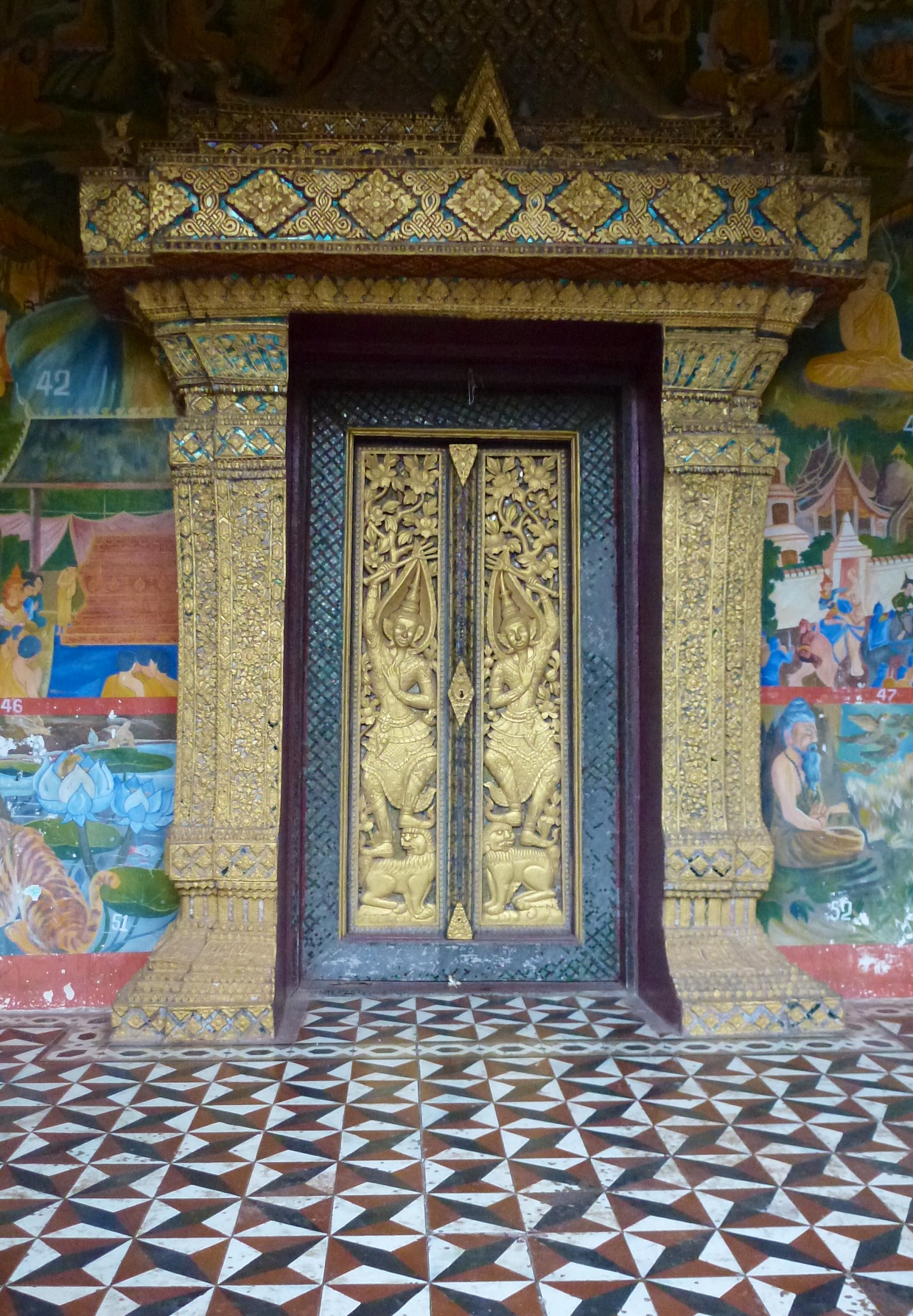
    Most of the doors to the temples have elaborate carvings painted in gold leaf.  They depict scenes from Buddha's life.


    Laos 10


    Laos 11


    Laos 12


    Laos 14


    The Naga, a mythical
    multi-headed snake. You see these at most temples.


    Laos 16


    Buddhas


    Buddha
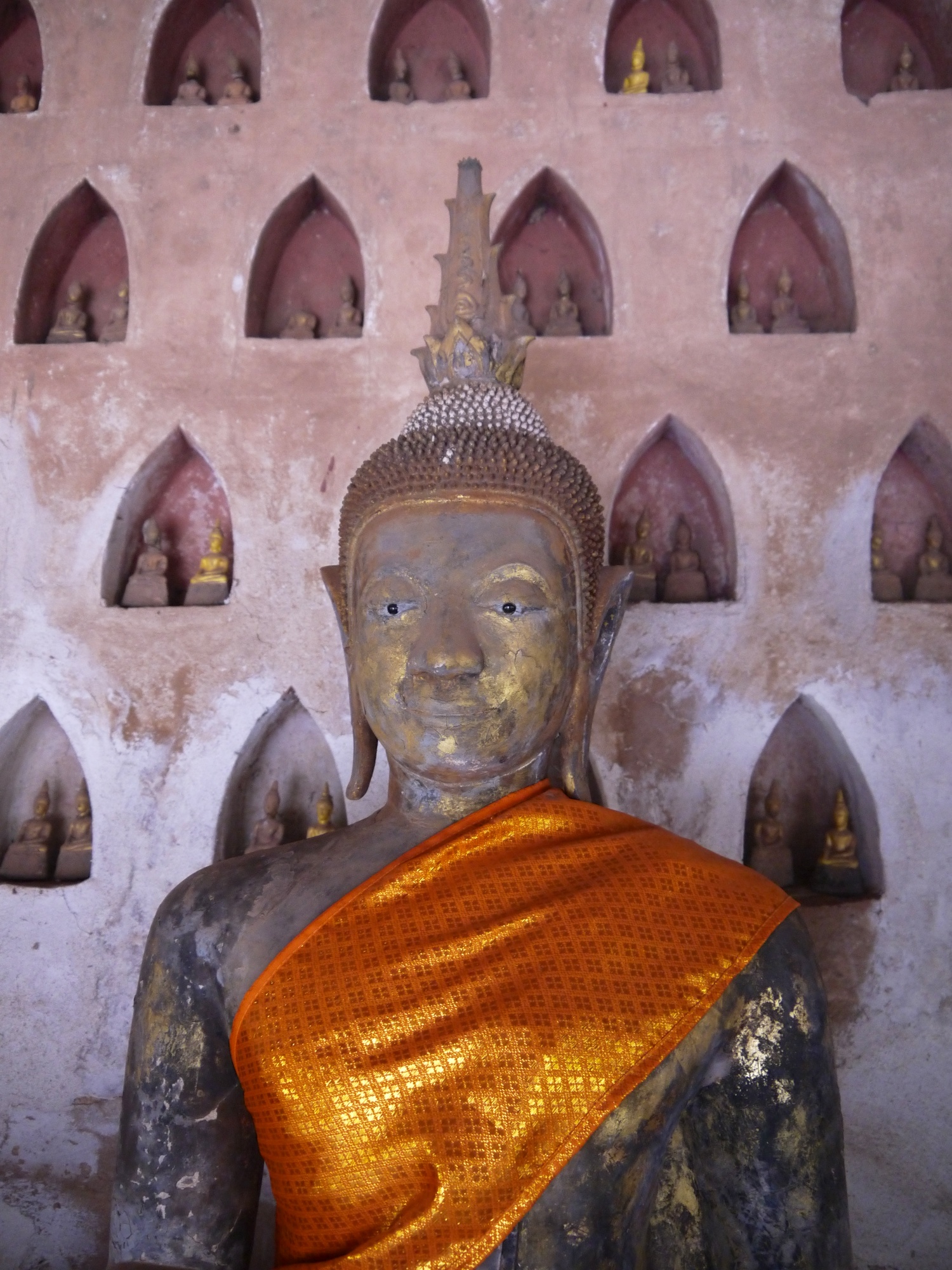
    images are not just for decoration, they are objects of religious worship. 


     Laos 27

     Laos 22


    Laos 24


     Laos 1


    Touring around town……


    Laos
    is known for its silk and local handicrafts.  I bought several beautiful scarves for gifts. It is rich in natural resources
    like timber, gypsum, tin, gold, and other gemstones.


    T


    These tortilla-like food objects lying on grass mats to dry in the sun facinated us.  They even put them on the roofs.


    Laos 35


    We never did get to taste it, and I could not find anything about them on the internet.


    Laos 36


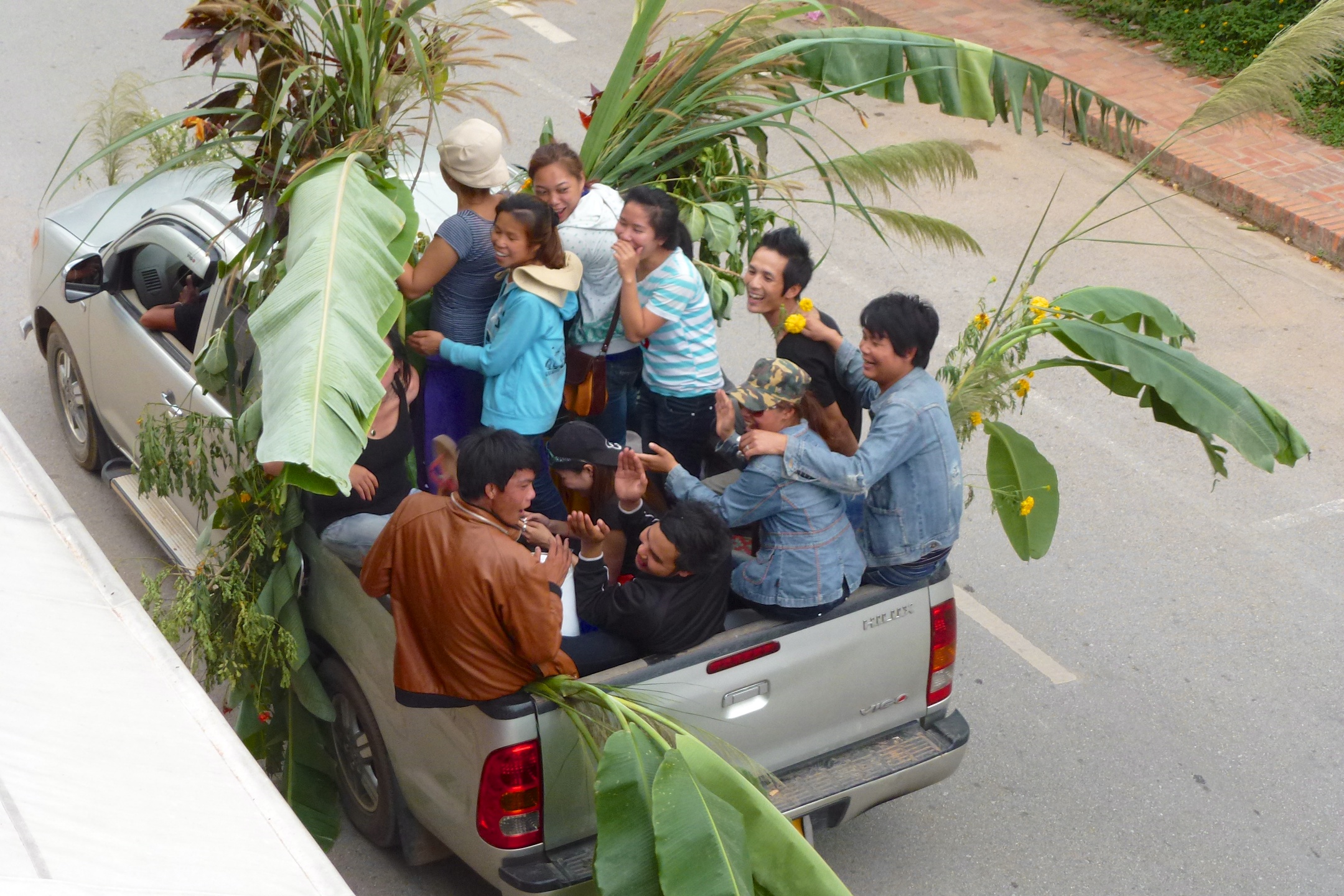
    This was a parade of some sort – there were about 10 trucks filled with people and plants.  All singing and laughing and having fun.  The Laos people in general are happy helpful people.


    Laos 66


    A little food and drink…..


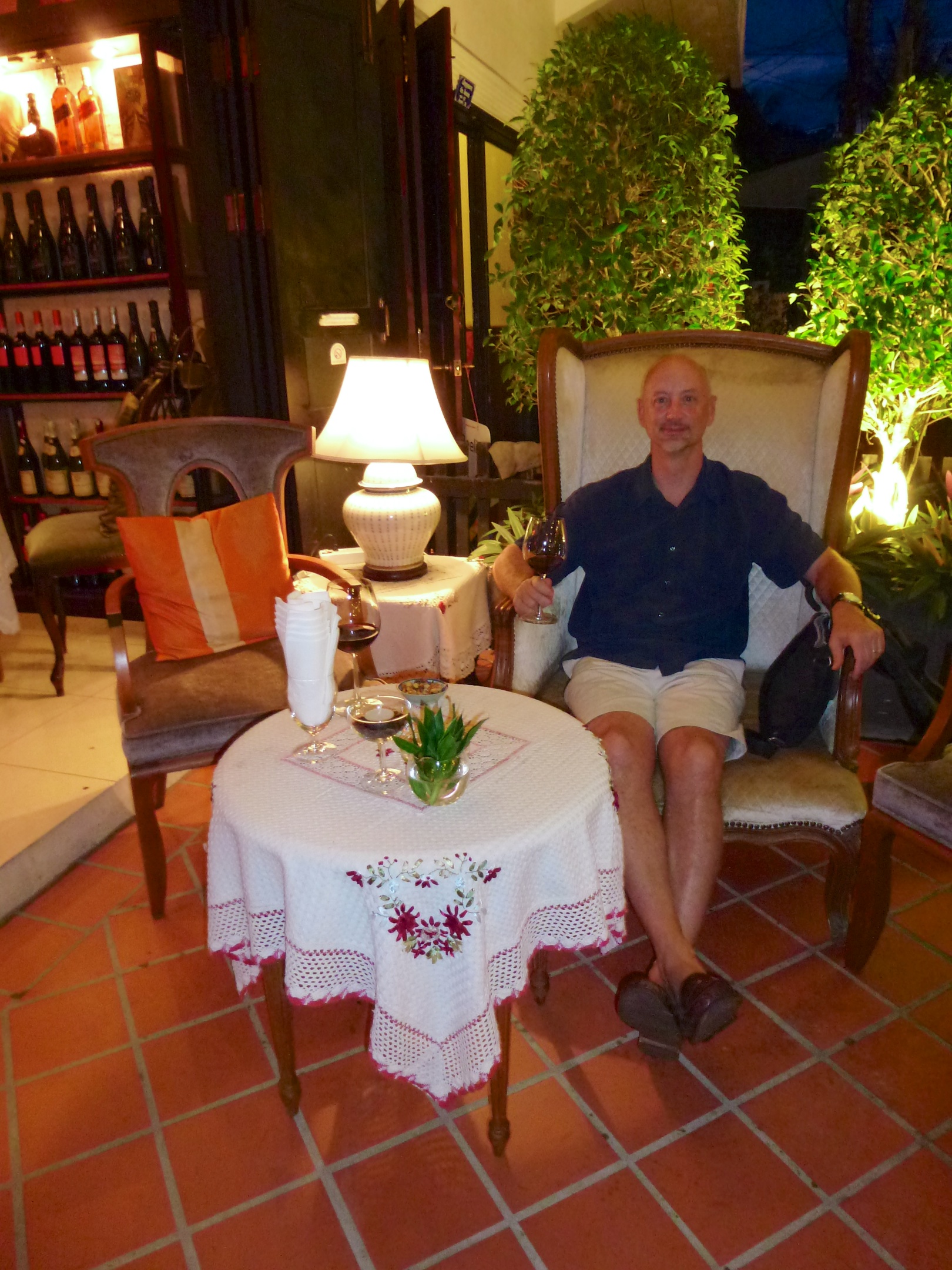
    We discovered a very modern wine bar where the inside was set up outside. 


    Laos 87


    Sticky Rice is served everywhere in Laos and this
    is very different from other Asian countries.  Sticky rice cultivation and production is thought to have originated in
    Laos.  I really liked the sticky rice.  It is always served in little baskets and is brown.


    Laos 89


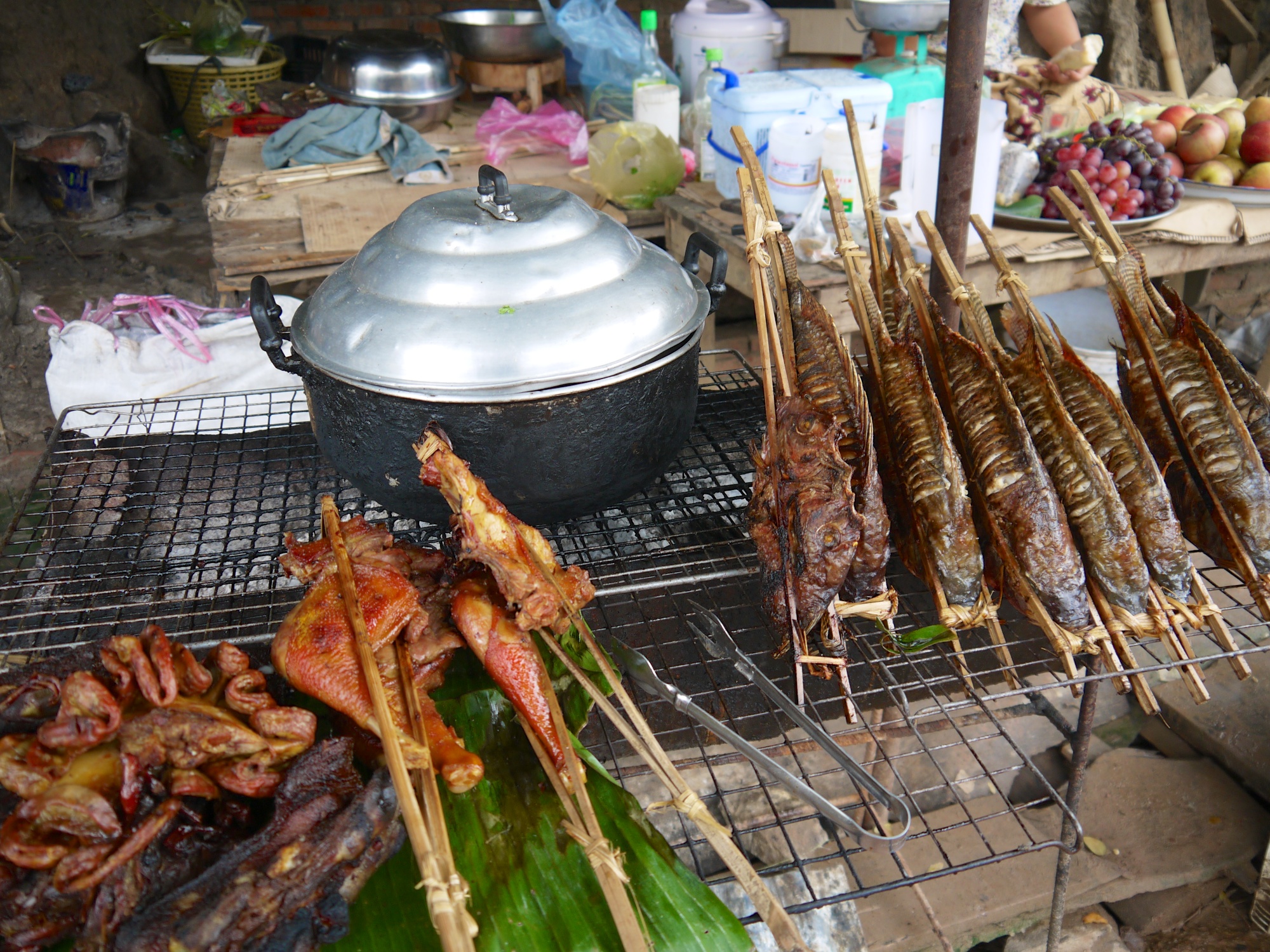
    Grilling was very popular here.  They had a unique way of tying them up with a bamboo skewer.


    Laos 88

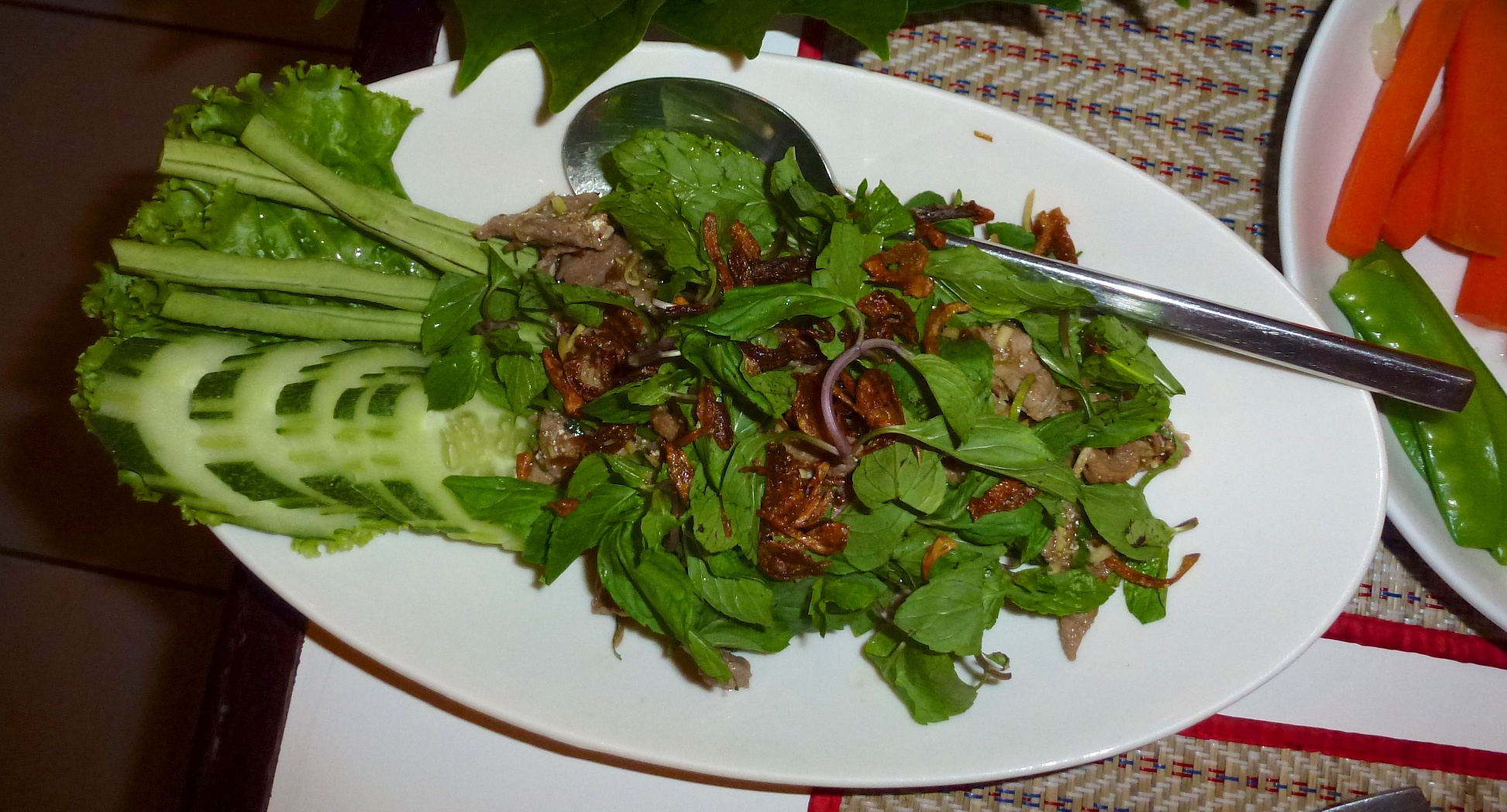
    We enjoyed all of the food we ate.  They tend to eat more salads than other Asian countries.  


    Laos 91


    Laos 92


    Looking back at Luang Prabang from across the river.  We really enjoyed our trip to Laos, especially the visit to the elephant reserve.  


    Laos 85


    Please continue to the next blog post to see some sweet photos of children in Laos.


  •  

    We love to get off the beaten track and find small villages where tourist don't normally roam.  You can tell this by the reaction of the children.  If  they ask for money to take their photo, they are used to seeing tourists….  If they are happy to just see their image in the camera… then they are not used to seeing tourists.  


    Laos 53


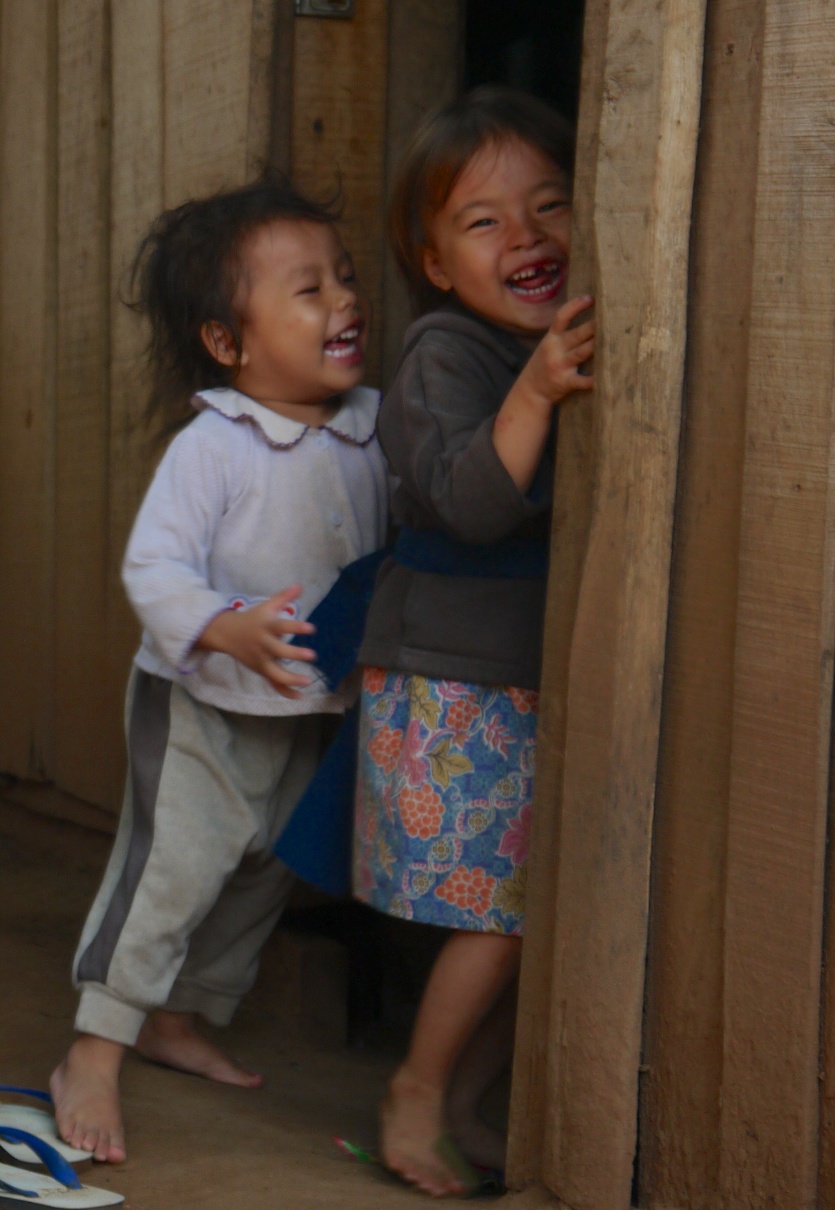
    The following photos were taken in a little village just outside of Vientiane. We had so much fun photographing the children as they were so happy to see us.


    Laos 57


    Laos 58


    This little guy caught my eye.  I loved his handmade necklace!


    Laos 60


    Laos 59


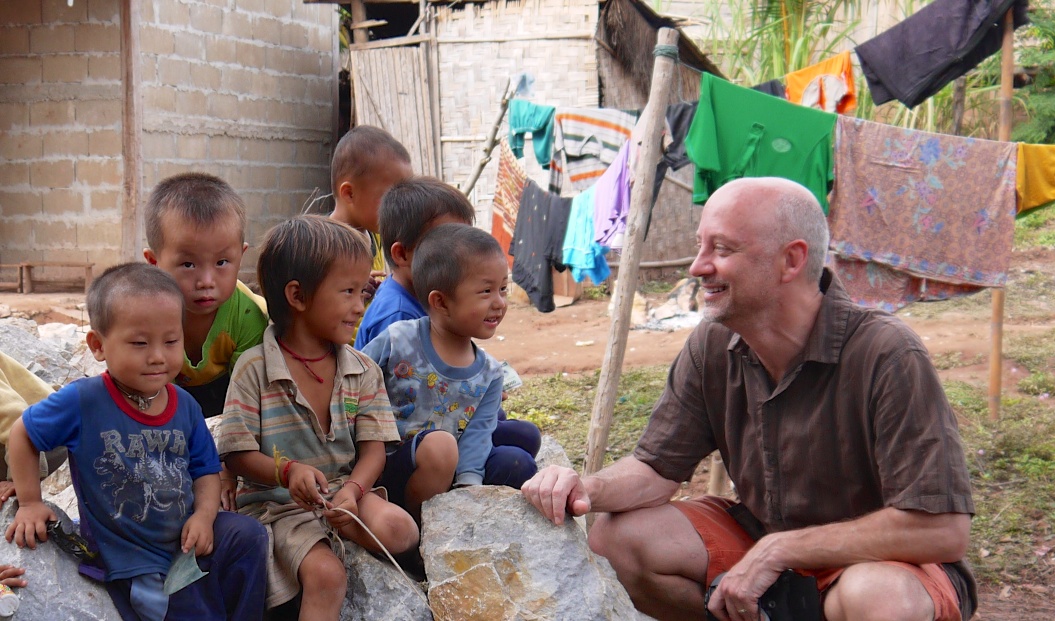
     D having a chat… the children spoke a little English.


    Laos 61


    Their moms were nearby so we asked them if we could take the children's photos.  Notice the house in the background. 


    Laos 63


    Laos 64

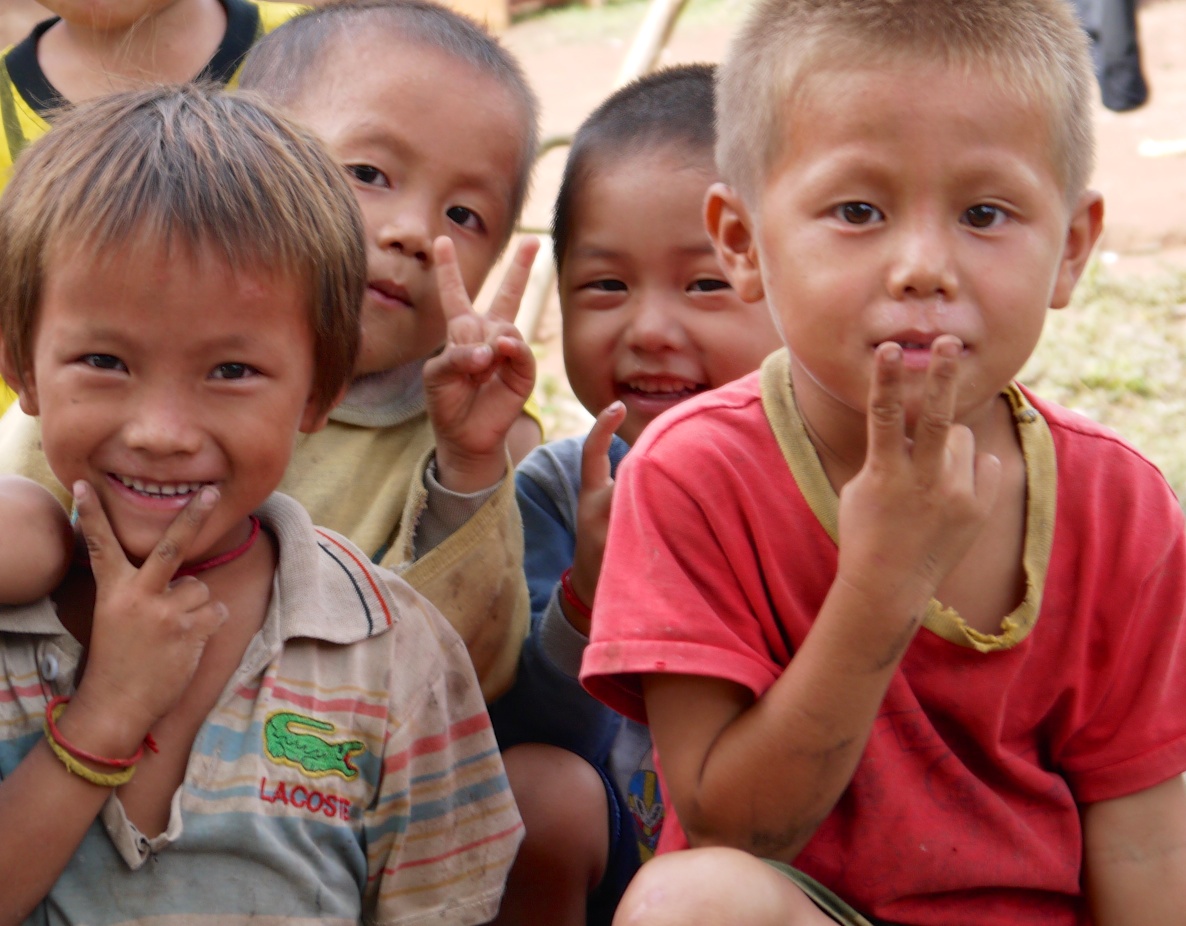
     As soon as you hold up your camera, they give the peace sign.  This is universal in most Asian countries.


    Laos 56


    This was another group.


    Laos 41


    Love this little one peeking out from behind his big brother.


    Laos 42


    Laos 44


    Such a little old man!


    Laos 45


    This group was precious!  They were squealing with excitement… wanting us to take their photos, yet a little bit afraid. 


    Laos 46


    Laos 48


    Their mother was right by them, but they were still shy.   


    Laos 49


    This photo deserved to be blown up to see the middle girls face – priceless!


    Laos 50


    Laos 51


    There seemed to be more boys than there were girls.  Unfortunately, mortality rates for children under five in Laos are the highest in
    Southeast Asia (70 per 1,000 births) and second highest in all of Asia, behind
    only Afghanistan (stats as of 12.12).


    Laos 83


    Laos 54


    Laos 55


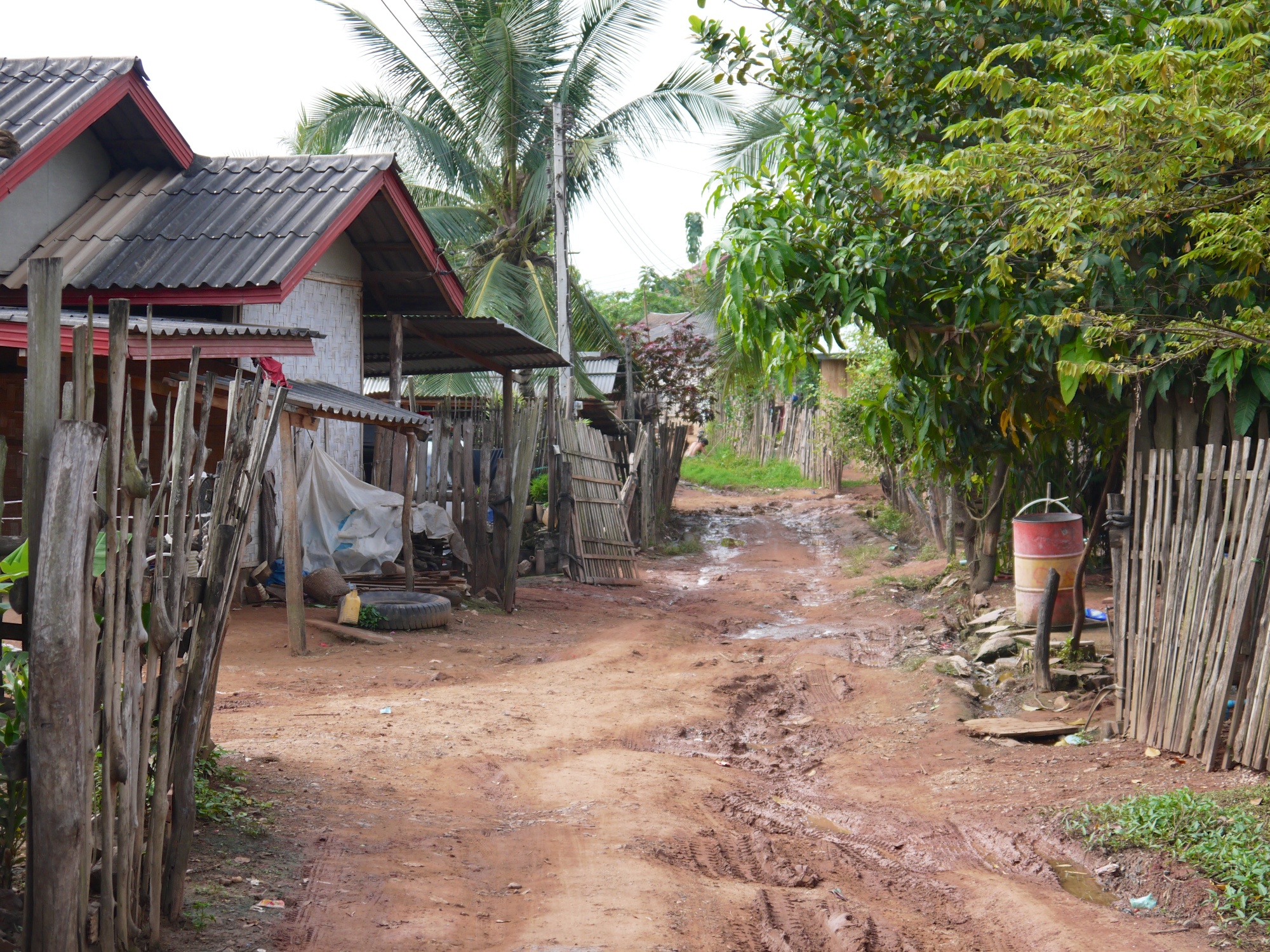
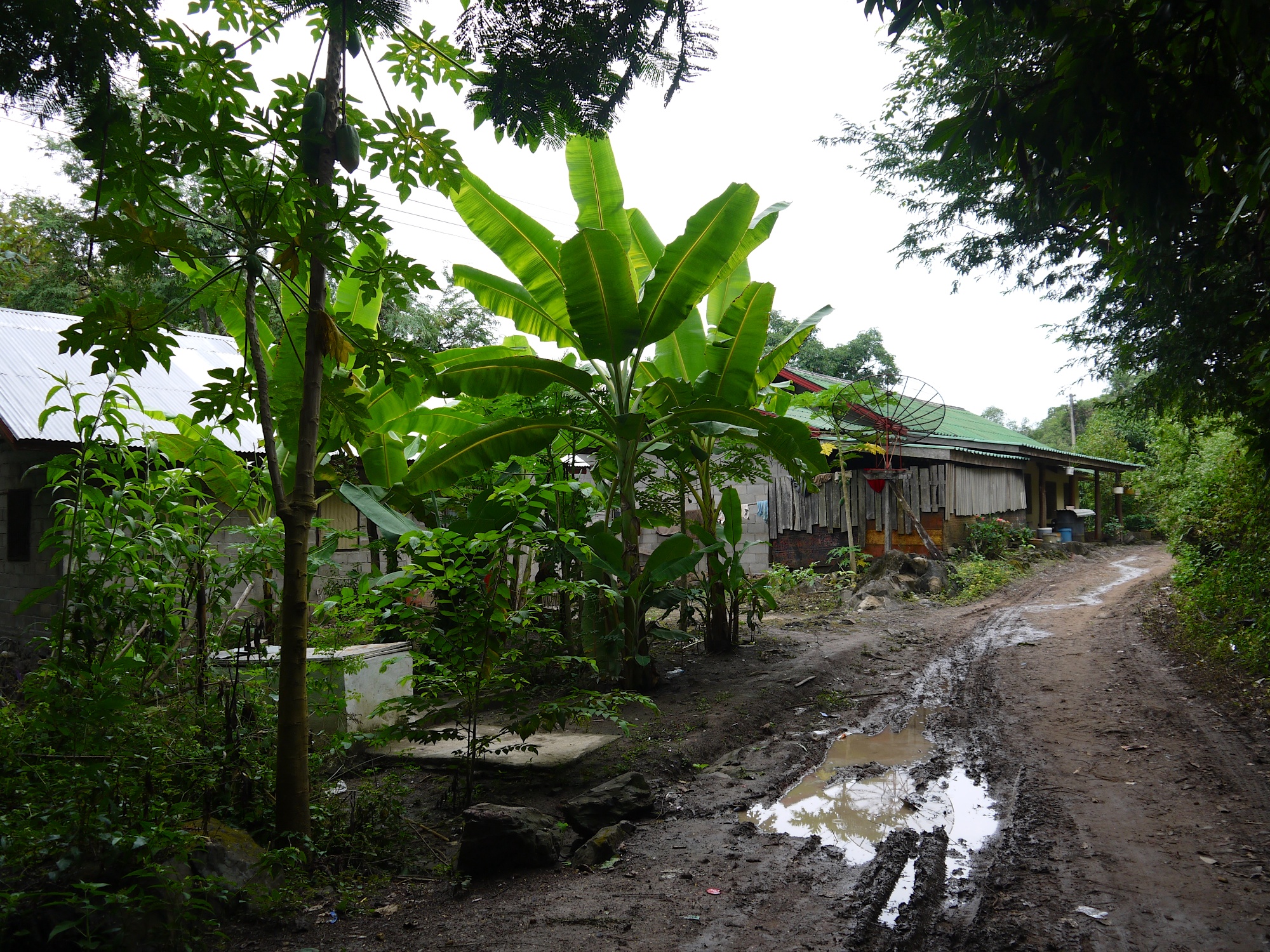
    The next set of photos was taken in the little village across the river from Luang Prabang.  We had heavy rain the day before, so the streets were very muddy.


    Laos 78


    A beautiful child!


    Laos 73


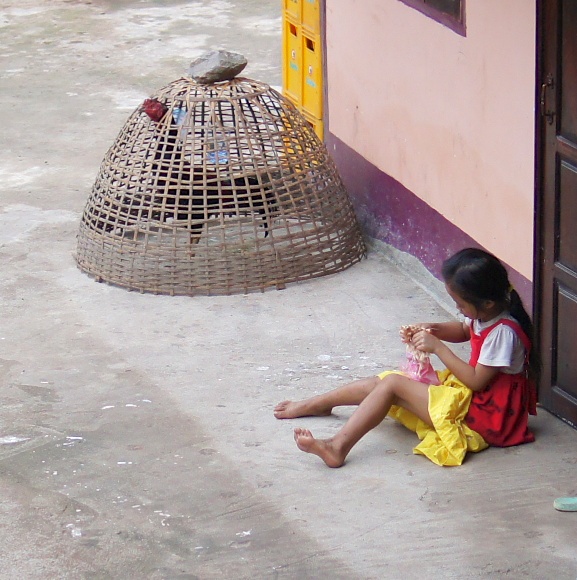
    Look closely at the photo below – the little girl is playing with her doll on the porch next to the family rooster.   


    Laos 74


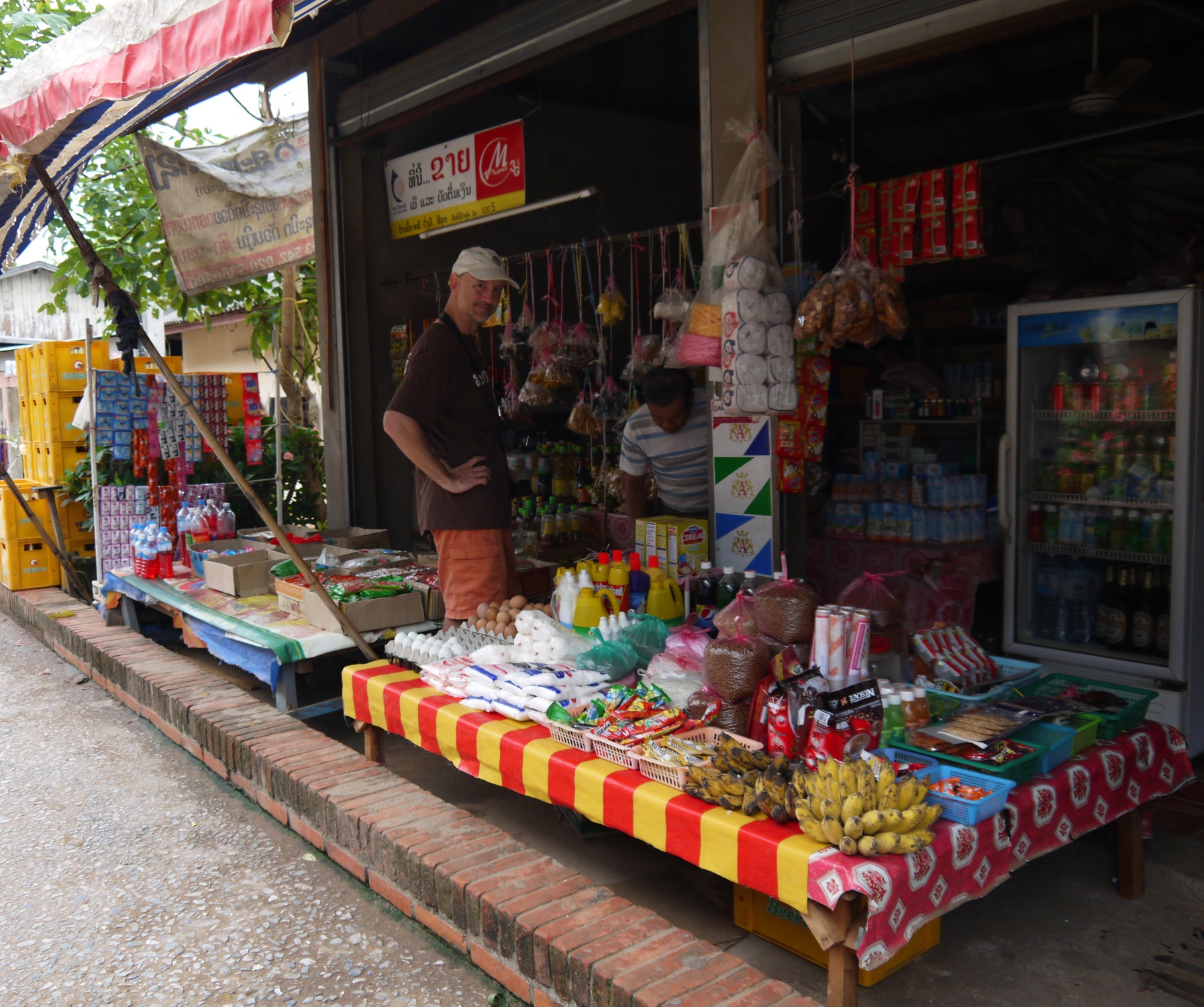
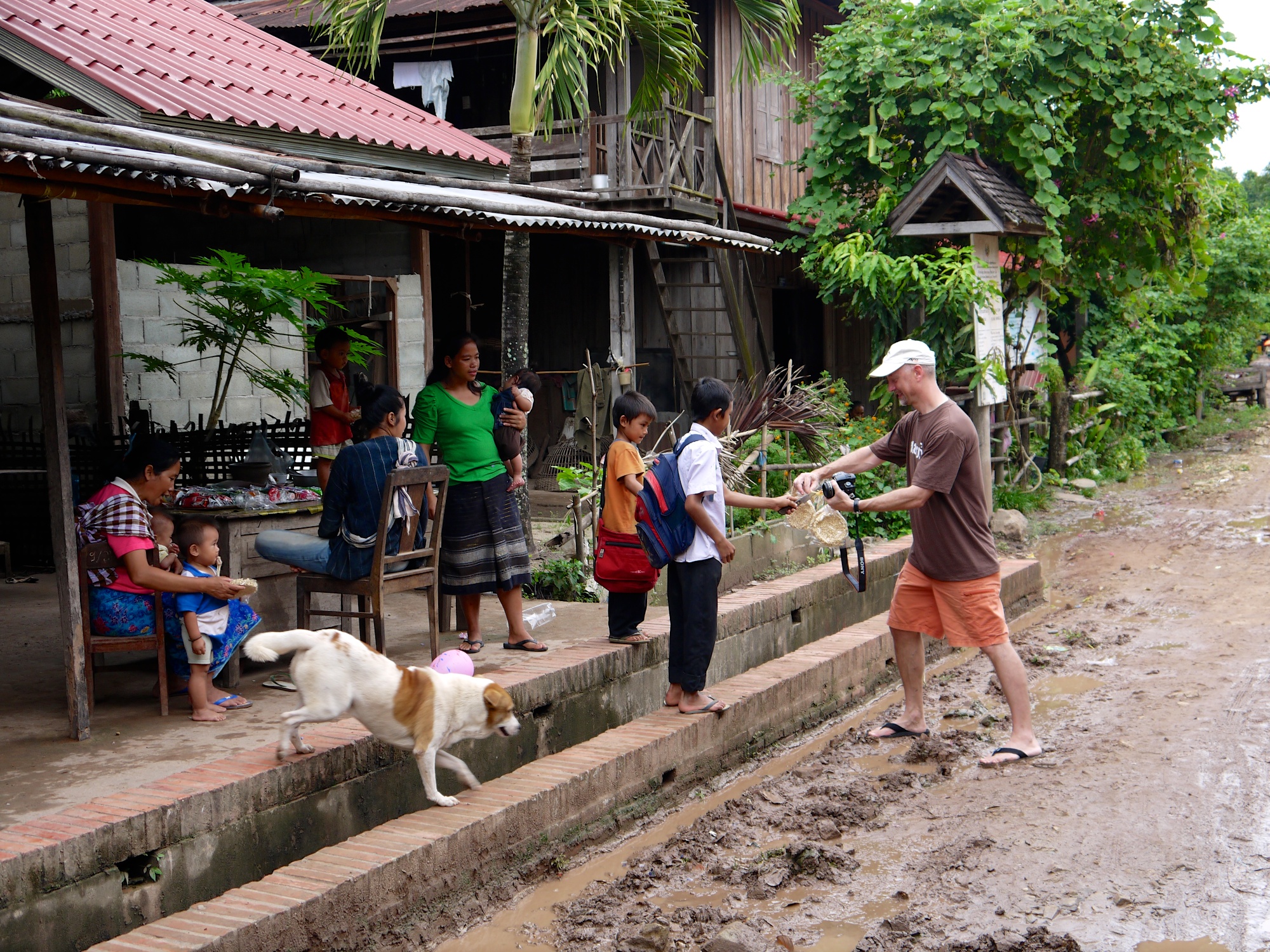
    D loves to buy food and give it out to the children.  Below, he is buying popcorn balls and peanuts.  He tries not to buy candy and buys from the local shops to help support the community. 


    Laos 79


    Here he is giving out popcorn balls to children coming home from school for their lunch break.  Even the dog wants to see what is going on. 


    Laos 80


    This yound boy is so serious.  D tried to get him to smile, but he wouldn't.  


    Laos 82


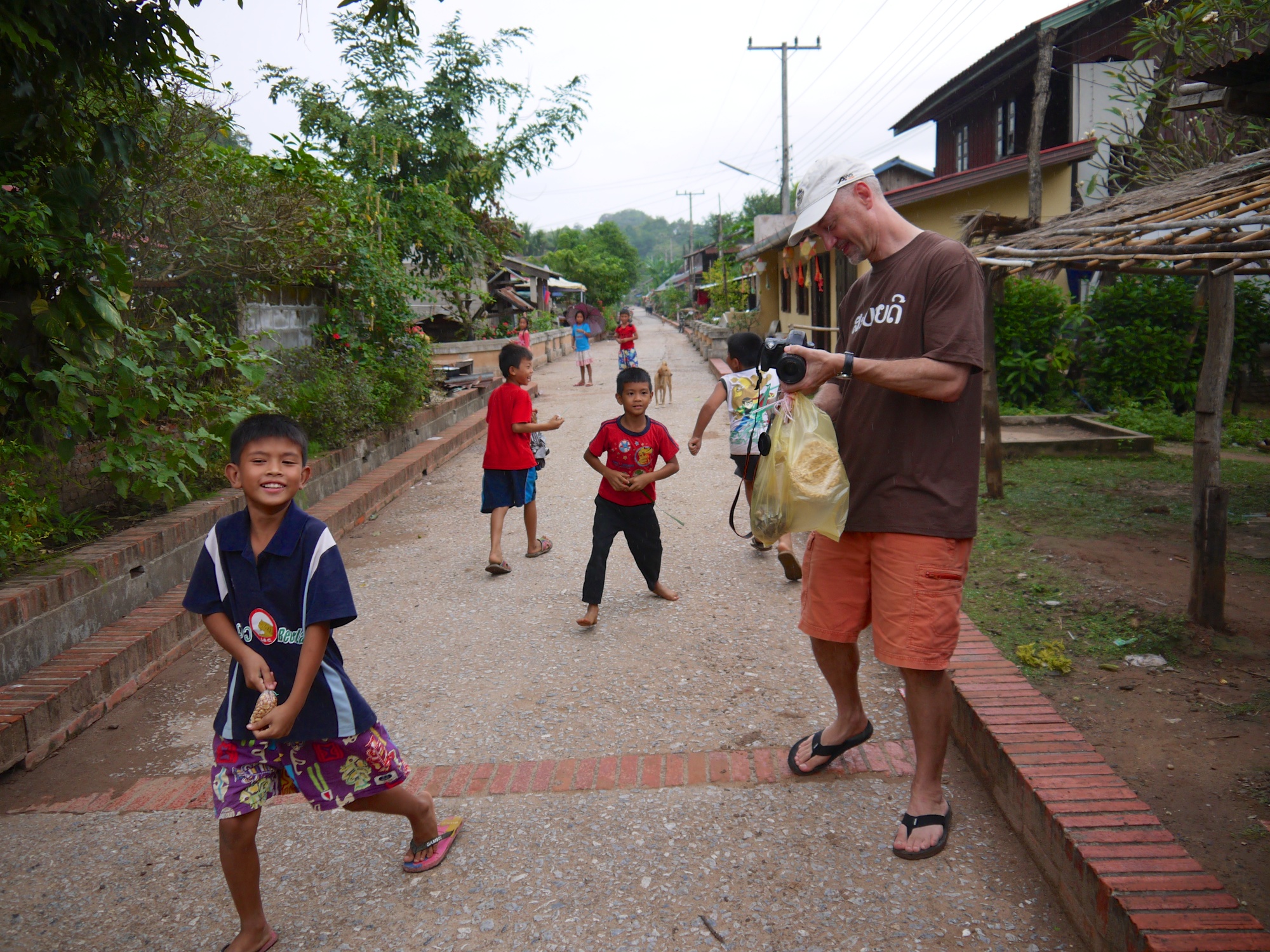
    The pied-piper… children and dogs following D.


    Laos 84


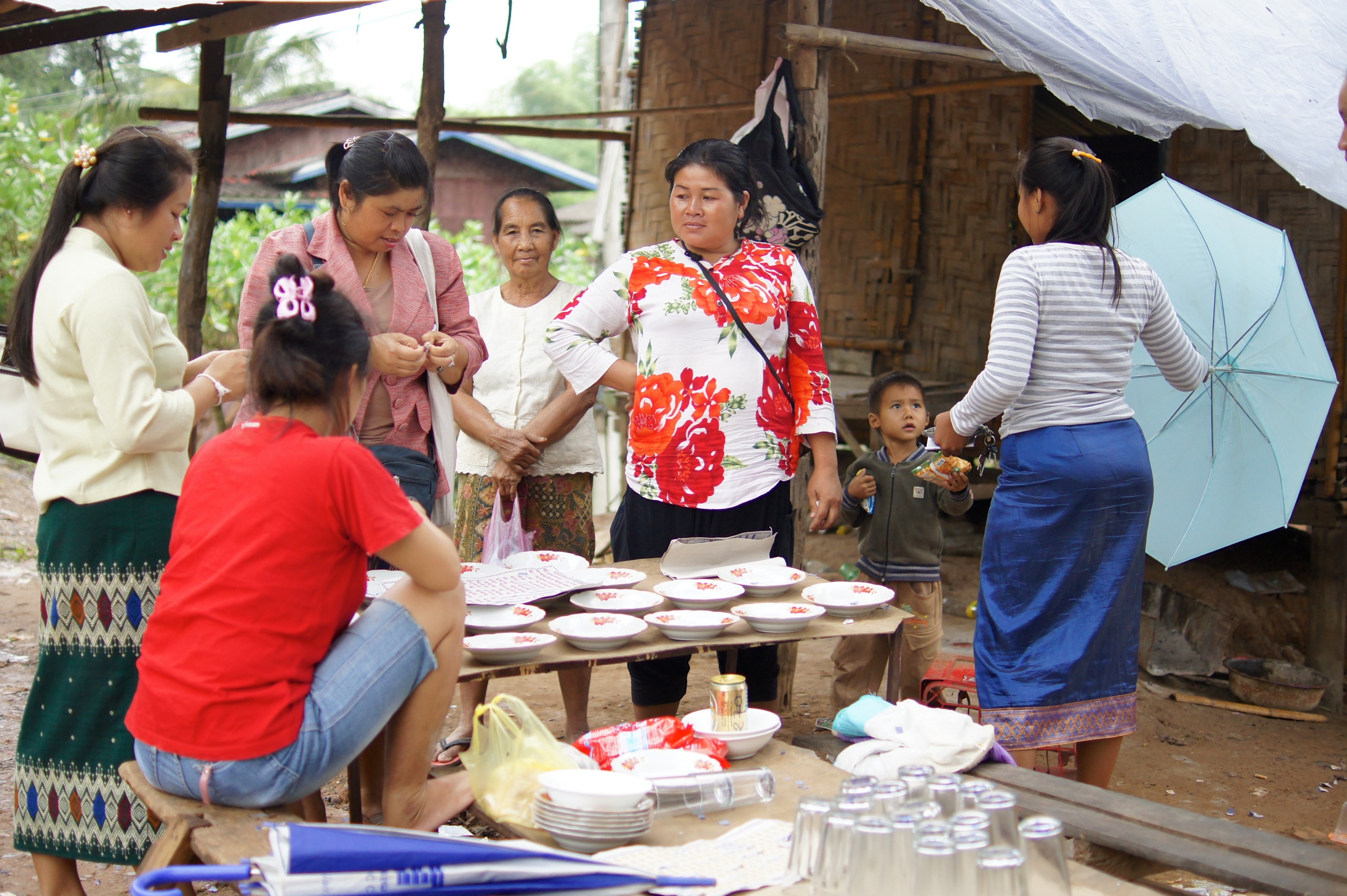
    Where are all the mothers?  Gambling!  We couldn't figure out what the game was, but they were busy playing it.  I love how they all are so busy except the older woman in the middle – she is watching us.


    Laos 76


    Laos 75


    The last few photos are of children in the main town of Luang Prabang.  The first one is one of my favorites.


     Laos 67


    Laos 72


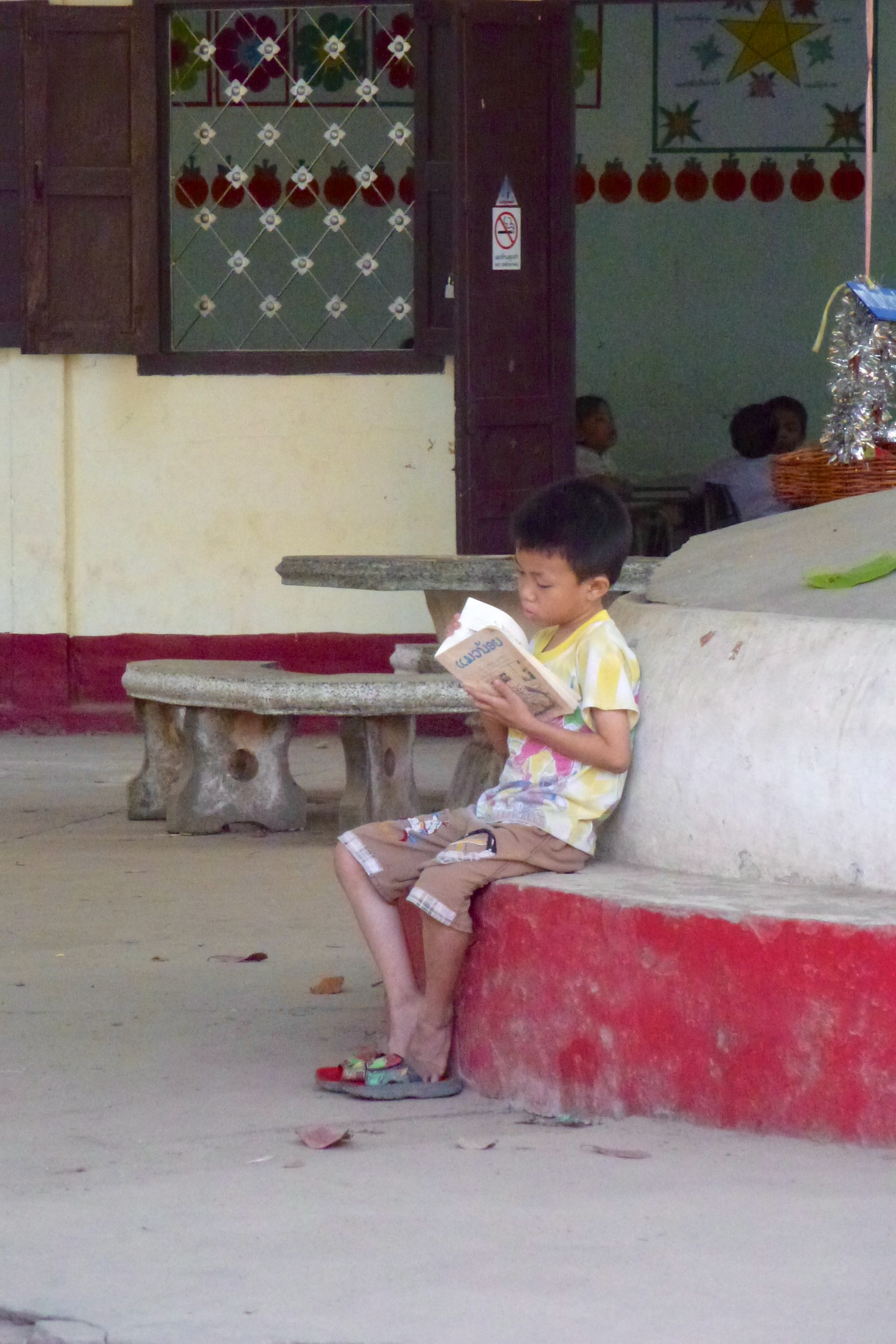
     The snack cart at recess.


    Laos 71

     To read all about our fun adventure in Laos, click here.


  •  

    Udon Thani, Thailand

    November, 2012


    There were no direct flights into Laos, so we flew to Bangkok, then to Udon Thani.  From there, we crossed the border into Laos by bus.  Udon Thani, the 4th largest city in Thailand, is known as a gateway to Laos.  Since we were not in a hurry, we opted to spend two nights there.  


    Udon thani 4


    It was special for us because Don Senior was
    stationed there during the Vietnam War at a major Thai & US Air Force base.  

    We stayed in a B&B that was way off the beaten path from the main part
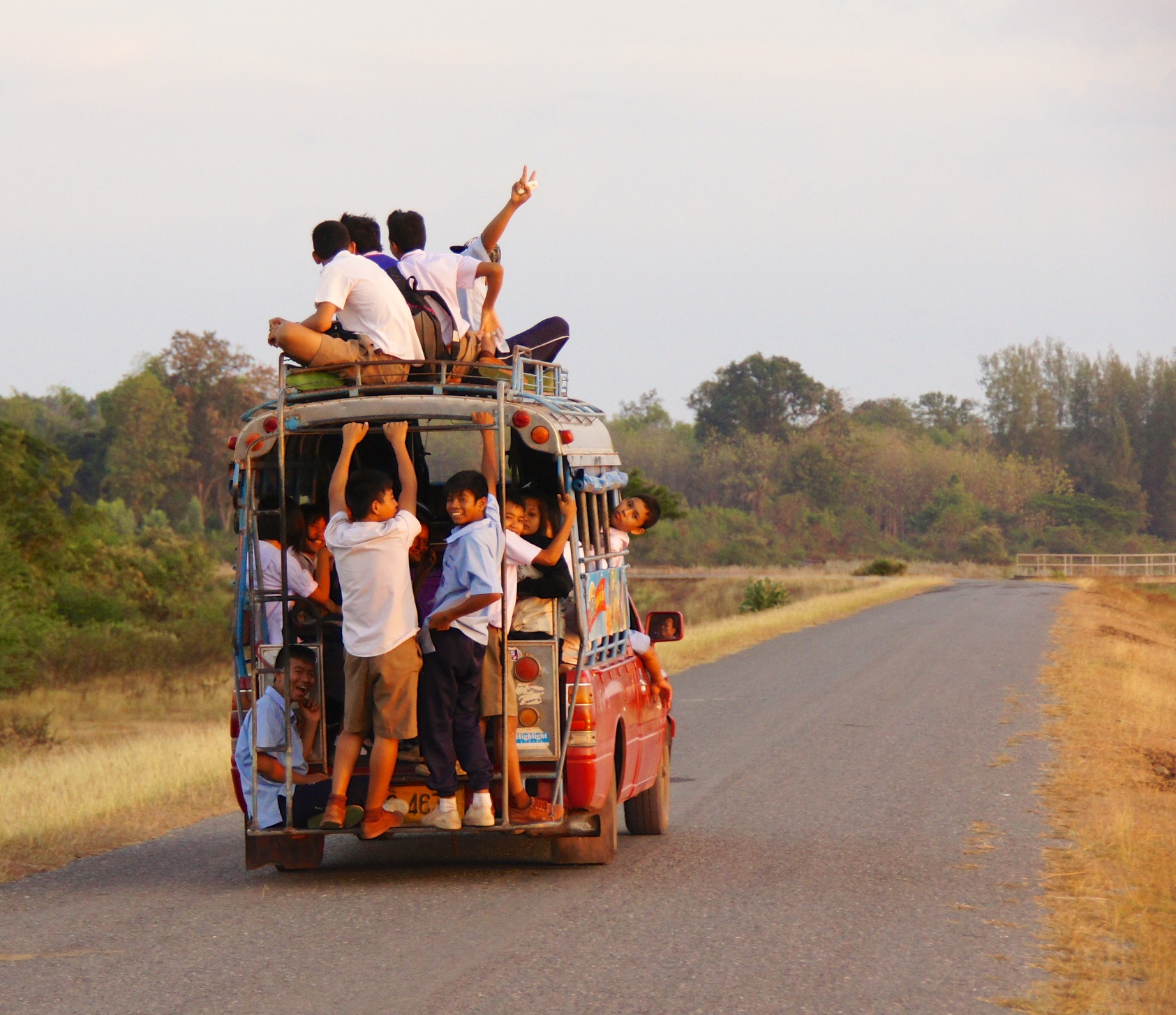
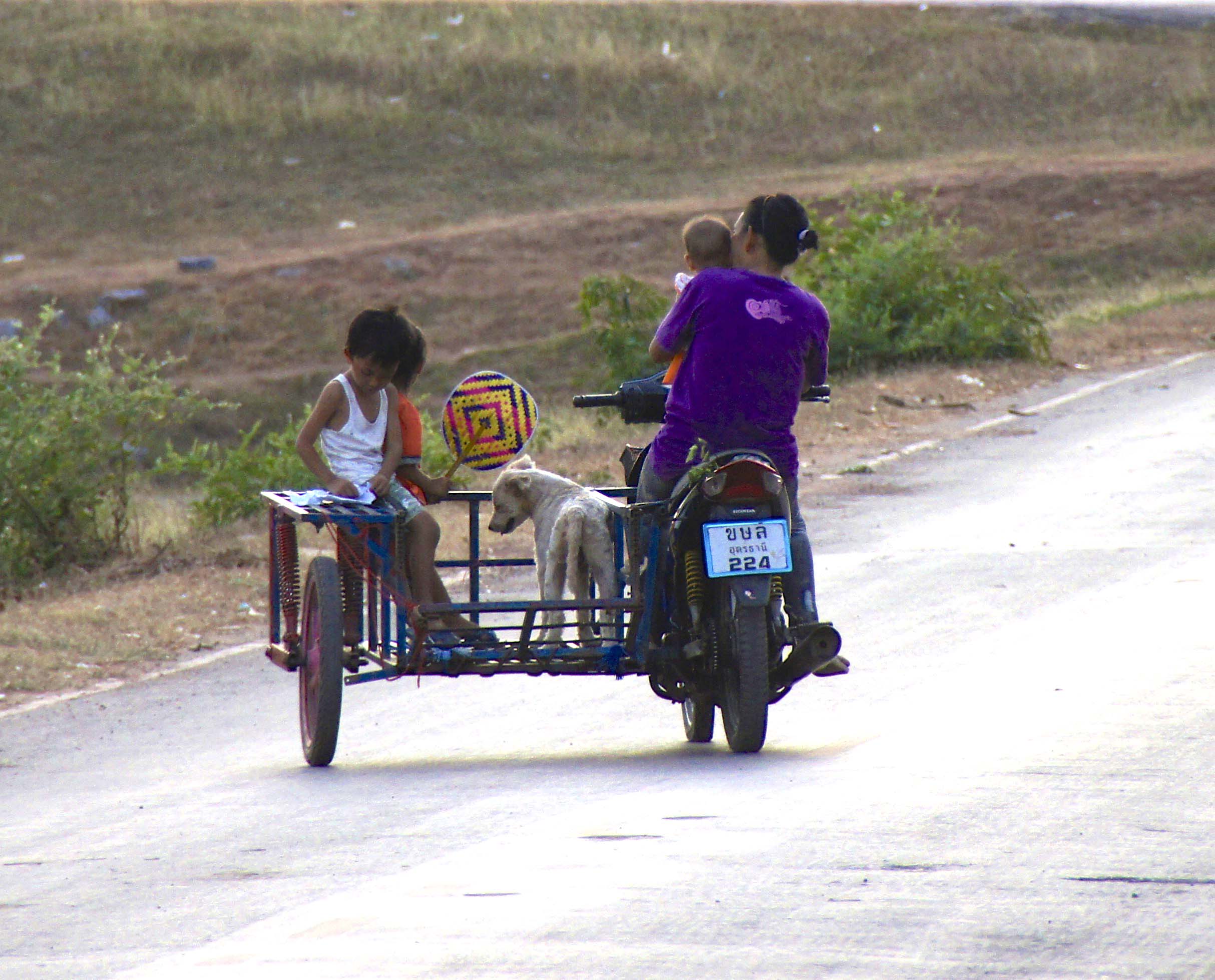
    of town.  Love the little dog in the middle and the driver is holding the baby.


    DSC07163


    Here we are eating Belgian food…..did I say Belgian food?  Oddly enough our B&B was owned by a Belgian couple (Tony and Chris)  and Jet, a Thai lady.  Chris was an awesome cook and we were nostalgic for a little "belgian taste".


    Udon thani 1


    We
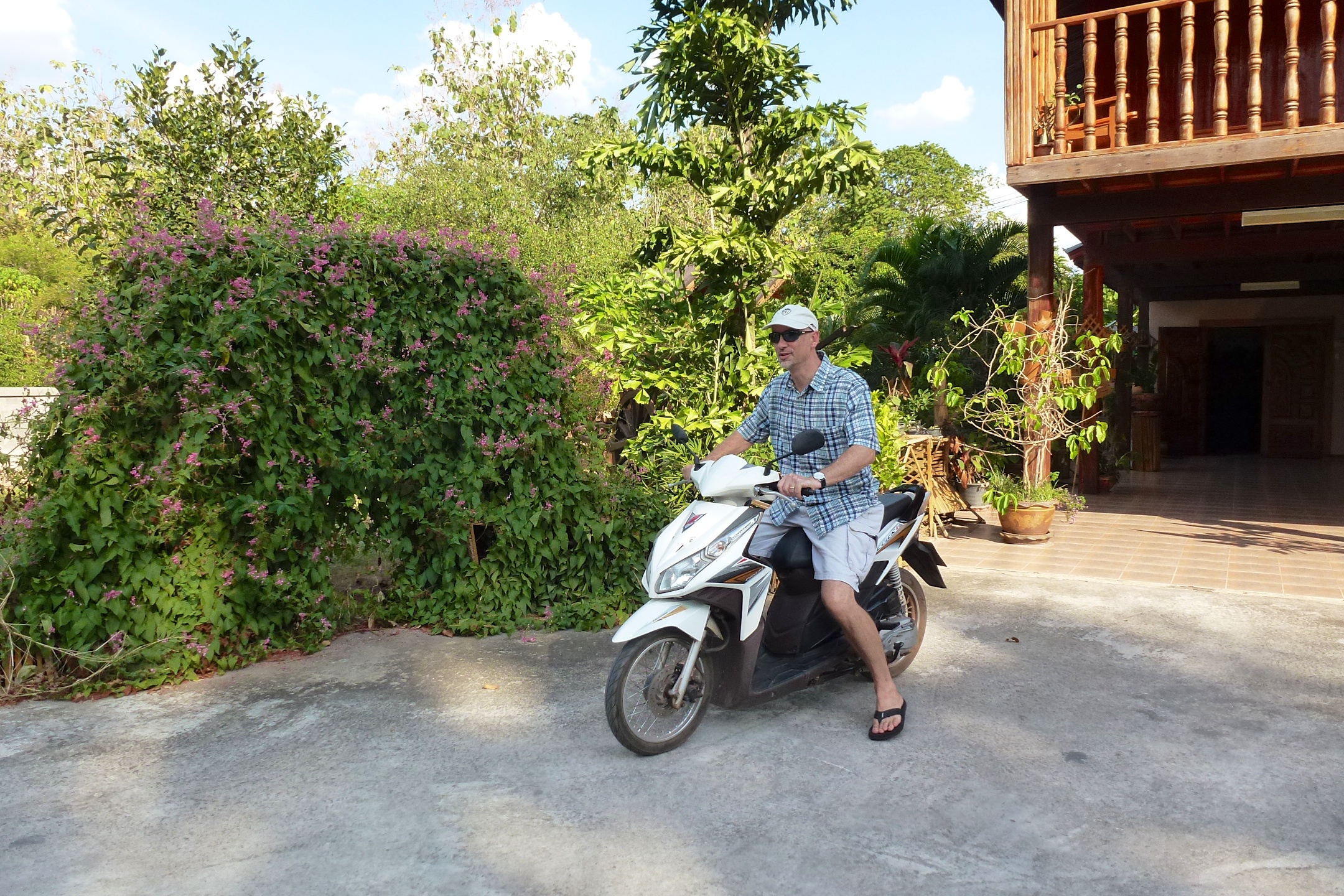
    had great fun at the B&B (Homestay STC).  We rode bicycles and a scooter.  I have not been
    on a bike since I was 7…..well maybe once in my 20's   :  )   And I am not a BIG fan of scooters – but there was no traffic where we were riding.


    Udon thani 10


     And I did not ride alone….I was on the back of D's.


    Udon thani 9


     Loving this photo……free and easy!


    Udon thani 11


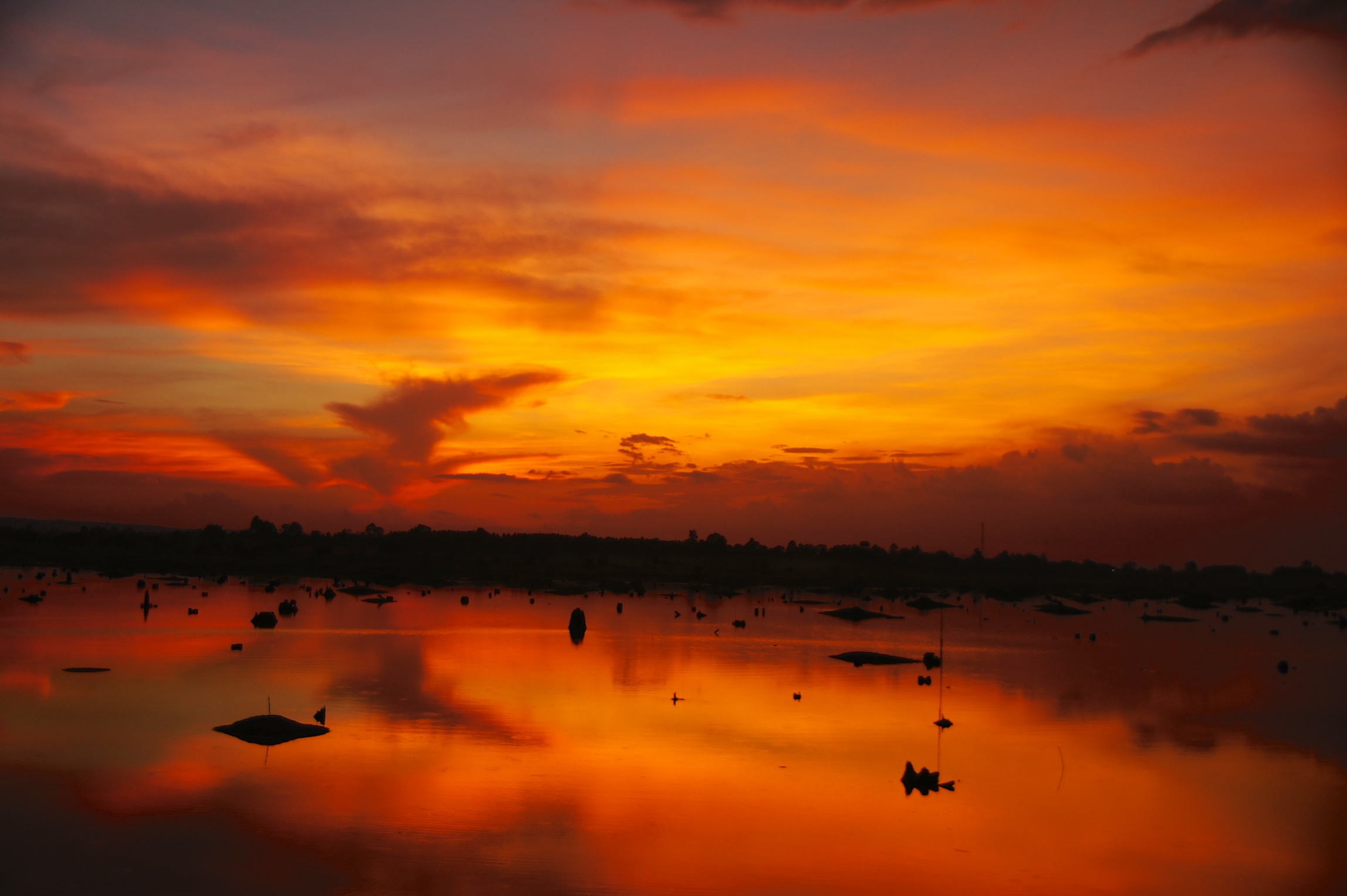
    Just chillin' – watching the sun set……


    Udon thani 32


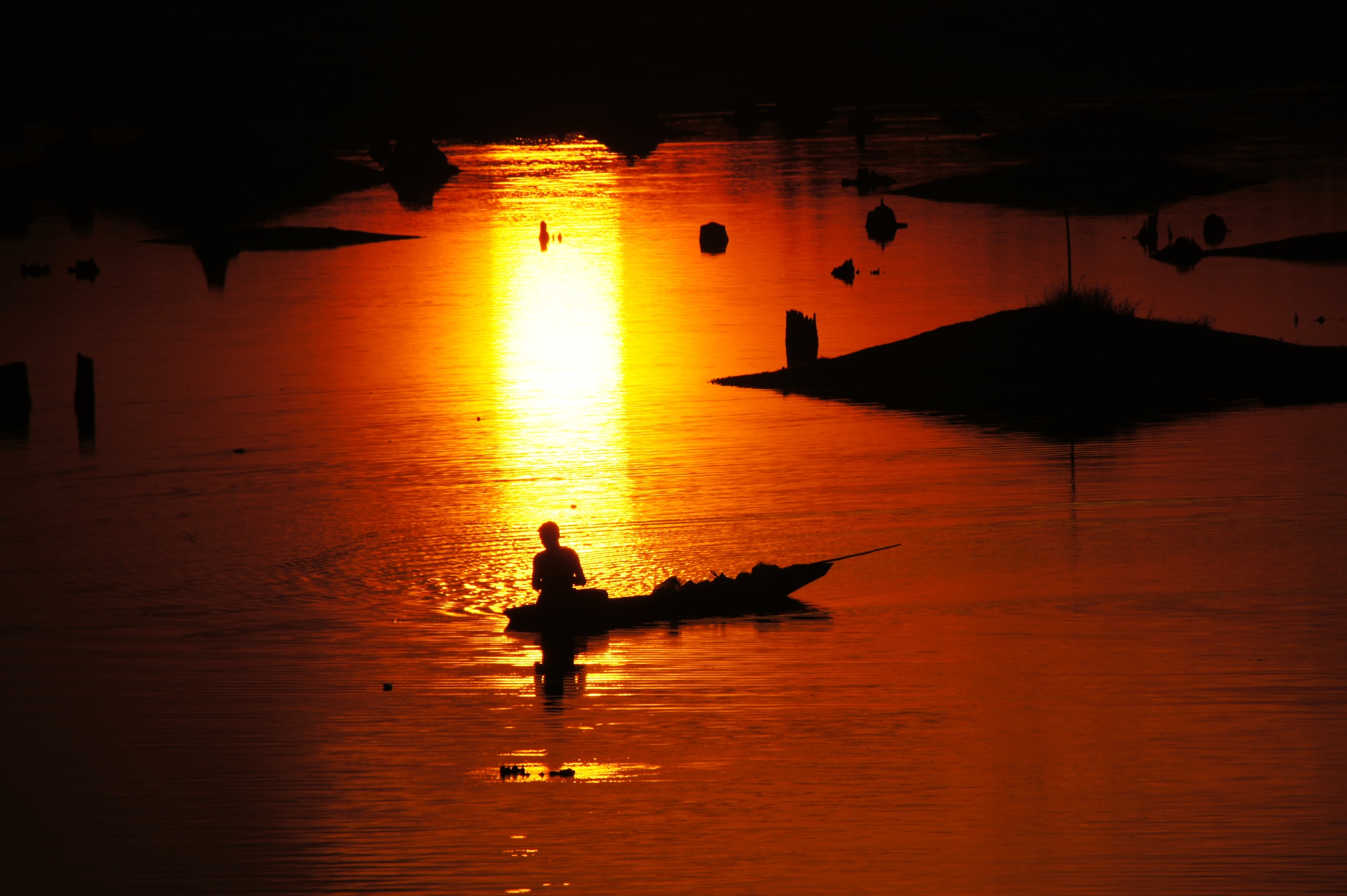
    This guy was the only fisherman out on the lake that evening – it was so serene.


    Udon thani 31


    The colors were really this intense.  We took over 600 photos that evening – be thankful I am only sharing four  :  ). 


    Udon thani 34


    We decided it was one of the "top 5" most beautiful sunsets we have seen.


    Udon thani 33


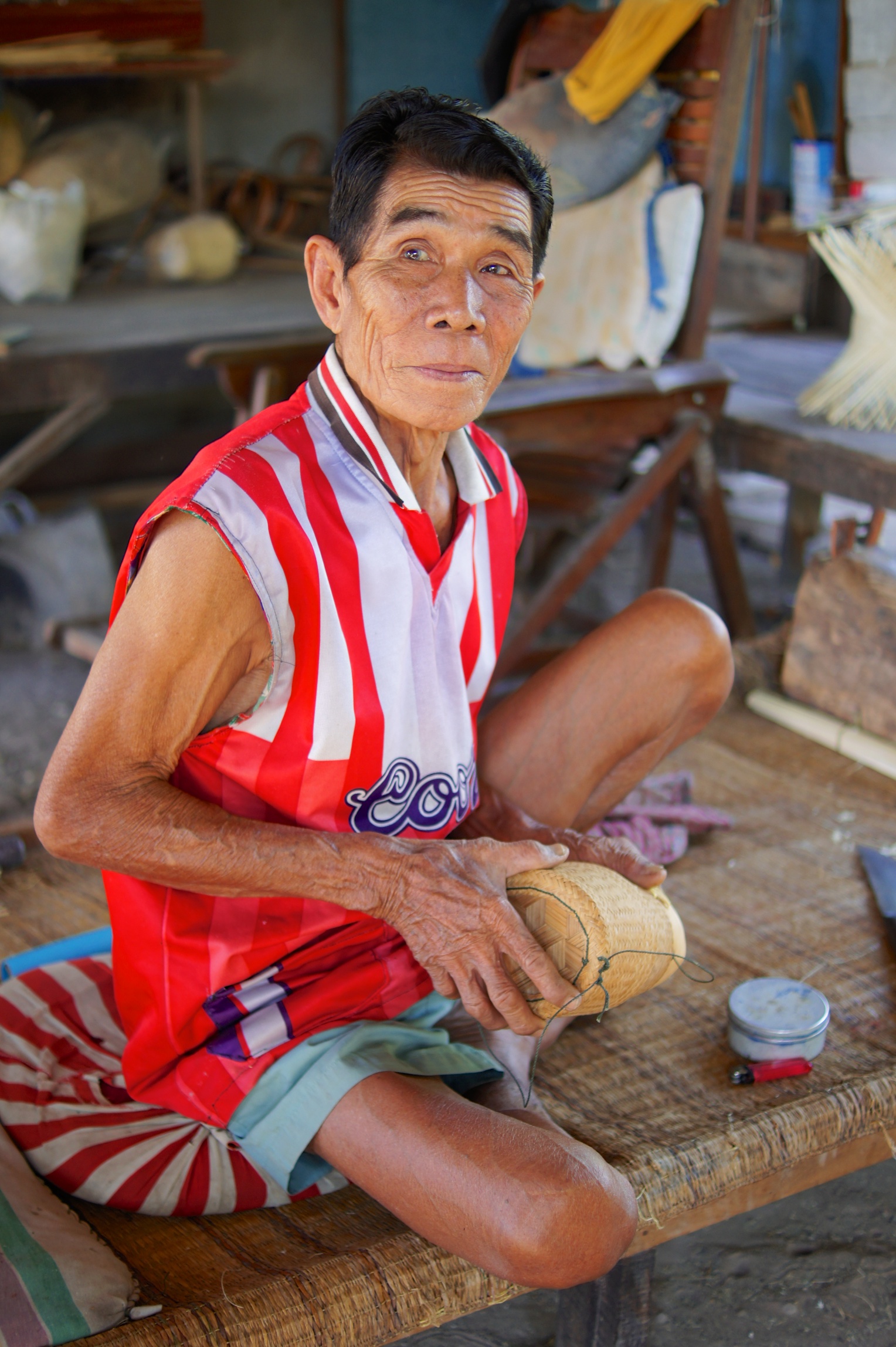
    The next day we toured around town and hung with the locals.  This gentleman lived across the road from the B&B and he made beautiful baskets by hand.


    Udon thani 2


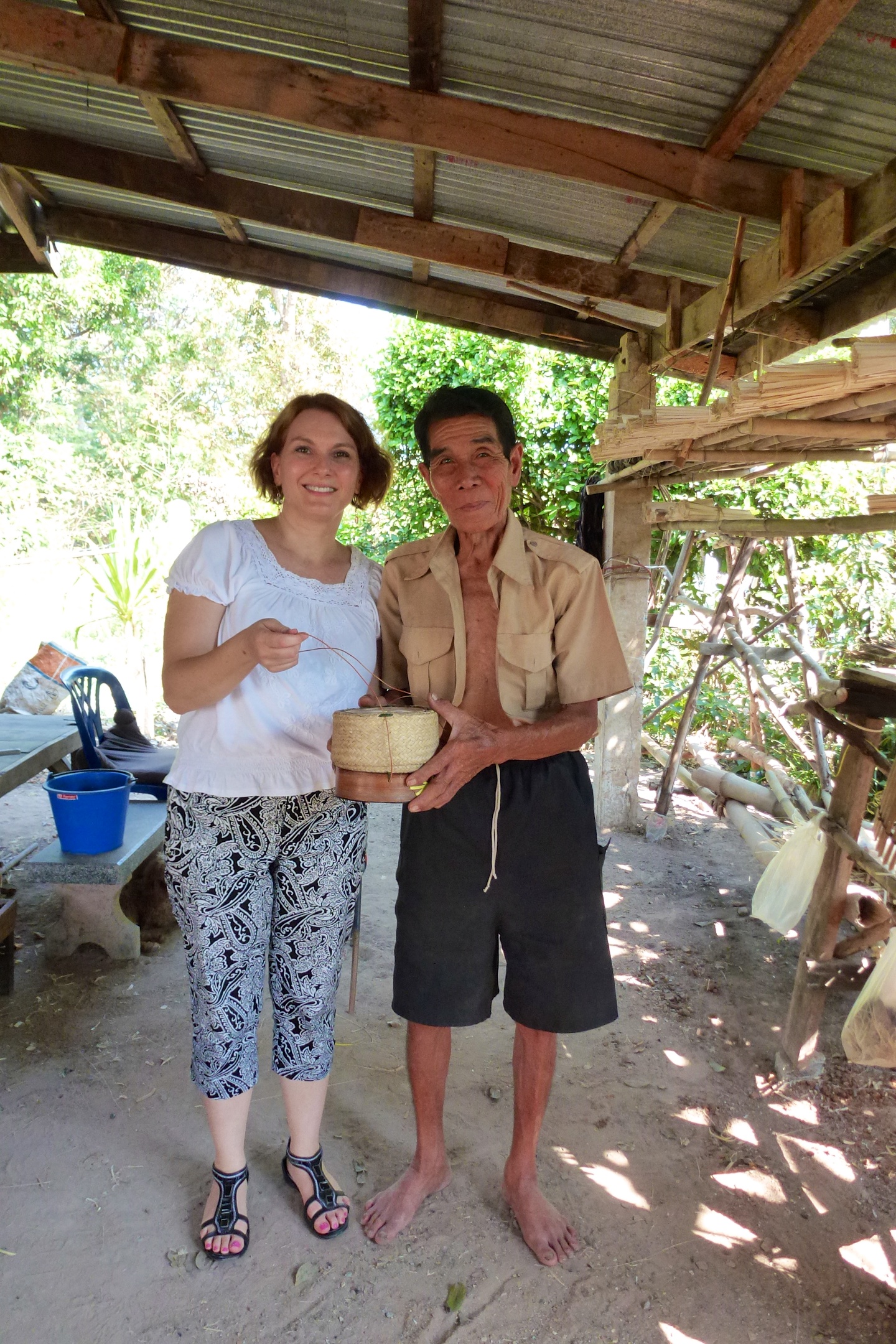
    He did not have any finished when we visited, but said he would have one in the morning for me.  The cost $1.50 USD.  REALLY.  I gave him $3.00.


    Udon thani 21


    Here is a close up of the basket.  It is a very common basket in this part of the country used for serving rice.  This one was special for me since we got to meet the artist who made it.


    Basket (1)


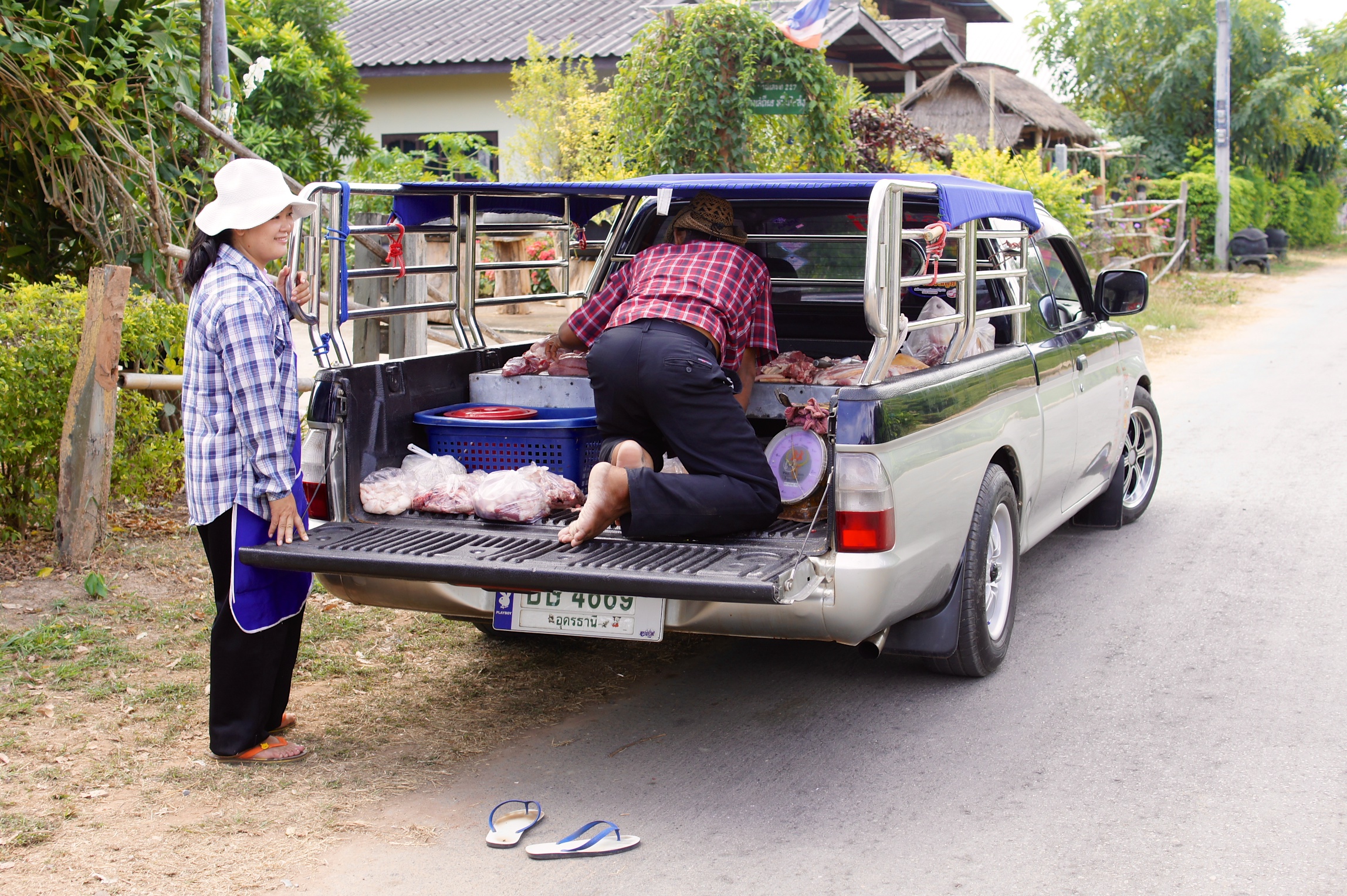
    Local shops around town…


    It was fun to see some of the local businesses.


    The butcher…


    Udon thani 15


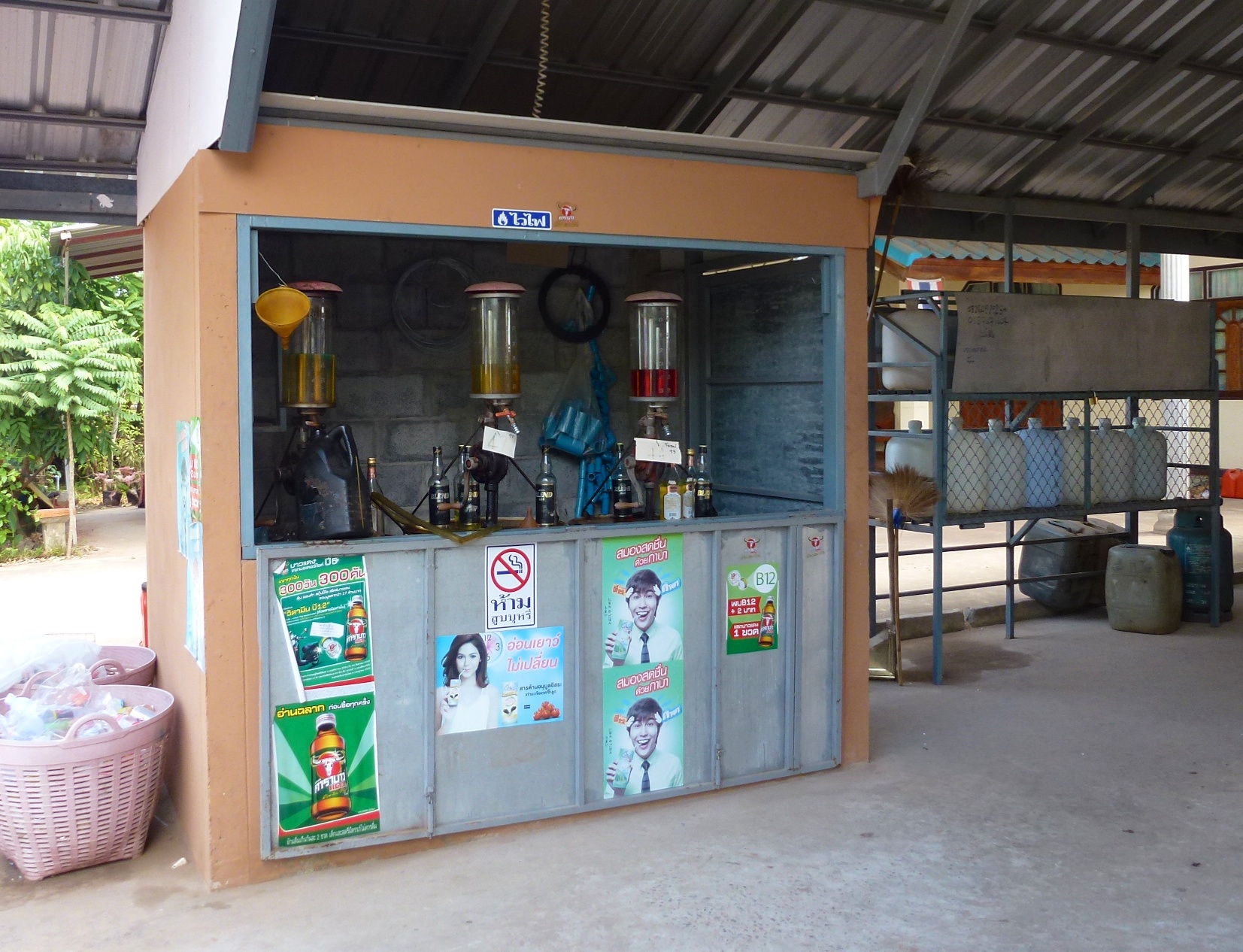
    The gas station…


    Udon thani 16


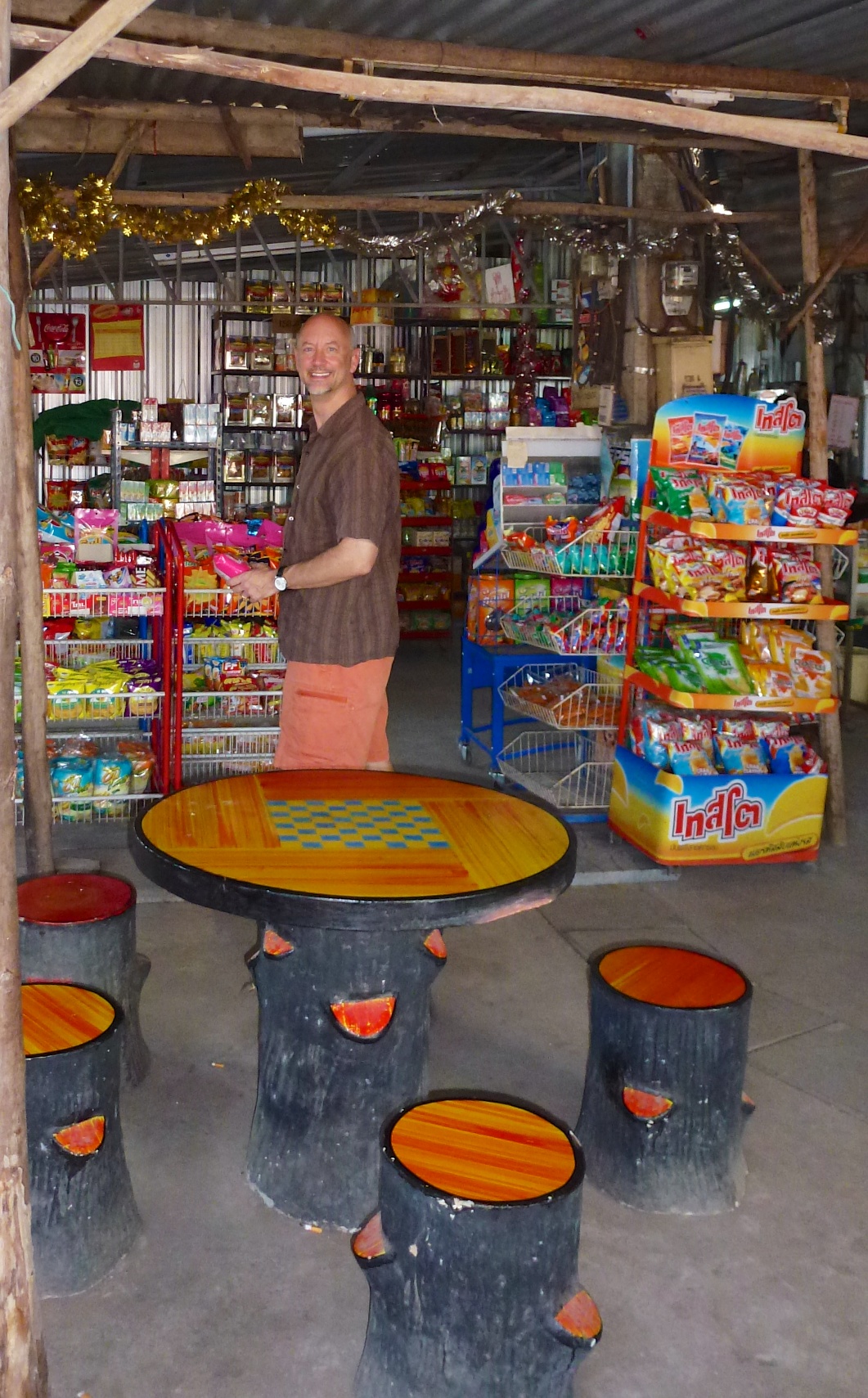
    Ths snack shop…


    Udon thani 22

    The auto mechanic…


    Udon thani 18


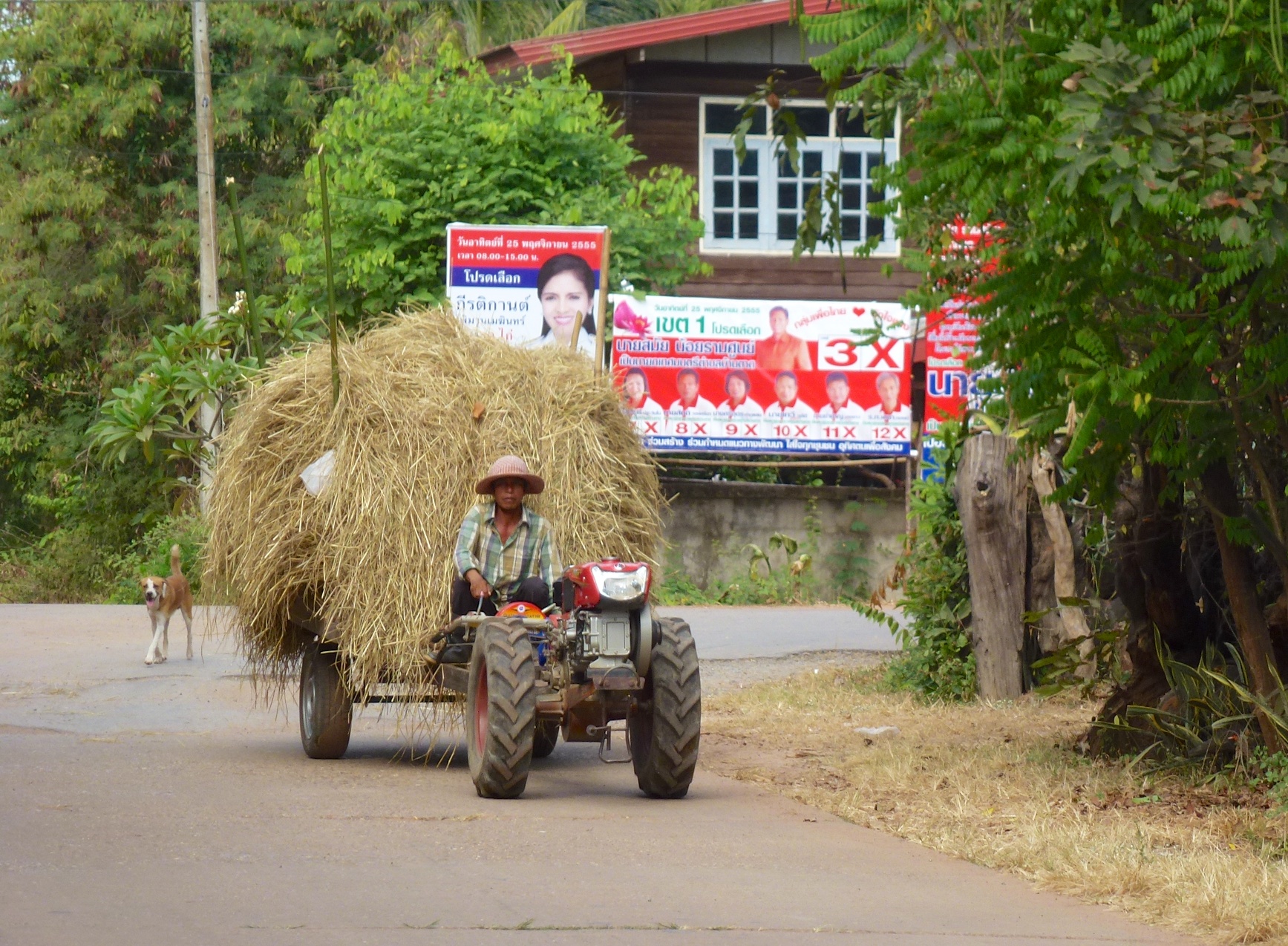
    The farmer…


    Udon thani 19


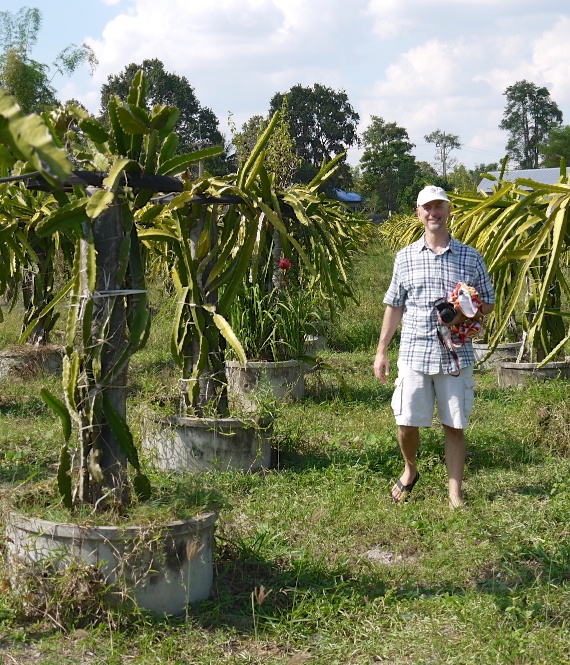
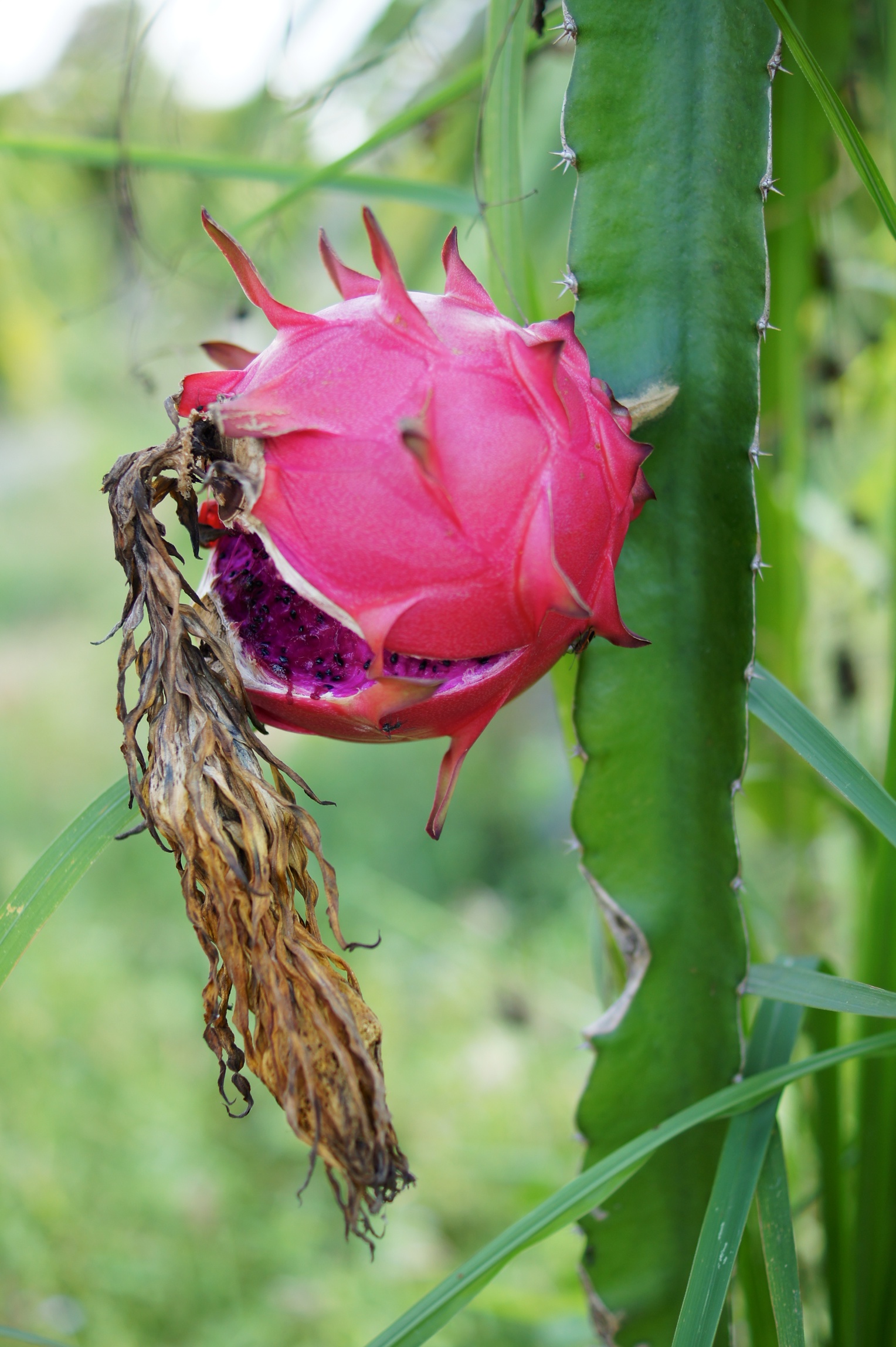
    We visited a dragon fruit farm which was fascinating as we did not know how they grew.  I did a post on it back in february, click here to read more about this exotic fruit. 


    Udon thani 6


    They grow on a cactus like treeD just read an article in Time Magazine that said this is going to be the next new "super fruit" in the United States.  Have you tasted one?


    Udon thani 7


    Udon thani 8


    Temples


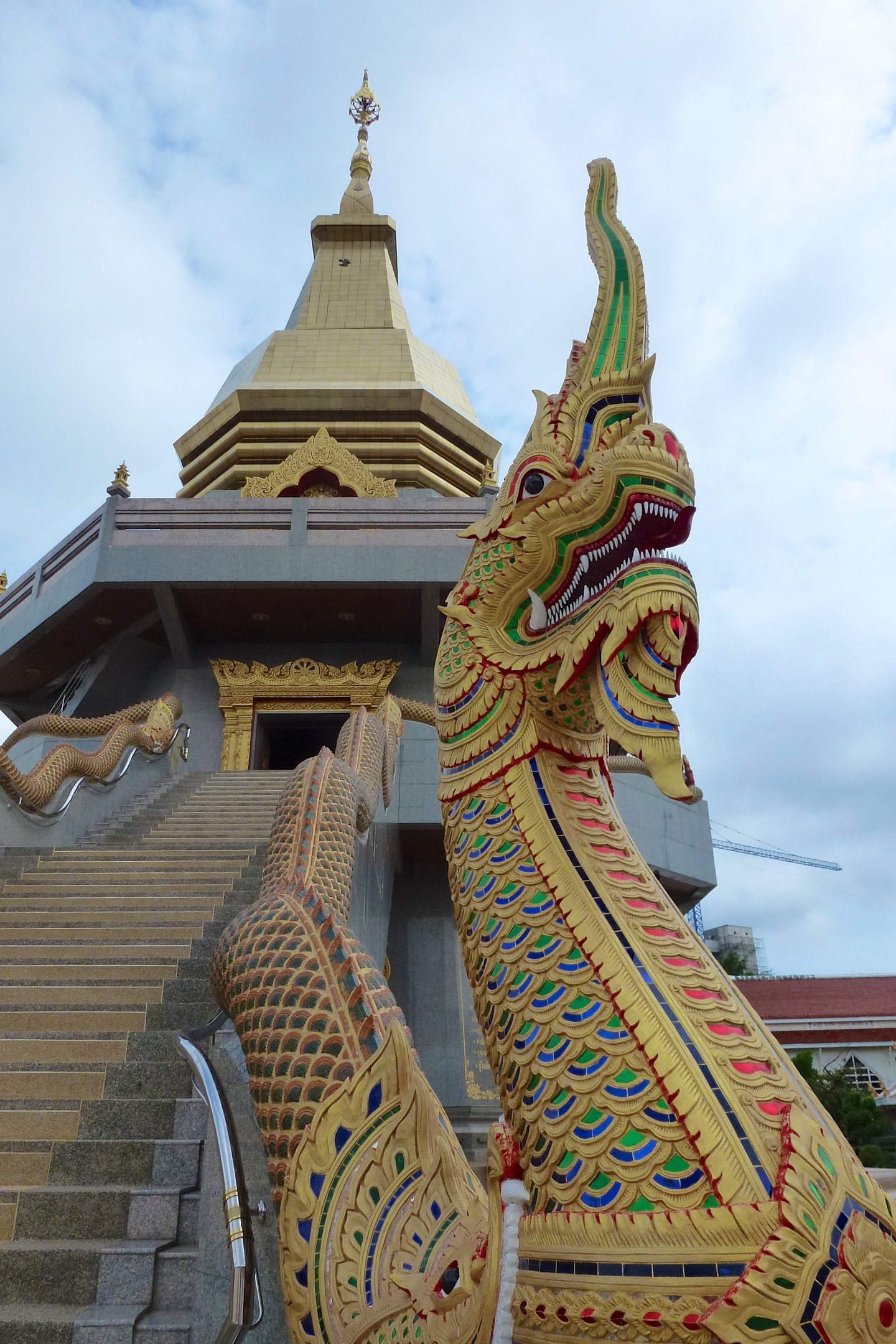
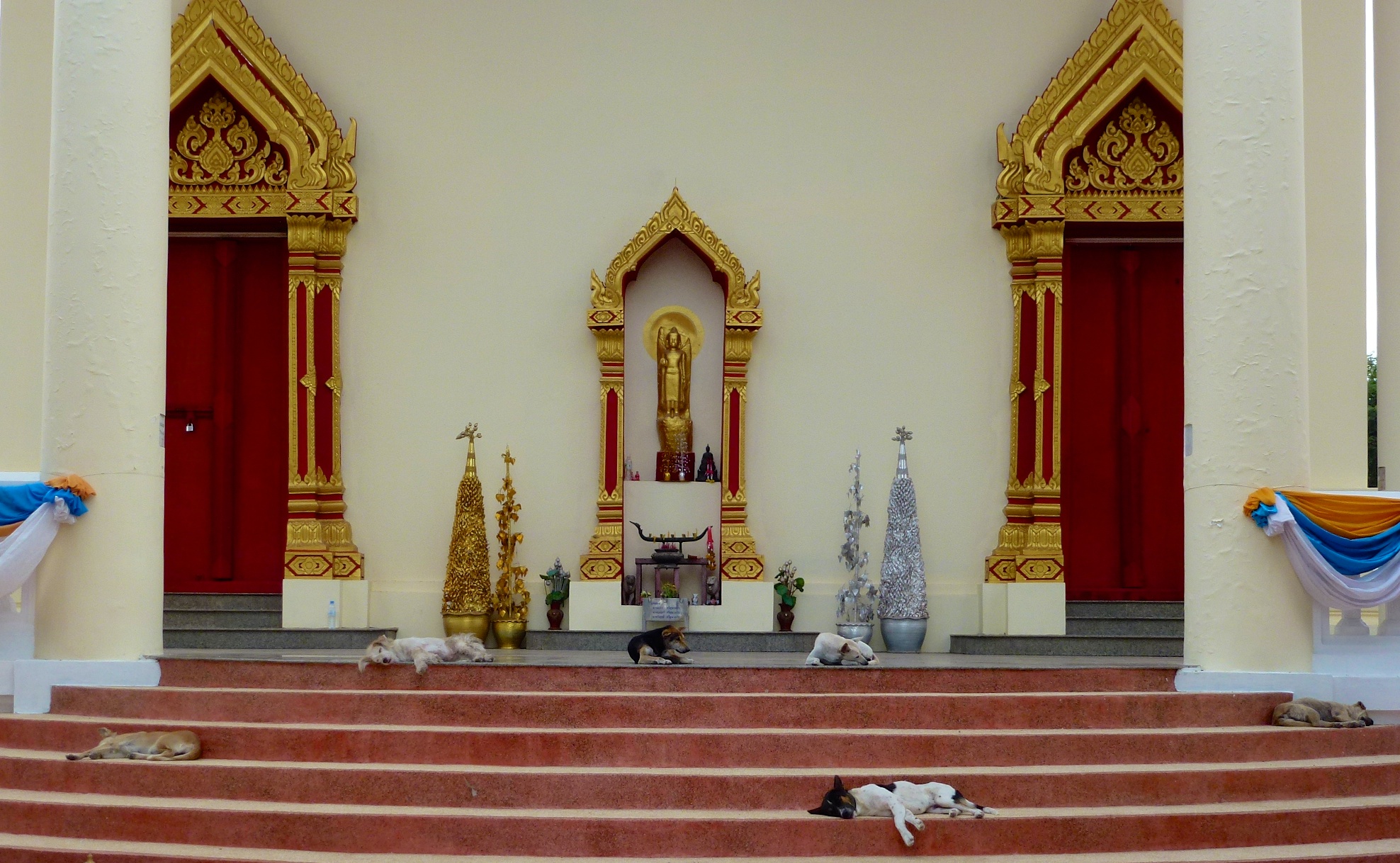
    We visited a few temples.  All were very quiet with only locals.


    Udon thani 24


    Udon thani 26

     A favorite temple of the dogs!


    Udon thani 23

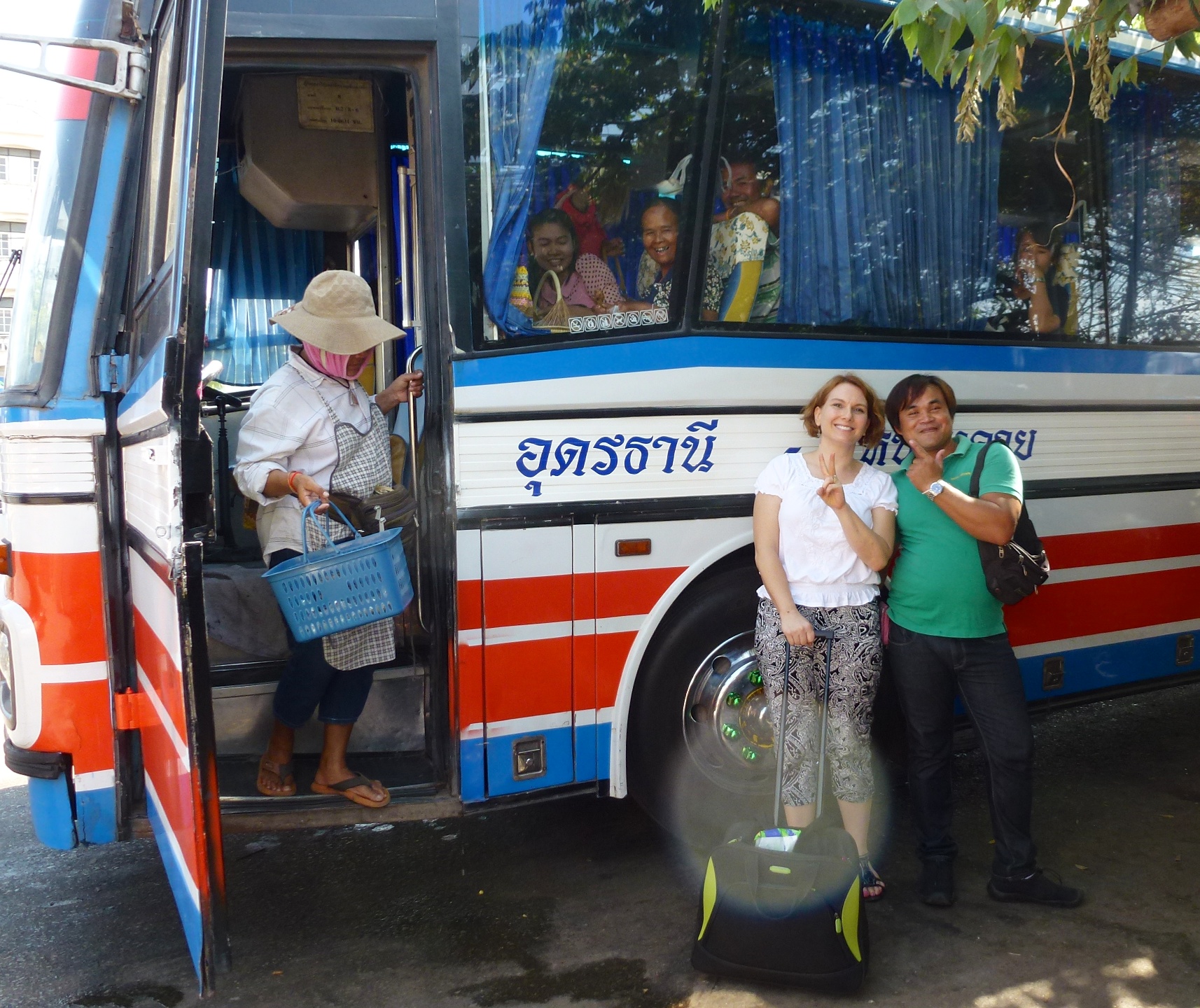
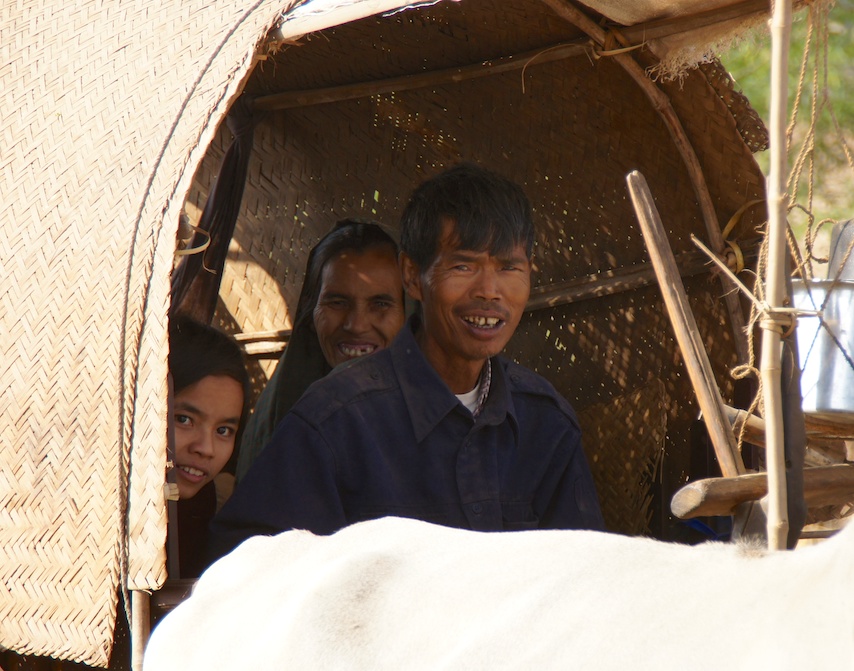
    We took a one-hour bus ride to cross the border into Laos.  The bus was very local with only one other tourist.  D was taking a photo of me by the bus when this guy said he wanted to be in the photo.  Then…..


    Udon thani 35


    The women who was selling food on the bus jumped down and said she wanted to be in the photo too!  Look closely in the windows where all the locals are watching.  Priceless!


    Udon thani 36


     Next Stop….Laos!