I can't believe a year has gone by. On December 30, we moved across the world to Asia….. Singapore to be exact. We spent most of January discovering our neighborhood, our bus and metro routes, and shopping for food and household items. Everyday was a learning experience!
Our first trip was Bangkok, Thailand in February. We ended up visiting Bangkok 4 times over the year. I calculated a few fun facts about our travels:
Countries visited: 10
China, Indonesia, India, Laos, Malaysia, New Zealand, Russia,
Thailand (5x), US (2x), Vietnam (2x)
Continents: 4 (well, if we count New Zealand)
Hotels: 28 (34 for D)
Airplane flights : 40 (52 for D)
Nights away from home: 117 nights
We selected a favorite photo from each place we visited. If you click on the country link in red it will take you to the full post on the trip.
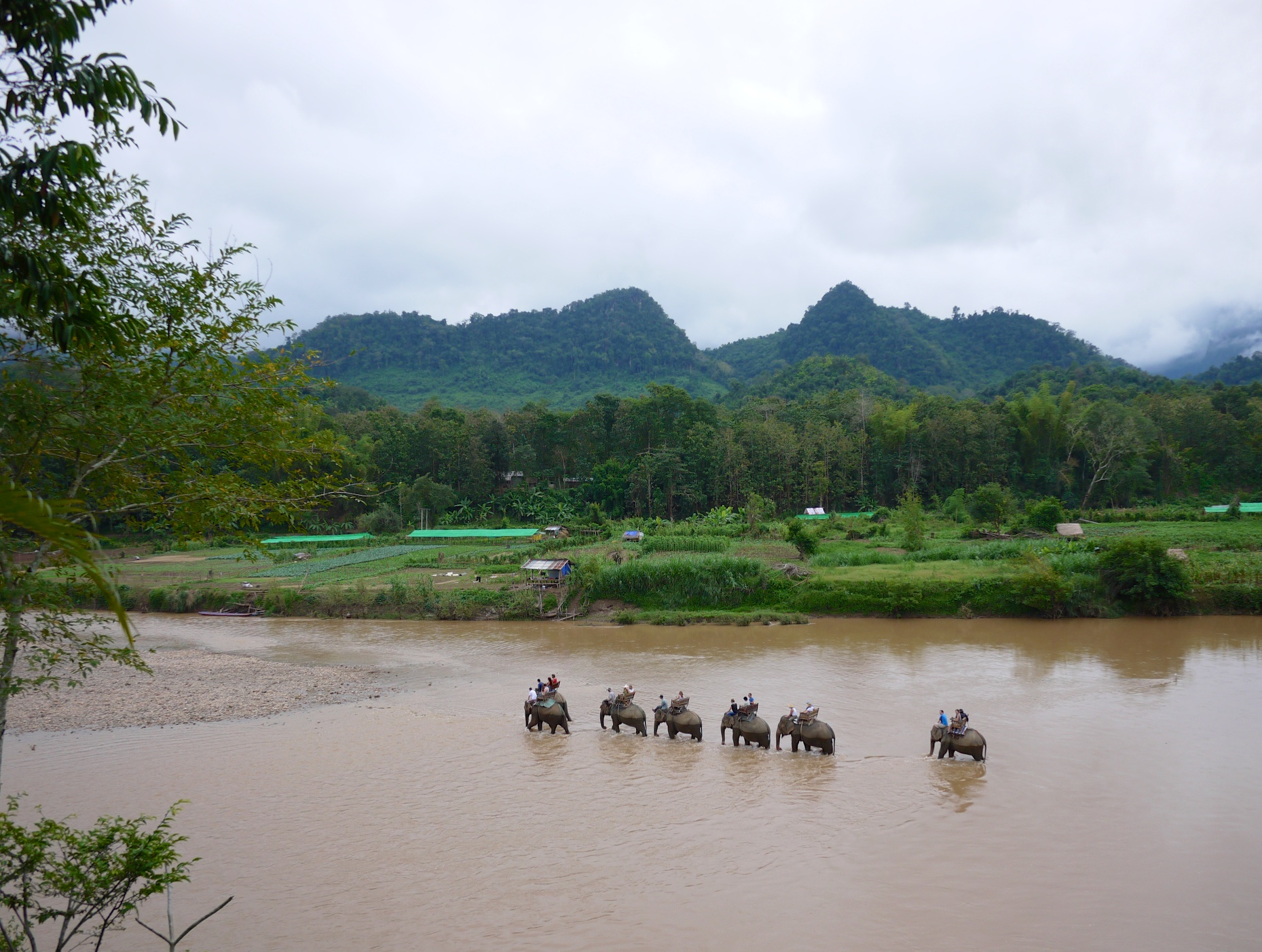
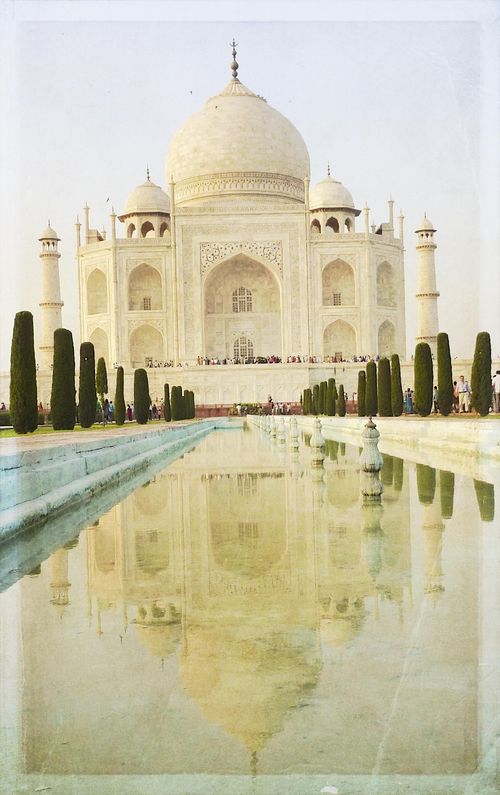
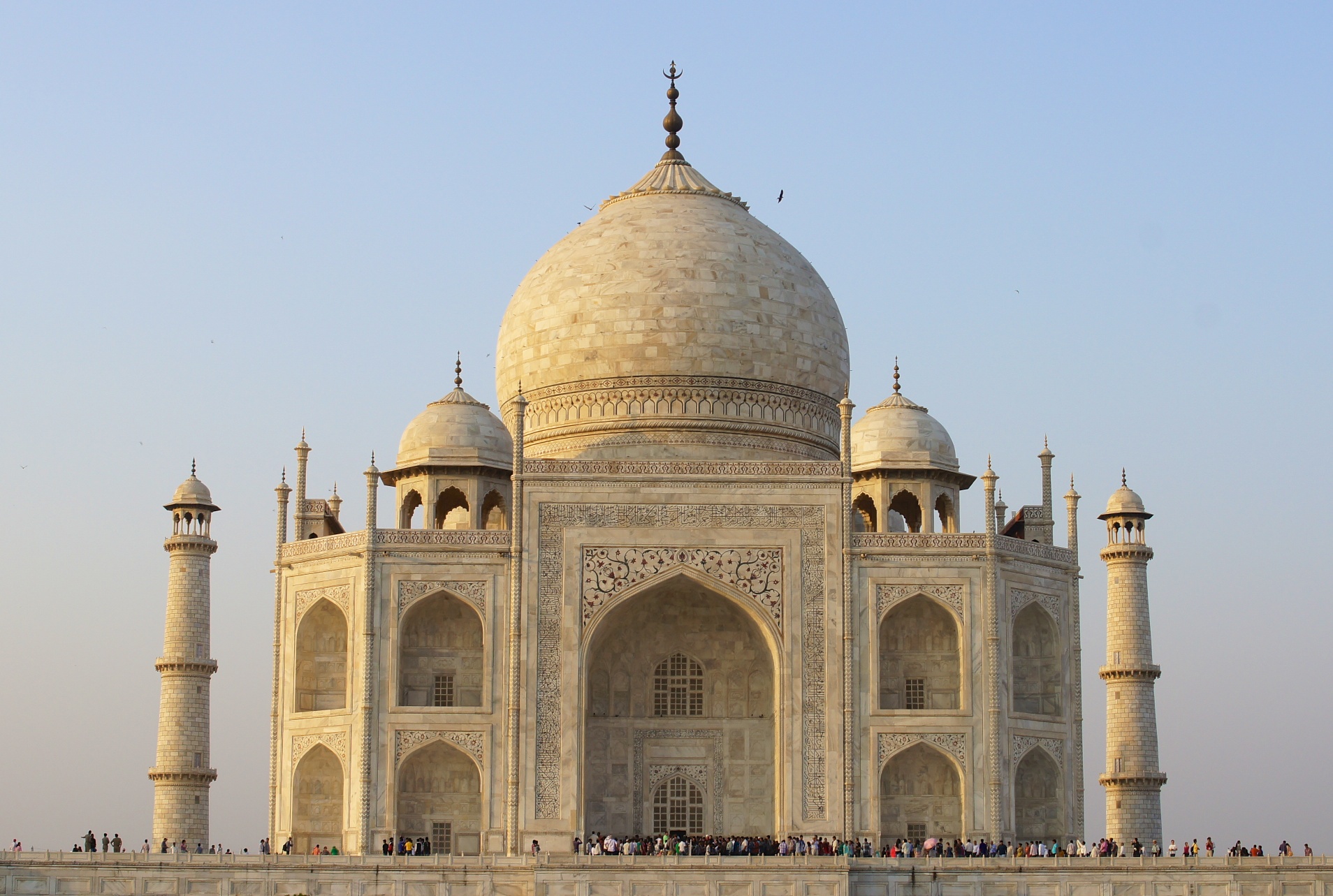
Our favorite??? SO hard to pick. We can say the elephant ride in Laos was the highlight for the year. And the surprise sight was the Taj Mahal, which was absolutely stunning in person. A must see!
We can't wait to see where 2013 takes us. So far, we have trips scheduled for Myanmar, Bangalore (India), Ho Chi Minh, Bangkok, Bali, and Jakarta. On my quest to reach 50 countries by 50 – I am at 48, I am pretty sure I will make it in 2013 (D is already at 50).
Happy New Year to you! A big "thank you" for taking the time to stop by our blog to read about our travel adventures. We hope it inspires you to see the world!
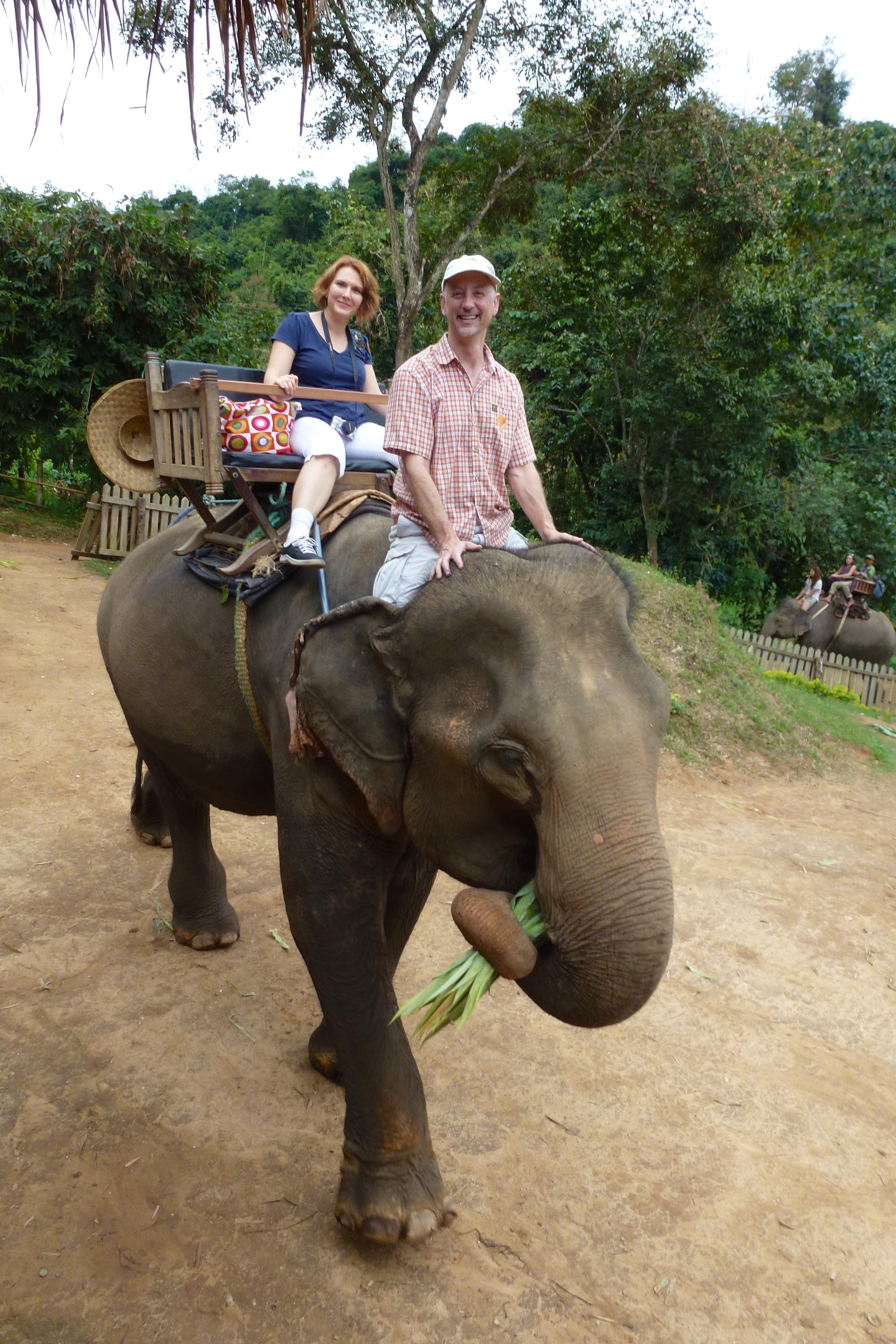
I have always wanted to ride an elephant. Don't know why, but I have. My dream came true this December when we were in Luang Prabang, Laos.
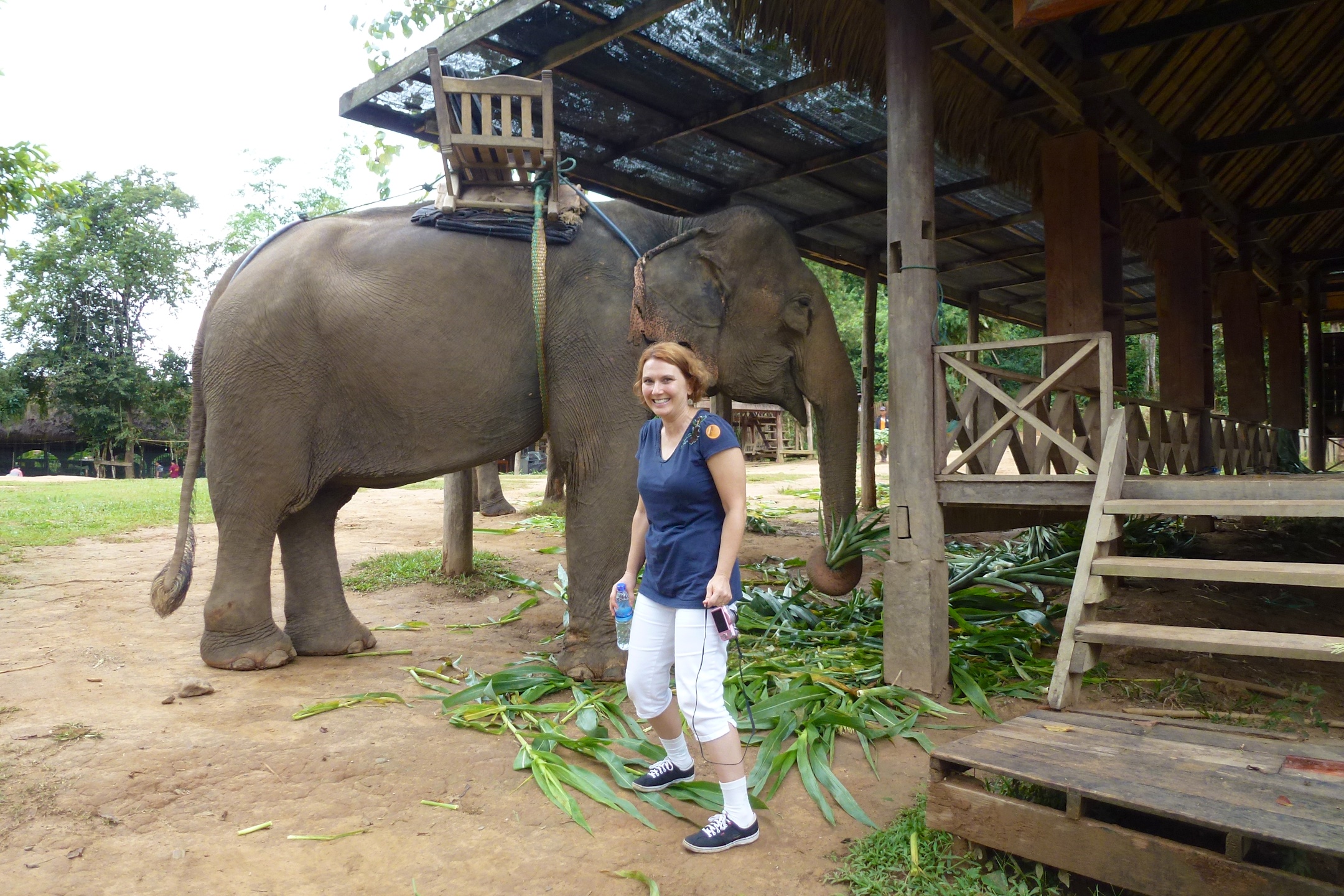
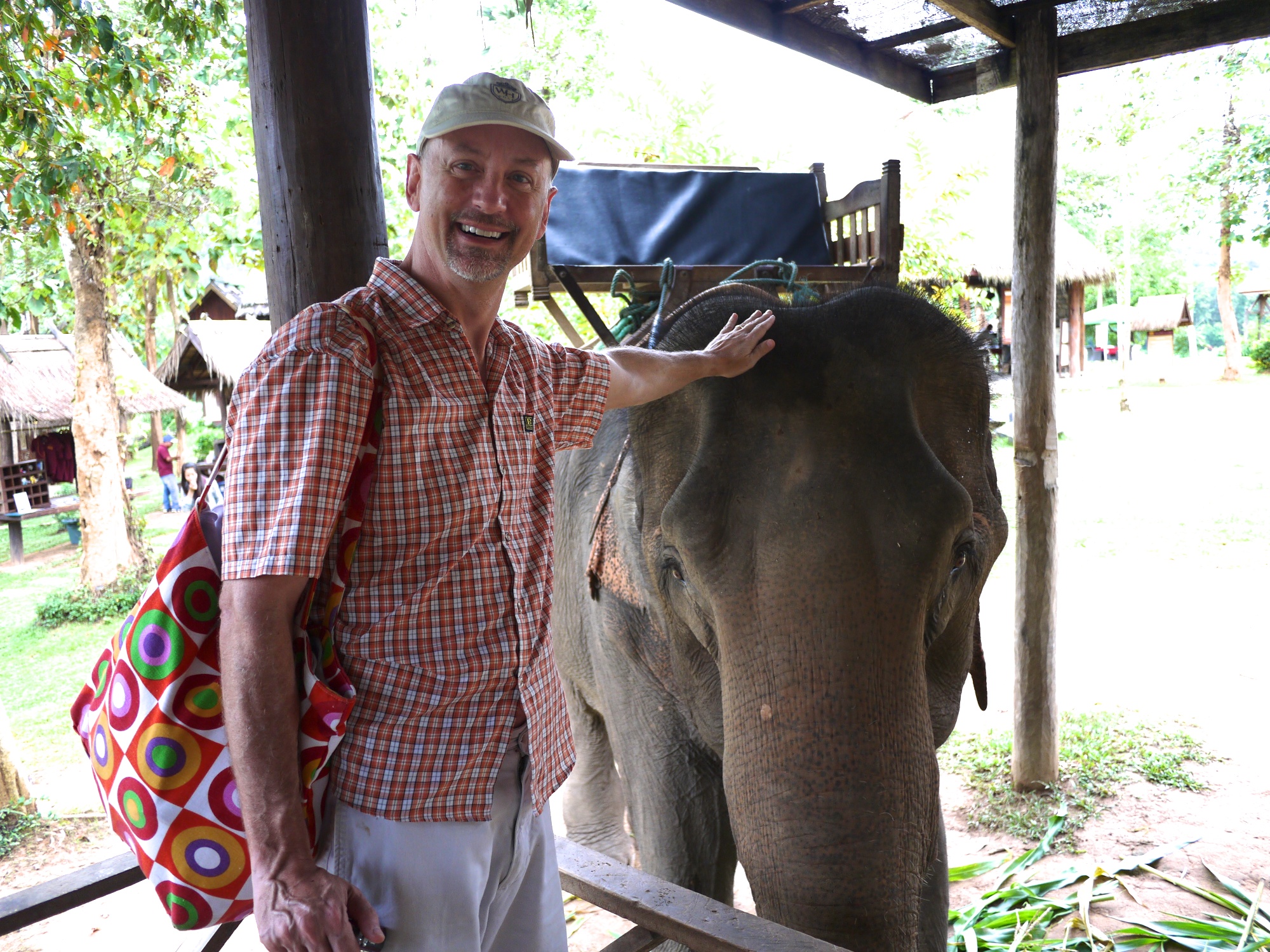
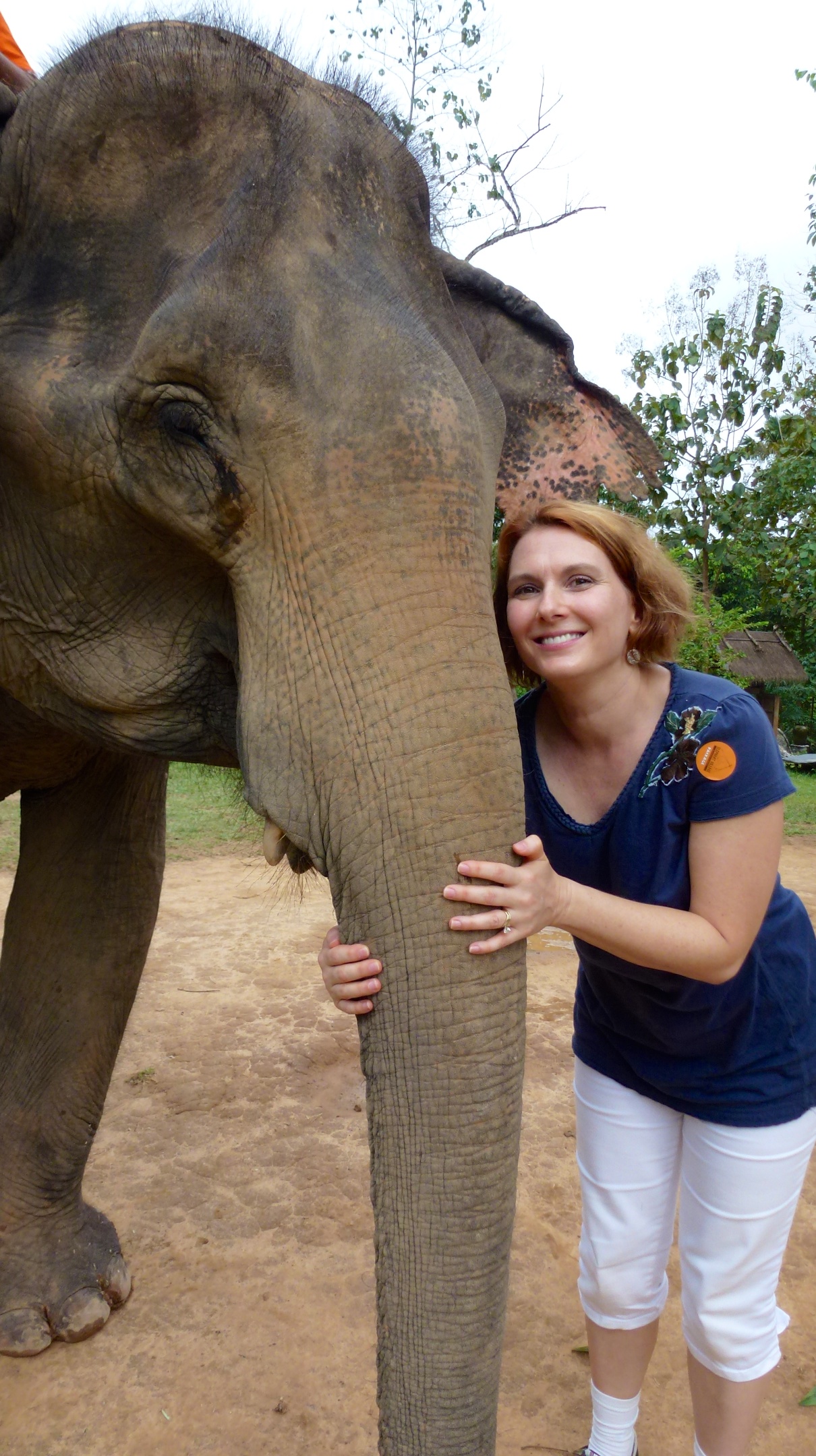
This was such a fun activity and a once-in-a-life-time experience, I have documented it with many photos : ) Below, was my first introduction to the elephant. I think it
is funny to analyze my body language. I am trying to get close to it,
but you can see from the hunched shoulders, I am afraid.
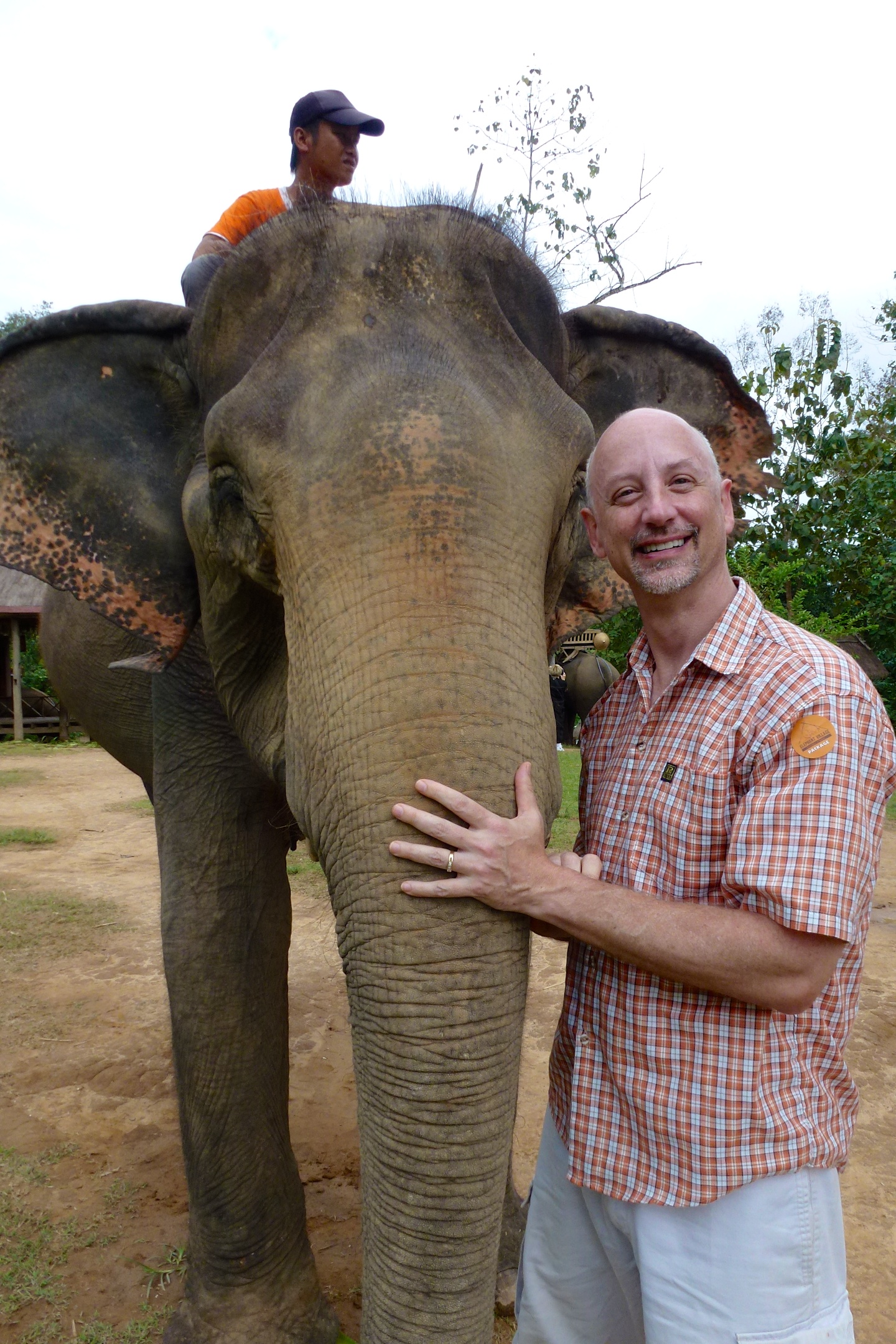
D, on-the-other-hand, was not. Did you know a baby elephant can weigh up to 200 pounds when it is born? Gestation
in elephant typically lasts 18–23 months and they usually birth every four to
five years.
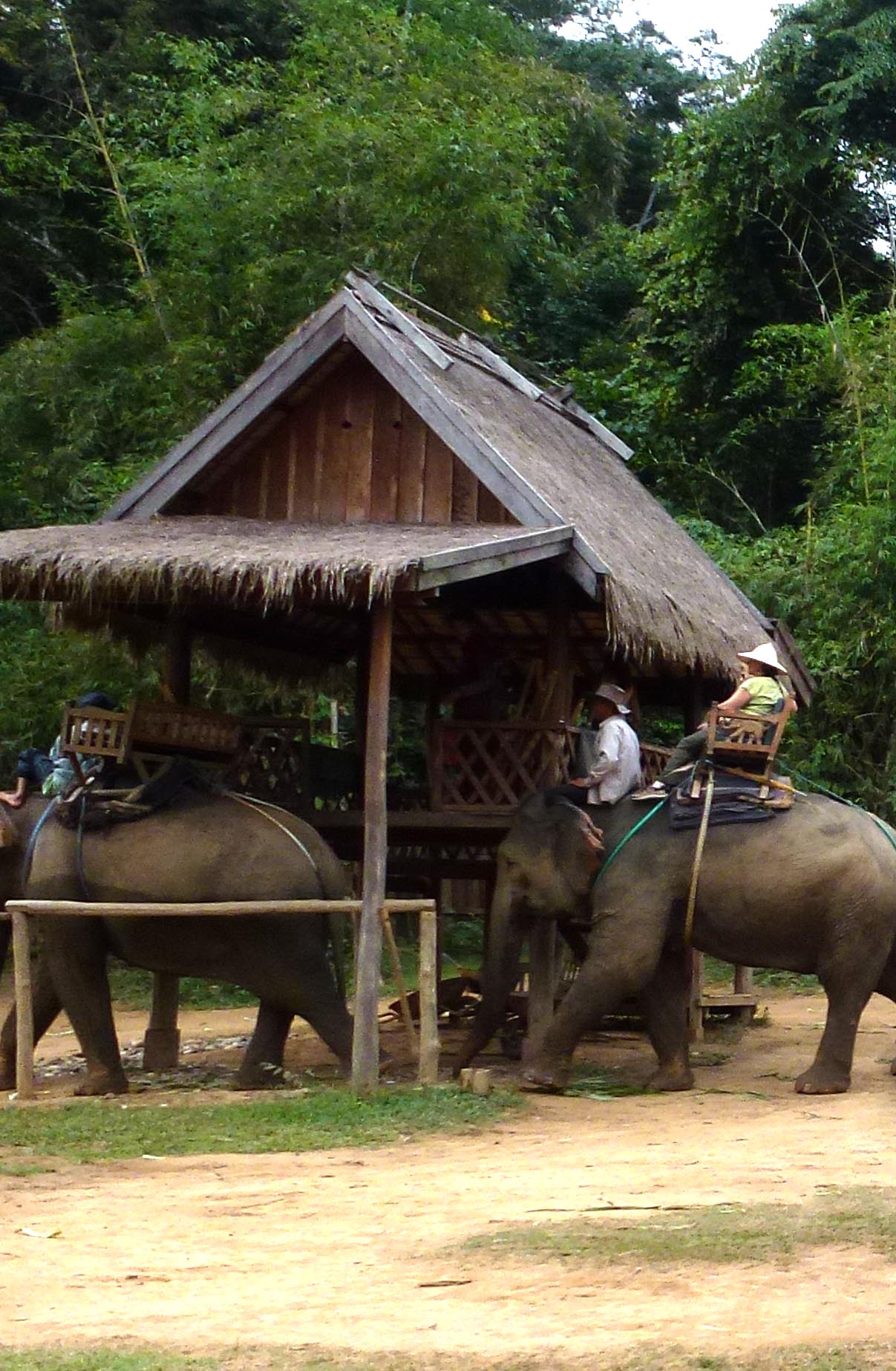
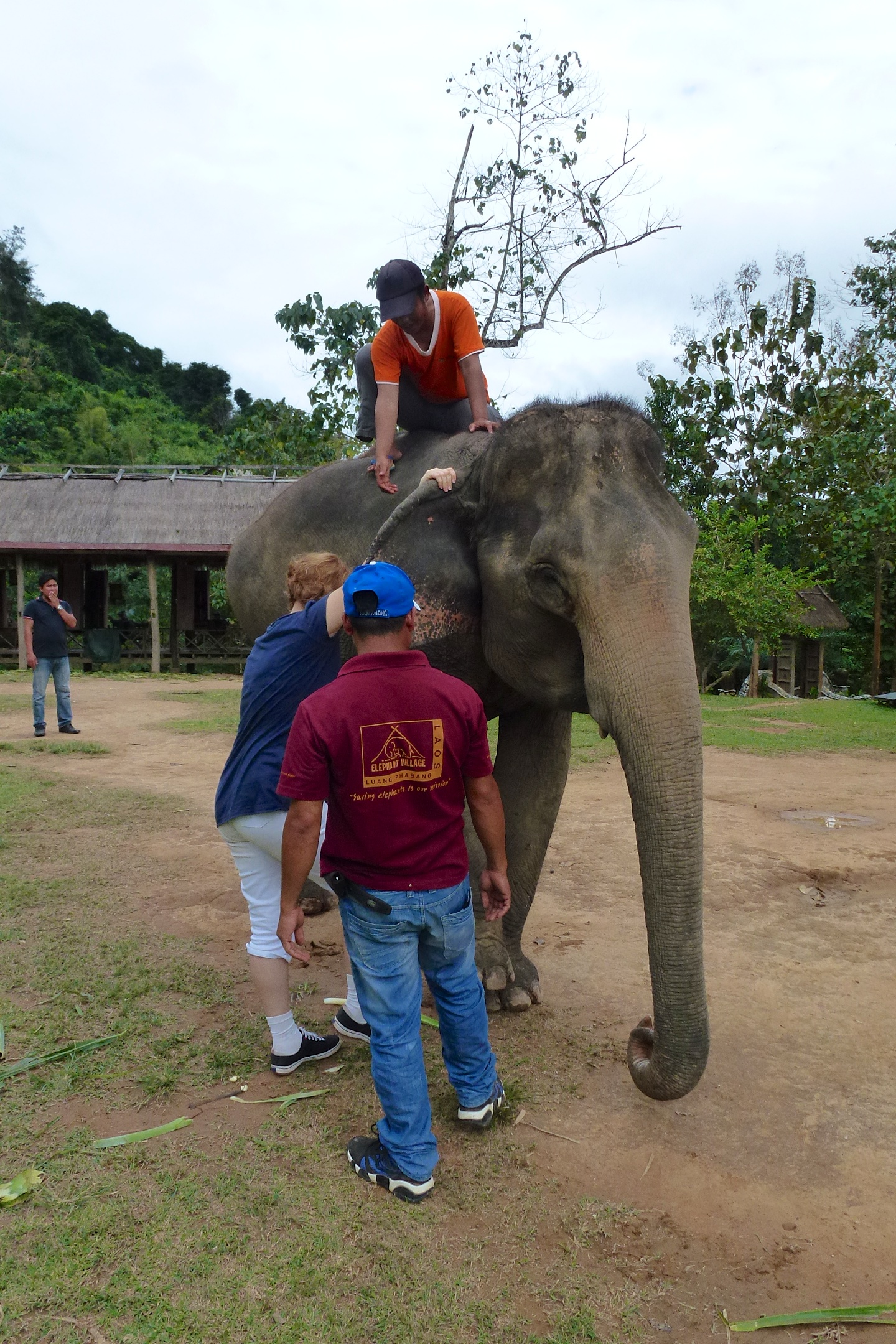
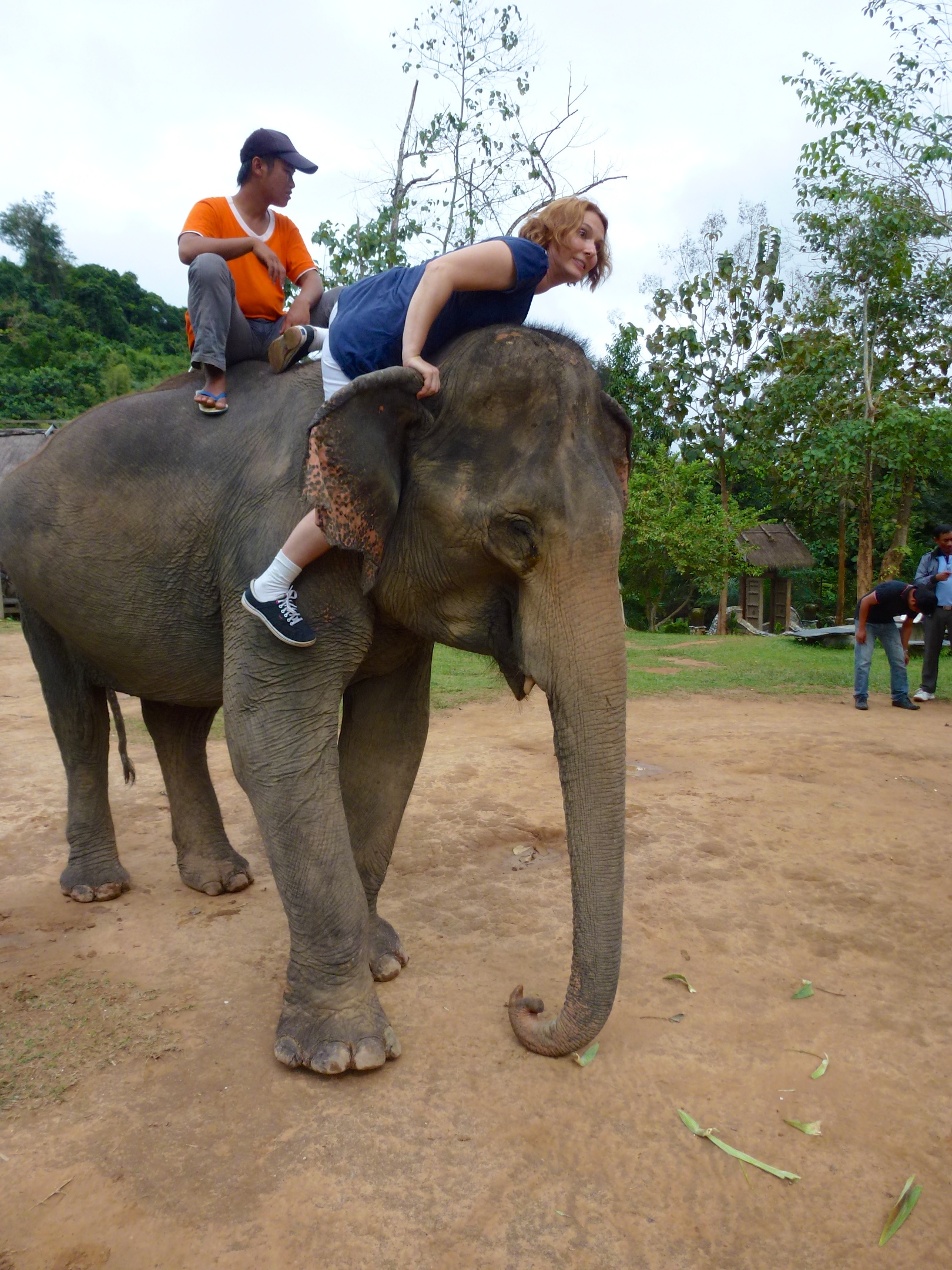
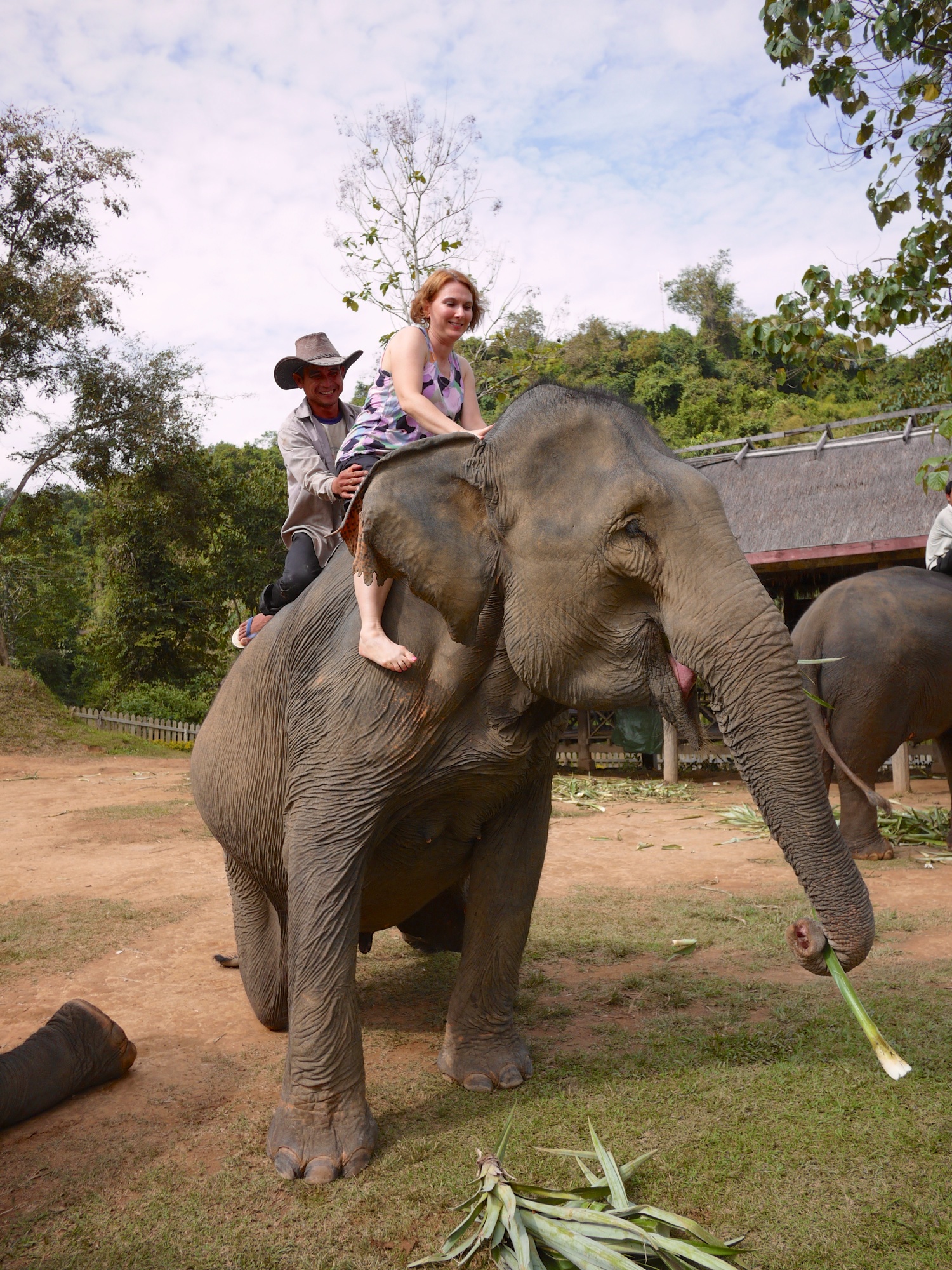
During our day at the Elephant Village we were on the elephants three times, and each time we learned a different way to climb onto the elephant. The first was the easiest as we climbed onto her back from a raised platform.
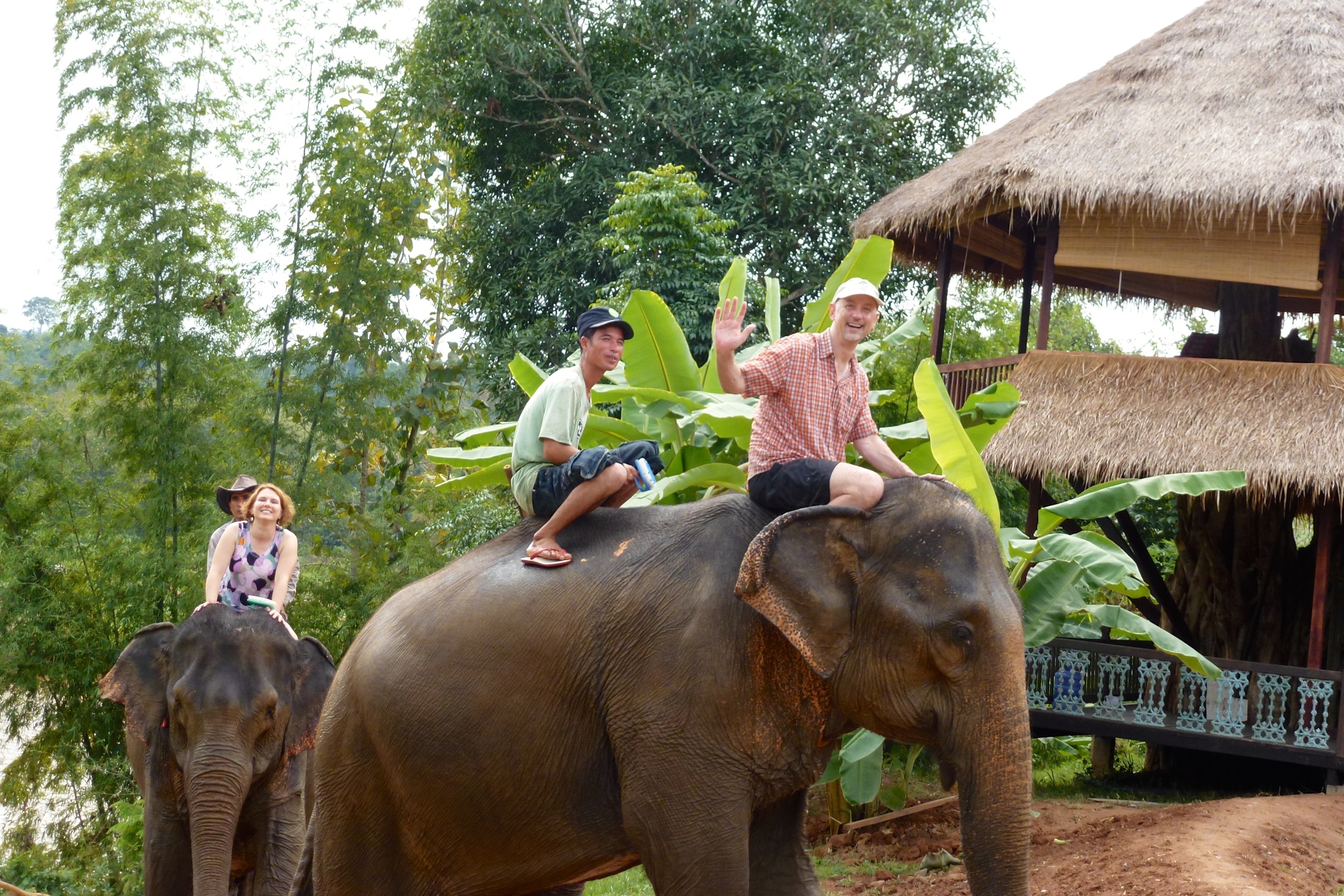
Our elephant's name was Mae Kham Kun and she was 38 years old. To help us get familiar with her, our first ride was in a seat. But D was quick to climb directly onto the elephant's back. If you are thinking how did we know how to ride the elephant?? The mahout is with us at all times, he was on the ground taking the photos.
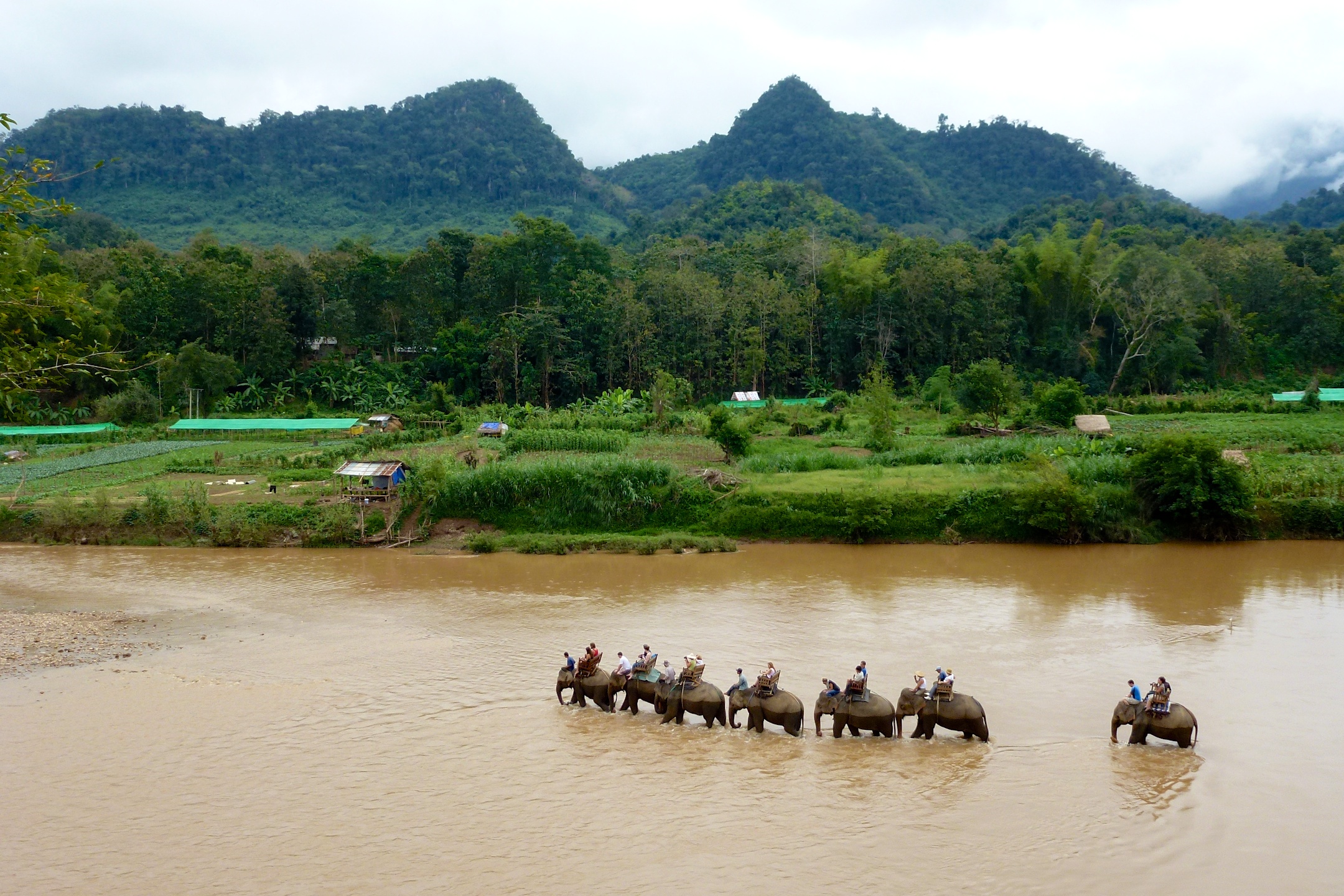
This ride was the longest, it latest about 45 minutes. The Elephant Village is in a lush jungle valley on the banks of the Nam
Khan River and the scenery all around was gorgeous. We started out on dry land, and then went through water.
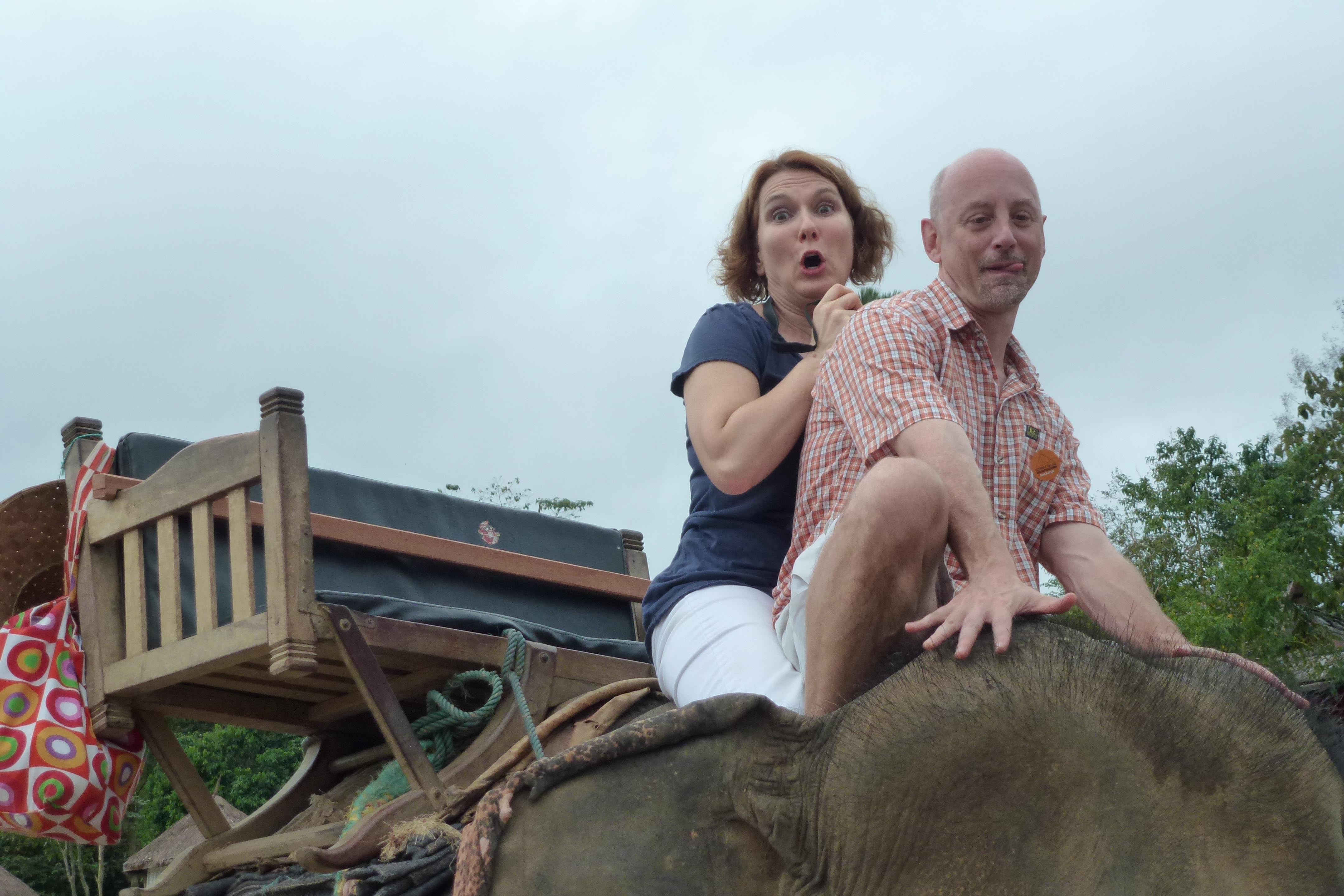
Was it scary? Yes at times it was, especially in the beginning. There really is nothing to hold onto as the elephant sways from side-to-side. Check out D's tongue action and ….. well my face says it all!
The photo below was towards the end of the ride….my body is very relaxed. I did ride on her back for awhile, but it takes a lot of leg work to hold on (let me tell you… the next day I felt muscles on the inside of my thigh that I never knew I had). I needed a break so I moved back into the seat, which really took skill.
Our mahout was great – he took so many photos. A mahout is the name of a person who rides and trains elephant. Usually a boy, he starts in the "family business"
at a fairly young age. He will be assigned an elephant and they will be attached to
each other throughout the elephant's life.
The
elephant is the largest land animal on Earth. There are two species of elephants, the African (largest), and Asian. The Asian, which we rode, are slightly smaller. Adult male elephants can reach weights of
six to eight tons. To put it into
perspective, most cars weigh about two tons.
Most of the elephants have injuries as they were working elephants in the logging industry before coming to the elephant rescue village. Mae Kham Kum was injured after stepping onto a stick of dynamite.
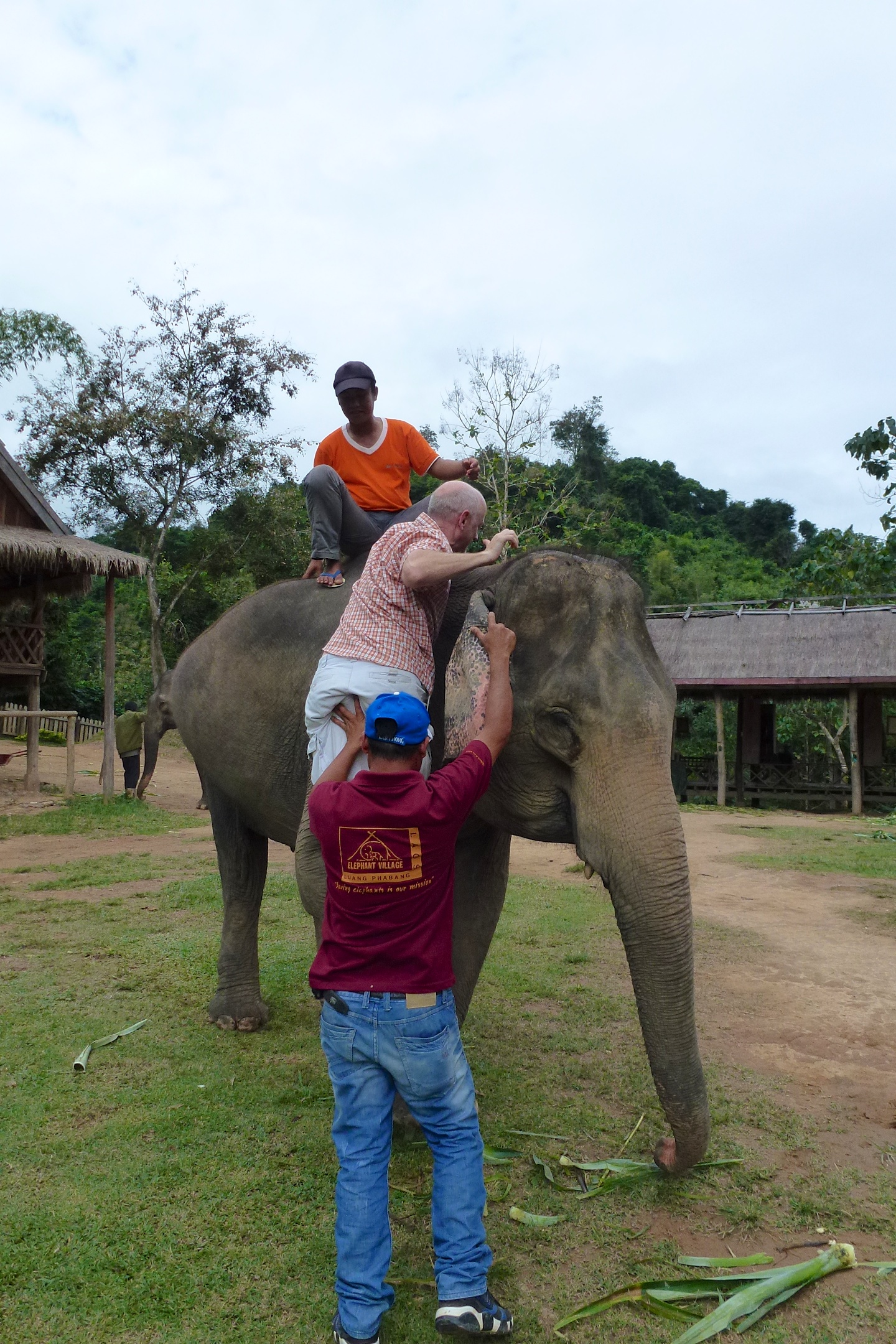
We learned a second way to mount the elephant. This one was a bit more difficult with very little help from the elephant!
The elephant bent her leg slightly, we grabbed her ear, and stepped up on her leg. One mahout pushed…
and the other pulled…..
And you use every ounce of strength you have to get up on them.
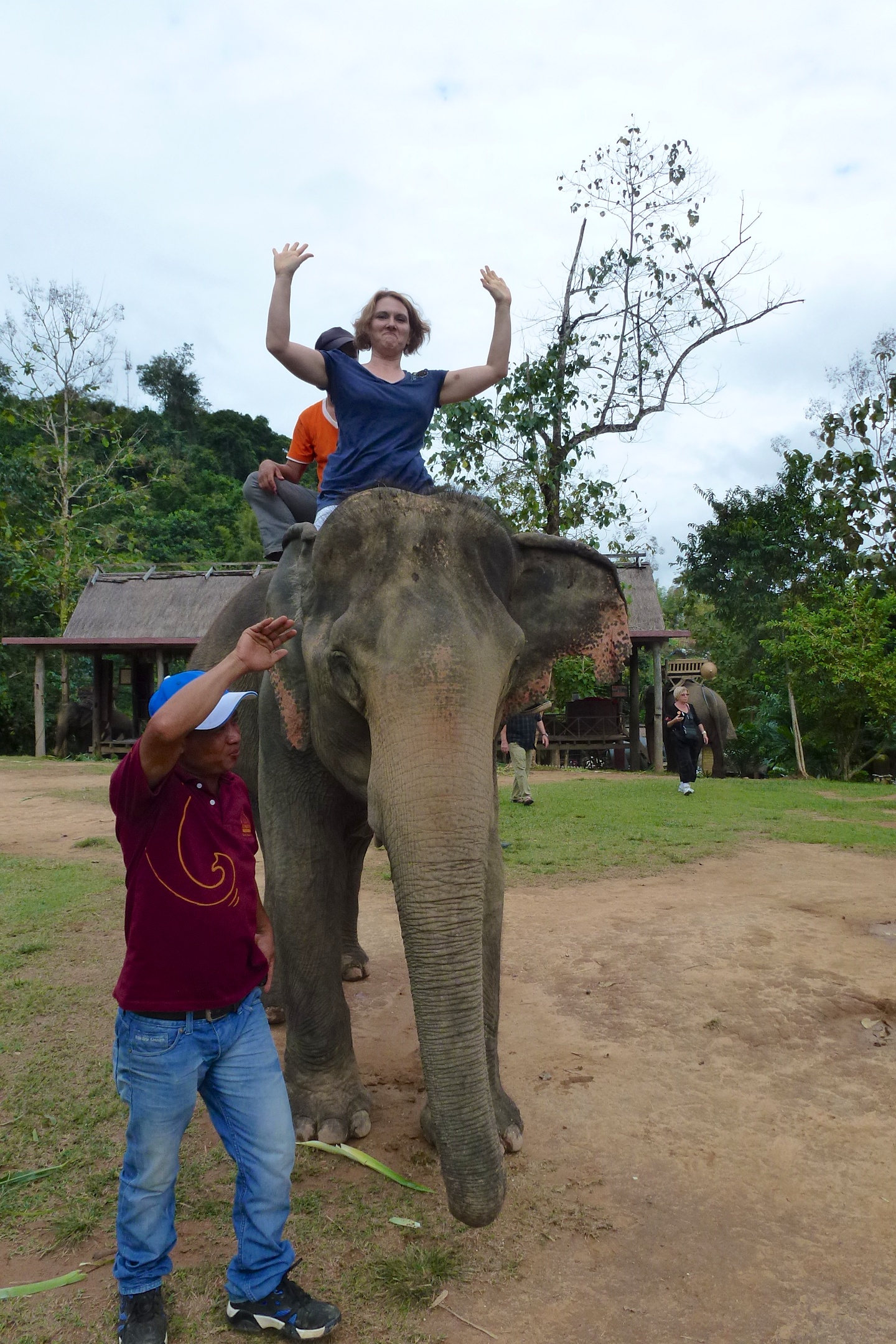
Hurray – I made it!
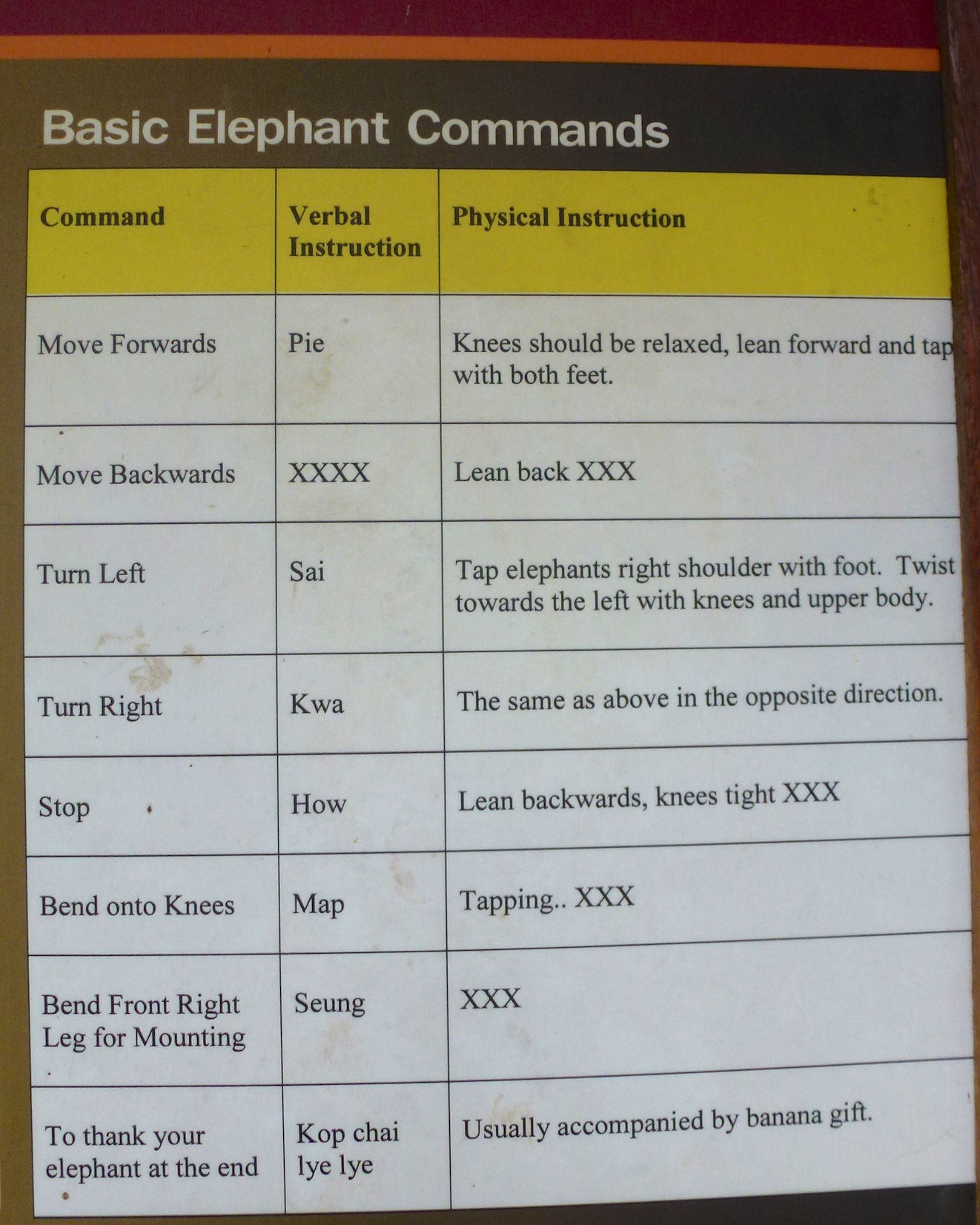
Our next event was a mini mahout lesson where they taught us basic commands to direct the elephant – shown below.
Elephants are among the
most intelligent species, next to humans. They communicate both verbally and with body language.
We fed them bananas. The
elephant's trunk is not only used
for smelling and breathing it's also used for drinking, grabbing food, and
sending out loud trumpeting noises.
We have been asked if the elephants smelled bad. They did not…..except when his trunk came up to find the bananas. He let out a big breath and it was pretty stinky!
How do you get off of the elephant you ask?
Not very gracefully!!!
They tell you to gently slide down the elephants side….
OOPS!! I jumped
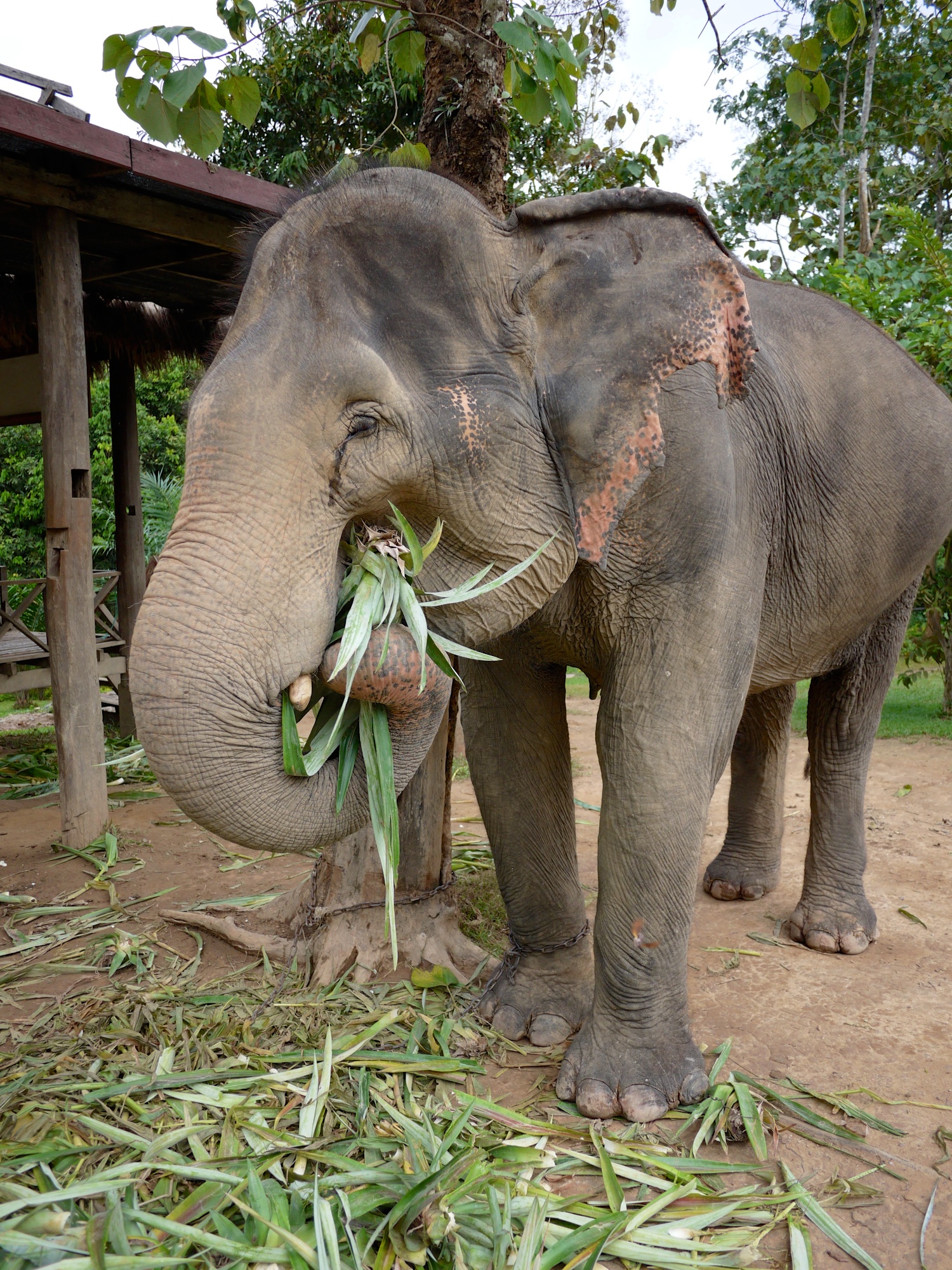
Next we took a break for the elephants to eat a little snack. They love to eat pineapple tops. Fun fact: Elephants
don’t like peanuts. They don’t eat them in the wild, and zoos don’t feed them
to their captive elephants.
They can reach heights over
13 feet and will eat 300-600 pounds of food per day. Elephants are vegetarians.
The Mahout got under the elephant's chin and then told me to do it. I tried, but this is as far as I was willing to go. Again, that scared look on my face : )
What happens when an elephant eats 300 to 600 pounds of food? See below : ) No smell…just GIGANTIC!
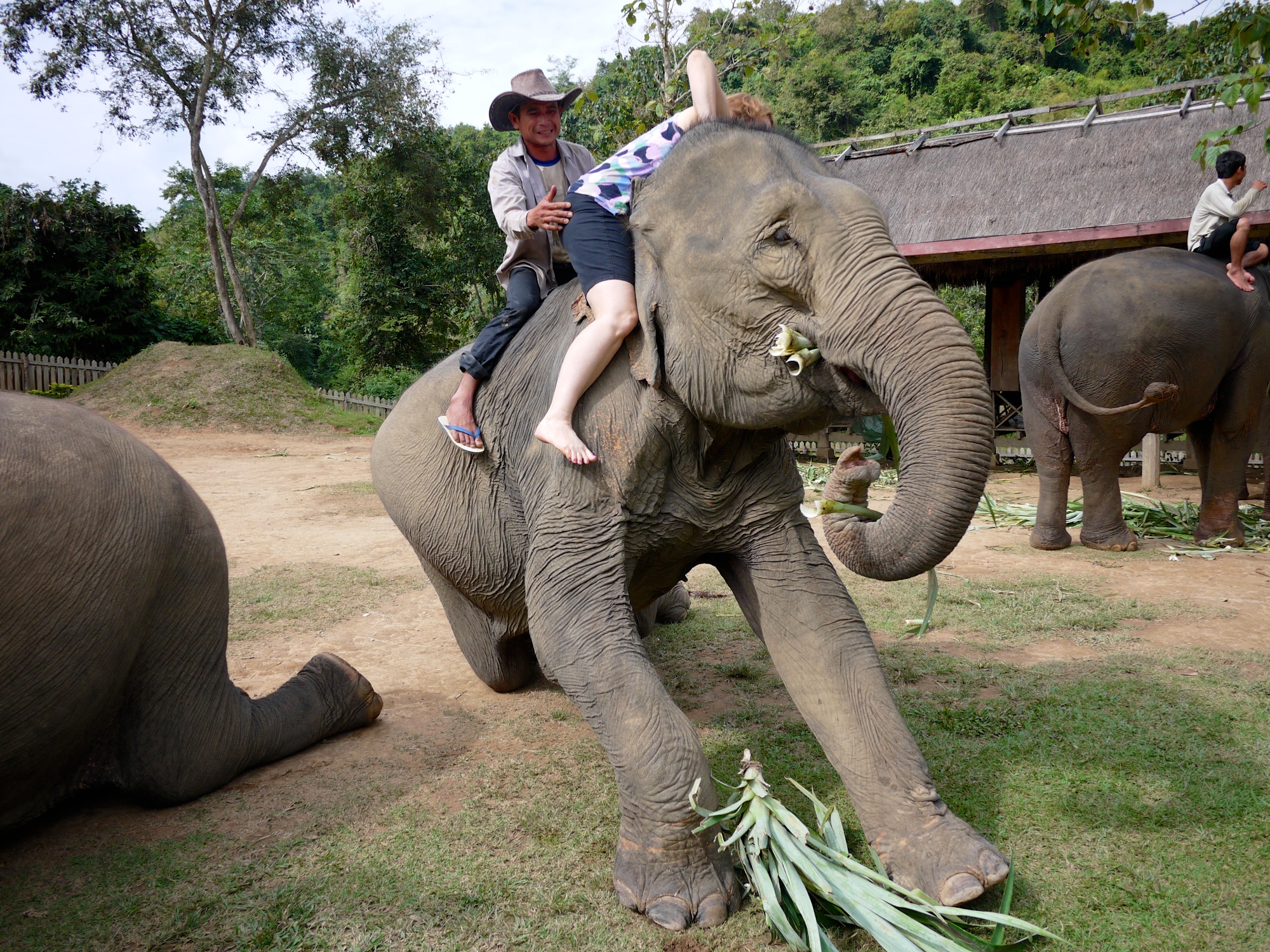
This is the third way to mount an elephant. The Mahout gets the elephant to lay down. Much easier than the second way.
It still takes a lot of strength to pull yourself up and there was not a second Mahout pushing me from the rear.
Like
human toddlers, elephants have passed the
mirror test—they recognize themselves in a mirror.
Elephants
may lie down to sleep. This
generally happens at night. During the day they often take short naps –
standing. Altogether, they sleep about six hours per day.
The
average lifespan of an elephant in the wild is 60 to 70 years.
I want to write a little about the Elephant camp we selected. The Elephant Village is a privately owned elephant camp and
tour destination approved by the Laos government and operated by International Specialists and volunteers who focus on protection and rehabilitation of
elephants in Laos.
From their web page: The Elephant
Village’s mission is to provide a peaceful home and sustainable future to
elephants in LAOS. Tourism activities contribute the elephants with the
opportunity for support themselves and the neighboring local villages. Elephant Village is managed in a
sustainable and fair manner that actively benefits both, elephants and local
villages.
Most of the camp staff comes from villages nearby. The elephant food
supplement is purchased from villages around the camp. We were very impressed by this
organization. The elephants seemed
to be well cared for and their program was very well done.
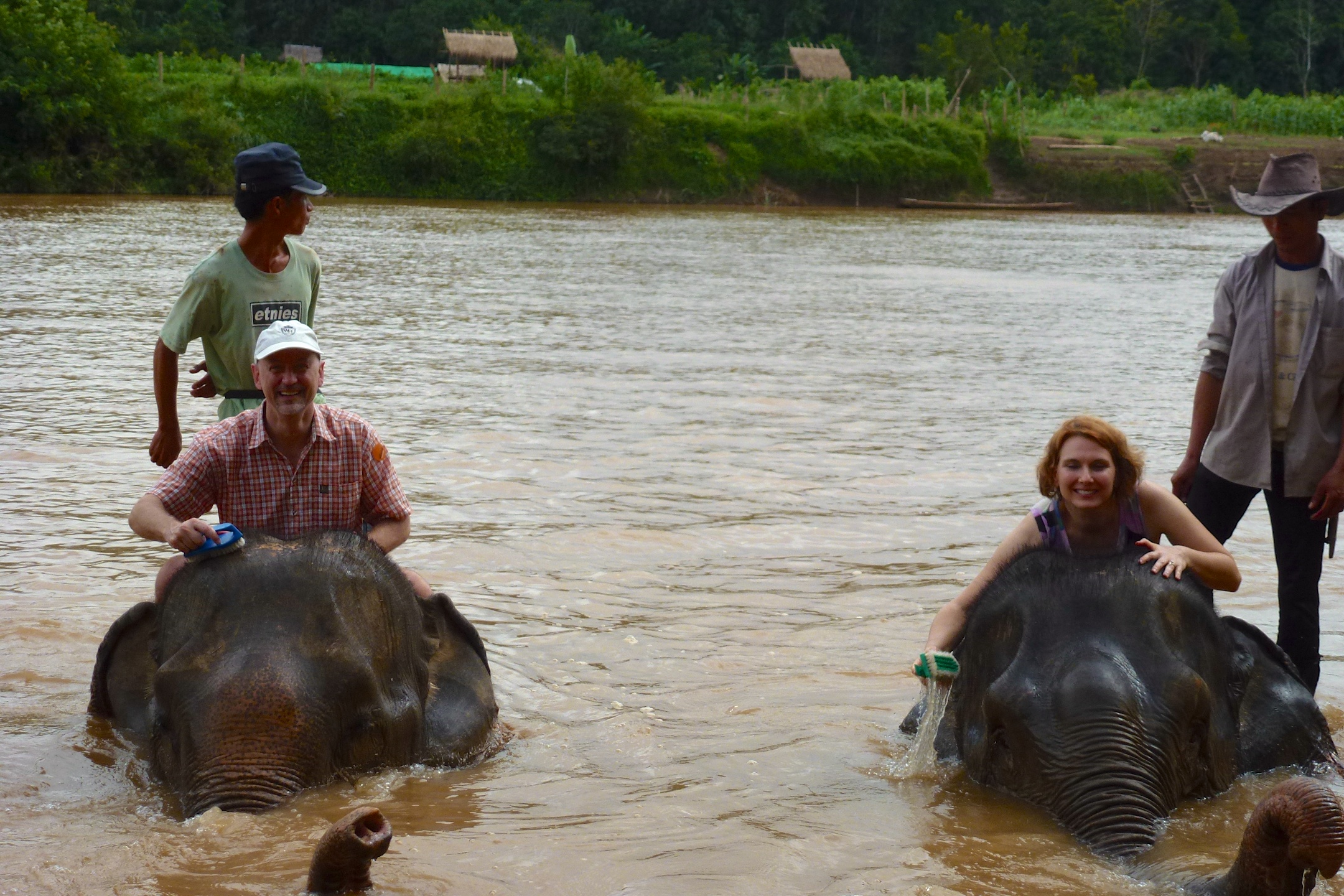
The last event with our elephants was a bath.
What fun this was! Elephants are good swimmers and they love the water. The Mahouts said this is the elephants favorite time of day.
Slightly scared look again…. I did NOT want to step on the bottom of the river!
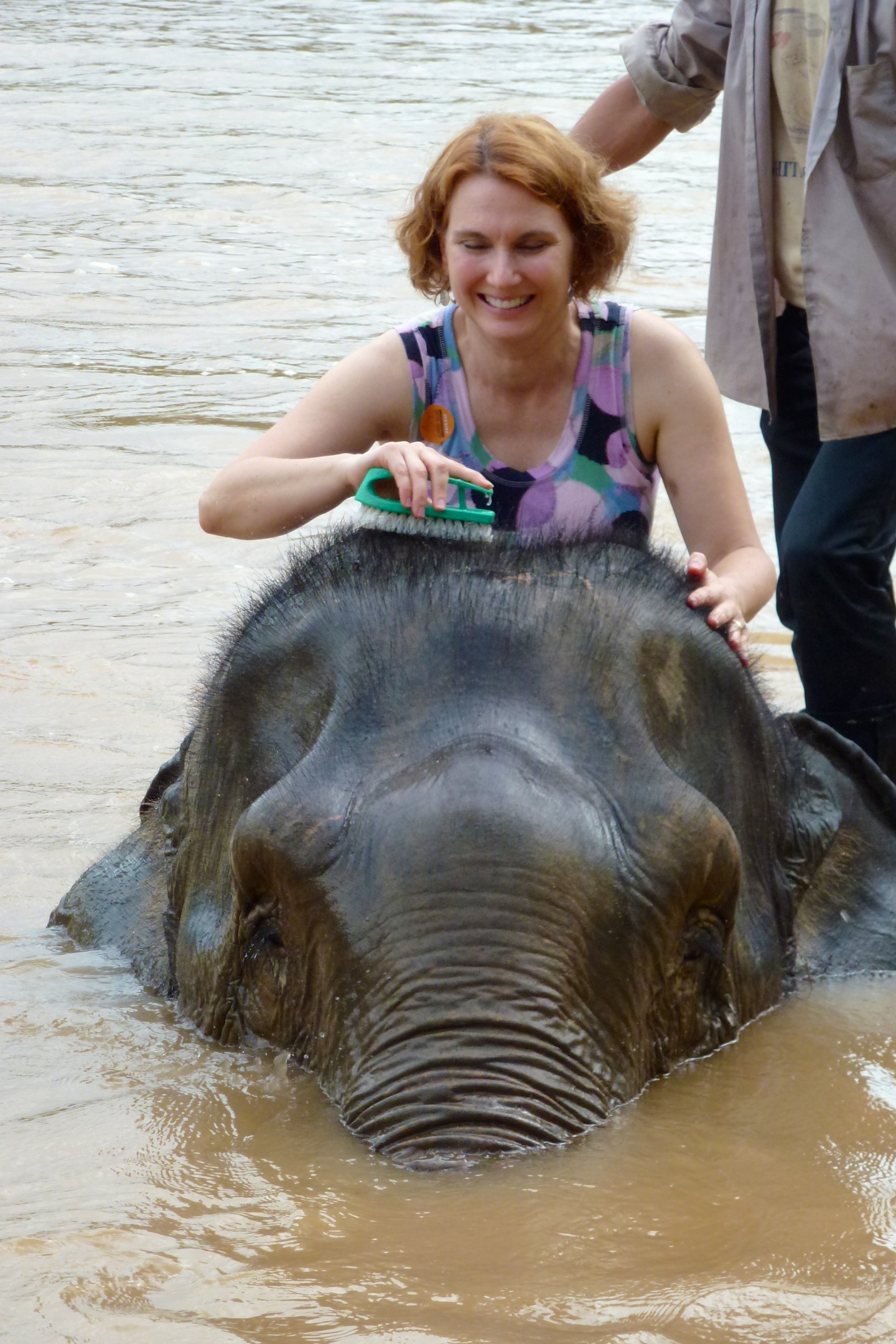
The elephants love to have their skin brushed. The
skin of the elephant is not very thick and is very sensitive to the sun. They get sunburned very easily. To prevent this, they throw sand
on their back and head.
The Elephant's
skin is wrinkled in appearance. Wrinkles
keep elephants cooler than if they had smooth skin. It was dry to the touch, but still soft.
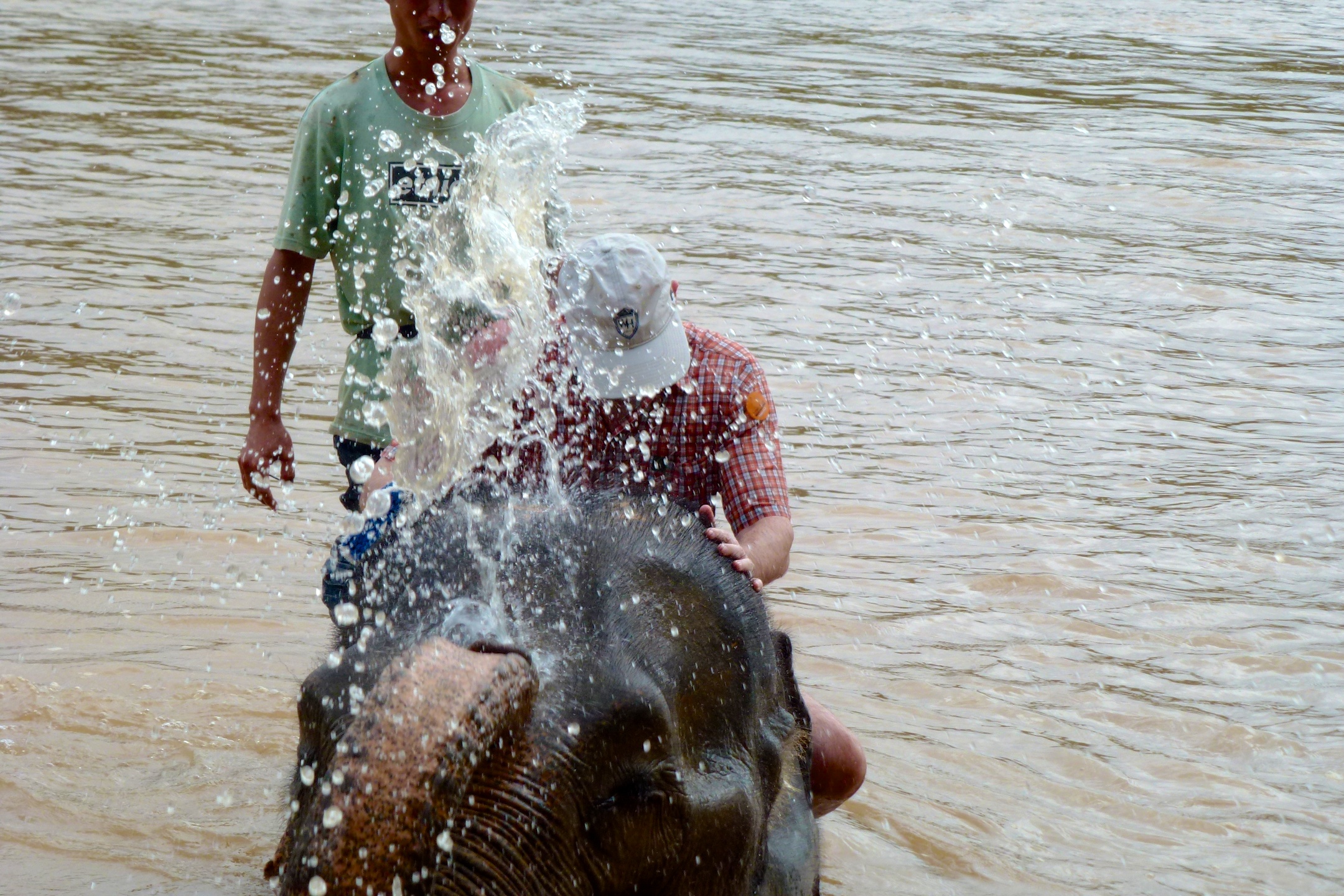
D had the elephant who loved to squirt her trunk up into the air…. An
adult Asian elephant can hold up to 2.2 gallons of water in its trunk.
Water is sprayed into the mouth for drinking and onto the back to keep cool.
The Mahout would tap the elephant on the rear with his foot and she would spray D. The Mahout was having a very good time and had the elephant continuously squirting D. My elephant never did this.
And if you have not seen enough photos of our elephant experience – here is a little video clip:
We LOVED this experience and highly recommend an elephant ride if you ever have the chance.
Laos is thought to have
only 700 elephants left in the wild.
Unfortunately, poachers, dam builders, loggers and farmers are taking a
deadly toll on the endangered species. Camps and villages like this one are helping to protect the elephants and are even trying to breed them. They certainly are a mysterious, gentle, beautiful animal.
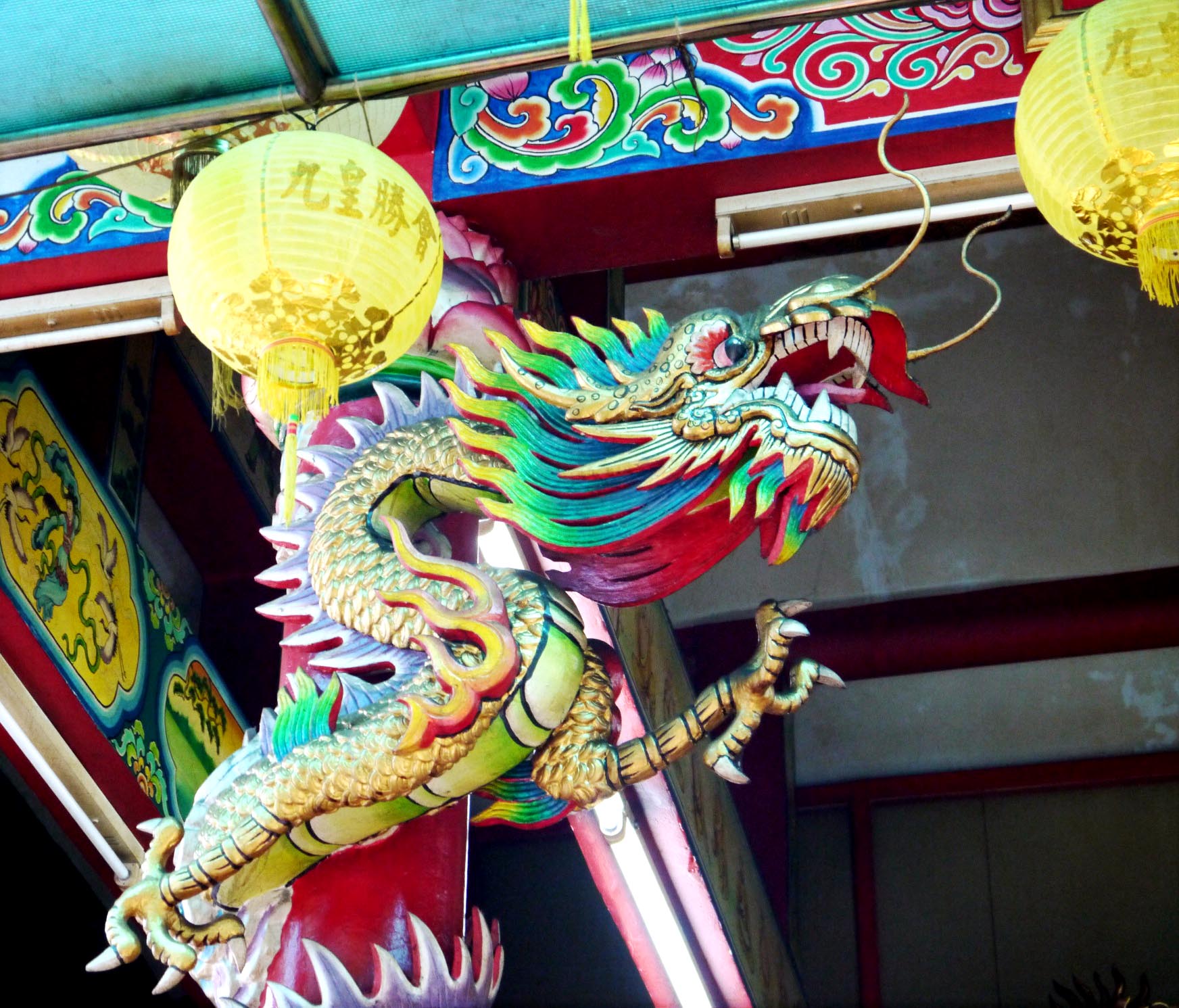
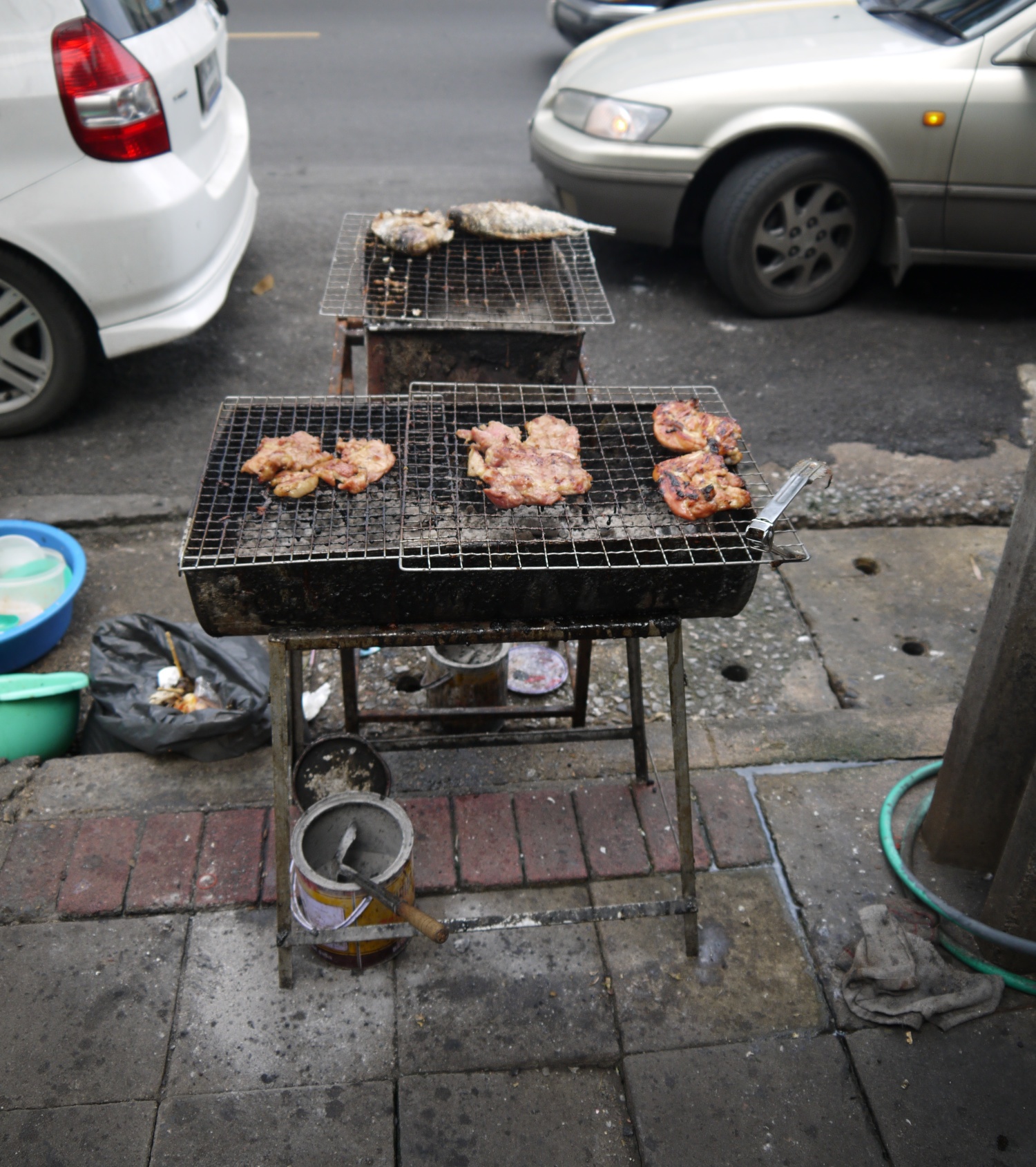
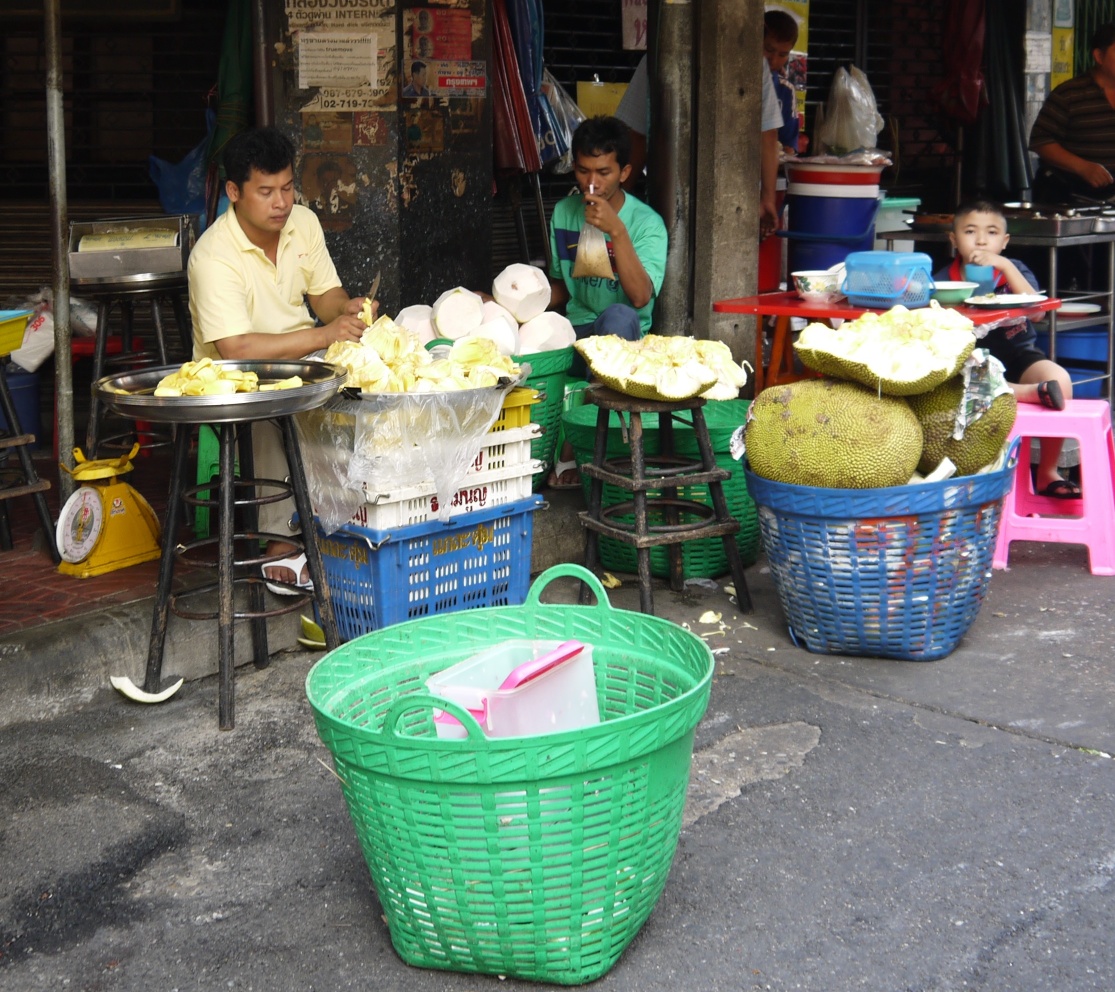
We took a quick trip to Bangkok last week. Since this is our 4th trip to the city this year – I really did not take that many photos. And, of the pics I did take, most are of food. What else is new? So this is quick post…..and yes, D did buy the chicken from the stand above.
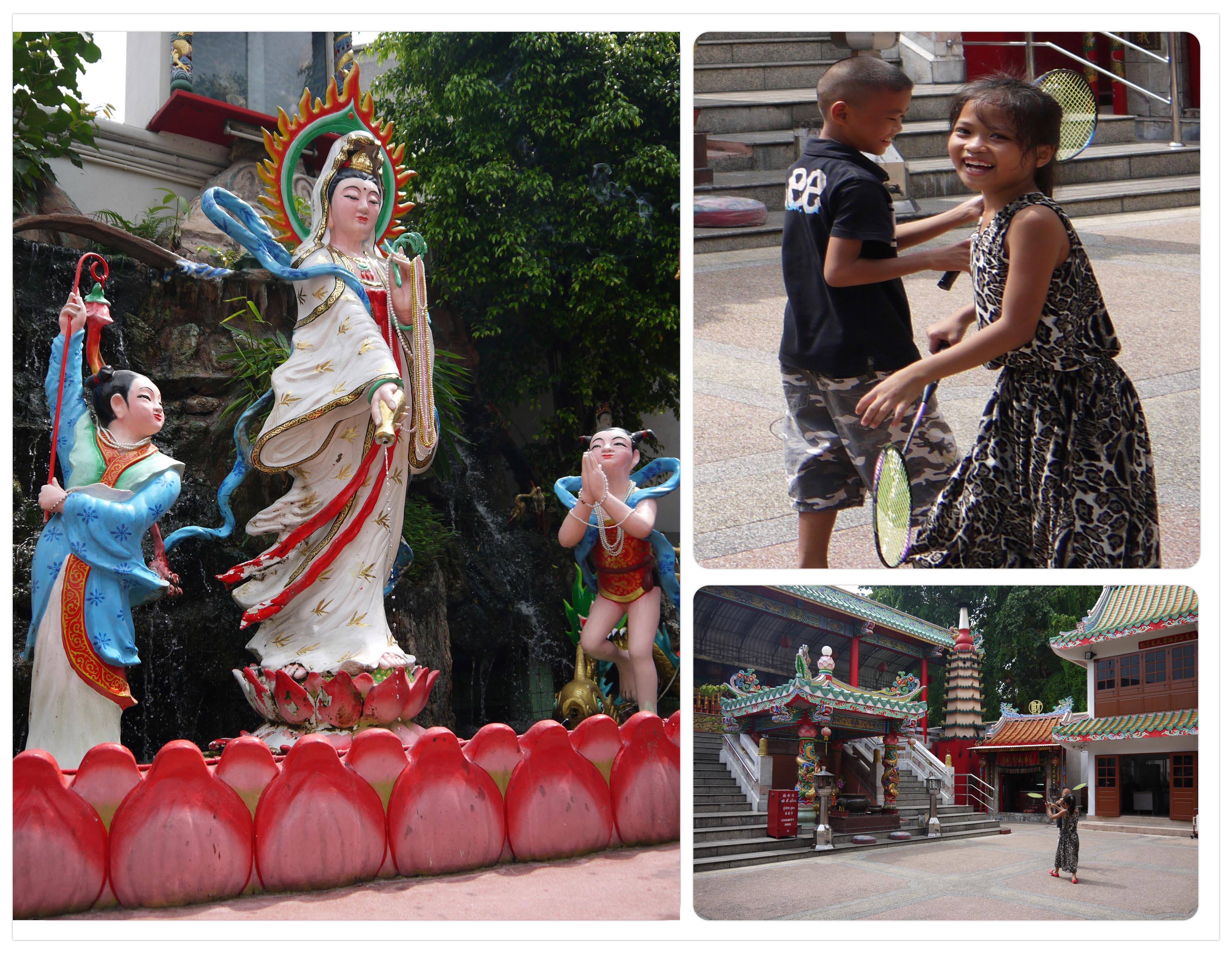
Fun at the temple:
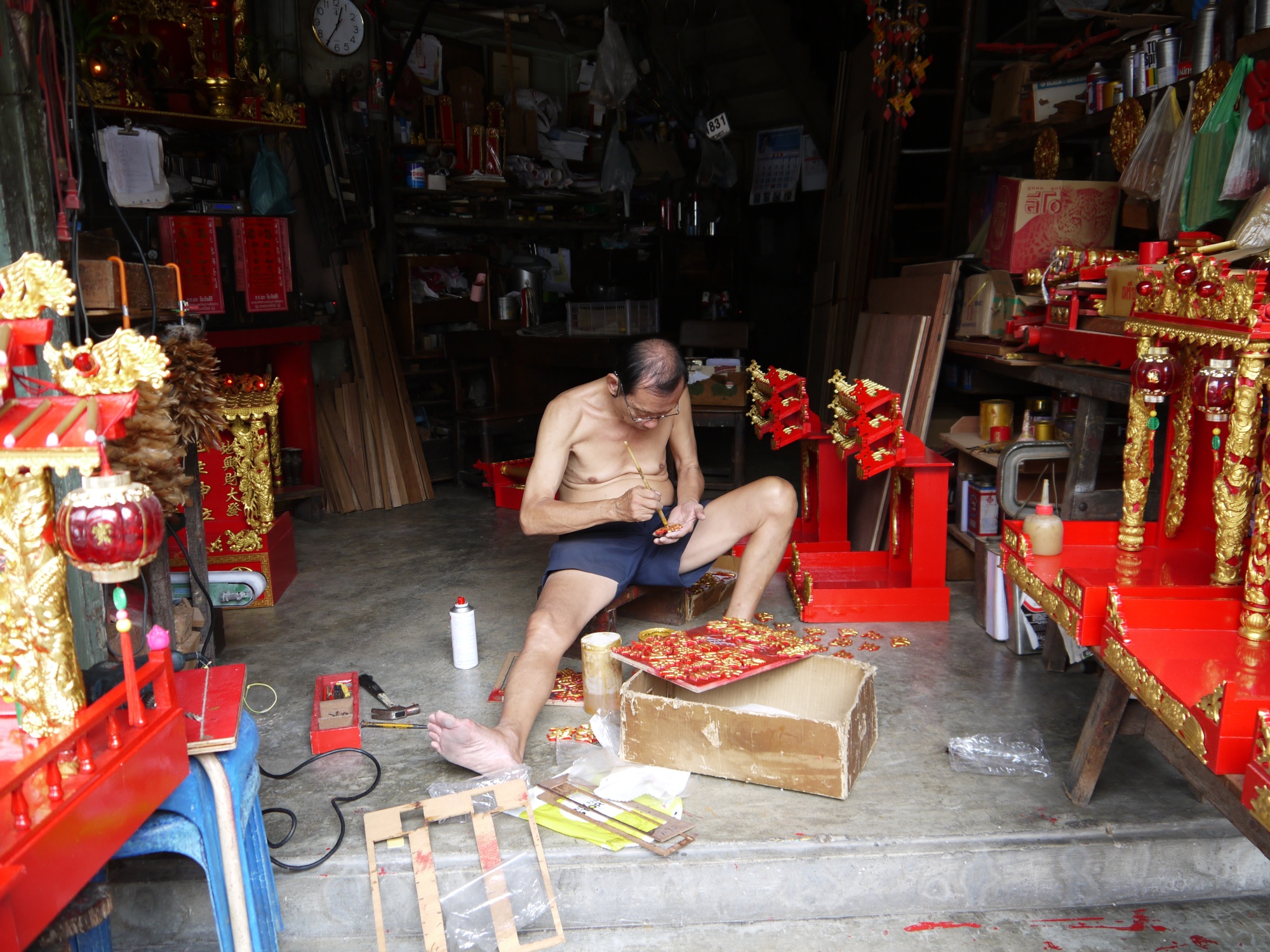
We always see a few half-naked men in Bangkok.
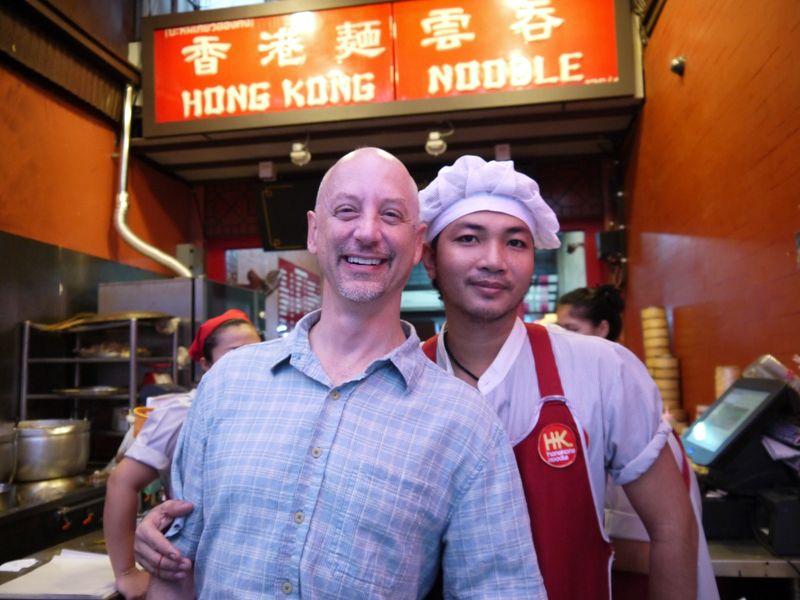
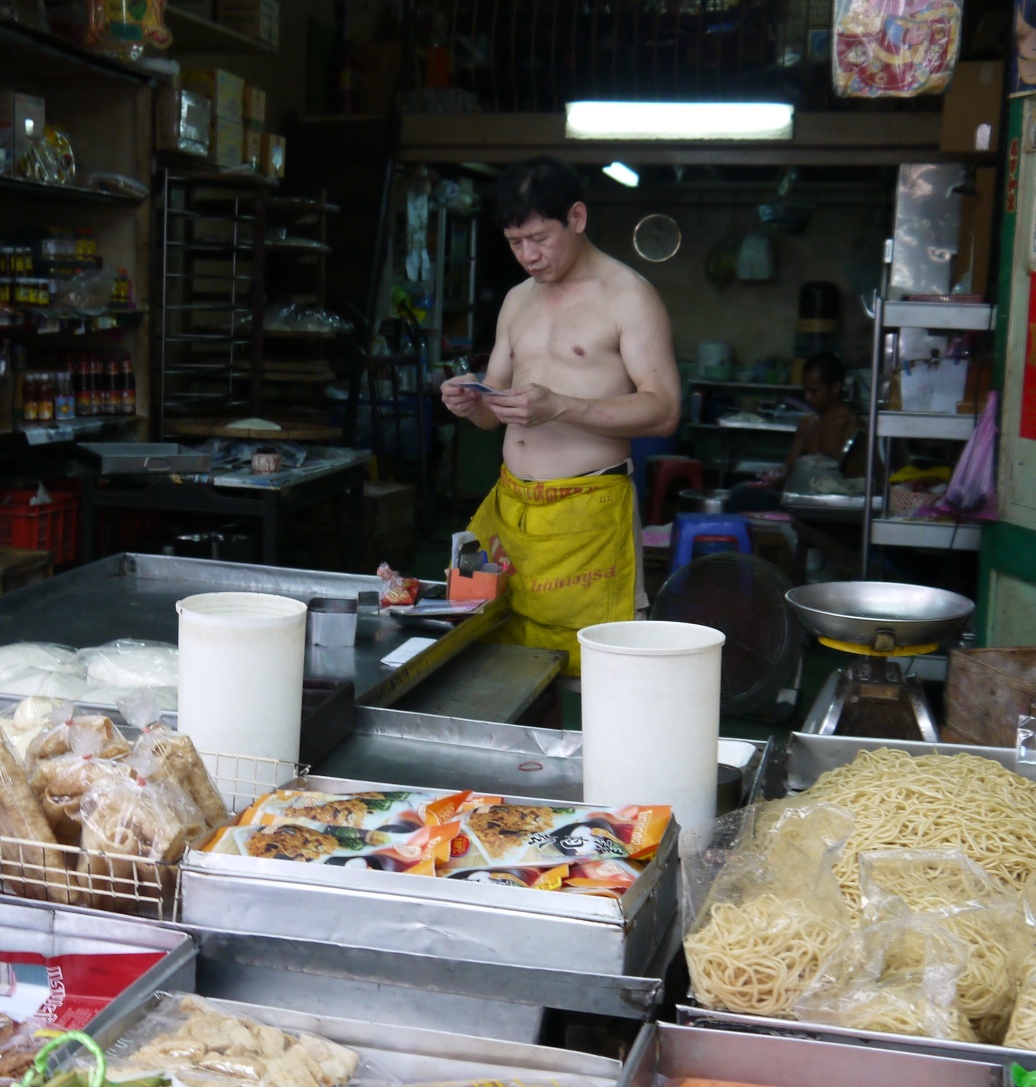
D with the young chef from Hong Kong Noodle in Chinatown – where we ate breakfast. He was quite the comedian. The food was very good – traditional noodle soup for breakfast.
More food….
These crabs look really good …
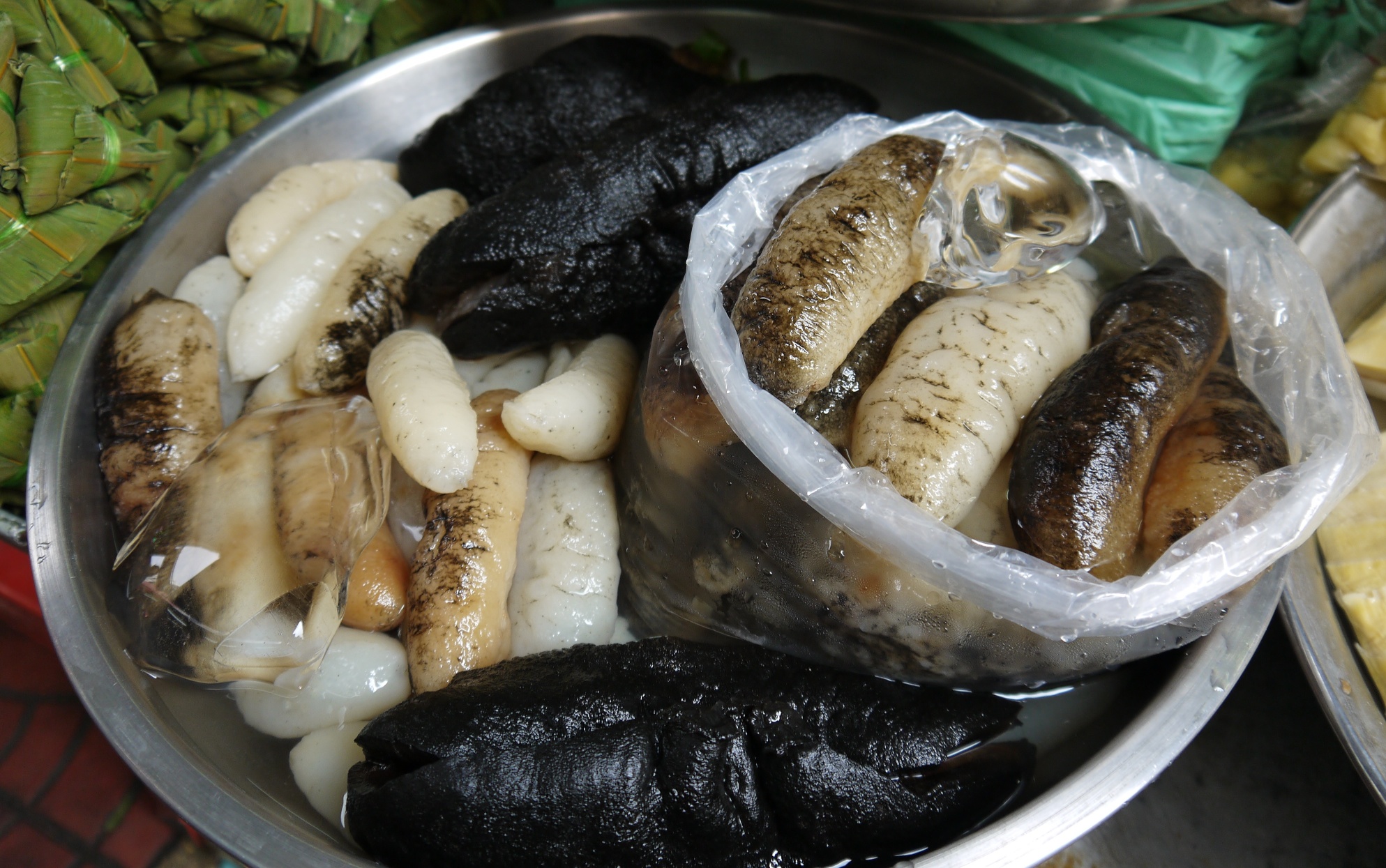
How about a little sea slug?
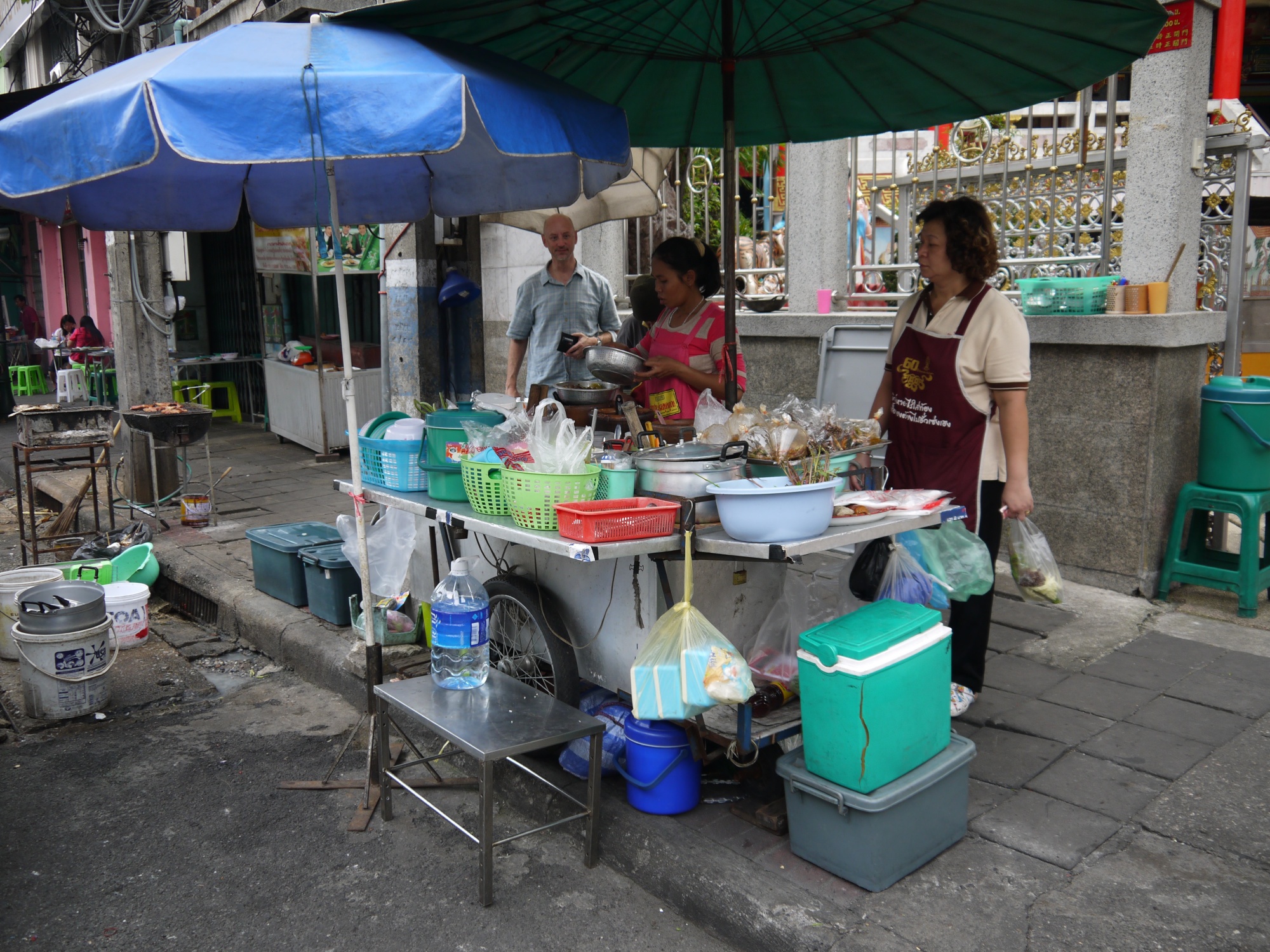
Street food at it's best!
The food
The grill
The kitchen: the chef is in red.
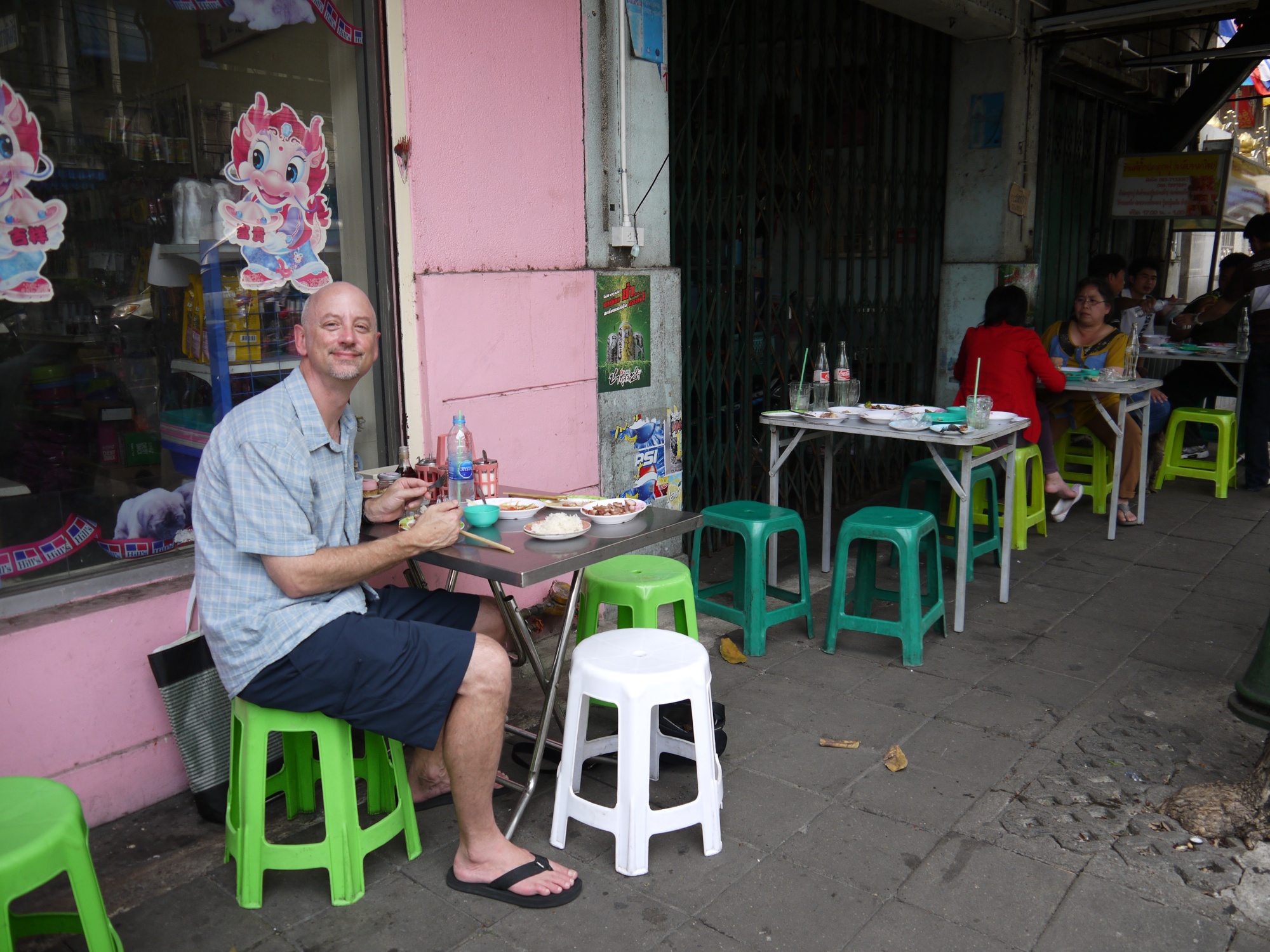
The dining room.
We ordered green mango salad, two pork dishes, and a big bowl of rice –
Price $4.00 US.
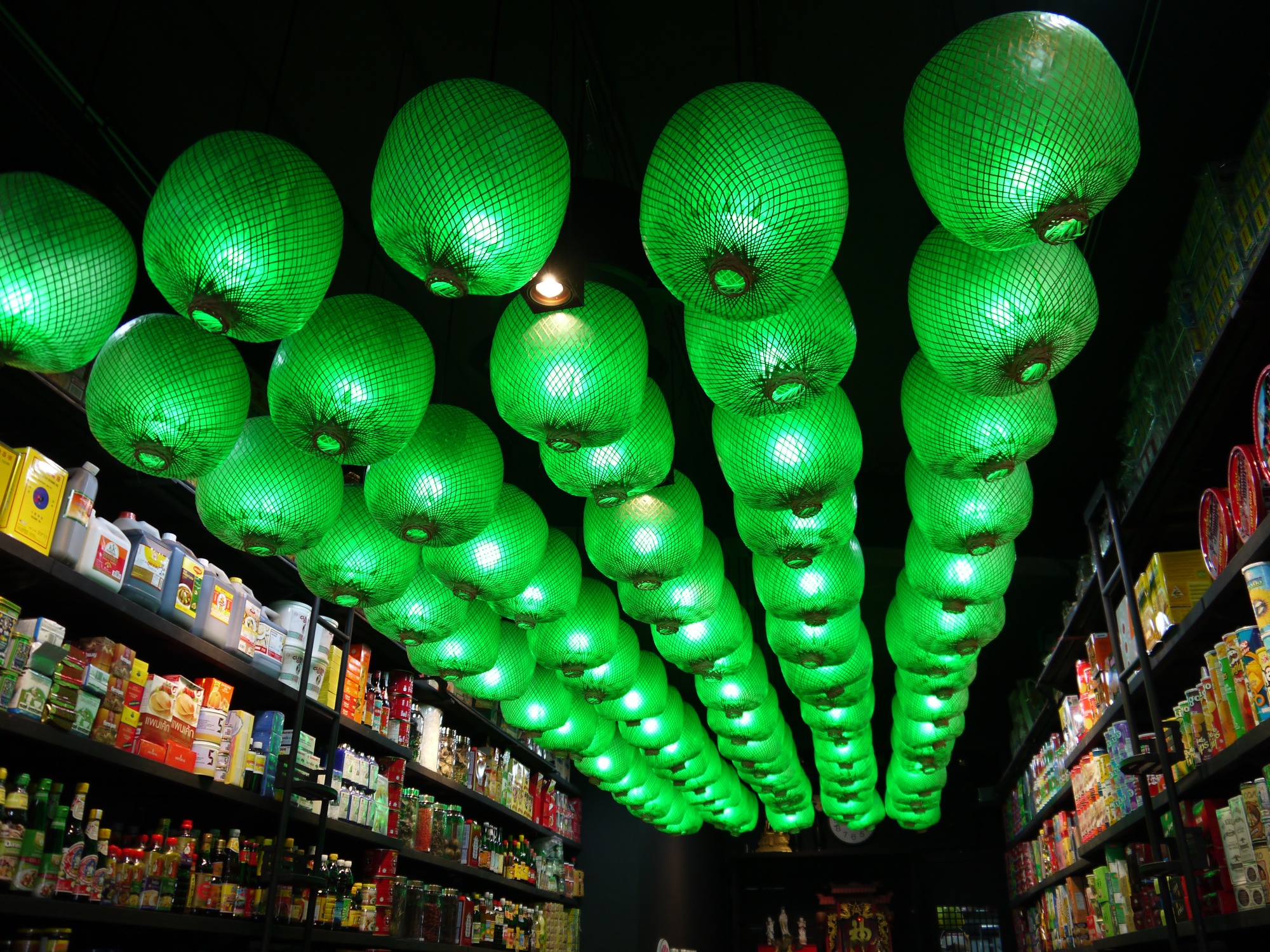
I love this very modern grocery store among the street vendors.
This trip was different from most of our trips as we were with a conference and every minute of the week was planned out for us. D started work at 2:00 on Sunday (we arrived very late Saturday night). We were able to squeeze in a local market Sunday morning.
New Delhi is the capital city of India and is part of
metropolitan complex of Delhi. Delhi has close to 15 million people living there.
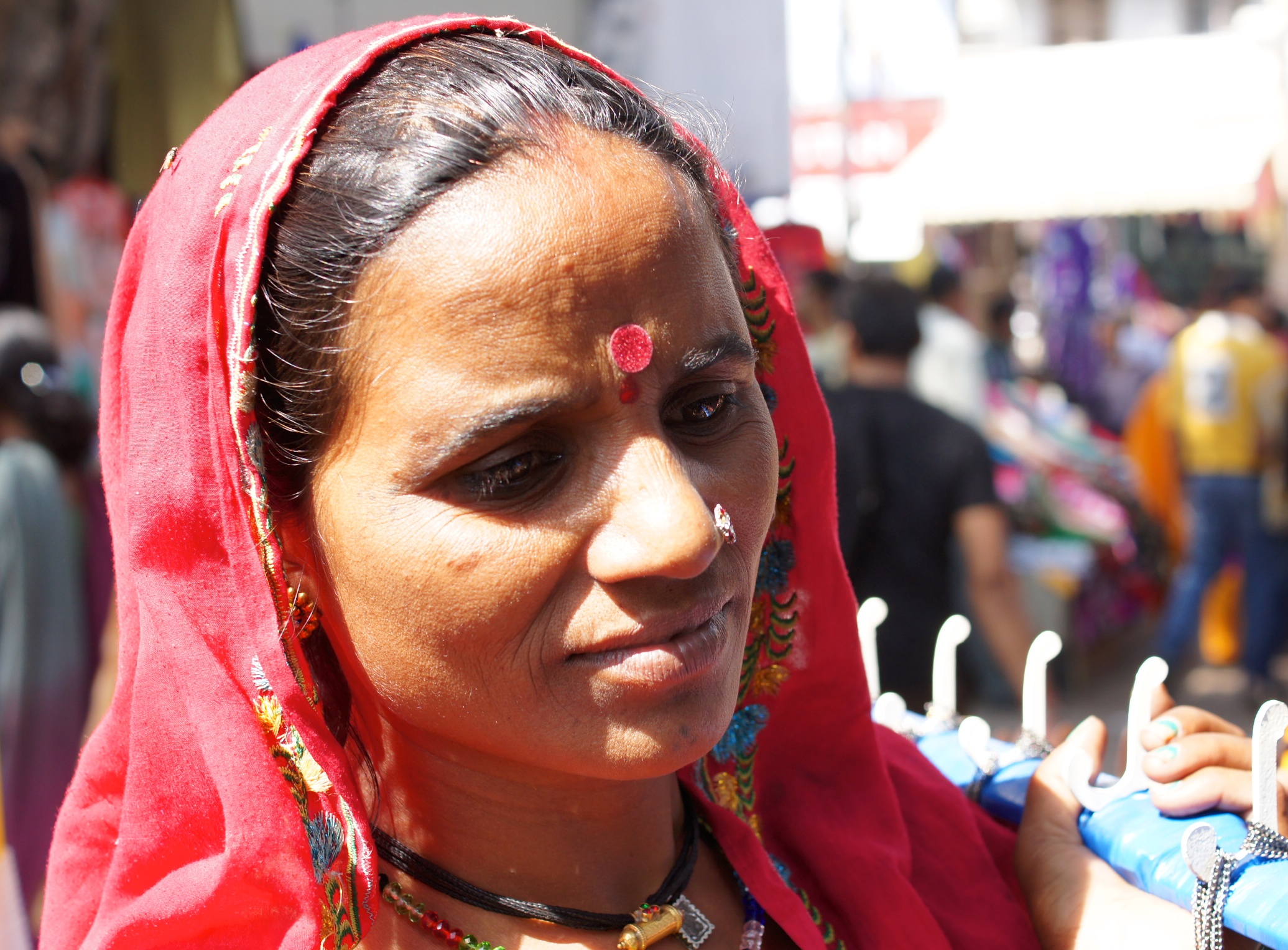
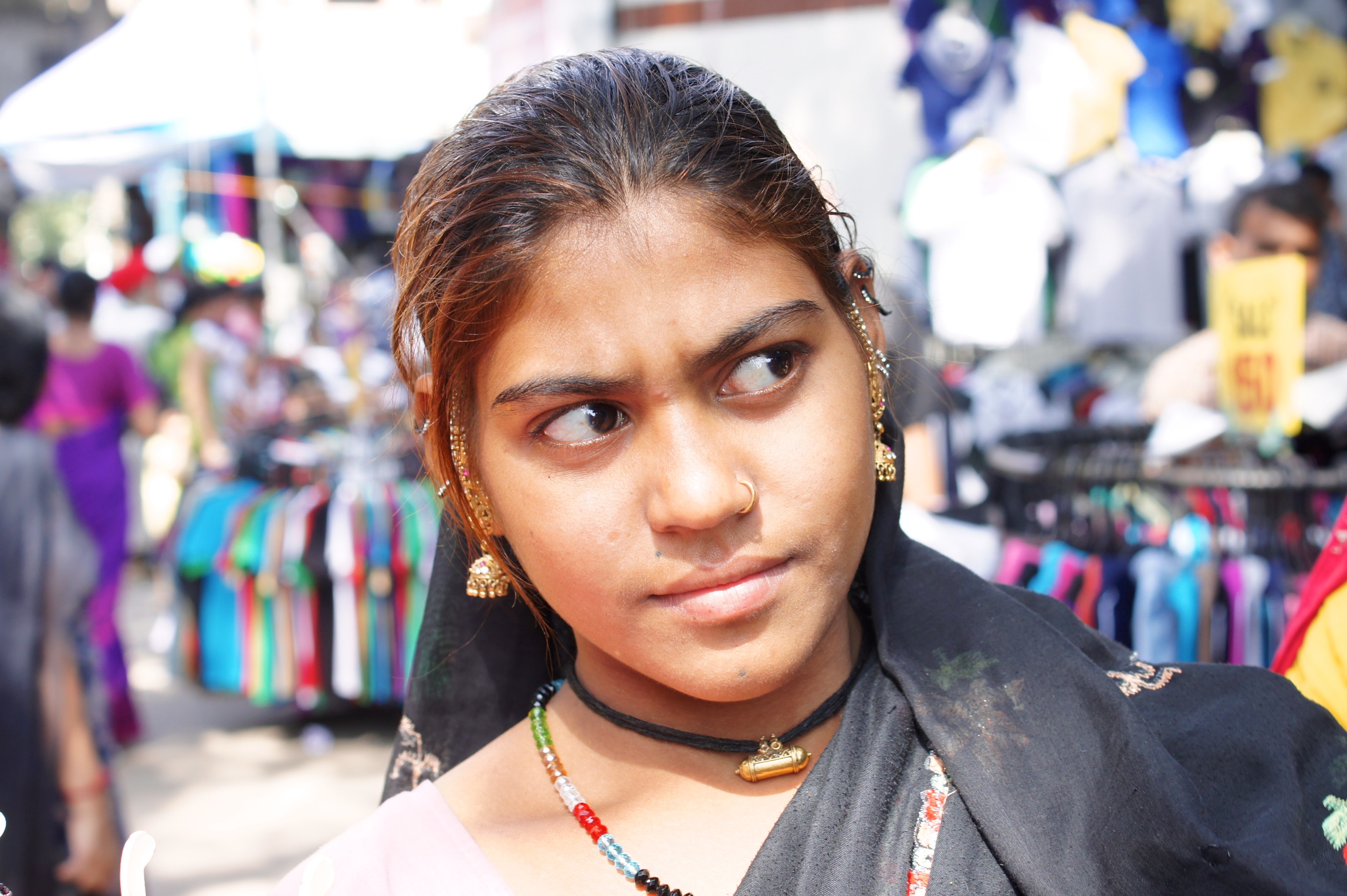
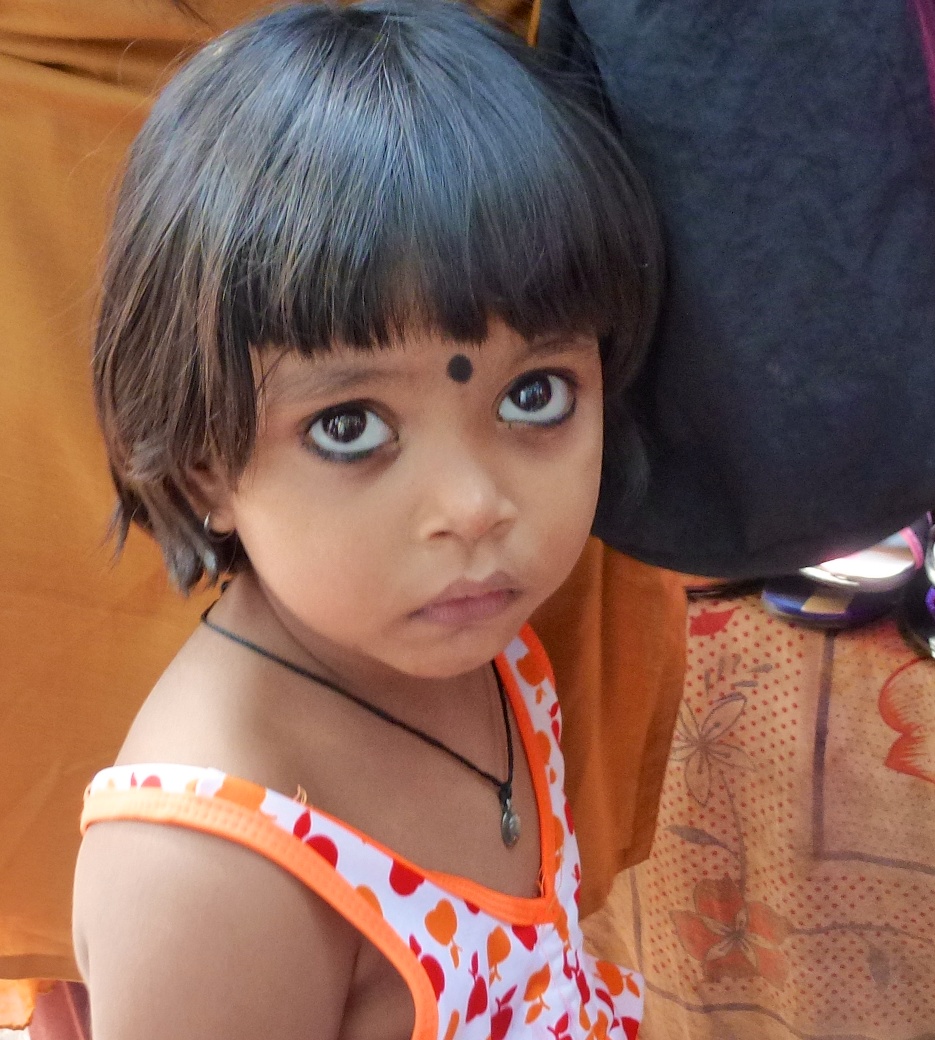
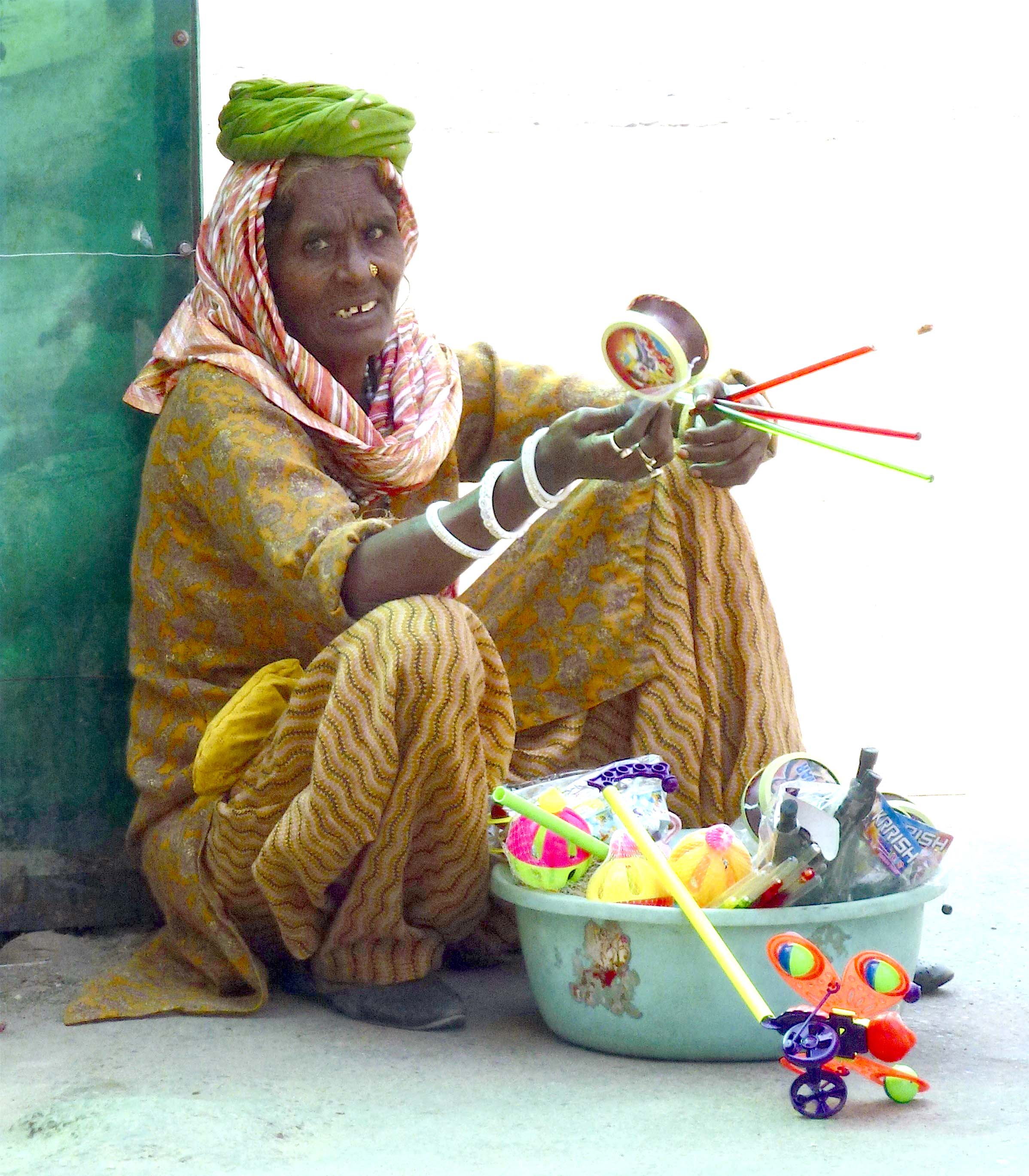
The ladies of the market…
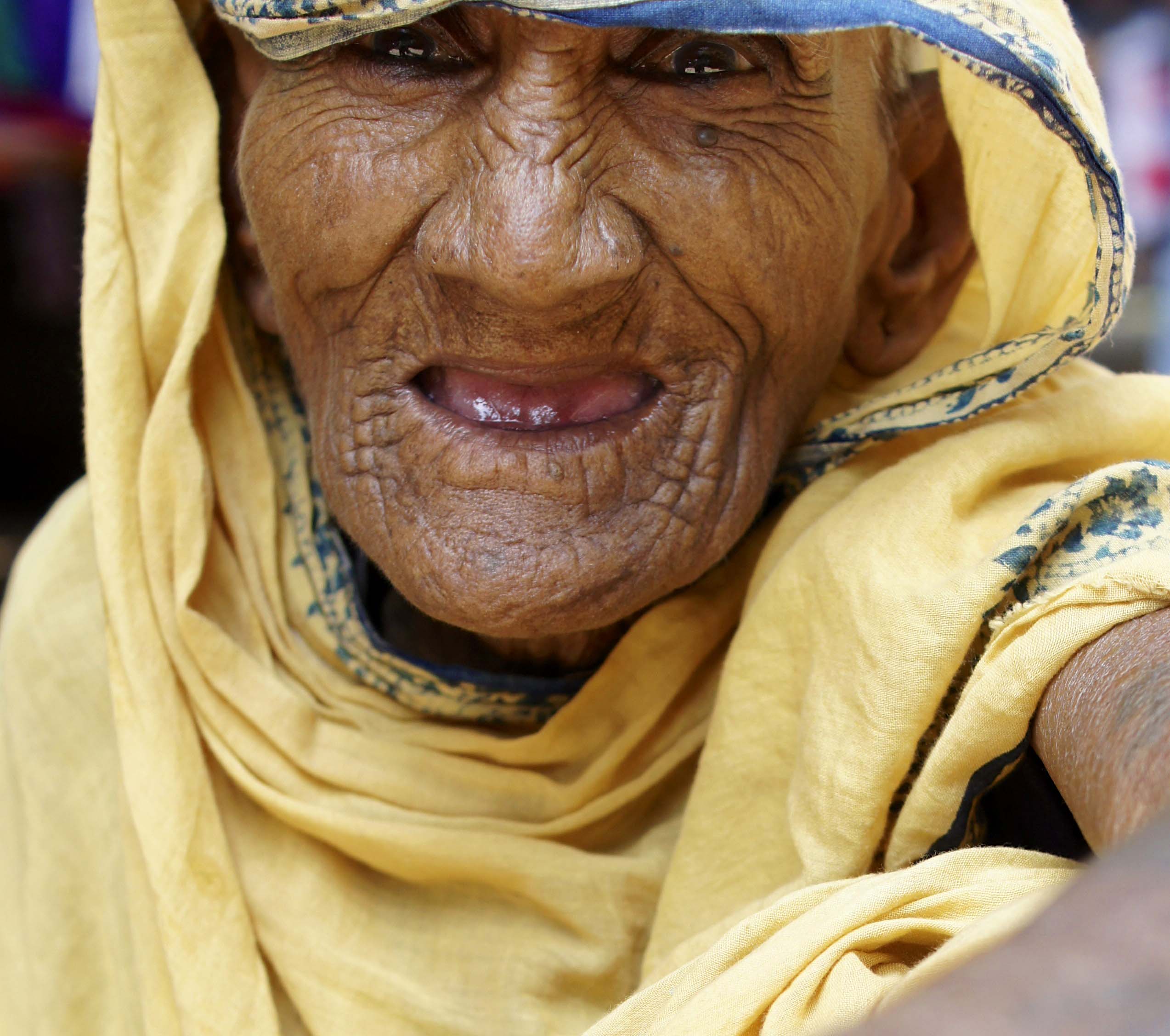
Isn't she precious?
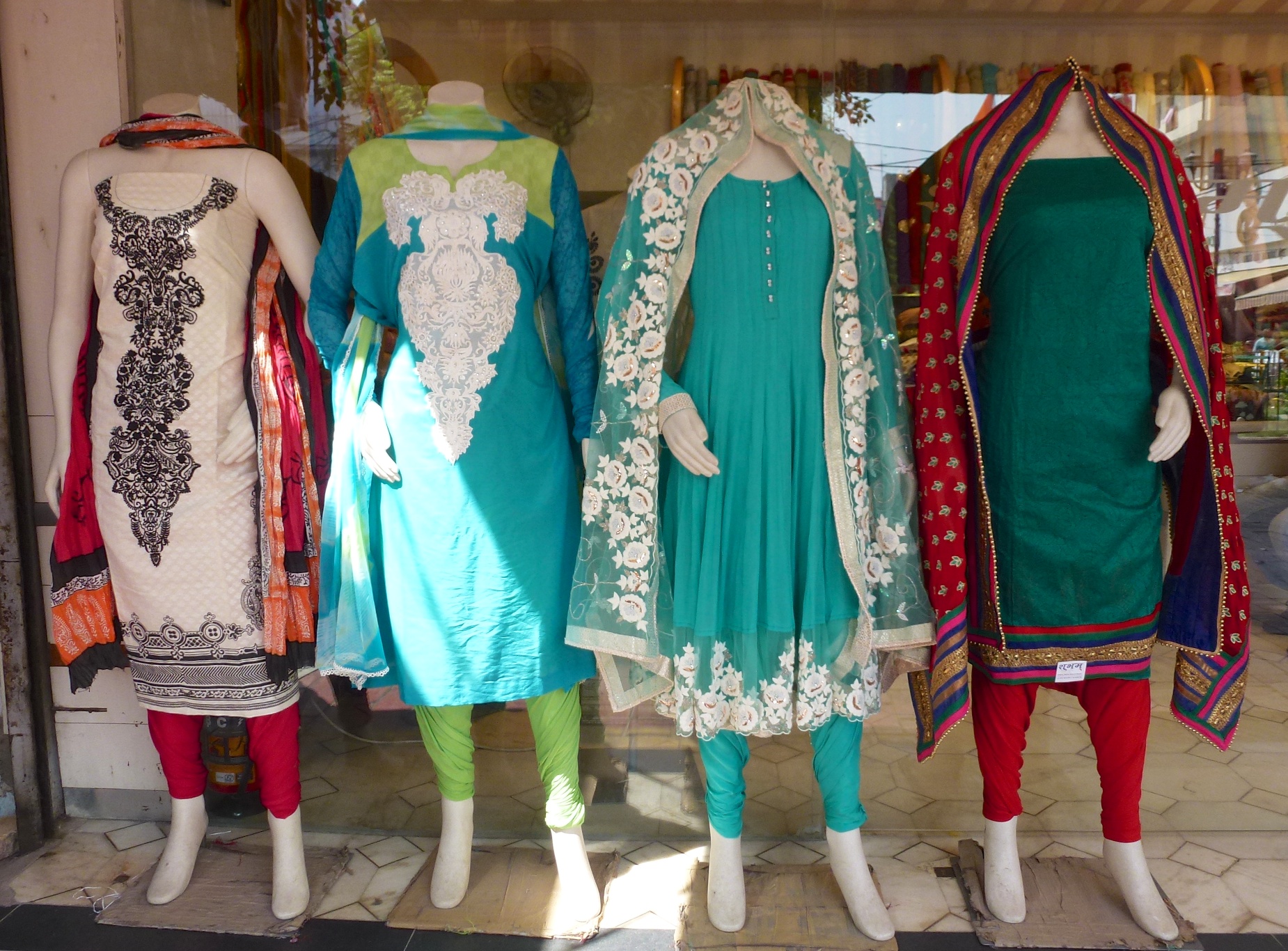
Colorful kurtis – very popular outfits for women, along with saris.
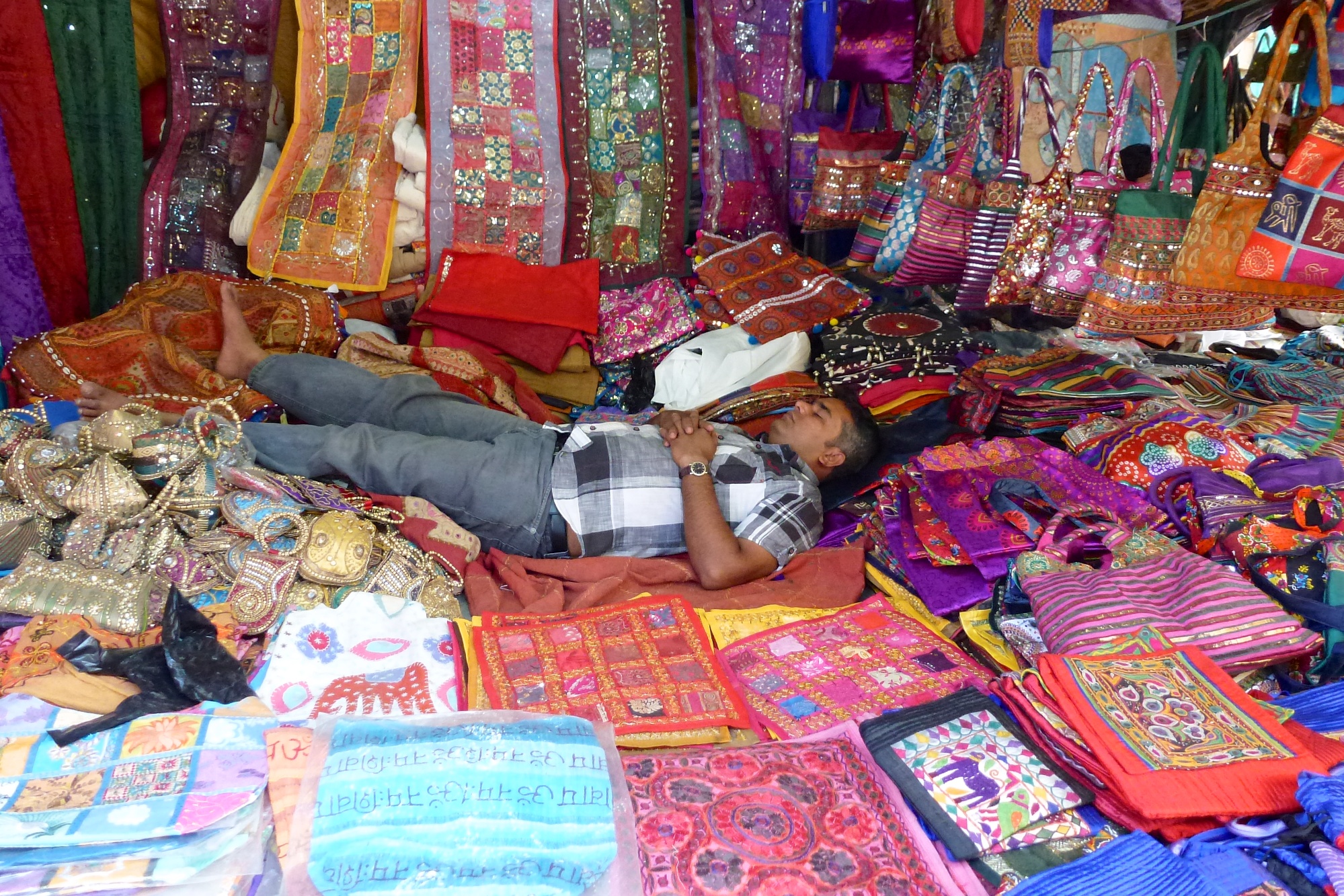
A mid-morning nap – I wonder if all this color made him have good dreams?
Old Delhi is one of the oldest cities in the world, with a history dating
back 5000 years. The British developed New Delhi in 1911 –
it is only a hundred years old. In 1931, during British rule, India was forced to shift its capital from Calcutta
to New Delhi.
New Delhi is one of the fastest growing cities in both
India and the world. It is the government, commercial, and financial center of
India.
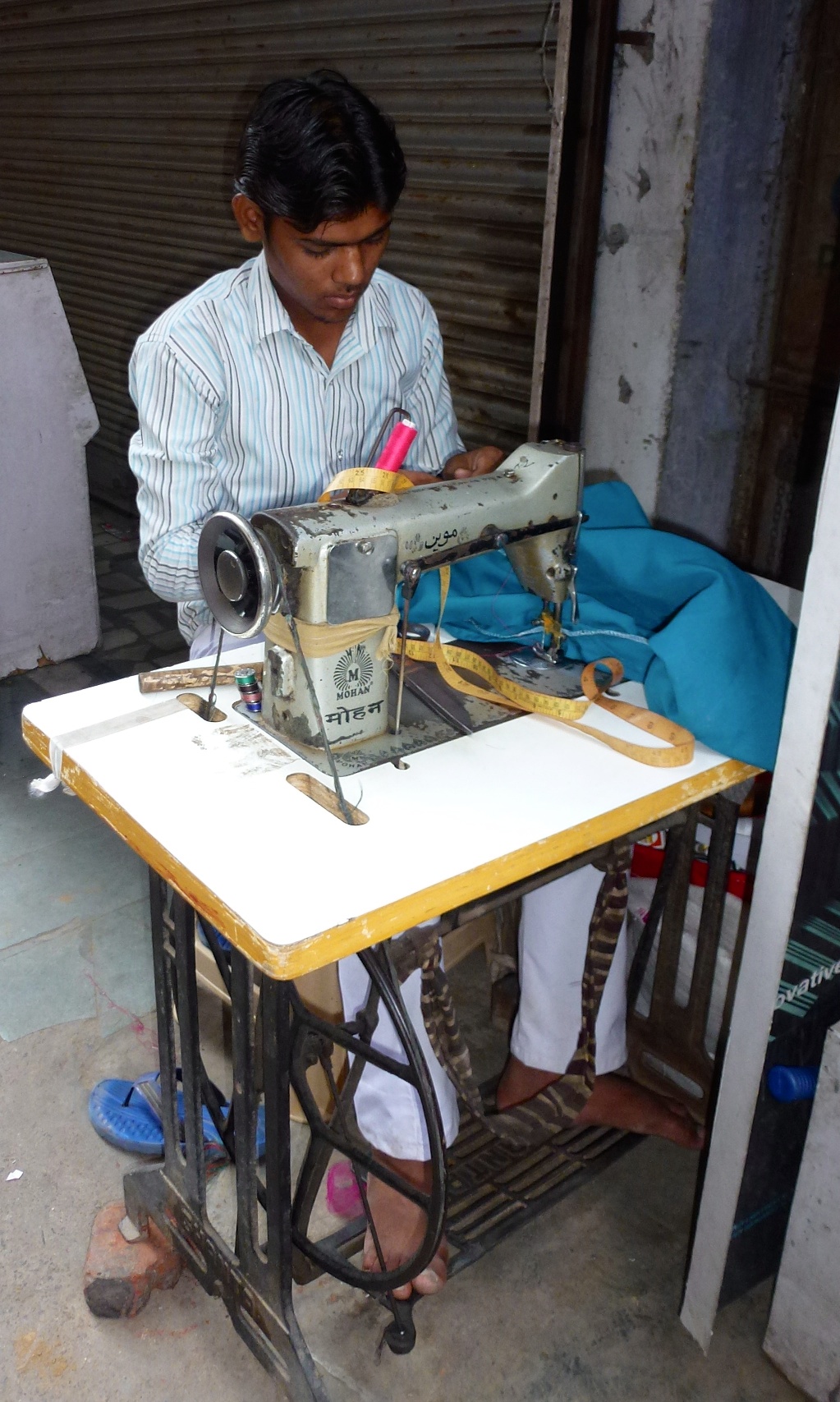
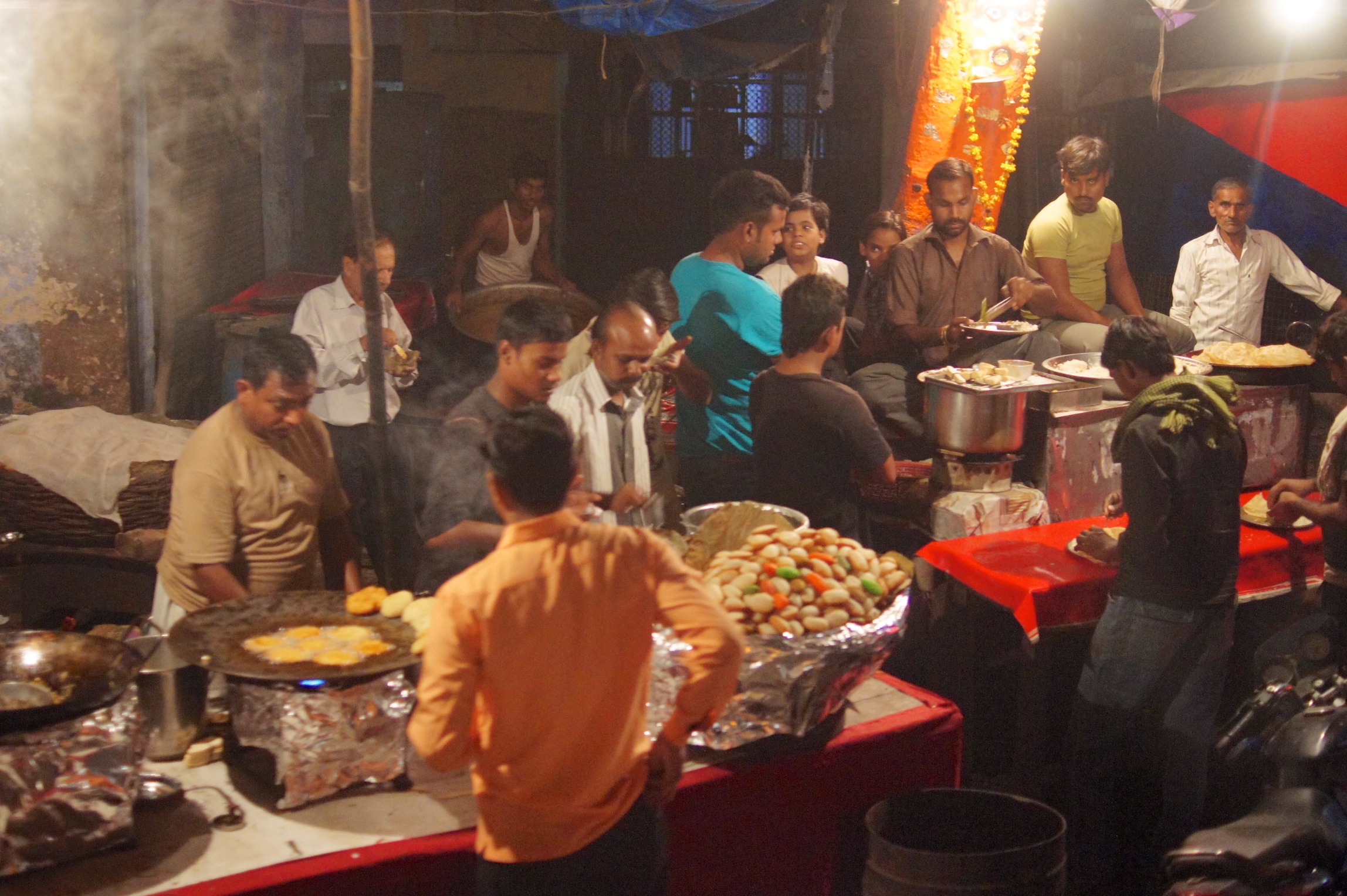
We saw very young men, really boys, working in the streets. Notice this sewing machine is working with a foot petal, not with electricity.
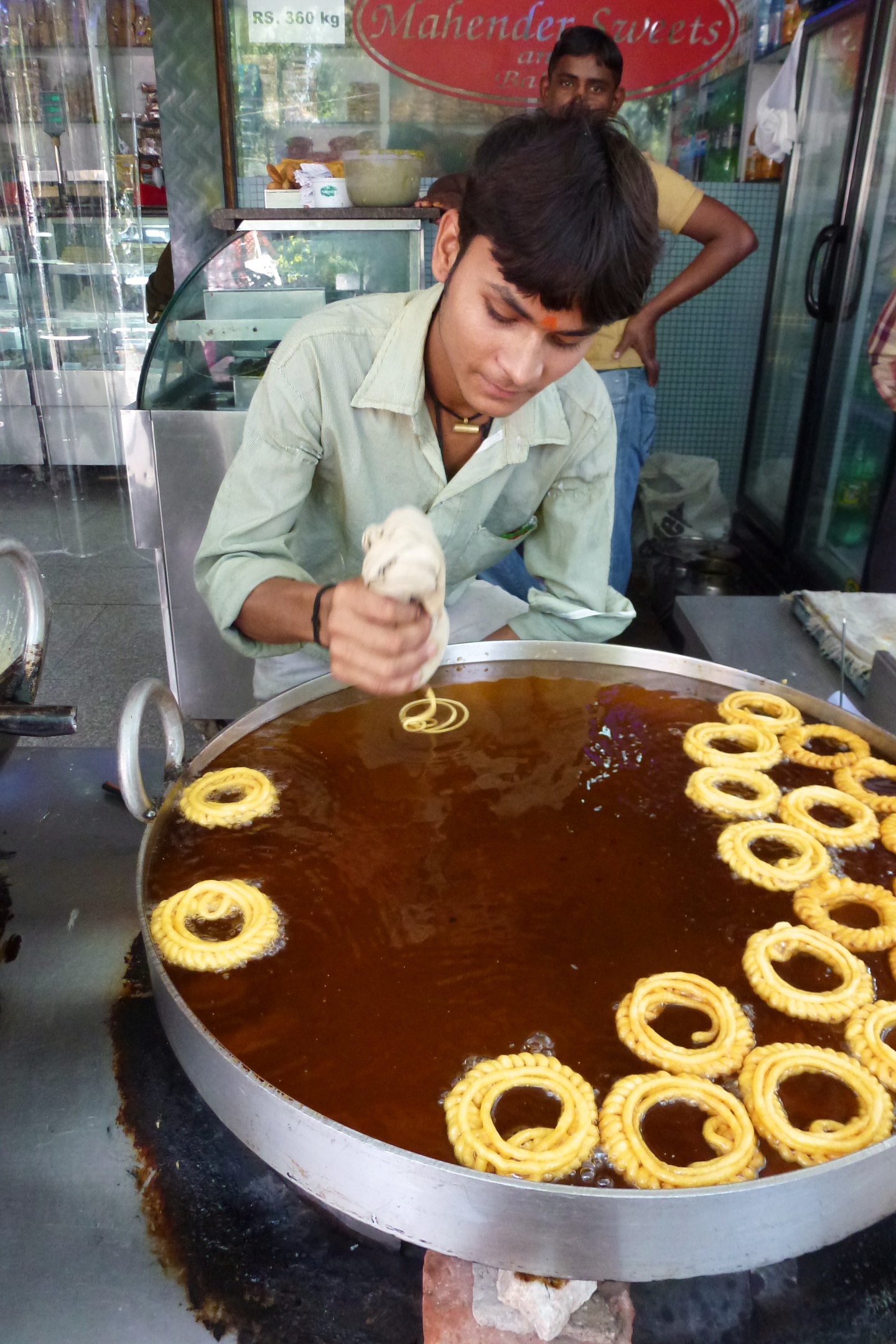
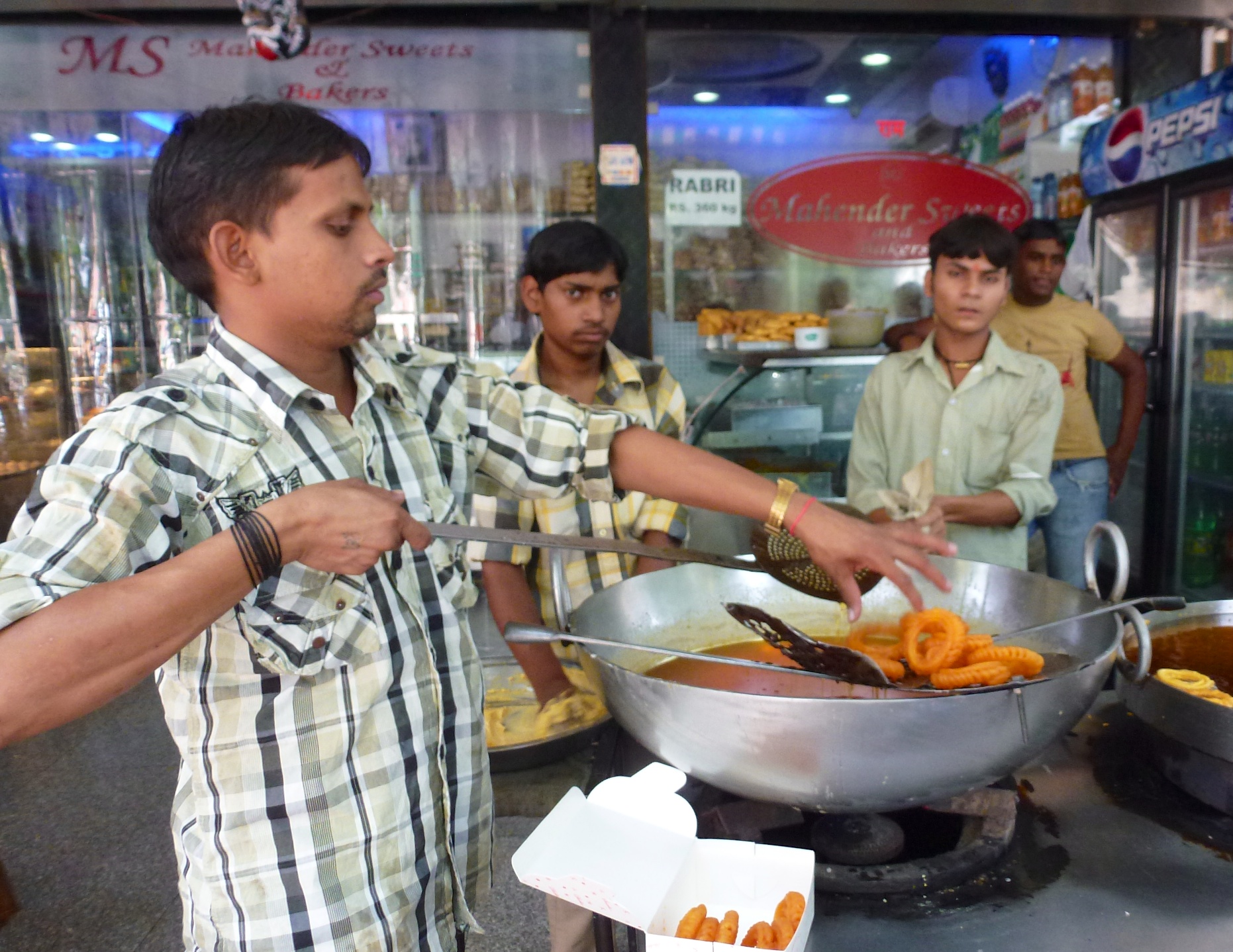
They are making a sweet donut-like treat.
This was the only street food D managed to get! I passed on tasting it. It was our first day and I had heard that most everyone gets sick in India. I am happy to report that no one got sick, including the three that tasted the street food!
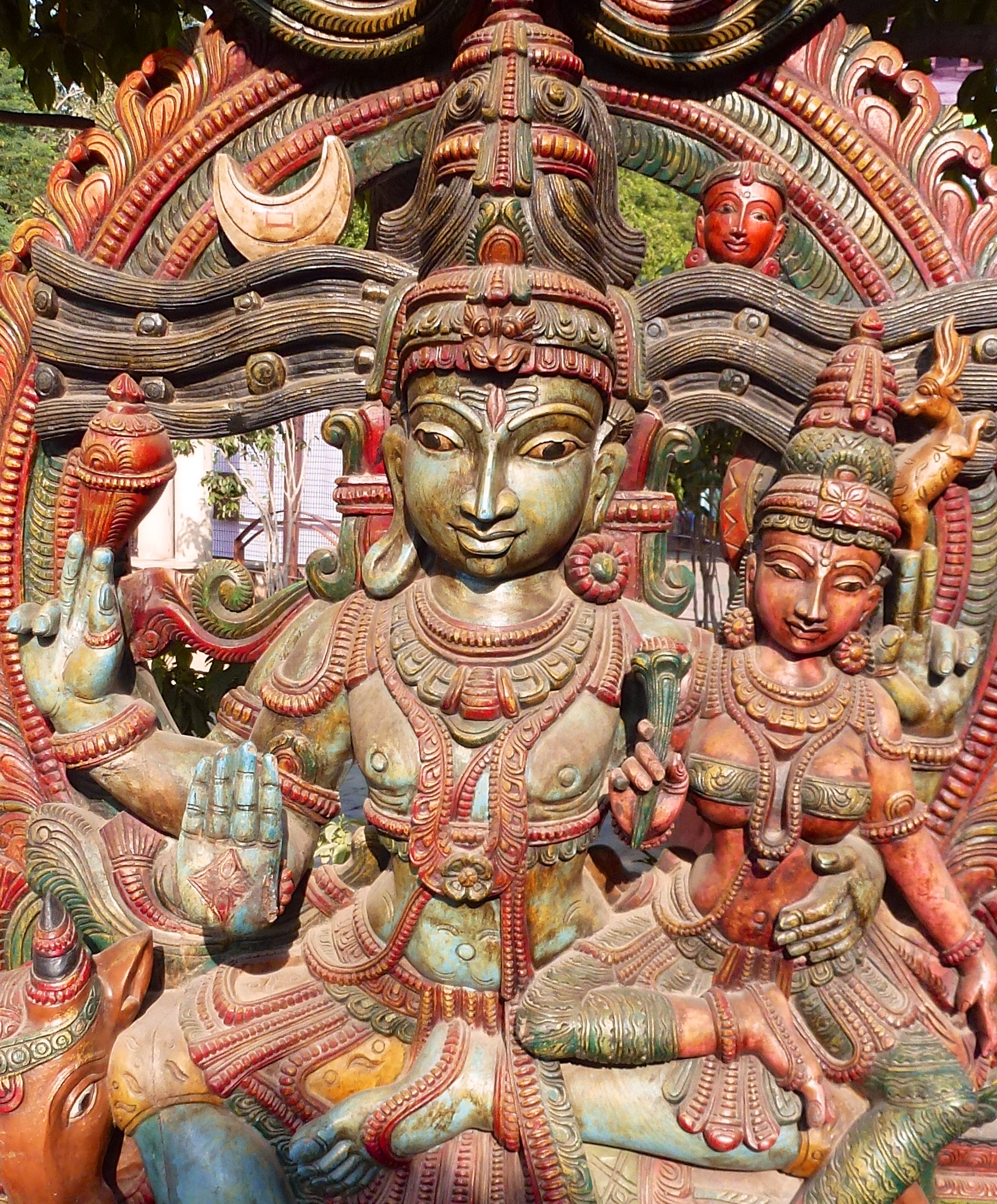
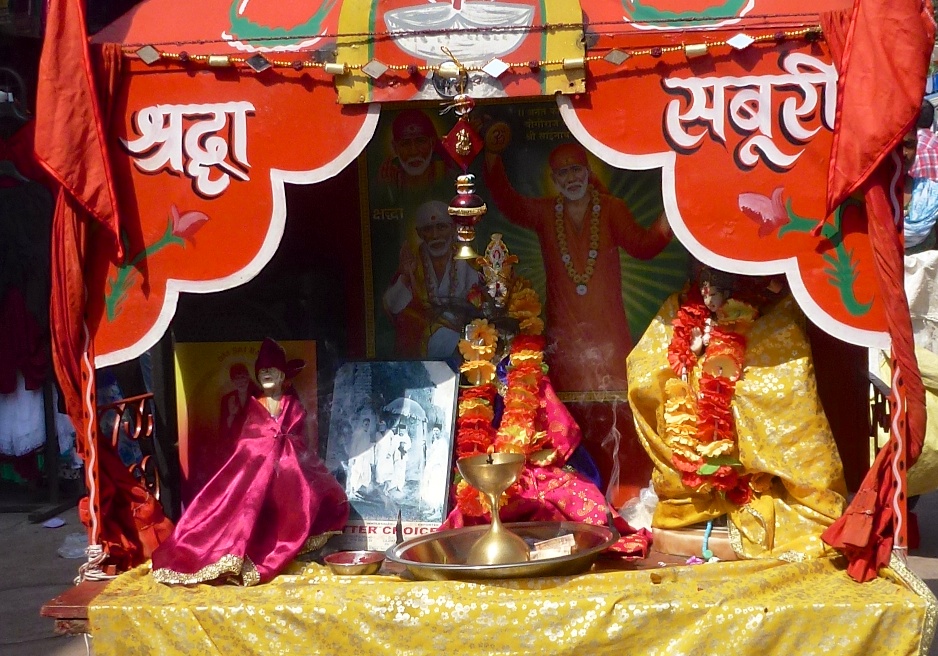
A temple on wheels. Close to 80% of India is of Hindu Religion and the vast majority belong to Vaishnavite
and Shaivite denominations.
People put money in the temple and then wave their hands over the incense to direct the smoke to their face.
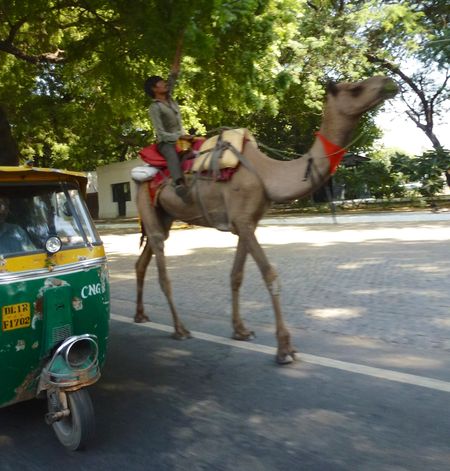
A camel walking on the main road. Now that would be a fun way to get to work each day!
A refreshing lemon drink – no we did not try it. You really should not drink anything that is not bottled commercially.
Sights we visited:
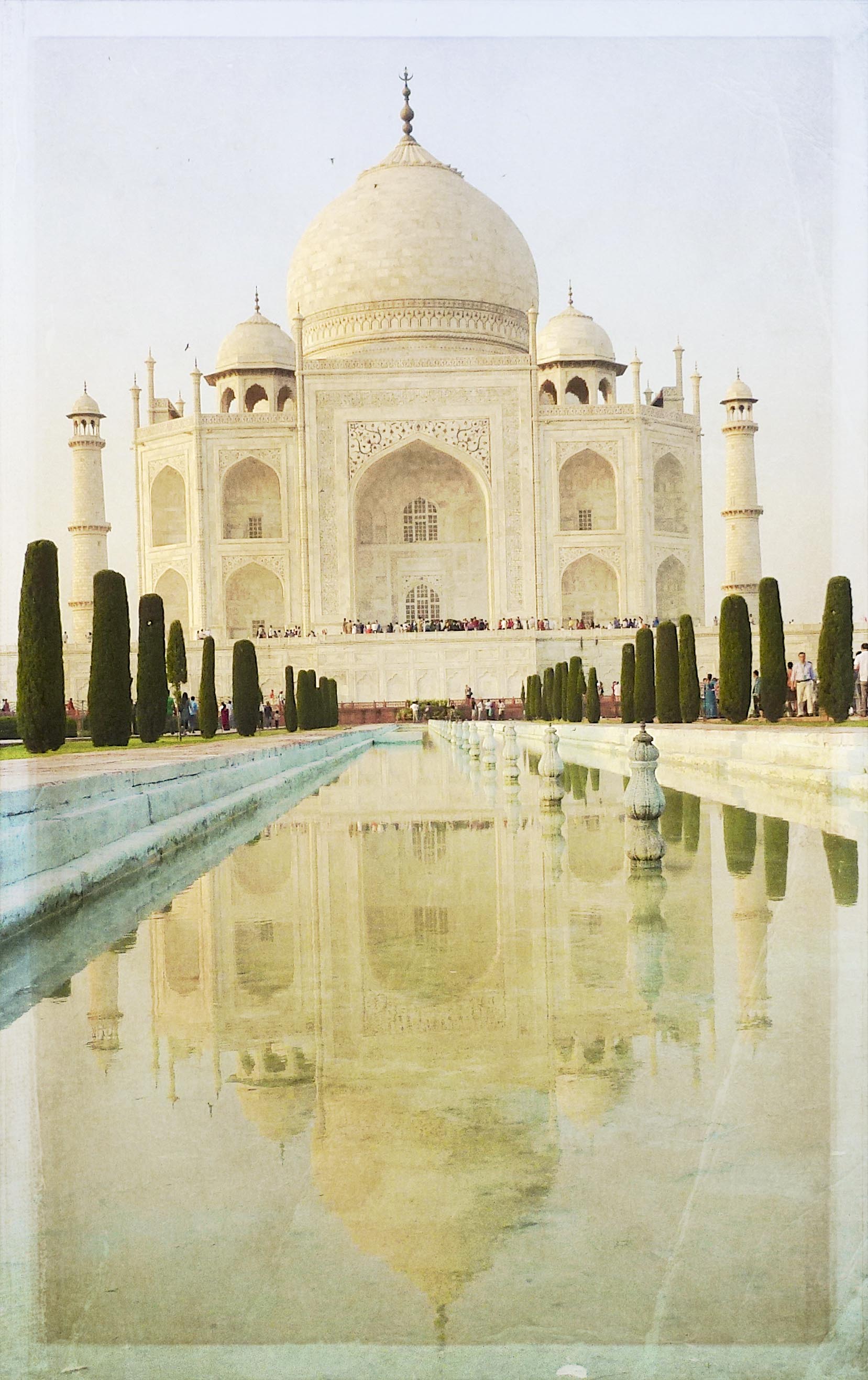
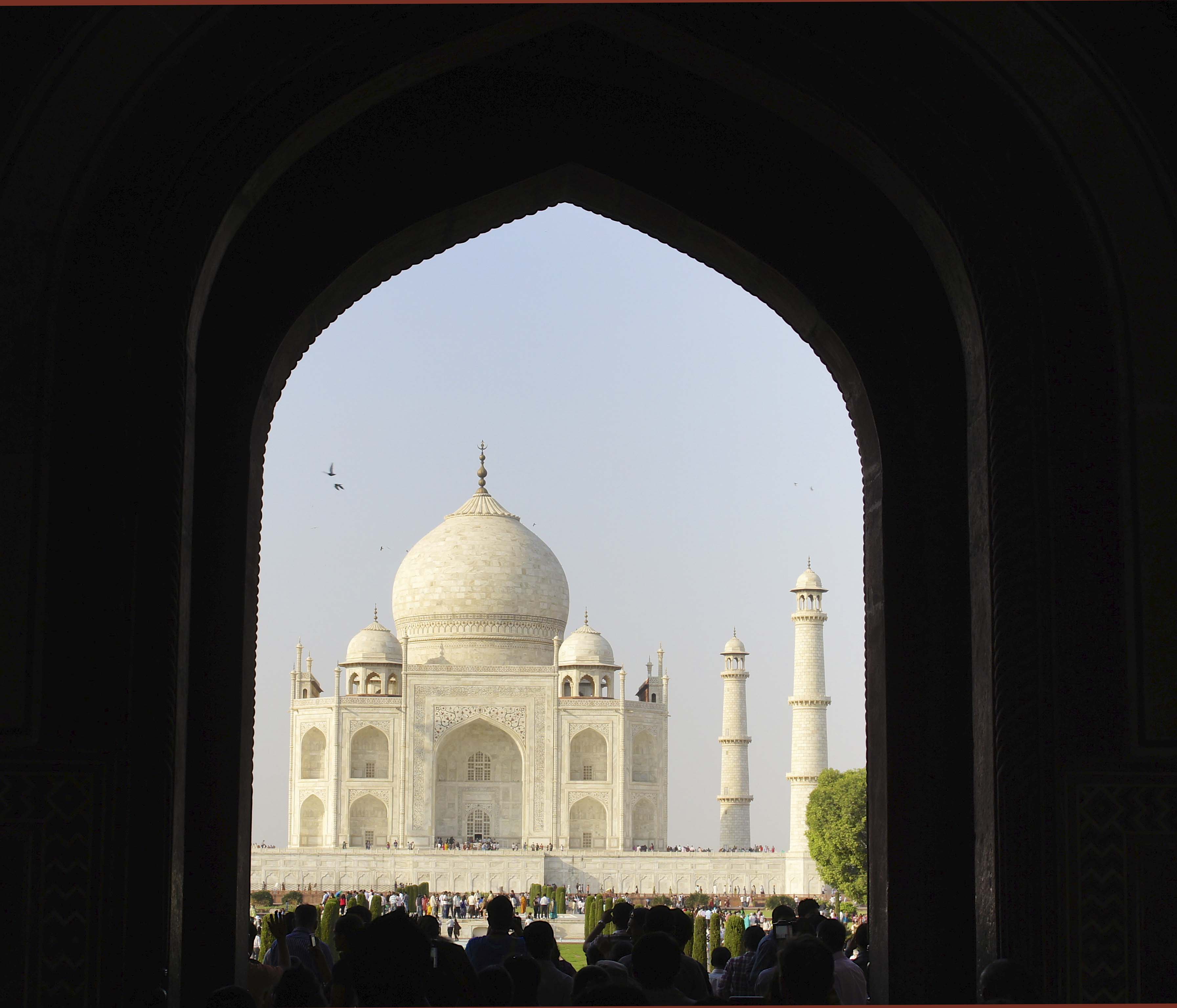
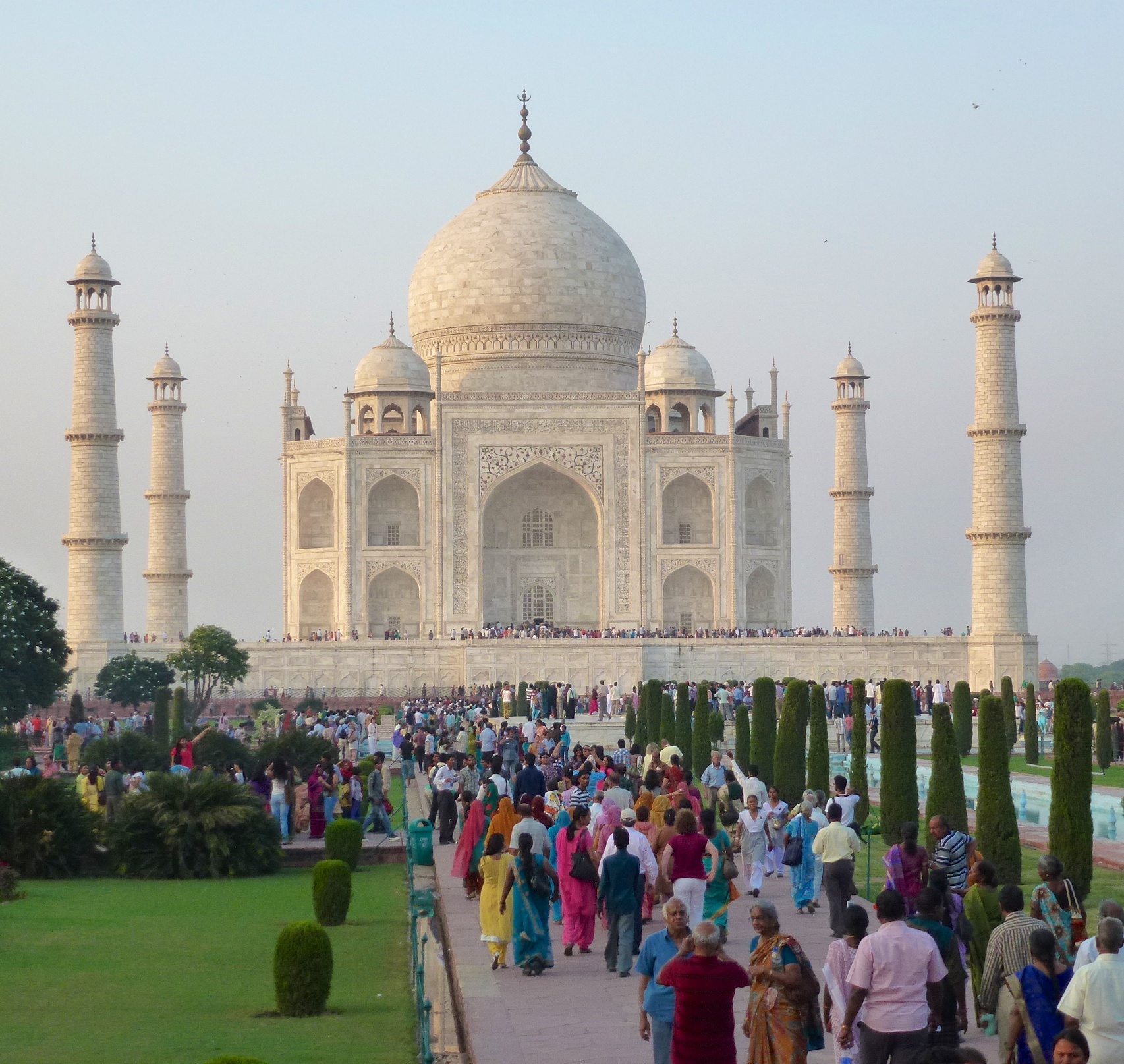
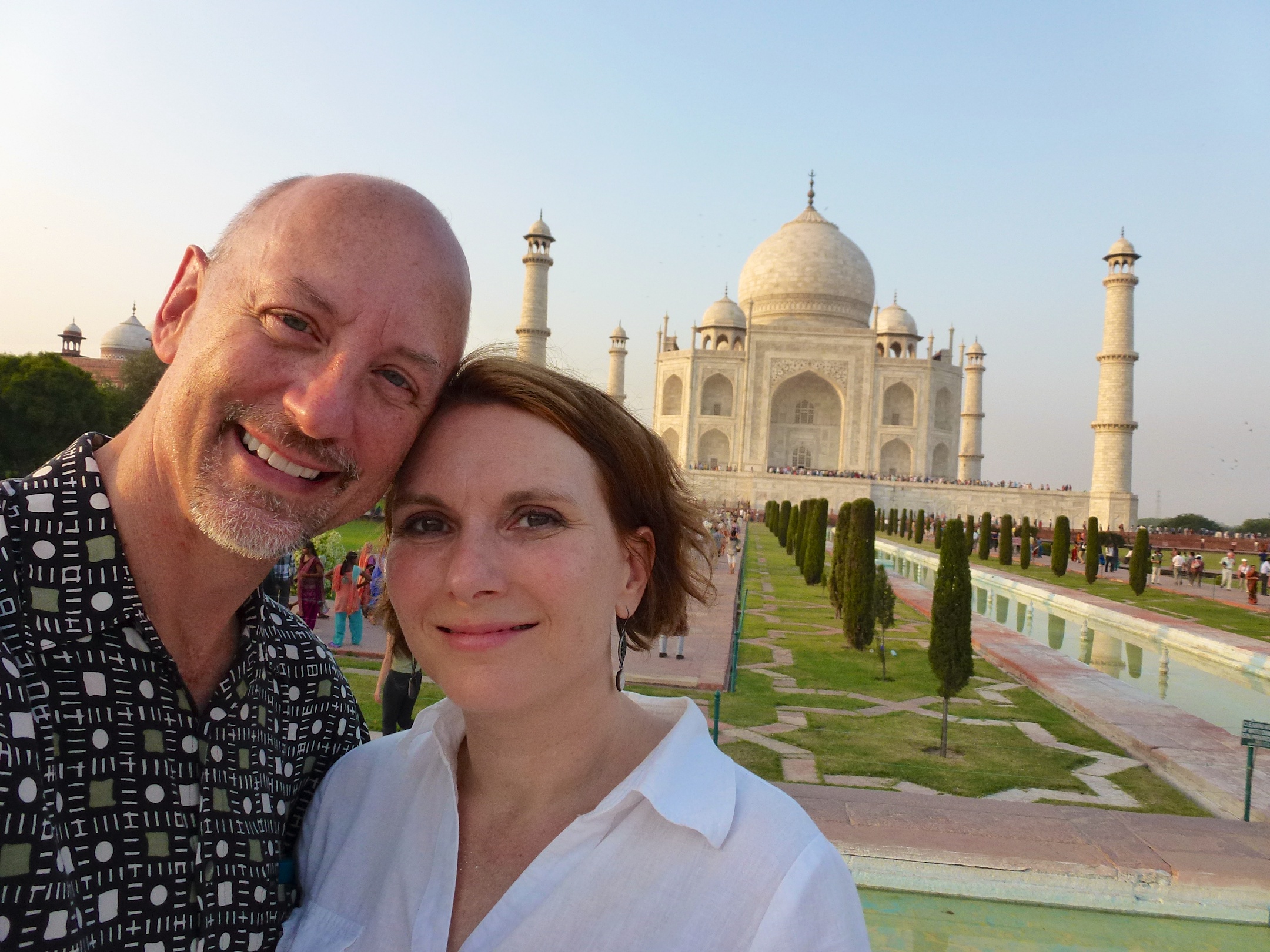
Part of the conference was a trip to the Taj Mahal in Agra. It took us four hours each way but it was oh so worth it! The view as we approached the Taj. Did you know that the Taj Mahal was a labor of love?
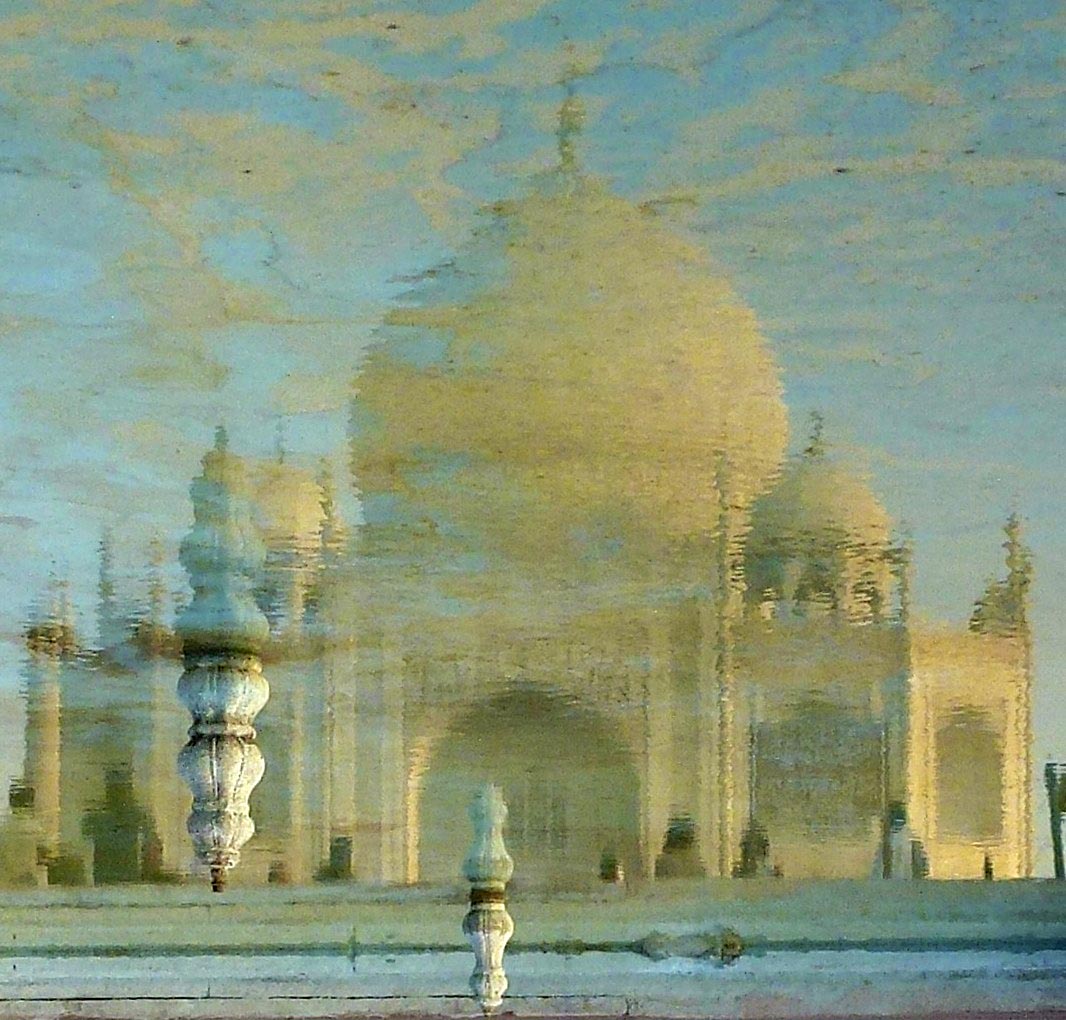
The photo below is actually a reflection of the Taj in a pool in the front garden. I did NOT alter this photo! This is one of my favorite photos of the trip. The Taj Mahal is UNESCO World Heritage site.
It took 22 years to build the Taj Mahal (1631-1653). The story behind it is one of the greatest love stories of all times. The Mughal Emperor Shah Jahan built it for his third and favorite wife, Mumtaz Mahal. Their marriage was a "love" marriage, not an arranged one.
Because Mumtaz Mahal was his favorite wife, she traveled everywhere with him. Even though she was in the ninth month of pregnancy, she traveled with Shah Jahan when he set out for Burhanpur with his armies
to subdue a rebellion.
While
on this journey, the queen gave birth to their fourteenth child. She suffered complications and did not survive. According
to legend, on her dying bed, Shah Jahan
promised her that he would never remarry and would build the most beautiful mausoleum
over her grave, more beautiful than any
the world had ever seen before.
The queen is buried in the exact center of the Taj and the Shah is buried by her side.
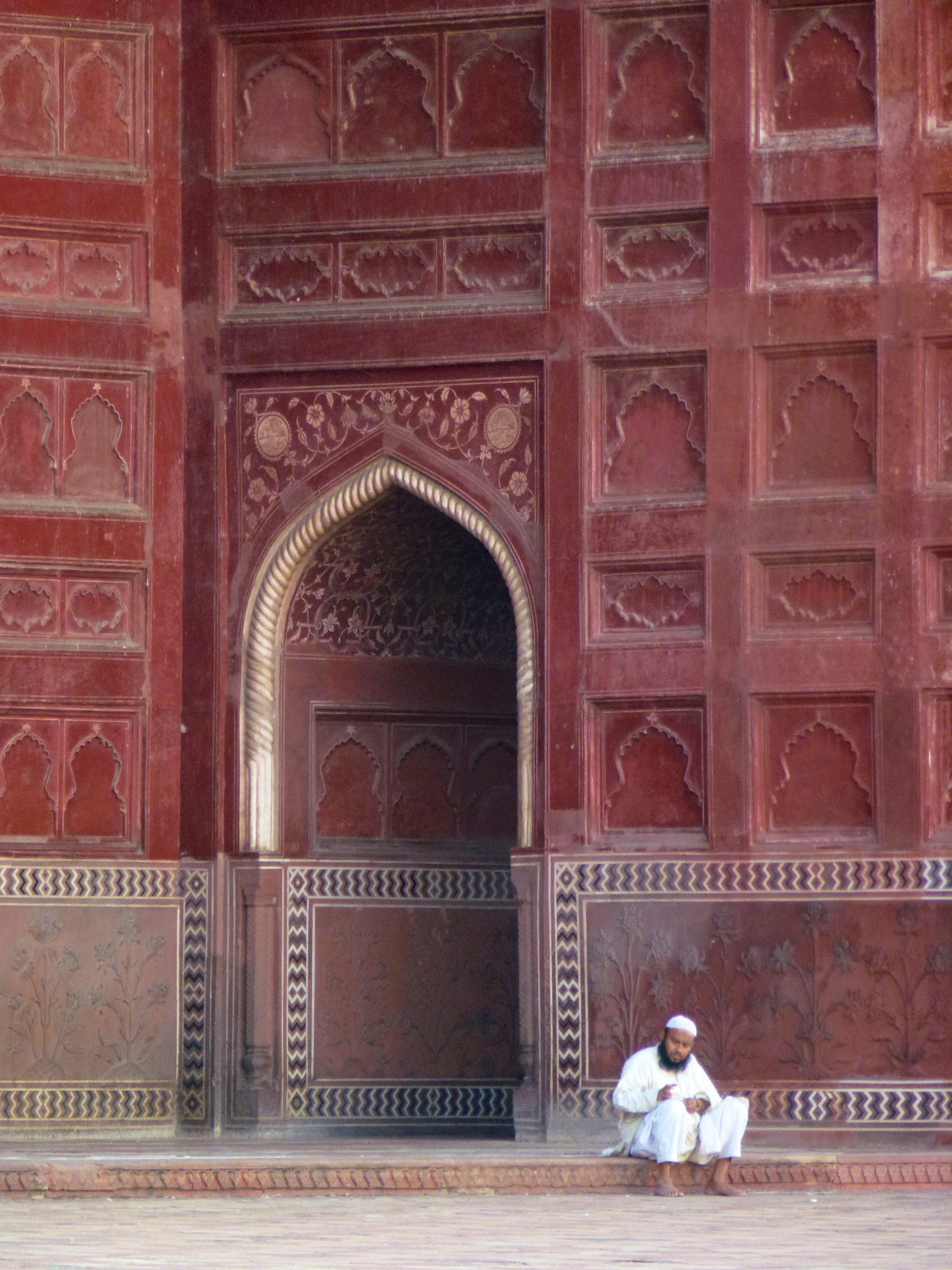
The mosque and the guesthouse in the complex are built of red sandstone in contrast to the
marble mausoleum. It is also a beautiful structure.
For twenty-two years,
twenty thousand men and women labored day and night to create the emperor
shah Jahan’s promise to his beloved. It is primarily made of marble with inlay work of precious/semi precious
stones. It truly is a breathtaking sight!
The road to Agra and the Taj Mahal…
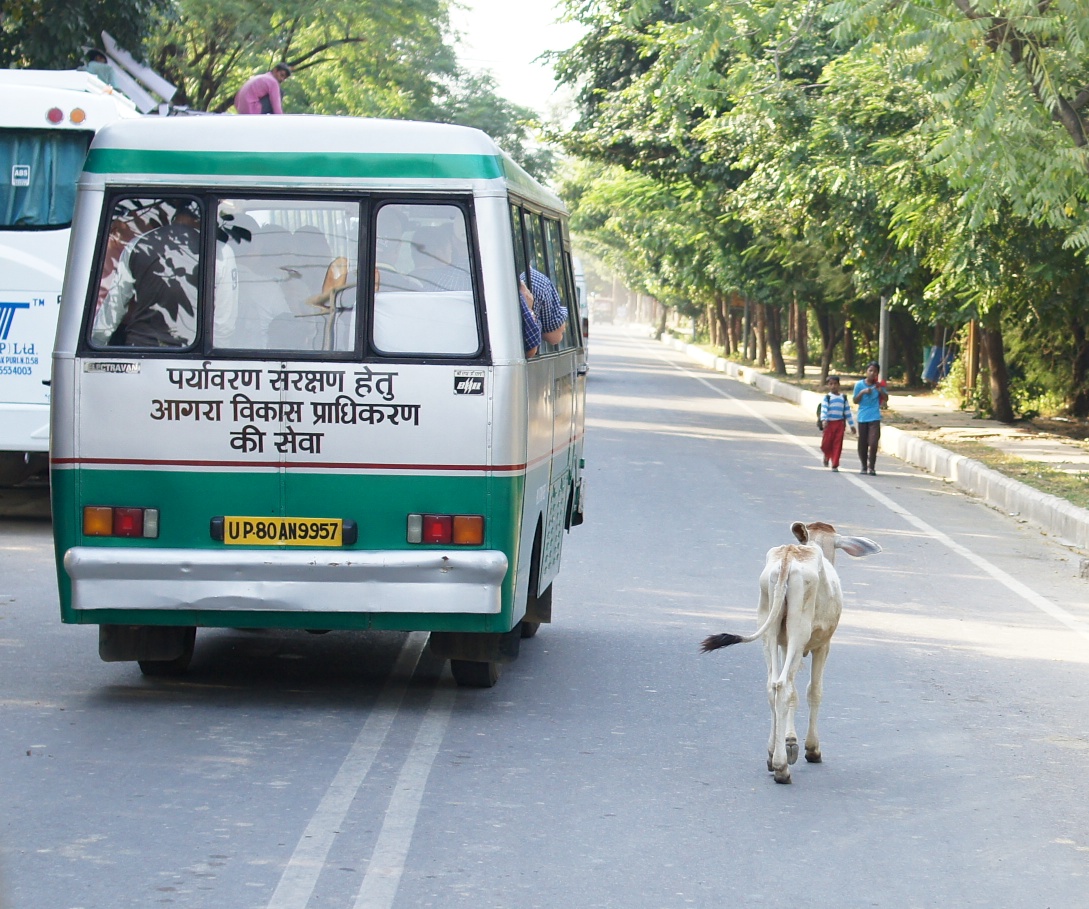
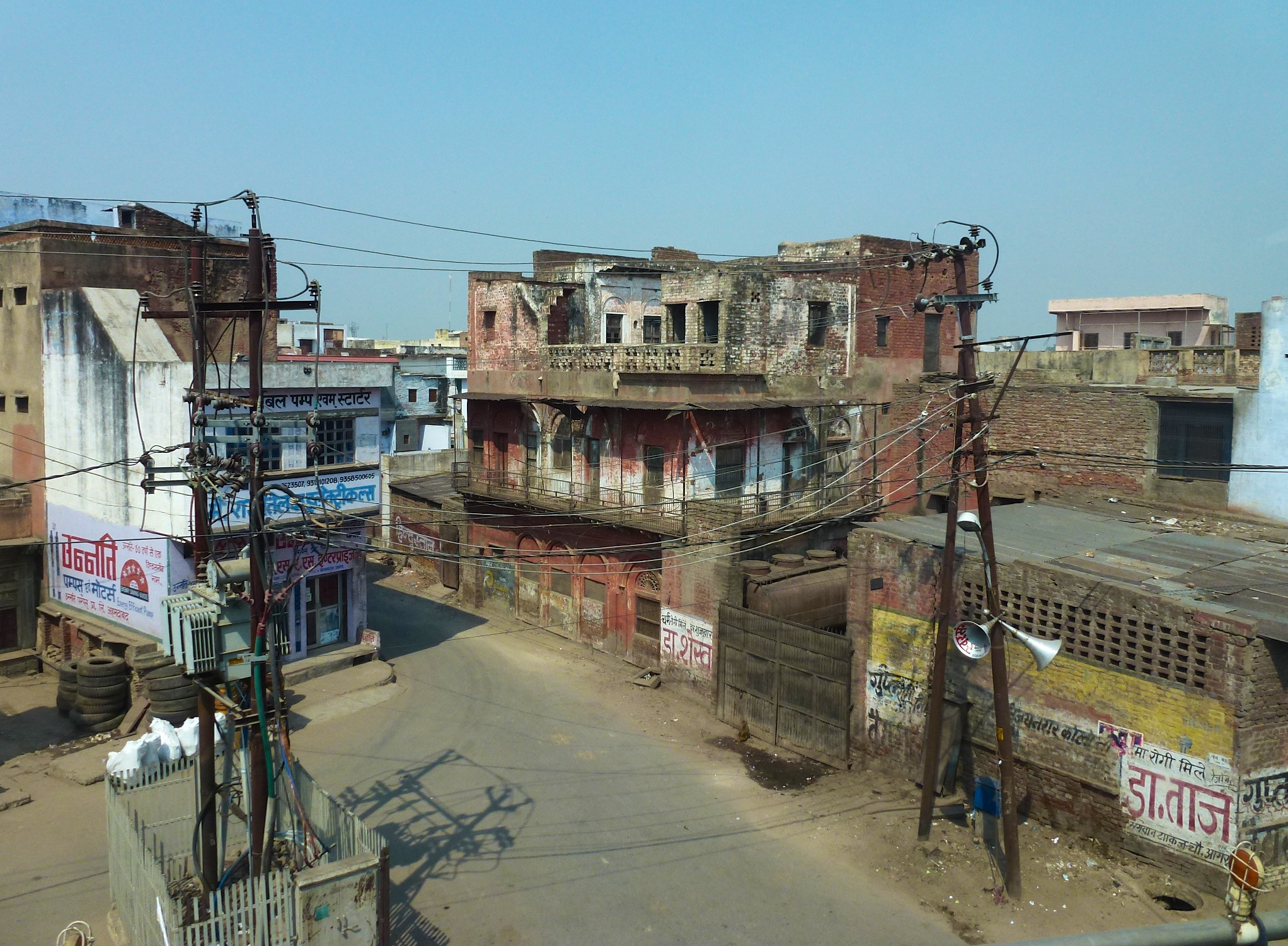
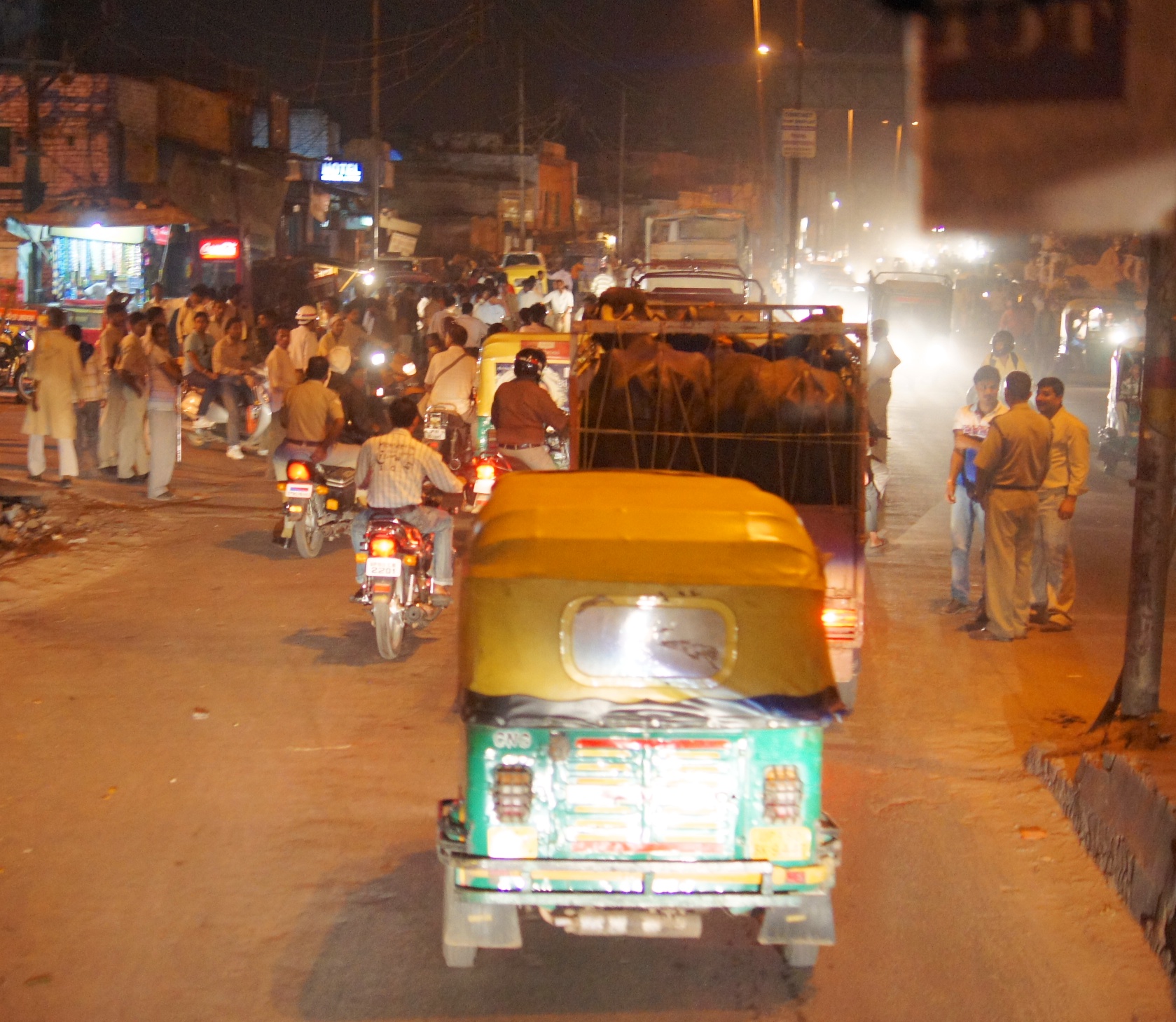
Most of the following photos were taken from a bus window while the bus was moving. A rarity for us, as we never take bus tours, but this was part of the day's events. We had a great time despite not being able to walk among the locals.
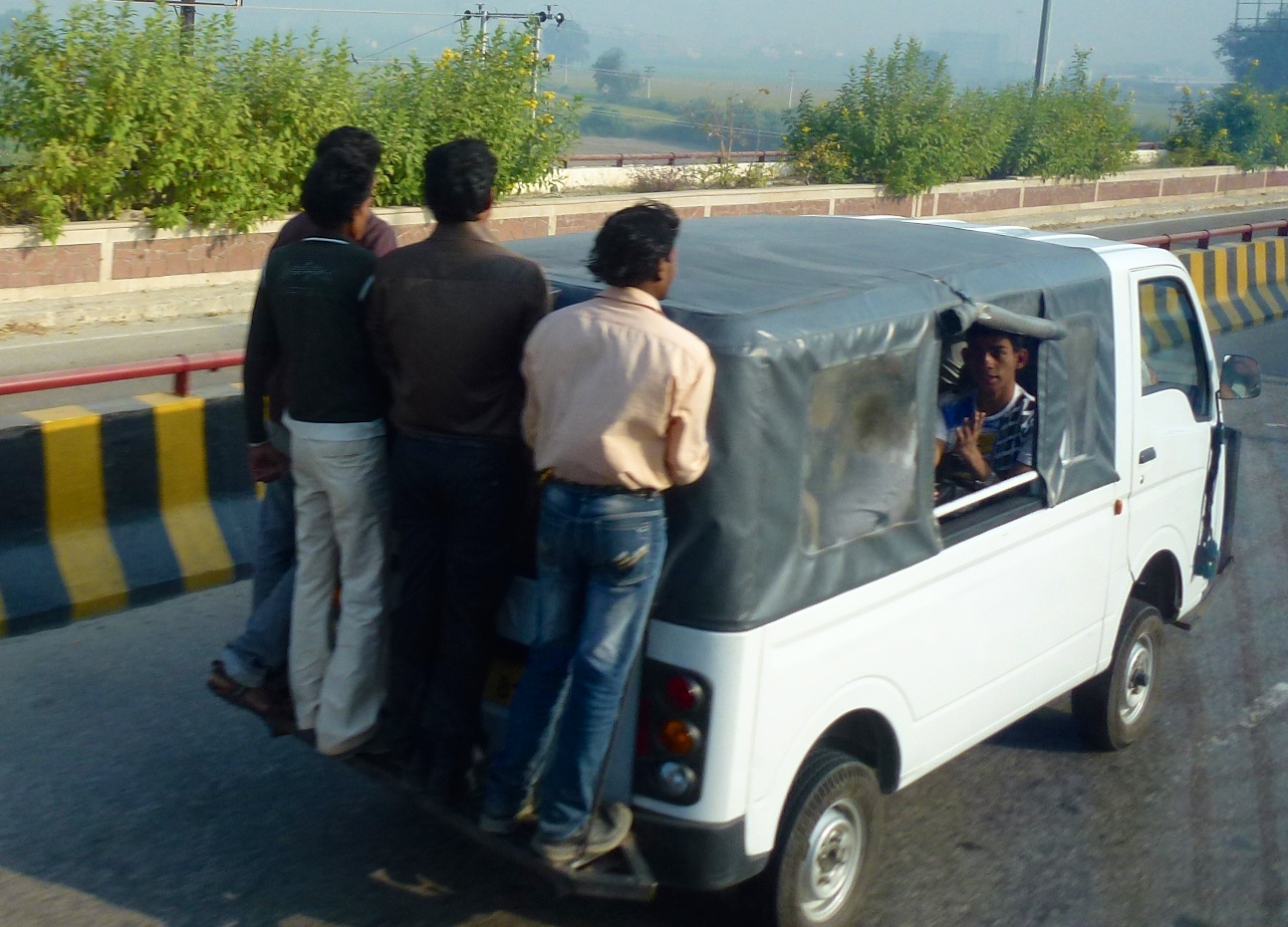
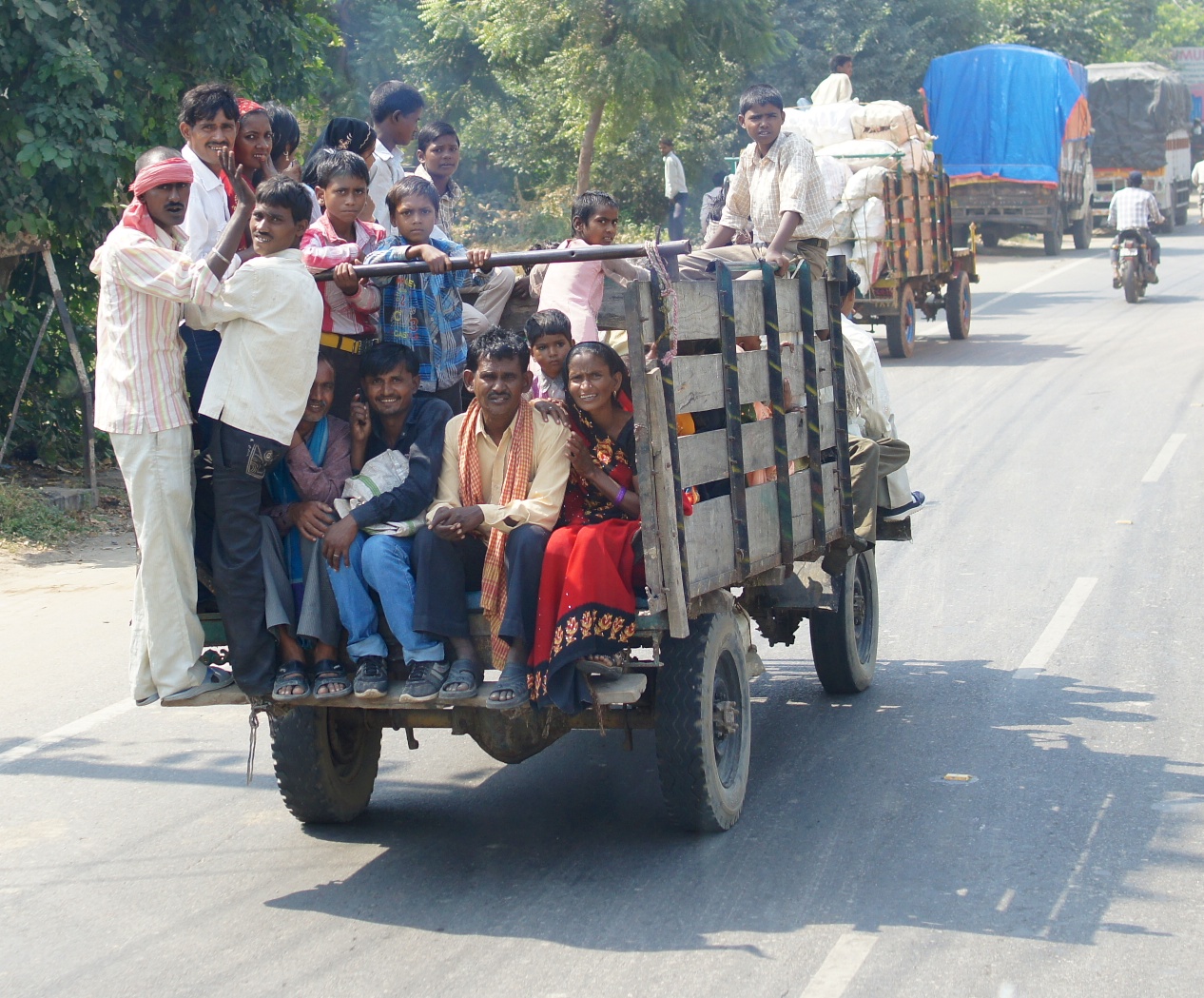
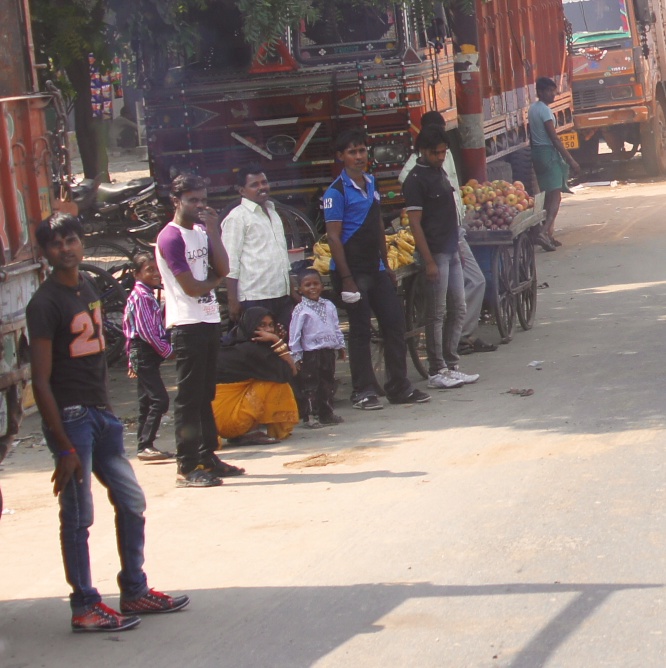
India is a poor country and not many people own cars. It is common to see people jumping on and off the back of trucks to get to where they are going.
There were also motorcycles on the road, but nothing like some of the Asian countries we have traveled to.
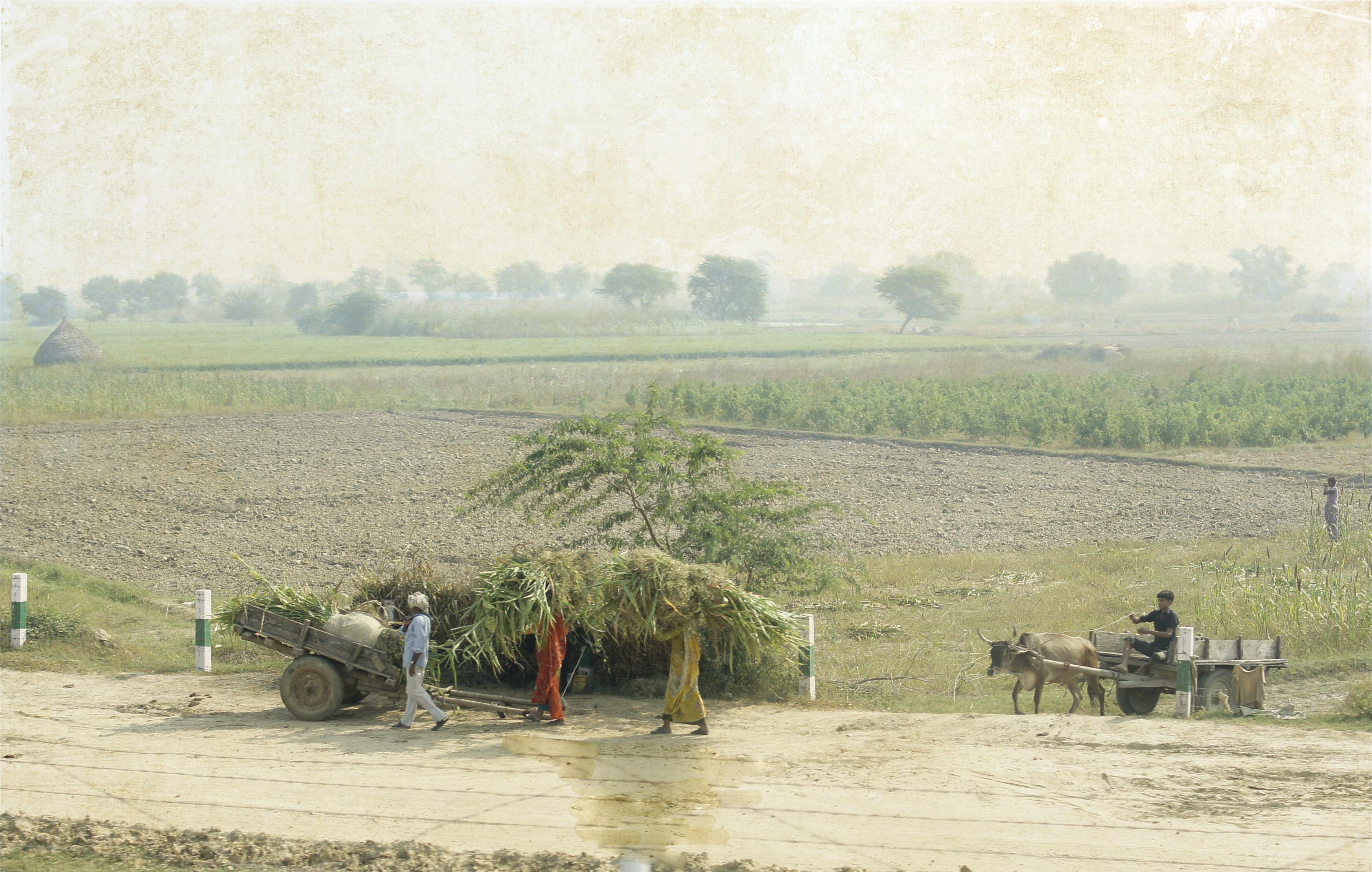
The countryside side was quite beautiful, with many people working the fields.
Agra is a very touristy town, yet they were quite intrigued to see our caravan of buses coming into town. A brand new toll road just opened up, but there was hardly any traffic on it and the police stopped us frequently. Eventually, the police gave up and escorted our five buses to the Taj with their siren lights on. We also had armed guards on our bus.
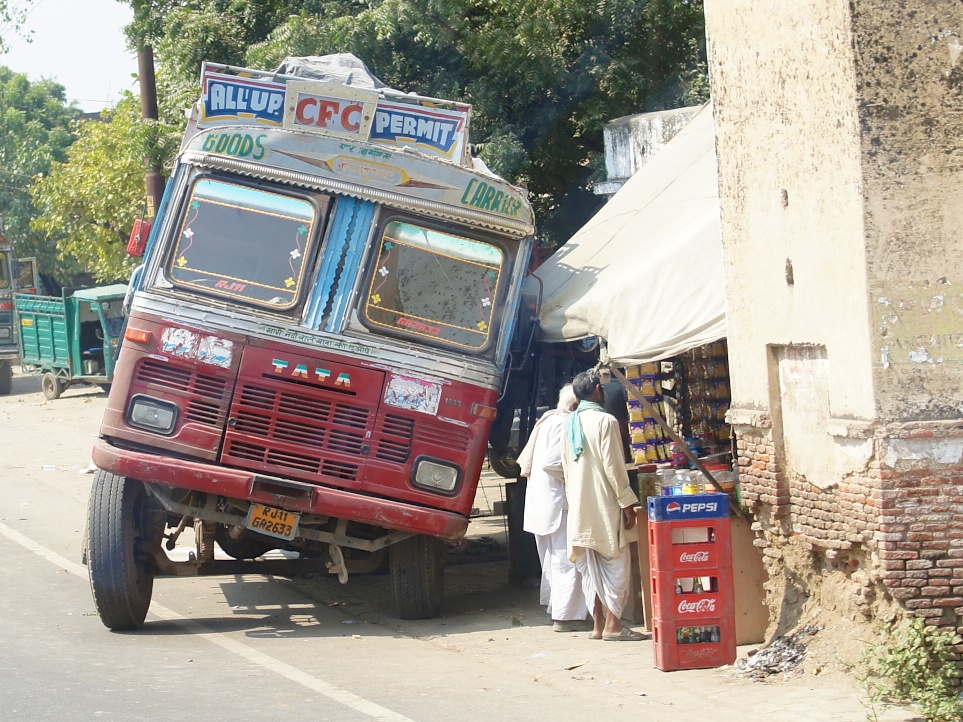
This truck has seen better days.
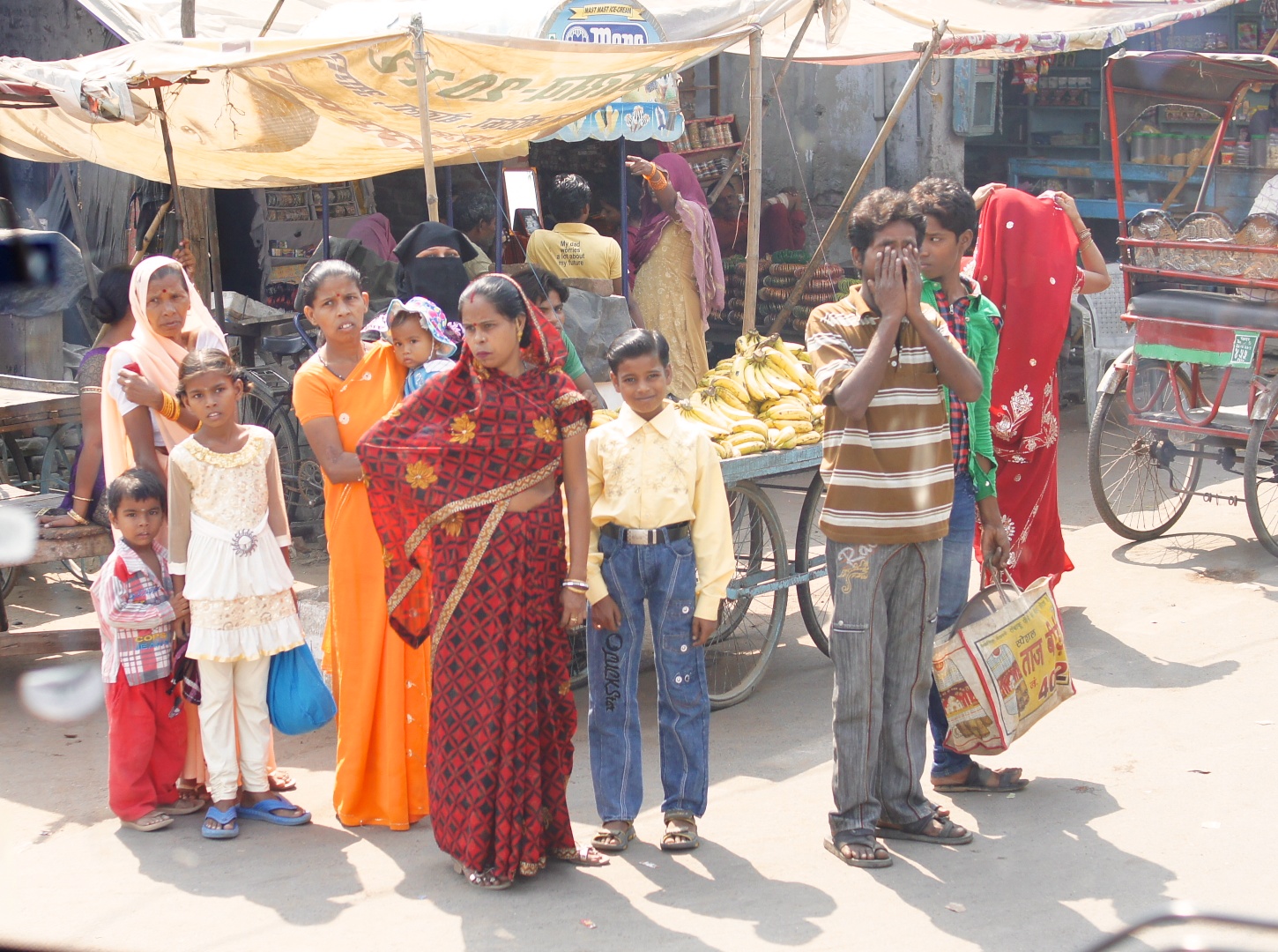
The people were very friendly and waved at our bus as we went by.
Love this photo – look closely, the woman is carrying milk and the cow is trailing behind her.
So colorful!
Looks like this one is getting in a quick nap before he goes to school.
As always – safety first!
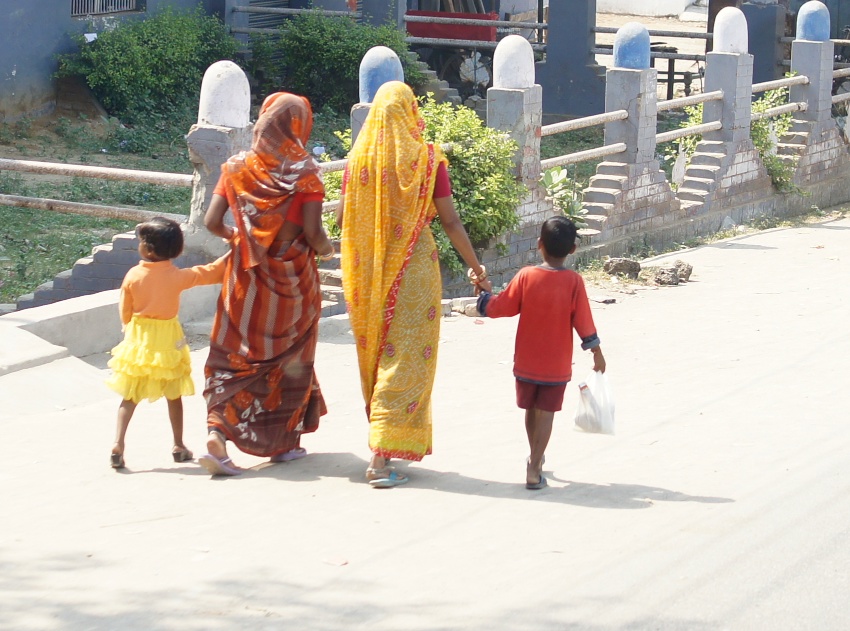
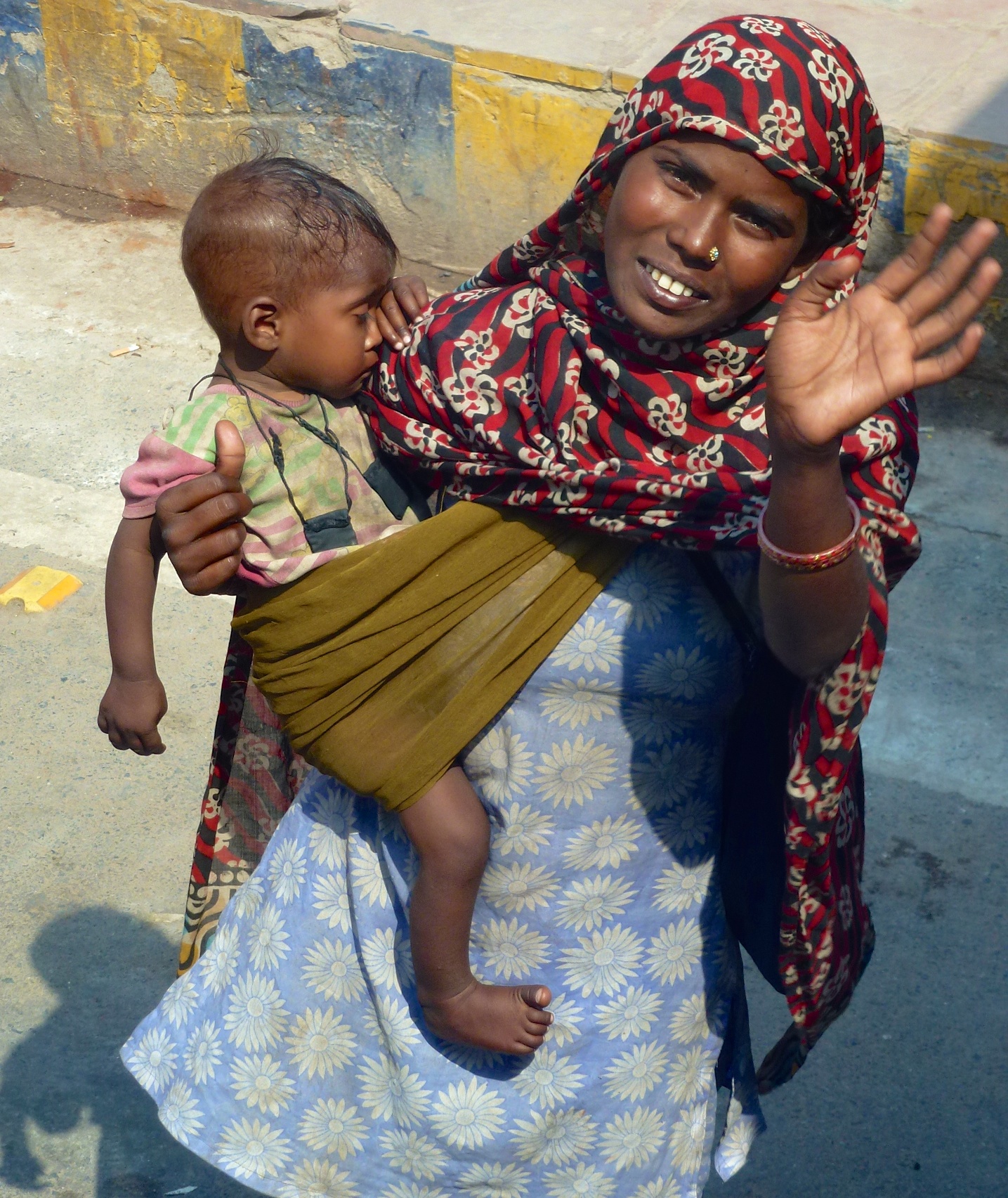
There were many women with children begging for food and money.
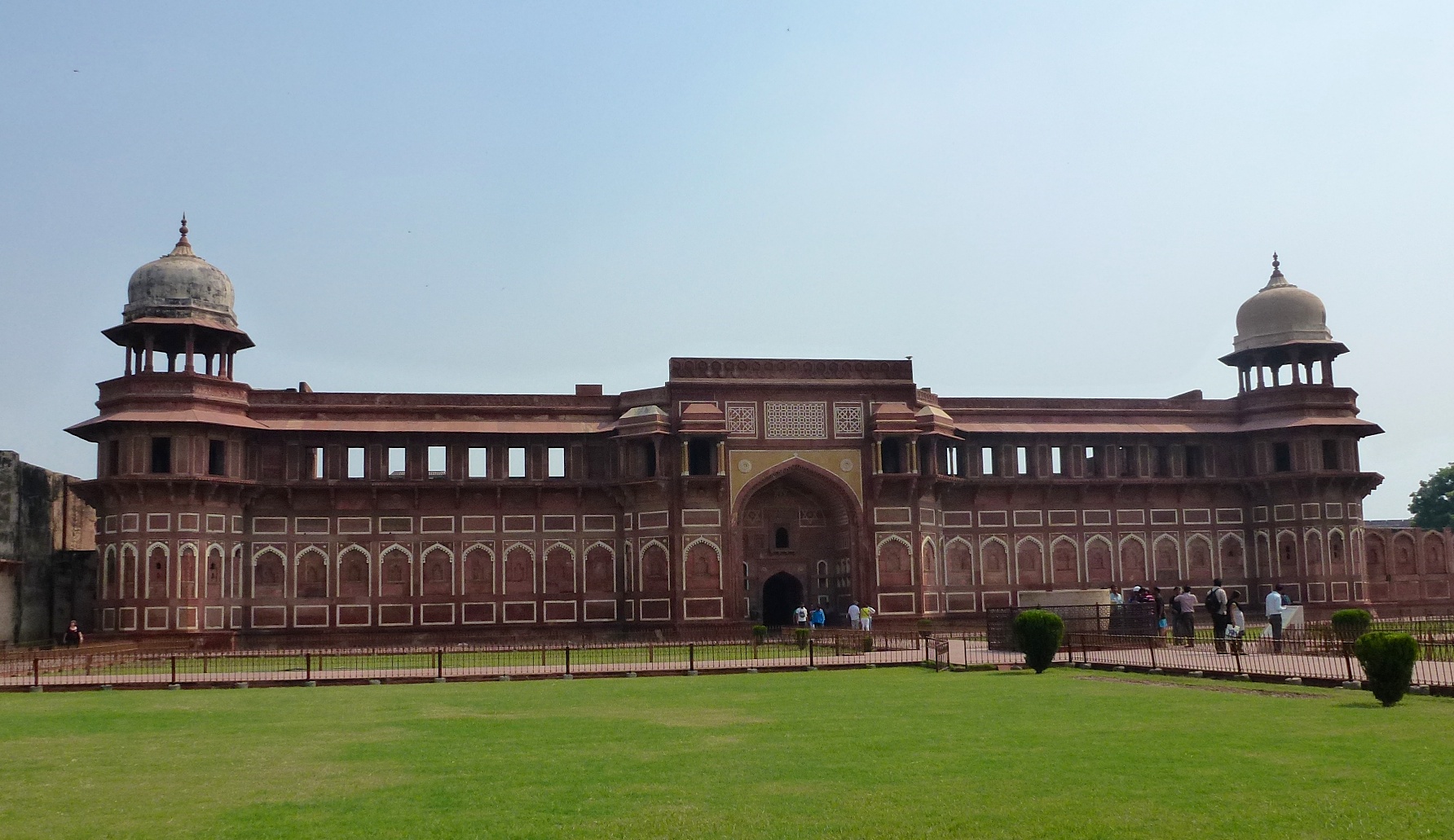
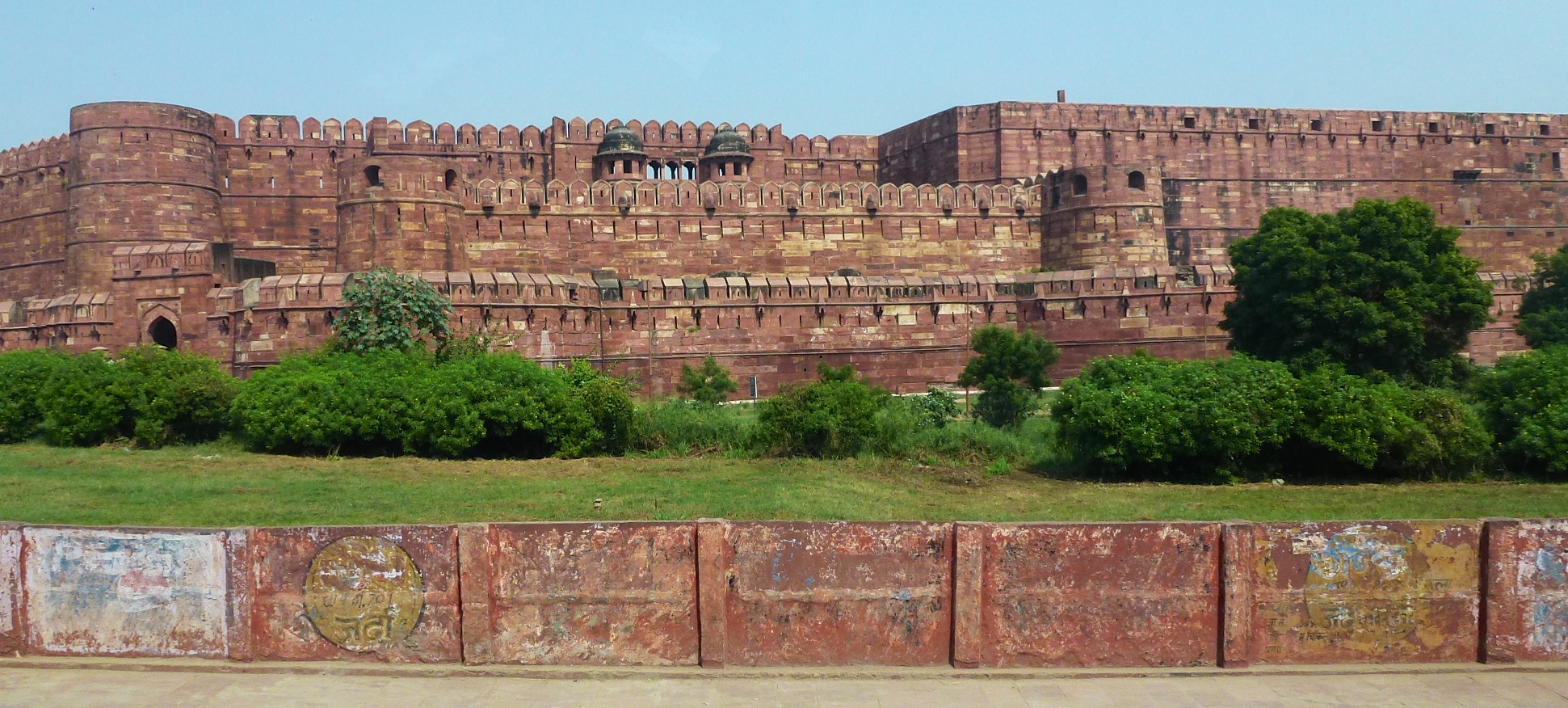
The Agra Red Fort
Less than a mile from the Taj Mahal sits the Agra Fort. Like the Taj, it is a UNESCO
World Heritage Site.
The Agra Fort (often called the Red Fort) was designed and built by the great
Mughal ruler, Akbar, around 1565 A.D. It derives its name from the extensive use of red sandstone on the
massive walls that surround the fort.
It was initially built as a military
establishment, and later it was converted into a magnificent palace.
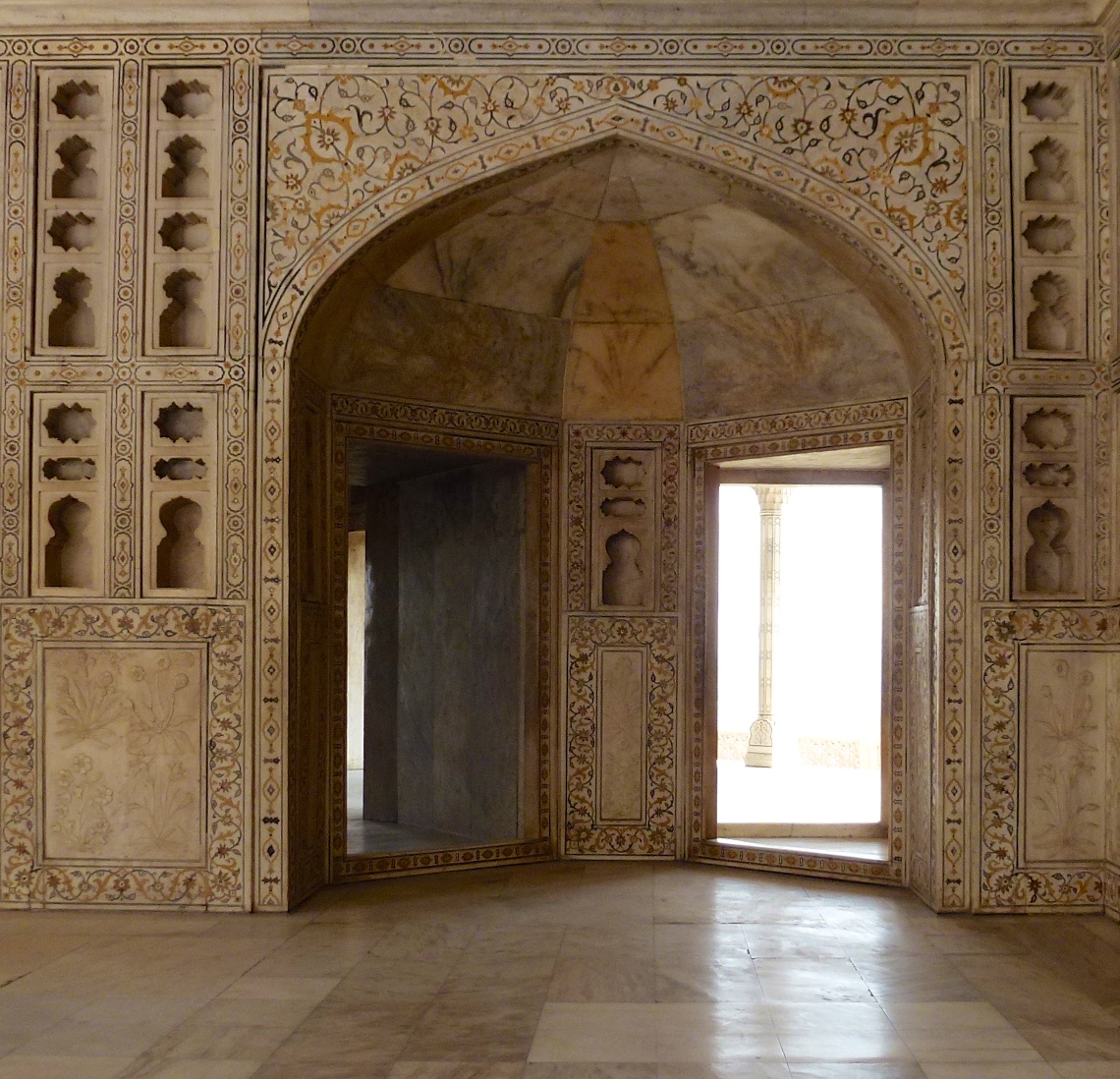
Shah Jahan was imprisioned in the Fort by his own son for the last eight years of his life.
Diwan-I-Am or Hall of Public
Audience, constructed between 1631-40, was the place where the emperor
addressed the general public as well as the nobility.
The town of Agra was very busy in the evening as we departed. It made for some challenging maneuvering for our bus driver.
We got to see many other sights during the week including:
The Lotus Temple
The Bahá'í House of Worship, also known as the
Lotus Temple because of its flowerlike shape, is a fairly new structure, completed in 1986. Like all Bahá'í Houses of Worship, the
Lotus Temple is open to all, regardless of religion. Inside is a giant empty room with chairs. You must be completely silent when you
enter. This was a challenge for a
few of us girls : )
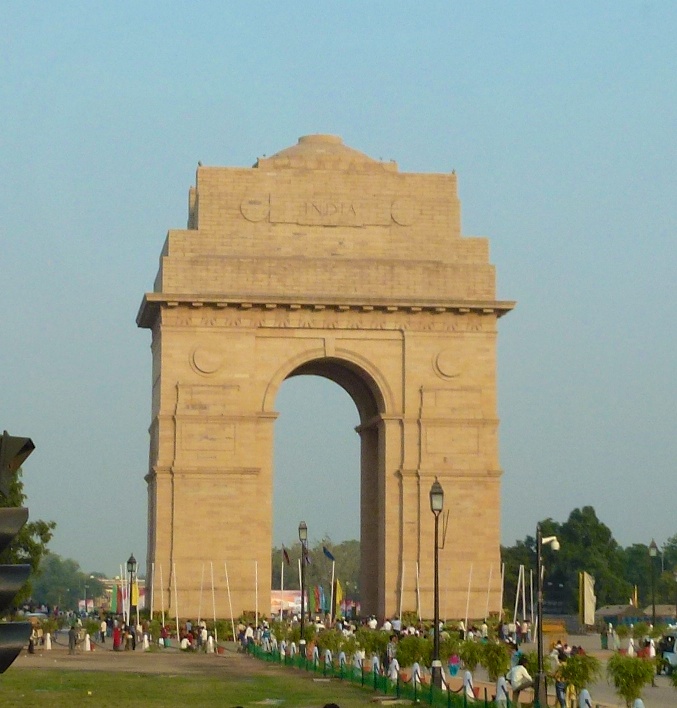
India Gate
India Gate is a national monument in India. Situated
in the heart of New Delhi, it was inspired by the Arc de
Triomphe in Paris. Originally known as the All India War Memorial, the India Gate
was constructed in 1931 as a memorial to honor 90,00 soldiers who laid down
their lives during World War I.
We also did a lot of shopping and we got to see a real fashion show, stop by my art blog to see more photos of the show.
Evening Events
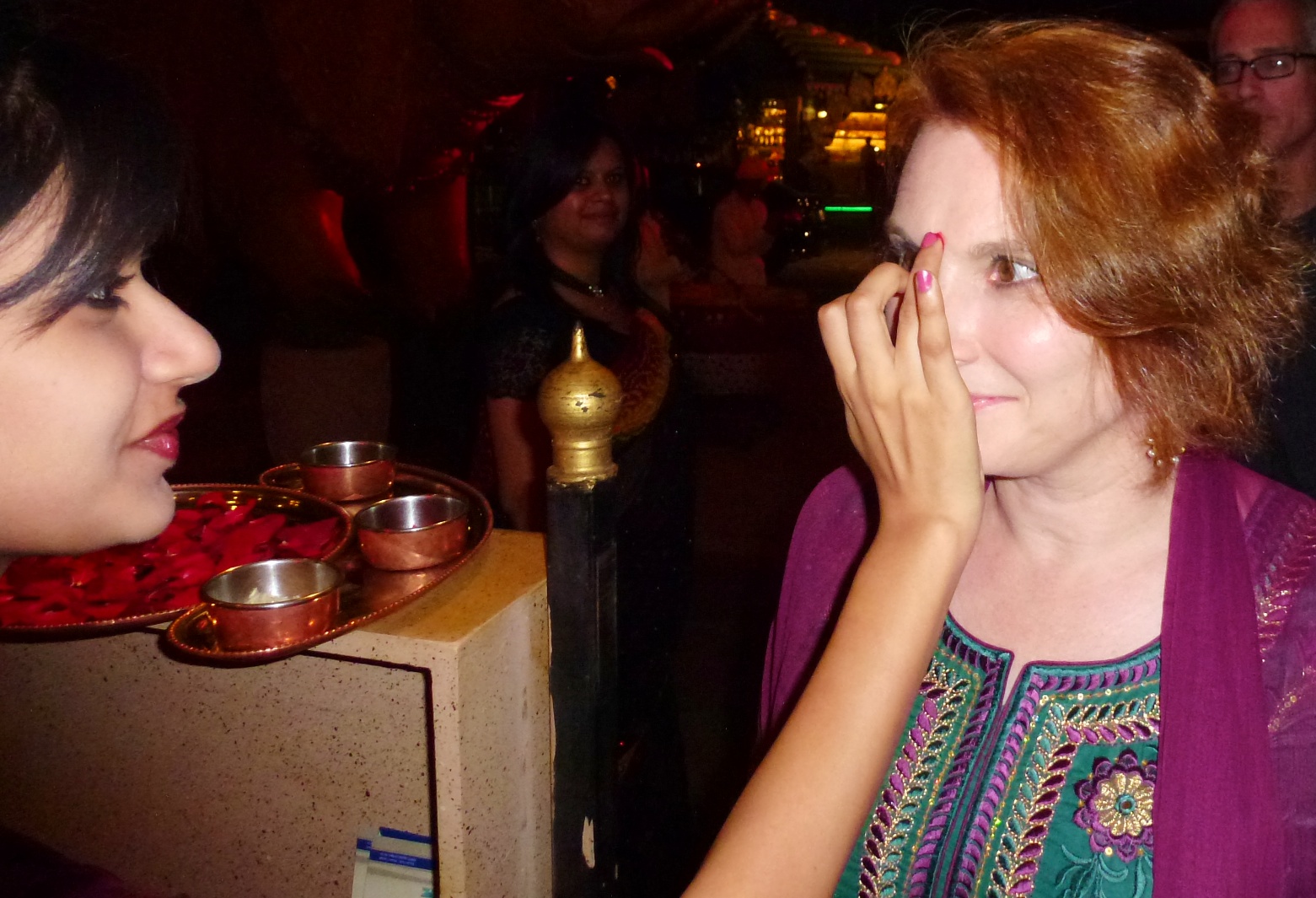
Each evening we had dinner and a performance. They were a bit touristy but I really enjoyed each and every one of them! Below I am getting a "bindi" as I enter the show.
Bindi is derived from the sanskrut word ‘bindu’, which means
dot. It is an ornamental mark placed
on the forehead between the two eyebrows.
A common assumption is that a bindi is a mark of the married
women, but all women can wear one. In India, a 'bindi' on a woman's forehead or a 'tilak' on a man's
forehead signifies the individual's spiritual eye, also called the
'third eye.' The
third eye is a mystical symbol of higher consciousness, and is thought to be the
center of the base of creation. It is also said to protect against demons.
Notice what I am wearing… I purchased a beautiful kurti.
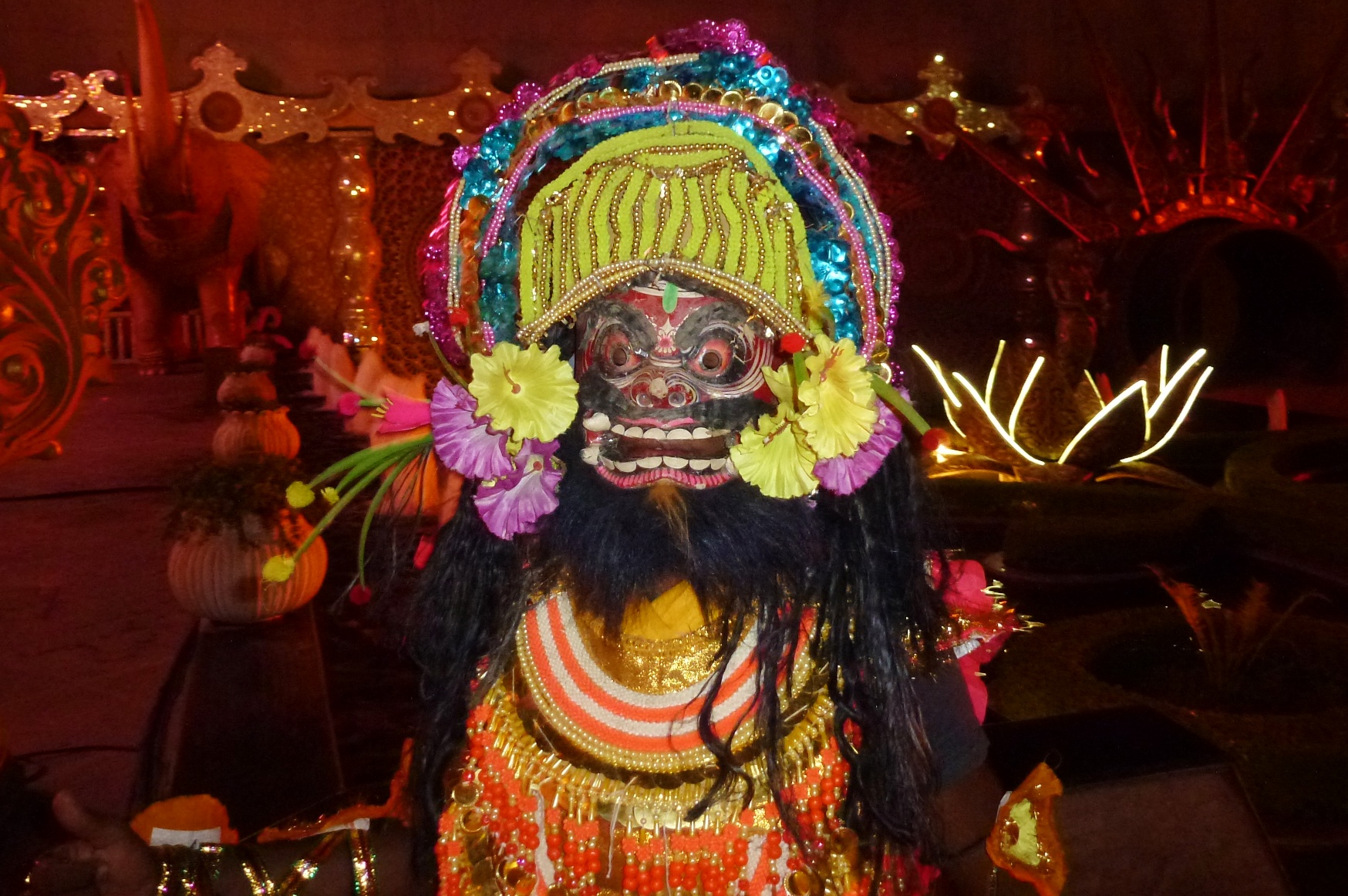
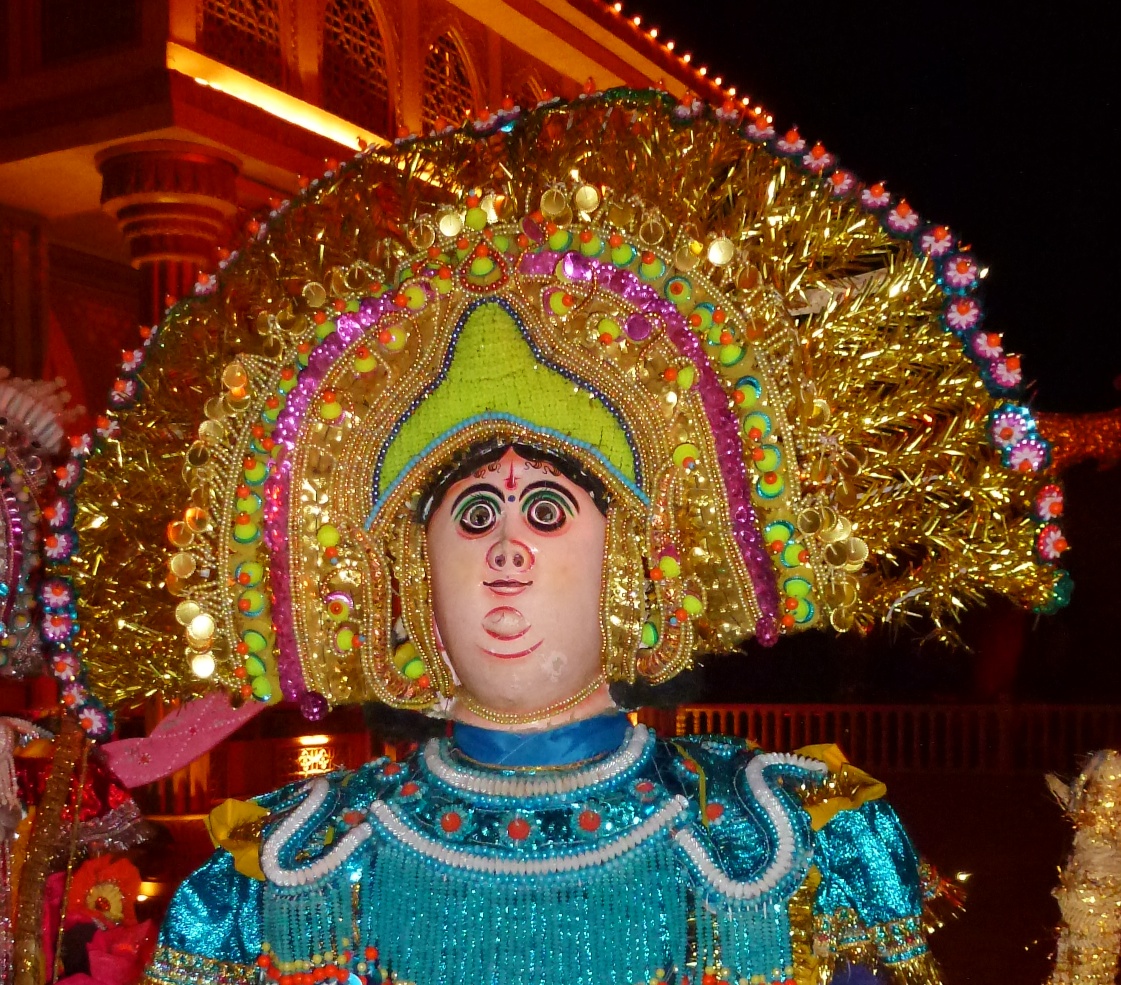
There were colorful characters at the entrance of the show. The show was a bollywood performance and it was awesome. We were not allowed to take photos.
The next evening we were entertained with fire. Women dancing with pots of fire on their heads and …
A fire-breathing man!
While balancing all the pots on her head, she managed to stand on two swords.
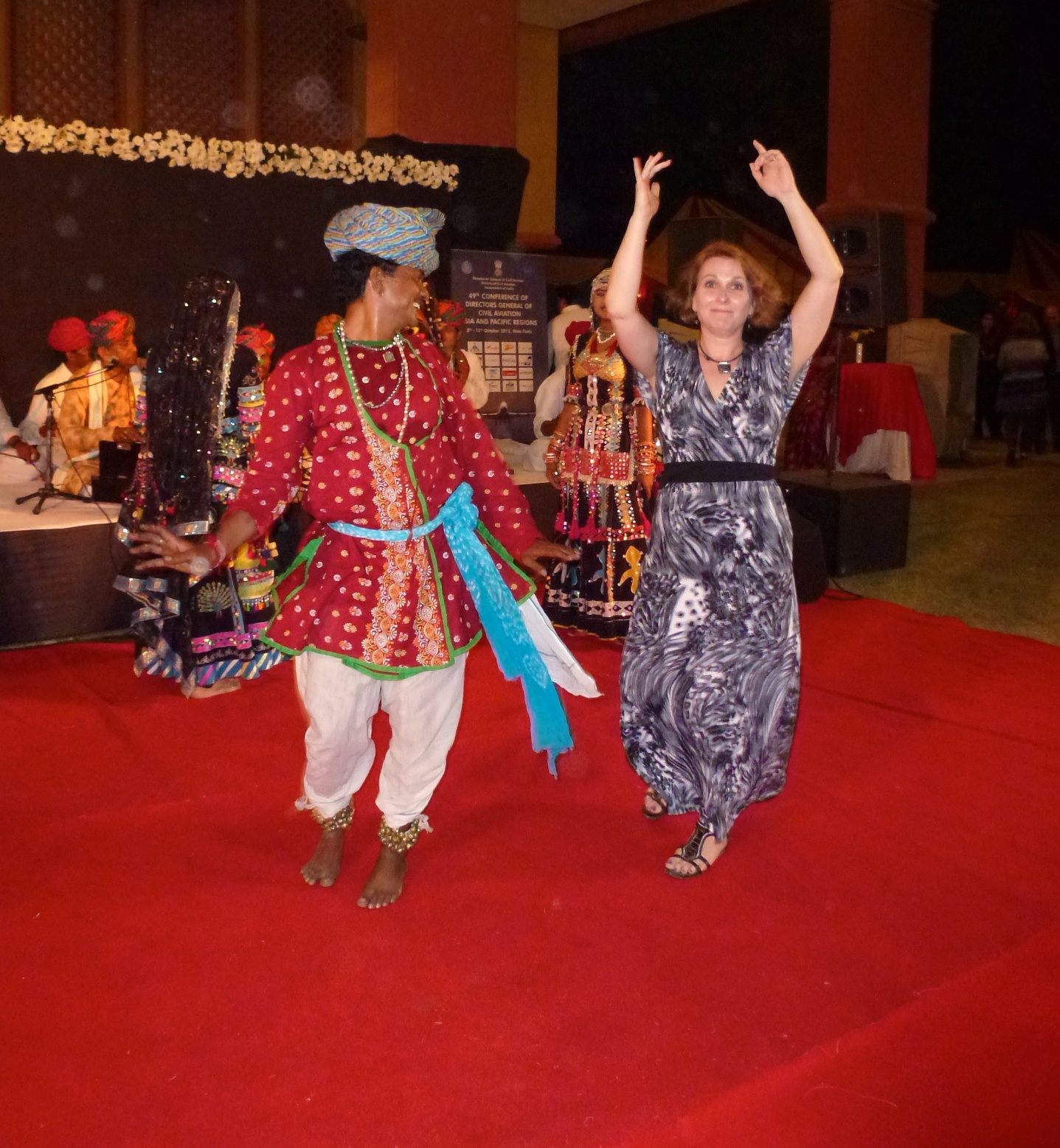
Guess who was pulled from the audience to dance with the performers?? Love that look on my face.
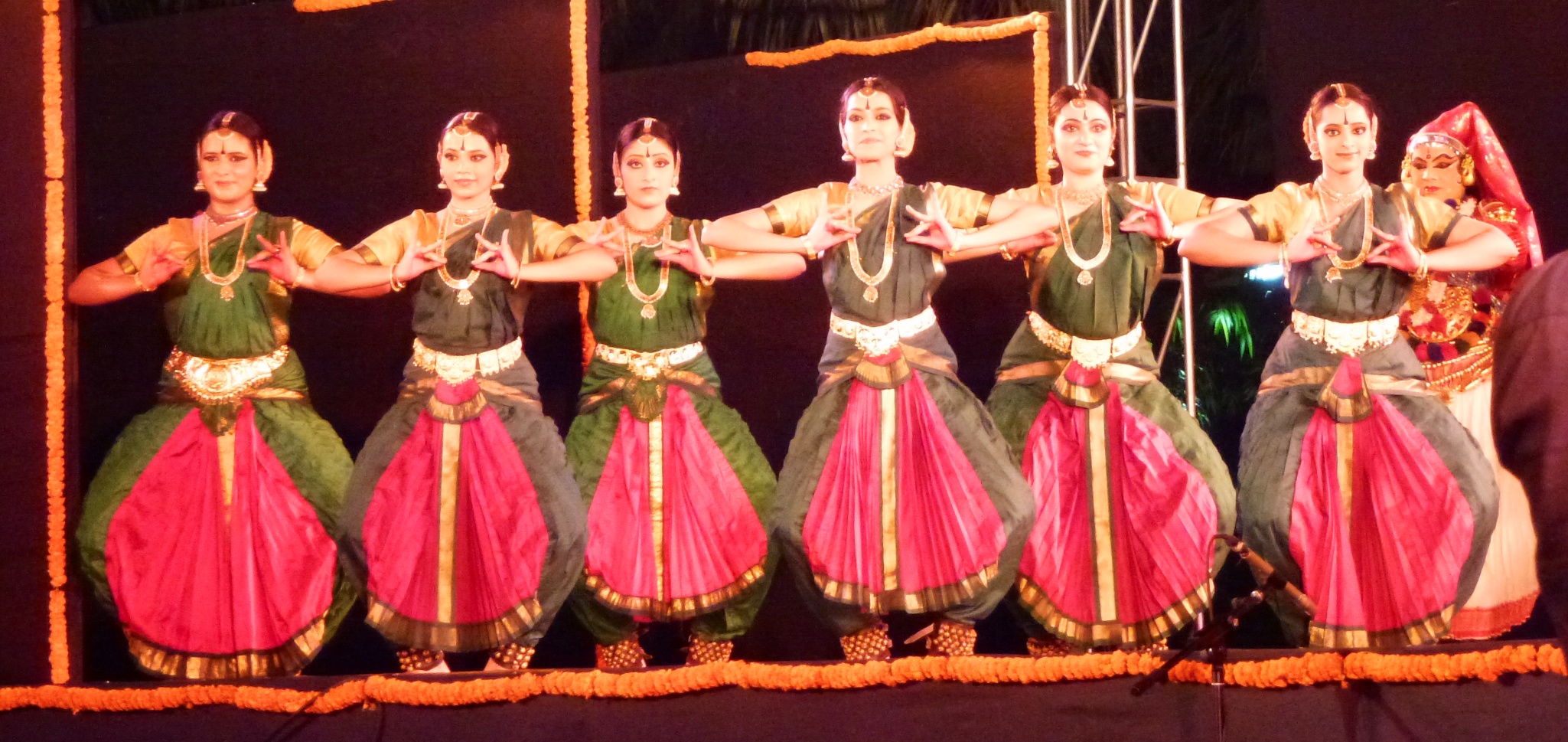
The next evening we saw traditional dances from different regions of India.
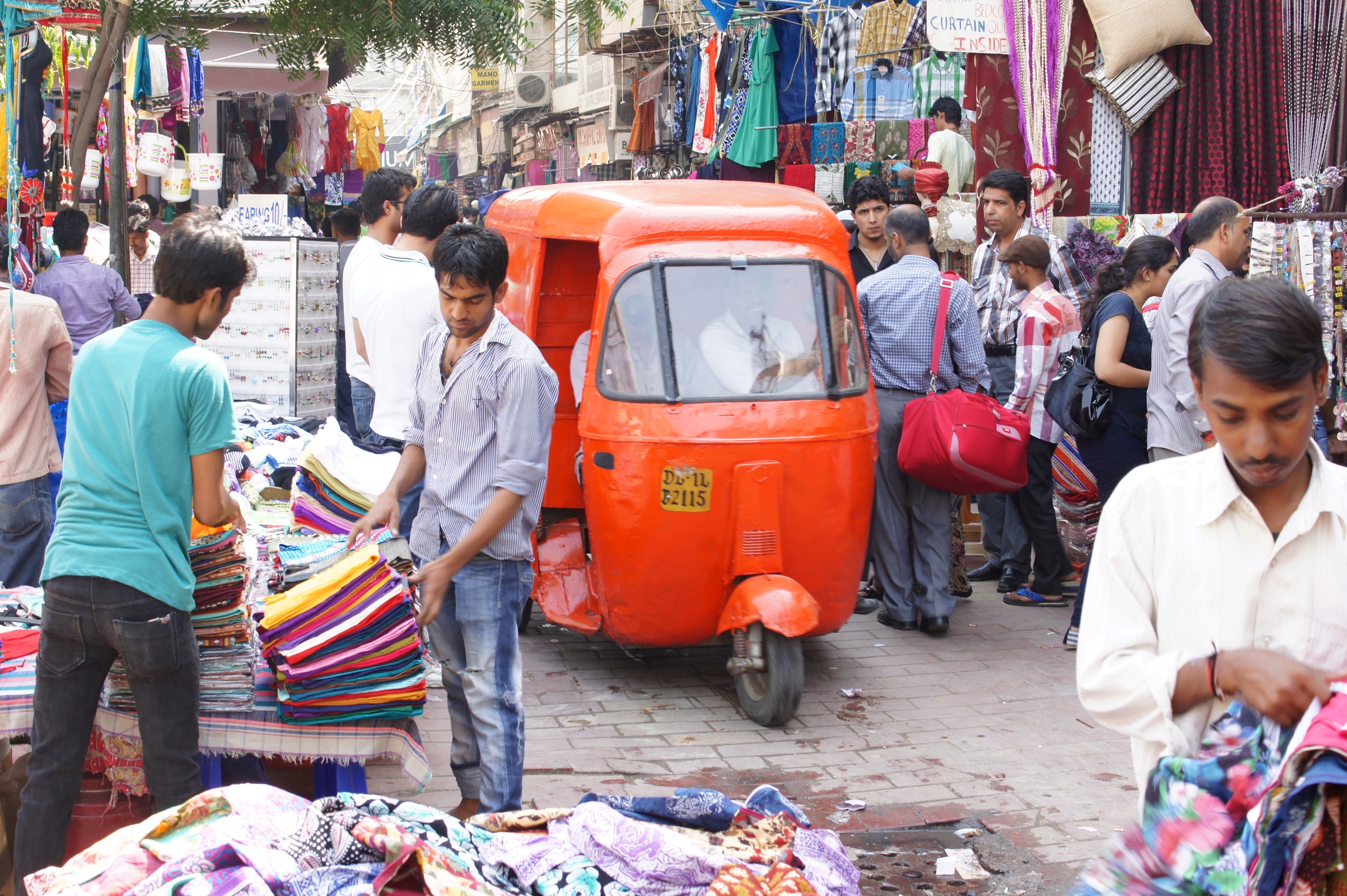
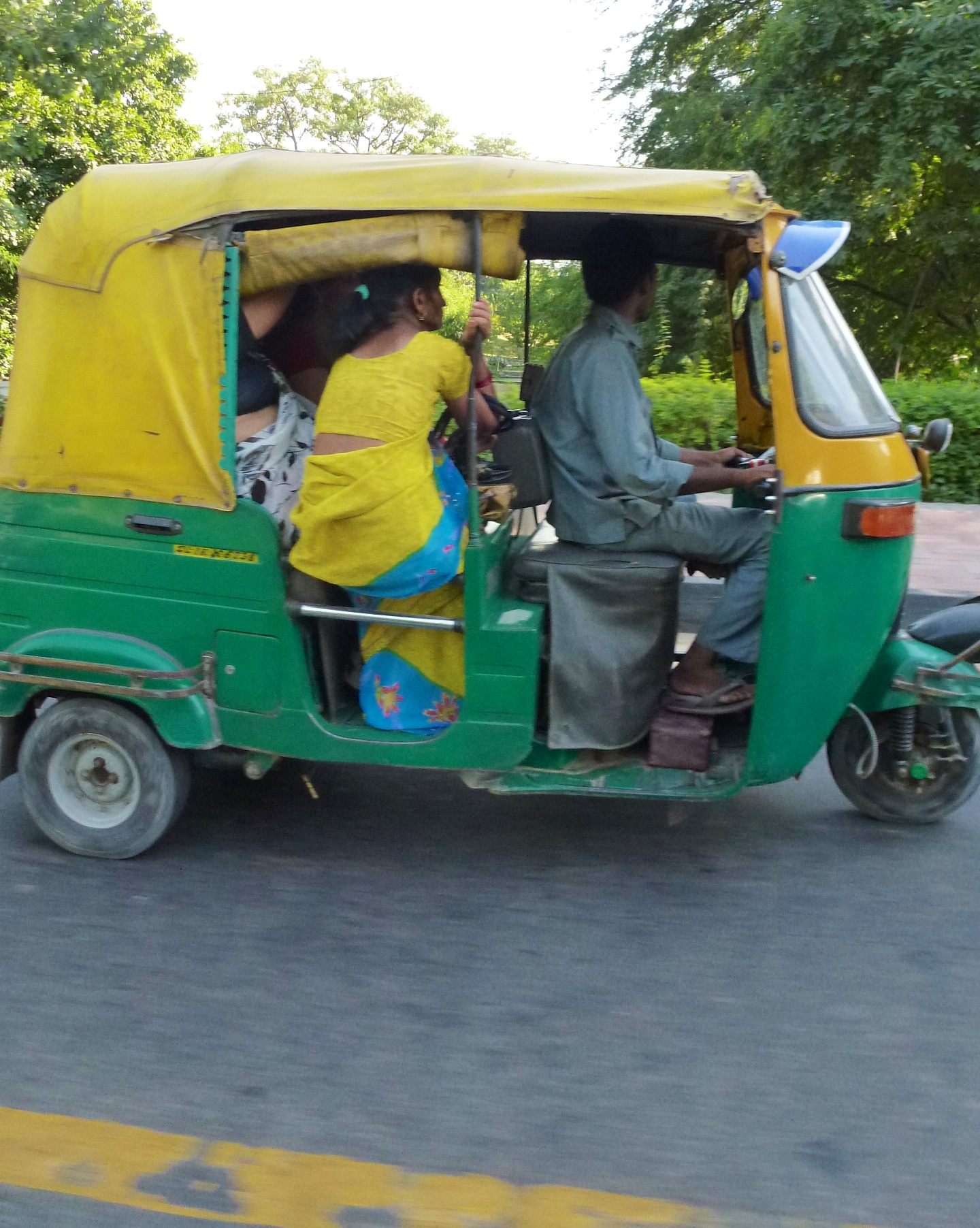
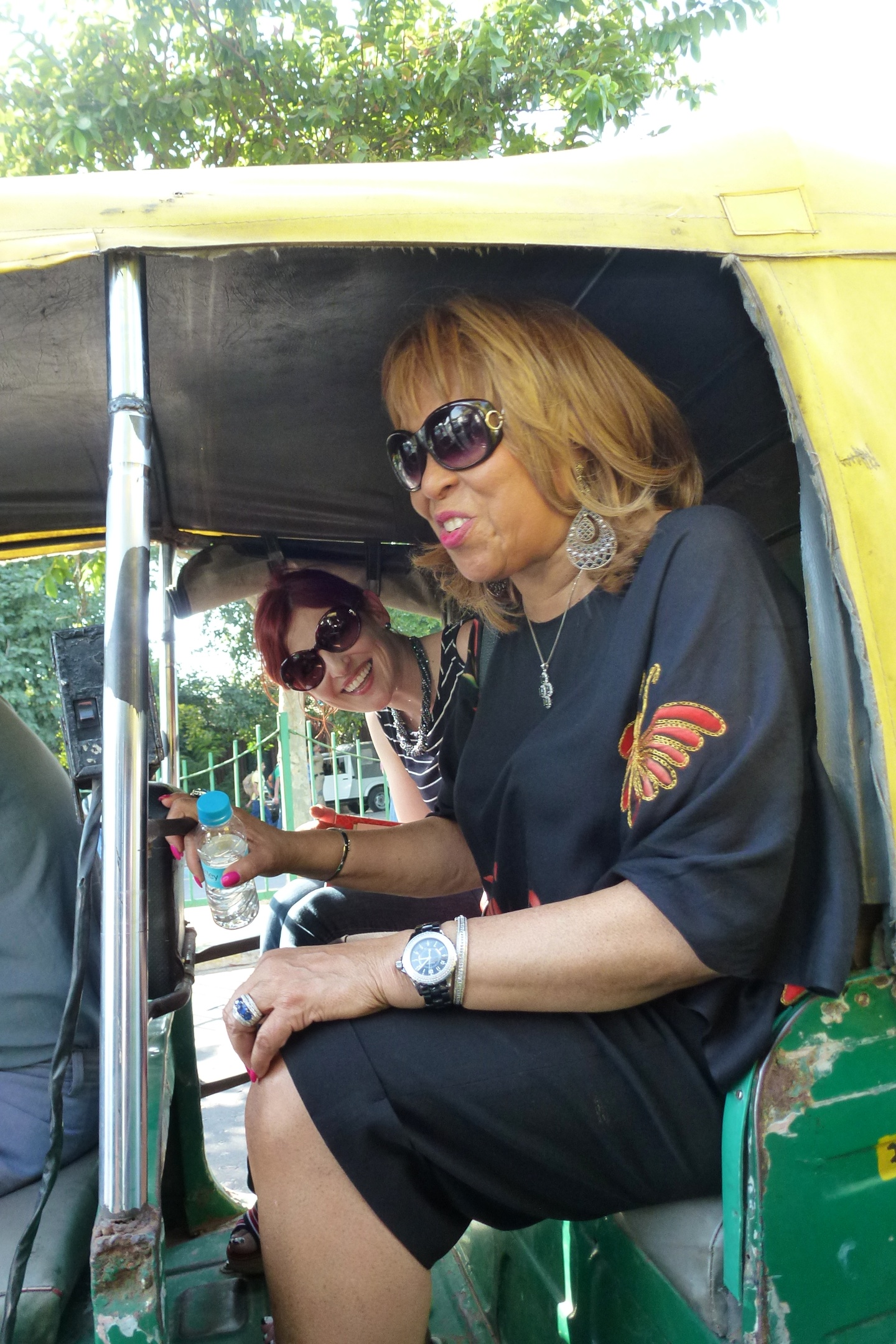
And I leave you with the fun little three-wheeled contraptions called “autos”, a common mode of transportation in India.
How many people can they squeeze into one auto? Obviously many!
Safety first!
The girls did end up using them one day. But we got two of them for four of us. That was probably considered a luxury!
Farewell India! For a country that was not high on our "to see" list we really enjoyed our trip and hope to go back and explore more of this interesting country. Good news…. it's looking like a trip to Bangalore in the spring!
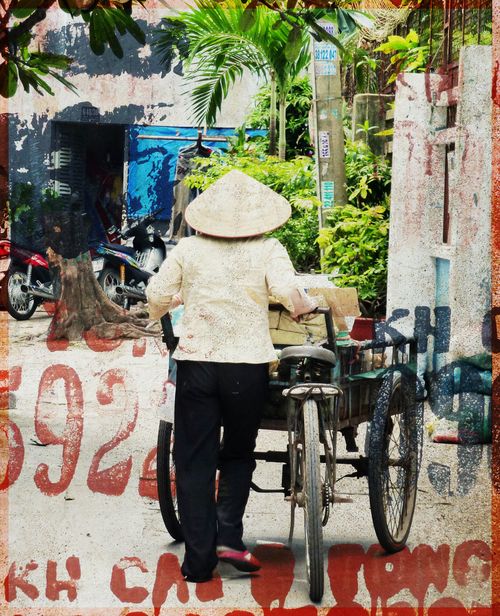
Now known as Ho Chi Minh City, it is the largest
city in Vietnam with more than 7 million people living there. Many still call it Saigon, which I prefer – it sounds so exotic. This was a quick trip, only two and a half
days, so I did not take as many photos as I normally do.
It was a
more modern city then we expected, and more people spoke
English then we anticipated. When walking through local streets, people went out of their way to say hello. They especially liked to have their small children practice English with us. They would bring them up to us in stores, outside their homes, on the sidewalks, etc to have them say a few words. And, the teenagers would wave to us, smile, then take photos of us with their cell phones. It was very sweet and fun.
HCM City was originally known as Prey Nokor, and was part of Cambodia. In the 17th
century, the Vietnamese conquered the city and named it Saigon. After the fall
of South Vietnam in 1975, Saigon became Ho Chi Minh City, named after the Communist
leader who led Vietnam's independence from France. The official name is Thanh
pho Ho Chi Minh.
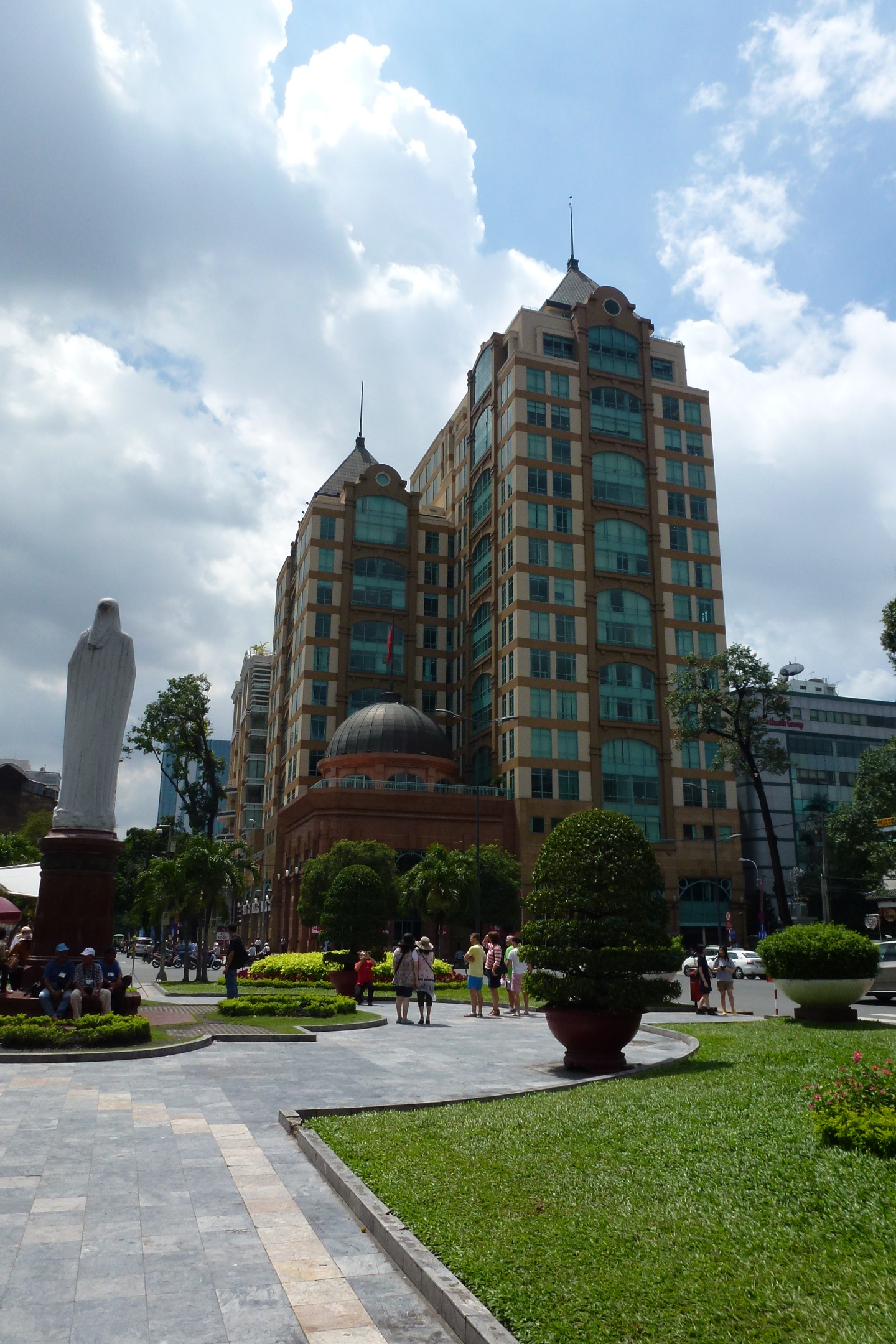
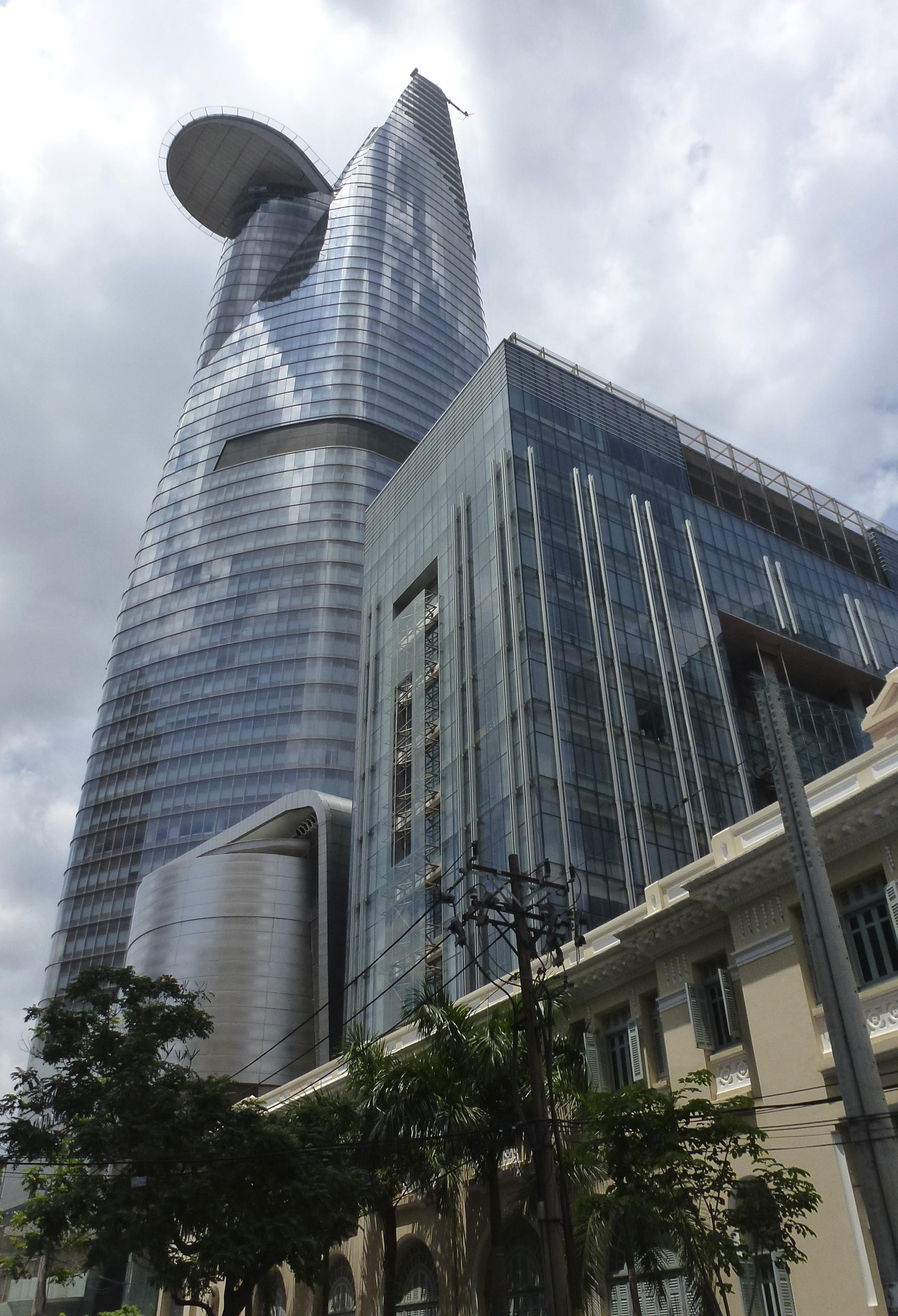
Despite the fact that modern high-rise buildings
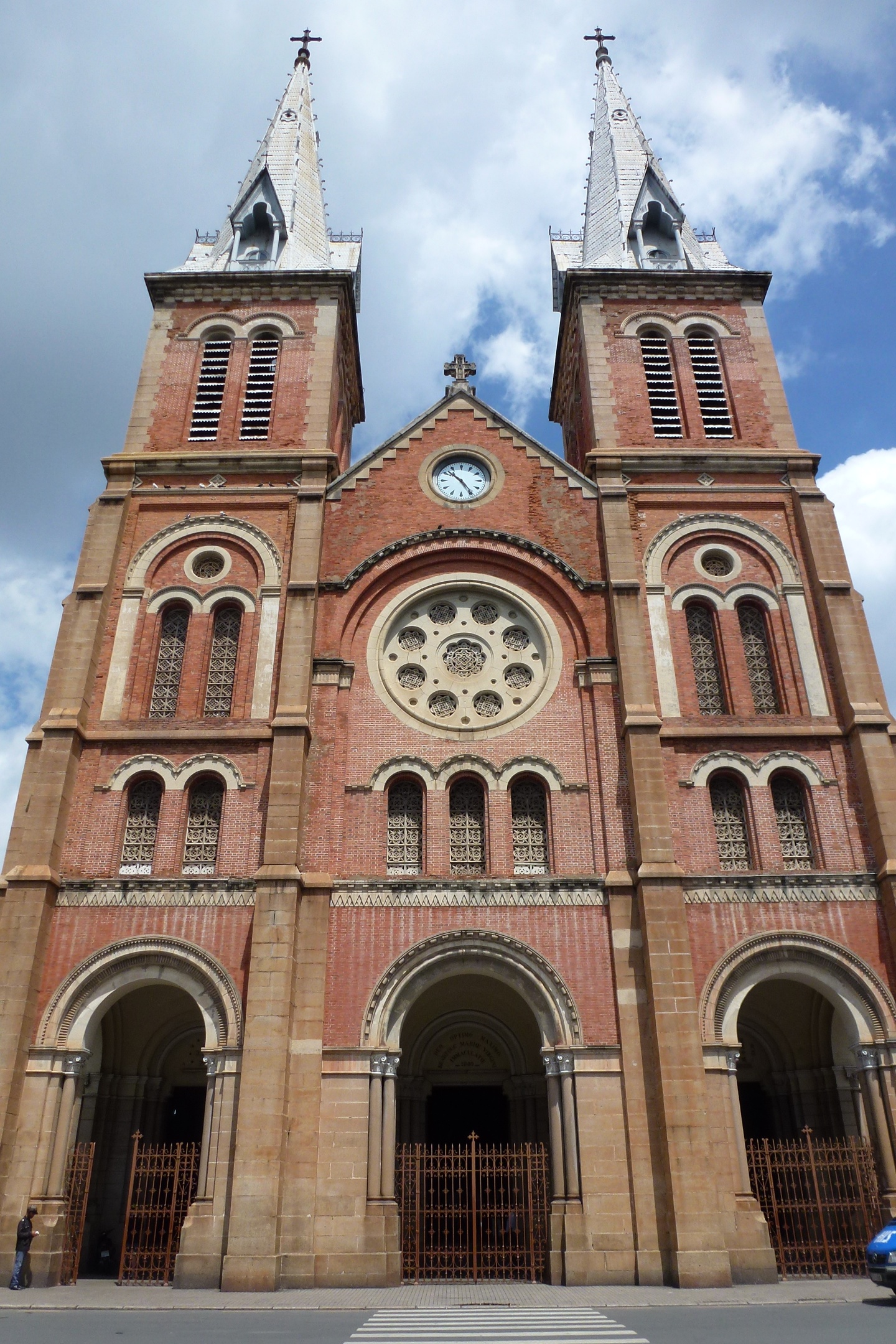
have begun to dominate the skyline, there are still many examples of French colonial architecture such as the Notre
Dame Cathedral. French colonists built the Cathedral between 1863 and 1880.
Neighborhoods and apartments
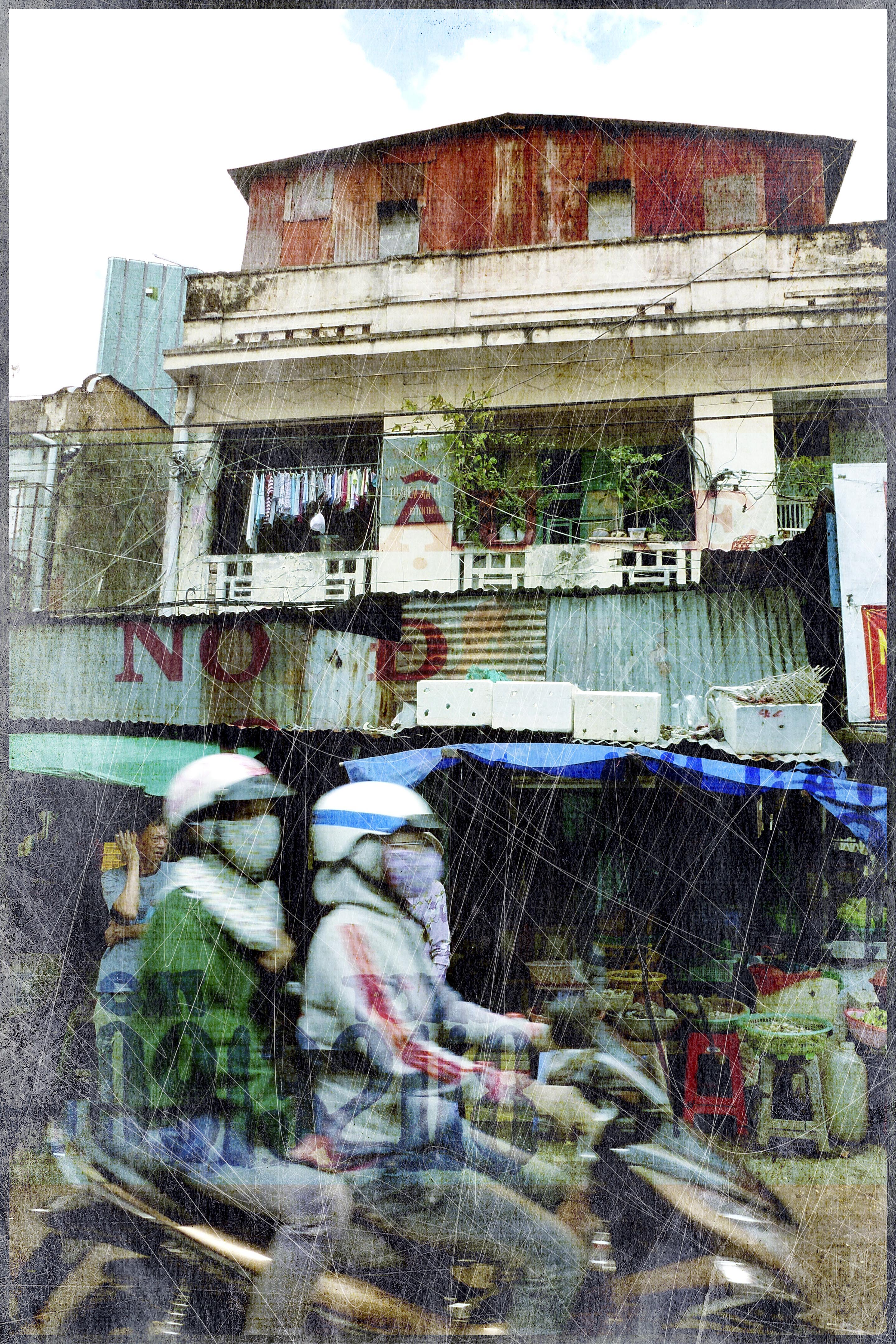
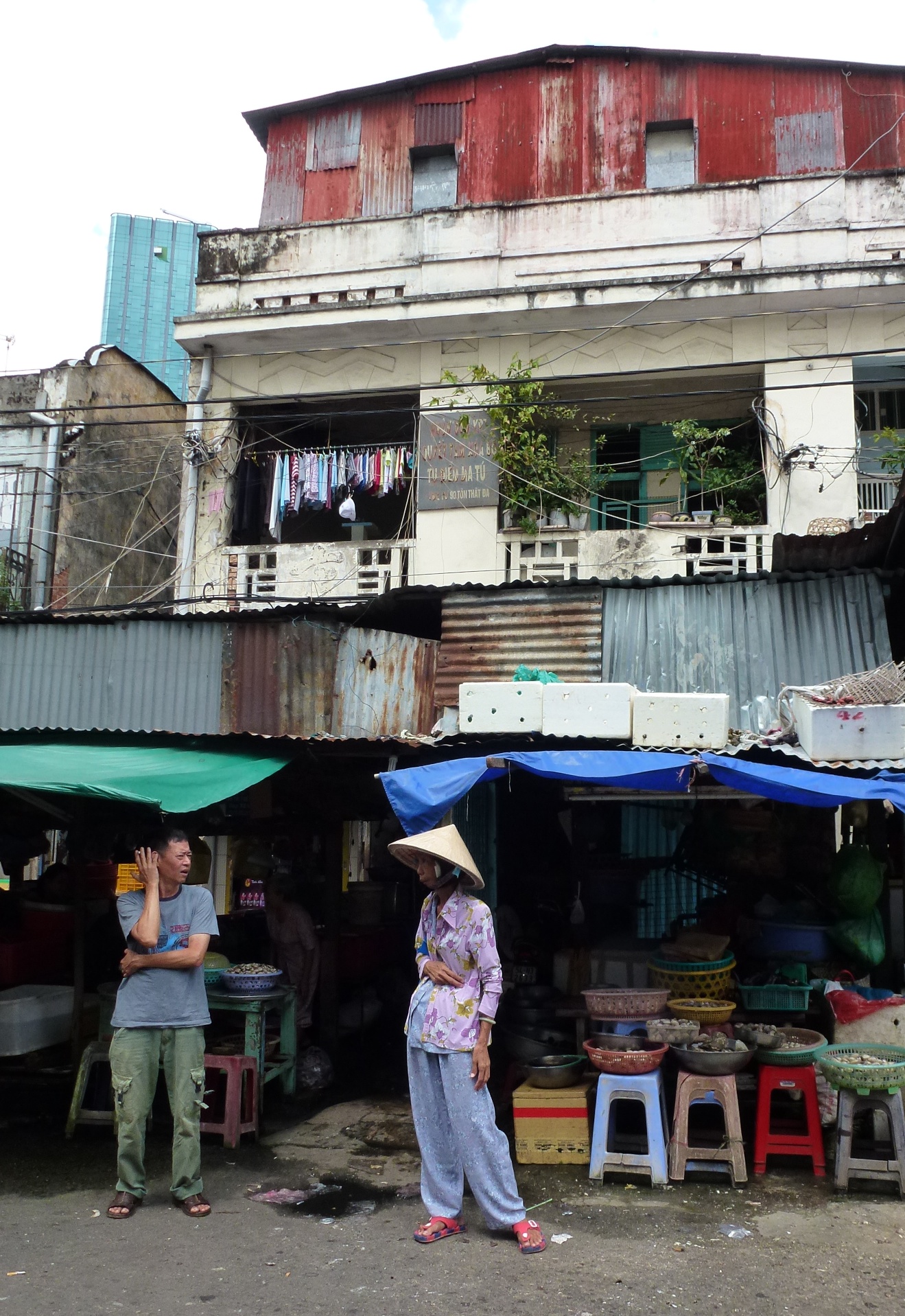
In Cho Lon, HCM City’s Chinatown, almost every building has a shop or workshop on the
ground floor and the shop owner has their house on top.
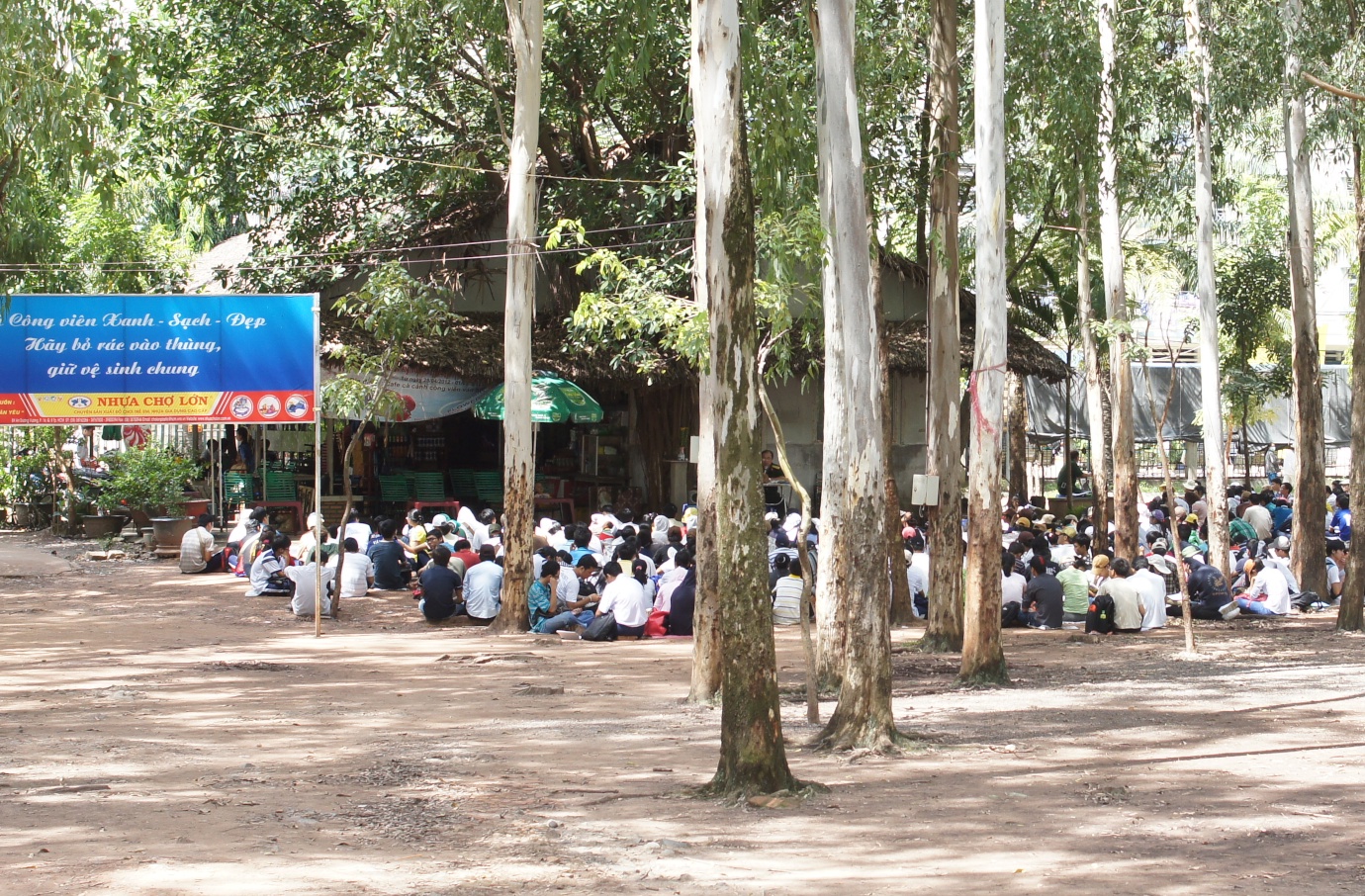
There was a very large park close to our hotel. One
morning we took a walk through it and were surprised to see hundreds of kids
having school lessons outside. Some were exercising, some were being
lectured to, and some were reading. I asked at our hotel and they said that as
long as the weather is nice, they hold classes outside.
We also saw a group of children having an exercise class outside on the sidewalk. They were having so much fun.
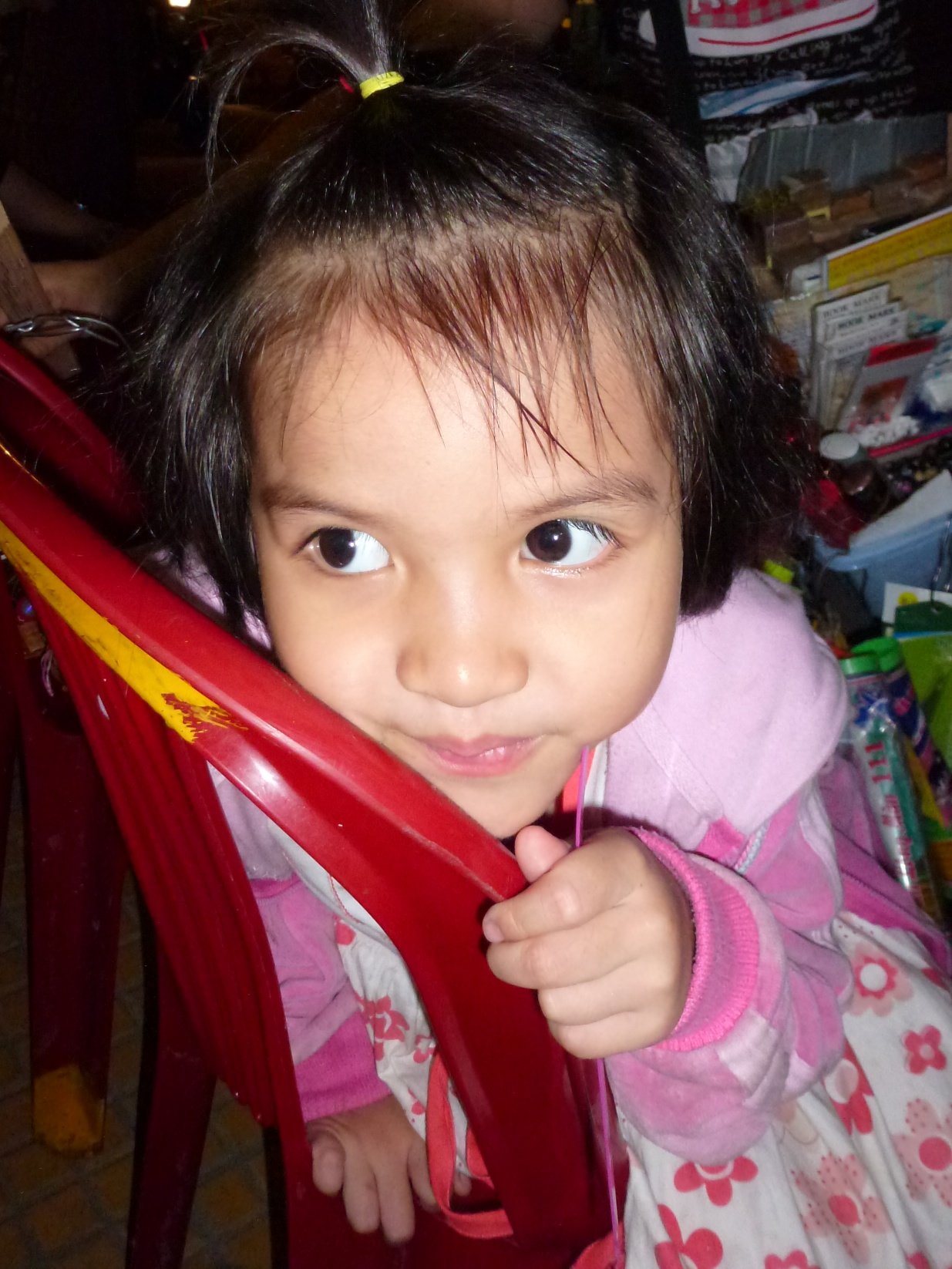
Donald with the little street gypsy… her mother had her ask us to buy little bracelets. M, who was with us, couldn't resist her sweet smile and bought a few.
Street Food
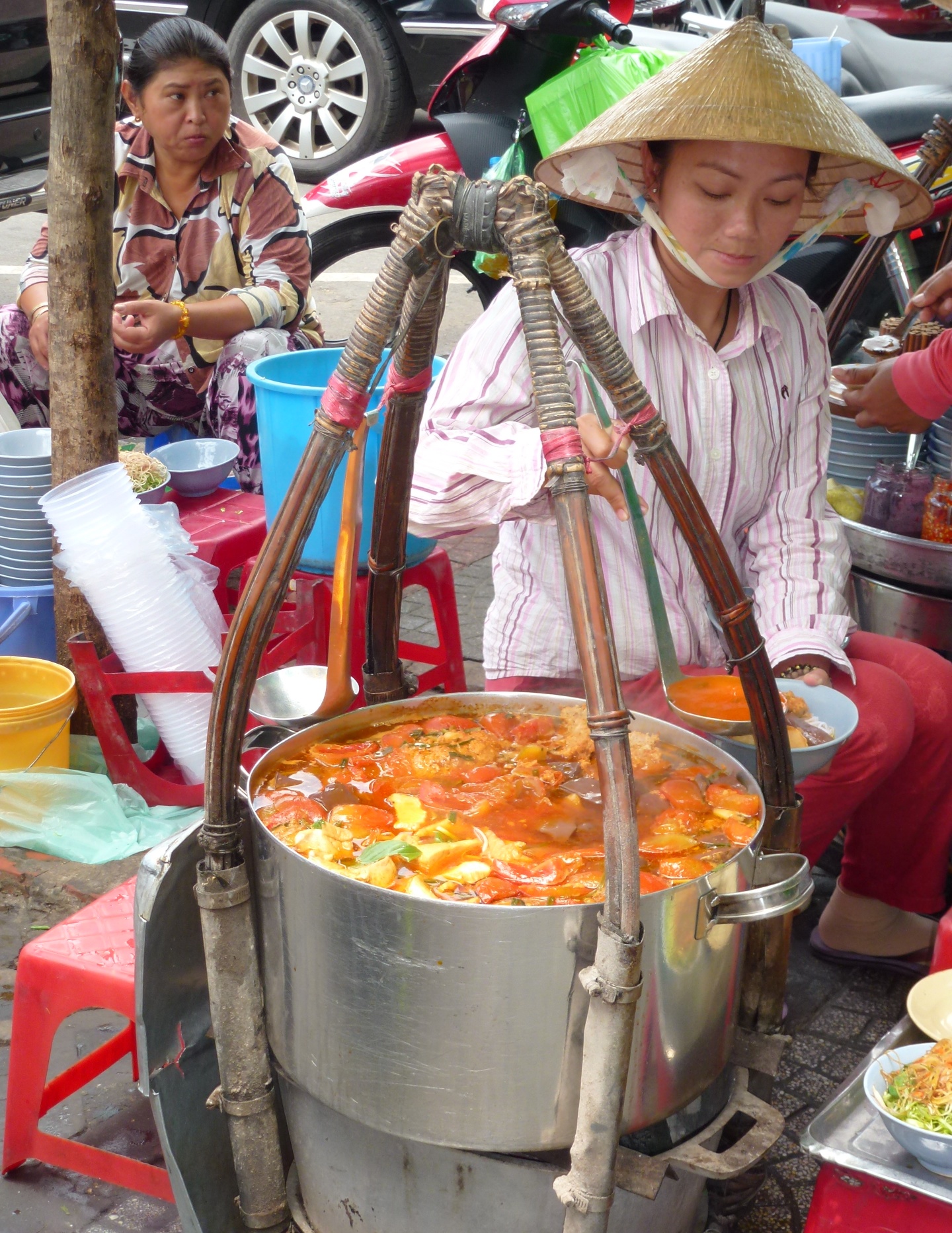
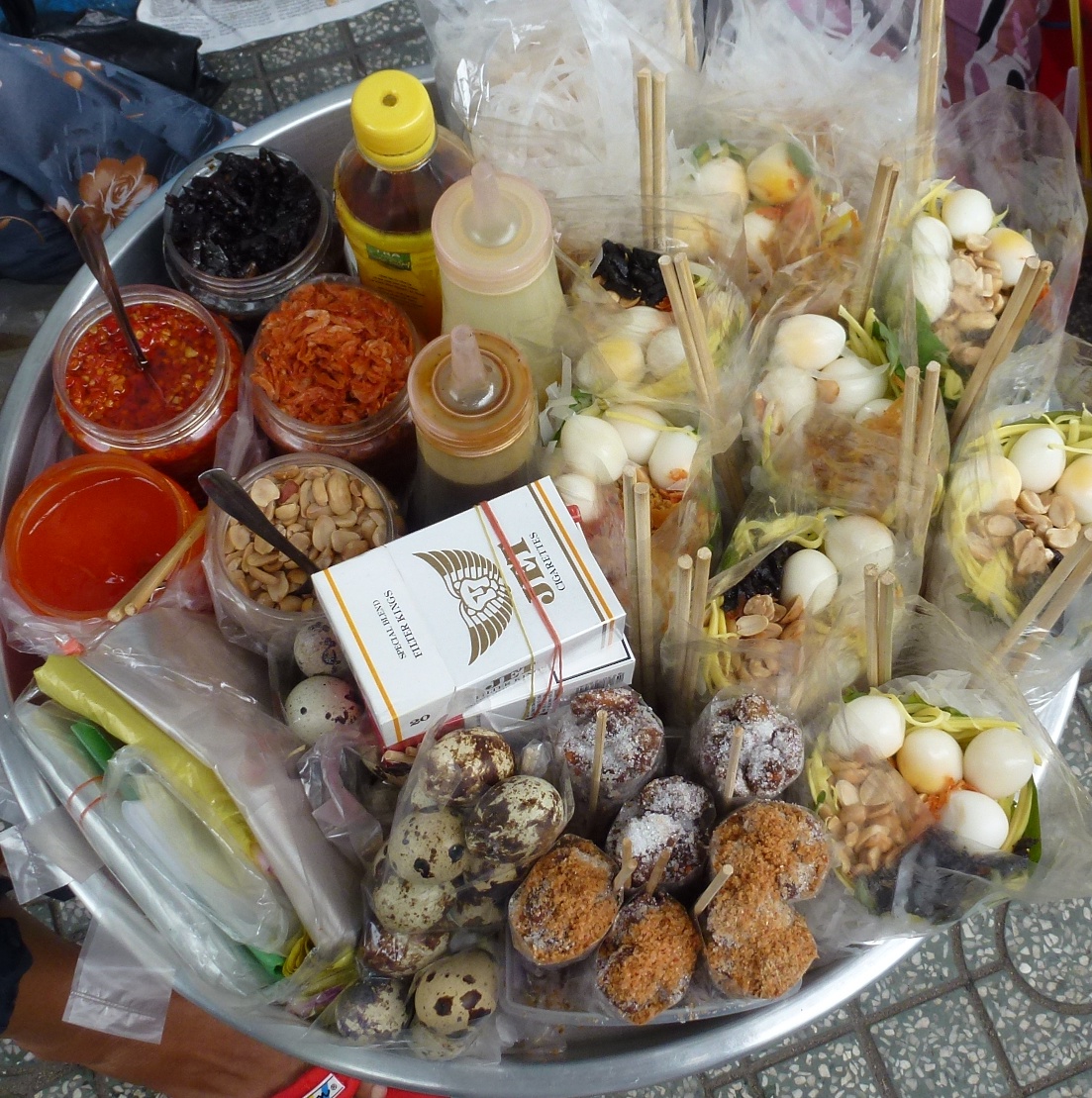
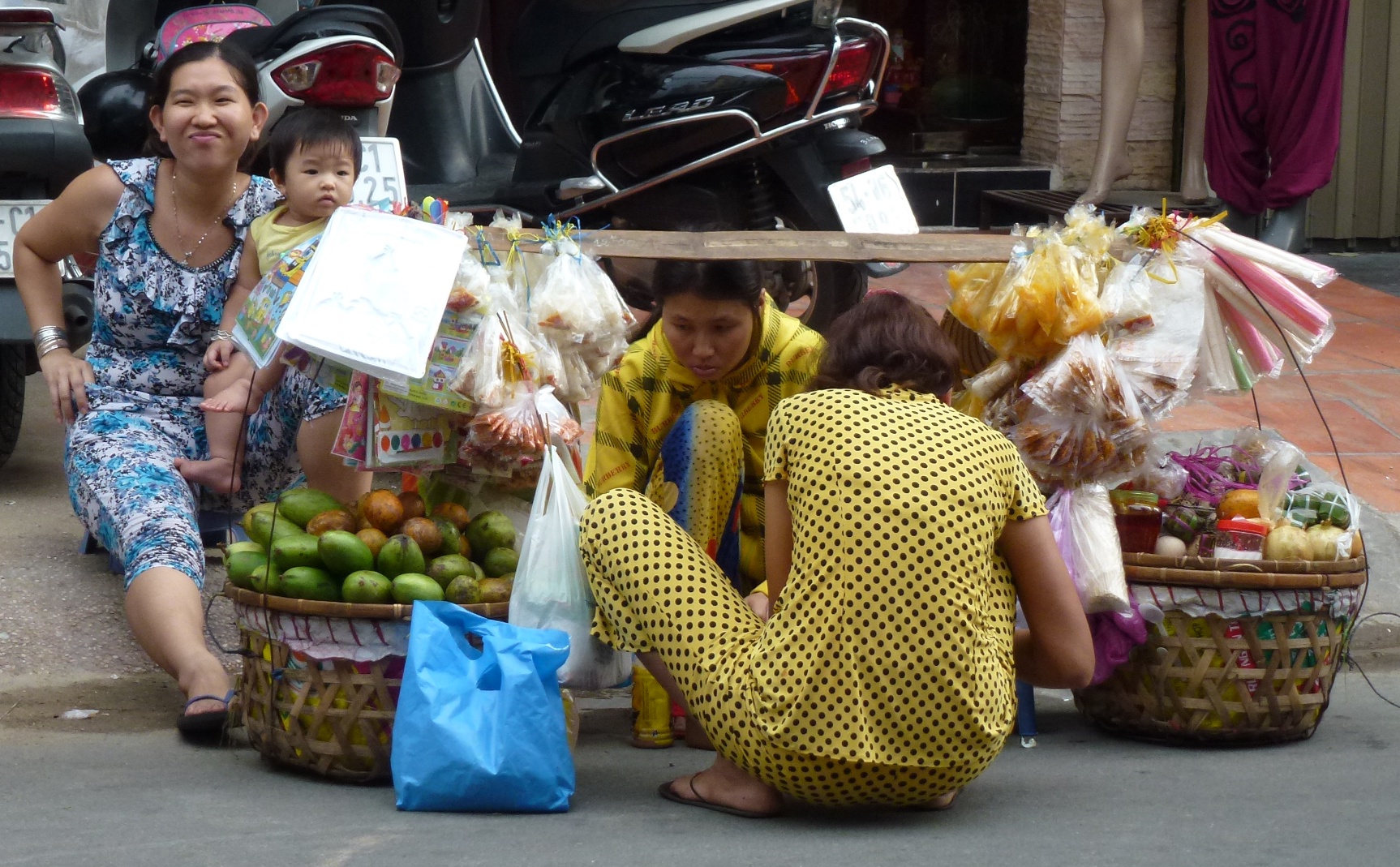
Like most of the Asian countries we have visited, street food is very popular in HCM City. This is efficient, selling homemade noodles off the back of a scooter.
Now that is a bowl of soup! I would struggle cooking a bowl this big on a regular stove, how she is managing this on the street is impressive!
Love this one, he is cooking away in the middle of the road, traffic whizzing by.
A pack of cigarettes with your lunch?
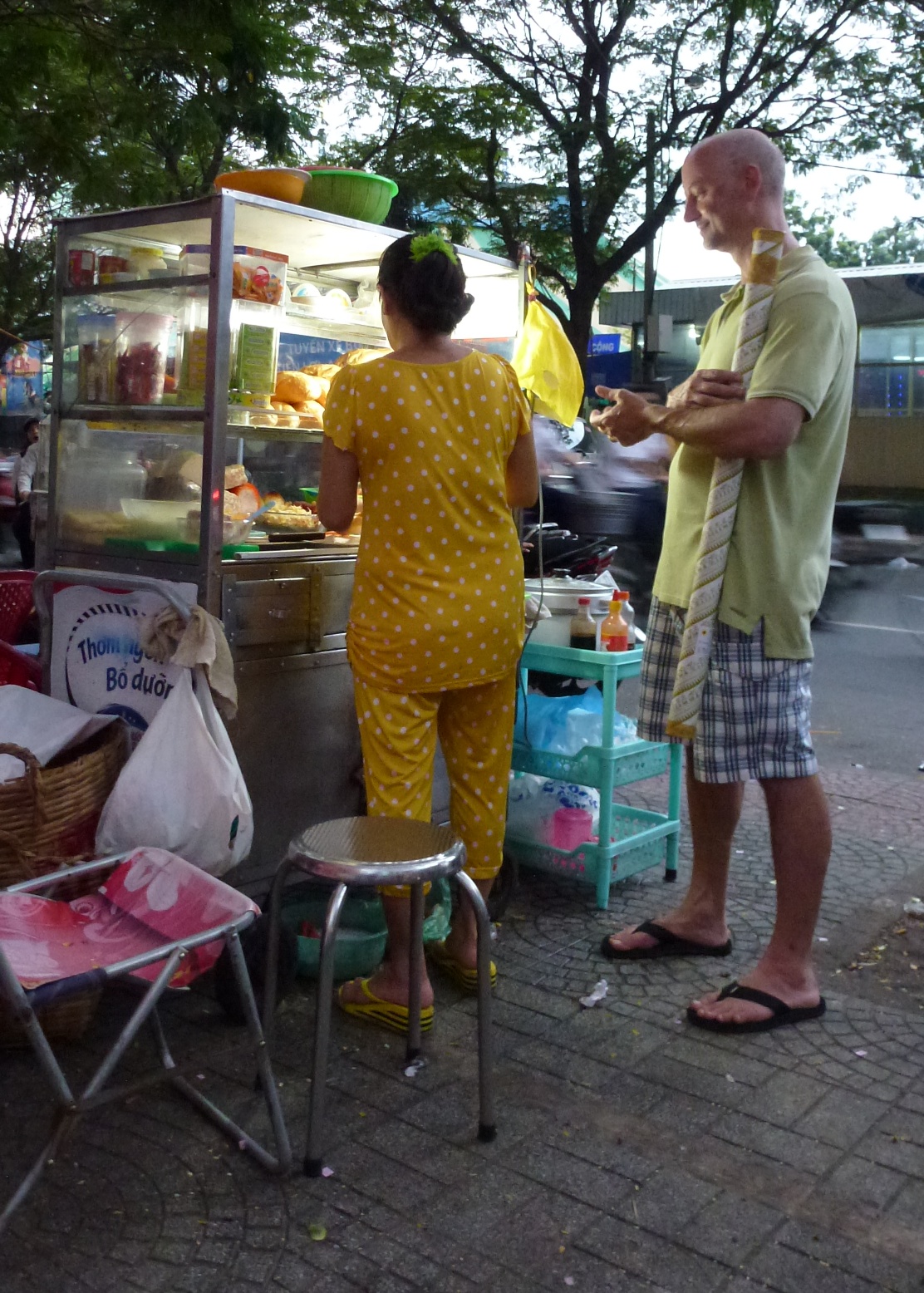
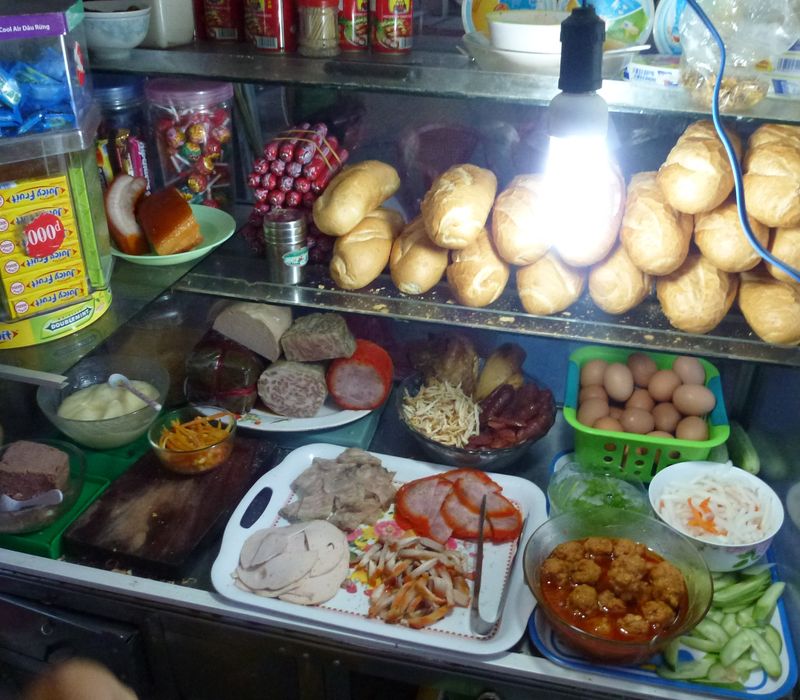
We love Bánh mì, a Vietnamese sandwich you can buy on the streets. Bánh mì really is a term for all kinds of bread – more
specifically, the baguette, introduced to Saigon by the French during its colonial
period.
The sandwiches are made with meat such as roasted pork belly,
Vietnamese sausage, or grilled chicken. They usually start by spreading a layer of pork liver
pâté and a layer mayonnaise. Then a few vegetables like fresh cucumber slices, cilantro leaves, and pickled carrots. Common
condiments include spicy chili sauce and sliced chili.
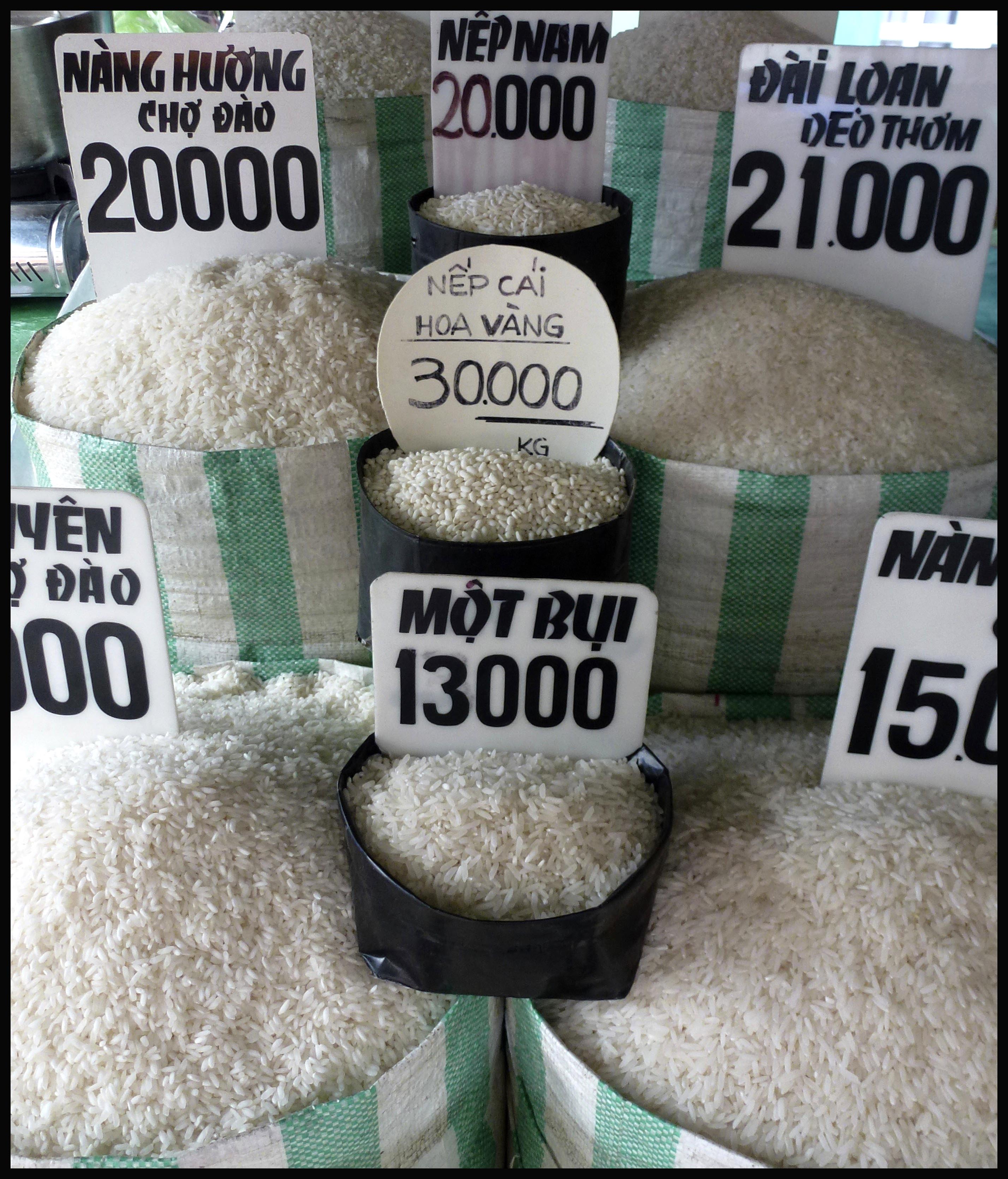
How much did the beer cost? Most bottles were 10,000 Dong (50 cents USD). In Singapore, they average $10 (USD) a bottle!
Traffic and Scooters
Like Hanoi, there were thousands of scooters. I took this photo from our taxi.
Check out this confused lady going the wrong way on the road… note that she is not wearing shoes.
Rush hour.
How about a flower delivery on a scooter? A very large flower delivery!
Fun to see how he is actually carrying the arrangement. How on earth can he see? As always, safety first!
The coffee
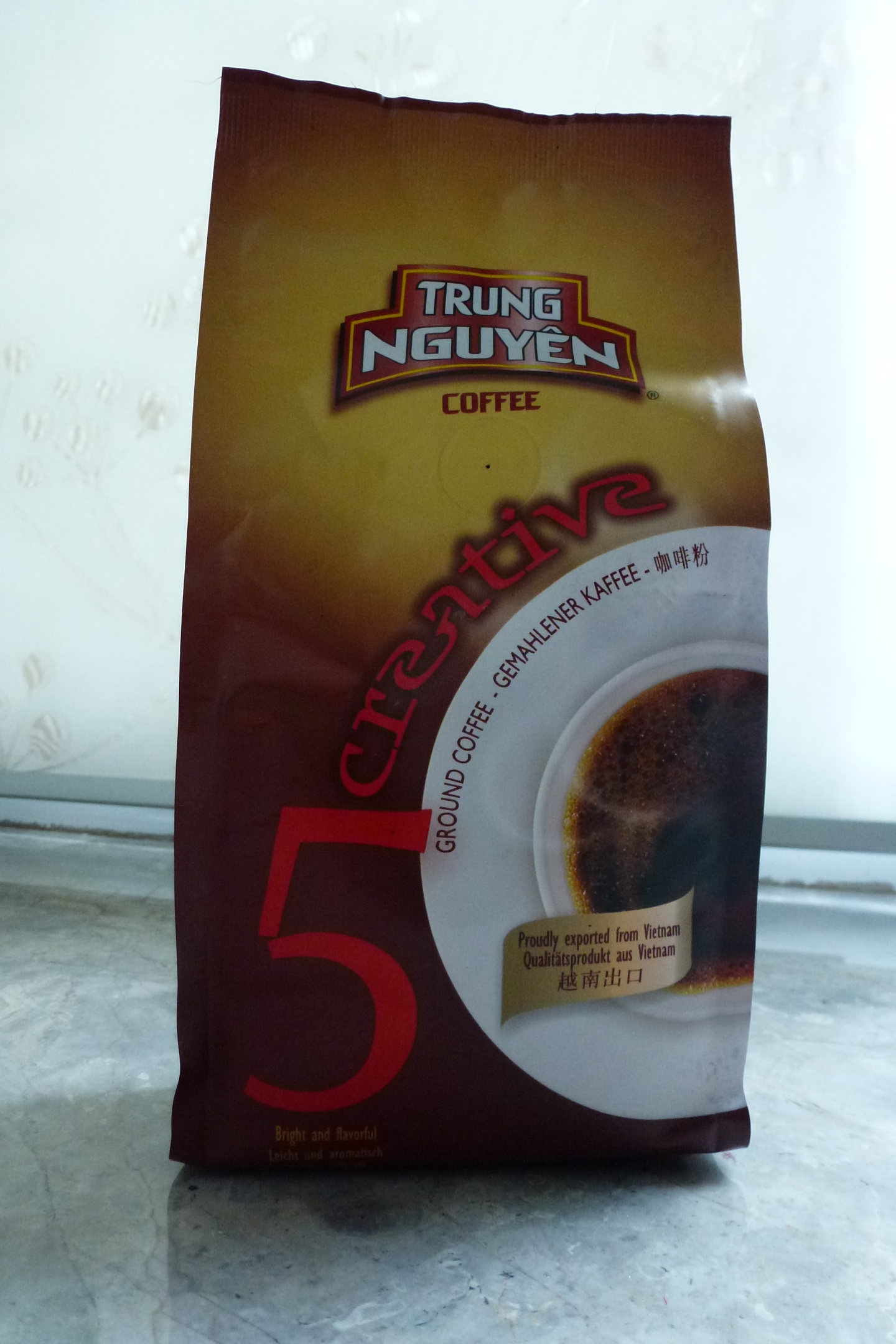
We LOVE Vietnamese coffee…. hot or cold. The taste is very different from regular beans. One reason is they add chicory to the bean. Another reason, once brewed, they add sweetened condensed milk. Our favorite brand is Trung Nguyen – Gourmet Brew and Creative 5.
You can buy Creative 1 – 5, but we like 5 the best. It is fragrant, smooth, and has a distinct taste
from the pea berries. It is also the most expensive. We bought 5 boxes and 4 bags to carry home. We can only get it at one store here in Singapore and it is 3x the cost.
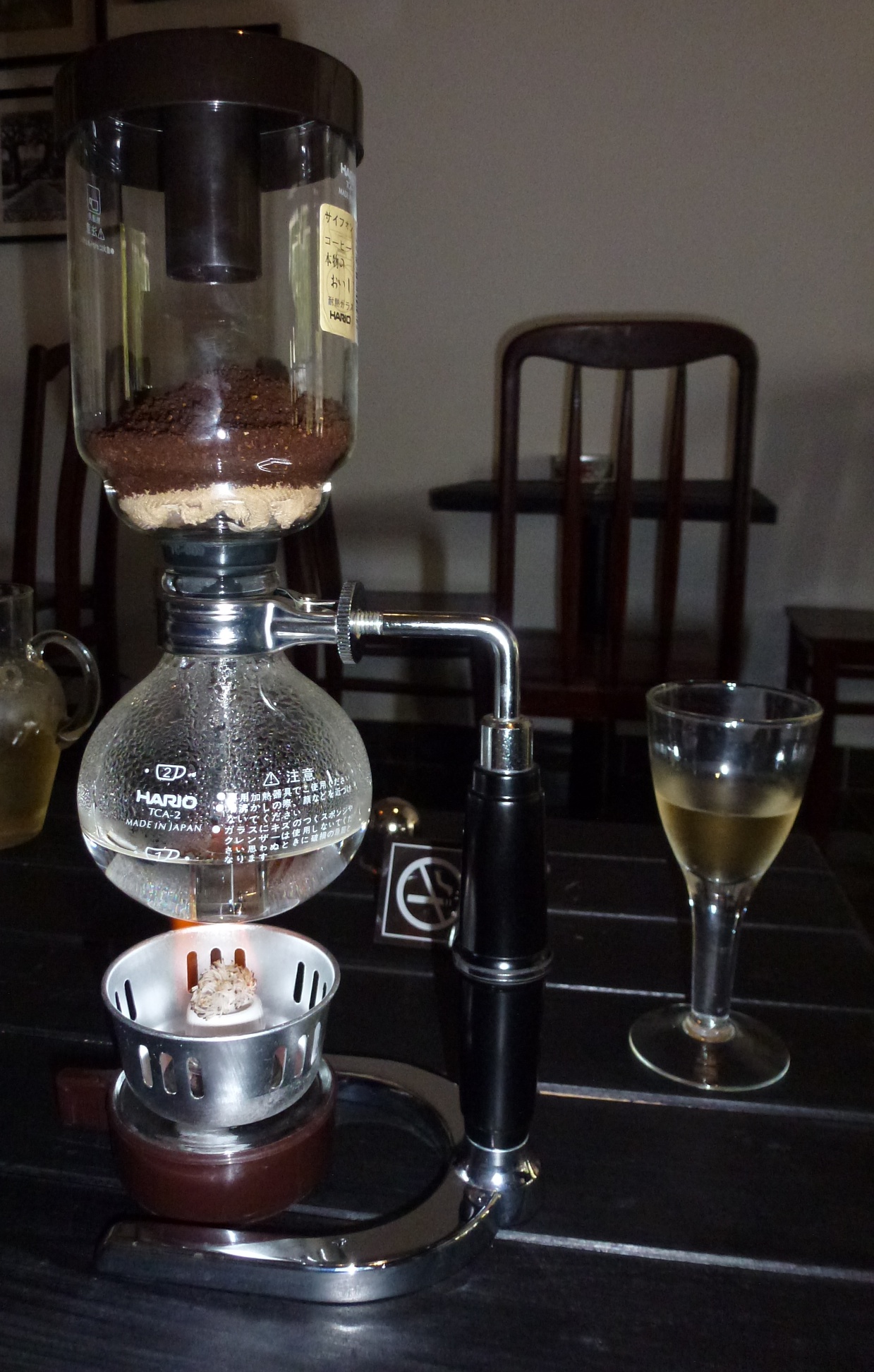
We were in a sweet little cafe, "iCafe" (25 Trinh Va Can Q.1), and decided to try the siphon coffee. We have read about it and were curious. Most
places it is fairly expensive, but in Vietnam it was only $2 a cup. Deal. What’s so
special about it? It's supposed to
provide a much gentler, less bitter, flavor to consumers.
They
brought it to our table for us to watch it being brewed. To
make coffee using this method you fill the lower carafe of the siphon with water and the top with your ground coffee and a filter.
The burner heats the water and it "magically" travels into the top chamber. She then let it sit 5 minutes and before adding condensed milk and ice, and she shook it hard in a silver martini mixer.
I have to say – this was THE BEST cup of iced coffee we had ever drank. Seriously! If you are in Saigon and are a coffee fan – it is worth going out of your way to have a cup. Did I mention it was only $2 USD?
The Hotel
We were there during the rainy season, which lasts
May through October, but lucked out with beautiful weather. Our hotel said it had been raining for
4 days straight before we arrived.
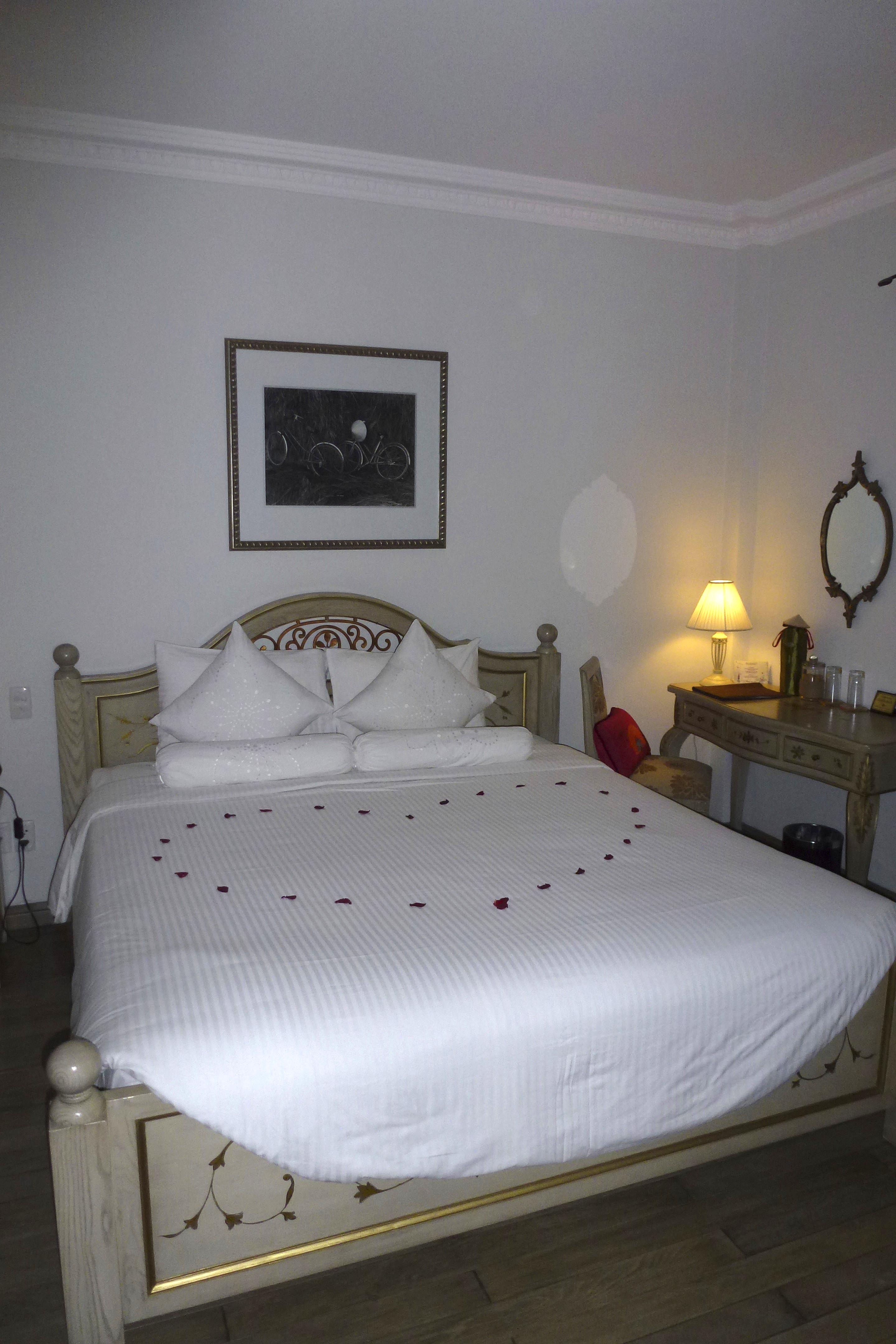
We loved our hotel. A sweet
B&B, Ma Maison, a French Colonial home in a very local neighborhood. We highly recommend it if you are visiting Saigon.
We really enjoyed Saigon. The people were very friendly. We were told by one of the expats living there that south Vietnamese like Americans, as we fought alongside them in the war. You could really feel the friendliness when going off the beaten path and walking through the local neighborhoods.
This truly was a magical place… with breathtaking scenery.
Our arrival
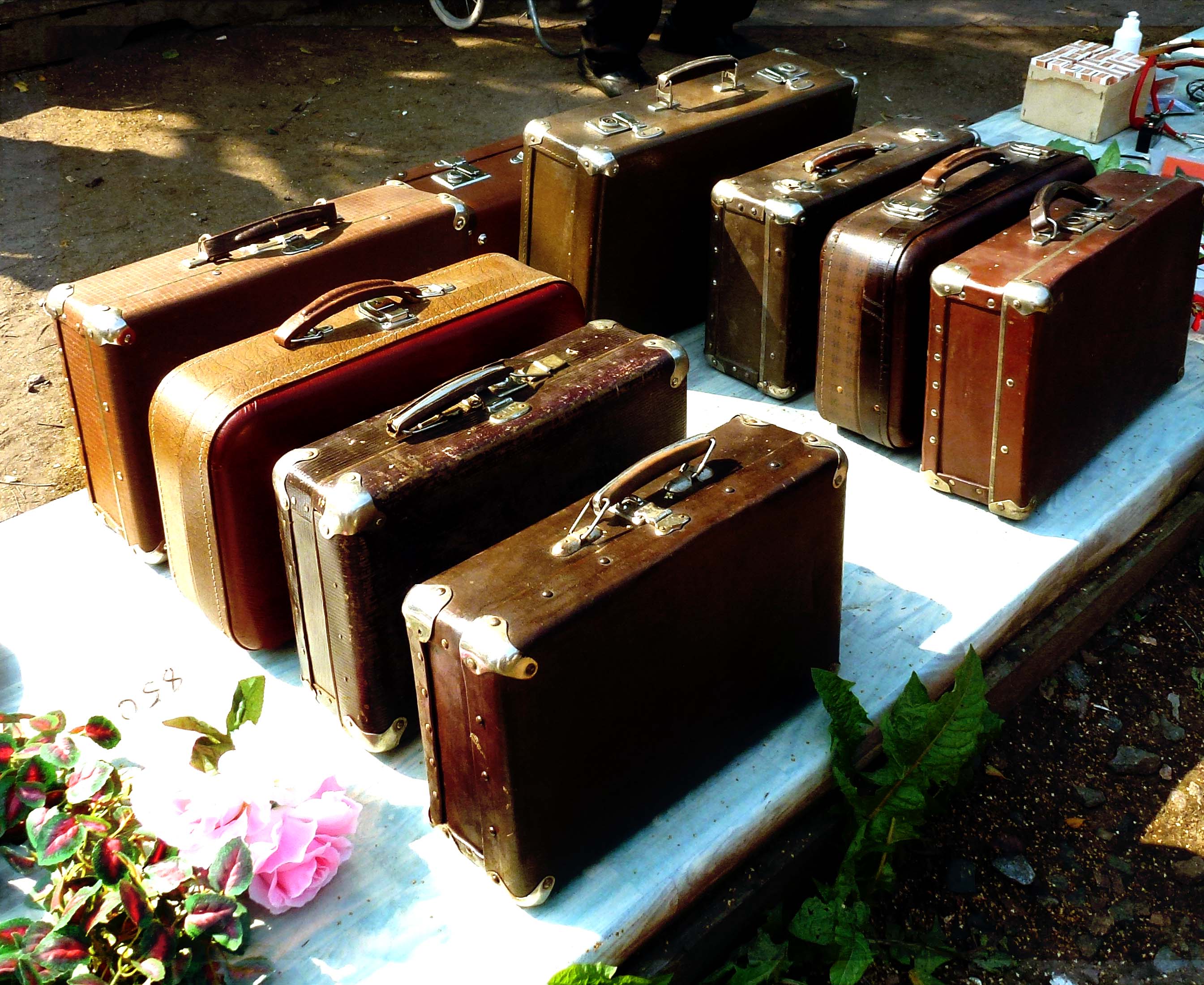
It was quite the event just getting to our hotel. Luckily, I had researched enough to know that we should not attempt to carry our suitcases on our own. When our driver stopped at the entrance to the village and several people came towards us with baskets, we knew what to expect. No English was spoken as we negotiated the price to carry both suitcases.
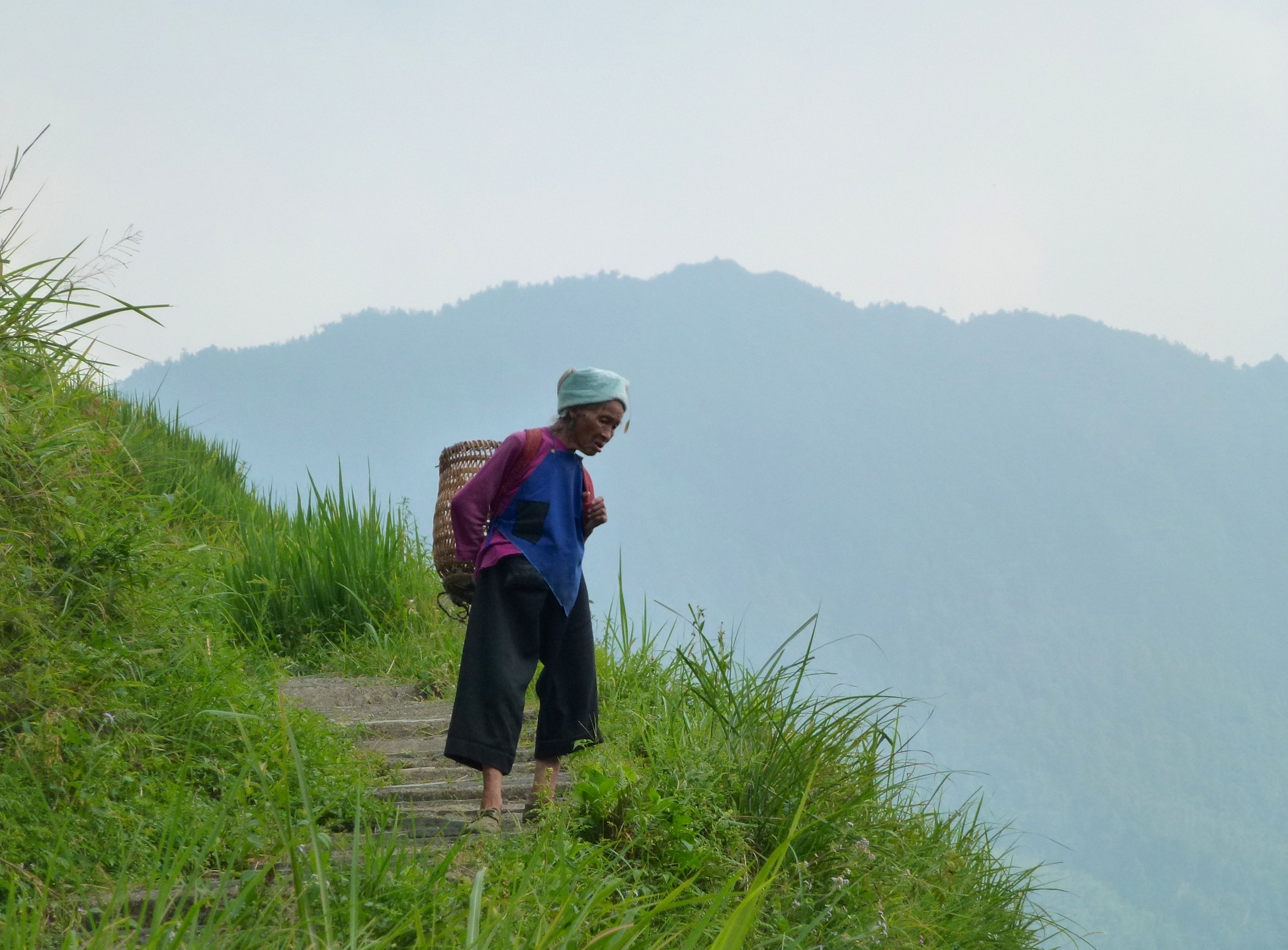
One of the suitcases was too heavy for one man to carry, so it was placed in a special carrier. Note: Many of the carriers we saw were little old ladies!
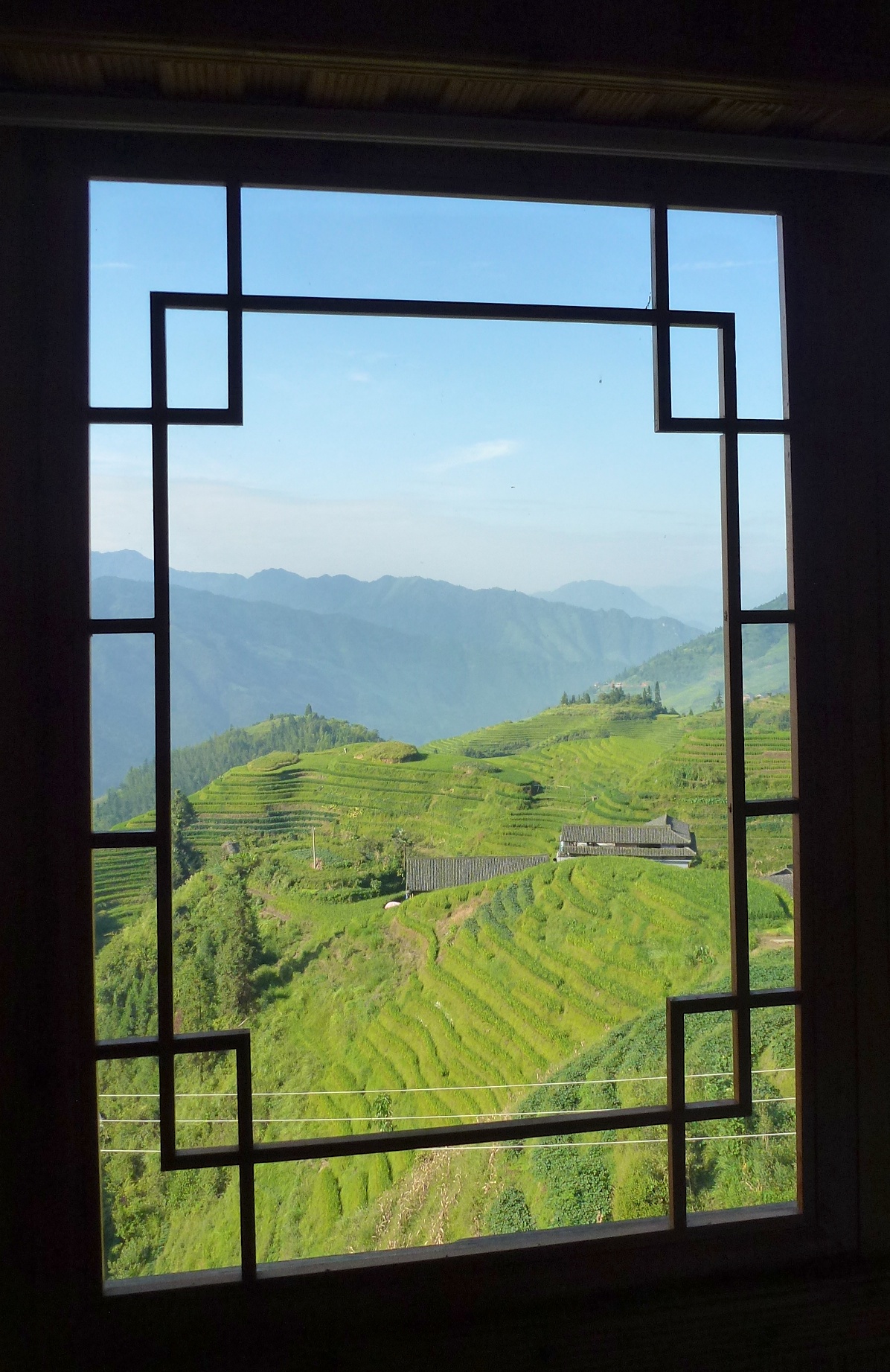
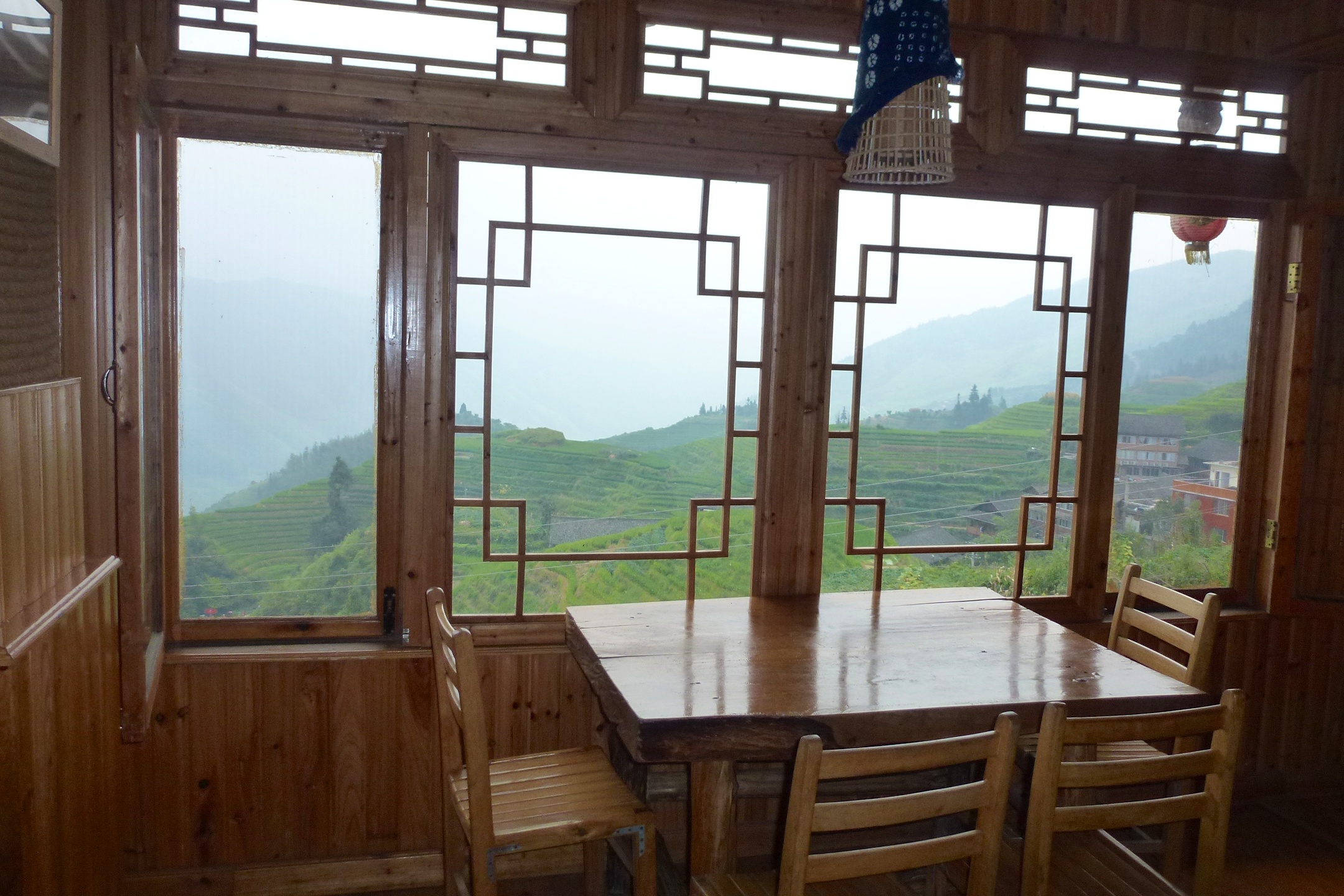
It was worth the hike up to our hotel. We had the most amazing view from our hotel window!
This shot was taken with the window open – just stunning!
A quick lunch at our hotel before a mini-hike. They had a sweet little dining area.
… with an awesome view, of course.
We enjoyed a local specialty, rice with bacon, cooked in bamboo. The locals call
it zhutongfan (baked bamboo rice).
They put the
rice, along with peanuts, bacon, beans or other materials into the bamboo tubes and grill it on an open fire. Very tasty.
We headed out for an hour-and-a-half hike on our first afternoon. We were very lucky, as there were very few tourists the entire visit.
Located
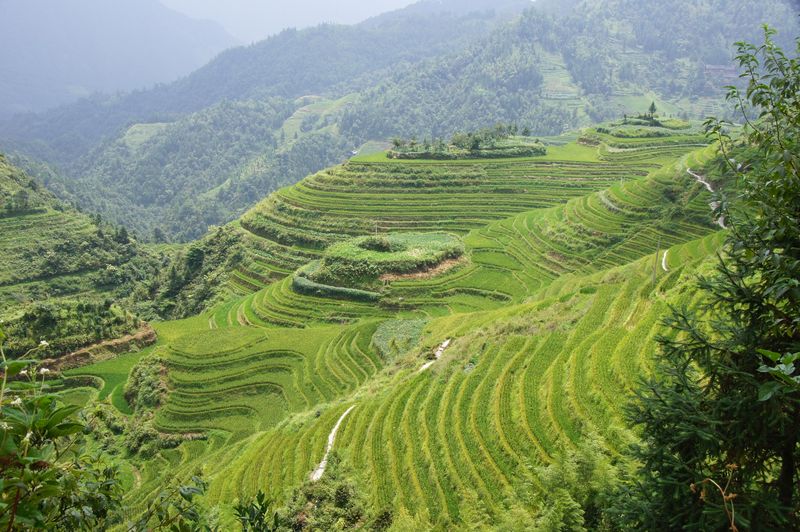
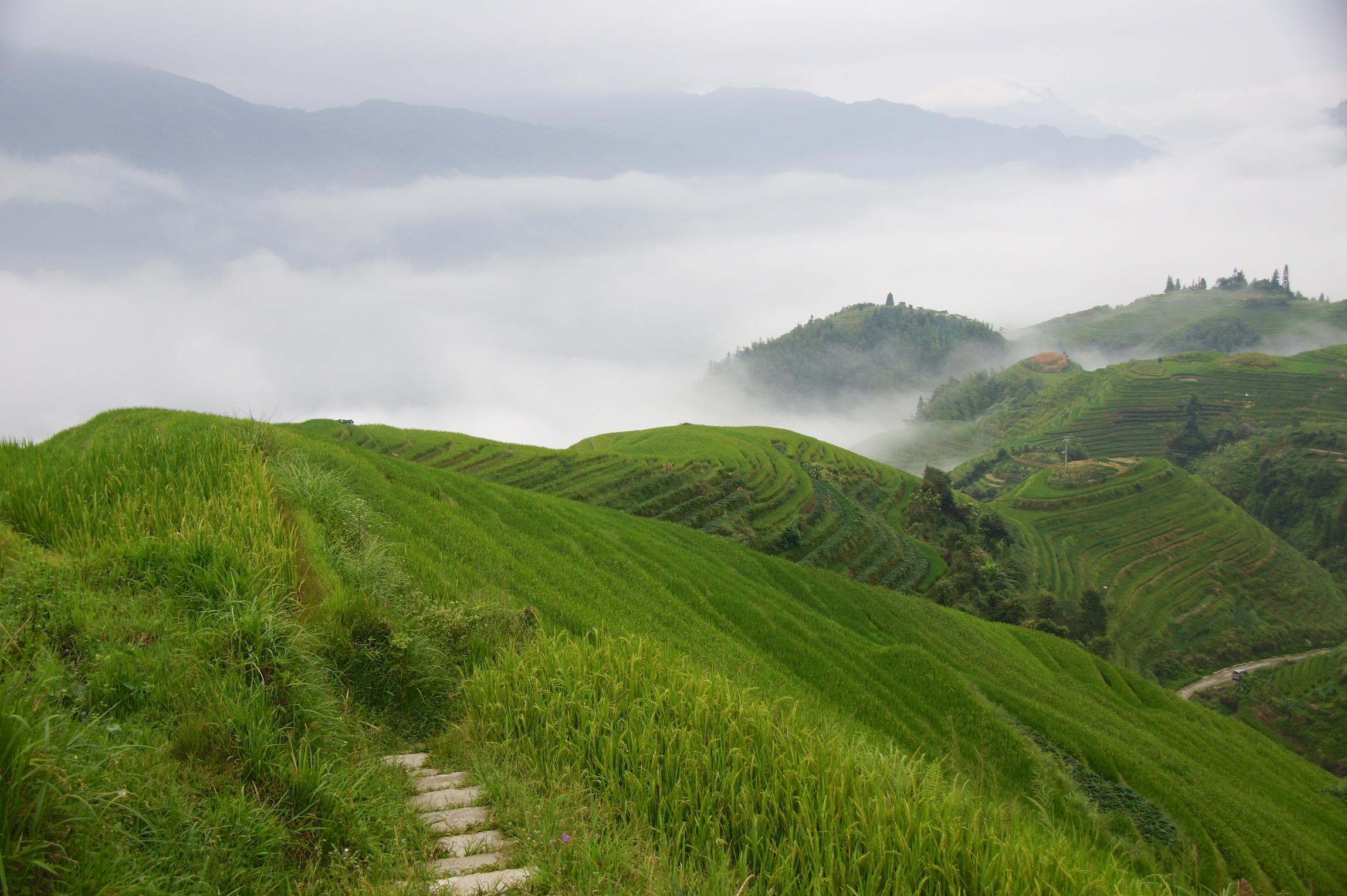
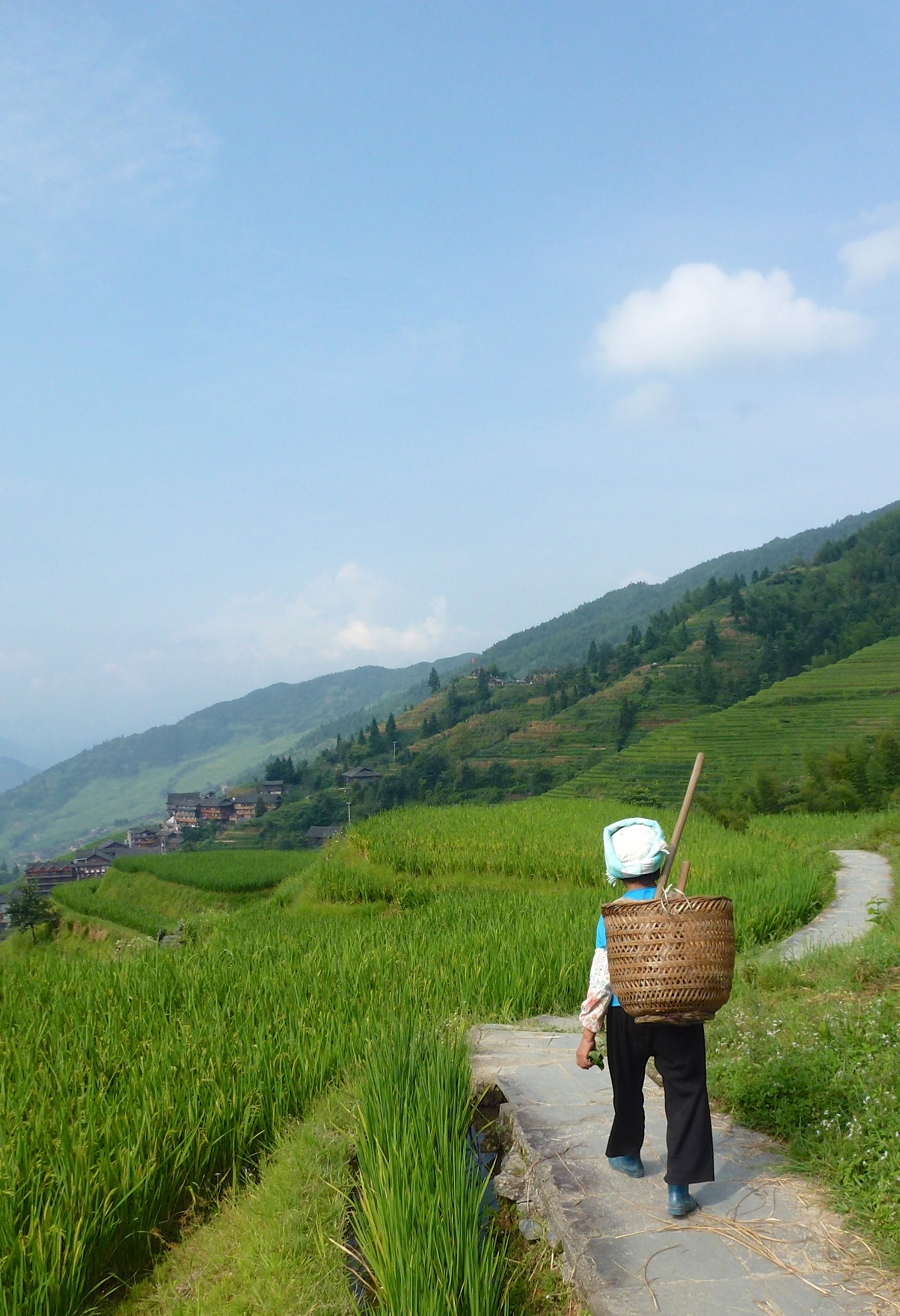
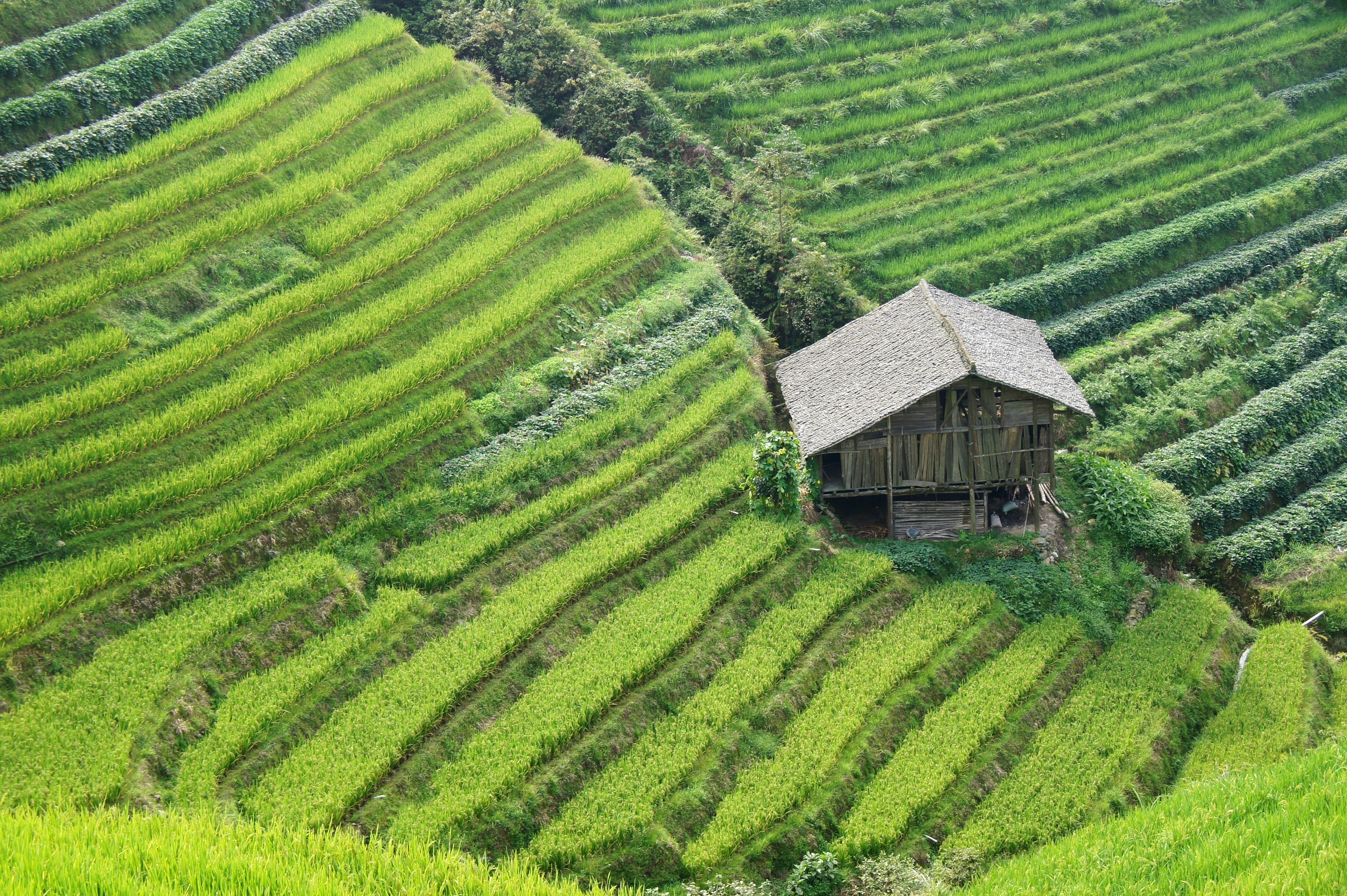
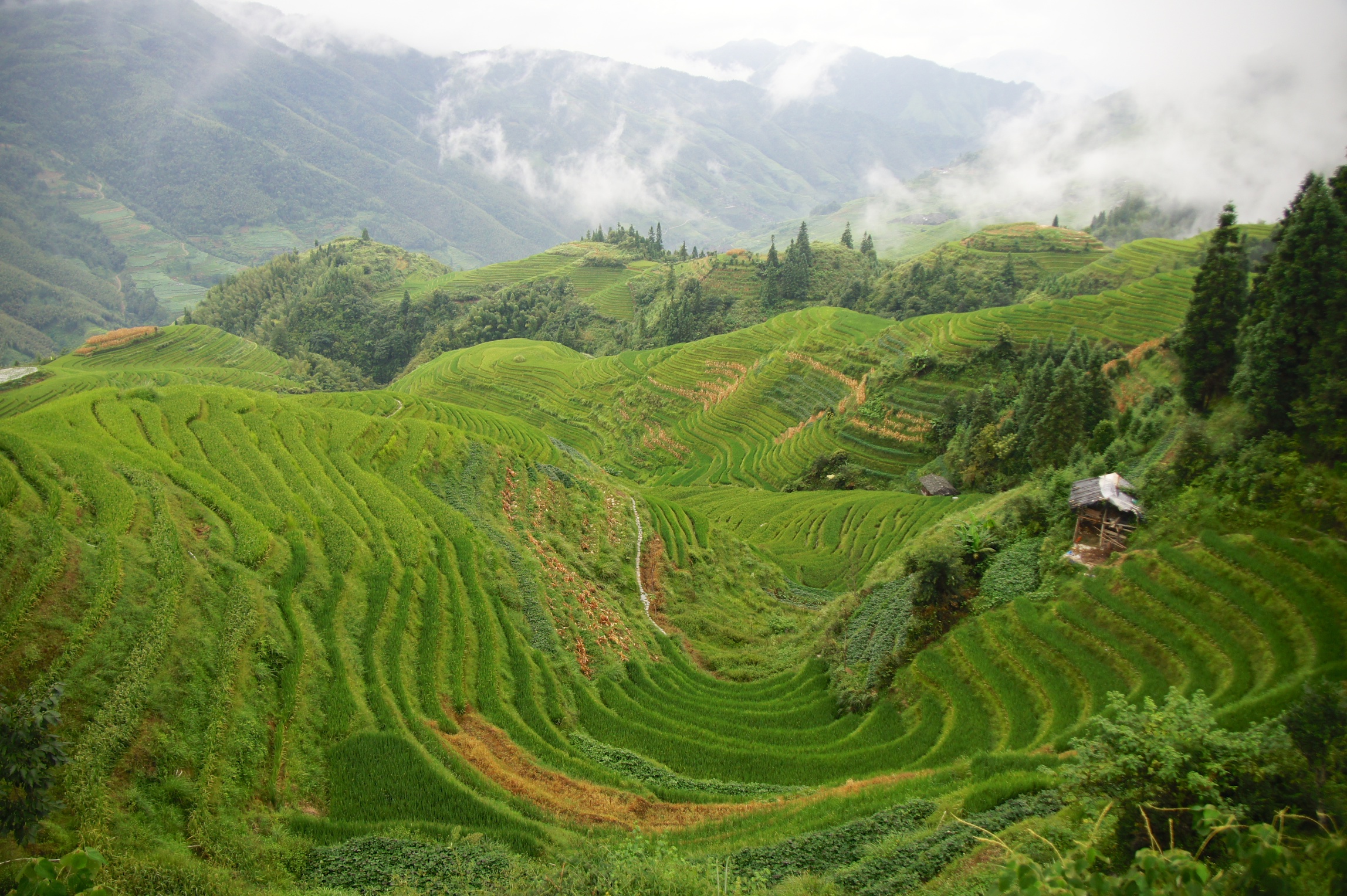
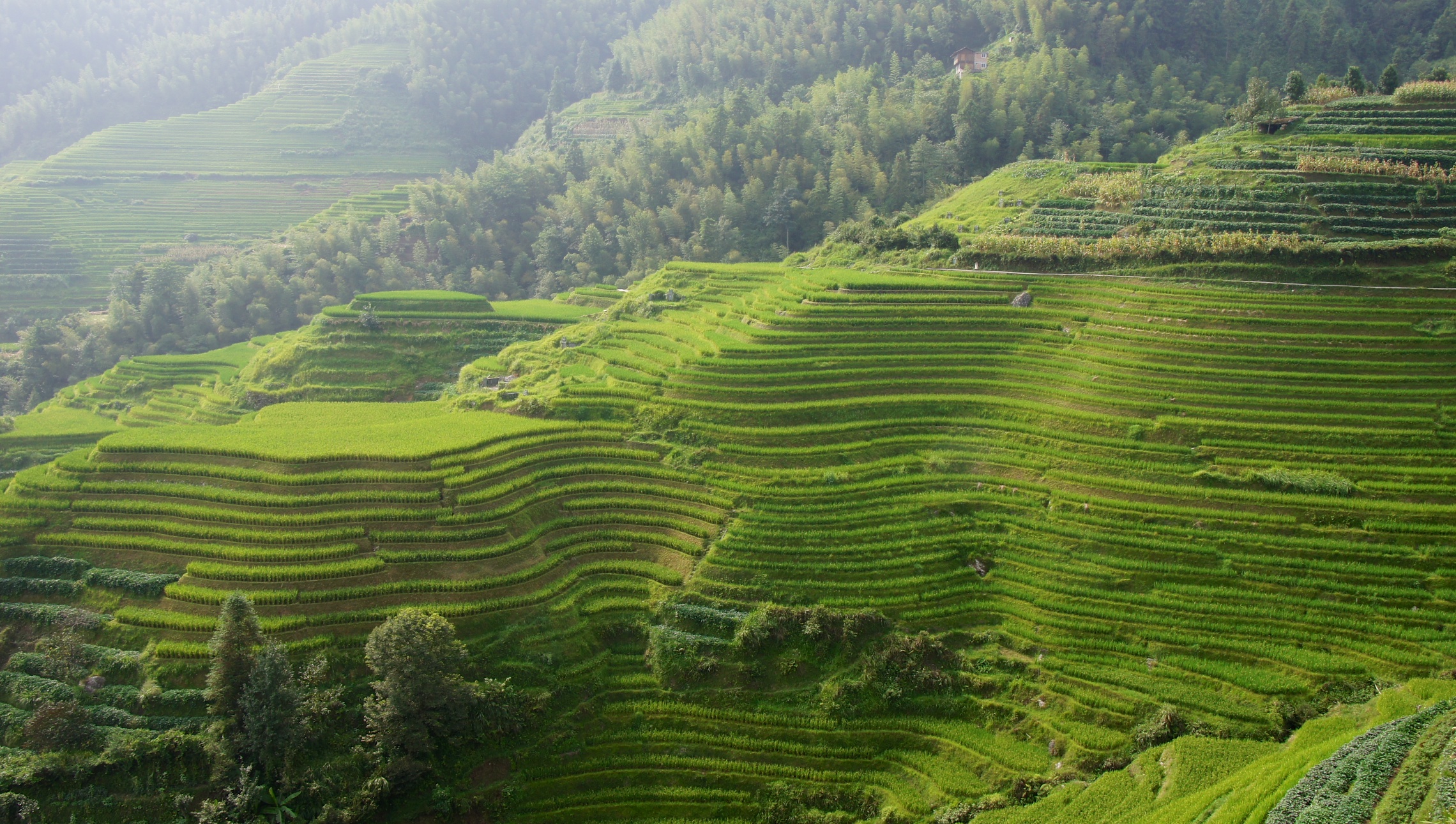
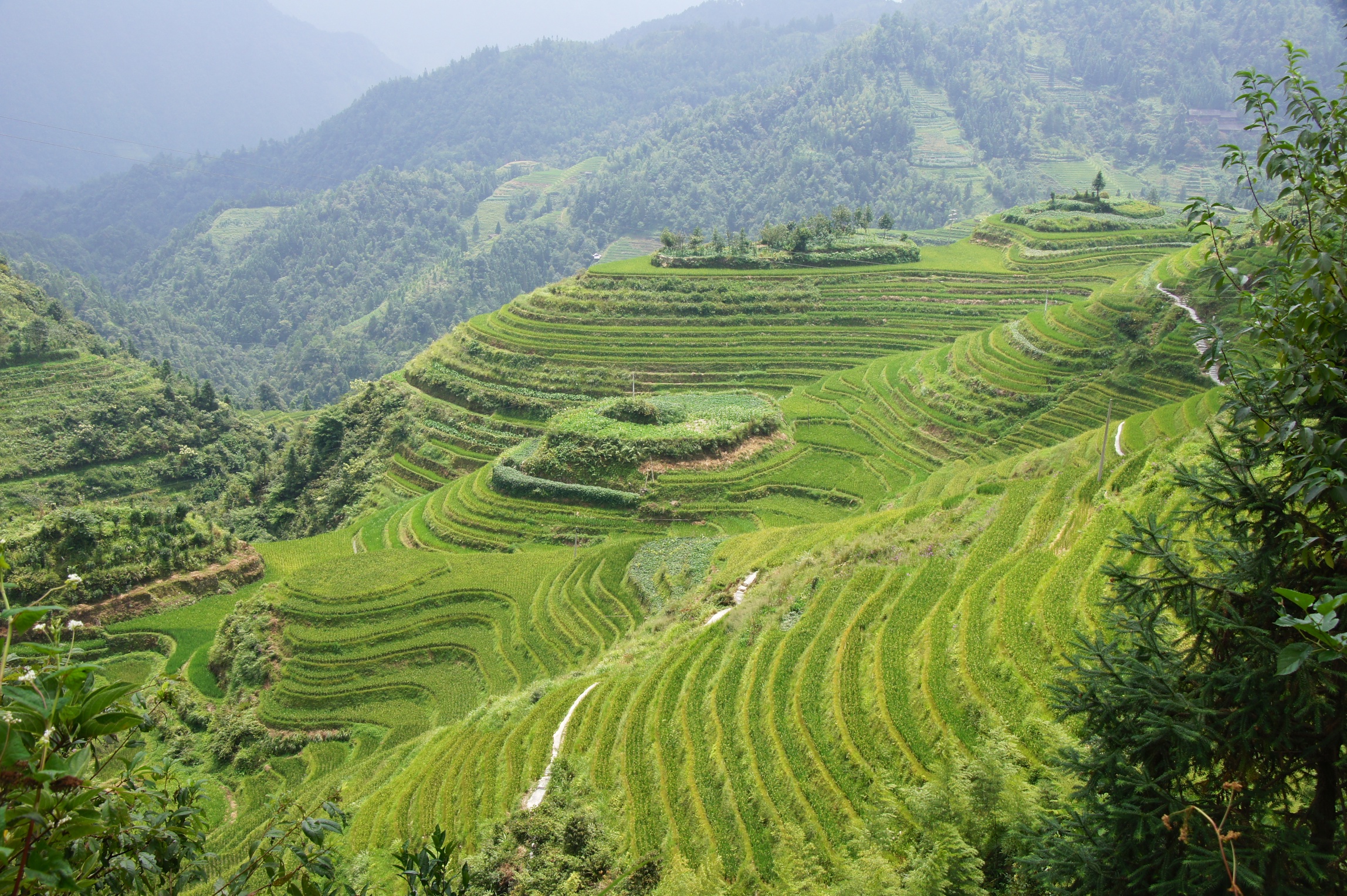
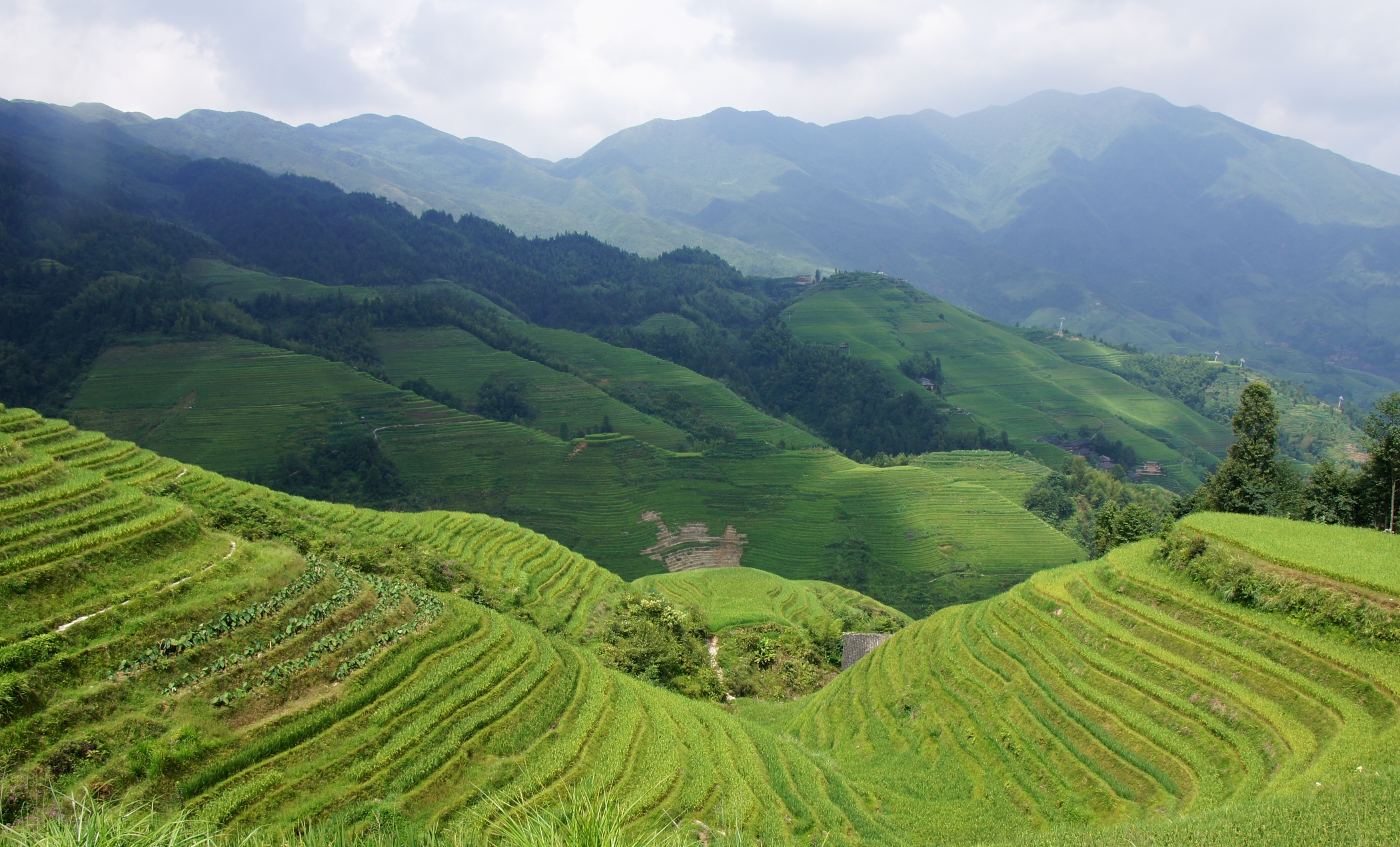
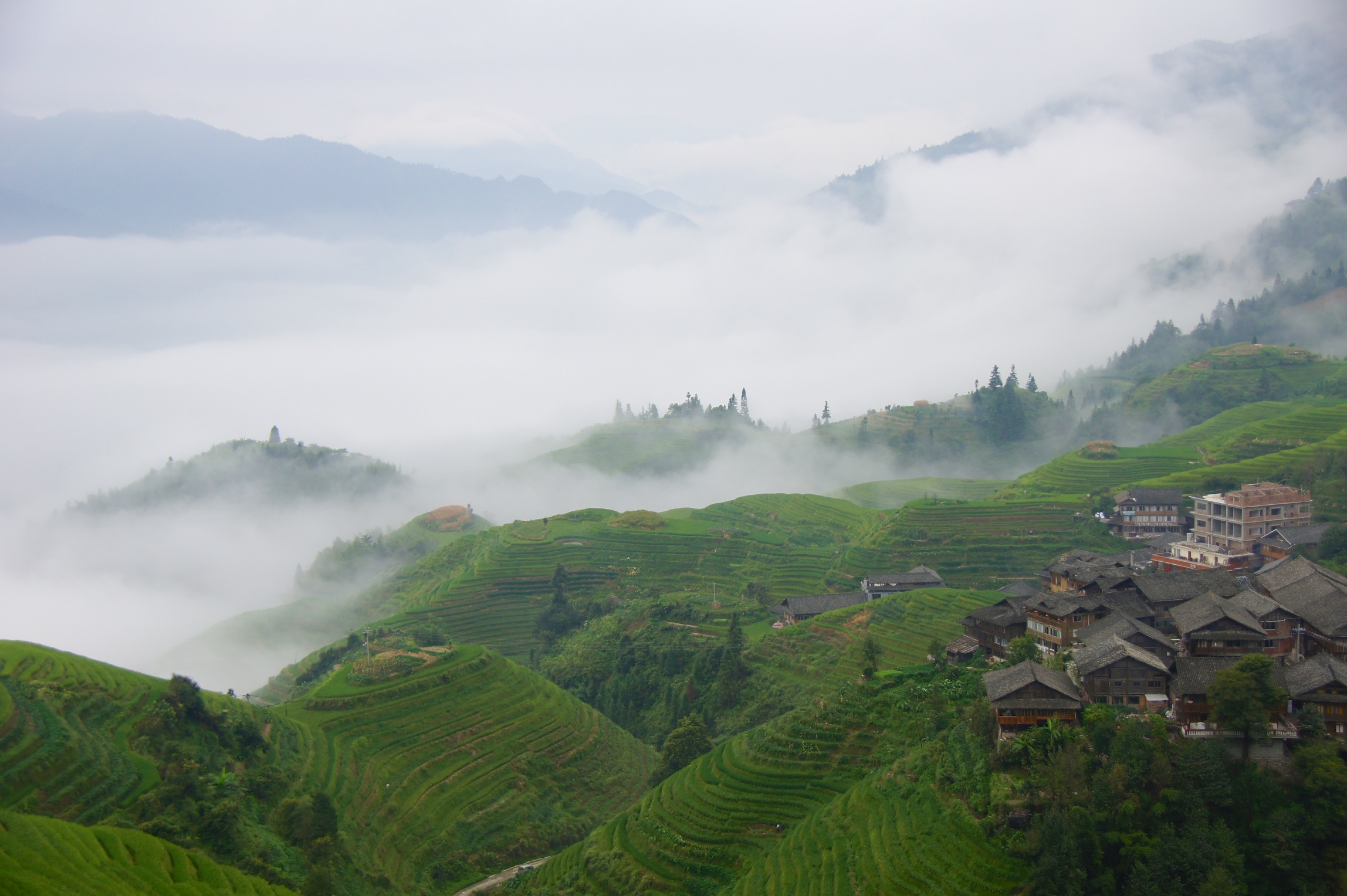
in Longsheng County in China, the Longji Rice Terraces are one of the most magnificent sights we have seen.
They can be traced back 1000 years ago, to the Yuan Dynasty; however, most of the rice terraces were built
during the Ming Dynasty, 500 years ago.
The
terraces are distinctly different during the four seasons of the year. In the spring, the seeds are planted so
you see rivers of glistening water.
In the summer, lush green shoots (this is what we saw). In the fall they turn a golden color
and in winter, they are covered in a layer of silvery frost.
Living
among the rice fields are ethnic minority groups.
China has a total of 56 Ethnic Minority Groups. In Longji, the three largest groups are
the Yao, Zhuang, and Miao.
During
the Yuan Dynasty (1279-1368), many minority groups were forced to flee to the
mountains. Being primarily an agarian society, they needed to find a way
to continue agriculture on the steep sides of the mountains. They ingeniously
turned the mountains into terraced rice fields and have been farming them ever since.
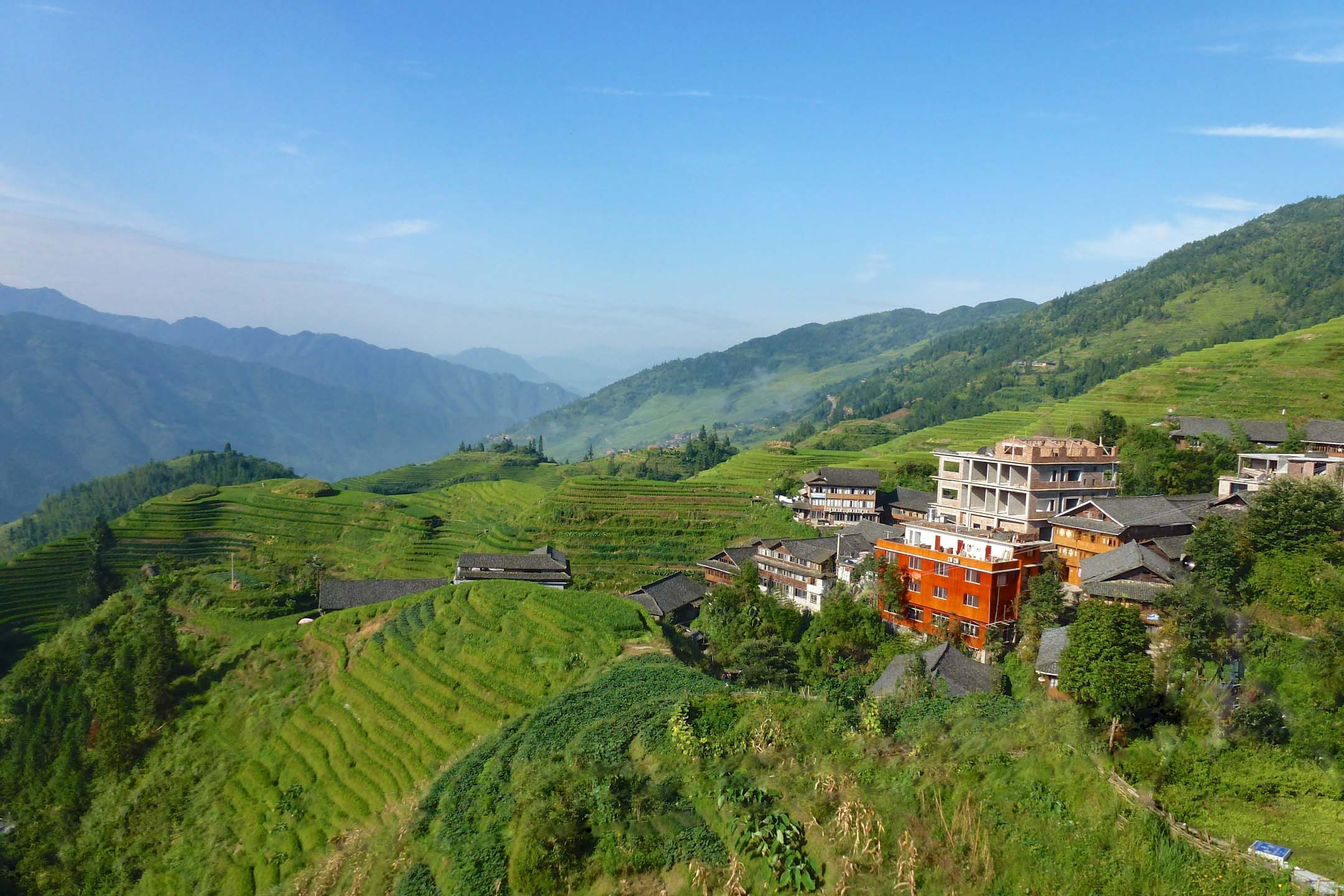
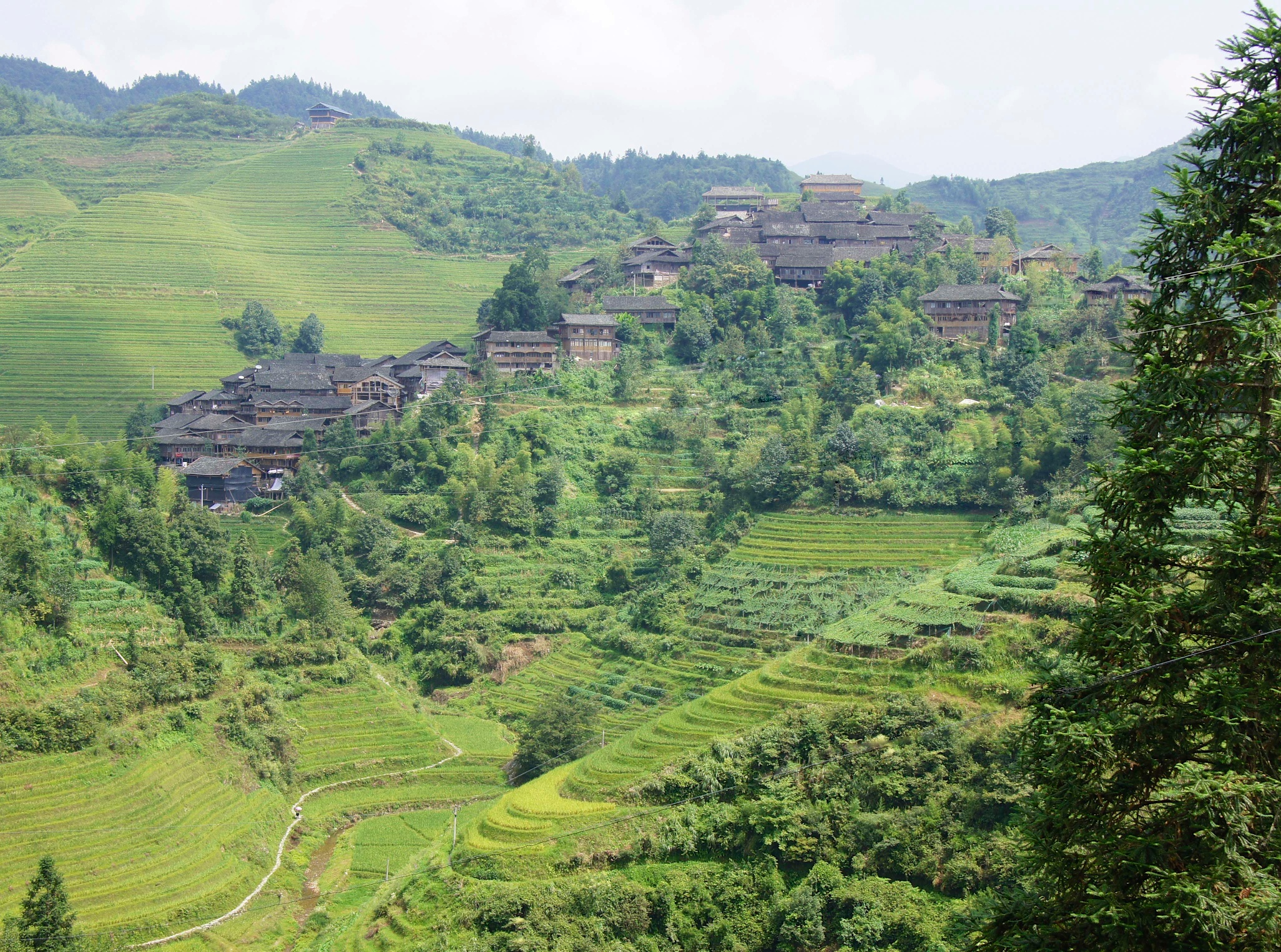
The little village of Ping' An
We
stayed in Ping'An, a 300-year-old minority village. There are about 200 families living in this small
village.
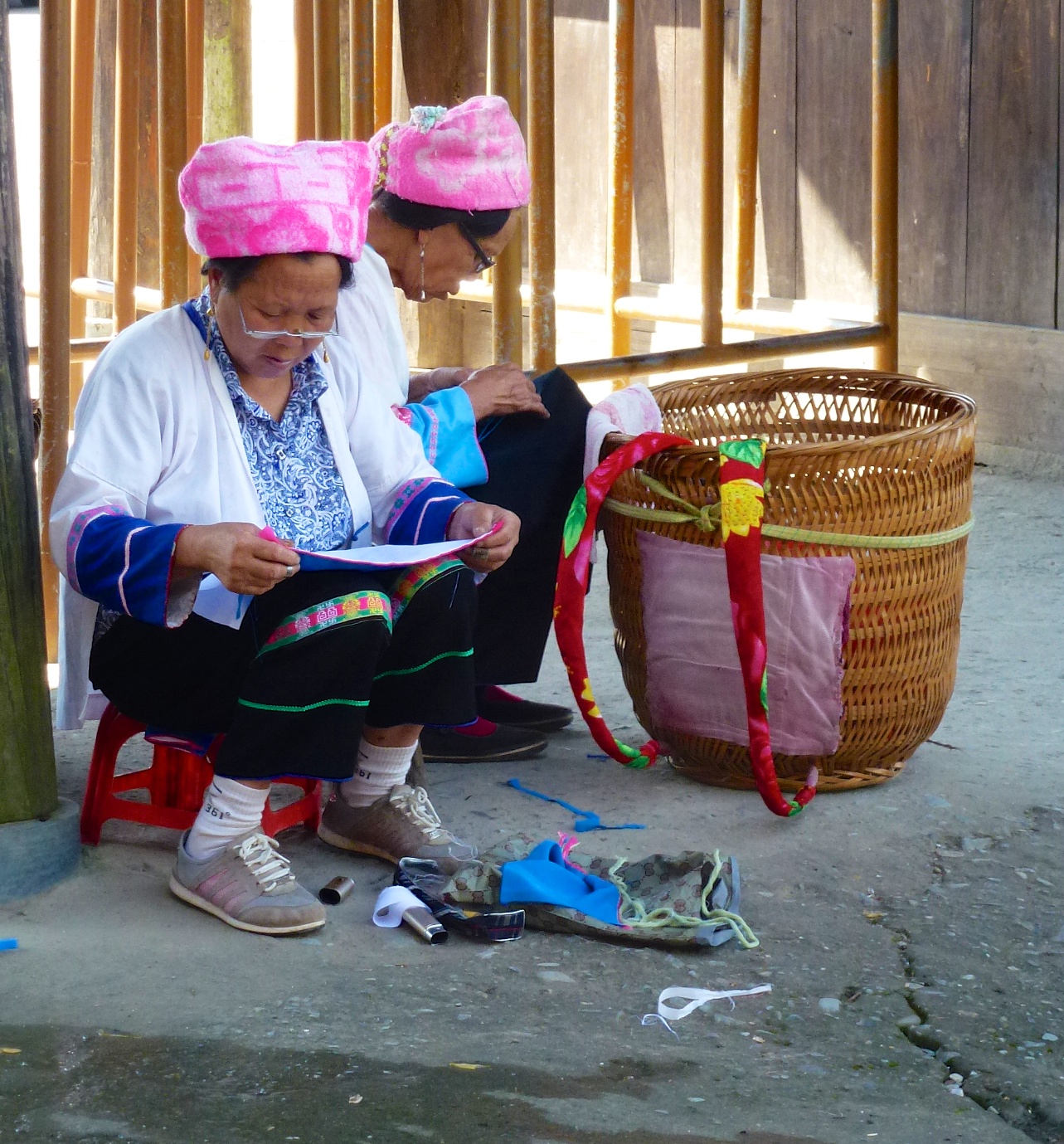
We saw many of the women wearing their traditional, colorful headwear.
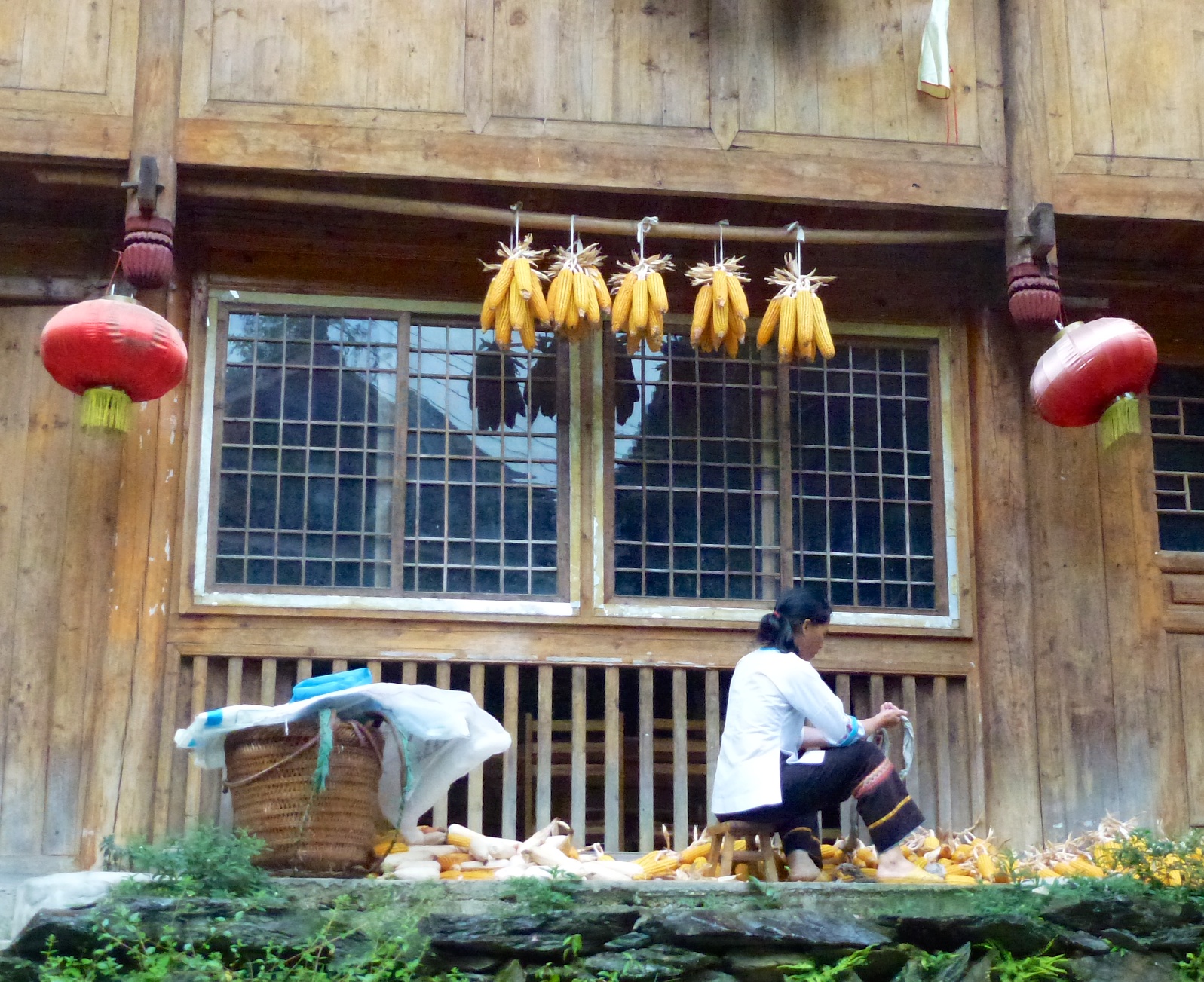
There was a lot of corn…not sure where they were growing it!
Me, in front of our hotel, ready for the "what we were told was a 4-hour walk, but turned into a 6-hour" walk!
The 6-hour walk…
We started the journey in Ping An.
Many sites recommend that you pick up a guide for the walk. We did not have a guide, and we did not have any problems. The path is well marked.
In the next two photos you can really see how the trail twists and turns along the terrace edge.
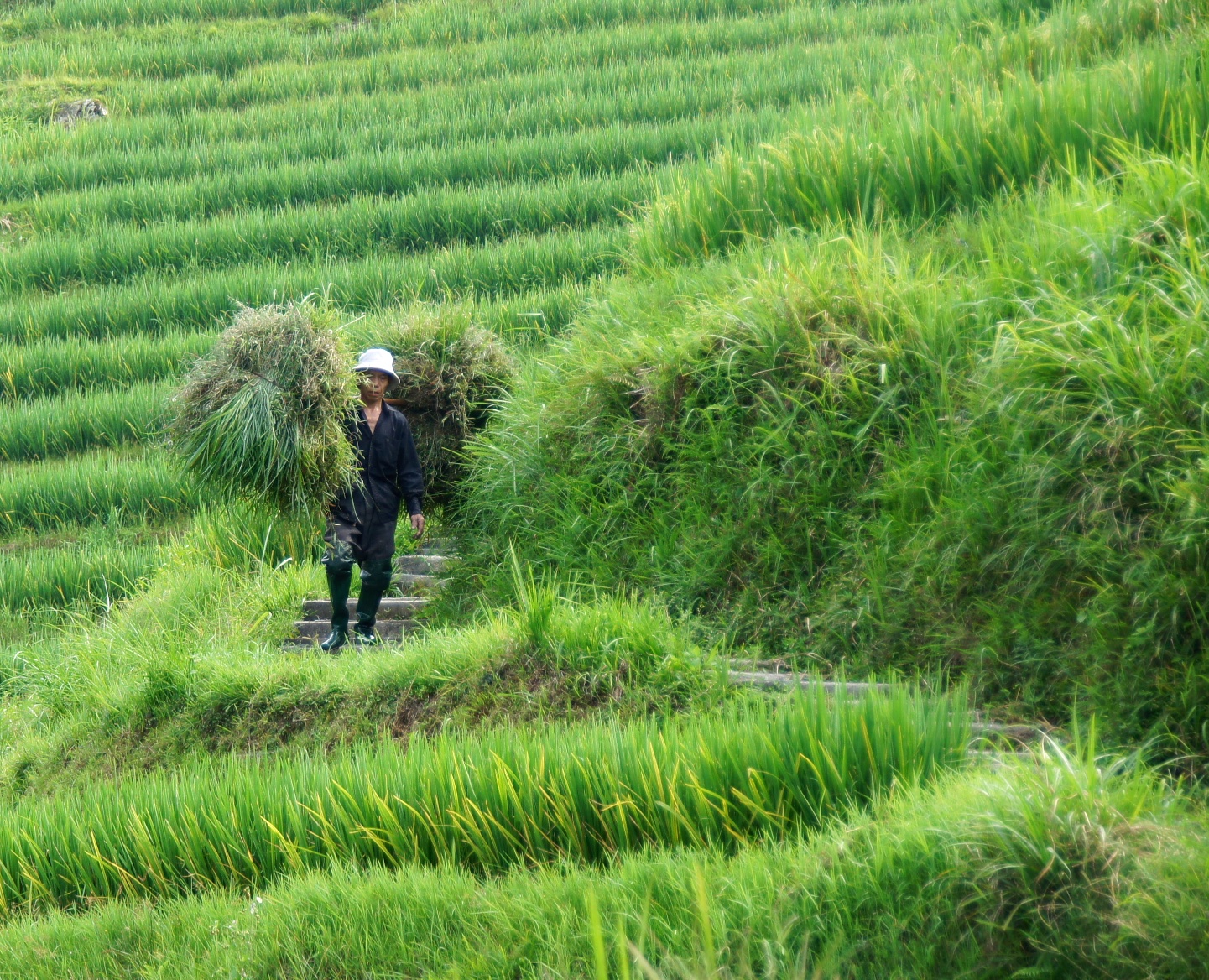
During our walk we saw many of the local people – most of them working in the rice fields.
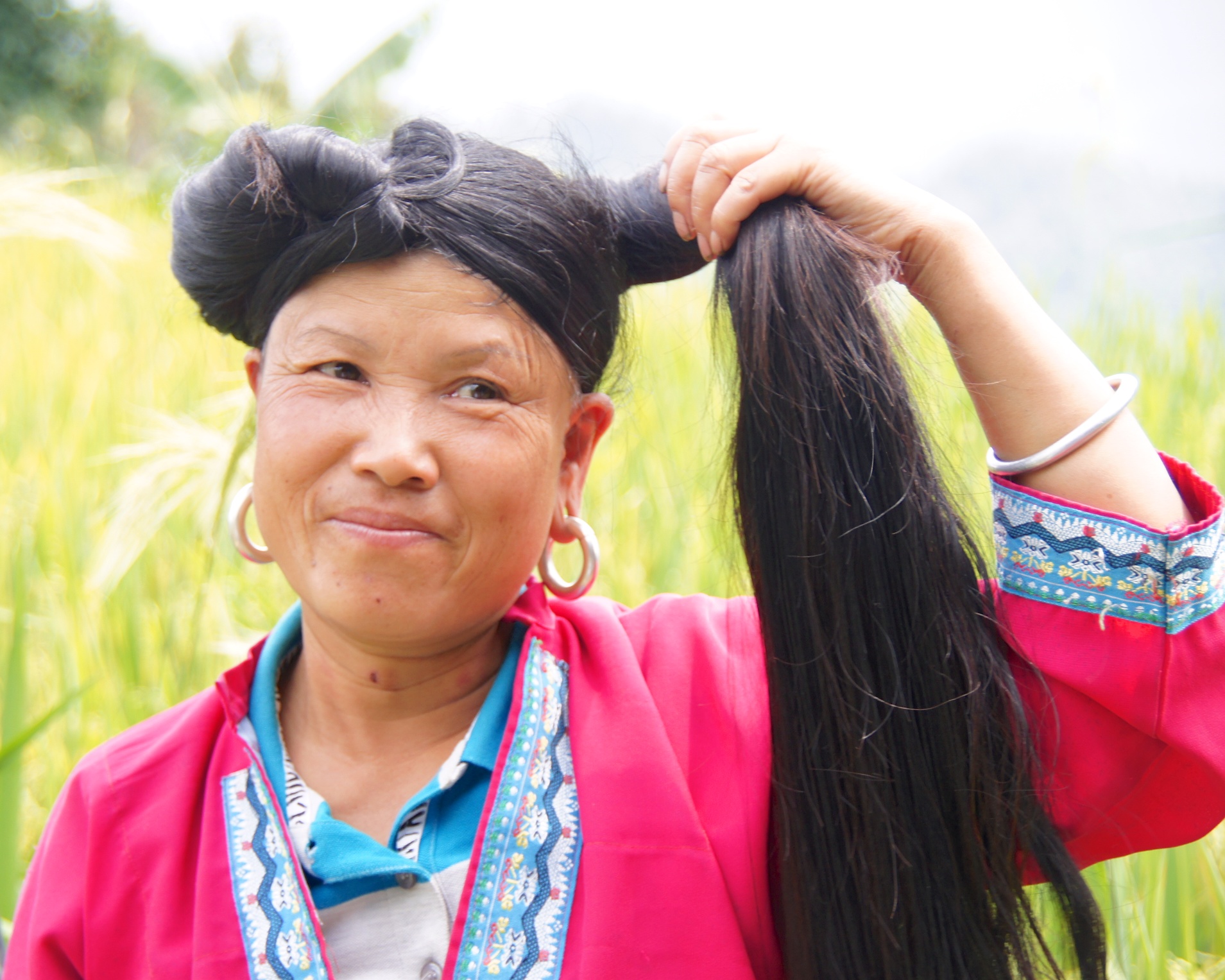
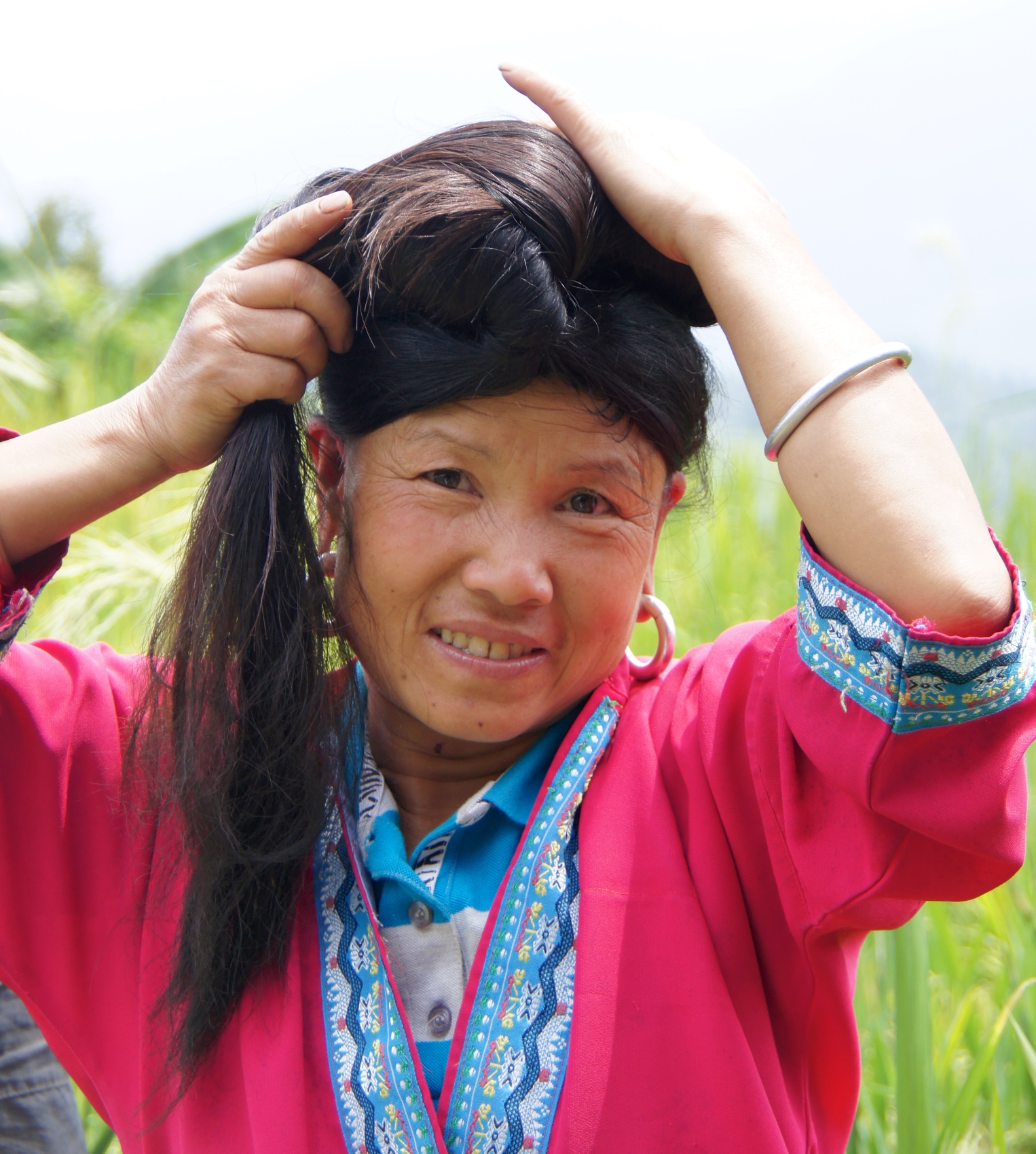
The famous longhaired women
The
Yao women
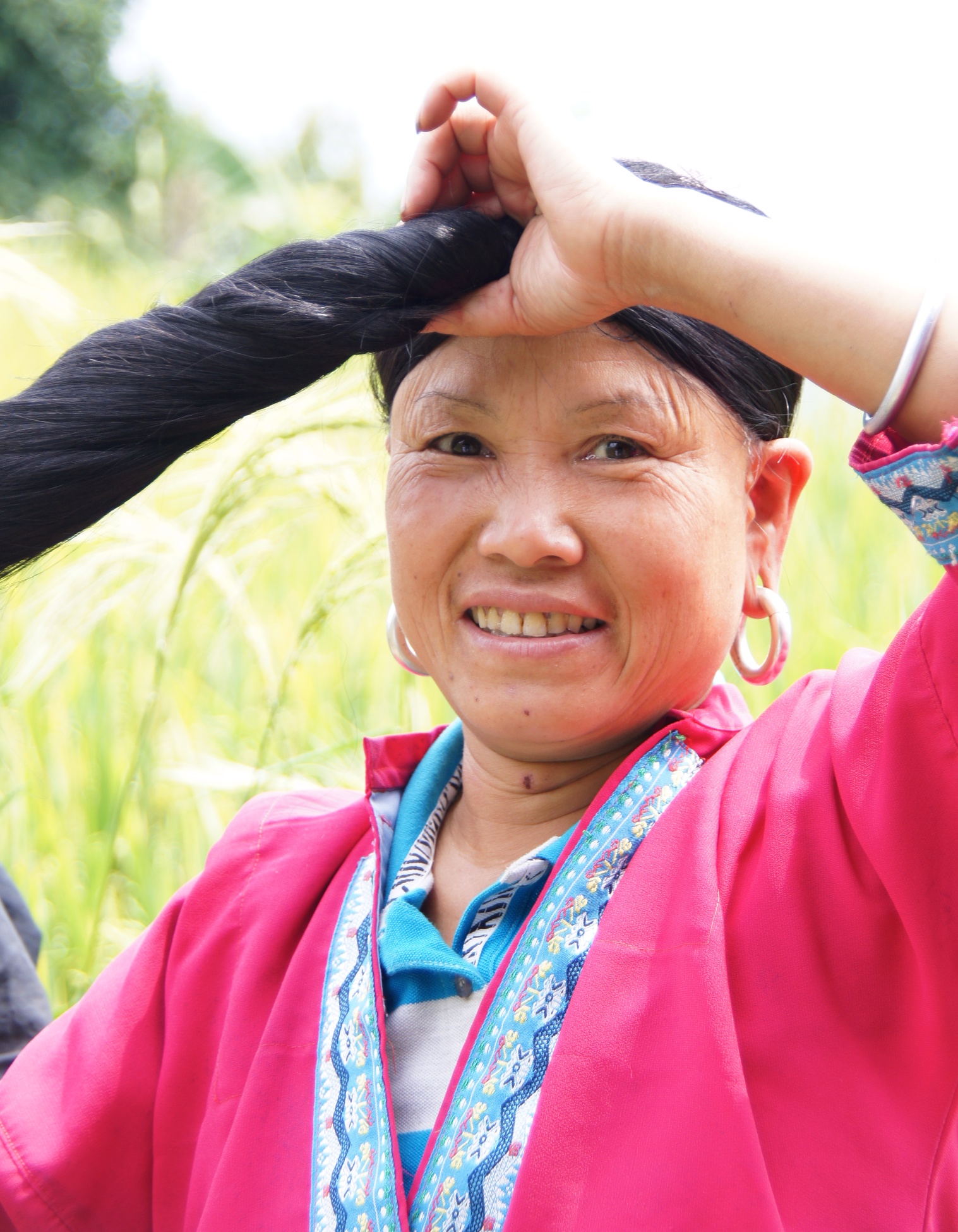
wear bright pink embroidered clothing with heavy silver earrings. They are
famous for their extremely long
hair and are listed in the Guinness Book of World's Records.
They only cut their hair twice during their lives.
Once when they reach eighteen, and again when they marry. They keep the cut lengths
of hair and wear them wrapped around on their heads. The older woman is holding the woman in pink's two cuts of hair. We were teasing her that the long hair was fake. She spoke a little English and was quite funny.
Below she is twisting the cut hair back into her real hair.
Unmarried
women coil their hair and cover it with a black kerchief while married women
twist their bundles and coil it into a bun on the top of their head. So the woman below was never married.
You can see how the weight of the earring has torn her ear. I read that the larger the earring, the wealthier they are.
The people of this community work hard for very little money.
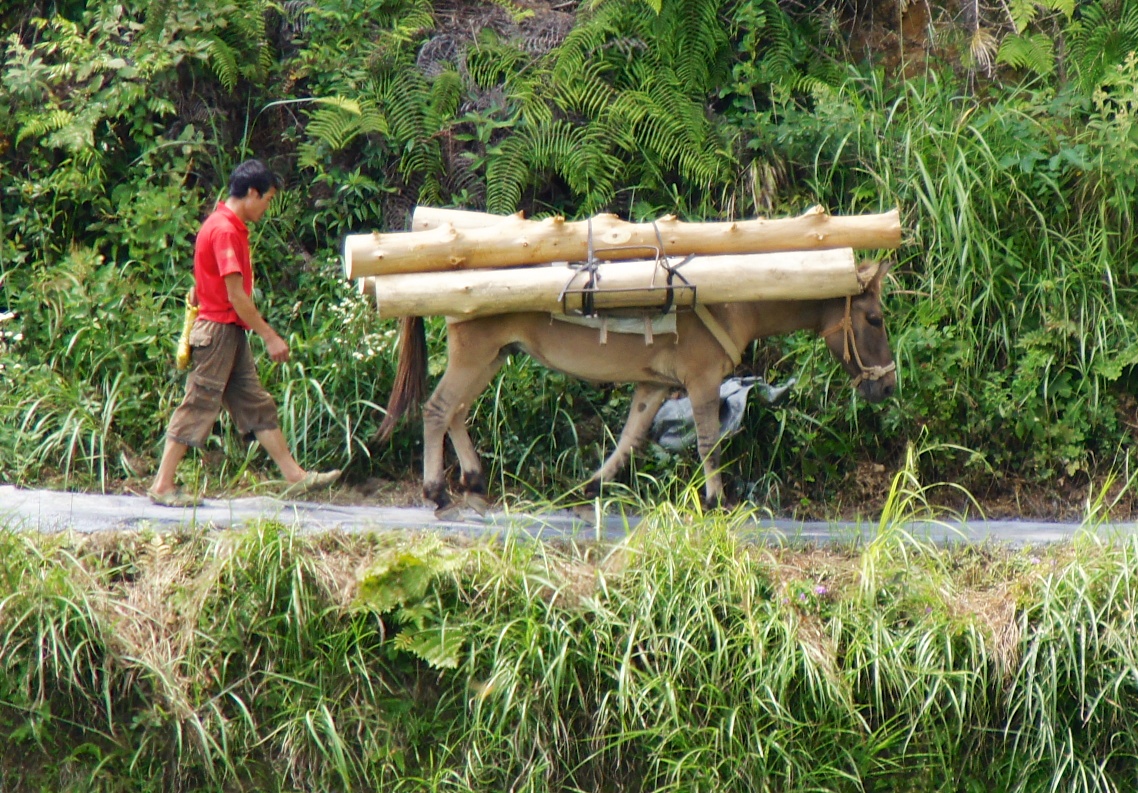
No cars were allowed in the town and they certainly could not go on the terraces. The common way to carry things along the narrow terrace paths was with a mule.
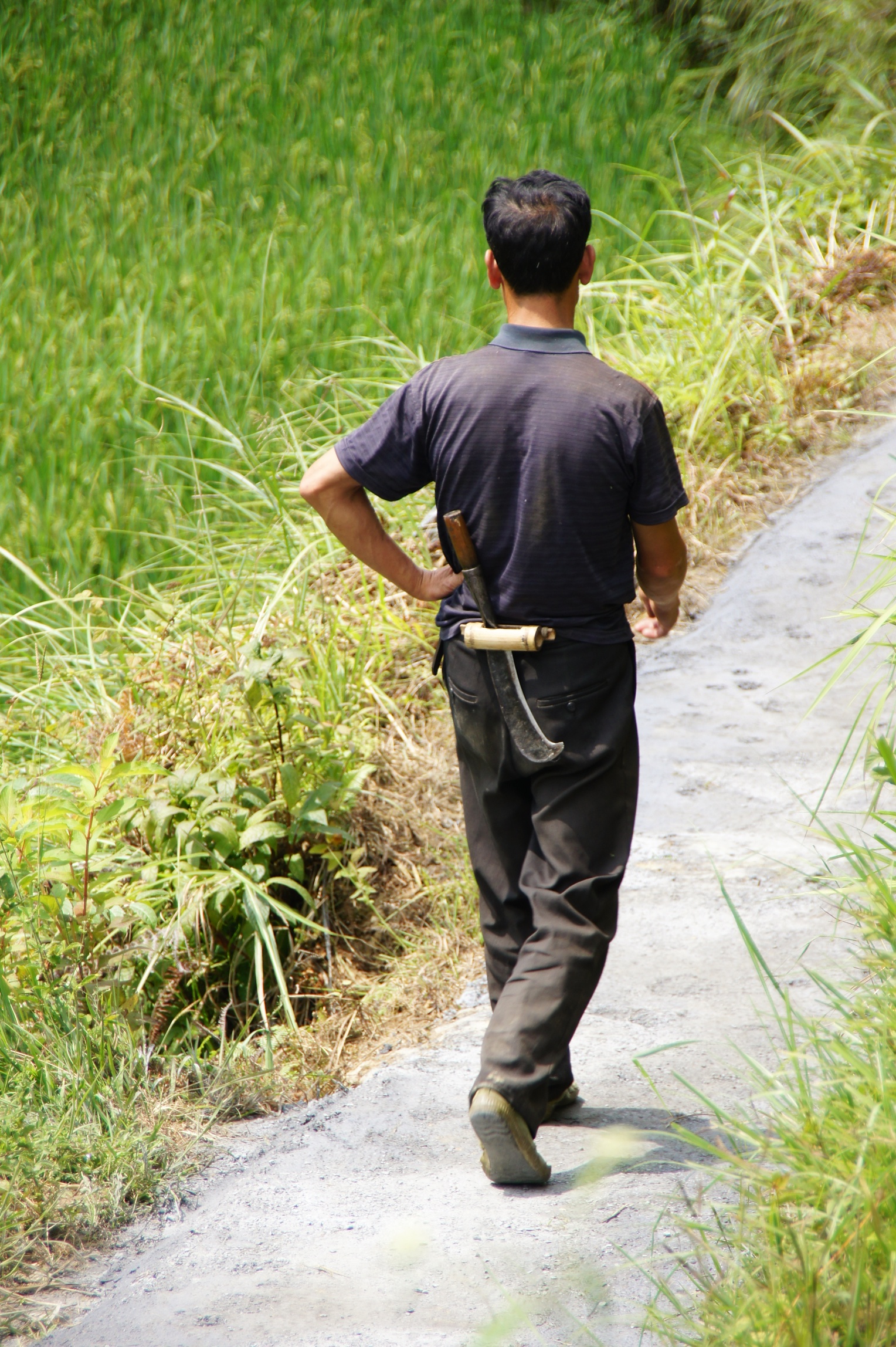
We thought it was interesting the way he carried his knife.
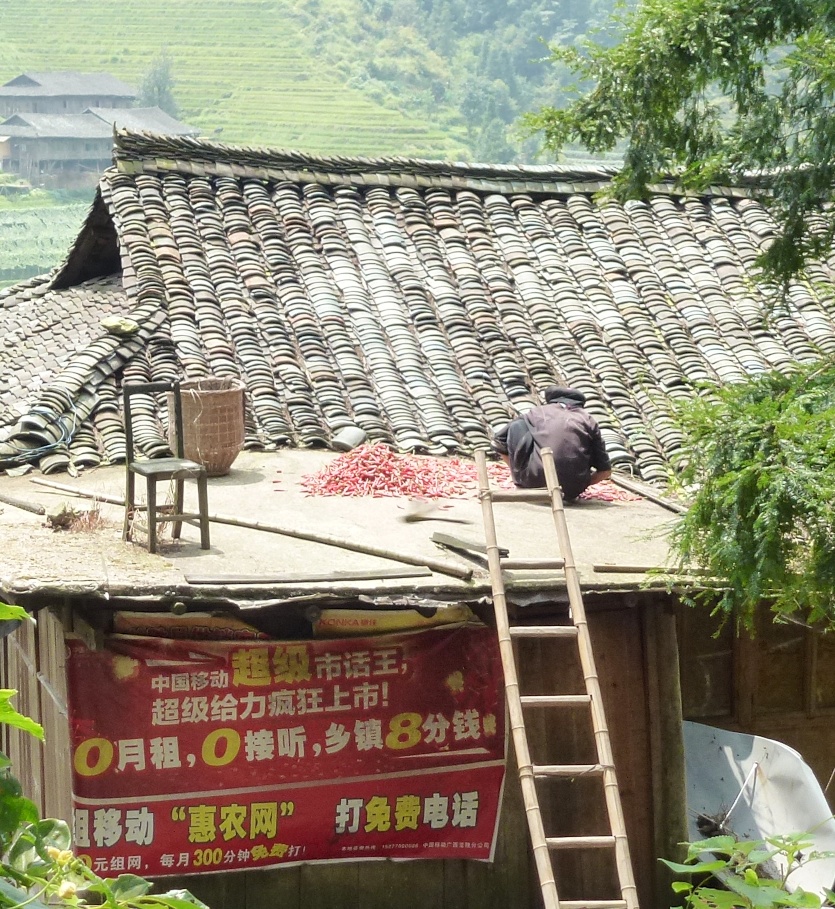
Don't try this at home. This woman had to be in her late 70's – early 80's. Why was she climbing on the roof?
To tend to her red hot peppers. At least she has a chair to take a rest.
More amazing scenery.
The bright green rice plants looked like ribbons wrapped around the mountain.
A well deserved lunch break. We ate a snickers bar and peanuts for lunch! How about that view?
The terraces looked
like a three-dimensional sculptures that changed every corner we took.
We ended our walk in the village of Dazhai.
New friends we met along the hike, all staying at our village. A couple from Amsterdam and one young woman from France (living in India). We had to wait two hours until the bus came to take us back to Ping An. We ended up having dinner with the Dutch couple.
Locals at a store across from the bus stop.
Rain and Rest
The next morning heavy fog rolled in. We thought it would burn off, but by 11:00 the heavy rains started. We did not mind. After the long day of walking the day before, it was nice to take a break and enjoy the unique views the fog brought to the area.
Below you can see two locals carrying a lazy tourist up the mountain in bamboo sedan chairs. We saw 20 or so of these on the day it rained and they were not all Westerners, there were Chinese tourists as well.
After the rain, a very different view of the terraces, equally as beautiful.
We would love to go back three more times so we could see the different seasons of the rice fields. We highly recommend a visit here!
Guilin – Capital of Guangxi Province
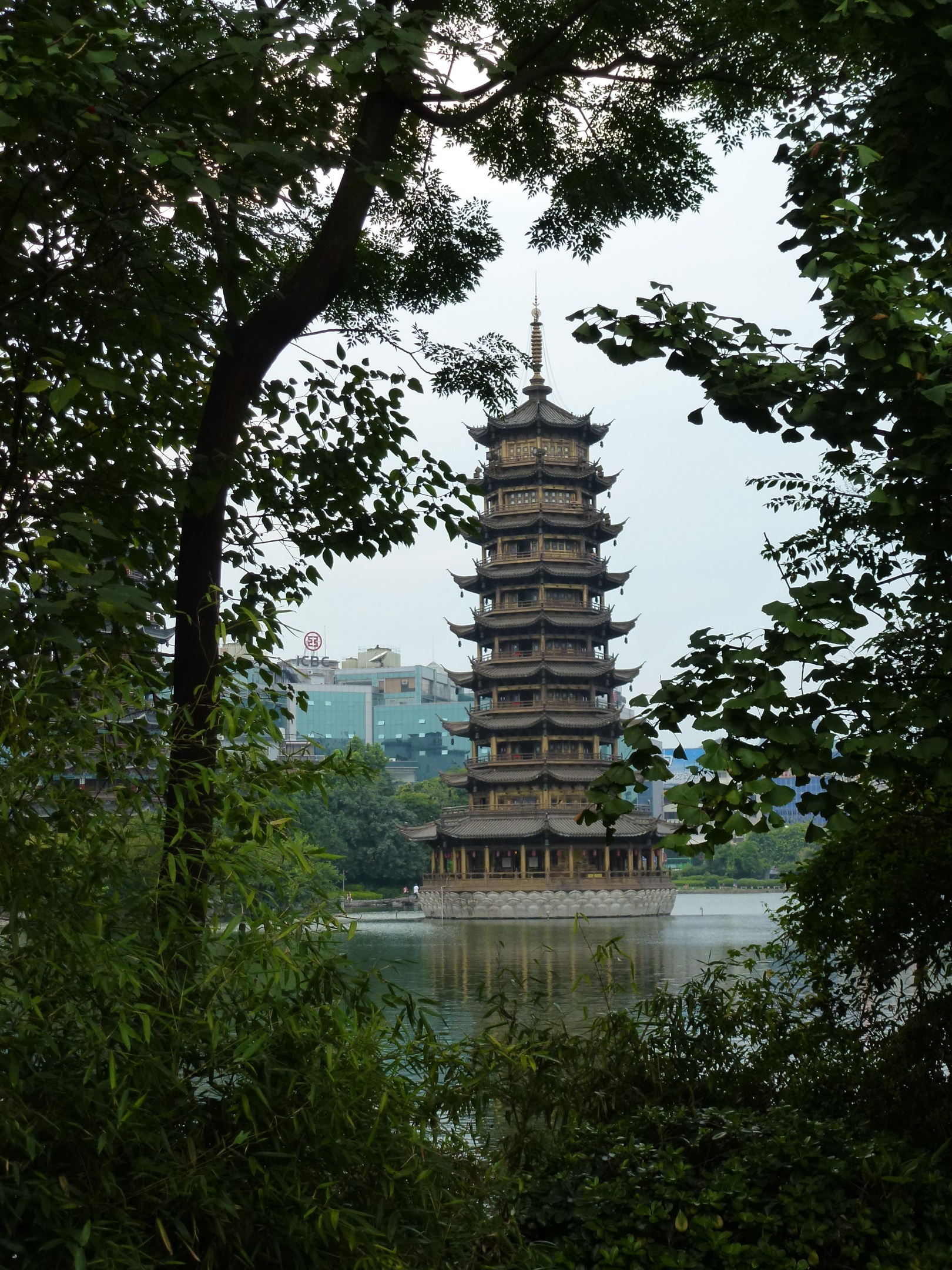
We spent the last day and a half of our vacation in Guilin. It was more beautiful and more modern then we were expecting. Still a lack of Engish spoken, but all signs and menus were in English. We found people to be very friendly and they went out of their way to help us.
Guilin has a history dating back more than 2,000 years. It mixes old world charm with modern conveniences… including cheap shopping! You can visit my art blog to see what we bought.
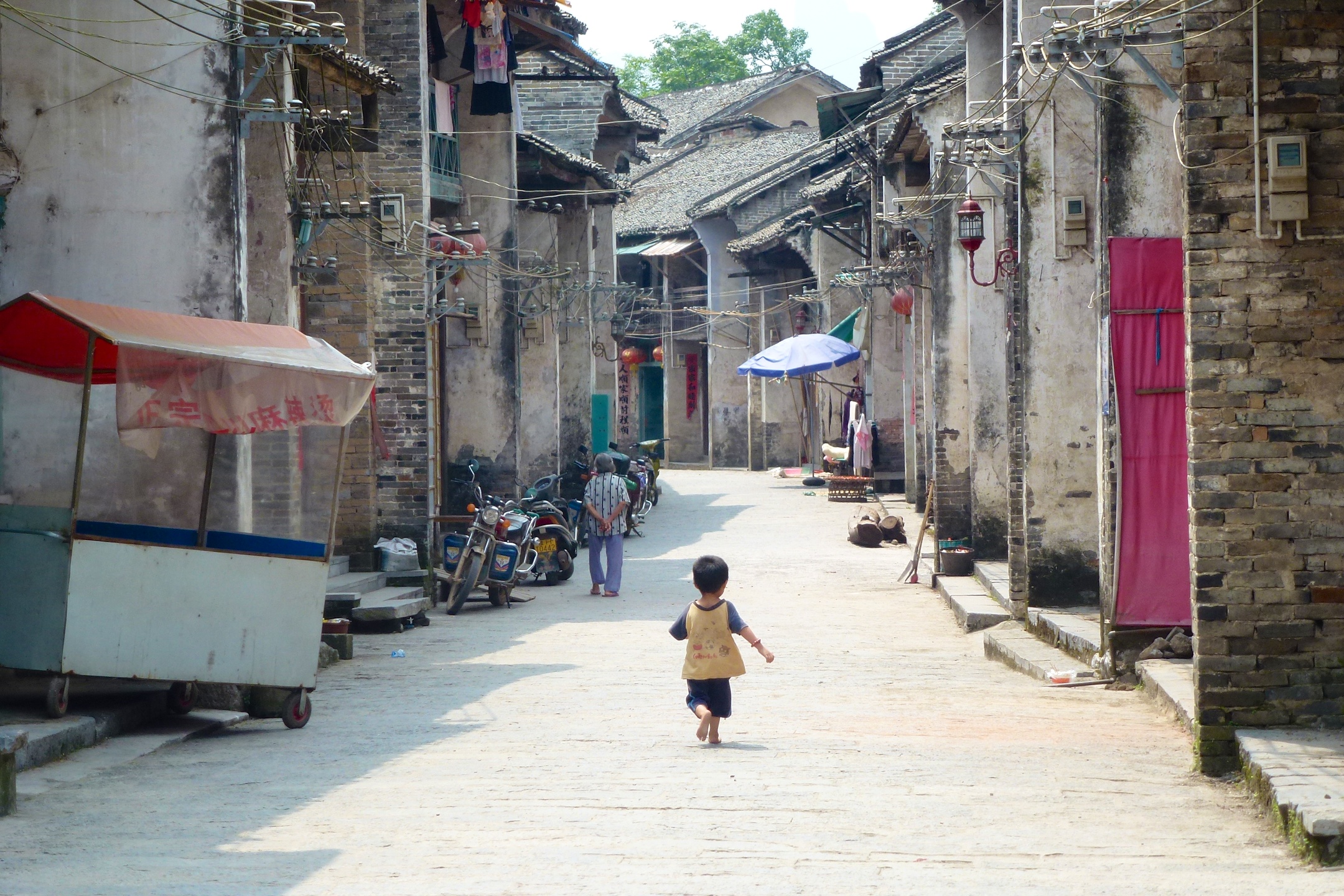
Like many Asian cities, the people used the sidewalks as living areas. Here they are playing cards and dominoes.
As far as the eye can see, people were exercising in the morning in the park across from our hotel.
We were guessing these ladies all worked for a hotel. What fun to start the day with exercise. Check out the young lady to the far right – in her high heels!
Older ladies dancing with fans.
We really enjoyed Guilin. Many people just use it to fly into and then only visit the Karst Mountains and the rice fields. If you come to this area, you need to allow a day or two to enjoy this fun city.
We flew into the city of Guilin, and immediately drove south
for an hour and a half to the small village of Jiuxian (shown below). Talk about being off the beaten path! It is in the Guangxi Province of southern China, about 15 minutes outside of Yangshuo, the largest town in the area.
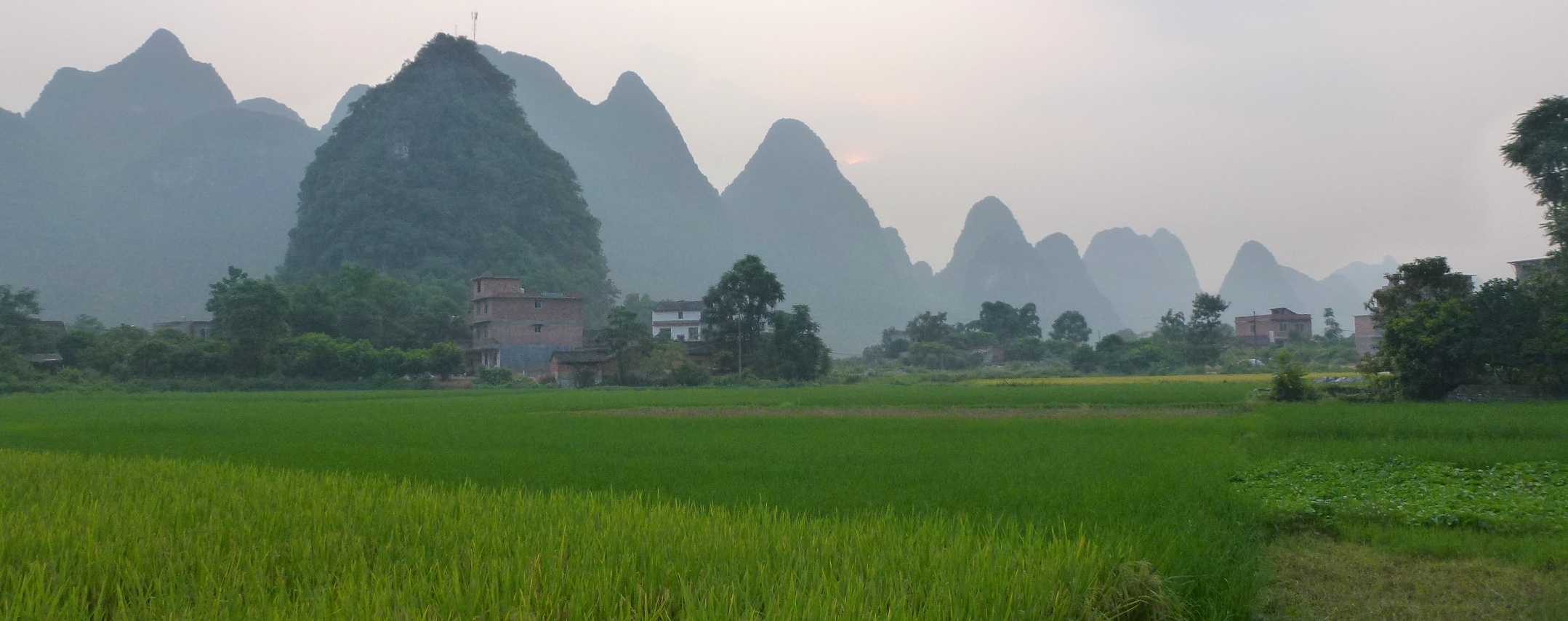
We picked this region to visit because it is known for its beautiful scenery created by the amazing Karst mountains. The Karst Mountains, a UNESCO World Heritage Site,
are made of limestone. South China is one of the most well known Karst areas in
the world and Yangshuo is a rare example of this specific topography in terms
of its scale and uniqueness.
Our
hotel, Yangshuo Secret Garden, was charming. Fengzi and Faye restored
five 200-year-old Qing
Dynasty houses and created a hotel just over a year ago. Currently it has six rooms, two of which are suites. Despite its remoteness, it was a very nice boutique hotel.
The buildings are linked
by
small gardens, courtyards, and shared sitting rooms. They have a
restaurant on-site with a really good chef. We enjoyed many of his dishes, especially the twice-cooked pork. A quick note about the lack of English spoken in China. It was on par with Russia, except that they had signs and menus in English which made a huge difference in helping us to nagivigate throughout the country.
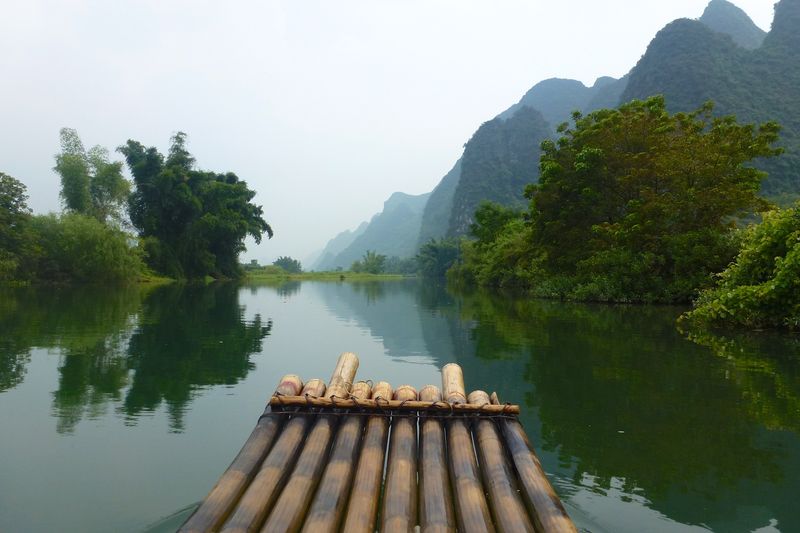
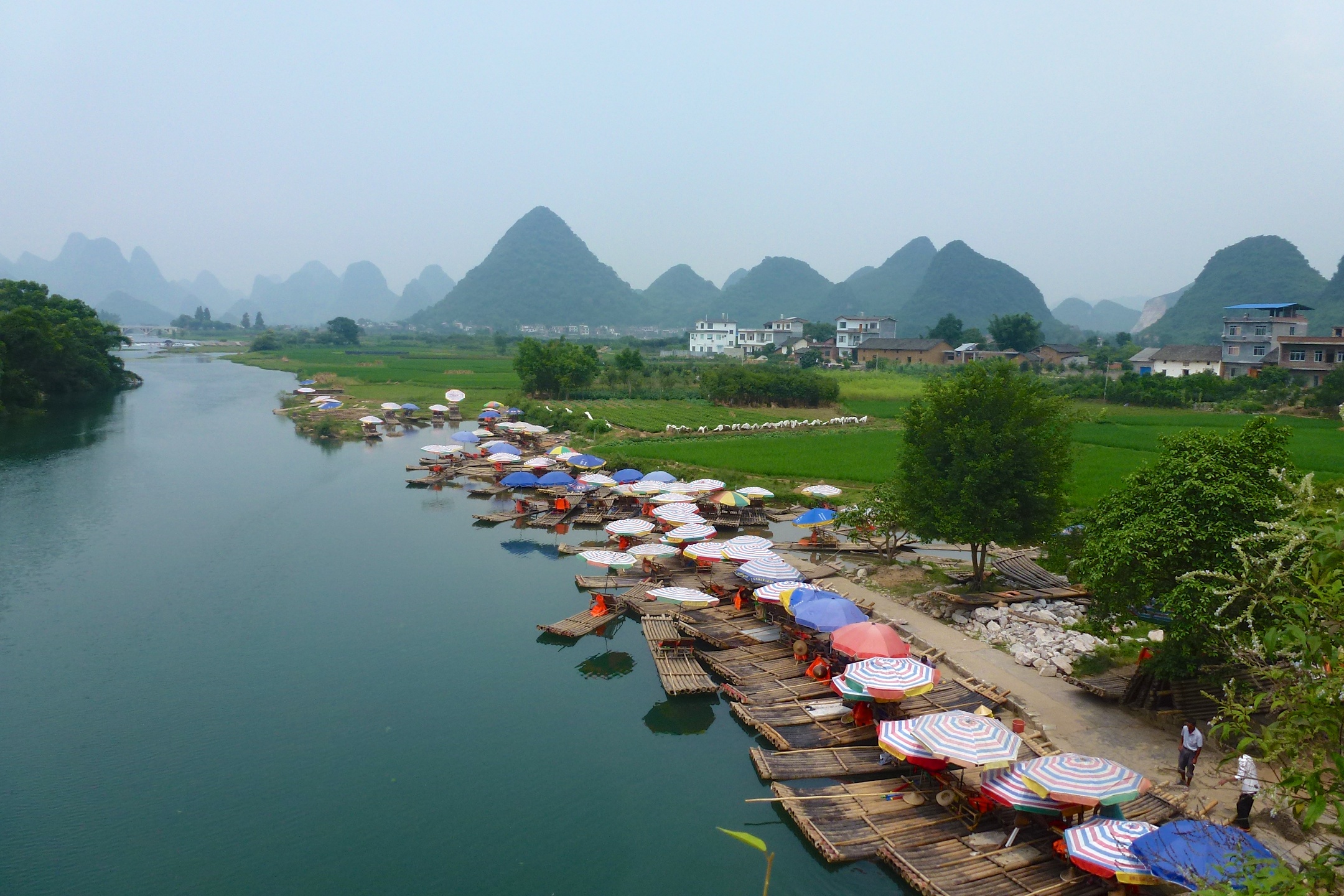
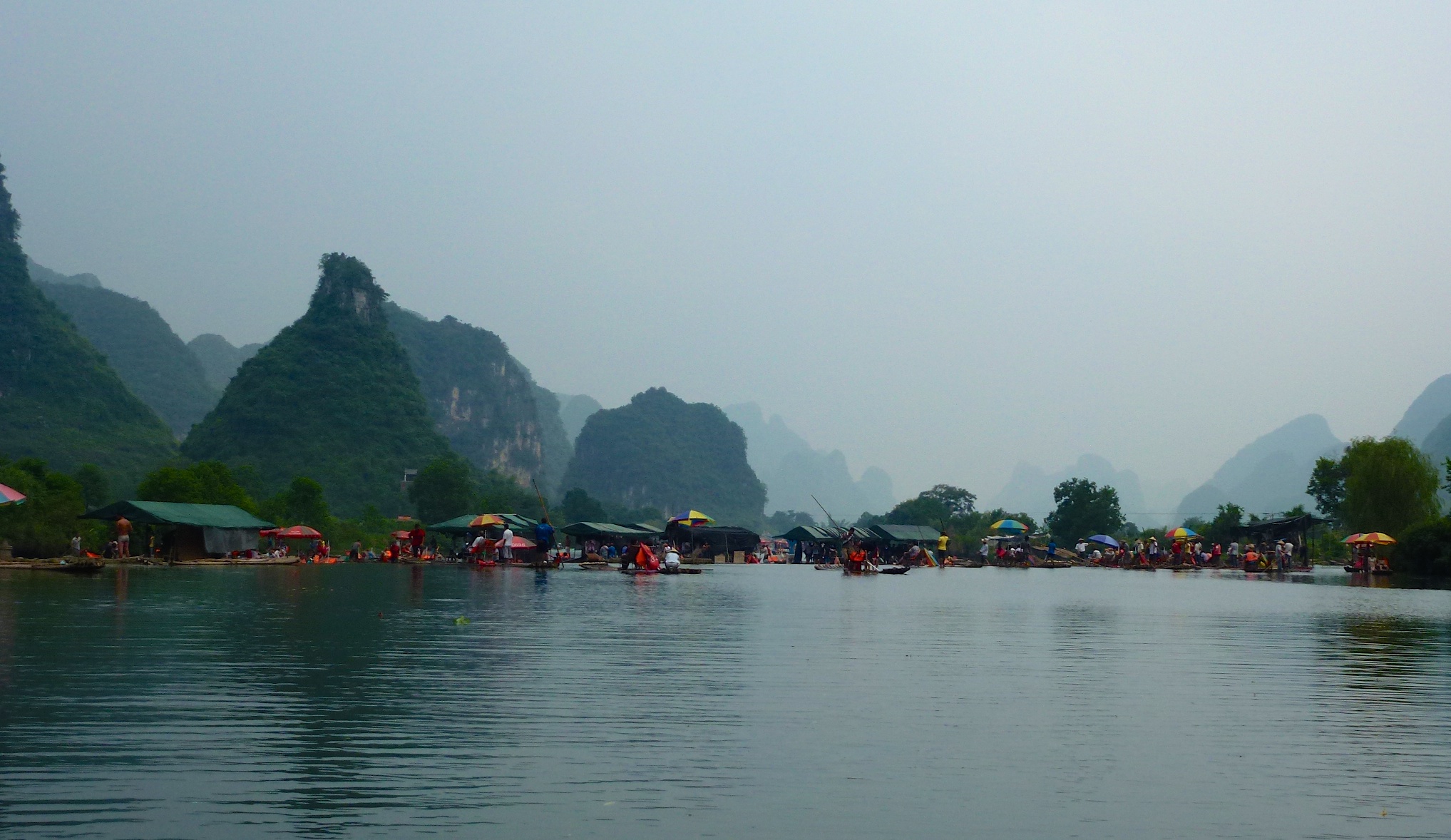
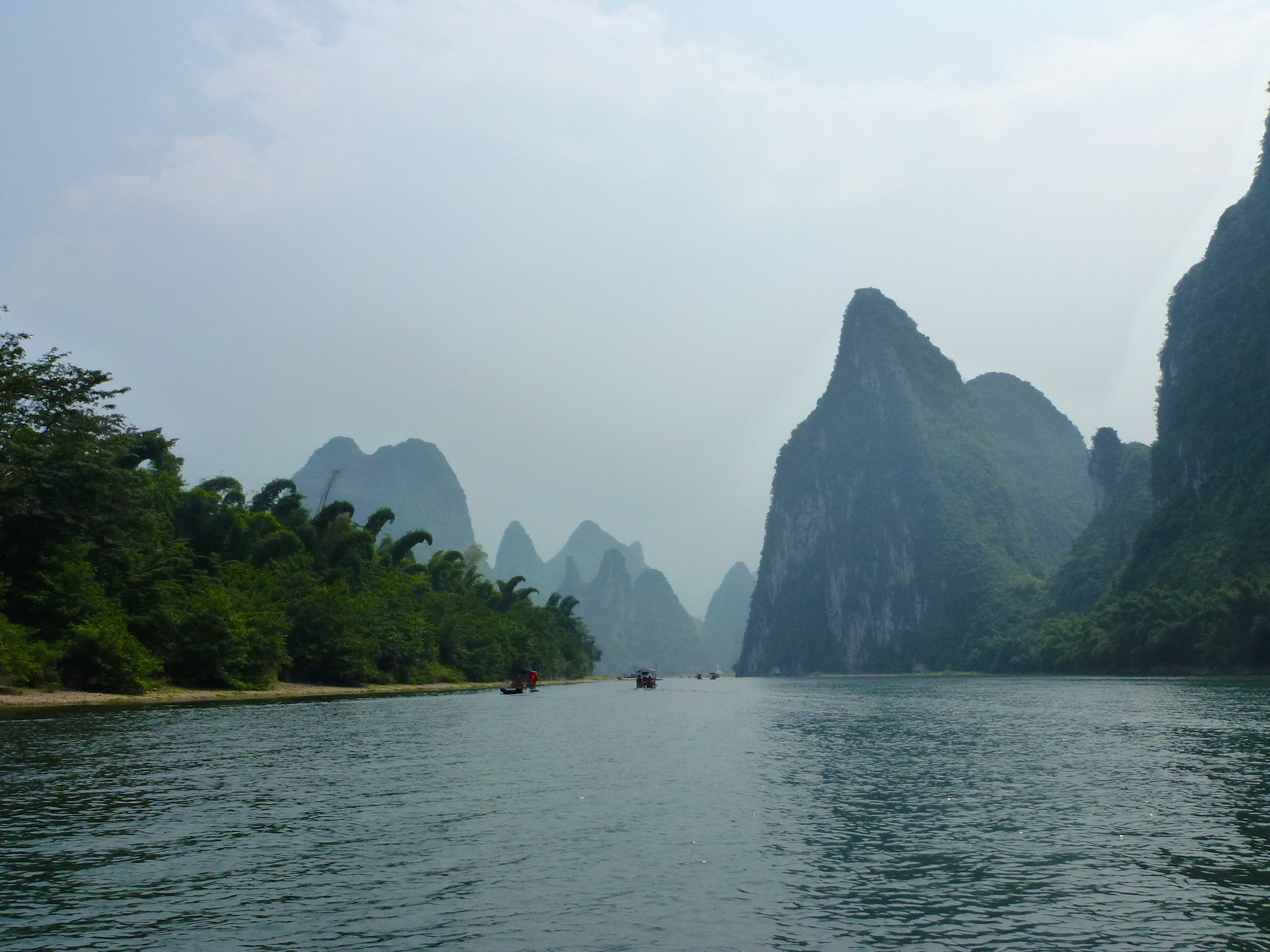
Bamboo rafting down the Yangshuo River
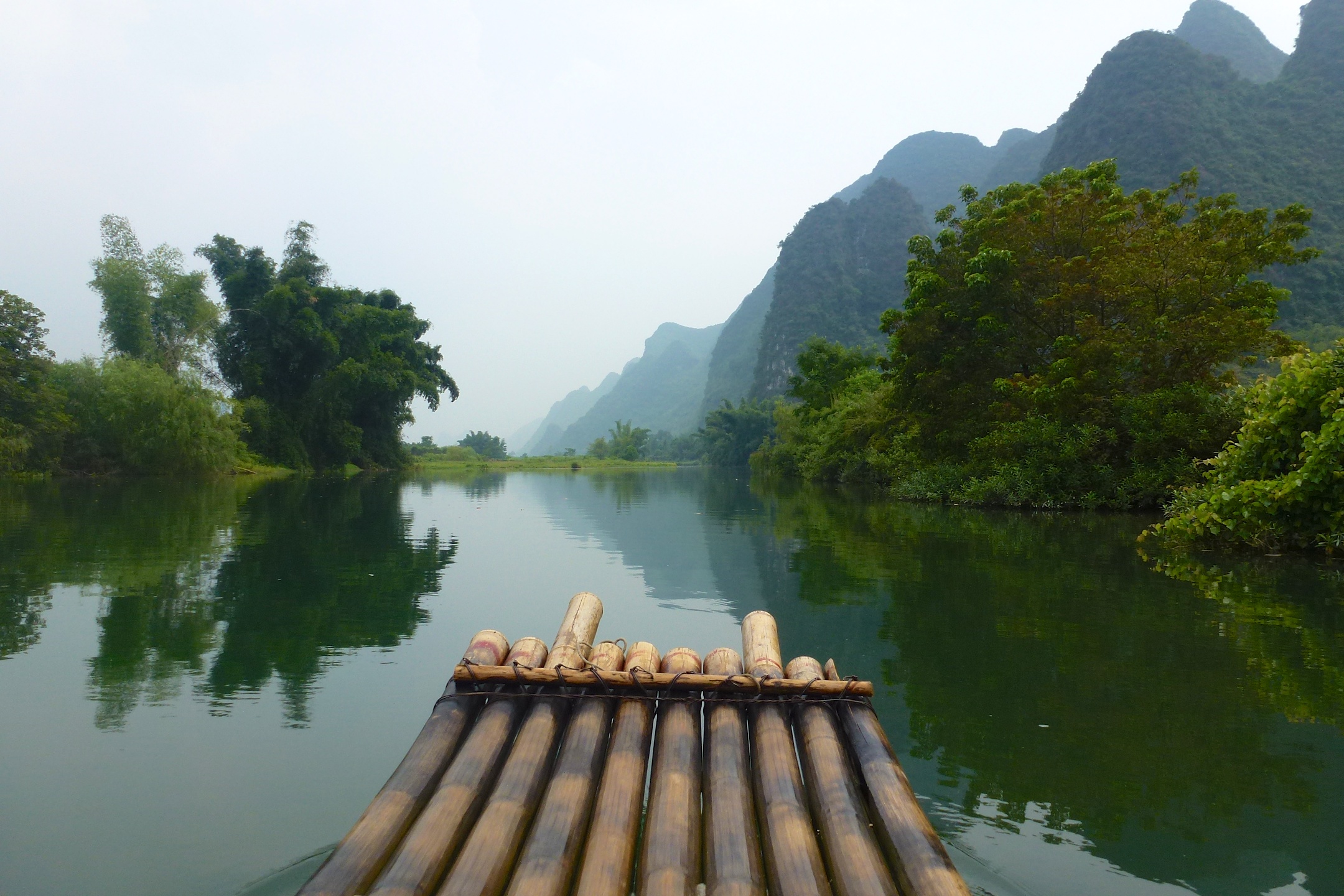
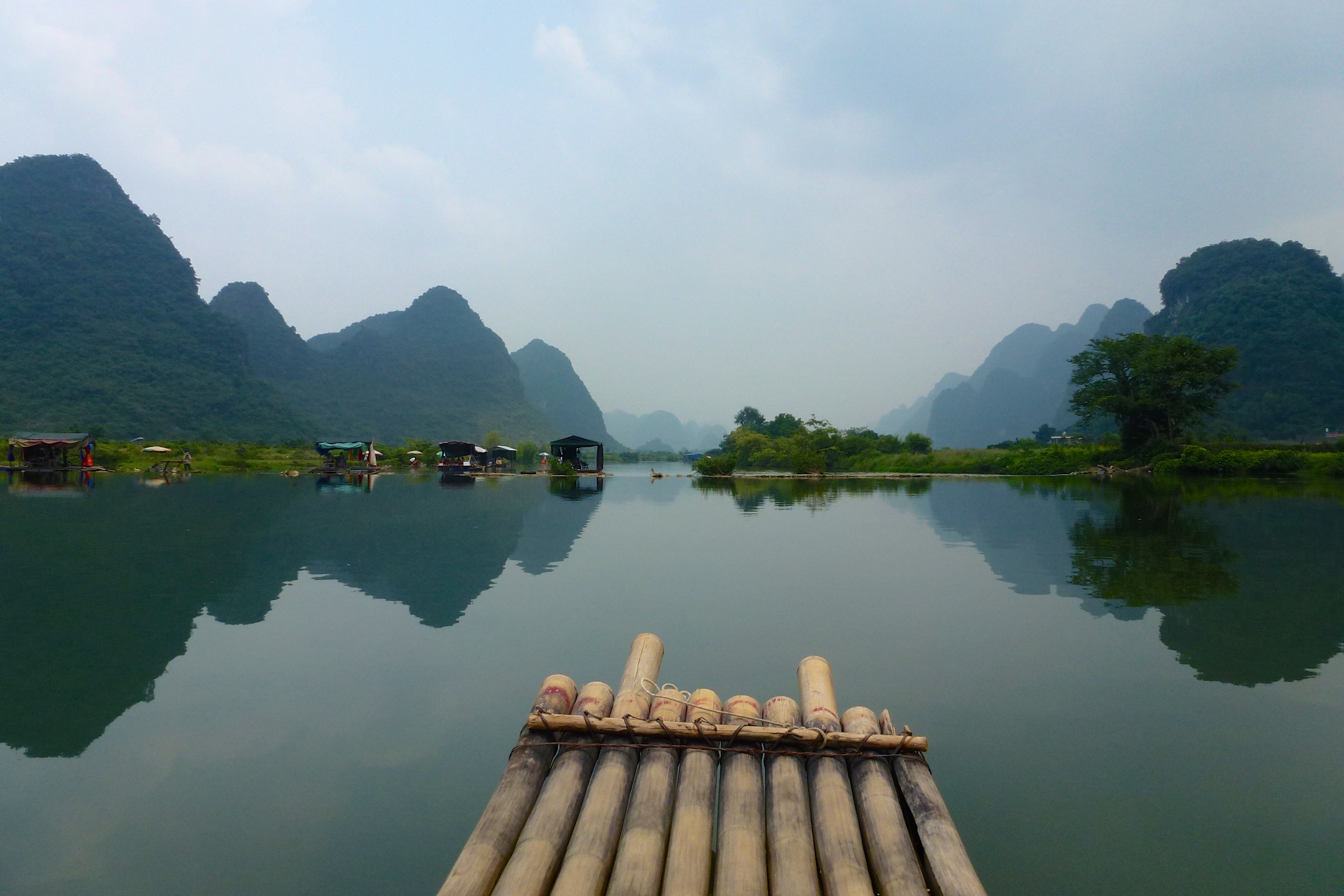
We spent a peaceful afternoon on the water. At first we were concerned this might be too touristy, but it turned out to be our favorite event in this region. Once we proceded past the launching point, there were no other tourist boats in sight and we enjoyed 90 minutes of jaw-dropping scenery.
We climbed aboard the two-seater bamboo raft guided by a
man with a long bamboo pole. The current is very gentle so we basically just floated down the river. He
pointed out interesting scenes along the way, most of which we could not
understand because he only spoke in Chinese; but, he was friendly and enthuiastic so we politely nodded our heads and took photos of what he pointed to.
A group of boys having fun swimming under the famous 400-year-old Yulong Bridge.
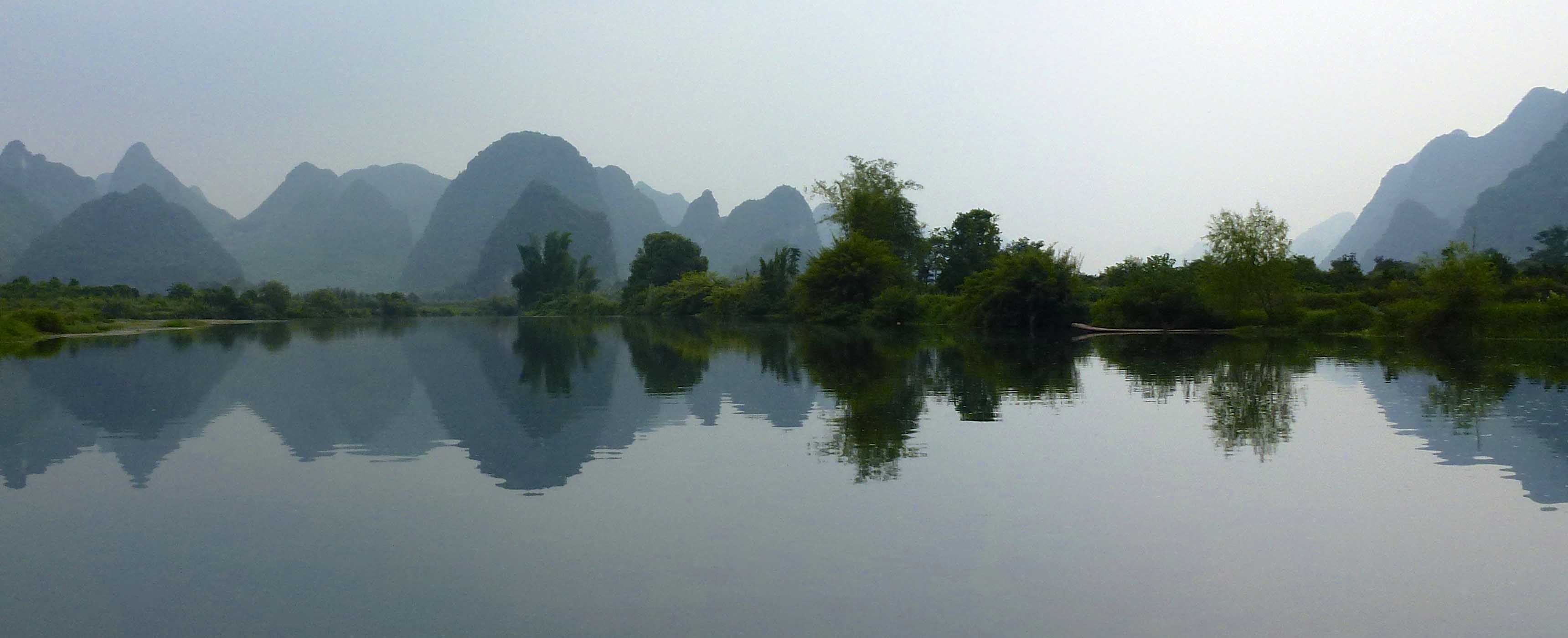
It was a
slightly hazy day, but we were told that is was perfect for photographing reflections on the water. They were right; we had gorgeous mirror images of
the mountains.
Local people use bamboo rafts as daily transportation up and down the
river between their houses, markets, and rice paddies.
We
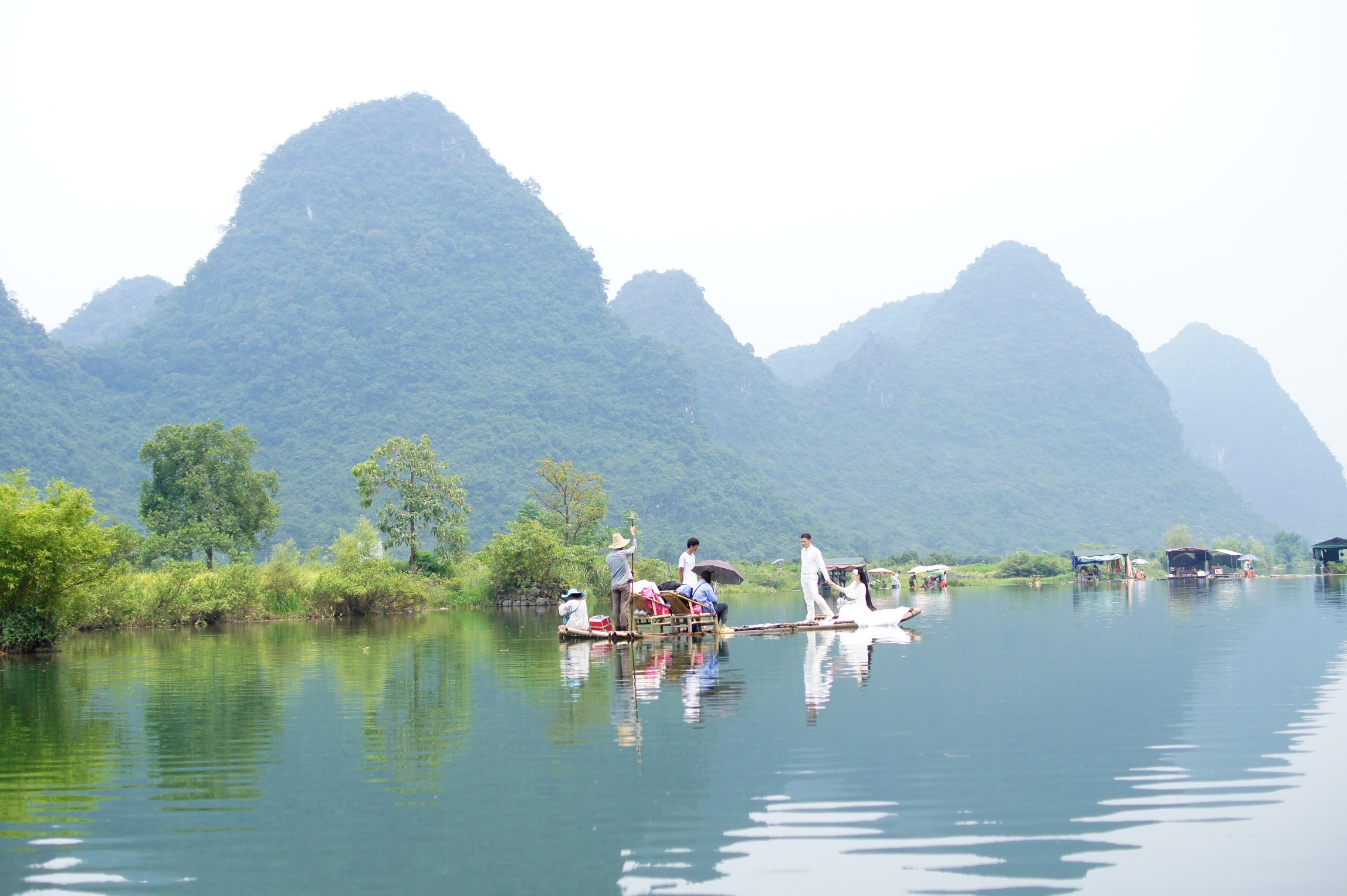
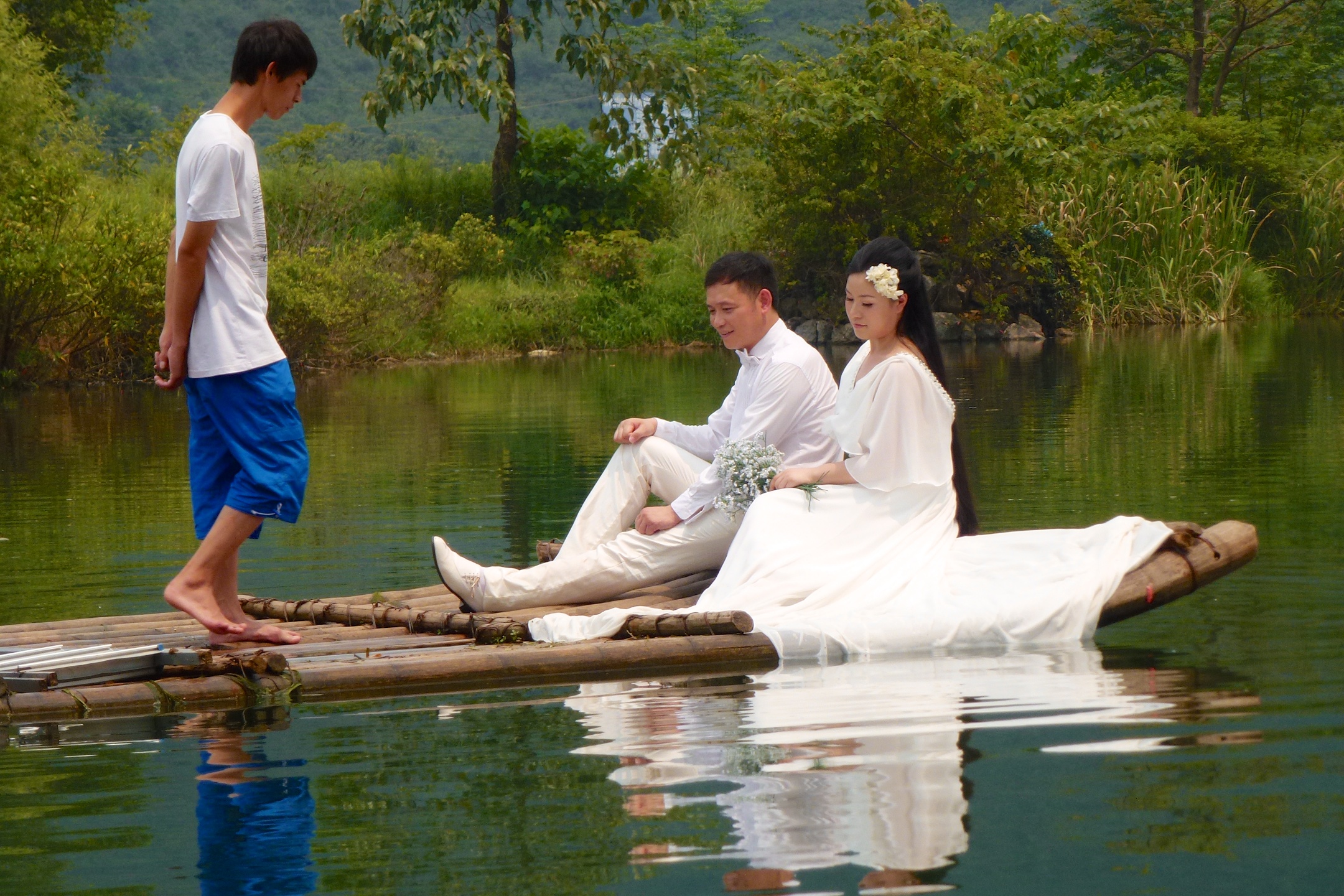
saw two wedding photo shoots while we were rafting. Talk about drop
dead gorgeous…. the bride, the scenery, and the photos. It was like a
fairytale!
The second couple:
The last section of the river was an area where people were playing with
squirt guns and swimming. It surprised us after having such a peaceful ride. Most were Chinese tourists and they did not hesitate to squirt us with water! I was squealing "please don't squirt me" – D was just laughing!
Our little village, Jiuxian
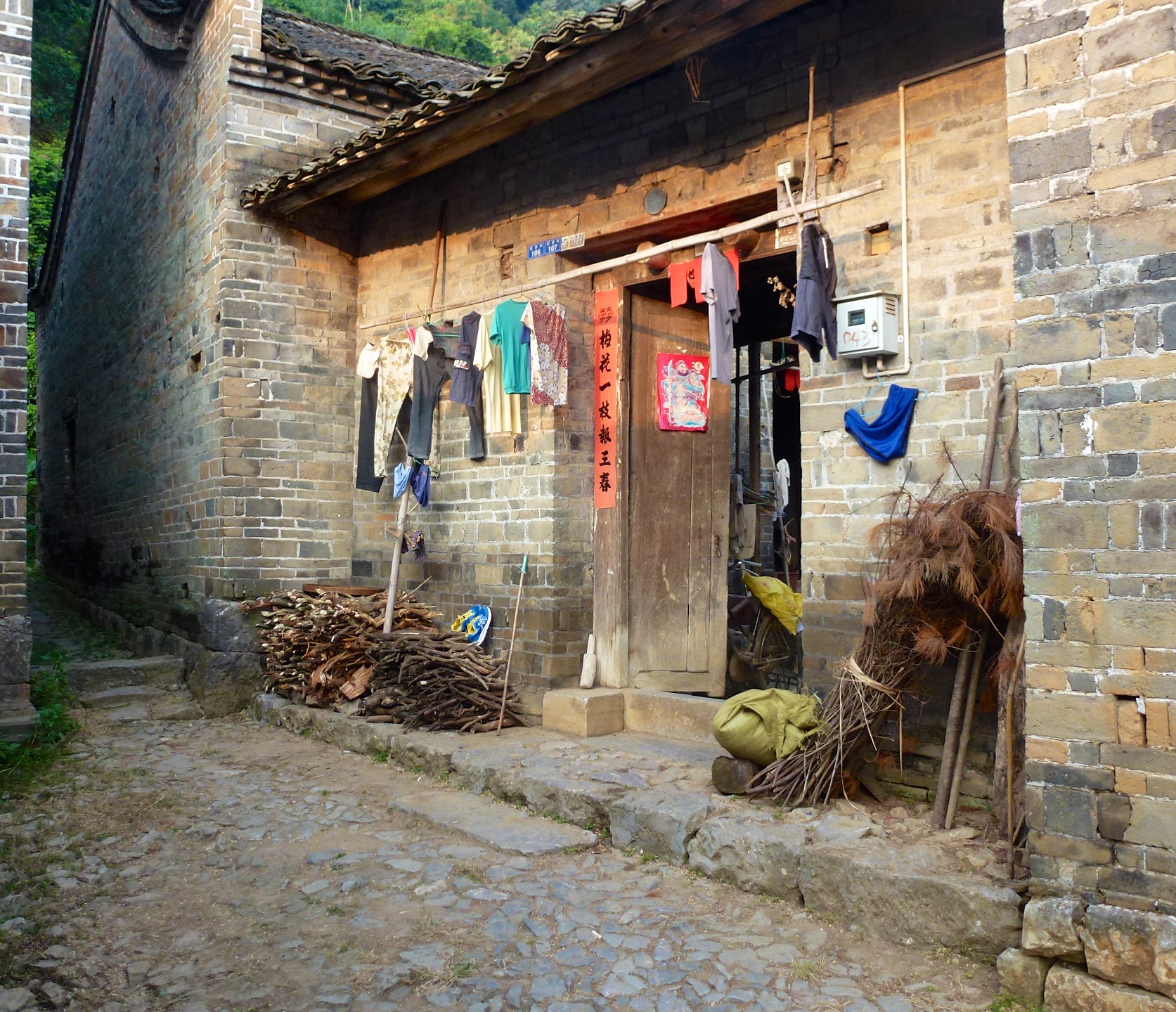
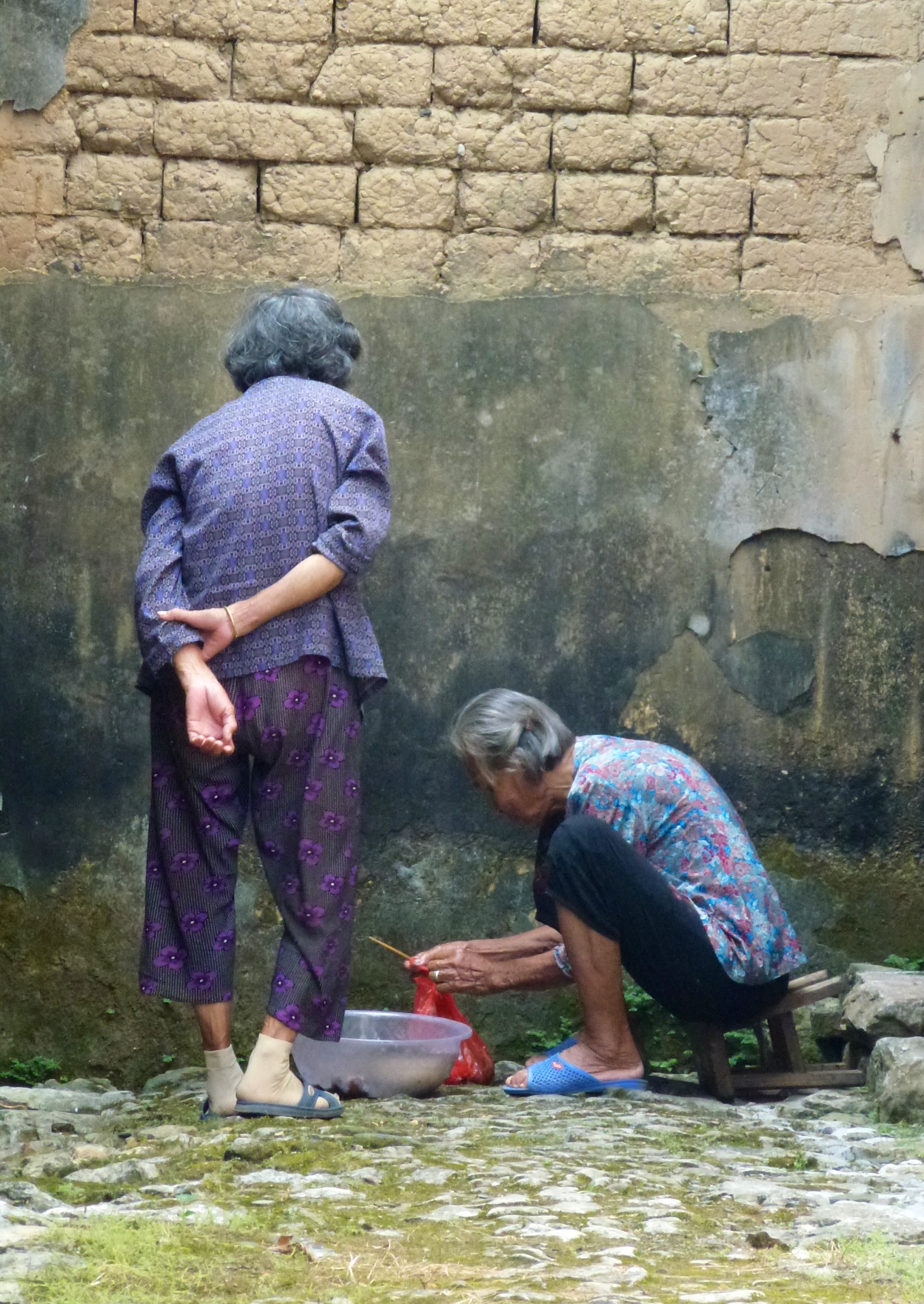
We enjoyed wandering around our small village and seeing how the local people live. It was as if we stepped back in time 100 years. Most of the old stone homes do not have electricity – so no televisions, no refrigerators, and no Internet! In some homes, they still use charcoal or kerosene stoves. All of them kept their front doors open so it was easy to look inside their very modest homes.
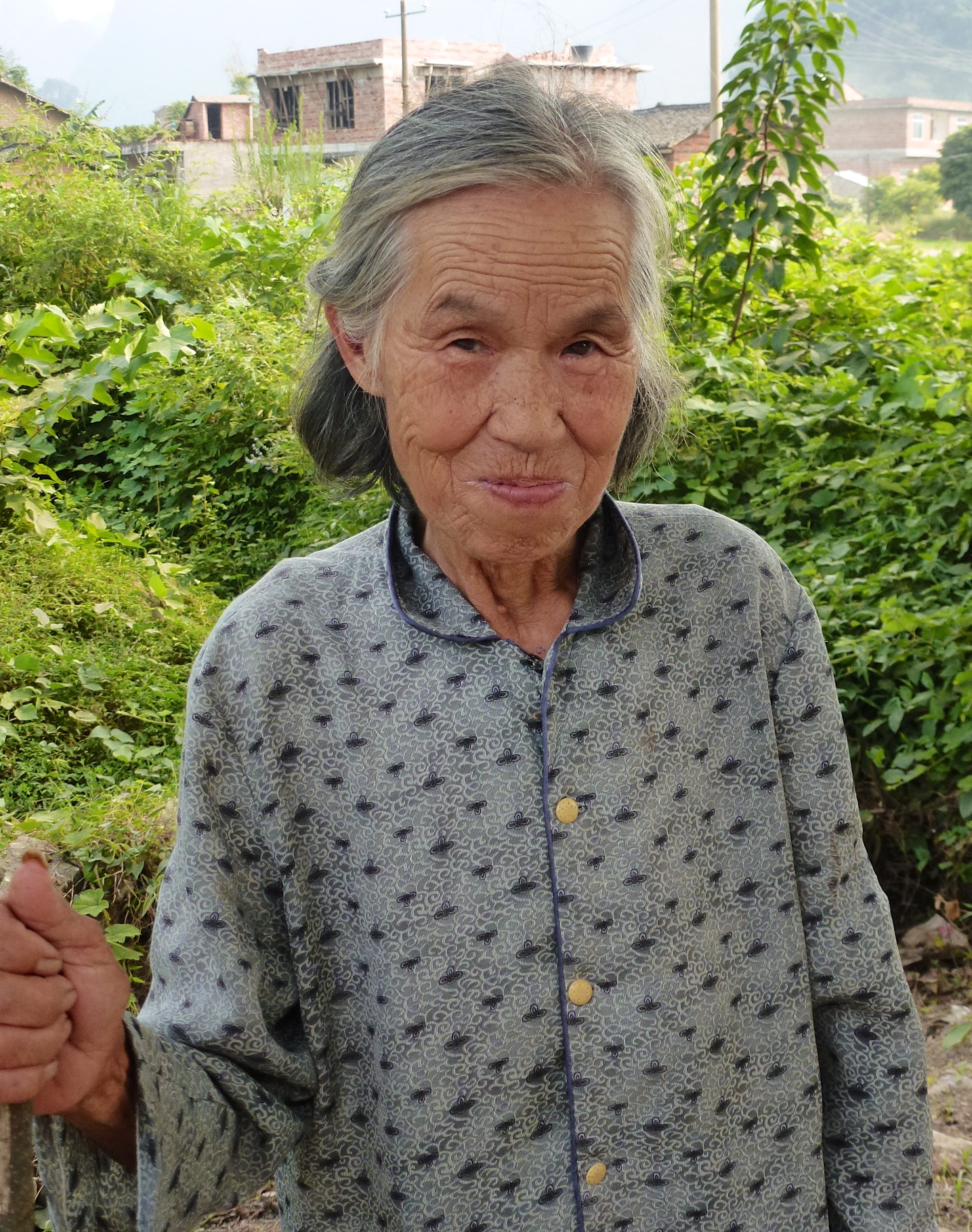
This sweet woman let me take her photo…. for a small fee. Unfortunately, everyone, young and old, put out their hand when we asked if we could take their photo. Most we just skipped, but this woman interested me with so much character to her face.
The women above and below are wearing the tradional blue/purple dress of the region; with fabric which has a very small circular pattern.
This woman did let me take her photo without asking for money, one of the few. Her expression looks like she has a good secret to tell.
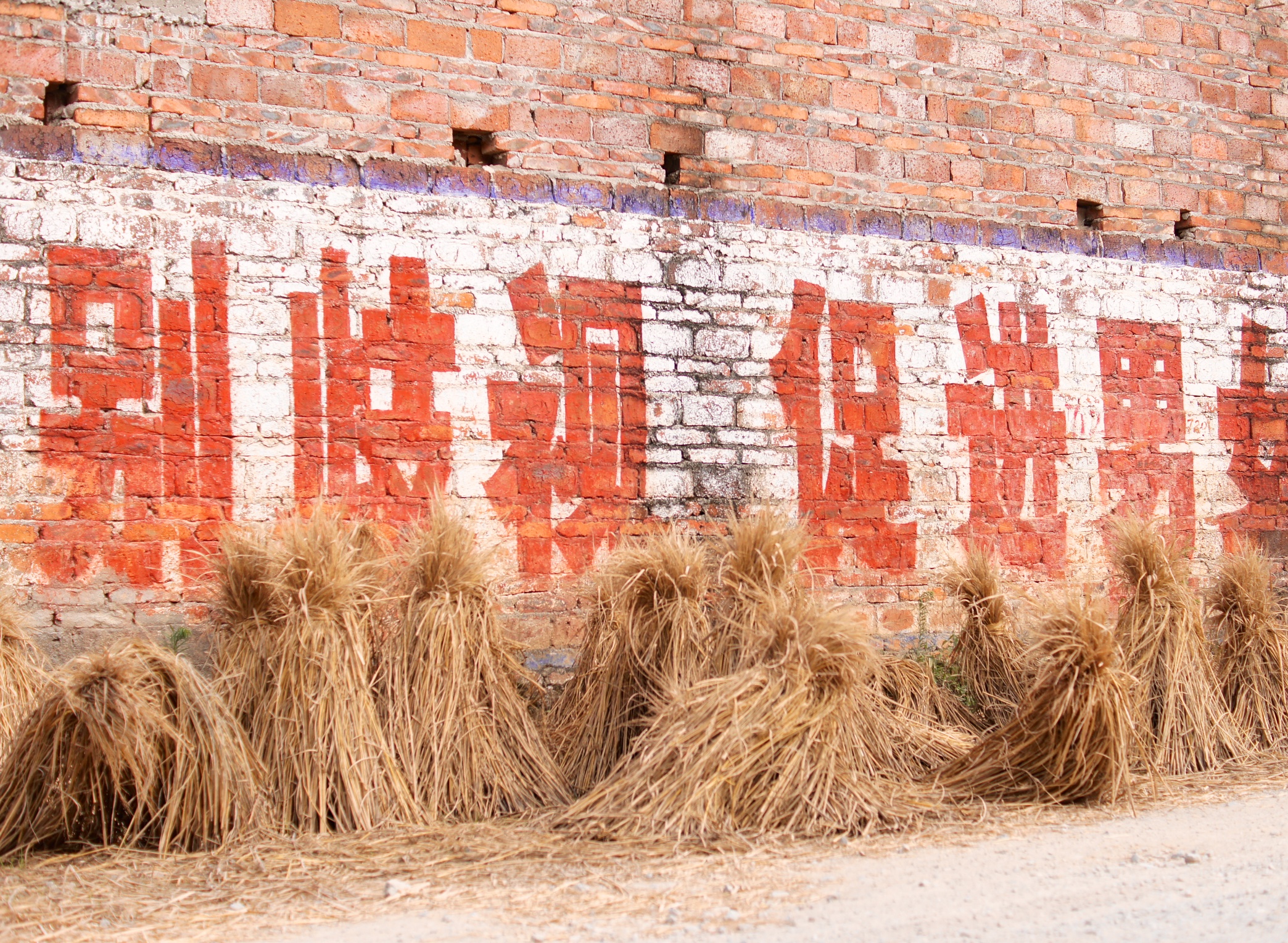
It is fascinating how different countries stack hay. Something that you would think would be done universally. I need to write a book on this – hay stacking around the globe : )
Many of the houses had cotton, peanuts, and rice drying in the front yards.
Two watchdogs keeping a close eye on their family rice…or maybe just a soft spot for a nap on top of the rice kernals.
These two were a little more alert – keeping watch from on top of the roof. How DID they get up there?
An advertisement on the side of a building.
The photo was taken in the early morning hours, with a little fog rolling in.
The next was taken at sunset in our village. The sun setting cast a beautiful pink glow on the mountains.
A rice field that was recently harvested. All the scenes were so beautiful with the Karst Mountains peeking through the background.
It was humbling to see how simple they live in today's modern world.
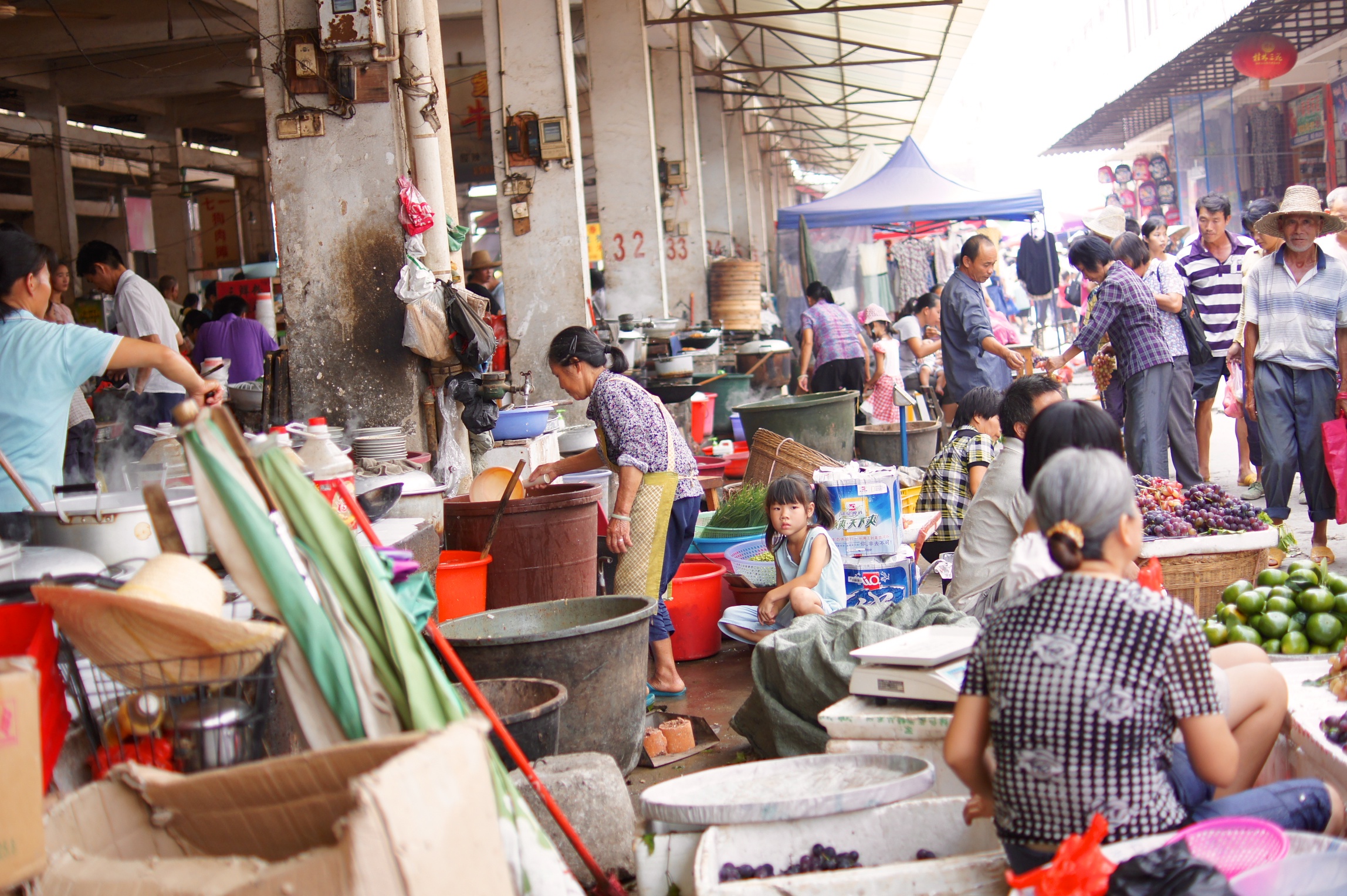
The food market in Fuli town.
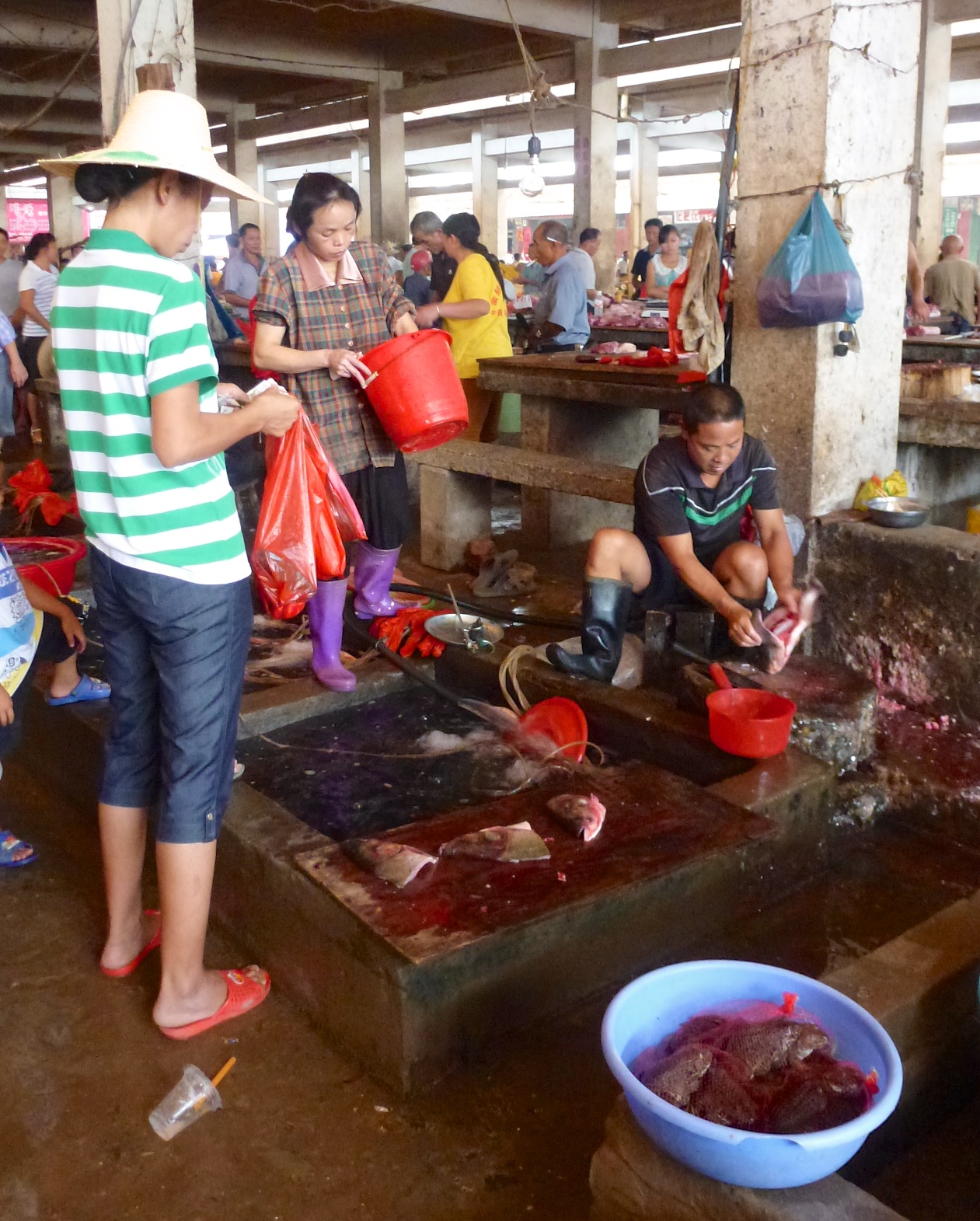
This was NOT a tourist sight. It was the local market and we were the only westerners there. It was chaotic, like no other market we have ever experienced…and we have seen quite a few!
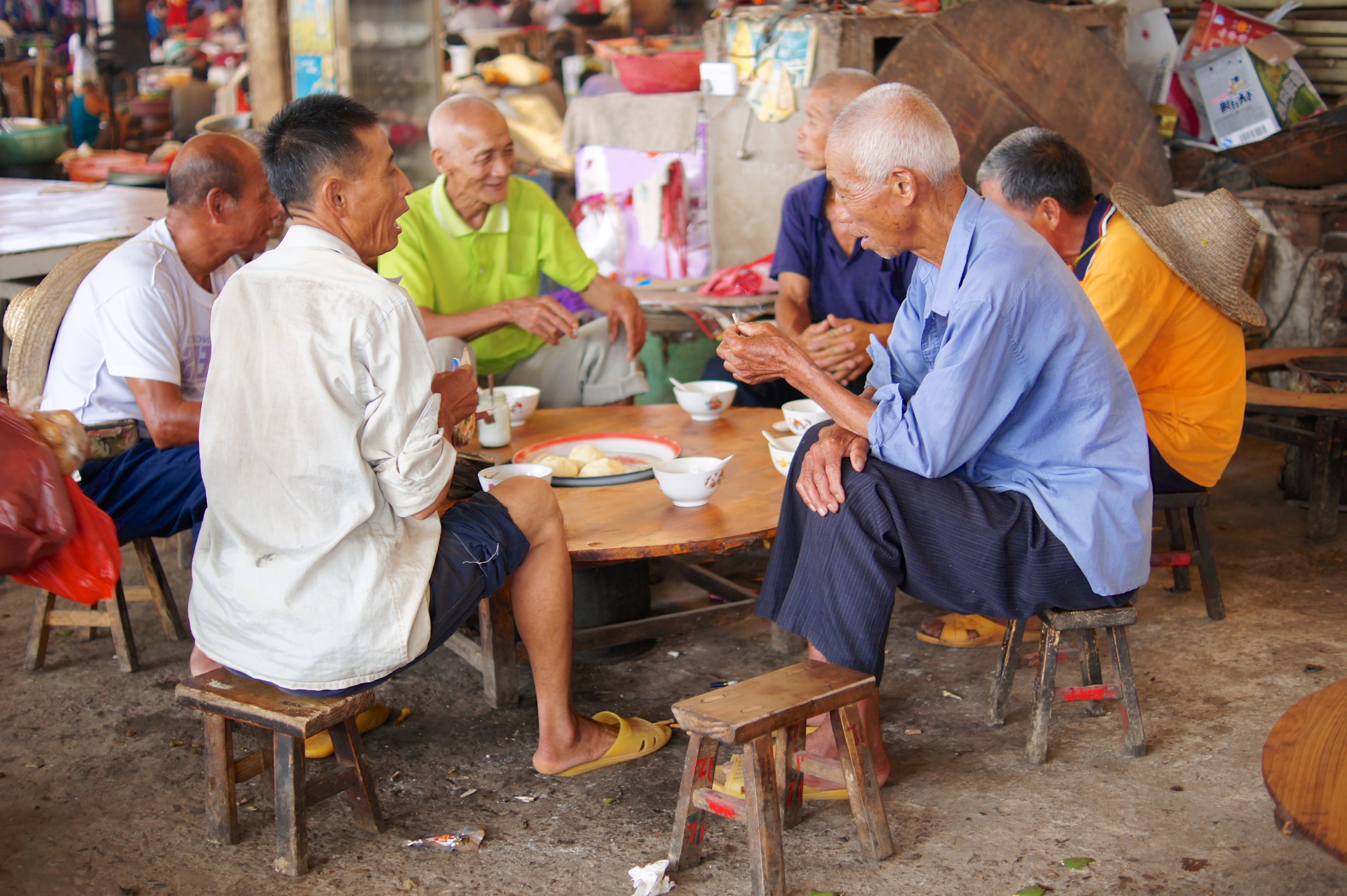
It was a very large market and had a very active food court, with our favorite tiny chairs.
We saw everything at the market – men enjoying tea on the tiny chairs…
A half-naked butcher…
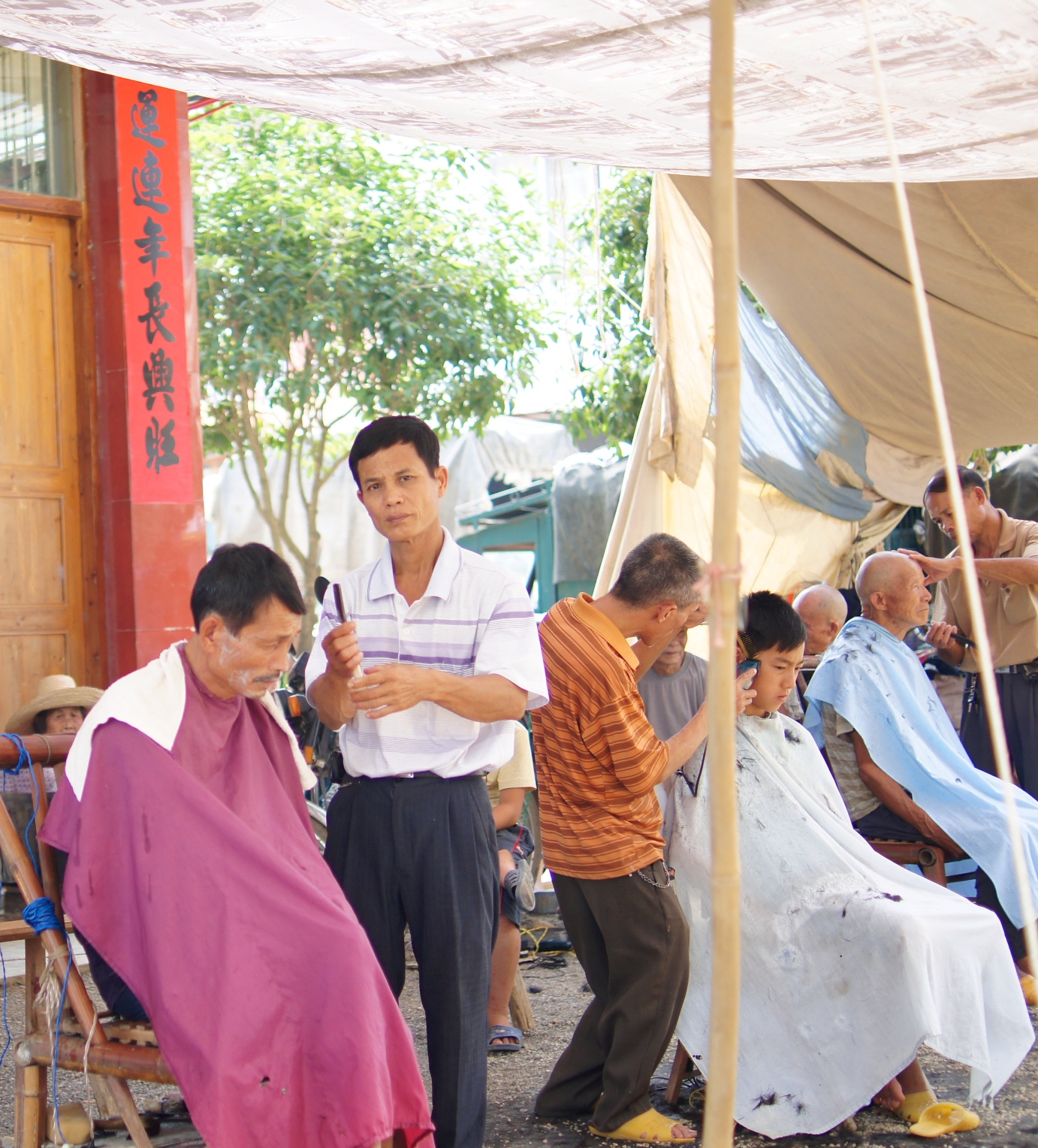
A barber…
Where D wanted to get a shave with a straight blade - "it would be a great photo for the blog". My response…No! Are you crazy? What if they accidently cut you… no telling what you might get. He left pouting……told me I was a "joy squasher".
A witch doctor…
He was not for show, as I mentioned, we were the only westerns there. This was the real deal. He was treating a woman's shoulder with a magical blend. This is when I wished I could understand the language.
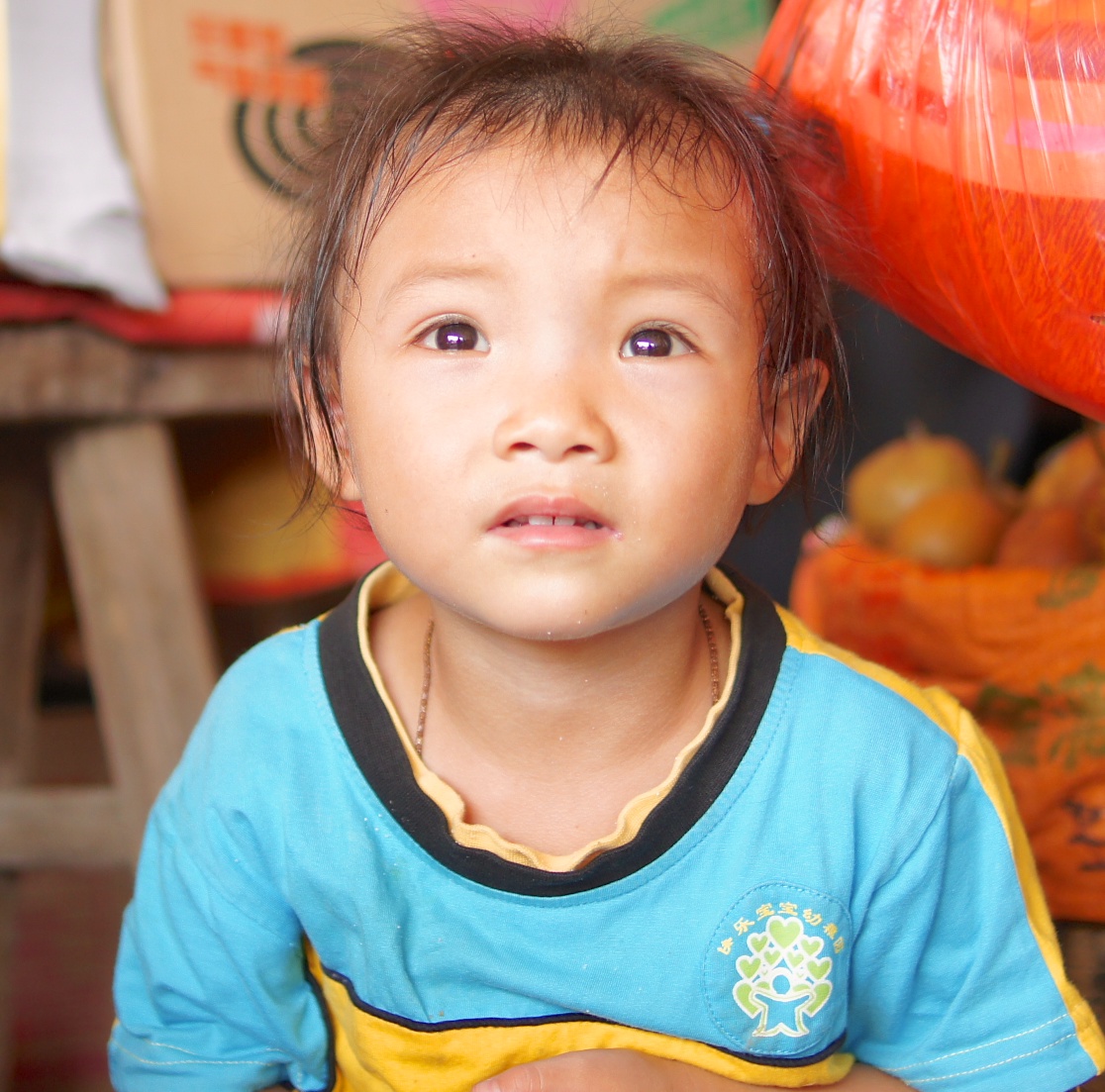
We saw bored children…..
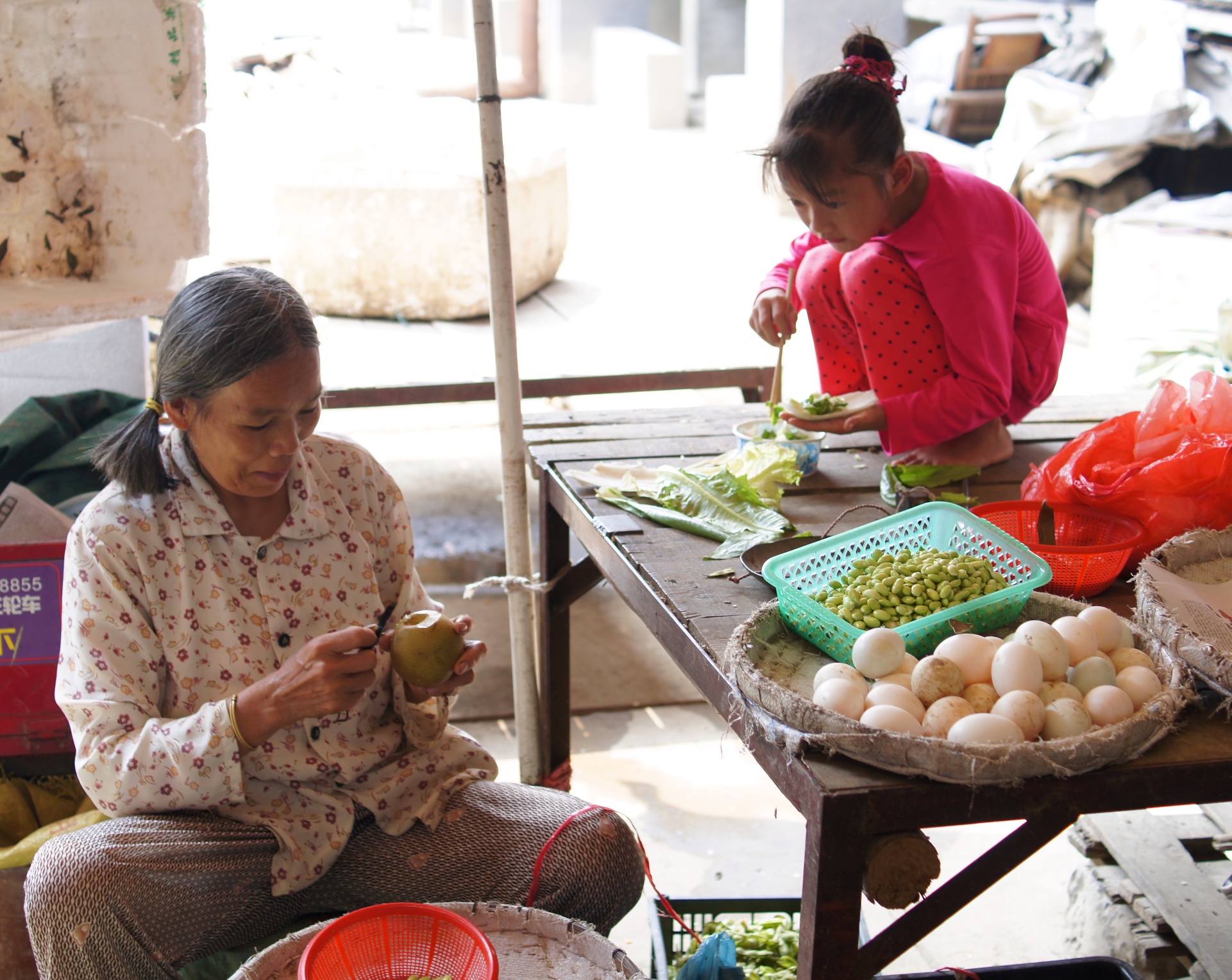
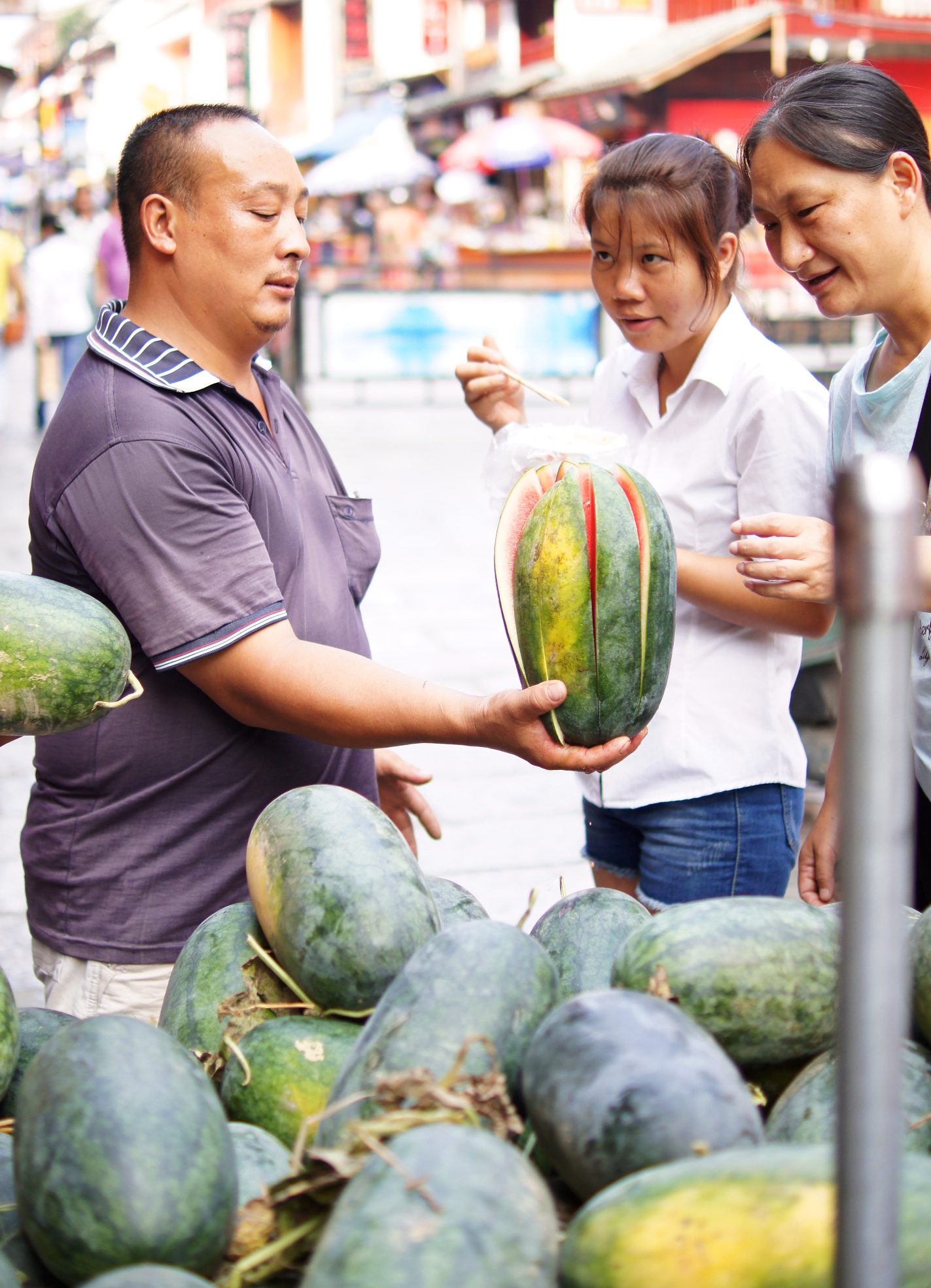
Fruit and veggie sellers…
Butchers and fish mongers…
And noodle vendors…
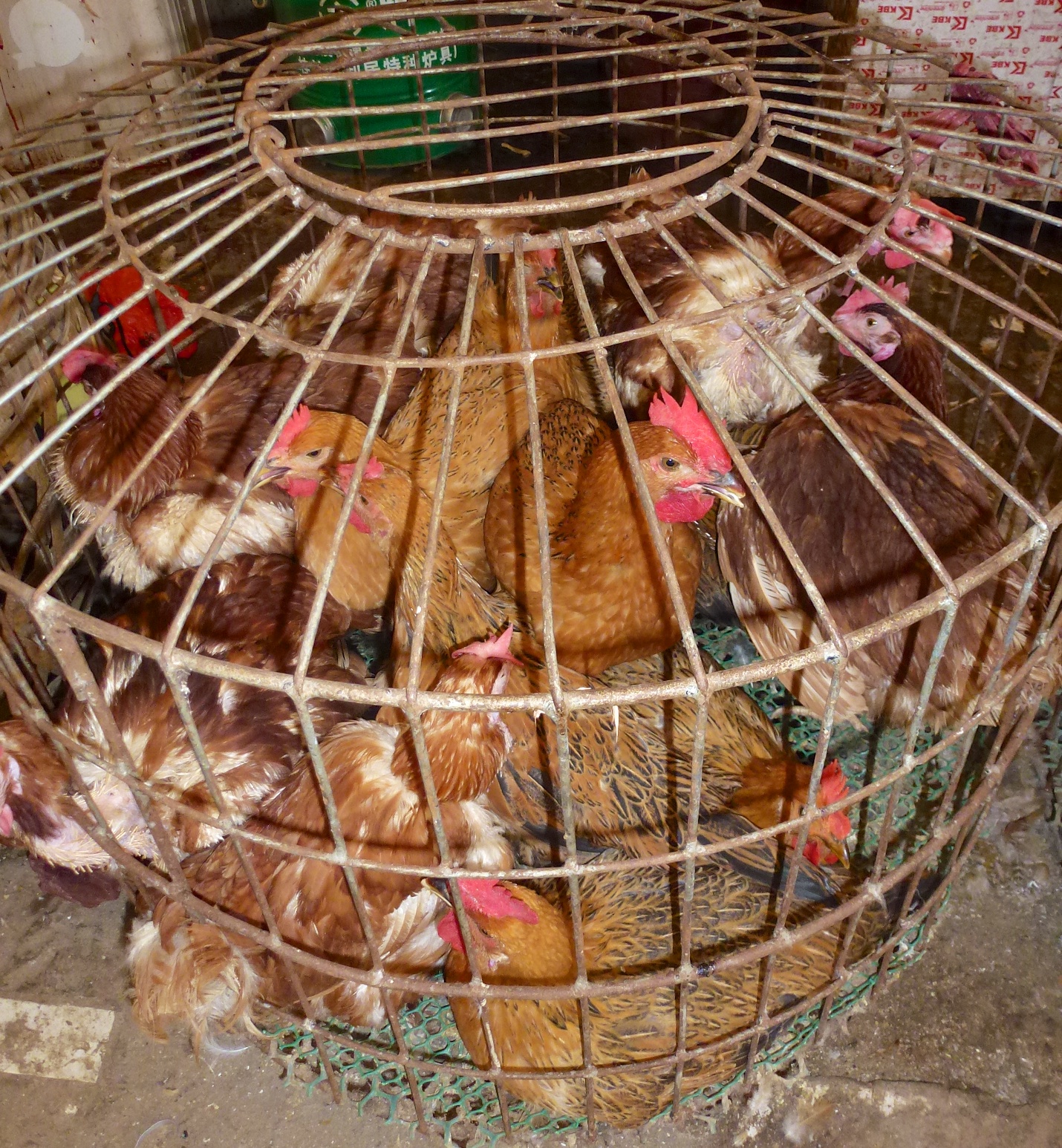
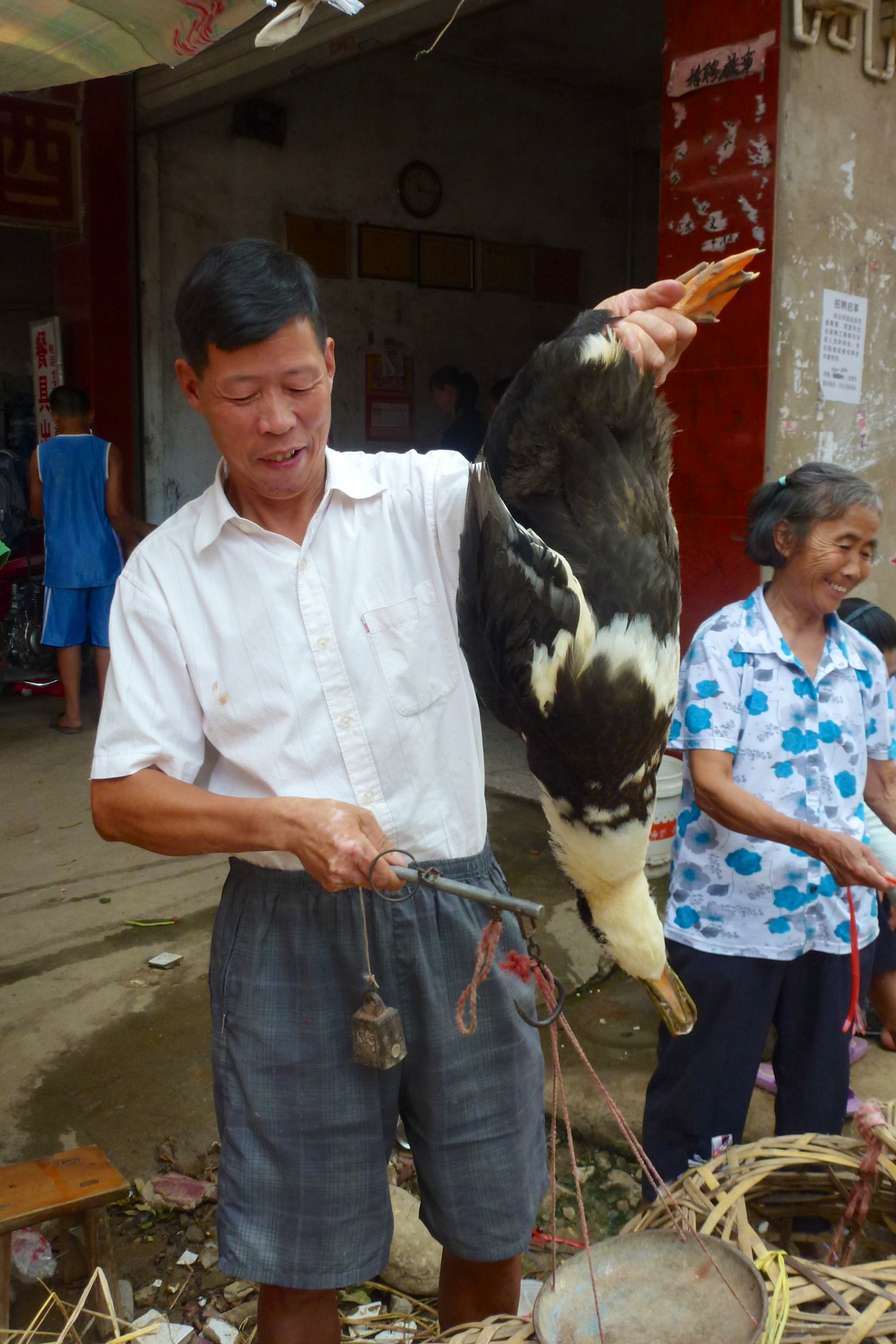
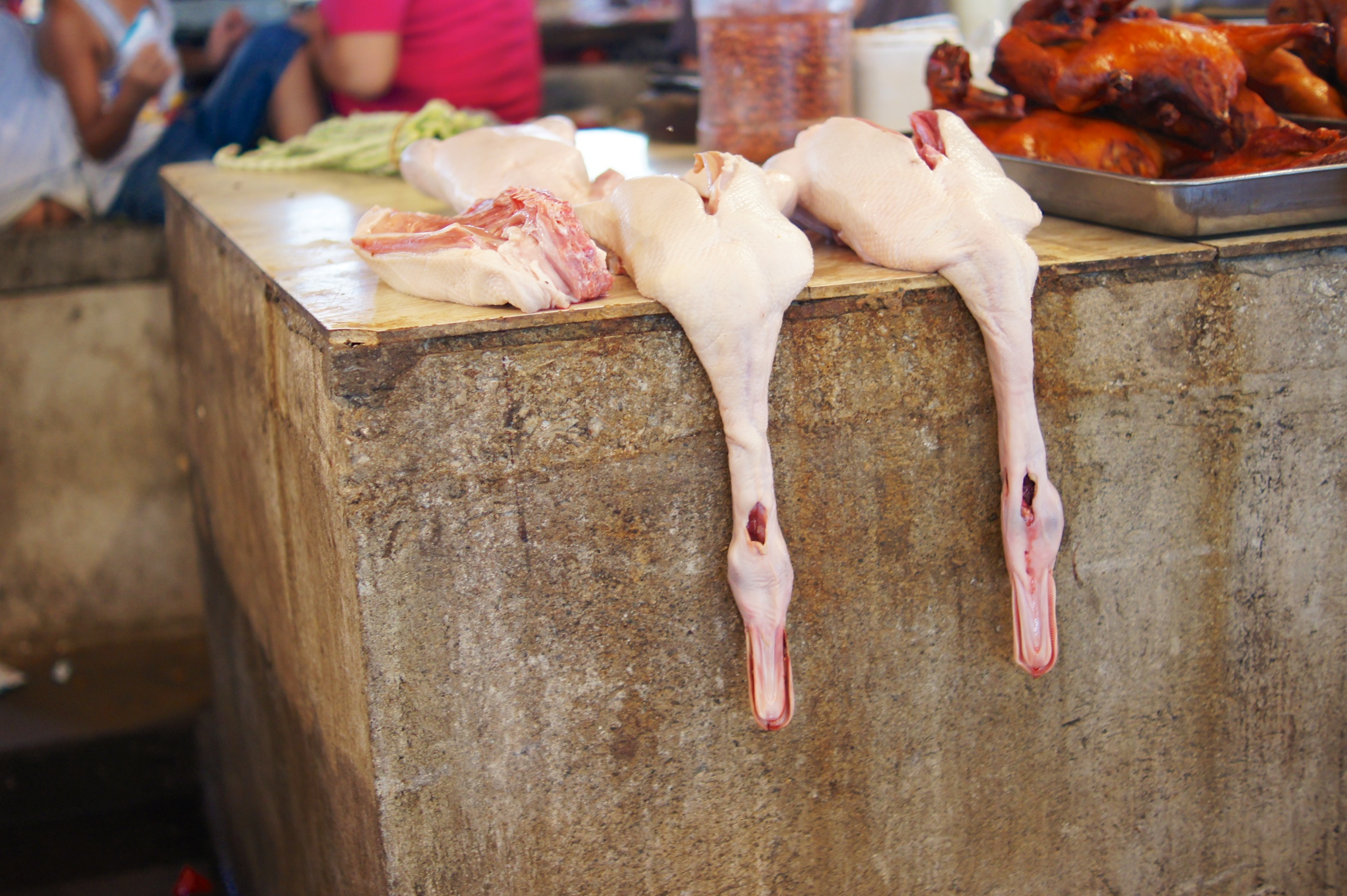
But what fascinated us the most, were the chicken and duck vendors.
How they housed them…
How they weighed them…
How they displayed the cleaned ones…
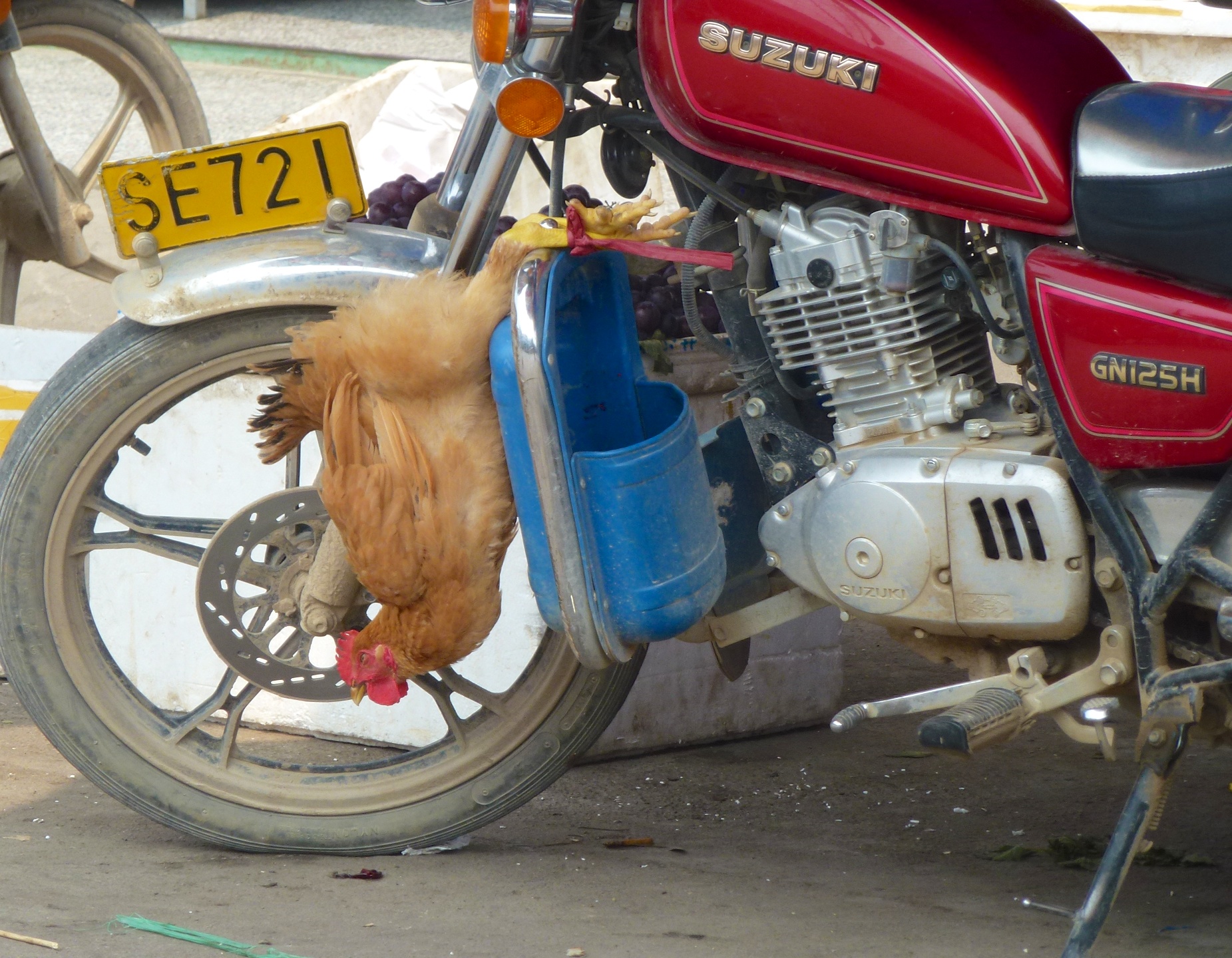
How they carry them (look near the front wheel). The chicken is still alive for the ride home.
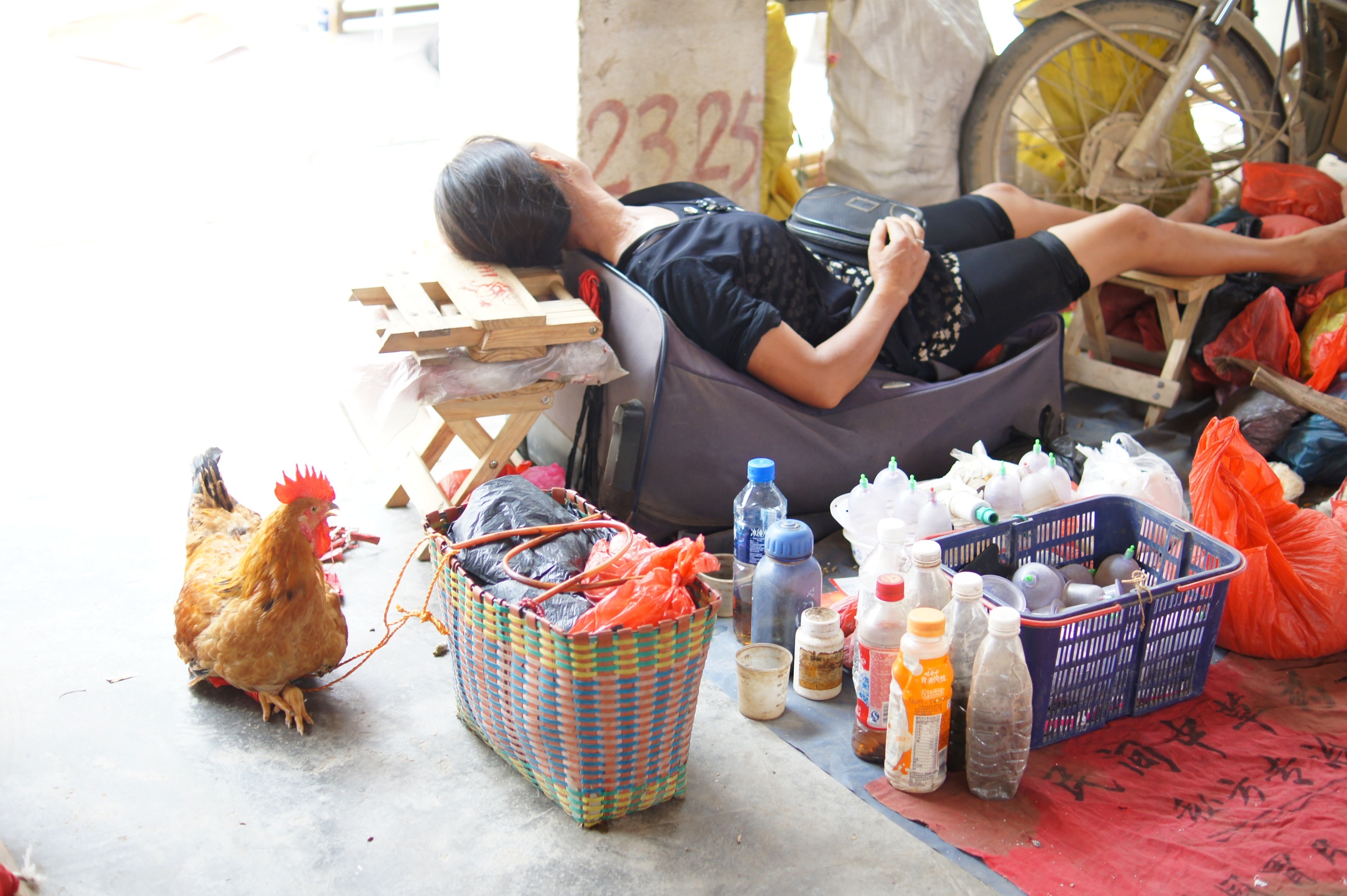
Even how they took naps with them : )
Rafting down the Li River
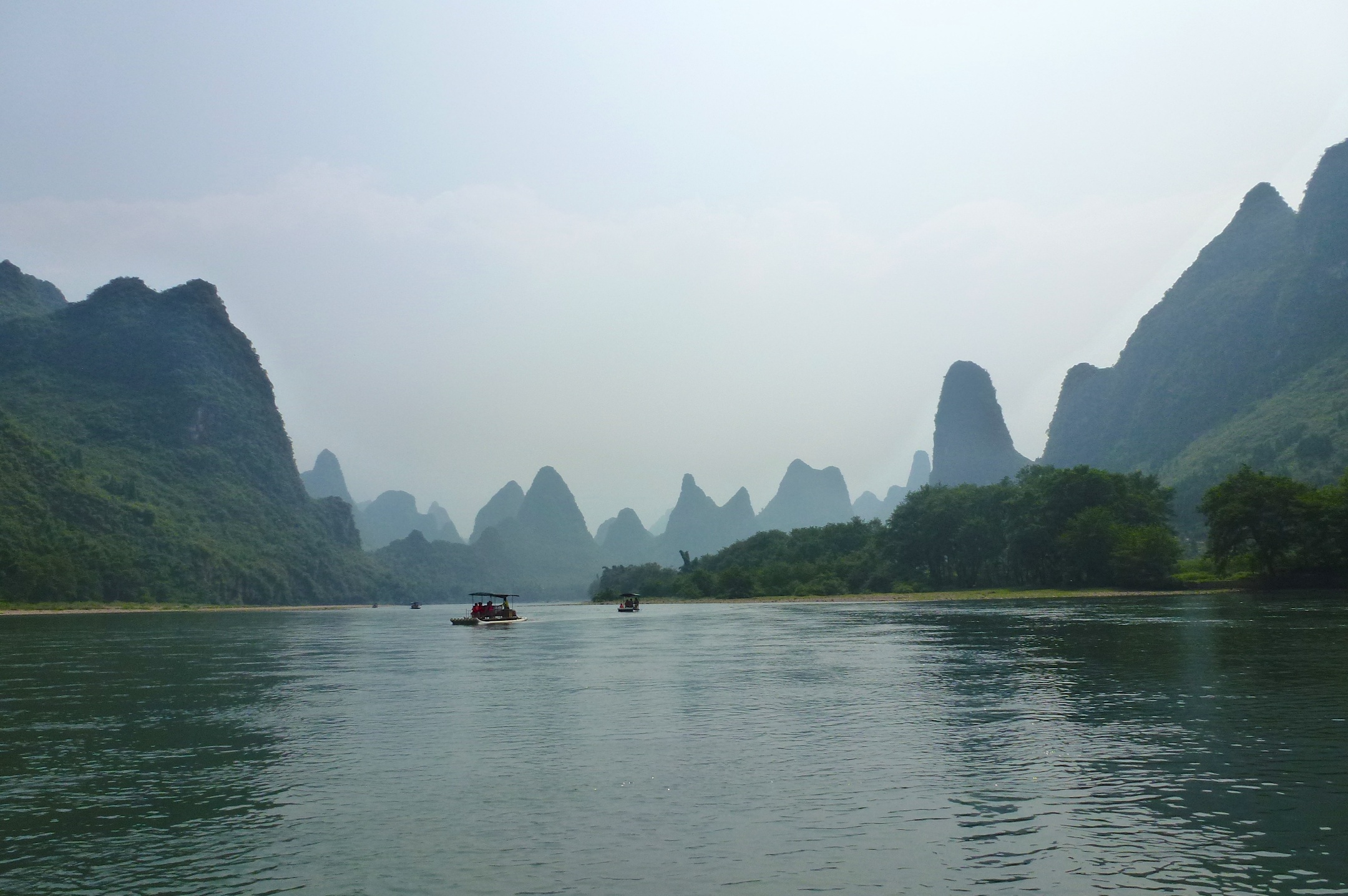
The Li River was as scenic as the Yangshuo River. The mountains seemed to be denser on this river.
This trip was on a motorized raft, but still just the two of us with a gondolier. Most of this region of China is covered in fog year round, but that added
to the mystique of the river. Every corner we went around was more spectacular than the last.
The Li River
originates in the Mao'er Mountains in Xing'an County and flows in a southern direction through Guilin.
The unusual Karst topography hillsides have been
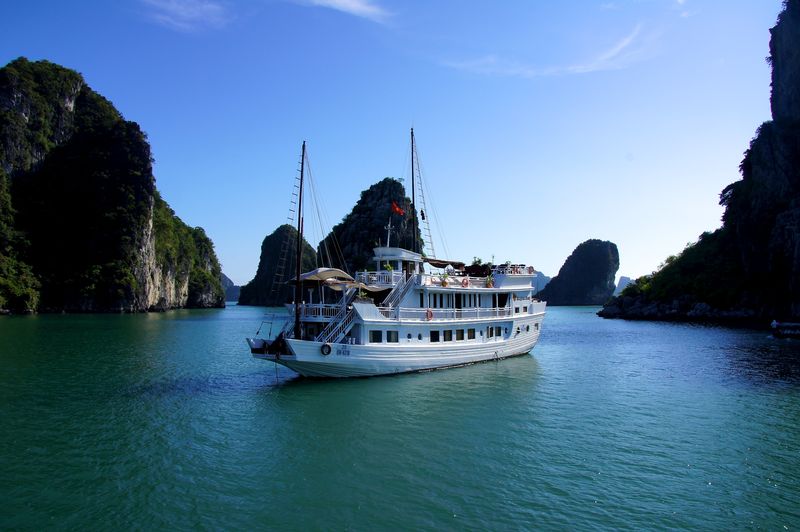
compared to those at Ha Long Bay, Vietnam, which we visited in May of this year. Both are beautiful sights to see and very different.
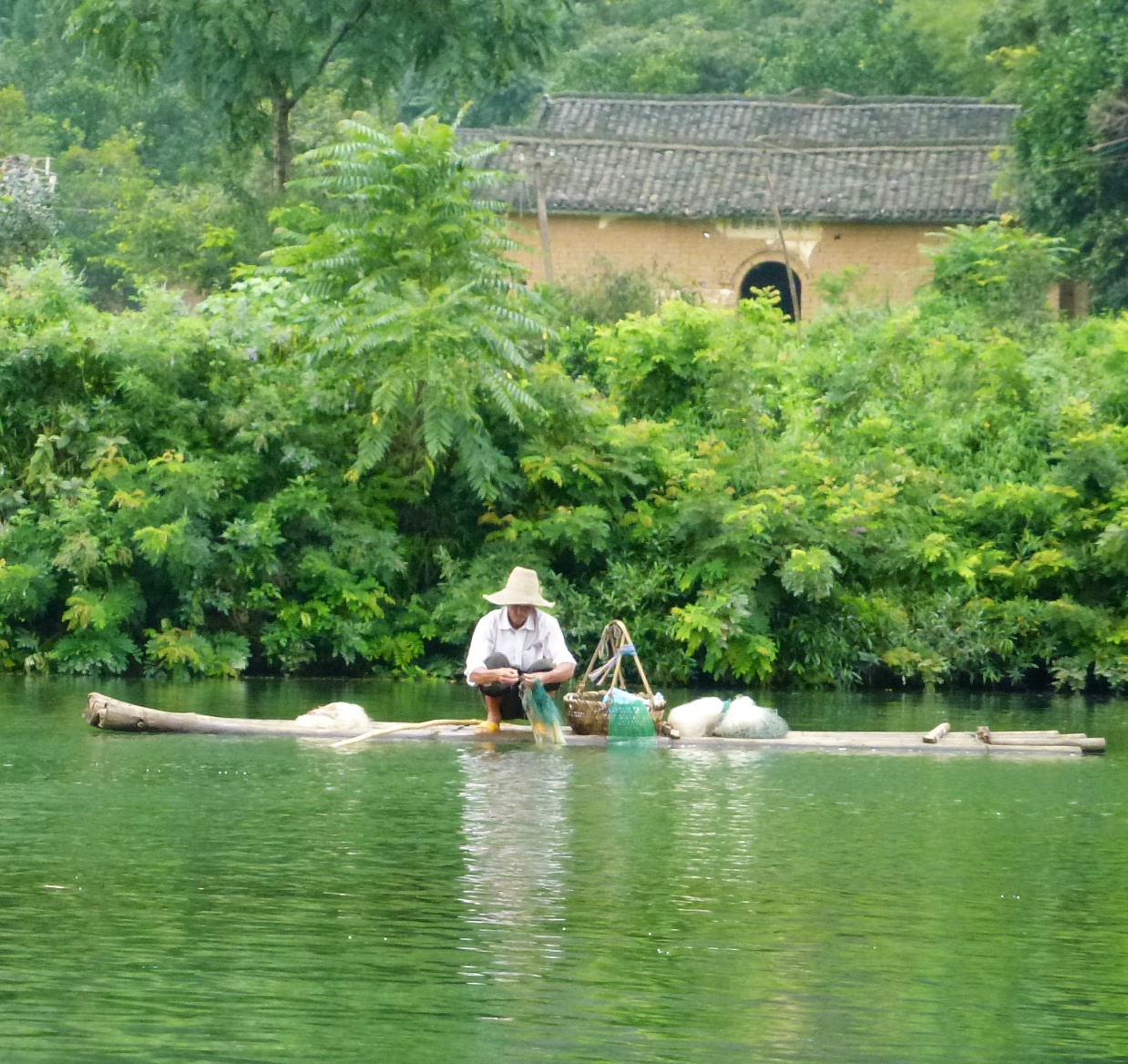
People still live on the water the way they have for centuries.
The town of Xingping
The raft ride ended in the town of Xingping, an ancient town with a history of more than 1300 years.
You can see beautiful examples of the Ming Dynasty architecture, and fine wood carving dating back to more than five hundred years.
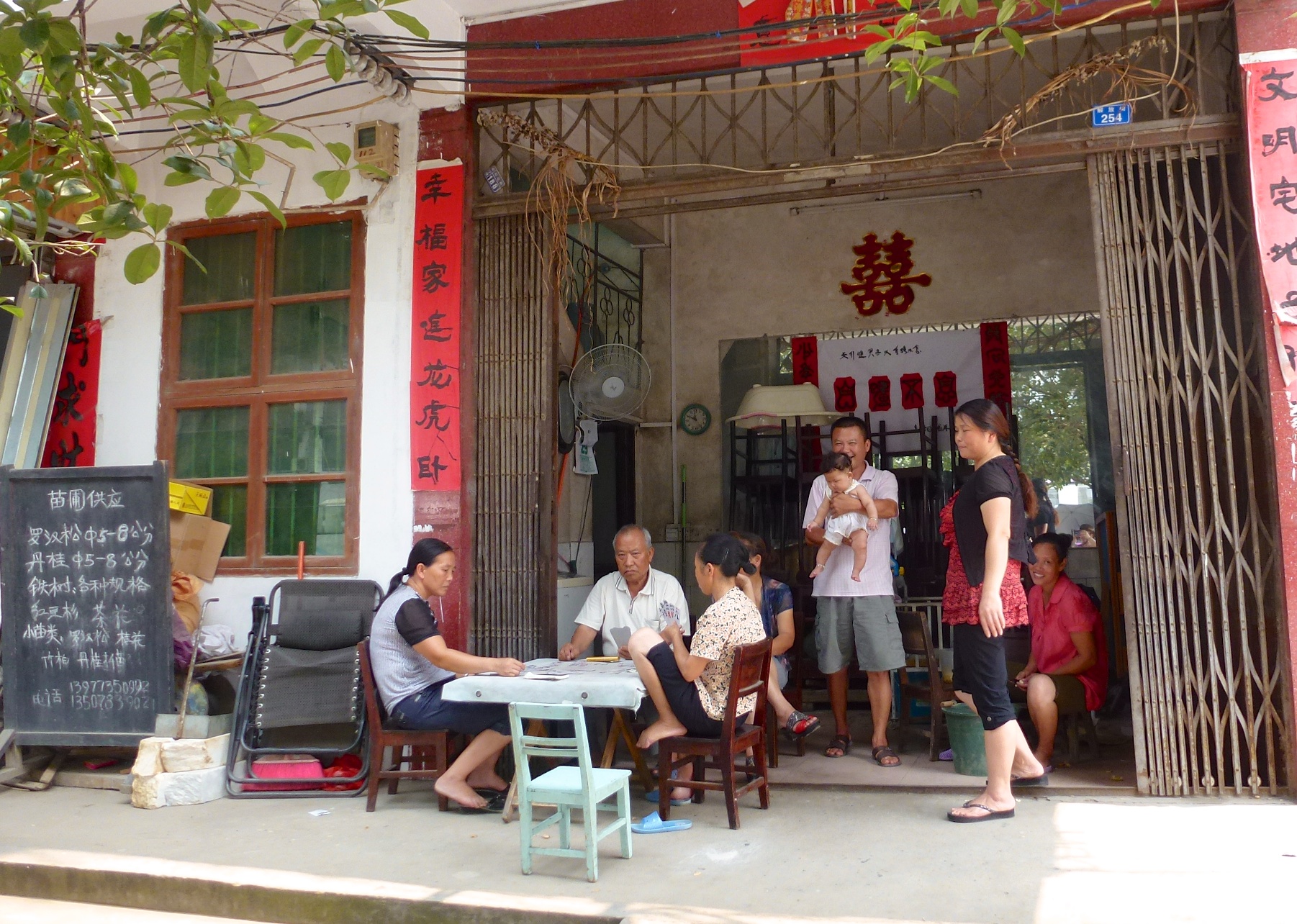
Since the raft trips end here, you would think it would be very touristy. But it was not. We were there around lunch time and the streets were empty. The scene below demonstrates what every single shop keeper seems to do during lunch in rural China: They either take a nap or play cards. Most play cards, and we must have seen hundreds of Chinese workers playing cards every afternoon during this trip.
We
went back to the town of Fuli as we read there was a very quaint part
of town we missed and it was one of the oldest towns in the area, over
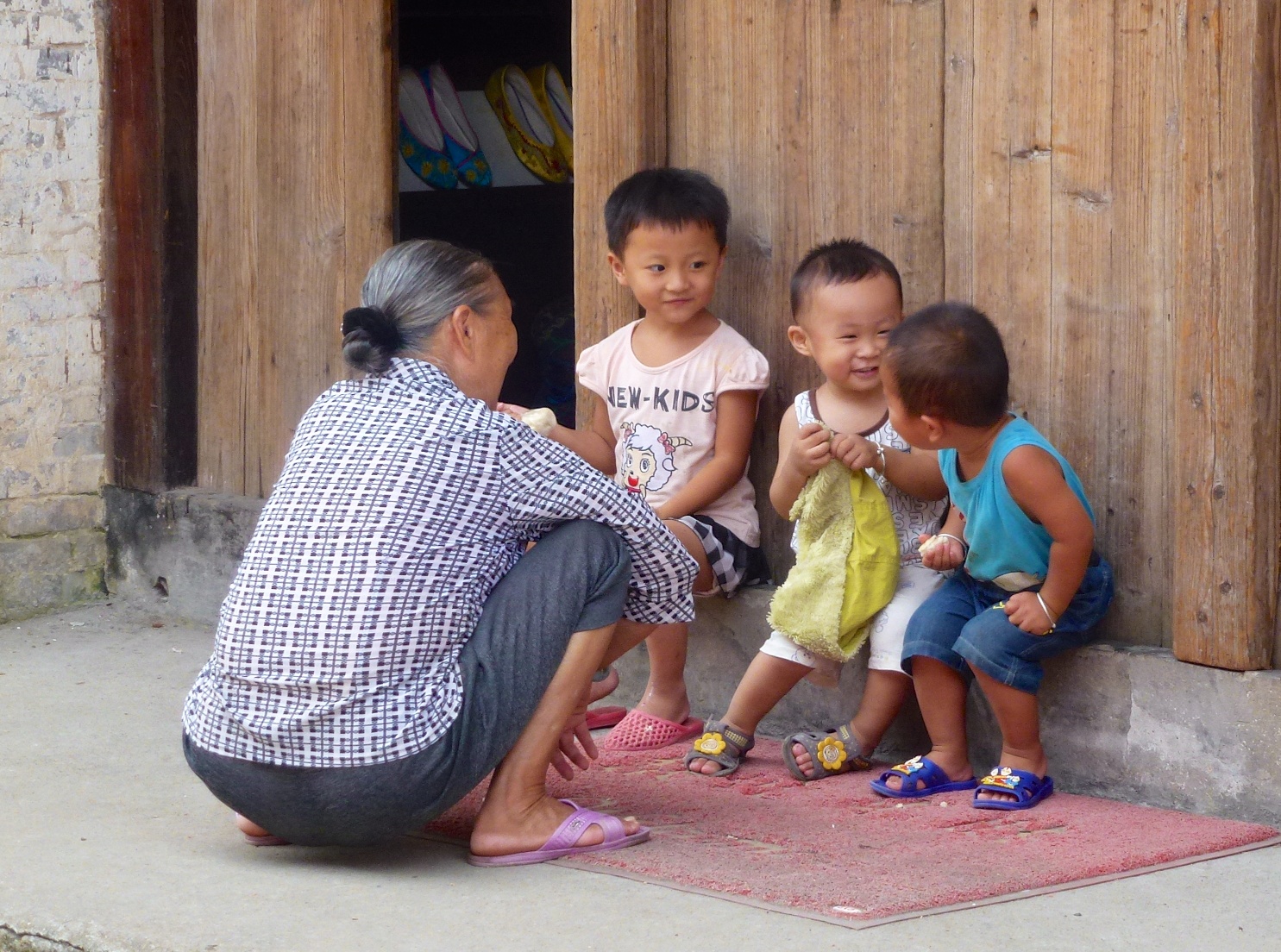
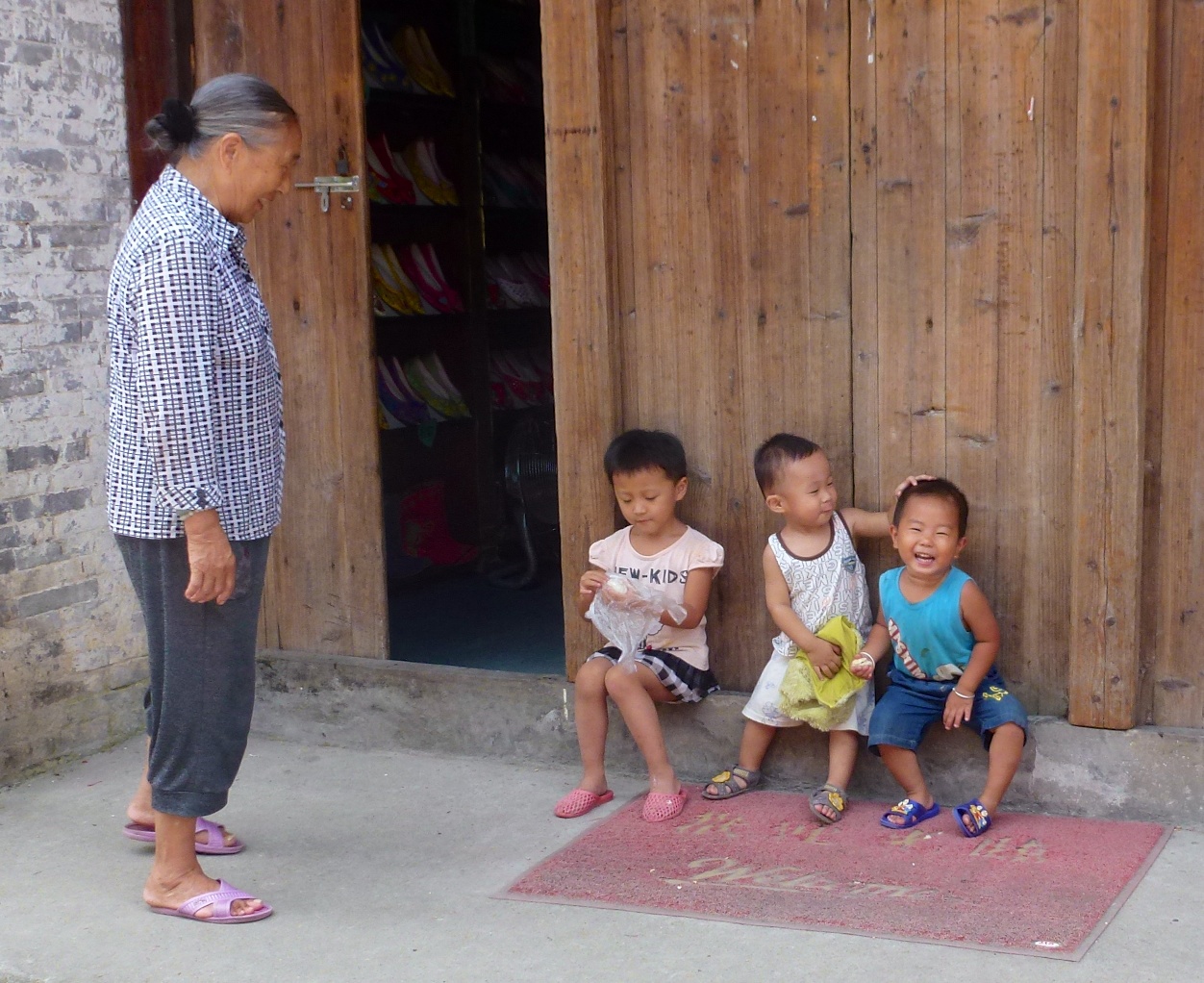
800 years old. I like this photo of the young girls, the new generation in a town so rich with history. They look like they are having fun.
I call this photo "the storyteller". Doesn't it look like the wee one is deep in a story and the others are hanging on to every word he says?
I have to share the second photo of the group – precious!
Ohhhhh and one more!
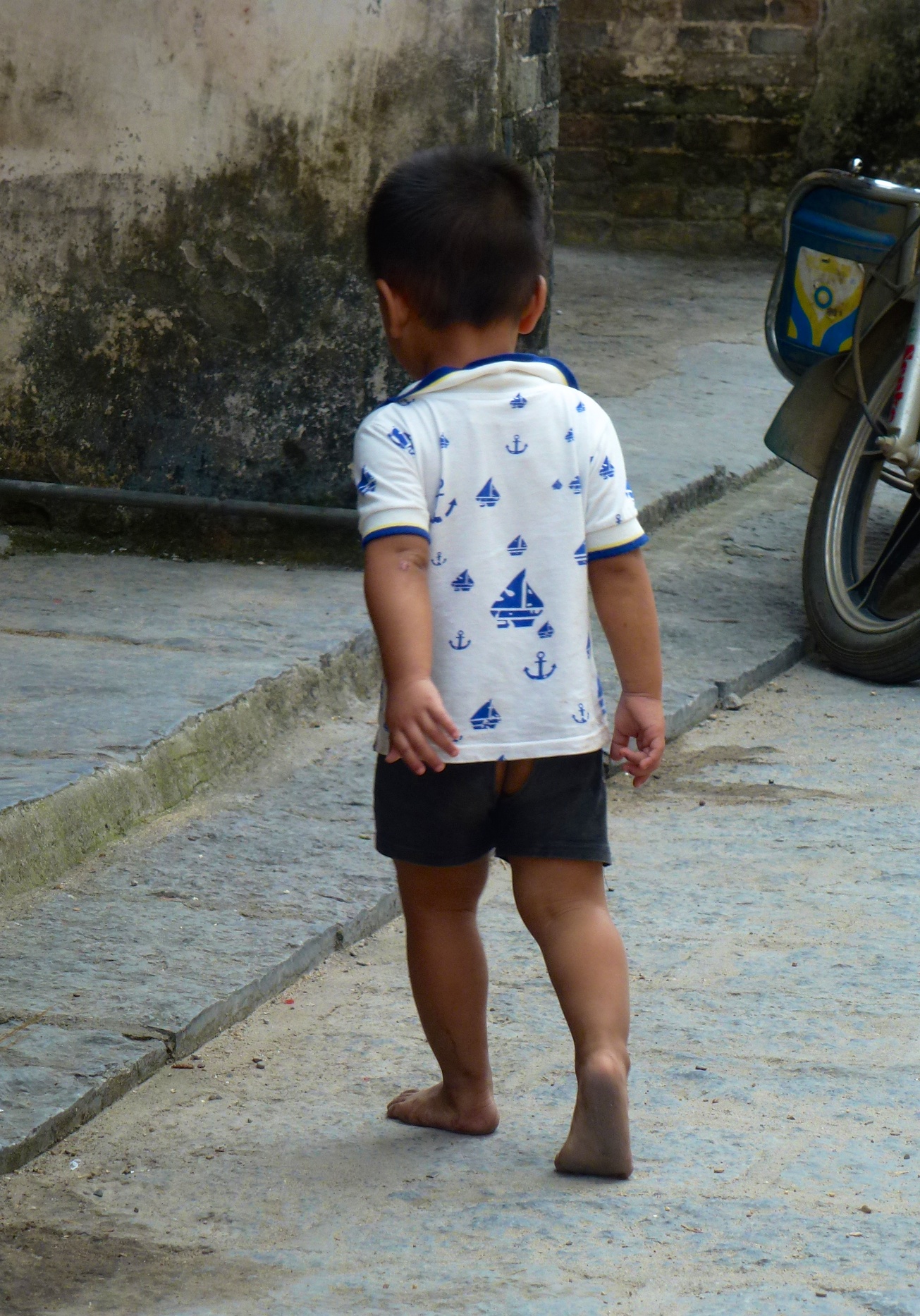
And this little guy…if you look closely you will see the whole back of his pants are slit open. I have never seen this in any other country, but here, it was quite common. All the little children under 3 or so had split pants – no diapers…so they could just pee freely. Where did they pee you ask – everywhere! In the streets, in the stores…. not the cleanliest method!
Hey grandma – wait for me!
They were celebrating the festival of the ghost when were
visiting. We went around for two
days saying it was the goat festival.
We were confused when we were at the market because we didn't see any
goats. We even told a few people
(other tourists) that it was the festival the goat. We eventually learned it
was "ghost" not "goat". Not the only
miscommunication we had during the trip
: )
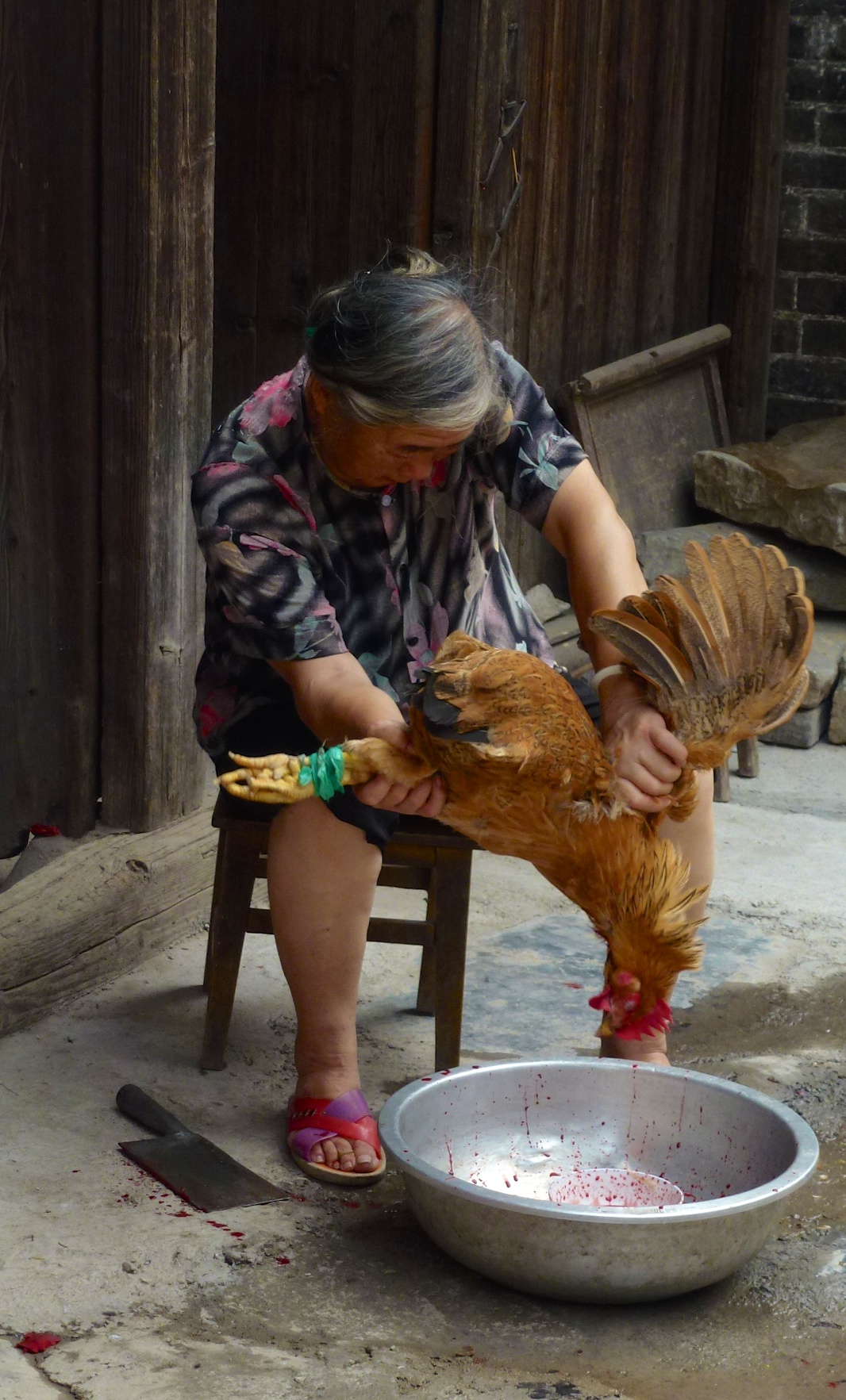
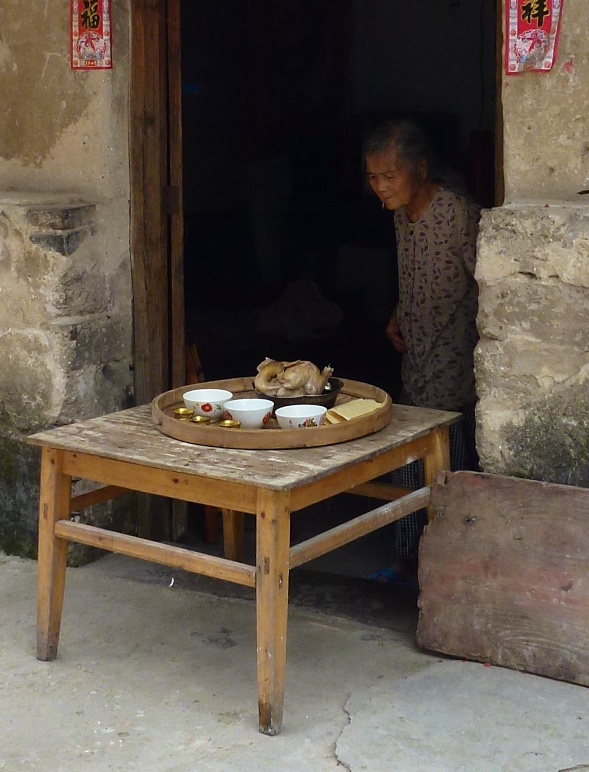
In the photo below, the woman is preparing a chicken. We learned that the family would eat the chicken that was offered to the ghost for dinner that evening.
The ghost festival is a traditional Chinese holiday
celebrated on the fifteenth day of the seventh lunar month. The entire month is
actually called ghost month. But
the big celebration is during the full moon. It represents the connections between the living and the
dead, earth and heaven, body and soul.
Activities of
the festival include preparing ritual offerings of food, and burning ghost
money (or paper money) to please the ghosts and spirits as well as
deities and ancestors.
Starting in the early evening – we heard random firecrackers
going off all over our little village and in the distance. We were told that this was done to scare
away the ghosts. I felt pretty
sure I was not going to see any ghosts that night.
Most homes have a photo of Mao Tse-Tung taped to the wall. Commonly
referred to as Chairman Mao, he was a Chinese communist revolutionary, political
theorist and politician and the founding father of the People's Republic of
China (PRC).
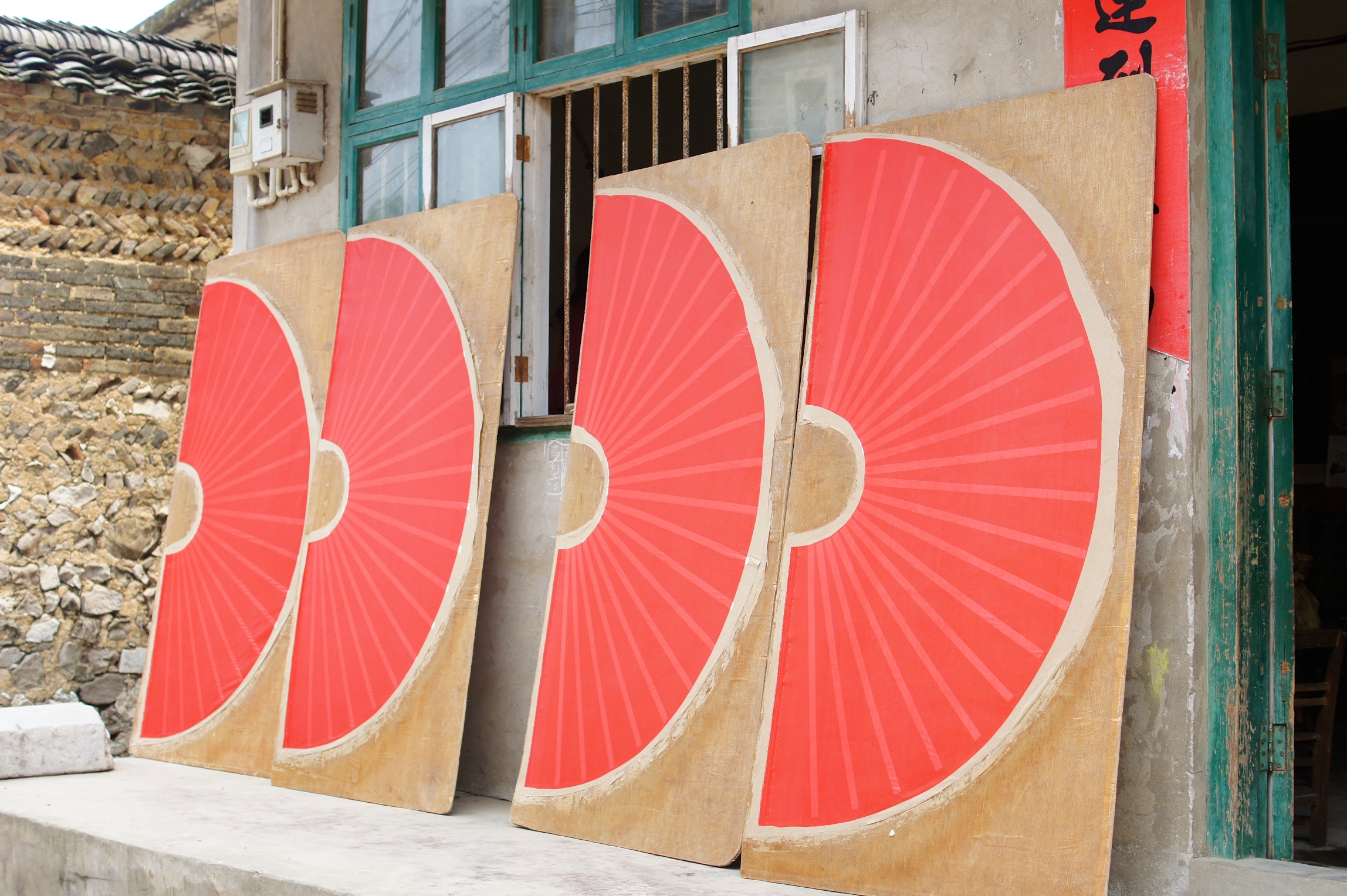
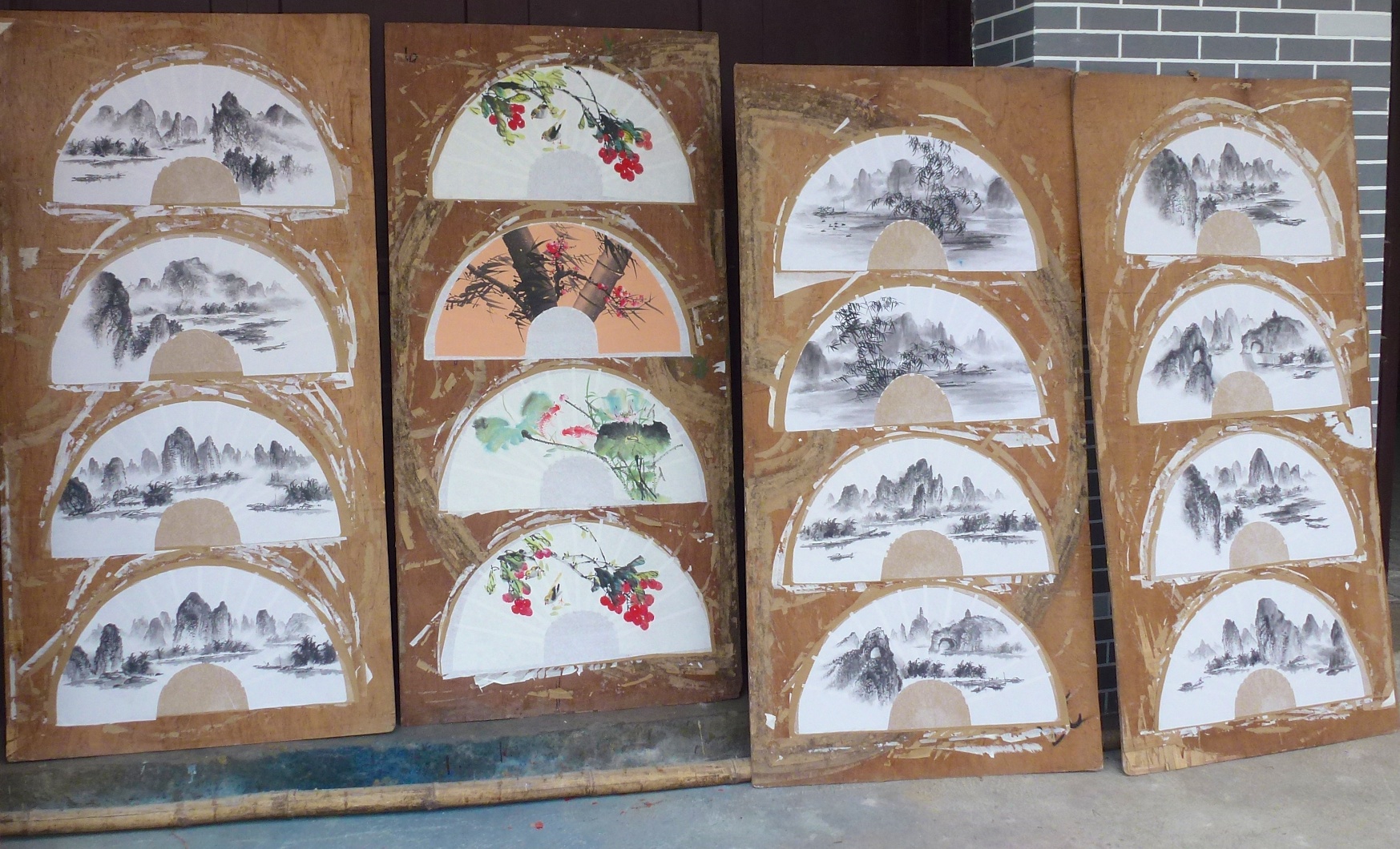
Fuli town is famous for their handmade folding fans. Each fan is one of a kind.
Artists use bamboo to make the fan ribs, and tissue paper for its covering. Below, the spines of the fans are drying in the sun.
Each one is hand painted, mainly with scenes of area landscape, as well as local culture. We did not buy one. Not really our style of decor.
That afternoon we visited Yangshuo, the largest town in the area. It is nestled in the Karst mountains.
Yangshuo is
ancient, over 1,000 years old. It was populated during the Jin Dynasty
(265-420AD).
Isn't this a great photo?
This town had the most beautiful McDonald's setting in the world.
It had a more modern feel then the smaller towns we had visited.
My FAVORITE dish of the entire trip – eggplant hotpot with pork. Perfectly spiced – a little hot. I had it many times during the trip, but this version was the best!
We really did ride in this little truck-like cart, on the highway! We are not sure he was an official taxi. We think he just saw two westerns and figured he could get a little money. We were desperate for a ride, so all parties were happy.
The local dentist office…
and the barber shop.
The ubiquitous lunch scene… with the afternoon card game.
A random photo of D that I really like.
We had so many facintating photos we wanted to share – but the blog just got too long. So I put them in a slide show – with music. We hope you enjoy it!
Click here for part two of the China adventure – The striking Dragon Rice Terraces of Ping An.
Saint Petersburg is the second largest city in Russia. Peter the Great founded the city in 1703, but the name is in honor of St. Peter, not Peter the Great. An interesting tidbit – St. Petersburg, Florida was named in honor of St. Petersburg, Russia.
In 1914, the name of the city was changed to Petrograd and in 1924 to Leningrad in honor Vladmir Lenin. In 1991, it went back to being Saint Petersburg and is often referred to as the Venice of Russia because of all the canals.
St Petersburg is a UNESCO World Heritage site and the most cosmopolitan and Western of Russia's cities.
It reminded us a lot of Vienna with its baroque and neoclassical architecture. Interestingly, it was Italian architects who built most of the buildings in the 1700. During WW II, the city experienced quite a bit of damage, but today it has been restored to its pre-war Imperial glory.
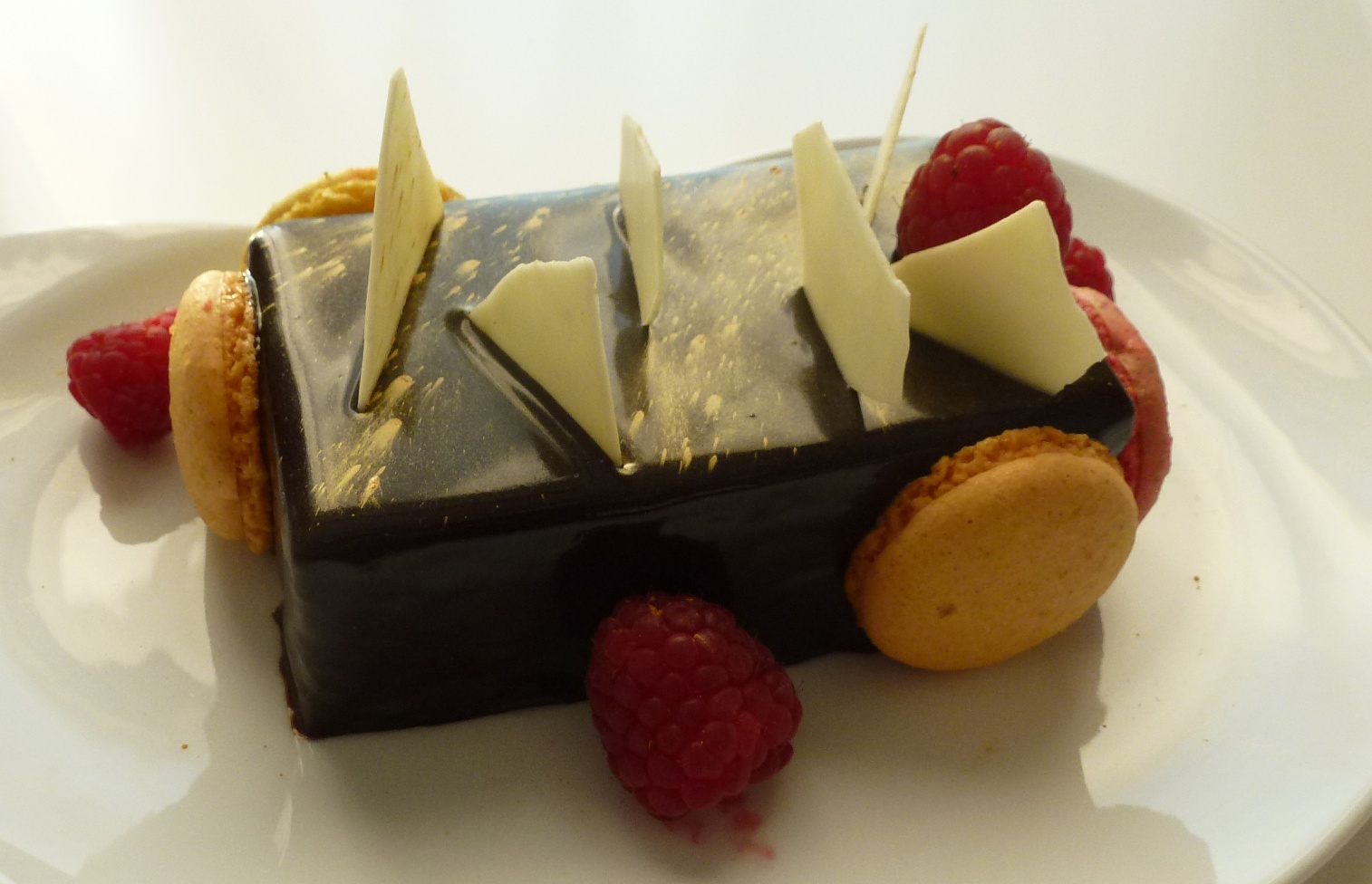
St Petersburg is legendary for its White Nights….long summer days when the sun barely goes down. While we were there, it stayed light outside until well past 11 pm. We stayed at the hip “W” hotel where they delivered a very special treat for me on my birthday…..the beautiful cake below, along with other goodies. Stop by my art blog and see everything they gave me.
Donald worked most of the time we were in St Petersburg, including Sunday. But I was out and about and explored the city. It was easier than Moscow to get around as there were signs and menus in English. More people spoke English, but still not as many as we would have thought. On Sunday, I went to the Udel’naya Flea Market and met up with a new Russian friend, the lovely Svetlana. Click here to read all about my flea market adventure.
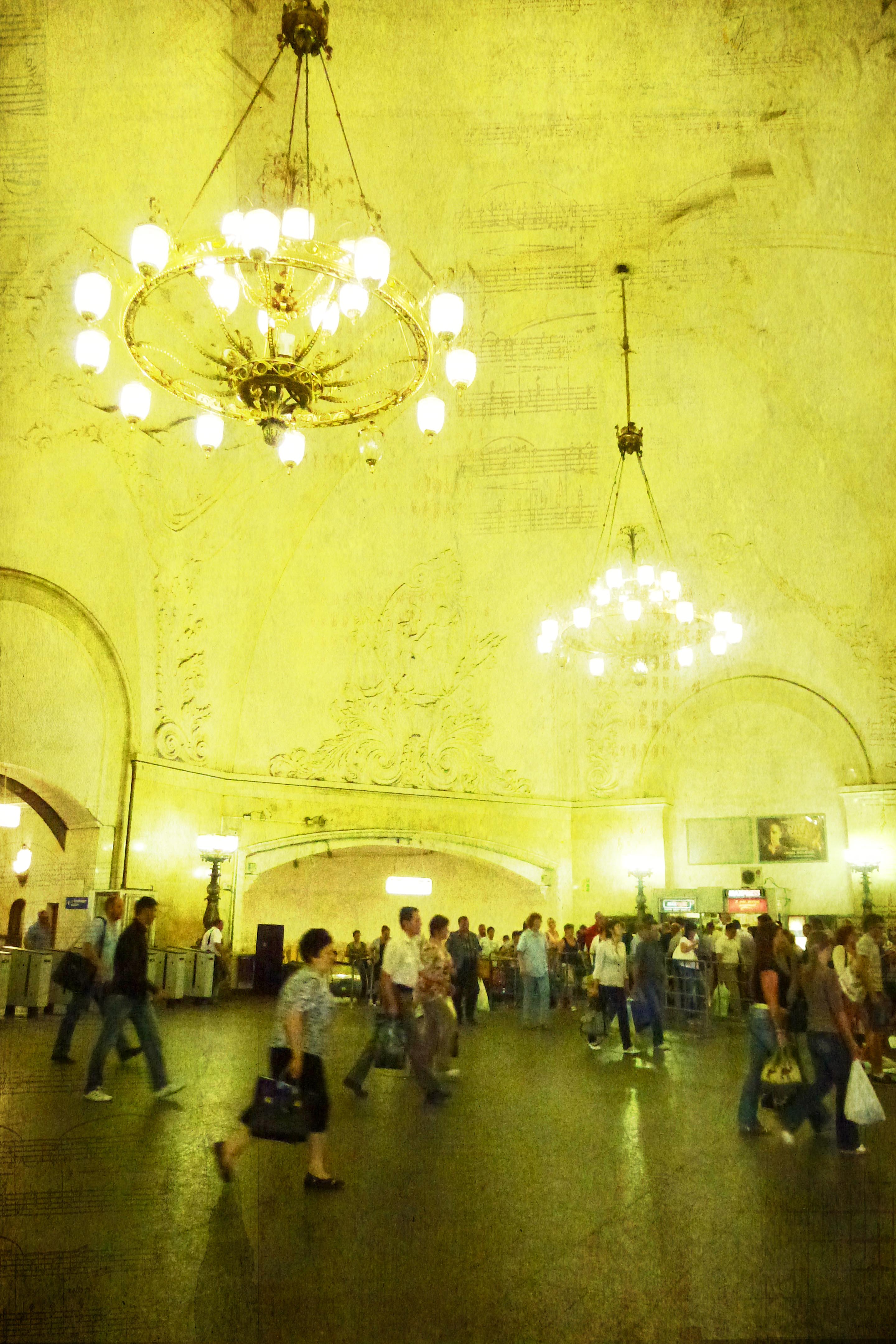
The city has the deepest underground metro systems in the world and the stop by our hotel was one of the deepest. It took 3 minutes to ride the escalator down to the station and that was only one leg. Supposedly, they were built to serve as bomb shelters. The architecture in the stations was amazing; built in 1935 it holds its old world charm.
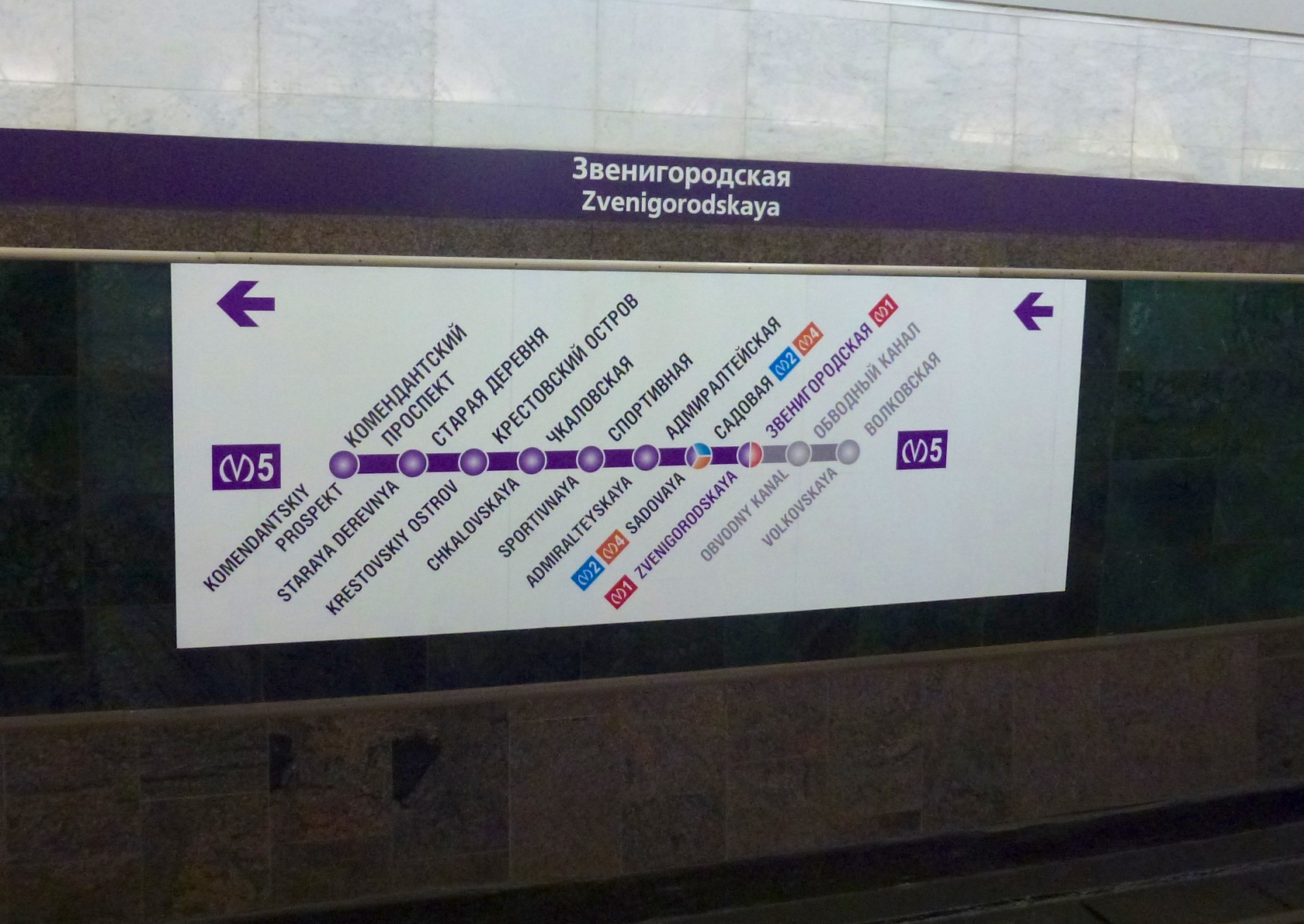
AND……the signs were in English!
The Church of our Savior on Spilled Blood
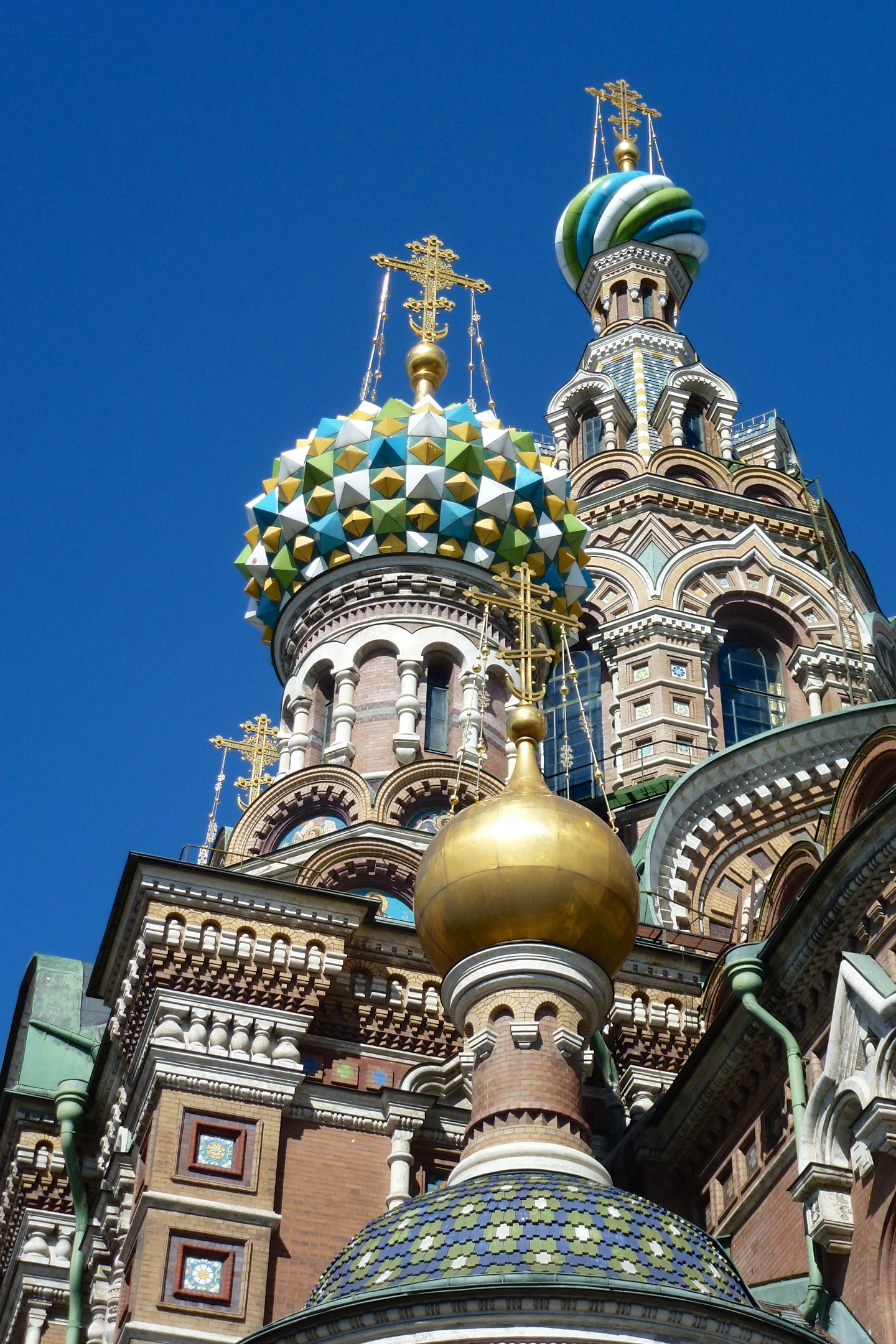
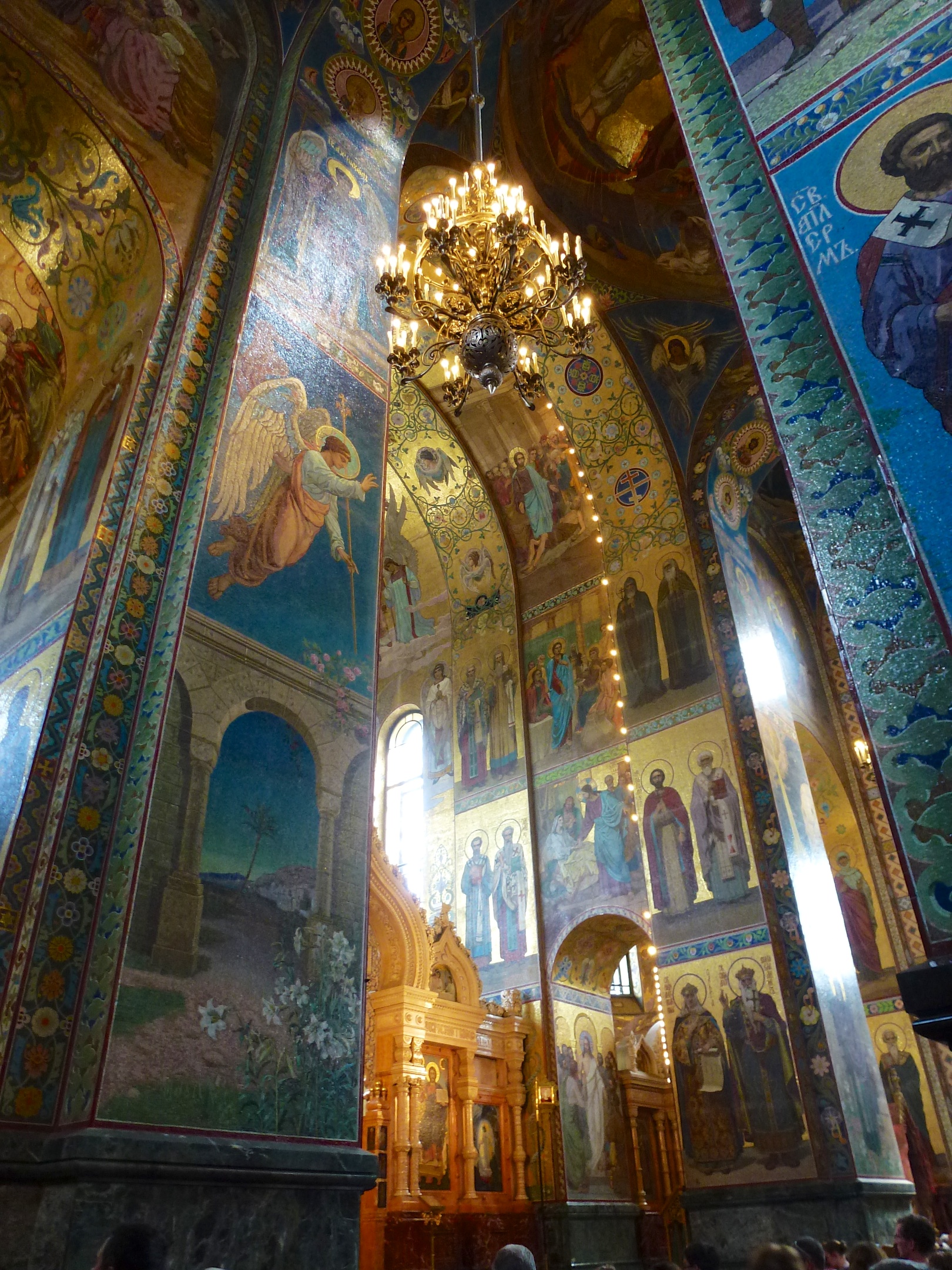
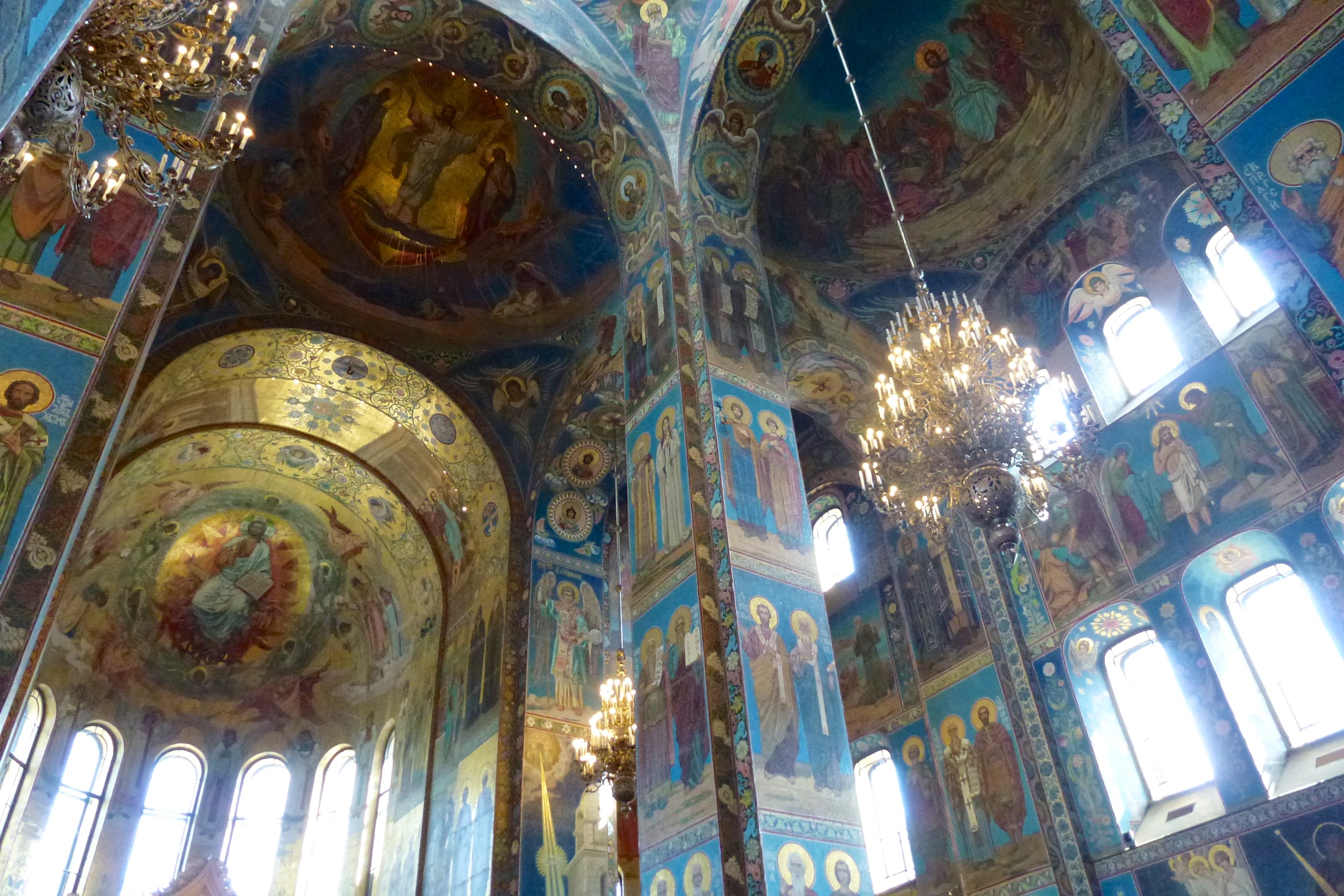
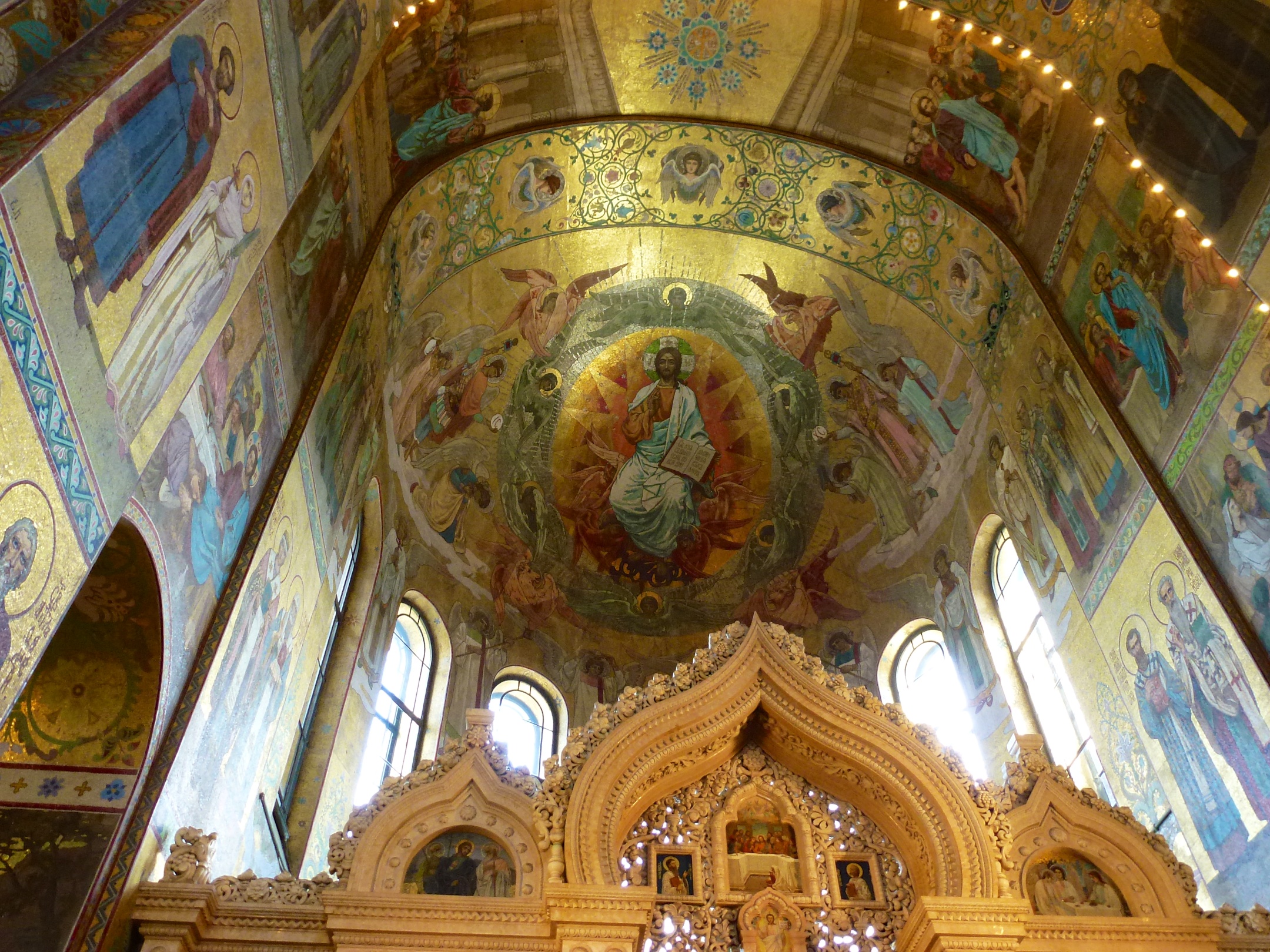
Gorgeous * Gorgeous * Gorgeous. The Church of our Savior on Spilled Blood, or the Cathedral of the Resurrection of Christ, was simply amazing inside and out. The construction was started in 1883, but not completed until 1907. It was modeled after St. Basil's Cathedral in Moscow.
Why the unusual name ? The Church of the Savior on Spilled Blood was built to honor tsar Alexander II of Russia. On March 13, 1881, as the Tsar’s carriage passed along the embankment, a conspirator mortally wounded him with a bomb. Hence, the reference to "spilled blood". The section of the street on which the assassination took place is enclosed within the walls of the church.
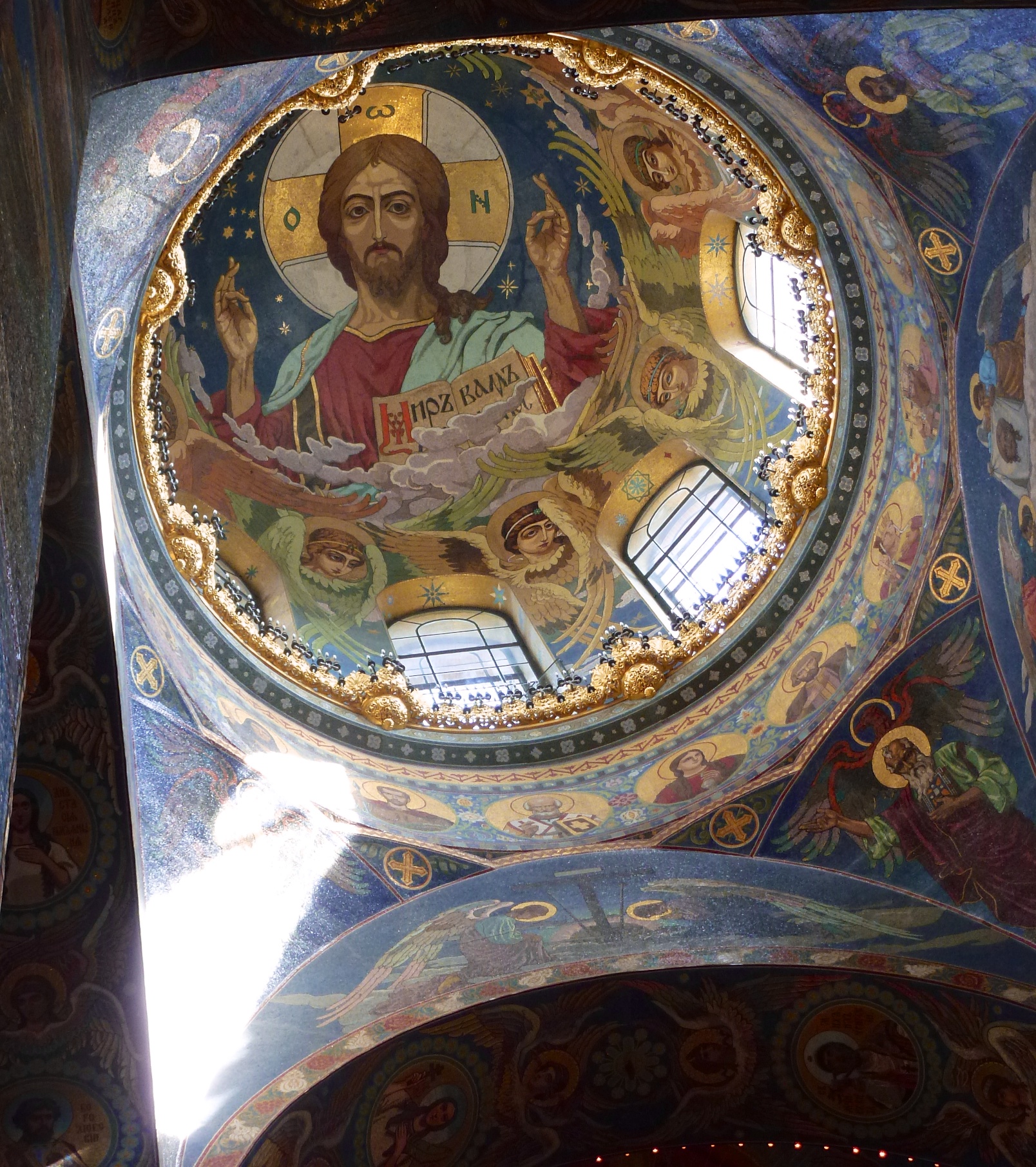
During the Russian Revolution of 1917, the church was ransacked and the interior was badly damaged. In the 1930s, the Soviets closed the church, as they did with most churches in Russia. The interior is magnificent with everything made of mosaics: icons, pictures, walls, columns and arches, ceilings, floors; even the cupola.
During World War II, it was used as a storage facility for food. It suffered more damage during the war; and afterwards, was used for many years as a storage space for a local opera company.
In 1970, new management took over the church, and after 27 years of restoration, it was re-opened as a museum in August 1997.
I love how the outside colors of the domes are reflected on the inside. This is a must see when you visit St Petersburg.
St. Isaac’s Cathedral
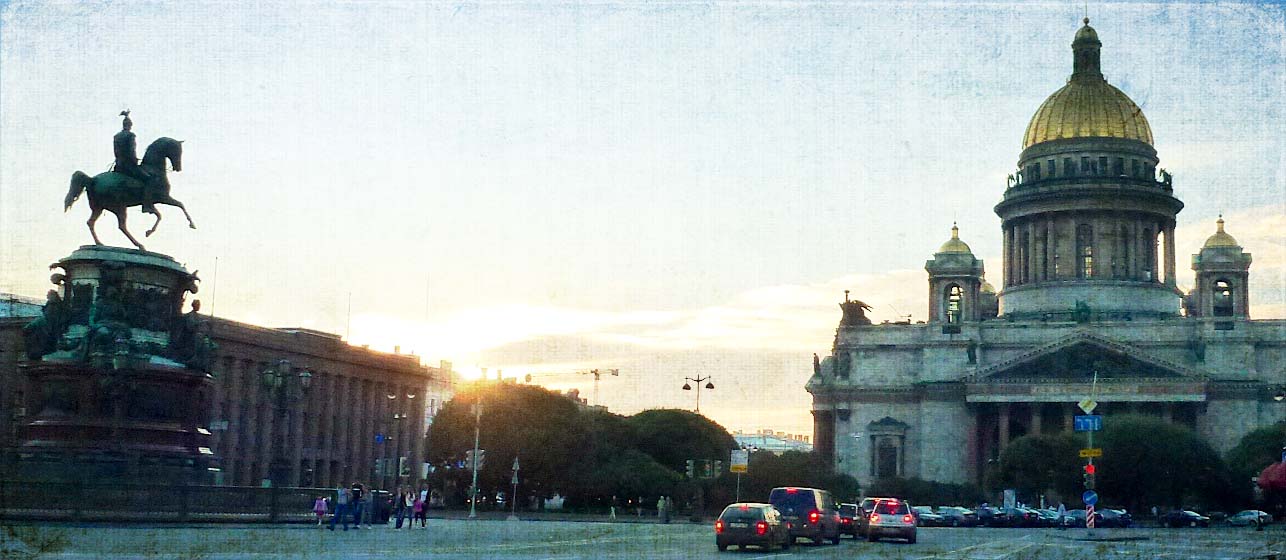
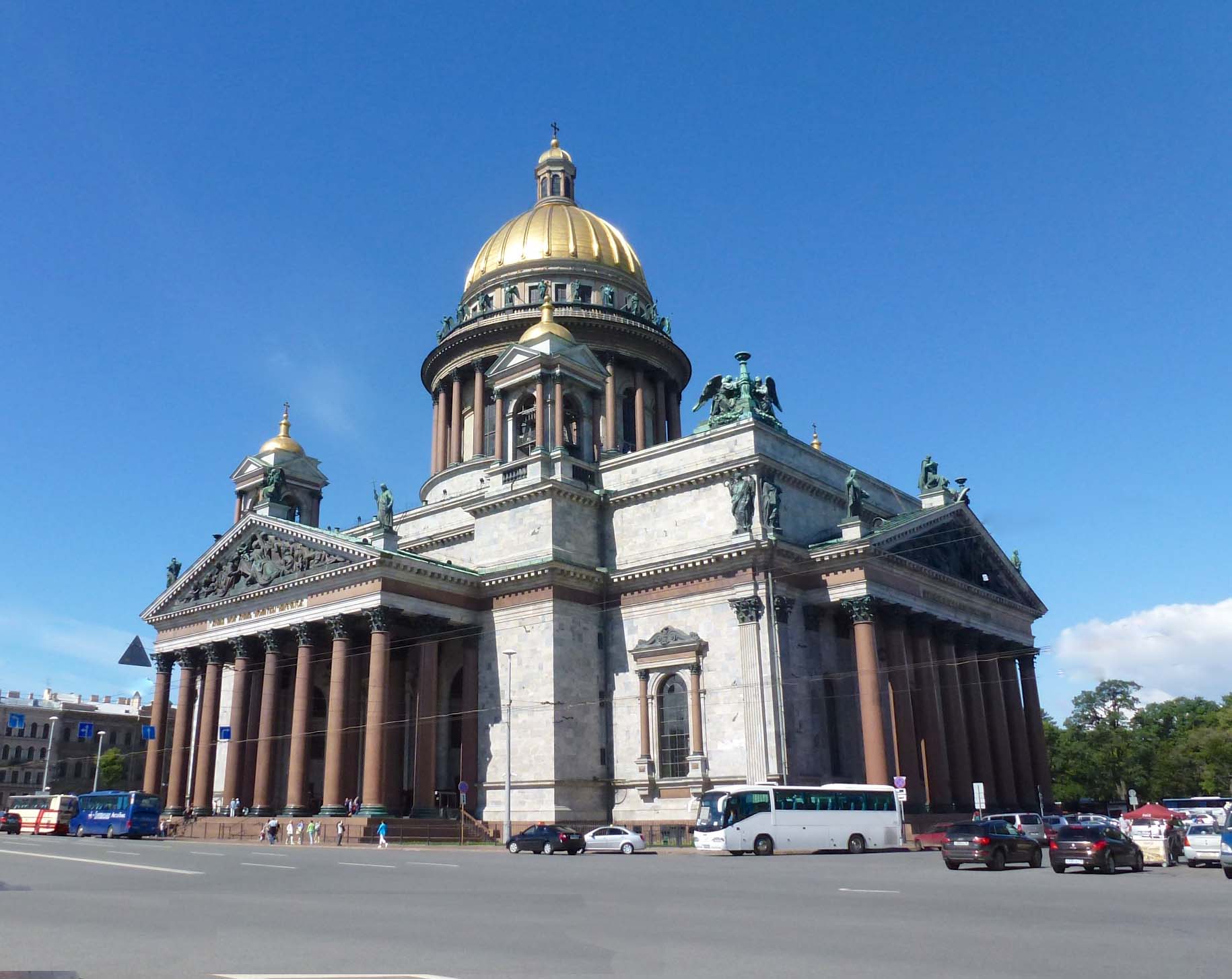
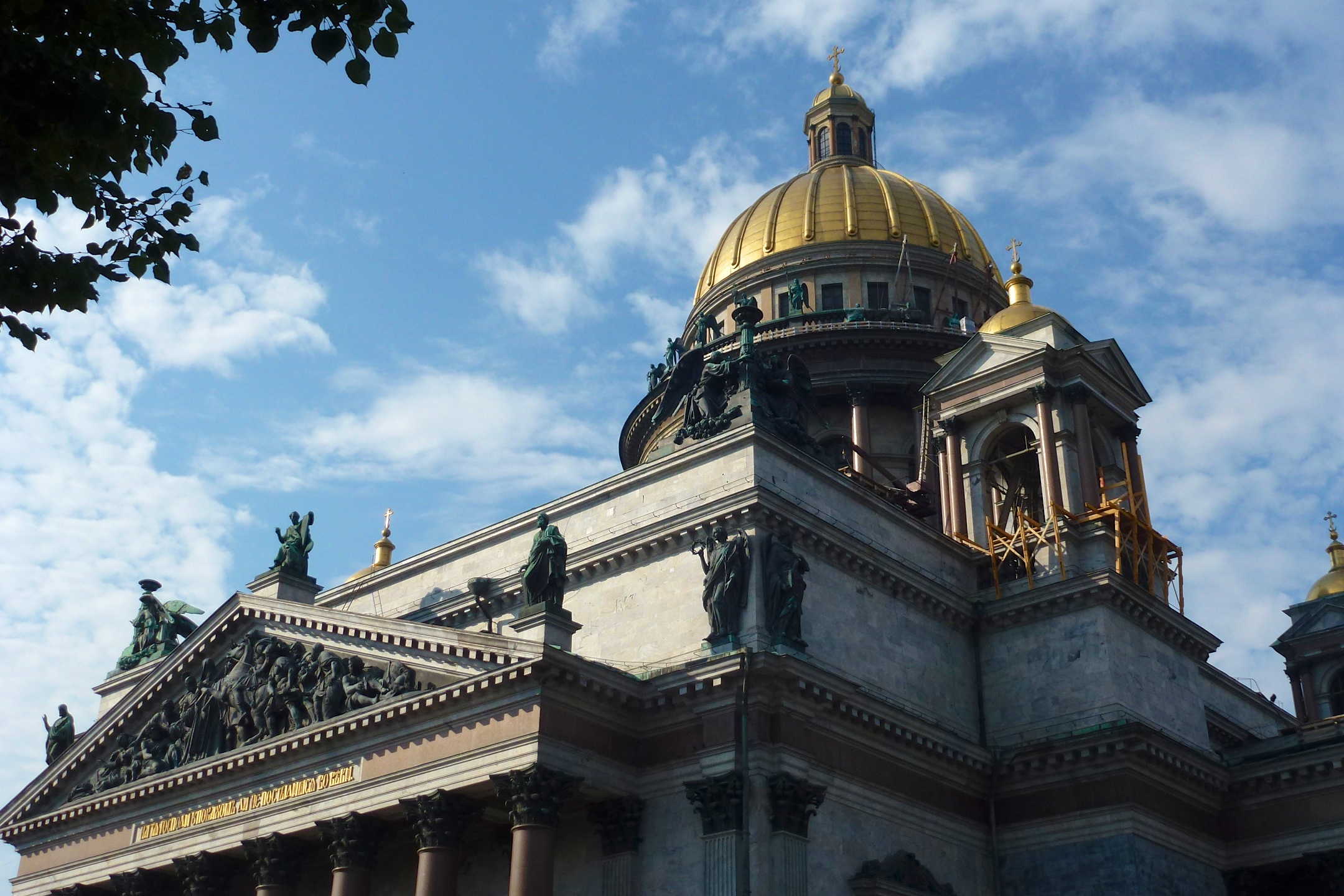
Saint Isaac's Cathedral took 40 years (1818 to 1858) to build. The exterior is in a traditional Russian-Byzantine style with a Greek-cross floor plan with a large central dome. The cathedral's facades are decorated with sculptures and massive granite columns (made of single pieces of red granite).
The dome is gilded with 220 pounds (100 kilos) of gold. During World War II, the dome was painted gray to avoid attracting attention from enemy aircraft.
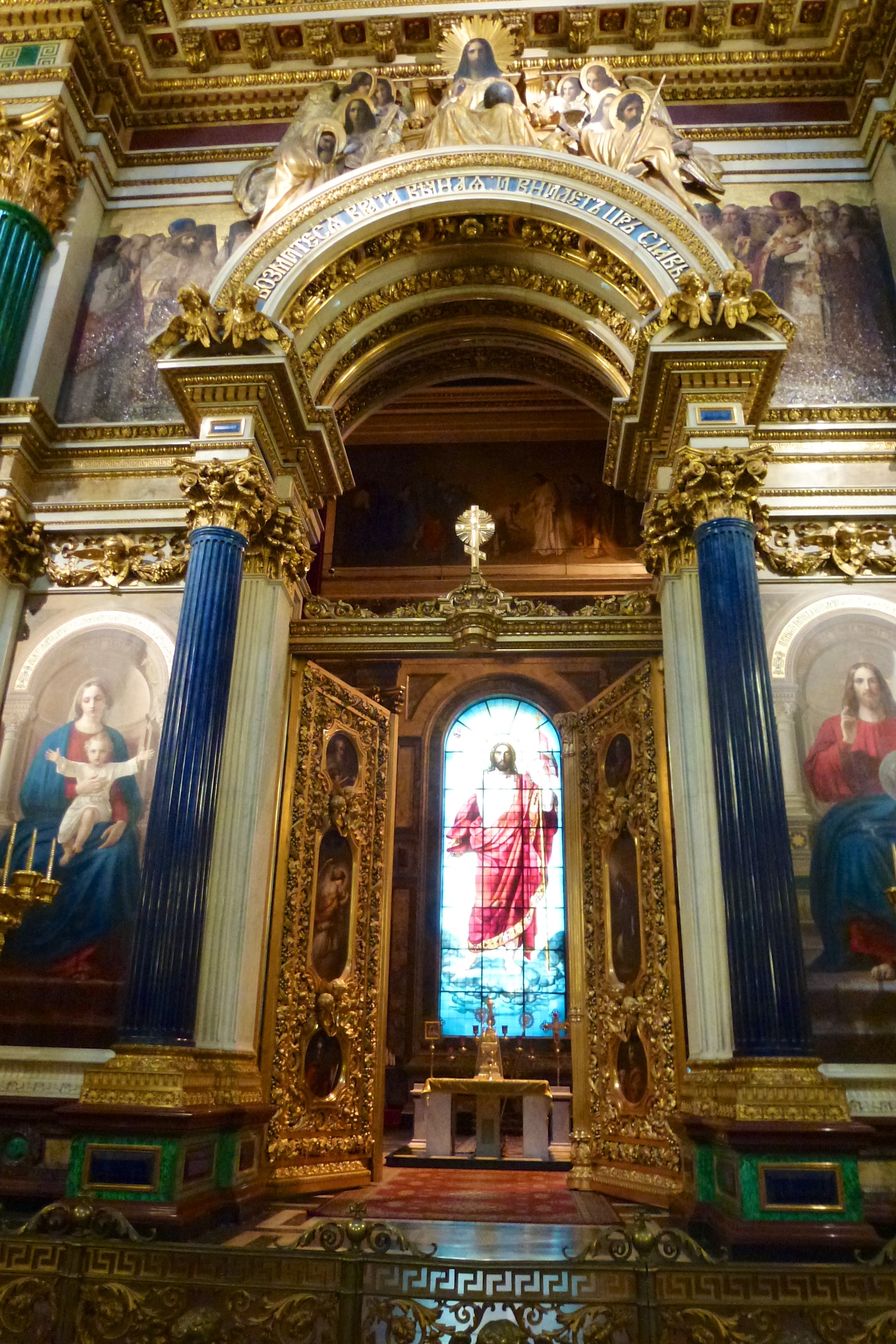
The interior is adorned with incredibly detailed mosaic icons and paintings. It was originally decorated with paintings by famous Russian painters. When the paintings began to deteriorate due to the cold,
damp conditions inside the cathedral, they were painstakingly reproduced as
mosaics.
Internal
features such as columns, walls, and the floor are created out of
multicolored granites and marbles gathered from all parts of Russia.
A large, brightly-colored stained glass window of the "Resurrected Christ" makes up the main altar. The church was designed to accommodate 14,000 standing worshipers. Today, it is a museum and church services are only held on special holidays.
You can climb up 300 steps to the top of the church for a fabulous view of Isaac's Square and the city.
The Hermitage Museum
I spent the better part of a day in the stunning Hermitage Museum. Click here to take a tour of the Hermitage Museum on my art blog.
The Hermitage is on the Palace Square along with the Alexander Column. The column was erected between 1829-34 on
the square in front of the Winter Palace at the command of Nicholas I, in memory of his brother Alexander I, the victor over
Napoleon.
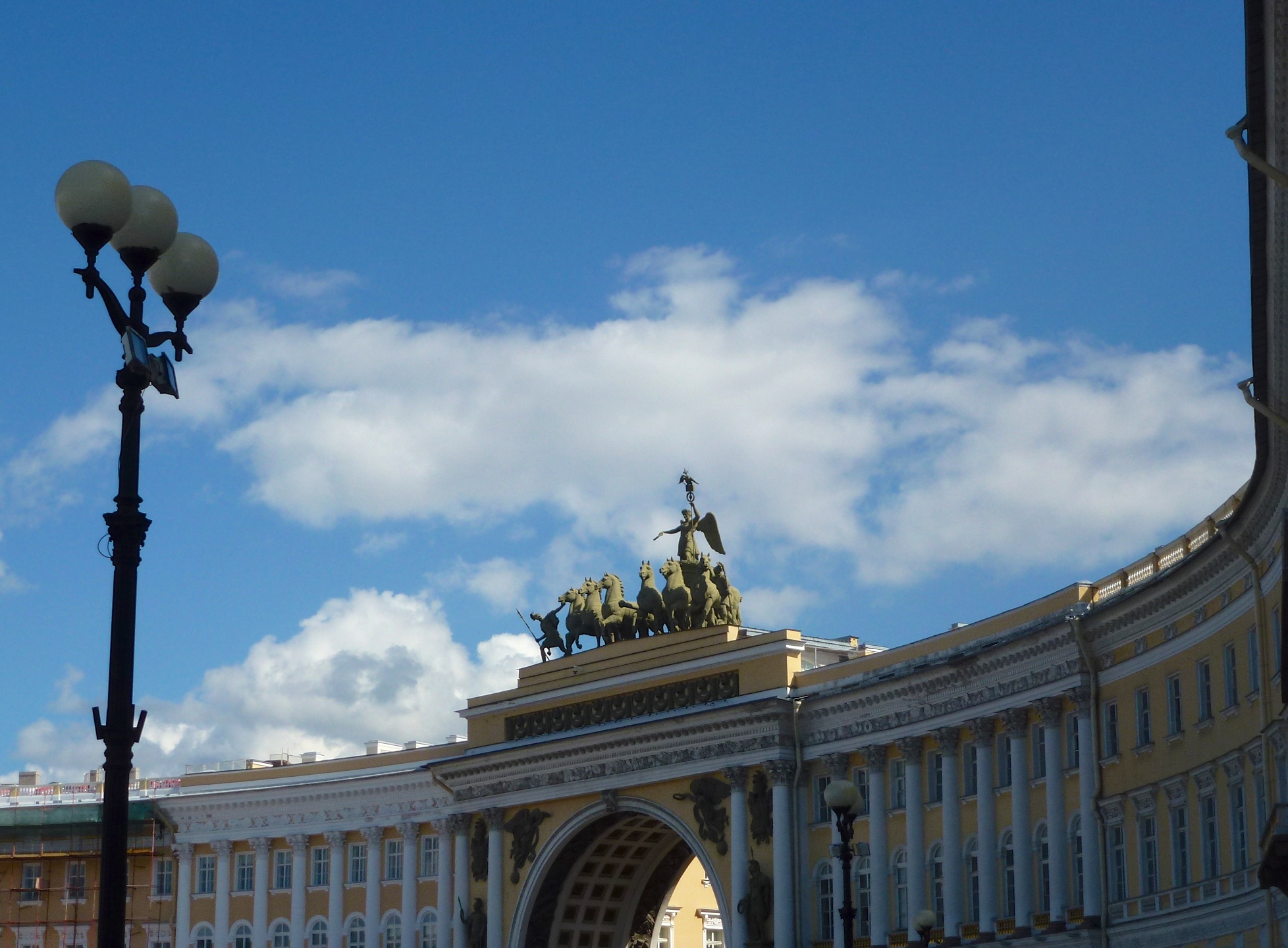
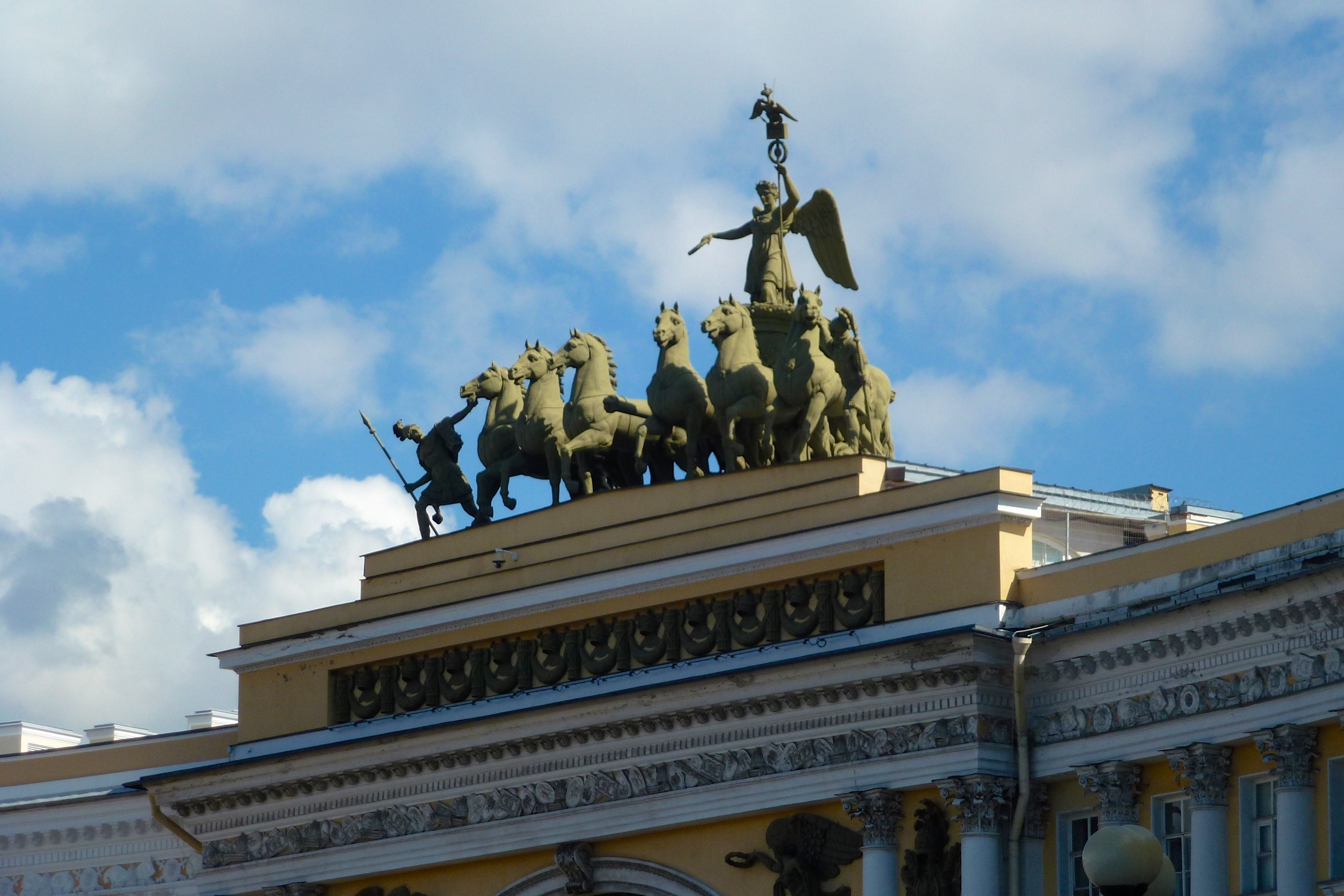
The General Staff building was built between 1820-30. The arch is the symbol of the triumph of Russia and the war against Napoleon.
Peter and Paul's Fortress
The Peter and Paul Fortress is the original citadel of St. Petersburg, founded by Peter the Great in 1703 and built 1706-1740
The fortress contains several buildings clustered around the Peter and Paul Cathedral (1712–1733), which has a 404 ft bell-tower and a gilded angel-topped cupola.
The cathedral is the burial place of all Russian tsars from Peter I to Alexander III; including the last of the ruling Romanov family, who were assassinated during the Bolshevik revolution.
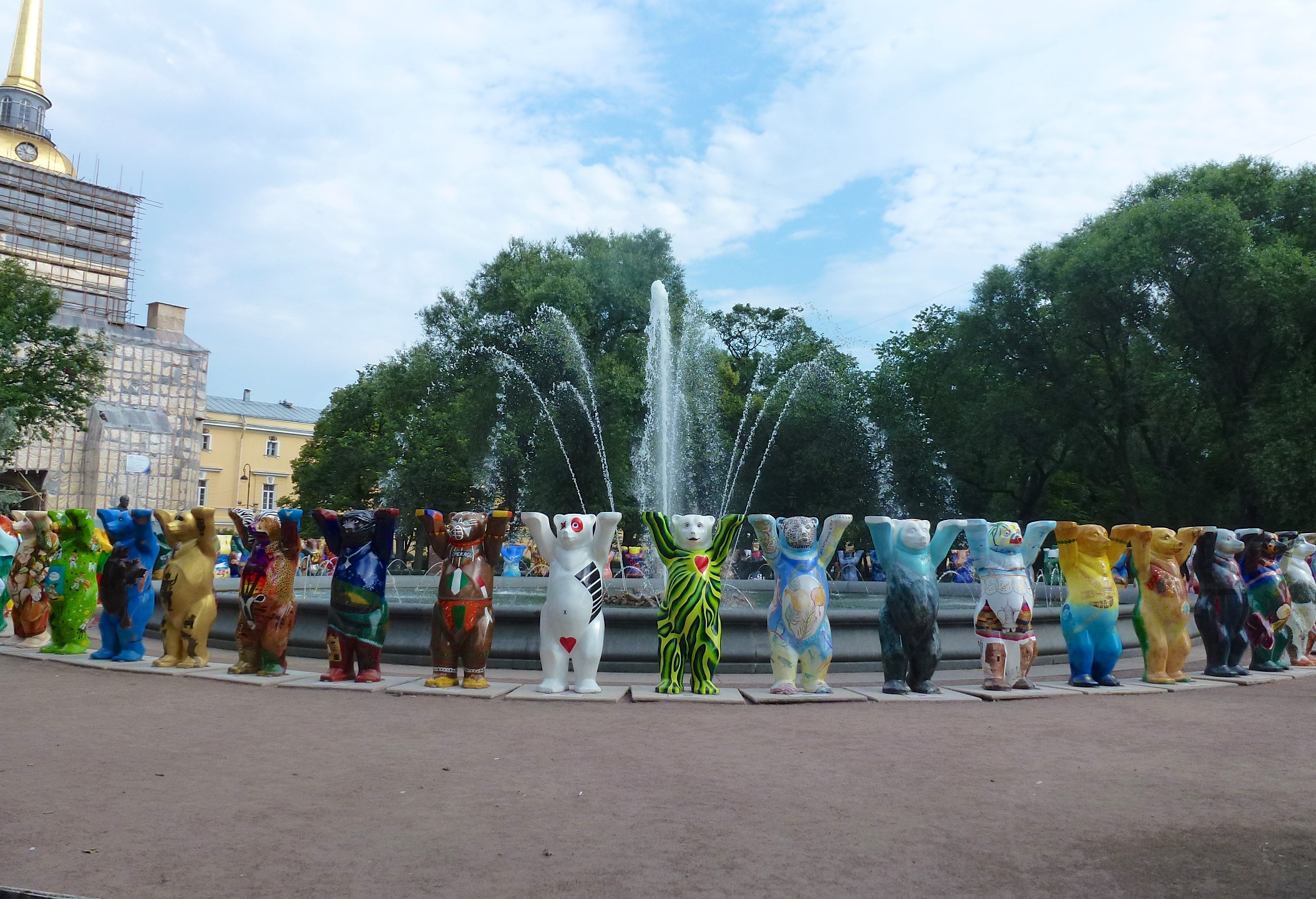
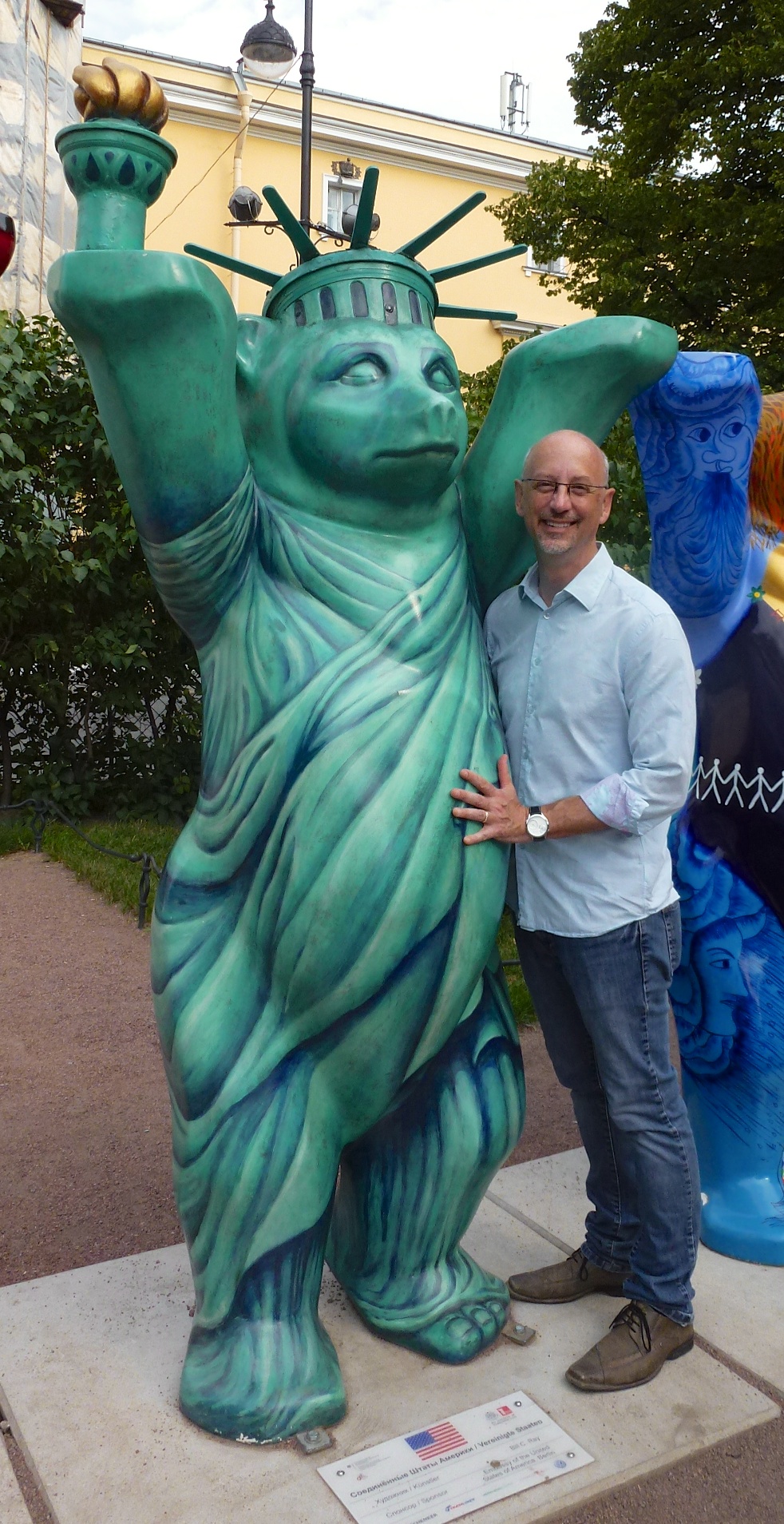
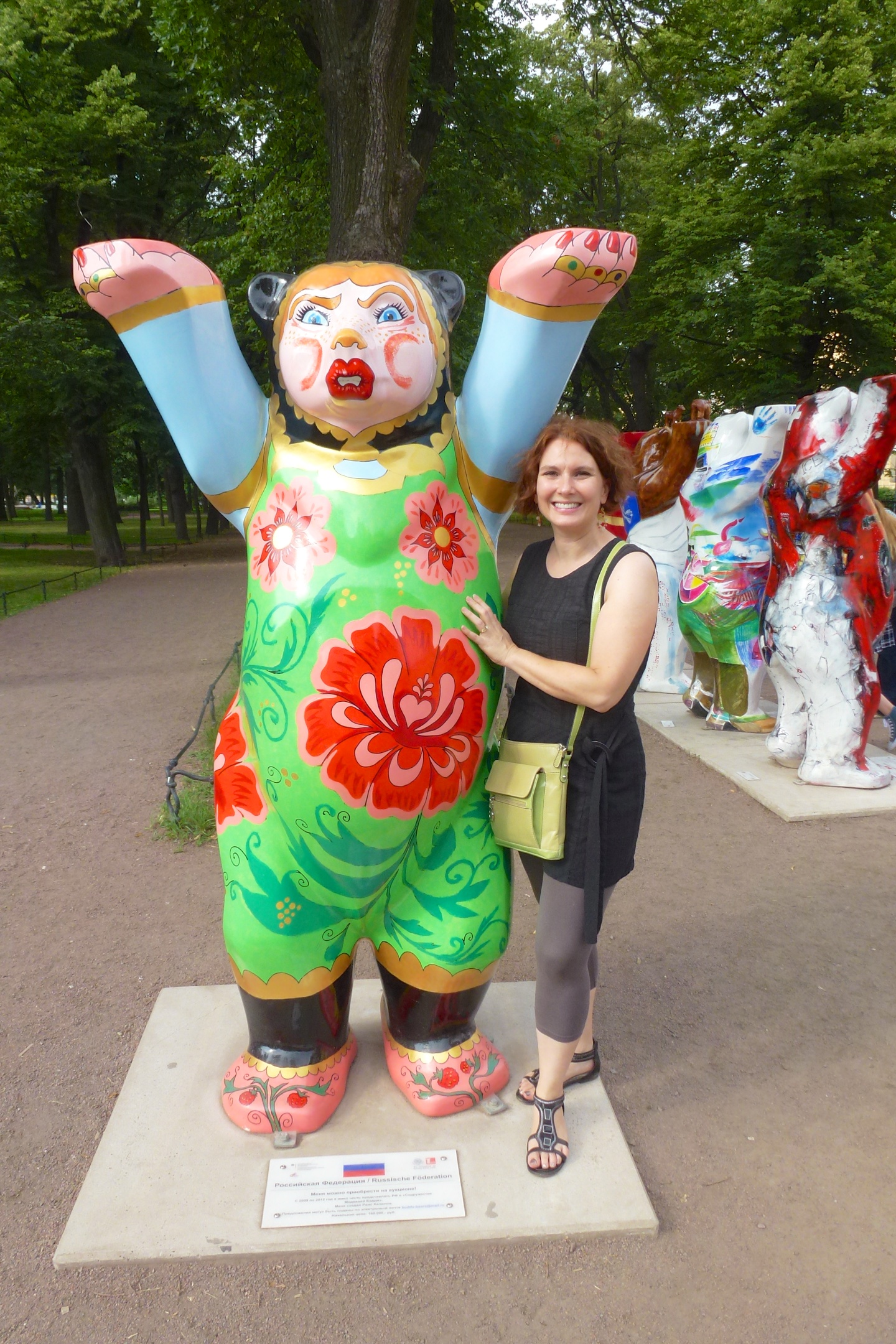
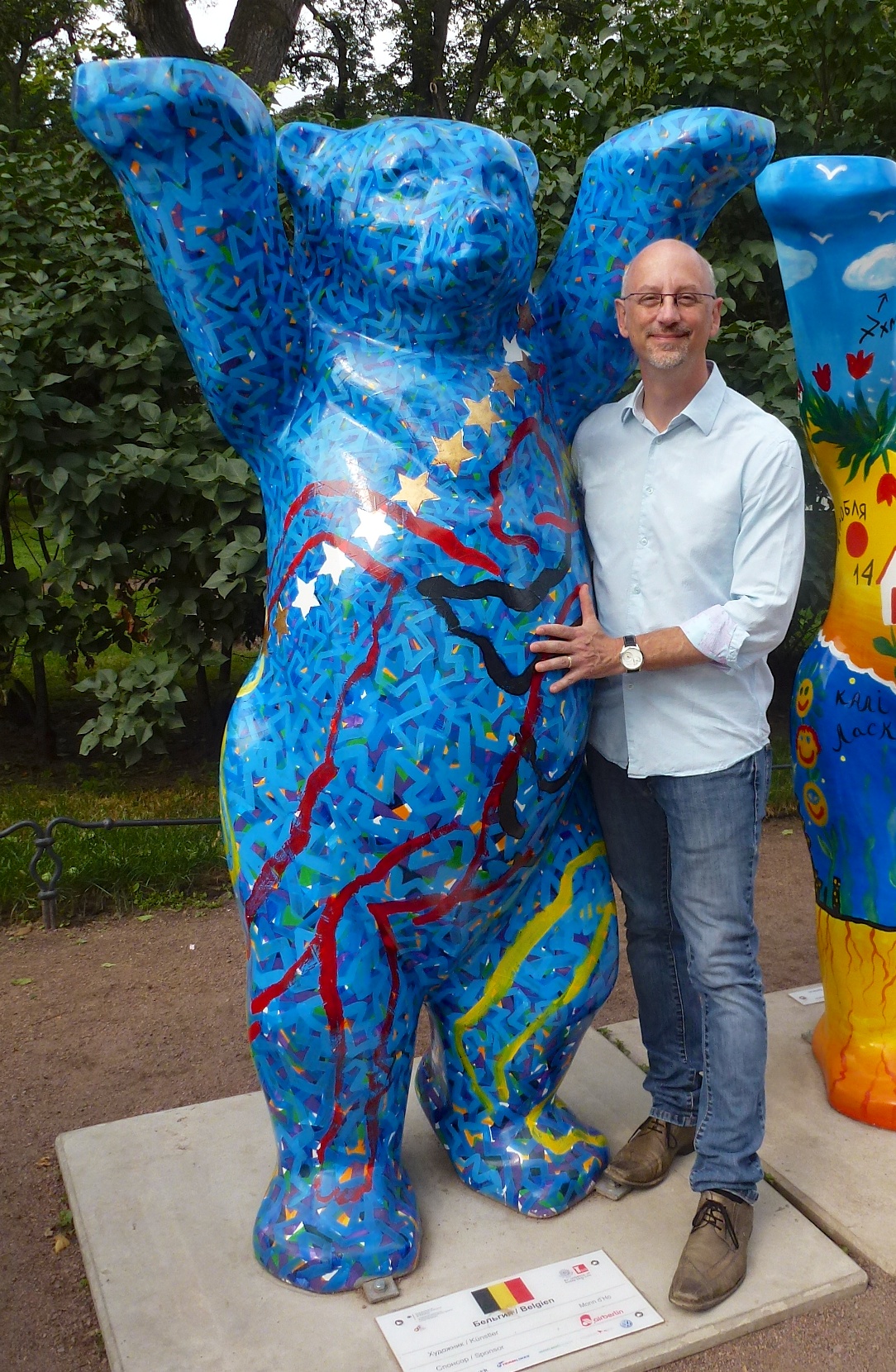
The Buddy Bears were in town while we were visiting. Buddy Bears are life-sized, fiberglass bear sculptures from over 143 countries. The Buddy Bears were created to convey a message of peace, international understanding and tolerance among the nations, cultures and religions of the world. If you want to read more about the Buddy Bears visit my art blog.
D with the "United States Bear"
Me with "Russia Bear"
D with "Singapore bear"
D with "Belgium Bear"
Interesting things we saw around town…
Sometimes it's the little things that amuse us. Like these portable toilets we saw all over the city. What we found interesting was that each set had a woman who took care of them. One of the toilets was used as her office and as a place for her to reside all day. I was told that they were owned by the Russia mafia.
We did not see any outdoor markets, but they do have cute little shops like the ones shown in the photo below all over the city.
How about this stand selling melons?
And our normal food photos – were you getting worried that we did not eat in Russia? The food photos are from both Moscow and St Petersburg.
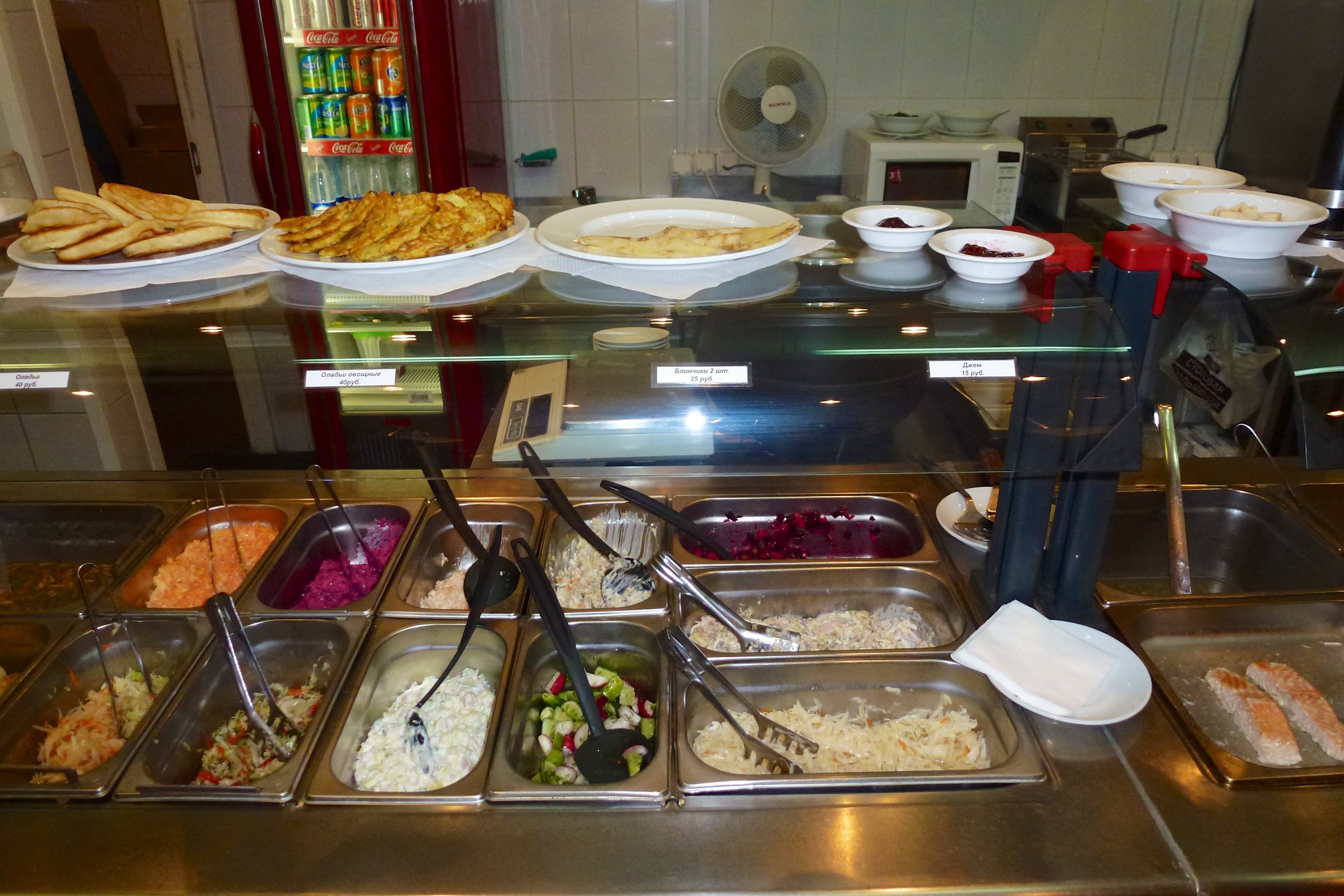
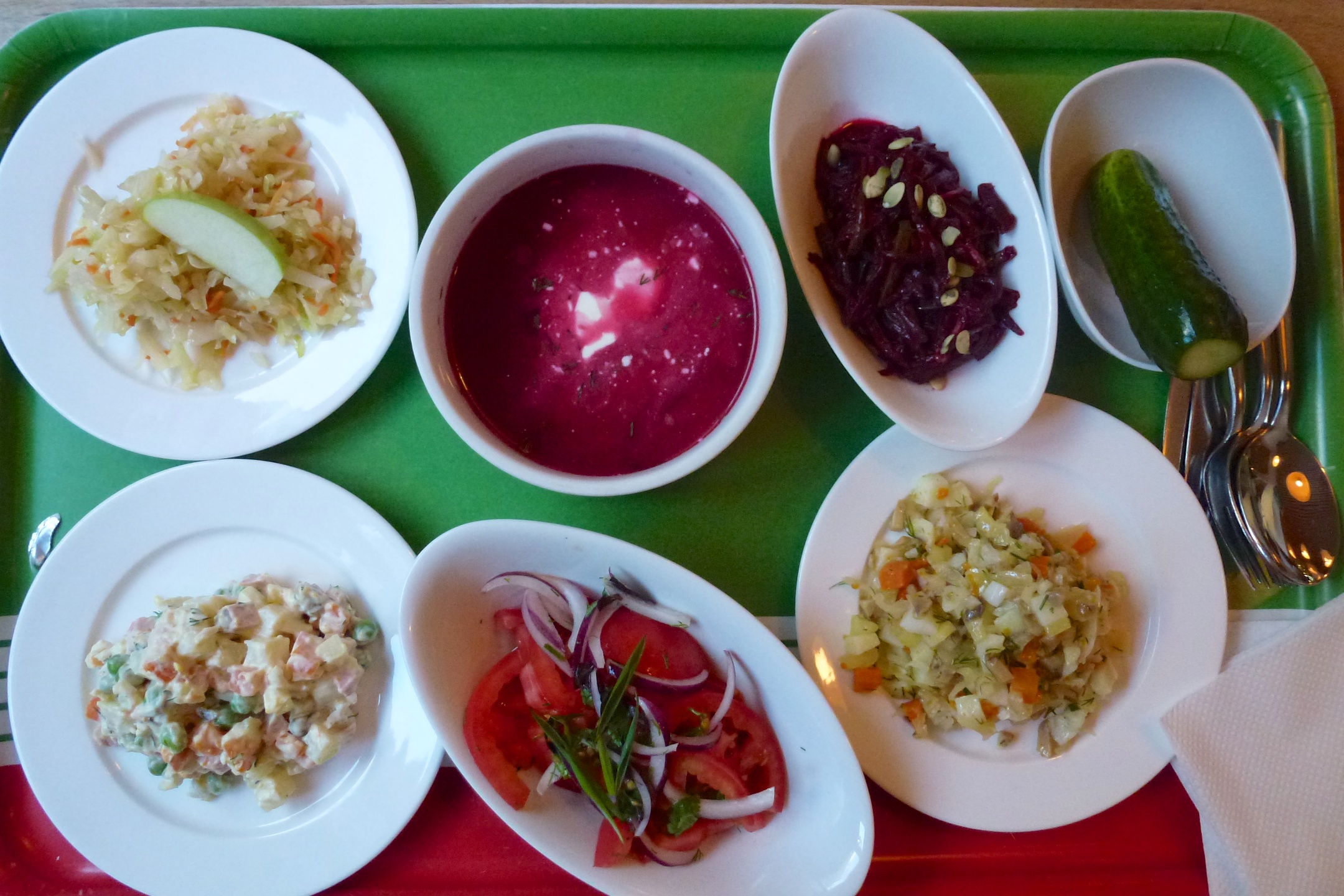
To find truly local cuisine, you had to go to Soviet-style
self-service cafeterias. More for the student and budget conscious traveler, but we were attracted by the traditional food.
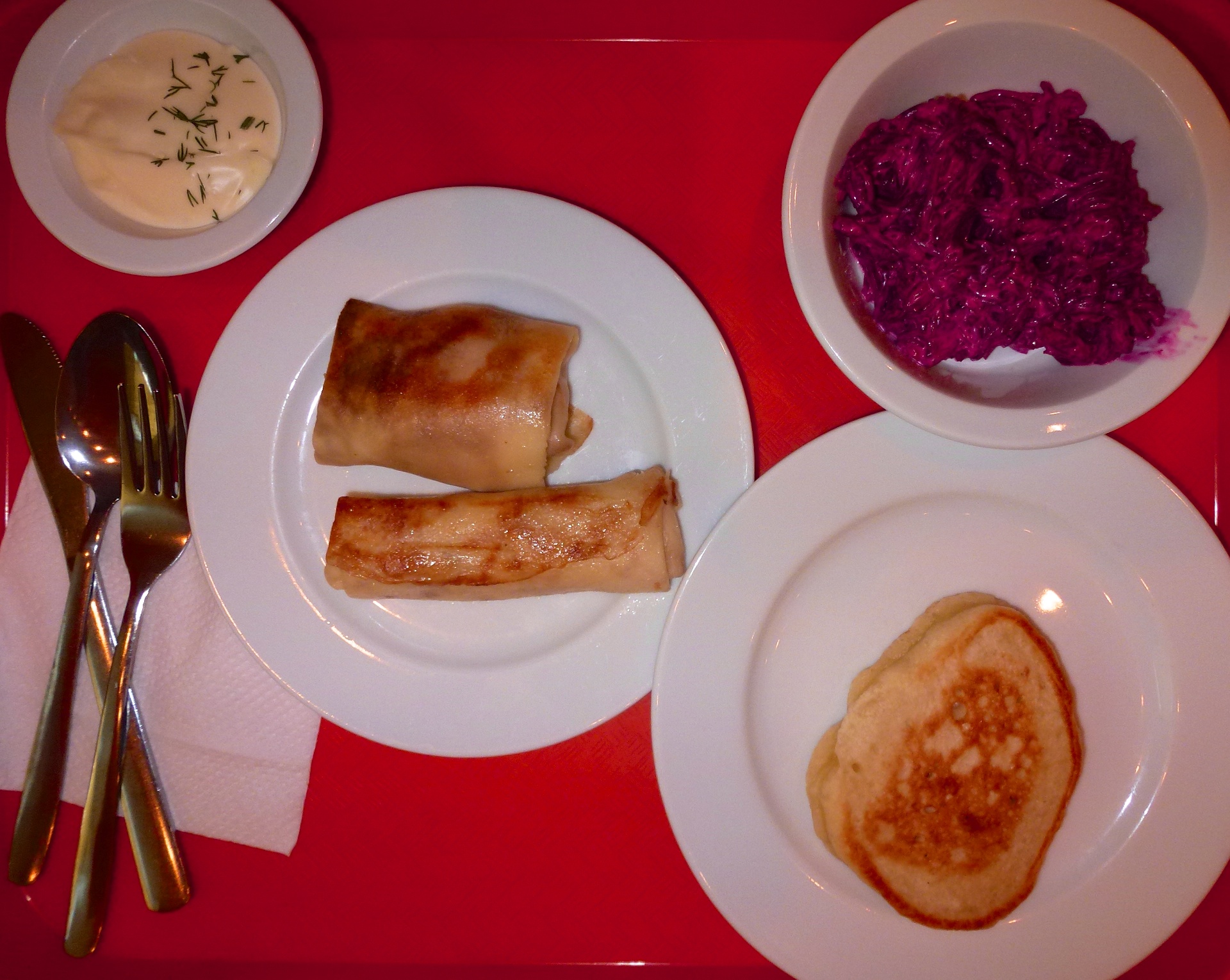
Blini (filled pancakes) and beets (I love beets!).
One night we had all salads, or should I say we had all cabbage and beets!
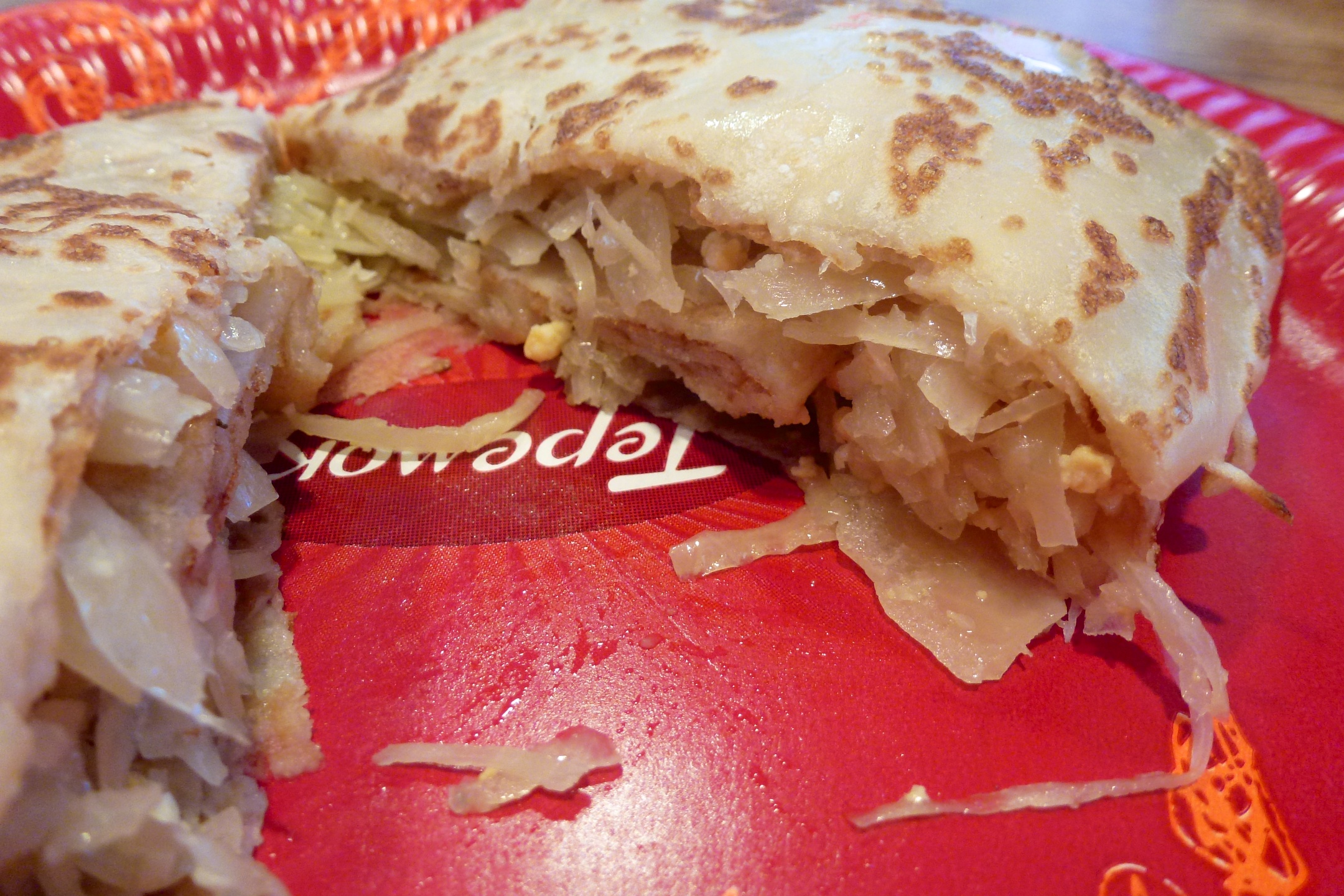
More Blini – filled with cabbage.
It was from the little Tepemok shop shown below and found all over the city. Did I mention this was breakfast?
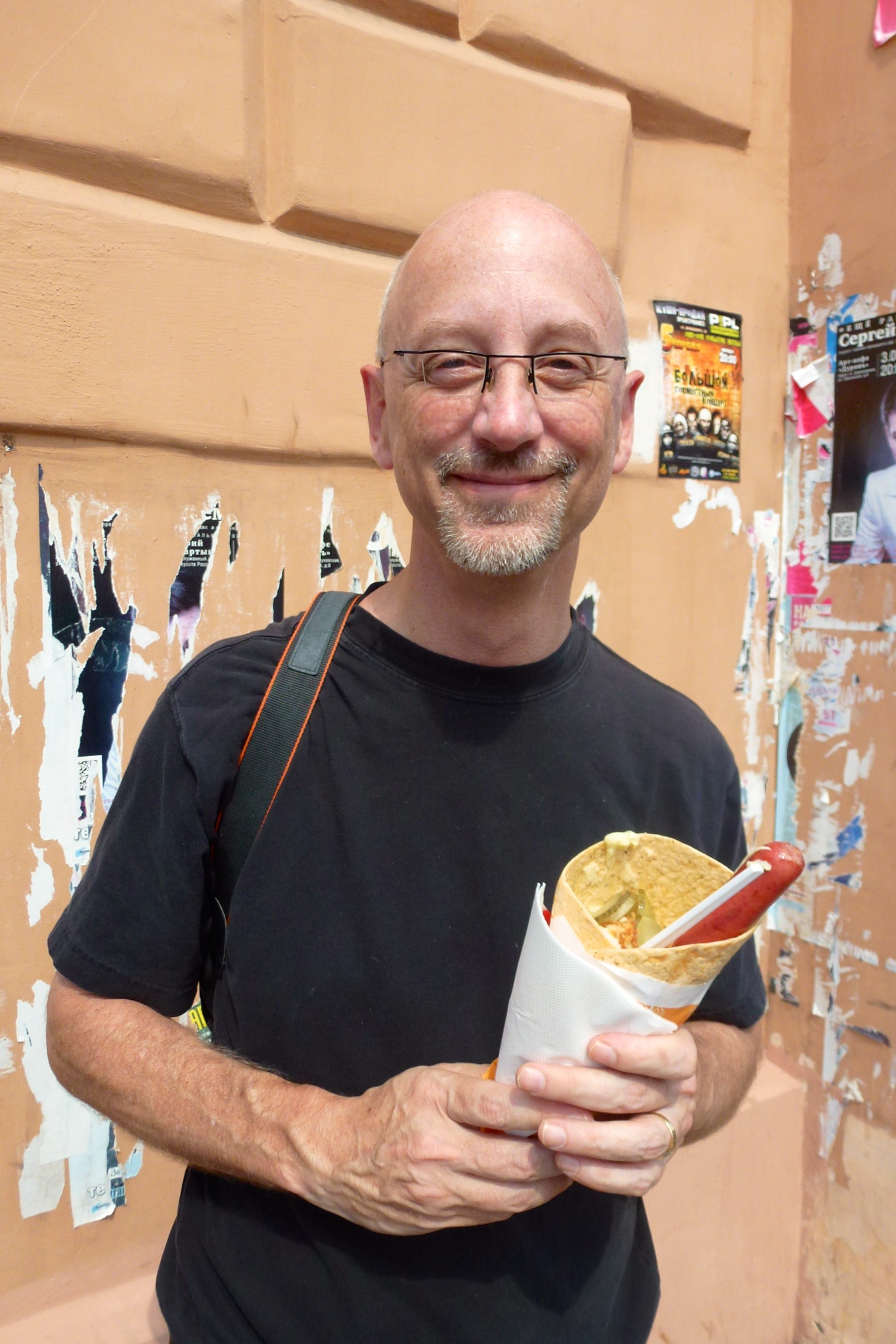
D and his quest for the perfect street food. What is it you ask?
A hot dog, wrapped in a burrito type shell with warm potato salad, pickles, and crunchy onions. And a squirt of Mayonnaise! Sounds gross, but I have to admit, I took one bite and it was really good. D LOVED it, especially that warm potato salad!
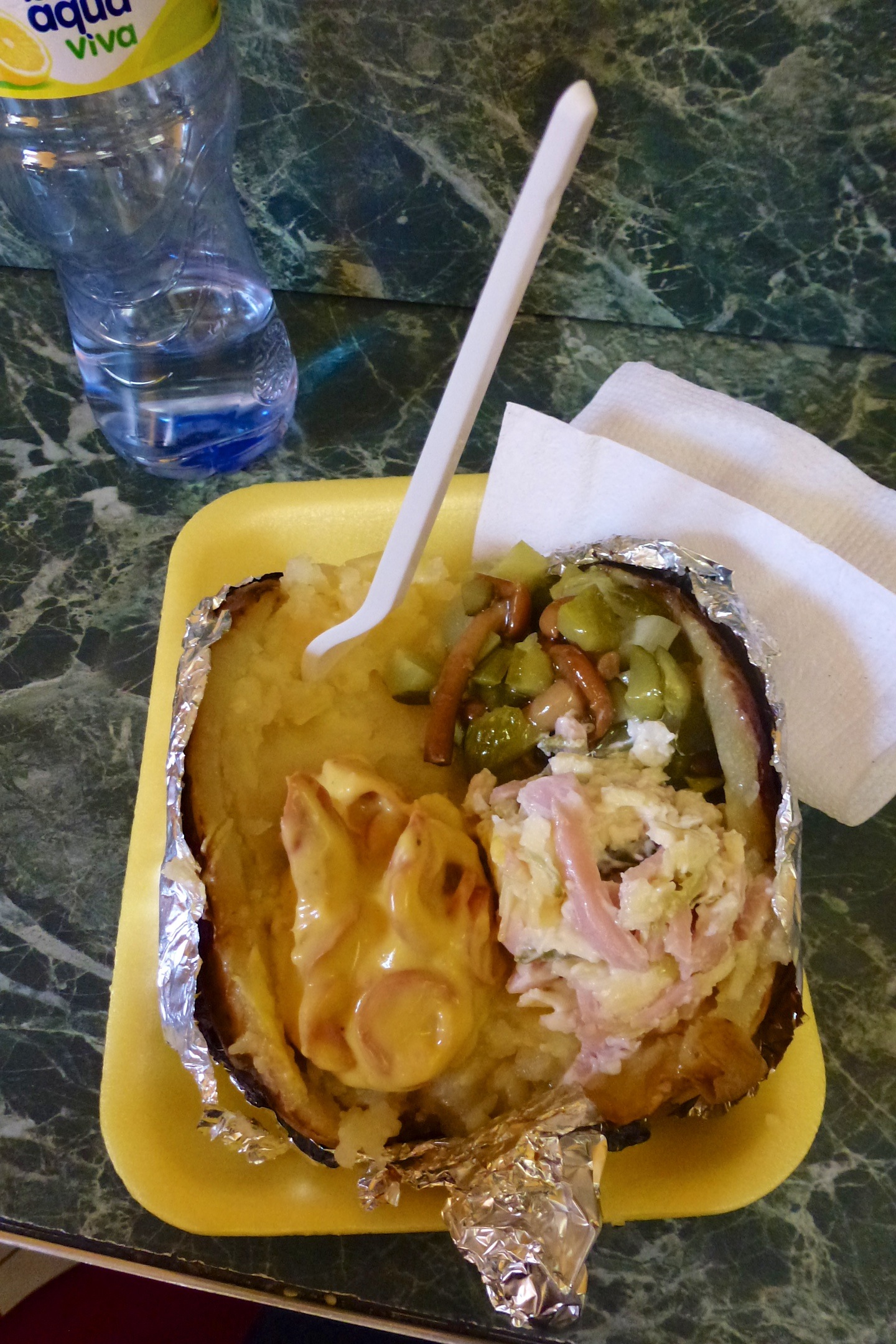
I opted for the baked potato with a trio of salads on top: potato salad, pickles and mushrooms, and a hotdog cheese mixture : ) Odd, but very tasty. D was amused that you could buy a potato, topped with potato salad.
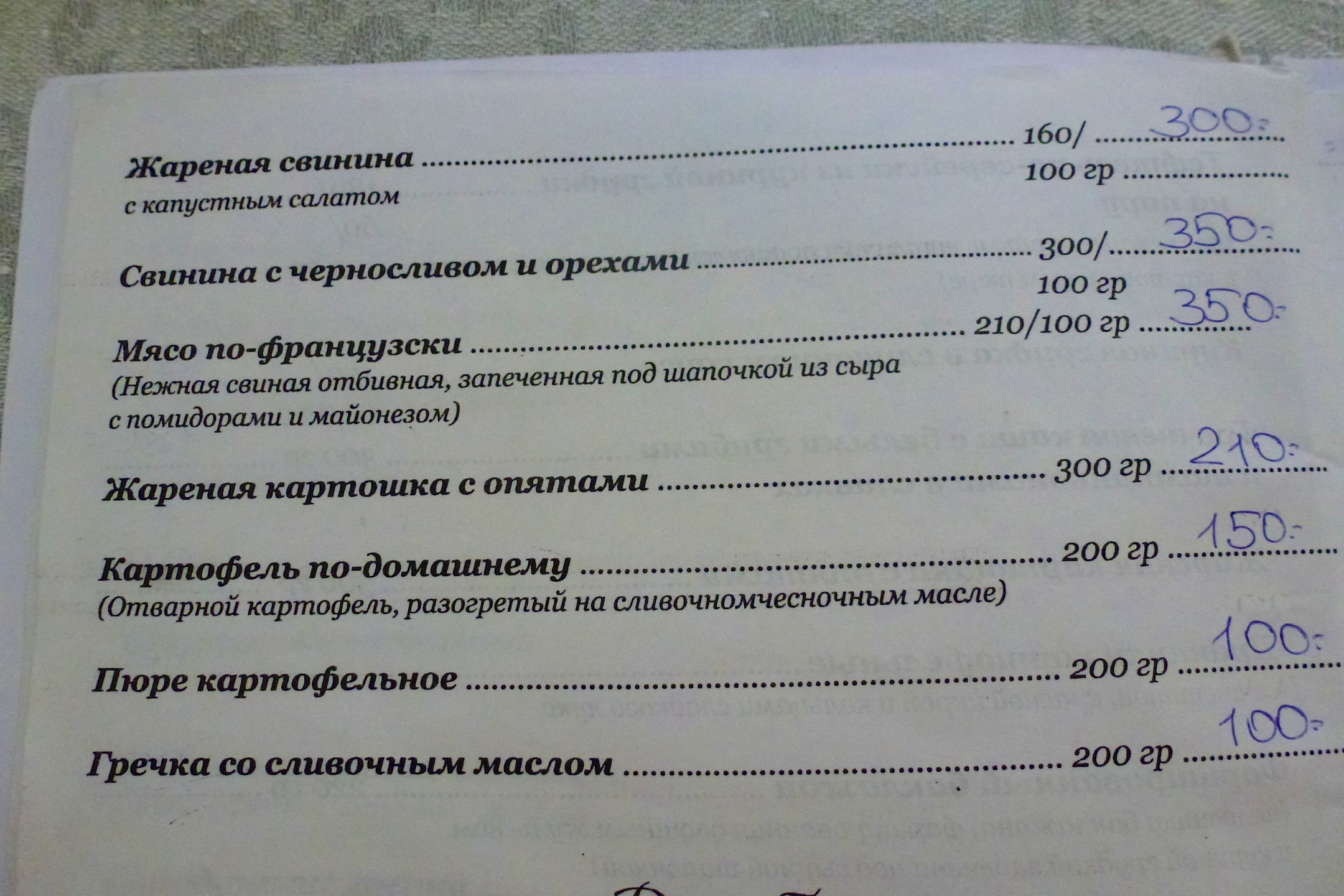
Yes… we did eat at nice restaurants too! This was the standard menu in Russian. Basically close your eyes and point.
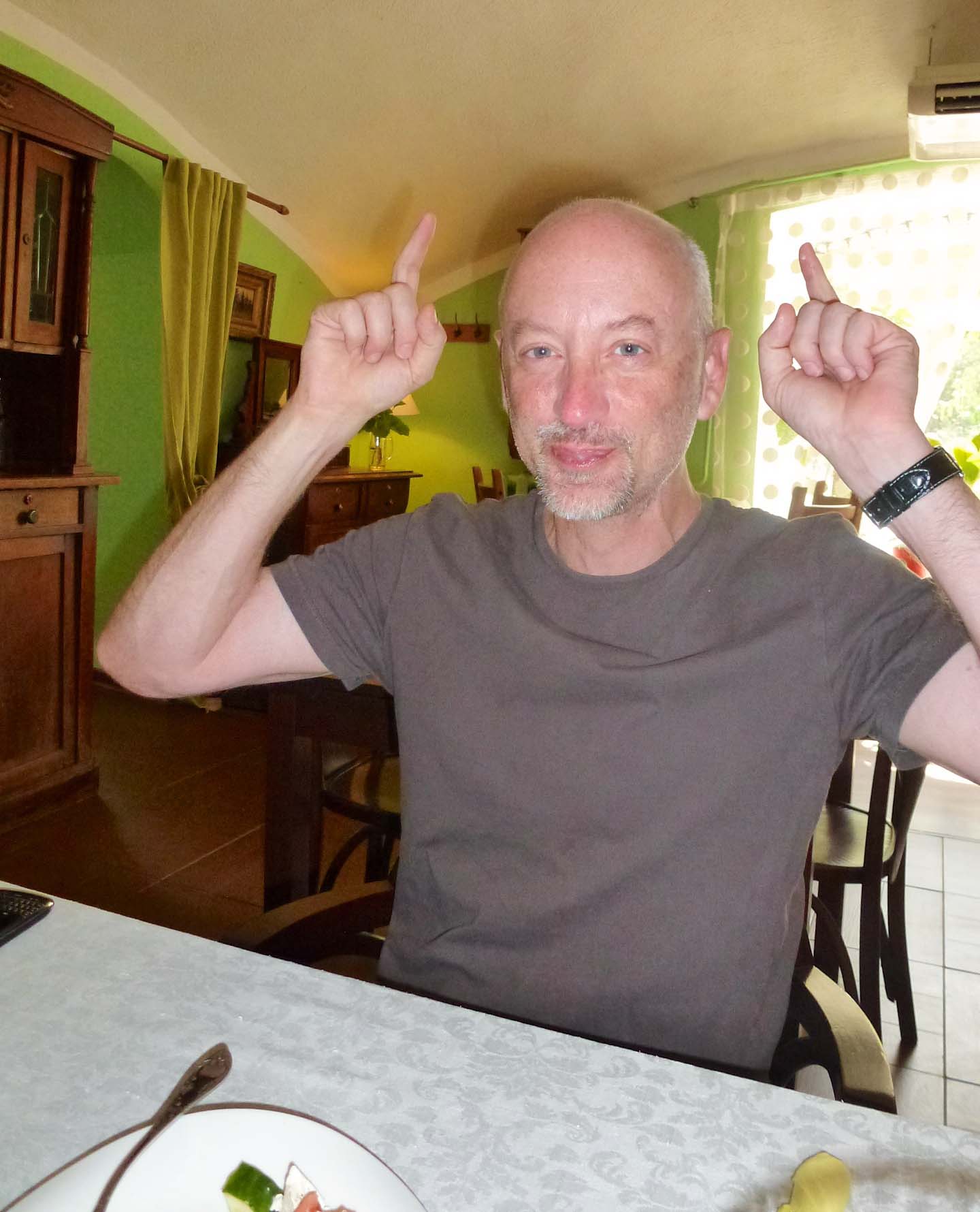
We were in a sweet little restaurant where the waitress could say three words – meat, stroganoff, and cake. Seriously – this was all she knew. I immediately raised my hand when she said stroganoff. D randomly pointed to a dish for his main course, and the waitress said "cake". Oops, let's try again. So he proceeds to do sign language for his meal. Can you guess the animal? Neither could the waitress. Next, he pushed up his nose and said "oink oink".
The waitress guessed it, as he was served a delicious pork dish with a mustard sauce with prunes and walnuts. And of course cabbage.
And we did get cake!
It was SO GOOD! A chocolate creme layered with lots of thin pancakes.
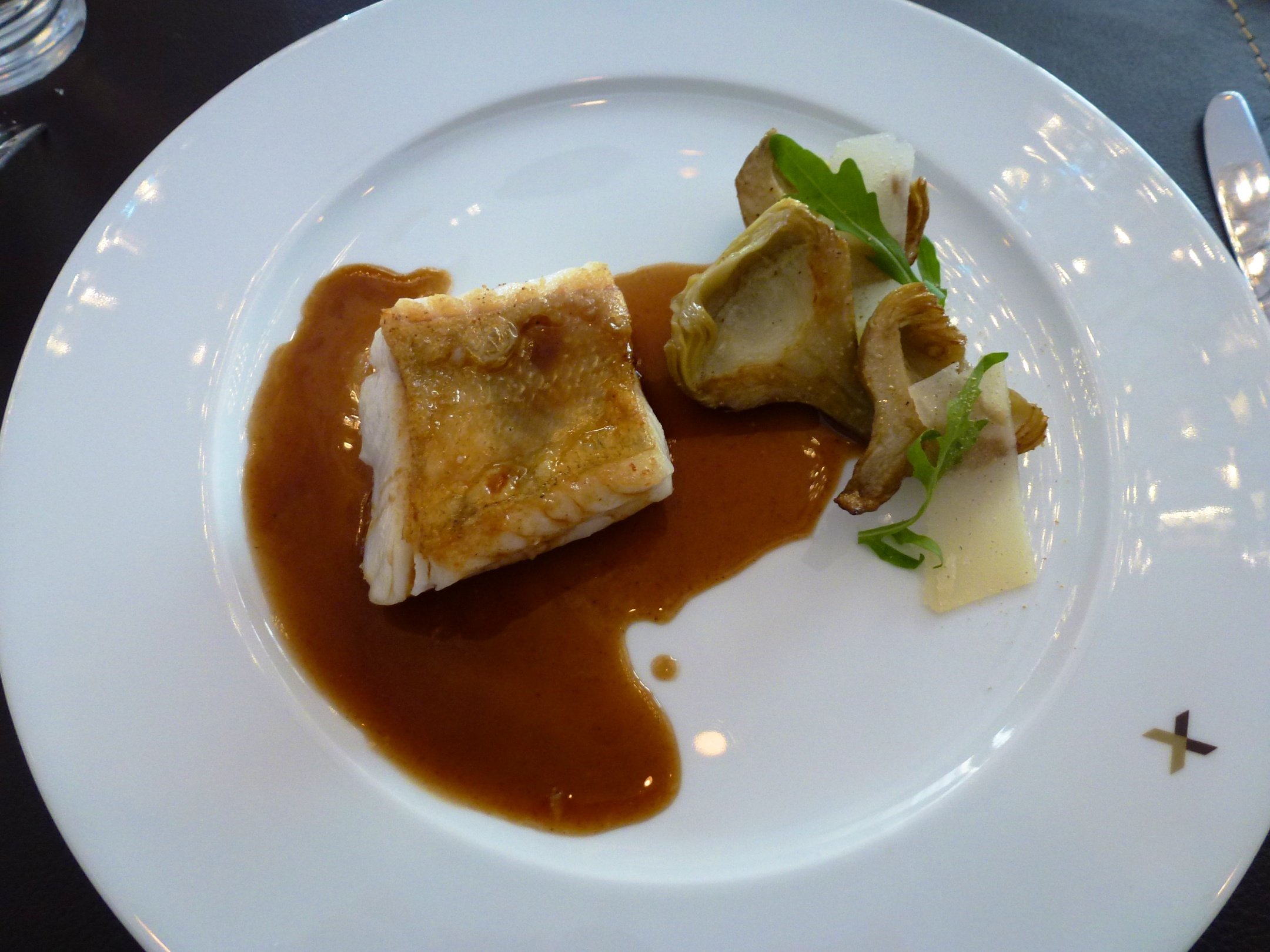
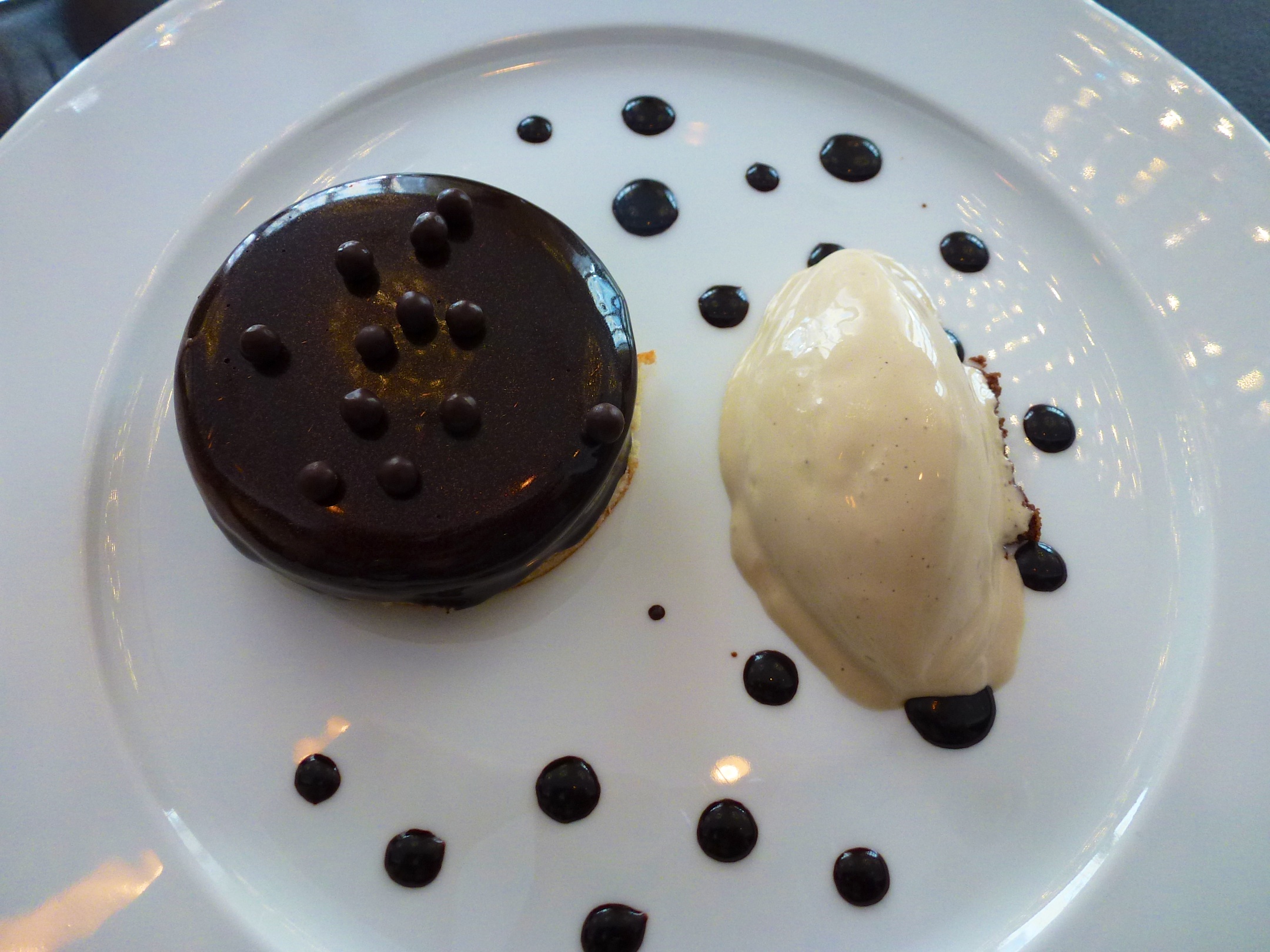
We also ate the very nice MiXin restaurant at the W hotel. Owned by Alain Ducasse, a French, Michelin starred chef we follow. This was not one of his Michelin restaurants but it was still excellent.
Appetizer: Pumpkin soup
Main: Fish with artichokes
Dessert: a perfect little chocolate cake with mocha ice cream
Our eating philosophy….low-end or high-end….no in-between! Unless it is for pie! Svetlana (flea market friend) introduced me to the Stolle cafe and we ended up there several times for their incredible pies! They served both savory and sweet. Oh could I go for a piece right now!
And I leave you with my very favorite Russian icon – the Matryoshka nesting dolls.
We found St Petersburg to be a modern European city. It was very clean and we felt safe. Many reviews will tell you that you must have a guide to visit St Petersburg. We did not agree. You do have to be a little more patient with the lack of English, but it is easy and fun to explore on your own.
One of the countries I was hoping to visit while living in Europe was Russia. But it never happened. Much to our surprise, D came home two months ago with the news that he had a conference in St Petersburg. I was thrilled. Mysterious and intriguing was what I had always read and heard about Russia. It did not disappoint!
We flew into Moscow, Russia's capital, a city that now claims the largest community of billionaires in the world (79 of them). Yes, Moscow is very expensive, but compared to Brussels or Singapore, it was on par.
Having been hidden behind the Iron Curtain for decades, we found Moscow to be fascinating on so many levels. But what really stood out to us was how little English was spoken – including a lack of English signs/menus etc. Not only is there no English, but also their alphabet is Cyrillic – completely different from our alphabet. Here is an example: Благодарим Вас за посещение нашего блога! It says: "thank you for visiting our blog".
Moscow turned out to be one of the most difficult countries for us to get around because of the lack of English and the different alphabet. But, this made it that much more of an adventure! This is the sign we had to work with. If they were written in our alphabet, we could have at least matched the letters!
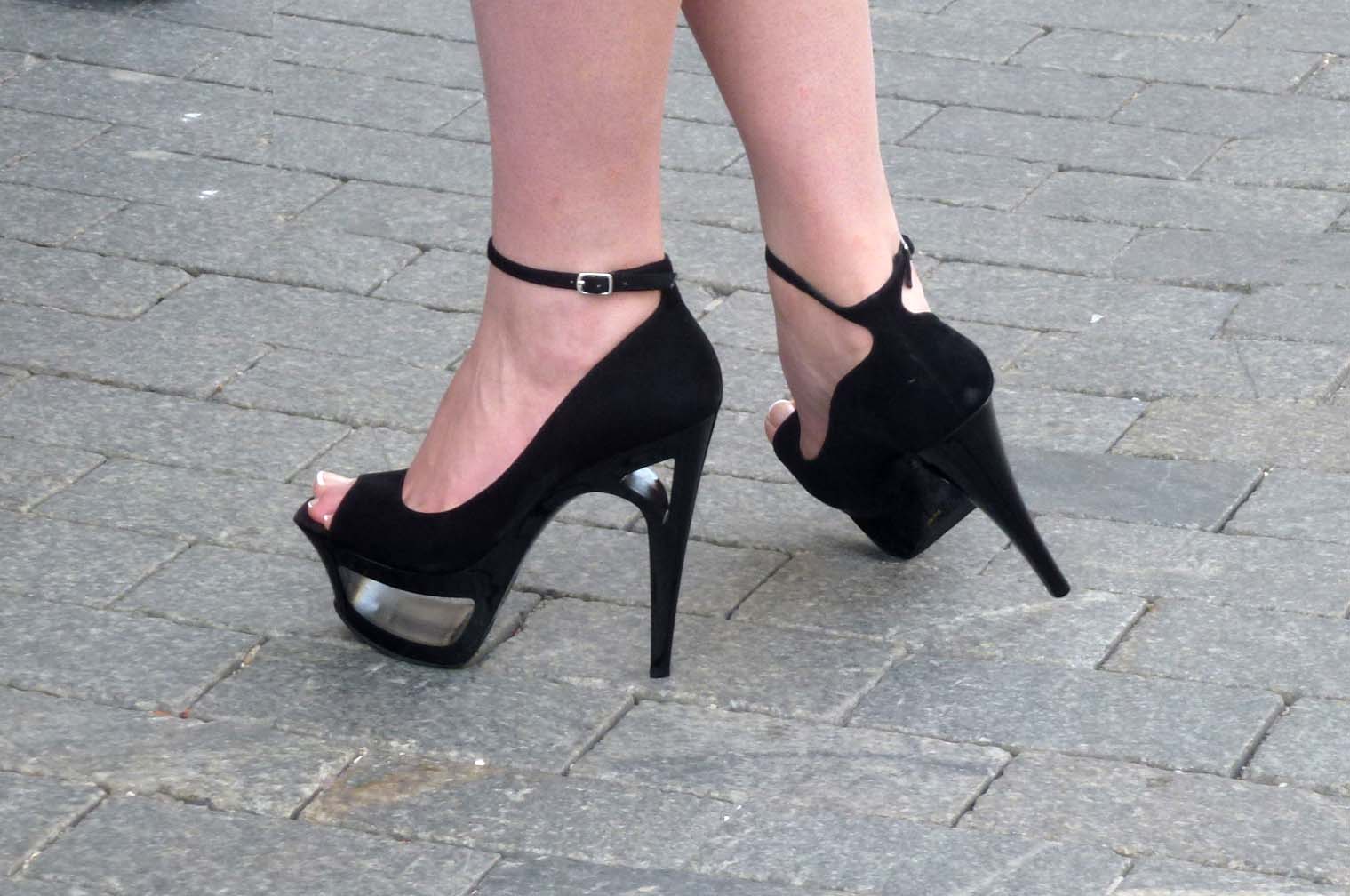
Other things that stood out were how many super-tall, super-fashionable, super-beautiful Russian women live in Moscow! We have traveled to Paris many times and have never seen women like this. We both enjoyed the fashionable women….but I am guessing for different reasons : )
and the shoes….oh the shoes! I have never seen such high high heels. But those Russian girls were working them!
We were also impressed by how clean we found the city. There very few beggars, bums, gypsies, and graffiti. We actually felt very safe. Much safer than other European cities we have visited….or any large U.S. city.
Red Square
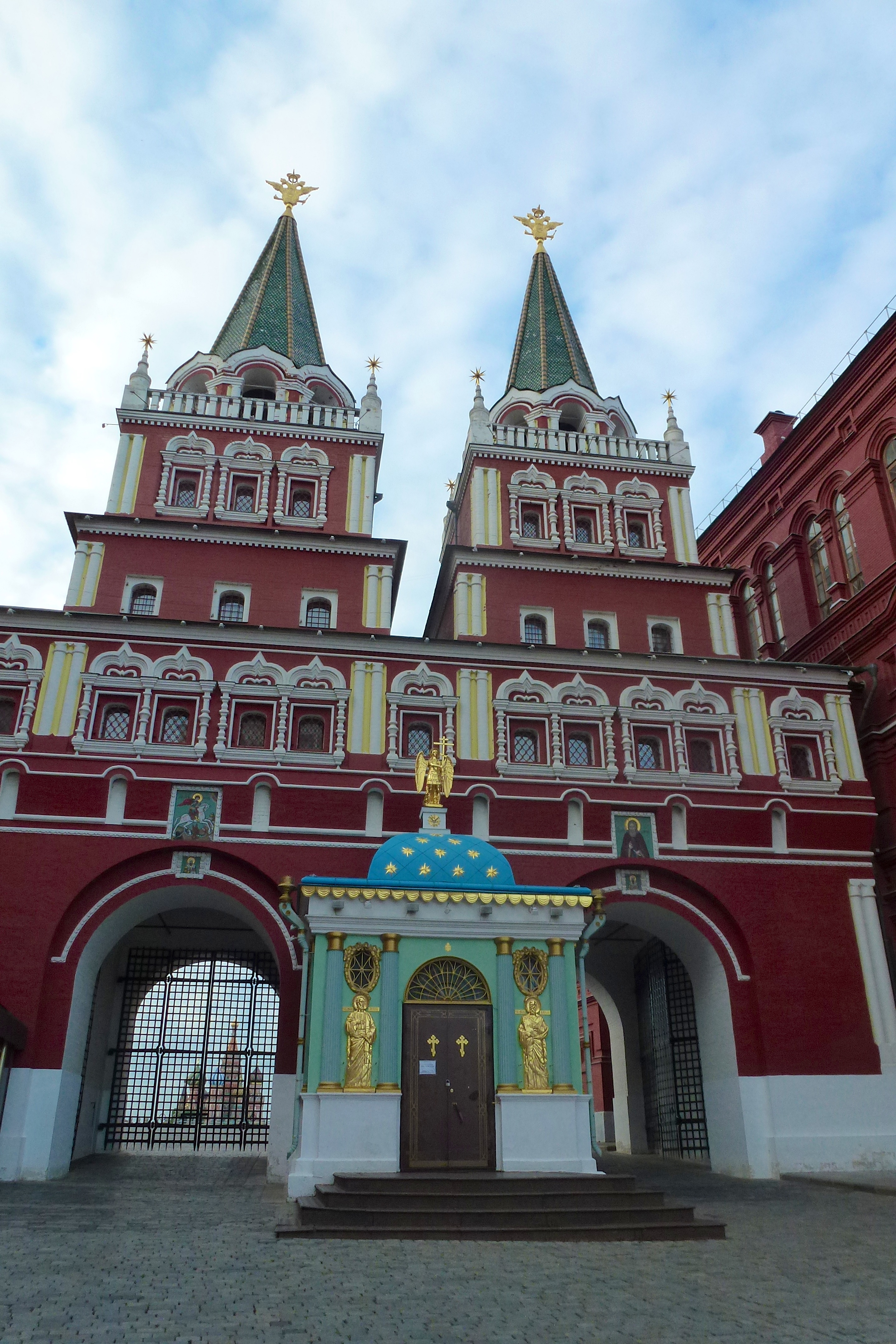
The gate to the Red Square, built in 1996, is a replica of the 16th century gate. Stalin had the original torn down to allow tanks easier access to the square for military parades.
Once you walk through the gates there is the most magnificent view of Red Square, which is not red and it is not square. It lies in the heart of Moscow and on its four sides stand the Kremlin, GUM Department Store, the State Historical Museum, and St. Basil's Cathedral. The square is also home to Lenin’s tomb.
Red Square was established in the 15th Century and was meant to serve as Moscow's main marketplace.
The square's name comes from the word 'krasnyi', originally meaning beautiful and red in “old” Russian.
St. Basil Cathedral
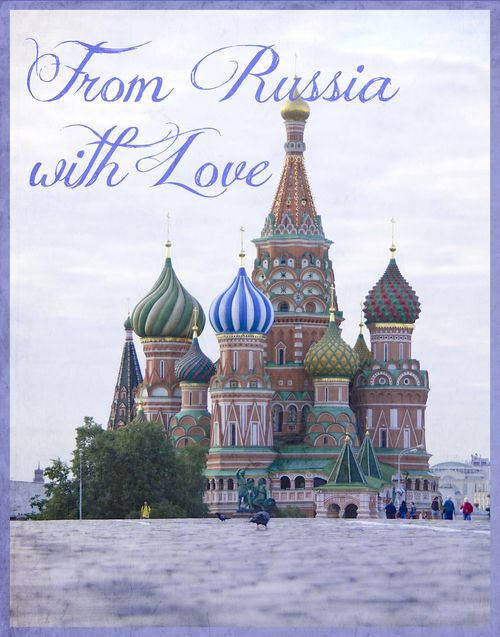
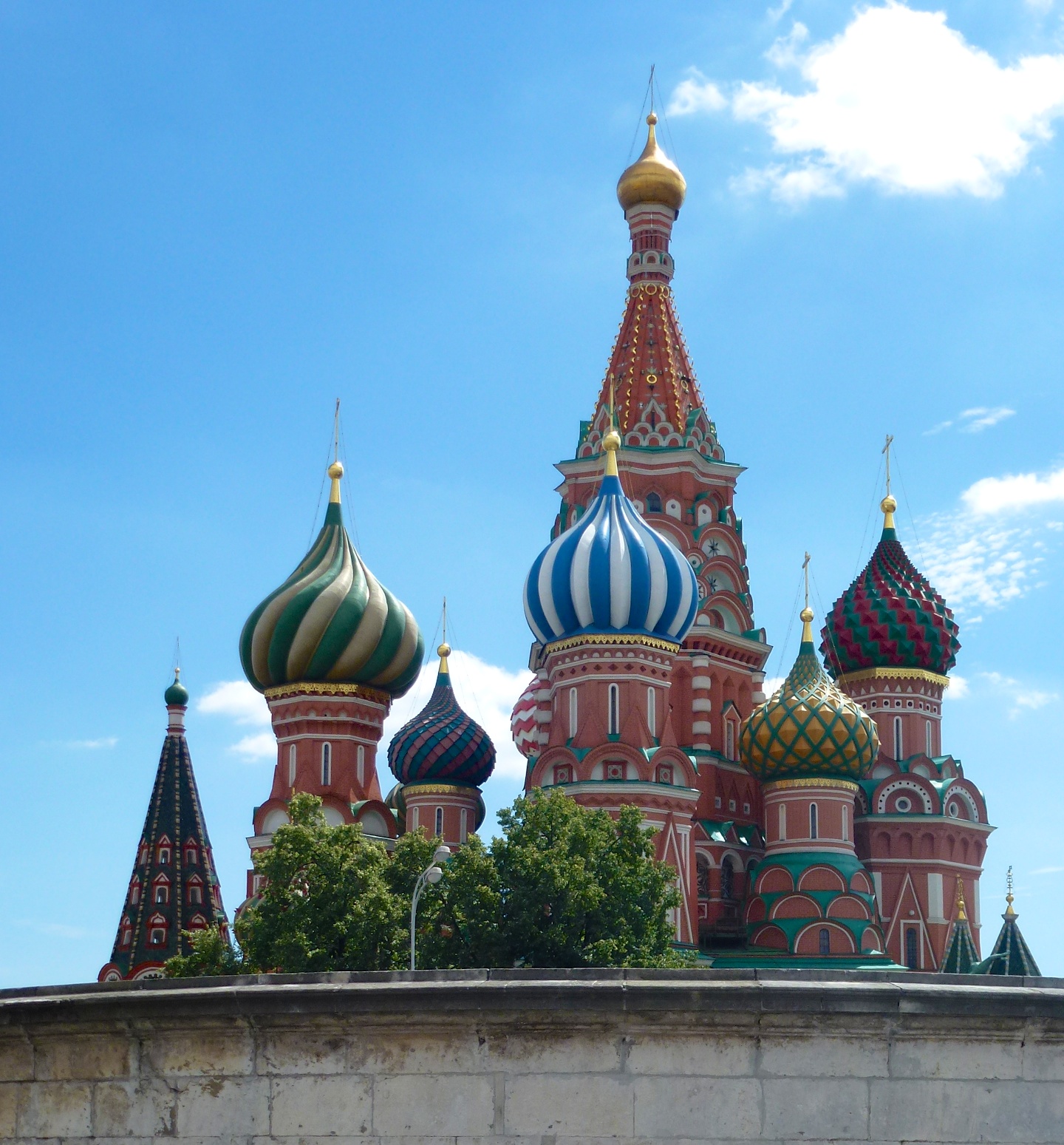
St. Basil's Cathedral, a Russian Orthodox Church, is one of the most recognizable images of Moscow. It was declared a UNESCO World Heritage Site in 1990. The variety of crazy colors and shapes of the structure are amazing and in a style that is unique to Russian architecture.
Ivan the Terrible built the Cathedral between 1555 and 1561. According to legend, Ivan had the architect who designed it, Postnik Yakovlev, blinded to prevent him from creating the masterpiece anywhere else. It wasn’t until 1670 that the domes were colored and patterned, giving its multicolored appearance we know today.
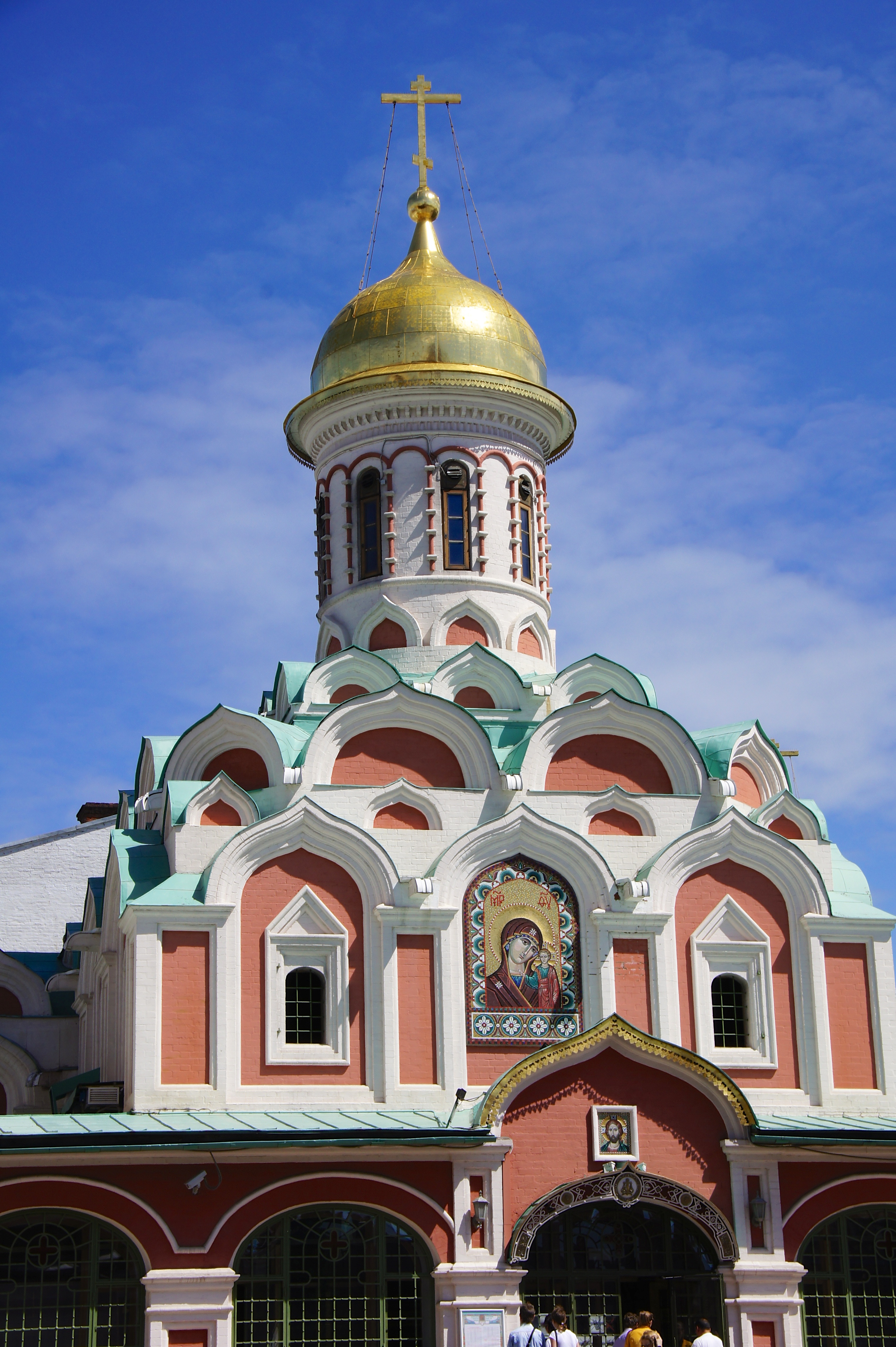
I love this shot of D trying to capture the perfect photo. It was very early in the mornig when there were few visitors in the square. The photo he took is the very first one on this post – I'd say he did a pretty good job capturing it!
We are lucky St Basil's is still standing. Napoleon ordered it to be destroyed in 1812, fortunately, his troops did not have time to complete the task. And it was nearly demolished under Stalin, who considered it an obstruction, and wanted it torn down. Architect Baranovsky protested the move. He stood on the steps of the cathedral and threatened to cut his own throat if St Basil's was destroyed. Stalin backed off, but for the "act of heroism", Baranovsky earned five years in the labor camp.
Sergiev Posad
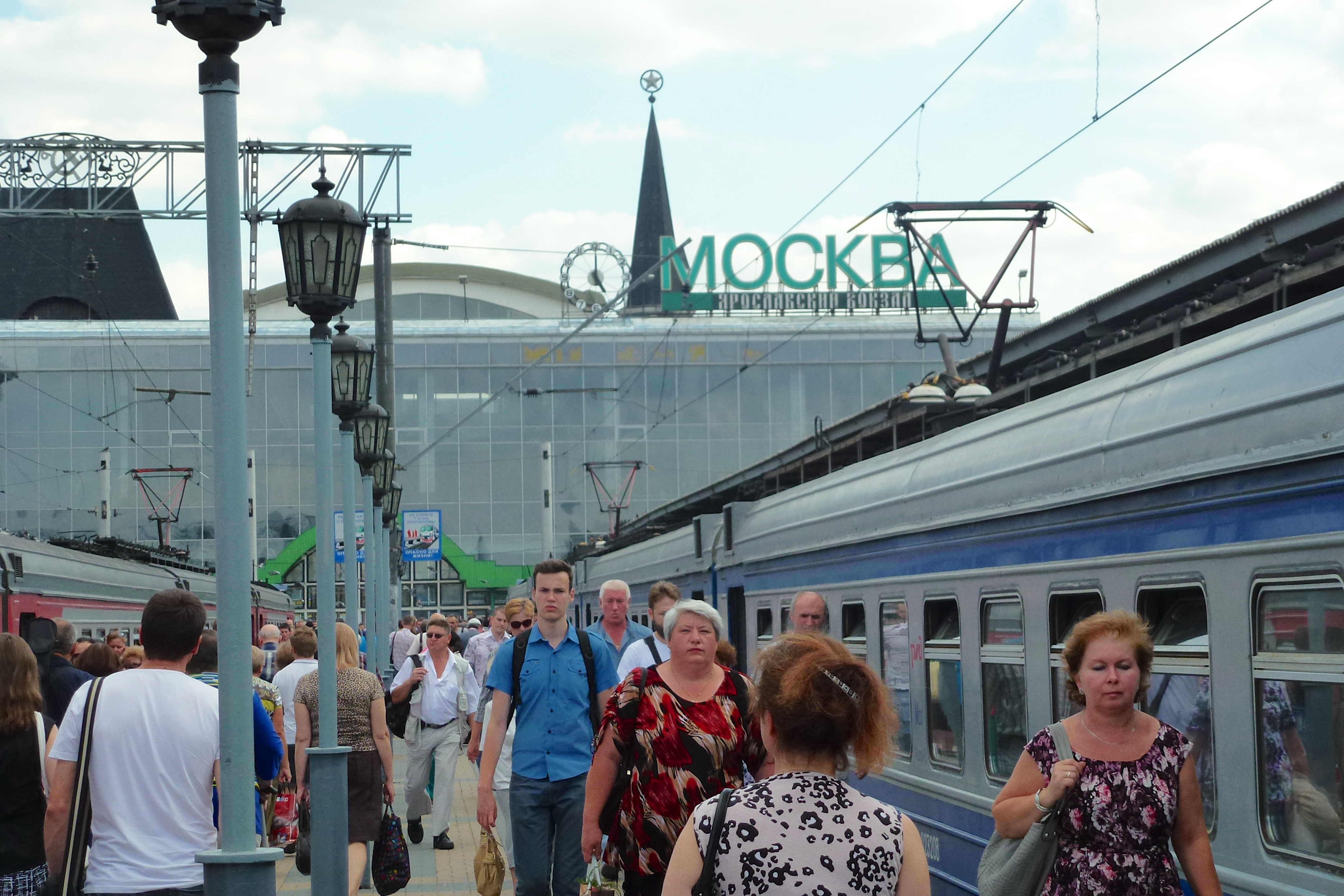
We wanted to see a town outside of the Moscow so we took a 1 1/2 hour train ride to the town of Sergiev Posad to see the Trinity Lavra of St. Sergius Monastery. The train ride was quite the adventure. It took us over an hour to purchase the tickets at the Yaroslavl Station (Metro Komsomolskaya).
Again, there were no signs in English and no one spoke English – not even the people selling tickets. Just when we were ready to give up, we found the correct window, and the purchase only took 3 minutes! Cost – $6 each, round trip. It was a local train, which provided for a fascinating ride. We were on the train early and secured a bench seat to ourselves…little did we know the train packed 3 or 4 to a bench! Something we had never seen was the “selling” of a variety of items on the train. Not just a beggar selling candy but a full-blown presentation at the front of the train. They took turns yelling down the isle trying to sell their goods. One man had a fishing rod, which he opened fully by casting it down the middle of the isle.
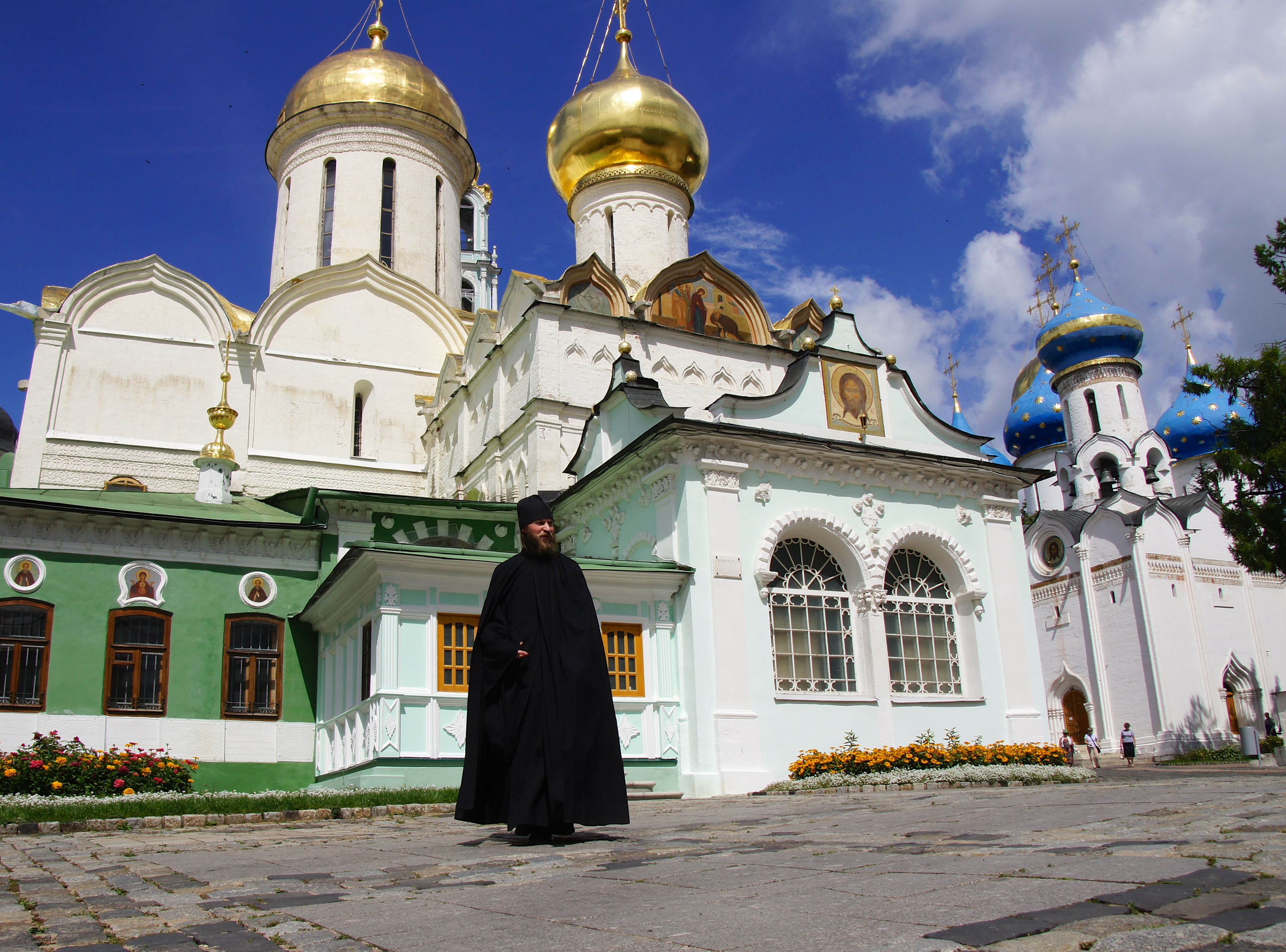
As you approach the Monastery, you get a breathtaking view of the large religious complex. The Trinity Lavra of St. Sergius is the most important Russian monastery and the spiritual centre of the Russian Orthodox Church. It is a working monastery and a UNESCO World Heritage Sight.
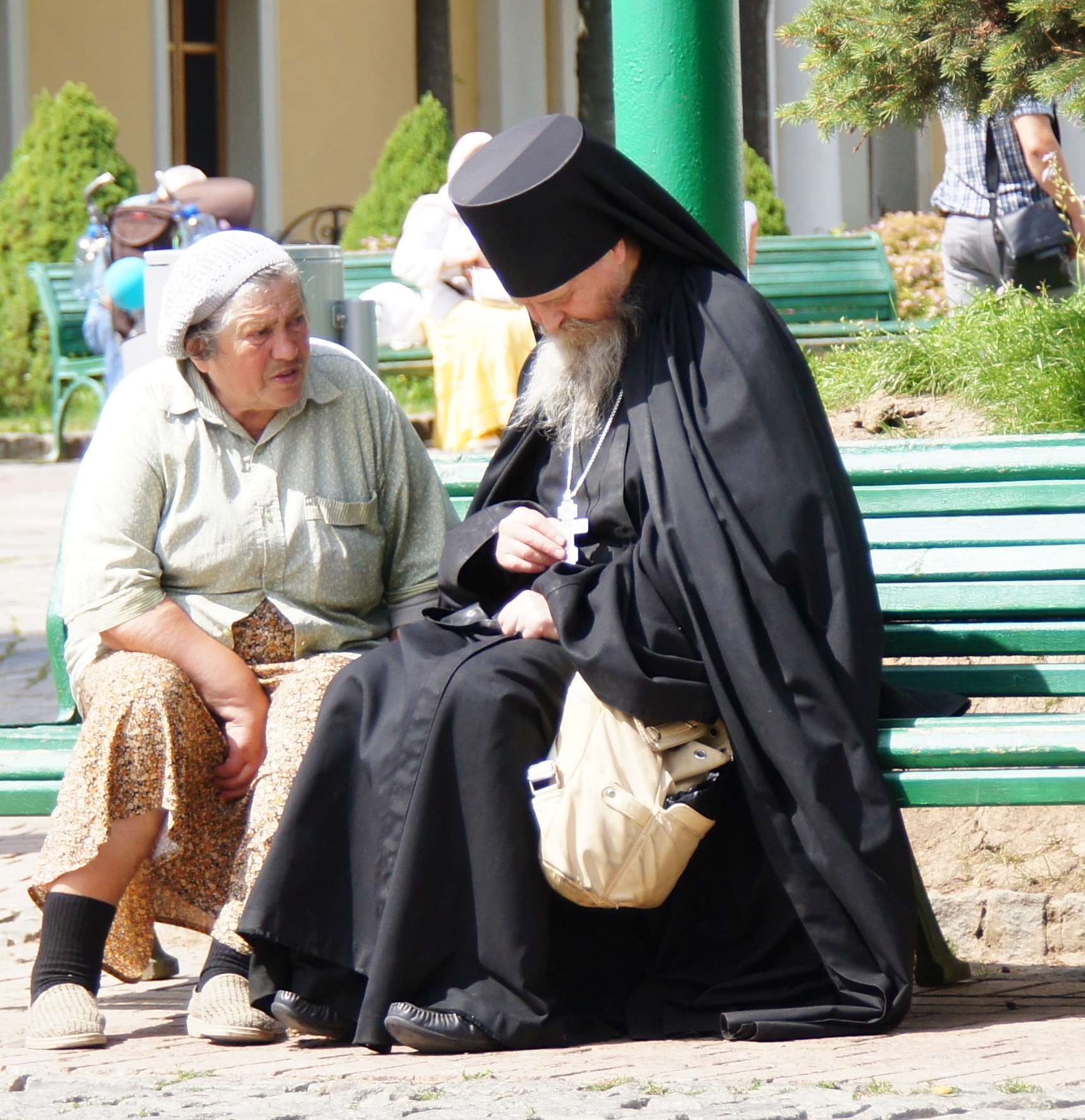
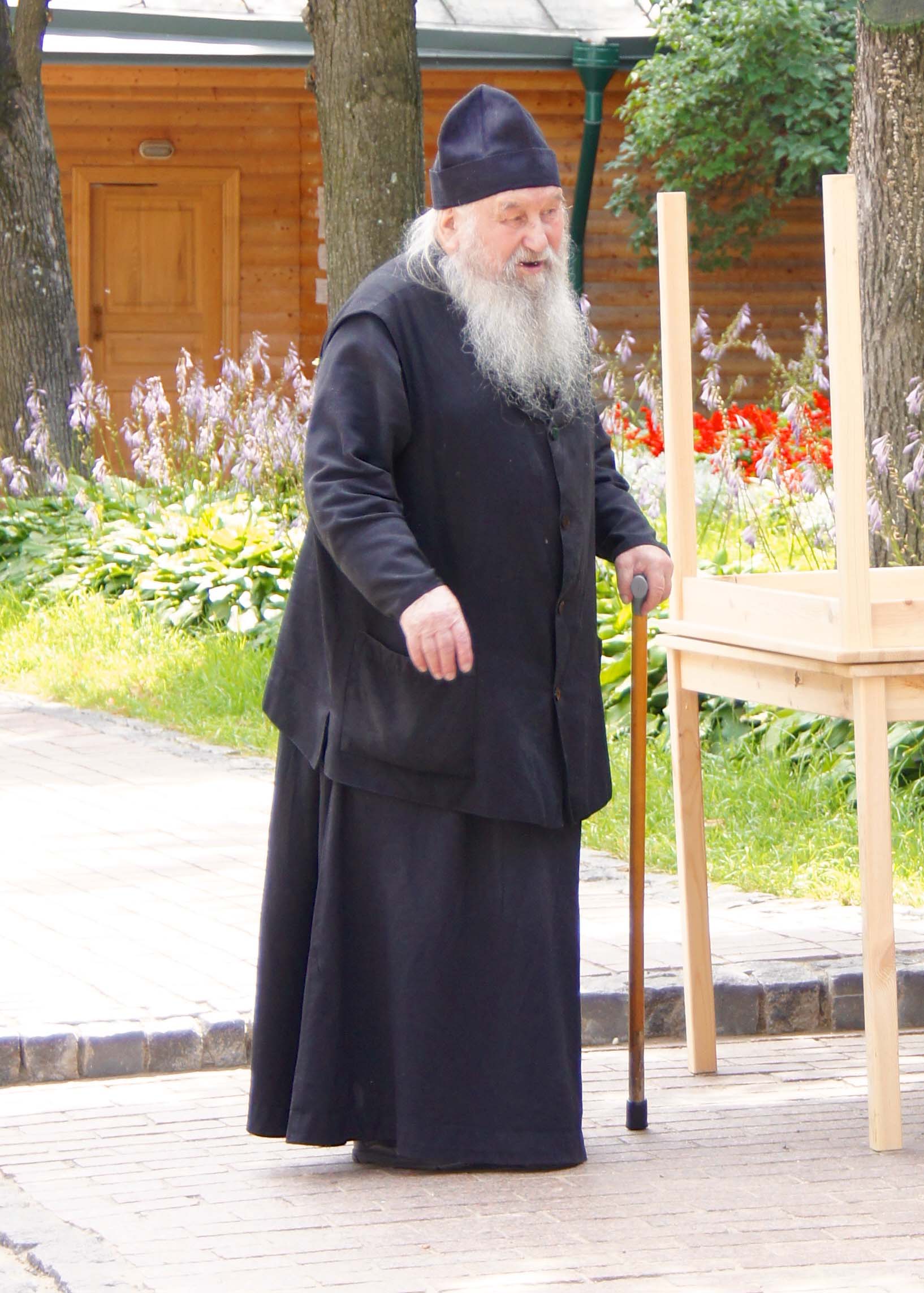
The entire complex had a very special feel that is hard to explain. Most people visiting were Russian, coming for a pilgrimage, not as tourists. If you look closely in the photos, all of the women had their heads covered in scarves; even the small girls and infants.
The Trinity St. Sergius Lavra was founded in 1345 by a local monk named Sergius, who was canonised as a Saint in the early 14th Century. A Lavra is the highest rank of the Orthodox monastery and is equivalent to the Vatican. Today, it is the home to over 300 monks.
Assumption Cathedral
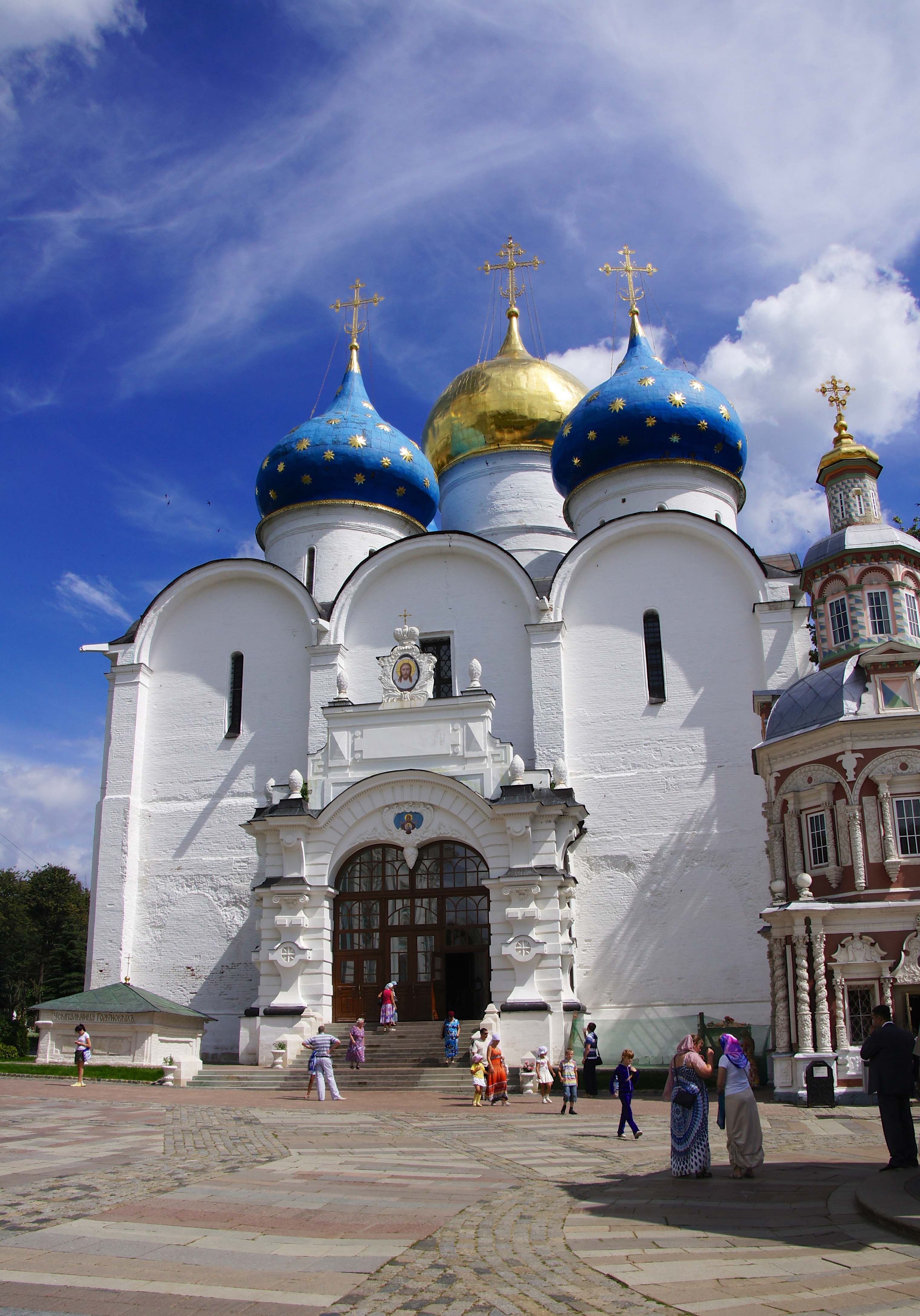
The largest building of the monastery is the Assumption Cathedral, which was built in 1559 by Ivan the Terrible. This beautiful cathedral is very similar to the Assumption Cathedral in Kremlin.
Inside was an amazing array of art. People were kissing the tombs to show respect and dedication.
Holy Trinity Cathedral
The Holy Trinity Cathedral, built in 1422, is a four-pillar single-domed church. It's interior is decorated with stunning frescoes.
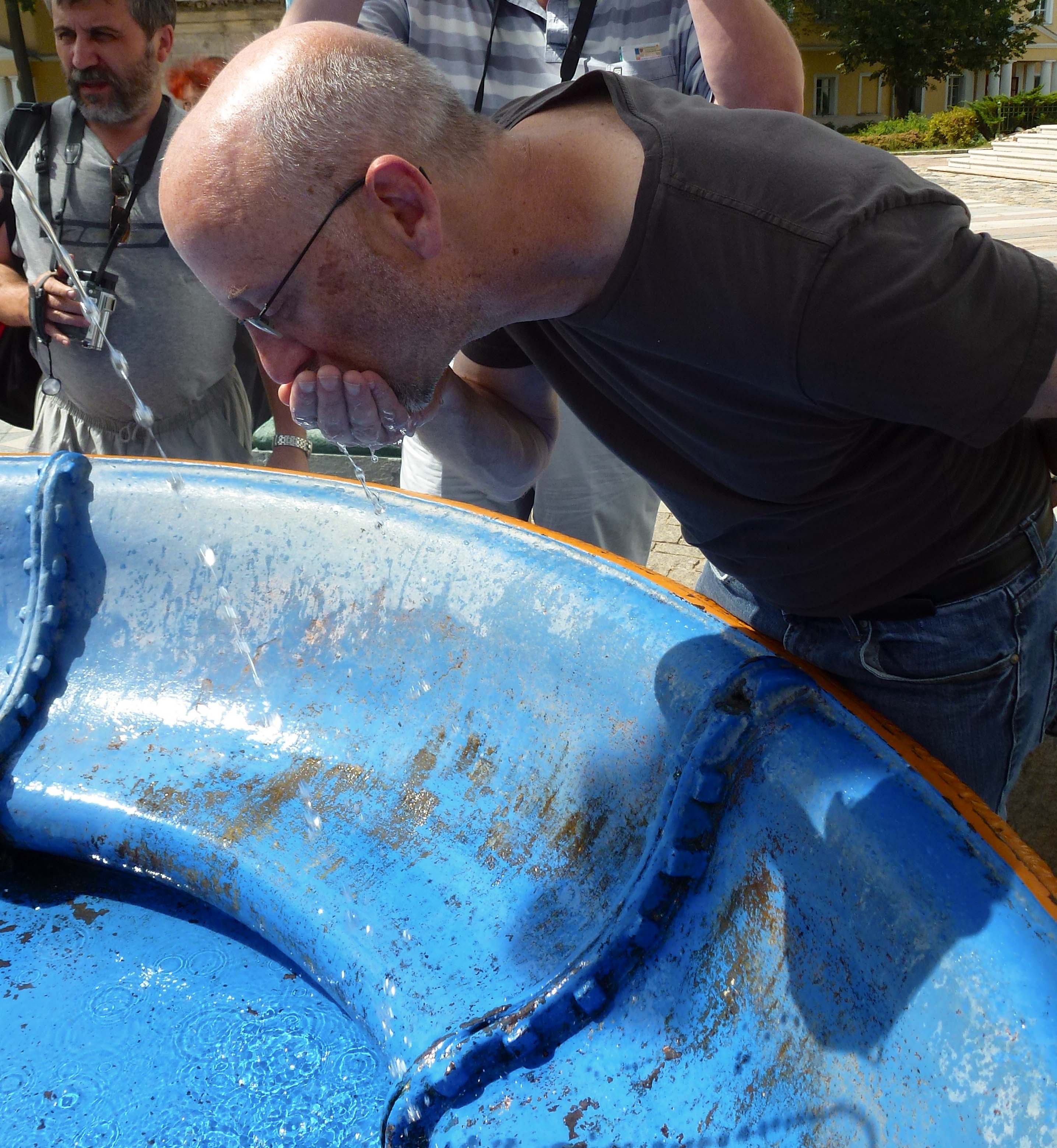
Holy water from the well was also popular, especially among the pregnant women. The well was built at the end of the 17th century over a spring, which appeared in 1644. It is believed that the water from the well cures the sick. The first person cured was a blind monk, whose eyesight returned after using the “miracle” water. Still today, people believe it is special water and they could be seen drinking it, washing their faces in it, and filling up very large containers to take it away.
We both had a taste – who knows, it may bring us good health.
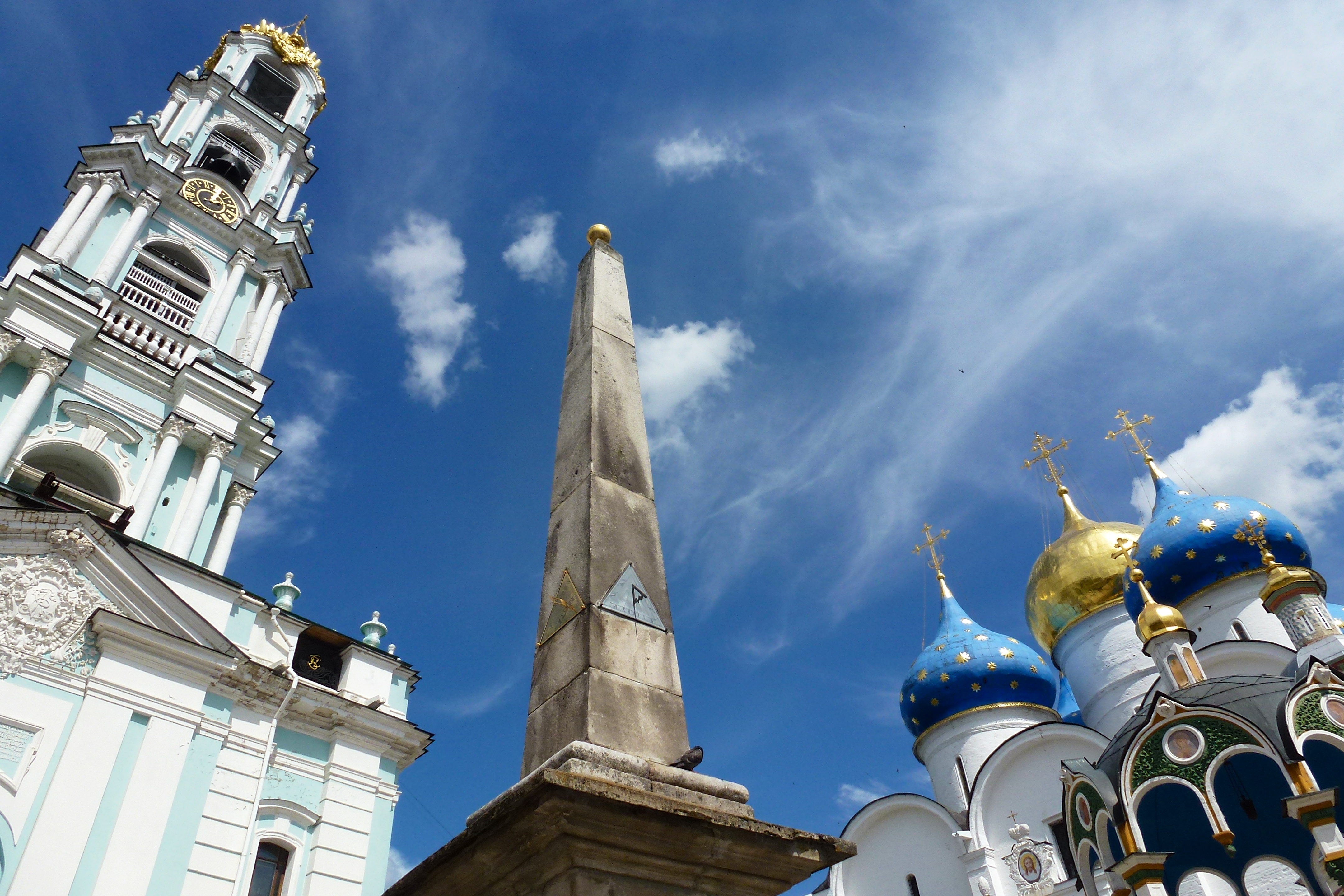
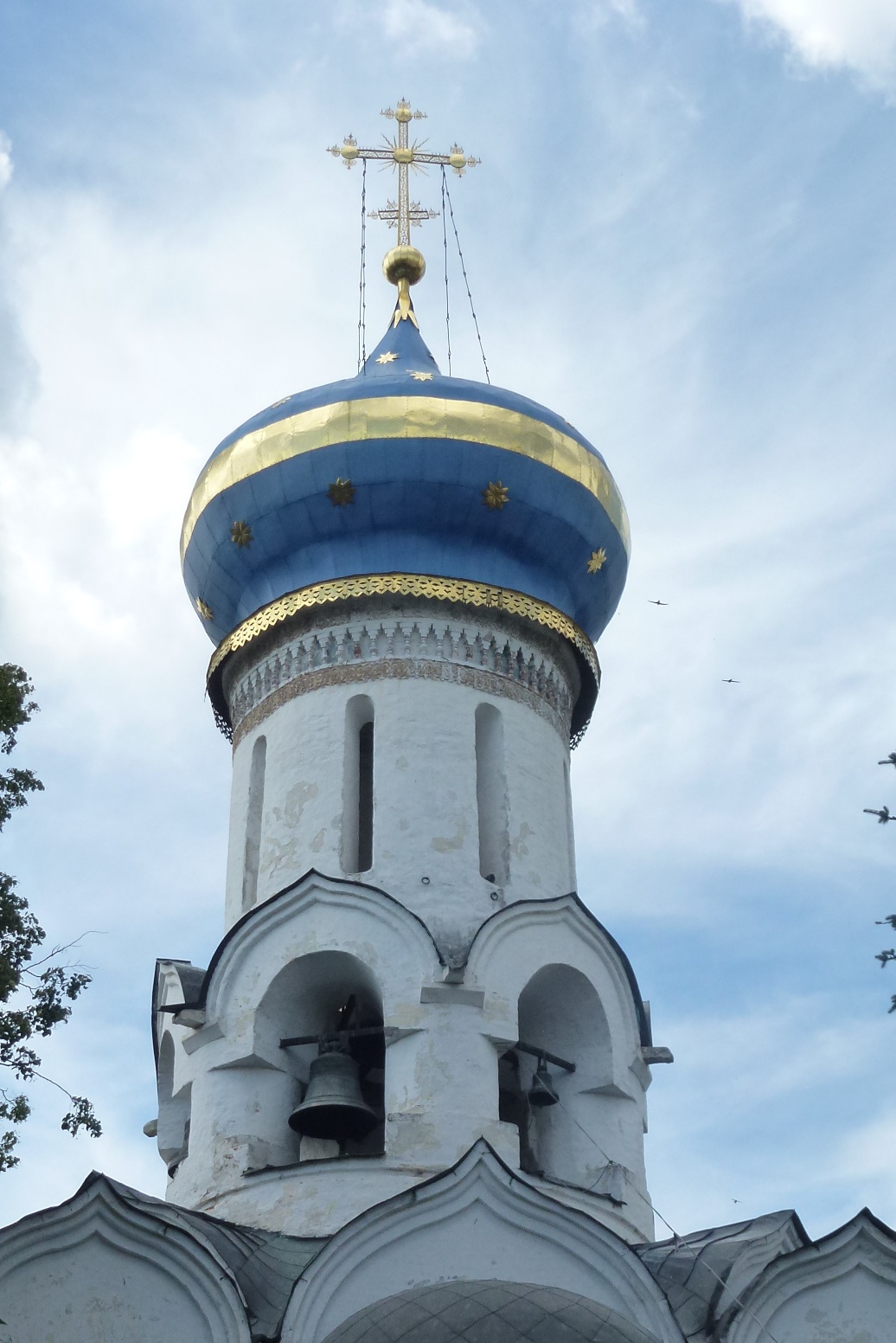
The Church of the Holy Spirit, located in the centre of the monastery, is one of the oldest monuments in the complex. It is a four-pillared church and a single dome built from white limestone in an onion shape. The Belfry is the highest building in the complex.
The Bell Tower
The bell tower was built between 1740–1770 and it is one of the tallest in Russia. It replaced the bell tower of the 17th century. The clock with chimes was installed in 1905.
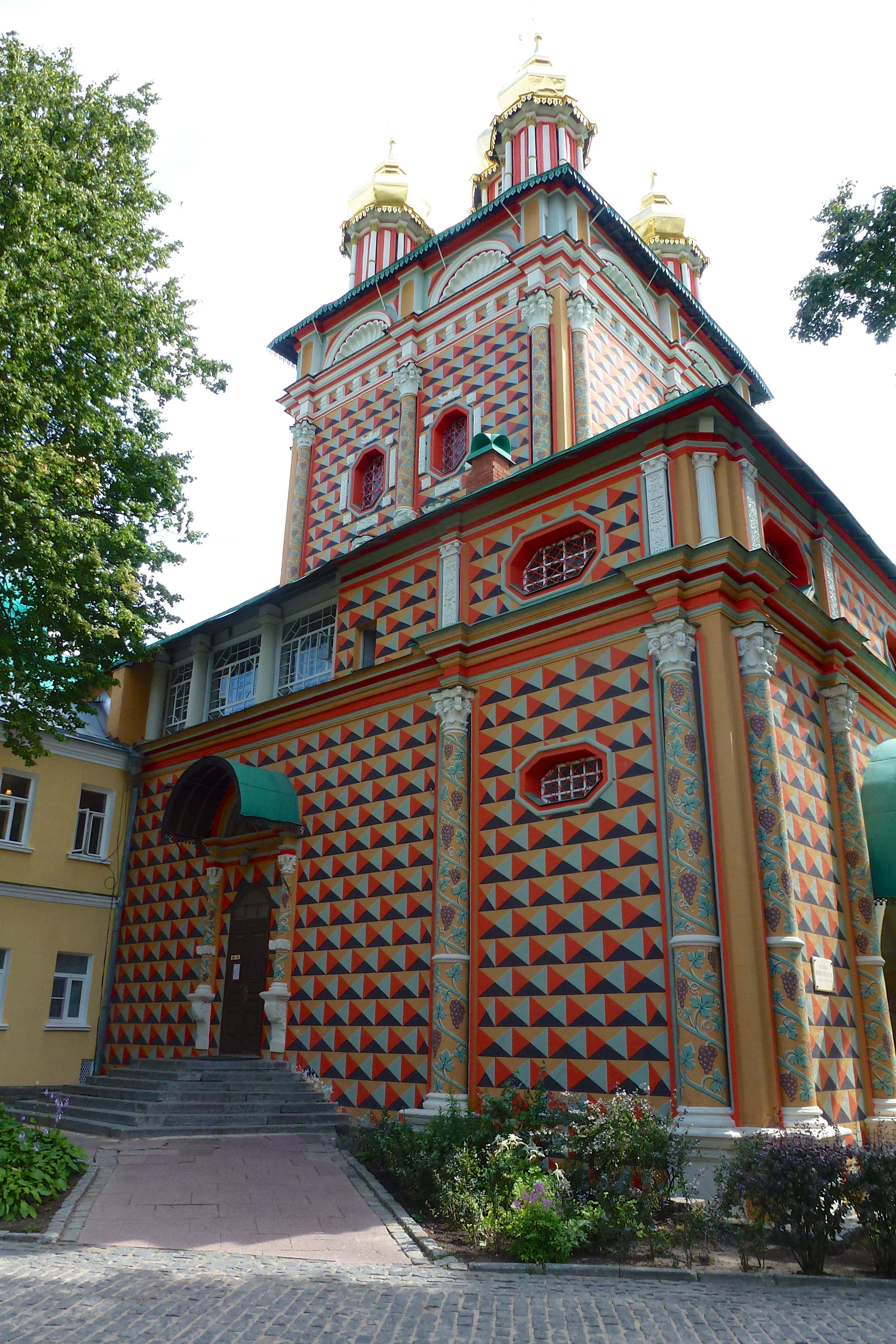
The refectory of St. Sergius is painted in dazzling checkerboard design.
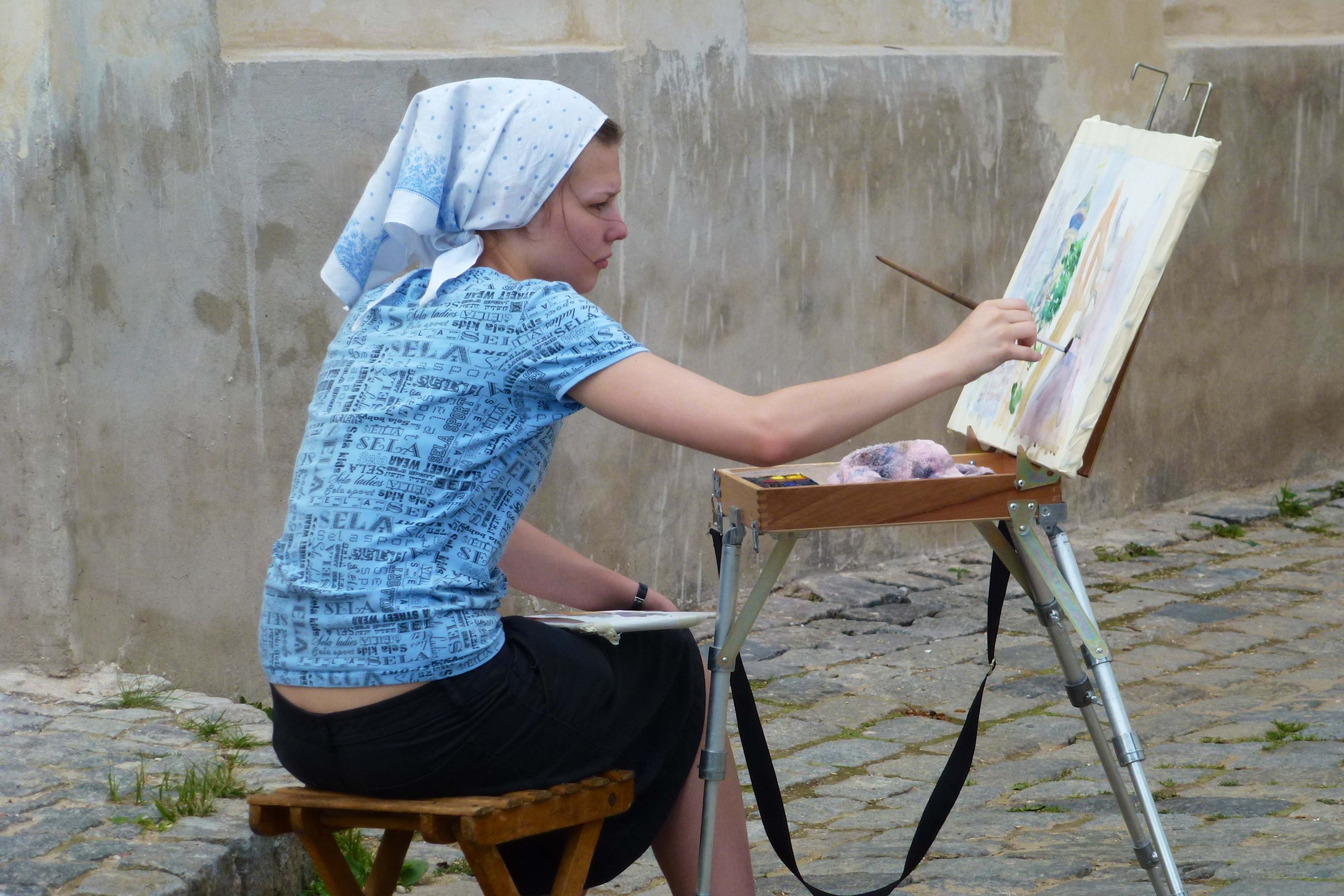
ahhhhh – wouldn't you love to sit and paint this amazing sight?
I am so glad we did not give up on purchasing those train tickets. The Trinity St. Sergius Lavra would be high on our "what to do" in Moscow list.
The Kremlin
The Kremlin, dating back to 1156, is a self-contained city with a multitude of palaces, armories, churches, even a medieval fortress and it is amazing. Since 1991, the Kremlin has been the official residence of the President of the Russian Federation. The entire Kremlin complex is a UNESCO World Heritage Sight.
The Trinity Gate Tower, built in 1495, is the tallest of the tower fortifications. It was under this gate that Napoleon’s troops both entered and fled from the Kremlin. The basement was used as a prison in the 16th Century.
As we entered through the gate onto the Kremlin grounds it was one of those moments we just looked at each other and said – who would have ever thought we would be standing in the middle of the Kremlin! Very cool.
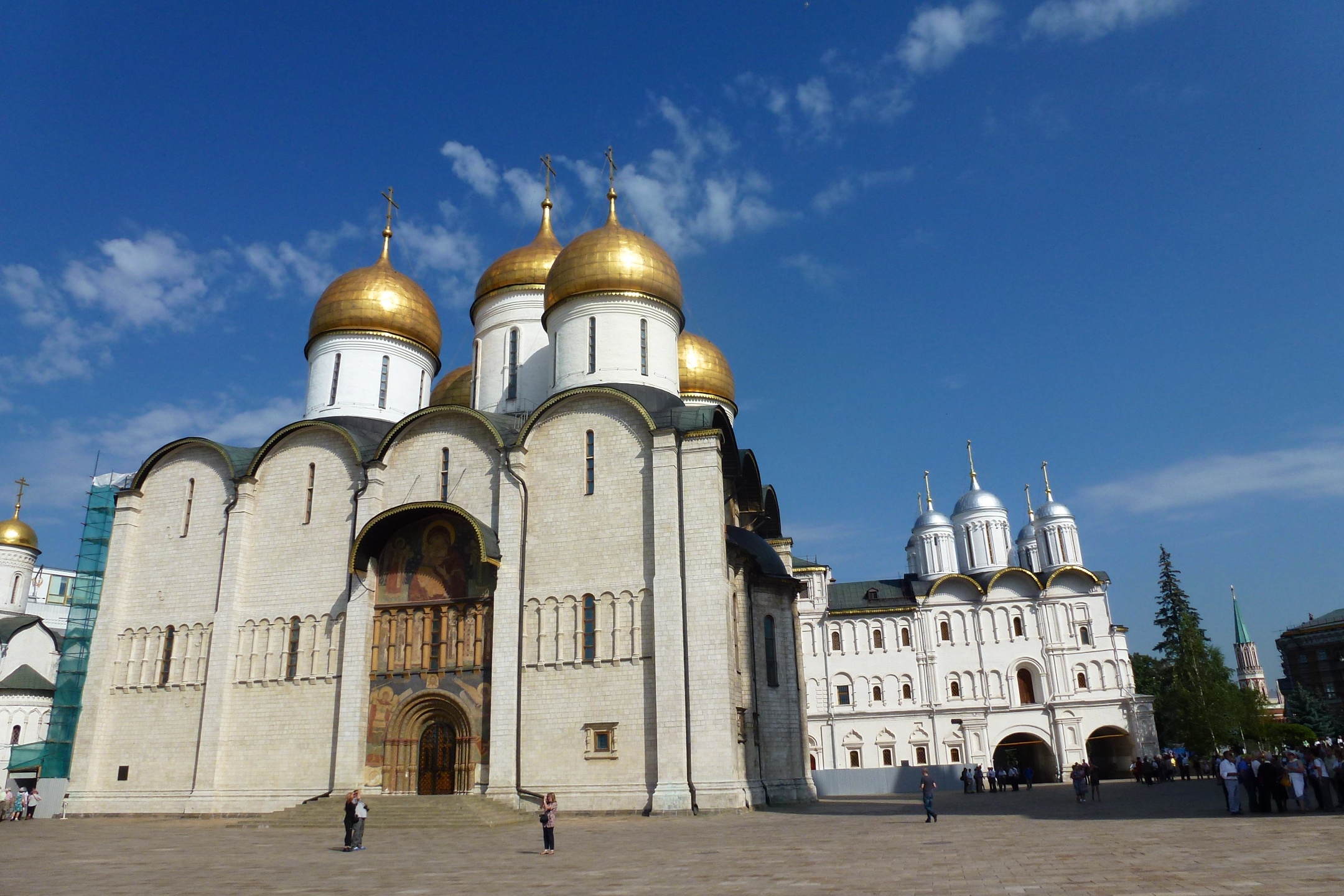
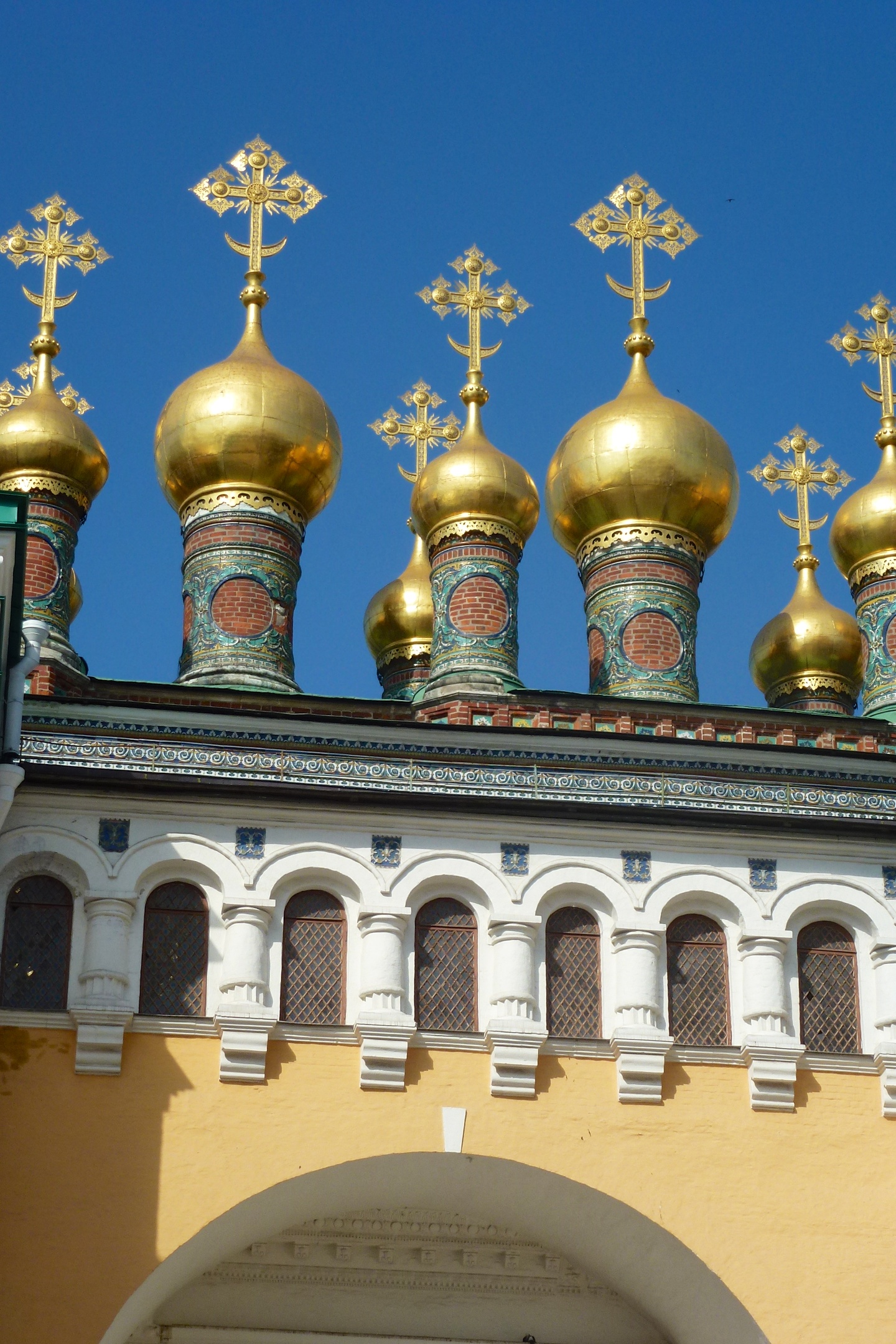
The Cathedral of the Assumption, built in 1479, is the oldest church in the Kremlin. The gabled frescoes were added in the 1660s, otherwise the exterior has remained almost unchanged to this day.
The Church of the Nativity – the Kremlin includes small domestic churches built from the 14th to the 17th centuries. Originally, there were eleven of them, but only six remain. The oldest of these is The Church of the Nativity.
The Cathedral of the Annunciation – the present building dates from 1484 but it was badly damaged during the Revolution. In 1918, the cathedral was closed as a place of worship and now it operates officially as a museum.
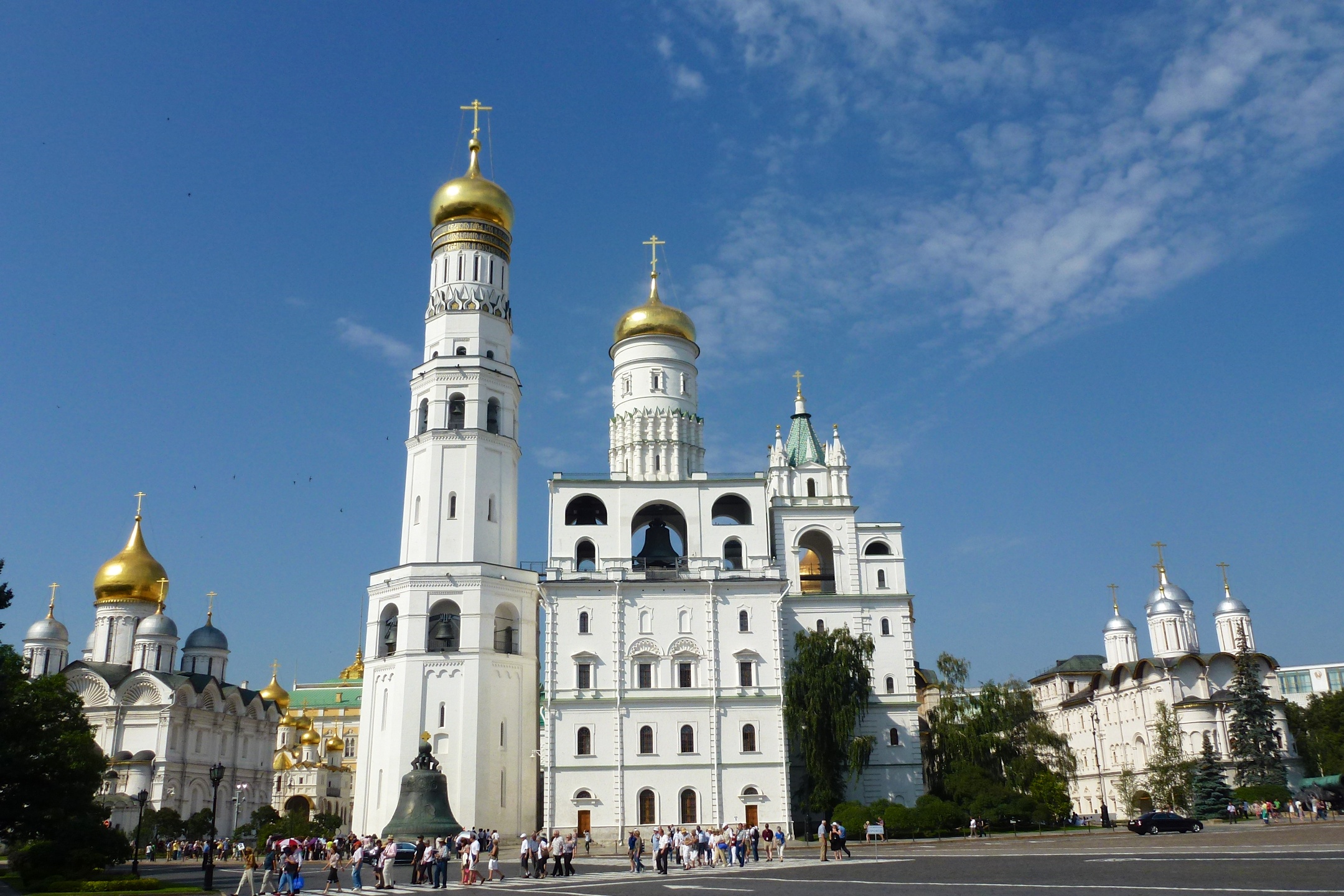
Built in 1600, Ivan the Great Bell Tower was the tallest building in all of Russia for almost 400 years. It was always the first bell to ring on church holidays, a signal that started all the other church bells in Moscow. In 1918 the last Easter service in the Kremlin took place, and the bells of Ivan the Great did not ring again until 1992.
Archangel Cathedral – built between 1505 and 1508 is the most Italian of the Kremlin's churches and the last of Ivan the Great's contributions to Cathedral Square. One of greatest treasures of the cathedral is the burial vault of Ivan the Terrible. And I always thought these "characters"…Ivan the Terrible and Ivan the Great were made up.
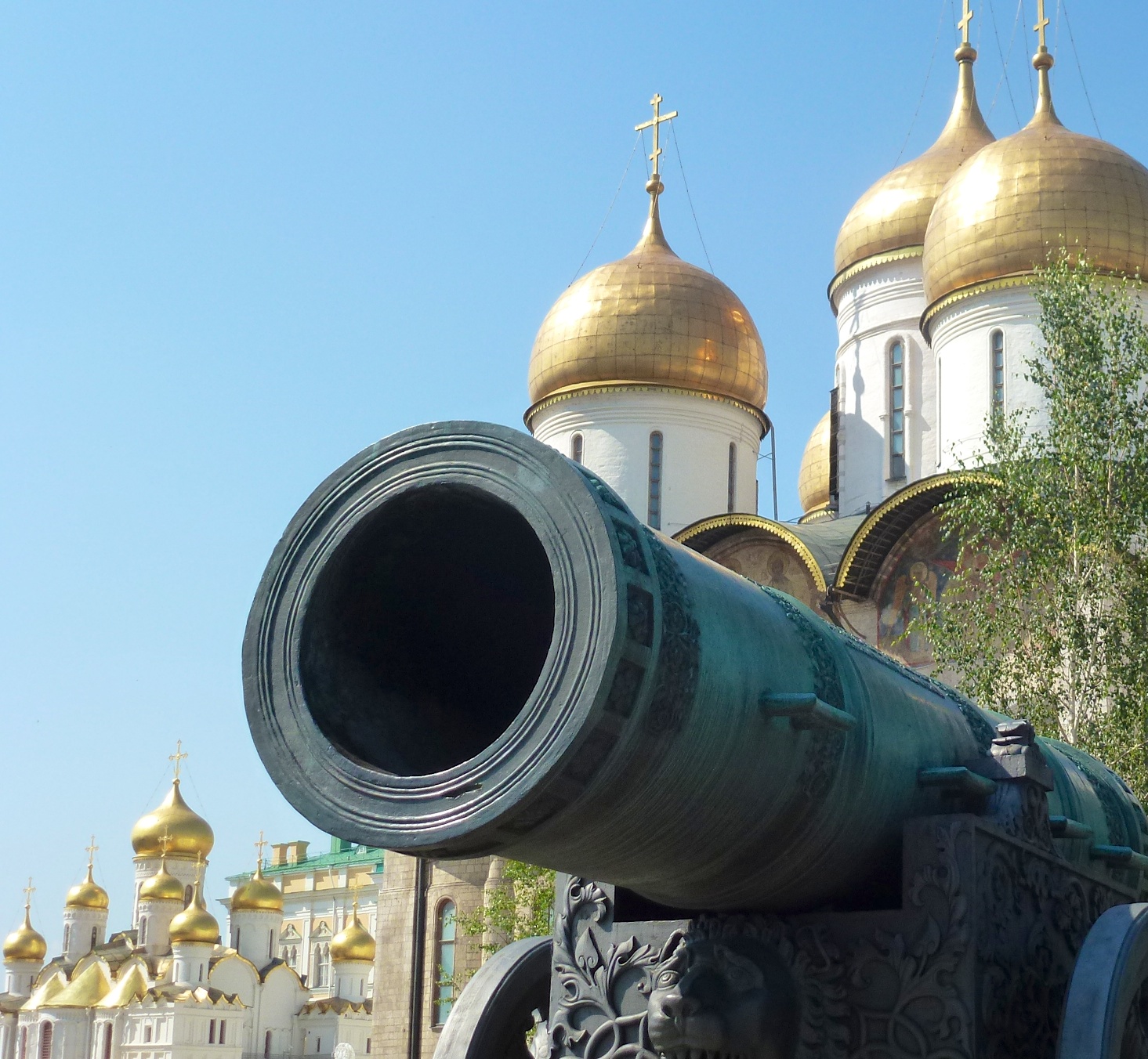
The Tsar Cannon was cast in 1586. It was never used in war, but historians say it was fired at least once.
Bolshoi Theater
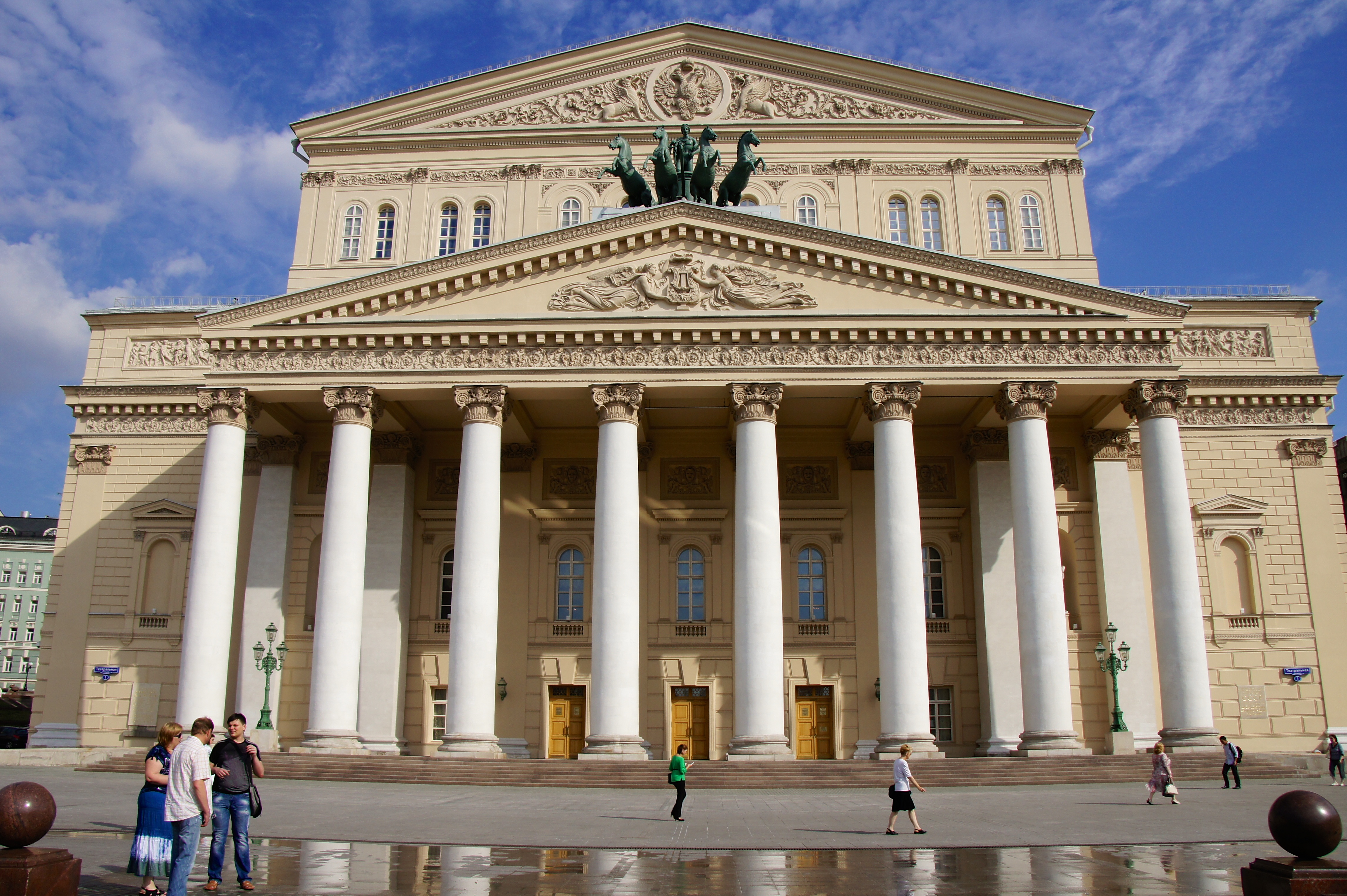
The Bolshoi is the leading ballet company of Russia, noted for elaborate productions of 19th-century classical ballets. This building was built in 1824. From July 2005 to October 2011 the theater was closed for restoration. They say 700 million dollars was spent on the restoration. Unfortunately it is closed in July so we did not get to go inside.
Novodevichy (New Maiden) Convent and Cemetery
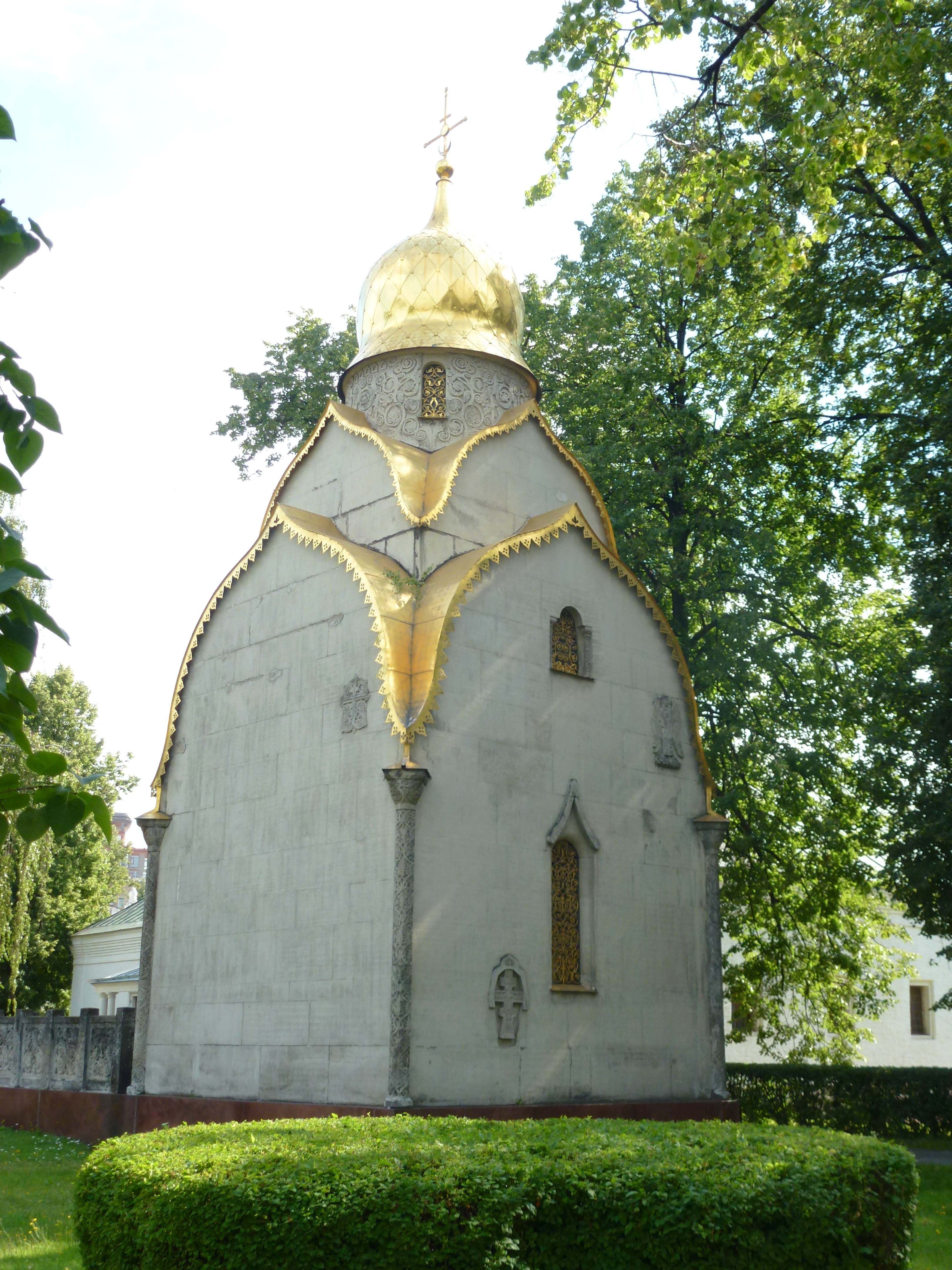
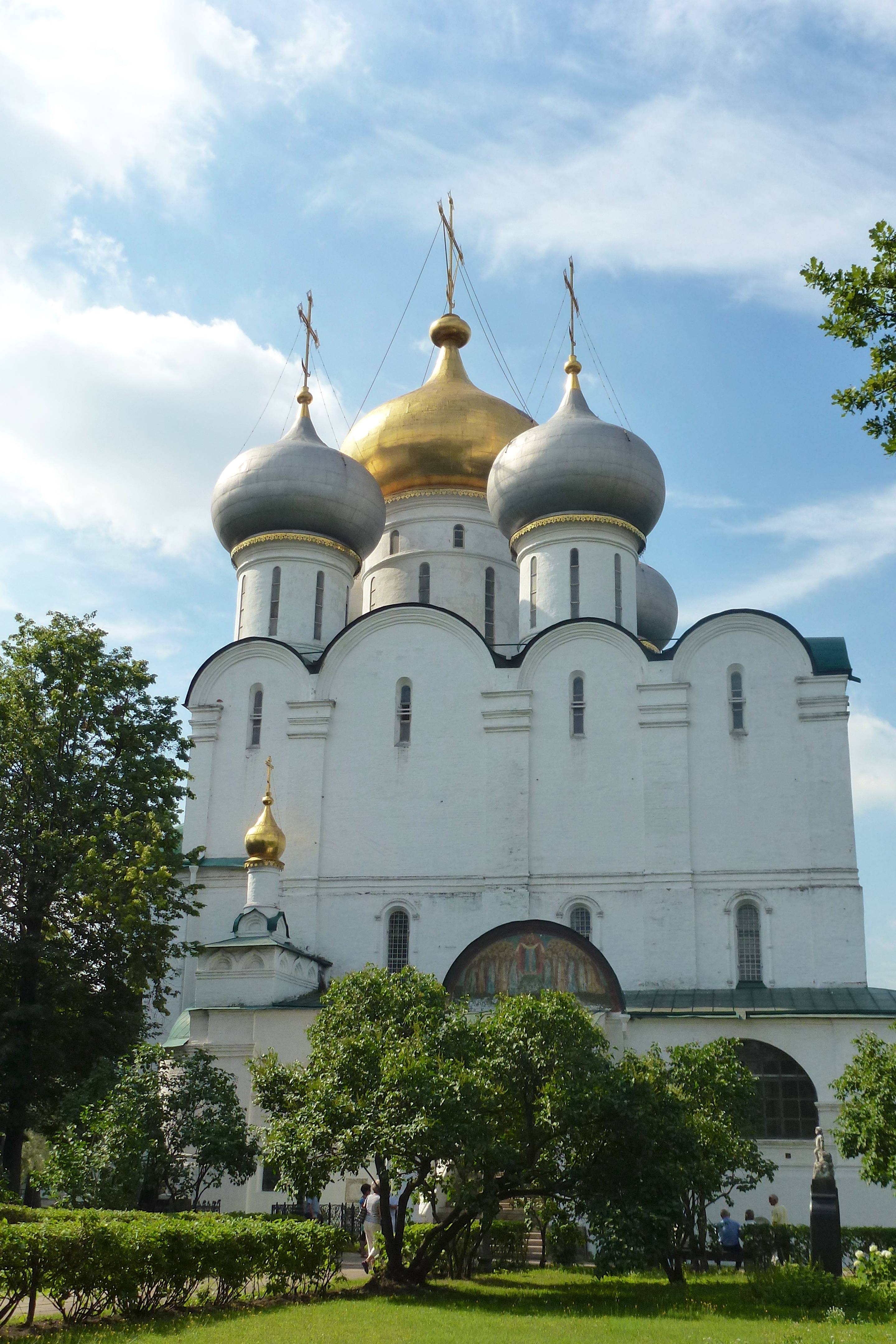
The Novodevichy Convent, also known as Bogoroditse-Smolensky Monastery was built in 1524 as a fortress. Through history, it served as a shelter for many ladies from the Russian royal families who had been forced to become nuns.
In 1812, Napoleon's army made an attempt to blow up the convent, but the nuns managed to save the cloister from destruction.
The oldest structure in the convent is the six-pillared five-domed cathedral, dedicated to the icon Our Lady of Smolensk. Records show it was built in 1524–1525; however, its unique proportions and projecting central gable are typical of monastery cathedrals built by Ivan the Terrible.
The Cemetery
Russian nobility considered the monastery to be a special burial place so the cemetery holds the tombs of Russian authors, musicians, playwrights, and poets, as well as famous actors, political leaders, and scientists.
It is so interesting to see how cemeteries vary from country to country. Russia had elaborate headstones with unique fonts.
And beautiful elaborate sculptures.
Just a man and his dog….
Gum Dept Store
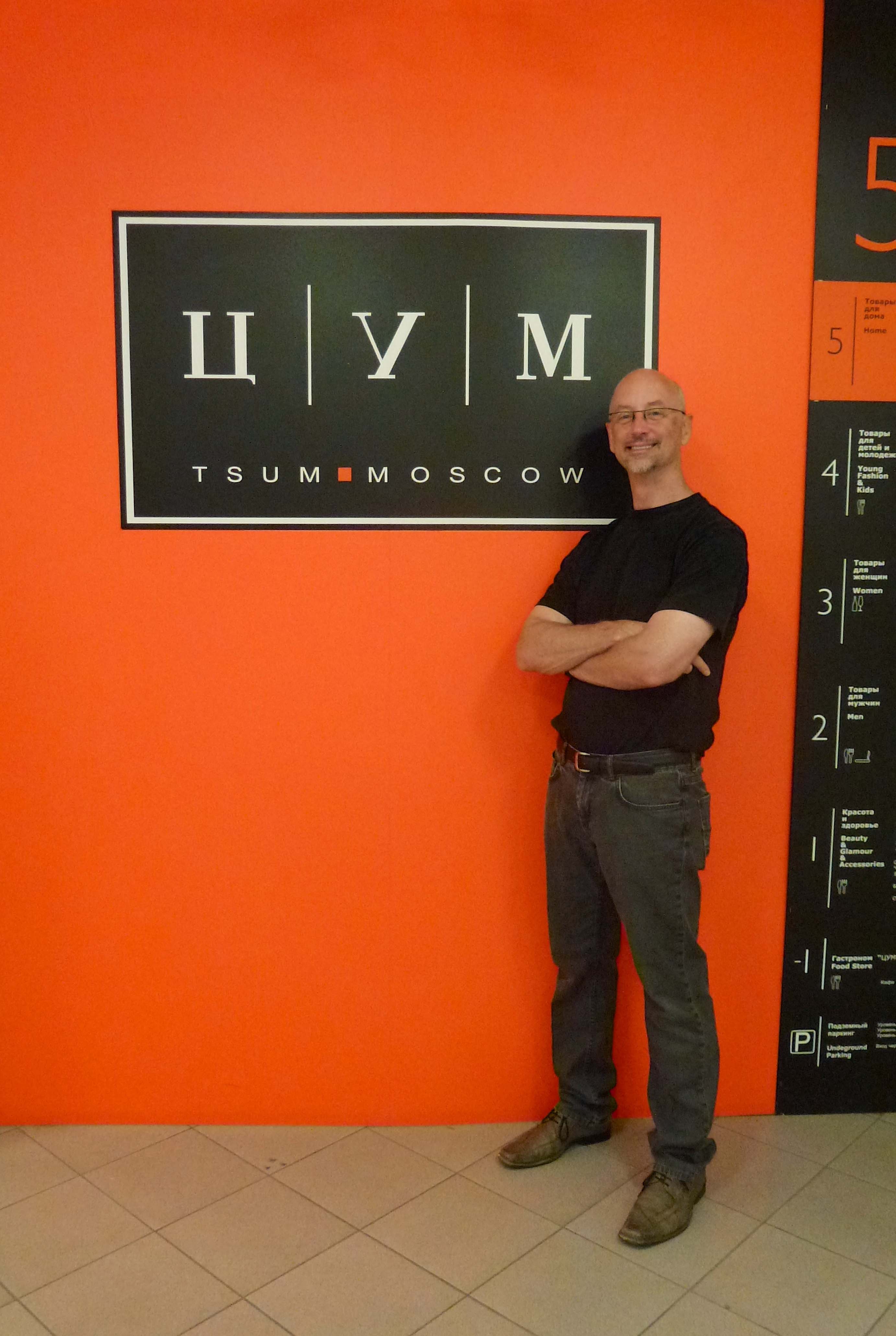
GUM short for "Glavnyi Universalnyi Magazin" or its old name, State Department Store, was built in 1893. For some reason, Donald remembers this from his childhood and he wanted to visit it. He said he remembered that it was "the department store" during the days of the Soviet Union. It was famous because there weren't any other options in the USSR at that time. So it is one of the few remaining icons of the soviet days. Of course, the products available now are very different.
And I leave you with a few random shots of the city….so you can see just how pretty Moscow really is!
D enjoying the local drink – Kvass, a fermented beverage made from black or regular rye bread. Icky.
Check back next week to read about part two of our Russia trip –
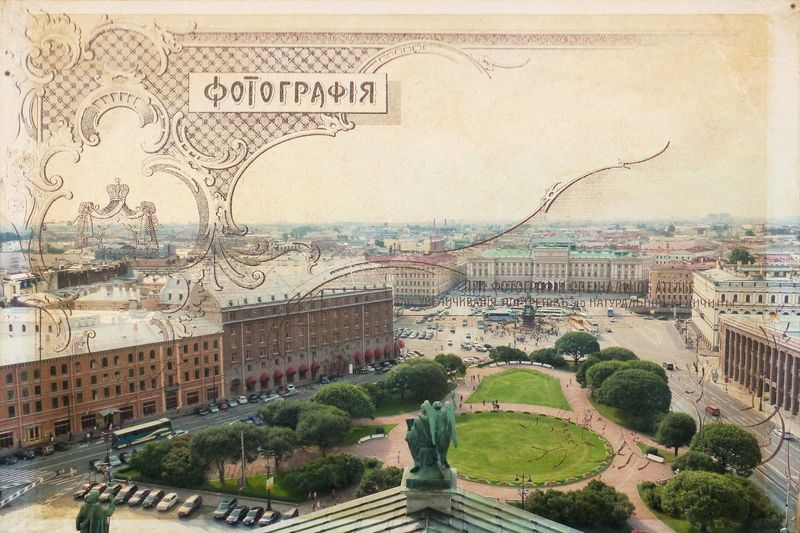
Check back late next week for our trip to Russia. So much to share! I have posted a few images on my art blog, please stop by and take a look. This photo was taken looking down on the city of St Petersburg, Russia from the roof top of St Isaac's Cathedral. I altered it using PhotoShop.

























































































































































































 The XtraSuitcase