Thaipusam
Warning……this post is not for the faint-hearted! I thought we had interesting parades in Brussels…wait to you see the photos from this one!
Thaipusam is a fascinating Hindu festival celebrated in India, Singapore, and other places around the world. We have a sizable Indian population here in Singapore so the festival was quite large. D had to work, so I went with H, a new friend I made here in Singapore. We met at 6:55 am – we did not want to miss anything!
The festival commemorates the occasion when Parvati (a Hindu Goddess) gave Murugan (Hindu diety or god) a "spear" so he could vanquish the evil demon Soorapadam – which he did.
Thaipusam is a time for Hindus of all castes and cultures to say thank you and show their appreciation to Murugan.
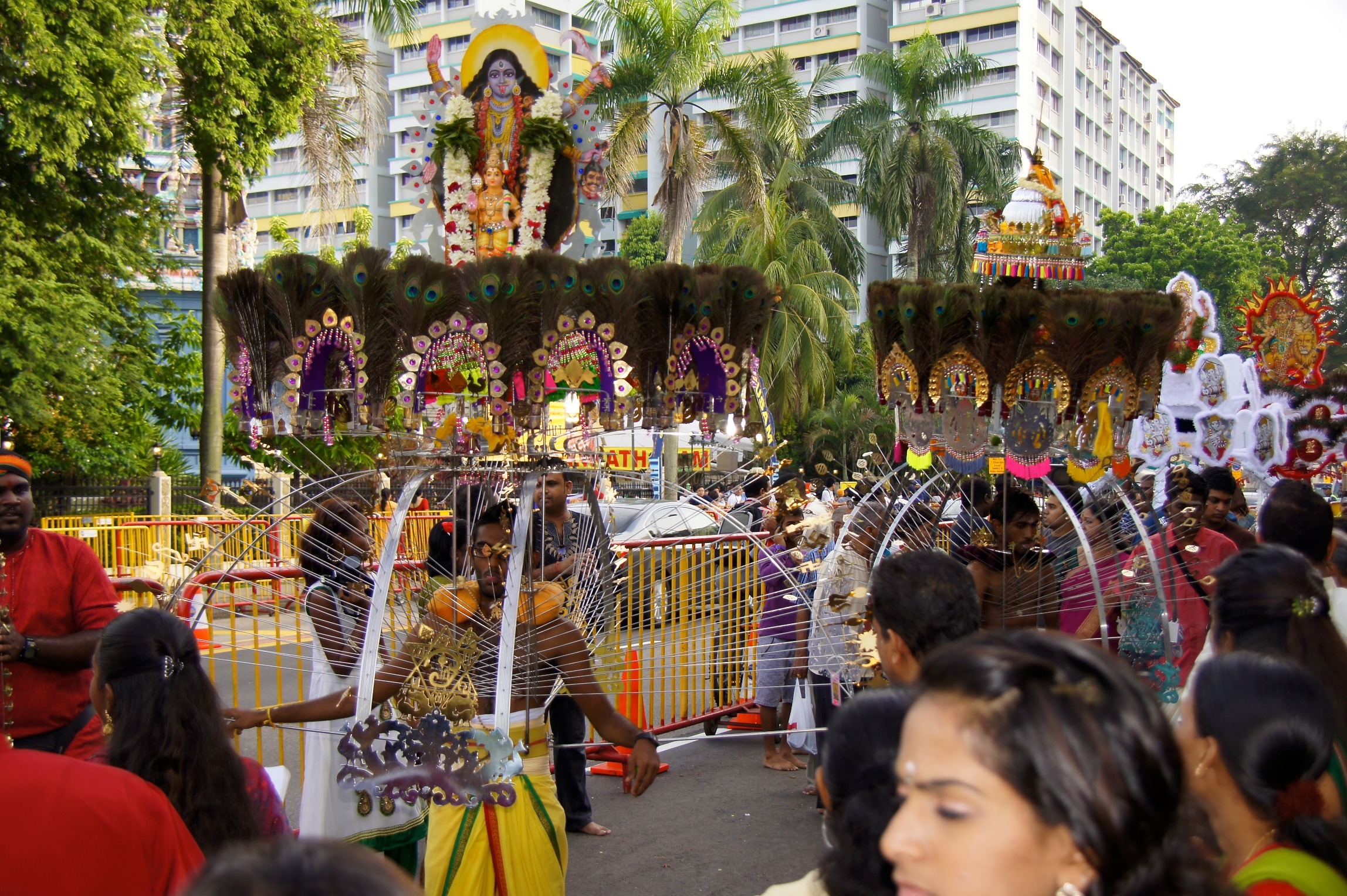
It is not so much a celebration, but more of a time of penance and consecration to the gods, usually involving self-mortification in a test of mind over pain.
The foot procession starts at the Srinivasa Perumal in the Little India district and ends at Thandayuthapani Temple – a 4 kilometers walk (approximate 2.5 miles).

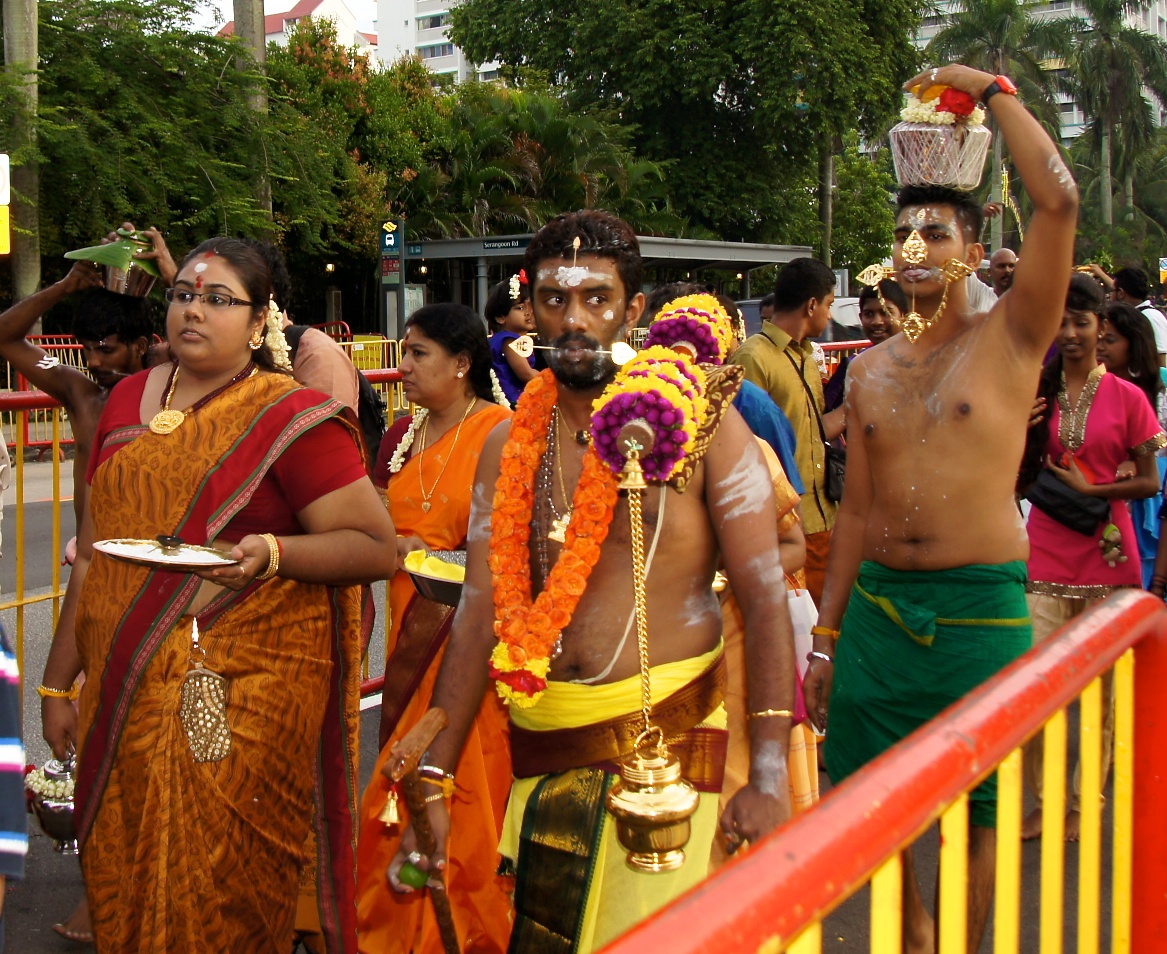
Yellow and orange are the colors of Murugan, and this is what you will see most people wearing.
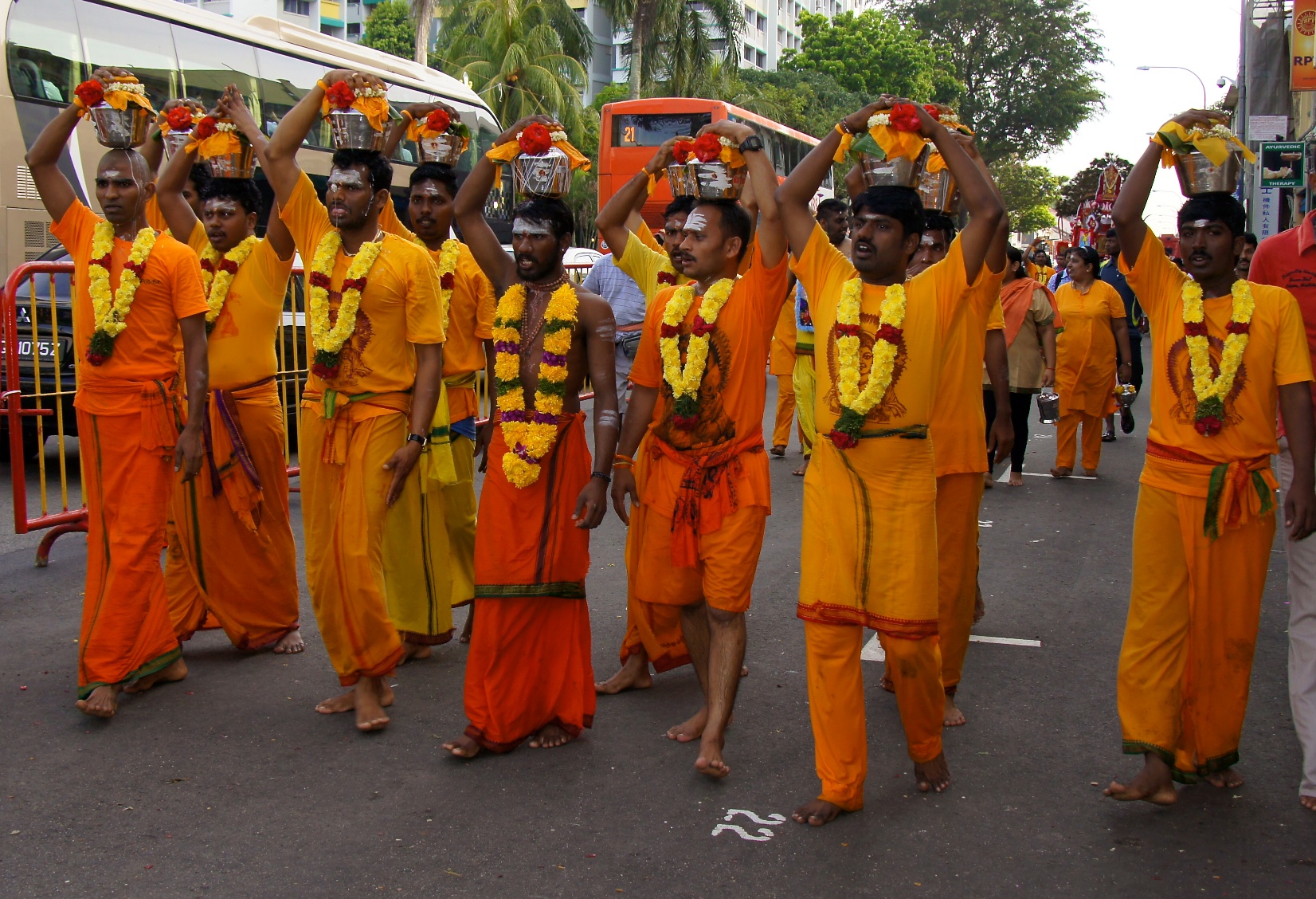

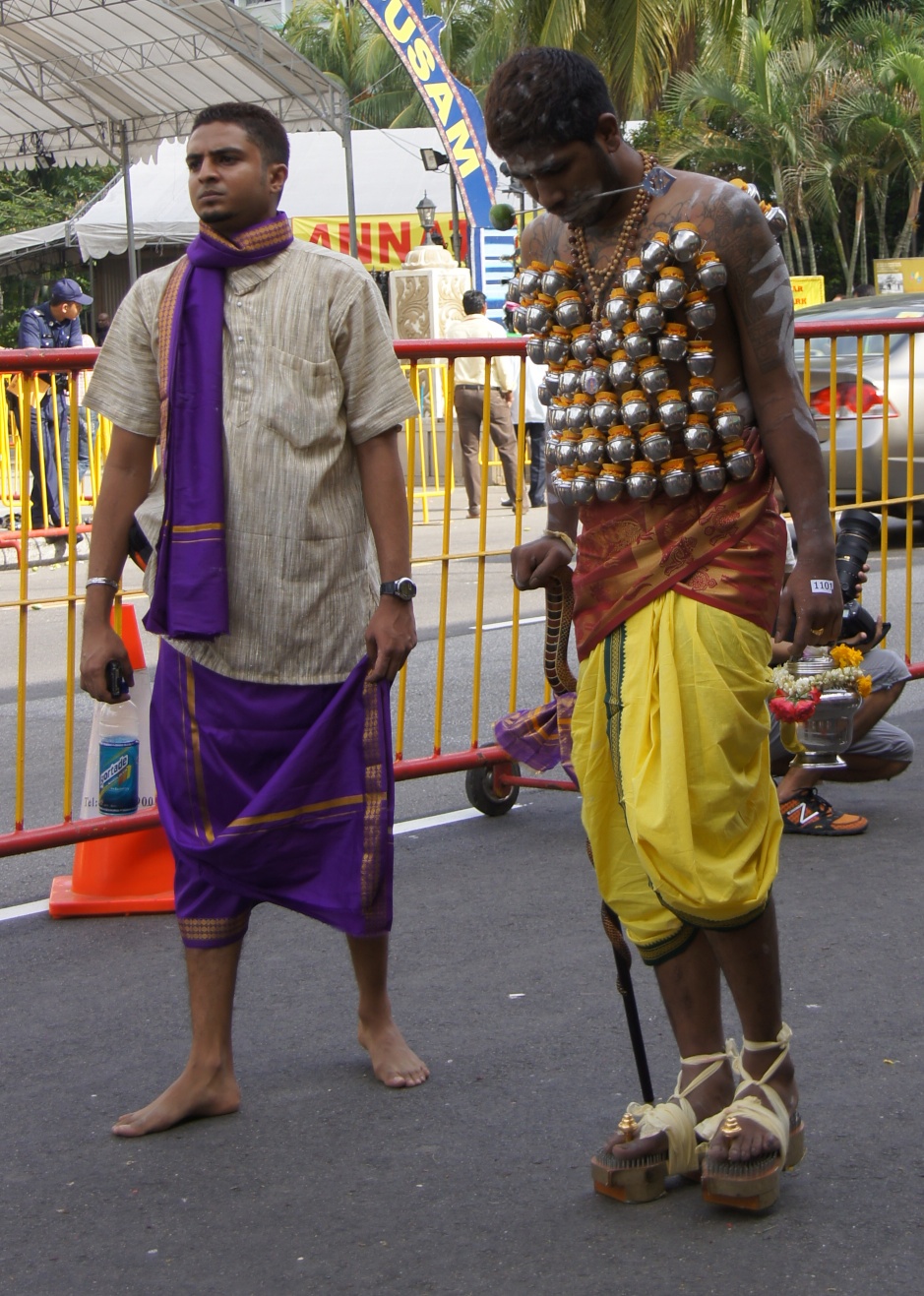
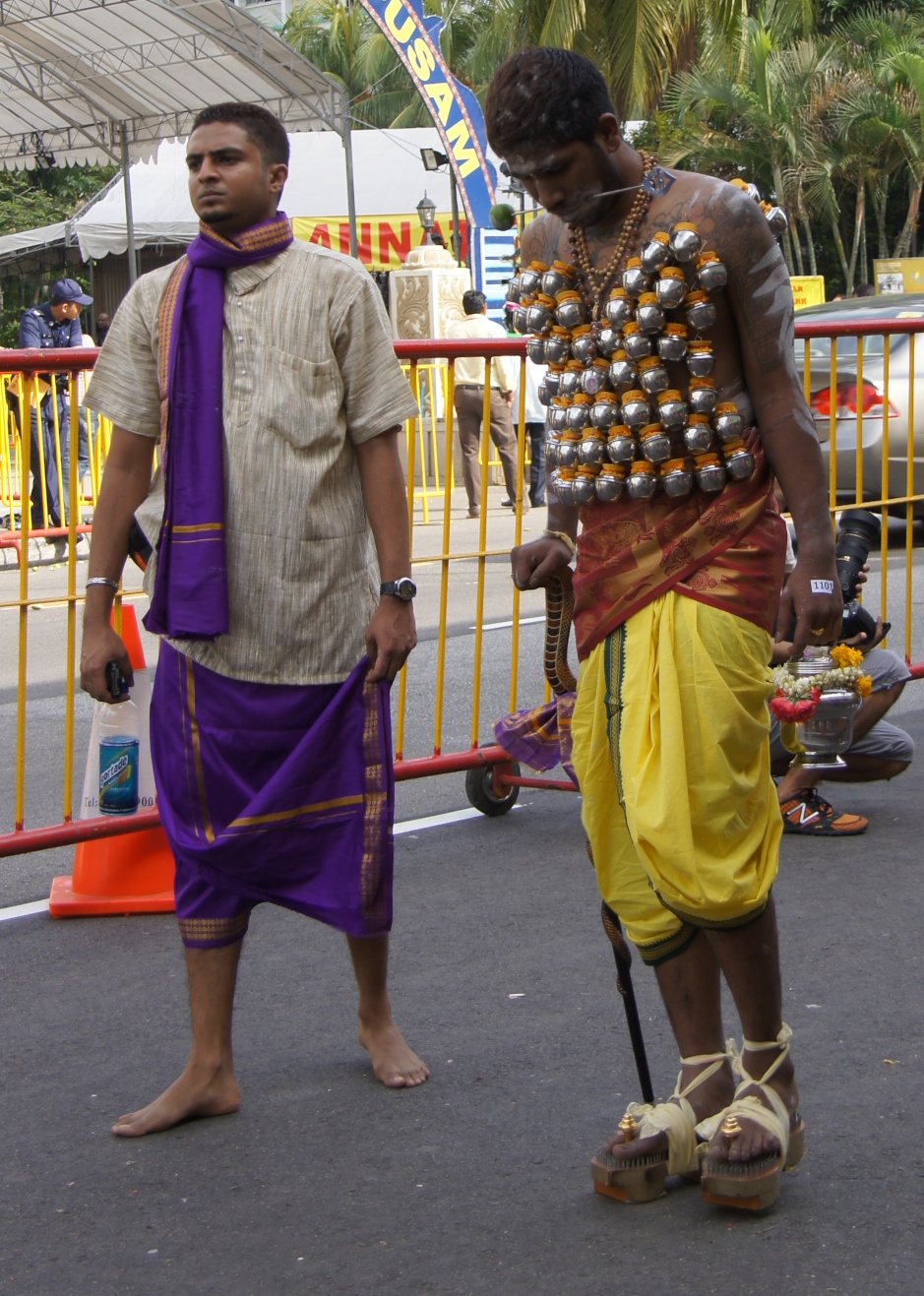
Most carry pots of milk or "paal kudam" on their heads or in pails as a show of devotion and love to the gods.

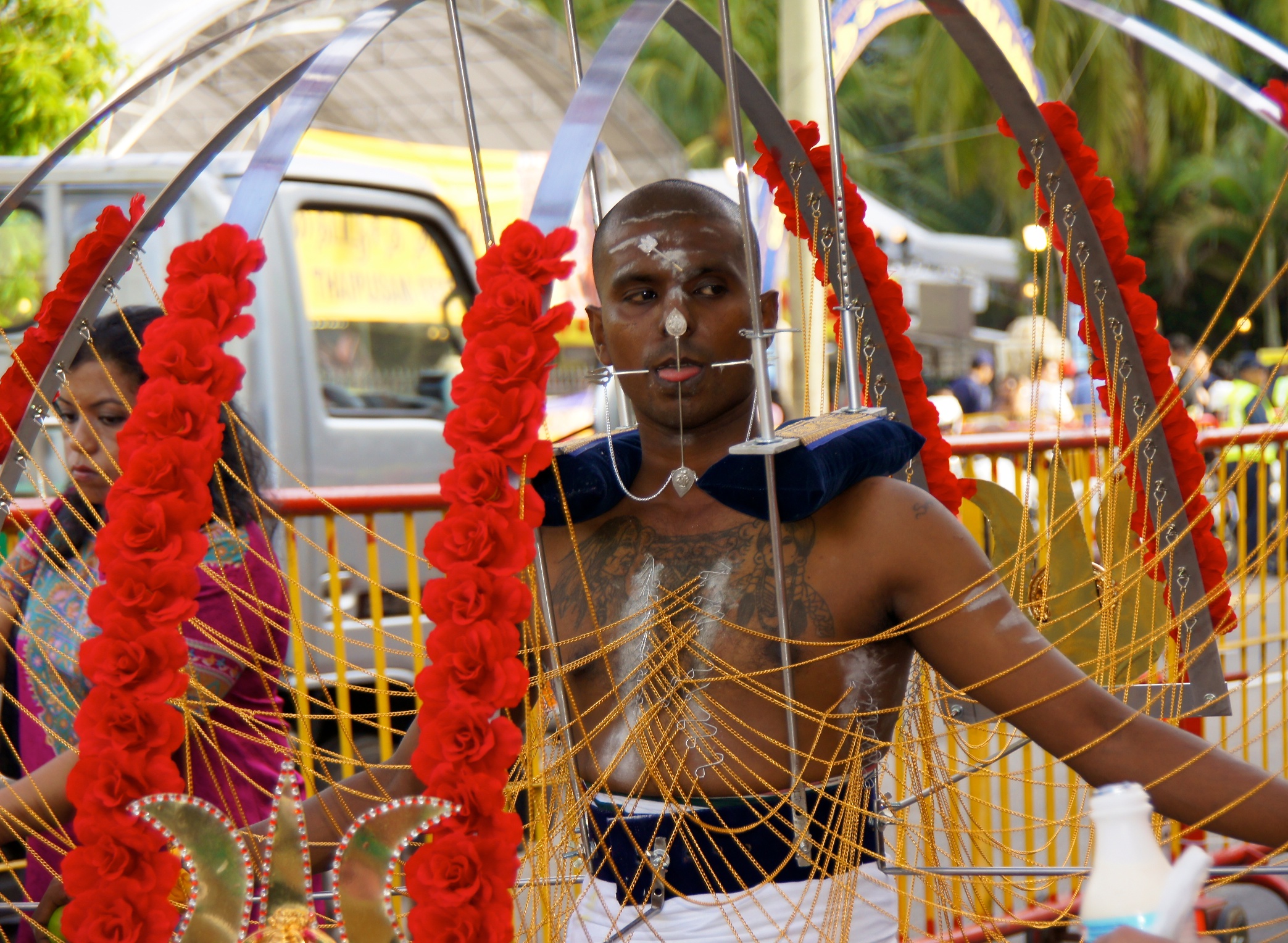
The most intense form of devotion is the carrying of kavadi — an elaborate framework carried on their shoulders.

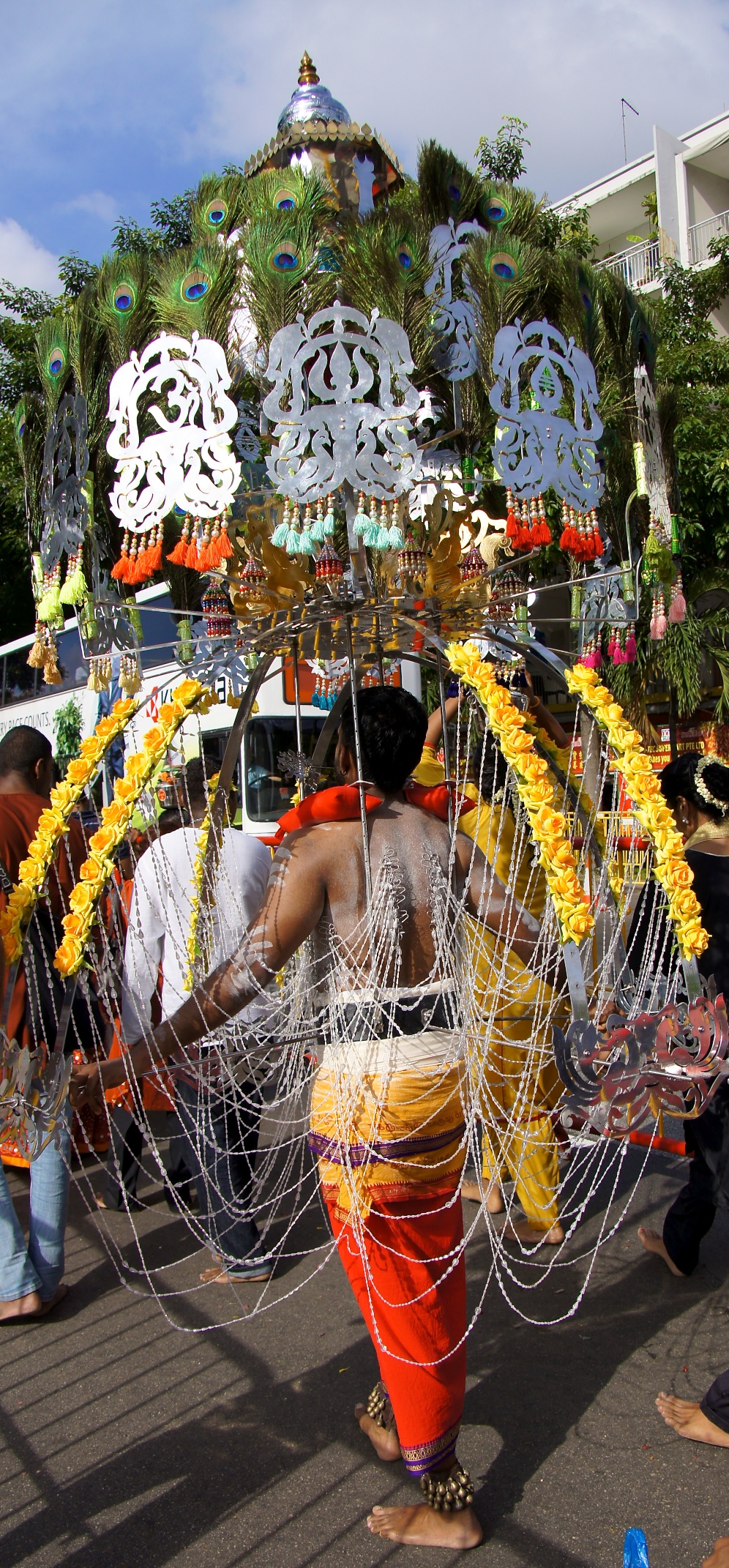

The kavadi has various shapes and sizes, from the simple – a wooden stick with two baskets at each end (they contain rice, milk or other articles that the devotee has vowed to offer the gods) slung across the shoulder….
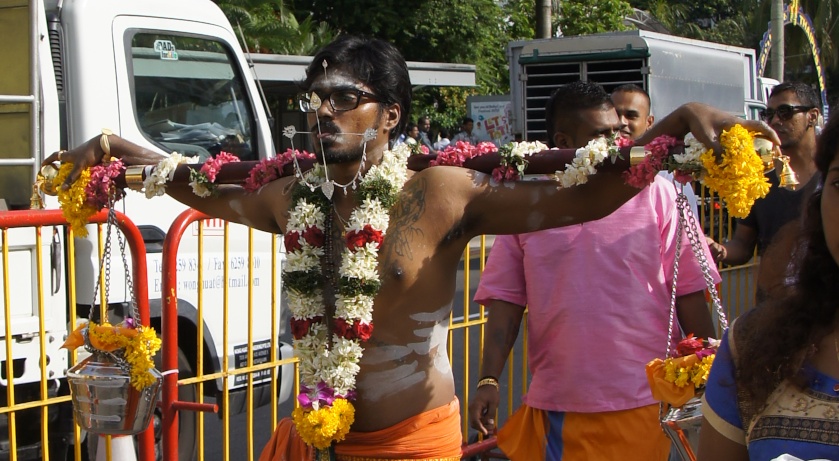
….to the decorative structure of flower interwoven with peacock feathers.
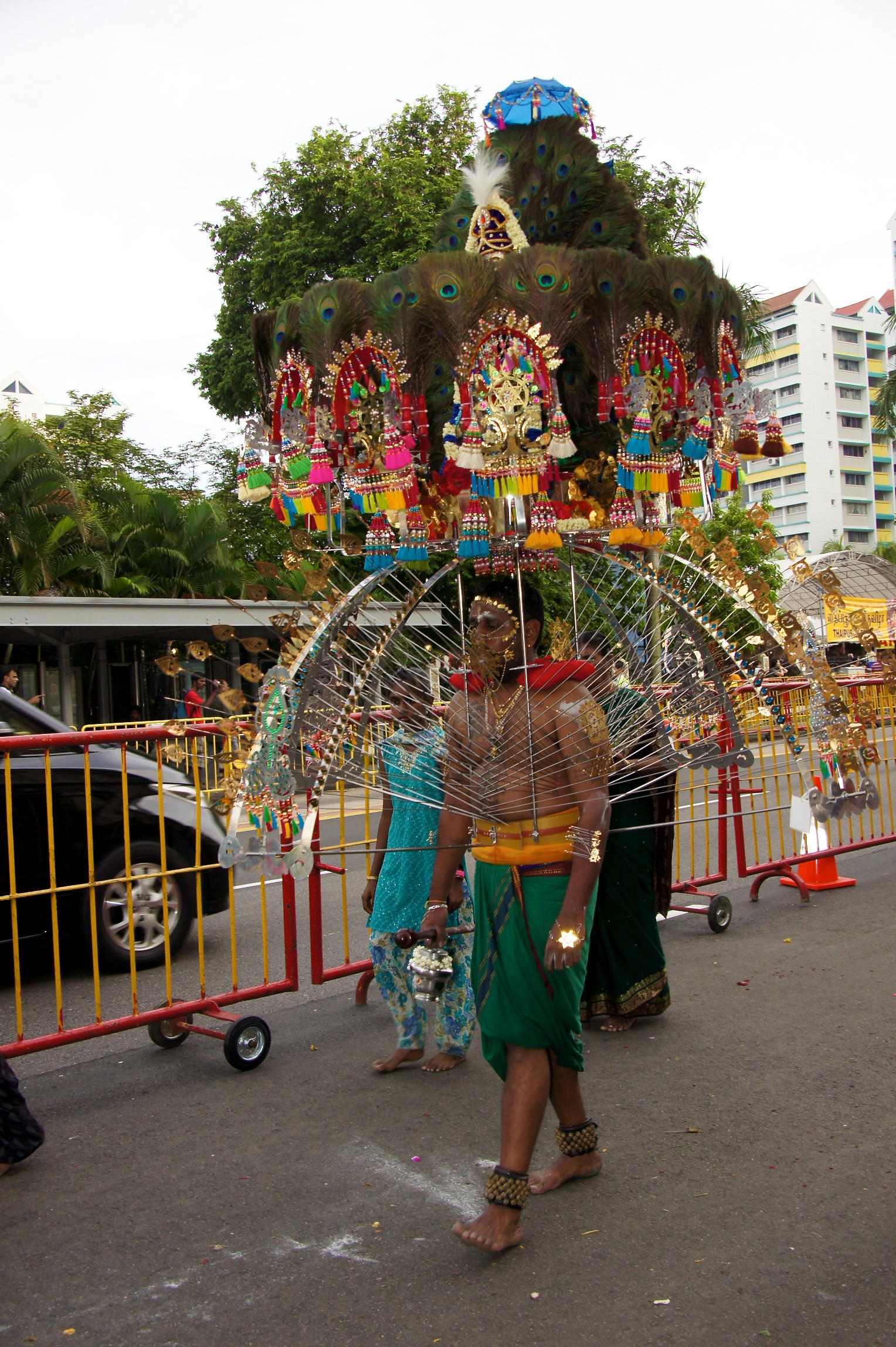
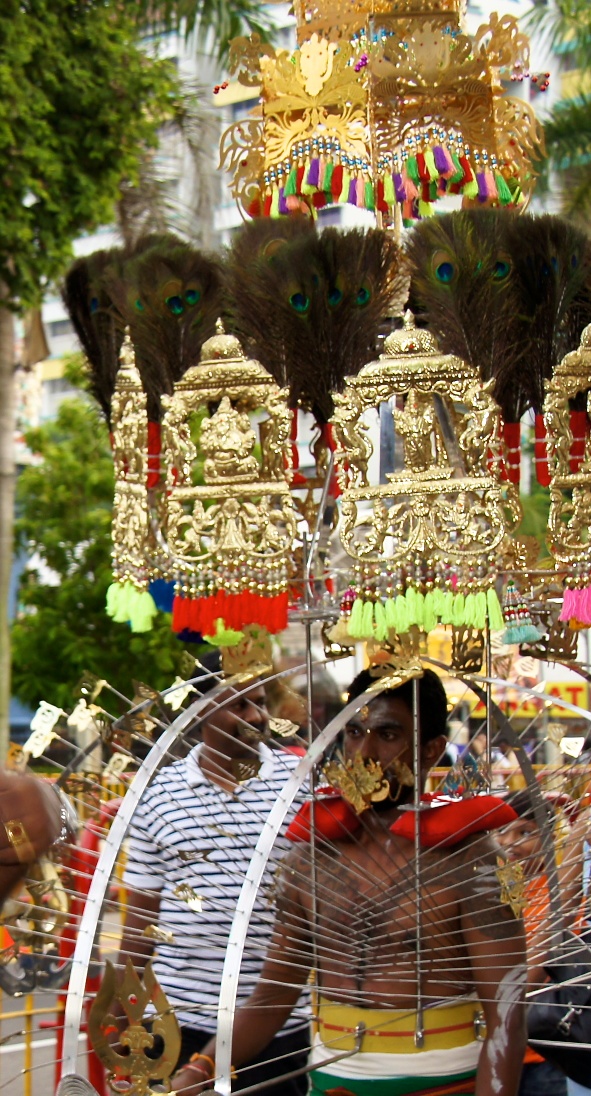
To wear a kavadi, the devotees must abstain from meat, alcohol, cigarettes and sex for at least a week prior to the festival, some extend the period up to a month. And they must fast completely for 24 hours prior to the walk.
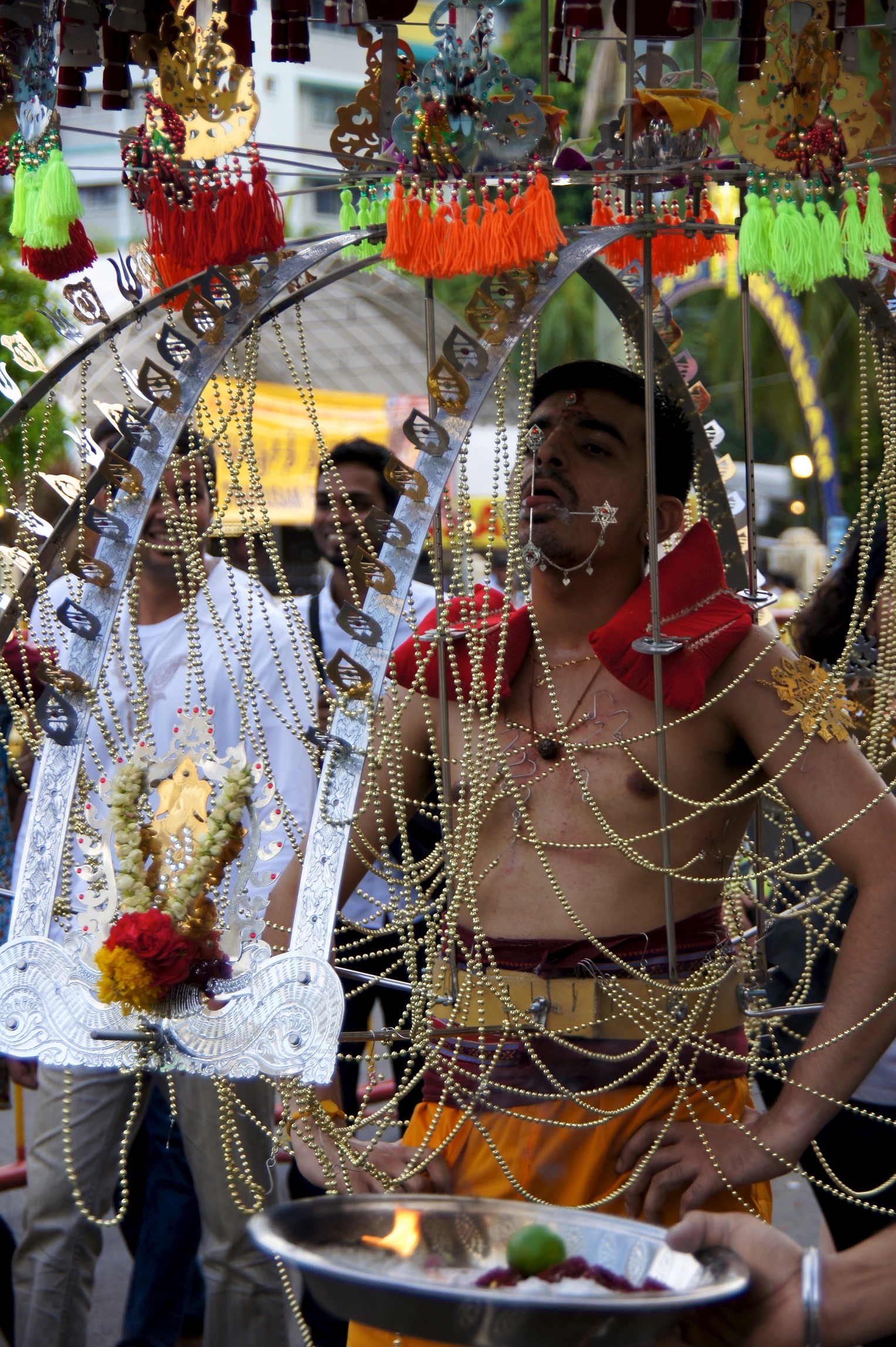
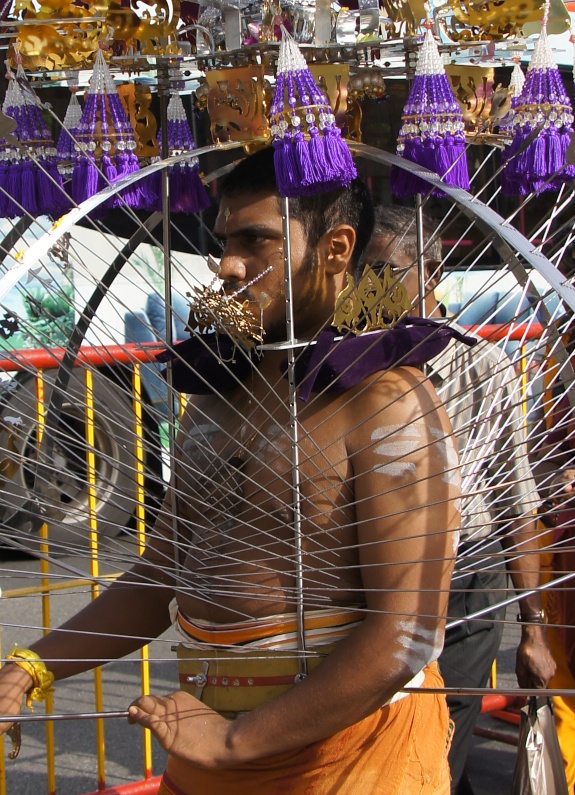
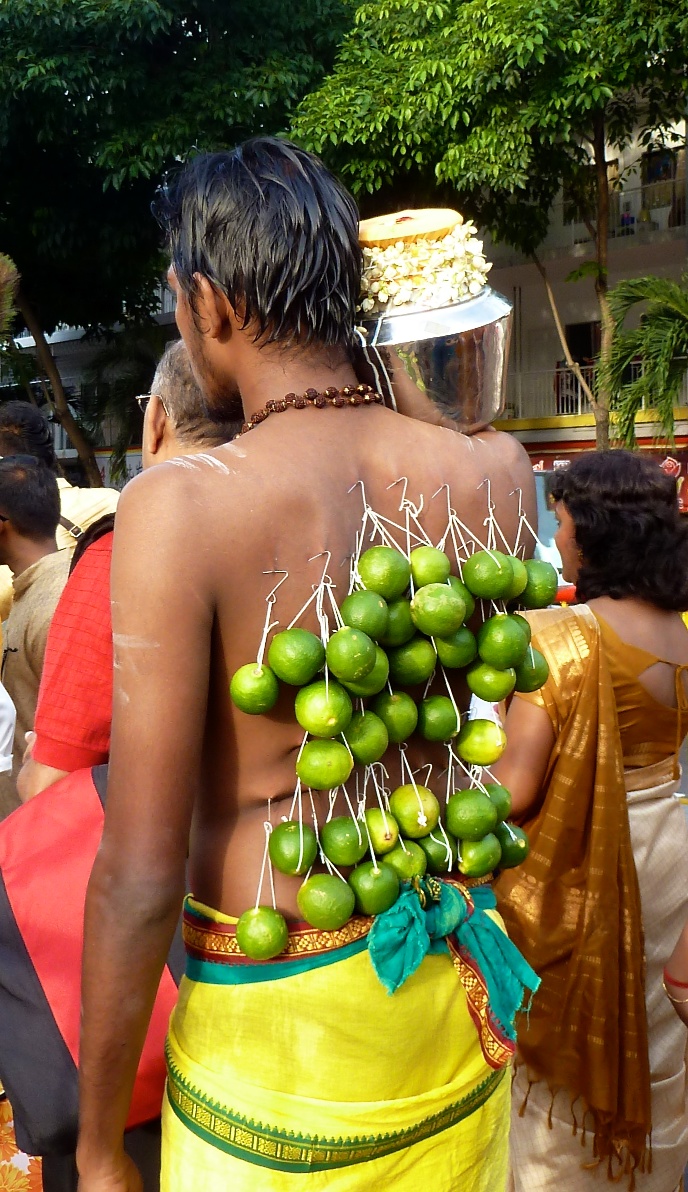
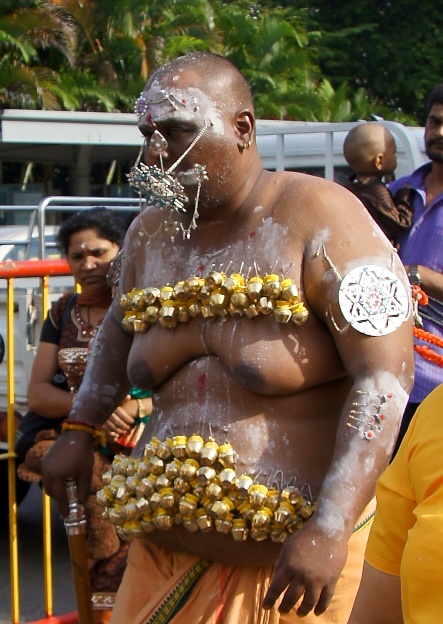
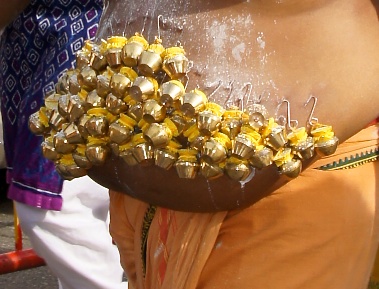
They attach the kavadi by piercing a number of metal rods into the torso skin to hold it in place.
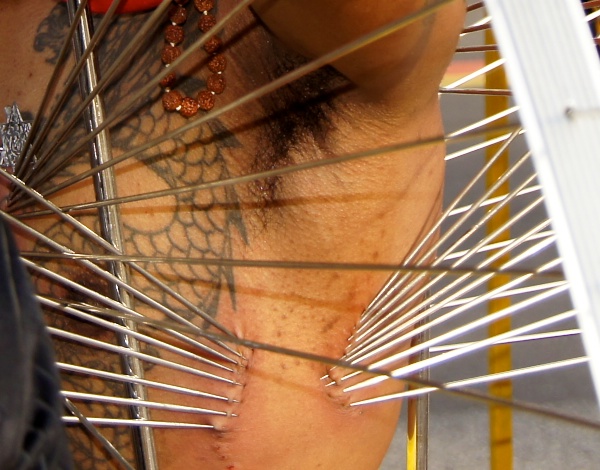
So if you were wondering if it really went through the skin…you can see the answer is YES!
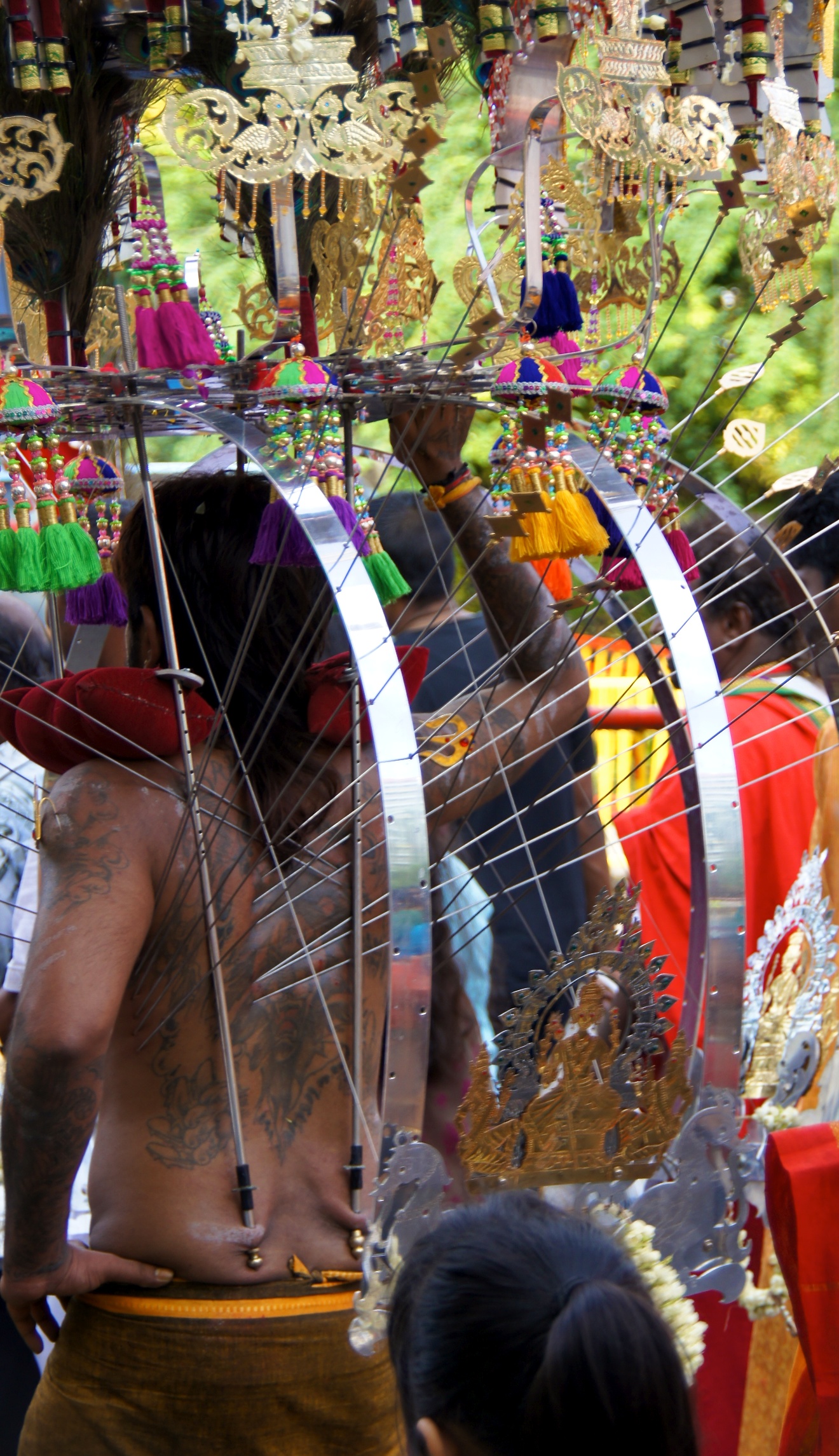

The white powder is holy ash.
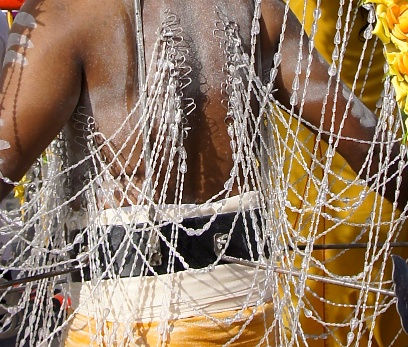
Some of the kavadis can weigh up to 60 pounds. In recent times, the men wear belts in order to carry the weight of the kavadi on their waist instead of on the piercings.

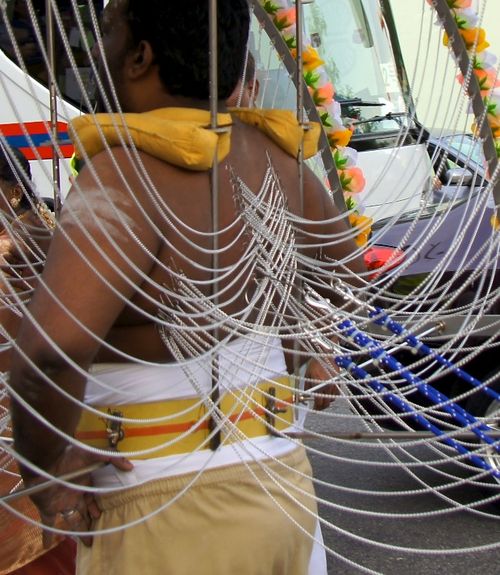
It is said that devotees are able to enter a trance, feel no pain, do not bleed from their wounds and have no scars left behind. Really? I am pretty sure I would be crying from the pain! We did not see any blood.


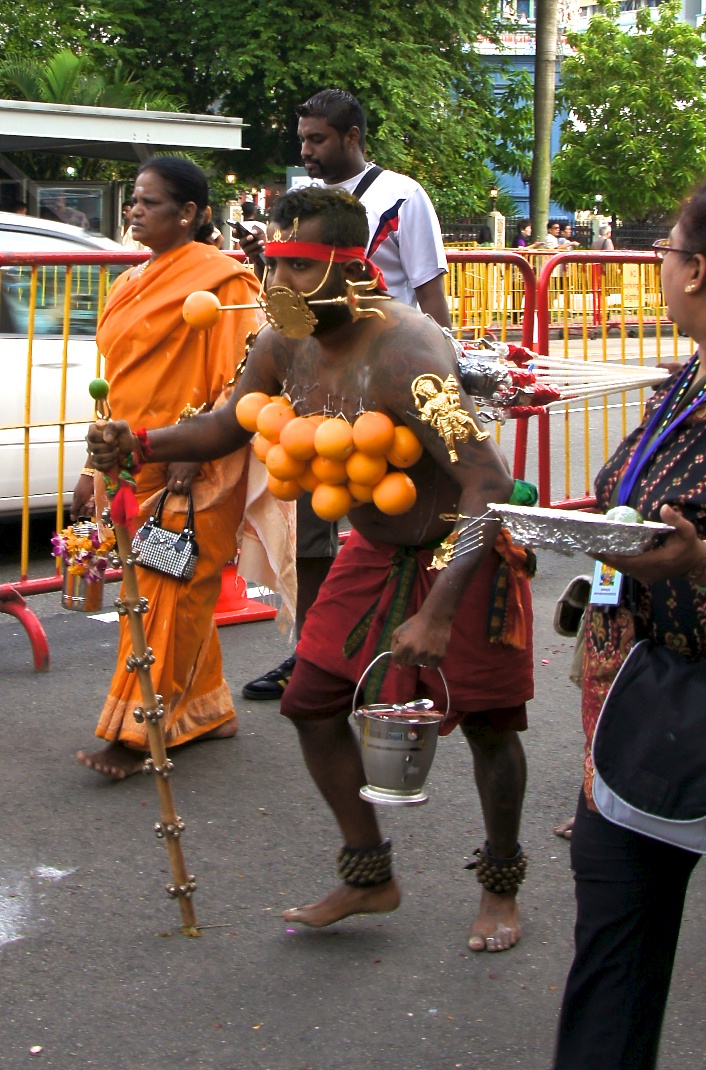
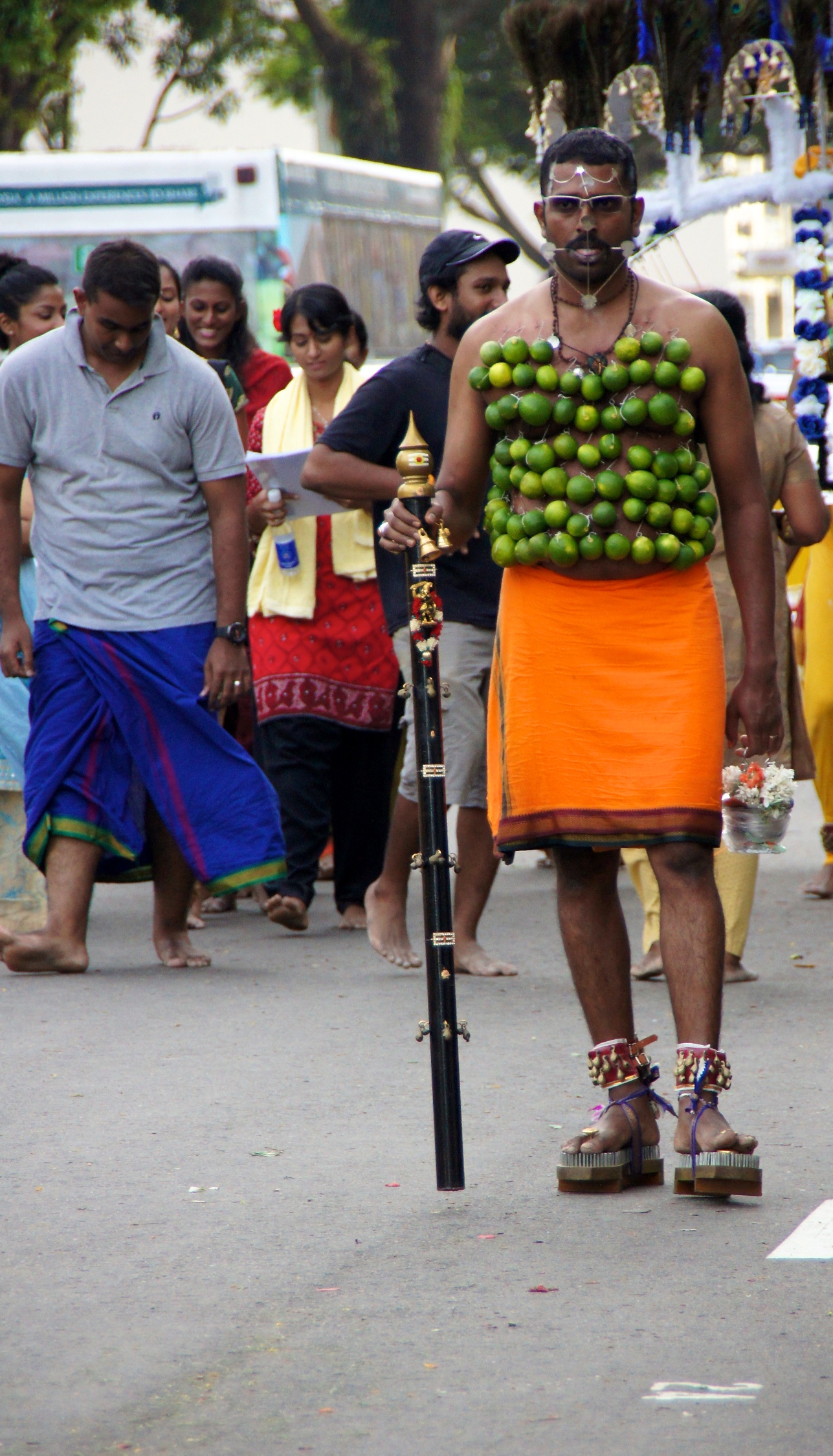
Many of the hooks had limes at the end. The lime symbolizes protection by the deities but it is also to add weight and therefore pain.


Most of the men carrying the kavadi were pierced with two skewers (or 'vels' – symbolic spears); one through the tongue, and one through the cheeks.


The piercing by skewers symbolizes several things including that the devotee has temporarily renounced the gift of speech so that he may concentrate more fully upon the deity and that the devotee has passed wholly under the protection of the deity who will not allow him to shed blood or suffer pain.


As a rule, men wear kavadi; the women "only" skewer their tongue or cheeks and we saw very few women with piercings.

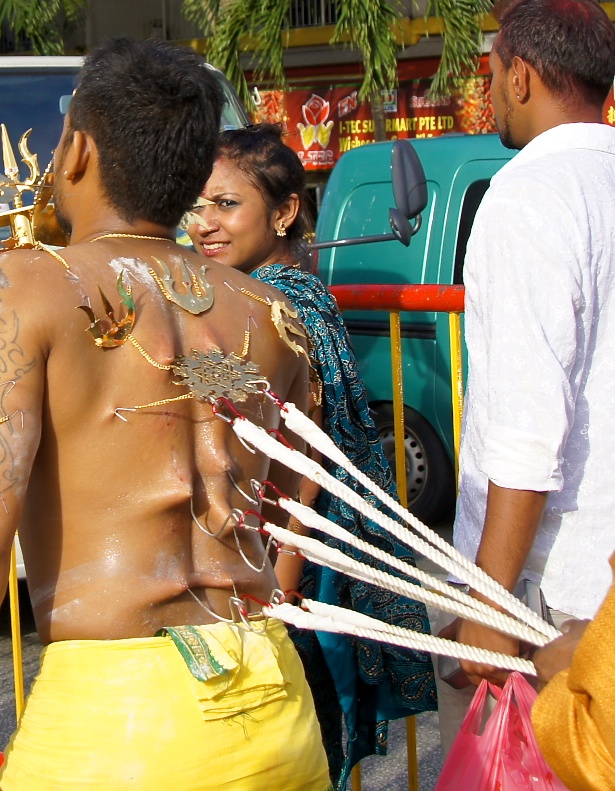
A few of the men were pulling a small chariot with hooks attached to their backs.
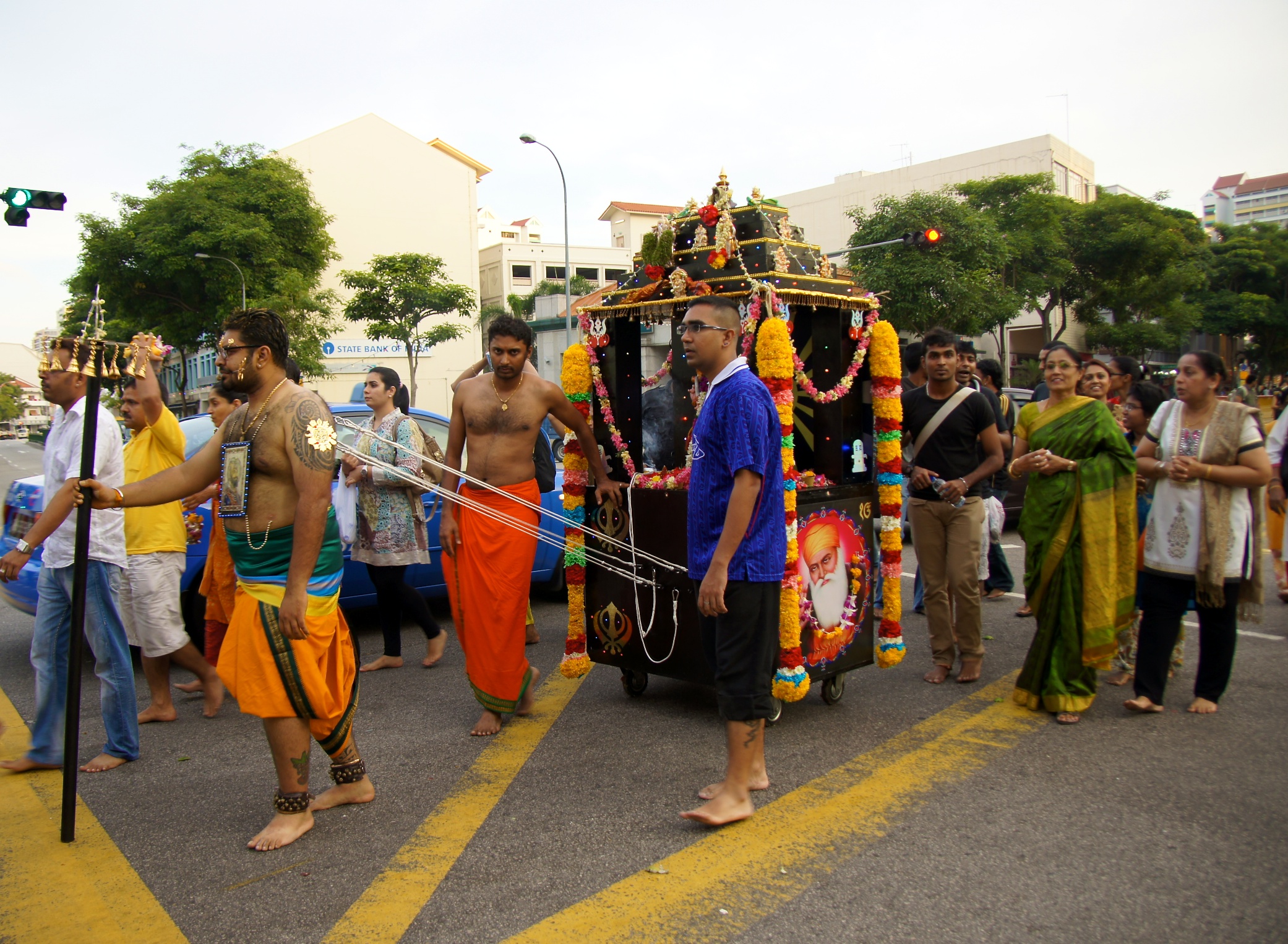
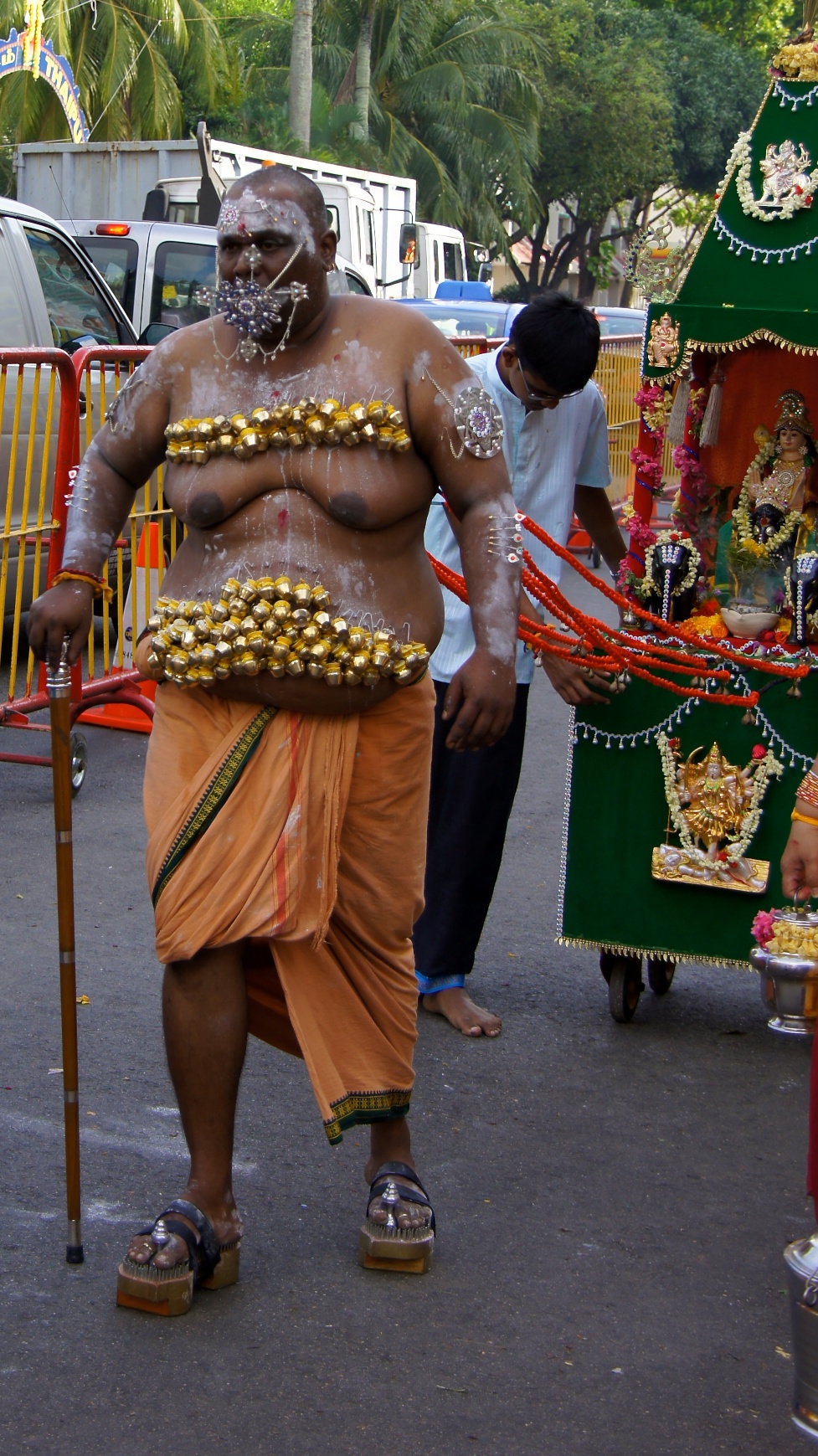
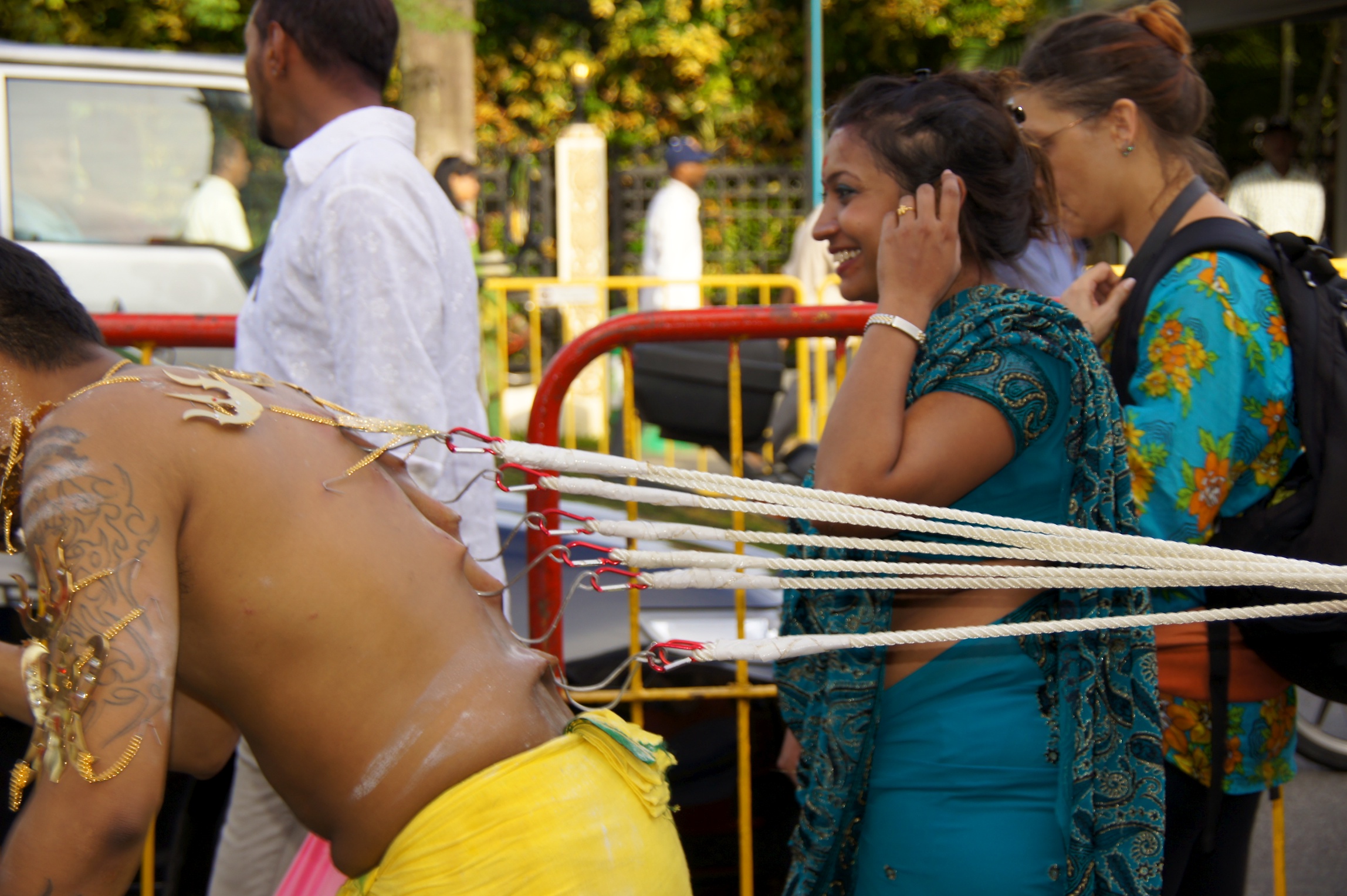
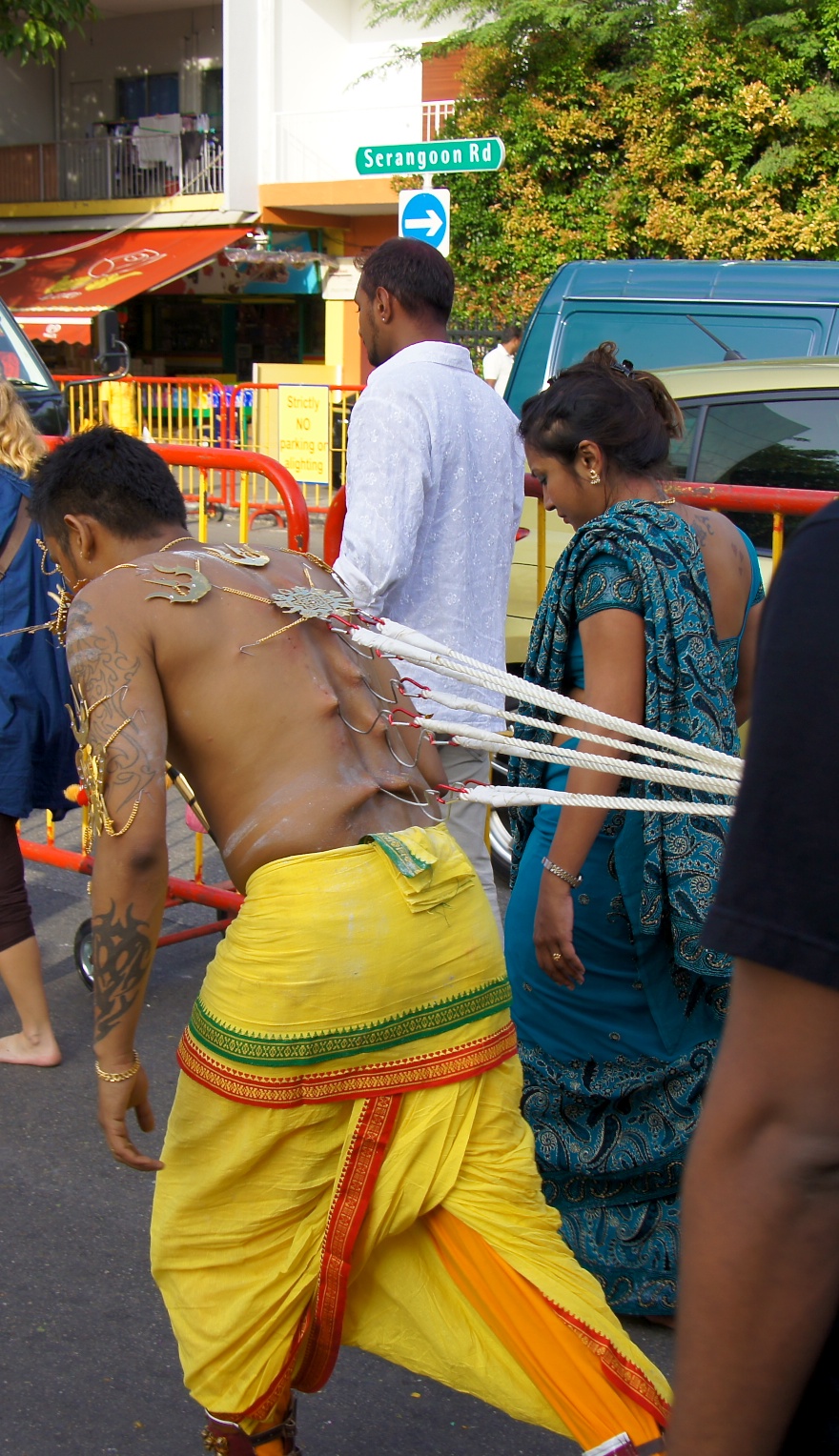
How about this photo?? She is as happy as she can be while he is struggling to walk.

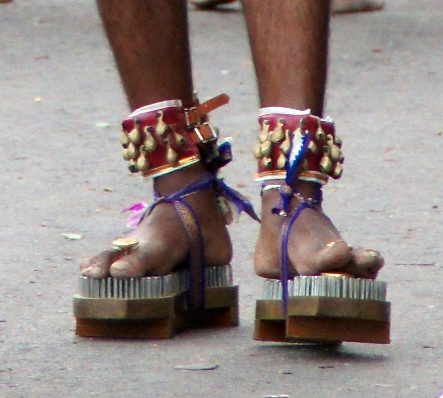
Some walk on sandals studded with nails.
Some believe carrying the kavadi washes away sins through self-inflicted suffering; others say the kavadi symbolizes the triumph of good over evil.

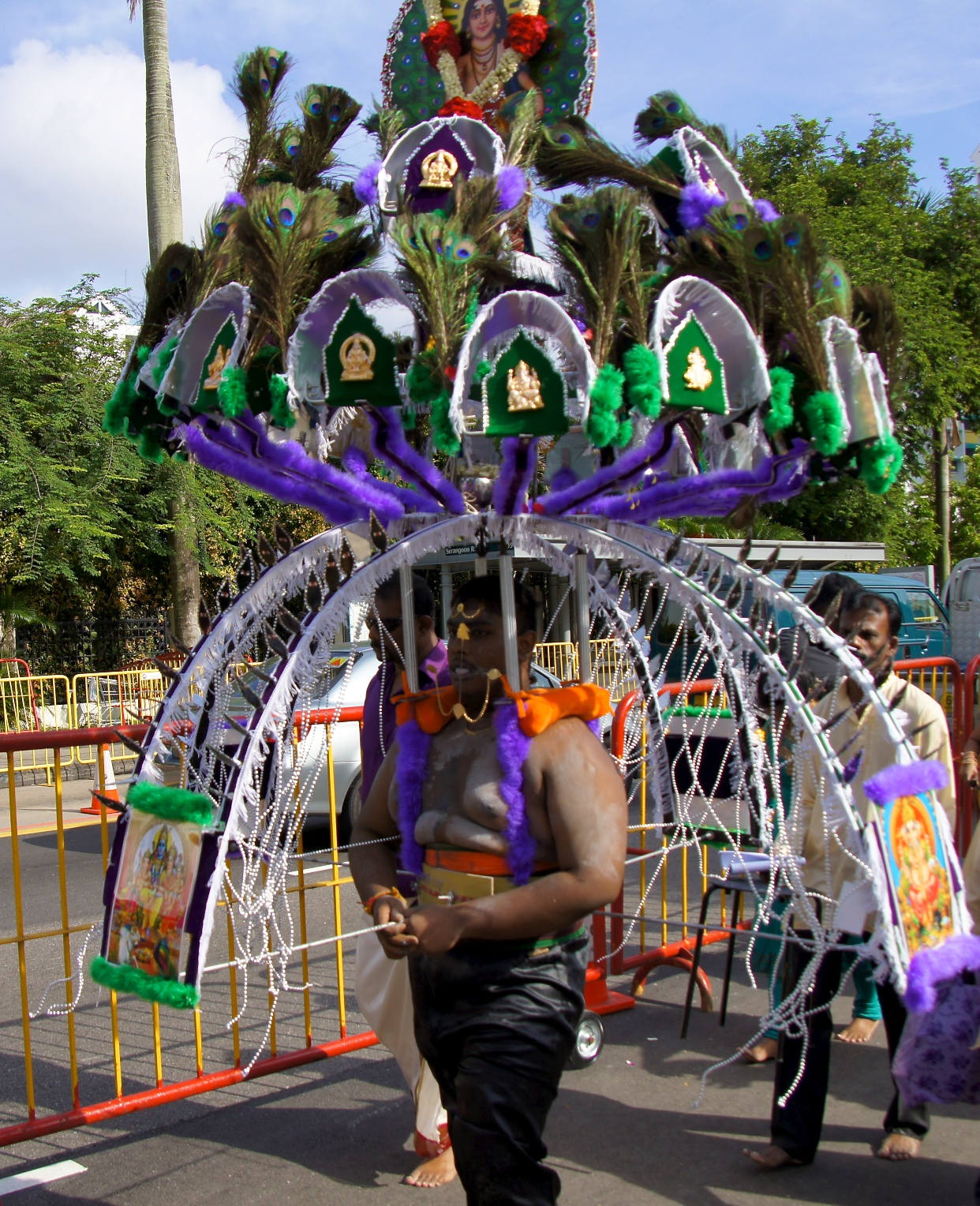

An entourage of relatives and friends who support and encourage them throughout the pilgrimage accompanies those who carry the kavadi.
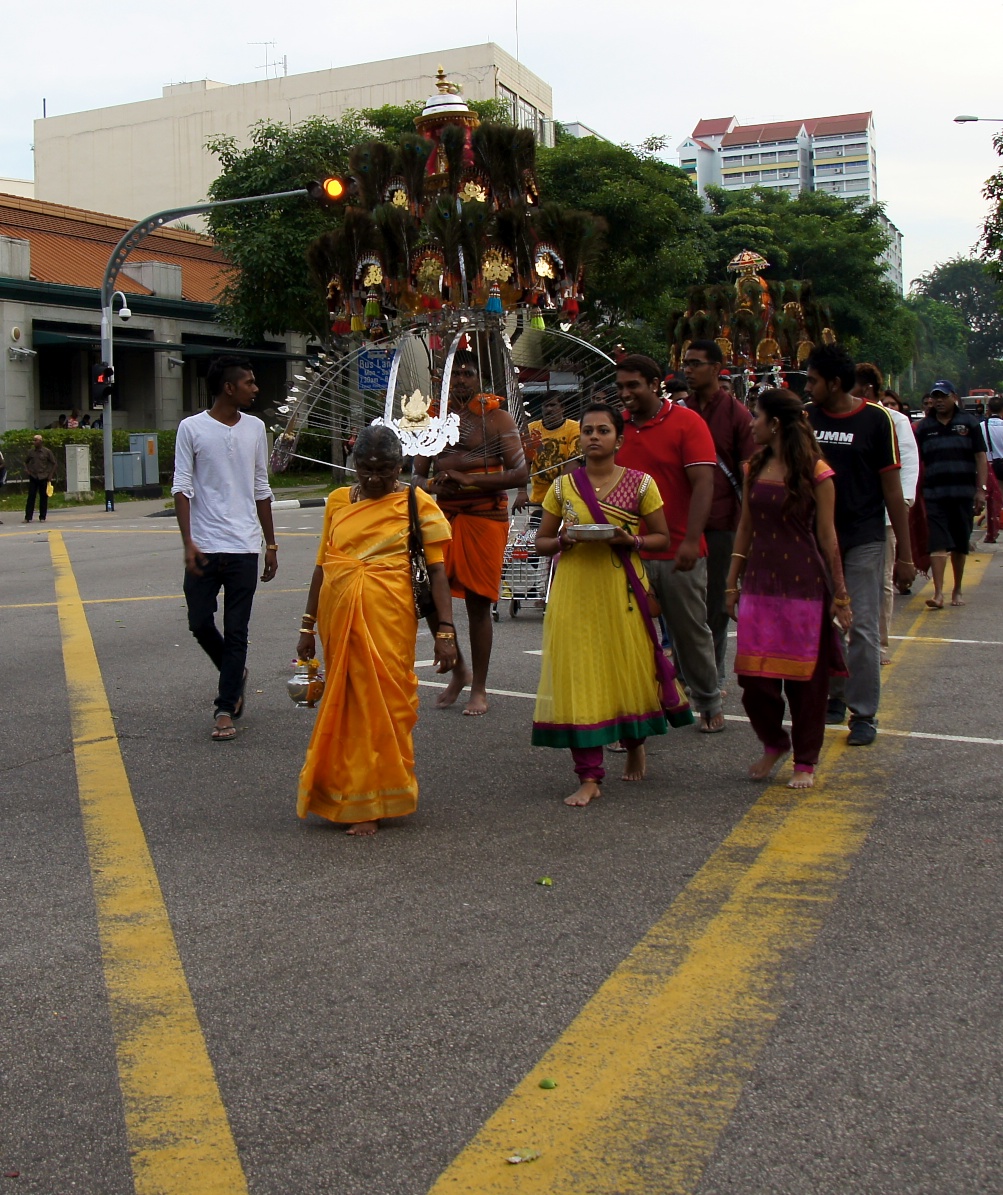
This made it very difficult to photograph them as the entourage was in the way of the “perfect” photo! The helpers sing and dance and protect them from the crowds and form a protective ring around the kavadi so that the wearer can dance freely….Yes, these men actually dance around with spikes in their sides!
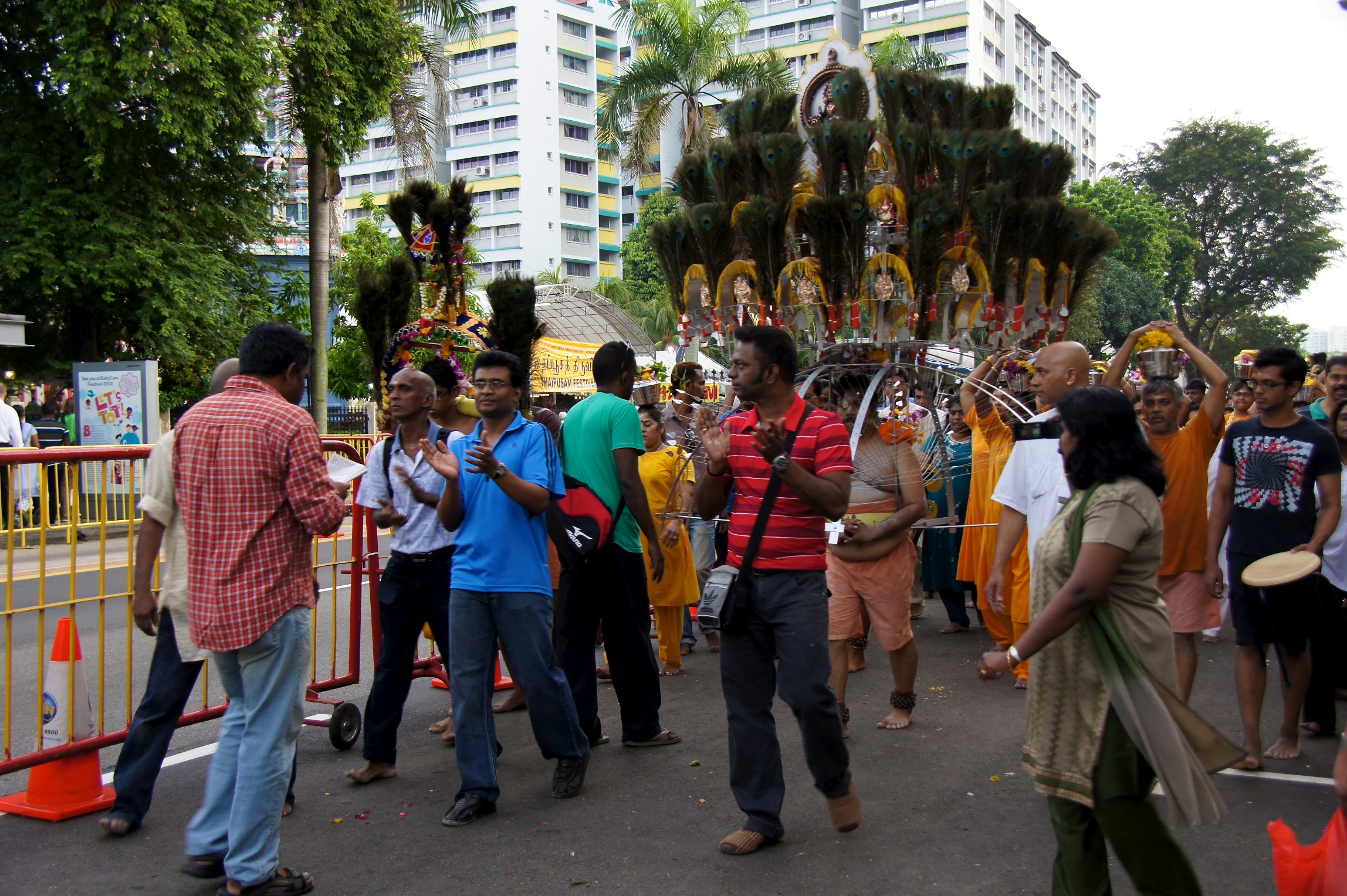
It is definitely a family event and all ages participated from the young to the old.


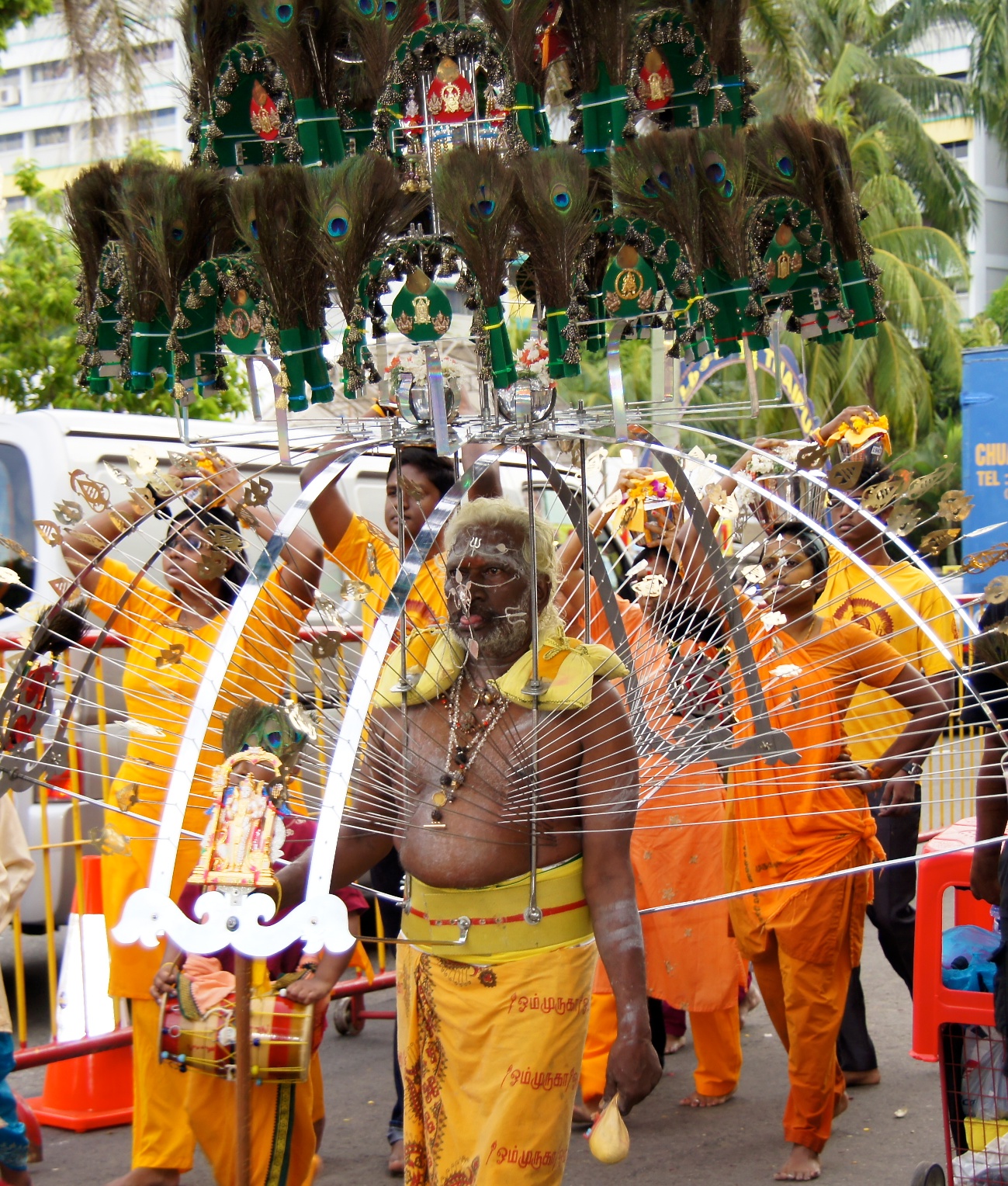
At the end of the night, the kavadi is dismounted, the needles and skewers are removed by the priest, and the milk in the pots—which has stayed pure—is poured over the deity (god) from head to foot.
Next year, I hope to get to see the actual piercing take place!


 The XtraSuitcase
Leave a reply to bobbie Cancel reply