Vientiane and Luang Prabang, Laos
November 2012
Highlights from our trip….

The procession of the monks. This ritual takes place every single day
in Luang Prabang. It is called "tak bak", or the gathering of alms. It
starts around 6 am, rain or shine. Unfortunately, two of our mornings
it was in the rain. And
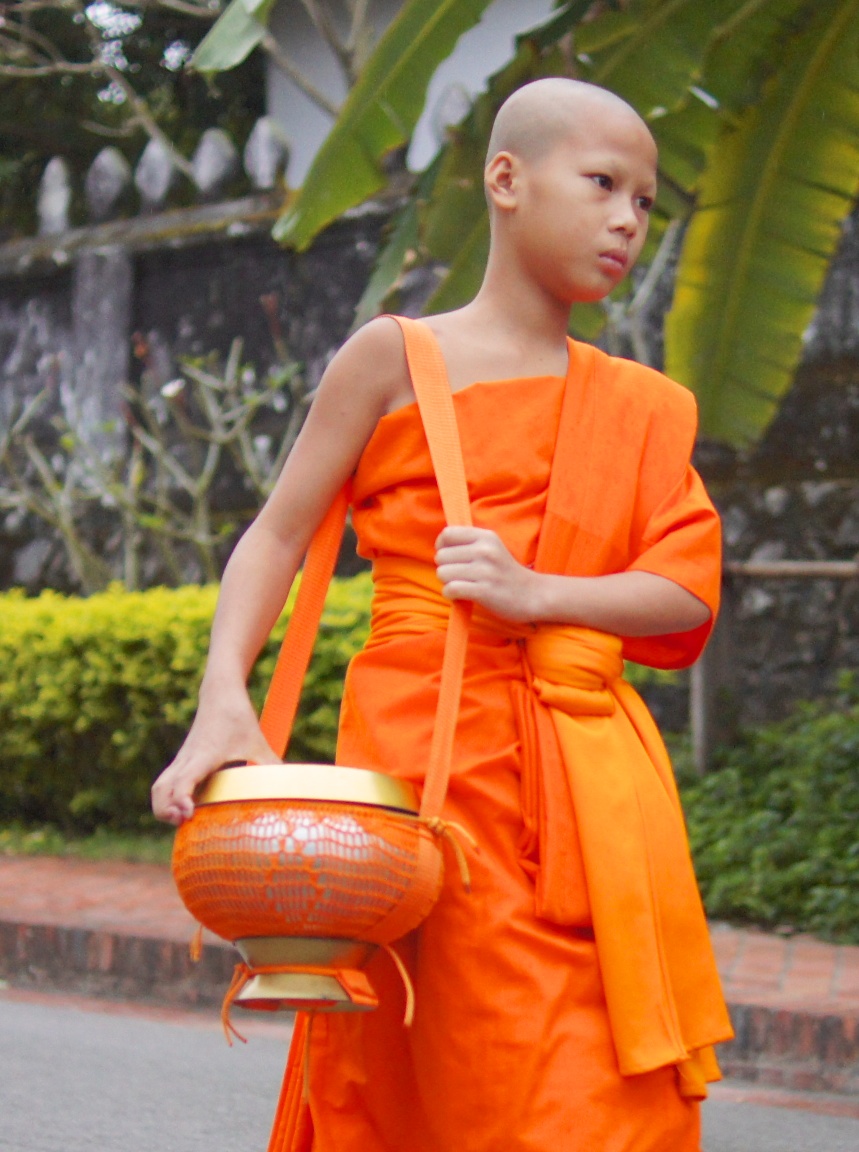
I did ask the monk above if I could take his photo by pointing at my
camera.
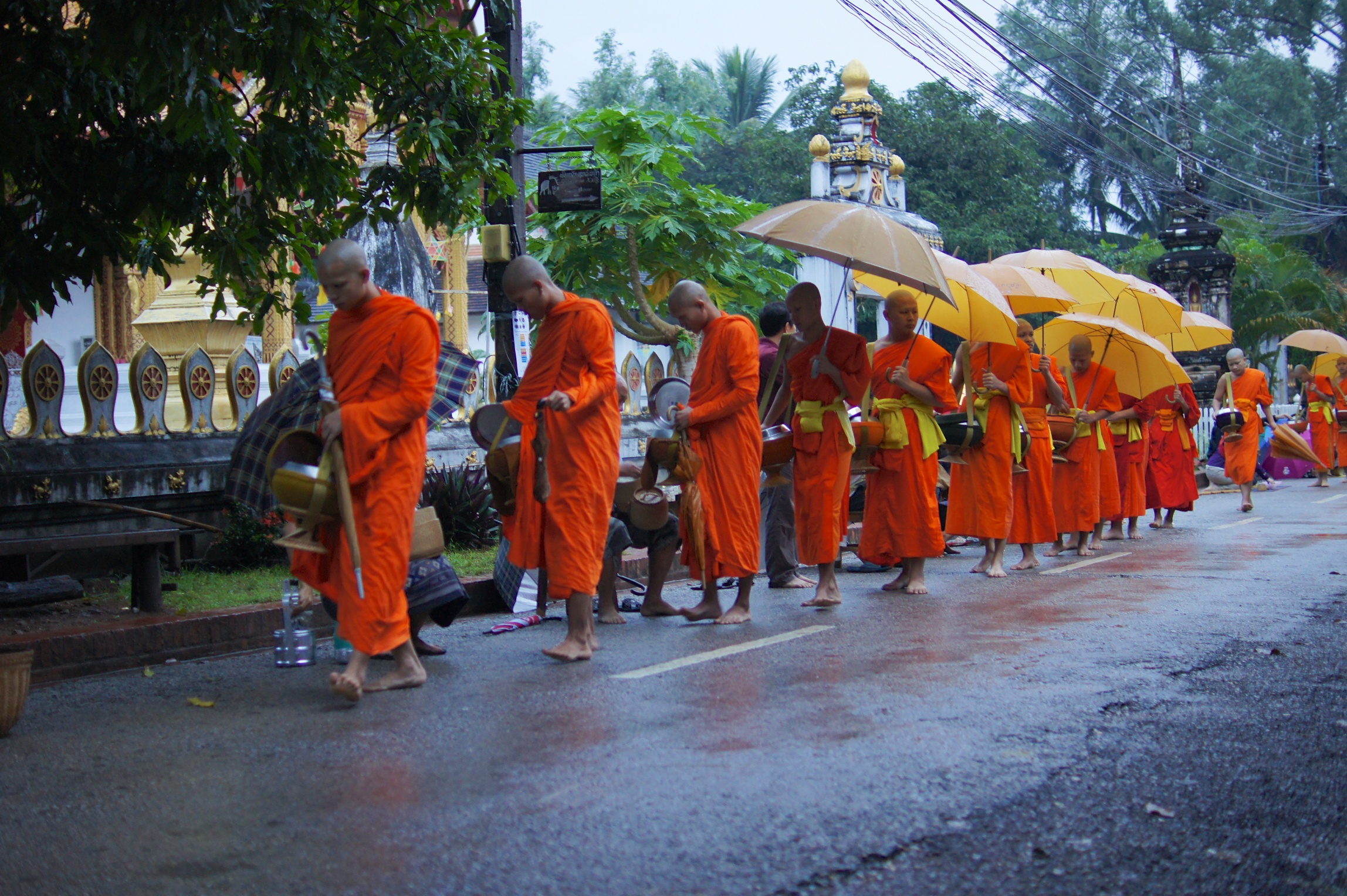
We were surprised at the quantity of monks. All walking silently, single
file, collecting food in their bright saffron robes. The procession is ordered from the oldest to the youngest monk.

Each
monk carries a large bowl, attached to a strap hanging from his shoulder. Sticky rice is the most common food given, but they also
receive fruit, crackers, and cookies.
It is thought, that if you feed the monks, it will
bring you good karma. We both took
turns feeding them, but not for that reason. We just wanted to help.

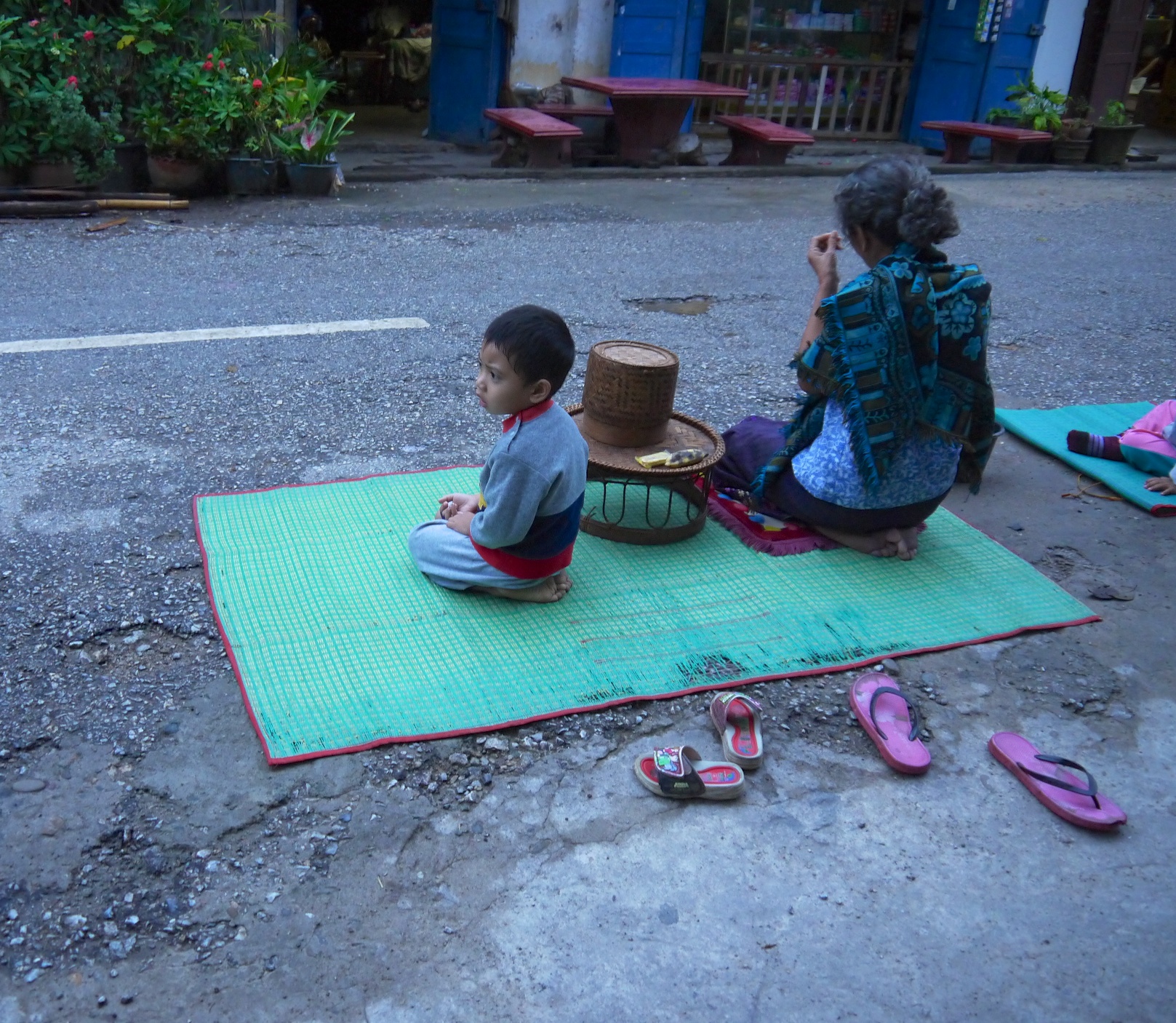
Locals feed them everyday. They sit down on a mat,
take off their shoes, and kneel to feed them. We wondered if this little guy did it with his grandma every day?
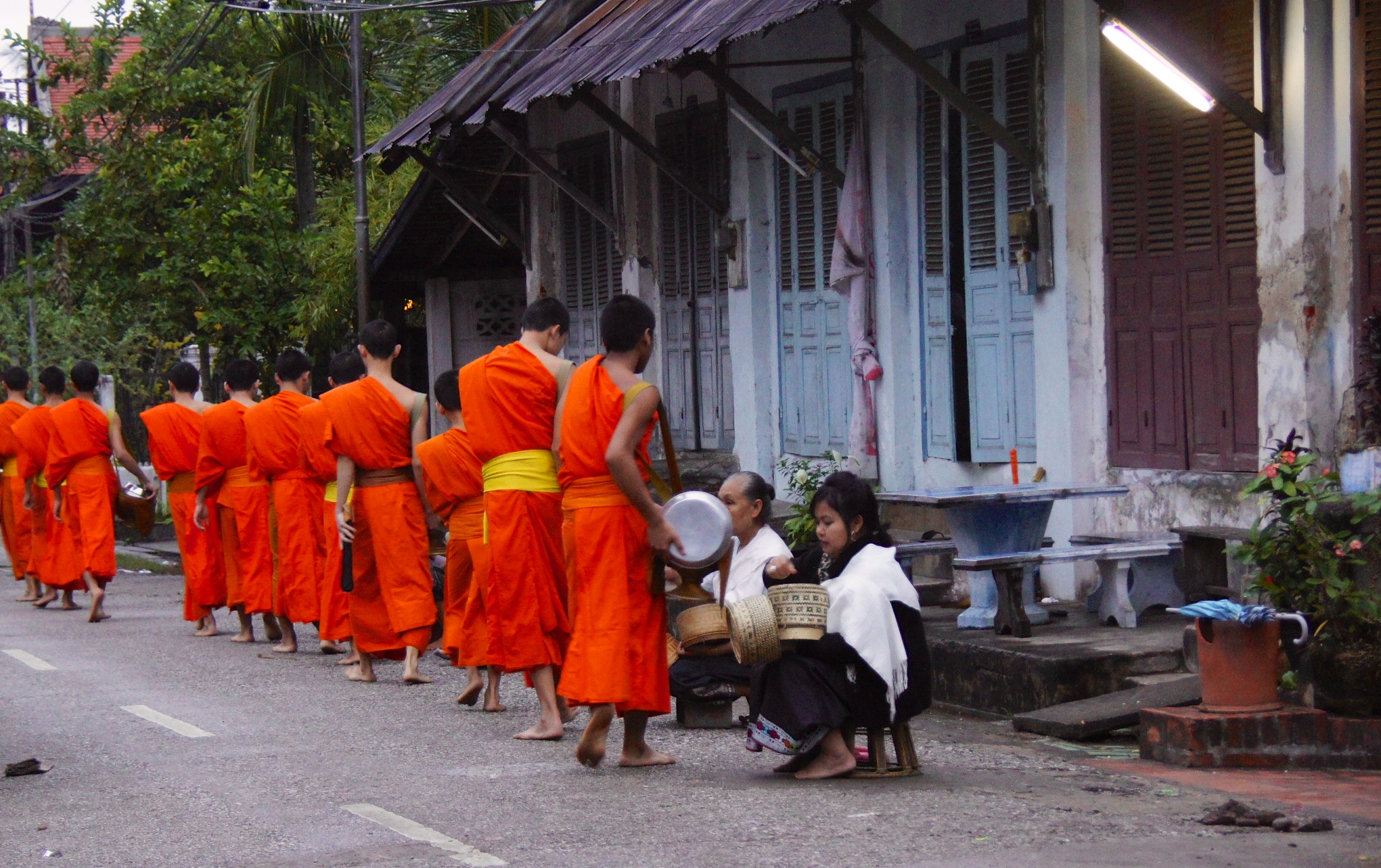
The first day D fed them from a bowl of rice we purchased from a
local woman. He was giving out
pretty big fistfuls, and then we realized just how many monks there
were. He ran out very quickly. We then watched the locals give out a
tiny pinch.

With almost eighty temples
in Luang Prabang, this adds up to hundreds of monks, who take different
routes depending on where their temple is located.

Most practice Theravada Buddhism. Theravada
is the dominant form of Buddhism in Southeast Asia and it is the "oldest"
school.

Unfortunately, with the increased tourism in Luang Prabang it has
endangered the tak bat ceremony, as many tourists view the ritual as a tourist attraction, not as a
religious ceremony to be respected. We tried to respect them and stay off to the side (the photos were zoomed in).

They
say that Lao's officials are considering stopping the ritual as too many
tourists are interrupting the ceremony and using flash, which distracts
them from their meditation. We did not use flash on our cameras. See
my dos and don't list so we can all help to preserve this
ceremony.
An interesting thing is that most of the locals
are poor themselves. We watched
the monks give food back to young children and dogs. It was a fascinating system.
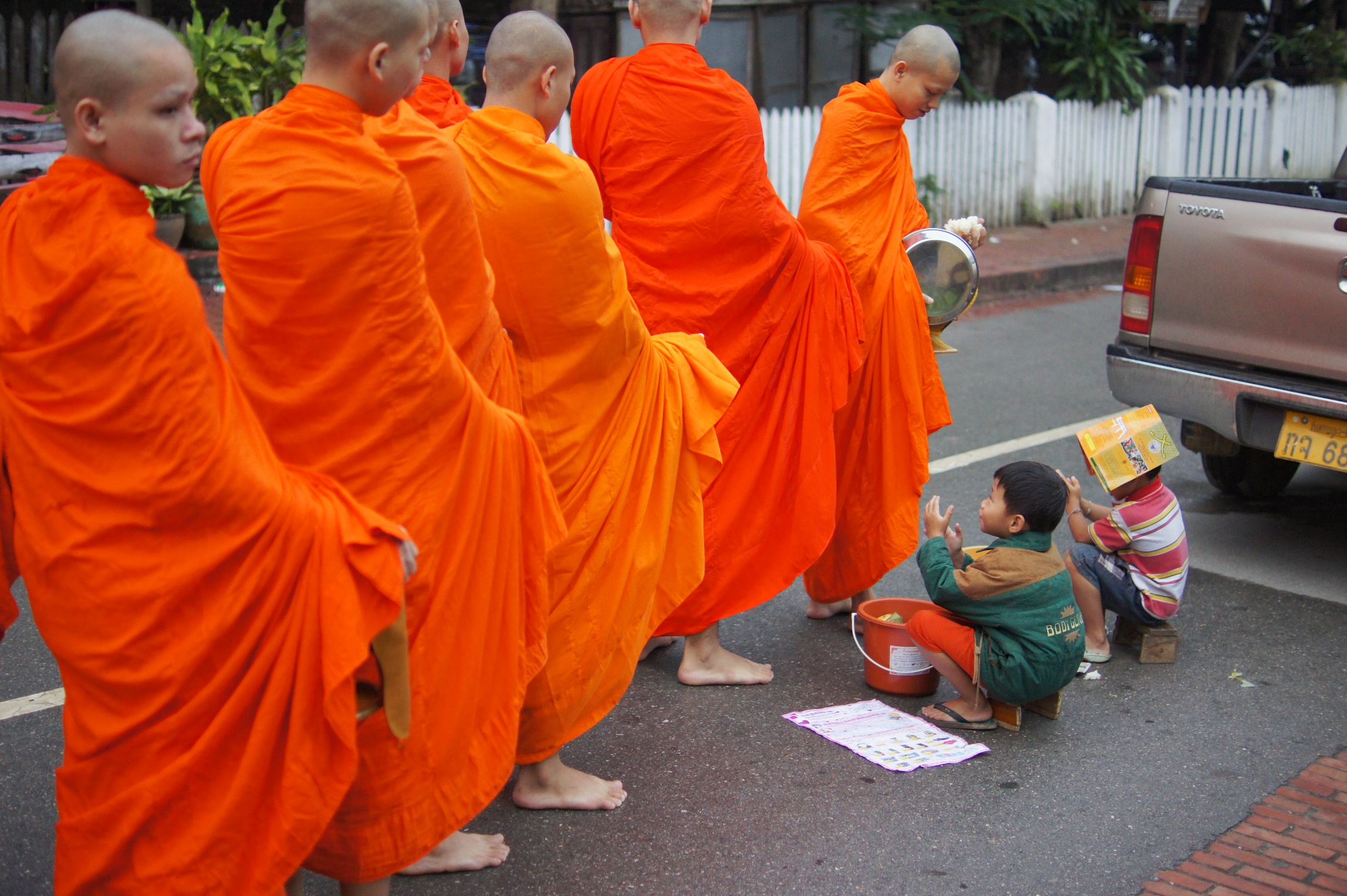
Here you can see the older monks dropping large handfuls of rice into the children's baskets.
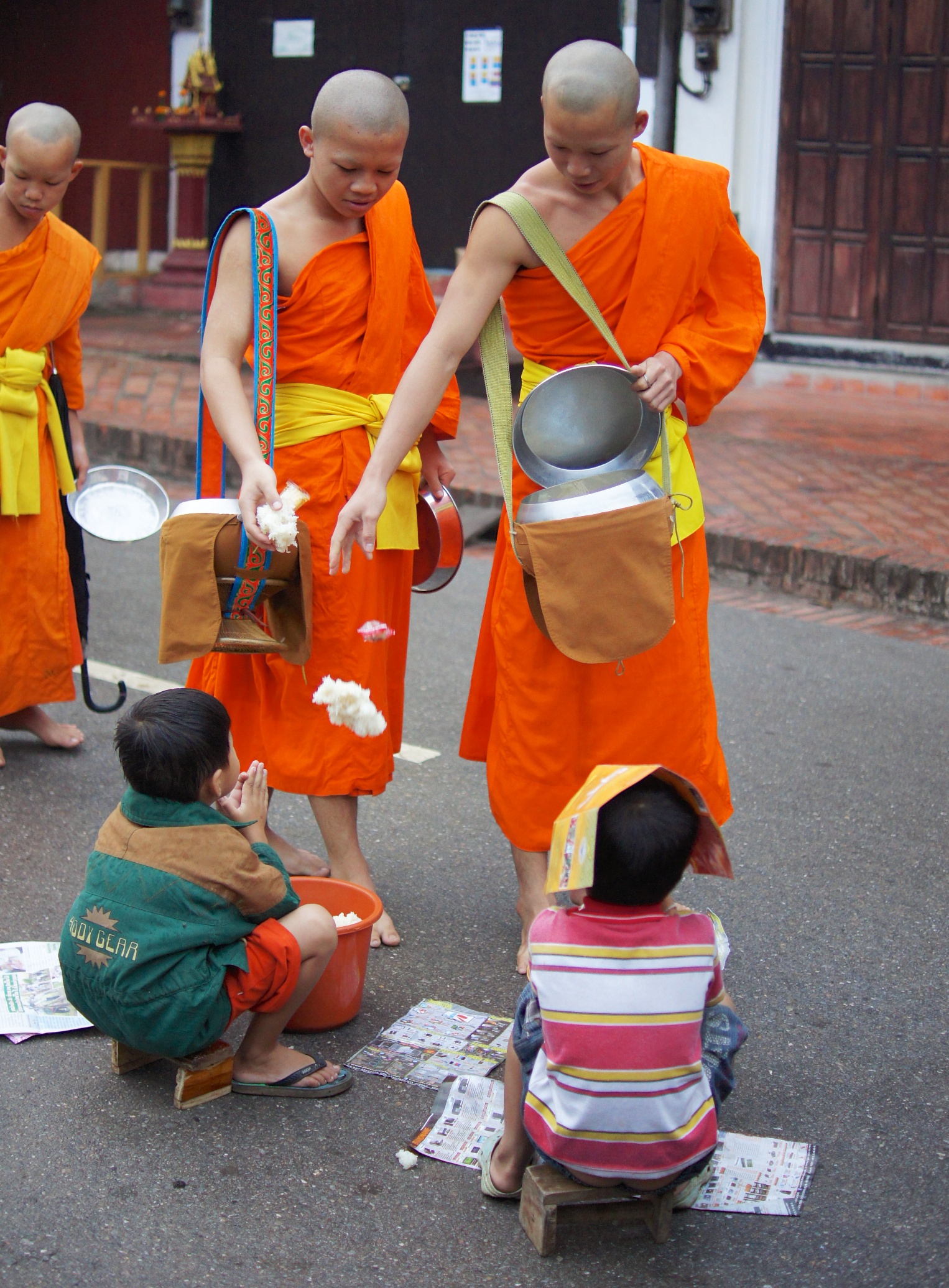
I
love this shot with the monk looking up at us. The ritual
is done in silence; the alms givers do
not speak, nor do the monks. The monks walk in meditation.

This ritual has been going on for many centuries. It is a symbiotic relationship between
the monks and the alms givers. Tak bat supports both the monks (who need the
food) and the alms givers (who need spiritual redemption).

I
wondered if it bothered the monks to have to eat food handled by so
many different people (referring mainly to the tourists).

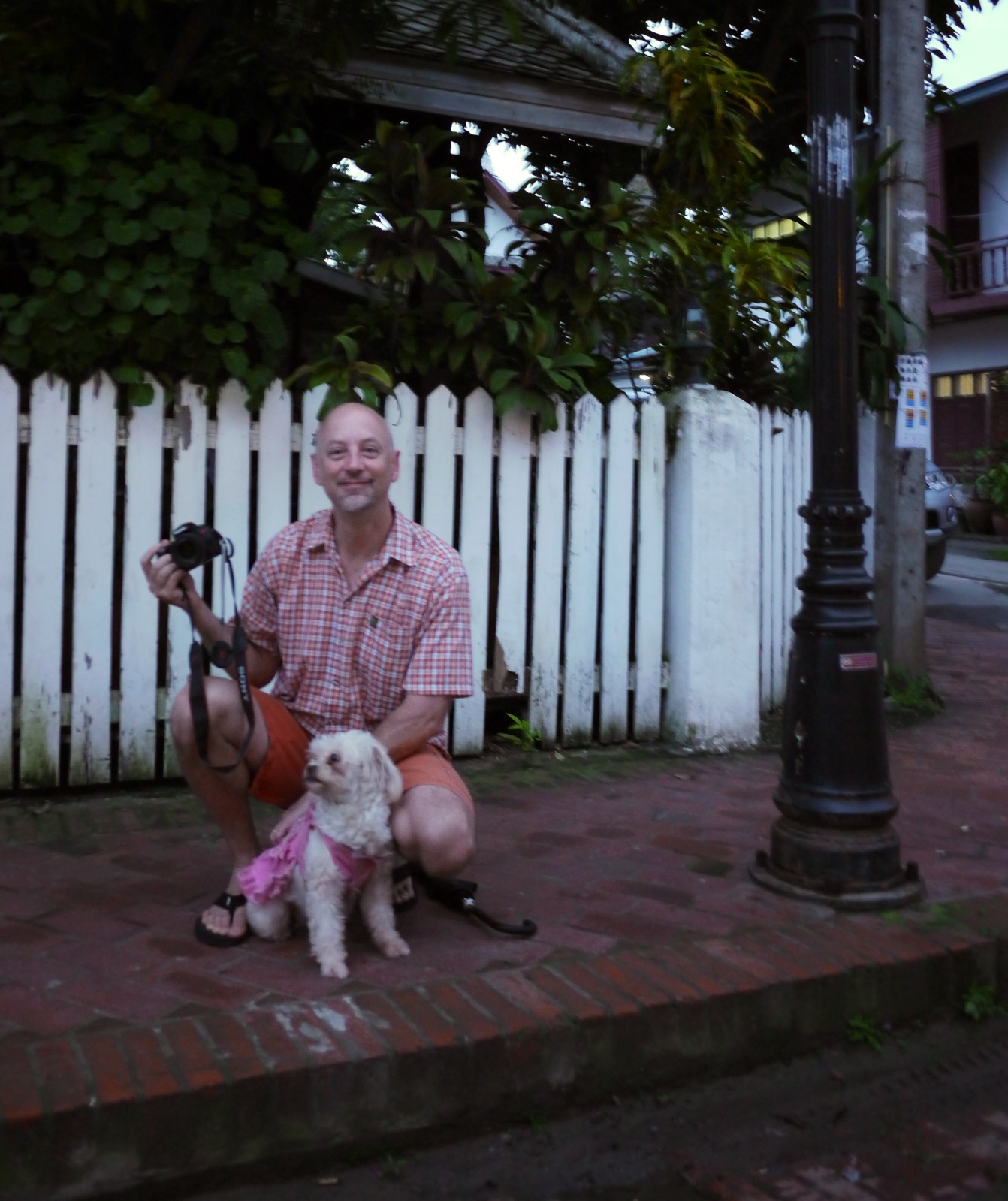
The dogs have become very smart and follow the monks for small treats. D made a little friend.
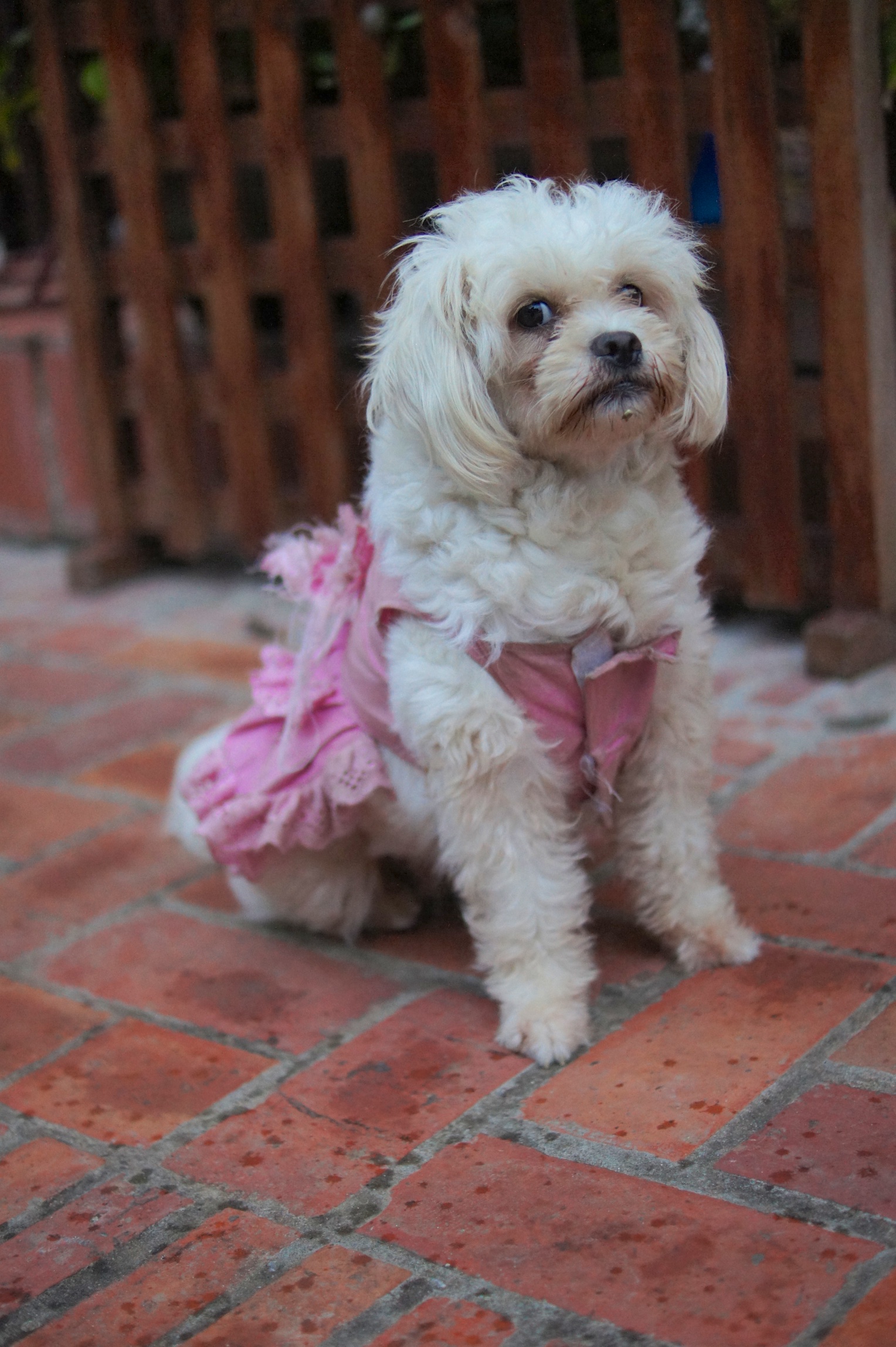
It surprised me that in such a poor country a dog would have a dress??? And
then the condition of it… notice how tattered the little dress is. Like
so many of the children, she has worn her dress very hard.
Here is a list of
"dos" and "don'ts" to help you, if you plan to visit:
When you give alms:
Kneel to feed the monks. Take off your shoes. Make sure your head is not higher than theirs. Bow to show respect. Make sure you are properly dressed i.e. no shorts or sleeveless shirts (same rules as when you visit a temple. Do not make eye contact. Do not touch them. Do not talk to them.
When you are not giving alms:
Keep a respectful distance. Use your camera zoom. Do not use your flash. You will be tempted as they walk at sunrise and there is little light. Do not make eye contact. Do not touch them. Do not talk to them.
The Elephants
The other highlight was our fabulous elephant ride. Click here to read the full post on this adventure.

The Children
We enjoyed getting off the beaten track to see how the local live. We took several photos of the village children. To see these photos, click here.

Temples and Buddhas
Laos is the only landlocked
country in Southeast Asia. It is
bordered by Burma, China, Vietnam, Cambodia and Thailand. Its population is
close to 6.5 million . You can trace Loas history to the kingdom of Lan Xang
(Million Elephants), founded in the 14th century.

I love the shape of the Temples in Laos. Their architecture is a mix of French colonial and Buddhist with some
influences from Thailand. The Haw Pha Bang or Royal Palace is a relatively new structure, built in 1963.

Up until very recently, Laos was difficult to travel
to because of war and politics.
Now, Laos is considered a hot spot for travelers. We were walking around Vientiane for
about 15 minutes and I turned to D and said I have not seen a single Laos
person – I have only seen tourists.
And most were young backpackers.
This surprised us. I love this image below. The young monk with a cell phone! It shows how times have changed.

The main attractions for tourists include food,
temples (wats), Buddhist culture and architecture. Luang Prabang was made a UNESCO World Heritage
site in 1995.

Wat Xieng Thong was built in 1559-1560 and is one of the most important temples in Laos. During the 1960s it was completely
remodeled and redecorated. The image above shows its famous Tree of Life mosaic in colored glass on
a dark red background, created in 1960 by a Laos artist.
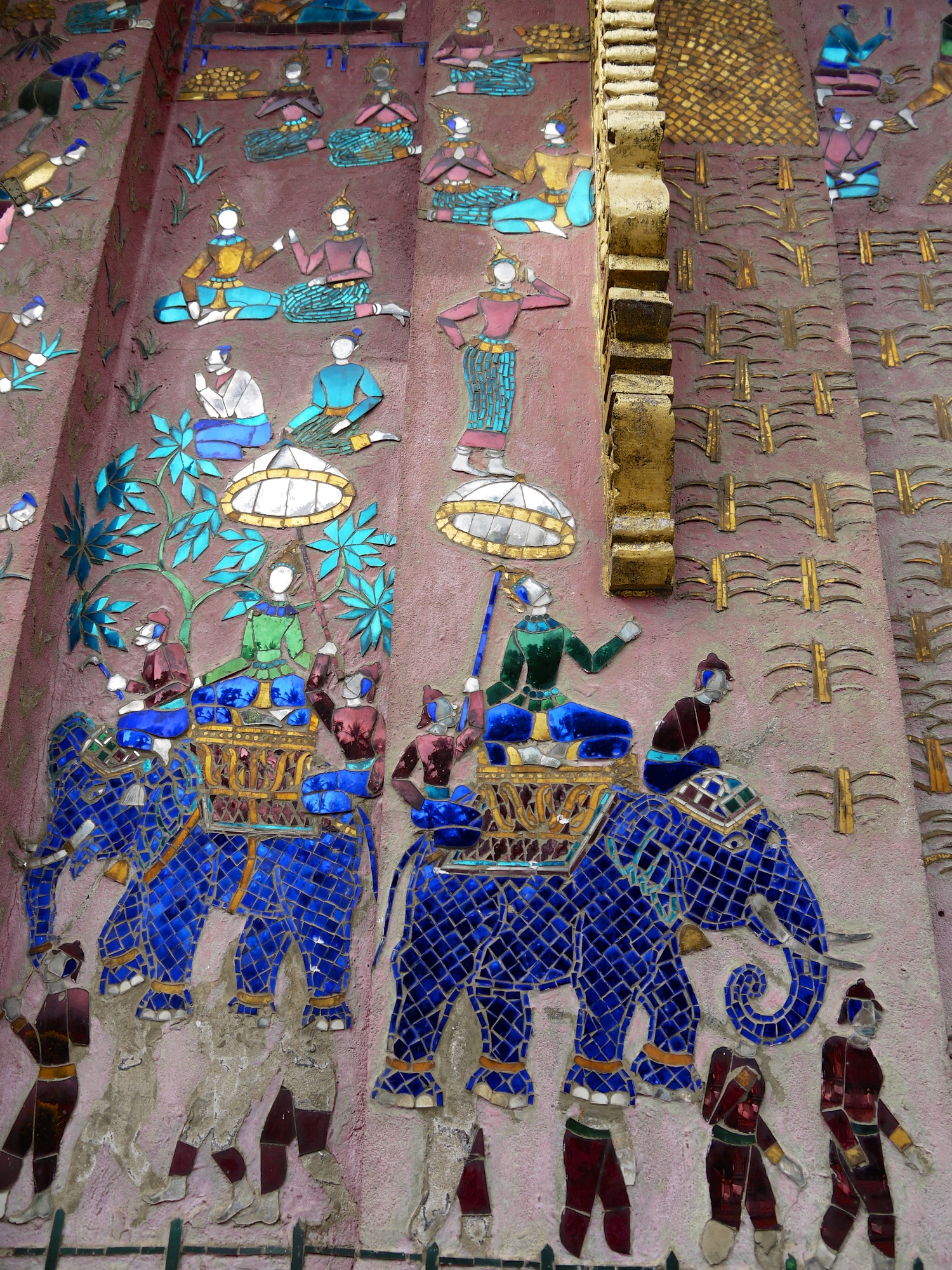
It has intricate, colorful mosaic on the exterior walls.

Of the people of Laos 67% are Theravada Buddhist,
1.5% are Christian, and 31.5% are other. Laos is a Communist state with the official
language of the government being Laos, however only slightly more than half of
the population can speak Lao, the remainder speaking various ethnic minority
languages, particularly in rural areas.

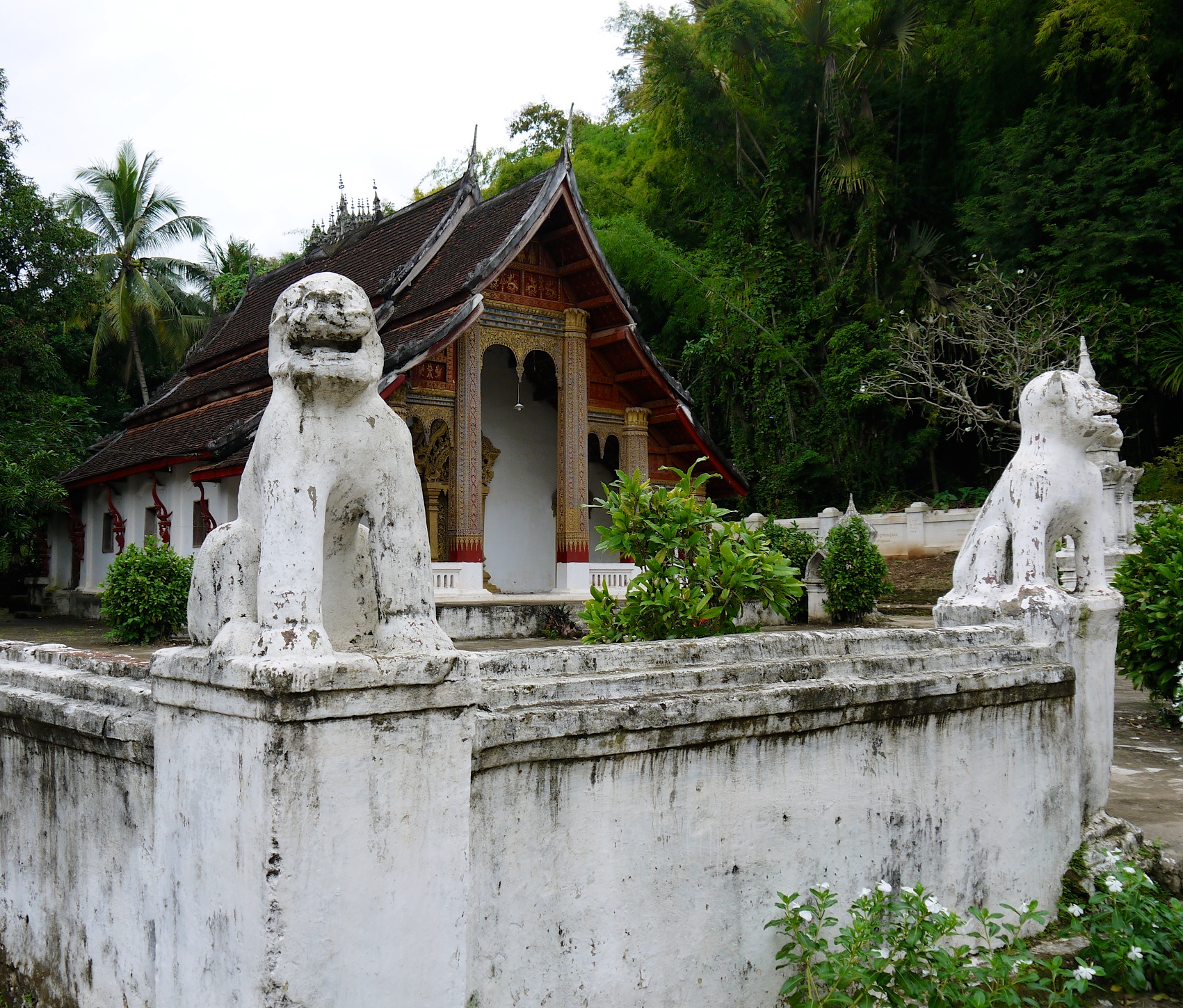
Wat Nong Sikhounmuang (above) is
one of the bigger temples in Luang Prabang. It was built in 1729, burned
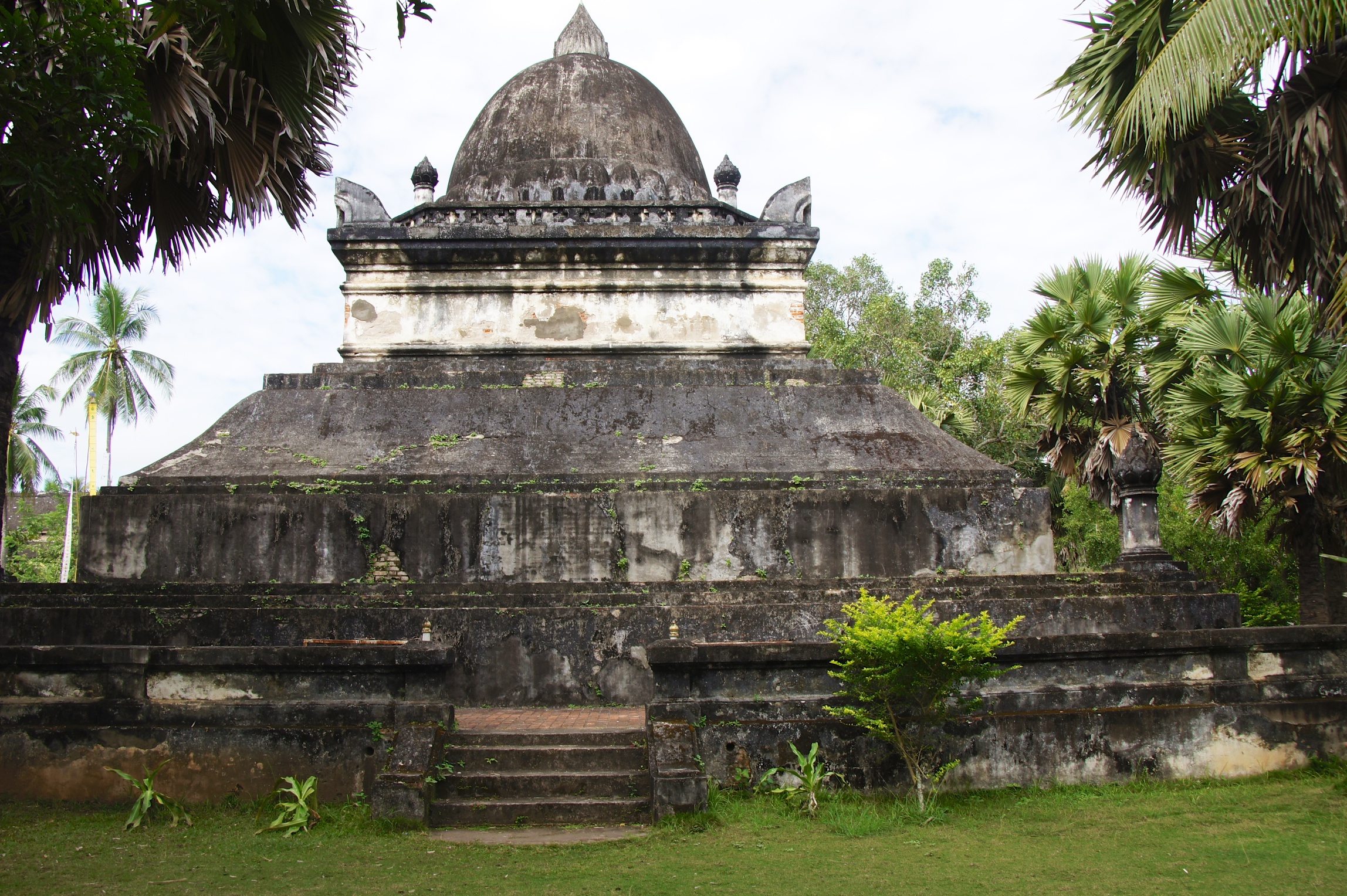
down by a fire in 1774, and restored in 1804. The temple below is an older temple, off the beaten path, so it does not receive the donations like the better known ones or ones in the main part of town. It therefore has not been restored.
That Pathoum, or Stupa is known as That Makmo (Watermelon) because of its rounded dome
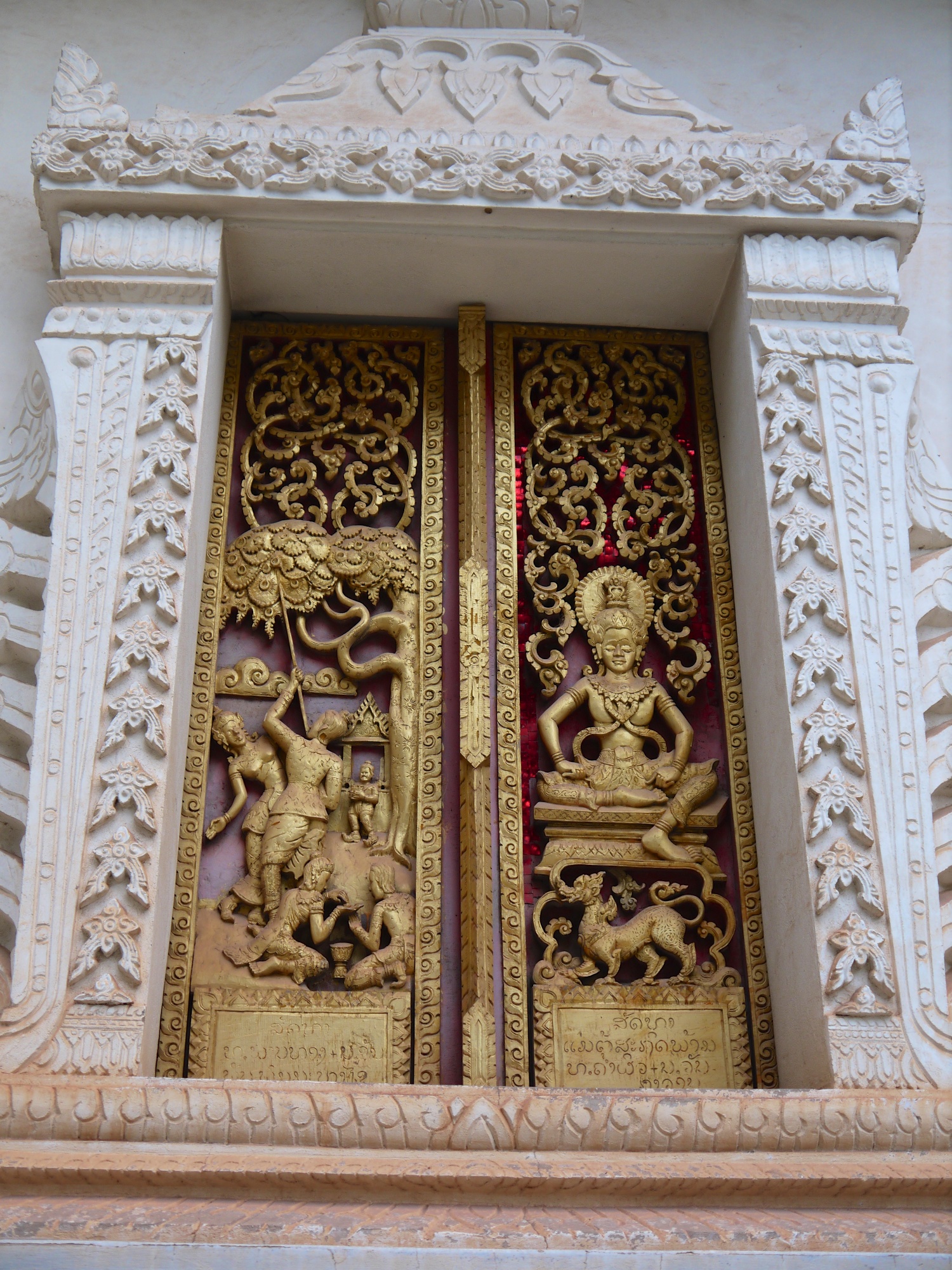
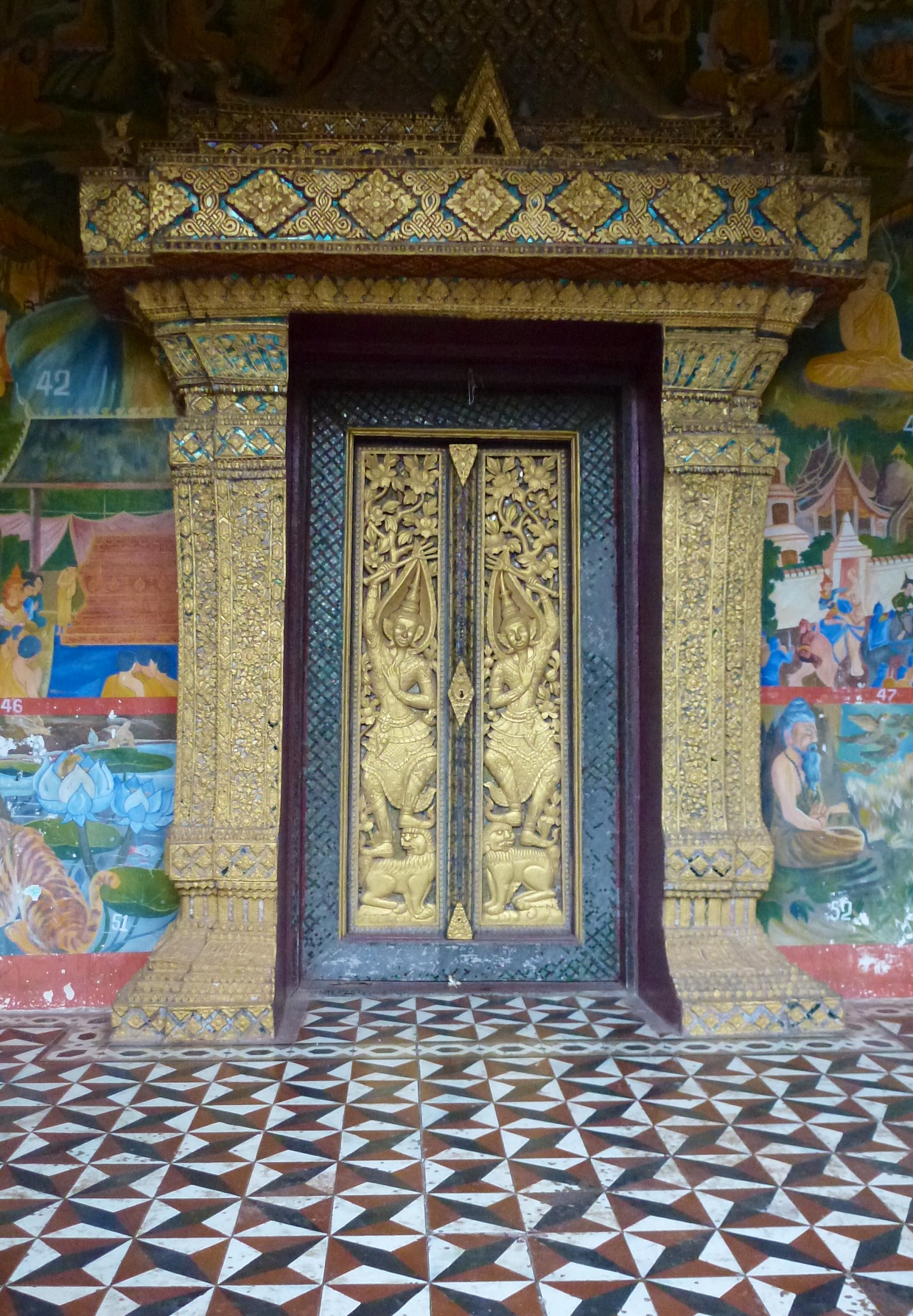
Most of the doors to the temples have elaborate carvings painted in gold leaf. They depict scenes from Buddha's life.
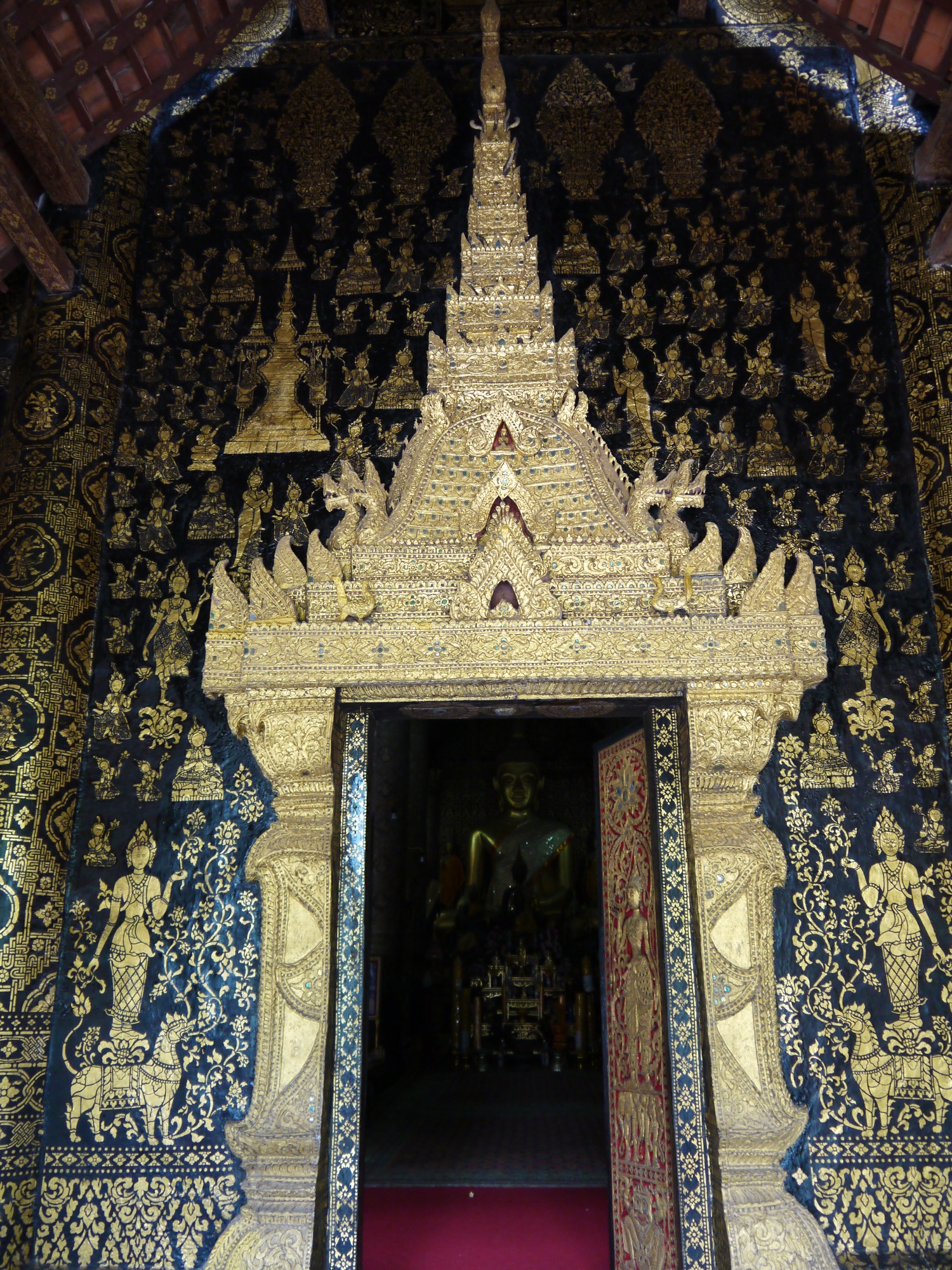

The Naga, a mythical
multi-headed snake. You see these at most temples.

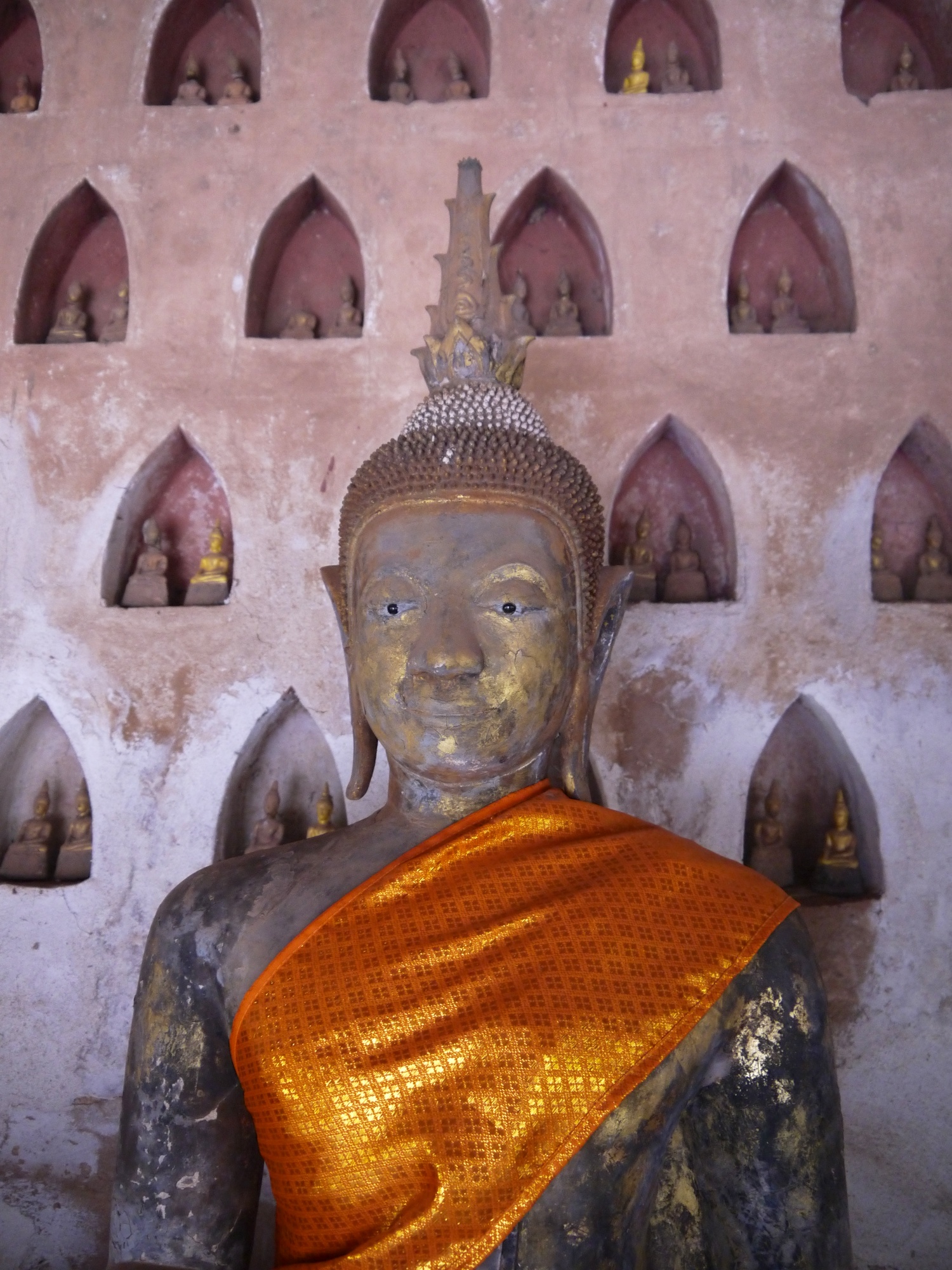
Buddhas
Buddha
images are not just for decoration, they are objects of religious worship.



Touring around town……
Laos
is known for its silk and local handicrafts. I bought several beautiful scarves for gifts. It is rich in natural resources
like timber, gypsum, tin, gold, and other gemstones.
These tortilla-like food objects lying on grass mats to dry in the sun facinated us. They even put them on the roofs.

We never did get to taste it, and I could not find anything about them on the internet.

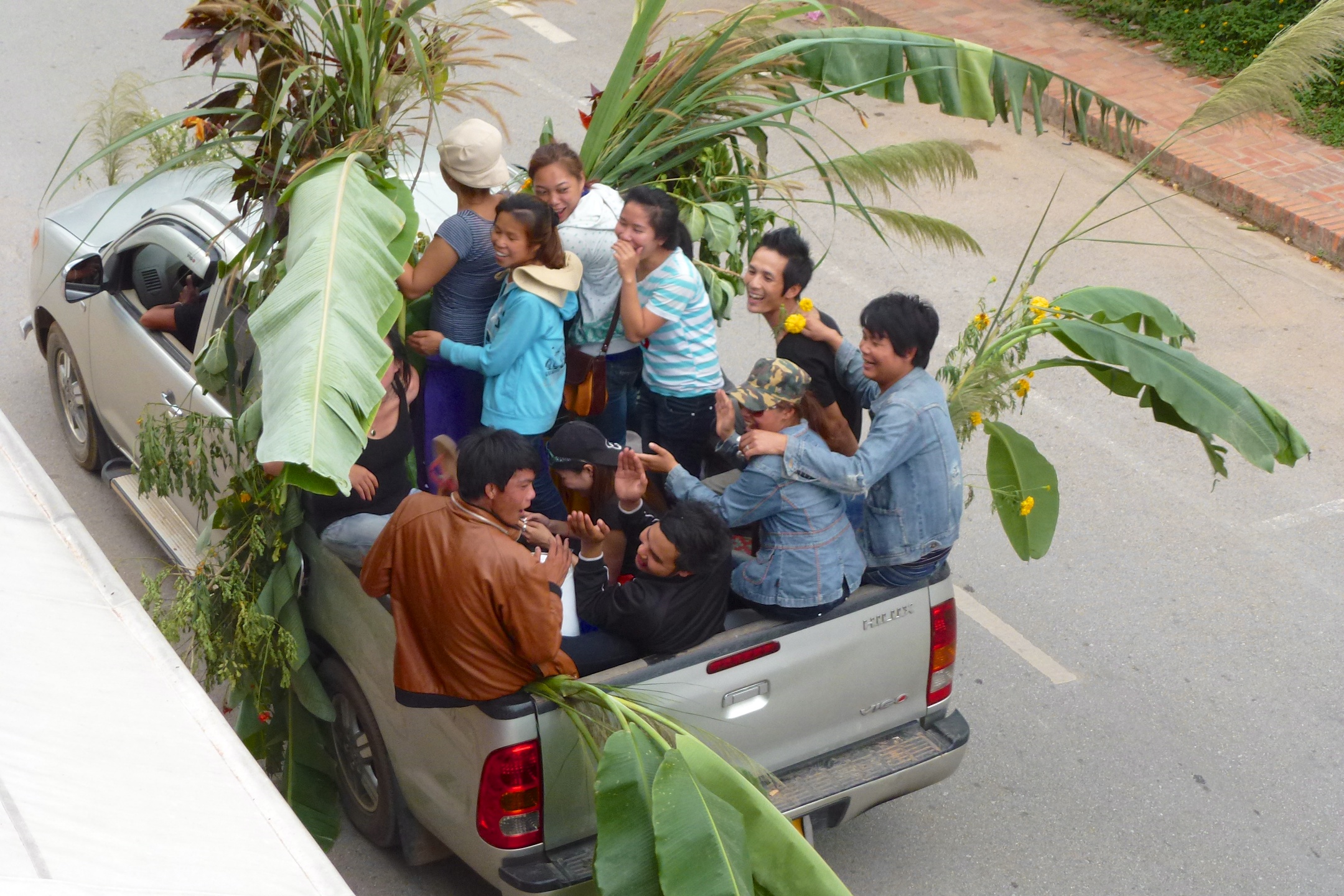
This was a parade of some sort – there were about 10 trucks filled with people and plants. All singing and laughing and having fun. The Laos people in general are happy helpful people.
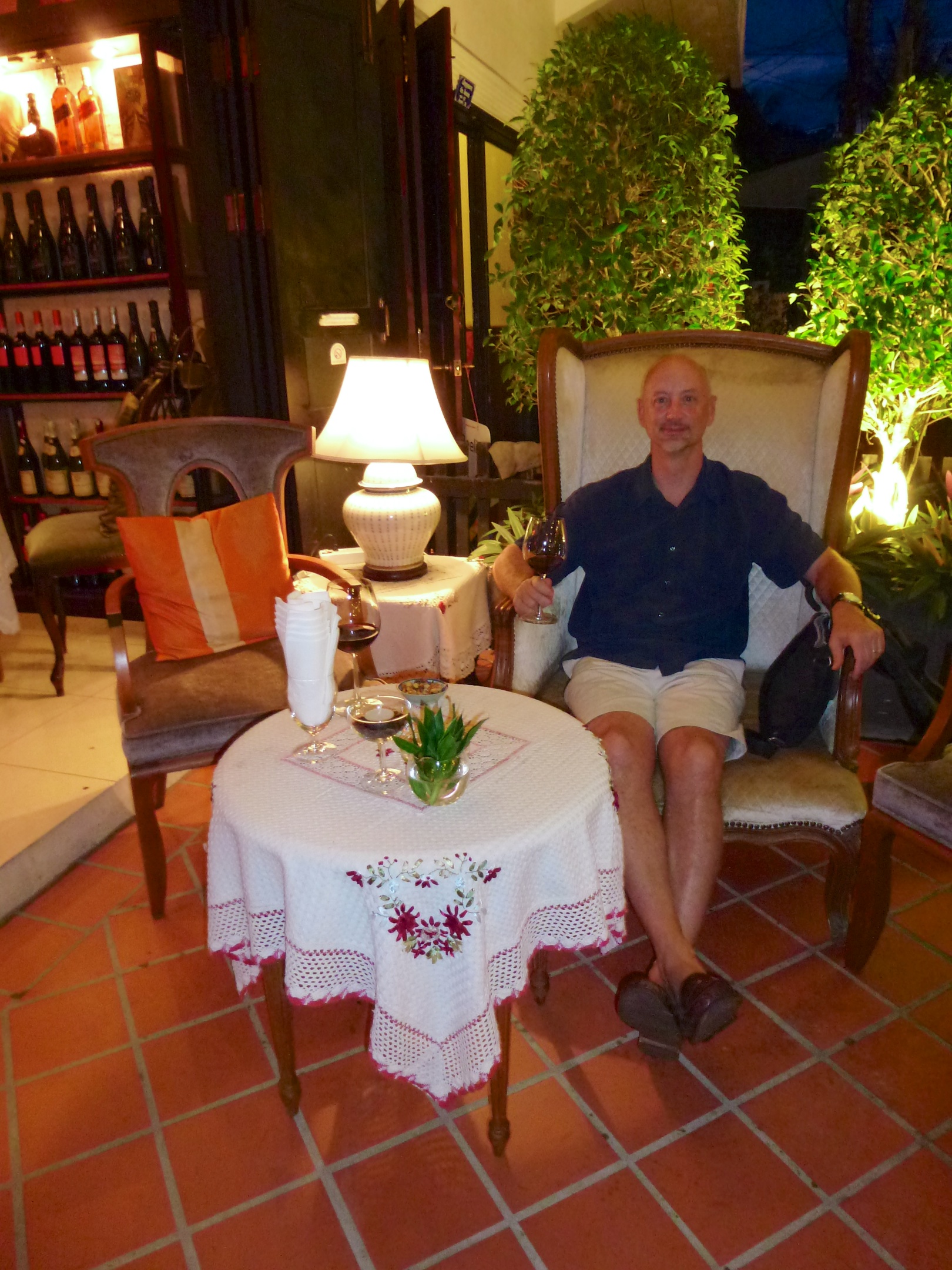
A little food and drink…..
We discovered a very modern wine bar where the inside was set up outside.
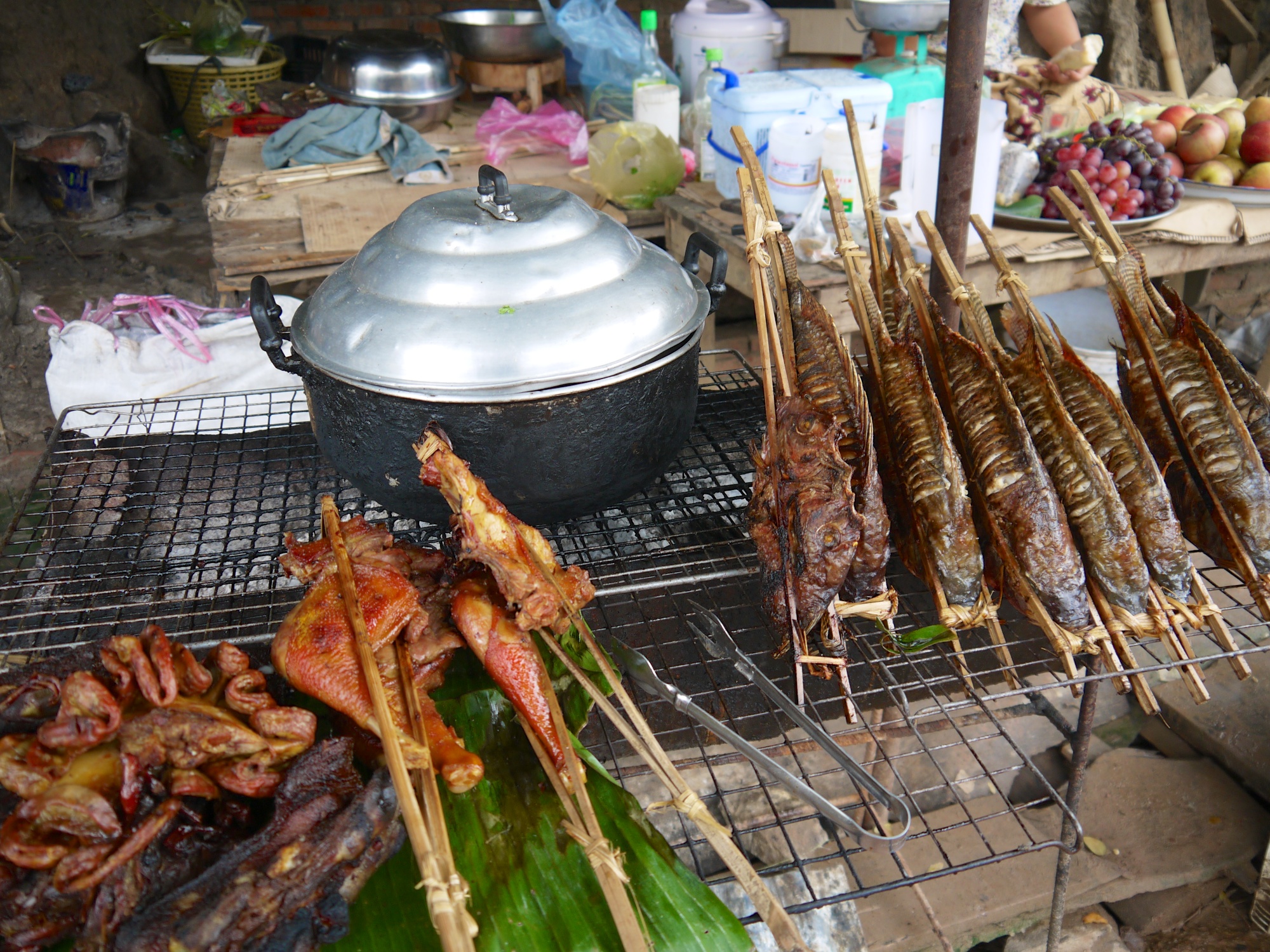
Sticky Rice is served everywhere in Laos and this
is very different from other Asian countries. Sticky rice cultivation and production is thought to have originated in
Laos. I really liked the sticky rice. It is always served in little baskets and is brown.

Grilling was very popular here. They had a unique way of tying them up with a bamboo skewer.
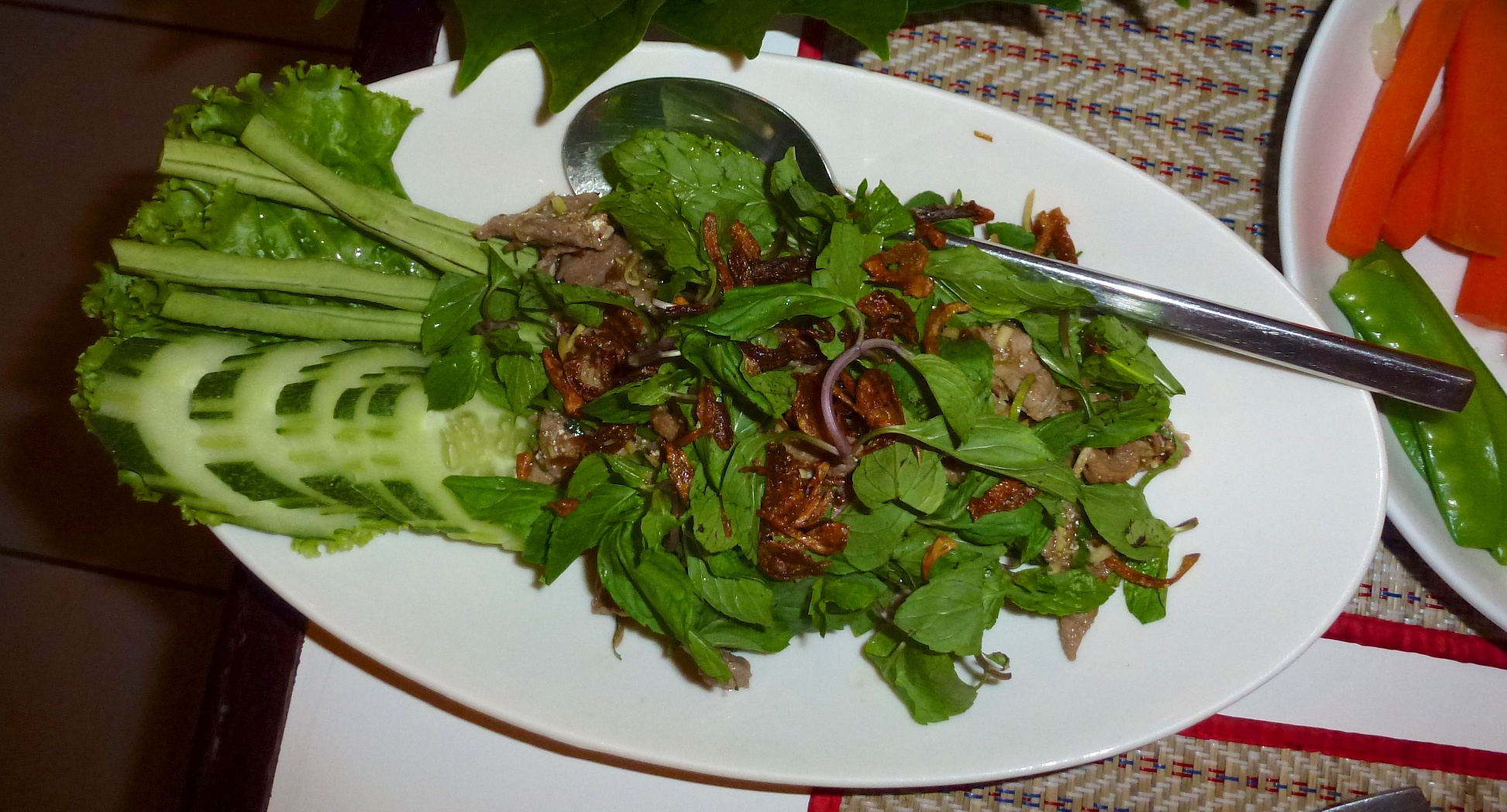
We enjoyed all of the food we ate. They tend to eat more salads than other Asian countries.

Looking back at Luang Prabang from across the river. We really enjoyed our trip to Laos, especially the visit to the elephant reserve.

Please continue to the next blog post to see some sweet photos of children in Laos.


 The XtraSuitcase
Leave a reply to Michelle Cancel reply