The Tiger Temple
Kanchanaburi, Thailand
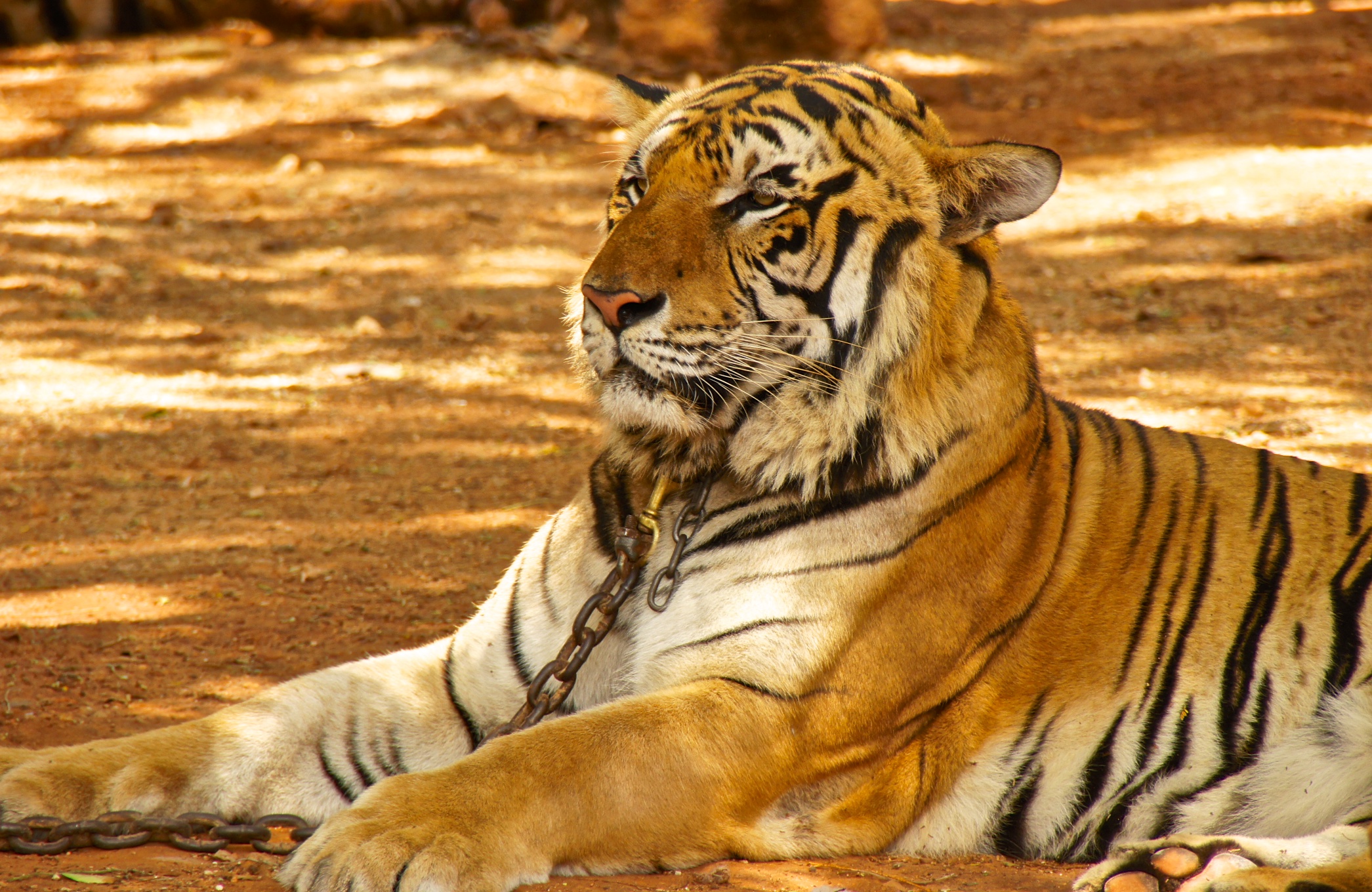
When we first arrived we observed the monks playing with "their" tiger. Many of the staff and volunteers work with each and every tiger in the park, but each tiger has one primary monk who cares for them.

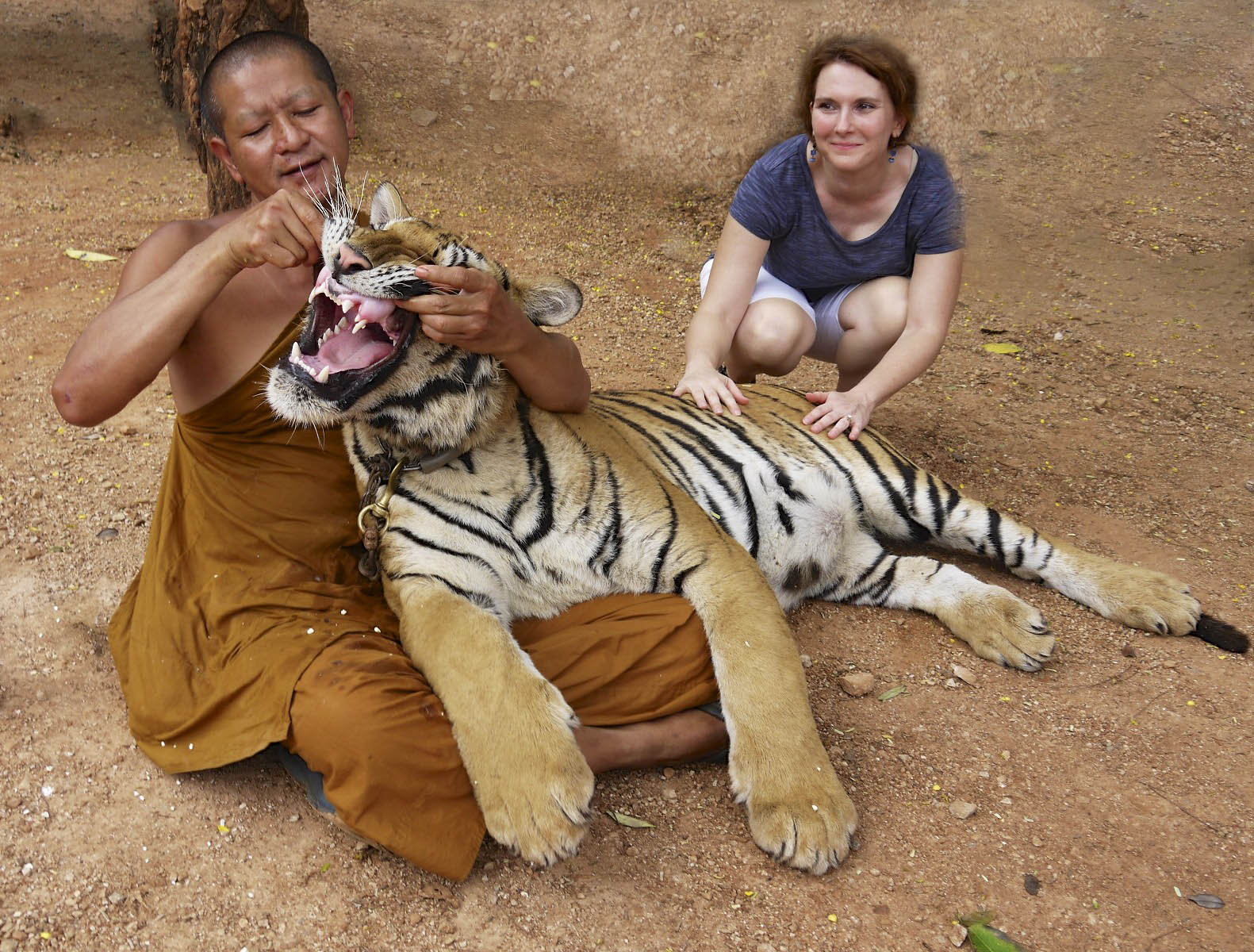
Look at the size of her paw!
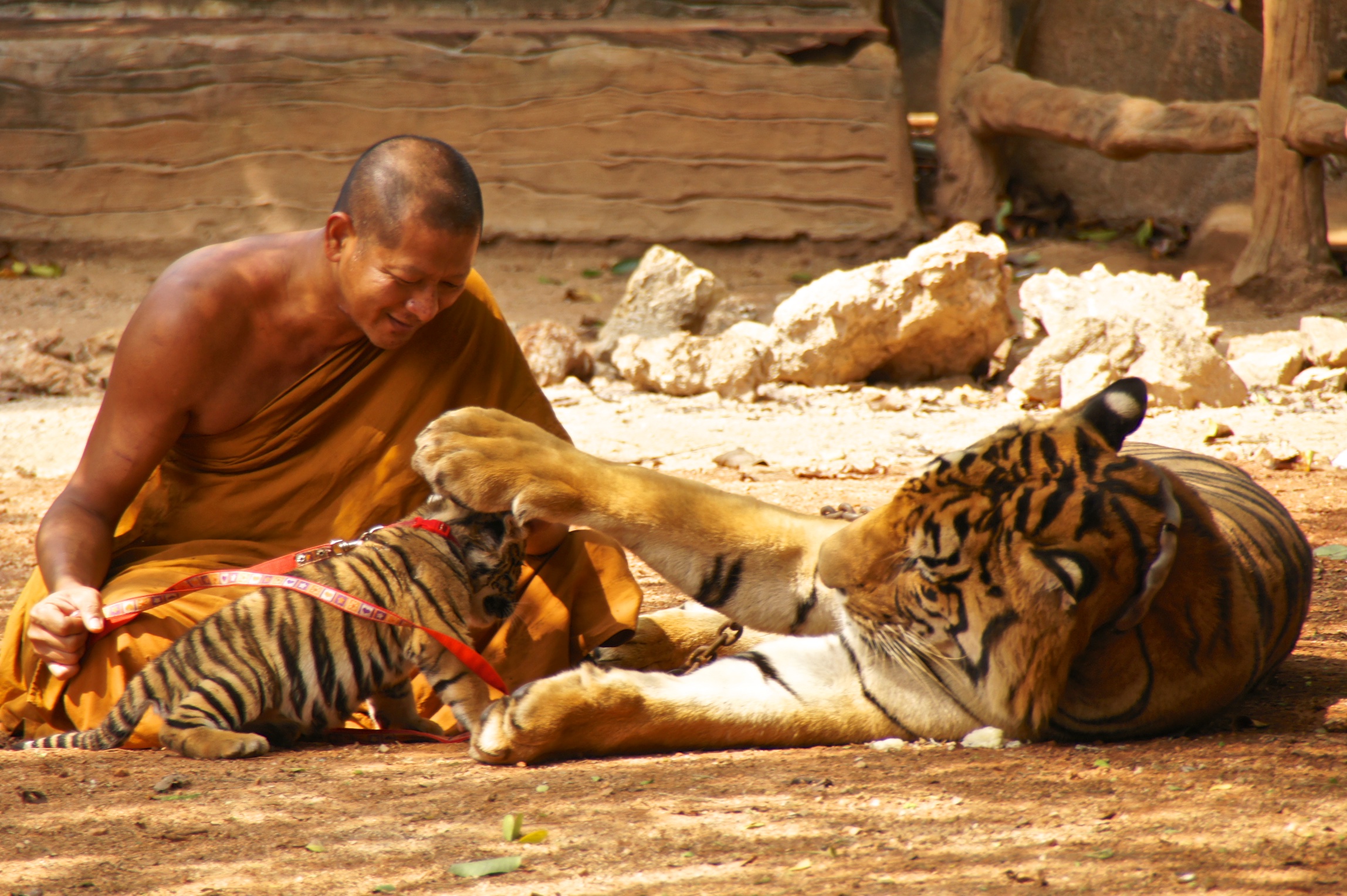
The temple is a fully functioning Buddhist temple called, “Wat Pha Luang Ta Bua”; but is known as the “Tiger Temple”.
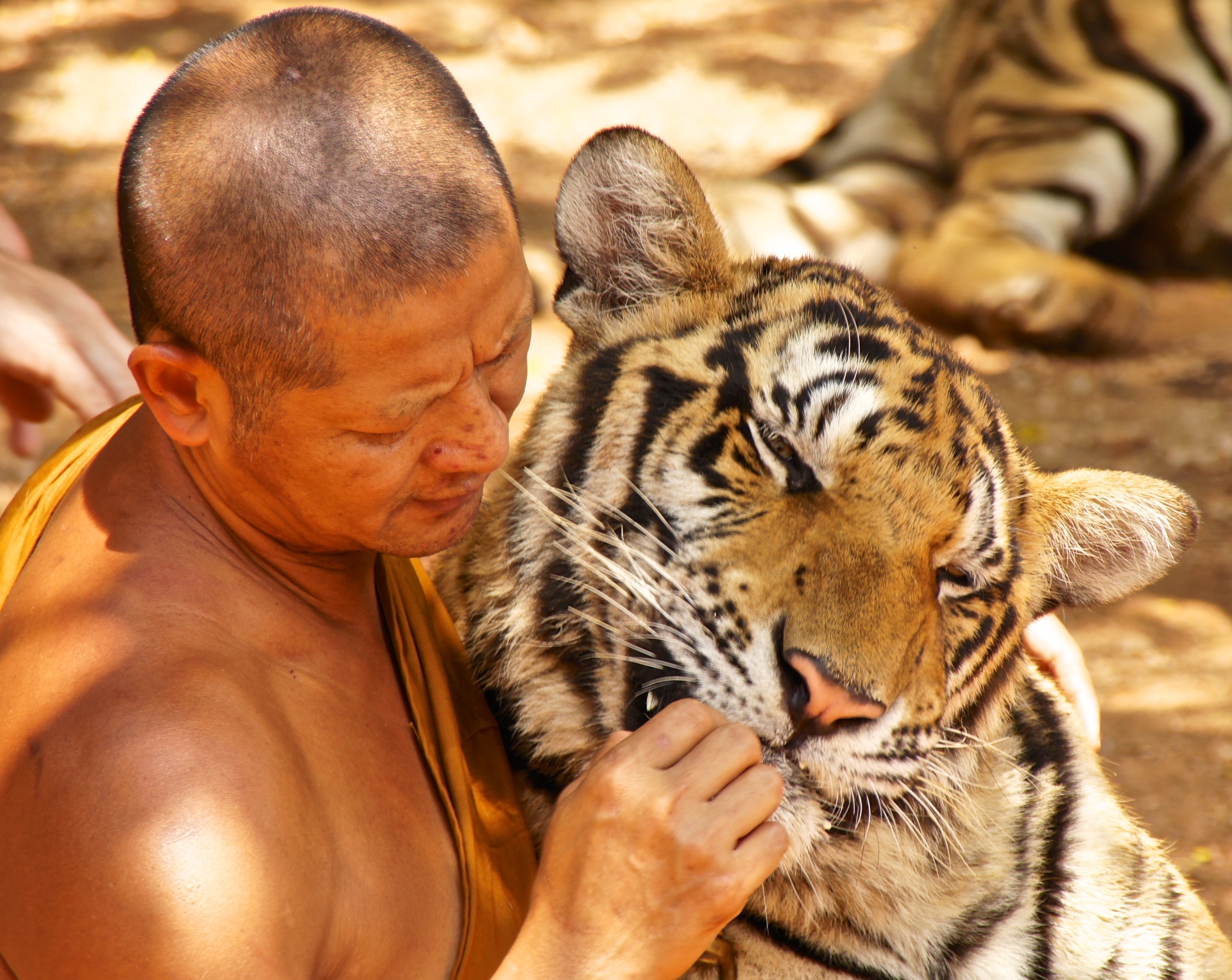
Next we got to pet and interact with the tigers. This was an ABSOLUTELY AMAZING experience.

Tigers are the biggest cats in the world. There are six different kinds or subspecies of tiger alive today and all are considered endangered species.
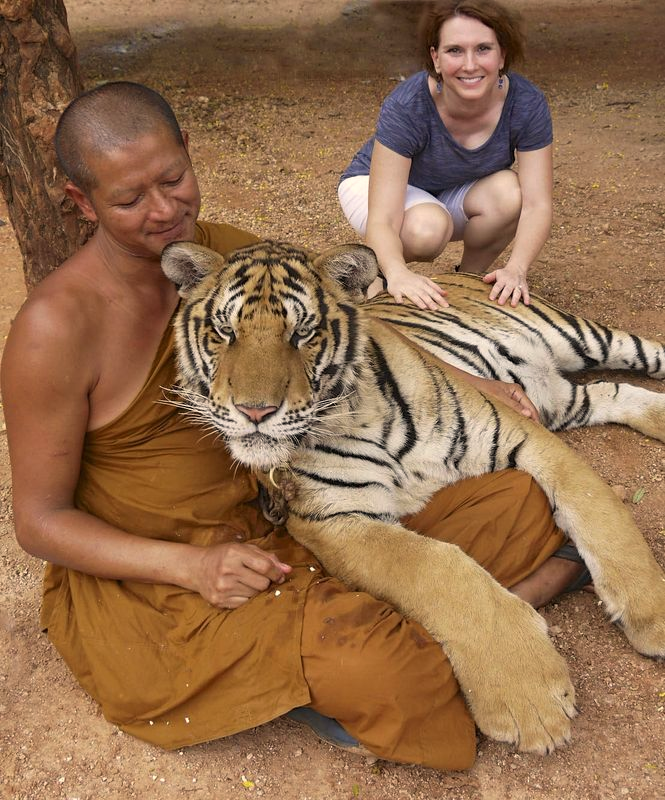
Many people have asked us if the tiger's teeth were removed… take a look at the photos below to get the answer.

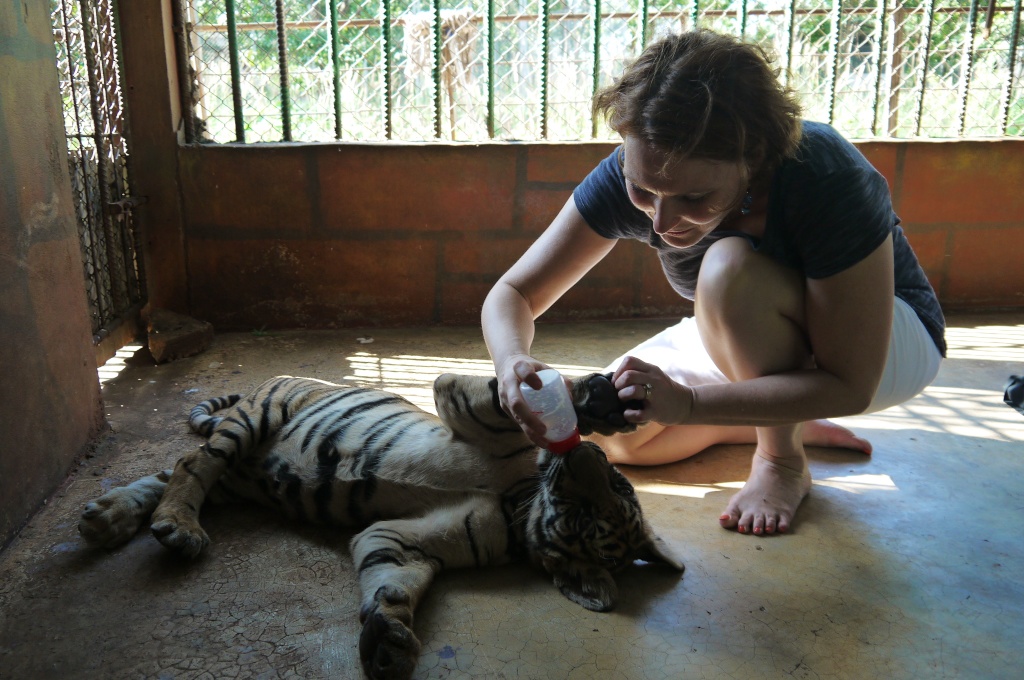
Visitors are allowed to participate in several programs including playing with and feeding the baby tigers. We were very lucky to purchase tickets to feed the cubs. We thought we would just get to hold one for a few minutes to feed them, but we actually got to play in the cage with them.

There were three babies, two staff, and only six of us. We were in there for about 45 minutes.

I fell completely in love as soon as I touched the cub. Look at my face – I am talking away to him. I think I was telling him how beautiful and special he was : )
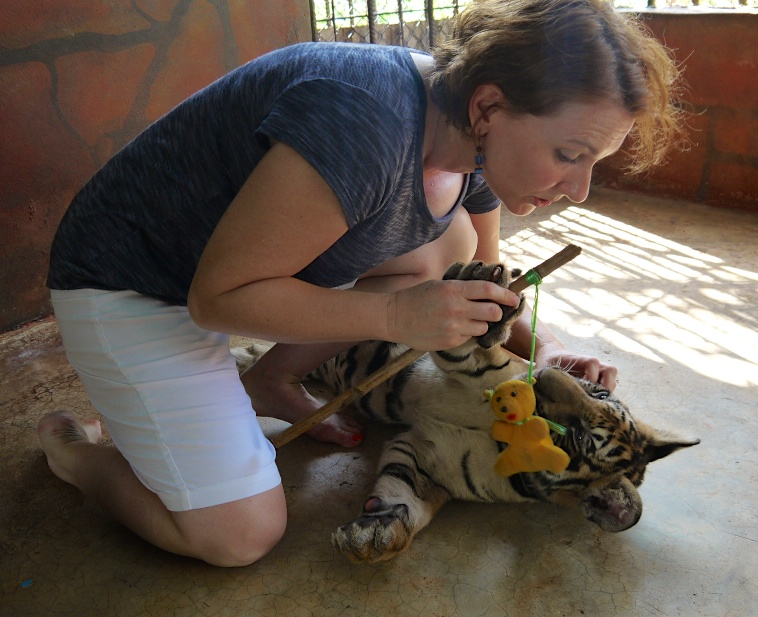
He loved to be scratched under his chin. Their fur was softer than the adult tigers, but still not soft like a domestic cat – more wiry.

The little one was very feisty. He hissed/baby-growled at D several times.


This is the middle sized one. Look how he is holding my hand. Precious!
After their feeding they were full of energy. They were bored with us humans and wanted to play with each other…
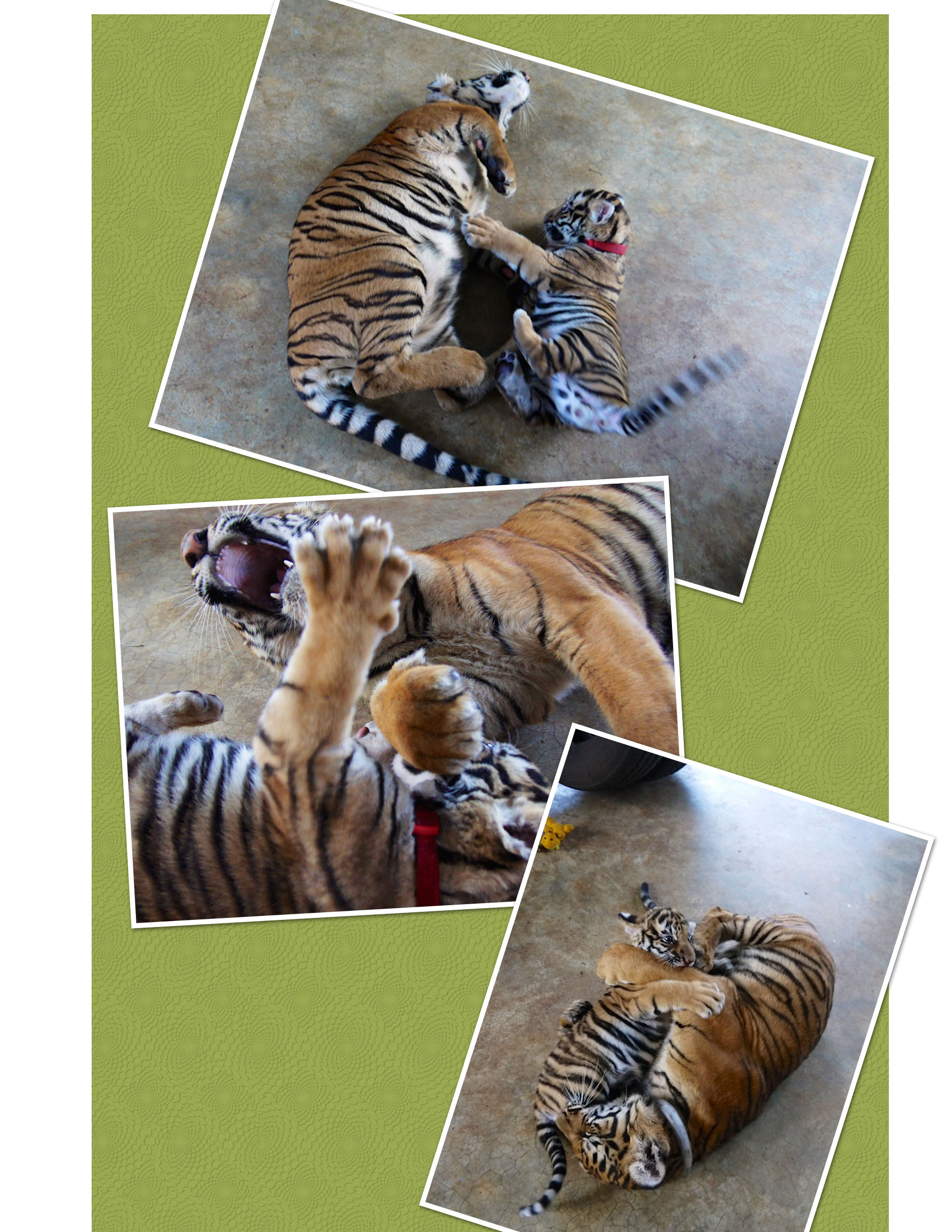
and love each other…


Tiger stripes are like human fingerprints; no two tigers have the same pattern. The cubs have two round spots on the back of their ears. Scientists think this may be a protective feature so that other animals will be fooled into thinking it's two big eyes looking at them.
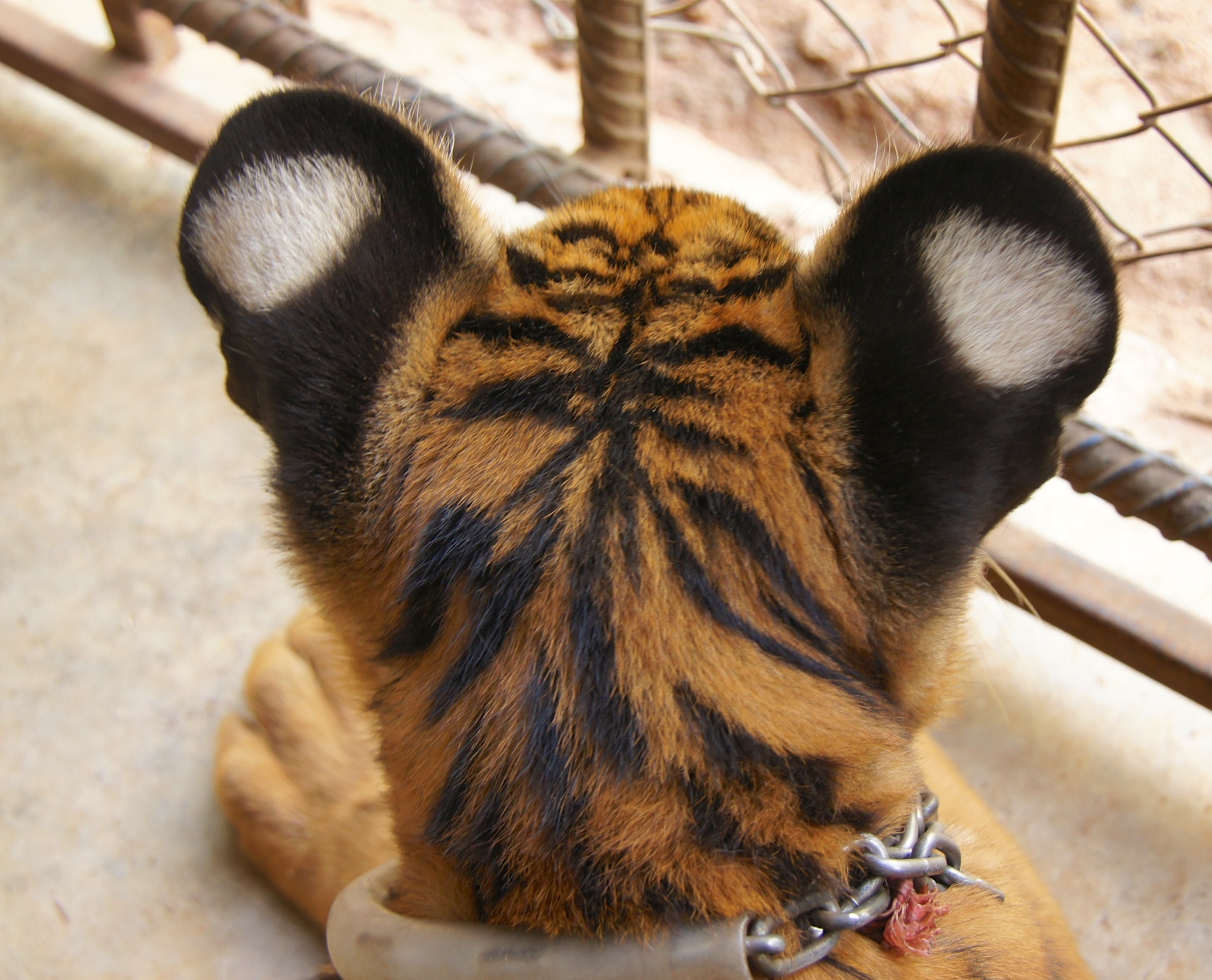
Such gorgeous animals.

We also walked the larger tigers with the monks. They told us to keep our hands on their back with firm pressure. If it is too light they think it is a bug and may try to swat you away.
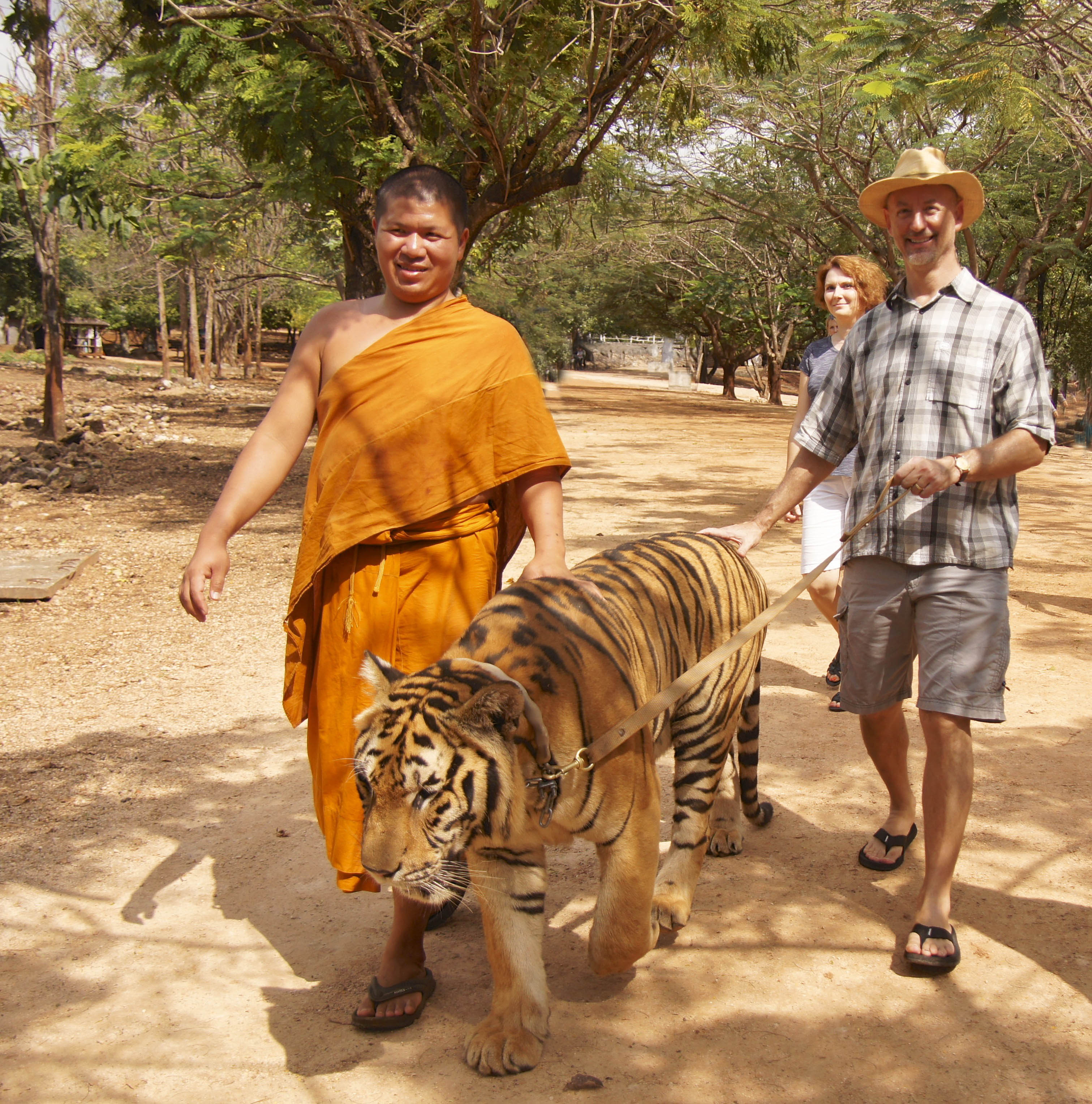

This is one of the biggest tigers in the park. The temple received its first tiger cub in 1999 and they are now up to about 124 tigers and various other animals. Not all of them are able to interact with humans.

In Thailand, Buddhist temples frequently receive abandoned animals from the surrounding neighbors because Buddhist doctrine compels the monks to care for the animals. Once the monastery took in the first tiger cub, they began to receive more tigers from other parts of the country and shortly thereafter became the "Tiger Temple" and grew to be the primary tiger care center in Thailand.
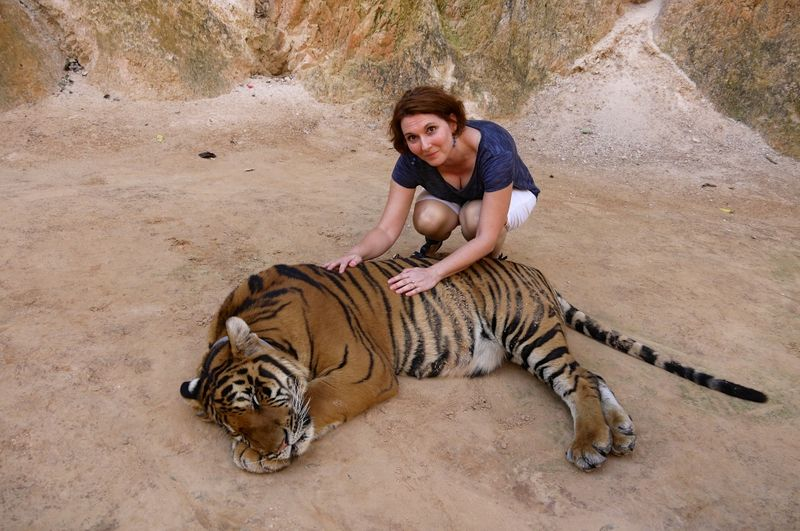
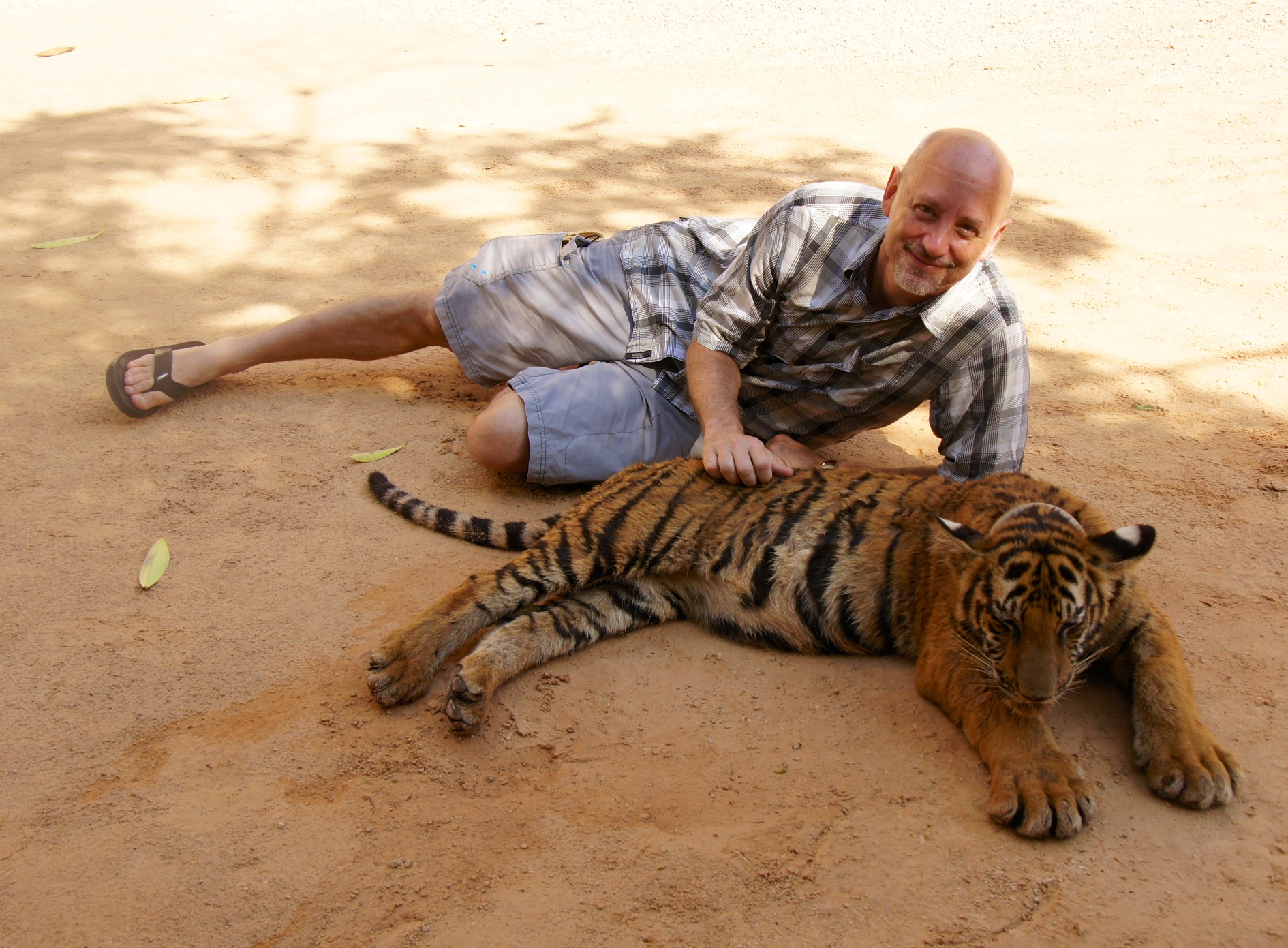
Before we arrived I told D I will take photos of him, but I do not want to go near the tigers. Shortly after being in the park, I wanted to lie on top of them! I never got to lie on top of one, but I did lie next to them – actually in between two tigers.
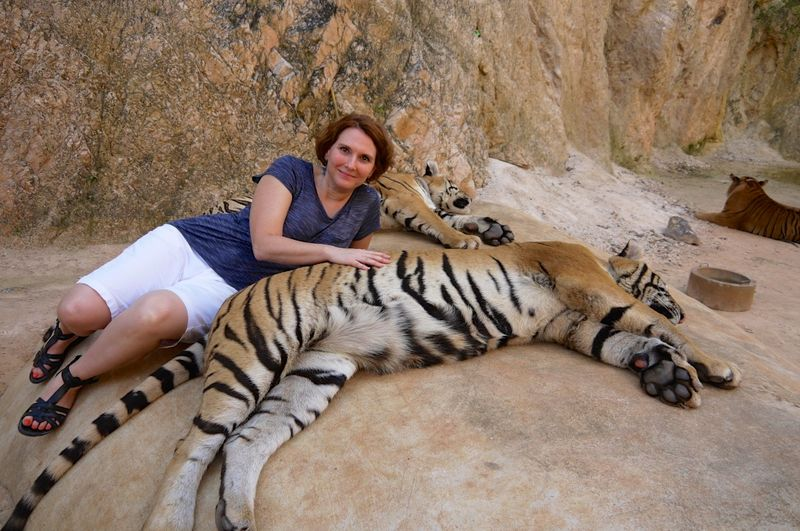
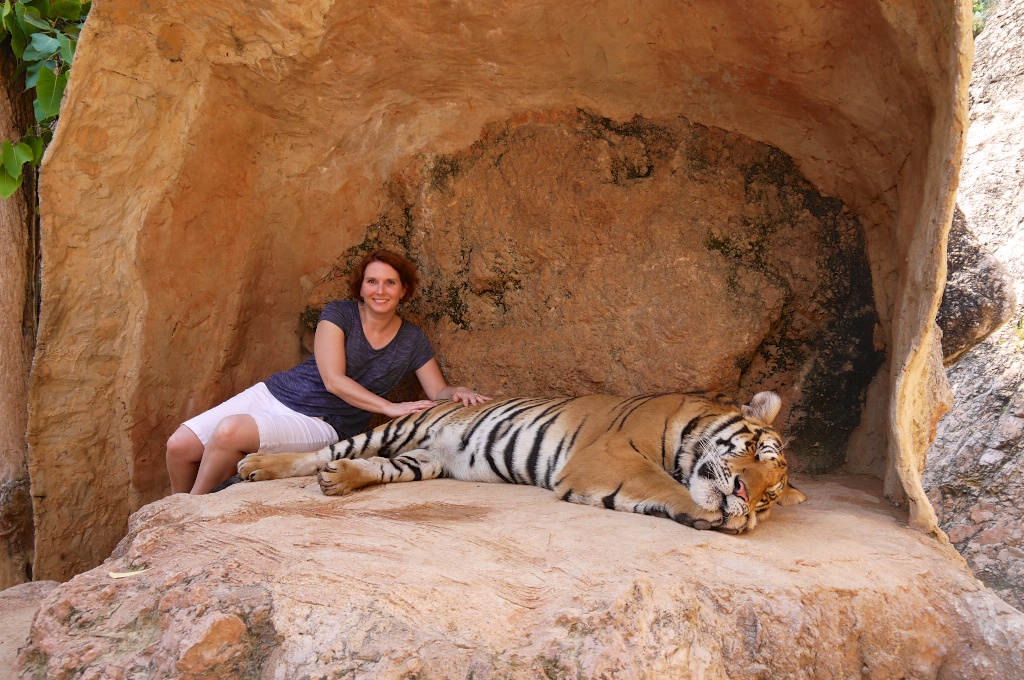
There is a lot of controversy about the temple… Is it natural?… Is it safe?…. Do they drug the animals? We walked away with a very positive opinion of the park. Many of the animals are rescued and would be dead if they did not live there. As to drugging them… anyone that works with the tigers knows that this is ridiculous. Far too difficult and would make the animals more dangerous, rather than less dangerous. Yes they lay around, but this is what tigers do when it is very hot and they are full.

I viewed it like a zoo, except that we got to touch them. Now the question as to if it is safe? Well….. this I am not 100% sure of this : ) We need to always remember, they are wild animals. But if you have the chance to visit the temple I would tell you ABSOLUTELY!
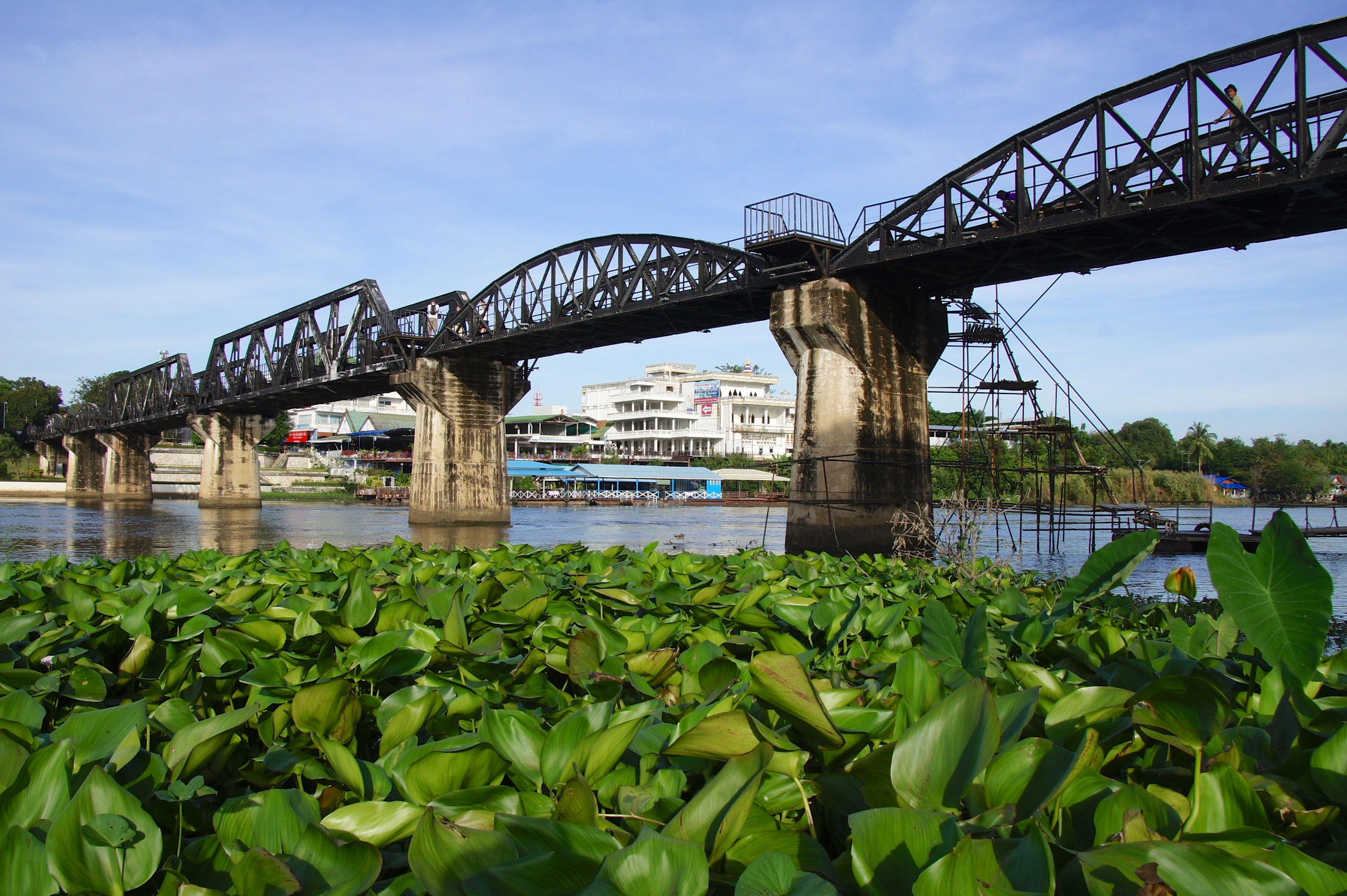
We also visited the well-known Bridge on the River Kwai.
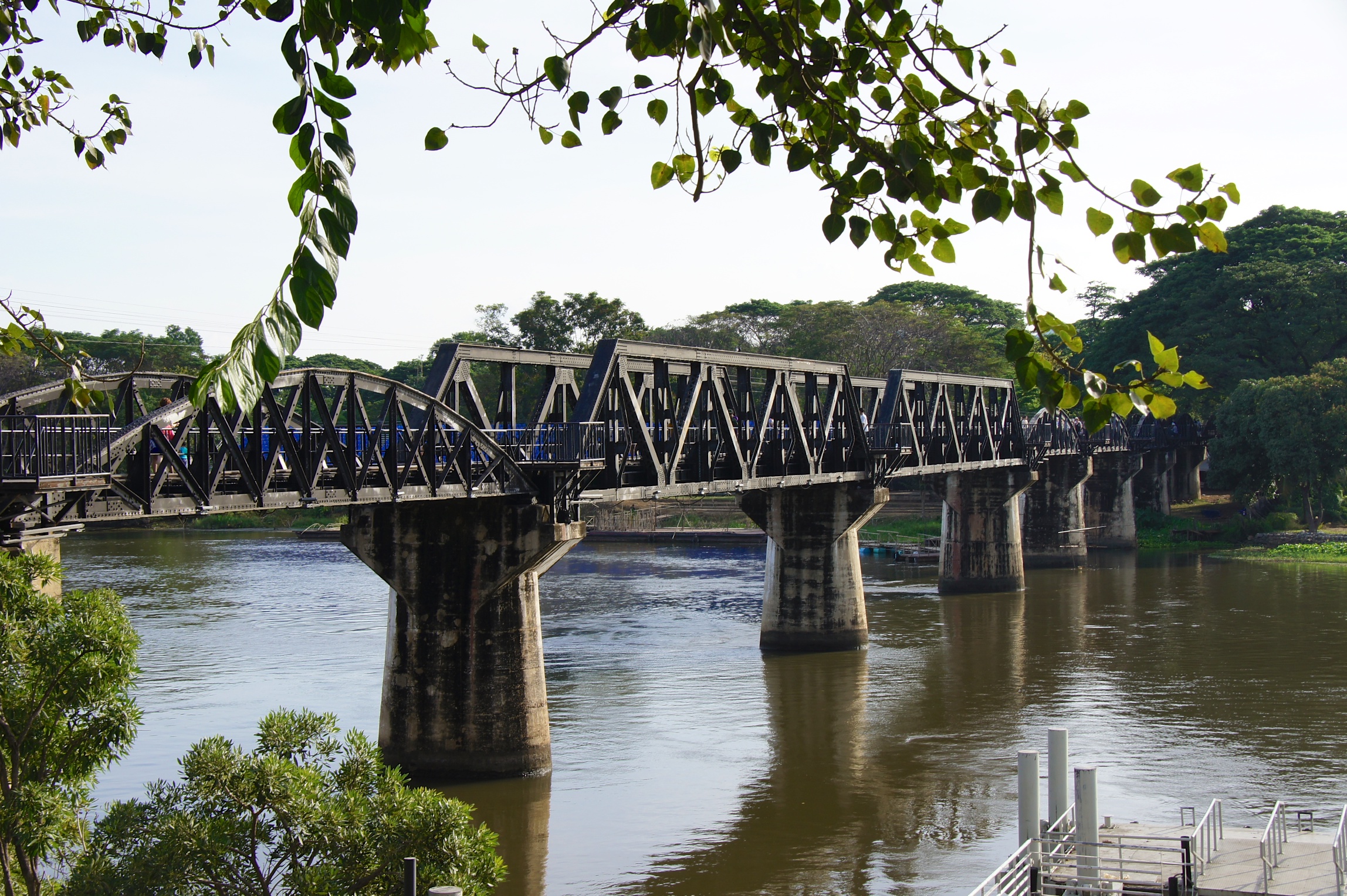
During WW II, the Japanese constructed a railway from Thailand to Burma.
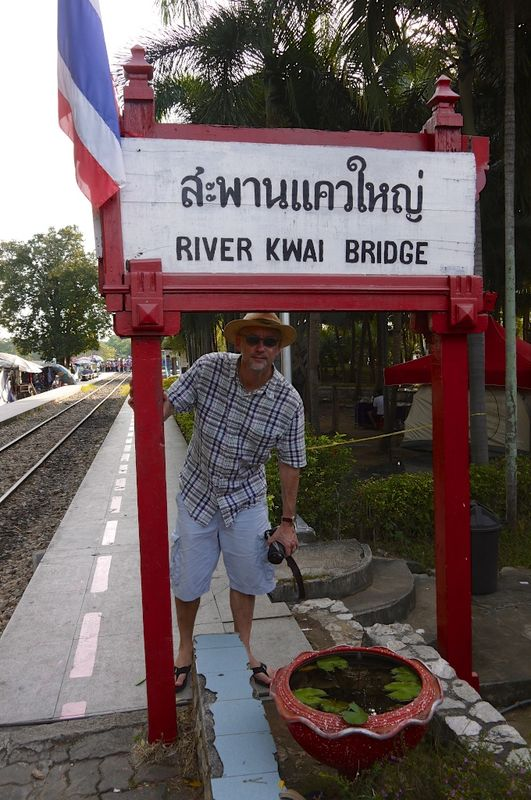
Unfortunately, the construction was done using POWs and Asian slave laborers under unfavorable conditions. The work started in October 1942 and was completed in a year, but at the loss of thousands of lives.
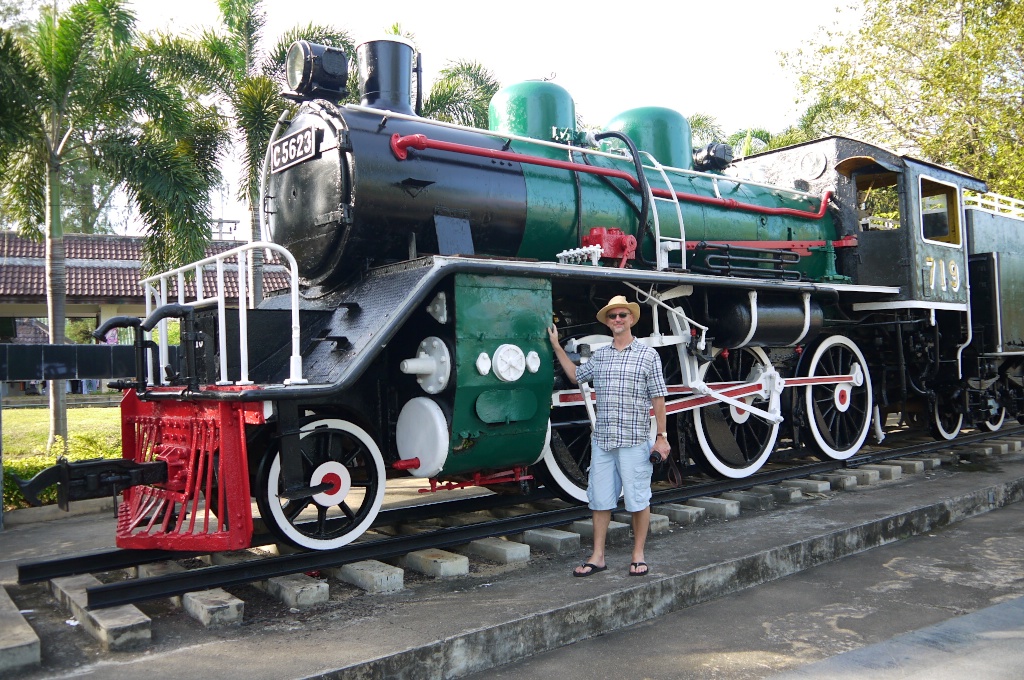

Allied Forces bombed the bridge in 1944 and three sections were destroyed. What we see today is part original and part rebuilt.
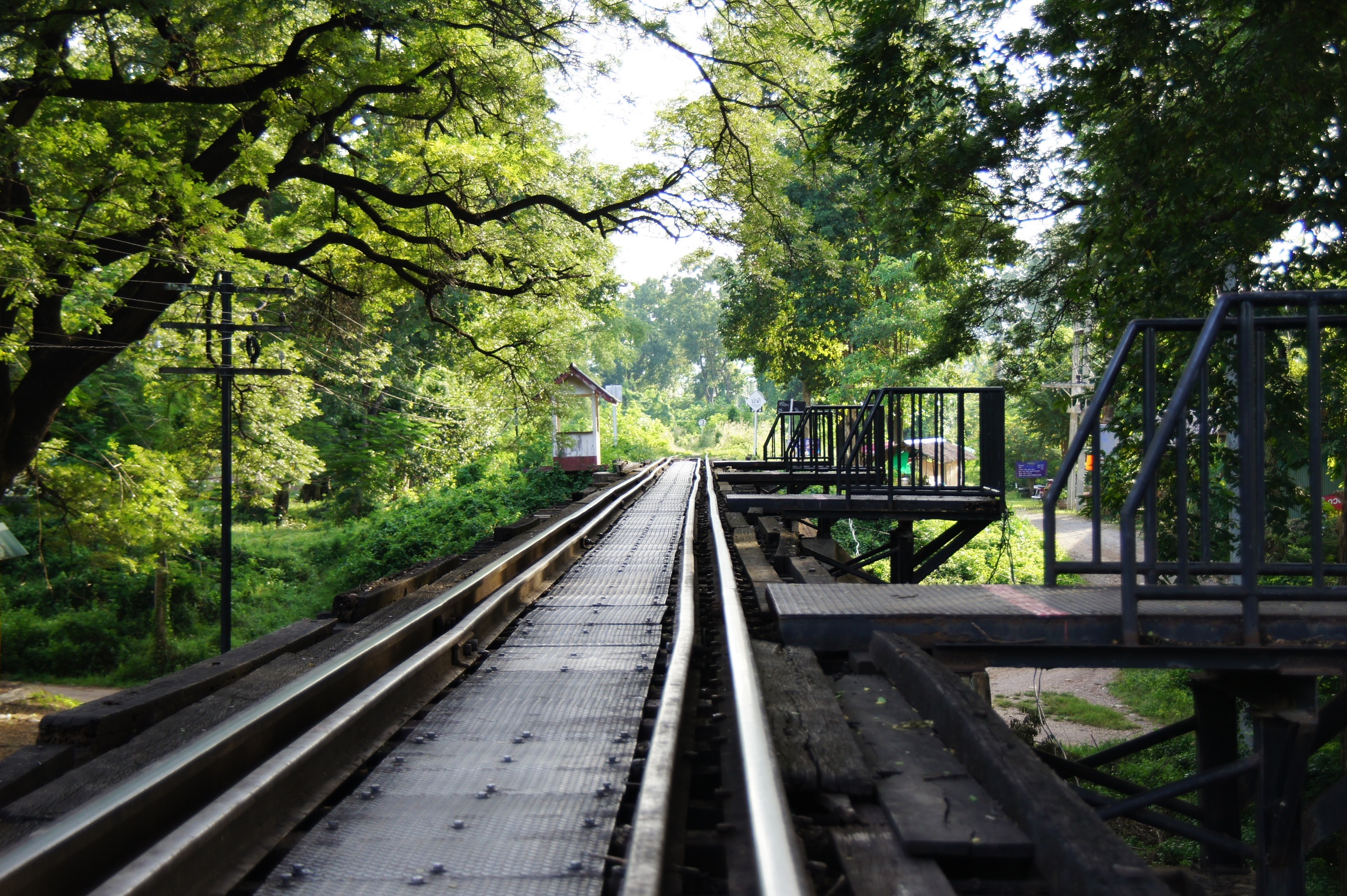
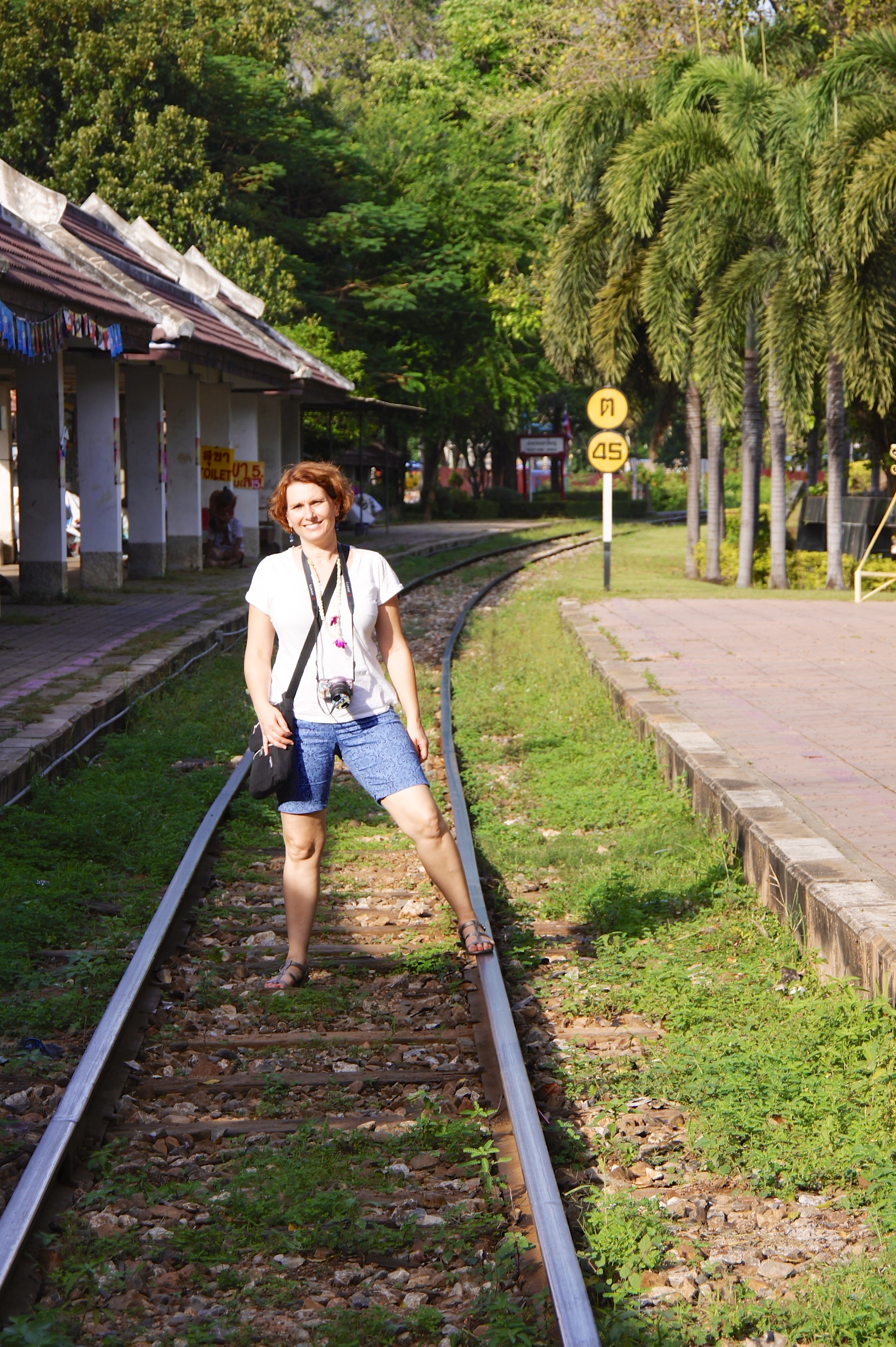
The track is still used today.
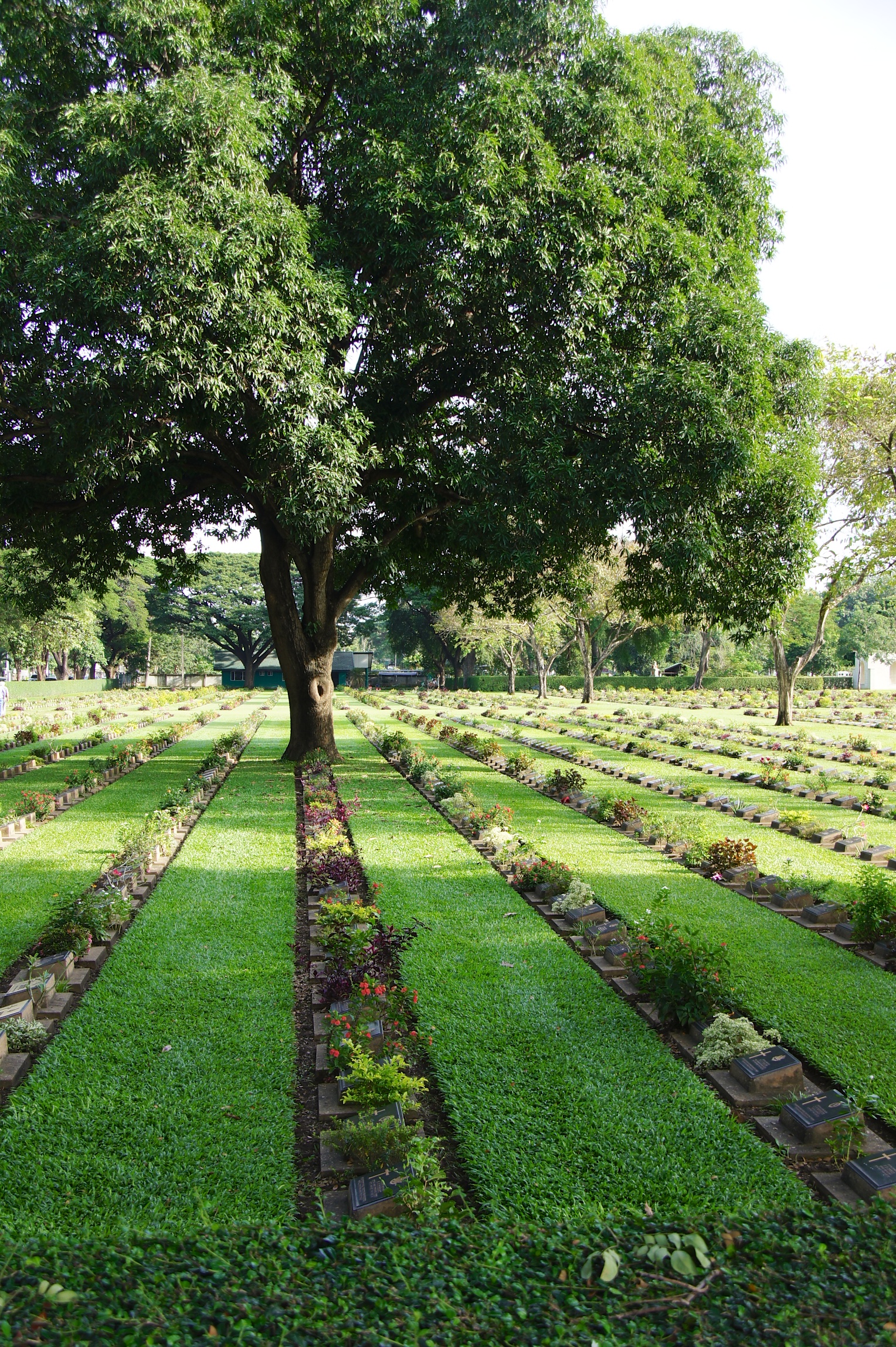
There is a well-kept War Cemetery nearby where over 7,000 POWs, who sacrificed their lives in the railway construction, are buried. Another 2,000 are laid to rest at the Chungkai Cemetery.
To get to Kanchanaburi we took a local train. It took three hours and cost $3 each. A deal and great fun. We met a very nice couple from California and chatted with them the entire trip. There was also a couple from Poland who joined in.


The taxis in Kanchanaburi and many parts of rural Thailand are open backed trucks. Safety first! And I worry about airplanes. : )

Our hotel/resort, The Oriental Kwai was awesome! Each room was a little cottage and ours looked out onto the River Kwai. The grounds were lush and tropical. They even had a handful of goats.

We had such a great time on this excursion. To see more on our time spent in Bangkok, click here.


 The XtraSuitcase
Leave a reply to Pierrette Cancel reply